Skip to content

A beautiful sample can win a buyer’s confidence in five minutes. A disappointing bulk shipment can destroy that confidence in five seconds. This is one of the most common but underestimated risks in custom bag manufacturing. Brands do not only need a tote bag, backpack, cosmetic pouch, cooler bag, travel bag, or drawstring bag that looks good in one sample photo. They need the same fabric feel, color tone, logo placement, zipper function, stitching quality, structure, packaging, and user experience to stay stable across hundreds, thousands, or repeat production batches.
Sample-to-bulk consistency matters because the approved sample is not the finish line; it is the production standard. If a factory cannot translate that sample into locked materials, clear specifications, pattern control, logo standards, sewing instructions, in-line inspection, final QC, and packaging checks, the bulk order may slowly drift away from what the buyer approved. Consistency protects product margins, customer reviews, retail acceptance, brand trust, and long-term supply stability.
For today’s brands, the risk is higher than before. Customers notice details faster. Online reviews travel wider. Retailers expect approved samples to match delivered goods. E-commerce platforms punish defect-driven returns. A buyer may think the biggest risk is choosing the wrong product design. In reality, many failures happen after the design is approved. The sample looked right. The quotation looked reasonable. The supplier sounded confident. Then the bulk shipment arrived with thinner fabric, uneven stitching, off-tone color, rough zippers, or packaging that did not match the sales channel. That is where sample-to-bulk consistency becomes more than a manufacturing detail. It becomes a business survival issue.
What Does Sample-to-Bulk Consistency Mean?

Sample-to-bulk consistency means the final bulk order matches the approved sample in material, color, size, structure, logo, workmanship, accessories, function, and packaging within agreed tolerances. It does not mean every sewn product is perfectly identical. It means the details that affect brand image, customer use, retail acceptance, and repeat sales remain controlled from sample approval to shipment.
Approved Sample
An approved sample is the buyer-confirmed reference that guides bulk production. In custom bag manufacturing, it should never be treated as just a nice-looking prototype. Once approved, it becomes the physical standard for material handfeel, bag shape, logo placement, sewing method, zipper quality, lining, accessories, and packaging direction.
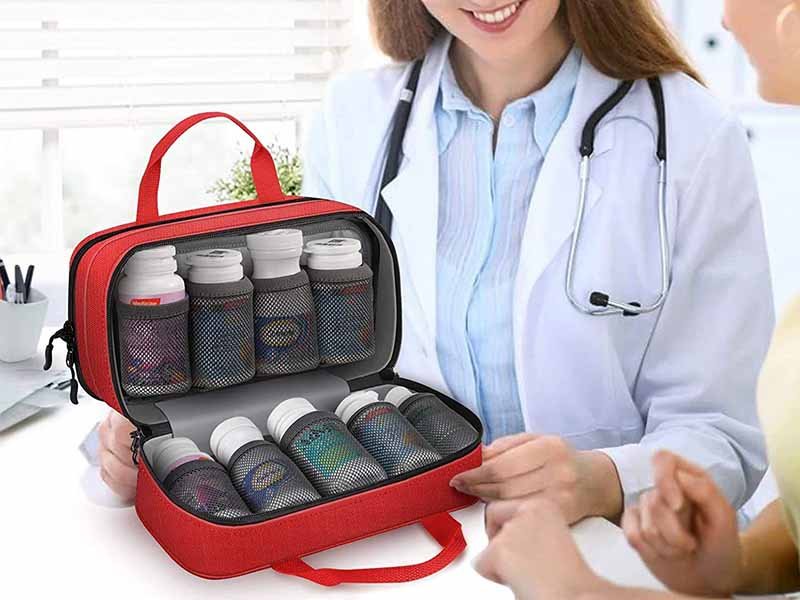
For simple products such as cotton tote bags, drawstring bags, or basic polyester pouches, the approved sample may mainly control fabric weight, finished dimensions, handle length, logo effect, and folding method. For more complex products such as backpacks, cooler bags, cosmetic pouches, travel bags, tool bags, waterproof dry bags, or medical bags, the approved sample also controls structure, reinforcement, foam thickness, lining choice, zipper curve, compartment layout, and functional details.
A common mistake is approving a sample only through photos. Photos are useful, but they cannot fully show fabric stiffness, zipper smoothness, lining thickness, stitching strength, webbing handfeel, or how the bag holds shape when carried. For higher-value orders, the buyer should keep one approved sample, the factory should keep one approved sample, and both sides should confirm the final version number before bulk production starts.
The approved sample should also be connected to written records. If the sample is approved but the material, dimensions, logo method, accessory type, and packing instruction are not documented, the production team may still rely on memory or assumptions. This is where many bulk order problems begin.
Bag Details That Must Match
The most important details are the ones customers can see, touch, use, or complain about. For bags and soft goods, this usually includes outer material, color, finished dimensions, handle or strap length, logo size and placement, zipper quality, lining, pocket layout, hardware, stitching, edge binding, reinforcement, labels, and packaging.
Not every detail carries the same risk. A 3 mm position shift on an internal care label may not matter much. A 3 mm shift on a front logo may be highly visible. A small color variation inside a hidden lining may be acceptable for some projects. The same variation on the main outer fabric may cause retail rejection if the product is part of a color-matched brand collection.
This is why brands should separate details into critical, major, and minor quality points. Critical points affect safety, function, compliance, or brand approval. Major points affect saleability and user experience. Minor points affect appearance but do not normally stop the product from being sold or used.
| Quality Area | Common Control Point | Practical Tolerance Often Discussed | Why It Matters |
|---|---|---|---|
| Finished Size | Width, height, gusset, handle drop | About ±0.5–1.5 cm depending on bag type | Affects capacity, fit, and listing accuracy |
| Logo Placement | Center, height from edge, angle | About ±2–5 mm for many soft goods | Affects brand appearance |
| Stitch Density | Stitches per inch or cm | Defined by material and product type | Affects strength and finish |
| Fabric Weight | GSM, denier, thickness | Must match approved material or approved substitute | Affects handfeel, structure, and durability |
| Color | Pantone, swatch, lab dip | Visual approval under agreed lighting | Affects brand consistency |
| Carton Packing | Quantity, carton mark, label | Must follow buyer or channel requirement | Affects receiving, FBA, and retail handling |
One Good Sample Is Not Enough
A good sample proves that the supplier can understand the product. It does not automatically prove that the same supplier can control bulk production. Samples are often made slowly by experienced sample makers. Bulk orders are produced through material purchasing, cutting, printing, sewing, trimming, inspection, packing, and shipping under schedule pressure.
This difference matters. A sample maker may spend extra time adjusting one zipper curve, one logo placement, or one difficult seam. During bulk production, the factory must repeat that result across hundreds or thousands of units. If the sample details are not translated into production instructions, the bulk result may slowly drift away from the approved version.
Before placing a bulk order, buyers should ask practical questions. Is the pattern locked? Is the fabric source confirmed? Are accessories approved? Is the logo process tested on the actual material? Will there be a pre-production check? Who compares the first bulk pieces against the approved sample? These questions reveal whether the factory has a repeatable system or only sample-making ability.
For experienced buyers, the question is not only “Can you make this sample?” The better question is “How will you make sure the bulk order stays consistent with this approved sample?”
Tolerances
Tolerances are the agreed limits of acceptable variation. They are especially important in sewn bags because fabric products naturally vary more than molded plastic, metal parts, or machine-cut hard goods. A soft tote, backpack, cooler bag, or pouch can change slightly during cutting, sewing, turning, pressing, and packing.
The goal is not to remove all variation. The goal is to define which variations are acceptable and which ones are not. For example, a tote bag height variation of around 0.5–1 cm may be reasonable for many fabric projects. But a crooked front logo, a mismatched fabric, a weak strap joint, or a wrong zipper size may not be acceptable even if the bag can still be used.
Without tolerance, inspection becomes emotional. The buyer may say, “This does not look like the sample.” The factory may say, “This is normal.” A clear tolerance table protects both sides. It gives production workers a target, QC staff a checklist, and buyers a fair basis for approval.
Why Is Consistency More Critical Now?

Consistency is more critical now because brands sell in faster, more visible, and less forgiving markets. Customers compare delivered products with listing photos, online reviews expose quality gaps, retailers expect stable supply, and e-commerce returns quickly damage profit. A bulk order that fails to match the sample is no longer just a factory issue. It becomes a brand reputation issue.
Brand Risk
Modern buyers are not only purchasing bags. They are purchasing customer trust. A brand may spend weeks preparing product photos, ads, packaging, Amazon listings, Shopify pages, retail presentations, influencer samples, or wholesale catalogs based on the approved sample. If the bulk order looks different, the entire customer promise becomes unstable.
This is especially dangerous for product launches. A brand may approve a beautiful cosmetic pouch sample, use it for campaign photography, and open preorders. If the bulk shipment arrives with softer PU, uneven logo printing, poor zipper movement, or a lining that feels cheaper, the issue is no longer limited to manufacturing. It affects marketing, customer service, launch timing, and buyer confidence.
The same risk applies to corporate gifts, retail programs, travel accessories, outdoor bags, pet products, beauty packaging, and lifestyle products. Buyers today expect suppliers to understand that one unstable batch can affect more than one order. It can affect a product line, a sales season, or a long-term sourcing relationship.
For large and mid-sized B2B buyers, sample-to-bulk consistency is part of supplier evaluation. They are not only asking whether a factory can produce the bag. They are asking whether the factory can protect the approved standard when quantity increases, materials are purchased in bulk, and production speed becomes faster.
Returns and Margin Loss
Returns are expensive because the loss goes beyond the unit cost. A defective or inconsistent bag may create return shipping, replacement costs, customer service time, warehouse handling, discounting, repacking, platform penalties, and lost future sales. If the product has a private label logo or custom packaging, resale options may be limited.
For example, if a custom travel pouch costs a few dollars to produce but arrives with a poor zipper or wrong size, the brand may lose far more than the manufacturing cost. Advertising cost has already been spent. Fulfillment fees may not be recovered. Customer trust may be damaged. A negative review may reduce conversion on future sales.
This is why sample-to-bulk consistency should be viewed as margin protection. Better sample approval, clearer specifications, material locking, in-line QC, and final inspection may feel like extra work before production. In reality, they prevent much larger costs after goods enter the market.
A supplier that saves a few cents per unit but creates unstable bulk quality may end up costing the buyer more through rework, refund requests, inspection failure, stock delays, or lost repeat customers. In B2B manufacturing, the cheapest quote is not always the lowest-risk quote.
Reviews and Public Feedback
Online reviews make quality gaps visible. Customers often describe manufacturing issues in simple language: “the color is different,” “the zipper broke,” “the bag feels thin,” “the logo is crooked,” “the strap came loose,” or “it does not look like the picture.” These comments may be short, but they can strongly influence buying decisions.
The challenge is that customers do not care why the issue happened. They do not know whether the fabric batch changed, the logo temperature was wrong, the sewing tension was uneven, or the wrong accessory was used. They only judge the product they received.
For Amazon sellers, DTC brands, and retail brands, this means the factory’s internal consistency becomes public brand evidence. A stable bulk order supports better reviews, fewer complaints, and smoother repeat sales. An inconsistent order creates problems that are difficult to explain after shipment.
| Business Impact | What Inconsistency Can Cause | Why Buyers Care |
|---|---|---|
| Product Launch | Delays, rework, missed sales window | Campaign timing may be fixed |
| E-Commerce Reviews | Complaints about mismatch or poor quality | Conversion rate may drop |
| Retail Orders | Rejection or chargebacks | Retailers expect approved standards |
| Profit Margin | Returns, replacements, discounts | Unit savings may disappear |
| Brand Trust | Customers feel misled | Long-term loyalty suffers |
| Repeat Sourcing | More supplier switching | Internal purchasing cost increases |
Retail and Channel Pressure
Retailers and channel partners expect stable products because they build their own operations around approved samples. A retail buyer may approve a tote bag, cooler bag, cosmetic bag, or backpack based on sample quality, packaging, barcode, carton information, and delivery schedule. If the bulk order changes, the retailer may delay acceptance or reject the goods.
Marketplaces also create pressure. Amazon FBA, for example, requires correct labeling, carton preparation, and product consistency to reduce receiving problems and customer complaints. Shopify and DTC brands may have more flexibility, but they face direct customer feedback. Promotional buyers may have strict event deadlines. Importers may need goods to pass inspection before shipping.
In all these cases, consistency is part of supply reliability. A buyer does not want a factory that can only make one good sample. They want a manufacturing partner that can keep the approved standard stable across the first order, repeat orders, seasonal colors, and future SKU extensions.
Which Factors Cause Sample Drift?

Sample drift happens when bulk production slowly moves away from the approved sample because materials, patterns, colors, sewing methods, logo processes, accessories, or packaging are not controlled tightly enough. It is rarely caused by one big mistake. More often, it comes from several small changes that look harmless during production but become obvious in the finished goods.
Material Changes
Material is one of the most common causes of sample drift. Many bag materials have natural or batch-based variation, including polyester, nylon, Oxford fabric, canvas, cotton, neoprene, PU, PVC, TPU, leather, mesh, RPET, and non-woven fabric. Even when the same material name is used, the finished result may vary in thickness, stiffness, gloss, texture, color, coating, and handfeel.
For example, “600D polyester” is not one universal material. One supplier’s 600D may feel firm with a matte coating, while another may feel softer and shinier. Canvas can vary by weight, yarn, washing effect, and dye absorption. Neoprene can vary in thickness, elasticity, lamination quality, and smell. PU can vary in grain, backing, softness, and scratch resistance.
Material substitution is sometimes unavoidable because of stock, MOQ, dyeing, or lead time. The risk is not substitution itself. The risk is unapproved substitution. If a factory needs to change material, the buyer should receive swatches, photos, specifications, or a revised sample before bulk production continues.
For branded products, material control should be treated as a commercial decision, not only a technical detail. A slightly thinner fabric may reduce cost, but it may also make the finished bag feel cheaper. A softer webbing may be easier to sew, but it may reduce perceived strength. A different lining may not be visible in photos, but customers will notice it when they open the bag.
Pattern and Size Drift
Patterns decide the final shape of a bag. If the pattern changes, the bag changes. This sounds simple, but it is often underestimated. A small pattern adjustment can affect capacity, bottom shape, opening width, zipper curve, pocket position, handle drop, or how the bag sits when filled.
Soft goods are harder to control than rigid products because fabric moves. During cutting, fabric layers may shift. During sewing, seam allowance may vary. During turning and pressing, the bag shape may settle differently. A thick lining or foam layer may reduce internal space. A coated fabric may resist shaping more than a soft cotton fabric.
To control this, the approved pattern version should be locked before bulk production. If a sample is revised three times, the factory must clearly know which pattern is final. Pattern files, cutting templates, measurement points, and sample photos should all match the same approved version.
This is especially important for backpacks, travel bags, cooler bags, laptop sleeves, EVA cases, and cosmetic pouches with structured shapes. In these products, small dimensional differences may affect zipper function, internal capacity, laptop fit, bottle fit, insulation structure, or visual symmetry.
Logo Process Drift
Logo inconsistency is one of the fastest ways to make a product look unprofessional. Common custom bag logo methods include screen printing, heat transfer, embroidery, woven labels, rubber patches, leather labels, metal plates, debossing, embossing, foil stamping, and sublimation. Each method has process variables.
Screen printing can change due to ink thickness, mesh, pressure, curing time, and fabric surface. Heat transfer can change due to temperature, pressure, film quality, and pressing time. Embroidery can change due to thread color, stitch density, backing, needle tension, and digitizing quality. Patches and labels can shift if placement is not guided by a fixture or measurement.
Buyers should approve logo size, color, position, process, and durability expectations before bulk. For front-facing logos, even a few millimeters of shift may be visible. For premium or retail products, logo control deserves the same attention as material and sewing quality.
Logo drift is not only an appearance issue. It directly affects brand perception. A well-made bag with a poorly positioned logo can still feel like a low-grade product. For private label products, corporate gifts, retail collections, and DTC brands, logo consistency is one of the most visible signs of manufacturing discipline.
Sewing and Accessories
Sewing variation is another major cause of sample drift. Bags are built through many operations: cutting, folding, binding, zipper sewing, handle attachment, strap reinforcement, lining assembly, turning, trimming, and finishing. If sewing tension, stitch length, seam allowance, or reinforcement changes, the final product changes.
Accessories can also shift the product experience. Zippers, sliders, pullers, buckles, D-rings, snap buttons, webbing, elastic, hook-and-loop, foam, labels, and lining all affect how the product feels and performs. A zipper replacement may still look similar but feel rougher. A softer webbing may weaken the perceived quality. A thinner foam may make a cooler bag or laptop sleeve feel less protective.
The safest approach is to list key accessories in the BOM and require buyer approval for replacements. This does not slow every project down. It simply prevents silent changes that can damage the bulk result.
| Drift Factor | Common Cause | What May Change in Bulk |
|---|---|---|
| Fabric Batch | Different supplier, dye lot, coating | Color, stiffness, texture, weight |
| Pattern Version | Wrong or revised cutting file | Size, capacity, shape |
| Sewing Allowance | Operator or machine variation | Finished dimensions, symmetry |
| Logo Process | Heat, pressure, alignment, thread density | Position, color, clarity, durability |
| Accessory Change | Stock shortage or cost pressure | Zipper feel, buckle strength, premium look |
| Packing Method | Different folding or carton pressure | Wrinkles, deformation, presentation |
How Should Buyers Lock Production Standards?

Buyers should lock production standards by confirming a golden sample, written specification sheet, BOM, color standard, logo standard, tolerances, packaging files, and inspection checklist before bulk production. The goal is to turn “same as sample” into measurable instructions that purchasing, cutting, sewing, QC, packing, and shipment teams can follow.
Golden Sample
A golden sample is the final approved sample used as the master reference for production and inspection. It should represent the agreed material, size, structure, logo, workmanship, accessories, packaging direction, and overall product feel. In custom bag projects, it is one of the most practical tools for controlling bulk consistency.
The golden sample should be clearly labeled with product name, version, approval date, buyer confirmation, and any important notes. If there are multiple colorways or SKUs, each important version should have its own reference. If the sample is revised after approval, the old version should be marked as outdated to avoid production confusion.
A golden sample is strongest when combined with documents. The physical sample shows what the product should feel and look like. The spec sheet explains measurements and tolerances. The BOM lists materials and components. Photos help compare visible details. Together, they create a stronger production standard than any one reference alone.
For repeat orders, the golden sample becomes even more valuable. It helps the factory reproduce the same product after weeks or months, even if production workers change, materials are reordered, or packaging files are updated.
Spec Sheet and BOM
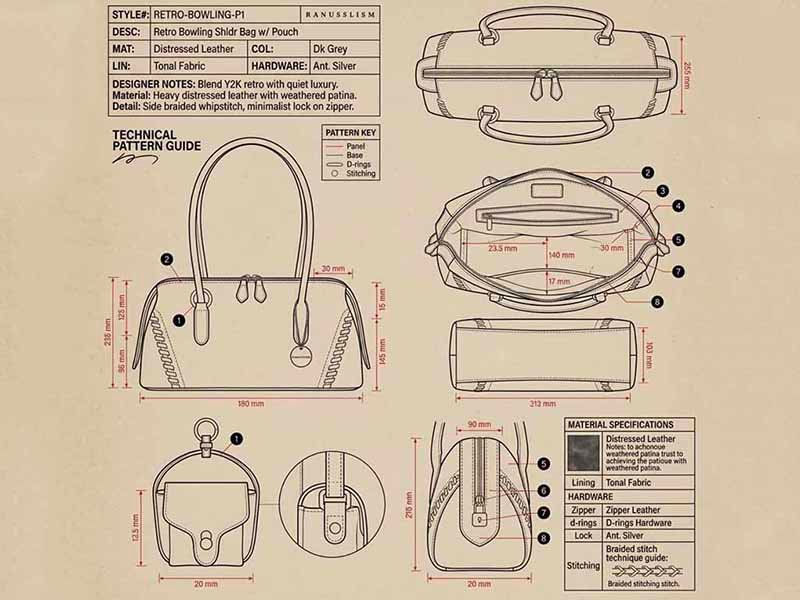
A spec sheet records the measurable product requirements. For a custom bag, it usually includes dimensions, material, color, lining, logo method, logo size, logo placement, zipper type, webbing width, hardware, pocket layout, stitch details, reinforcement points, label position, packing method, and carton quantity.
A BOM lists the components used to make the product. This may include outer fabric, lining, foam, zipper, slider, puller, webbing, buckle, thread, binding tape, care label, woven label, hangtag, polybag, carton, barcode label, and insert card. The BOM helps prevent silent substitutions after sample approval.
For buyers, these documents do not need to be overly complicated. Even a clear one-page spec sheet and simple BOM can prevent many problems. The key is to record what was actually approved, not just what was discussed. In long-term repeat orders, these files become even more valuable because they help the factory reproduce the same standard months later.
A good production file should also include revision history. If the buyer changes the handle length, upgrades the zipper, changes logo color, or adjusts the carton quantity, the new version should be dated and confirmed. This avoids the common problem of one team working from old information while another team works from new instructions.
Color and Logo Standards
Color should be controlled with physical references whenever possible. Digital photos are useful for communication, but they are not reliable enough for final approval because screens, cameras, lighting, and fabric texture all affect color perception. For brand-sensitive colors, buyers should use Pantone references, lab dips, bulk fabric swatches, or approved material cuttings.
Logo standards should include artwork file, size, position, color, process, and testing expectations. For screen printing, heat transfer, embroidery, woven labels, rubber patches, leather labels, or metal plates, the process should be tested on the actual approved material when possible. A logo that works well on cotton canvas may behave differently on PU, neoprene, Oxford fabric, mesh, or coated polyester.
Buyers should also decide how strict the logo and color tolerances must be. A luxury cosmetic pouch, retail travel set, outdoor gear product, or brand collection may require tighter control than a simple promotional giveaway bag. The factory should know this before quoting and production, because stricter standards may require more sampling, higher material MOQ, or longer lead time.
Color and logo control should also consider final selling channels. A product used for retail display may need stricter visual consistency than a general giveaway. A product photographed for e-commerce should match the listing images as closely as possible. A product sold as a set should keep color and logo style consistent across all SKUs.
Packaging Files
Packaging should be locked before bulk packing starts. Many buyers focus on the bag itself and treat packaging as a final detail. This can create problems, especially for retail, Amazon FBA, Shopify, corporate gifts, and export orders. Incorrect labels, barcodes, carton marks, or packing methods can delay receiving even when the product quality is acceptable.
Packaging files may include hangtag artwork, care label, barcode, insert card, polybag warning, carton mark, carton size, quantity per carton, FBA label, retail label, and shipping mark. If the product is part of a set, the packing order and SKU separation should also be confirmed.
Good packaging control protects both the product and the sales channel. A soft bag folded the wrong way may arrive with heavy creases. A structured bag packed too tightly may deform. A carton with the wrong quantity may create warehouse receiving errors. These are preventable issues when packaging is treated as part of the production standard.
| Standard to Lock | What to Confirm | Practical Control Method |
|---|---|---|
| Golden Sample | Final look, structure, workmanship | Labeled physical sample with approval record |
| Spec Sheet | Size, material, logo, stitching, packing | Written file with revision version |
| BOM | Fabric, zipper, webbing, hardware, labels | Component list with approved alternatives |
| Color | Main fabric and logo colors | Pantone, lab dip, swatch, approved cutting |
| Logo | Size, position, process, artwork | Test sample and placement measurement |
| Packaging | Barcode, hangtag, carton, labels | Approved artwork and packing instruction |
How Do Factories Control Bulk Consistency?
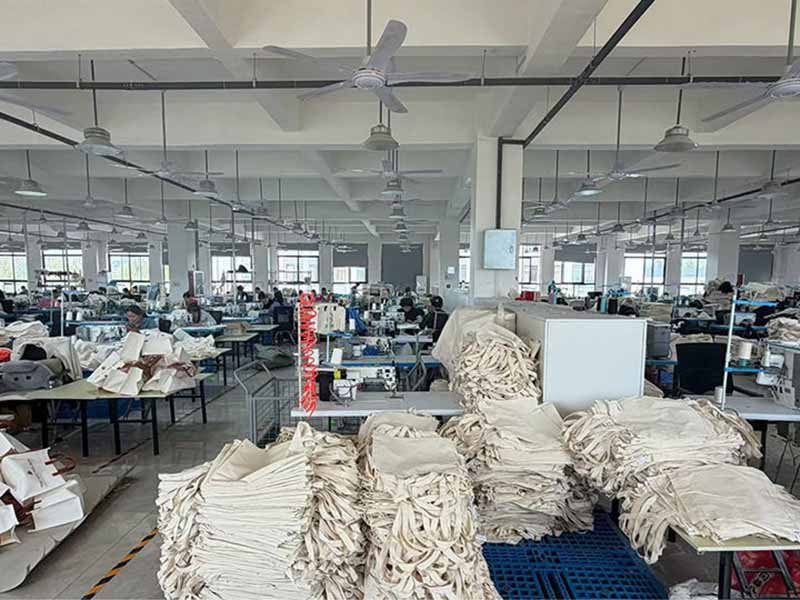
Factories control bulk consistency by connecting the approved sample to material purchasing, pattern control, pre-production review, first-piece inspection, in-line QC, final inspection, packaging checks, and shipment preparation. Strong factories do not wait until the end to find problems. They control quality at each stage before defects spread across the order.
Pre-Production Review
Pre-production review is the stage where the factory checks whether everything needed for bulk production is clear and ready. This includes the approved sample, pattern, spec sheet, BOM, fabric, accessories, logo artwork, packaging files, delivery schedule, and inspection requirements. It is the final checkpoint before mass cutting and production.
This stage matters because many expensive problems start from small misunderstandings. If the cutting team uses the wrong pattern version, the whole order may be the wrong size. If the printing team uses old artwork, the logo may be incorrect. If purchasing replaces webbing without approval, the handle may feel different. A proper pre-production review helps catch these issues before they become bulk defects.
For buyers, this is also a useful moment to request confirmation photos of bulk materials, logo tests, accessories, labels, and packaging. Clear communication before production is much cheaper than correction after production.
A professional pre-production review should not be rushed. Even for repeat orders, the factory should confirm whether the buyer has updated any material, logo, packaging, carton, label, or shipping requirement. Many repeat order mistakes happen because both sides assume “same as last time,” but one small detail has changed.
First-Piece Check
The first-piece check reviews the first completed units from the real bulk production line. This is different from the sample because it shows how the product looks when made by production workers using bulk materials, bulk logo process, and real sewing workflow.
This step is highly valuable. It may reveal that the handle is slightly too long, the logo is too low, the zipper curve is not smooth, the seam allowance is affecting size, or the bag does not hold shape like the approved sample. If these issues are found on the first few pieces, the factory can adjust quickly.
Without a first-piece check, the factory may produce hundreds or thousands of units before discovering a repeated mistake. For custom bags with visible logos, complex structures, multiple materials, or strict retail requirements, first-piece approval can save time, money, and frustration.
The first-piece check is also useful for training production workers. When workers can compare the first output against the approved sample, they better understand the target. This is more effective than verbal instructions alone, especially for products with curved seams, special pockets, reinforced handles, or complex lining structures.
In-Line QC
In-line QC means inspecting goods while they are still being produced. It checks key operations such as cutting accuracy, logo placement, stitching, zipper installation, binding, handle attachment, strap reinforcement, lining assembly, pocket position, and semi-finished shape.
This is one of the most important controls for sewn products. Bags are built step by step. If one operation is wrong, the defect may repeat across the whole batch. For example, loose stitching at handle joints, uneven binding, crooked labels, or inconsistent seam allowance can spread quickly if nobody checks during production.
A practical in-line QC process should focus on repeated-risk points. The QC team does not need to inspect every tiny detail every minute. It needs to check the operations most likely to create costly defects. When a problem appears, the factory should correct the process, not only remove the defective piece.
For higher-risk bag categories, in-line QC should pay special attention to load-bearing points, zipper curves, lining assembly, waterproof seams, insulation layers, logo durability, and pocket placement. These are the areas where small process errors can strongly affect product performance or customer perception.
Final and Packing Checks
Final inspection checks finished goods against the approved sample, spec sheet, and buyer requirements. It should cover appearance, size, color, logo, stitching, zipper function, hardware, lining, cleanliness, labels, packaging, quantity, carton marks, and shipment readiness.
Packing checks are equally important. A bag can pass product inspection but still create trouble if the wrong barcode is used, the carton quantity is incorrect, the hangtag is missing, or the product is folded in a way that damages shape. For Amazon, retail, and export orders, packing accuracy is part of quality control.
Final inspection should confirm that the goods are ready to ship. It should not be the first time the factory thinks about quality. When material checks, first-piece checks, and in-line QC are already done well, final inspection becomes a confirmation step instead of a crisis.
| QC Stage | Main Checkpoints | Typical Evidence Buyers May Request |
|---|---|---|
| Material Check | Fabric, lining, zipper, hardware, labels | Swatch photos, accessory photos |
| Pre-Production Review | Sample, BOM, pattern, artwork, packing | Production file confirmation |
| First-Piece Check | First finished units from line | Front, back, inside, logo, detail photos |
| In-Line QC | Sewing, logo, zipper, reinforcement | Issue photos and correction updates |
| Final Inspection | Finished goods against standard | Inspection summary, sample comparison |
| Packing Check | Carton, barcode, quantity, labels | Packed carton photos, carton mark photos |
How Can Brands Choose the Right Manufacturer?
Brands should choose a manufacturer that can control the full path from sample to bulk: sampling, materials, patterns, BOM, logo process, sewing production, QC, packaging, and repeat orders. A good manufacturer does not only make one attractive sample. It shows how that sample will be protected, documented, reproduced, inspected, and improved over time.
Sampling Control
Sampling control is one of the clearest signs of a reliable manufacturer. A factory with strong sampling control can explain how the sample was built, which material was used, which pattern version was approved, which logo process was tested, and which construction details need attention during bulk production.
This matters because the sample stage is where many important decisions are made. Material may be changed to improve handfeel. Handle length may be adjusted. Logo method may be revised. Zipper size may be upgraded. Pocket layout may be corrected. If these decisions are not recorded properly, bulk production may follow outdated or incomplete information.
A serious manufacturer should be able to discuss sample revisions in practical language. Instead of only saying “yes, we can change it,” the factory should explain how the change affects cost, MOQ, lead time, durability, appearance, or bulk stability.
For buyers, sampling control also reduces communication risk. When the sample team, production team, material team, and QC team are connected, fewer details get lost between approval and bulk manufacturing.
Material and Production Control
A good manufacturer should understand bag materials beyond surface-level names. Buyers should expect the factory to explain the difference between polyester, nylon, Oxford fabric, canvas, cotton, neoprene, PU, PVC, TPU, mesh, leather, EVA, and other materials in relation to product use, cost, structure, and customer expectations.
Production control is equally important. Some suppliers can make a good sample but rely heavily on uncontrolled outsourcing for bulk production. This can create risk if the production factory does not fully understand the approved sample. A stronger manufacturer manages production standards, quality checkpoints, and communication under one system, even when specialist processes or partner workshops are involved.
Brands should ask practical questions. Who makes the sample? Who manages bulk production? Are materials checked before cutting? Are accessories approved? Is the first production piece compared with the sample? How are production problems reported? The answers reveal whether the supplier has real control or only sales communication.
For global buyers, this kind of control is especially important because they cannot visit the factory every week. They need a supplier that can communicate clearly, document decisions, provide production updates, and identify problems early.
QC Capability
QC capability should cover more than final inspection. For custom bag orders, stronger quality control usually includes material checking, pre-production review, first-piece inspection, in-line inspection, final inspection, and packing review. This layered approach is important because bag defects often happen during production, not only at the end.
Buyers should listen for specific QC language. A weak supplier may simply say, “We check quality before shipment.” A stronger supplier can explain what it checks at each stage: fabric, color, logo, stitching, zipper, reinforcement, size, cleanliness, packaging, carton marks, and quantity. Specific answers are more valuable than general promises.
QC also depends on honesty. No factory can promise that every sewn product will be absolutely identical. But a professional factory can define tolerances, classify defects, communicate issues early, and correct problems before shipment. That is the kind of supplier mindset buyers should look for.
If the product has special requirements, such as insulation, waterproofing, load-bearing, RFID blocking, fire resistance, or medical use, the buyer should also ask what can be tested, what can be documented, and what should not be claimed without proper verification.
Repeat Order Support
Repeat order support is where real supplier value becomes clear. A brand may start with 200, 500, or 1,000 pieces to test the market, then reorder larger quantities or expand into new colors, sizes, and related products. If the manufacturer does not keep records, each reorder becomes a new risk.
A repeat-order-ready supplier keeps approved samples, pattern versions, material records, BOMs, logo files, packaging files, carton information, and production notes. This allows the next order to follow the same standard instead of starting from memory. It also helps when the brand develops a product series, such as tote bag plus pouch, backpack plus duffle bag, cooler bag plus lunch bag, or cosmetic bag plus travel organizer.
For long-term brands, the right manufacturer is not just a vendor that accepts orders. It is a product development and production partner that helps reduce risk from first sample to repeat bulk delivery.
Szoneier works as a Shenzhen-based custom bags and soft goods OEM/ODM manufacturer for global brands, retailers, importers, e-commerce sellers, and B2B buyers. Its manufacturing support covers material selection, product structure, sample development, sewing production, quality inspection, packaging, and export delivery. For buyers who care about sample-to-bulk consistency, this full-chain control is more valuable than a simple low-price quotation.
Work With Szoneier on Custom Bags With Better Sample-to-Bulk Control
Sample-to-bulk consistency is not luck. It is the result of clear standards, disciplined sampling, controlled materials, practical engineering, careful sewing, stage-based quality checks, and honest communication. For brands, retailers, importers, Amazon sellers, Shopify brands, promotional companies, and B2B buyers, this consistency can decide whether a custom bag project becomes a profitable product line or a painful supply chain problem.
Szoneier helps global buyers develop and manufacture custom bags and soft goods with a stronger focus on controlled sampling and stable bulk delivery. Based in Shenzhen, China, Szoneier supports OEM/ODM projects across tote bags, backpacks, drawstring bags, cooler bags, lunch bags, makeup bags, travel bags, duffle bags, gym bags, beach bags, leather goods, neoprene products, waterproof bags, functional bags, EVA cases, storage pouches, and other sewn soft goods.
If you already have a tech pack, reference sample, product photo, sketch, logo file, target material, or packaging requirement, Szoneier can help review the project from sample development to bulk production. If you only have an early idea, Szoneier can also support material suggestions, structure development, logo process options, sampling, revision, quality inspection, packaging, and export delivery.
For a faster quotation, send your product photo, dimensions, target quantity, material preference, logo artwork, packaging request, and destination country to Szoneier. The more clearly the standard is defined at the beginning, the easier it is to keep the bulk order consistent with the approved sample.
Contact Szoneier to start your custom bag project and build a more reliable path from sample approval to stable bulk production.