Skip to content

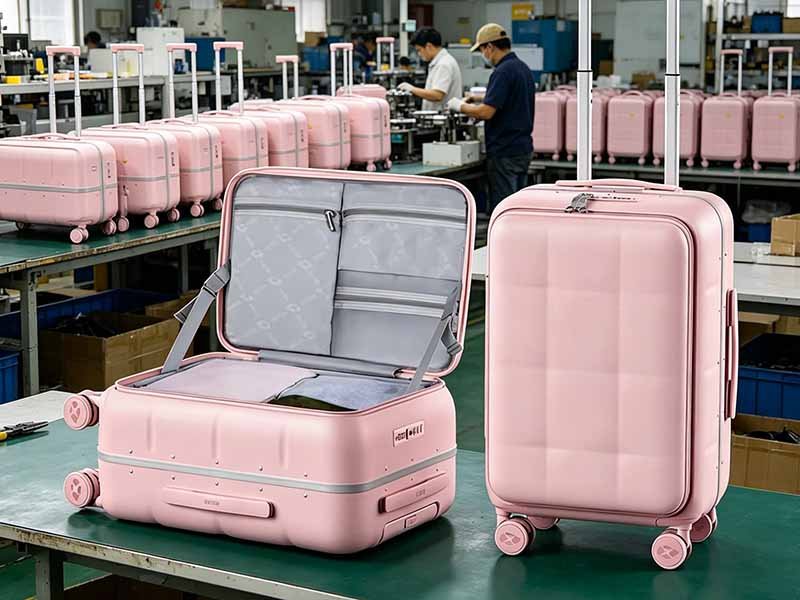
A polished sample can make almost any supplier look capable. The real test begins later, when thousands of units must move through material purchasing, cutting, logo application, sewing, assembly, inspection, packaging, and shipment without losing the details approved during development. Global brands rarely suffer serious losses because one prototype looked slightly imperfect. Problems become expensive when bulk materials change without approval, production no longer matches the confirmed sample, delivery dates slip, or quality issues are discovered after goods are already packed.
Global brands need factory-based bag manufacturers because manufacturing control connects product development with repeatable production. A capable factory-based partner can coordinate materials, pattern making, sampling, production standards, quality inspection, compliance requirements, packaging, capacity planning, and shipment under one accountable system. This reduces communication gaps, sample-to-bulk variation, unexpected substitutions, delayed decisions, quality claims, and long-term supply-chain instability.
That does not mean every zipper, buckle, coating, printed label, or carton must be produced inside one building. Modern bag manufacturing relies on specialized supply chains. What matters is who controls specifications, approvals, production decisions, inspection standards, and corrective action when something changes. A reliable manufacturing partner knows which processes are internal, which require specialist suppliers, how those suppliers are managed, and how the final product remains consistent with the approved standard.
Consider a brand preparing to launch a new travel backpack. The sample looks excellent, photography is scheduled, packaging is approved, and a retail promotion has already been booked. Two weeks before shipment, the production team discovers that the original zipper puller is unavailable, the new lining lot is slightly different in shade, and the reinforcement used on the final sample was never added to the production record. At that point, the issue is no longer a small manufacturing detail. It becomes a launch, inventory, freight, and brand-reputation problem.
That is the real reason factory-based manufacturing matters. A brand is not simply purchasing sewing capacity. It is relying on a controlled system that must preserve design intent from the first sample through the ten-thousandth finished product.
What Is a Factory-Based Bag Manufacturer?

A factory-based bag manufacturer is a manufacturing partner that directly controls or closely manages the critical stages between product development and shipment, including sampling, material approval, pattern making, sewing production, quality control, packaging, and corrective action. The important distinction is not simply owning machinery. It is maintaining clear responsibility, traceability, and production knowledge throughout the complete manufacturing process.
What Factory-Based Really Means
The word “factory” appears on thousands of supplier websites, but professional sourcing teams should treat it as an operational description rather than a marketing label. A credible factory-based manufacturer should be able to explain exactly how a product moves from a sketch, physical sample, technical drawing, or tech pack into production. The team should know who develops the pattern, who approves materials, where the sample is made, how bulk production is organized, and who has authority to stop production when something falls outside specification.
For a custom backpack, tote bag, cosmetic pouch, cooler bag, travel bag, or other sewn soft product, direct control usually includes more than sewing. Product structure, main fabric, lining, foam, webbing, zippers, hardware, labels, logo processes, reinforcement, packaging, and inspection standards all interact with one another. A factory may purchase many of these components externally, but it should remain responsible for confirming that the selected components match the approved product.
Modern bag manufacturing naturally involves specialist partners. Zipper factories, metal-hardware suppliers, printing facilities, embroidery workshops, coating suppliers, packaging companies, foam converters, and independent testing laboratories all contribute to the finished product. Outsourcing one specialist operation does not automatically weaken the supply chain. The risk appears when the primary manufacturer cannot explain who performs that operation, what standard has been approved, or how deviations will be detected.
A strong factory-based system therefore distinguishes clearly between internal operations, controlled external processes, approved component suppliers, and project-specific testing partners. Transparency is more useful than claiming that everything is produced under one roof.
Factory vs. Trading-Only Supply
Trading companies can provide useful services. Some are excellent at sourcing, communication, consolidation, export documentation, and locating specialist factories. The problem is not the existence of an intermediary. The problem is an unclear production chain in which the brand does not know where decisions are actually made or where responsibility sits when something goes wrong.
A relatively direct structure may look like this:
- Brand product team
- Manufacturer project team
- Pattern and sample room
- Production department
- Quality control
- Packaging and shipment
A more fragmented structure can become:
- Brand
- Sourcing agent
- Trading company
- Factory
- Subcontractor
- Specialist workshop
Every additional handoff creates another opportunity for specifications to lose context. A small note such as “use the denser webbing from revision three” may be perfectly clear to the brand and completely meaningless to a subcontractor who never saw revision three. The same can happen with stitching changes, hidden reinforcement, zipper direction, foam thickness, or an updated packaging requirement.
Responsibility becomes even more important when production does not go according to plan. If the lining shade changes, the zipper supplier cannot meet the schedule, or a seam construction repeatedly fails inspection, the brand should not spend days discovering which company has authority to solve the issue. A factory-based manufacturing partner should provide one coordinated project window and take ownership of the corrective action.
Which Processes Need Direct Control?
The manufacturer does not need to make every raw material, but it should control every specification that materially affects the finished product. For most custom bag programs, that means managing main fabric, lining, webbing, foam, reinforcement, zippers, hardware, thread, labels, branding, construction details, packaging, and inspection requirements through documented approval points.
| Production Area | Typical Variables to Control | Common Risk if Uncontrolled |
|---|---|---|
| Main fabric | construction, weight, coating, color | different appearance or hand feel |
| Lining | material, shade, thickness | visual mismatch or poor durability |
| Webbing | width, weave, thickness | weak straps or inconsistent appearance |
| Zippers | chain size, tape, slider, puller | poor function or wrong branding |
| Hardware | size, finish, plating | inconsistency or premature wear |
| Foam | thickness, density, placement | shape and protection changes |
| Logo | method, size, position, color | branding inconsistency |
| Packaging | bag, label, carton rules | warehouse or retail problems |
Construction needs the same level of control. Shoulder straps, handle anchors, zipper curves, pocket openings, lining assembly, binding, corner reinforcement, and high-load areas all affect how well a bag performs after repeated use. Small changes in fabric thickness or foam density can also change seam bulk, needle requirements, turning difficulty, production speed, and finished appearance.
The most useful definition of a factory-based manufacturer is therefore not “a company with sewing machines.” It is a manufacturing organization capable of connecting design intent, material specifications, construction, production planning, quality standards, and delivery responsibility into one controlled workflow.
How Does Factory Control Reduce Sourcing Risk?

Factory control reduces sourcing risk by shortening communication paths, making material and construction changes visible earlier, establishing clear responsibility for production decisions, and detecting problems before they reach finished goods. For established brands, these controls often create more value than obtaining the lowest unit price because manufacturing failures can trigger rework, expedited freight, missed launches, inspection delays, customer complaints, and replacement production.
Fewer Handoffs, Fewer Errors
Most production failures do not begin with a dramatic technical problem. They often begin with several small details that were never collected into one current production record. A brand moves a logo slightly higher, approves a different buckle during the second sample, asks for a stronger reinforcement inside the handle, and updates the carton marking shortly before production. If each change sits in a different email, chat thread, photo, or spreadsheet, the production team may unknowingly combine instructions from different sample versions.
Direct factory communication reduces this risk because technical questions can reach people who understand the physical construction. A pattern maker may immediately recognize that moving a zipper changes seam allowance and lining geometry. A sourcing specialist may know that custom-colored webbing requires a different minimum quantity than the finished bag. A production supervisor may identify that a complicated pocket looks good on one hand-made sample but becomes unstable when hundreds of operators need to repeat the same construction.
Experienced manufacturing teams usually do more than say a requested change is possible. They explain what the change affects. A material substitution may alter cost, lead time, printing behavior, sewing difficulty, or product weight. A structural change may require a new pattern. A new zipper puller may require tooling. A larger logo may need a different printing method. Those conversations are valuable because they move risk discovery into the development stage, when problems are still relatively inexpensive to solve.
Material Changes Need Control
A custom bag can contain many more separately sourced components than its outward appearance suggests. A relatively simple backpack may use shell fabric, lining, foam, mesh, webbing, binding tape, zipper chain, sliders, pullers, buckles, adjusters, thread, woven labels, reinforcement materials, logo components, and packaging. Technical products can involve additional laminations, coated materials, insulation, molded pieces, specialty hardware, or protective inserts.
Each component creates another opportunity for variation between the approved sample and bulk production. The raw-material factory may change a dye lot, a buckle supplier may adjust plating, a zipper tape may come from a new production batch, or the original fabric may no longer be available when a repeat order begins six months later. None of these situations automatically means the product will fail, but uncontrolled substitutions frequently create disputes because the brand learns about them only after finished goods exist.
A mature manufacturing system records approved materials and identifies changes before production. When an original component is unavailable, the correct process is to compare the alternative, evaluate how it affects appearance and performance, and obtain approval before it is used across thousands of pieces.
This is especially important for long-term product lines. Consistency is not created by repeatedly asking a factory to make the product “the same as last time.” It comes from maintaining usable records of what “the same” actually means.
Lowest Price Is Not Always Lowest Cost
Unit price receives a great deal of attention because it is simple to compare. Suppose one supplier quotes $8.45 for a custom bag and another quotes $8.70. On an order of 10,000 pieces, the visible difference is $2,500. Procurement teams can immediately place that amount into a costing sheet and calculate its effect on margin.
Operational failures are less convenient to measure. If an order misses a launch window and part of the shipment has to move by air, the additional freight can easily exceed the original saving. If packaging is incorrect, a warehouse may need to open cartons and relabel inventory. If an inspection fails, the order may require sorting, repair, reinspection, additional storage, and a revised shipment booking.
There are also indirect costs. Product photography may need to be rescheduled, marketing campaigns may start without inventory, retailers may adjust purchase plans, internal teams may spend days resolving a supplier issue, and customer complaints can affect future sales. These costs are real even though they never appear on the original quotation.
For this reason, mature sourcing teams evaluate total operational risk rather than comparing only FOB price. The strongest manufacturing partner is often the supplier that can identify where a project is likely to fail and remove those risks before bulk production begins.
How Do Factories Maintain Sample-to-Bulk Consistency?

Factories maintain sample-to-bulk consistency by converting the approved sample into measurable production standards instead of relying on memory. Materials, dimensions, components, construction methods, logo placement, packaging, approved revisions, and inspection criteria should be documented before bulk production begins. The stronger these records are, the lower the risk that thousands of finished units gradually drift away from what the brand originally approved.
The Approved Sample Is a Production Standard
An approved sample should not be treated simply as the best-looking prototype the sample room was able to make. It needs to represent the product that the manufacturing team is expected to reproduce during bulk production. That distinction matters because sample making and production sewing operate under different conditions.
A skilled sample technician may spend several hours perfecting one difficult corner, manually shaping a panel, or adjusting a seam until the product looks exactly right. A production line has to repeat the same result at commercial speed. If the sample used temporary fabric, hand-adjusted reinforcement, or components that were not properly recorded, the production team may reproduce the visible appearance without reproducing the hidden construction.
Before a final sample is approved, it should confirm more than aesthetics. The brand and manufacturer should agree that dimensions, materials, construction, functionality, branding, cost, packaging, and manufacturability have reached a production-ready stage. If one of those areas is still temporary or unresolved, the project is not completely frozen.
The physical sample remains important because it gives operators and inspectors a real reference. However, hidden details such as foam density, lining specification, internal reinforcement, zipper grades, or hardware finish also need written records. If a feature could later become the subject of a quality claim, it deserves to be controlled before production begins.
From Sample to Production Standard
A production-ready package does not need to become a massive technical manual, but it needs to remove ambiguity. The exact format depends on the complexity of the product, yet most commercial bag programs benefit from a consistent group of references covering materials, dimensions, construction, artwork, packaging, and approved revisions.
| Production Record | What It Controls | Practical Value |
|---|---|---|
| Approved sample | appearance and construction | physical comparison |
| BOM | materials and components | prevents uncontrolled substitutions |
| Measurement sheet | dimensions and tolerances | controls size variation |
| Artwork files | logo size and placement | protects brand consistency |
| Color reference | fabrics and trims | reduces shade disputes |
| Revision record | confirmed changes | prevents old instructions returning |
| Packaging specification | labels, bags, cartons | supports channel requirements |
| QC criteria | defect expectations | aligns inspection decisions |
The transition between sample approval and bulk cutting deserves particular attention. Material quantities increase dramatically, different production teams may become involved, and cost or lead-time pressures can create last-minute substitution proposals. A pre-production review helps ensure that sourcing, cutting, sewing, branding, inspection, and packaging are all working from the same approved version.
This becomes particularly important when a style has gone through several sample rounds. Saying “sample three is correct” is not a sufficient manufacturing instruction if the production team cannot clearly identify which materials, dimensions, construction changes, and artwork files made sample three different from sample two.
Repeat Orders Need the Same Discipline
Repeat orders often feel simpler than new product development because both sides have already made the product once. That confidence can make teams less careful. Six or twelve months later, the original fabric lot may no longer exist, a hardware supplier may have changed, a retailer may require new labels, or the production operators assigned to the original order may be working on different styles.
A repeat order should therefore begin by retrieving the previous production standard rather than relying on somebody’s memory. The archived reference sample, final BOM, approved color, logo artwork, packaging specification, inspection findings, and any corrective actions from the earlier production should all be available for comparison.
Previous problems are especially useful information. If the first order had repeated zipper alignment issues or an area where stitching needed additional reinforcement, the second order should not rediscover that problem from scratch. The corrective action should become part of the next production standard.
This is one of the strongest advantages of long-term relationships with a competent manufacturer. Every completed order can create useful manufacturing knowledge. When the records are maintained correctly, product development becomes faster, repeat orders become easier to control, and the brand does not need to rebuild the entire technical history every time another purchase order is placed.
How Do Factory Teams Improve Bag Development?

Factory teams improve bag development by connecting creative ideas with material behavior, construction, cost, manufacturability, and production stability. Designers can define how a product should look and function, while experienced pattern makers, sample technicians, sourcing specialists, production staff, and quality teams can identify practical risks that drawings alone may not reveal. This collaboration often reduces unnecessary sample rounds and produces stronger manufacturing specifications.
Sampling Turns Drawings Into Reality
A technical drawing can be dimensionally accurate and still create a product that feels awkward once it is physically made. A zipper opening may appear large enough on a drawing but feel restricted after lining, foam, and seam allowances are added. A pocket may look balanced on a flat panel but become difficult to access when the bag is filled. A shoulder strap may look proportionate but pull the bag out of shape under real load.
Sampling exposes these issues before bulk production. A strong sample room does more than sew exactly what is written. Experienced technicians observe how materials behave, whether corners can be turned cleanly, whether layers become too bulky, whether a zipper follows the intended curve, and whether the overall structure holds its shape.
The process becomes more efficient when pattern makers, product staff, sourcing specialists, and sample technicians can review the physical product together. Instead of waiting several days for comments to travel through several organizations, they can identify whether a problem comes from pattern geometry, material thickness, construction sequence, or the original design.
This is particularly valuable when a product requires several revision rounds. International sample shipments can add days to each cycle, so eliminating even one unnecessary round can materially shorten development time.
The best sample review therefore asks three questions at once: Does the product look right? Does it function correctly? Can the same construction be reproduced reliably in bulk?
Material Selection Is a Technical Decision
Material selection is sometimes treated mainly as an aesthetic choice, but it influences almost every other manufacturing variable. Polyester, nylon, Oxford, canvas, cotton, leather, PU, PVC, TPU, neoprene, EVA, mesh, foam, and coated textiles behave differently during cutting, printing, folding, sewing, bonding, and finishing.
A thicker fabric is not automatically more premium. Excessively heavy material can create bulky seams and poor corner definition on small cosmetic bags. A soft lightweight nylon may give a travel product an attractive hand feel but require additional reinforcement in high-load areas. A coated fabric may improve resistance to moisture while changing the choice of printing method or seam construction.
Webbing offers another example. Commercial bags often use strap widths such as 20 mm, 25 mm, 38 mm, or 50 mm, but width alone does not define performance. Weave construction, yarn, thickness, hand feel, edge quality, hardware compatibility, and the way the webbing is anchored into the bag all influence the final result.
Foam should also be chosen according to the product rather than the assumption that more padding is always better. Increasing thickness can improve cushioning but can also create bulky zipper seams, reduce flexibility, increase packing volume, and complicate sewing around curves.
Experienced factories treat materials as one part of a construction system. The correct choice balances appearance, performance, production stability, MOQ, lead time, and target cost.
Structure Determines Production Stability
Bags are soft products, but their construction still has to manage load, movement, repeated use, and stress. A backpack carrying a laptop and personal items transfers weight through the base, back panel, shoulder straps, webbing anchors, seams, and reinforcement materials. If one transition is weak, using a more expensive shell fabric elsewhere does not solve the structural problem.
Production stability also matters. Very tight curves, excessive layers, narrow internal corners, difficult bindings, or highly complicated pocket assemblies may look excellent on a prototype while introducing excessive variation across bulk production. A product that requires constant manual adjustment can be difficult to reproduce consistently when multiple operators and production lines are involved.
Before final approval, the manufacturer should evaluate load paths, strap anchoring, seam placement, reinforcement points, zipper curvature, pocket access, foam transitions, lining attachment, binding construction, hardware orientation, and assembly sequence. Some of these details may be invisible to the consumer, yet they determine how reliably the product can be made.
This is where experienced OEM and ODM support becomes valuable. OEM production should not mean blindly following a drawing when a construction risk is obvious. ODM support should not mean simplifying the product until it loses the brand’s intended character.
The strongest development relationship preserves the appearance and function the brand wants while improving hidden construction details that make the product easier to reproduce at consistent quality.
How Are Quality, Compliance, and Scale Controlled?
Quality, compliance, and production capacity should be managed as connected parts of the manufacturing system. Quality needs checkpoints from incoming materials through packing, compliance requirements must be matched to the product and destination market, and capacity must be evaluated according to actual style complexity and current schedules. Large headline production numbers mean little if materials, inspection, testing, labor, or production planning cannot support the promised order.
Quality Starts Before Final Inspection
Final inspection is valuable, but waiting until finished goods exist is an expensive way to discover many problems. If fabric color is wrong, the best moment to identify the issue is before cutting. If panels are outside measurement tolerance, they should be stopped before sewing. If reinforcement is missing, it is far easier to correct during assembly than after the lining has been closed and the finished product is packed.
A practical quality system therefore moves inspection upstream. Common checkpoints include incoming fabric and material inspection, accessory inspection, pre-production confirmation, cutting checks, sewing-process inspection, semi-finished inspection, final inspection, and packaging inspection. The exact sequence varies by product, but the principle remains the same: defects become more expensive to correct as they move further through production.
Different bag categories also require different inspection priorities. Backpacks may need particular attention around shoulder straps, webbing anchors, laptop compartments, and zipper function. Cooler bags require more focus on insulation, lining, closures, and leakage-related construction. Cosmetic bags often need careful control of appearance, zipper smoothness, cleanliness, and logo placement. Functional bags may require product-specific load, water, or durability checks.
For final random inspection, many international sourcing programs use AQL-based sampling methods derived from ISO 2859-1. Commercial specifications sometimes apply values such as AQL 2.5 for major defects and 4.0 for minor defects, but these are not universal rules. Defect definitions and acceptance levels should be agreed according to the product, market, customer expectations, and risk.
| Defect Category | Typical Example | General Approach |
|---|---|---|
| Critical | safety hazard or prohibited dangerous component | usually extremely low or zero tolerance |
| Major | broken zipper, missing strap, wrong construction | stricter acceptance level |
| Minor | small cosmetic issue without functional effect | relatively higher acceptance level |
The number itself is less important than agreement. A quality standard only works when the brand, manufacturer, and inspection team understand what qualifies as critical, major, or minor before the inspection begins.
Compliance Depends on the Product
There is no single certificate that makes every bag universally compliant. A promotional tote, children’s backpack, food-related cooler, leather handbag, outdoor dry bag, cosmetic pouch, and equipment case can face very different requirements depending on materials, target users, destination markets, performance claims, and sales channels.
Compliance planning should therefore begin with specific questions. Which country will receive the goods? Who will use the product? Does it target children? Are there food-contact considerations? Are recycled-content claims being made? Does the retailer have its own restricted-substance requirements? Is the product marketed as waterproof, fire-resistant, load-bearing, or protective?
For products entering European markets, chemical restrictions associated with REACH may be relevant depending on materials and substances contained in the article. In the United States, children’s products can face additional requirements under applicable CPSC rules. Brands making recycled-content claims may also need appropriate supply-chain documentation rather than relying on an unsupported material description from a supplier.
Testing may involve third-party laboratories such as SGS, Intertek, Bureau Veritas, TÜV, or another qualified provider depending on customer requirements and target market. Tests can include chemical restrictions, colorfastness, tensile strength, load performance, waterproof performance, or other product-specific checks.
A trustworthy manufacturing partner should be comfortable saying that the exact compliance plan needs to be confirmed according to the project. That answer is more credible than claiming every material and product is already certified for every market.
Capacity Must Be Product-Specific
Factory capacity numbers are useful only when the assumptions behind them are understood. Producing 100,000 simple drawstring bags is not comparable with producing 100,000 multi-compartment backpacks containing foam, linings, several zippers, complex pockets, webbing reinforcement, multiple hardware components, and retail packaging.
Production capacity depends on the number of operations required for each unit, line configuration, operator skill, available equipment, material readiness, SKU quantity, logo processes, quality requirements, packaging complexity, and existing production commitments. A factory may have considerable theoretical capacity while only a portion is available during a brand’s required production window.
Szoneier’s manufacturing system, for example, combines 8 production lines, more than 120 production employees, over 160 pieces of manufacturing equipment, and a controlled satellite production network. Regular capacity can reach approximately 120,000–200,000 pieces per month depending on product category, materials, construction, logo processes, packaging, and production schedule, while annual capacity is approximately 1.5–2.4 million pieces.
Those numbers are useful only with the qualification attached to them. Actual output must be evaluated style by style. A custom tote and a technical backpack consume very different production resources.
Instead of asking only for monthly capacity, sourcing teams should ask how much production can realistically be allocated to their specific style during the required window. Material lead times should be included in that conversation because production lines cannot manufacture bags if custom fabric, zippers, hardware, molded components, or packaging have not arrived.
Real capacity is the ability to prepare materials, allocate labor, complete production, inspect goods, package the order, and ship within the agreed timeline.
How Should Brands Verify a Bag Manufacturer?
Brands should verify a bag manufacturer by matching important claims with observable evidence. Relevant samples, technical knowledge, live factory access, material records, quality procedures, production schedules, compliance documentation, and comparable project experience together provide a stronger picture than certificates or factory photographs alone. The objective is to determine whether the organization can actually control the specific product from development through repeat production.
Verify Relevant Capability
A factory can be excellent at one category and inexperienced in another. Producing simple cotton tote bags does not automatically demonstrate expertise in technical backpacks. A workshop specializing in basic cosmetic pouches may not have experience managing insulation, complex load structures, waterproof construction, or heavy-duty hardware.
Verification should therefore begin with similar products rather than a general claim that the factory can manufacture every type of bag. For a travel backpack, the discussion should include shoulder-strap construction, foam, reinforcement, webbing, laptop compartments, zipper systems, hardware, lining, and load-related details. For a cooler bag, the conversation should move toward insulation, lining materials, foam, closure construction, cleaning, leakage-related risks, and relevant testing requirements.
Technical questions quickly reveal the difference between a manufacturing team that understands construction and a company that simply believes it can find another factory to make the product. The supplier does not need to have manufactured the exact design before, but it should understand the materials, processes, structural risks, and production sequence required to create it.
Szoneier’s manufacturing scope covers a broad range of custom bags and soft goods, including tote bags, backpacks, drawstring bags, cooler bags, travel bags, cosmetic bags, sports and outdoor bags, functional bags, neoprene products, leather goods, and soft accessories. The practical value of this product range is not simply having a long catalog. It gives the development team experience working with different combinations of fabric, structure, hardware, lining, reinforcement, branding, and packaging.
Verify the Production Site
A professionally edited factory video provides useful orientation, but it is not strong verification by itself. A live video walkthrough gives procurement teams a clearer view of how the organization actually operates. The supplier can move through the sample room, material area, cutting department, sewing lines, quality-control area, packing section, and warehouse while answering questions about current production.
Project-specific questions make the walkthrough more useful. Ask where the proposed product would be manufactured, which equipment handles a particular reinforcement, where incoming materials are inspected, how approved samples are stored, where finished products wait before inspection, and how production abnormalities are recorded. These questions are difficult to answer convincingly if the company has limited involvement with the production site being shown.
For larger programs, an in-person factory visit or independent factory audit can provide another layer of verification. On-site reviews can examine production organization, working conditions, material management, current orders, quality systems, capacity, documentation, subcontracting practices, and other project-specific risks.
Szoneier can arrange video factory reviews and scheduled visits for serious sourcing programs, allowing customers to review sampling, materials, sewing production, quality inspection, packaging, and project-management processes. The objective is not to create a staged factory tour. The value comes from giving the sourcing team enough visibility to understand how the proposed product will actually move through the manufacturing system.
A real manufacturing organization should be verifiable. Repeated reluctance to show where products are made, who controls production, or how quality is managed deserves further investigation before a strategic order is placed.
Ask Better RFQ Questions
A weak RFQ asks a factory for its best price on 5,000 pieces without providing enough information to understand the product. A useful RFQ gives the manufacturing team enough detail to identify cost, material, construction, quality, and schedule risks before quotation.
The project information should normally include available drawings or reference samples, dimensions, target materials, branding requirements, estimated quantity, destination market, packaging, required delivery timing, and known testing requirements. The manufacturer may still need to ask many questions, and that is often a positive sign.
Experienced suppliers frequently identify missing information before pricing. They may ask whether a measurement is internal or external, whether a coating needs a defined performance level, whether a logo color is final, whether a particular zipper needs to be customized, whether the bag must carry a defined load, or whether the packaging is intended for Amazon, retail shelves, wholesale distribution, or direct-to-consumer fulfillment.
Useful factory-evaluation questions include:
- Have you produced comparable constructions?
- Which parts of this product create the greatest manufacturing risk?
- Which material options would you recommend?
- Which component determines MOQ?
- Does any feature require tooling?
- Which construction details drive cost?
- How many sample rounds are realistic?
- How is the approved sample documented?
- Which QC checkpoints will apply?
- Which tests may be required?
- Which processes are handled by external specialists?
- How are those external processes controlled?
- What production capacity is available during the required period?
- How are repeat orders linked to previous standards?
- Who manages corrective action if bulk goods differ from approval?
The quality of the answers often reveals more than a supplier presentation. A manufacturer that raises technical issues before receiving the order is not necessarily making the process difficult. It may be demonstrating that the team understands how quickly a small unresolved detail can become a large production problem.
For established brands, supplier verification is therefore not simply about proving that a factory exists. The more important question is whether the organization can consistently convert an approved product specification into thousands of saleable units while maintaining control from sample approval through shipment.
Conclusion
Global sourcing works best when brands stop thinking of a bag manufacturer as a company that simply owns sewing machines and start evaluating the complete manufacturing system behind the finished product. Materials, pattern making, sampling, construction, sourcing, production planning, quality control, compliance coordination, packaging, capacity, and shipment all influence whether an approved design reaches the market in the condition, quantity, and timing originally expected.
A factory-based structure does not remove every sourcing risk. Material suppliers can still encounter delays, production problems can still occur, and even experienced factories sometimes need corrective action. The difference is that a well-managed manufacturing partner has clearer visibility over the process, shorter communication paths, stronger technical involvement, and more direct responsibility for solving problems before they spread through the order.
Szoneier follows this broader factory-based model rather than positioning itself simply as a bag supplier. With more than 18 years of experience in custom bags and sewn soft goods, the company integrates product review, material sourcing, pattern and sample development, sewing-production coordination, quality inspection, packaging, and export delivery around one project-management system. This approach is especially relevant for brands that need more than one isolated production run and expect approved products to move into repeat orders, new colors, additional materials, multiple SKUs, and long-term product development.
The strongest sourcing relationship is therefore not created by finding the supplier that says “yes” fastest or quotes the lowest number first. It is created by working with a manufacturing team that understands the questions that need to be answered before production begins, records the decisions that matter, and can explain how those decisions will remain controlled when one approved sample becomes thousands of finished products.
FAQ
Is a Factory-Based Bag Manufacturer Better Than a Trading Company?
A factory-based manufacturer can provide stronger direct control over sampling, materials, production, quality inspection, and corrective action, but that does not mean every factory is automatically better than every trading company. Some trading firms manage highly professional supplier networks. The more useful comparison is how much visibility, technical knowledge, production control, and accountability each supplier can provide for the specific custom bag project.
How Can I Tell if a Bag Supplier Really Has a Factory?
Ask for a live video walkthrough rather than relying only on edited promotional videos or photographs. During the call, request to see the sample room, material storage, cutting area, sewing lines, QC area, packing section, and warehouse. Ask product-specific questions while the camera moves through the facility. For larger projects, consider an on-site visit or independent audit to verify production, quality systems, capacity, and subcontracting practices.
What Information Should I Send a Bag Manufacturer for an Accurate Quote?
An accurate quotation normally requires product dimensions, reference photos or drawings, materials, logo process, estimated quantity, color requirements, internal structure, accessories, packaging, destination market, and expected delivery schedule. A tech pack or physical sample can make the quotation more precise. When information is incomplete, an experienced manufacturer should ask additional technical questions rather than providing an artificially precise price based on assumptions.
How Can a Brand Keep Bulk Production Consistent With the Approved Sample?
Consistency improves when the approved physical sample is supported by a final BOM, measurements, material references, color standards, artwork, construction notes, packaging specifications, revision history, and agreed QC criteria. Before bulk production, the factory should confirm that materials and components match the approved standard. During production, inspection checkpoints should compare output against those references rather than relying on operator memory or verbal instructions.
What Quality-Control Process Should a Custom Bag Factory Use?
A practical quality system should start before sewing and continue through shipment. Common checkpoints include raw-material inspection, accessory inspection, pre-production confirmation, cutting checks, in-process sewing inspection, semi-finished inspection, final product inspection, and packaging inspection. Final random inspection may use agreed AQL-based sampling, while product-specific checks can cover dimensions, zipper function, strap reinforcement, load performance, color, workmanship, cleanliness, and packaging accuracy.
What Is a Good Production Capacity for a Bag Manufacturer?
There is no universal capacity number because output depends heavily on the product. A simple drawstring bag requires far fewer operations than a technical backpack containing foam, linings, multiple compartments, zippers, hardware, and reinforcement. Instead of focusing only on headline monthly capacity, ask how many units of your specific style the factory can realistically allocate during the required production window after considering material lead time, current orders, QC, and packaging.
When Should a Brand Choose OEM or ODM Bag Manufacturing?
OEM is usually appropriate when the brand already has a mature design, physical sample, tech pack, material requirements, artwork, and packaging standards and mainly needs reliable execution. ODM becomes useful when the project still needs support with materials, dimensions, construction, cost optimization, functional details, or sample development. Many established brands use a combination of both approaches, retaining creative control while using factory expertise to improve manufacturability and production stability.