Skip to content

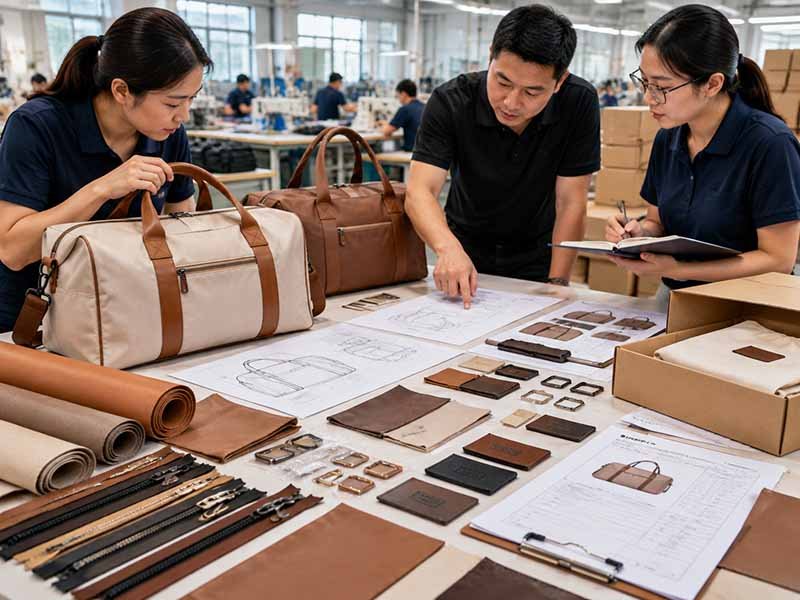
A corporate gift bag can look like a simple purchasing item until you are responsible for several hundred, several thousand, or tens of thousands of units that must carry the right logo, match the right color, fit the intended contents, arrive in the correct packaging, and reach the destination before a fixed event. At that point, the project stops being a simple product order and becomes a coordinated manufacturing program involving product development, material selection, logo application, sampling, production control, inspection, packaging, freight, and schedule management. The real challenge is not finding a company that can sew a bag. It is finding a manufacturing partner that can translate a commercial idea into a repeatable product without creating avoidable risks along the way.
To choose a bag manufacturer for a corporate gift project, evaluate six areas: project fit, manufacturing capability, sample and quality control, MOQ and pricing, production capacity, and delivery management. Ask for physical evidence instead of relying only on sales claims. Approve materials, colors, logos, construction, packaging, and a final sample before bulk production, then confirm inspection standards and the required arrival date in writing.
Consider a typical example. A company plans 3,000 branded laptop bags for an annual conference. The sample looks excellent, the embroidery is approved, and management likes the presentation. Only after production is nearly complete does the team realize the rigid gift box makes each packed unit much larger than expected. Freight costs increase sharply, the original shipping plan no longer works, and the event date is only weeks away. Nothing is technically wrong with the bag itself, yet the project is suddenly at risk. The best manufacturer is not simply the one that produces an attractive sample. It is the one that helps prevent these problems before they become expensive.
What Does Your Corporate Gift Project Require?

A successful corporate gift bag project begins with a clear definition of the recipient, use case, quantity, budget, branding, packaging, destination, and required delivery date. These factors determine the bag structure, materials, logo process, MOQ, production method, quality plan, and freight strategy. The more precise the project brief is before sampling begins, the easier it becomes to compare manufacturers fairly and avoid costly revisions later.
Corporate gifting projects often begin with a short request such as, “We need 2,000 custom bags for our annual event,” but a factory cannot build a reliable quotation or production plan from that sentence alone. It still needs to know what the bag will carry, who will receive it, how frequently it will be used, whether it should feel promotional or premium, whether it must match brand colors precisely, and whether it will be handed out locally, shipped to multiple offices, or packed as part of a larger gift set. Each of those decisions changes the manufacturing approach.
A useful project brief should remove as much interpretation as possible. Two suppliers may both quote a “custom corporate tote,” yet one may assume lightweight polyester, a simple printed logo, and basic protective packing, while another assumes heavy canvas, reinforced handles, internal pockets, embroidery, and an individual gift box. The final prices could be very different even though both suppliers technically responded to the same request. Clear specifications make sure you are comparing the same product rather than comparing numbers attached to different assumptions.
| Project Detail | Practical Example | Manufacturing Impact |
|---|---|---|
| Quantity | 2,000 pcs | Affects sourcing, setup, production planning, and price |
| Bag Type | Laptop tote | Determines structure, lining, padding, and sewing |
| Size | 42 × 32 × 12 cm | Controls capacity, material use, and carton volume |
| Main Material | 600D polyester or 10–12 oz canvas | Changes appearance, durability, cost, and lead time |
| Logo | 90 mm embroidery | Influences setup, stitch time, and fabric support |
| Color | Brand navy with Pantone reference | May require stock matching or custom dyeing |
| Packaging | Individual bag with insert card | Affects labor, material cost, and shipping volume |
| Destination | United States | Needed for freight and delivery planning |
| In-Hands Date | October 10 | Determines backward production schedule |
| Budget | Target landed or ex-factory range | Helps filter unrealistic specifications |
Define the Use Case
The best product choice usually becomes clearer when you start with the recipient rather than the bag style. A conference attendee may use the bag for brochures, a notebook, a bottle, and a laptop during a two-day event, while a new employee may carry the same backpack to work every day for several years. A premium executive gift may be judged mainly by material feel, hardware finish, packaging, and understated branding, while a mass promotional giveaway may prioritize visible logo placement, practical capacity, simple construction, and cost control. These scenarios place very different demands on the product.
The intended contents are equally important. If the gift kit includes a 14-inch laptop, charger, water bottle, notebook, and welcome card, those items should influence the dimensions and internal layout from the beginning. Even a difference of 20 or 30 millimeters can affect how comfortably a laptop fits inside a compartment. In a cooler bag, thicker insulation can reduce usable internal space. In a tote, handle drop can determine whether the bag feels comfortable on the shoulder once it is loaded. Designing around real use prevents the common problem of approving an attractive empty sample that performs poorly when recipients actually use it.
Match Product and Budget
Budget discussions become much more productive when priorities are ranked instead of treated as equally important. A project may need premium-looking fabric, accurate brand colors, comfortable handles, and strong logo presentation, while custom metal hardware and rigid gift packaging may be optional. If the team identifies which features are essential and which are flexible, the manufacturer can protect the elements recipients will notice most while finding savings in areas that have less impact on the experience.
Material choice alone can create major cost differences without changing the basic silhouette. A simple promotional polyester bag sits in a completely different manufacturing range from a structured nylon backpack with lining, foam, multiple zippers, webbing, custom hardware, and embroidery. Canvas also varies substantially. A lightweight cotton fabric may work well for an inexpensive event tote, while heavy 12–16 oz canvas creates a firmer product with different sewing requirements, higher material usage, greater shipping weight, and a more substantial hand feel. The most useful budget conversation therefore focuses on specifications and trade-offs, not only on the lowest available unit price.
Set Branding Requirements
Branding should be planned together with the fabric and product structure because logo methods do not behave the same way on every material. Screen printing can be efficient for clean graphics on canvas, cotton, polyester, and similar flat surfaces. Embroidery adds texture and can create a more premium appearance, but dense embroidery may stiffen lightweight fabrics or require backing. Woven labels can reproduce small details, while rubber patches suit technical or outdoor styles. Debossing, embossing, foil stamping, and metal plates may work well for leather, PU, or higher-end gift concepts.
The logo specification should include the final artwork, physical dimensions, position, color reference, and production method. Terms such as “small logo” or “centered on the front” are open to interpretation once the product contains curved panels, seams, pockets, and zippers. A more precise instruction defines the logo width in millimeters and gives measurable placement references. If branding is especially important, the logo should be tested on the actual or representative production material before final approval. A Pantone target can improve communication, but different fabrics, embroidery threads, inks, metals, and coatings can still create visible differences.
Plan Packaging Early
Packaging influences the gift experience, but it also changes freight, storage, labor, and distribution. A soft tote folded into a simple protective bag occupies relatively little space, while the same tote placed flat inside a rigid presentation box may multiply the shipment volume even though the actual product weight has changed very little. If packaging is considered only after the bag has been approved, the project can discover too late that its freight budget or warehouse plan no longer works.
Corporate gift programs also frequently involve kitting. A bag may need to arrive with a notebook, bottle, charger, card, ribbon, tissue paper, or another branded item already packed inside. A 3,000-unit kit with five components requires at least 15,000 individual items to be received, counted, stored, assembled, and checked. If the program contains several regions, employee groups, or artwork versions, the complexity rises again. Before production begins, the team should confirm the final packing sequence, packed dimensions, units per carton, carton size, gross weight, and labeling requirements so that packaging is treated as part of the manufacturing plan rather than a decorative decision at the end.
Which Manufacturing Capabilities Matter Most?

The most important manufacturing capabilities are relevant product experience, material sourcing, sampling, OEM/ODM development, logo application, quality control, packaging, and production management. A manufacturer does not need to make every kind of bag, but it should understand the construction methods, materials, quality risks, and order size involved in your specific corporate gift project.
A large product catalog can look impressive, yet photographs do not tell you who actually developed the products, where they were produced, or how consistently they can be repeated. A basic cotton tote may contain only a limited number of major fabric components, while a technical backpack can contain dozens of shell, lining, foam, mesh, webbing, binding, zipper, and hardware parts. Although both products are called bags, their manufacturing challenges are completely different. The more complex the design, the more important it becomes to verify real experience with similar structures rather than relying on general claims about factory capability.
A manufacturer should also be comfortable explaining limitations. If a company immediately agrees to every requested material, every target price, every custom feature, every quantity, and an unusually short deadline without asking technical questions, that may indicate the conversation is being driven by sales rather than manufacturing reality. Strong product-development teams usually ask more questions at the beginning because they are trying to identify problems before the sample or bulk order exposes them.
Szoneier’s documented manufacturing model is built around custom bags and soft goods rather than simple product resale, with support for material sourcing, sampling, production coordination, quality inspection, packaging, and export delivery. Its positioning also covers both OEM projects with established specifications and ODM projects where the customer begins with reference images, concepts, target markets, or target costs.
Check Similar Experience
Relevant experience should be evaluated by construction rather than by product name alone. If the project involves a padded laptop backpack, look for examples that contain similar shoulder-strap construction, laptop protection, zipper curves, foam, lining, binding, and reinforcement. If you need a premium canvas travel bag, examine products with similar material weight, handle attachment, bottom reinforcement, lining, hardware, and long zipper installations. A supplier that has made many simple drawstring bags may still require a large learning curve to manufacture a structured multi-compartment backpack reliably.
Physical samples reveal much more than polished product photography. Look at the inside as closely as the outside. Check seam finishing, reinforcement, binding, stitch consistency, symmetry, zipper installation, lining tension, handle attachment, and the areas where multiple materials meet. Turning a bag inside out, where possible, often reveals more about manufacturing discipline than the logo or exterior styling. Similar experience does not mean the factory must have made the exact same design before. It means the materials, processes, and technical risks should already be familiar enough that the team can identify potential problems before production.
Review Material Capability
Material knowledge affects almost every other part of the project, including appearance, durability, logo compatibility, price, MOQ, sewing behavior, and delivery time. Polyester, nylon, Oxford fabrics, canvas, cotton, RPET, PU, leather, neoprene, PVC, TPU, mesh, foam, lining, and webbing all behave differently. Even apparently simple descriptions can hide substantial variation. A fabric described as 600D polyester may still differ in coating, density, backing, stiffness, surface texture, color consistency, and supplier quality.
Physical swatches are particularly useful when hand feel, texture, thickness, or exact appearance matters. A photograph rarely communicates whether a fabric feels soft, stiff, glossy, matte, dense, lightweight, or heavily coated. The factory should also explain whether the recommended material is available from regular stock, normally sourced, custom dyed, specially coated, or made to order. Stock materials can often support lower minimums and faster development, while custom materials may improve brand control but introduce longer sourcing schedules and larger purchasing commitments. For corporate gift projects, the best material is not automatically the most expensive one; it is the material that supports the intended appearance, function, budget, and repeat-order plan.
Assess Development Skills
Product-development skill becomes especially valuable when the project begins with a concept rather than a complete technical package. Some companies arrive with a full tech pack containing dimensions, construction notes, BOM, logo artwork, materials, and packaging. Others begin with a reference photograph and a requirement such as, “We need a premium employee welcome backpack that carries a laptop, bottle, charger, and notebook and stays within this budget.” Both approaches can lead to a successful product, but the second requires the factory to participate more actively in development.
Useful development support should narrow the options rather than overwhelm the team with random choices. Instead of sending dozens of fabrics, an experienced manufacturer might present an economical polyester, a stronger nylon, and an RPET alternative, then explain how each affects cost, appearance, MOQ, and production. The same approach applies to padding, zippers, pocket layouts, handles, and logo methods. Strong manufacturing input also considers manufacturability. A visually attractive feature may create unnecessary sewing difficulty or defect risk, and an experienced team can often modify the construction without changing the overall design intent. These small decisions can reduce labor, improve consistency, and keep the product closer to the target budget.
Evaluate Branding and Kitting
Brand decoration is part of manufacturing, not an isolated final step. Embroidery requires decisions about thread, stitch density, backing, border treatment, and fabric stability. Screen printing depends on ink, screen preparation, curing, opacity, and surface texture. Heat-transfer processes require temperature compatibility with the chosen material, while molded rubber patches, custom zipper pullers, and metal plates may require dedicated tooling and their own minimum quantities. A capable manufacturer should explain not only what processes are available but also which one is most appropriate for the specific material and visual result.
Kitting places additional demands on process control because the manufacturer may be handling items that were not produced in the same sewing line. When a bag is combined with notebooks, tumblers, electronics, cards, or other gifts, the assembly team must control quantities, versions, packing order, and final presentation. A 5,000-unit program divided across five regions can effectively become five separate packing versions even when the underlying bag is identical. Clear work instructions, labeled components, controlled artwork, carton markings, and version separation become increasingly important as the number of variants grows.
How Do You Evaluate Samples and Quality?

Evaluate samples using measurable specifications rather than appearance alone. Check dimensions, materials, color, construction, logo execution, hardware, fit, function, workmanship, and packaging. Record every revision, identify the final approved sample clearly, and connect bulk inspection to that same standard. Quality control works best when incorrect materials and repeated defects are found during production rather than after every unit is finished and packed.
The sample stage is one of the least expensive opportunities to solve problems because only a small number of products have been made. Moving a pocket, changing handle length, correcting a logo, or adjusting reinforcement may require only a pattern or workmanship revision at this stage. Once several thousand units have already been cut, decorated, and sewn, the same change may require expensive rework, material loss, or a production restart. Sampling should therefore answer two questions at the same time: does the team like the product, and can this specification be repeated reliably in bulk?
A sample can appear excellent while still containing hidden risks. An experienced sample maker may manually align a difficult logo perfectly, even though production operators will struggle to repeat that position thousands of times. A zipper may work well on one prototype but become difficult to install consistently because the pattern creates unnecessary tension. A heavy fabric may produce a beautiful sample but slow bulk sewing and create inconsistent corners. The purpose of sample review is to identify these issues before the product becomes expensive to change.
| Inspection Stage | Typical Checks | Main Risk Controlled |
|---|---|---|
| Pre-Production / Incoming | Fabric, color, zippers, webbing, hardware, logo materials | Wrong materials entering production |
| In-Process | Dimensions, sewing, reinforcement, logo position, assembly | Repeated defects spreading through the order |
| Final Inspection | Appearance, function, quantity, packaging, carton marks | Nonconforming goods reaching shipment |
Inspect the Whole Sample
A structured sample review should begin with the dimensions that matter most. Depending on the product, these may include overall width, height, depth, handle drop, strap length, pocket size, zipper opening, laptop compartment dimensions, and logo position. Soft textile products naturally have dimensional variation, so the appropriate tolerance should depend on the function of each measurement. A few millimeters may matter greatly in a fitted pocket while making little practical difference to the overall height of a large duffle bag.
After measuring, use the product in the way the recipient will use it. Load it with the intended items, carry it, open it, close it, place it on a table, and check whether the structure behaves as expected. Then inspect seam alignment, skipped stitches, loose threads, fabric damage, reinforcement, lining, binding, zipper function, handle symmetry, embroidery, printing, cleanliness, and packaging. A sample should not be approved simply because it photographs well. It should prove that the final design performs properly when handled as a real product.
Control Critical Quality Points
Not every characteristic has equal commercial importance, so inspection should focus first on features that create the greatest functional or branding risk. For a laptop backpack, critical points might include shoulder-strap attachment, laptop compartment size, zipper function, reinforcement, logo accuracy, main dimensions, and fabric color. For a simple promotional tote, logo appearance, handle strength, dimensions, fabric defects, and stitching consistency may deserve greater attention.
Larger orders are sometimes inspected through statistical sampling plans based on standards such as ISO 2859-1 or ANSI/ASQ Z1.4. In general consumer-goods inspection, AQL levels such as 2.5 for major defects and 4.0 for minor defects are commonly encountered, but these figures are not universal rules and should not be applied automatically to every product. The agreed acceptance standard should reflect the function, risk, customer requirements, and severity of different defect types. A potentially dangerous structural failure may justify much stricter treatment than a minor cosmetic variation that does not affect use.
Protect Sample-to-Bulk Consistency
The approved sample only becomes useful when the information behind it reaches production accurately. Many sample-to-bulk problems are caused not by poor sewing ability but by version confusion. The customer may approve sample version three, while purchasing works from the first material list or the production team receives an outdated logo file. When different departments work from different references, even a capable factory can produce the wrong result consistently.
A controlled production package can include the approved physical sample, final pattern, BOM, material swatches, measurements, logo artwork, logo placement, hardware specifications, packing instructions, carton requirements, and special workmanship notes. For more complex products, the team can review 10–20 critical characteristics before production begins and inspect the first bulk units before the order moves too far. Finding a systematic issue after 50 pieces is very different from discovering it after 5,000 pieces are finished. The objective is not zero variation in a handmade textile product; it is controlled variation within agreed functional and visual limits.
Szoneier’s documented quality-management approach includes involvement at material, pre-production, in-process, finished-product, packing, and shipment stages rather than relying only on a final visual inspection.
Verify Logo and Color
Logo and color errors are especially visible in corporate gifting because many identical products may be displayed or distributed at the same event. Logo placement should therefore be measured from stable reference points instead of judged only by eye. Embroidery should be checked for thread color, stitch density, shape, puckering, backing, and small-text readability, while printed logos should be evaluated for opacity, edge definition, registration, curing, and adhesion. Metal plates, patches, and molded logos also need orientation, finish, attachment, and scratch resistance to be considered.
Color control requires similar discipline. A Pantone reference can improve communication, but different substrates do not produce visually identical results. The same target navy may appear different on cotton, nylon, polyester, zipper tape, embroidery thread, or powder-coated metal. When brand colors are important, physical material and decoration references are more useful than monitor-based approvals alone. If different components only need to coordinate rather than match perfectly, that expectation should also be recorded. The goal is not impossible color uniformity across completely different materials; it is preventing unexpected combinations that make the finished product look inconsistent.
Are MOQ, Pricing, and Capacity a Good Fit?

MOQ, pricing, and capacity should match the complete purchasing plan rather than a single quotation. Minimum order quantity is often driven by materials, custom colors, hardware, logo processes, packaging, and production efficiency. Compare prices only when specifications are equivalent, and confirm that the manufacturer can fit your exact quantity into the required production window without creating quality or schedule pressure.
Custom manufacturing prices can be misleading when they are compared without looking at what is included. A $6.40 bag may initially seem more attractive than a $7.00 alternative, but that advantage disappears if the first option uses a lighter fabric, different zipper, simpler lining, basic packaging, or a cheaper logo method. Material consumption, sewing labor, decoration, hardware, packaging, setup, tooling, wastage, order quantity, and inspection can all influence the final number. A good quotation should make the most important assumptions visible so that the purchasing team can understand what changes if the specification changes.
MOQ works the same way. The sewing workshop may be willing to make only a few hundred pieces, while a custom fabric mill, zipper producer, metal hardware company, or printed-box supplier may require a much larger run. In that case, the practical MOQ is controlled by one of the components rather than by the sewing operation. Szoneier’s documented MOQ begins from 200 pieces for selected custom projects, but the exact requirement can change depending on material availability, color, logo process, custom accessories, packaging, tooling, testing, and product structure.
Understand the MOQ Drivers
MOQ is easier to manage when it is broken down by component. A factory may agree to sew 300 bags while the selected custom-dyed material is only available at a quantity equivalent to 1,000 units. A molded rubber patch may require 500 pieces, a custom printed box may need 1,000, and a specialized zipper puller may have its own production minimum. The effective project minimum becomes the highest or most expensive constraint unless the company is prepared to purchase surplus components for future orders.
When a required quantity is below the practical minimum, the most effective solution is often technical rather than purely commercial. A stock fabric color may replace custom dyeing, a standard zipper can replace a new molded puller, screen printing can replace a metal badge, or a standard shipping carton can replace a fully customized presentation box. These changes do not necessarily reduce perceived value if the features that matter most to recipients are protected. Instead of repeatedly asking a factory to “lower the MOQ,” ask which two or three components are creating the minimum. That usually leads to a more realistic solution.
Compare Real Project Cost
Quotations should be built from the same RFQ package if they are going to be compared fairly. Bag dimensions, materials, lining, hardware, logo, packaging, quantity, destination, and delivery terms should be as consistent as possible across suppliers. If a manufacturer proposes a cost-saving alternative, it should be quoted separately rather than silently substituted into the original specification.
| Cost Area | What Should Be Confirmed |
|---|---|
| Bag Unit Price | Exact material, construction, and quantity basis |
| Logo | Process, colors, dimensions, and setup |
| Packaging | Protective bag, insert, hangtag, gift box, or kitting |
| Sampling | Sample fee, courier, and revision arrangement |
| Tooling | Molds, zipper pullers, plates, patches, or dies |
| Inspection | Factory inspection or third-party cost |
| Cartons | Export cartons, labels, and special marks |
| Freight | Express, air, sea, DDP, or other delivery scope |
| Duties and Taxes | Included or excluded under the agreed Incoterm |
| Landed Estimate | Total comparable cost at the destination |
Quantity breaks can also reveal how production economics change. Requesting prices at 500, 1,000, 3,000, or 5,000 pieces may show where setup and sourcing become more efficient. However, not every component becomes cheaper at the same rate. Premium hardware, specialized packaging, or small quantities of imported materials may remain relatively stable. The purpose of a detailed quotation is not to eliminate every charge. It is to understand which parts of the project create value and which ones create cost.
Verify Practical Capacity
Capacity should always be tied to a specific product and schedule. Asking, “What is your monthly production capacity?” often produces a broad number that does not tell you whether your order can be completed at the required time. A better question is, “If our final sample is approved on March 10, when can 8,000 units of this exact product be finished, inspected, and packed?” That forces the supplier to consider material availability, product complexity, decoration, current workload, production lines, inspection, and packaging.
Seasonality also matters. Demand may increase before holiday gifting periods, large trade-show seasons, or major retail campaigns. Chinese New Year can affect factories and upstream material suppliers in China, and the exact disruption varies from year to year. Multi-SKU projects consume more management capacity than a single homogeneous order. Ten thousand bags split into ten colors and five artwork versions may be operationally more difficult than twenty thousand identical black bags. Production planning should therefore look at complexity as well as total quantity.
Plan for Repeat Orders
A corporate gift item sometimes begins as a one-time campaign and later becomes an onboarding product, annual event item, customer reward, distributor incentive, or regional marketing asset. Repeatability should therefore be considered during the first development cycle. Components that are difficult to source later can create unnecessary problems when replenishment quantities become smaller or when an urgent repeat order is needed.
Materials, patterns, BOMs, logo files, color references, packaging specifications, and approved samples should be retained where possible. If an exact fabric, zipper, or accessory becomes unavailable, the manufacturer should present alternatives for approval instead of substituting them silently. This matters particularly when inventory from two production batches will appear side by side. Small changes in navy fabric, zipper pullers, embroidery thread, or logo position can become obvious when old and new units are distributed together. A slightly simpler construction using stable materials may therefore be a stronger long-term choice than a complicated first order that is difficult to reproduce.
How Do You Protect the Delivery Schedule?
Protect delivery by planning backward from the required in-hands date rather than the factory completion date. Allow realistic time for sampling, approvals, materials, bulk production, inspection, packaging, international transportation, customs, and local distribution. When the event date cannot move, include contingency and freeze critical specifications before bulk production begins.
Corporate gifting has a particularly unforgiving relationship with time. Five thousand conference bags arriving three days after the conference are not simply “a little late.” Their original purpose has largely disappeared. The same issue applies to holiday programs, company anniversaries, product launches, employee onboarding dates, sporting events, and promotional campaigns. Quality still matters, but a perfect product that misses the occasion can create a larger commercial failure than a small cosmetic issue discovered in time.
A useful schedule starts at the destination. Identify when the gifts must physically be available for distribution, then work backward through local handling, customs, international transit, export preparation, packing, final inspection, bulk production, material preparation, and sample approval. This approach reveals the real decision deadlines. It also makes clear that delayed internal approval can damage the schedule just as much as slow manufacturing.
Build a Backward Timeline
A backward plan begins with the date the gifts are actually needed, then adds an earlier internal receipt date. If an event takes place on November 15, a company may want the products in its warehouse by November 8 so there is one week for receiving, counting, internal allocation, and unexpected issues. Transportation and customs must therefore finish before November 8, which pushes dispatch, final QC, packing, production, and material sourcing further back again.
The appropriate buffer depends on the project, but fixed-date programs often benefit from reserving part of the available schedule for unexpected events rather than allocating every day to planned activity. A planning reserve of roughly 10–20% of the total timeline can sometimes be sensible for event-driven projects, although the correct buffer varies widely with complexity, season, destination, freight mode, and internal risk tolerance. The important point is that contingency should exist visibly rather than being hidden inside optimistic production assumptions.
Control Sample Approvals
The manufacturing schedule frequently loses time during internal decision-making. A factory may complete a sample within a reasonable period, yet the project can remain idle while marketing, procurement, management, and design teams review it separately. When feedback arrives in several rounds from different people, the supplier may receive conflicting instructions and start another revision cycle that nobody originally planned.
One person should coordinate final approval, even when several departments provide input. Samples and artwork should also use clear version numbers so everyone knows which file and physical product is current. A naming system such as Sample V1, Sample V2, and Approved Sample V3 is much safer than references to “the latest sample.” Once bulk production is released, changes to dimensions, colors, materials, or branding should be treated as controlled revisions because even a seemingly small adjustment can affect patterns, decoration, purchasing, packaging, or lead time.
Monitor Production Milestones
Production should have visible checkpoints rather than one completion date. For larger orders, milestones can include material arrival, cutting, first bulk units, early production inspection, partial completion, final sewing, packing, final inspection, and shipment readiness. The exact percentages or sequence should match the product, but the purpose is always the same: identify delays and systematic defects before they become difficult to correct.
If the first several hundred units of a 5,000-piece order show a repeat sewing problem, corrective action may still be manageable. Discovering the same issue only after all 5,000 pieces are packed creates a very different cost and schedule problem. Photographs and videos can help remote teams understand progress, but they should show the actual project and relevant production stage rather than general factory activity. For higher-value or highly time-sensitive orders, third-party inspection may also be considered depending on internal procurement policy, supplier history, and risk level.
Match Freight to Risk
Freight decisions should be made after the packed dimensions, total volume, weight, destination, and deadline are known. Express courier is useful for samples and small urgent shipments. Air freight can support time-sensitive commercial quantities, while sea freight is generally more economical for larger volumes when the schedule allows it. Some programs use a split-shipment strategy, sending an urgent quantity by air for an event while the remaining balance travels more economically.
Bags can create unusual freight economics because many are relatively light but bulky. A rigid gift box can dramatically increase volumetric weight or total cubic volume without adding much actual weight. Once the packaging is approved, the project should confirm cartons, units per carton, carton dimensions, gross weight, approximate total volume, freight method, agreed Incoterm, transit window, and destination responsibilities. Szoneier’s documented export support includes courier, air, sea, DDP, and other international-delivery coordination for custom bag projects.
What Should You Verify Before Approval?
Before approving a manufacturer, verify comparable product experience, actual production control, sample performance, quality procedures, communication, capacity, packaging capability, commercial terms, and delivery planning. Ask for evidence that relates directly to your project. The final decision should rest on controlled specifications and demonstrated capability rather than an attractive website, a low quotation, or broad claims about manufacturing experience.
Supplier evaluation becomes easier when claims are converted into evidence. “High quality” is a claim; a physical sample, inspection record, measurement sheet, approved material reference, or repeat-order history offers stronger proof. “Fast delivery” is a claim; a project-specific timeline showing material preparation, production, inspection, packing, and shipment milestones is more useful. “We are a real factory” is a claim; a factory visit, live video review, production-area photographs, business documentation, or audit can give the procurement team a clearer understanding of how the order will actually be controlled.
The level of verification should rise with risk. A 300-piece simple tote may not require the same level of due diligence as a 30,000-piece international gifting program involving several countries, multiple logo versions, complex packaging, and a fixed launch date. Quantity, customization, brand visibility, safety, compliance, schedule sensitivity, and financial exposure all influence how much evidence is reasonable before approval.
Verify Who Controls Production
The useful question is not simply whether the company is a factory or a trading company. The more important question is who controls sampling, material purchasing, production, inspection, subcontracting, packaging, and corrective action. Some factories outsource selected operations, and some supply companies manage external production effectively. The key issue is transparency and accountability.
For larger programs, a factory visit or live video review can provide useful visibility into the sample room, material area, cutting, sewing, quality inspection, packing, warehouse, and products with similar construction. Live reviews are more valuable when the team asks project-specific questions rather than simply watching a prepared factory tour. Ask to see a comparable zipper installation, reinforcement method, lining construction, current QC activity, or packing operation. The purpose is not to find fault with the supplier. It is to understand how the product will move through the production system and who will be responsible when something needs to be corrected.
Szoneier’s documented company information states that qualified customers can arrange video factory reviews and visits covering the sample room, materials, sewing production, quality inspection, packaging, warehousing, and related manufacturing activities.
Ask for Relevant Evidence
Evidence should answer a specific uncertainty rather than simply filling a procurement folder with documents. If the concern is sewing quality, inspect products with similar construction. If color is important, request the relevant fabric and logo samples. If capacity is uncertain, ask for a project-specific schedule. If packing is complex, approve a finished packed unit. If manufacturing identity matters, arrange an audit, visit, or live production review appropriate to the size and risk of the program.
A useful way to think about evidence is as a progression from claim to visual proof, then physical proof, and finally process proof. Photographs may show that a supplier has handled similar products. A physical sample proves that it can execute the product at least once. Production records, controlled specifications, inspection processes, and repeat-order consistency provide stronger evidence that the same result can be reproduced across hundreds or thousands of units. The most useful supplier evidence is always connected to the specific risk the project is trying to reduce.
Test Communication Early
Communication quality can be evaluated before any purchase order is issued. Send a structured RFQ and observe what happens. Does the supplier identify missing dimensions or material details? Does the quotation clearly state what has been assumed? Does the team ask about destination, packaging, and required timing? When one specification changes, does the next quotation or sample instruction reflect that change accurately?
A useful test is to make one controlled revision and see whether the information remains consistent. For example, change a handle length from 550 mm to 600 mm or move the logo by a defined amount, then check whether the revised specification records that change correctly. Technical explanations matter as well. When the supplier recommends a fabric, zipper, foam thickness, or decoration process, ask for the reason. A strong answer explains trade-offs in appearance, performance, cost, production, or lead time. Fast responses are helpful, but accuracy and ownership are more valuable than receiving an immediate “yes” to every request.
Confirm Everything Before the PO
Before the purchase order moves into production, both sides should be able to describe the product in the same way. Final confirmation should cover dimensions, material, color, lining, zippers, webbing, hardware, logo process, artwork, logo position, packaging, quantity by version, unit price, tooling, sample status, inspection expectations, production timing, shipment terms, destination, and required in-hands date.
For more complicated projects, a short master specification can point to the controlling files and references. The approved sample version, material swatch, final logo artwork, packing standard, color split, and delivery term should all be identifiable without searching through months of messages. The purchase order itself should not replace technical approval. A PO may exist while a sample or artwork is still under review, but bulk production should begin only after the agreed release conditions have been satisfied. The safest corporate gift projects often feel uneventful by the time production starts because the important uncertainties have already been removed.
Choosing a bag manufacturer for corporate gift projects is ultimately less about finding the company with the largest catalog or the lowest first quotation and more about selecting a manufacturing system that makes the project predictable. The right partner should help turn an initial brief into a clear specification, convert that specification into an approved sample, reproduce the sample consistently in bulk, and move the finished products through inspection, packaging, and delivery without creating unnecessary surprises.
For companies sourcing internationally, the strongest first conversation usually begins with practical information: product reference, intended use, expected contents, quantity, branding, material direction, packaging, destination, budget range, and required arrival date. That information allows a capable manufacturer to identify risks, recommend realistic options, and explain trade-offs before money and time are committed. Szoneier’s documented manufacturing scope includes custom bags and soft goods for global brands, retailers, promotional companies, corporate gift projects, and other commercial customers, with support covering sampling, materials, production, quality inspection, packaging, and export delivery.
The final decision should therefore not be based on whether one quotation is 5% or 10% cheaper on paper. A better question is whether the manufacturer gives your team a clear path from initial idea to physical sample, from approved sample to controlled production, and from finished production to an on-time delivery that does not require last-minute rescue. When those steps are visible, measurable, and supported by evidence, the supplier becomes much easier to evaluate and the corporate gift project becomes far easier to manage.
Frequently Asked Questions
How early should I order custom bags for a corporate event?
The safest schedule depends on product complexity, quantity, materials, branding, packaging, destination, and shipping method, so there is no single lead time that applies to every corporate gift project. A basic bag using stock materials can usually move faster than a structured backpack using custom-dyed fabric, molded accessories, embroidery, and presentation packaging. For fixed events, plan backward from the required in-hands date and include sampling, possible revisions, material sourcing, production, inspection, packing, international transport, customs, local delivery, and a contingency buffer rather than relying only on the factory’s stated production time.
What is a typical MOQ for custom corporate gift bags?
MOQ varies because it can be controlled by fabric, colors, logo processes, hardware, packaging, or production setup rather than sewing alone. A simple bag made from stock fabric with a standard printed logo may support a much lower minimum than a custom-dyed backpack using molded logo patches, personalized zipper pullers, and branded gift boxes. Szoneier’s documented MOQ starts from 200 pieces for selected custom bag projects, while actual minimums can increase depending on structure, material availability, decoration, accessories, packaging, tooling, and testing requirements.
Should I approve a physical sample before bulk production?
For most customized corporate gift projects, approving a physical sample is one of the most effective ways to reduce risk before production begins. A sample allows the team to evaluate size, construction, material feel, color, logo appearance, zipper function, carrying comfort, packaging, and the fit of any items that will be placed inside. It also creates a practical reference for bulk production and inspection. Photographs may be sufficient for some minor revisions, but when branding, texture, structure, or premium presentation matters, a physical production-relevant sample usually provides much more reliable information than screen-based approval alone.
How can I tell if a bag manufacturer has good quality control?
Look for a process rather than a general statement that the factory has “strict QC.” A reliable system should explain how materials and accessories are checked before production, how workmanship and measurements are monitored during sewing, how the first bulk units are compared with the approved sample, and how finished goods and packaging are inspected before shipment. Ask which characteristics are treated as critical for your project and how recurring defects are corrected. For larger orders, a third-party inspection based on an agreed sampling and defect-classification standard may also be appropriate, depending on project value and procurement policy.
Which logo method is best for corporate gift bags?
The best logo method depends on the bag material, artwork, intended appearance, order quantity, and budget. Screen printing can work well for clean graphics on canvas, cotton, polyester, and other relatively flat surfaces. Embroidery creates texture and can support a more premium appearance on backpacks, laptop bags, and heavier fabrics. Woven labels are useful for fine details, while rubber patches, debossing, embossing, metal plates, and custom zipper pullers can suit technical or premium products. The most reliable approach is to review the logo on the intended material because the same artwork can look very different when printed, embroidered, molded, or applied to different surfaces.
How should I compare quotes from different bag manufacturers?
Compare quotations only after giving each manufacturer the same core specification. Bag dimensions, main material, lining, hardware, zipper, logo process, packaging, quantity, destination, and delivery terms should be defined clearly enough that suppliers are pricing approximately the same product. Then check what is included or excluded, such as sampling, logo setup, tooling, packaging, cartons, inspection, freight, and duties. A lower unit price may not represent a lower total cost if the specification is lighter, key items are excluded, or the product requires expensive rework. When possible, compare the estimated total project or landed cost rather than relying only on the ex-factory unit price.
What red flags should I watch for when choosing a bag manufacturer?
Common warning signs include a supplier giving a final price before understanding the product, agreeing immediately to an unrealistic deadline, changing material descriptions between conversations, refusing to show relevant samples or production evidence, being unclear about where bulk production will occur, or encouraging the company to start bulk production before an acceptable sample is approved. Another warning sign is a dramatically lower quotation with no technical explanation. A low price may be legitimate, but the difference should be traceable to materials, construction, packaging, production method, or commercial terms. Good manufacturers generally make the project clearer as discussions continue rather than creating more uncertainty.