 Skip to content
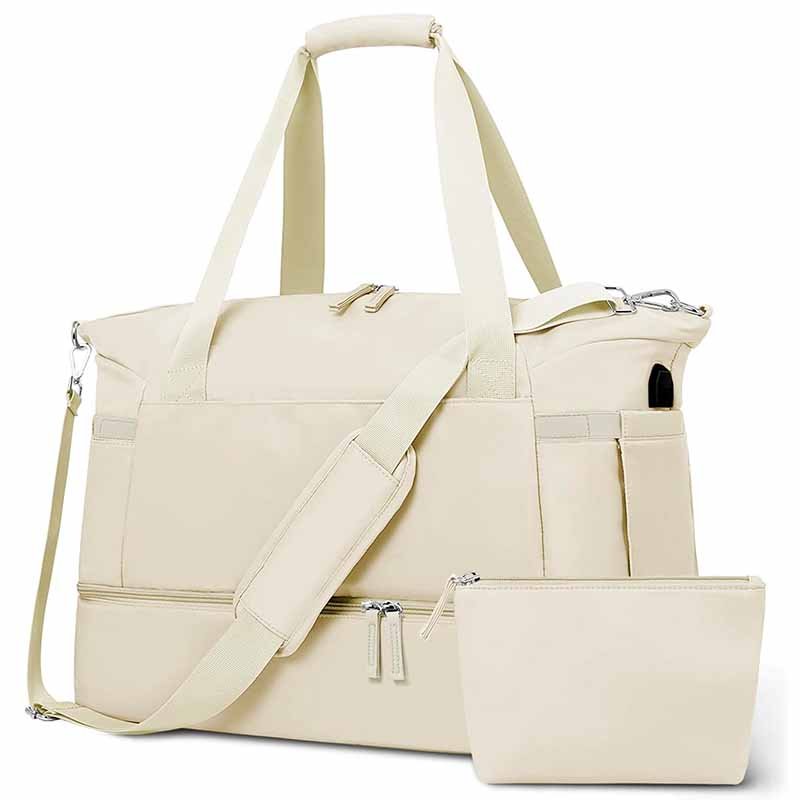
At first glance, a weekender bag seems like one of the simplest travel bags you can buy. It’s just for a short trip—two or three days—so how complicated can size really be? But anyone who has ever struggled with an overstuffed bag at an airport gate, or realized their “perfect” bag doesn’t fit under the seat, knows that weekender bag dimensions matter far more than people expect.
The challenge is that “weekender bag” is not a regulated size category. Unlike carry-on suitcases, there is no single global standard. One brand’s weekender might be compact and airline-friendly, while another’s pushes the limit of what most airlines allow. Some focus on volume, others on silhouette, and many ignore how real people actually pack.
At Szoneier, with more than 18 years of experience designing and manufacturing travel bags for global brands and private labels, we see this confusion every day. Buyers ask: What size is a weekend bag? What is the best size bag for a weekender? Will it fit carry-on rules? How many liters do I really need? These questions don’t come from indecision—they come from inconsistent information online.
This guide is written to clear that up. We’re not just listing dimensions; we’re explaining how size translates into real-world usability, airline compliance, comfort, and packing efficiency. Whether you’re a traveler choosing your next bag, or a brand developing a custom weekender, understanding dimensions is the foundation of a good decision.
A standard weekender bag is typically between 18–22 inches (45–56 cm) long, 10–12 inches (25–30 cm) high, and 8–10 inches (20–25 cm) deep, with a capacity of about 30–45 liters. The best size depends on trip length, packing style, and airline carry-on rules. Soft-sided weekender bags offer more flexibility, while structured designs provide better shape and organization.
If you’ve ever wondered why two “weekender bags” feel completely different in use, the answer almost always comes back to dimensions, proportions, and usable volume. Let’s break it down step by step.
What Is a Weekender Bag
A weekender bag is a medium-sized travel bag designed for short trips, usually lasting two to four days. It offers more space than a gym bag but is smaller and more flexible than a suitcase. Most weekender bags range from 30 to 45 liters and are built to balance packing capacity, portability, and airline carry-on compatibility.
What Makes a Bag a “Weekender”
A weekender bag is defined by function, not just size. It exists to solve a specific travel problem: carrying everything you need for a short trip without the inconvenience of a suitcase.
Key characteristics that define a true weekender bag include:
- Capacity suitable for 2–4 days of travel
- A single main compartment optimized for clothing
- Easy access for quick packing and unpacking
- Carry options such as hand straps, shoulder straps, or both
- A size that remains portable and airline-friendly
Unlike backpacks, which distribute weight vertically, or suitcases, which rely on wheels and rigid frames, a weekender bag emphasizes flexibility and speed. It’s the bag you grab when you don’t want to overthink packing.
How a Weekender Bag Differs from Duffels, Gym Bags, and Carry-Ons
Many users confuse weekender bags with duffel bags or gym bags, but there are important distinctions.
- Duffel bags are often longer and deeper, designed for sports gear rather than clothing organization.
- Gym bags prioritize durability and wet compartments but are usually too small or poorly structured for travel.
- Carry-on suitcases maximize structure and protection but sacrifice flexibility and ease of movement.
A weekender bag sits in between. It borrows the openness of a duffel, adds more thoughtful proportions, and remains easier to carry than a suitcase. From a manufacturing standpoint, it requires more precise dimension control than either a gym bag or a duffel.
Why Weekender Bag Dimensions Matter More Than People Expect
One of the most common mistakes users make is assuming “medium size” is good enough. In reality, small changes in length, height, or depth can dramatically affect usability.
For example:
- A bag that is too long may exceed airline carry-on limits
- A bag that is too deep feels bulky and uncomfortable to carry
- A bag that is too tall wastes vertical space when packed
This is why experienced manufacturers don’t design weekenders by volume alone. Dimensions must align with human carrying comfort, airline rules, and real packing habits.
What a Weekender Bag Is Typically Used For
Weekender bags are popular because they adapt to many real-life scenarios, including:
- Weekend city trips
- Short business travel
- Road trips
- Overnight stays
- Gym-to-weekend hybrid use
They are especially favored by travelers who want to avoid checked baggage and move quickly through airports or train stations. For brands, this versatility makes the weekender bag one of the highest-demand travel bag categories worldwide.
Why Weekender Bags Are So Popular in Modern Travel
Modern travel trends favor shorter, more frequent trips. People want bags that feel light, flexible, and easy to manage.
From Szoneier’s manufacturing experience, demand for weekender bags has grown because they:
- Reduce reliance on wheeled luggage
- Fit better with flexible airline policies
- Match casual and business lifestyles
- Offer strong branding opportunities
A well-designed weekender bag isn’t just a travel accessory—it’s a lifestyle product that reflects how people actually travel today.
What Are Standard Weekender Bag Dimensions
Standard weekender bag dimensions typically range from 18 to 22 inches in length, 10 to 12 inches in height, and 8 to 10 inches in depth, with a capacity of about 30 to 45 liters. These dimensions strike a balance between portability, packing space, and airline carry-on compatibility. The ideal size depends on personal packing style, trip length, and whether the bag is intended for business or leisure travel.
When we talk about standard dimensions for a weekender bag, it’s important to remember that “standard” is not a one-size-fits-all answer. However, after decades of industry experience, there are ideal ranges that consistently work for most travelers, especially in the context of airline carry-on requirements and general travel usability.
Weekender bags, unlike other bags, aren’t constrained to a fixed size category, which means they come in varying shapes and proportions. The key takeaway is finding the balance between external dimensions (airline compliance) and usable internal volume.
Standard Length, Width, and Height Ranges for Weekender Bags
Weekender bags are usually sized between 18 to 22 inches in length, with a height of 10 to 12 inches, and depth between 8 to 10 inches. These proportions ensure the bag stays within a manageable size range while still offering the capacity needed for a short weekend trip.
- Length: 18–22 inches (45–56 cm)
- Height: 10–12 inches (25–30 cm)
- Depth: 8–10 inches (20–25 cm)
These dimensions are ideal for 2–4 day trips, allowing enough room for:
- Clothing (up to 3–4 outfits)
- Toiletries
- Small accessories
- Shoes (usually 1 pair)
For comparison:
- 30L to 35L capacity suits lighter packers with more compact needs.
- 35L to 45L capacity is ideal for those who need to pack bulkier items like jackets or shoes.
How Volume (Liters) Relates to Weekender Bag Dimensions
Liters help define capacity, but dimensions give us more practical context. A bag with a 40L capacity may feel different depending on its height, depth, and shape. For instance, a wide, shallow bag with 40L will pack differently than a narrow, deep bag of the same volume.
Volume comparison based on dimensions:
- 30–35L: Best for minimalist packers, typically fits 18–20 inches long, 8–9 inches deep
- 35–40L: Standard for most travelers, fits 20–22 inches long, 9–10 inches deep
- 40–45L: Ideal for those who overpack or need more space for shoes or bulky jackets, typically 22 inches long, 10 inches deep
Why Soft-Sided Bags Are More Flexible Than Hard-Sided Bags
Soft-sided weekender bags are often more forgiving in dimensions. While the external size is fixed, the flexibility of the material allows you to fit items more efficiently and compress the bag if necessary.
Key advantages of soft-sided bags:
- Compression-friendly: Can be slightly squished to fit into tight spaces
- Expandable: Allows extra items to be packed without forcing zippers closed
- Airline-friendly: More likely to fit within carry-on regulations than hard-sided bags
From a manufacturing standpoint, this flexibility makes soft-sided bags a more efficient travel solution for most users. Szoneier often recommends softer designs for global travelers because of this packing efficiency.
Does the Bag’s Shape Impact Usable Capacity?
Shape plays a significant role in how much you can actually pack into a weekender bag.
- Rectangular shape (most common): Maximizes the usable internal space by making efficient use of the bag’s length, width, and height. Square or rectangular base allows clothing to stack flat, offering the best overall packing space.
- Tapered shape: Usually seen in more stylish designs, but it reduces internal packing capacity because the narrowing end sacrifices space near the opening.
- Boxy shape: Common in structured weekender bags, these allow straight, firm sides that hold their shape and offer good structure but less flexibility in packing.
When it comes to material, manufacturers like Szoneier engineer the shape for optimal packing efficiency, not just aesthetics.
Weekender Bag Dimensions for Specific Use Cases
Not all weekender bags are built the same. The bag’s dimensions should be chosen based on who will use it and what the trip entails.
Weekender Bag for Short Leisure Travel
- Best dimensions: 18–20 inches long, 8–9 inches deep, 10–11 inches high (30–35L)
- Why: Fits clothing and essentials for 2-3 days, compliant with most airline carry-on rules.
Weekender Bag for Business Travel
- Best dimensions: 20–22 inches long, 9–10 inches deep, 10–12 inches high (35–40L)
- Why: Offers space for business attire, laptop, and documents without compromising on comfort or professional appearance.
Weekender Bag for Active/Outdoor Travel
- Best dimensions: 20–22 inches long, 9–10 inches deep, 10–12 inches high (40–45L)
- Why: More space for bulky items like jackets, outdoor gear, or shoes. Slightly larger but still fits in overhead compartments.
Each design choice comes down to prioritizing comfort and capacity for specific types of travelers, which is why custom-sizing options are often popular for different brands.
How Do You Choose the Right Weekender Bag Size
To choose the right weekender bag size, consider trip length, packing habits, airline rules, and how you plan to carry the bag. Most travelers find 35–40 liters ideal for 2–3 day trips, while heavier packers or those carrying shoes or gear may prefer 40–45 liters. The best size balances usable space, comfort, and carry-on compliance rather than maximum volume.
Choosing the right weekender bag size isn’t about guessing liters—it’s about matching the bag to how you travel. Below is a step-by-step way professionals and experienced manufacturers evaluate size, using real-world logic instead of marketing claims.
What Is the Best Size Bag for a Weekender?
This is one of the most searched questions, and the honest answer is: there is a best range, not a single best number.
For most users:
- 35–40L is the most versatile size
- Works for 2–3 nights
- Fits clothing, toiletries, and one pair of shoes
- Remains manageable as a carry-on
Why this range works:
- Large enough to avoid underpacking stress
- Small enough to discourage overpacking
- Easier to carry by hand or shoulder
From manufacturing data and customer feedback, bags outside this range tend to generate more complaints—either “too small” or “too bulky.”
How Trip Length Affects the Ideal Weekender Bag Size
Trip length is the first filter when choosing size.
- 1–2 nights: 30–35L
- Minimalist travel
- One extra outfit, toiletries, electronics
- 2–3 nights (classic weekend): 35–40L
- Most common use case
- Allows flexible packing
- 3–4 nights: 40–45L
- Extra clothing layers or shoes
- Risk of airline size issues if poorly designed
A common mistake is choosing size based on the longest possible trip instead of the most frequent trip. This usually leads to oversized bags that are inconvenient 80% of the time.
How Packing Style Changes Size Requirements
Two travelers on the same trip may need very different bag sizes.
Minimal packers:
- Roll clothes tightly
- Limit shoes and accessories
- Often comfortable with 30–35L
Average packers:
- Fold clothes
- Bring backup items
- Best served by 35–40L
Heavy packers:
- Extra outfits, shoes, grooming items
- Often need 40–45L, but at the cost of bulk
This is why liter numbers alone are misleading. Internal layout, opening size, and bag shape can make a 35L feel more usable than a poorly designed 40L.
Does Body Size and Carry Comfort Matter?
Yes—more than most people expect.
A bag that feels fine for a tall traveler can feel oversized or awkward for someone smaller. Key factors include:
- Bag length relative to torso
- Shoulder strap drop
- Overall bulk when carried
From an ergonomic standpoint:
- Slimmer profiles feel lighter, even at similar weights
- Overly deep bags pull weight away from the body
Manufacturers often adjust dimensions—not just volume—to improve carry comfort across different user groups.
How Airline Carry-On Rules Influence Size Choice
Even if a bag fits your packing needs, it still needs to fit travel rules.
Most airlines allow:
- ~22 × 14 × 9 inches (56 × 36 × 23 cm)
A weekender bag longer than 22 inches risks gate checks, especially on international or budget flights.
Best practice:
- Choose a size that fits your needs without pushing airline limits
- Favor soft-sided bags that compress slightly
- Avoid sizing up “just in case”
Many experienced travelers intentionally choose a slightly smaller bag to reduce friction during boarding.
Do Internal Compartments Change the Size You Need?
Yes, and often in subtle ways.
More compartments can:
- Improve organization
- Reduce usable main space
- Make a bag feel smaller than its stated volume
For example:
- Laptop sleeves add structure but reduce clothing space
- Shoe compartments increase depth needs
- Thick padding reduces flexibility
If you prefer simple packing, a cleaner interior allows you to use a smaller overall bag. If you want structure and separation, you may need to size up slightly to compensate.
Quick Size Selection Guide
| Travel Type | Recommended Size |
|---|---|
| Minimalist weekend | 30–35L |
| Standard 2–3 days | 35–40L |
| Heavy packing / shoes | 40–45L |
| Business travel | 35–40L |
| Gym + weekend | 40–45L |
Which Weekender Bag Dimensions Are Best for Travel Rules
The best weekender bag dimensions for travel are generally 22 × 14 × 9 inches (56 × 36 × 23 cm), which comply with most airlines’ carry-on regulations. Soft-sided weekender bags are more flexible, making them easier to fit in overhead compartments or under seats. However, always check airline-specific rules, as some budget carriers may have stricter size limits or different weight policies.
When it comes to airline travel, the dimensions of a weekender bag are not just a matter of convenience—they are a matter of strict compliance. Airlines are meticulous about carry-on size limits, especially as baggage fees increase and personal item allowances become more stringent. While many travelers assume their bag will fit without issues, it’s crucial to understand both the dimensions and flexibility of the bag to avoid costly surprises at the airport.
What Airline Carry-On Size Limits Apply?
Most airlines provide clear guidelines on their websites about carry-on luggage sizes. However, not all airlines are the same. Generally, the standard for carry-on bags is around 22 × 14 × 9 inches (56 × 36 × 23 cm). These dimensions are acceptable for many domestic and international flights.
Examples of common airline carry-on limits:
- U.S. airlines (e.g., Delta, American Airlines): 22 × 14 × 9 inches (56 × 36 × 23 cm)
- European airlines (e.g., Ryanair, EasyJet): 21.5 × 15.5 × 9 inches (55 × 40 × 20 cm)
- Asian airlines (e.g., Japan Airlines, Singapore Airlines): Often slightly more lenient but still expect around 22 inches long.
It’s important to measure your bag, including handles, wheels, and external pockets, to ensure the total dimensions are within the permitted limits. Even though your bag may appear to fit, airlines often use sizing bins at the gate to check if your bag will fit properly in the overhead compartment.
How Domestic and International Rules Differ
While the general rule of thumb for carry-on bags is 22 × 14 × 9 inches, international travel and budget carriers often impose different regulations that can be more restrictive.
Domestic vs. International Carry-On Policies:
- Domestic travel (U.S.): Most U.S. airlines allow 22 × 14 × 9 inches as standard, but low-cost carriers may enforce stricter rules.
- International travel: While European and Asian airlines generally follow similar dimensions (22 inches long), budget airlines like Ryanair and EasyJet may require smaller dimensions (around 21 inches).
This means that when traveling internationally, particularly with budget carriers, it’s critical to double-check the specific airline’s baggage policy. Even if your bag technically fits the standard, extra overhead compartment space may be limited on regional flights or smaller aircraft.
Are Soft-Sided Weekender Bags More Flexible for Carry-On Use?
Yes, soft-sided weekender bags generally offer more flexibility compared to hard-sided luggage, and this flexibility is a key advantage when it comes to airline travel.
Why Soft-Sided Bags Are Better for Travel Rules:
- Compression: Soft bags can be compressed slightly, allowing them to fit into tighter spaces such as overhead compartments or under seats.
- Shape Flexibility: Unlike hard-sided bags, soft bags can bend or stretch, making them easier to adjust when placed in overhead bins or sizing frames.
- More Tolerant for Overpacking: A soft-sided bag won’t create issues if you accidentally overpack, as the material can flex, unlike rigid structures that risk being too large.
Example: A weekender bag made of flexible nylon or canvas may be slightly larger than a hard-sided version of the same nominal size, but it is still more likely to pass through the gate check due to its ability to compress.
Are There Any Exceptions to Carry-On Size Limits?
While most airlines follow the general 22 × 14 × 9 inch limit, there are exceptions based on airline policy, type of aircraft, and destination. For instance:
- Smaller aircraft may have more restrictive carry-on allowances due to overhead bin space.
- Regional or low-cost airlines often apply stricter limits to encourage checked baggage or reduce the chance of delays due to oversized luggage.
What to do:
- Always check the specific airline’s baggage policy for both carry-ons and personal items.
- If possible, call ahead to confirm if there are exceptions to standard size limits for your flight, especially if you’re flying with a budget carrier.
How to Make Sure Your Weekender Bag Fits Airline Requirements
Now that we understand the rules, here’s how to ensure your weekender bag is airline-friendly:
- Measure everything: Always measure your bag including handles, wheels, and any protruding zippers or pockets.
- Use soft-sided materials: Choose flexible fabrics like nylon, polyester, or canvas that can compress without damaging the bag.
- Leave room for expansion: Many weekender bags come with zippers or expandable features—be mindful not to overpack and try to keep the bag as close to the recommended size as possible.
- Test it yourself: Before heading to the airport, put your bag in a sizing bin (often available in airport terminals or at the gate) to see if it fits within the airline’s limits.
What Are Special Weekender Bag Size Considerations
Special weekender bag size considerations depend on the specific travel needs—such as gym use, business travel, or outdoor trips. For gym-goers, bags need more depth for gear and shoes. For business trips, a sleek 35L to 40L bag fits a laptop, clothes, and documents. Outdoor trips demand extra space and durability, typically 40L to 45L, with added compartments for gear. Choose based on packing needs and trip activities.
Weekender bags are versatile, but each travel scenario has different size requirements. Understanding how the bag will be used helps in choosing the right dimensions and ensures comfort, efficiency, and convenience. Let’s explore special size considerations that come into play for specific activities like gym trips, business travel, and outdoor adventures.
Best Size for Gym + Weekend Travel
When a weekender bag also serves as a gym bag, it needs to accommodate bulky items like shoes, workout clothes, and towels, in addition to weekend essentials.
Ideal dimensions:
- Capacity: 40L to 45L
- Length: 20–22 inches
- Height: 10–12 inches
- Depth: 10–12 inches
Key design features for gym + weekend use:
- Extra depth to store shoes and clothing efficiently
- Separate compartments for clean and dirty items
- Ventilated side pockets for wet gear or towels
- Reinforced bottom to withstand heavy loads
Why this size matters: Larger capacity is needed to fit all your workout essentials while still leaving space for weekend items. The bag’s structure should balance flexibility with sturdiness to handle both gym equipment and casual travel.
Best Size for Business Travel + Laptop
When the weekender bag is intended for business trips, its design and size must focus on organizing documents, laptops, and clothing in a compact yet functional way. It needs to look professional but still hold everything for a 2–3 day trip.
Ideal dimensions:
- Capacity: 35L to 40L
- Length: 20–22 inches
- Height: 10–12 inches
- Depth: 8–10 inches
Key design features for business travel:
- Laptop compartment with padding for protection (fits 13–16” laptops)
- Document sleeve for easy access to work materials
- Sleek design that looks professional without compromising space
- Multiple internal pockets for organization
Why this size matters: A 35L to 40L bag offers the perfect balance of packing capacity for clothing, laptop, and business essentials without being too bulky. This size also allows easy carry-on compliance for business travelers who need to minimize luggage.
Best Size for Outdoor or Adventure Weekends
For outdoor adventures, the weekender bag needs to accommodate sports gear, clothing layers, and possibly camping equipment while maintaining durability and easy carrying comfort. The bag should be sturdy, water-resistant, and capable of storing larger items.
Ideal dimensions:
- Capacity: 40L to 45L
- Length: 22 inches
- Height: 12 inches
- Depth: 10 inches
Key design features for outdoor use:
- Large main compartment for bulky clothing or gear
- Compression straps to tighten the bag when not fully packed
- Water-resistant or waterproof fabrics
- External pockets for small items like water bottles, snacks, or maps
- Durable base for rough terrains
Why this size matters: A larger capacity (40L to 45L) is necessary to accommodate outdoor gear, especially for camping or hiking. The extra volume allows you to pack clothing, shoes, and camping supplies without sacrificing comfort or packability.
Best Size for Family or Group Weekend Trips
For families or group weekend trips, you might need a larger weekender bag to carry shared essentials such as snacks, extra clothing, and personal items for several people.
Ideal dimensions:
- Capacity: 45L to 50L
- Length: 22–24 inches
- Height: 12–14 inches
- Depth: 12 inches
Key design features for family/group use:
- Multiple compartments to separate items for each person
- Extra space for large or bulky items like baby gear, strollers, or extra shoes
- Heavy-duty zippers and straps for additional load-bearing capacity
- External accessory loops for extra gear like toys or water bottles
Why this size matters: With larger capacity, these bags ensure that the entire family can fit everything into one bag, reducing the need for multiple smaller bags. It’s also essential for sharing space and ensuring the bag doesn’t become too cumbersome.
Weekender Bag Size Considerations for Different Activities
Understanding how you’ll use your bag—and not just how much stuff you’ll carry—can drastically affect the right size for your trip.
For Fitness Enthusiasts:
A 40L to 45L bag is ideal for users who need both gym gear and weekend wear. A smaller bag may not fit both.
For Business Travelers:
A 35L to 40L bag is the sweet spot for carrying laptops, documents, and business clothing while staying within carry-on limits.
For Hikers or Adventurers:
Opt for 40L to 45L with extra space for items like jackets, boots, and camping gear. Durability is key.
FAQs – Common Questions About Weekender Bag Dimensions
What size is a weekend bag?
A weekend bag is typically 18–22 inches (45–56 cm) long, 10–12 inches (25–30 cm) high, and 8–10 inches (20–25 cm) deep, with a capacity of around 30–45 liters. This size range allows enough space for 2–4 days of clothing and essentials while remaining portable and generally compliant with airline carry-on rules.
What is the best size bag for a weekender?
For most travelers, the best weekender bag size is 35–40 liters. This range balances packing space, carry comfort, and airline compatibility. It fits clothing, toiletries, and one pair of shoes without encouraging overpacking. Heavier packers or gym-and-weekend users may prefer 40–45 liters, but larger sizes increase bulk and airline risk.
Is a 40L weekender bag too big?
A 40L weekender bag is not too big for most users. In fact, it is considered the ideal size for standard 2–3 day trips. Problems arise only when the bag is poorly shaped, overly padded, or exceeds airline carry-on dimensions. A well-designed 40L soft-sided bag usually remains comfortable and travel-friendly.
Can a weekender bag be used as a carry-on?
Yes, most weekender bags are designed to function as carry-ons. To qualify, the external dimensions—including handles and pockets—should stay within roughly 22 × 14 × 9 inches (56 × 36 × 23 cm). Soft-sided bags are more forgiving and easier to fit into overhead bins or under seats than rigid or heavily structured designs.
Do airline carry-on size limits include handles and straps?
Yes. Airlines measure the entire bag, including fixed handles, external pockets, straps, and trim. This is a common reason why bags that “look small enough” get flagged at boarding. When choosing a weekender bag, always check the manufacturer’s listed overall dimensions, not just the main compartment size.
How do you measure a weekender bag correctly?
To measure a weekender bag, place it on a flat surface in its natural shape. Measure length from end to end, height from base to top (including fixed handles), and depth at the widest point. Do not compress the bag. Airlines and sizing frames measure bags as-is, not squeezed or flattened.
How many days can a weekender bag hold?
A weekender bag typically holds enough for 2–4 days, depending on size and packing style.
- 30–35L: 1–2 nights (minimal packing)
- 35–40L: 2–3 nights (standard weekend)
- 40–45L: 3–4 nights or bulky items
Efficient packing and bag shape often matter more than raw capacity.
Is a weekender bag the same as a duffel bag?
Not exactly. While similar in appearance, weekender bags are usually more compact and proportioned for travel rather than sports use. Duffel bags are often longer and deeper, designed for gear. Weekender bags focus on clothing layout, airline compatibility, and carry comfort, making dimensions more controlled and travel-oriented.
Does bag shape affect usable space?
Yes. Two bags with the same capacity can feel very different. Rectangular or boxy interiors pack more efficiently than tapered or rounded shapes. Wide openings also improve usability. This is why experienced manufacturers focus on internal geometry, not just external size or liter claims.
Is a soft-sided or structured weekender bag better for size limits?
Soft-sided weekender bags are generally better for size limits. They can compress slightly to fit overhead bins or under seats and tolerate minor overpacking. Structured bags hold their shape but reduce flexibility and usable space. For frequent flyers, soft-sided designs usually perform better in real travel conditions.
When should you choose a larger weekender bag?
You may need a larger weekender bag (40–45L) if you:
- Carry shoes or gym gear
- Pack bulky clothing (jackets, sweaters)
- Travel for 3–4 days regularly
- Prefer structured compartments
However, larger bags increase weight and airline scrutiny, so sizing up should be intentional—not automatic.
Are custom weekender bag dimensions better than standard sizes?
Custom dimensions can be better when a brand targets a specific user group or travel scenario. Custom sizing allows optimization for airline rules, packing behavior, and material thickness. This often results in better comfort, fewer returns, and stronger product differentiation compared to generic off-the-shelf dimensions.
How Custom Weekender Bag Dimensions Are Engineered
Custom weekender bag dimensions are engineered by analyzing travel scenarios, airline rules, packing behavior, material thickness, and carry ergonomics. Instead of using generic size charts, manufacturers balance external dimensions, internal usable volume, and bag structure to optimize comfort, compliance, and packing efficiency. Well-engineered custom dimensions often outperform standard sizes in real-world travel.
Custom sizing is not about simply making a bag bigger or smaller. In professional manufacturing, dimensions are engineered as a system, where every centimeter affects usability, compliance, comfort, and cost.
At Szoneier, custom weekender bag development typically follows a structured, repeatable engineering logic rather than guesswork or trend imitation.
Step 1 – Defining the Primary Use Scenario
Every custom dimension decision starts with one question: How will this bag actually be used?
Common scenarios include:
- Business travel (2–3 nights, laptop required)
- Leisure weekend trips
- Gym + weekend hybrid
- International carry-on–focused travel
- Lifestyle or fashion-driven use
Each scenario changes the priority:
- Business → slimmer profile, controlled height
- Gym hybrid → increased depth
- Airline-focused → reduced length and flexible materials
Without locking the use case first, dimension decisions become arbitrary and often fail in real use.
Step 2 – Setting External Dimension Constraints (Travel Rules First)
External dimensions are engineered from the outside in, not the other way around.
Key constraints include:
- Airline carry-on limits (length is the most critical)
- Under-seat vs overhead bin targets
- International vs domestic routes
For example:
- Many custom projects cap length at 20–21 inches, not the maximum 22 inches
- This creates tolerance for handles, pockets, and fabric expansion
Experienced manufacturers intentionally design below published limits to reduce boarding friction and returns.
Step 3 – Translating External Size into Usable Internal Volume
This is where many standard bags fail.
Two bags with identical external dimensions can differ by 5–8 liters of usable space due to:
- Material thickness
- Padding strategy
- Internal frame or bottom boards
- Pocket construction
Engineering decisions include:
- Where structure is truly necessary
- Where flexibility improves packing
- How wide the opening needs to be for clothing access
Custom engineering optimizes real packing efficiency, not just liter numbers on a spec sheet.
Step 4 – Material Thickness and Shape Compensation
Materials directly affect dimensions.
Examples:
- Thick leather or heavy padding reduces internal space
- Lightweight nylon or canvas increases flexibility
- EVA panels add structure but cost volume
Custom engineering compensates for this by:
- Adjusting depth or height
- Redesigning pocket placement
- Modifying shape (boxy vs tapered)
This is why simply copying dimensions from another bag rarely works across different materials.
Step 5 – Ergonomics and Carry Comfort Engineering
Size is also about how the bag feels when carried, not just how much it holds.
Engineers evaluate:
- Strap drop length
- Center of gravity when loaded
- Depth vs body clearance
- Hand-carry vs shoulder-carry balance
A bag that is technically “carry-on size” can still feel awkward or heavy if proportions are wrong. Custom dimensions allow refinement so the bag feels lighter and more balanced in motion.
Step 6 – Prototyping, Packing Tests, and Iteration
Professional dimension engineering always includes physical testing.
Typical validation steps:
- Packing with real clothing sets
- Simulating overpacking scenarios
- Airline bin fit testing
- User carry trials (standing, walking, boarding)
Many custom projects go through 2–3 prototype rounds before dimensions are finalized. Small changes—sometimes just 10–15 mm—can significantly improve usability.
Why Custom Dimensions Often Outperform “Standard Sizes”
Standard sizes are compromises meant to work “well enough” for many people.
Custom dimensions:
- Fit a specific user profile better
- Reduce wasted internal space
- Improve airline success rates
- Lower return rates
- Strengthen brand differentiation
For brands, this often results in higher customer satisfaction and fewer post-sale complaints, even when the bag appears similar on paper to off-the-shelf options.
Conclusion
Choosing a weekender bag isn’t just about picking a number on a size chart. It’s about how that size performs in real travel: boarding planes, packing quickly, carrying comfortably, and fitting different lifestyles.
Szoneier is ready to support your project.
With 18+ years of experience in bag engineering, material selection, low-MOQ customization, fast sampling, and quality-controlled production, Szoneier helps global brands turn size concepts into reliable, market-ready products.
Share your target dimensions, use cases, or sketches with us. Our team will review them and recommend the most practical, compliant, and user-friendly weekender bag dimensions for your market.
manufacturer Categories
- Custom Tote Bags Manufacturer
- custom backpacks Manufacturer
- custom travel bags& Duffle bags manufacturer
- custom makeup bags & toiletry bags manufacturer
- custom cooler bags manufacturer
- custom drawstring bags manufacturer
- custom makeup bags & toiletry bags manufacturer
- custom golf bags manufacturer
- custom fireproof bags manufacturer
- custom dry bags manufacturer
- custom ski bags manufacturer
- custom gym & sports bags manufacturer
- custom laptop bags manufacturer
- custom tactical bags manufacturer
- custom beach bags manufacturer
- custom medical bags manufacturer
- custom camera bags manufacturer
- custom wetsuits manufacturer
- custom leather goods manufacturer
- more personalized products
Can't find the answers?
No worries, please contact us and we will answer all the questions you have during the whole process of bag customization.
Make A Sample First?
If you have your own artwork, logo design files, or just an idea,please provide details about your project requirements, including preferred fabric, color, and customization options,we’re excited to assist you in bringing your bespoke bag designs to life through our sample production process.
