Skip to content

A bag can leave the sewing line looking exactly as approved and still arrive at a warehouse, retail store, or customer’s home with creased panels, scratched hardware, distorted handles, mixed labels, crushed retail boxes, or unnecessary freight charges. Packaging is often treated as the final step of production, but in practice it affects product appearance, handling efficiency, retail readiness, fulfillment accuracy, shipping cost, and the consistency of future repeat orders. For that reason, packaging decisions should normally begin while the product is still being sampled rather than after thousands of finished bags are waiting to be packed.
Custom packaging for bags can include simple OPP or PE poly bags, reusable dust bags, paper sleeves, tissue paper, hangtags, barcode labels, retail cartons, mailer boxes, gift boxes, inner cartons, and master cartons. The right combination depends on the bag’s structure, surface material, product value, sales channel, SKU count, branding goals, logistics method, and destination requirements. A lightweight promotional tote, a padded laptop backpack, a structured PU handbag, and a leather gift item may all require completely different packaging systems even when they are produced in the same factory.
The most useful question is therefore not, “Which packaging looks the most premium?” It is, “What does this packaging need to accomplish?” A good system should protect the product without creating unnecessary material, support the way the product is sold, simplify warehouse handling, control freight volume, and present the brand appropriately. Once those priorities are clear, packaging becomes much easier to evaluate because every component has a specific purpose rather than being added simply because other brands use it.
What Packaging Options Are Available for Custom Bags?

Custom bag packaging normally combines product protection, brand presentation, product identification, and transport protection. Common options include poly bags, dust bags, tissue paper, paper sleeves, hangtags, barcode labels, retail cartons, mailer boxes, gift boxes, inner cartons, and master cartons. The most suitable system uses only the layers needed for the bag’s structure, surface, selling channel, and logistics conditions.
Individual Protection
The first packaging layer is the material touching or immediately surrounding the finished bag. Its job is usually straightforward: keep the product clean, reduce abrasion, prevent parts from becoming tangled, and create a consistent unit that workers can count, label, store, and load. OPP and PE bags remain widely used because they are lightweight, inexpensive, transparent, and suitable for products ranging from simple totes and drawstring bags to backpacks, cosmetic bags, and travel accessories.
Film thickness is selected according to the product rather than by using one specification for every order. In commercial bag projects, poly films around 30–80 microns are frequently considered during packaging development, although the final choice depends on bag weight, hardware, edges, sealing method, handling conditions, and local packaging requirements. A lightweight cotton tote does not normally need the same film strength as a heavy backpack with metal buckles and exposed zipper pullers.
Dust bags serve a different purpose because they provide softer surface separation and can remain useful after the consumer opens the product. Cotton, polyester, non-woven, and recycled textile dust bags are commonly considered for PU handbags, genuine leather bags, wallets, premium pouches, and other products where surface appearance carries substantial value. A printed or woven logo can also turn a protective component into a reusable part of the brand experience.
Tissue paper, protective paper, foam sheets, removable films, and internal stuffing work as supporting protection. They can keep polished hardware away from coated surfaces, prevent color transfer, separate straps or chains, maintain bag shape, and reduce rubbing during transport. These materials are most effective when applied only where the product needs them rather than wrapping every area without considering the actual failure risk.
| Packaging Component | Common Planning Range | Main Function | Typical Bag Applications |
|---|---|---|---|
| OPP / PE bag | Approx. 30–80 μm film | Dust and handling protection | Totes, backpacks, pouches |
| Tissue paper | Approx. 17–30 gsm | Surface separation and wrapping | Handbags, gift items |
| Fabric dust bag | Approx. 80–160 gsm, depending on textile | Surface protection and reusable storage | PU and leather bags |
| Paper sleeve | Approx. 250–400 gsm paperboard | Branding with limited volume | Totes, pouches, accessories |
| Folding carton | Approx. 300–450 gsm paperboard | Retail display and light protection | Wallets, pouches, sets |
| Corrugated mailer | Commonly E- or B-flute | Parcel protection and DTC presentation | E-commerce products |
These figures should be treated as practical development ranges rather than fixed specifications. Packaging suppliers use different raw materials, board grades, film formulations, flute structures, and production equipment, so the final specification should always be confirmed with a physical product, packing method, print process, order quantity, and transportation plan.
Boxes and Sleeves
Boxes make sense when the package must provide structure, shelf presentation, additional crushing resistance, or a more controlled unboxing experience. Folding cartons are practical for compact cosmetic bags, wallets, travel accessories, small pouches, and multi-product sets because they can usually be shipped flat before assembly and can carry printed graphics, product information, barcodes, or retail instructions without adding the volume of a rigid presentation box.
Corrugated mailer boxes are often better suited to direct-to-consumer shipping because their structure provides more resistance to parcel handling than thin folding cartons. They can also support printed interiors, inserts, tissue paper, and branded cards while acting as part of the shipping system. When the product already needs an outer parcel box, combining presentation and protection into one well-designed mailer may reduce unnecessary layers.
Rigid boxes deliver strong visual impact for leather goods, gift sets, limited collections, influencer kits, or products with higher selling prices. Their disadvantage is logistics. Unlike folding cartons, rigid boxes are usually delivered already formed, which means empty packaging occupies significant storage and freight volume before any products are packed. For thousands of units, that difference can materially affect packaging inventory, warehouse space, and transportation cost.
Paper sleeves and belly bands are often a more efficient alternative. A sleeve around a folded tote, pouch, organizer, or lightweight accessory can display the logo, barcode, product information, or campaign message while using far less material than a complete box. For many mid-priced products, a sleeve combined with appropriate individual protection creates a better balance between presentation, cost, and shipping efficiency.
Shape and Surface Protection
Packaging should respond to the parts of a bag that are most likely to lose shape or suffer cosmetic damage. Structured handbags may need internal paper or lightweight stuffing to support gussets, corners, and body panels. Metal pullers, buckles, chains, and logo plates may need separate wrapping or controlled positioning so they do not sit against delicate surfaces during weeks of storage and transportation.
The amount of stuffing matters as much as the material used. Insufficient support can allow a structured bag to collapse, while excessive filling can stretch an opening, change the intended profile, or put unnecessary pressure on seams. The objective is to reproduce the approved shape while applying only enough internal support to maintain it during packing and shipping.
Backpacks and travel bags require a different approach because many contain foam, reinforcement boards, padded laptop compartments, molded back panels, or structured bottoms. A simple polyester duffle may tolerate tight folding, while a technical backpack with EVA foam and a stiff back structure may retain a visible crease if compressed for several weeks. Packing methods should therefore be tested using the actual approved construction rather than selected from a generic factory standard.
One of the most useful development checks is also one of the simplest. Pack the approved sample exactly as the bulk goods will be packed, leave it in that condition for several days, and then inspect the product after unpacking. Persistent panel creases, hardware impressions, print transfer, compressed foam, or distorted corners are early warnings that the packaging method needs adjustment.
Export Packaging
Individual packaging protects the product at unit level, but master cartons protect the entire order during factory handling, freight, warehouse receiving, and storage. Cartons that contain too much empty space can collapse under stacking pressure, while cartons packed too tightly can compress or permanently distort bags. Good carton planning therefore balances product protection with efficient use of volume.
The packing specification should identify units per carton, product orientation, mixed-SKU rules, net weight, gross weight, carton dimensions, carton marks, barcode or warehouse labels, and pallet requirements where applicable. For larger programs, carton-level information becomes especially important because products may be distributed to several warehouses, retail locations, fulfillment centers, or regional markets after arrival.
Freight cost should also be considered at this stage. Bags are often relatively light compared with the space they occupy, which means inefficient carton dimensions can increase chargeable volume even when actual product weight remains unchanged. Folding method, individual packaging thickness, gift boxes, and internal empty space can all change the number of units that fit into a master carton.
Packaging therefore becomes part of production quality control rather than a purely graphic decision. Szoneier’s documented packaging workflow covers individual packing, hangtag and barcode control, FNSKU labeling where required, carton quantity, carton marks, carton dimensions, moisture protection, pressure protection, and shipment preparation. These controls are particularly useful for projects where several SKUs or different destination requirements must be managed simultaneously.
Which Packaging Is Best for Each Bag Type?

The correct packaging depends on how the bag behaves physically after production. Foldable totes can normally tolerate compact packing, while structured handbags, leather goods, molded EVA cases, coated materials, and products with rigid reinforcement require more controlled protection. Surface sensitivity, foam, hardware, structure, retail value, and expected storage time should all influence the packaging method.
Handbags and Leather Bags
Handbags are particularly sensitive to packaging because appearance is often one of the main reasons customers choose them. A structured or semi-structured handbag can reach the correct dimensions and pass final inspection but still lose its intended silhouette if the sides collapse or the base is compressed inside the carton. Internal support should therefore maintain the form without creating excessive pressure.
PU leather, genuine leather, coated fabrics, and polished surfaces need careful separation from metal hardware. Chains, buckles, zipper pullers, magnetic closures, logo plates, and decorative hardware can leave visible marks when products remain tightly packed for weeks. Protective tissue, removable film, foam sleeves, or small fabric wraps are commonly used to keep hard parts from pressing directly against visible panels.
A typical premium packing sequence may include final inspection, hardware protection, controlled stuffing, a dust bag, an outer protective bag, and a master carton. A retail or gift box can be added when it supports the product’s selling price or presentation. The sequence does not have to be identical for every handbag because a mid-priced PU crossbody and a premium leather gift item have different commercial and protection requirements.
Moisture should also be considered before sealing. Products should be clean and sufficiently dry after edge painting, printing, adhesive work, surface cleaning, or other finishing processes. Sealing a bag while residual moisture remains can create unwanted odor, surface changes, or storage problems. Packaging cannot correct a product that has not completed the required drying or conditioning time before final packing.
Backpacks and Travel Bags
Backpacks often appear flexible, but modern constructions can include several layers of foam, mesh, PE or PP reinforcement, padded laptop compartments, molded bases, and stiffened back panels. These elements change the way a backpack should be folded. A simple promotional backpack may tolerate a straightforward middle fold, while a technical model may need to remain flatter or be folded around naturally flexible panel connections.
The packing team should review back-panel stiffness, foam thickness, laptop compartment construction, piping, reinforcement, molded sections, and printing before the fold is finalized. A large printed logo should not automatically be placed along a sharp folding line, particularly if the decoration uses a film or transfer system that may crease, transfer, or crack under prolonged pressure.
Duffle and travel bags create a different commercial challenge because they can occupy substantial volume when shipped fully expanded. Controlled folding can reduce packed dimensions dramatically, but savings are only useful if the product recovers correctly after unpacking. Brands should compare several folding arrangements during development and measure both the packed dimensions and the product’s shape after storage.
Even a reduction of 2–4 cm in packed thickness can become meaningful when multiplied across thousands of units. However, volume savings should never come from forcing stiff panels, foam, piping, or reinforcement into positions that leave permanent marks. The smallest package is not necessarily the most economical if damaged appearance creates returns or customer complaints.
Totes, Pouches and Cosmetic Bags
Tote bags are generally easier to pack because many constructions can be folded flat without significant structural risk. Lightweight polyester, cotton, and non-woven totes often work well with simple poly packaging. Heavy canvas products may require fewer folds because thick fabric can retain visible crease lines for longer periods after unpacking, particularly when the bag has a firm base or substantial webbing handles.
Decoration can change the packing method. Large screen prints, heat transfers, coated graphics, metallic films, or other applied surfaces should not be sharply folded unless the decoration has been tested for prolonged compression. A package that looks efficient immediately after sealing may still create a permanent line across the printed area after several weeks in a carton.
Paper sleeves are particularly practical for tote programs because they hold folded products neatly while providing room for logos, product information, barcodes, material details, or campaign messaging. They can create more retail presence than a simple clear bag without the material and volume of a full retail carton.
Cosmetic bags and small pouches provide even more flexibility. They can use poly bags, sleeves, hangtags, folding cartons, gift boxes, or multi-item presentation sets. Brands with several colors or patterns can reduce packaging complexity by using one shared printed package and changing only the SKU or barcode label. This approach lowers packaging inventory risk and makes future reorders easier to manage.
Cooler, EVA and Functional Bags
Cooler bags often contain PE foam, EPE foam, PEVA lining, aluminum film, or other laminated insulating structures that respond differently to compression than ordinary textile bags. Folding too sharply across thick insulated panels can create persistent lines or put unnecessary stress on seams and laminates. When cooler bags need to be compressed for shipping, the fold should generally follow natural panel joints rather than forcing rigid layers against each other.
Molded EVA cases normally require even greater protection because shape retention is one of the main reasons EVA is used. Compressing a molded case aggressively to save carton space can create dents or deformation that are difficult to recover. Individual protection combined with correctly sized master cartons is generally more appropriate than using a highly compressed packing method.
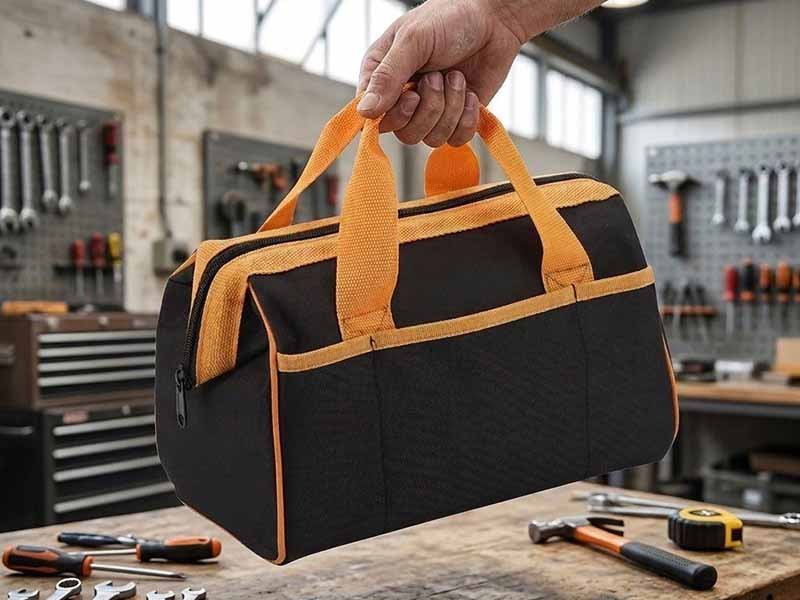
Tool bags, medical bags, tactical products, waterproof bags, and other functional products can contain rigid inserts, hooks, clips, reinforcement boards, molded sections, coated seams, or specialized accessories. Packaging development should begin by identifying the parts that cannot be bent, scratched, punctured, crushed, or contaminated.
Once those risks are clear, protective materials can be concentrated around vulnerable components rather than added indiscriminately across the entire product. This usually produces a more efficient packaging system because the materials are solving defined problems instead of simply increasing the number of layers.
Which Packaging Fits Your Sales Channel?
Different sales channels create different packaging priorities. Amazon fulfillment emphasizes labeling, scanability, preparation, carton control, and current platform requirements. Shopify and DTC brands normally place more importance on presentation and parcel delivery. Retail programs focus on barcodes, hangtags, case packs, and receiving standards, while wholesale projects typically prioritize quantity accuracy, SKU control, and cost-efficient transport.
Amazon and Marketplace Orders
Marketplace packaging should be planned around receiving and fulfillment requirements rather than consumer presentation alone. The product needs to remain correctly identified as it moves from factory packing through freight, warehouse receiving, inventory storage, picking, and final customer fulfillment. A labeling mistake can therefore create a serious commercial problem even when every bag itself has been manufactured correctly.
Common control points include the product barcode, FNSKU where required by the current fulfillment workflow, applicable poly-bag warnings, carton labels, SKU separation, case quantities, carton dimensions, gross weight, and shipment-plan instructions. Requirements can change between markets or over time, so the latest files and instructions from the relevant fulfillment account should be used rather than relying on an older shipment standard.
Multi-SKU projects deserve particular attention. Dark Navy, Charcoal, Black, and Dark Green backpacks can look similar under factory lighting, but a fulfillment system treats each as a completely separate inventory item. Labels should therefore be connected to a clear SKU matrix so that packing staff can verify the correct combination before a unit is sealed.
Szoneier’s documented e-commerce packing support includes barcode and FNSKU handling, carton labels, polybag warnings, carton-size control, gross-weight control, packaging protection, and FBA-oriented shipment preparation. For individual projects, the actual specification should still follow the current marketplace and fulfillment-center instructions supplied for that shipment.
| Sales Channel | Main Packaging Priority | Typical Unit Packaging | Outer Packing Focus |
|---|---|---|---|
| Amazon / marketplace | Identification and fulfillment preparation | Poly bag, barcode, required unit label | Carton labels, SKU separation, size control |
| Shopify / DTC | Presentation and parcel protection | Tissue, dust bag, card, branded bag | Mailer or shipping carton |
| Retail | Shelf readiness and receiving accuracy | Hangtag, barcode, sleeve or retail box | Case pack and carton marks |
| Wholesale | Cost and handling efficiency | Basic individual protection | Quantity and SKU accuracy |
| Corporate gifts | Presentation and delivery timing | Sleeve, branded bag or gift box | Batch and destination identification |
Shopify and DTC
Direct-to-consumer packaging becomes part of the first physical interaction between a customer and the brand. There may be no store display or salesperson to present the product, which makes the unboxing experience commercially meaningful. This does not mean every DTC order should use a rigid gift box. Packaging should still remain proportionate to the product price, margin, and customer expectations.
A growing brand can build the packaging system in stages. During initial market testing, a clean poly bag, hangtag, paper sleeve, branded sticker, or thank-you card may be enough to establish a consistent presentation. Once sales volumes and product economics become clearer, the brand can introduce reusable dust bags, custom tissue paper, mailer boxes, gift boxes, or product inserts.
Outer protection remains important because parcel handling is different from retail shelf handling. A beautiful presentation box that arrives crushed can create a worse impression than a simpler package that survives delivery. If a decorative box must remain clean, it may require an additional shipping layer rather than being exposed directly to the carrier network.
Returns also deserve consideration. Packaging that can be reclosed and reused is often practical for fashion and accessory products. A package designed only to create an impressive first opening but impossible to reuse may create unnecessary inconvenience if a customer needs to return the product through the same fulfillment system.
Retail Distribution
Retail packaging is handled by several people before the final consumer ever sees it. Factory staff pack the product, freight teams move the cartons, distribution-center staff receive the shipment, warehouse workers break the cases, and store employees arrange the product for sale. This makes retail packaging a combination of presentation, identification, and operational control.
Retail programs may specify UPC or EAN barcodes, hangtag locations, product information, price-ticket areas, units per inner carton, units per master carton, purchase-order information, carton marks, pallet configurations, or maximum carton weights. These requirements should ideally be included before artwork and packaging materials are ordered.
A barcode that looks visually attractive but is placed where store staff cannot scan it efficiently creates unnecessary handling. The same applies to carton quantities. A case may protect the bags perfectly but still cause receiving problems if the quantity does not match the retailer’s expected case pack.
For larger retail programs, warehouse readiness is often more valuable than excessive decorative packaging. Szoneier’s documented capabilities include hangtags, barcode labels, retail boxes, paper sleeves, care information, inner cartons, master cartons, carton marks, and warehouse-ready packaging preparation. These elements can be combined according to the individual retailer’s receiving and presentation standards.
Wholesale and Promotional Programs
Wholesale and promotional programs are often more cost-sensitive, but they still require disciplined packaging. A large promotional tote program may use nothing more complicated than an individual protective bag and master carton, yet carton quantities, destination marks, and SKU separation still need to be accurate. A simple system only works well when it is repeatable.
Promotional projects also operate around fixed campaign dates. Trade shows, product launches, corporate events, and seasonal promotions often have limited flexibility if goods arrive late. Complex packaging with multiple print approvals, insert components, or assembly steps can become a scheduling risk when these requirements are added near the end of production.
Simple packaging usually has operational advantages because fewer components need to be sourced, printed, approved, assembled, and checked. This can shorten the packing process and reduce packaging inventory that remains after the event has finished.
For multi-location programs, carton identification can be more important than individual presentation. If several hundred bags must go to New York, Chicago, Los Angeles, Toronto, and other destinations, clearly planned carton marks and shipment quantities can prevent costly redistribution after the goods have already reached the destination country.
How Can Packaging Be Customized for Your Brand?

Packaging can reinforce a brand through color, logo placement, material, typography, tags, inserts, dust bags, paper sleeves, tissue, boxes, and labels. Strong packaging does not require branding every surface. The most effective systems select a limited number of visible touchpoints and keep them consistent across the product, presentation materials, retail information, and shipment preparation.
Logo Placement
A logo can be applied to almost every part of a packaging system, but that does not mean it should be. The better decision is to identify which part the customer sees first, which part remains with the product, and which elements are discarded immediately. These factors help determine where branding creates the most value.
For a premium handbag, a reusable cotton dust bag may be more valuable than printing a logo on an inner poly bag that disappears within seconds of opening. For a retail tote, a paper sleeve may provide the main visual identity while the product is stacked. For a DTC shipment, the mailer, tissue, and thank-you card may create the first impression before the customer touches the bag.
Packaging artwork should be specified numerically rather than approved only through a visual mock-up. A production instruction might define a logo as 70 mm wide, centered horizontally and positioned 45 mm from the upper edge, using an approved color reference and a specific printing method. Numerical specifications reduce interpretation when several suppliers and production teams are involved.
The goal is visual consistency rather than maximum logo repetition. One well-executed mark on a reusable or highly visible component often creates a stronger impression than placing the same logo on five disposable packaging layers with different printing quality.
Tags, Labels and Inserts
Hangtags, care labels, barcode labels, instruction cards, thank-you cards, stickers, and fulfillment labels are small components, but together they can carry a large amount of information. A hangtag may communicate brand identity and product features, while a barcode connects the physical item to inventory. A care card may explain cleaning or storage, and an instruction insert may explain technical functions.
Complexity increases quickly in multi-SKU programs. A collection with six styles and four colors already contains 24 SKUs. If every SKU requires separately printed packaging, the brand may need to manage 24 packaging versions in addition to the products themselves. A shared package combined with variable barcode or SKU labels can sometimes reduce this complexity dramatically.
File naming and revision control are therefore practical production tools. Packaging files should identify the packaging item, related product, market, language, and revision. A filename such as TravelPouch_Hangtag_US_R3.pdf gives the factory far more useful information than a file called final-new-version2.pdf.
These details may appear administrative, but incorrect packaging artwork can turn otherwise correct inventory into a commercial problem. If thousands of products contain an obsolete barcode, wrong language version, or outdated legal information, replacing the packaging may cost more than correcting a minor product defect before shipment.
Color and Print Control
Packaging colors change depending on the material being printed. A single Pantone reference can appear noticeably different on coated white paper, brown kraft board, uncoated recycled paper, cotton fabric, polyester, or corrugated board. For that reason, brands should distinguish between an intended color target and the actual physical result on the selected packaging substrate.
Critical colors should be evaluated on a physical printed sample when appearance has significant brand value. A screen display or PDF can communicate layout and approximate color but cannot reproduce paper absorbency, coating, fabric texture, metallic foil, embossing depth, or surface gloss accurately.
Printing methods also affect the final appearance and cost. Screen printing is widely used for simple dust-bag logos, while offset printing works well for larger quantities of detailed paper packaging. Digital printing can be practical for shorter runs and variable artwork. Foil stamping, embossing, debossing, and specialty finishing can add premium details but may introduce tooling, setup charges, higher MOQs, or longer preparation times.
Adding more finishes does not automatically make packaging look better. A simple uncoated dark box with one controlled foil logo may support a premium leather product more effectively than a package using multiple finishes that compete visually with the product itself.
Sustainable Packaging
More sustainable packaging generally starts by reducing unnecessary components rather than replacing every material with a more expensive alternative. If a product can reach the customer safely using three well-designed packaging layers instead of six, eliminating the unnecessary pieces may reduce more waste than adding several components simply because each one is marketed as environmentally responsible.
Practical options can include recycled-content paper, FSC-certified paper where valid documentation is available, recyclable corrugated cartons, recycled poly film, reusable textile dust bags, RPET textiles, reduced-ink printing, and paper sleeves that replace larger retail cartons. Claims printed on packaging should remain specific and supported by documentation.
Brands should be cautious with broad statements such as “100% eco-friendly” when the full packaging system includes inks, coatings, adhesives, mixed materials, or components that cannot easily be recycled together. More specific descriptions of certified paper or verified recycled content are normally more useful and defensible.
Transport volume is also part of the environmental equation. A recyclable presentation box that increases unit volume substantially may require more cartons and freight capacity. Packaging decisions should therefore consider material choice, reusability, product damage, overall shipment cube, and waste together rather than evaluating each packaging component in isolation.
How Do Packaging Choices Affect Cost and MOQ?

Packaging cost comes from the material, dimensions, printing, construction, tooling, assembly, quantity, SKU count, and labor required to complete each unit. It can also influence landed cost through carton volume and weight. Stock bags and simple labels are generally flexible, while custom rigid boxes, special finishes, custom inserts, and multiple artwork versions create higher minimums and more complexity.
Packaging MOQ
There is no universal packaging MOQ because the answer changes with the packaging supplier, material, size, printing method, structure, and local production conditions. Stock-size packaging can often be purchased in relatively small quantities, while customized structures require enough volume to justify printing setup, cutting tools, material preparation, and production time.
The number of packaging designs matters just as much as total product quantity. A 3,000-piece order using one universal printed carton gives the packaging supplier a single 3,000-piece production run. The same order divided among six separate box designs creates only 500 units of each design, which can change pricing and MOQ feasibility substantially.
The planning ranges below illustrate typical sourcing situations rather than guaranteed supplier requirements. Actual quotations should always be confirmed for the current packaging dimensions, printing, order volume, and material.
| Packaging Type | Common Supplier Planning Range* | MOQ Pressure | Main Cost Factors |
|---|---|---|---|
| Stock poly bag | Tens to hundreds | Low | Size and film thickness |
| Custom printed poly bag | Approx. 500–3,000 pcs | Medium | Film, printing and size |
| Printed paper sleeve | Approx. 300–1,000 pcs | Low–Medium | Board weight and printing |
| Printed dust bag | Approx. 300–1,000 pcs | Medium | Textile, sewing and logo |
| Folding retail carton | Approx. 500–2,000 pcs | Medium | Board, printing and finish |
| Corrugated mailer | Approx. 500–2,000 pcs | Medium | Board, print and structure |
| Rigid gift box | Often 500+ pcs | High | Board, inserts and assembly |
- These are broad commercial sourcing ranges and should not be interpreted as fixed factory minimums.
Cost Drivers
Packaging cost can be understood in four groups: material, conversion, packing labor, and logistics. Material includes poly film, paper, corrugated board, textile dust bags, tissue, foam, and inserts. Conversion includes printing, cutting, die cutting, gluing, lamination, sewing, foil stamping, embossing, and other finishing operations.
Labor begins after the packaging components arrive. Workers may need to stuff the bag, wrap metal hardware, insert care cards, fold tissue, assemble boxes, apply barcodes, match packaging to SKUs, close individual bags, and place products into cartons according to a defined orientation. These steps can have meaningful cost in large programs even when each action seems small.
For example, adding only 15 seconds of extra packing time per product across an order of 20,000 units creates more than 83 additional labor hours. That is why a packaging item costing only a few cents should not be evaluated solely by its purchase price if it adds several manual operations at the packing line.
The best cost analysis therefore considers the full pack-out system rather than comparing component quotations in isolation. A cheaper package that requires more labor or creates more carton volume may ultimately be more expensive than a slightly higher-cost option that packs faster and ships more efficiently.
Freight Volume
Packaging volume is frequently overlooked because brands naturally focus on the cost of the individual box or bag. For lightweight products such as textiles and soft bags, freight can be heavily influenced by volume, particularly when goods move by courier or air freight where dimensional weight may affect the chargeable weight.
Consider a simplified example in which a folded bag measures 30 × 25 × 6 cm, giving a theoretical volume of 4,500 cm³. If a presentation box changes the unit dimensions to 38 × 32 × 12 cm, theoretical volume increases to 14,592 cm³, more than 3.2 times the original unit volume.
Real carton utilization will change the final freight calculation because several units may fit together differently, and carriers use different dimensional-weight formulas. Nevertheless, the example shows why box dimensions should be reviewed before artwork and bulk packaging production are approved.
Useful packing information includes packed unit dimensions, units per carton, master-carton dimensions, carton gross weight, total carton count, and total shipment cubic volume. A few centimeters removed from a package can create significant savings when the same change is repeated across thousands of units.
Cost Optimization
Cost optimization does not mean choosing the cheapest possible packaging. It means directing the budget toward the components that provide real protection, commercial value, or brand visibility while simplifying areas that customers rarely notice.
A premium handbag brand might keep a reusable branded dust bag while replacing a bulky rigid box with a compact kraft mailer for certain online orders. Another brand may keep a high-quality retail carton but use one universal design across four product colors, changing only the SKU and barcode label.
Standardized dimensions can also simplify storage and reorders. If several products fit within a shared packaging architecture, the brand can reduce the number of box sizes, printed components, cutting tools, and packaging items that must remain in inventory between production runs.
Packaging inventory itself has a cost. Products may sell out while printed boxes remain in the warehouse, or artwork can become obsolete after a brand changes a barcode, website address, design element, or product description. A strong packaging system should therefore work not only for the first purchase order but also for repeat production and future product-line expansion.
How Do You Confirm Packaging Before Bulk Production?
Packaging should be confirmed with the same level of control as the product itself. Before bulk production, the team should verify dimensions, material, artwork revision, label files, folding method, protection points, SKU relationships, units per carton, carton marks, and destination requirements. For structured, premium, retail, or multi-SKU products, testing a fully packed sample can expose problems before thousands of units are completed.
Packaging Specification
A useful packaging specification removes interpretation from the packing line. An instruction such as “use a branded dust bag” still leaves many unanswered questions about size, fabric, print color, logo position, closure, internal protection, and the external package. Production teams work more consistently when these details are converted into measurable specifications.
For example, a handbag packing instruction can state that the dust bag measures 40 × 45 cm, uses a specified cotton fabric, carries an 80 mm logo, closes with a drawstring, and contains a defined quantity of internal tissue support. The same instruction can specify hardware wrapping, outer poly protection, units per carton, and carton orientation.
The commercial destination should be included in the same planning process. A retail warehouse, marketplace fulfillment center, corporate-gift distributor, and DTC fulfillment partner may request different barcode, carton, pallet, or label arrangements even if the physical bag remains identical.
It is therefore useful to provide the destination, sales channel, barcode files, SKU list, carton-label requirements, retail receiving instructions, pallet requirements, and any maximum carton weight or size restrictions before final packing materials are ordered.
Packed Sample
A packaging sample is most useful when the real product is actually placed inside the proposed packaging. Loose boxes, printed sleeves, and dust bags can all look correct on a table while still failing when they are assembled around the finished bag.
The packed sample should show whether the bag fits naturally, whether the handles need to be forced down, whether the dust bag bunches, whether the gift box closes without excessive compression, whether metal hardware touches sensitive surfaces, and whether the barcode remains accessible and scannable in its final position.
Several packed units can then be placed into the proposed master carton to assess carton fit. A carton that bulges or requires workers to force the final unit into position is not ready for production even if the theoretical dimensions look correct on a spreadsheet.
For products with foam or structured panels, keeping the sample in the intended packing condition for several days can reveal whether folds recover normally. The inspection should look for panel deformation, hardware impressions, print transfer, compressed foam, surface indentation, and other changes created by the packaging rather than the product manufacturing process.
Barcode and SKU Control
SKU control becomes increasingly important as product collections expand. A project with several dark colors, similar sizes, or visually related styles can easily create packing errors if labels are applied only by appearance. Black, Charcoal, Navy, and Dark Green backpacks may look similar on a busy packing line but represent completely separate products in the warehouse system.
A clear relationship should therefore exist between the product SKU, packaging SKU, barcode, and carton assignment. Packing teams can use approved reference samples, packing matrices, and visual SKU boards to verify each unit before sealing the package.
Barcodes should be tested at their actual printed size rather than approved only as artwork. Curved placement, excessive shrinking, glossy surfaces, poor contrast, damaged labels, or incorrect print quality can affect scanning performance. Retail and fulfillment projects should treat barcode verification as part of packaging quality control.
The same principle applies to printed inserts and language versions. If one collection contains different instructions for the United States, Europe, and other markets, each packaging version should be tied to the correct product and quantity before materials reach the packing line.
Repeat-Order Control
Packaging consistency becomes harder after the first order because teams often assume that “same as last time” is a complete instruction. In reality, the previous order may have contained several poly-bag sizes, multiple barcode versions, revised cards, different carton marks, or destination-specific labels.
A repeat-order specification should retain approved dimensions, material details, artwork, color references, barcode files, label versions, folding methods, box specifications, carton quantities, carton dimensions, carton marks, and photographs of the final packed unit.
Artwork revisions should be controlled formally. Changes to websites, social handles, product descriptions, legal text, barcodes, care instructions, sustainability claims, or retailer information can make previous packaging inventory obsolete. Revision numbers and approval records help prevent an old file from re-entering production.
Repeat orders also create an opportunity to improve the packaging system. Warehouse feedback, customer returns, carton damage, excessive freight volume, packing speed, and leftover packaging inventory can all provide useful information. A strong production partner should use these observations to refine the next order rather than automatically reproducing every detail of the previous shipment.
Final Thoughts
Custom packaging for bags is not simply a choice between a poly bag, dust bag, or gift box. It is a small system connecting product protection, branding, SKU identification, warehouse handling, retail presentation, fulfillment requirements, and international transportation. The best solution depends on the actual bag, how it will be sold, where it will be stored, and what the customer expects when it finally reaches them.
A lightweight promotional tote may need only efficient individual packing and clear carton identification. A structured handbag may require shape support, protected hardware, a dust bag, and more controlled carton pressure. An Amazon product may need greater attention to current fulfillment labels and carton preparation, while a DTC product may place more value on unboxing presentation and parcel durability.
The most reliable time to solve these questions is during product development and sampling. When packaging is reviewed together with the bag dimensions, material, structure, hardware, SKU plan, order quantity, sales channel, and shipping destination, brands can make better decisions before bulk production begins.
Szoneier works with custom bag projects from sampling through bulk packing and shipment preparation, allowing packaging decisions to be reviewed alongside the product rather than treated as a separate last-minute purchase. The practical objective is straightforward: protect the finished bag, keep the packing system manageable, support the intended sales channel, and create a standard that can be reproduced accurately when the product is reordered.
Frequently Asked Questions
What Is the Most Common Packaging for Custom Bags?
Clear OPP or PE individual bags combined with master cartons remain among the most common systems for standard tote bags, backpacks, drawstring bags, cosmetic bags, and other soft products. They provide economical protection from dust and handling while keeping individual units easy to identify and count. Products with sensitive surfaces, premium positioning, structured shapes, or retail presentation requirements may add dust bags, paper sleeves, tissue, boxes, inserts, or other protective components.
Do Leather and PU Bags Need Dust Bags?
Dust bags are not mandatory for every leather or PU product, but they are useful when surface protection and presentation matter. They reduce direct contact with cartons, neighboring products, chains, pullers, and other surfaces during storage. Cotton, polyester, non-woven, and recycled textile versions can all be used. For structured handbags, a dust bag is normally combined with appropriate shape support because the dust bag itself does not prevent panel deformation.
Which Packaging Is Best for Amazon FBA Bags?
Amazon-oriented bag packaging should be based on the current fulfillment requirements for the marketplace and product. Common considerations include unit identification, barcodes or FNSKU labels where required, applicable poly-bag warnings, carton labels, SKU separation, carton dimensions, and shipment-plan requirements. The current platform instructions should always be used because preparation and labeling requirements can change, and an old packaging specification should not automatically be reused for a new shipment.
How Much Does Custom Bag Packaging Cost?
There is no fixed packaging cost because a basic stock poly bag and a rigid printed gift box have very different material, printing, assembly, MOQ, and freight requirements. Cost also changes with quantity, dimensions, artwork versions, inserts, finishing, and packing labor. Brands should compare the complete packed-unit cost rather than only the purchase price of one packaging component, because labor and shipment volume can materially affect the final landed cost.
Does Custom Packaging Increase the MOQ?
Custom packaging can increase the effective MOQ when printed boxes, custom film, special paper, fabric dust bags, molded inserts, or specialty finishing require their own production minimums. SKU splitting can create additional pressure. For example, a 3,000-piece product order divided into six separately printed box designs leaves only 500 units per design. Universal packaging with variable labels is often more flexible for new products and multi-color collections.
How Can Packaging Reduce Shipping Costs?
Shipping costs can often be reduced by controlling packed product dimensions, folding products appropriately, standardizing boxes, reducing unnecessary empty space, and increasing the number of units that fit safely into each master carton. This is particularly important for lightweight bags because volume can influence courier and air-freight costs. Before packaging approval, compare unit dimensions, carton dimensions, pieces per carton, gross weight, carton count, and total shipment cubic volume.
Should Packaging Be Approved Before Bag Production Starts?
The core packaging direction should preferably be considered during sampling, while final details can be confirmed before bulk packing begins. Early planning allows the team to test whether the bag fits correctly, whether structured panels recover after compression, whether hardware needs protection, whether labels scan correctly, and whether the carton configuration is efficient. This reduces the risk of discovering packaging problems only after thousands of finished units are waiting for shipment.