Skip to content
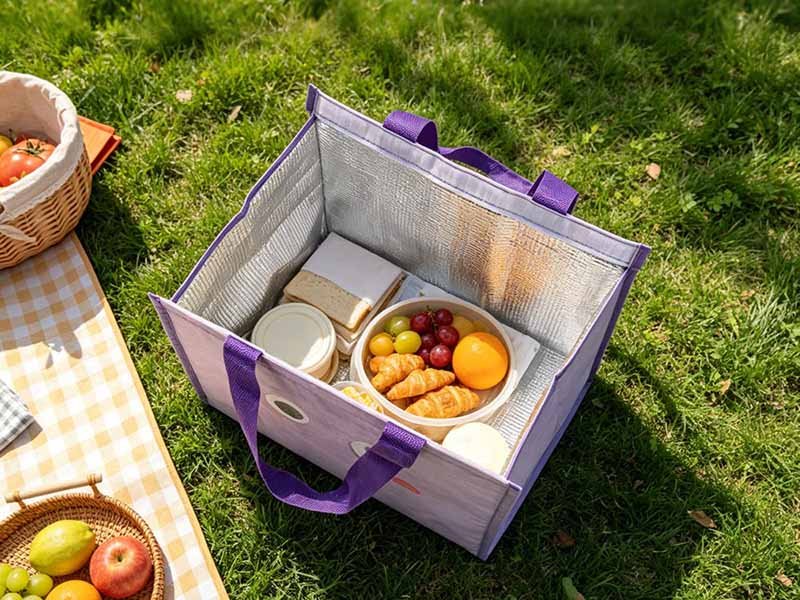
A cooler bag often looks much simpler than it really is. From the outside, it may appear to be little more than a fabric shell, zipper, handles and logo. Once the product is opened up, however, its real engineering becomes visible. The exterior fabric has to resist abrasion, the insulation must slow heat transfer without consuming too much internal space, the liner has to tolerate moisture and cleaning, and the handles must support a surprisingly heavy load once drinks, food and ice packs are added.
A well-developed custom cooler bag combines an appropriate outer shell, insulation core, inner liner, closure system and reinforced carrying structure around a clearly defined use case. Brands should specify capacity, insulation expectations, liner requirements, load, packaging, market requirements and intended use before approving production. Sampling and measurable quality checks are then used to confirm that the approved construction can be reproduced consistently during bulk manufacturing.
This difference becomes obvious when two coolers with nearly identical photographs are compared in real use. One may be a lightweight promotional bag intended to carry a few chilled drinks for several hours. Another may be built for outdoor use with thicker foam, reinforced carrying points, a more durable liner and stricter leakage controls. They can look similar on a screen, yet behave very differently when loaded and left in a warm car, taken to the beach or used repeatedly through an entire summer.
How Are Custom Cooler Bags Manufactured?

Custom cooler bags are manufactured as layered functional soft goods rather than ordinary sewn bags. A typical product combines an outer shell, thermal insulation, an inner liner, closures, reinforcements, carrying components and branding. Reliable production depends on controlling how these layers interact with capacity, sewing or welding methods, leak resistance, loading requirements, packaging and the final conditions in which the cooler will actually be used.
Core Bag Construction
Most soft cooler bags can be understood as a three-layer structure, but this description is only the beginning. The exterior fabric creates the visible body of the product and provides abrasion protection, shape and branding space. Polyester, Oxford fabric, nylon, canvas, RPET and coated fabrics are common choices. The middle insulation layer slows heat transfer and usually consists of EPE, EVA or another suitable foam system. The inner liner provides a cleanable moisture barrier and may use PEVA, aluminum-foil laminate, TPU or another functional material.
The three layers cannot be selected independently. A very thick exterior fabric combined with thin foam may create a rugged-looking product without meaningfully improving thermal retention. Thick foam can improve insulation, but it also changes the dimensions of every panel, increases seam thickness, reduces internal volume and makes tight curves more difficult to manufacture. A soft liner may fit small lunch bags comfortably, while large-capacity coolers need more careful support to prevent liner movement, stress around corners or an untidy interior appearance.
Zippers, webbing, shoulder straps, binding, base boards, pockets and reinforcement patches must also be treated as part of the construction system. A zipper opening creates a potential heat path, while a poorly reinforced handle can fail long before the body fabric reaches its strength limit. For this reason, an accurate cooler specification should define the complete material stack and construction rather than simply listing “Oxford + foam + PEVA.”
Production Sequence
Cooler bag production normally starts with an evaluation of the intended product rather than immediate cutting. The development team first needs to understand the approximate dimensions, capacity, expected order quantity, use environment, material direction, insulation requirement, branding and packaging. A tech pack is helpful, but many projects also begin from a physical reference sample, sketch, photograph or existing product that needs to be upgraded.
Pattern development comes next. Unlike an uninsulated tote, the dimensions of a cooler cannot be transferred directly from an external drawing to the inside of the finished product. Foam thickness, seam allowance, liner folds, zipper construction and binding consume space. If the insulation becomes thicker without increasing external dimensions, internal capacity decreases. This is one reason capacity should be verified on a physical sample instead of calculated from outside measurements alone.
After pattern development, panels are cut and assembled into a prototype. Branding such as screen printing, heat transfer, sublimation or embroidery may be applied before final assembly depending on its location and process. The insulation, liner and outer panels are then joined, followed by zipper installation, handles, shoulder straps, pockets, reinforcement and binding. Bulk production continues through material inspection, cutting, branding, assembly, in-line checking, final inspection, packing and carton preparation.
A good production system catches problems early. Incorrect foam placement is much easier to correct before the bag is closed. A logo that is 15 mm too low should be identified on initial panels rather than after thousands have been printed. Small production errors become expensive when they are repeated across an entire order.
Cooler Bag Formats
The manufacturing requirements of a cooler depend heavily on what the product is expected to do. A compact lunch bag carried between home and an office has a different load, insulation requirement and opening frequency from a 25-liter beach cooler filled with drinks and ice packs. A low-cost promotional cooler may emphasize printing area, price and simple construction, while a premium picnic cooler may emphasize fabric texture, structured panels, smooth zipper operation and branded packaging.
Common commercial formats include insulated lunch bags, cooler totes, cooler backpacks, soft-sided coolers, insulated grocery bags, picnic bags, bottle coolers, wine coolers, beach coolers and food-delivery bags. Szoneier’s documented cooler-bag manufacturing scope includes these different product forms and supports customization of size, capacity, shell material, insulation, liner, pockets, zipper, handles, straps, branding and packaging.
A backpack cooler requires particular attention to shoulder straps and load distribution because the full weight is carried against the body. Grocery coolers need wide access, carton efficiency and a reasonably stable base. Wine coolers need bottle separation and vertical support. Delivery bags may require larger capacity and much higher opening frequency. The shape should therefore follow actual use instead of forcing every program into one standard construction.
Which Materials Are Best for Cooler Bags?

There is no universal best material for every cooler bag. The appropriate combination depends on expected durability, thermal performance, cleaning requirements, appearance, target cost, order quantity and sales channel. Polyester and Oxford are common exterior choices, while PEVA and foil laminates are widely used liners. EPE and EVA-based foams are common insulation options, and TPU becomes relevant when more demanding moisture-control construction is required.
Outer Fabrics
Polyester is widely used because it offers a practical combination of availability, cost control, printing compatibility and durability. It works across promotional coolers, lunch bags and mainstream retail products. The term “polyester,” however, is too broad to function as a full specification. Fabric weight, weave, denier and coating all change the performance. Lightweight polyester can keep a compact product economical, while heavier materials provide more structure and abrasion resistance.
Oxford fabric is another common choice, especially for larger or more rugged cooler bags. Different deniers produce noticeably different hand feel and structure. A higher-denier Oxford may resist abrasion and support a larger bag more effectively, but it also adds weight and can be unnecessarily stiff for a small lunch cooler. Nylon is useful when a lighter, technical appearance and good strength-to-weight ratio are desirable, although it often costs more than basic polyester.
Canvas is commonly chosen for picnic, lifestyle and premium gift products because the texture feels less industrial and works well with leather or PU trim. Its disadvantages include greater weight and lower inherent resistance to moisture unless appropriate treatment is used. RPET is frequently selected for recycled-material programs, but recycled content, certification, coating, color and MOQ need to be confirmed rather than assuming all RPET fabrics offer identical performance.
| Material | Common Applications | Main Advantage | Key Limitation |
|---|---|---|---|
| Polyester | Lunch, promotional and retail coolers | Cost-effective and easy to decorate | Performance varies by weight and coating |
| Oxford | Retail, grocery and outdoor coolers | Strong, structured and widely available | Heavy grades add weight |
| Nylon | Premium and outdoor soft coolers | Good strength-to-weight performance | Usually higher material cost |
| Canvas | Picnic and lifestyle cooler bags | Premium texture and appearance | Heavier and less naturally water resistant |
| RPET | Retail and recycled-material programs | Supports sustainability positioning | Documentation and MOQ require confirmation |
| TPU-coated fabric | Technical outdoor applications | Suitable for waterproof-oriented construction | Higher processing and material cost |
Szoneier works with a broad material range that includes polyester, nylon, Oxford, canvas, RPET, PVC, TPU, liners, foam, webbing, zippers and supporting accessories, which makes it possible to compare cost, durability, hand feel, water resistance and lead-time implications before sampling.
Liners
PEVA is one of the most familiar cooler-bag liner materials because it is flexible, wipeable and suitable for many general-purpose insulated products. It is often used in lunch bags, grocery coolers and mainstream retail programs where condensation and reusable ice packs are the primary moisture sources. The actual performance still depends on thickness, backing, seam construction and the way the liner is fitted inside the bag.
Aluminum-foil laminates are frequently used in promotional and value-oriented coolers. They provide a recognizable insulated appearance and can be economical, particularly for simple grocery or event products. Very lightweight versions, however, may crease or wear more noticeably when repeatedly folded, so the exact laminate should be reviewed rather than relying only on the phrase “aluminum foil.”
TPU is generally considered for more demanding applications where moisture containment or welded construction is important. It can support technical cooler designs that are difficult to achieve with ordinary sewn liners, but using TPU does not automatically make a finished bag leakproof. Corners, weld consistency, transitions around openings and the surrounding construction remain critical.
The practical distinction is that a liner specification should describe both the raw material and how it is assembled. A waterproof raw sheet can become a leaking finished bag if holes are created through uncontrolled stitching. Likewise, a more economical liner may perform perfectly well when the product is intended for sealed containers and reusable ice packs instead of loose melting ice.
Insulation
EPE foam is common in mainstream cooler production because it is lightweight, economical, flexible and relatively easy to integrate into sewn products. It works particularly well when the cooler has to fold or compress for shipping. EVA-based foams and other denser materials can provide more resilience or structure, making them useful when shape retention and repeated use are more important.
Insulation thickness varies widely across the market. Lightweight promotional coolers may use relatively thin foam, while premium outdoor products can use substantially thicker insulation. A number such as 5 mm, 10 mm or 20 mm should not be treated as a guaranteed cooling-time rating. Density, foam composition, lid design, seam continuity, zipper construction and the amount of coolant inside the bag all influence real performance.
Thicker insulation also affects several commercial variables simultaneously. It reduces usable internal dimensions when the external dimensions stay unchanged, increases material consumption, changes the sewing and binding process, adds shipping volume and can make the finished product heavier. For a compact lunch bag, excessive foam can make the product bulky without adding enough real-world value to justify the cost.
The better approach is to start with the expected use. A bag intended to transport lunch for two hours does not need the same insulation system as a soft cooler expected to remain outside for most of the day. Performance requirements should guide material thickness rather than treating the largest available number as automatically better.
How Do You Improve Cooling and Leak Resistance?

Cooling and leak resistance improve when the complete cooler structure is engineered as one system. Foam thickness matters, but heat also enters through zippers, lids, seams and poorly insulated corners. Leakage depends on both liner material and joining method. Reliable performance comes from reducing these weak points, reinforcing the finished construction and testing realistic use conditions instead of relying on unsupported claims.
Thermal Performance
A cooler bag does not generate cold. It slows the transfer of heat from the surrounding environment into chilled contents. Heat can enter through the sidewalls, base, lid, zipper and places where insulation becomes compressed or interrupted. This is why a cooler with thick side panels can still perform poorly when the lid is thin or when large gaps exist around the zipper.
The opening is one of the most important areas to evaluate. A wide zipper opening improves loading convenience and helps consumers reach containers easily, but it also allows a large volume of warm air to enter each time the cooler is opened. An outdoor model that needs better retention may use a more controlled lid design, whereas an insulated grocery tote may prioritize quick loading and unloading.
Capacity also interacts with insulation. A project cannot simultaneously increase wall thickness significantly, keep identical external dimensions and maintain identical internal volume. If the foam becomes 10 mm thicker on each opposing wall, available interior width can decrease considerably unless the bag itself grows. These geometric trade-offs should be resolved during sampling instead of discovered after production.
Starting conditions have an equally large effect on cooling results. Chilled beverages placed into a pre-cooled bag with frozen packs behave differently from room-temperature bottles placed into an empty cooler. Ambient temperature and opening frequency also change the result. Any thermal claim should therefore be attached to specific test conditions.
Leak-Resistant Construction
Raw liner material and finished leak performance are not the same thing. A liner can resist water perfectly before manufacturing and still allow moisture through after it has been perforated by needles or stressed at corners. Traditional sewing is widely used and can work well for many products, particularly when the expected moisture comes from condensation and sealed ice packs rather than loose ice.
Products expected to contain melting ice need more careful construction. Weld-compatible materials such as appropriate TPU systems can reduce the number of stitched penetration points, but successful welding still depends on material compatibility, equipment settings and operator control. Corners, folds and transitions remain areas where problems can occur.
Terms such as water-resistant, leak-resistant and leakproof should therefore be used carefully. A water-resistant cooler may tolerate splashes but is not intended to hold standing water. A leak-resistant liner may limit moisture escape under normal use without guaranteeing zero leakage in every orientation. A true leakproof claim should ideally be tied to a defined test procedure.
A useful factory test might specify a known volume of water, a test duration and the areas that must remain dry. More demanding programs can add inversion or extended holding periods. The important point is repeatability. When the same test can be performed on prototypes and bulk samples, the result becomes a practical production standard rather than marketing language.
Load and Structural Strength
Cooler bags can become heavy surprisingly quickly. Twelve 330 ml beverages contain almost 4 kg of liquid before accounting for the weight of the cans, ice packs, food containers and the bag itself. Larger coolers carrying 18 or 24 drinks can place substantial stress on handles, shoulder straps, side panels and bottom seams.
The load path should therefore be considered during development. Handles that are attached only to a small decorative patch can concentrate stress in a limited area. Stronger constructions extend webbing farther down the side panels, add reinforcement beneath attachment points and use suitable stitch boxes or bartacks to distribute force. Shoulder-strap anchors need similar attention because they create concentrated loads during walking.
The base also matters. A soft cooler without adequate bottom support may sag once fully loaded, causing bottles and containers to move toward the center. A board or denser structural layer can improve stability, although it also adds weight and reduces foldability. Backpack coolers create an additional challenge because the weight is carried directly against the body, making strap width, padding and back-panel structure important to comfort as well as strength.
A strong cooler is therefore not simply made from strong fabric. It is a structure in which the carrying components, reinforcement and body panels work together under realistic loads.
Performance Validation
Good testing converts broad expectations into measurable conditions. Thermal testing should record ambient temperature, starting product temperature, coolant quantity, internal load, sensor location, opening frequency and total duration. Without those details, a statement such as “keeps cold for 12 hours” provides very little useful engineering information.
Leak testing should similarly define how much water is added, where the cooler is positioned, how long the test continues and what amount of leakage is acceptable. Handle tests should use a load that reflects the likely product capacity. A cooler designed for 8 kg of contents should not be validated using only an empty-bag inspection.
Repeated zipper operation, filled-bag carrying, seam inspection and dimensional checks after loading can expose problems that are invisible when the product is photographed empty. The most useful testing program is not necessarily the one with the most impressive numbers. It is the one that reflects real use and can be repeated during sampling and production.
This approach also improves factory comparison. When several quotations look similar, asking how each manufacturer validates leakage, carrying strength and thermal retention often reveals substantial differences in engineering experience.
How Does Cooler Bag Sampling Work?
Cooler bag sampling converts a design, reference product or idea into a measurable production standard. A proper sample process confirms dimensions, capacity, materials, insulation, liner construction, branding, reinforcement and packaging. The prototype should then be loaded and tested under realistic conditions, revised where necessary and converted into approved specifications that can be followed during bulk production.
Preparing the Sample Brief
A detailed tech pack is helpful, but it is not required for every project. Many successful cooler developments begin with a physical sample, reference photo, competitor link, sketch or existing product that needs to be modified. The manufacturer should be able to identify missing information and convert broad ideas into measurable production choices.
A useful brief normally includes product format, approximate dimensions, capacity, expected quantity, outer fabric direction, insulation expectation, liner preference, pocket layout, zipper style, handle or strap configuration, branding and target market. The intended use should also be explained. A “grocery cooler” and a “premium beach cooler” may have similar dimensions while needing very different materials and reinforcement.
Target cost is valuable information when it is available. It helps the development team avoid producing a sample that is technically impressive but commercially unrealistic. A low-cost promotional project should not automatically be built with expensive hardware and complicated multi-panel construction. At the same time, a premium retail project should not simply copy the cheapest available reference product if appearance, durability and customer experience need to be significantly better.
Szoneier can begin cooler-bag development from tech packs, samples, photographs, sketches, target dimensions, cost expectations or sales-channel requirements, then translate those inputs into a practical production plan.
Reviewing the First Sample
The first prototype should be measured and used, not only photographed. External width, height and depth are important, but so are opening dimensions and real internal capacity. Because foam occupies space, a cooler that appears large externally can have a smaller usable interior than expected. Loading it with the actual bottle, lunch-box or ice-pack sizes provides much more useful information.
The bag should also be carried at realistic weight. Handle length, shoulder-strap position and balance can feel completely different after several kilograms have been added. Tall bottles may interfere with lid closure, and an internal divider may consume more capacity than expected. These problems are difficult to identify from an empty prototype.
The insulation should be checked for consistent coverage, especially at corners, the lid and base. The liner should sit naturally without severe tension or excessive loose folds. Zippers should operate smoothly without pulling the surrounding panels out of shape. Reinforcement should be reviewed at every major load point.
Branding deserves physical evaluation too. Embroidery, heat transfer, patches and screen printing all behave differently on textured or heavily coated fabrics. Packaging should also be tested because aggressive folding can permanently crease thick foam or distort structured panels before the product reaches the final customer.
Sample Revision and Approval
Revision feedback should be measurable whenever possible. “Make the handle longer” leaves room for interpretation, while “increase finished handle length by 40 mm” creates a production instruction. “The bag needs more structure” may translate into a different foam density, added board or modified panel construction. Every approved change should eventually appear in a specification rather than living only in email or verbal discussion.
Before bulk production, the project should normally lock finished dimensions, acceptable tolerances, exterior fabric, liner, insulation, zipper, webbing, hardware, colors, logo dimensions, logo location, pockets, reinforcements, packaging and functional requirements. If custom-dyed materials or new components are being used, a pre-production sample gives the team one final chance to review the actual bulk materials before large-scale cutting begins.
For selected Szoneier cooler-bag projects, simple sampling may take approximately 5–7 working days, while more complex designs can require around 10–15 working days depending on material availability, structure, logo process and revision requirements. These figures are useful planning ranges, but they should not be treated as fixed promises for products requiring special tooling, custom material development or extensive performance testing.
The goal of sampling is not simply speed. A properly resolved sample reduces uncertainty before the most expensive stage of the project begins.
Sample-to-Bulk Control
One of the most frustrating manufacturing problems is receiving an excellent sample followed by bulk goods that feel, fit or perform differently. This usually occurs because the factory has not converted the approved prototype into controlled material and production specifications. A physical sample alone cannot identify the exact foam source, liner thickness, webbing batch or zipper specification.
Reliable production uses several reference points together. The approved physical sample defines appearance and overall construction, while the bill of materials identifies components. A measurement sheet records finished dimensions and tolerances. Artwork files define branding. Packaging specifications describe folding, labels, cartons and packout. Quality standards identify which defects are unacceptable.
The first bulk units should be reviewed against these references before the production line advances too far. Catching a 5 mm logo-position error or an incorrectly installed foam panel after the first few dozen units is manageable. Discovering the same mistake after 5,000 units have been finished creates a much larger commercial problem.
Szoneier’s documented control process covers materials, accessories, pre-production sample confirmation, cutting, sewing, semi-finished products, final products and packaging before shipment. This staged approach is especially important for cooler bags because many critical materials become hidden once the final liner and binding are closed.
How Is Cooler Bag Quality Tested?

Cooler bag quality is best controlled through multiple inspection stages and practical functional tests. Fabrics, liners, insulation and accessories should be checked before cutting, construction should be monitored during production, and finished products should be evaluated for dimensions, stitching, leakage, carrying strength, zipper operation, thermal performance and packaging accuracy. The test program should reflect actual product claims and use conditions.
Material and In-Line Inspection
Incoming inspection is one of the most cost-effective parts of quality control because a defect caught before cutting affects material rather than finished goods. Exterior fabric should be compared with the approved color and construction. Coated surfaces should be checked for obvious flaws, inconsistency and unacceptable odor. Insulation should match the approved thickness and general resilience, while liners should be reviewed for damage, contamination, creasing and visible pinholes.
Accessories require equal attention. A zipper may have the correct color but a different slider or tape construction. Webbing can vary in thickness and hand feel. Hardware finishes can differ from batch to batch. Printed labels and packaging may contain errors that are impossible to correct efficiently after packing.
In-line inspection focuses on items that become hidden during assembly. Reinforcement patches need to be checked before the liner closes the interior. Foam placement should be reviewed before edges are bound. Printed panels should be checked before they are sewn into the finished bag. Inspecting these items at the correct stage prevents small mistakes from spreading through an entire production run.
| Inspection Stage | Typical Checks | Main Risk Controlled |
|---|---|---|
| Incoming materials | Fabric, foam, liner, zipper, webbing | Wrong specification or batch variation |
| Cutting | Panel dimensions and direction | Finished size and shape inconsistency |
| Early assembly | Insulation placement and reinforcement | Hidden structural problems |
| Sewing or welding | Seams, corners and closures | Leakage and durability problems |
| Finished product | Dimensions, function and appearance | Customer-visible defects |
| Packing | Labels, SKU, quantity and carton marks | Warehouse and fulfillment errors |
A staged system is generally more effective than relying only on final inspection because many manufacturing defects become expensive or impossible to repair once every component has been assembled.
Leak and Strength Tests
Leak tests should be matched to the intended use of the cooler. A lunch bag designed around sealed containers and reusable ice packs does not need to meet the same standard as a premium outdoor cooler intended to hold loose melting ice. Using one generic test for both products would create unnecessary cost for one and insufficient protection for the other.
A practical water test can specify a known quantity of water, a holding duration and the areas that must remain dry. Corners and the bottom deserve particular attention because water naturally collects there. Products making stronger leakage claims may need more demanding procedures, including longer test periods or orientation changes.
Strength testing should focus on real carrying conditions. Handles, shoulder-strap anchors, bartacks and side seams need to support the expected contents. A static load can expose immediate weaknesses, while repeated lifting better represents everyday behavior. Zippers should also be opened and closed repeatedly because alignment problems are sometimes invisible during a single operation.
The most useful test is connected to an actual failure risk. Cooler bags typically generate complaints related to leakage, broken handles, failed zippers, distorted shape, poor insulation or damaged liners. Inspection effort should be concentrated where those failures are most likely to occur.
Thermal Testing
Thermal testing becomes useful only when the starting conditions are clearly documented. Ambient temperature, initial product temperature, quantity of ice or ice packs, amount of food or drink, sensor position, opening frequency and total test time can all materially change the temperature curve inside the cooler.
Imagine two identical bags. One is loaded with refrigerated beverages and frozen ice packs in a 22°C environment. The second receives room-temperature drinks and is placed in a 35°C outdoor area. The construction is identical, yet the second bag faces a much greater thermal load. A simple claim such as “12-hour cooling” hides this difference.
For internal comparison, controlled testing is extremely useful even when a formal consumer claim is not needed. Two prototypes can be loaded identically and compared at regular intervals. If one uses thicker foam or an improved lid construction, the temperature curves provide practical evidence about whether the upgrade delivers enough benefit to justify additional cost.
The result should be interpreted carefully. A modest but repeatable performance result under clearly defined conditions is more valuable than an impressive headline number that cannot be reproduced. Clear testing also gives production and quality teams an objective standard when future orders are manufactured.
Compliance and Final Inspection
Compliance requirements depend on the destination market, materials, intended use and channel requirements. There is no single certificate that automatically proves every cooler bag is suitable for every market. Chemical restrictions, material-contact requirements and retailer-specific standards need to be reviewed against the actual product specification.
Depending on the project, testing may involve REACH, RoHS, CPSIA, Prop 65, AZO-related requirements, heavy metals, color fastness, waterproof performance, tensile strength, load-bearing performance or flammability. Szoneier supports project-based coordination of these types of testing and can cooperate with recognized third-party laboratories when the program requires independent verification.
Final inspection brings the entire product specification together. Inspectors should check dimensions, seam quality, liner cleanliness, insulation alignment, zipper movement, straps, reinforcement, pockets, logo placement, loose threads, odor and packaging. For multi-SKU programs, labels, barcodes, color separation and carton quantities need equal attention.
A cooler can be manufactured correctly and still create supply-chain problems if the wrong barcode is applied or two colors are mixed in the same carton. Quality control therefore ends only when the finished product is packed correctly and ready to move through the intended warehouse or retail system.
What Affects MOQ, Cost, and Lead Time?
Cooler bag MOQ, price and production time are determined by the complete specification rather than dimensions alone. Exterior fabric, foam, liner, construction complexity, colors, logo process, zippers, hardware, testing, packaging and order quantity all affect the final quotation. Upstream suppliers may also impose separate minimums for fabric, custom colors, branded accessories or packaging, while lead time includes sourcing, production and inspection.
Cost and MOQ
Two coolers measuring 30 × 20 × 25 cm can have substantially different costs even though their dimensions are identical. One may use lightweight polyester, thin EPE, a simple foil liner and basic screen printing. Another may use high-density Oxford, thicker foam, premium PEVA or TPU construction, reinforced handles, custom hardware and individual retail packaging.
Material specification is one major cost driver, but manufacturing labor is equally important. A rectangular six-panel cooler is faster to assemble than a heavily curved product with several compartments and decorative panels. Thick foam slows handling. Binding around tight corners requires more control. Multiple pockets, molded zipper pulls, leather patches or multi-color prints increase both component and labor costs.
MOQ needs to be considered at several levels because the factory is only one part of the supply chain. The sewing line may be capable of producing a few hundred units, while a mill may require a larger amount for custom-dyed fabric. A branded zipper pull, metal badge or printed carton can have another minimum entirely.
For selected Szoneier custom bag programs, MOQ starts from 200 pieces, with the actual quantity depending on material availability, colors, product structure, logo process, accessories and packaging requirements. Stock materials and existing colors generally make lower quantities easier, while highly customized components tend to increase the practical starting quantity.
Production Lead Time
Lead time includes much more than sewing. Once the final sample is approved, fabrics, liners, foam, zippers, webbing and packaging may need to be ordered or produced. Custom-dyed colors and printed materials add preparation time. Components need to arrive and pass incoming inspection before bulk cutting can begin.
The actual manufacturing stage includes cutting, branding, insulation assembly, sewing or welding, binding, accessory installation, in-line inspection and final finishing. Large programs may use several production groups, but increasing capacity does not remove the need to keep materials, workmanship and dimensions consistent. Multi-color or multi-SKU orders require additional coordination because every variant needs the correct labels, packaging and carton separation.
For regular Szoneier cooler-bag programs, documented bulk-production planning is approximately 20–45 days depending on design complexity, materials, order quantity and packaging. Special materials, testing, custom accessories, complex packaging or peak-season scheduling can extend this range.
| Stage | Typical Planning Focus | Common Causes of Extra Time |
|---|---|---|
| Sampling | Pattern, materials and prototype | Revisions, special structures, custom materials |
| Material preparation | Fabric, foam, liner and accessories | Custom colors, printing, supplier minimums |
| Bulk production | Cutting, branding and assembly | High volume, thick materials, multiple SKUs |
| QC and packing | Inspection, labeling and cartons | Rework, retail packaging, special tests |
| Shipment preparation | Documentation and cargo handover | FBA rules, multiple destinations, label changes |
Breaking the schedule into stages is more useful than asking for one production number because it shows exactly where a delay can occur and which decisions need to be confirmed early.
Packaging and Shipping
Cooler bags create an unusual freight challenge because they can be lightweight but bulky. Foam adds volume, and structured products cannot always be compressed aggressively without affecting their appearance. A packaging method that saves a small amount on packing materials can create permanent panel creases or zipper distortion if the product is folded too tightly.
Promotional coolers are often suitable for economical bulk packing because cost and carton efficiency are important. Premium DTC products may need individual packaging, hangtags, protective materials or branded presentation. Retail programs can require barcodes, price labels, product cards or specific carton quantities. Amazon-bound orders may need FBA labels, SKU separation and accurate carton markings.
Packaging should therefore be developed before production is finished. Carton dimensions, units per carton, gross weight and the way the cooler is folded affect freight cost and warehouse handling. A packaging change of only a few centimeters per unit can become meaningful when multiplied across thousands of pieces.
The lowest shipping volume is not always the best result. If compression damages insulation or leaves a premium product badly creased after unpacking, the reduction in freight cost has created a larger customer-experience problem. A better target is the lowest practical pack volume that preserves product shape and function.
Supplier Comparison and RFQ
Cooler bag quotations become meaningful only when factories receive comparable information. A request for “5,000 custom coolers with our logo” leaves nearly every cost variable open. One factory may assume lightweight polyester and foil lining, while another quotes heavy Oxford, thicker foam and PEVA. The two prices represent different products and should not be compared as though the specification were identical.
A useful RFQ should identify the cooler format, dimensions or capacity, initial quantity, expected repeat volume, shell material direction, insulation expectation, liner type, branding, pockets, handles, shoulder straps, zipper design, performance requirements, packaging, destination market and delivery schedule. When exact materials are not yet known, expected use and target price can help the manufacturer recommend a workable construction.
Factories should also be able to explain how they manage materials, sampling, leakage control, reinforcement, quality inspection, packaging and repeat-order consistency. A supplier that simply agrees to every requested material without discussing trade-offs may be less useful than one that explains where a specification can be simplified and where cost cutting creates unacceptable risk.
A professional manufacturing relationship is therefore based on more than the lowest unit quotation. The strongest partner is one that can translate commercial goals into a practical specification, identify hidden risks before production and keep the approved construction consistent when the order moves from a single prototype to thousands of finished units.
Conclusion
Custom cooler bag manufacturing works best when product design, insulation, material selection, structural strength, testing, packaging and commercial planning are treated as one connected project. The visible shell is only one part of the finished product. Internal foam, liner construction, zipper design, reinforced load points and the way the bag is packed can have just as much influence on customer satisfaction as color and branding.
Brands should begin with the intended use, expected capacity, selling channel and realistic performance target. From there, exterior fabric, insulation, liner and construction can be selected around the actual requirements instead of using generic material combinations. Sampling then becomes the point where those assumptions are tested against physical dimensions, carrying comfort, thermal behavior, leakage risk and packaging.
The most important goal is not to produce one impressive sample. It is to create a specification that remains stable when production scales. Documented materials, measurable dimensions, realistic performance testing and staged quality inspection make that transition much easier.
For companies developing insulated lunch bags, outdoor coolers, grocery bags, cooler backpacks, wine coolers or related products, Szoneier can support development from initial concept and material selection through sampling, production, quality inspection, packaging and export delivery. The earlier the use case and commercial requirements are defined, the easier it becomes to build a cooler that performs correctly without adding unnecessary cost or complexity.
Frequently Asked Questions
What is the best insulation for custom cooler bags?
There is no single insulation material that is best for every cooler bag. EPE is commonly used for mainstream and cost-sensitive products because it is lightweight, flexible and easy to process, while denser EVA or other closed-cell foam systems may provide more structure and resilience. Thickness and density should be chosen together with the lid, zipper, liner and expected usage because foam alone does not determine how long a cooler keeps its contents cold.
What is the difference between PEVA and TPU cooler bag liners?
PEVA is widely used for lunch bags, grocery coolers and mainstream insulated products because it is flexible, easy to clean and commercially practical. TPU generally becomes more relevant for premium or technical products that need stronger waterproof-oriented construction or welded liner systems. Neither material automatically guarantees a leakproof finished bag because seam design, corners, joining methods and manufacturing consistency remain equally important.
How thick should cooler bag insulation be?
Insulation thickness depends on product size, expected cooling duration, foam density, external dimensions, lid design and target cost. Lightweight promotional products may use relatively thin foam, while outdoor soft coolers often use substantially thicker systems. Specifying thicker foam reduces internal capacity if the outer dimensions remain unchanged, so the final thickness should be confirmed through physical sampling and controlled thermal comparison rather than selected only from a catalog number.
How do manufacturers test whether a cooler bag leaks?
A practical leakage test normally places a defined amount of water inside the cooler for a specified duration while inspectors check seams, corners, the base and other vulnerable areas. Products intended for loose ice may require stricter testing than lunch bags designed around sealed containers and ice packs. The test method should match the product claim, because a five-minute water check does not prove the same level of performance as a longer controlled leakage test.
What is the typical MOQ for custom cooler bags?
MOQ depends on the construction and on minimum quantities imposed by fabric, accessory and packaging suppliers. Standard fabrics, existing colors and common components usually support lower starting quantities than custom-dyed materials, molded hardware or specialized packaging. For selected Szoneier custom bag programs, MOQ starts from 200 pieces, while the final requirement depends on materials, colors, logo methods, accessories, packaging and product complexity.
How long does custom cooler bag sampling and production take?
Sampling time changes with material availability, construction complexity, branding and the number of revision rounds. For selected Szoneier cooler programs, simpler samples may take around 5–7 working days, while more complex prototypes can require approximately 10–15 working days. Regular bulk production is typically planned at around 20–45 days depending on materials, order size, SKU count, packaging and testing requirements.
What information should I provide when requesting a cooler bag quotation?
A useful quotation request should include the cooler type, dimensions or required capacity, order quantity, outer material preference, insulation requirement, liner type, logo artwork, colors, pocket layout, handle or shoulder-strap configuration, packaging, destination country and expected delivery date. If exact technical materials are not known, providing the intended use, target retail positioning, performance expectations and target price gives the manufacturer enough information to recommend a suitable construction.