Skip to content

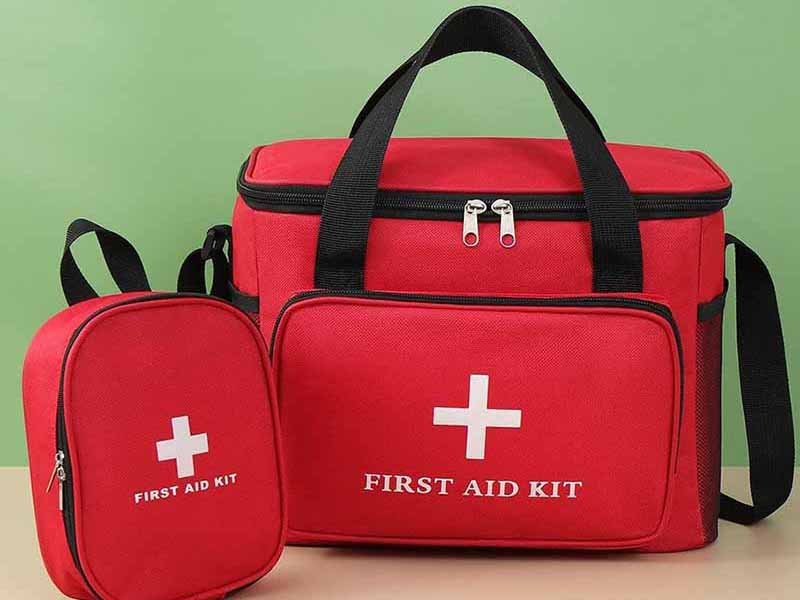
Choosing a manufacturer for a medical bag project becomes much harder once the product moves beyond a basic fabric pouch. A bag may need to organize emergency supplies, protect electronic equipment, carry significant loaded weight, tolerate repeated cleaning, fit accessories precisely, remain comfortable during transport, and still be manufactured consistently across thousands of units. A factory that produces attractive backpacks can therefore be technically capable of sewing the product while still being a poor fit for the actual project.
The right medical bag manufacturer should combine relevant product-development experience, suitable material sourcing, practical compartment engineering, controlled sampling, documented quality inspection, appropriate testing support, realistic commercial terms, and reliable repeat-production management. The strongest choice is rarely determined by factory size or the lowest quotation alone. It comes from matching the manufacturer’s capabilities to the product’s intended use, technical risks, order volume, target market, and long-term program requirements.
Many sourcing problems only become obvious after a sample is fully loaded. A zipper that looked perfect on an empty prototype may become difficult to close. A device may fit the cavity yet press against a connector. A shoulder strap may feel comfortable during a showroom inspection but twist when the bag carries 12 kilograms. Selecting a manufacturer therefore means looking past the sales presentation and understanding how the factory thinks, develops, tests, records, and reproduces a product.
Start With the Medical Bag Project, Not the Factory

The manufacturer search should begin only after the project is defined clearly enough to explain what the bag must carry, protect, organize, and endure. A first aid pouch, EMS backpack, nursing organizer, insulated medicine carrier, and fitted medical-device case may share the same broad product label, but their engineering priorities can be completely different. Intended use should therefore determine the factory requirements.
Define the Real Use Environment
The first useful question is not which factory can offer the lowest price. It is where, how, and by whom the product will actually be used. A small first aid pouch kept in a home or office may mainly need simple organization, clear labeling, and reliable closure. An EMS backpack can be carried outdoors, repeatedly opened, placed on rough surfaces, loaded heavily, exposed to rain, and handled in stressful working conditions.
A case designed around medical equipment introduces another set of variables. The product may need controlled clearances around a device, separate storage for chargers or probes, structured foam, protection around displays or connectors, and a predictable orientation when the equipment is inserted. Even the location of a handle can become important if the loaded center of gravity makes the bag tilt or rotate during transport.
The manufacturer needs to understand the expected user, contents, loaded weight, carrying method, access sequence, environment, cleaning routine, and protection requirement before construction decisions are finalized. When these questions are answered early, fabric selection, reinforcement, opening geometry, pocket architecture, foam construction, and inspection criteria become much easier to define.
| Medical Bag Project | Typical Priority | Practical Information to Define |
|---|---|---|
| First aid pouch | Organization and quick visibility | Content list, pocket arrangement, size, branding |
| EMS trauma bag | Fast access and loaded durability | Loaded weight, access sequence, carrying method |
| Medical backpack | Organization and carrying comfort | Equipment list, weight distribution, harness needs |
| Medicine cooler | Thermal management | Internal volume, insulation concept, use duration |
| Device carrying case | Fit and protection | Device dimensions, accessories, sensitive areas |
| Home-care organizer | Access and cleanability | User workflow, pocket groups, cleaning procedure |
Separate Critical Requirements From Preferences
Medical bag development becomes easier when the project team distinguishes between features that affect function and features that are mainly preferences. A logo moving several millimeters may be visually noticeable but functionally insignificant. A divider moving the same distance can prevent a device from fitting correctly, interfere with a connector, or make a high-priority item difficult to remove.
Critical requirements normally include features related to device fit, loaded strength, protection, access, closure, target-market obligations, and any performance claim that the product must consistently meet. Controlled requirements usually include dimensions, materials, colors, branding, labels, packaging, and construction details that need repeatability even when minor variation would not stop the product from functioning.
Preferences are elements that can still be optimized during development. These may include decorative stitching, secondary pocket positions, trim details, or non-critical color choices. Treating every feature as equally important can make development unnecessarily slow while allowing genuinely important risks to receive too little attention.
A well-prepared project specification identifies which dimensions, components, seams, and functions matter most. That hierarchy later becomes the foundation for sampling, approval, inspection, corrective action, and repeat orders.
Prepare Information the Factory Can Actually Use
A manufacturer does not need a perfect technical pack before the first discussion, but it does need more than a product photograph and a target price. A useful starting package normally includes overall dimensions, critical internal dimensions, the intended contents, approximate loaded weight, reference images, pocket concepts, preferred materials where known, branding requirements, order quantity, packaging expectations, destination market, and target schedule.
For a medical device case, the accessory list can be just as important as the main device. Cables, batteries, chargers, probes, manuals, replaceable modules, and protective covers may require substantial space. Areas that should not receive pressure should be identified, especially around displays, connectors, switches, fragile extensions, vents, hinges, or calibration-sensitive components.
When possible, sending the actual equipment or an accurate physical mock-up to the development team can reveal problems that drawings do not show. A product can be dimensionally correct but awkward to remove, poorly balanced, difficult to close, or uncomfortable to carry.
The quality of the factory’s response to this information is itself useful evidence. A capable development team usually turns the brief into additional technical questions instead of immediately converting length, width, fabric, and quantity into a quotation.
Look for Relevant Medical Bag Engineering Experience
Relevant experience is not simply a catalog containing first aid bags or products with medical symbols. A suitable manufacturer should understand engineering problems that resemble those in your project, including loaded reinforcement, compartment planning, foam protection, device fit, cleanable surfaces, access sequence, version control, and repeat production. The strongest evidence usually appears in the way the development team explains decisions and solves problems.
Separate Sewing Experience From Product Engineering
An established bag factory should already understand cutting, sewing, binding, zipper installation, webbing, reinforcement, printing, embroidery, and general assembly. These capabilities are fundamental, but they do not automatically demonstrate that the team can engineer a demanding medical bag.
Consider a portable diagnostic-device case. The manufacturer may need to determine whether the equipment should be retained by shaped foam, straps, internal dividers, a semi-rigid shell, or a combination of methods. The team needs to consider how the device moves during transport, which surfaces can safely contact foam, whether cables may press against controls, and whether the user can remove the equipment without excessive force.
An EMS backpack creates different questions. Frequently used supplies need faster access than reserve items. Heavy contents need to remain stable when the backpack changes orientation. Shoulder-strap and handle attachment points must manage the expected load. Internal modules need to remain organized even when the bag is carried vertically after being packed horizontally.
A supplier that can explain these trade-offs is offering more than sewing capacity. It is showing that it can translate real use into construction decisions.
Look for Process Evidence Instead of a Large Photo Gallery
Finished-product photos are useful, but they only prove that a factory had contact with a similar product at some point. They do not show who designed the structure, how materials were controlled, whether samples were revised systematically, or how closely mass production followed the approved version.
More useful evidence includes sanitized BOM examples, sample revision records, material specification sheets, inspection forms, controlled drawings, pattern records, golden-sample procedures, work instructions, packaging specifications, and examples of corrective action. A professional supplier may reasonably refuse to show another customer’s confidential drawings, but it should still be able to demonstrate its internal development process without exposing proprietary information.
Ask how the factory distinguishes Prototype V1 from Prototype V2. Ask what happens if a zipper, buckle, or fabric becomes unavailable. Ask how updated drawings are released to production and how obsolete versions are removed from use. Ask which measurements receive special attention and how the factory prevents operators from following an outdated instruction.
These questions reveal whether the supplier controls products through a system or relies primarily on individual memory.
Judge the Questions the Supplier Asks You
A manufacturer’s questions can be one of the fastest indicators of technical depth. A straightforward stock-material pouch may need only a small number of clarifications. A fitted equipment case or complicated trauma backpack should normally generate a much more detailed technical discussion before final costing.
A capable team may ask about the intended contents, loaded weight, use environment, cleaning procedure, opening sequence, target market, preferred materials, branding process, packaging, testing expectations, estimated annual volume, and whether the product will later expand into additional sizes or related SKUs.
The manufacturer may also challenge parts of the initial concept. A large opening may improve access while reducing structural stiffness. Additional foam may increase protection but reduce usable volume. A molded EVA shell may create better shape retention but increase tooling, weight, and carton volume. A coated fabric may resist water while ordinary zipper and seam construction still allow water entry.
Useful disagreement is often a positive sign. The development team’s job is not to approve every idea immediately; it is to identify trade-offs while changes are still inexpensive.
Evaluate Materials Through Function, Cleaning, and Protection

Medical bag materials should be selected as a complete construction system rather than by fabric name alone. Polyester, nylon, coated fabrics, EVA, PE foam, mesh, transparent films, elastic, webbing, zippers, buckles, and reinforcement boards each affect performance differently. The best combination depends on abrasion, cleaning, water exposure, weight, protection, flexibility, appearance, cost, and intended service conditions.
Read Beyond Fabric Denier
A specification such as “600D polyester” does not tell you everything needed to evaluate a medical bag material. Denier describes yarn linear density, but two fabrics sold under the same basic description can still differ in weave density, coating, finishing, tear behavior, abrasion performance, colorfastness, hand feel, water resistance, and long-term consistency.
The same issue appears when comparing 420D, 600D, 900D, or 1680D materials. Moving to a higher denier does not automatically make a product better suited to medical applications. Heavier fabrics may increase abrasion resistance in some constructions, but they can also increase finished weight, stiffness, sewing difficulty, packing volume, and cost.
The complete material system matters more than one specification. A strong shell fabric cannot compensate for weak handle reinforcement. Heavy webbing provides little benefit if the stitch pattern transfers load into an inadequately supported panel. Thick foam may look protective while allowing the device to move freely inside an oversized cavity.
For important projects, the factory should record the actual production material specification rather than relying on broad descriptions such as “high-density polyester” or “premium nylon.”
Turn Cleaning Expectations Into a Defined Condition
“Easy to clean” is common marketing language, but it is not a useful engineering requirement until the expected cleaning method is defined. A consumer first aid pouch may be wiped occasionally with mild soap and water, while equipment used in professional healthcare or emergency response environments may be cleaned far more frequently and according to product-specific procedures.
The project team should identify the expected cleaning agent or method, contact conditions, wiping procedure, drying approach, and realistic frequency before approving materials that are expected to tolerate repeated cleaning. Representative swatches or prototype components can then be evaluated for discoloration, coating change, print deterioration, clouding, delamination, cracking, adhesive softening, or surface tackiness.
Transparent windows deserve particular attention because PVC, TPU, and other films can behave differently when exposed to heat, cleaning agents, folding, and repeated flexing. Printed logos, heat-transfer graphics, laminated foams, coated textiles, and bonded assemblies can also respond differently than the base fabric.
A supplier should therefore avoid broad claims such as “chemical resistant” unless the actual material and expected exposure conditions have been evaluated appropriately.
Match Protection to What Is Inside
The amount of padding should be determined by the product being carried rather than by the idea that thicker automatically means safer. Bandages, gloves, and disposable supplies may need organization but little impact protection. Electronic diagnostic equipment may require carefully positioned foam, controlled clearance, rigid support, or a shaped insert.
It helps to separate three functions: organization, retention, and protection. Organization makes contents easy to locate. Mesh pockets, transparent windows, labels, color coding, and dividers commonly serve this function. Retention prevents items from moving excessively and may use elastic loops, straps, fitted pockets, hook-and-loop systems, or shaped cavities. Protection reduces contact, pressure, abrasion, or impact and can involve PE or EVA foam, semi-rigid sheets, molded shells, reinforced corners, or suspended compartments.
Foam selection illustrates why prototype evaluation matters. Changing from a relatively thin foam layer to a substantially thicker construction may improve separation but also reduce usable space and increase closure pressure. Density, compression behavior, location, and cavity fit can matter as much as nominal thickness.
The final protective system should be tested with the actual contents or realistic substitutes rather than approved from a material swatch alone.
Judge Compartment Design and Device Fit as Engineering Work
Internal organization should be designed around user workflow, content retention, equipment orientation, and access priorities rather than simply filling available space with pockets. A bag can appear excellent externally and still perform poorly if high-priority items are difficult to reach, dividers collapse, equipment shifts, or internal pockets become inaccessible once the product is fully loaded.
Design Around How the Bag Is Opened
Medical bags are frequently used under conditions where the sequence of access matters. The user may be working in a vehicle, clinic, home, ambulance, outdoor environment, or other constrained space. Some products are placed flat before opening. Others remain upright. Some need full clamshell access, while others should allow the user to reach critical contents through a smaller opening.
The internal structure should reflect these conditions. Frequently used items may need immediate visibility, while secondary tools can sit in removable pouches or internal pockets. Reserve supplies can occupy lower-priority locations. This hierarchy is usually more useful than arranging pockets purely for symmetry.
Opening geometry deserves similar attention. A full clamshell opening provides excellent visibility but requires space around the product. A top-opening backpack works better in tighter environments but can make lower compartments harder to reach. Removable modules provide flexibility but introduce additional labels, attachment systems, replacement components, and potential mixing between SKUs.
A good factory should discuss these trade-offs before the layout becomes locked into production patterns.
Identify the Dimensions That Truly Control Fit
Not every dimension on a medical bag needs identical tolerance control. A minor variation in a decorative outer panel may have little functional effect, while the same variation in a fitted cavity could make a device loose, difficult to insert, or impossible to remove comfortably.
For device-related products, critical dimensions may include cavity length, width, and depth, foam thickness, connector clearance, accessory pocket openings, divider positions, closure clearance, strap position, and protective spacing around displays or fragile components.
Soft sewn structures also behave differently from machined components. Fabric bends and stretches. Binding and seam allowance influence finished dimensions. Foam compresses. Molded EVA behaves differently from flexible textile panels. One universal tolerance applied to every measurement therefore rarely makes sense.
Instead, the project team and factory should agree on Critical-to-Fit measurements and define practical acceptance limits for those features. A complex case may have eight or ten dimensions that deserve close control while other dimensions are monitored with broader production tolerances.
This approach directs inspection resources toward differences that could actually affect usability or protection.
Approve the Product Under Realistic Load
An empty medical bag can hide design weaknesses that become obvious as soon as it is packed. Prototype approval should therefore include a fully loaded evaluation using the actual intended contents whenever possible.
The bag should be closed normally without excessive zipper force, lifted using each intended handle, carried in the expected orientation, placed on a representative surface, reopened, and used to remove and replace priority items. The product should also be moved through the orientations it will experience during transport so that shifting contents, collapsing dividers, sagging pockets, or unstable devices can be identified.
Loaded weight is particularly important. A backpack expected to carry 12 kilograms should not be evaluated only with a few light samples inside. The carrying system, handle attachment, body structure, pocket retention, and user comfort should be assessed under conditions close to actual use, with any additional durability or overload tests defined separately according to project requirements.
When the actual device cannot be supplied, dimensional and weight-equivalent mock-ups are much more useful than approving an empty case.
Use Sampling as a Supplier Qualification Process

Sampling should evaluate the manufacturer as well as the physical product. It shows how accurately the factory interprets drawings, manages materials, records revisions, responds to problems, controls workmanship, and communicates technical changes. Complex medical bag programs benefit from staged validation because structural, material, and functional problems can be corrected before the project reaches a production-intent sample.
Use Each Sample to Answer a Specific Question
Early prototypes do not always need final production materials. If the structure is still uncertain, a development sample can focus on external size, opening direction, device fit, compartment arrangement, handle location, and overall volume before expensive custom materials, colors, printing, or packaging are introduced.
Later samples should progressively become closer to mass production. A structural prototype can validate geometry and function. A material-confirmation sample can establish fabrics, foam, zipper, hardware, mesh, webbing, and branding methods. A functional pre-production sample can combine the approved construction and production-intent materials for loaded evaluation, packaging checks, and final user review.
The last approved configuration should become the golden sample or another formally controlled production reference. Simple first aid pouches may reach this point after relatively few iterations. A complicated equipment case may need several structural revisions before all conflicts are resolved.
The important measure is not the number of samples. It is whether each revision has a clear purpose and whether the project becomes progressively more controlled.
Score Samples Instead of Relying on “Looks Good”
Visual approval is useful, but it does not provide enough discipline for complex products. A structured scorecard allows different samples and suppliers to be compared using the same criteria while giving greater weight to the features that matter most.
| Sample Evaluation Area | Example Weight | Typical Evidence |
|---|---|---|
| Structure and critical dimensions | 20% | Measurements and physical review |
| Internal organization | 15% | Fully loaded evaluation |
| Device or content fit | 15% | Real equipment or approved mock-up |
| Materials and hardware | 15% | Approved swatches and component records |
| Workmanship | 10% | Stitching, binding and finishing inspection |
| Carrying performance | 10% | Evaluation at intended load |
| Functional access | 5% | Loading and retrieval trial |
| Branding and appearance | 5% | Artwork, color and position confirmation |
| Packaging readiness | 5% | Pack-out review |
| Total | 100% | Internal project score |
These percentages are not a regulatory standard. They are a practical internal decision tool and should be adjusted according to the product. A highly fitted device case may place greater weight on dimensional accuracy and equipment protection. A private-label first aid pouch intended for retail may give more weight to appearance, packaging, and cost.
The main advantage is consistency. A project team can explain exactly why one sample is stronger than another rather than relying on general impressions.
Freeze Revisions Before Mass Production
Version confusion is one of the easiest ways for a well-developed product to become inconsistent in mass production. During sampling, pocket dimensions may change, foam may become thicker, reinforcement may be added, a zipper may change, artwork may move, and packaging may be revised. If those decisions remain scattered across messages, marked photographs, and old drawings, mistakes become much more likely.
Every meaningful sample revision should have a clear version identifier and dated change record. An initial construction might be V1. A revised divider and stronger handle might create V2. A zipper and foam change could become V3. The final approved production configuration could then become V4.
Before production begins, the controlled package should include the current drawing, BOM, approved material references, color requirements, artwork, labels, packaging, key measurements, inspection requirements, and approved physical sample.
Once this package is frozen, substitutions should no longer happen informally. If a component becomes unavailable, the replacement should be treated as a controlled change rather than simply being chosen because it looks similar.
Assess Quality Control, Testing, and Compliance Boundaries
Quality control should be built around the ways the specific product could fail, while compliance decisions should follow intended use, product claims, target market, materials, and regulatory status. A bag used in healthcare is not automatically a medical device, and no single certification covers every medical bag. Good suppliers connect each important requirement to appropriate inspection, test evidence, documentation, and production controls.
Build QC Around Real Failure Modes
A statement such as “100% inspected” has limited value unless the inspection criteria are clearly defined. A finished bag can look acceptable while still containing incorrect foam, misplaced reinforcement, the wrong divider, an incompatible label, or a critical measurement outside the approved range.
For an EMS backpack, common inspection concerns may include seam construction, zipper function, handle attachment, shoulder-strap alignment, reflective details, internal pocket orientation, divider installation, labels, dimensions, and packaging. A fitted medical equipment case may add cavity dimensions, foam position, device retention, accessory fit, closure clearance, and pressure points around sensitive components.
These risks should be controlled at the most appropriate production stage. Incoming inspection can verify critical fabric, foam, webbing, hardware, zippers, and packaging components before production. In-process checks can detect reinforcement, seam, pocket-position, and assembly errors before the product is completed. Final inspection can review appearance, dimensions, function, accessories, labels, and packaging.
The goal is not to inspect every characteristic repeatedly. It is to detect each meaningful failure at the point where correction is most practical and least expensive.
Understand the Medical Device Boundary
The word “medical” does not automatically determine regulatory classification. In the United States, FDA describes a medical-device accessory as a finished device intended to support, supplement, or augment the performance of one or more parent devices. Intended use and related evidence therefore matter when determining whether an article is an accessory; simple association with a medical product is not enough by itself.
This distinction matters when sourcing bags and cases. A general organizer that happens to carry basic healthcare supplies may have a very different regulatory context from a purpose-designed product whose labeling and intended use make it part of a regulated medical-device system.
ISO 13485 should also be discussed accurately. ISO identifies ISO 13485:2016 as the current international standard for medical-device quality management systems, and the edition was reviewed and confirmed in 2025. It can be highly relevant to organizations operating within medical-device supply chains, but it should not be represented as a universal finished-product certification required for every textile bag used in healthcare.
The correct compliance strategy therefore starts with what the product is, what claims will be made, where it will be sold, and how it relates to any regulated parent device.
Connect Claims to Specific Evidence
Certificates and test reports are most useful when they correspond directly to the actual requirement. A report for one black fabric does not automatically establish that every color, coating, foam, lining, zipper, print, or finished bag meets the same requirement.
If the project requires a particular chemical restriction, identify which materials and components fall within scope. If the bag is expected to carry a defined load, establish how that condition will be evaluated. If water resistance is claimed, clarify the exposure condition represented by that claim. If a cleaning procedure is important, test representative production materials under the expected conditions.
A practical evidence chain connects the requirement, controlled specification, verification method, result, and document reference. This approach is considerably stronger than collecting a folder full of unrelated certificates that happen to contain familiar logos or standards.
Material substitutions deserve special attention. A previous report may no longer represent the production configuration after a fabric coating, zipper, color, foam, printing ink, or component supplier changes. The factory should therefore know when a production change requires renewed evaluation or customer approval.
Compare MOQ, Cost, Lead Time, and Capacity as a System

MOQ, price, lead time, and capacity should be evaluated together because each affects the others. A low unit price may require excessive inventory, custom-material minimums, or long procurement cycles, while a flexible low-MOQ option may carry higher material and setup costs. The commercially strongest manufacturer is the one whose sourcing system and production model fit the project’s stage, risk, volume, and growth plan.
Break MOQ Into Its Real Causes
The sewing factory is often not the only source of minimum-order restrictions. Fabric mills, zipper suppliers, custom webbing producers, packaging printers, molded-component vendors, and hardware suppliers can each have their own production minimums.
That explains why two versions of essentially the same medical bag may have very different commercial requirements. A design based on stock black polyester, standard zipper tape, common buckles, existing webbing, and ordinary export packaging can usually be sourced more flexibly than one requiring custom-dyed fabric, matching zipper color, molded branded zipper pulls, custom hardware, printed lining, and retail boxes.
Instead of asking only, “Can you reduce the MOQ?”, ask which component is creating the minimum. The answer may reveal several ways to restructure the launch.
For example, an initial 300-piece pilot using controlled stock materials may be commercially more sensible than placing 1,000 or 2,000 pieces only because one customized component creates a purchasing threshold. Once demand is validated, custom materials can be introduced into a later order.
Some manufacturers specializing in development programs also publish lower starting quantities for selected configurations. Szoneier, for example, currently describes selected standard medical-bag configurations beginning around 200 pieces when ready materials and mature structures can be used, illustrating how material strategy can influence practical MOQ rather than one universal number applying to every product.
Compare Total Project Economics
A lower unit quotation does not always produce a lower-risk or lower-cash project.
Imagine Supplier A quotes $8.40 for a 3,000-piece minimum while Supplier B quotes $8.85 for 1,000 pieces. Supplier A is approximately 5.1% cheaper per unit, but the initial product purchase is $25,200 compared with $8,850 before testing, packaging, freight, duties, and development costs are considered.
For an unproven product, the additional $16,350 tied up in inventory may matter far more than saving $0.45 per bag. For a mature product selling 30,000 units annually, the situation changes: a $0.45 unit difference represents $13,500 across that annual quantity, so production efficiency and cost engineering become much more significant.
This is why medical bag sourcing should reflect the lifecycle of the product. Early-stage programs may value flexible materials, smaller batches, strong development support, and the ability to modify later orders. Mature programs may prioritize material consolidation, stable purchasing, automation opportunities, optimized packaging, and long-term price consistency.
Sample charges, tooling, testing, inspection, packaging, logistics, potential rework, and inventory exposure should all be included in the decision rather than comparing factory unit prices in isolation.
Make the Lead Time Understandable
A factory stating “30-day production” should be able to explain exactly when that clock starts. It may begin after the purchase order, deposit, final sample approval, artwork confirmation, or arrival of custom materials. Those conditions can create very different real schedules.
Medical bag production may involve fabric procurement, coating or custom dyeing, printing, embroidery, cutting, foam preparation, sewing, assembly, inspection, packaging, and final shipment preparation. A multi-SKU program adds another layer because one delayed component can hold back a complete assortment.
Published ranges from development-oriented manufacturers can provide useful context without becoming universal benchmarks. Szoneier currently lists roughly 3–7 days for simpler samples, 7–12 days for standard medical bags, 12–20 days for more complex multi-compartment samples, and approximately 20–60 days for bulk production depending on materials, order quantity, SKU count, branding, and packaging. These are supplier-specific planning ranges rather than industry rules, but they show how strongly product complexity can affect timing.
The more useful question is therefore not whether a factory offers the shortest lead time. It is whether the schedule can be explained and repeated reliably.
Evaluate Repeat Production, Multi-SKU Control, and Long-Term Fit
A manufacturer should be judged on whether it can reproduce the approved product months later, not only whether it can complete the first order. Medical bag programs often expand into new sizes, accessories, packaging versions, colors, and regional SKUs. Repeatability depends on pattern control, BOM records, approved samples, material references, change management, and disciplined separation between different product versions.
Ask What Will Happen on the Second Order
During the first order, the project is fresh in everyone’s memory. The engineer remembers why a divider moved. The merchandiser remembers which zipper was rejected. The buyer remembers which foam sample was approved. Six or twelve months later, those details may no longer be obvious.
Repeat production therefore depends on records rather than memory.
The factory should be able to retain the approved pattern version, BOM, material references, color standards, artwork files, labels, packaging information, measurement specifications, inspection criteria, and physical or documented production reference according to its normal control system.
One of the most revealing questions is what happens when an approved component can no longer be purchased. Fabric mills change coatings. Zipper colors are discontinued. Buckle molds are replaced. Supplier MOQs increase.
The correct response is not to substitute something that looks close and hope nobody notices. The change should be identified, compared with the approved specification, evaluated for function and appearance, sampled when necessary, and approved before mass use.
That discipline is particularly important when the previous component supported a specific test report, cleaning expectation, appearance standard, or device-fit condition.
Treat Multi-SKU Production as an Information Challenge
A ten-SKU program is not simply ten times the sewing work. Much of the difficulty comes from controlling information and preventing components from being mixed.
A medical bag family might include a first aid pouch, medium organizer, trauma backpack, cooler, and medical equipment case. These products may share logos, colors, webbing, zipper families, and some packaging components while using different patterns, foam, instruction sheets, barcodes, labels, accessories, and carton quantities.
Many expensive mistakes in such programs are not conventional sewing defects. The correct bag can receive the wrong barcode. Version 2 packaging can be packed around remaining Version 1 inventory. A small insert can enter a large case. Two similar foam pieces can be exchanged. A retailer-specific label can appear on stock intended for another market.
Strong multi-SKU control therefore relies on clear style numbers, BOM separation, revision status, work instructions, component identification, line-side organization, packaging references, and assortment verification.
A manufacturer expecting to handle larger programs should be able to explain how it separates five, ten, or twenty related styles without depending entirely on individual workers remembering the differences.
Look for Improvement Between Production Runs
A good manufacturing relationship should become more efficient after each order. The first production run often reveals opportunities that were difficult to see during sampling. One reinforcement detail may slow sewing unnecessarily. A carton may waste space. A component may repeatedly cause procurement delays. Several styles may use slightly different webbing or zipper specifications even though the differences create no functional benefit.
These observations can be used for controlled cost engineering.
Cost reduction does not necessarily mean replacing materials with cheaper alternatives. Standardizing the same approved zipper family across several SKUs can reduce purchasing complexity. Sharing a webbing specification may reduce component-mixing risk. Optimizing pattern layout can improve material utilization. Simplifying non-critical decorative operations may reduce labor without changing performance.
For brands developing a product family rather than a single medical bag, the manufacturer can become more valuable when it helps create a controlled platform of shared materials, trims, construction details, and packaging logic.
That long-term capability is particularly important when successful products generate repeat orders and gradually expand into related models.
Build a Shortlist With a Practical Manufacturer Evaluation System
A final supplier decision should combine engineering, sample quality, materials, quality management, compliance understanding, commercial fit, communication, and repeat-production control. No single factor should dominate automatically. A structured scorecard makes trade-offs visible and prevents an unusually low quotation, attractive factory video, or impressive sample from hiding weaknesses that could become expensive during mass production.
Compare Every Factory Using the Same Evidence
Supplier comparisons become unreliable when different factories are judged on different criteria. One supplier may receive attention because its price is low, another because its salesperson communicates quickly, and another because the first sample looks attractive. All three observations are useful, but they need to sit inside the same qualification framework.
| Evaluation Area | Example Weight | Evidence to Review |
|---|---|---|
| Relevant project experience | 15% | Similar products and engineering explanations |
| Product engineering capability | 15% | Technical questions, drawings, proposed solutions |
| Sample performance | 15% | Fit, function, workmanship and revision accuracy |
| Material capability | 10% | Specifications, sourcing control and alternatives |
| Quality management | 15% | Incoming, in-process and final inspection controls |
| Testing and compliance support | 10% | Relevant reports and appropriate regulatory understanding |
| MOQ and commercial fit | 5% | Material minimums and pilot-order flexibility |
| Lead time and capacity | 5% | Credible schedule for the actual product |
| Communication and change control | 5% | Revision records and issue handling |
| Repeat-order capability | 5% | BOM, pattern and approval-reference control |
| Total | 100% | Project-specific qualification result |
These weights are an internal decision model rather than an industry standard. A fitted medical device case may increase the weighting for engineering and dimensional control. A mature high-volume first aid pouch may place more emphasis on capacity and commercial efficiency. A complex EMS system may give quality management and loaded durability greater influence.
The important point is that every shortlisted manufacturer should be judged through the same evidence.
Ask Questions That Reveal How the Factory Thinks
Questions that can be answered with a simple “yes” often provide little qualification value. Better questions require the factory to explain its reasoning.
Ask what it considers the highest-risk part of the design and which measurements it would treat as critical. Ask how the construction should change if loaded weight increases by 30%. Ask how equipment movement will be controlled. Ask what happens if the approved zipper becomes unavailable or if a material supplier changes a coating.
The production discussion should be equally specific. Ask how the approved sample is referenced on the production floor, how workers receive the current version, who authorizes substitutions, how repeated defects are escalated, and what information will remain available when the same product is reordered eight months later.
A strong supplier may identify shortcomings in the original concept instead of immediately promising to manufacture it exactly as submitted. That is often useful. The purpose of development is to solve problems before they are multiplied across an entire production run.
For companies that need support converting an idea, sample, drawing, or technical pack into a controlled medical bag program, manufacturers with an established development workflow can be more useful than suppliers focused only on executing finished specifications. Szoneier, for example, describes its medical-bag service around product-line development, sampling, materials, QC, packaging, and repeat-production control rather than only individual bag production.
Watch Patterns Instead of Looking for Perfection
No manufacturing project is completely free of mistakes. A prototype may require correction, a material can arrive late, or a construction detail may need another iteration. The more useful distinction is how the supplier handles those situations.
A sample delay that is communicated early, explained clearly, and followed by a revised plan is different from a delay that appears without warning. A prototype problem that is documented, traced to a cause, corrected, and prevented from recurring can actually demonstrate a functioning quality process.
More concerning patterns include undocumented revisions, unexplained material substitutions, compliance claims that do not match supporting evidence, repeated differences between drawings and samples, quotations created before the product is understood, or production promises that cannot be connected to a realistic schedule.
Communication quality also matters more as complexity increases. Medical bags can contain dozens of materials, trims, labels, pieces of foam, and sewn components. The objective is not to find a factory claiming that nothing will ever go wrong. It is to work with one that detects problems early enough to control them.
Make the Final Decision Around Project Fit
A large factory is not automatically the best choice, and a smaller manufacturer is not automatically more flexible. Factory size only becomes useful when it matches the needs of the project.
A large operation may provide substantial capacity, purchasing leverage, specialized lines, mature systems, and efficiency on established programs. A smaller or mid-sized specialist may provide more development attention, easier communication, practical access to low-volume production, or greater flexibility when a product still requires several engineering revisions.
A startup testing a new home-care organizer therefore has a different ideal supplier profile from an established medical equipment company ordering tens of thousands of mature carrying cases. An EMS company launching ten related SKUs has different requirements again.
The strongest choice is the manufacturer whose engineering capability, production system, commercial structure, quality controls, and communication style fit the product today while still being capable of supporting the next stage of the program.
The decision should ultimately answer a larger question than whether the factory can make one acceptable sample. Can it take the product from concept to a controlled specification, from specification to stable mass production, and from the first shipment to consistent repeat orders without losing the details that made the approved product work?
Choosing a medical bag manufacturer is therefore best treated as risk management rather than simple supplier shopping. Price, MOQ, factory size, and production speed matter, but they should sit behind a more fundamental requirement: the manufacturer must understand what the bag is expected to do and have a credible process for turning that expectation into materials, patterns, compartments, samples, inspection points, documentation, and repeatable production.
A well-managed project usually becomes easier once the factory starts asking the right questions. Instead of beginning the conversation with only a target price, share the intended use, contents, loaded weight, dimensions, market, order quantity, schedule, cleaning expectations, and any available sample or drawing. How the manufacturer responds to that information often reveals far more about the future relationship than a factory brochure or a low opening quotation.
Frequently Asked Questions
What should I look for in a medical bag manufacturer?
Look for a manufacturer with relevant structural experience, strong sampling and revision control, material knowledge, documented quality inspection, realistic commercial terms, and the ability to reproduce an approved product on future orders. For equipment-related bags, pay particular attention to device fit, foam engineering, critical dimensions, compartment design, and loaded carrying performance. A supplier’s technical questions and development process are usually more revealing than the number of medical bag photographs in its catalog.
What is a reasonable MOQ for custom medical bags?
There is no universal MOQ because the number is often driven by materials and components rather than sewing alone. Projects using available fabrics, standard zippers, common hardware, and simple branding can often start at much lower quantities than products requiring custom-dyed textiles, molded hardware, special lining, complex foam, or printed retail packaging. Ask the manufacturer which component creates the MOQ before assuming the finished-bag quantity cannot be reduced.
How many samples are normally needed before medical bag production?
A simple medical pouch may require only one or two successful development rounds, while a complex EMS backpack or fitted medical device case may require several iterations. The better approach is to give each sample a clear objective. Early versions can validate structure and fit, later versions can confirm production materials and functionality, and the final approved configuration should become the controlled production reference. More samples are not necessarily better unless each round removes a specific uncertainty.
What materials are commonly used for medical bags?
Common materials include polyester and nylon shell fabrics, coated textiles, mesh, transparent PVC or TPU components, PE or EVA foam, reinforcement sheets, webbing, elastic, hook-and-loop materials, molded hardware, and various zipper systems. The best material cannot be chosen by denier alone. Abrasion, cleaning method, water exposure, loaded weight, flexibility, protection needs, construction, target cost, and expected service conditions should all be evaluated together before the final material system is approved.
Does every medical bag need FDA approval or ISO 13485 certification?
No. A bag being used in a healthcare environment does not automatically give it the same regulatory status as a medical device. In the United States, intended use is important when determining whether a product is a medical-device accessory, and ISO 13485 is a quality-management-system standard for the medical-device industry rather than a universal finished-bag certification. The appropriate regulatory and documentation requirements should be determined from the actual product, claims, market, and relationship to any regulated device.
How should I compare quotations from different medical bag factories?
Compare the complete project rather than only the unit price. Check whether each quotation covers the same materials, foam, zippers, hardware, logo process, packaging, inspection requirements, testing expectations, order quantity, and delivery terms. Also consider sampling costs, tooling, minimum material purchases, freight efficiency, inventory exposure, and expected repeat-order requirements. A slightly higher unit cost can be commercially better when it reduces inventory, development problems, material risk, or expensive rework.
How can I reduce the risk that bulk production differs from the approved sample?
Freeze the final sample version before production and connect it to a controlled specification package containing drawings, BOM, material references, artwork, colors, labels, packaging, critical dimensions, and inspection criteria. Confirm how the factory will use the approved sample during production and how component substitutions will be controlled. In-process and final inspection should focus particularly on critical fit, reinforcement, material, functional, labeling, and packaging requirements rather than appearance alone.