Skip to content

When it comes to choosing the perfect bag for work, travel, or daily use, two popular options come to mind: laptop backpacks and shoulder bags. Both serve unique purposes, yet they come with their own set of advantages and disadvantages. As professionals and travelers, we want a bag that offers the best blend of comfort, storage, style, and practicality. So, the question arises: Laptop backpack or shoulder bag – which one should you choose? The right choice ultimately depends on your personal preferences and needs, but it’s essential to weigh various factors like ergonomics, storage capacity, protection, and comfort before making a decision.
A laptop backpack typically provides better ergonomic benefits, more storage space, and superior protection, making it an ideal choice for long hours of commuting or travel. However, a shoulder bag might be better for quick trips and a more stylish, lightweight option.
Choosing between a laptop backpack and a shoulder bag isn’t always straightforward. In this article, we’ll dive into the key differences between the two, considering factors like comfort, protection, storage, and use cases. By the end, you’ll have a better understanding of which bag suits your needs best. Let’s break it down.
What Are Laptop Backpacks and Shoulder Bags
In today’s fast-paced world, bags have evolved beyond being simple storage tools to becoming functional, stylish accessories that cater to specific needs. Among the most popular options are laptop backpacks and shoulder bags. Both serve the purpose of carrying laptops and other essentials, but each comes with its own set of features, benefits, and drawbacks. Understanding these differences can help you decide which one is best suited for your lifestyle, work needs, or travel habits.
What is a Laptop Backpack?
A laptop backpack is a specialized bag designed to carry a laptop securely while providing ample space for other essential items such as books, chargers, notebooks, pens, and more. Typically, it features two padded shoulder straps, evenly distributing the weight across your shoulders, which makes it more comfortable for carrying heavy loads for long periods.
Laptop backpacks are available in a wide range of designs, from minimalist and sleek to rugged and durable, often constructed with materials like nylon, polyester, and leather to provide both protection and style. The key feature of a laptop backpack is its padded compartment, which is specially designed to protect your laptop from bumps, scratches, and accidental drops. These bags typically come with multiple compartments, offering organized storage for different items, making them ideal for people who carry a variety of things alongside their laptop.
One of the main reasons laptop backpacks are popular is their ergonomic design. The dual-strap design helps distribute the weight of the bag evenly across the back, making it easier to carry heavier items, especially when you’re walking long distances or commuting. In addition, most laptop backpacks come with extra features like water bottle holders, key clips, and extra pockets for organization.
What is a Shoulder Bag (Messenger/Single-Strap)?
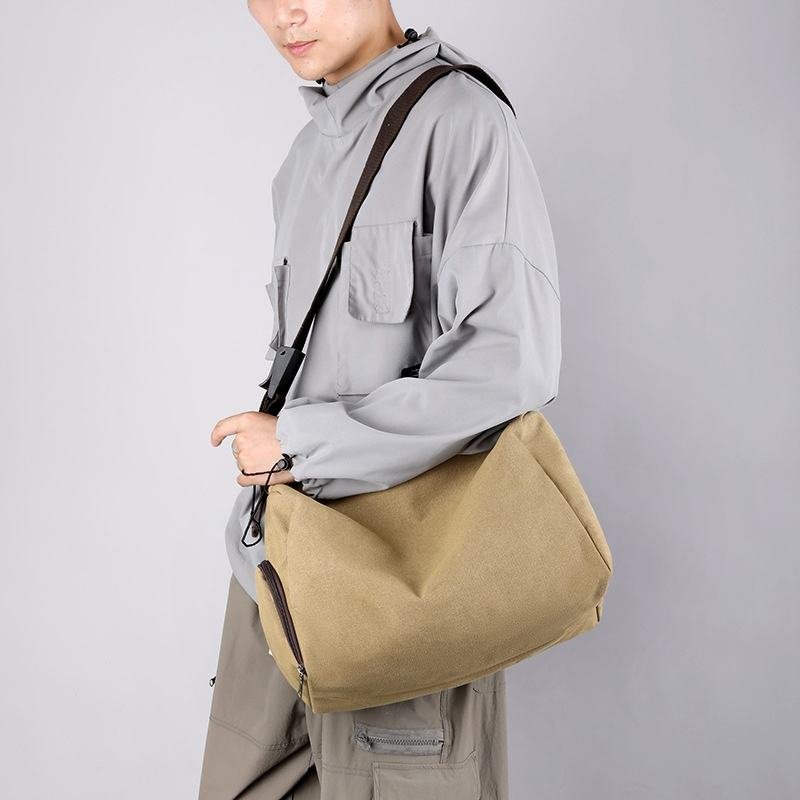
A shoulder bag, also known as a messenger bag or single-strap bag, is a versatile bag that can be worn over one shoulder. Unlike a laptop backpack, which distributes weight evenly across your body, shoulder bags are designed with a single strap that crosses your body, typically worn across the chest or on one shoulder.
Shoulder bags are often preferred for their ease of access and quick grab-and-go convenience. This style of bag is commonly used by professionals and students who need quick access to their laptop or important items without having to remove the entire bag. Most shoulder bags are compact, with one or two main compartments, making them a more streamlined option for carrying a laptop and a few essentials.
The main compartment of a shoulder bag is usually padded to protect the laptop, though it may not provide as much protection as a dedicated laptop backpack. However, shoulder bags are typically much more stylish than backpacks, making them a popular choice for business professionals or those attending meetings, where appearance matters.
Shoulder bags come in many styles, from sleek leather designs for corporate settings to more casual, sporty options for everyday use. The single strap design is favored for its minimalist look, and many shoulder bags are designed to be lightweight and easy to carry, though they can become uncomfortable if overloaded, especially for long commutes.
How Do They Differ in Design and Use?
While both laptop backpacks and shoulder bags are designed to carry a laptop, their designs and intended uses differ significantly, which makes each bag type more suitable for different tasks.
- Laptop backpacks are built with comfort and organization in mind, designed for long-term wear, and typically offer better protection for laptops. They are more suitable for those who need to carry multiple items or heavier loads.
- Shoulder bags, on the other hand, prioritize convenience and quick access. They are often favored by people who need to carry just the essentials and appreciate a more stylish, professional look.
If you’re someone who needs to carry several items in addition to a laptop, such as notebooks, a water bottle, or extra clothing, a laptop backpack would likely suit you better. It offers more compartments, padding for your laptop, and often even dedicated spaces for smaller accessories like your phone or keys.
However, if your daily commute is short and you only need to carry your laptop and a few essential items, a shoulder bag may provide the perfect balance of style and convenience. Shoulder bags are lightweight, quick to access, and easy to wear while keeping a professional or casual appearance.
Ultimately, the decision between a laptop backpack and a shoulder bag comes down to your specific needs, including how much you need to carry, the level of protection your laptop requires, and how comfortable you want to be while carrying your bag.
Why Choose One Over the Other?
Understanding the differences in functionality and comfort between these two types of bags helps you choose the right one based on lifestyle and use case. If you’re looking for more storage, comfort, and durability for daily use, a laptop backpack is likely your best bet. If style and lightweight convenience are your priorities, a shoulder bag might be the way to go.
Which Offers Better Comfort and Ergonomics
Laptop backpacks generally offer better comfort and ergonomics than shoulder bags because they distribute weight evenly across both shoulders and the upper back, reducing strain on the neck and spine. Shoulder bags may feel convenient for short use, but long-term or heavy loads often lead to muscle imbalance and discomfort.
Comfort is not just about how a bag feels when you first put it on—it’s about how your body reacts after hours of use, day after day. When choosing between a laptop backpack and a shoulder bag, ergonomics should be a top priority, especially for people who commute, travel frequently, or carry a laptop daily.
Are Backpacks More Comfortable for Long Use?
Yes—a well-designed laptop backpack is significantly more comfortable for long-term use, especially when carrying a laptop and accessories.
Laptop backpacks are designed around two-strap load distribution, which spreads weight evenly across both shoulders and the upper back. This reduces pressure points and helps maintain a more natural spinal alignment. Many modern laptop backpacks also include:
- Ergonomic S-curve shoulder straps
- Breathable mesh back panels
- Adjustable chest or sternum straps
- Optional waist straps for load stabilization
From an ergonomic standpoint, carrying 5–8 kg (11–18 lbs) in a backpack places 30–40% less localized stress on the shoulder and neck area compared to a single-strap shoulder bag. This becomes especially important for professionals who walk, stand, or commute for more than 30–60 minutes per day.
For students, office workers, and travelers, backpacks are widely recommended by ergonomics specialists because they support symmetrical posture, reducing long-term fatigue and muscle strain.
Is a Shoulder Bag Easier to Carry for Light Loads?
For short durations and lighter loads, yes—shoulder bags can feel easier and more convenient.
A shoulder bag is quick to put on and take off, allows easy access to contents, and works well when carrying only:
- A laptop
- A notebook or tablet
- Small daily essentials
However, comfort drops sharply as weight increases. Because the load rests on one shoulder, your body naturally compensates by leaning or twisting slightly. Over time, this leads to uneven muscle engagement and pressure on the neck and trapezius muscles.
For users who only carry a laptop for short commutes (under 20–30 minutes), a shoulder bag can be comfortable enough. But for longer use, repeated daily wear, or heavier loads, the ergonomic disadvantages become noticeable very quickly.
Can a Laptop Backpack Damage My Posture?
A laptop backpack does not damage posture by default—but a poorly designed or incorrectly worn one can.
Common posture-related issues come from:
- Wearing the backpack too low on the back
- Overloading the bag beyond 10–15% of body weight
- Using thin, non-padded shoulder straps
- Carrying the backpack on one shoulder only
When worn correctly, a laptop backpack actually supports better posture than a shoulder bag. The key is proper fit and design:
- The backpack should sit high on the back
- Shoulder straps should be snug, not loose
- Weight should be centered close to the spine
In contrast, shoulder bags are more likely to cause long-term posture issues because they encourage asymmetrical carrying. Studies in occupational ergonomics consistently link prolonged single-strap carrying to neck pain, shoulder imbalance, and lower back discomfort.
In short, a well-designed laptop backpack improves posture, while prolonged shoulder bag use increases the risk of posture-related strain.
Why Ergonomics Matters More Than You Think
Many people choose bags based on appearance alone, but ergonomics directly affect:
- Daily comfort and energy levels
- Long-term musculoskeletal health
- Productivity during work and travel
If you carry a laptop five days a week, small ergonomic differences add up quickly. What feels “fine” in the first month can turn into chronic shoulder or back pain over time.
That’s why more brands and professionals now prioritize:
- Weight distribution
- Strap geometry
- Back-panel structure
- Padding density
These factors are far more important than style when it comes to long-term comfort.
Backpack vs Shoulder Bag: Comfort Comparison
| Comfort Factor | Laptop Backpack | Shoulder Bag |
|---|---|---|
| Weight distribution | Even (two shoulders) | Uneven (one shoulder) |
| Long-term comfort | High | Low to medium |
| Posture support | Good when worn correctly | Poor for extended use |
| Best load range | Medium to heavy | Light only |
| Daily commuting | Highly suitable | Limited |
What About Storage and Organization
Laptop backpacks offer superior storage capacity and organization compared to shoulder bags, thanks to multiple compartments, dedicated laptop sleeves, and accessory pockets. Shoulder bags prioritize simplicity and quick access but provide limited space and fewer organizational zones, making them better suited for minimal daily carry.
Storage is not just about how much a bag can hold, but how efficiently items are separated, protected, and accessed. For laptop users, poor organization often leads to damaged devices, tangled cables, and slower daily routines. This is where the structural differences between backpacks and shoulder bags become very clear.
How Spacious Are Laptop Backpacks?
Laptop backpacks are designed for multi-item, all-day carry, not just a laptop alone.
Most modern laptop backpacks include:
- A padded laptop compartment (13″, 15.6″, or 17″)
- Separate tablet or document sleeves
- Secondary compartments for chargers, power banks, and mice
- Front organizer panels with pen loops and small pockets
- Side pockets for water bottles or umbrellas
In terms of usable volume, a standard laptop backpack typically ranges from 18 to 30 liters, allowing users to carry work items, personal belongings, and even light travel gear in one bag.
This makes laptop backpacks especially suitable for:
- Daily commuting
- Hybrid work + gym routines
- Business travel and flights
- Students and digital nomads
The layered compartment design also helps distribute weight evenly, preventing the bag from becoming bulky or unbalanced even when fully packed.
Do Shoulder Bags Fit Extras Beyond the Laptop?
Shoulder bags can carry extras—but only to a limited extent.
Most shoulder bags are built around a single main compartment with one laptop sleeve and a few small pockets. While this works for:
- A laptop
- A notebook
- A phone and wallet
It quickly becomes inefficient when adding items like:
- Laptop chargers
- Headphones
- Water bottles
- Power adapters or external drives
Because shoulder bags lack vertical depth and structured layering, items often stack on top of each other. This leads to:
- Slower access
- Increased pressure on the laptop
- Internal clutter
In real-world use, shoulder bags perform best when total carry weight stays under 3–4 kg (6–9 lbs). Beyond that, both comfort and organization suffer.
Which Has Better Internal Compartments?
Laptop backpacks clearly outperform shoulder bags when it comes to internal organization.
A well-designed backpack separates items into functional zones:
- Tech zone: laptop, tablet, cables
- Work zone: documents, notebooks
- Personal zone: clothing, snacks, accessories
This separation reduces friction in daily routines. You don’t need to unpack everything to find a charger, and sensitive electronics are less likely to get scratched or crushed.
In contrast, shoulder bags rely on horizontal access, meaning items overlap more easily. Without structured dividers, smaller items migrate to the bottom of the bag, increasing retrieval time and frustration.
For users who value efficiency—especially professionals and frequent travelers—internal compartment design is often a deciding factor.
How Organization Impacts Daily Efficiency
Storage design directly affects how smoothly your day runs.
Poor organization leads to:
- Time wasted searching for items
- Higher risk of device damage
- Messy bag interiors within weeks
Good organization enables:
- Faster airport security checks
- Cleaner work setups
- Less stress during commuting
That’s why premium laptop backpacks increasingly include:
- RFID pockets
- Cable management loops
- Hidden security compartments
These features are rarely found in traditional shoulder bags due to space and structure limitations.
Backpack vs Shoulder Bag: Storage Comparison
| Storage Feature | Laptop Backpack | Shoulder Bag |
|---|---|---|
| Total capacity | Medium to large | Small to medium |
| Laptop protection | Dedicated padded sleeve | Basic padding |
| Number of compartments | Multiple | Limited |
| Access speed | Structured but slightly slower | Fast top access |
| Best for | All-day carry, travel | Minimal daily use |
Which is Better for Protection and Durability
Laptop backpacks generally provide better protection and durability than shoulder bags due to reinforced structures, shock-absorbing padding, and balanced load distribution. Shoulder bags can protect laptops for light use, but their single-strap design and softer construction make them less suitable for long-term or heavy-duty protection.
Protection and durability are often overlooked until something goes wrong—a cracked screen, a damaged corner, or a broken zipper. When carrying expensive electronics like laptops, tablets, and power devices, bag structure matters as much as material.
Are Backpacks Better at Protecting Laptops?
In most real-world scenarios, yes—laptop backpacks offer superior protection.
Laptop backpacks are engineered with:
- Dedicated suspended laptop compartments
- Thick EVA or PE foam padding (often 8–15 mm)
- Raised base designs to prevent ground impact
- Internal frame support that resists bending
These features create a buffer zone between the laptop and external forces such as drops, bumps, or compression in crowded environments.
Backpacks also benefit from balanced weight distribution, meaning the laptop stays centered and stable while walking. Less swinging equals fewer impact forces—an important but often ignored factor in device protection.
Shoulder bags, by contrast, allow more lateral movement. When worn crossbody, the laptop often tilts or shifts, increasing the risk of edge and corner damage over time.
Is Material Choice Important (Leather vs Nylon vs Polyester)?
Absolutely. Material selection directly impacts durability, water resistance, and lifespan.
Common materials used in laptop bags include:
- Ballistic Nylon (840D–1680D) Highly abrasion-resistant, lightweight, and water-repellent. Ideal for travel and heavy daily use.
- High-Density Polyester (600D–900D) Cost-effective and durable, widely used in professional laptop backpacks.
- Genuine Leather Premium appearance and long lifespan if maintained properly, but heavier and less impact-absorbent.
From a protection standpoint, nylon and polyester outperform leather in shock absorption and moisture resistance. Leather bags rely more on aesthetics than structural protection unless reinforced internally.
For durability, materials must also withstand:
- Repeated zipper stress
- Strap load tension
- Abrasion from floors and clothing
This is why professional-grade backpacks often combine textiles + internal foam + reinforced stitching, rather than relying on material alone.
How Does Padding and Structure Affect Safety?
Padding is not just about thickness—it’s about placement and density.
High-quality laptop backpacks use:
- Multi-layer foam systems (soft outer + dense inner layer)
- Corner protection zones (most laptops fail at corners first)
- Suspended sleeves that prevent bottom impact
Structure also plays a key role. A bag with internal rigidity (such as a hidden PP board or molded back panel) protects laptops from bending forces—especially important in crowded trains or airplanes.
Shoulder bags typically use flat padding, which protects against scratches but offers limited shock absorption during drops or collisions.
How Do Zippers, Stitching, and Hardware Affect Durability?
Durability is not only about fabric—it’s about construction quality.
Laptop backpacks usually feature:
- Heavy-duty zippers (YKK, SBS)
- Double or bar-tack stitching at stress points
- Reinforced strap anchors
These elements are critical for long-term use, especially when carrying weight daily.
Shoulder bags, especially fashion-focused designs, often prioritize appearance over structural reinforcement. Over time, single-strap stress can cause:
- Strap tearing
- Zipper failure
- Uneven fabric wear
From a lifecycle perspective, backpacks typically last 30–50% longer under daily use conditions compared to shoulder bags of similar price levels.
Backpack vs Shoulder Bag: Protection & Durability Comparison
| Protection Factor | Laptop Backpack | Shoulder Bag |
|---|---|---|
| Laptop padding | Thick, multi-zone | Basic |
| Drop protection | High | Medium to low |
| Water resistance | Often coated | Limited |
| Load stability | Excellent | Uneven |
| Long-term durability | High | Medium |
How Do Style and Use Case Matter
Style and use case play a decisive role when choosing between a laptop backpack and a shoulder bag. Backpacks suit active, mobile, and multi-tasking lifestyles, while shoulder bags align better with formal, minimalist, or appearance-focused scenarios. The right choice depends on where, how, and how often the bag is used.
A bag is not just a container—it’s part of how you move, work, and present yourself. Even a well-designed bag can feel wrong if it doesn’t match your daily environment or usage habits.
Which Works Best for Office and Professional Look?
In professional settings, visual impression matters, sometimes as much as functionality.
Shoulder bags—especially leather or structured messenger styles—are traditionally associated with:
- Corporate offices
- Client meetings
- Sales, consulting, and executive roles
Their slim profile, clean lines, and briefcase-like appearance align well with formal dress codes. In environments where suits, business casual, or smart attire dominate, a shoulder bag often feels more “appropriate” and intentional.
Laptop backpacks, however, have evolved significantly. Modern designs with:
- Minimalist silhouettes
- Neutral colors
- Hidden zippers and clean panels
are now widely accepted in tech companies, creative industries, and hybrid offices. In these settings, practicality often outweighs tradition, making backpacks a common and acceptable choice.
Key takeaway:
- Formal office → Shoulder bag
- Modern / tech / creative office → Backpack or minimalist backpack
Which Is Best for Travel and Commuting?
For commuting and travel, use case outweighs style.
Laptop backpacks dominate in:
- Long commutes (walking, cycling, subway)
- Business travel and flights
- Airports and crowded transit environments
Why? Because backpacks keep hands free, distribute weight evenly, and stay stable while moving. They also integrate better with travel features such as:
- Luggage pass-through sleeves
- Hidden security pockets
- Larger capacity for chargers, documents, and personal items
Shoulder bags can still work for:
- Short commutes
- Taxi-to-office travel
- Light carry during business trips
However, during extended travel, shoulder bags often become uncomfortable and less secure due to constant shifting and uneven load.
How Do Personal Preferences Influence Choice?
Beyond function, personal identity and habits strongly influence bag choice.
Some users prioritize:
- Clean aesthetics
- Minimal carry
- Easy access
They often prefer shoulder bags because they align with a simpler routine and lighter load.
Others prioritize:
- Preparedness
- Organization
- Flexibility throughout the day
These users naturally gravitate toward backpacks, which support changing needs—from work to gym to travel—without switching bags.
There is no universally “better-looking” option. The right bag is the one that fits naturally into your daily rhythm without forcing compromises.
Backpack vs Shoulder Bag by Use Case
| Use Case | Better Choice | Why |
|---|---|---|
| Corporate meetings | Shoulder bag | Professional appearance |
| Daily long commute | Backpack | Comfort + capacity |
| Business travel | Backpack | Stability + organization |
| Short office commute | Shoulder bag | Lightweight, quick access |
| Hybrid work lifestyle | Backpack | Versatility |
| Fashion-focused use | Shoulder bag | Clean silhouette |
Do Price and Value Affect the Decision
Yes. Price and long-term value significantly affect whether a laptop backpack or shoulder bag is the better choice. Shoulder bags usually have a lower upfront cost, while laptop backpacks often deliver higher long-term value due to better durability, comfort, and versatility.
Price is often the first thing people notice—but value is what determines satisfaction over time. Understanding the difference between short-term cost and long-term return is critical when choosing a laptop bag.
Is One Cheaper Than the Other on Average?
On average, shoulder bags are cheaper than laptop backpacks, especially at entry and mid-level price points.
Typical market pricing (global retail averages):
| Bag Type | Entry Level | Mid-Range | Premium |
|---|---|---|---|
| Shoulder bag | $20–40 | $40–90 | $100–250 |
| Laptop backpack | $30–60 | $70–150 | $150–300 |
The price difference comes from construction complexity. Laptop backpacks require:
- More materials
- Multiple compartments
- Thicker padding
- Reinforced straps and back panels
Shoulder bags are structurally simpler, often using fewer panels and less internal reinforcement, which keeps production costs lower.
However, a lower purchase price does not automatically mean better value.
How to Evaluate Long-Term Value, Not Just Price
Long-term value depends on how often the bag is used and how well it holds up.
A backpack used daily for commuting, travel, and work may last 2–4 years, while a lower-quality shoulder bag used under the same conditions may show wear within 6–12 months.
Key value factors include:
- Durability of fabric and stitching
- Zipper quality
- Strap strength
- Protection performance
When calculating cost per use, backpacks often become the more economical option over time—even if the initial price is higher.
Does Higher Price Always Mean Better Quality?
No—but very low price often signals compromises.
Common issues with low-priced laptop bags:
- Thin padding that collapses quickly
- Weak stitching at stress points
- Low-grade zippers that fail early
- Poor internal organization
A higher price is justified when it reflects:
- Better materials (ballistic nylon, reinforced polyester)
- Proven hardware (YKK zippers, metal hooks)
- Ergonomic design and testing
Smart buyers look for functional quality indicators, not just brand names.
Backpack vs Shoulder Bag: Value by Use Scenario
| User Type | Better Value Option | Reason |
|---|---|---|
| Daily commuter | Laptop backpack | Comfort + durability |
| Occasional laptop carrier | Shoulder bag | Lower upfront cost |
| Business traveler | Laptop backpack | Protection + versatility |
| Style-focused professional | Shoulder bag | Appearance priority |
| Long-term brand buyer | Laptop backpack | Higher lifecycle value |
What Buyers Often Overlook in Value Decisions
Many users underestimate:
- The cost of replacing damaged laptops
- Productivity loss from discomfort
- Medical costs related to posture strain
From this perspective, a better-designed bag is a risk-reduction tool, not just an accessory.
For corporate buyers, startups, and brands, value also includes:
- Customer satisfaction
- Return rates
- Brand perception
Price & Value Takeaway
If budget is the primary concern and usage is light, a shoulder bag can be a reasonable choice. But for frequent use, travel, and long-term reliability, a laptop backpack often delivers far greater overall value, even at a higher initial cost.
Which Should You Choose — Summary & Buy Guide
Choose a laptop backpack if you carry your laptop daily, commute or travel frequently, or need comfort and protection. Choose a shoulder bag if you carry light loads, value a professional appearance, and prioritize quick access. The best choice depends on how often you carry your laptop, how far you travel, and what your daily environment looks like.
There is no universally “better” bag—only a bag that fits your real usage pattern.
Is It Better to Use a Backpack or Shoulder Bag?
The most reliable way to choose is to look at how your day actually unfolds, not how you want it to look.
Ask yourself:
- Do you carry your laptop every day or occasionally?
- Is your commute long or short?
- Do you walk, bike, or travel through crowded transport?
- Do you carry more than just a laptop?
If your laptop is part of your daily routine, a backpack almost always wins. If your laptop is used only for meetings or short trips, a shoulder bag may feel more natural and stylish.
A simple rule used by product designers:
- Daily + movement-heavy use → Backpack
- Occasional + appearance-focused use → Shoulder bag
Laptop Backpack vs Shoulder Bag — Quick Recommendation Chart
| Scenario | Recommended Choice | Why |
|---|---|---|
| Daily commuting (30+ min) | Laptop backpack | Comfort + weight balance |
| Business travel & flights | Laptop backpack | Protection + organization |
| Corporate meetings | Shoulder bag | Professional appearance |
| Short office commute | Shoulder bag | Lightweight, quick access |
| Hybrid work lifestyle | Laptop backpack | Flexibility |
| Minimal carry (laptop only) | Shoulder bag | Simplicity |
| Heavy tech accessories | Laptop backpack | Capacity + protection |
Why Can’t You Wear a Crossbody Bag on a Plane?
This is a common but overlooked travel issue.
Crossbody and shoulder bags are problematic on planes because:
- The strap pulls on one shoulder for long periods while seated
- Bags often shift when standing up or walking aisles
- They interfere with seat belts and armrests
- Security checks require frequent removal
Airlines and frequent travelers often recommend backpacks because they:
- Stay centered on the body
- Fit better under seats
- Reduce shoulder fatigue during long airport walks
For air travel, backpacks are not just more comfortable—they’re more practical and safer for electronics.
Are Convertible Styles Worth Considering?
Yes—for some users, convertible bags offer the best balance.
Convertible designs allow a bag to function as:
- Backpack
- Shoulder bag
- Briefcase
They are ideal for:
- Business travelers
- Professionals switching between meetings and commuting
- Users who want one bag for multiple scenarios
However, not all convertible bags are equal. Poorly designed ones sacrifice comfort or structure. High-quality convertible bags require:
- Reinforced attachment points
- Thoughtful weight distribution
- Durable hardware
When done right, convertible bags offer exceptional value and flexibility.
Final Decision Checklist
Choose a Laptop Backpack if:
- You carry your laptop 4–5 days a week
- You commute, walk, or travel often
- Comfort and protection matter most
- You carry chargers, documents, or personal items
Choose a Shoulder Bag if:
- You carry your laptop occasionally
- Your environment is formal or client-facing
- You prefer a clean, minimal look
- Your load is light
Choose a Convertible Bag if:
- Your routine changes frequently
- You want one bag for multiple roles
- You value versatility over specialization
Why Customization Changes the Equation
Many “backpack vs shoulder bag” debates exist because off-the-shelf bags are compromises.
With custom development, you can:
- Adjust compartment layouts
- Optimize padding and structure
- Match materials to real usage
- Balance style and ergonomics
This is where the decision stops being either/or and becomes exactly right.
Conclusion
Now that you’ve learned about the pros and cons of laptop backpacks and shoulder bags, it’s time to choose the perfect option for your lifestyle. Whether you’re commuting to work, traveling, or just need a stylish bag for your daily essentials, the right bag can make all the difference. At Szoneier, we specialize in creating custom, high-quality bags tailored to your needs. From laptop backpacks to shoulder bags, we offer personalized designs, premium materials, and functionality that suits your lifestyle. Reach out to us today for a customized bag solution that matches your requirements and style!
Contact Us Today to discuss your custom bag needs or get a quote for your next project!