Skip to content

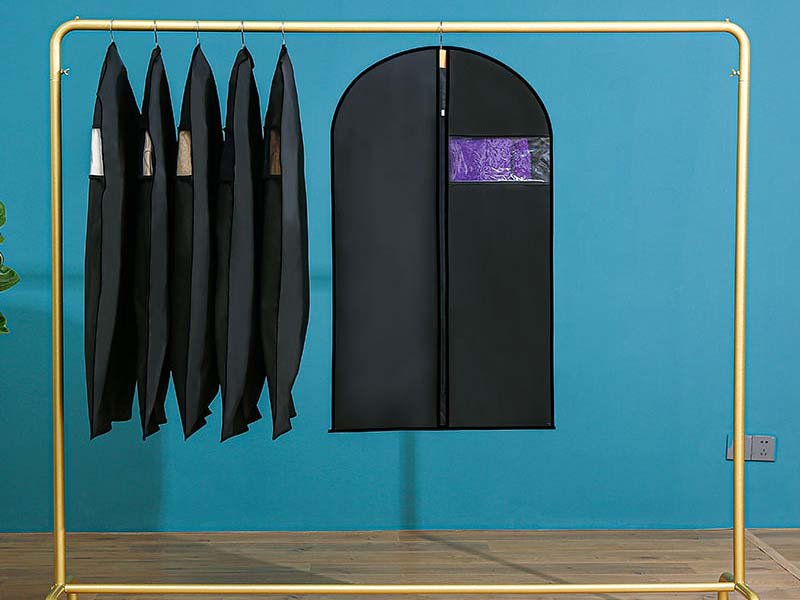
A garment bag might appear to be one of the simplest accessories in an apparel collection, but developing a reliable product requires much more than choosing a piece of fabric and adding a zipper. A garment bag needs to accommodate different clothing shapes, protect garments during storage and transportation, remain convenient to handle, and reflect the quality of the brand behind it. A poorly developed design can create problems that are surprisingly expensive to correct. A cover that is only a few centimeters too short may expose an expensive dress, while a weak zipper or unsuitable fabric can turn a premium accessory into a source of customer complaints.
To develop garment bags for apparel brands, Szoneier begins by identifying the garment categories, customer applications, dimensions, and protection requirements. The next steps involve selecting the bag structure, materials, zippers, handles, hanger openings, branding, and packaging. These specifications are converted into a technical design and physical sample, which is tested and revised before approval. Once the sample is confirmed, Szoneier transfers the approved specifications into bulk production through material inspection, pattern control, sewing inspections, final quality checks, and shipment preparation.
The important point is that garment bags should be developed around the clothing they are intended to protect, not around a generic bag size. A business suit, wedding dress, winter coat, and corporate uniform all create different requirements for length, width, volume, and handling. A design that works perfectly for one garment category may be completely unsuitable for another. Szoneier approaches each project as a product development process, helping apparel brands balance practical performance, appearance, manufacturing feasibility, and target cost. Understanding these decisions before ordering samples can save considerable time and help create a garment bag collection that customers genuinely find useful.
What Should Brands Define Before Development?

Before developing a garment bag, apparel brands should define the garments it will hold, the environments in which it will be used, the required protection level, and the expected customer experience. These decisions determine the bag’s dimensions, materials, construction, accessories, branding, and packaging while giving Szoneier a clear foundation for product development and quotation.
Which Garments and Customer Use Cases Matter?
The first step in garment bag development is identifying exactly what the product needs to accommodate. This sounds straightforward, but it is one of the most important decisions in the entire project. A garment bag designed around a standard business suit may not accommodate a long evening dress, a structured winter coat, or a wedding dress with multiple layers. Even garments belonging to the same category can have noticeably different dimensions because of shoulder construction, sleeve design, fabric thickness, lining, and decorative details. These differences directly influence the pattern, finished measurements, and available internal space.
Szoneier recommends identifying the main garment categories and intended applications before selecting a construction. Common applications include business suits, blazers, formal dresses, wedding dresses, coats, jackets, uniforms, and retail clothing collections. Each category creates different requirements. A premium suit cover needs sufficient shoulder clearance and appropriate garment length, while a wedding dress cover may require a considerably longer body and additional volume for layered fabric. Uniform programs often prioritize consistent sizing, easy identification, and convenient storage across several departments or locations.
The distribution channel also changes the product requirements. A garment bag sold as a retail accessory needs an attractive appearance and convenient customer experience. A bag supplied to hotels may be handled repeatedly by different guests, making material selection and easy maintenance more important. Travel-oriented products need to remain practical when folded or carried between locations. Brands should therefore define both the garment and the environment in which customers will use the finished product.
Before moving into design, it is useful to organize the requirements into several groups:
- Garment category: Suits, dresses, coats, uniforms, or mixed clothing.
- Garment characteristics: Length, shoulder width, thickness, weight, and fabric sensitivity.
- Usage environment: Retail storage, hotel wardrobes, business travel, wedding services, or home storage.
- Handling frequency: Occasional use, regular transportation, or repeated daily handling.
- Customer expectations: Basic dust protection, reusable construction, premium presentation, or convenient garment identification.
When these details are available, Szoneier can make more appropriate decisions about size, structure, materials, and accessories. It also becomes easier to avoid developing a product that looks attractive but cannot accommodate the clothing it is supposed to protect.
What Protection and Presentation Goals Should Be Set?
A garment bag has two important jobs: protecting clothing and presenting it in a way that reflects the apparel brand. These objectives sometimes overlap, but they are not identical. A simple non-woven cover may be perfectly suitable for protecting clothing from dust during retail storage, while a premium travel garment bag may require stronger fabric, improved closure construction, reinforced handling points, and more refined finishing. Choosing the most expensive material does not automatically create the best product. The correct solution is the one that provides the required protection without introducing unnecessary weight, cost, or complexity.
Brands should first identify the problems they want the garment bag to prevent. These may include dust accumulation, direct contact with surrounding surfaces, accidental handling damage, moisture exposure, garment identification difficulties, and unwanted folding during transportation. The importance of each problem depends on the application. A garment bag used inside a hotel wardrobe, for example, may not require the same transportation features as a foldable design carried through airports or used for business trips. The protection requirements should therefore reflect actual customer behavior rather than a general assumption that every garment bag needs the same construction.
Material contact is another consideration, particularly for delicate or light-colored clothing. The fabric, coating, printed logo, and finishing components should be evaluated for potential odor, color transfer, or unwanted surface contact. If the product is intended for extended garment storage, ventilation and material suitability should also be considered. A fully enclosed construction is not automatically the best option for every garment or storage environment, particularly when the clothing material has specific care requirements.
Presentation requirements should be defined at the same time. Apparel brands may want a discreet logo, a transparent identification window, coordinated fabric colors, or premium packaging. These features should support the product rather than compete with its function. Szoneier evaluates these requirements together so that material selection, construction, and branding work as one coordinated design.
A practical approach is to establish three product positioning levels:
- Basic protection: Lightweight construction, simple closure, essential garment coverage, and economical packaging.
- Reusable protection: More durable fabric, improved zipper construction, practical handles, and refined finishing.
- Premium presentation: Upgraded materials, carefully positioned branding, improved structural details, and coordinated retail packaging.
This classification gives the manufacturing team a clearer understanding of the intended product and helps the apparel brand compare different configurations before committing to a final specification.
What Should Be Fixed in the Product Brief?
A product brief turns an apparel brand’s expectations into information that a manufacturer can use for design, quotation, and sampling. It does not need to contain every engineering detail at the beginning, but it should identify the major requirements clearly enough to prevent repeated misunderstandings. Szoneier can begin development from a technical drawing, reference photographs, an existing garment bag, a physical garment, or even a rough product idea. The available information is then organized into a workable product specification that supports the next stages of development.
A useful brief should distinguish between essential requirements and optional features. For example, a full-length zipper may be essential to the product’s function, while an additional identification pocket may be optional. This distinction becomes particularly important when a brand has a target unit price. It allows the manufacturer to suggest alternative configurations without compromising the main purpose of the garment bag. It also prevents the development team from spending time and money on features that do not create meaningful value for the intended customer.
The following information provides a practical starting point:
| Specification | Information to confirm | Development purpose |
|---|---|---|
| Garment type | Suit, dress, coat, uniform, or mixed garments | Establishes the basic structure |
| Garment measurements | Length, shoulder width, and thickness | Determines finished dimensions |
| Capacity | Single garment or multiple garments | Influences volume and construction |
| Material | Non-woven, polyester, PEVA, or canvas | Affects appearance, cost, and performance |
| Closure | Zipper type, length, and position | Determines access and usability |
| Accessories | Handle, window, pockets, hanger opening | Defines functional details |
| Branding | Artwork, size, color, and placement | Controls brand presentation |
| Packaging | Individual bag, hangtag, label, or retail box | Supports the sales channel |
| Commercial details | Quantity, target price, and delivery date | Supports production planning |
Brands should also provide reference products or photographs whenever possible. A photograph showing the front of a garment bag may not reveal its gusset, internal construction, zipper arrangement, or handle reinforcement. Additional views, measurements, and physical references make the development process more accurate. If the apparel brand already has an existing garment bag that needs improvement, providing that product can help the manufacturer identify the areas that need adjustment.
The product brief should become more detailed as the project moves toward sampling. Once the manufacturer understands the intended application, it can evaluate material availability, pattern complexity, accessory requirements, and production feasibility. This creates a more controlled starting point for both the apparel brand and the manufacturing team.
Which Garment Bag Style Fits Your Apparel Line?

The right garment bag style depends on clothing length, garment volume, transportation requirements, and brand positioning. Hanging covers suit conventional garment storage, foldable designs support travel, gusseted structures accommodate thicker clothing, and transparent panels improve identification. Szoneier evaluates these structures according to the actual apparel collection rather than applying one standard construction to every product.
Are Hanging, Foldable, Gusseted, and Clear-Front Styles Different?
Garment bags can have very different constructions even when they appear similar from the outside. A traditional hanging garment cover is designed to protect clothing while it remains on a hanger. It normally has a top hanger opening, a front or side closure, and a body long enough to cover the garment. This construction is straightforward and practical for suits, coats, dresses, and uniforms that are stored in wardrobes or transported while hanging. Its main design priorities are garment coverage, convenient access, and sufficient clearance around the clothing.
Foldable garment bags are designed for customers who need a more compact carrying format. Their construction may include folding panels, handles, straps, or additional closure arrangements. The challenge is balancing portability with garment protection. If the bag folds in an unsuitable position, it may create unnecessary creases in the clothing or place excessive pressure on the zipper and seams. The folding arrangement should therefore be tested with the actual garment rather than evaluated only when the bag is empty. Brands should also consider how the folded product will be stored and whether customers can reopen it without difficulty.
Gusseted garment bags introduce additional depth through side or bottom panels. This makes them more suitable for bulky garments, layered dresses, or products intended to carry multiple items. However, additional depth increases material consumption and creates more sewing operations. It should only be included when the garment volume requires it. Clear-front garment bags use a transparent section to make the garment visible without opening the cover. This can be useful for hotels, uniform departments, retail stockrooms, and garment organization, provided that the window material and attachment method are suitable for the intended application.
| Garment bag style | Main construction | Suitable applications | Important considerations |
|---|---|---|---|
| Hanging cover | Flat body with hanger opening | Suits, coats, dresses | Garment length and shoulder clearance |
| Foldable bag | Folding panels and carrying features | Business travel and transportation | Folding position and closure |
| Gusseted bag | Additional side or bottom depth | Thick garments and multiple items | Capacity and structural stability |
| Clear-front bag | Transparent viewing panel | Retail, hotels, uniform storage | Visibility and window attachment |
These configurations can also be combined. A foldable garment bag may include a gusset, while a hanging cover may have a transparent identification window. The manufacturer should evaluate the complete construction because combining several features can change the bag’s weight, cost, and production complexity. A design that looks attractive in a drawing still needs to be checked as a complete physical product.
Which Structure Fits Suits, Dresses, Coats, and Uniforms?
The garment itself should determine the structure. A business suit usually needs enough width for the jacket shoulders and sufficient space for the trousers or accompanying garment. The cover should not force the shoulders inward or compress the sleeves. A dress cover needs to accommodate the full garment length, and its width should account for the dress’s actual silhouette. A slim formal dress and a layered evening gown may have very different volume requirements despite being similar in length. These differences should be considered when establishing the pattern and finished measurements.
Coats create another set of considerations. Winter coats are often thicker and heavier than lightweight jackets, so the bag may require additional space and stronger handling construction. Long coats also need sufficient bottom clearance to prevent the hem from being compressed. Uniform garment bags often have more standardized applications because the clothing is produced in a defined range of sizes. However, the manufacturer should still confirm the largest intended uniform size and the arrangement of any additional items. A bag designed for a single standard uniform should not automatically be assumed suitable for every department or garment category.
Szoneier’s garment bag product reference identifies 60 × 100 cm and 60 × 120 cm as common size options. These measurements provide useful starting points for development, but they should not be interpreted as universal dimensions. A shorter design may suit some jackets and standard clothing, while a longer configuration may be necessary for dresses and coats. Wedding dresses and particularly voluminous garments may require a separately developed structure with additional depth or a different pattern arrangement.
Brands should pay attention to three critical areas:
- Shoulder clearance: The bag must accommodate the garment’s widest shoulder position without compression.
- Overall length: The bottom of the bag must cover the garment adequately without forcing the hem upward.
- Available volume: The structure must accommodate fabric thickness, sleeves, lining, and any additional clothing.
The sample should be tested with the largest or most demanding garment in the planned collection. If the product is intended for several garment sizes, testing only one small garment can create problems when the finished bags reach customers. Using actual clothing during development makes the final structure more reliable and reduces the possibility of discovering sizing problems after bulk production.
When Is Single- or Multi-Garment Capacity Needed?
Single-garment capacity is often the better choice for premium apparel products. It gives each item its own protective space, simplifies garment identification, and supports a clean retail presentation. This approach is particularly suitable for business suits, formal dresses, wedding clothing, and individual retail accessories. A single-garment construction also makes sizing easier because the pattern is developed around one defined clothing arrangement. It is generally easier to inspect because the garment bag has fewer internal components and a more straightforward structure.
Multi-garment capacity serves customers with different needs. Hotels, uniform suppliers, travel brands, and customers transporting coordinated outfits may prefer a bag that holds several items together. However, adding capacity is not simply a matter of increasing the width. The manufacturer needs to consider the total garment thickness, the distribution of weight, zipper access, and the way different items sit against one another. An excessively narrow multi-garment bag may compress clothing, while an unnecessarily large design can become awkward to carry and store.
For example, a bag designed to carry one suit and a shirt may require a different internal arrangement from one intended to hold two lightweight dresses. The thickness of the clothing and the hanger arrangement influence how the garments fit inside the bag. If the design includes internal straps, dividers, or accessory pockets, these features should be positioned so they do not interfere with loading or closing the main compartment. The complete loading configuration should be established before sample development.
A useful development method is to define the actual contents rather than simply requesting a two-piece or multi-piece garment bag. The brand should specify whether the product will hold one suit, a jacket and trousers, multiple dresses, or a coat with accessories. The manufacturer can then evaluate whether a flat structure is sufficient or whether additional depth and internal organization are necessary. This makes the sample more representative of real customer use.
There is also a commercial consideration. Every additional panel, pocket, divider, or zipper introduces material consumption, sewing time, and quality inspection requirements. A complicated structure may look more impressive, but it is not necessarily more valuable to the end customer. The best garment bag provides the required capacity while remaining easy to use, reasonably lightweight, and practical to manufacture in repeat orders.
How Do You Choose Materials and Components?

Material and component selection should balance appearance, durability, weight, protection, and manufacturing cost. Szoneier’s garment bag development range includes non-woven fabric, polyester, PEVA, and canvas, together with zippers, handles, and transparent windows. The correct combination depends on the garment type, intended use, target price, and expected product lifespan rather than material appearance alone.
Which Material Fits the Use: Non-Woven, Polyester, PEVA, or Canvas?
The outer material is one of the most important decisions in garment bag development because it affects how the product looks, feels, performs, and costs. Non-woven fabric is commonly considered for basic garment covers where lightweight construction and cost control are important. It can be suitable for retail protection, promotional projects, and simple garment storage. However, its thickness, surface quality, seam strength, and resistance to repeated handling should be evaluated before it is selected for a reusable product. A material that is too thin for the intended application may cause the finished garment bag to look inexpensive or wear out sooner than expected.
Polyester provides a versatile option for branded garment bags. Different fabric weights, surface finishes, and construction choices can create different product appearances and levels of durability. It can be considered for reusable travel products, retail accessories, and garment bags that need a more refined appearance than basic protective covers. The exact specification matters because two polyester fabrics may have noticeably different thickness, hand feel, and surface performance. Brands should therefore confirm the actual fabric sample rather than relying only on the material name.
PEVA is another material option for garment bags, particularly when a smooth surface or moisture-barrier-oriented construction is desired. Its flexibility, thickness, appearance, and attachment method should be evaluated according to the product’s intended use. It should not automatically be described as waterproof without appropriate construction and testing. Canvas offers a more substantial textile appearance and can support premium or lifestyle-oriented product positioning. Its additional weight and material cost need to be considered when designing larger garment bags, especially those intended for travel or frequent carrying.
| Material | Typical positioning | Potential advantages | Points to evaluate |
|---|---|---|---|
| Non-woven | Basic and economical | Lightweight and practical | Thickness, seam durability, repeated handling |
| Polyester | Reusable and branded | Versatile appearance and construction | Fabric weight, coating, abrasion performance |
| PEVA | Smooth or barrier-oriented designs | Surface protection and easy-care potential | Flexibility, thickness, ventilation, seam construction |
| Canvas | Premium and lifestyle products | Substantial textile appearance | Weight, cost, cleaning, structural requirements |
Material selection should also consider the garment itself. A bag intended for lightweight retail clothing may not require the same fabric as one carrying a heavy coat. A premium travel accessory may benefit from a stronger outer material and improved finishing, while a basic garment cover may achieve its purpose with a simpler specification. The brand should consider the balance between product performance, appearance, and the amount customers are willing to pay.
Szoneier recommends comparing physical material samples before confirming the final selection. Brands should examine the fabric under normal lighting, touch it, inspect its surface, and evaluate how it behaves when folded and sewn. The material should be assessed as part of the finished product rather than selected from a specification sheet alone. This is particularly important when the garment bag will be used with delicate clothing or positioned as a premium brand accessory.
How Do Zippers and Hanger Openings Affect Garment Protection?
Zippers and hanger openings are small components, but they can determine whether a garment bag remains practical after repeated use. A full-length zipper is frequently handled, so its length, slider quality, tooth construction, tape color, and sewing position should all be considered. A zipper that operates smoothly on a small sample may behave differently when installed across a longer garment bag if the fabric is not properly aligned or the sewing tension is inconsistent. The zipper should be evaluated as part of the finished structure rather than as an isolated accessory.
The zipper should allow customers to load and remove garments without unnecessary difficulty. Its position needs to provide convenient access while maintaining sufficient fabric coverage. Brands should also consider the relationship between zipper placement and the garment’s position. If the opening is too narrow or the zipper runs through an awkward area, loading a structured suit or long dress may become inconvenient. The selected zipper should also be compatible with the fabric thickness and construction method.
The hanger opening requires similar attention. It should accommodate the intended hanger type and allow the hook to pass through without damaging the surrounding fabric. Its position should match the garment’s hanging center so the bag does not twist or hang unevenly. If the design uses an additional flap or reinforced opening, these details should be included in the sample. A poorly positioned opening can affect both the appearance and the practical use of the entire product.
A practical evaluation should include:
- Opening and closing the zipper repeatedly along its full length.
- Checking whether fabric becomes trapped near the slider.
- Confirming that zipper tape is sewn evenly.
- Inserting and removing the actual hanger.
- Checking whether the hanger opening stretches or distorts.
- Confirming that the garment remains properly positioned when hanging.
Szoneier’s quality inspection system includes zipper smoothness, accessory function, stitching, reinforcement, and finished structure as inspection points. These checks are particularly important for garment bags because zipper failure or a poorly constructed hanger opening can make an otherwise usable product difficult to handle. Brands should confirm the component specification and its installation method before approving the final sample.
When Are Handles, Windows, Pockets, and Reinforcements Needed?
Accessories should be selected according to how customers will use the garment bag. Handles are useful when the bag needs to be carried between locations, but their position should allow the loaded product to remain balanced. A handle attached too close to one edge may cause the bag to tilt, while insufficient reinforcement can create excessive stress around the attachment points. The fabric, stitching, and handle construction should therefore be evaluated together. This becomes especially important when the garment bag is designed to carry heavier coats or multiple garments.
Transparent windows are useful when customers need to identify garments without opening every cover. Hotels, uniform departments, retail stockrooms, and garment service businesses may benefit from this feature. The window should provide sufficient visibility while maintaining a neat appearance. Its material, dimensions, position, and attachment method should be confirmed during sampling. The edges should be finished properly so the window does not become a weak point during normal handling. The brand should also decide whether the window needs to show the entire garment or only enough information for identification.
Pockets can provide space for ties, belts, garment labels, or small accessories. However, the pocket dimensions should reflect the actual items it needs to hold. Adding a pocket simply to increase the number of features can make the bag more complicated without improving its usefulness. Its position should also avoid interference with the zipper, folding lines, or main garment compartment. For products intended for travel, the pocket should remain accessible without making the loaded bag difficult to carry.
Reinforcement is especially important around handles, hanger openings, and other areas where pulling forces are concentrated. The construction may use additional fabric layers, binding, or different stitching arrangements depending on the material and intended load. Szoneier evaluates these structural details during pattern development and sample inspection. A good garment bag is not necessarily the one with the most accessories. It is the one where every component has a clear purpose and works properly with the rest of the construction. This approach helps apparel brands control cost while maintaining the functionality expected from a professionally developed product.
What Dimensions, Branding, and Packaging Should You Specify?

A garment bag specification should clearly define finished length, width, gusset depth, logo size and position, label details, and individual packaging requirements. Szoneier uses 60 × 100 cm and 60 × 120 cm as common garment bag size references, but final dimensions should be confirmed against actual clothing and hangers. Branding and packaging should also be approved during development rather than added as last-minute production details.
How Should You Measure Length, Width, and Gusset Depth?
Accurate dimensions are essential because a garment bag can be made from good materials and still fail if it does not fit the clothing. Measurement should begin with the garment in its intended hanging position. For length, measure from the top of the hanger to the lowest point of the clothing. The manufacturer then determines the appropriate clearance so the garment is covered without being compressed against the bottom seam. For width, measure the garment at its widest natural position, normally around the shoulders or sleeves, and consider any additional volume created by structured tailoring or layered fabric.
Gusset depth should be based on actual garment thickness. A lightweight shirt or standard suit may fit comfortably in a flat construction, while a winter coat or multi-garment arrangement may need additional depth. The manufacturer should also account for the zipper, pockets, internal straps, and other features that occupy space inside the bag. If the product is intended to fold, the gusset and panel arrangement should be evaluated to ensure that the finished structure remains convenient to carry and store.
The following measurement references can help organize the development process:
| Measurement | How to establish it | Main risk if incorrect |
|---|---|---|
| Finished length | Hanger-to-hem measurement plus suitable clearance | Exposed or compressed garment hem |
| Finished width | Widest garment area plus fitting allowance | Restricted shoulders and sleeves |
| Gusset depth | Actual garment thickness and intended capacity | Insufficient volume or unnecessary bulk |
| Hanger opening | Based on the selected hanger and hook | Difficult loading or distorted opening |
| Zipper length | Based on the required opening area | Inconvenient access |
| Handle position | Based on the loaded bag’s balance | Uneven carrying and stress concentration |
The 60 × 100 cm and 60 × 120 cm dimensions documented for Szoneier garment bags are useful starting references, not fixed standards for every apparel category. Brands should provide actual measurements and representative clothing wherever possible. This is especially important for long dresses, coats, and garments with unusual shoulder or sleeve construction, where a small difference in dimensions can affect the final fit.
Measurement tolerances should also be agreed before bulk production. Different fabric structures, sewing operations, and construction methods can affect finished dimensions. The manufacturer and customer should establish how measurements will be taken and which areas are critical. This creates a clearer inspection standard and reduces disagreements when finished products are checked against the approved sample.
Where Should Logos and Labels Be Placed?
Branding transforms a garment bag from a generic protective cover into an accessory that belongs to a particular apparel collection. The logo should be visible enough to support recognition without making the product look crowded. Its placement should also remain practical when the bag is hanging, folded, or carried. Common positions include the upper front panel, a lower corner, or a dedicated brand label near the opening. The choice depends on the bag’s proportions and the visual identity the apparel brand wants to establish.
Szoneier supports garment bag branding through screen printing, heat transfer, and woven labels. These methods create different visual results and should be evaluated according to the selected fabric, artwork complexity, logo dimensions, and target cost. Screen printing can be considered for suitable fabric surfaces and relatively straightforward artwork. Heat transfer may be appropriate for certain detailed designs, while woven labels provide a separate textile branding element. The final choice should be confirmed through a physical sample because the appearance of a logo on a computer screen may differ from its appearance on the finished material.
Artwork preparation is equally important. Brands should provide clear vector files where possible, confirm the approved color references, and specify the logo’s finished dimensions and exact position. If several garment bag sizes are involved, logo placement should be proportionally consistent across the collection. A logo that looks balanced on a 60 × 100 cm bag may appear too small or too large when transferred without adjustment to a longer design.
Labels should also be considered as part of the branding and product information system. Depending on the sales channel, they may include a brand name, product identification, care information, barcode, or other required details. Any legal or market-specific labeling requirements should be confirmed separately for the destination market and product category. This is particularly relevant when the garment bag is supplied as part of a larger retail product program.
A useful approval process includes reviewing a logo mock-up, checking its size against the actual bag dimensions, confirming its position, and inspecting the physical application on the sample. This allows the brand to evaluate the finished appearance before bulk production and helps prevent inconsistent branding across multiple SKUs.
Which Packing Format Fits Retail, Travel, and Export?
Packaging should reflect how the garment bag will be stored, sold, transported, and delivered to the final customer. A premium retail garment bag may need coordinated presentation with a hangtag or dust bag. A basic protective cover supplied to hotels or uniform departments may require simpler individual packaging. Export shipments need consistent packing quantities, carton identification, and protection against handling and moisture during transportation. Packaging should therefore be treated as part of product development rather than a separate task left until the end.
Szoneier supports different packaging options, including OPP bags, PE bags, dust bags, cotton bags, paper sleeves, hangtags, barcode labels, retail boxes, kraft boxes, gift boxes, mailer boxes, and master cartons. The correct option depends on the product’s price positioning and sales channel. Brands should also consider whether the garment bag will be displayed individually, delivered with clothing, or supplied in bulk to a warehouse. Each distribution method may require a different packing arrangement and identification system.
Shipping volume deserves particular attention. Garment bags can occupy considerable carton space because of their dimensions, even when their fabric construction is relatively lightweight. Folding the products may help reduce volume, but the method needs to be tested. Excessive pressure can create creases, distort a transparent window, or place stress on the zipper. If the bag is intended to maintain a premium appearance, its packing method should protect the surface and preserve the finished shape.
Packaging specifications should identify the following:
- Individual packing material and folding method.
- Hangtag design and attachment position.
- Barcode and SKU identification requirements.
- Retail box or gift box specifications, where applicable.
- Master carton dimensions and packing quantity.
- Carton marks and destination information.
- Moisture protection and shipment handling requirements.
The packaging should be confirmed before bulk production because printed labels, custom boxes, and special packaging materials may have separate sourcing and preparation schedules. Szoneier can coordinate individual packaging, labels, carton marks, and shipment preparation as part of the wider manufacturing process. This helps apparel brands avoid a situation where the garment bags are finished but the packaging is not ready for delivery.
How Do You Test and Approve the Sample?
A garment bag sample should be evaluated using actual clothing, the intended hanger, and all specified accessories. Brands need to check garment fit, dimensions, material quality, zipper operation, seams, handles, branding, and packaging before approving production. The final approved sample, written specifications, and inspection criteria should then become the manufacturing reference for Szoneier.
Does the Sample Fit the Actual Garment and Hanger?
A sample should never be approved simply because it looks attractive when displayed empty. The most reliable way to evaluate a garment bag is to load it with the actual clothing it is designed to carry. Szoneier recommends using representative garments that reflect the largest or most demanding dimensions in the planned product range. If the collection includes business suits, long coats, and dresses, testing only a lightweight shirt will not reveal whether the bag is suitable for the entire range. Actual garment testing helps identify sizing problems before they become bulk production issues.
The fitting process should examine shoulder clearance, sleeve arrangement, garment length, and available space around the sides. The garment should hang naturally without being forced into an uncomfortable position. The bottom of the bag should provide enough clearance to avoid compressing the hem, and the zipper should close without catching clothing. The hanger hook should pass through the opening easily, while the bag should remain balanced when suspended. If the product includes additional pockets or compartments, these should be tested with the actual accessories they are intended to hold.
If the garment bag is foldable, the complete folding process should also be tested. Brands should check whether the fold creates unwanted pressure on the clothing and whether the closure remains secure after folding. For a gusseted design, the sample should be evaluated with the actual garment volume rather than an empty bag. These checks are particularly important for multi-garment products because the weight and thickness of the loaded clothing can change how the bag hangs and carries.
Sample feedback should be specific. Instead of saying that the bag is slightly too small, record whether the shoulder width is insufficient, the bottom clearance is inadequate, or the zipper opening makes loading difficult. This allows the manufacturer to adjust the correct pattern area rather than making unnecessary changes to the entire product.
A useful sample evaluation record should include:
- Actual garment category and size used for testing.
- Finished bag length and width.
- Shoulder and sleeve clearance.
- Hanger opening position and compatibility.
- Zipper access and garment loading convenience.
- Overall appearance when hanging.
- Folding performance, if applicable.
The goal is to confirm that the sample works in real conditions. A product that fits the intended clothing properly is much more likely to perform well when customers receive the finished order.
How Should You Check Zippers, Seams, Handles, and Fabric Contact?
Functional inspection should focus on the parts most likely to experience repeated use. The zipper should be opened and closed across its full length several times, checking for resistance, fabric catching, uneven movement, or separation. Its tape should be sewn consistently, and the slider should operate without requiring excessive force. The zipper should also be checked while the garment is inside the bag because fabric pressure can affect how smoothly the opening works. A zipper that performs well when the bag is empty may become difficult to operate if the loaded structure is too tight.
Seams should be inspected around the zipper, bottom corners, hanger opening, pockets, and handle attachment points. These areas connect different components or experience concentrated stress. Uneven stitching, missed stitches, loose threads, or insufficient reinforcement can affect durability and appearance. Handles should be tested with a representative loaded garment bag, using the same carrying position expected in normal use. If the bag is designed for heavier clothing, the handle and its attachment points should be evaluated under the intended carrying conditions.
Material inspection should include thickness, weight, color, odor, surface condition, and suitability for the intended clothing. If the bag is designed for delicate or light-colored garments, the brand should pay attention to potential color transfer, rough surfaces, and contact with printed or coated components. Transparent windows should be checked for clarity, secure attachment, creasing, and edge finishing. The final sample should also be inspected for loose threads, inconsistent sewing, uneven binding, and other visible defects that could affect the customer’s perception of quality.
For projects requiring formal textile evaluation, appropriate test methods can be agreed upon according to the material and product requirements. Examples include ASTM D5034 for textile fabric breaking strength and elongation using a grab test, ASTM D2261 for fabric tearing strength using a tongue procedure, ASTM D737 for textile air permeability, and ASTM D1777 for textile material thickness. These are potential textile evaluation methods, not automatic certification requirements for every garment bag. The applicable method, specimen preparation, testing conditions, and acceptance criteria should be confirmed between the brand, manufacturer, and testing laboratory.
What Must Be Approved Before Bulk Production?
Final sample approval should establish one clear reference that both the apparel brand and manufacturer can follow. A verbal statement that the sample looks good is not enough for an order involving several sizes, colors, or branding variations. The approved sample should represent the actual material, finished dimensions, construction, zipper, hanger opening, handles, pockets, logo treatment, and overall appearance. Any differences between the physical sample and the written specification should be resolved before the bulk order is released. This prevents the factory and customer from working toward different interpretations of the same product.
The approval process should also confirm the product’s bill of materials, commonly referred to as the BOM. This document identifies the main materials, accessories, and other components used in the finished garment bag. For a garment bag, it may include the outer fabric, zipper, slider, handle material, transparent window material, labels, logo components, and packaging materials. The BOM should identify the agreed specifications clearly enough to support material purchasing and production control.
A complete approval package should include:
- Approved physical sample with clear identification.
- Final measurement chart and agreed tolerances.
- Confirmed material type, color, thickness, and fabric weight.
- Approved zipper, handle, window, and other accessories.
- Final logo artwork, size, position, and application method.
- Confirmed packaging, labels, barcodes, and carton requirements.
- Written quality inspection criteria and acceptable defect definitions.
- Confirmed BOM and production pattern.
For multi-SKU projects, each style and color combination should have its own clear identification. If the brand changes the material, zipper, artwork, or dimensions after approval, the change should be recorded and reviewed for its effect on cost, production timing, and product performance. A late material substitution, for example, can change the appearance and feel of the entire garment bag even if the dimensions remain unchanged.
Szoneier uses approved samples, pre-production samples, patterns, BOM records, material information, accessory specifications, logo files, packaging files, and QC checkpoints to help maintain consistency between sampling and bulk manufacturing. The final approval is therefore not simply the end of product development. It is the point at which the design becomes a controlled manufacturing specification.
How Do You Scale from Sampling to Bulk Production?
Scaling garment bags from sampling to bulk production requires an approved technical specification, confirmed materials, realistic MOQ and lead-time planning, and clearly defined inspection checkpoints. Szoneier coordinates material purchasing, pattern control, sample approval, cutting, logo processing, sewing, quality inspection, packaging, and export preparation to transfer the approved design into repeatable production.
What Should the Tech Pack and RFQ Include?
A tech pack provides the manufacturing team with the technical information needed to reproduce the garment bag, while an RFQ provides the commercial information required for an accurate quotation. These documents serve different purposes, but they should work together. A design drawing may communicate the appearance, while the tech pack explains the dimensions and construction. The RFQ then establishes the quantity, target cost, delivery expectations, and packaging requirements. When these documents are incomplete, the manufacturer may need to make assumptions that later lead to quotation differences or sample revisions.
Szoneier can start with a complete tech pack, physical sample, reference photographs, sketch, or basic product concept. However, the information should become more precise before bulk production. A garment bag tech pack should include front and back views, side construction where necessary, finished measurements, zipper position, hanger opening, handle placement, pocket dimensions, and gusset details. If the product has a transparent window or folding structure, these areas should be clearly illustrated rather than left to interpretation.
Material information should identify the selected fabric, color, weight or thickness requirements, and any coating or finishing expectations. The component list should identify zipper specifications, slider details, handles, labels, transparent windows, and other accessories. Logo artwork should show the final design, dimensions, color references, and placement. Packaging drawings or instructions should also be included when the product requires retail presentation or special labeling.
The RFQ should provide the following commercial information:
- Estimated order quantity and number of SKUs.
- Required colors and material combinations.
- Sample quantity and development requirements.
- Target unit price or budget range.
- Expected production completion date.
- Logo and accessory customization requirements.
- Individual packaging and carton specifications.
- Destination country and preferred shipping arrangement.
More complete information makes it easier to compare quotations fairly. Two manufacturers may quote different prices because one includes thicker fabric, stronger zippers, additional reinforcement, or more elaborate packaging. A detailed specification helps the brand understand what is actually included in the price and reduces the risk of unexpected changes after the order is confirmed.
How Do MOQ, Cost, and Lead Time Change by Specification?
MOQ, unit cost, and production lead time depend on material availability, structure complexity, accessory sourcing, branding, packaging, and order quantity. Szoneier’s documented garment bag reference uses an MOQ of 300 pieces, a sample development period of approximately 7–10 days, and a regular bulk production period of approximately 25–40 days. These are product-specific planning references rather than unconditional guarantees. The final schedule and MOQ should be confirmed after the specifications, material requirements, and order details have been reviewed.
Several factors influence garment bag manufacturing costs:
- Size: Larger bags require more outer fabric, longer zippers, and potentially larger packaging.
- Material: Non-woven, polyester, PEVA, and canvas have different sourcing costs and physical characteristics.
- Thickness and weight: Material upgrades can increase fabric consumption, product weight, and shipping volume.
- Structure: Gussets, additional panels, internal compartments, and special openings require more cutting and sewing operations.
- Zippers and components: Zipper length, quality, slider specifications, handles, and transparent windows affect the total cost.
- Branding: Screen printing, heat transfer, woven labels, and special logo components have different production requirements.
- Packaging: OPP bags, hangtags, dust bags, retail boxes, and custom labels affect the final order configuration.
- Quantity: Larger production quantities can distribute sourcing, setup, and production management costs across more units.
For brands working with a target price, comparing alternative configurations is often more useful than simply asking the manufacturer to reduce the unit price. A basic option may use non-woven fabric, standard zippers, simple branding, and OPP packaging. A more premium option may use polyester or PEVA, upgraded components, refined finishing, and coordinated packaging. This comparison makes the differences in cost and product performance easier to understand.
| Project item | Szoneier garment bag reference | Important qualification |
|---|---|---|
| MOQ | 300 pcs | Confirm final material, color, and structure |
| Sample lead time | 7–10 days | Subject to specifications and material readiness |
| Regular bulk production | 25–40 days | Confirm after order and production review |
| Sample approval | Before bulk production | Finalize the approved reference |
| Shipment preparation | After production inspection | Confirm packing and delivery requirements |
A project schedule should separate material preparation, sampling, approval, bulk production, inspection, and shipment preparation. This is particularly important for seasonal apparel collections, retail launches, and uniform supply programs where a late delivery can affect other parts of the business. If a launch date is fixed, it should be communicated before sourcing and sampling begin. This allows the manufacturer to review the material availability and production schedule before confirming the order.
How Does QC Maintain Sample-to-Bulk Consistency?
Quality control needs to operate throughout production rather than relying only on a final inspection. Differences in fabric thickness, color, cutting dimensions, zipper installation, or logo position can originate at different manufacturing stages. If these problems are discovered only after the entire order is completed, correcting them may require considerable time and additional cost. A structured quality process creates opportunities to identify and address problems before they affect the full production quantity.
Szoneier uses a multi-stage quality control process covering incoming material inspection, accessory inspection, pre-production sample inspection, cutting inspection, in-process sewing inspection, semi-finished inspection, final product inspection, and packaging and shipment inspection. For garment bags, the inspection criteria should focus on the characteristics that determine whether the product meets its approved specification. These include fabric color, thickness, weight, coating, hand feel, surface condition, zipper smoothness, hanger opening dimensions, handle attachment, seam consistency, and finished appearance.
The eight principal inspection checkpoints are:
- Incoming material inspection: Verify fabric color, thickness, weight, and surface condition.
- Accessory inspection: Check zippers, sliders, handles, labels, and other components.
- Pre-production sample inspection: Confirm that the production reference matches the approved sample.
- Cutting inspection: Check panel dimensions, cutting accuracy, and material defects.
- In-process sewing inspection: Monitor stitching, zipper installation, binding, and reinforcement.
- Semi-finished inspection: Identify construction problems before final assembly is completed.
- Final product inspection: Check measurements, appearance, functionality, branding, and cleanliness.
- Packaging and shipment inspection: Verify quantities, labels, cartons, and packing requirements.
The approved sample should remain available as the reference throughout production. For repeat orders, the manufacturer should also retain the relevant pattern, BOM, material records, accessory specifications, logo files, and packaging instructions. This is particularly valuable when an apparel brand reorders the same garment bag several months later or expands the collection into additional colors. It allows the production team to work from documented specifications instead of relying on memory or an old product photograph.
Szoneier’s quality control approach uses these records and inspection checkpoints to help maintain sample-to-bulk consistency. The purpose is not simply to identify defective products at the end, but to prevent avoidable inconsistencies from moving through the manufacturing process. Customers can also discuss project-specific inspection requirements, inspection records, product photographs, packaging photographs, and third-party inspection arrangements where needed.
What Must Be Confirmed Before Shipment?
Shipment preparation begins well before the finished garment bags leave the factory. Packaging, carton dimensions, labeling, shipment quantities, and destination requirements should already have been discussed during product development. This is especially important for garment bags because their dimensions can create significant differences in carton volume depending on how they are folded and arranged. A packaging method that protects the product but uses unnecessary space may increase transportation costs without improving the customer’s experience.
Szoneier’s bulk production process extends beyond cutting and sewing. After the order is confirmed, the workflow includes PI approval, deposit payment, a pre-production meeting, BOM confirmation, material and accessory purchasing, incoming inspection, pre-production sample approval, production scheduling, cutting, logo processing, sewing, semi-finished inspection, finished product preparation, final quality inspection, packaging, master cartons, shipment documentation, logistics tracking, and after-sales follow-up. These stages connect the approved product specification with the actual order delivery.
Before shipment, the manufacturer and customer should confirm the final order quantity, SKU breakdown, individual packaging, barcode or FNSKU labels where required, carton marks, carton dimensions, gross weight, and packing information. If a third-party inspection is required, its scope and timing should be agreed before the products are released for shipment. The customer should also confirm that the packaging matches the intended distribution channel, especially when garment bags are supplied to retail stores, warehouses, or fulfillment centers.
The distribution channel affects the final requirements. Products intended for retail stores may need individual barcodes and hangtags, while hotel or uniform orders may require different identification and packing arrangements. Amazon fulfillment projects may need specific FNSKU and carton labeling requirements, while larger retail programs may require coordinated carton quantities and shipment documentation. Shipping terms and delivery arrangements should also be confirmed so both parties understand which logistics responsibilities are included.
A final shipment review should cover:
- Confirmed production quantity and SKU breakdown.
- Final product and packaging inspection.
- Individual packing and labeling accuracy.
- Barcode, FNSKU, and carton mark requirements where applicable.
- Carton quantity, dimensions, gross weight, and volume.
- Packing list and relevant shipment documentation.
- Shipping method and delivery destination.
- Any agreed photographs, videos, or inspection records.
Szoneier supports packaging and shipment preparation through its packaging operations, including individual packing, label application, carton organization, and export coordination. The objective is to make sure the products leaving the factory match the approved specifications and are prepared for the customer’s next stage of distribution. When product quality, packaging, and logistics are managed as connected parts of the same project, apparel brands can plan inventory and replenishment with greater confidence.
Developing Garment Bags That Support Long-Term Brand Growth
A successful garment bag should do more than cover clothing. It should support the apparel brand’s product positioning, make garment handling easier, and deliver a consistent experience from the first sample to the last unit in a bulk order. The strongest development projects begin with actual garments and clearly defined use cases, then translate those requirements into appropriate dimensions, materials, components, branding, and packaging. When each decision is tested and documented before production, brands can avoid many of the problems associated with undersized covers, weak closures, unsuitable materials, and inconsistent finishing.
Szoneier brings more than 18 years of custom bags and soft goods manufacturing experience, with OEM/ODM development, material sourcing, pattern making, sample revision, sewing production management, multi-stage quality inspection, and export coordination. Apparel brands can begin with a technical drawing, reference photograph, existing garment bag, physical garment, or an initial product idea. The development team can help evaluate the requirements and translate them into a practical garment bag solution based on the intended application, target configuration, quantity, and budget.
For a brand preparing a new collection, the next step is to define the garments to be covered, provide representative measurements, and establish the desired product positioning. With these details available, Szoneier can evaluate material options, structure, logo application, packaging, sampling requirements, and bulk production planning. A well-developed garment bag becomes a useful extension of the apparel brand itself: functional for customers, consistent across product lines, and practical to manufacture and replenish. The goal is not simply to produce another accessory, but to develop a product that supports the brand’s reputation every time a customer uses it.
Frequently Asked Questions
1. How Do You Develop Custom Garment Bags for Apparel Brands?
Custom garment bag development starts with identifying the garment types, intended use, dimensions, and protection requirements. The manufacturer then selects the material, structure, zipper, hanger opening, handles, branding, and packaging. A physical sample is produced and tested with actual garments before final approval and bulk manufacturing. Szoneier supports this process through OEM/ODM development, pattern making, sampling, sample revision, production, and quality inspection, helping apparel brands move from an initial concept to a production-ready product.
2. What Materials Are Commonly Used for Custom Garment Bags?
Common materials include non-woven fabric, polyester, PEVA, and canvas. Non-woven fabric is suitable for basic and cost-conscious garment covers, while polyester offers a versatile option for reusable branded products. PEVA can be considered for smoother or barrier-oriented constructions, and canvas is suitable for products requiring a more substantial textile appearance. The final choice depends on product positioning, garment requirements, expected handling frequency, material specifications, and target manufacturing cost. Physical samples should be evaluated before final approval.
3. What Are the Standard Dimensions of Garment Bags?
Szoneier’s garment bag product reference includes 60 × 100 cm and 60 × 120 cm as common size options. However, the correct dimensions depend on the length, shoulder width, thickness, and hanger arrangement of the actual garments. Long coats, formal dresses, and wedding dresses may require customized dimensions or additional gusset depth. Brands should test a physical sample with representative clothing before confirming the final size, particularly when the garment bag will accommodate several different clothing categories.
4. What Is the MOQ for Custom Garment Bags at Szoneier?
Szoneier’s documented garment bag reference uses an MOQ of 300 pieces. The final order requirements should be confirmed according to the selected material, dimensions, colors, logo process, accessories, packaging, and production arrangement. Custom colors, special materials, and complicated components may affect the MOQ. Brands planning multiple styles or colors should discuss the SKU breakdown during quotation so that material sourcing and production arrangements can be evaluated accurately.
5. How Long Does Garment Bag Sampling and Bulk Production Take?
Szoneier’s garment bag product reference indicates approximately 7–10 days for sample development and 25–40 days for regular bulk production. Actual timing depends on material availability, design complexity, logo processing, order quantity, packaging requirements, production scheduling, and sample approval. These periods are planning references rather than guaranteed delivery times for every project. A project-specific schedule should be confirmed after the final product specification and order details have been reviewed.
6. Can Garment Bags Be Customized with a Brand Logo?
Yes. Szoneier supports garment bag logo customization through screen printing, heat transfer, and woven labels. Brands can specify logo artwork, dimensions, colors, and placement according to the selected material and product design. The best method depends on the fabric surface, artwork details, intended appearance, and target cost. Logo appearance should be reviewed during sampling to ensure that the final application matches the approved brand presentation across all sizes and color variations.
7. How Does Szoneier Control Garment Bag Quality During Bulk Production?
Szoneier applies multiple quality checkpoints covering incoming materials, accessories, pre-production samples, cutting, sewing, semi-finished products, final products, and packaging and shipment inspection. Garment bag inspections can include dimensions, fabric quality, zipper operation, hanger openings, handles, seams, logo placement, transparent windows, appearance, cleanliness, and packaging. Approved samples, BOM records, patterns, material specifications, and inspection criteria provide production references that help maintain consistency between the approved sample and finished bulk order.