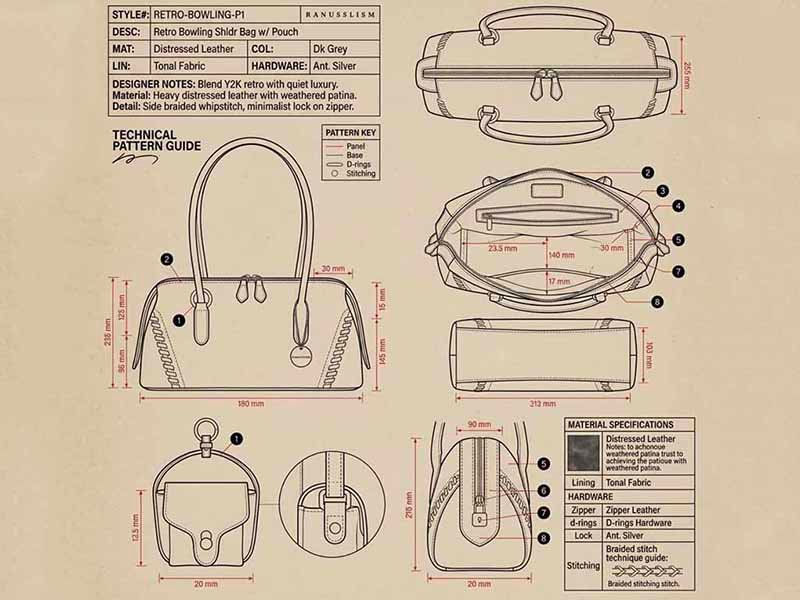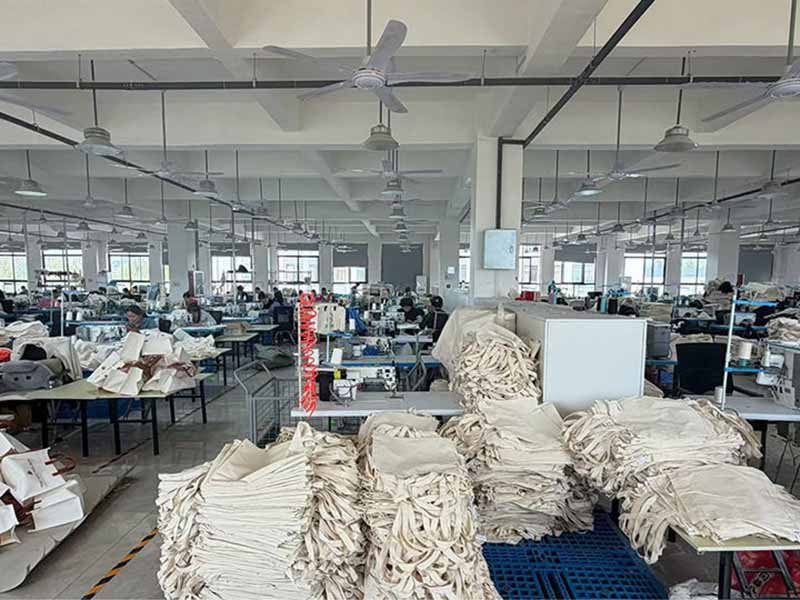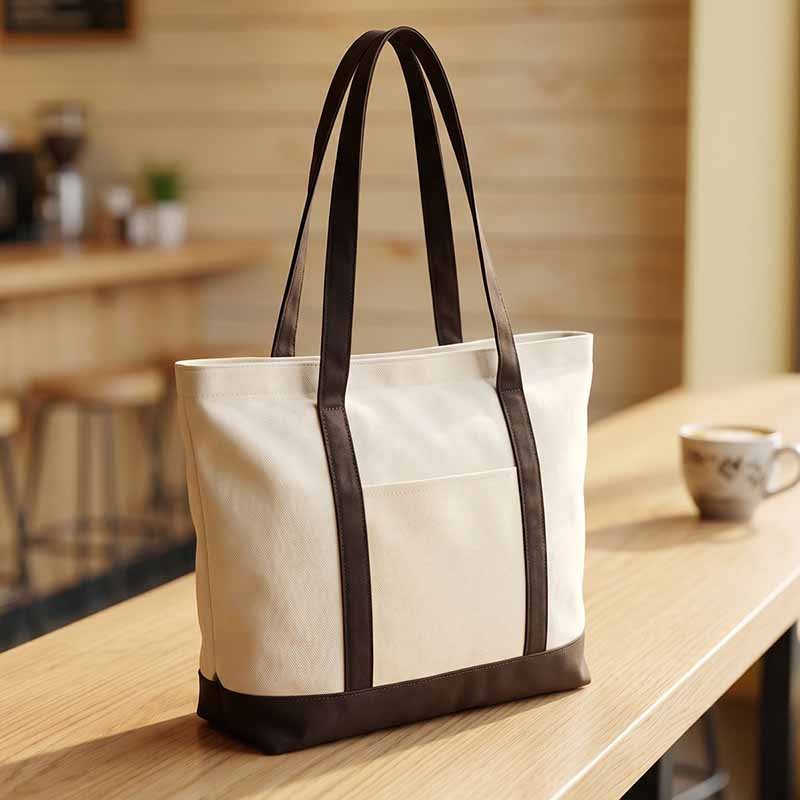
Choosing between canvas and cotton sounds easy until a real tote bag project reaches the sampling stage. One material supplier may recommend lightweight cotton because it folds neatly and keeps costs manageable, while another recommends 12 oz cotton canvas because the finished bag needs more body and a stronger retail feel. Both materials can contain cotton, yet the finished products can look, feel, print, sew, pack, and perform very differently. That is where many otherwise promising tote projects begin to go wrong.
For most tote bag projects, canvas is the stronger choice when structure, repeated use, heavier contents, and a more substantial brand presentation matter. Lightweight cotton is usually better when softness, foldability, low shipping weight, and economical large-volume distribution are the priorities. The important detail is that many canvas totes are themselves made from cotton, so the real comparison is often lightweight cotton fabric versus denser cotton canvas in a specific GSM or ounce weight.
The decision becomes much clearer once the tote is treated as a finished product rather than a fabric swatch. A conference giveaway carrying brochures does not need the same construction as a grocery bag holding bottles, a bookstore tote carrying several hardcovers, or a lifestyle tote sold as merchandise. Fabric weight, handles, gussets, logo process, seams, finishing, shrinkage, packaging, and freight all work together. The following comparison focuses on those practical details so you can specify a tote that performs properly after the first attractive sample becomes thousands of finished pieces.
What Is the Difference Between Canvas and Cotton?
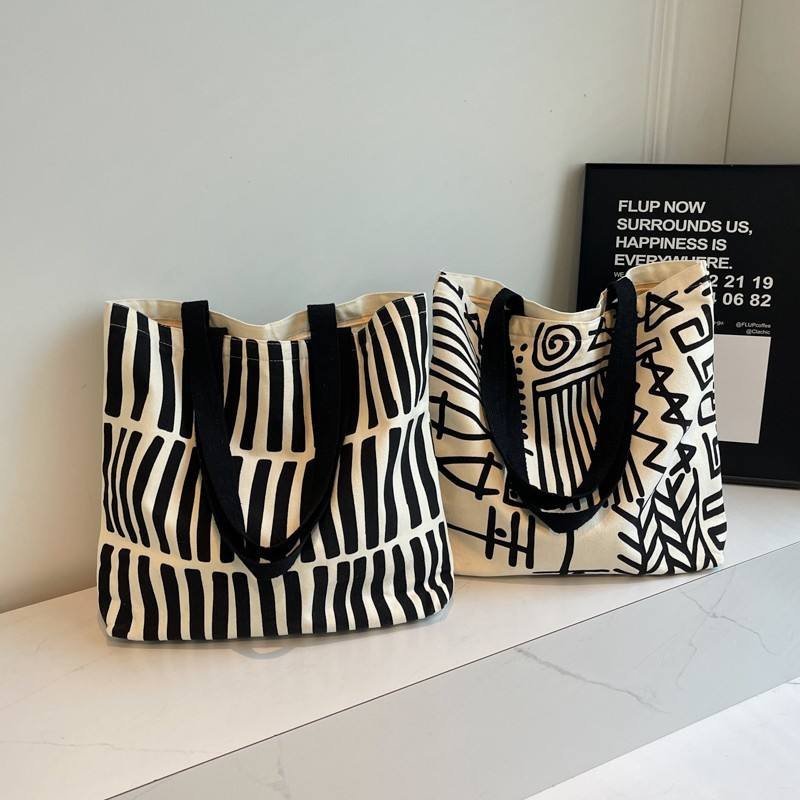
Cotton is a fiber, while canvas describes a dense woven fabric construction that may be made from cotton, polyester, or blended fibers. In tote bags, the practical comparison is usually between lightweight cotton fabric and heavier cotton canvas. Canvas generally provides more structure and abrasion resistance, while lighter cotton gives a softer hand, easier folding, lower finished weight, and often a lower material cost.
Cotton Is a Fiber, Canvas Is a Fabric
The phrase “canvas vs cotton” creates confusion because it compares two things that are not technically the same category. Cotton identifies the fiber used to produce yarn. Canvas describes a fabric construction that traditionally uses a strong, relatively dense weave. A tote can therefore be described accurately as both a cotton tote and a canvas tote when it is made from cotton canvas. This distinction becomes important as soon as you start comparing specifications instead of looking only at product photos.
A quotation that says “100% cotton” does not tell you enough about the finished bag. The fabric could be light, soft, loosely structured, and easy to fold, or it could be a much heavier cotton canvas that stands more firmly and supports thicker handles, embroidery, internal pockets, and other structural details. Two materials can share the same fiber composition and still produce products that occupy completely different positions in a retail range.
For commercial development, the material description should therefore include more than fiber content. Fabric weight, weave density, yarn construction, surface finish, color treatment, washing or pre-shrinking, and the intended branding method all influence the final result. Szoneier’s material system similarly distinguishes plain cotton, cotton canvas, organic cotton, recycled cotton, cotton twill, and other constructions instead of treating all cotton fabrics as one interchangeable option.
Structure Changes the Finished Bag
Lightweight cotton usually produces a softer tote that collapses when empty. That is not necessarily a weakness. Foldable shopping bags, event totes, shoe bags, gift packaging, and promotional products often benefit from low bulk and easy packing. A softer material can also create a relaxed visual style that suits certain beauty, lifestyle, or natural-product brands without requiring a heavy or highly structured appearance.
Canvas becomes more attractive when the product needs to maintain its silhouette or tolerate repeated handling. As fabric weight increases, the body generally feels more substantial and resists deformation better. This is useful for merchandise totes, bookstore bags, grocery totes, premium giveaways, and products that include internal pockets, stronger handles, zippers, or decorative patches. The extra structure can also make the bag easier to photograph for e-commerce because it requires less styling to hold its shape.
Surface texture matters at the same time. A smooth cotton fabric can support detailed printing, while a coarse canvas creates a more tactile appearance in which yarn texture remains visible beneath the artwork. Neither result is automatically superior. A simple logo can look excellent on natural canvas, while fine illustrations may benefit from a smoother material. The correct choice depends on the intended brand language, not just the strength of the fabric.
Compare Specifications, Not Names
A useful material specification should allow two suppliers to quote the same product. A line such as “100% cotton canvas, 10 oz/yd², natural undyed color, plain weave, uncoated, screen-printed logo” is far more valuable than simply asking for a “cotton canvas tote.” It gives production teams measurable references that can be checked during sampling, purchasing, cutting, sewing, printing, and repeat orders.
Natural, dyed, washed, organic, and recycled cotton materials can also behave differently. Washed canvas normally feels softer and more relaxed, but the washed appearance may show greater batch-to-batch variation. Recycled cotton can have a slightly more irregular fiber appearance depending on composition and source. Organic cotton may require documentation if the finished product will carry a specific environmental claim. These differences should be evaluated during development rather than discovered after bulk fabric arrives.
For repeat programs, the approved physical swatch is especially valuable. If a later order changes mills or uses a visually similar fabric from another source, the new material may still differ in density, hand feel, shade, shrinkage, or print behavior. Keeping the approved fabric and finished sample provides a more reliable reference than relying on the phrase “same cotton canvas as last time.”
Which Fabric Weight Is Best for Tote Bags?
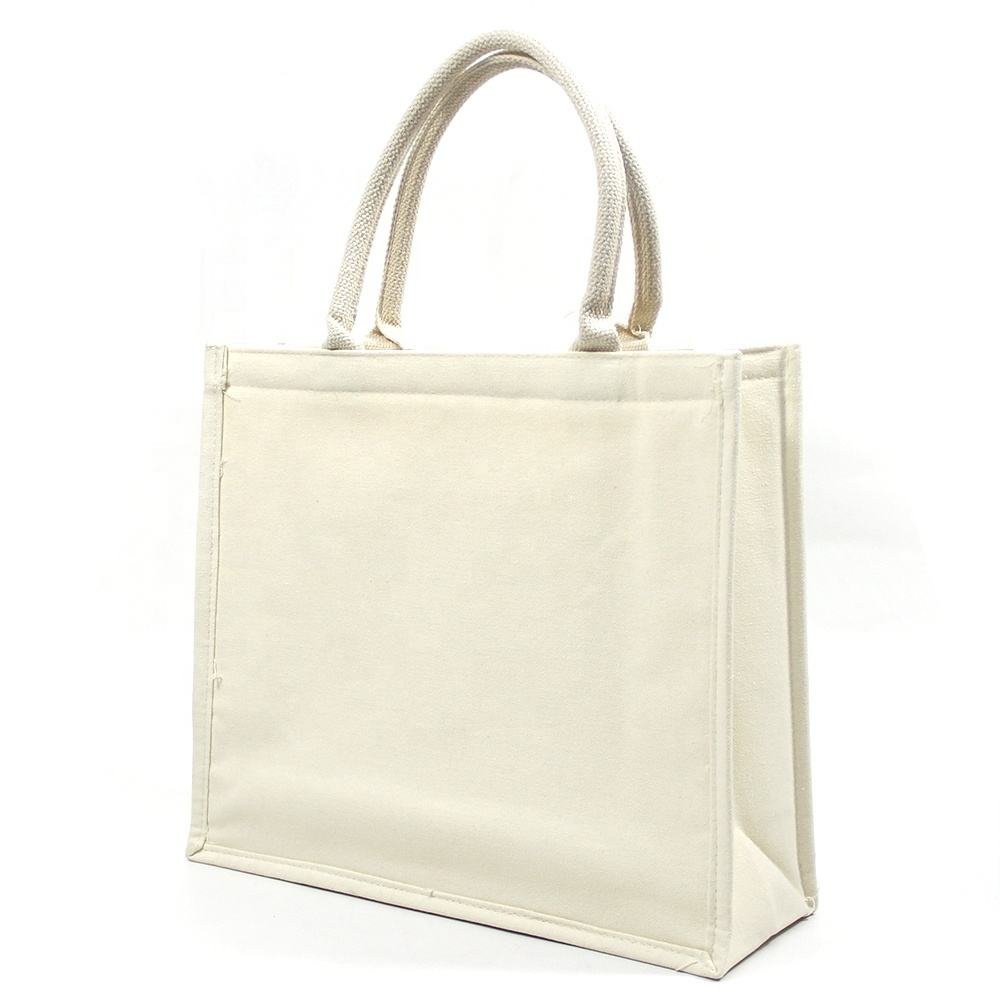
There is no single ideal tote bag weight. Around 6–8 oz canvas is useful for lightweight promotional and everyday applications, 10–12 oz is a practical range for many branded retail totes, and 12–16 oz suits heavier or more structured products. Higher fabric weight can improve body and durability, but it also raises raw-material consumption, sewing difficulty, carton weight, and freight cost.
Understanding GSM and Ounces
Fabric weight is commonly expressed in GSM, meaning grams per square meter, or in ounces per square yard. International suppliers may use either system, so procurement teams often need to convert between them when comparing materials. The number is useful because it gives a measurable indication of fabric mass, but it should not be treated as a complete description of thickness, stiffness, or durability.
Two fabrics at nearly the same GSM can still feel noticeably different. Yarn thickness, yarn twist, weave density, finishing, washing, and fiber blend all affect how a fabric drapes and how thick it feels in the hand. A tightly woven 340 GSM cotton canvas may feel firmer than another material of similar weight that has been washed or mechanically softened.
A practical comparison range is shown below. These numbers are approximate conversions and should be used to compare specifications rather than replace actual sampling.
| Canvas Weight | Approx. GSM | Typical Tote Direction |
|---|---|---|
| 6 oz/yd² | 203 GSM | Events, giveaways, lightweight totes |
| 8 oz/yd² | 271 GSM | Everyday reusable totes |
| 10 oz/yd² | 339 GSM | Branded retail and merchandise |
| 12 oz/yd² | 407 GSM | Premium structured totes |
| 14 oz/yd² | 475 GSM | Heavy premium construction |
| 16 oz/yd² | 542 GSM | Heavy-duty or highly structured totes |
Szoneier’s documented canvas material range includes commonly used 6, 8, 10, 12, 14, and 16 oz specifications, which makes it possible to develop different product tiers without treating one weight as the universal answer for every tote.
Light, Medium, and Heavy Totes
Lighter cotton and 6–8 oz canvas are practical for applications where distribution efficiency matters. Trade shows, promotional events, product launches, shoe packaging, and large corporate programs often involve thousands of pieces moving through limited warehouse space. A lightweight tote can fold more tightly, reduce carton weight, and still provide enough functionality for brochures, samples, notebooks, or lightweight purchases.
The 10–12 oz range is useful when the tote must feel like a real product rather than temporary packaging. The fabric usually has enough substance to support a more stable silhouette and works well with screen printing, labels, patches, and many embroidery designs. Lifestyle brands, bookstores, cosmetics companies, museums, retail stores, and merchandise programs often operate in this middle ground because it balances perceived quality with manageable weight and cost.
At 14–16 oz, the visual and physical character changes again. The tote can become noticeably more structured and substantial, which is useful for premium merchandise, work-style bags, heavyweight lifestyle totes, or designs combining canvas with leather or other trims. The trade-off is greater material consumption, higher sewing resistance, more bulk at folded seams, increased shipping weight, and sometimes a hand feel that is too stiff for casual or promotional applications.
Weight Affects More Than Fabric Price
Fabric weight creates costs throughout the supply chain. A heavier tote uses more fiber, increases finished-product mass, changes carton packing, and can influence freight rates. If one bag design is 120 grams heavier than another, a 10,000-piece shipment contains roughly 1,200 additional kilograms of product before the difference in cartons and protective packaging is considered.
That difference may be manageable when goods move by sea, but it can become much more significant when a product launch requires air freight. Warehouse handling and fulfillment economics can also change, especially when a marketplace, retailer, or third-party logistics provider charges partly according to product weight or dimensional weight.
The other side of the equation is under-specification. Using a fabric that is too light may create excessive sagging, low opacity, distortion around pockets or embroidery, weak perceived value, or poor performance after repeated use. Saving money at the fabric stage can therefore create more expensive complaints later.
The practical objective is not to select the heaviest fabric available. It is to select the lightest specification that still delivers the required appearance, structure, branding quality, and service life.
Which Is More Durable:Canvas or Cotton?
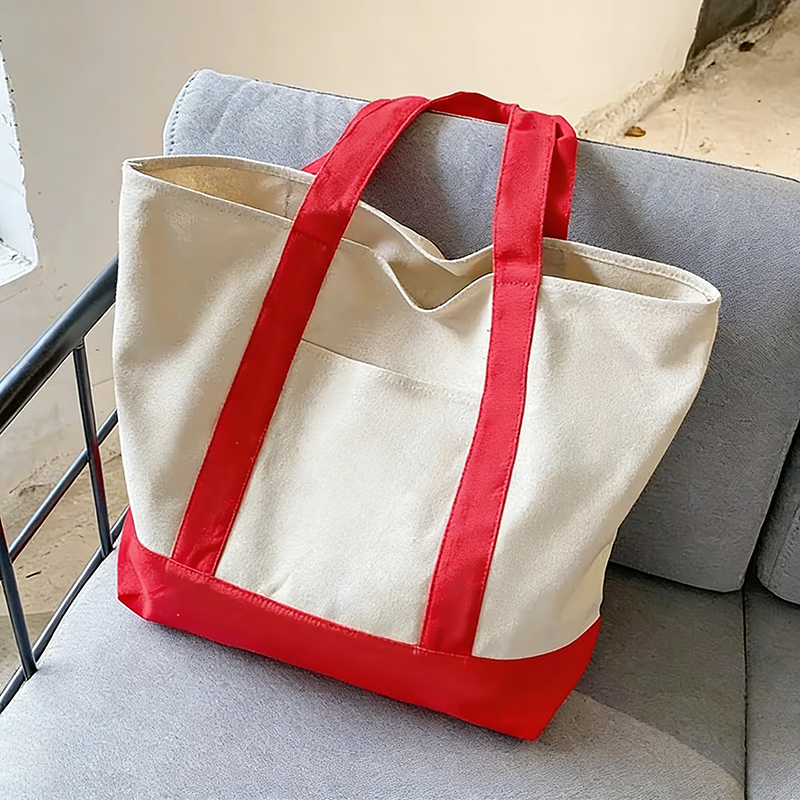
Heavy cotton canvas is generally more durable than lightweight cotton cloth because its denser construction offers better resistance to abrasion and deformation. However, the fabric alone does not determine how much a tote can carry. Handle attachment, reinforcement, seam construction, bag dimensions, gussets, and load distribution often decide whether a finished bag performs well or fails during repeated use.
Fabric Strength Is Only One Part
Moving from an 8 oz fabric to a 12 oz canvas usually creates a stronger and more substantial body, but the improvement can be wasted if the handles and seams are not designed for the same level of use. Tote bags rarely fail through the undamaged center of a fabric panel. Problems are more likely to appear around concentrated stress points where loads move through a small area of material and stitching.
Common high-stress areas include handle attachment points, upper openings, side seams, bottom corners, gusset intersections, pocket attachments, and locations where multiple fabric layers meet. A heavyweight canvas tote with a narrow handle attached by a short single seam can fail sooner than a medium-weight tote with a wider handle and more appropriate reinforcement.
Bag size changes the load pattern as well. A large grocery tote carrying bottles and canned food creates very different forces from a flat tote designed for documents. A deep gusset adds useful volume, but it also allows the user to load more weight. For that reason, increasing capacity without reviewing handle and bottom construction can create a product that looks more useful than it actually is.
Handles and Seams Determine Real Performance
Handle width, material, attachment length, stitch pattern, and reinforcement all influence carrying performance. Wider handles can distribute pressure more comfortably when the tote is loaded, while narrow handles may be acceptable for light event bags. Reinforcement methods can include box stitching, cross stitching, bartacks, double rows of stitching, extended handle insertion, or additional material behind the attachment point.
Bottom construction deserves the same attention. A flat tote works well for documents, books, and lighter merchandise, while a gusseted grocery or retail tote may benefit from reinforced bottom seams or added stitching where the gusset meets the side panel. Large designs should be reviewed according to expected contents rather than simply scaled up from a smaller bag.
Finished-product testing is more meaningful than vague terms such as “heavy duty.” A realistic internal check can define a target load, loading period, lifting method, and acceptable result. After testing, the bag can be inspected for seam opening, handle movement, fabric tearing, bottom sagging, permanent stretching, or hardware deformation.
Szoneier’s documented quality approach applies this principle to tote bags by evaluating load-bearing performance according to intended use, target load, strap structure, handle reinforcement, and bottom construction rather than claiming that one canvas weight guarantees a fixed carrying capacity.
Shrinkage and Wash Performance Matter
Cotton fibers can change dimensions when exposed to water, heat, and mechanical washing. The amount varies according to yarn construction, weave, finishing, pre-shrinking, dyeing, and washing conditions. Cotton canvas may look more robust than lightweight cotton, but it is still a cotton-based material and should not automatically be assumed to remain dimensionally unchanged after washing.
If consumers are expected to wash the finished tote, the development sample should be measured before and after the intended care procedure. Body width, height, gusset dimensions, handle length, pocket position, and logo placement can all be reviewed. A dimensional change that appears minor on an unstructured promotional tote can be much more visible on a precisely proportioned premium product.
Washed canvas creates a slightly different challenge because softness and vintage appearance are intentionally introduced during finishing. That treatment can create natural variation in shade and hand feel. Instead of demanding unrealistic visual uniformity, the approved sample should establish what level of variation is acceptable.
Canvas quality control should also consider wrinkles, surface slubs, color variation, embroidery distortion, printing behavior, stains, and handle strength. These factors influence the user’s perception of durability just as much as the raw breaking strength of the fabric.
Which Is Better for Printing and Branding?
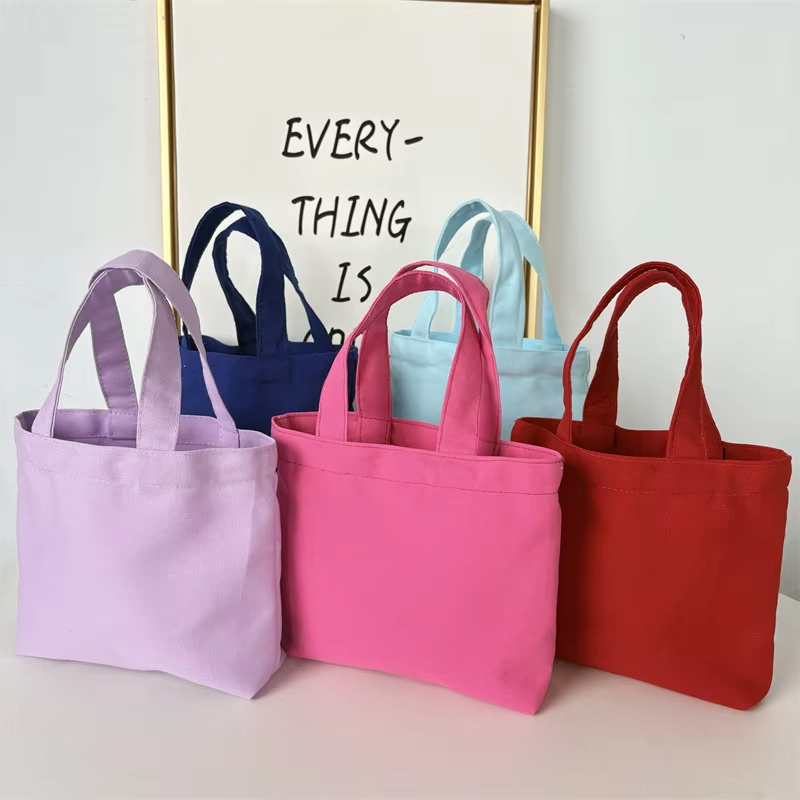
Cotton and cotton canvas both support strong branding, but the best process depends on fabric texture, weight, color, artwork detail, and expected use. Screen printing performs well for bold logos, digital printing is useful for detailed multicolor artwork, and embroidery is usually easier to control on stable medium or heavyweight canvas. The safest approach is to approve branding on the exact production fabric before bulk manufacturing.
Screen and Digital Printing
Screen printing remains one of the most practical branding methods for tote bags because it handles bold artwork, larger logo areas, and commercial quantities efficiently. Simple one- or two-color graphics can look especially good on natural cotton canvas, where the slight fabric texture becomes part of the visual character instead of being treated as a defect.
Very fine graphics require more caution. Coarse canvas contains visible yarn structure, so thin lines, tiny lettering, and small negative spaces may lose some visual precision. A smoother cotton or finer canvas construction can produce a cleaner result when the artwork is highly detailed. For this reason, fabric selection should sometimes begin with the artwork rather than with a predetermined material weight.
Digital printing provides more flexibility for illustrations, gradients, multiple colors, and photographic designs. The printed result still depends on the fiber, fabric preparation, ink system, and surface texture. A graphic that looks extremely sharp on a monitor may appear softer on a natural textile surface because screens produce light while printed fabric reflects it.
Brand-critical colors should therefore be approved physically. A digital rendering is useful for placement, but it cannot fully predict ink absorption, opacity, fabric texture, or how a printed color will look under different lighting conditions.
Embroidery, Labels, and Patches
Embroidery is often selected for premium merchandise because it adds texture and physical depth. Medium and heavyweight canvas generally supports embroidery well because the base fabric is stable enough to resist the tension created by repeated needle penetration and dense thread coverage. Lightweight cotton can also be embroidered successfully, but stabilizers, backing, stitch density, and artwork simplification become more important.
A common mistake is assuming that more stitches automatically create a more premium result. Large areas of very dense embroidery can distort lightweight fabric, make one part of the tote unusually stiff, and create unnecessary production cost. A carefully simplified logo may look cleaner and wear better than a design that tries to reproduce every detail of an artwork file in thread.
Labels and patches provide additional options when direct printing or embroidery does not suit the design. Woven labels can create a subtle brand identity, while leather or PU patches work well for lifestyle and heritage-inspired products. Rubber, silicone, and metal branding can create a different visual position, although these methods can introduce additional setup costs and material minimums.
| Branding Method | Lightweight Cotton | Medium/Heavy Canvas | Best Fit |
|---|---|---|---|
| Screen printing | Excellent | Excellent | Logos and bold artwork |
| Digital printing | Very good on smooth fabric | Depends on texture | Detailed multicolor graphics |
| Heat transfer | Good with testing | Good with testing | Flexible artwork and shorter runs |
| Embroidery | Needs stabilization | Very good | Premium branding |
| Woven label | Very good | Very good | Clean, subtle identity |
| Leather/PU patch | Possible | Excellent | Lifestyle and premium totes |
Match the Logo Process to the Product
The logo method should be selected according to the product’s role rather than according to which process sounds most sophisticated. A conference tote may only need a clear one-color screen print produced reliably across several thousand pieces. A premium lifestyle tote may benefit more from embroidery, a leather patch, or a woven label. A cosmetics campaign containing detailed artwork may work better with digital printing.
Five variables provide a useful decision framework: artwork complexity, fabric surface, logo size, expected product life, and target cost. Order quantity should also be considered because some decoration methods have setup costs that are spread more efficiently across larger runs, while others remain practical at smaller quantities.
Production repeatability is equally important. A decorative technique may look impressive on one carefully prepared sample but become difficult to control across thousands of pieces if the material stretches, the placement tolerance is narrow, or the process depends heavily on hand positioning.
Szoneier supports multiple branding methods for custom bags, including screen printing, heat transfer, digital printing, embroidery, woven labels, leather patches, rubber or silicone patches, metal plates, and related options. The useful part of that capability is not simply having many choices; it is being able to match the process to the material, artwork, durability requirement, order size, and expected bulk consistency.
Which Fabric Fits Different Tote Bag Uses?
Lightweight cotton is generally better for foldable, economical, high-volume applications, while medium or heavyweight canvas is better for repeated use, stronger structure, and a more substantial retail presentation. Promotional bags, grocery totes, retail merchandise, and daily-use products have different performance requirements, so material should be selected according to what users will carry, how often the bag will be reused, and how it will be sold.
Promotional and Event Totes
Promotional programs operate under different economics from retail merchandise. The tote may be given away at a trade show, included in a launch kit, distributed at a conference, or used for a temporary campaign. Logo visibility, packing efficiency, delivery timing, and unit economics usually matter more than the ability to survive years of heavy use.
Lightweight cotton and 6–8 oz canvas are reasonable starting points for many of these projects because they provide a recognizable textile feel without adding unnecessary weight. They also fold more efficiently than heavyweight canvas, which can make a meaningful difference when thousands of units must fit into event storage or shipping cartons.
Cost reduction should still have a limit. Even a giveaway bag may need to carry catalogs, notebooks, samples, bottles, or personal belongings for several hours. Handles that stretch badly or seams that open at the event create a negative brand impression. Functional performance therefore remains part of the marketing result.
The most useful priorities for promotional totes are often comfortable handles, clean printing, reasonable opacity, straight seams, predictable carrying performance, accurate logo placement, and efficient packaging. Expensive pockets or heavyweight materials may add little value if the event audience does not need them.
Retail and Brand Merchandise
A retail tote is not merely a container. It is a product customers touch, carry, photograph, and sometimes display as part of their personal style. Fabric hand feel, shape, stitching, branding, handles, and finishing therefore contribute directly to perceived value.
Around 10–12 oz cotton canvas is a practical starting point for many branded retail programs because it offers enough body to feel substantial without automatically creating the cost and weight of very heavy canvas. Premium products may move toward 12–16 oz when the visual concept requires greater structure or when the tote incorporates leather trims, dense embroidery, larger dimensions, or heavier interior details.
Material weight by itself does not create a premium product. A well-proportioned 10–12 oz tote with comfortable cotton webbing handles, reinforced stress points, a useful inner pocket, refined embroidery, clean stitching, and appropriate packaging can feel more sophisticated than a poorly constructed 16 oz bag.
A documented Szoneier lifestyle tote project, for example, used 12 oz cotton canvas, cotton webbing handles, an inner pocket, reinforced bottom stitching, and embroidery. The value of the example is not that every premium tote should use this exact specification, but that fabric, structure, comfort, and branding were considered together rather than upgraded one component at a time.
Grocery and Everyday Reusable Totes
Grocery totes are more mechanically demanding than many promotional products because their contents are heavy, irregular, and often concentrated at the bottom. Bottles, jars, cans, produce, and boxed goods can create stresses that cause thin handles to dig into the hand, side seams to open, or the bottom to sag severely.
Medium or heavier cotton canvas is often appropriate for this use because it provides greater structure than lightweight cotton. A gusset can improve usable capacity, while wider handles make loaded carrying more comfortable. Reinforced handle attachment and stronger bottom construction become more important as the dimensions and expected contents increase.
The table below summarizes practical starting directions rather than rigid rules. Final specification should still be validated through sampling and realistic use tests.
| Use Case | Practical Fabric Direction | Main Construction Priority |
|---|---|---|
| Trade show | Lightweight cotton / 6–8 oz canvas | Low weight and clear logo |
| Corporate gift | 8–10 oz canvas | Appearance and print quality |
| Lifestyle retail | 10–12 oz canvas | Shape, handles, branding |
| Premium merchandise | 12–16 oz canvas | Structure and finishing |
| Grocery tote | 10–14 oz canvas | Handles, gusset, seam reinforcement |
| Foldable tote | Lightweight cotton | Packability and low weight |
Moisture should also be considered. Untreated cotton and cotton canvas absorb water and should not be described as waterproof. If the intended use requires regular exposure to rain, wet groceries, beach environments, or other damp conditions, a coating or a different synthetic material may provide a more appropriate technical solution.
How Do You Choose Canvas or Cotton for Bulk Production?
Choose fabric for bulk production by defining the finished tote before comparing prices. Confirm composition, weight, dimensions, handles, target load, color, logo method, wash expectations, packaging, and quantity, then approve a physical material and finished sample. Once production starts, control incoming fabric, cutting, sewing, branding, measurements, and packaging against that approved standard to reduce variation between sampling, bulk production, and future reorders.
Define the Product Before Requesting a Quote
A request such as “10,000 cotton tote bags with a logo” still leaves most of the product undefined. Suppliers must make assumptions about fabric weight, dimensions, gussets, handles, printing, packaging, and quality level. Those assumptions create quotations that appear easy to compare but may describe completely different products.
A more useful development brief confirms the bag width, height, and gusset; fabric composition and weight; natural, dyed, or washed finish; handle material, width, and length; logo size and method; interior features; closure; expected carrying conditions; packaging; quantity; destination; and required delivery date.
The project does not need to arrive at the factory with every technical detail solved. A reference sample, photo, tech pack, sketch, or even a clear use case can provide a starting point. The manufacturing team can then translate the intended performance and brand position into a practical material and construction proposal.
Szoneier’s project workflow supports this type of development from material selection and structural review through pattern making, sampling, sample revision, production, inspection, packaging, and shipment coordination.
Compare Total Cost, Not Just Unit Price
Unit prices are meaningful only when suppliers quote comparable specifications. An 8 oz flat tote with self-fabric handles and bulk packing should not be compared directly with a 12 oz gusseted tote using webbing handles, an internal pocket, embroidery, and individual retail packaging.
Material weight, logo method, sewing complexity, handle construction, pockets, closures, custom dyeing, packaging, quality requirements, and transportation can all change the final landed cost. Quantity also changes the economics because setup, sampling, screen preparation, embroidery programming, sourcing, and production management are distributed across more units as order volume increases.
Custom colors require particular attention. A factory may be willing to sew a relatively modest quantity of bags, but the textile mill producing a custom-dyed fabric may have a higher fabric-level minimum. Natural colors, stock colors, and standard fabrics generally provide greater flexibility at smaller production quantities.
Szoneier’s documented standard MOQ begins from 200 pieces for many regular custom bag projects, while exact quantities depend on materials, structures, branding, packaging, and production requirements. A lower finished-product quantity does not automatically mean every custom fabric, accessory, or finishing process can be purchased at the same minimum.
Approve a Production Standard
A successful sample should become a production reference rather than simply a visual prototype. The approved standard can include the fabric supplier or reference number, fiber composition, GSM or ounce weight, approved color, finished dimensions, handle construction, stitch details, logo position, logo dimensions, branding method, packaging, and accepted tolerances.
Quality control should begin before the finished bags reach final inspection. Incoming material can be checked for shade, surface defects, weight, and obvious inconsistencies. Cutting checks can identify dimensional problems before sewing. During production, handle attachment, seams, alignment, logo application, and workmanship can be monitored before the same defect is repeated across a large quantity.
Finished inspection should compare production against the approved sample rather than relying only on general workmanship standards. Important tote checkpoints include dimensions, fabric appearance, color, logo placement, print clarity, embroidery condition, seams, handles, reinforcement, cleanliness, and packaging.
Szoneier’s documented QC sequence covers materials, accessories, pre-production samples, cutting, sewing, semi-finished products, final inspection, and packaging inspection before shipment. This type of staged control is especially useful for custom totes because correcting a material or print problem early costs far less than discovering it after thousands of bags have been completed.
Keep Repeat Orders Consistent
Repeat orders frequently expose differences that are difficult to notice during the first launch. A replacement fabric supplier may produce a slightly different hand feel. Natural cotton can vary in shade. Dyed canvas may drift from the original color. Washed finishes can create changes in softness or visual aging. These variations do not automatically indicate poor quality, but they need to be compared against an agreed standard.
Retaining the approved sample and key material records makes repeat production easier to control. If the fabric source changes, the replacement should be reviewed before bulk cutting. When a successful tote expands into additional colors, sizes, or related products, the same construction and branding logic should be carried across the range wherever appropriate.
This becomes increasingly valuable when one tote develops into a larger product family. A brand may begin with a canvas shopping tote, then add a zippered version, smaller gift size, cosmetic pouch, seasonal color, or premium edition. Consistent materials, stitching, logo execution, and packaging help the collection feel intentional rather than assembled from unrelated factories and specifications.
Conclusion
The choice between canvas and cotton does not have one universal winner. Lightweight cotton is often the smarter solution when softness, folding, efficient packing, lower shipment weight, and economical distribution are central to the project. Cotton canvas becomes increasingly useful when the tote needs stronger structure, repeated-use performance, more substantial branding, heavier contents, or a premium retail feel.
The most productive sourcing question is therefore not simply, “Should we choose canvas or cotton?” A better question asks what fiber composition, weave, GSM or ounce weight, finish, handle construction, logo method, load condition, packaging, and landed cost will create the right product for the intended user.
Once those details are defined, quotations become easier to compare and samples become more meaningful. Production teams can control measurable standards rather than subjective descriptions such as “thick cotton” or “premium canvas,” and repeat orders have a much stronger reference point.
For brands developing custom tote programs, Szoneier can review existing samples, reference images, tech packs, material ideas, branding requirements, and target uses to determine which cotton or canvas construction is practical before sampling begins. The objective is not to recommend the heaviest or most expensive option, but to create a specification that delivers the required appearance, function, production stability, and total cost.
Frequently Asked Questions
Is canvas better than cotton for tote bags?
Canvas is usually better when the tote needs more structure, repeated-use durability, stronger support for embroidery or patches, and a more substantial retail feel. Lightweight cotton is often better for foldable bags, promotional programs, gift packaging, and applications where low weight and economical distribution matter more. Because many canvas fabrics are made from cotton, the practical decision normally involves comparing fabric construction and weight rather than choosing between two completely separate fiber categories.
What weight of canvas is best for a tote bag?
Around 6–8 oz canvas works well for many promotional and lightweight totes, while approximately 10–12 oz is a practical range for branded retail products that need more body. Heavier 12–16 oz canvas can suit premium or highly structured bags. These ranges are starting points rather than universal rules because bag dimensions, handles, gussets, intended load, decoration, and finishing all influence which weight produces the best finished result.
Is 12 oz canvas too heavy for a tote bag?
Twelve-ounce canvas is not unusually heavy for a premium or structured tote and is often a useful choice when the bag needs stronger body, embroidery, an internal pocket, wider handles, or a more substantial retail appearance. It can be excessive for a simple conference giveaway or foldable shopping bag, however. The added material weight also affects sewing, packing, and freight, so the product needs to gain enough functional or perceived value to justify the upgrade.
Does cotton canvas shrink when washed?
Cotton canvas can shrink because cotton fibers respond to moisture, heat, and mechanical washing. The actual dimensional change depends on yarn construction, weave, fabric finishing, pre-shrinking treatment, dyeing, and the care method used by the consumer. If the tote is intended to be washable, the development sample should be measured before and after the agreed wash procedure so changes in body size, handles, logo placement, and overall shape can be evaluated before bulk production.
Is canvas or cotton better for screen printing?
Both can work very well for screen printing. Smooth cotton tends to reproduce fine details more cleanly, while canvas provides a textured surface that suits bold logos and many lifestyle-style graphics. The heavier structure of canvas can also make handling during printing easier, but very coarse yarns may reduce sharpness in tiny artwork. The safest approach is to approve the real artwork on the actual production fabric rather than selecting the process only from a digital mockup.
Is cotton canvas suitable for heavy grocery tote bags?
Cotton canvas is often a good material direction for reusable grocery totes, particularly in medium or heavier weights, but fabric alone does not determine carrying performance. Handle width, handle attachment, bottom seams, gusset design, reinforcement, and total bag dimensions all influence the finished strength. A realistic load test using the intended construction is more useful than assuming that a certain GSM or ounce weight automatically guarantees a specific carrying capacity.
What information should I send a manufacturer for a custom tote bag?
A useful project brief includes bag dimensions, intended use, target fabric or weight, color, handle style, logo artwork, printing or embroidery preference, internal features, packaging, quantity, destination, and expected delivery date. If these details are not yet finalized, a reference photo, sample, sketch, or tech pack can still provide a practical starting point. The goal is to translate the visual concept into measurable material, construction, branding, and production specifications before bulk manufacturing begins.