Skip to content
Choosing between a bag factory and a trading company sounds simple until a real order is involved. At the beginning, every supplier may look similar. They all say they can make custom bags, apply your logo, offer competitive prices, arrange samples, and ship internationally. But once you start discussing fabric weight, zipper type, sewing reinforcement, inner lining, packaging, inspection standards, sample revisions, and repeat production, the difference becomes much clearer.
For buyers, this topic is not only about “factory direct price.” It is about control. Who controls the material? Who makes the sample? Who keeps the approved pattern? Who checks the sewing before shipment? Who takes responsibility if the bulk order does not match the sample? These questions matter because custom bags are not simple products. A tote bag, backpack, cooler bag, cosmetic pouch, travel bag, leather goods item, or neoprene product is built from many small decisions. One weak handle, one wrong lining, one cheap zipper, or one unclear packaging detail can affect the entire buyer experience.
A bag factory is usually better for custom bag projects that need direct product control, OEM/ODM development, sample revisions, quality inspection, and repeat production. A trading company may be useful for simple sourcing or multi-category purchasing, but buyers should verify who actually controls production, materials, quality, and delivery before placing an order.
Here is the mistake many buyers make: they compare suppliers only by unit price. The lowest quote looks attractive, but later the buyer discovers that the fabric was lighter than expected, the logo method was different, the sample standard was not recorded, the packaging was not included, or the production factory changed between orders. A smart buyer does not only ask, “How much is this bag?” A smart buyer asks, “Can this supplier help me make the right bag, control the risks, and repeat the same quality when I reorder?”
What Is a Bag Factory?
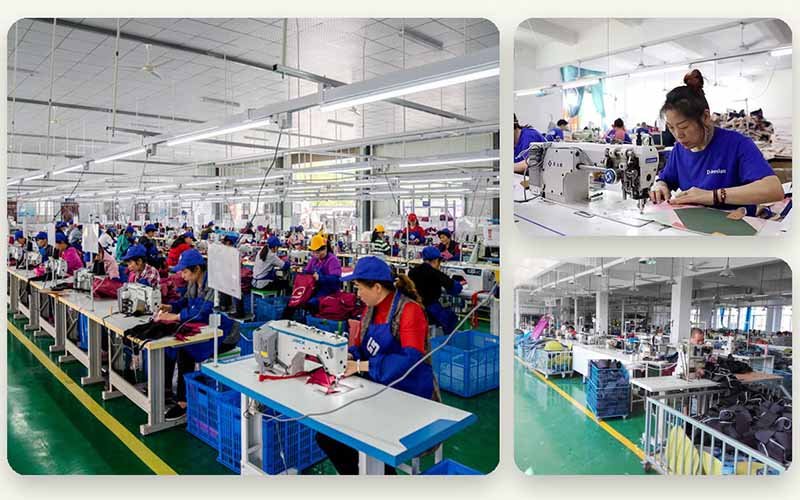
A bag factory is a manufacturing supplier that directly controls key production steps such as material sourcing, pattern making, sampling, cutting, sewing, logo application, quality inspection, packing, and shipment preparation. For custom bags, a real factory matters because small changes in fabric, stitching, reinforcement, zipper position, lining, or packaging can directly affect cost, durability, delivery time, and sample-to-bulk consistency.
Does a factory make bags directly?
Yes, a bag factory normally has direct involvement in production instead of only passing the order to another supplier. This does not always mean every single process is completed under one roof. In the bag industry, some processes such as printing, embroidery, special coating, metal hardware, molded rubber patches, laboratory testing, or custom packaging may be handled by specialized partners. That is normal in professional manufacturing.
The key difference is control. A real bag factory should understand the product structure, confirm the material, develop the sample, manage sewing, check quality, and take responsibility for production results. It should not behave like a message-forwarding middle layer that only sends your request to another unknown factory.
For buyers, this is especially important because bags are multi-component products. A simple canvas tote may involve fabric, lining, thread, handles, inner pockets, printing, hangtags, polybags, carton marks, and barcodes. A backpack may involve Oxford fabric, foam padding, mesh, zippers, sliders, webbing, buckles, lining, binding tape, reinforcement stitching, and multiple compartments. If the supplier does not understand how these parts work together, a cheap quotation can quickly become a costly mistake.
The most useful way to judge a factory is not only by asking, “Do you own a factory?” A better question is: “Which parts of my project can you control directly, and which parts rely on external partners?” The answer will tell you much more about the supplier’s real capability.
What does a bag factory control?
A capable bag factory controls the practical details that decide whether a product can move from idea to bulk order. These details include pattern development, size tolerance, material selection, sample revision, sewing method, stress-point reinforcement, logo placement, packaging method, and inspection standards. In custom bag production, these details are often more important than a beautiful product catalog.
For example, a cosmetic bag with poor zipper alignment may still look acceptable in photos, but it will feel cheap when opened and closed. A cooler bag with weak seam construction may pass a simple appearance check but fail during daily use. A tote bag with thin handles may reduce unit cost slightly but create customer complaints after repeated loading. A backpack with poor shoulder strap reinforcement can become a serious quality risk.
A factory is valuable because it can connect the buyer’s idea with production reality. It can explain which fabric is strong enough, which structure is too costly, which logo process fits the material, and which packaging method suits the sales channel. This is the difference between simply selling a bag and manufacturing a bag properly.
| Factory-Controlled Area | Why It Matters to Buyers | Common Bag Example | Risk If Not Controlled |
|---|---|---|---|
| Pattern making | Affects size, shape, capacity, and bulk consistency | Backpack, tote bag, cosmetic bag | Sample looks good, bulk shape changes |
| Material selection | Affects cost, hand feel, durability, and appearance | Oxford, canvas, nylon, neoprene, PU | Wrong fabric, weak structure, poor reviews |
| Sewing process | Affects strength, finish, and user experience | Handles, zipper area, binding, lining | Loose stitches, broken seams, uneven edges |
| Logo process | Affects brand presentation and durability | Screen print, embroidery, woven label, patch | Cracking logo, wrong position, color mismatch |
| Quality inspection | Reduces bulk order defects before shipment | Size, color, stitching, zipper, packing | Customer complaints, returns, replacement cost |
| Packaging | Affects retail, FBA, storage, and shipping | Polybag, carton, barcode, hangtag | Damaged goods, wrong labels, warehouse issues |
Why does factory control matter for custom bags?
Factory control matters because custom bags often change several times before they are ready for bulk production. A buyer may start with a reference photo, then adjust the size, change the fabric, add a pocket, move the logo, upgrade the zipper, reduce weight, redesign the packaging, or change the target price. Every change affects cost, production difficulty, and lead time.
If a factory controls sampling and production communication, the buyer can get faster and more practical feedback. If the supplier only forwards messages to another factory, every revision may become slower and less accurate. This is why many buyers feel frustrated when the approved sample and the bulk order do not match. The issue is often not one big mistake, but many small details lost between the buyer, sales team, trader, subcontracted factory, and workers.
For growing brands, factory control also supports repeat orders. Once the pattern, material, logo file, packaging file, and QC standard are recorded, the next order does not need to restart from zero. This is important for Amazon sellers, Shopify brands, retailers, promotional companies, and importers that need stable replenishment.
For custom bags, control is not a luxury. It is the foundation of quality, timing, cost stability, and long-term supplier trust.
What Is a Trading Company?
A trading company is a sourcing and coordination supplier that usually does not fully own or directly manage the main production process. It connects buyers with factories, collects quotations, communicates requirements, and may help with export, packaging, or multi-product sourcing. Trading companies can be useful, but buyers must understand where their value ends and where production control risks begin.
Does a trading company own production?
Some trading companies own no production lines at all. Some may have a small workshop, a sample room, or long-term factory partners. Others may present themselves as manufacturers while outsourcing most orders. This is why buyers should avoid judging only by the words “factory,” “manufacturer,” or “supplier” on a website.
A trading company’s real strength is usually communication and sourcing. If a buyer needs many unrelated products, such as bags, bottles, caps, stationery, gift packaging, and small accessories, a trading company may simplify the sourcing process. It can collect quotations from different factories and provide one communication window. For buyers without sourcing experience, this can feel convenient.
However, convenience is not the same as production control. If the product has complex structure, strict quality standards, special materials, or long-term reorder needs, the buyer needs to know who is actually responsible for production. If the trading company changes factories between orders, the same bag may come back with different stitching, fabric, color tone, zipper quality, or packaging details.
The key question is not whether a trading company is good or bad. The key question is whether the supplier model fits the buyer’s product risk.
How do trading companies work with factories?
Most trading companies work by receiving the buyer’s inquiry, finding one or more factories, getting prices, adding a margin, and then managing communication. In simple projects, this may work smoothly. For example, a basic non-woven bag with standard size, standard material, simple logo printing, and no strict retail packaging may not require deep product development.
But custom bag orders often involve many production decisions. A buyer may request 600D Oxford fabric, waterproof lining, custom zipper pullers, reinforced handles, printed inner labels, FBA carton requirements, and a target delivery date. The trading company then needs to translate all of these requirements to the factory. If the factory does not fully understand the buyer’s brand standard, or if the trading company does not understand bag construction, important details may be simplified or missed.
Communication gaps often appear during sample revision. A buyer may say, “The bag feels too soft,” but that could mean the fabric needs higher denier, the lining needs adjustment, the foam should be thicker, the panel needs backing, or the overall structure needs redesign. A factory with product knowledge can diagnose the issue. A trading company may only pass the comment forward.
That does not mean every trading company is weak. Some are experienced and honest. But buyers should check whether the trading company can explain production details clearly, not only communicate politely.
When can a trading company be useful?
A trading company can be useful when the buyer needs broad sourcing rather than deep customization. It may be a practical option for buyers who purchase many categories, compare low-cost options, or need one supplier to consolidate different goods. Some trading companies also provide value through language support, export documents, supplier search, and flexible communication.
For small one-time promotional orders, a trading company may help buyers save time. If the product is simple, the buyer has low technical requirements, and the main goal is quick procurement, a trading company can be enough. This is especially true when the buyer does not need long-term product development, repeated quality consistency, or detailed engineering support.
The risk increases when the buyer needs custom materials, special structure, private label branding, strict dimensions, retail packaging, FBA preparation, or repeat production. In those cases, the supplier must do more than quote and ship. It must understand how the bag is built, what can go wrong, and how to prevent problems before bulk production.
| Buyer Situation | Trading Company May Work | Factory Is Usually Better |
|---|---|---|
| Simple promotional bag | Yes | Yes |
| Multi-category gift sourcing | Yes | Sometimes |
| Custom backpack development | Risky | Better |
| Private label product line | Sometimes | Better |
| Strict material and color control | Risky | Better |
| Reorder consistency | Risky if factory changes | Better |
| Buyer wants one contact for many product types | Yes | Sometimes |
| Buyer needs engineering and sample revision | Limited | Better |
| Low technical requirements | Yes | Yes |
| Long-term brand supply chain | Sometimes | Better |
Which Is Better for Custom Bags?
For most custom bag projects, a factory-based manufacturer is usually better because it can control sampling, material selection, structure, sewing quality, production timing, and bulk consistency more directly. A trading company may be useful for simple sourcing, but custom bags need hands-on product understanding, especially when buyers require OEM/ODM development, private label branding, and repeat orders.
Which option gives better product control?
A factory normally gives better product control because it is closer to the people and processes that create the bag. When the buyer changes fabric, pocket layout, handle length, zipper type, logo position, or packaging method, the factory can evaluate the effect on cost, production difficulty, and quality risk.
In custom bag manufacturing, control is not only about owning machines. It is about making decisions before problems happen. For example, a buyer may request a large tote bag in 12oz canvas with long handles and heavy loading use. A good factory will check handle width, stitch reinforcement, seam allowance, bottom structure, and shrinkage risk. A weak supplier may only quote the fabric and size, then discover problems during bulk production.
Product control also helps avoid “sample beauty, bulk disappointment.” Many buyers have experienced a perfect sample followed by bulk goods with lower fabric weight, changed zipper quality, uneven stitching, or different color tone. Sometimes this happens because the supplier intentionally cuts cost. Sometimes it happens because the supplier did not lock material, BOM, pattern, and QC standards clearly.
A factory-based supplier should help buyers record these standards before mass production, not after defects appear.
Which option supports OEM and ODM better?
For OEM projects, the buyer already has a sample, tech pack, artwork, material requirement, and packaging standard. The supplier’s job is to reproduce the product accurately and consistently. A factory is usually stronger here because it can match materials, make patterns, produce samples, revise details, and prepare production standards.
For ODM projects, the buyer may only have an idea, reference image, product function, target price, or sales channel. This requires even more manufacturing knowledge. The supplier must help turn an idea into a real product. It may need to suggest materials, adjust structure, recommend logo methods, simplify costly details, improve usability, and make the design suitable for bulk production.
Trading companies can support OEM/ODM if they have strong technical staff and stable factory partners. But many trading companies depend on the factory for technical judgment. When a project becomes complicated, the buyer may feel the communication slowing down because every decision needs to be checked somewhere else.
For bags, ODM ability is especially valuable in product categories such as cooler bags, travel bags, baby bags, tool bags, medical bags, waterproof bags, cosmetic bags, and backpacks. These products require structure logic, not just sewing capacity.
Which option fits long-term orders?
Long-term orders usually favor a factory-based partner because repeat production depends on stable records and consistent execution. The supplier should keep the approved sample, pattern, BOM, fabric details, color standard, logo file, packaging file, carton mark, inspection notes, and any revision history.
For a one-time order, a buyer may only care about price and shipment. For repeat orders, the buyer cares about whether the second, third, and fourth batches match the first approved order. This is where many supplier problems appear. A different fabric lot, different worker group, different zipper supplier, or changed subcontracted factory can create visible differences.
Long-term buyers also need better communication around production scheduling. A factory can usually give more realistic feedback about material lead time, production capacity, sample revision timing, and shipment preparation. That helps buyers plan launches, replenishment, seasonal promotions, and retail delivery windows.
For e-commerce brands, reorder reliability can affect reviews and ranking. For retailers, it affects shelf consistency. For importers, it affects customer trust. For promotional companies, it affects campaign delivery. A supplier that can record and repeat standards is often worth more than one that only offers a slightly lower first quotation.
How Do Prices Really Differ?
Factory-direct pricing is often more transparent, but it is not always automatically cheaper. A trading company may add a margin, while a factory may still include costs for material, labor, sample development, logo processing, packaging, inspection, overhead, and export coordination. Buyers should compare total landed cost, not just unit price, because the cheapest quote can hide quality, revision, packaging, and delay risks.
Is factory direct always cheaper?
Factory direct is often cheaper when the product specification is clear, the order quantity is suitable, and the buyer works with a manufacturer that can produce the product efficiently. Removing a middle layer can reduce markup and improve communication speed. But factory direct is not a magic guarantee of the lowest price.
A real factory still needs to calculate material usage, cutting loss, labor time, machine process, logo method, packing cost, inspection cost, export handling, and profit. If a buyer asks for a complex backpack with many compartments, padded laptop sleeve, custom zipper pullers, thick webbing, logo patch, and retail packaging, the price will be higher than a simple tote bag. This is normal.
Very low factory quotes can also be risky. A factory may quote low to win the order, then raise the price after sampling. Or it may use lighter fabric, cheaper zipper, thinner lining, weaker thread, or simpler packaging to protect margin. Buyers should be careful when one quote is far below the others.
A better approach is to ask suppliers to explain the price drivers. Professional suppliers are usually able to explain why material, structure, logo, quantity, packaging, and timeline affect cost.
Do trading companies add hidden costs?
Trading companies usually add a margin because sourcing, communication, inspection, and export coordination are part of their service. That margin is not automatically unfair. If the trading company saves the buyer time, manages many suppliers, consolidates shipping, or prevents mistakes, the cost may be reasonable.
The problem is hidden cost. A buyer may receive a low unit price but later discover extra charges for sample revisions, packaging changes, inland shipping, export documents, inspection, carton labels, FBA labels, or urgent delivery. Some costs are normal, but they should be explained early.
Another hidden cost is quality risk. If the supplier does not control production well, the buyer may pay for replacement goods, delayed launches, customer complaints, chargebacks, returns, or air freight to fix late delivery. These costs can be much higher than the difference between two unit prices.
For custom bags, the cheapest quote is often not the cheapest total project. Buyers should compare the full cost of making the product correctly, shipping it safely, and repeating it consistently.
How should buyers compare total cost?
Buyers should compare quotations based on the same specification. This sounds simple, but many RFQs are not detailed enough. If one supplier quotes 600D Oxford and another quotes 300D polyester, the prices cannot be compared. If one includes lining and the other does not, the lower price is misleading. If one includes retail packaging and another includes only bulk packing, the comparison is incomplete.
A useful RFQ should include product size, material, lining, zipper type, webbing width, logo process, color quantity, order quantity, packaging, carton requirements, destination country, inspection needs, and target delivery date. If the buyer has a tech pack or reference sample, it should be shared before final quotation.
The table below shows common cost drivers in custom bag projects. The numbers are not fixed prices, but practical sourcing signals buyers can use when reviewing quotations.
| Cost Driver | Typical Impact on Price | Buyer Checkpoint |
|---|---|---|
| Material type and weight | Higher-denier, thicker, coated, recycled, or certified materials usually cost more | Confirm fabric name, weight, coating, color, and availability |
| Structure complexity | More pockets, padding, lining, and compartments increase labor time | Ask whether price includes all internal details |
| Logo process | Embroidery, rubber patch, metal logo, and woven label differ in setup and MOQ | Confirm mold fee, setup fee, color limits, and placement |
| Quantity | Higher volume usually lowers unit cost, but not always if materials are custom | Compare 200, 500, 1,000, and 3,000 pcs if planning scale |
| Packaging | Retail box, hangtag, barcode, FBA label, and inner packing add cost | Ask what packing method is included |
| Inspection level | More detailed QC may increase handling time but reduce risk | Confirm inspection points before bulk production |
| Delivery method | Express and air are faster but more expensive than sea freight | Compare shipment cost by destination and timeline |
| Sample revisions | Revisions may cost time and money depending on change scope | Clarify revision policy before sampling |
How Can Buyers Verify a Real Bag Factory?
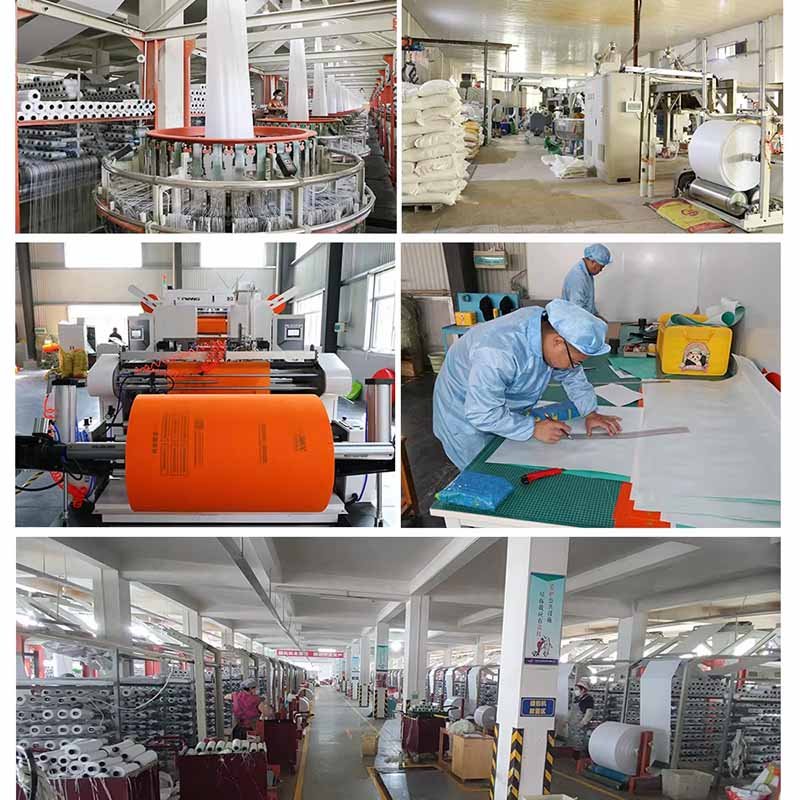
Buyers can verify a real bag factory by checking production evidence, sample capability, material knowledge, factory videos, inspection process, business documents, product focus, and communication quality. A reliable factory should be able to show how it develops samples, controls materials, manages sewing, checks quality, prepares packaging, and supports shipment—not just send product photos and low prices.
What factory proof should buyers ask for?
Buyers should ask for evidence connected to their actual product, not just generic factory pictures. Many suppliers can show machines or warehouse photos, but that does not prove they can make your bag correctly. A better verification method is to ask for proof around similar products, similar materials, and similar processes.
For example, if you are sourcing a custom cooler bag, ask to see samples with insulation, lining, zipper closure, handle reinforcement, and interior seam finishing. If you are sourcing a cosmetic bag, ask about lining, zipper smoothness, logo process, shape retention, and cleaning requirements. If you are sourcing a backpack, ask about shoulder strap reinforcement, foam padding, laptop compartment, buckle strength, and stress-point stitching.
Useful factory proof may include a short video of the sample room, material area, sewing area, QC area, packaging area, and similar product samples. Buyers can also ask for a video call to review their project. This is more useful than a perfect catalog because it shows whether the supplier understands your product category.
A serious supplier should not be afraid of reasonable verification. If the supplier avoids all production questions, gives vague answers, or only pushes for payment, buyers should slow down.
How can videos and samples help?
Videos help buyers see the supplier’s real working environment and communication behavior. A live or recent video can show whether the supplier has product samples, material swatches, sewing equipment, packaging workflow, and QC awareness. It also helps reveal whether the supplier understands the buyer’s exact product or is only showing random items.
Samples are even more important. A sample is the first real test of communication, material matching, pattern accuracy, sewing skill, logo execution, and problem-solving ability. Many supplier issues appear during sampling: wrong fabric, poor shape, weak lining, incorrect logo position, low-quality zipper, loose stitching, or misunderstanding of size.
Buyers should review samples like a production standard, not like a casual prototype. Check dimensions, fabric feel, zipper movement, stitching neatness, pocket layout, reinforcement points, logo color, packaging, smell, cleanliness, and overall function. If changes are needed, ask whether the supplier can explain the cause and solution.
A good sample process should end with an approved sample, clear revision notes, and a production-ready standard. Without that, the bulk order can easily drift away from what the buyer expected.
Are product range and address useful clues?
Product range and address can be useful clues, but they should not be used alone. A supplier claiming to manufacture every possible product category—bags, electronics, shoes, toys, furniture, cosmetics, tools, and packaging—may be a trading company or a broad sourcing agent. That is not automatically bad, but it may mean limited technical depth in custom bags.
A focused bag factory usually has stronger knowledge of fabrics, lining, webbing, zippers, sliders, buckles, sewing methods, reinforcement, logo processes, and packaging. It may cover many bag categories, but those categories are usually connected by material and sewing capability, such as tote bags, backpacks, cooler bags, cosmetic bags, travel bags, pouches, leather goods, neoprene products, and soft goods.
Address can also offer hints. A factory or factory-based supplier located near a mature manufacturing region may have better access to fabric, accessories, printing, embroidery, packaging, and logistics resources. But buyers should still verify through video, samples, project discussion, and quality process.
The best verification is a combination of evidence. Do not rely on one sign. Look for consistency between website claims, product knowledge, sample quality, communication, factory proof, and quotation details.
| Verification Item | What to Ask | Good Signal | Warning Signal |
|---|---|---|---|
| Similar products | “Can you show similar bags you made?” | Shows relevant samples and explains materials | Sends unrelated catalog photos |
| Sample process | “How will you develop my sample?” | Explains material, pattern, sewing, revision, approval | Says “yes, we can do” without process |
| Factory video | “Can we have a video review?” | Shows sample room, material, sewing, QC, packing | Refuses or sends old generic clips only |
| Material knowledge | “Which fabric fits this use?” | Compares options and limitations | Recommends only the cheapest material |
| QC process | “What do you inspect before shipment?” | Mentions material, sewing, size, logo, packing | Only says “quality is good” |
| Price details | “What is included in the quote?” | Clarifies material, logo, packing, quantity, shipping terms | Avoids cost breakdown |
| Reorder control | “How do you keep repeat orders consistent?” | Keeps pattern, BOM, sample, packaging, QC notes | Treats each order as new |
What Should Buyers Choose?
Buyers should choose based on product complexity, order stage, quality risk, customization depth, and long-term plan. A factory is usually better for custom bags, OEM/ODM development, sample revisions, quality control, and repeat production. A trading company may fit simple sourcing or multi-category procurement. The best choice is the supplier that gives the buyer the most control, clarity, and accountability.
What type of buyer should choose a factory?
A buyer should choose a factory when the product needs real development, not just purchasing. This includes custom bags with specific materials, brand logo, special structure, retail packaging, quality standards, or repeat order plans. If the buyer cares about how the bag feels, functions, looks, ships, and performs after customer use, a factory-based supplier is usually the stronger choice.
Factories are especially suitable for brands, retailers, importers, Amazon sellers, Shopify brands, promotional companies, and product teams that need stable development support. These buyers usually do not want a one-time bag. They want a product that can be sampled, tested, improved, launched, reordered, and expanded into more SKUs.
A factory is also better when the buyer needs technical discussion. For example, whether to use polyester or nylon, whether the lining should be waterproof, whether the handle needs reinforcement, whether the zipper should be coil or molded, whether the logo should be printed or embroidered, and whether the packing fits FBA or retail requirements.
If the buyer expects a supplier to challenge risky ideas, suggest better materials, and explain cost trade-offs, a factory is usually the better partner.
What type of buyer may choose a trader?
A buyer may choose a trading company when the project is simple, the technical risk is low, or the buyer needs several unrelated products from one source. A trading company can be helpful when the buyer wants convenience more than product control.
For example, a promotional buyer may need a basic tote bag, water bottle, pen, cap, and notebook for an event. In that situation, a trading company may coordinate multiple categories faster than separate factories. A small importer testing many unrelated products may also prefer one contact point.
A trader may also be useful when the buyer does not have time to manage sourcing details. Some trading companies are experienced, honest, and well-connected. They can help find factories, compare prices, manage communication, and arrange shipping. The value depends on their transparency and project management ability.
However, buyers should be careful when the product becomes more customized. If the bag requires strict material matching, complex sewing, special structure, branding, or long-term replenishment, the buyer should ask whether the trading company has stable factory partners and how it controls quality. If the answers are vague, the risk is high.
How should buyers make the final decision?
Buyers should make the final decision by comparing control, not just price. A slightly lower quotation may not help if the supplier cannot explain the product, develop the sample correctly, control bulk quality, or support repeat orders. A good supplier should reduce uncertainty at every stage: inquiry, quotation, sample, revision, production, inspection, packing, shipping, and reorder.
Start by checking your own project. Is it a simple bag or a custom product? Do you need a sample? Do you need private label branding? Do you need specific fabric, packaging, FBA labels, or export support? Will you reorder if the first batch sells well? The more “yes” answers you have, the more you need a factory-based manufacturing partner.
Then compare suppliers with the same information. Send the same product details, quantity, logo requirement, packaging requirement, destination country, and target timeline. Ask each supplier how they would develop the sample, what risks they see, what is included in the price, and how they control quality.
For serious custom bag projects, the best supplier is not always the cheapest one. It is the one that helps you avoid expensive mistakes before production starts.
| Buyer Profile | Better Supplier Choice | Main Reason |
|---|---|---|
| Brand developing private label bags | Factory | Needs material, logo, structure, packaging, and repeat consistency |
| Amazon or Shopify seller testing a new bag | Factory | Needs low-MOQ sampling, packaging details, and reorder control |
| Retailer sourcing a long-term product line | Factory | Needs stable quality, delivery planning, and supplier accountability |
| Promotional buyer sourcing many unrelated items | Trading company | Needs broad sourcing convenience |
| Importer comparing several simple low-risk products | Trading company or factory | Depends on quantity and customization level |
| Buyer with only a rough product idea | Factory with ODM ability | Needs development support from concept to sample |
| Buyer with strict QC standards | Factory | Needs direct control over material, sewing, inspection, and packing |
| Buyer focused only on lowest unit price | Either, but high risk | Must check specification, hidden cost, and quality trade-offs |
A practical final rule is simple: choose a trading company when you mainly need sourcing convenience; choose a factory when you need product control. For custom bags, product control usually matters more because small production details decide whether the final product feels reliable, sells well, and can be reordered.
Szoneier supports custom bag and soft goods buyers with factory-based sampling, material selection, structure review, sewing production coordination, quality inspection, packaging, and export delivery. For buyers preparing a new tote bag, backpack, cooler bag, cosmetic bag, travel pouch, leather goods item, neoprene product, or functional soft goods project, the best next step is to send the product photo, sketch, tech pack, logo file, target quantity, packaging needs, and destination country for a practical custom manufacturing review.
Request a Custom Bag Manufacturing Review
If you are comparing a bag factory and a trading company because you want better control over your custom bag project, start with the details that matter most. Share your reference product, target size, material preference, logo artwork, estimated quantity, packaging needs, destination country, and expected launch timeline.
Szoneier can help review your project from a manufacturing point of view, including material options, structure feasibility, sample development, cost factors, quality checkpoints, packing method, and export delivery plan.
Whether you are developing tote bags, backpacks, cooler bags, cosmetic bags, travel bags, drawstring bags, leather goods, neoprene products, EVA cases, waterproof bags, promotional bags, or other sewn soft goods, a clear technical review before sampling can save time, reduce mistakes, and make your bulk order easier to control.
Send your product photo, sketch, tech pack, logo file, quantity, and target delivery country to start your custom bag project review.