 Skip to content
Professional Bag Manufacturer in China for OEM & Private Label Brands
Bag Manufacturer China | Custom OEM & Private Label Factory | Low MOQ 50pcs
Szoneier is a Shenzhen-based bag manufacturer with over 18 years of experience in fabric development and bag production, offering custom manufacturing from material selection to global shipment.
We produce a wide range of bags including backpacks, messenger bags, tote bags, travel bags, cooler bags, laptop bags, cosmetic bags, tool bags, gym bags, and more.
- 18+ years experience
- MOQ: 50pcs per design
- Sampling: 5–7 days (standard)
- Production: 25–30 days
- Trade Terms: EXW / FOB / DDP
- 100% Pre-shipment Inspection
- English-speaking sales team
- Factory visit supported
China Bag Manufacturer vs Trading Company — What Is the Real Difference?
When sourcing bags from China, many companies are unsure whether they are dealing with a real manufacturer or a trading company.
The difference affects:
- Price stability
- Production control
- Material consistency
- Delivery timeline
- Quality accountability
Below is a clear comparison based on real production logic.
Production Control
A true manufacturer controls:
- Pattern development
- Cutting
- Sewing assembly
- Reinforcement structure
- In-line inspection
A trading company usually:
- Sources from multiple factories
- Does not control daily production
- Relies on third-party inspection
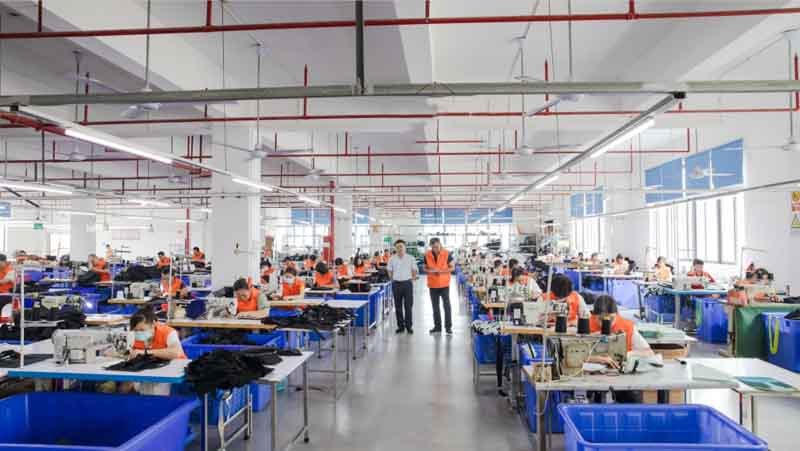
Szoneier operates:
- Internal sample workshop
- Sewing production lines
- Dedicated QC team
- Structured production workflow
This allows direct management of structural details such as strap anchoring and bottom reinforcement.
Material Coordination
Material consistency is one of the biggest long-term risks in bag production.
Trading companies typically:
- Purchase fabric from various suppliers
- Have limited control over dye lot consistency
- Cannot influence webbing tensile strength
Szoneier works closely with Lovrix to coordinate:
- Polyester & nylon fabric
- Canvas weaving
- Webbing production
- PU & microfiber leather
- EVA structural materials
This improves:
- GSM stability
- Strap width consistency
- Color continuity
- Production preparation speed
Material integration reduces supply mismatch risk.
Pricing Transparency
Trading companies often add:
- Commission markup
- Multi-layer supplier margins
- Handling fees
As a direct manufacturer, Szoneier provides pricing based on:
- Material cost
- Labor cost
- Hardware cost
- Production complexity
This results in more transparent cost structure and better long-term price stability.
Sampling Speed
Sampling through trading companies usually requires:
- Communication relay
- Factory coordination
- Delayed feedback
At Szoneier:
- Pattern making is internal
- Sample cutting is internal
- Logo processing is coordinated directly
- Structure adjustments are immediate
Standard sampling: 5–7 days. Complex structure: 7–15 days.
Quality Accountability
If quality issues occur:
Trading company response may involve:
- Negotiating with factory
- Delayed responsibility clarification
- Limited structural adjustment control
At Szoneier:
- Production is internal
- QC is internal
- 100% pre-shipment inspection is performed
Accountability is direct and traceable.
Repeat Order Consistency
Repeat orders often face:
- Fabric color variation
- Strap width deviation
- Padding thickness inconsistency
With Szoneier + Lovrix coordination:
- Fabric specs are retained
- Webbing width tolerance is controlled
- Structural padding records are documented
- Hardware configuration is standardized
This improves repeat order reliability.
Timeline Stability
Trading companies depend on factory schedule availability.
Szoneier controls:
- Production planning
- Material preparation
- Cutting schedule
- Sewing line allocation
Mass production: 25–30 days after sample approval.
Material coordination through Lovrix reduces fabric waiting time.
Long-Term Partnership Advantage
Working directly with a manufacturer enables:
- Structural improvement over time
- New model development
- Cost optimization through design adjustment
- Easier expansion into related categories
Szoneier supports expansion into:
- Backpacks
- Messenger bags
- Tote bags
- Travel bags
- Cooler bags
- Tool bags
All under the same structured system.
| Aspect | Trading Company | Szoneier (Manufacturer) |
|---|---|---|
| Production Control | Outsourced | Internal workshop |
| Sampling Speed | Slower | 5–7 days |
| MOQ Flexibility | Depends on factory | 50pcs |
| Material Consistency | Supplier dependent | Coordinated with Lovrix |
| QC System | Limited oversight | 100% inspection |
| Structural Engineering | Indirect | Direct control |
| Cost Transparency | Multi-layer margin | Direct factory pricing |
| Repeat Order Stability | Variable | Controlled specs retained |

About Szoneier
18+ Years Integrated Bag Manufacturing Experience in China
Szoneier is a Shenzhen-based bag manufacturer with over 18 years of experience in fabric development and bag production. We specialize in OEM and private label manufacturing across multiple bag categories, serving clients in North America, Europe, Australia, and Asia.
Unlike small workshops or sourcing intermediaries, Szoneier operates with an integrated manufacturing structure that combines development, sampling, production, and quality control under one coordinated system.
Company Background & Core Focus
Founded by Eric Wen, Szoneier has grown from a fabric-focused production base into a comprehensive bag manufacturing operation.
Our core focus areas include:
- Backpacks
- Messenger bags
- Tote bags
- Travel & duffel bags
- Cooler bags
- Cosmetic & organizer bags
- Tool & utility bags
We serve:
- Retail brands
- E-commerce sellers
- Corporate promotional programs
- Distributors
Our long-term positioning is structured manufacturing, stable production workflow, and repeat order consistency.
Internal Organizational Structure
Szoneier’s internal structure includes:
- Product R&D team
- Pattern development department
- Dedicated sample workshop
- Cutting section
- Sewing production lines
- Reinforcement and assembly station
- Quality control team
- Export coordination department
This structure allows direct control over:
- Pattern precision
- Reinforcement mapping
- Strap anchoring strength
- Padding thickness accuracy
- Zipper grade matching
Production decisions are made internally rather than outsourced.
Manufacturing Capacity & Workflow Stability
Standard production data:
- MOQ: 50pcs per design
- Sampling: 5–7 days (standard models)
- Complex sampling: 7–15 days
- Mass production: 25–30 days
Production workflow includes:
- Material preparation
- Cutting
- Logo processing
- Sewing assembly
- In-line QC
- Final 100% inspection
- Packing and shipment
Each stage is scheduled with timeline visibility.
Material & Supply Chain Coordination
Szoneier works in close coordination with Lovrix, a group company supporting:
- Polyester & nylon fabric production
- Cotton canvas weaving
- Webbing manufacturing
- PU & microfiber leather supply
- EVA / TPU structural materials
This integration improves:
- Fabric GSM tolerance control
- Webbing width consistency
- Dye lot continuity
- Reduced raw material waiting time
For bag production, strap strength and fabric stability directly impact long-term durability. Coordinated material supply reduces inconsistency risks.
Engineering-Oriented Production Philosophy
Our development process emphasizes structure before decoration.
When designing bags, we evaluate:
- Expected load capacity
- Strap width requirement
- Zipper gauge selection
- Bottom reinforcement necessity
- Padding density
For example:
- Laptop bags use 5–8mm EVA padding
- Tactical bags use 50mm heavy-duty webbing
- Travel bags use reinforced bottom board
- Tool bags use #10 zipper for durability
These structural decisions are finalized before bulk production.
Quality Control & Accountability
Quality control includes:
- Incoming material inspection (GSM & color verification)
- In-line stitching inspection
- Reinforcement confirmation
- Zipper smoothness testing
- 100% final inspection
Every bag unit is inspected before shipment.
Trade terms supported:
- EXW
- FOB
- DDP
Payment methods:
- T/T
- PayPal
- Credit Card
- Alibaba Trade Assurance
Factory visits and video tours are supported.
Long-Term Partnership Stability
Over the past 18+ years, Szoneier has built long-term relationships by focusing on:
- Low MOQ flexibility (50pcs)
- Repeat order consistency
- Transparent timeline management
- Material continuity through Lovrix support
Repeat production benefits from retained:
- Fabric specifications
- Webbing width records
- Hardware configuration data
- Structural padding mapping
This reduces variation across seasonal orders.
Types of Bags We Manufacture
Full Product Matrix from a China Bag Manufacturer
With over 18 years of experience in bag production, Szoneier manufactures a wide range of bag categories covering daily use, professional, travel, outdoor, and utility applications.
Each category is developed based on structure, load requirement, and material suitability. We do not treat all bags the same — reinforcement, padding, zipper grade, and strap width are matched to product positioning.
Below is a detailed overview of the bag types we manufacture.
Backpacks
Backpacks are one of our most produced categories.
Common Types:
School backpacks
Laptop backpacks (13–17 inch)
Travel backpacks
Tactical backpacks
Outdoor hiking backpacks
Structural Features:
EVA padded back panel (5–10mm)
Adjustable shoulder straps (38mm–50mm)
Reinforced strap anchoring
#8 or #10 zipper
Internal laptop compartment
Typical Load Capacity:
3–10kg depending on design.
Szoneier ensures strap reinforcement and bottom structure are evaluated before bulk production.


Messenger Bags
Messenger bags require stronger load distribution due to single-strap design.
Variants:
- Urban commuter messenger
- Laptop messenger
- Tactical messenger
- PU structured executive messenger
Engineering Focus:
- 38mm–50mm strap width
- Bar-tack strap anchoring
- EVA laptop padding (5–8mm)
- Bottom reinforcement board
Load range: 2–8kg.
Messenger bags are tested for strap stability and zipper durability during inspection.
Tote Bags
Tote bags vary from lightweight shopping bags to structured retail models.
Material Options:
- 8oz / 12oz / 16oz canvas
- 300D / 600D polyester
- PU or microfiber leather
Structure Types:
- Soft unstructured
- Bottom board reinforced
- Zipper closure option
Heavier canvas (16oz) provides stronger shape retention.
MOQ for tote production starts at 50pcs.


Travel & Duffel Bags
Travel bags require higher load-bearing capability.
Features:
- Double-layer bottom
- Reinforced carry handle
- Adjustable shoulder strap
- #8 or #10 zipper
Fabric Options:
- 600D polyester
- 900D Oxford
- 1680D nylon
Load range: 5–12kg.
Production planning includes reinforcement mapping before assembly.
Cooler & Insulated Bags
Insulated bags require thermal material integration.
Structure:
- 600D polyester outer shell
- EPE or PE foam insulation
- Aluminum foil or PEVA lining
- Reinforced zipper closure
Insulation thickness can be adjusted depending on cooling time requirement.
All insulated bags undergo lining integrity checks before shipment.


Cosmetic & Organizer Bags
Lightweight category with higher focus on interior layout.
Types:
Makeup pouch
Travel cosmetic organizer
Multi-layer zipper organizer
Materials:
- 300D polyester
- PU leather
- Nylon
Zipper alignment and internal stitching quality are key control points.
Tool & Utility Bags
Designed for heavy-duty usage.
Structure:
- 900D Oxford fabric
- Reinforced bottom board
- Metal hardware
- #10 zipper
Load range: 5–15kg.
Tool bags receive reinforced stitching and strap stress testing.


Laptop Sleeves & Office Bags
Compact structured category.
Features:
- EVA padding
- Double-layer edge protection
- Waterproof zipper option
Commonly produced for corporate programs and office brands.
Fabric & Material System
Material selection determines durability, structure stability, load-bearing performance, and long-term repeatability.
With over 18 years of experience in bag manufacturing, Szoneier has built a structured material system covering outer fabrics, lining materials, reinforcement components, insulation materials, and structural inserts.
We do not treat fabric as a decorative surface. Material is selected according to load expectation, target market, and product positioning.
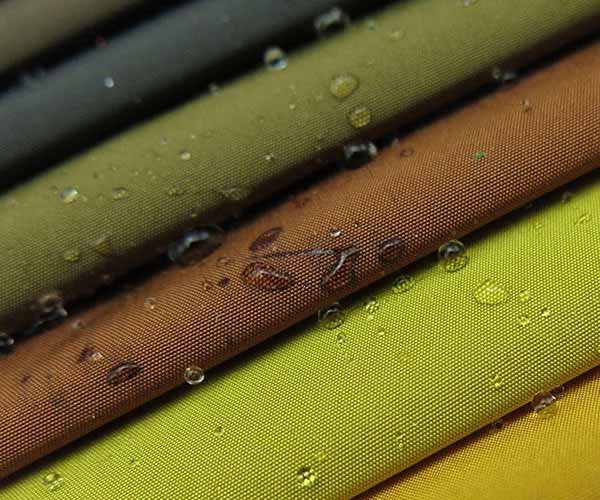
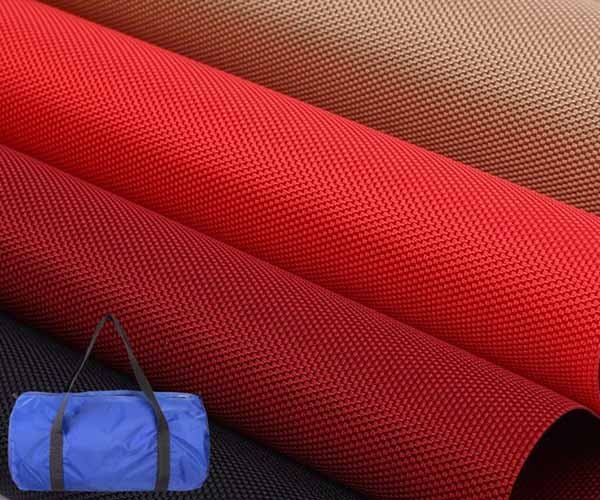
Polyester Fabric System
Polyester is the most widely used material across our backpack, messenger bag, travel bag, and tote bag production.
Common Specifications We Produce:
- 300D Polyester
- 420D Polyester
- 600D Polyester
- 900D Polyester
- PU-coated polyester (1000–3000mm water resistance)
- PVC backing options
Technical Control Example — 600D Polyester
| Parameter | Controlled Range |
|---|---|
| GSM | 240–300g/m² |
| Tear Strength | 25–35N |
| Water Resistance | 1000–2000mm |
| Coating Type | PU or PVC |
Incoming fabric is inspected for GSM tolerance (±5%), surface defects, and color consistency before cutting.
Through coordination with Lovrix, polyester fabric supply is stabilized in terms of dye lot continuity and width tolerance, which helps improve repeat order consistency.
Nylon Fabric System
Nylon is commonly used in higher-end and heavy-duty categories such as:
- Laptop backpacks
- Tactical bags
- Travel duffel bags
Available Options:
- 210D Nylon
- 420D Nylon
- 840D Nylon
- 1680D Ballistic Nylon
Technical Profile — 1680D Nylon
| Parameter | Typical Value |
|---|---|
| GSM | 320–380g/m² |
| Abrasion Resistance | High |
| Structure | Dense weave |
| Water Resistance | Up to 3000mm |
Nylon provides stronger abrasion resistance and tensile strength compared to standard polyester.
Canvas System
Canvas is widely used in tote bags and vintage-style messenger bags.
Available Weights:
- 8oz (lightweight)
- 12oz (balanced)
- 16oz (heavy-duty)
Heavier canvas provides better shape retention and higher load capacity.
Lovrix supports canvas weaving and dyeing coordination, which helps maintain stable fabric texture and color continuity across seasonal production batches.


PU & Microfiber Leather System
PU and microfiber leather are used for structured, executive, and corporate bag programs.
Surface Options:
- Smooth finish
- Cross-grain texture
- Embossed pattern
- Matte coating
- Gloss finish
Microfiber leather offers higher durability and tear resistance than standard PU.
Structured bags using PU or microfiber leather are typically reinforced internally with EVA boards to prevent sagging.
Functional & Specialized Fabrics
Depending on application, we also support:
- Waterproof fabrics
- Anti-scratch coating
- Fire-resistant materials
- Insulated outer shells
For cooler bags:
- 600D polyester outer shell
- EPE foam insulation
- Aluminum foil or PEVA lining
Insulation thickness is selected based on cooling duration requirement.


Lining Material System
Lining material affects durability and internal appearance.
Common Lining Options:
- 190T polyester
- 210D polyester
- 420D lining
- Printed custom lining
Lining thickness is matched to bag structure and target price.
All lining materials are inspected for color and density before assembly.
Reinforcement & Structural Materials
Structural materials determine long-term durability.
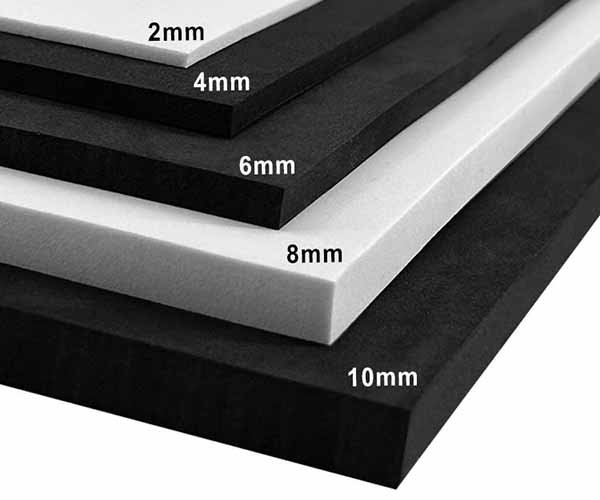
We use:
- EVA foam (5–10mm thickness)
- PE foam
- PP board (rigid support)
- PE board
- Bottom reinforcement insert
For laptop bags:
- 5–8mm EVA padding standard
- Raised internal bottom for shock absorption
For travel and tool bags:
- PP rigid bottom board
- Double-layer base reinforcement
Material selection is confirmed before mass cutting.

Webbing & Strap Material
Strap quality directly affects load-bearing capacity.
Available widths:
- 25mm
- 38mm
- 50mm
Material options:
- Polyester webbing
- Nylon webbing
- Cotton webbing
Lovrix supports webbing production with controlled width tolerance and stable tensile strength, which improves consistency in repeat production.
Material Inspection Process
Before production begins:
- Fabric GSM measured
- Color matched to approved sample
- Webbing width verified
- Padding thickness measured
- Coating surface checked
Only approved materials proceed to cutting stage.


Material Coordination Advantage
Material instability is one of the most common problems in bag manufacturing in China.
Through coordination with Lovrix:
- Fabric preparation time is reduced
- Dye lot continuity is better controlled
- Webbing tensile strength remains stable
- Padding material supply is aligned with schedule
This integration supports:
- Stable 25–30 day production timeline
- Better repeat order consistency
- Reduced supply chain interruption risk
Structural Engineering Across Bag Categories
How We Build Bags for Durability
A bag’s durability is determined by its structural engineering, not just its fabric.
With over 18 years of experience in bag production, Szoneier focuses on load distribution, reinforcement mapping, and stress-point control during development.
Different bag categories require different structural strategies. We do not use one structure template across all products.
Load Evaluation Before Development
Every new project begins with load assessment.
Typical load expectations:
| Category | Expected Load |
|---|---|
| Tote Bag | 2–5kg |
| Messenger Bag | 2–8kg |
| Backpack | 3–10kg |
| Travel Duffel | 5–12kg |
| Tool Bag | 5–15kg |
Before sampling, our team evaluates:
- Strap width requirement
- Zipper gauge selection
- Bottom reinforcement necessity
- Padding thickness
- Stitch density
This prevents structural underdesign.

Strap Anchor Engineering
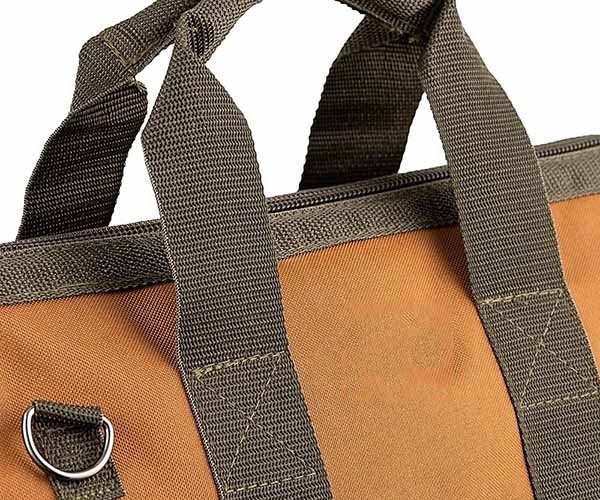
Strap anchoring is one of the most common failure points in bags.
Szoneier applies:
- Bar-tack reinforcement
- Cross stitching pattern
- Extended strap anchoring inside body panel
Rather than stitching only on the surface, the strap is inserted deeper into the body panel to distribute stress across a larger area.
For heavy-duty models:
- 38mm–50mm webbing
- Reinforced D-ring
- Double-layer anchor stitching
This reduces tearing risk under repeated load.
Bottom Reinforcement System
Bottom sagging and seam splitting are common in low-cost production.
Our bottom reinforcement options include:
- Double-layer fabric base
- EVA board insert
- PP rigid sheet
- Reinforced corner stitching
For travel and tool bags, rigid board insertion is often required.
During in-line inspection, bottom seam alignment and reinforcement stitching are verified.

Back Panel & Shoulder Structure (Backpacks)
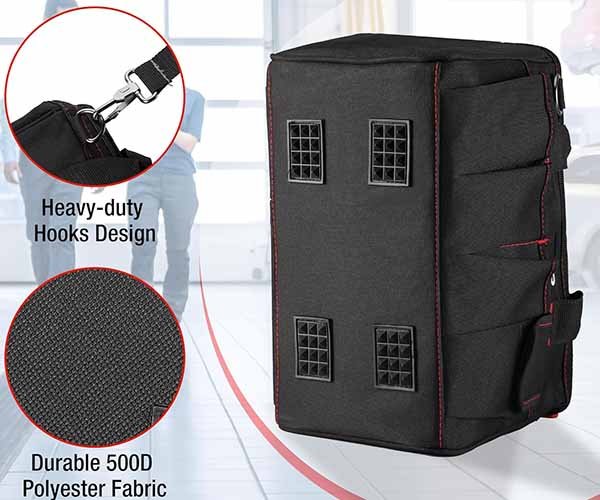
Backpacks require more complex load distribution than other bags.
Common structure includes:
- EVA padded back panel (5–10mm)
- Breathable mesh overlay
- Reinforced shoulder strap joint
- Adjustable strap length control
Shoulder straps are tested manually for reinforcement stability before final inspection.
Laptop Protection Engineering
Laptop compartments are engineered based on:
- Device size (13–17 inch)
- Padding density
- Bottom shock absorption
Standard structure:
- 5–8mm EVA padding
- Raised internal bottom
- Double-layer side protection
This reduces impact when placing the bag on hard surfaces.


Zipper & Closure Engineering
Zipper failure often occurs when load exceeds zipper grade.
Szoneier matches zipper gauge with expected load:
- #5 for lightweight bags
- #8 for laptop and daily bags
- #10 for heavy-duty and tool bags
Zipper alignment and smoothness are checked during in-line QC and final inspection.
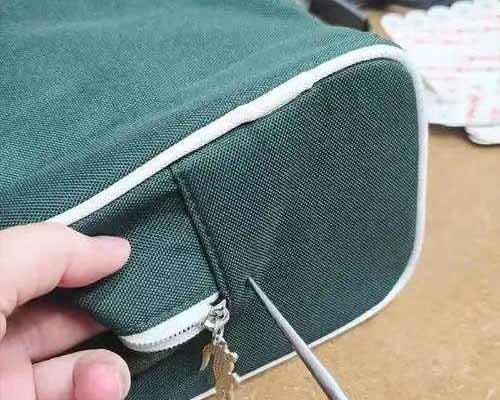
Panel Construction & Seam Strength
Panel construction directly affects shape retention.
We evaluate:
- Seam allowance width
- Stitch density
- Edge binding quality
- Corner reinforcement
Higher stitch density is used at high-stress areas.
Seam consistency is monitored during sewing stage.


Insulated Bag Structural Design
Cooler bags require both structure and thermal performance.
Structure includes:
- Outer shell
- Insulation layer (EPE / PE foam)
- Leak-resistant lining (PEVA / foil)
Seam sealing and lining integrity are inspected before shipment.
Structural Testing & Inspection
Szoneier performs structural checks including:
- Strap pull test (manual load simulation)
- Zipper open-close cycle test
- Visual inspection of reinforcement points
- Bottom rigidity check
Every unit undergoes final inspection before packing.

Structural Documentation for Repeat Orders
For repeat production, we retain:
- Strap width specification
- Padding thickness record
- Zipper grade record
- Reinforcement stitching method
- Bottom support type
Material coordination through Lovrix ensures fabric and webbing continuity, helping maintain structural consistency across batches.
Structural Risk Prevention Summary
Common structural failures in low-quality manufacturing:
- Strap tearing
- Bottom seam splitting
- Zipper splitting
- Padding collapse
- Corner deformation
Prevention at Szoneier includes:
- Load evaluation before development
- Reinforcement mapping
- Correct zipper grade selection
- In-line inspection
- 100% pre-shipment inspection

Strap, Zipper & Hardware Engineering in Bag Manufacturing
Hardware selection affects long-term durability.
Webbing System
Available widths:
- 25mm
- 38mm
- 50mm
Materials:
- Polyester webbing
- Nylon webbing
- Cotton webbing
Lovrix supports webbing production, ensuring width tolerance control and stable tensile strength.
Zipper System
We use:
- #5 zipper (light-duty)
- #8 zipper (standard)
- #10 zipper (heavy-duty)
SBS is standard; YKK available on request.
Zipper grade selection depends on product load.
Buckles & Metal Hardware
Options include:
- Plastic side-release buckle
- Zinc alloy buckle
- D-ring
- Swivel hook
- Metal logo plate
Heavy-duty bags use thicker metal hardware to prevent deformation.
Insulated & Specialized Components
For cooler bags:
- PE foam
- EPE foam
- Aluminum foil lining
- Leak-proof PEVA lining
Insulation thickness is selected based on cooling time requirements.
Failure Prevention
Common structural failures:
- Strap tearing
- Zipper splitting
- Bottom collapse
- Hardware cracking
Prevention measures include:
- Correct zipper gauge selection
- Reinforced anchor stitching
- Stable webbing supply
- In-line QC during sewing

Full Customization Capabilities for Different Bag Categories
As a bag manufacturer in China with over 18 years of production experience, Szoneier supports structural, material, and branding customization across multiple categories including backpacks, messenger bags, travel bags, tote bags, cooler bags, cosmetic bags, and tool bags.
Customization begins with structure planning and material selection rather than only logo application.
Size & Structure Customization
Bag dimensions can be adjusted according to:
- Device size (13–17 inch laptops)
- Travel capacity requirement
- Retail packaging limitation
- Airline carry-on standard
Internal compartment layout can be customized including:
- Laptop sleeve
- Tablet divider
- Zipper pocket
- Elastic organizer
- Document compartment
Pattern development is handled internally to ensure cutting precision and symmetry control.
Material Customization
We support flexible material combinations including:
- 300D / 600D / 900D polyester
- 1680D nylon
- 8oz / 12oz / 16oz canvas
- PU leather
- Microfiber leather
Through coordination with Lovrix, fabric preparation time and dye lot consistency are better controlled, especially for repeat seasonal production.
Water-resistant coating, PVC backing, and special finishing can also be added depending on product positioning.
Color Customization
Color matching is confirmed through:
- Physical swatch approval
- Pantone reference
- Bulk fabric confirmation before cutting
Lovrix supports coordinated dyeing for polyester and canvas fabrics, helping maintain better color continuity across different production batches.
Hardware Customization
Non woven fabric collects dust during production. Cheap factories do not manage cleanliness or folding templates.
Szoneier’s assembly lines use:
- dust-control procedures
- clean room for lamination
- folding templates for retail-grade appearance
Packaging Customization
We support:
- Individual polybag packing
- Hang tag application
- Barcode labeling
- Custom carton printing
- Amazon FNSKU labeling
Carton strength and packing method are verified before shipment.

Logo & Branding Systems
Professional Implementation Across Bag Categories
Brand presentation is a key part of bag manufacturing. The logo method must match fabric type, product positioning, durability requirement, and retail price range.
With over 18 years of bag manufacturing experience, Szoneier supports multiple branding techniques and confirms logo compatibility during sampling before bulk production.
Screen Printing
Screen printing is widely used for:
- Canvas tote bags
- Polyester backpacks
- Promotional messenger bags
Characteristics:
- Cost-efficient
- Suitable for flat fabric surfaces
- Ideal for large logo areas
Ink durability is tested before mass production. For polyester fabric, we verify ink adhesion to avoid peeling or cracking after repeated use.
Screen printing is typically recommended for:
- Mid-range retail products
- Promotional projects
- Large logo coverage designs
Heat Transfer Printing
Heat transfer is suitable for:
- Multi-color logo
- Gradient artwork
- High-detail graphic patterns
Applied on:
- Polyester
- Nylon
- PU-coated surfaces
Before bulk production, we confirm heat press temperature compatibility with fabric to avoid surface distortion.
This method is commonly used for:
- E-commerce brands
- Fashion collections
- Complex graphic designs
Embroidery
Embroidery provides raised texture and long-term durability.
Suitable for:
- Backpacks
- Canvas messenger bags
- Travel bags
Thread density is adjusted according to fabric thickness to prevent puckering.
During in-line inspection, embroidery alignment and thread trimming are checked before assembly.
Embroidery is recommended for:
- Premium casual lines
- Sports products
- Outdoor brands
Rubber Patch (PVC Patch)
Rubber patches create a strong three-dimensional appearance and are often used in:
- Tactical backpacks
- Outdoor gear
- Utility tool bags
Attachment methods:
- Stitching
- Velcro backing
Before production, patch size and thickness are confirmed to prevent distortion of bag panel.
Szoneier ensures patch positioning accuracy during sample approval.
Leather Patch
Leather or PU patches are commonly applied to:
- Canvas tote bags
- Vintage messenger bags
- Lifestyle collections
Branding methods:
- Deboss
- Emboss
- Printed logo
Patch thickness and stitching method are confirmed during development stage.
Metal Logo Plate
Metal plates are used in structured or executive bag models.
Options:
- Zinc alloy
- Matte finish
- Brushed finish
- Polished finish
Metal thickness is selected according to bag structure to prevent bending.
Position alignment is measured during final inspection.
Woven Label & Internal Branding
Internal branding includes:
- Woven brand label
- Printed lining logo
- Custom lining pattern
- Care label
- Hang tag
Woven labels are stitched carefully to avoid edge curling.
Lovrix supports webbing and woven label coordination when required, helping maintain consistency in branding materials.
Logo Placement Engineering
Logo placement areas include:
- Front center panel
- Bottom corner
- Flap area
- Shoulder strap
- Back panel
- Interior lining
During sampling, placement is confirmed visually and structurally to avoid interference with reinforcement zones.
Durability & Quality Control
Metal plates are used in structured or executive bag models.
Options:
- Zinc alloy
- Matte finish
- Brushed finish
- Polished finish
Metal thickness is selected according to bag structure to prevent bending.
Position alignment is measured during final inspection.
Cost & Positioning Strategy
Logo method selection depends on:
- Target retail price
- Order quantity
- Fabric compatibility
- Brand positioning
For example:
- Promotional tote → screen printing
- Premium backpack → embroidery
- Tactical bag → rubber patch
- Executive messenger → metal logo plate
Szoneier evaluates logo method during sampling to balance durability and cost.
Repeat Order Branding Consistency
For repeat orders, we retain:
- Logo size
- Placement position
- Stitch density
- Heat press settings
- Patch supplier specification
Material coordination through Lovrix supports fabric and webbing color consistency, improving brand appearance stability across batches.

MOQ, Sampling & Production Timeline Transparency
Hardware selection affects long-term durability.
Minimum Order Quantity
Standard MOQ: 50pcs per design
This applies across categories including:
- Backpacks
- Messenger bags
- Tote bags
- Travel bags
- Cooler bags
- Cosmetic bags
Small orders follow the same production and QC standards as larger volumes.
Sampling Timeline
- 5–7 days for standard bags
- 7–15 days for complex structures or custom hardware
Sampling includes:
- Pattern development
- Fabric cutting
- Logo processing
- Structural reinforcement confirmation
- Internal QC check
Revision samples typically require 3–5 days.
Mass Production Timeline
Mass production: 25–30 days
Production stages:
| Stage | Estimated Duration |
|---|---|
| Material preparation | 3–5 days |
| Cutting | 3–5 days |
| Logo processing | 3–5 days |
| Sewing assembly | 8–12 days |
| Final inspection | 2–3 days |
| Packing | 2–3 days |
Material coordination through Lovrix reduces waiting time for polyester, canvas, webbing, and PU supply.
Trade & Payment Terms
Trade terms:
- EXW
- FOB
- DDP
Payment methods:
- T/T
- PayPal
- Credit Card
- Alibaba Trade Assurance
DDP is frequently used for Amazon and e-commerce shipments.
Production Risk Control
Common structural failures:
- Strap tearing
- Zipper splitting
- Bottom collapse
- Hardware cracking
Prevention measures include:
- Correct zipper gauge selection
- Reinforced anchor stitching
- Stable webbing supply
- In-line QC during sewing

Design & Product Development Support
From Concept to Mass Production
Bag development is not only about visual design. It involves structural planning, material selection, load evaluation, reinforcement mapping, and cost balance.
With over 18 years of experience in bag manufacturing, Szoneier operates an internal R&D team and dedicated sample workshop to support structured product development.
We convert ideas into manufacturable and scalable products.
Project Intake & Technical Evaluation
Most projects begin with:
- Reference photos or sketches
- Target retail price
- Size requirement
- Target market positioning
- Logo artwork
- Expected load capacity
Before sampling begins, Szoneier evaluates:
- Fabric suitability
- Strap width requirement
- Zipper grade selection
- Padding thickness
- Bottom reinforcement necessity
- Estimated material consumption
This early-stage technical evaluation reduces development errors and prevents overdesign.
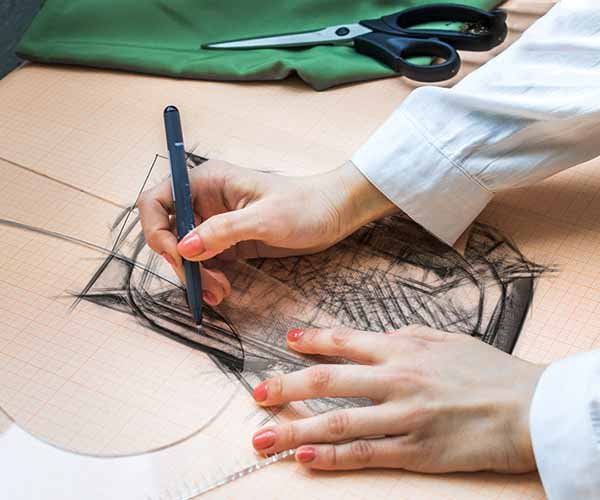
Pattern Making & Structure Mapping
Our internal pattern department creates:
- Panel cutting layout
- Seam allowance mapping
- Reinforcement positioning
- Strap anchor extension mapping
- Bottom board placement
Accurate pattern development ensures:
- Symmetry control
- Panel alignment
- Stable shape retention
- Reduced material waste
Pattern confirmation is completed before sample cutting.
Material Planning & Coordination
Material planning includes:
- Outer fabric selection (Polyester / Nylon / Canvas / PU / Microfiber)
- Lining selection (190T / 210D / 420D)
- Webbing width & density
- Hardware type & thickness
- EVA / PE / PP reinforcement selection
Through coordination with Lovrix, fabric, webbing, and structural material supply are aligned with production planning, reducing material waiting time.
Sample Development Workflow
Standard sample timeline:
- 5–7 days (regular bags)
- 7–15 days (complex structure or custom hardware)
Sample process includes:
- Fabric cutting
- Logo testing
- Panel assembly
- Padding insertion
- Strap installation
- Structural reinforcement
- Internal inspection
Samples are reviewed for:
- Structure stability
- Strap strength
- Zipper alignment
- Logo position accuracy
Structural Optimization After Sample
After initial sample review, common adjustments include:
- Increasing strap width
- Upgrading zipper grade
- Adding bottom reinforcement
- Adjusting compartment layout
- Modifying padding thickness
Szoneier provides engineering-based recommendations rather than purely cosmetic adjustments.
Revision samples usually require 3–5 days.
Cost Engineering During Development
Product development includes cost evaluation based on:
- Fabric consumption per unit
- Labor complexity
- Hardware selection
- Logo method
- Reinforcement material usage
If cost reduction is required, we evaluate:
- GSM adjustment
- Compartment simplification
- Hardware optimization
All adjustments are made while maintaining structural integrity.
Engineering Documentation for Mass Production
Before bulk production begins, Szoneier finalizes:
- Fabric specification
- Webbing width & material
- Padding thickness
- Zipper grade
- Stitch density
- Reinforcement method
This documentation ensures production consistency and repeat order stability.
Development Support for Different Bag Categories
Szoneier supports development across:
- Backpacks
- Messenger bags
- Tote bags
- Travel & duffel bags
- Cooler bags
- Tool bags
- Cosmetic organizers
Each category follows different structural logic, and development strategy is adjusted accordingly.
Timeline Stability
Development + production timeline:
| Stage | Estimated Duration |
|---|---|
| Sampling | 5–7 days |
| Revision | 3–5 days |
| Production | 25–30 days |
Structured workflow ensures predictability.
Long-Term Product Expansion Support
Many clients expand from one product to multiple categories.
Szoneier supports:
- Backpack + Messenger series
- Travel + Duffel series
- Tote + Cosmetic set
- Cooler + Outdoor accessory series
Material coordination with Lovrix improves cross-category fabric continuity.
Quality Control System for Bag Manufacturing
Hardware selection affects long-term durability.
Incoming Material Inspection
Before production:
- Fabric GSM measured (±5% tolerance)
- Color consistency checked
- Webbing width verified
- Zipper smoothness tested
- Padding thickness confirmed
Material inconsistency is addressed before cutting begins.
Lovrix’s material coordination helps stabilize fabric and webbing quality across batches.
In-Line Production Inspection
During sewing:
- Stitch density monitored
- Strap anchor reinforcement checked
- Zipper alignment verified
- Structural padding placement confirmed
High-stress areas are inspected carefully.
Reinforcement Verification
Critical checkpoints include:
- Shoulder strap attachment
- Handle stitching
- Bottom seam
- D-ring anchor
Bar-tack stitching and cross reinforcement patterns are confirmed during in-line inspection.
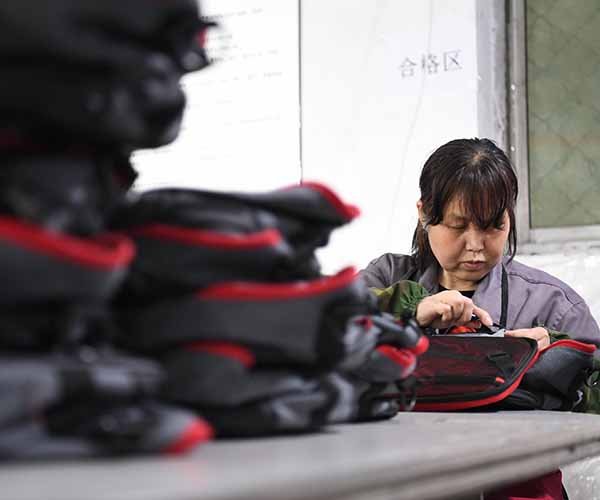
Final 100% Inspection
Before packing:
- Zipper open-close test
- Strap pull test (manual force check)
- Logo alignment confirmation
- Lining cleanliness
- Overall appearance check
Each unit is inspected individually.
Export & Carton Inspection
Before shipment:
- Carton strength verified
- Quantity double counted
- Label placement confirmed
- Barcode checked
For Amazon shipments, carton compliance is verified before dispatch.
Structured Production Workflow
How Szoneier Controls Every Stage
Step 1
Order Confirmation & Production Planning
Once the final sample is approved:
- Technical specifications are locked
- Fabric and hardware list is confirmed
- Production schedule is created
- Sewing line allocation is arranged
Specification lock includes:
- Fabric type and GSM
- Webbing width
- Zipper gauge
- Padding thickness
- Reinforcement mapping
This prevents mid-production changes.
Step 2
Material Preparation (3–5 Days)
Material preparation includes:
- Fabric allocation
- Webbing cutting
- Hardware arrangement
- EVA / PP board preparation
- Lining confirmation
Through coordination with Lovrix:
- Polyester and nylon fabric preparation is stabilized
- Canvas weaving continuity is maintained
- Webbing tensile strength is consistent
- Structural materials are aligned with schedule
Incoming material inspection is completed before cutting begins.
Step 3
Cutting Process (3–5 Days)
Cutting is a precision stage.
Process includes:
- Fabric spreading
- Panel cutting
- Strap cutting
- Padding cutting
Key control points:
- Panel symmetry
- Fabric grain alignment
- Padding size accuracy
Incorrect cutting leads to shape distortion. Therefore, pattern mapping is strictly followed.
Step 4
Logo Processing (3–5 Days)
Logo application is performed before final assembly.
Depending on method:
- Screen printing
- Embroidery
- Heat transfer
- Patch stitching
- Metal plate installation
Logo placement is verified against approved sample.
Misalignment is corrected before sewing stage.
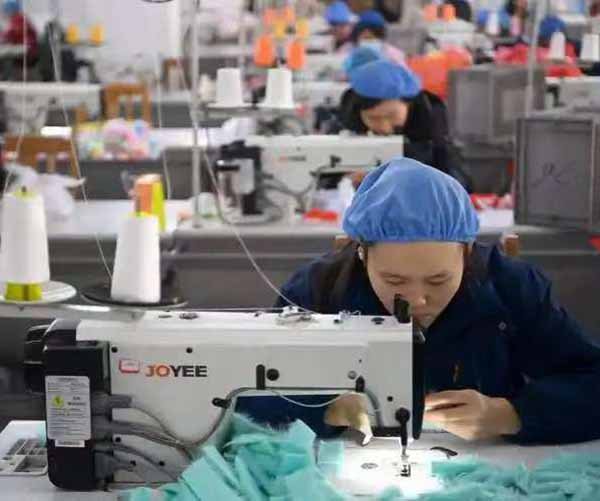
Step 5
Sewing Assembly (8–12 Days)
This is the core production stage.
Assembly sequence typically includes:
- Outer panel stitching
- Pocket construction
- Lining assembly
- Padding insertion
- Strap anchoring
- Bottom reinforcement placement
- Zipper installation
- Final shape closure
Reinforcement zones receive:
- Bar-tack stitching
- Cross stitching
- Double-layer seam allowance
Sewing lines are supervised to ensure stitch density consistency.
Step 6
In-Line Quality Control
During sewing:
- Strap anchor strength checked
- Zipper alignment tested
- Padding placement confirmed
- Bottom seam reinforcement verified
QC staff inspect high-stress areas continuously rather than only at final stage.
Step 7
Structural Verification
Before final inspection:
- Manual strap pull test performed
- Zipper open-close cycle tested
- Bottom rigidity checked
- Panel alignment verified
This reduces structural defect risk before packing.
Step 8
Final 100% Inspection (2–3 Days)
Every unit undergoes inspection before packing.
Inspection includes:
- Zipper smoothness
- Logo alignment
- Stitch quality
- Lining cleanliness
- Hardware attachment
- Overall appearance
Units failing inspection are reworked before shipment.
Step 9
Packing & Carton Inspection (2–3 Days)
Packing includes:
- Individual polybag packing
- Hang tag attachment
- Barcode labeling
- Carton loading
Carton inspection verifies:
- Quantity count
- Carton strength
- Label placement
- Shipping mark accuracy
For Amazon programs, FNSKU and carton labeling compliance are confirmed.
Step 10
Shipment Coordination
Supported trade terms:
- EXW
- FOB
- DDP
Shipping methods:
- Express
- Air freight
- Sea freight
DDP is frequently used for e-commerce shipments.
Balance payment is confirmed before dispatch.

Bag Manufacturing Case Studies
Over the past 18+ years, Szoneier has produced various bag categories for brands, distributors, and corporate programs. Below are three representative project types that reflect our production capability and workflow control.
Laptop Backpack Program (USA Market)
Project Overview
- Category: 15.6-inch Laptop Backpack
- Quantity: 2,000 pcs
- Target retail price: USD 49–59
- Delivery requirement: DDP shipment to US warehouse
Structure Configuration
- 600D polyester exterior
- 8mm EVA laptop compartment padding
- EVA padded back panel
- 38mm reinforced shoulder straps
- #8 zipper
- Double-layer bottom reinforcement
Execution Timeline
- Sample development: 6 days
- Sample revision: 4 days
- Production: 28 days
- DDP shipping: 22 days
Material coordination with Lovrix ensured fabric GSM stability and strap webbing consistency across the full production batch.
Client placed a repeat order within 90 days.


Canvas Tote Collection (EU Lifestyle Brand)
Project Overview
- Category: 16oz Canvas Tote
- Quantity: 3,500 pcs
- Seasonal color variation: 3 colors
- Leather patch branding
Material & Structure
- 16oz cotton canvas
- Cotton webbing handle
- Reinforced bottom stitching
- Debossed PU leather logo patch
Lovrix coordinated canvas weaving and dyeing for the three seasonal colors, helping maintain color consistency between production batches.
Production Timeline
- Sampling: 7 days
- Production: 30 days
All units underwent 100% final inspection before shipment.
Insulated Cooler Bag (Australia Retail Chain)
Project Overview
- Category: 12L Insulated Cooler Bag
- Quantity: 1,500 pcs
- Leak-resistant requirement
- Target use: Outdoor & picnic retail
Structure & Material
- 600D polyester outer shell
- EPE foam insulation
- PEVA leak-proof lining
- Reinforced carry handle
- #8 zipper
Production Focus
- Insulation thickness verification
- Leak resistance check
- Zipper durability test
Production completed within 27 days. Repeat order confirmed the following season.

Why Choose Szoneier as Your Bag Manufacturer in China
Choosing the right bag manufacturer affects product durability, cost stability, repeat order consistency, and delivery reliability.
With over 18 years of experience in bag manufacturing, Szoneier operates as an integrated production system rather than a simple assembly workshop.
18+ Years of Manufacturing Experience
Szoneier has been manufacturing bags for more than 18 years, covering categories such as:
- Backpacks
- Messenger bags
- Tote bags
- Travel & duffel bags
- Cooler bags
- Tool & utility bags
- Cosmetic & organizer bags
Long-term manufacturing experience means:
- Structural engineering knowledge
- Reinforcement mapping accuracy
- Zipper grade matching logic
- Padding density optimization
- Production planning discipline
Experience reduces structural mistakes and increases repeat order reliability.
Integrated Material Coordination
Material instability is one of the biggest risks in bag production.
Szoneier works closely with Lovrix to coordinate:
- Polyester fabric (300D–900D)
- Nylon fabric (210D–1680D)
- Canvas (8oz–16oz)
- Webbing production
- PU & microfiber leather
- EVA / PP reinforcement materials
This improves:
- GSM consistency
- Dye lot continuity
- Webbing tensile strength stability
- Reduced raw material waiting time
Material integration supports stable 25–30 day production timelines.
Low MOQ — 50 Units Per Design
Many factories require 300–1000pcs minimum.
Szoneier supports MOQ starting from 50pcs per design.
This allows:
- New product testing
- Limited seasonal releases
- Small retail programs
- Corporate custom projects
Even small production runs follow the same quality control workflow as larger orders.
Fast Sampling & Structured Development
Sampling timeline:
- 5–7 days (standard models)
- 7–15 days (complex structure or custom hardware)
Internal sample workshop enables:
- Rapid pattern adjustments
- Logo positioning corrections
- Reinforcement improvement
This reduces development delays and miscommunication.
Structured Production Workflow (25–30 Days)
Mass production follows:
- Material preparation
- Cutting
- Logo processing
- Sewing assembly
- In-line QC
- Final 100% inspection
Production time: 25–30 days after sample approval.
Structured workflow improves predictability.
100% Pre-Shipment Inspection
Before shipment, every bag undergoes:
- Zipper smoothness check
- Strap anchor inspection
- Stitch density verification
- Logo alignment inspection
- Overall appearance confirmation
Units that do not meet standards are reworked before packing.
This reduces post-shipment disputes.
Engineering-Based Approach
Szoneier does not rely only on visual design.
We evaluate:
- Load capacity
- Strap width
- Zipper gauge
- Bottom reinforcement
- Padding thickness
For example:
- Heavy-duty tool bags use #10 zipper
- Travel bags use double-layer bottom
- Laptop bags use 5–8mm EVA padding
Engineering logic supports long-term durability.
Repeat Order Stability
For repeat production, we retain:
- Fabric specification
- Webbing width record
- Padding thickness
- Reinforcement mapping
- Hardware grade
Material coordination with Lovrix supports continuity in fabric and webbing supply.
This reduces variation between production batches.
Transparent Communication & Export Experience
Communication methods:
- Video calls
English-speaking team ensures direct communication.
Supported trade terms:
- EXW
- FOB
- DDP
Shipping methods:
- Express
- Air
- Sea
Payment methods:
- T/T
- PayPal
- Credit card
- Alibaba Trade Assurance
Factory visits and video tours are supported.
Long-Term Partnership Focus
Szoneier supports expansion across categories:
- Backpack line → Messenger series
- Tote collection → Cosmetic extension
- Travel bag → Accessory expansion
Integrated material coordination and retained production records enable stable scaling.
Ready To Elevate Your business Line?
Begin your journey with Szoneier bag now. We can assist in wholesaling or customizing Luggage and bags at the most competitive prices to enhance your brand.
Frequently Asked Questions About Working with a Bag Manufacturer in China
1. What is your MOQ?
Our MOQ is 50 pcs per design across most bag categories. Even small production runs follow the same development and inspection workflow.
2. How long does sampling take?
Standard samples require 5–7 days, while complex structures or custom hardware may require 7–15 days.
3. What is the mass production lead time?
Mass production usually takes 25–30 days after sample approval and deposit confirmation.
4. What fabrics do you use?
We use polyester, nylon,cotton, canvas, neoprene,PU leather, microfiber leather, and insulated materials depending on category. Lovrix coordinates fabric supply to maintain consistency.
5. How do you ensure strap durability?
Straps are reinforced using bar-tack and cross stitching, and internal anchoring extends beyond surface stitching to increase strength.
6. Do you provide DDP shipping?
Yes, DDP is available and commonly used for e-commerce shipments.
7. How do you manage repeat orders?
We retain material specifications, padding thickness, hardware details, and production records to ensure continuity. Lovrix helps maintain fabric and webbing consistency.
8. Can we visit your factory?
Yes, on-site visits and video tours are supported.
9. Do you support private label?
Yes, we support private label and OEM production including packaging and labeling customization.
10. How is quality controlled?
Quality control includes incoming material inspection, in-line inspection, and 100% pre-shipment inspection.
Work with a Reliable Bag Manufacturer in China
If you are looking for:
- Low MOQ (50pcs)
- Fast sampling (5–7 days)
- 25–30 day production
- Stable material supply
- 100% pre-shipment inspection
- Flexible shipping options
Szoneier is ready to support your next bag project.
Contact us to:
- Request quotation
- Start sampling
- Schedule factory tour
- Discuss long-term cooperation
If you have any questions or need a quote, please leave us a message. Our experts will respond within 12 hours to assist you in selecting the ideal fashion products tailored to your needs.
Exclusive Offer for You
As a first-time buyer, you’ll receive a Free bags Color Card to help you select the right material and shade. Once confirmed, we’ll also provide a Free Sample made by our factory—no extra cost.
For our regular partners, we send New Color Charts multiple times a year—completely free—to support your latest collections.
