Skip to content
Pet travel bags used to be treated as simple utility products: a zippered box, a mesh window, a handle, and enough room for a small dog or cat. That market is changing quickly. Today, pet owners want carriers that feel safer, cleaner, more breathable, easier to carry, and more stylish in public. A pet carrier is no longer only about moving an animal from one place to another. It has become part of the owner’s daily lifestyle, travel routine, and emotional confidence.
The key trends in pet travel bags include soft-sided airline-ready carriers, backpack pet carriers, expandable structures, better ventilation, washable interiors, stronger escape-proof details, lighter materials, sustainable fabric options, premium branding, and more customized OEM/ODM development. Brands and buyers now need to think beyond appearance and focus on real pet comfort, owner convenience, safety, sizing accuracy, material performance, and bulk production consistency.
The most interesting part is that a successful pet travel bag must satisfy two users at once: the pet and the owner. The pet needs airflow, stability, comfort, and security. The owner needs convenience, confidence, easy cleaning, and a product that looks good enough to carry through airports, cafés, cars, hotels, and city streets. That double-user logic is exactly why this category is becoming more technical, more design-driven, and more valuable for serious pet product brands.
What Is Driving Pet Bag Growth?

Pet bag growth is being driven by pet humanization, more pet-friendly travel, stronger demand for comfort and safety, and the rise of pet products as lifestyle accessories. Buyers are not only looking for a carrier that holds a pet; they want a product that feels secure, looks good, cleans easily, and fits real travel situations.
Pet Humanization
Pet owners now treat dogs and cats as family members, and that emotional shift has changed how pet travel bags are designed. In the past, a carrier only needed to be large enough, cheap enough, and easy enough to close. Today, owners ask more detailed questions. Can my pet breathe comfortably? Will the bottom stay flat? Is the mesh strong enough? Can my cat scratch through it? Does the bag look too cheap when I carry it in public?
This is why comfort features have moved from “nice to have” to “expected.” A padded removable mat, breathable mesh panels, soft inner lining, smooth zipper movement, and stable bottom board can all influence the buying decision. These details reduce stress for the pet and reassure the owner that the carrier is not just a container, but a safer travel space.
For brands, this means pet travel bags should be developed around real pet behavior. Cats may scratch mesh when nervous. Small dogs may push against side panels. Owners may carry the bag through airports, stairs, parking lots, taxis, cafés, and crowded streets. A product that performs well in these small daily moments is more likely to earn better reviews, lower returns, and stronger repeat purchases.
Travel Lifestyle
Pet-friendly travel has become more common across short trips, weekend getaways, road travel, hotel stays, air travel, and daily urban movement. Many buyers do not want a carrier that only works for one situation. They want one bag that can handle a car ride in the morning, a café visit in the afternoon, and a train or flight later in the week.
That multi-scenario use pushes design toward lighter weight, better organization, and more flexible carrying options. A modern pet travel bag may need a shoulder strap, top handle, luggage sleeve, side pocket, collapsible bowl storage, removable mat, and breathable panels. These are not decorative features. They solve real owner problems.
The best pet travel bags usually balance two needs. The pet needs a stable, breathable, calm space. The owner needs a bag that is easy to carry, clean, store, and match with daily outfits or luggage. This balance is one of the strongest reasons the category is moving closer to travel gear, backpacks, soft luggage, and lifestyle accessories.
Channel Demand
Pet travel bags are growing because they fit multiple sales channels. Amazon sellers need clear feature points, accurate sizing, strong photos, and review-friendly performance. DTC brands need design language, lifestyle storytelling, and visible differentiation. Retail buyers need reliable packaging, barcode labels, stable dimensions, and consistent bulk quality.
Different channels create different product priorities. Online buyers care about pet size guidance, real product dimensions, weight range, customer reviews, and return risk. Retail buyers care more about shelf appearance, hangtags, packaging strength, carton consistency, and easy consumer understanding. Importers and wholesalers usually focus on MOQ, material availability, carton efficiency, price range, and repeat order stability.
A pet travel bag that works across channels must be planned carefully from the beginning. Size, packaging, materials, logo placement, structure, and QC standards should not be treated as final-stage details. They directly affect listing accuracy, shipping cost, customer satisfaction, and long-term brand trust.
Product Opportunity
For experienced soft goods manufacturers, pet travel bags combine knowledge from several bag categories: travel bags, backpacks, baby bags, outdoor bags, soft coolers, cosmetic pouches, and small accessories. The difference is that a pet carrier carries a living animal, so the tolerance for weak structure is much lower.
A standard tote bag may survive with a simple bottom and basic zipper. A pet carrier needs stronger reinforcement, better airflow, safer openings, and more thoughtful interior construction. This creates an opportunity for brands that want to develop higher-value products instead of competing only on price.
The real opportunity is not just “making another pet carrier.” It is creating a product that reduces the owner’s anxiety. When a customer feels the bag is stable, breathable, washable, escape-resistant, and well-made, the product becomes easier to recommend, review, and repurchase.
| Growth Factor | Buyer Expectation | Product Impact |
|---|---|---|
| Pet humanization | Higher comfort and safety | Padded mat, stable base, breathable mesh |
| Pet-friendly travel | Multi-scenario use | Shoulder strap, luggage sleeve, side pockets |
| E-commerce reviews | Lower return and complaint risk | Accurate size, stronger zippers, better QC |
| Lifestyle branding | Better appearance and identity | Color systems, logo patches, premium trims |
| Retail expansion | Shelf-ready and barcode-ready product | Hangtags, cartons, packaging consistency |
Which Pet Bags Are Trending?

The main trending pet travel bags are soft-sided carriers, backpack carriers, expandable carriers, and wheeled carriers. Each type serves a different travel habit, pet size, and customer lifestyle. Brands should not choose a style only because it looks popular; they should match the structure to the user’s actual travel scenario.
Soft Carriers
Soft-sided carriers remain one of the most practical pet travel bag categories because they are lightweight, flexible, and easier to store than hard crates. They are especially popular for small dogs and cats that travel by car, train, or airplane cabin. A soft carrier can usually fit tighter spaces more easily, while still providing a controlled space for the pet.
The main technical challenge is structure. If the side walls are too soft, the bag may collapse inward. If the bottom panel is too thin, the pet may feel unstable when lifted. If the mesh is too weak, scratching or pushing can damage it. A well-developed soft carrier often uses semi-rigid piping, reinforced seams, a removable base board, and mesh panels placed on at least two sides.
For brands, soft carriers are a strong starting point because they allow many design variations. A brand can create a minimalist travel version, an outdoor-style version, a premium fashion version, or an affordable everyday version. The key is to make the bag look clean while keeping the structure strong enough for real use.
Backpack Carriers
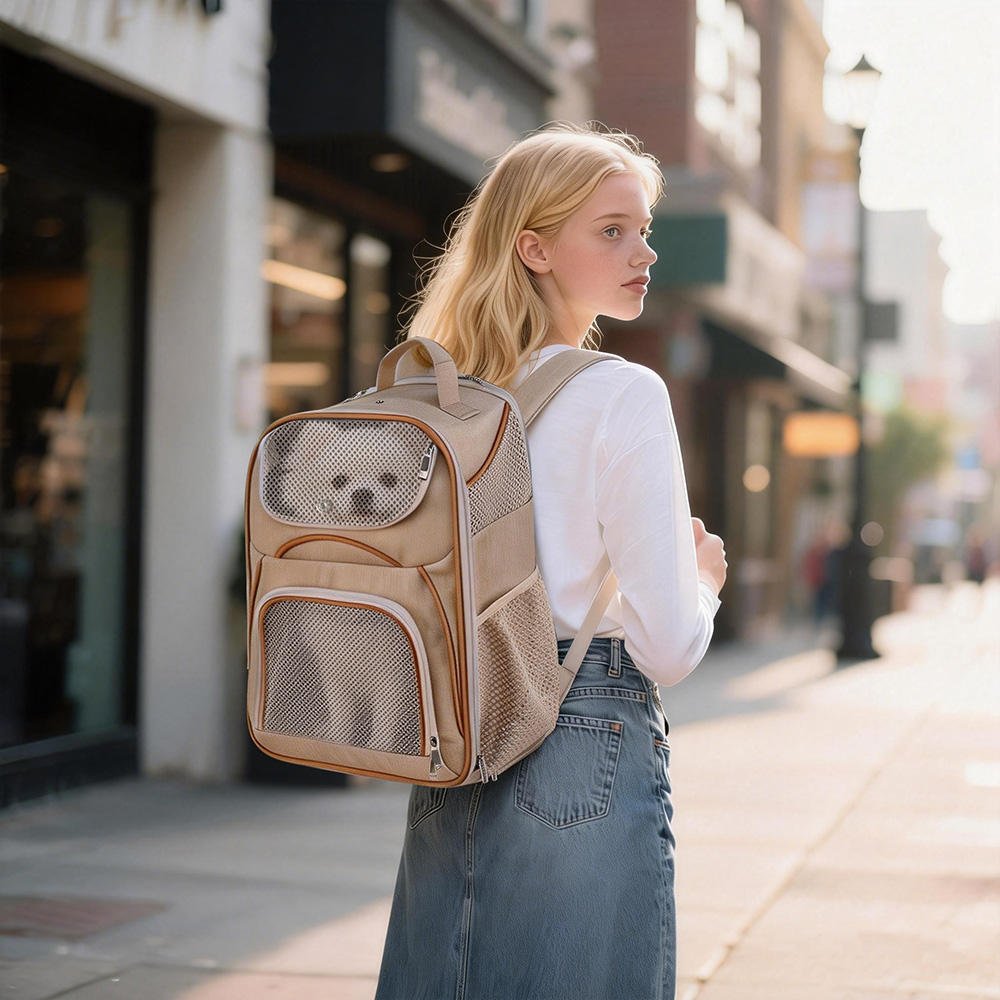
Backpack pet carriers are growing because they match urban lifestyles. Owners want hands-free movement when walking, cycling, hiking, commuting, or moving through airports. Compared with a one-shoulder carrier, a backpack can spread weight more evenly across the body, especially for pets in the 4–8 kg range.
A backpack carrier must be designed around both pet posture and human comfort. The shoulder straps need padding and reinforcement. The back panel should support the carrier without pressing into the pet. The base must remain flat while the owner is walking. Ventilation should not be blocked by the wearer’s body.
Some backpack carriers fail because they focus too much on appearance. A clear bubble window may look attractive online, but if airflow is weak or heat builds up, the user experience suffers. Mesh placement, back-panel spacing, internal room, base support, and shoulder strap angle are more important than visual novelty.
Expandable Carriers
Expandable carriers are popular because they offer compact carrying during movement and more resting room during waiting. This is useful for airports, hotel rooms, road trips, camping, and long transfer times. The expandable section is often made with mesh panels and zipper tracks that open to create a wider side room.
The selling point is easy to understand: the bag travels small but rests bigger. This gives brands strong visual content for product pages, short videos, and comparison images. However, expansion adds complexity. More zippers mean more possible failure points. More mesh means more sewing control is needed. The expanded section must hold shape without sagging badly.
For bulk production, expandable carriers need careful sample approval. The zipper path should open smoothly. The folded section should not create uncomfortable pressure inside the bag. The mesh should be strong enough for repeated folding and pet movement. The more complex the structure, the more important the factory’s sampling and QC control become.
Wheeled Carriers
Wheeled pet carriers serve a more specific but valuable market. They are useful for airports, older owners, heavier small pets, and longer walking distances. A wheeled carrier can reduce shoulder strain and make travel easier for customers who do not want to carry the full pet weight.
The challenge is movement quality. Small wheels may vibrate on rough ground. A narrow base may tip over. A weak telescopic handle may loosen after repeated use. For pet comfort, the rolling angle and base stability are critical. The pet should not feel like it is sliding or bouncing inside the carrier.
Wheeled carriers often sit at a higher price point because they require more components: wheels, frame, handle, reinforced base, and more complex packaging. They are better suited for brands targeting premium travel, airport use, or older pet owners who value convenience over the lowest price.
| Bag Type | Typical Pet Weight Range | Best Scenario | Key Risk to Control |
|---|---|---|---|
| Soft-sided carrier | 3–8 kg | Cabin, car, short trips | Base collapse, weak mesh |
| Backpack carrier | 3–10 kg | Walking, commuting, hiking | Poor weight balance |
| Expandable carrier | 3–8 kg | Airports, hotels, road trips | Zipper and mesh durability |
| Wheeled carrier | 5–12 kg | Airports, long walking distance | Tipping, wheel vibration |
How Are Airline Rules Shaping Design?

Airline rules are shaping pet travel bags around flexible size, under-seat fit, ventilation, leak-resistant bottoms, and secure closures. “Airline-approved” should be used carefully because rules differ by airline and aircraft. Brands need accurate dimensions, realistic pet size guidance, and samples tested against the target travel scenario.
Size Limits
Airline cabin pet carriers usually need to fit under the seat in front of the passenger. This requirement affects the full structure of the bag. A carrier may look spacious in lifestyle photos, but if it is too tall or too rigid, it may not fit in real cabin conditions.
Many soft carriers are designed around compact dimensions, often close to 17–18 inches long, 10–12 inches wide, and 8–11 inches high, depending on the target airline and market. These numbers should be treated as planning references, not universal rules. Brands selling internationally should clearly remind customers to confirm airline requirements before travel.
From a manufacturing viewpoint, size control is important. Even a 1 cm difference in height can affect under-seat fit. Fabric thickness, piping, foam, lining, and base board design can all change final dimensions. The approved sample should be measured carefully, and bulk production should follow the same measurement standard.
Flexible Structure
Soft structure is valuable because it allows the carrier to compress slightly when placed under a seat. However, flexibility must not mean weakness. A good airline-style carrier should have enough structure to stay open for the pet, while still having some give on the top and sides.
This is why many brands use semi-rigid construction. Piping, reinforced side seams, structured panels, and removable bottom boards can keep the shape stable. At the same time, softer upper panels may help the bag fit tighter spaces. The balance between firmness and flexibility is one of the hardest parts of airline carrier design.
A carrier that is too rigid may fail fit tests. A carrier that is too soft may collapse onto the pet. During sampling, the bag should be tested empty, with pet-weight loading, and after compression. This helps identify whether the structure returns to shape or deforms permanently.
Ventilation Access
Airline-style pet carriers need strong ventilation and practical access. Mesh panels on two or more sides are common because they improve airflow and allow the pet to see outside. However, mesh should not be placed randomly. Too much mesh can reduce privacy and weaken structure. Too little mesh can make the carrier feel hot and closed.
Top entry is useful for cats or nervous pets because owners can place the animal inside more easily. Side entry is useful for dogs that walk into the carrier. Dual entry improves convenience but adds cost and more zipper points. For travel carriers, zipper quality and opening security are just as important as mesh area.
A practical design often combines side mesh, top mesh, one main side opening, and one smaller top access. The pet gets airflow and visibility, while the owner gets easier handling during travel.
Claim Control
The phrase “airline-approved” can help conversion, but it should not be used without limits. Since airline rules vary, a safer approach is to say “designed for many airline cabin travel needs” or “check your airline before flying,” while providing clear outer dimensions.
This protects both the brand and the customer. A customer who buys a carrier expecting universal approval may blame the product if one airline rejects it. Clear communication reduces complaints and returns. Product pages should include outer dimensions, inner space, suggested pet weight, carrier weight, ventilation details, and whether the top is flexible.
For B2B buyers, this means packaging, hangtags, and online listings should use the same size information as the approved sample. Mismatched claims create avoidable risk.
| Design Item | Practical Reference | Why It Matters |
|---|---|---|
| Outer length | Often around 17–18 in for cabin-style carriers | Affects under-seat fit |
| Outer height | Often around 8–11 in depending on airline target | Most sensitive cabin dimension |
| Carrier weight | Commonly about 1–2.5 kg depending on structure | Affects owner comfort |
| Ventilation sides | Usually 2–4 mesh zones | Supports airflow and visibility |
| Bottom support | Removable board or padded base | Keeps pet stable when lifted |
Are Comfort and Safety Core Trends?

Comfort and safety are now core trends because pet owners judge a travel bag by how stable, breathable, secure, and clean it feels in real use. Strong pet bags combine a flat base, padded mat, reinforced mesh, secure zippers, safe openings, comfortable carrying points, and easy-clean materials.
Stable Base
The base is one of the most important parts of a pet travel bag. If the base bends badly when lifted, the pet feels unstable and may become anxious. Owners also notice this quickly because the whole bag feels cheap or unsafe.
A common solution is a removable bottom board with a soft pad cover. The board provides shape, while the pad adds comfort. For better products, the base may use PP board, PE board, EVA layer, foam, or a composite structure. The correct choice depends on target price, weight, folding needs, and cleaning requirements.
The base should be tested with realistic pet weight. A bag that looks flat when empty may sag under 6–8 kg of load. Reinforcement around the base corners and side walls also matters because these areas carry pressure when the bag is lifted. A stable base is not only a comfort feature; it is one of the strongest signs of product quality.
Secure Openings
Escapes are one of the worst possible failures for a pet carrier. Cats and nervous small dogs can push, scratch, bite, or squeeze through weak openings. For this reason, zipper quality, zipper end finishing, mesh attachment, and inner safety leash design are critical.
Lockable zipper pullers can reduce accidental opening. Zipper garages can hide small gaps at the end of the zipper track. Reinforced stitching around entry points helps prevent seam tearing. An inner leash clip can add security, but it should be short enough to avoid tangling and long enough to avoid discomfort.
Security should feel simple for the owner. If the closure system is too complicated, customers may use it incorrectly. Good safety design is strong, clear, and easy to operate. In bulk production, zipper ends, slider movement, seam strength, and puller quality should be checked carefully.
Breathability
Breathability affects comfort, safety, and owner confidence. A pet inside a carrier needs airflow from multiple directions, especially during warm weather, airport waiting, or car travel. Mesh panels also help pets see the owner, which can reduce stress.
But breathability must be balanced with structure and privacy. Some pets feel calmer with partial coverage instead of being exposed on every side. This is why flap designs, partial mesh windows, and layered ventilation are useful. A top mesh panel can add airflow, while side panels provide visibility.
Mesh quality should match the target pet. Cats may require stronger scratch-resistant mesh. Small dogs may need flexible but durable mesh. Cheap mesh can stretch, tear, or deform after limited use, creating both appearance and safety problems.
Carry Comfort
Comfort is not only for the pet. The owner must also carry the bag comfortably. Shoulder straps should be wide enough, padded where needed, and stitched into reinforced points. Handles should not cut into the hand. A luggage sleeve can make airport travel easier. For backpack carriers, shoulder strap angle and back-panel ventilation are especially important.
Many negative reviews come from owner discomfort: straps digging into the shoulder, bag tilting forward, handles feeling weak, or the pet weight pulling the carrier out of shape. These are engineering issues, not just design issues.
During development, a loaded carry test is useful. Put weight inside the sample and carry it by the handle, shoulder strap, and luggage sleeve. This simple test can reveal weak points before bulk production. It also helps brands decide whether strap width, padding thickness, stitching reinforcement, or base support need adjustment.
How Do Materials Affect Trends?
Materials affect pet travel bag performance, cost, comfort, cleaning, weight, appearance, and sustainability. Common choices include polyester, nylon, Oxford fabric, canvas, PU, TPU-coated fabric, mesh, lining fabric, foam, webbing, zippers, and base boards. The best material choice depends on the travel scenario and brand positioning.
Outer Fabric
Polyester is widely used because it offers stable cost, broad color availability, and acceptable durability for everyday pet carriers. Nylon is often lighter and smoother, with good strength, but may cost more depending on specification. Oxford fabric is popular for travel-style carriers because it gives a stronger, more structured look.
Canvas can work well for lifestyle brands, especially those targeting a natural or casual style. However, canvas may absorb dirt more easily and usually needs treatment if water resistance is required. PU or coated fabrics can give a premium or wipe-clean appearance, but they should be tested for odor, cracking, and scratch resistance.
The right fabric is not always the most expensive one. A low-cost fabric used correctly can perform better than a premium-looking material used in the wrong structure. Material choice should match pet behavior, price point, sales channel, cleaning expectations, and the brand’s visual identity.
Mesh Quality
Mesh is a functional material, not just a window. It controls airflow, visibility, scratch resistance, and user trust. A weak mesh panel can become the first failure point in a pet carrier. This is especially true for cats, which may scratch when stressed.
Common mesh choices include standard polyester mesh, reinforced mesh, sandwich mesh, and stronger woven mesh. The mesh opening size should allow airflow without making the panel too easy to tear. The edge stitching around the mesh is just as important as the mesh itself. If the seam is weak, the panel may separate from the fabric even if the mesh is strong.
For premium carriers, mesh color also affects appearance. Black mesh hides dirt and looks clean, while lighter mesh may feel softer visually but show stains more easily. Brands should decide mesh type and color based on pet behavior, product positioning, and expected use intensity.
Cleaning Materials
Easy-clean materials are becoming more important because pet products naturally face fur, smell, saliva, dirt, food crumbs, and accidents. A removable washable pad is one of the most practical features. Wipe-clean lining can also improve daily usability, especially for road trips and longer travel.
The bottom area should receive special attention. A leak-resistant bottom or coated lining can protect the outer fabric and reduce cleaning stress. However, coatings should not create strong odor or stiffness that makes the pet uncomfortable.
Brands should be realistic with claims. “Water-resistant” does not mean fully waterproof. “Washable” should clarify whether the whole bag or only the removable mat can be washed. Clear claims reduce customer disappointment and help protect product reviews.
Cost Balance
Material cost is only one part of the final price. A pet travel bag with multiple mesh panels, padded straps, removable mat, reinforced base, lockable zippers, inner leash, luggage sleeve, and custom logo will naturally cost more than a simple carrier. The number of sewing steps also increases labor cost.
For B2B buyers, the smartest approach is to define must-have features and optional upgrades. For example, a standard version may use polyester outer fabric, standard mesh, removable mat, and woven label. A premium version may use Oxford fabric, reinforced mesh, lockable zippers, rubber patch, luggage sleeve, and custom packaging.
A good factory should help buyers balance quality, price, and use scenario. Not every product needs the highest-grade material, but every product needs the right material for its promise.
| Material / Component | Common Option | Practical Benefit | Cost Impact |
|---|---|---|---|
| Outer fabric | 600D polyester / Oxford | Durable everyday structure | Medium |
| Mesh | Reinforced polyester mesh | Better airflow and scratch resistance | Medium |
| Lining | PU-coated polyester | Easier wipe-clean interior | Medium |
| Base support | PP board + foam pad | Better pet stability | Low–Medium |
| Zipper | No.5 nylon or lockable zipper | Smoother, safer opening | Medium |
| Strap webbing | 25–38 mm polyester webbing | Better carry comfort | Low–Medium |
| Logo | Woven label / rubber patch | Brand identity | Low–Medium |
How Can Brands Customize Pet Bags?
Brands can customize pet travel bags through size, structure, fabric, mesh, lining, padding, zipper, handle, shoulder strap, pocket layout, color, logo, labels, hangtags, packaging, and carton requirements. Good customization should improve real use, not only change the surface appearance.
Size and Structure
Size customization should begin with the target pet, not the product photo. A bag for small cats, toy poodles, French bulldog puppies, or heavier small dogs may require different length, width, height, base support, and ventilation layout. Pet weight alone is not enough; body length and sitting height also matter.
Structure should match the use case. A cabin-style carrier needs flexible height and strong ventilation. A backpack carrier needs weight balance and back support. An expandable carrier needs smooth zipper movement and stable side panels. A wheeled carrier needs frame strength and rolling stability.
Buyers should provide target dimensions, pet weight range, reference samples, expected sales channel, target market, and packaging needs before sampling. This helps the factory avoid building a sample that looks good but fails in real use.
Logo and Branding
Logo customization should fit the material and product positioning. Woven labels are clean and flexible for most pet carriers. Rubber patches work well for outdoor or sporty designs. Embroidery can look premium but may not suit coated fabrics or high-stress folding areas. Heat transfer works for detailed graphics but should be tested for adhesion. Metal plates can elevate appearance but should be placed away from pet-contact areas.
Branding also includes zipper pullers, webbing color, lining color, care labels, hangtags, packaging, and carton marks. A strong pet travel bag brand does not rely on a large logo. It uses consistent details across the whole product.
For series development, keeping the same logo patch, zipper puller, label style, webbing color, and packaging system across multiple products can make the brand look more professional and easier to recognize.
Pocket Layout
Pocket layout is often underestimated. Pet owners carry more than the pet: treats, waste bags, vaccination papers, collapsible bowls, wipes, leashes, phones, keys, and sometimes a tracker. A side pocket, front pocket, or hidden document sleeve can make the bag much more useful.
However, too many pockets add cost and can make the bag bulky. The best pocket design depends on use. A flight carrier may need document storage and a luggage sleeve. A city carrier may need quick-access treat storage. A road-trip carrier may need a larger side pocket for wipes and bowls.
Pockets should not block ventilation or create pressure points inside the bag. They should also be easy to sew consistently in bulk production. A pocket that looks useful in photos but is difficult to access in real travel may not add much value.
Packaging Details
Packaging matters more than many buyers realize. E-commerce sellers need carton protection and compact packing to reduce shipping cost. Retail buyers may need hangtags, barcode labels, product cards, display boxes, or shelf-ready packaging. Premium brands may want dust bags, custom paperboard packaging, or branded instruction cards.
The packing method must not damage the carrier. Over-folding can crease coated fabric, deform base boards, or bend mesh panels. If the product includes a removable mat, it should be packed in a way that keeps the shape clean and easy for customers to set up.
For bulk orders, carton size, units per carton, gross weight, barcode placement, shipping marks, and destination requirements should be confirmed before production. Good packaging reduces warehouse problems and improves the customer’s first impression.
How Will Pet Bags Evolve Next?
Pet travel bags will evolve toward smarter compatibility, premium lifestyle design, better safety details, easier cleaning, more sustainable materials, and stronger product series development. The next winning products will combine pet comfort, owner convenience, brand identity, and reliable manufacturing quality.
Smart Compatibility
Smart pet travel bags do not always need built-in electronics. In many cases, simple smart-compatible details are more practical: an AirTag pocket, GPS tracker holder, ID card window, temperature card pocket, or cable pass-through for a small fan accessory.
These features are easier to manufacture, easier to ship, and less risky than electronic systems with batteries. They also allow brands to market the product as modern and travel-ready without creating complicated warranty problems.
The key is to keep the core carrier strong first. Smart features should support safety and convenience, not distract from weak structure. If the base collapses or the mesh tears, a tracker pocket will not save the customer experience.
Premium Lifestyle
Pet bags are moving closer to fashion bags and travel luggage. Neutral colors, minimalist panels, matte hardware, clean logo patches, smooth zipper pulls, and matching owner accessories are becoming more common. Many customers want a pet carrier that looks like part of their lifestyle, not a medical cage.
Premium design does not always mean luxury materials. It often means better proportion, cleaner sewing, fewer messy seams, better color matching, and more thoughtful details. A simple black, beige, olive, or navy carrier can look premium if the structure and finishing are well controlled.
For brands, premium positioning should still respect pet comfort. A beautiful bag with poor airflow will not survive customer reviews. The strongest premium products hide functional engineering inside a clean visual design.
Better Testing
Future pet travel bags will need better testing because customers are becoming more sensitive to safety and quality. Basic visual inspection is not enough. Brands should check stitching, load-bearing points, mesh strength, zipper security, base stability, odor, dimensions, and packaging deformation.
A practical load test can use weights close to the target pet range, such as 5 kg, 8 kg, or 10 kg depending on the product. The bag should be lifted by handle and shoulder strap, then checked for seam stress and shape change. Zippers should be opened and closed repeatedly. Mesh seams should be checked after pressure.
These tests do not need to be complicated, but they should be done before bulk approval. Finding a weak strap during sampling is cheap. Finding it after customer complaints is expensive.
Series Development
The future of pet travel products is not limited to one carrier. Brands can build product ecosystems around travel: pet carrier, treat pouch, waste bag holder, travel mat, collapsible bowl pouch, leash bag, grooming pouch, and owner tote. This approach increases average order value and gives the brand a stronger identity.
Series development also improves sourcing efficiency. The same fabric, color, logo patch, webbing, zipper puller, and packaging design can be used across several SKUs. This keeps the product line visually consistent and may simplify material purchasing.
For B2B buyers, the best time to plan a series is at the beginning. Even if the first order starts with one pet carrier, the material and branding system should leave room for future related products.
Conclusion
Pet travel bags are becoming more advanced because modern pet owners expect more from every detail. They want bags that are safe, breathable, stable, washable, stylish, and easy to use in real travel situations. For brands, this means the opportunity is no longer limited to selling a simple carrier. The real opportunity is to develop pet travel products that solve both pet comfort and owner convenience at the same time.
Soft-sided carriers, backpack carriers, expandable bags, and wheeled carriers each have strong market potential, but every style needs careful development. A successful pet travel bag should control base stability, mesh quality, zipper safety, ventilation, cleaning structure, carrying comfort, packaging, and bulk production consistency.
For buyers developing custom pet travel bags, the best starting point is a clear product brief. Share the target pet size, use scenario, reference sample, fabric preference, logo method, packaging requirement, target order quantity, and destination market. With the right manufacturing partner, a simple idea can become a sample-ready and production-ready pet travel bag collection.
Szoneier supports custom pet travel bag OEM/ODM development for brands, retailers, importers, e-commerce sellers, and B2B buyers. If you are planning an airline-style pet carrier, expandable dog travel bag, cat backpack carrier, premium pet lifestyle bag, or full pet travel accessory series, you can send your product photo, sketch, tech pack, logo file, target quantity, and delivery country for project review and quotation.