Skip to content

A medical bag may look straightforward when it is sitting empty on a table, but most costly manufacturing problems appear only after equipment, supplies, dividers, foam, zippers, labels, and carrying loads are added. A pocket that is 20 or 30 mm too narrow can slow access. A soft divider can collapse under heavy instruments. A zipper can work perfectly on an empty sample but become difficult to close after the bag is fully loaded. Professional medical bag development therefore begins with use, contents, access, protection, cleaning, structure, and repeatable production rather than simply choosing a fabric and adding a logo.
Custom medical bags are manufactured by first defining the use case, contents, dimensions, access priorities, materials, protection, and compliance requirements. The manufacturer then develops patterns and a functional prototype, confirms the approved sample and BOM, prepares bulk materials, cuts and sews the components, inspects critical dimensions and functions throughout production, completes final quality control, and packs the finished bags according to the required distribution or retail standard.
This process becomes especially important when the product must carry emergency supplies, diagnostic devices, bottles, instruments, medication, or organized kits. A bag can look excellent in a catalog while performing poorly in real use if the internal system was developed around appearance rather than workflow. The most reliable projects treat the bag as part of a working system. Every compartment, reinforcement point, zipper direction, foam layer, label, and carrying feature should have a practical reason for being there.
What Is a Custom Medical Bag?

A custom medical bag is a purpose-built sewn carrying, storage, organization, or protective product developed around a defined medical, healthcare, emergency, first-aid, or equipment-handling application. Unlike a stock bag with a logo printed on the front, its dimensions, compartments, materials, padding, access points, labeling, carrying system, and packaging are engineered around specific contents and a repeatable manufacturing standard.
Medical Bag Types
The term “medical bag” covers many very different products, so the first development decision is to define exactly what kind of product is being manufactured. A small first-aid organizer may only require mesh pockets, elastic holders, and a compact zipper opening. A trauma or EMS bag may need a clamshell structure, removable internal modules, reflective details, reinforced handles, and fast access to critical supplies. A carrying case for diagnostic equipment may depend more on controlled foam cavities, equipment restraint, and dimensional accuracy than on the number of pockets.
Common categories include first aid bags, emergency bags, trauma bags, medical backpacks, nurse bags, home-care organizers, medicine transport bags, insulated medical bags, and protective cases for monitoring or diagnostic equipment. These products may share materials, but their internal engineering can be completely different. A bag designed around soft gauze and bandages should not automatically use the same internal construction as one carrying a rigid electronic device weighing several kilograms.
| Medical Bag Type | Common Planning Size | Typical Working Load | Main Engineering Priority |
| Compact first aid bag | 20–35 cm wide | 0.5–3 kg | Organization and visibility |
| EMS or trauma bag | 35–55 cm wide | 4–12 kg | Fast access and reinforcement |
| Medical backpack | 40–60 cm high | 5–15 kg | Load balance and mobility |
| Medical device case | Based on equipment | Device-specific | Fit and impact protection |
| Insulated medical bag | 20–50 cm | Application-specific | Insulation and closure control |
| Home-care organizer | 25–45 cm | 1–5 kg | Easy identification and storage |
These figures are useful during early planning, but they are not universal specifications. The correct dimensions should be calculated from real contents, working load, access method, carrying method, and distribution requirements. A factory can manufacture a technically attractive bag at almost any size, but the more important question is whether that size supports the actual user and equipment.
Intended Use
The same group of medical supplies can require very different bag structures depending on where and how the product is used. A kit stored permanently in a vehicle may prioritize fast identification, strong grab handles, and controlled organization. A backpack carried by an emergency responder needs better weight distribution and stronger shoulder-strap anchoring. A case used by a medical technician may need separate storage for a diagnostic device, charging cable, probes, documents, adapters, and accessories so hard parts cannot rub against sensitive equipment.
The development team should understand where the bag will normally be opened and used. A product placed on a treatment trolley can use a wide horizontal opening, while a responder working outdoors may prefer a clamshell panel that exposes the contents at once. A technician may need the case to remain stable when upright so equipment can be removed without everything shifting toward the opening.
Cleaning expectations also influence material selection. Standard polyester lining may be suitable for dry supplies, while coated fabrics, PVC, TPU, or PEVA constructions may be considered where wipe-down performance matters. The presence of a coated material, however, does not automatically make the finished product resistant to every disinfectant, chemical, or liquid. Those claims should be matched to the intended cleaning method and, where needed, validated through suitable testing.
Project Information
A manufacturer does not need a perfect technical package before discussing a project, but it does need enough information to avoid making assumptions. Useful starting information normally includes the intended application, product reference images, approximate external size, contents, equipment dimensions, target quantity, destination market, logo requirements, packaging expectations, and any special functional requirements. Existing products can often be developed from a physical reference sample, while new concepts can begin from sketches, photos, equipment lists, or a detailed description of the intended use.
For fixed equipment, the dimensions of the actual contents are usually more important than the proposed external bag size. Rigid devices, irregular instruments, bottles, and accessories should be measured individually. Photographs next to a ruler, CAD drawings, dimensional diagrams, or physical samples help the development team understand protruding parts, cables, handles, connectors, and areas that require protection.
A useful project package may include:
Product sketch or reference images
Physical reference sample when available
Equipment and supply list
Dimensions of critical items
Expected working load
Desired external dimensions
Pocket and divider requirements
Preferred shell and lining
Logo artwork and color references
Target quantity
Destination country or sales market
Packaging requirements
Testing or customer quality requirements
Szoneier supports medical bags within a broader custom sewn-product manufacturing system and can develop projects from product concepts, reference samples, images, technical packs, material requirements, and packaging specifications. Its documented capabilities cover material selection, structural development, pattern making, sampling, sample revision, bulk sewing, in-line inspection, final quality control, packaging, and export coordination.
How Do You Design a Medical Bag?
A medical bag should normally be designed from the contents outward rather than from the appearance inward. Each important item is classified according to size, weight, access priority, protection need, and frequency of use. The internal layout is then developed around those requirements before the exterior dimensions and visual details are finalized, which helps reduce wasted space, unnecessary pockets, and difficult access.
Item Mapping
One of the most practical development methods is to build a contents map before pattern making begins. Each important item should be recorded with its quantity, approximate dimensions, weight, access priority, and preferred storage method. This converts broad instructions such as “we need more compartments” into specific engineering information that can be checked in a prototype.
A simple planning table might look like this:
| Item | Quantity | Example Dimensions | Access Priority | Possible Storage |
| Medical scissors | 1 | 190 × 85 mm | Immediate | Elastic holder |
| Gauze pack | 6 | 100 × 100 × 12 mm | High | Mesh pocket |
| Tourniquet | 2 | 160 × 40 mm folded | Immediate | Front elastic zone |
| Bottle | 3 | Ø45 × 120 mm | Medium | Vertical divider |
| Diagnostic device | 1 | 240 × 160 × 70 mm | Protected | Foam compartment |
| Documents | 1 set | A5 or A4 | Medium | Flat sleeve |
The example dimensions are not product standards. Their value is in showing how the design process should work. A soft gauze pack can tolerate some compression, while a rigid electronic device requires controlled clearance. A bottle pocket needs enough room for both the object and the user’s fingers, especially when gloves are worn. A zipper opening must allow the widest part of the equipment to pass through without excessive force.
Finished pocket dimensions should not simply copy the nominal size of the object. Seam allowance, binding, foam thickness, zipper tape, fabric thickness, and sewing variation all reduce usable space. A rigid device measuring 240 mm should not be placed into a textile compartment designed to finish at exactly 240 mm unless the whole tolerance system has been carefully engineered.
Compartments and Access
A larger number of pockets does not automatically make a better medical bag. Every added compartment increases fabric consumption, sewing operations, inspection points, weight, and production cost. If the layout becomes too complicated, it can also make supplies harder to find. The more effective approach is usually to divide the bag into functional zones and then select the correct storage method for each category of item.
Elastic loops work well for tools, small bottles, tubes, and cylindrical equipment, but the width and tension of the elastic need to match the actual object. Mesh pockets provide excellent visibility and flexibility for soft supplies, although they offer less resistance to liquid spills and sharp items. Transparent PVC or TPU windows make identification easy but require careful material selection because clarity, odor, scratching, cold-temperature behavior, and long-term yellowing can vary between formulations.
Hook-and-loop dividers provide flexibility when one bag platform must support different kits or product configurations. Fixed padded dividers offer greater consistency and can protect equipment more effectively, but they are less adaptable if the customer changes the contents later. Removable pouches can improve organization but increase the number of components, labels, and quality checkpoints during mass production.
Opening geometry should be tested with the real workflow. Clamshell structures expose most of the interior at once. U-shaped openings maintain more wall structure while still giving broad access. Top-loading bags take up less surface space when open but can hide lower contents. The correct solution is the one that matches how the product is actually used rather than the one that simply looks more technical.
Protection and Carrying
Padding should be selected according to the equipment risk rather than added as a generic feature. A lightweight first aid organizer may only need approximately 2–3 mm of foam to give shape and prevent the outer panels from collapsing. A protective device case may require 5–10 mm or more in selected zones, higher-density EVA, support boards, or shaped inserts. These values are common planning ranges rather than fixed specifications, and actual requirements should be verified through prototype testing.
Thickness alone does not determine protection. Foam density, compression recovery, shape, equipment clearance, and restraint are equally important. A device can still be damaged inside a heavily padded case if it moves 30 or 40 mm every time the bag is placed down. A thinner but carefully fitted insert may perform better because it controls movement and keeps impact away from sensitive areas.
Working load should also be defined before the carrying structure is approved. If a medical bag is expected to carry 8 kg in normal use, the handle, shoulder strap, reinforcement, seams, and hardware should be evaluated at that load rather than only on an empty sample. Heavy items should normally sit close to the body and toward the bottom of a backpack or shoulder bag so the center of gravity does not pull the product away from the user.
Handle attachments, D-rings, webbing anchors, shoulder straps, and backpack harnesses may use bar tacks, box stitching, multiple stitch rows, reinforcement patches, hidden backing materials, or additional webbing layers. The objective is not to make every area as strong as possible. Excessive reinforcement adds stiffness, weight, labor, needle penetration, and cost. The correct structure concentrates strength where the actual forces enter the bag.
Which Materials Are Best for Medical Bags?

Polyester, nylon, Oxford fabric, coated fabrics, PVC, TPU, EVA, mesh, and foam are all widely used in medical bag manufacturing, but no single material is automatically the best choice. The correct construction depends on abrasion, weight, cleaning method, water resistance, shape, cost, appearance, equipment protection, and the intended working environment of the finished product.
Outer Fabrics
Polyester Oxford is frequently selected because it offers a useful balance between cost, color stability, printability, supply availability, and abrasion performance. Nylon can provide a lighter or more flexible feel in some constructions, while heavier polyester or Oxford materials can create a firmer structure where the product is handled frequently or carries heavier equipment. Coated materials may be chosen when greater surface water resistance or wipeability is required.
Denier is useful for comparing yarn size, but it should not be treated as a complete measure of quality. A 600D fabric is not automatically more suitable than a 420D, 900D, or 1680D material. Two fabrics both sold as 600D polyester can have noticeably different fabric weight, weave density, coating thickness, stiffness, backing quality, color consistency, abrasion behavior, and price.
| Material | Common Bag Specification | Relative Weight | Typical Strengths | Main Considerations |
| Polyester Oxford | 420D–900D | Low–Medium | Good cost balance and availability | Performance varies by coating |
| Heavy polyester | 1200D–1680D | Medium–High | Firm structure and abrasion resistance | Adds weight and sewing thickness |
| Nylon | 210D–1000D+ | Low–Medium | Favorable strength-to-weight ratio | Cost and finish vary |
| PVC-coated fabric | Project-specific | Medium–High | Wipeable and water-resistant surface | Weight, odor, flexibility |
| TPU-laminated fabric | Project-specific | Low–Medium | Flexible premium waterproof structures | Higher material cost |
| EVA | 1–10 mm+ sheets | Medium | Shape and impact protection | Requires careful structural design |
Physical swatches and approved production samples are therefore more useful than material names alone. The material specification should identify the actual fabric or reference standard intended for mass production so that the factory does not substitute a visually similar but technically different fabric after sampling.
Szoneier works with polyester, nylon, Oxford fabric, PVC, TPU, EVA, mesh, foam, webbing, zippers, hardware, linings, and other soft-goods materials. Material choices can be compared according to durability, hand feel, weight, cost, structure, water resistance, and production stability before a final sample is approved.
Linings and Foam
The lining affects more than the appearance of the interior. It influences visibility, cleaning, weight, pocket construction, stiffness, moisture behavior, and the way the user finds small items. Standard polyester lining is suitable for many dry-storage organizers and first-aid bags because it is lightweight and relatively straightforward to sew. Coated polyester, PVC, TPU, or PEVA constructions may be considered where easier wipe-down or additional liquid resistance is required.
Color can also contribute to function. Dark linings hide marks but can make black tools, cables, and packaging harder to see. Light grey, white, or contrasting colors can improve visibility, especially in emergency products that may be opened in poor lighting. Different colors can also be used to separate internal modules so users recognize categories before reading individual labels.
Foam selection should consider thickness, density, compression recovery, and structural purpose. Thin foam is often used to give a textile panel more body. Medium-density foam improves cushioning. EVA produces a firmer shape and can be cut into controlled cavities for devices and instruments. A thicker foam is not automatically more protective because low-density material may compress almost completely under a heavy rigid object.
When the bag will be cleaned with specific chemicals or disinfectants, the cleaning method should be shared during development. A surface that can be wiped with water is not necessarily resistant to alcohol, chlorine-based products, or other cleaning agents. Material compatibility should be confirmed where that performance is important to the finished product.
Zippers and Accessories
Many real-world bag failures originate from components that represent only a small portion of the total material cost. Zippers, elastic, webbing, hook-and-loop tape, buckles, thread, reflective trim, label windows, and handle attachments may look secondary during purchasing, but they directly influence daily use and the long-term reliability of the product.
A zipper specification should cover chain size, coil or molded construction, single or double sliders, opening direction, puller design, and required travel around corners. Wide-opening medical bags often benefit from two-way zippers, but the location where the sliders rest when closed should also be considered so users can find them quickly.
Elastic must be tested with the actual item because retention force changes after repeated stretching. A loop that holds a bottle securely on the first day may become loose if the elastic quality, width, or length is not properly matched to the object. Webbing should be selected according to width, thickness, surface texture, and expected load. Narrow webbing can be uncomfortable when a heavy bag is carried, while very thick webbing can become difficult to fold and sew neatly.
Reflective trim and identification details also need measurable specifications. Position, width, length, and orientation should be included in the artwork or technical sheet rather than left to factory interpretation. Once the sample is approved, zippers, webbing, buckles, elastics, labels, and other accessories should be recorded in the BOM so unapproved substitutions do not change the product during bulk manufacturing.
How Is a Medical Bag Sample Developed?

Medical bag sampling converts a design concept into a repeatable manufacturing reference. The process normally includes material confirmation, pattern development, sample cutting and sewing, equipment fitting, functional evaluation, revision, and final approval. A good sample is not simply a visually attractive prototype. It proves that the bag can hold the required contents, perform correctly, and be reproduced consistently in bulk.
Pattern Development
The pattern maker converts the product into individual pieces that can be cut and assembled. These may include the outer shell, lining, gussets, zipper panels, dividers, pockets, foam, reinforcement, webbing locations, binding, label windows, handles, and protective inserts. Even a medium-complexity medical bag can contain dozens of separate cut or purchased components, so pattern organization and revision control become important early in development.
This stage often reveals problems that are difficult to see in a concept drawing. A designer may request a compartment with a finished depth of 100 mm, but the usable interior may become smaller after foam, binding, seam allowance, and adjacent dividers are added. A zipper opening that appears large enough in CAD can become restrictive when the equipment must pass through it at an angle.
Patterns should therefore be built around the finished functional dimensions rather than simply copying external measurements. General textile dimensions may sometimes tolerate several millimeters of variation, but there is no universal tolerance that applies to every feature. A ±3–5 mm difference may be acceptable for a noncritical large panel in one product while being unacceptable for a rigid equipment cavity in another.
Critical dimensions should be identified separately. These commonly include device-cavity dimensions, bottle-holder diameter, divider position, zipper opening length, foam cutout, label position, and strap attachment location. The inspection standard should make clear which dimensions affect product function rather than treating every measurement as equally important.
Prototype Evaluation
The first prototype should be evaluated with actual equipment or accurate substitutes whenever possible. An empty bag provides very limited information about zipper loading, internal pressure, access speed, balance, compartment collapse, and carrying comfort. The most revealing problems usually appear only after every planned item has been loaded.
The contents should be placed in their intended locations, then removed and replaced several times. High-priority items should be accessed without moving unnecessary supplies. The bag should be closed fully, lifted by all handles, worn by all straps, placed on a table or floor, and opened in the expected working position. If gloves are normally used, the evaluation should also be performed while wearing them.
A useful prototype evaluation focuses on five practical areas. First, confirm that all contents fit without forcing the closure or deforming the shell. Second, check whether frequently used items can be reached quickly. Third, confirm that equipment does not move excessively during transport. Fourth, evaluate balance and carrying comfort at the intended working load. Fifth, make sure the structure can be produced repeatedly without depending on excessive manual adjustment.
Sample comments should be recorded precisely. “Make the pocket slightly larger” creates uncertainty. “Increase the finished pocket width from 115 mm to 130 mm” can be translated directly into a revised pattern. Photographs with numbered comments are particularly effective because they allow the product team, pattern maker, sourcing staff, and production department to understand the same change.
Final Approval
The approved prototype becomes the physical reference for mass production, so approval should include more than appearance. Overall dimensions, internal layout, material references, zipper specifications, hardware, foam, logo size, logo position, labels, colors, packaging, and all important functional dimensions should be confirmed before the product moves into bulk production.
A pre-production sample can be particularly useful when the development prototype was made from available stock materials but the actual order uses custom-colored fabric, production zippers, branded hardware, molded components, retail packaging, or a new material batch. This sample confirms that the production materials and manufacturing method still match the approved design.
A complete production release package normally includes the approved sample, latest pattern version, specification sheet, BOM, material references, color standards, logo artwork, label artwork, critical dimensions, inspection requirements, packaging method, and any relevant testing requirements. This prevents production teams from relying on weeks of fragmented messages when deciding how the finished product should be made.
A structured sampling process can include material confirmation, pattern making, sample sewing, internal checking, photo or video review, physical sample evaluation, revision, and final approval. The objective is not simply to create one excellent sample but to create a manufacturing standard that hundreds or thousands of finished units can follow.
How Are Medical Bags Manufactured and Inspected?
Bulk medical bag production normally moves through material preparation, cutting, decoration, pocket and module subassembly, reinforcement, zipper installation, final assembly, trimming, functional checking, final inspection, and packaging. Quality control is most effective when it is built into each stage because many internal defects are far easier to correct before the bag is completely sewn and closed.
Production Preparation
Production preparation begins by confirming that materials and components match the approved references. The shell fabric should be checked for color, coating, visible defects, width, stiffness, and general consistency. Lining, foam, EVA, mesh, zippers, webbing, hook-and-loop, buckles, labels, thread, and packaging materials also need to be checked against the BOM and approved sample.
Color matching deserves particular attention when one design combines several materials. A red polyester body, zipper tape, webbing, binding, reflective trim, molded buckle, and printed logo may all be described as red while looking noticeably different when placed together. Color should therefore be reviewed as a complete product system rather than one isolated component at a time.
Cutting follows the approved pattern version. Components should be clearly identified when different sizes, colors, or SKUs are produced simultaneously. Medical programs often use several similar models that share many outer components but have different internal modules, labels, foam inserts, or packaging. Careful component identification prevents a visually similar divider from being sewn into the wrong SKU.
Logo processes such as screen printing, heat transfer, embroidery, woven labels, and rubber patches are often completed before final assembly. Logo size, placement, color, orientation, and artwork version should be checked before these panels enter sewing. A logo discovered in the wrong position after the full bag has been assembled creates avoidable scrap and rework.
Sewing and Reinforcement
Complex medical bags are normally assembled from several subassemblies rather than being sewn from beginning to end as one piece. Mesh pockets, elastic organizers, transparent windows, internal modules, lining panels, zipper gussets, handles, reinforcement pieces, and exterior panels are prepared separately before being joined during the main assembly stages.
The sewing sequence matters because some reinforcement points become inaccessible later. A backing patch that needs to sit behind a handle or D-ring should be installed before the lining closes the area. Similarly, a foam panel that must sit between shell and lining needs to be positioned before final binding or joining.
High-load areas usually include carry handles, shoulder-strap anchors, backpack harness connections, D-rings, zipper ends, removable-module anchors, bottom corners, and heavy-equipment pockets. Depending on the intended load, reinforcement can include box stitching, bar tacks, double stitching, folded webbing, reinforcement patches, or additional backing layers.
Reinforcement should be connected to a defined working load rather than judged by appearance. If a bag is expected to carry 8 kg, it should be evaluated at that load and according to an agreed test method. A product should not be advertised with a specific load capacity simply because the stitching looks strong. Test load, duration, repetition, sample quantity, and acceptance criteria should be defined when a formal load claim is required.
Quality Control
Final inspection alone is not sufficient for a complicated medical bag. Once the lining is closed and the product is fully assembled, many internal measurements and structural details become difficult to correct. Quality control therefore works best when the product is checked at several stages of production.
Incoming inspection verifies materials and accessories against approved references. Cutting inspection checks the correct pattern version, component quantity, orientation, and obvious material defects. Decoration inspection confirms logo and label position. Sewing-process checks look for skipped stitches, incorrect reinforcement, distorted panels, zipper alignment, pocket dimensions, and assembly errors.
Semi-finished inspection is particularly valuable because the internal structure is still visible. Pocket width, divider position, foam placement, reinforcement, and module orientation can often be corrected at this stage before the finished bag is closed. Final inspection then verifies overall dimensions, appearance, zipper function, straps, handles, labels, critical compartments, cleanliness, and packaging.
A practical inspection plan should separate serious functional failures from minor cosmetic issues. A small loose thread is not equivalent to a weak handle attachment. A 3 mm visual deviation is not equivalent to a 3 mm error in a precisely fitted equipment cavity. Critical, major, and minor defect categories help the production and inspection teams focus on the problems that genuinely affect product use.
Szoneier’s documented quality-control process includes material inspection, accessory inspection, pre-production sample confirmation, cutting inspection, sewing-process inspection, semi-finished inspection, final inspection, and packaging inspection. Third-party inspection can also be coordinated when a project requires an independent final check.
What Should Buyers Confirm Before Bulk Production?

Before a medical bag enters bulk production, the approved sample, BOM, materials, critical dimensions, testing scope, product claims, compliance responsibilities, packaging, MOQ, lead time, and inspection criteria should all be confirmed. Healthcare-related bags vary widely, so regulatory and testing requirements must be based on intended use and target market rather than assuming that every bag associated with medical products follows the same rules.
Testing and Compliance
Testing should be connected to actual product risk and the claims that will appear on the product, packaging, website, or sales material. A standard first-aid organizer may only require routine physical and workmanship checks. A carrying case for expensive diagnostic equipment may justify more detailed fit, load, impact, or drop evaluation. An insulated medical transport bag may require thermal-performance testing under defined ambient temperature, coolant, loading, and duration conditions.
Water-related claims are a common area of misunderstanding. A coated polyester fabric can resist water while the completed bag still allows moisture through stitching or zippers. “Water-resistant fabric,” “water-resistant bag,” and “waterproof bag” should not be treated as interchangeable descriptions. The finished construction and relevant testing method matter.
The same caution applies to terms such as antimicrobial, chemical resistant, flame resistant, food-contact suitable, leakproof, medical grade, and temperature controlled. The presence of a particular material does not automatically prove these claims. Evidence should relate to the relevant material, construction, test method, intended use, or regulatory requirement.
A bag used in healthcare is also not automatically a regulated medical device simply because medical products are placed inside it. The intended use, labeling, product claims, and relationship to any parent medical device can affect classification. When a project forms part of a regulated medical-device program, the responsible regulatory team should define the applicable requirements before sampling and bulk manufacturing begin.
FDA and ISO 13485
FDA and ISO 13485 requirements should be considered in the context of the specific product rather than used as generic marketing terms for every medical bag. A general first aid organizer manufactured as a textile storage product can have a very different regulatory position from a specialized case that is supplied as part of a medical-device system or designed to support the use of a specific device.
For regulated programs, the customer may require controlled technical drawings, approved materials, supplier records, traceability, change control, inspection reports, or other quality documents. These requirements should be identified early enough to influence sampling, procurement, and production management rather than being added after goods have already been manufactured.
A responsible manufacturing partner should clearly separate existing certifications, project-specific testing support, customer-required laboratory testing, and claims that require separate evidence. Szoneier’s compliance documentation follows this principle. Depending on project needs, it can coordinate testing related to REACH, RoHS, CPSIA, Prop 65, AZO, heavy metals, color fastness, waterproof performance, tensile strength, load-bearing performance, and flammability, while avoiding the claim that every product automatically carries every certification.
This approach is especially important in medical-related sourcing because exaggerated compliance language creates more risk rather than more credibility. Product claims should remain within the scope that the available documentation, test report, certificate, or regulatory assessment can genuinely support.
Cost, MOQ, and Lead Time
Medical bag cost is influenced far more by construction complexity than by external dimensions alone. A 35 cm bag containing 18 pockets, removable dividers, transparent windows, foam, reflective trim, four zippers, custom labels, and retail packaging can require substantially more labor than a larger 50 cm bag with one simple compartment.
The main cost drivers usually include shell material, lining, foam or EVA, number of cut panels, zipper length and quantity, webbing, hardware, reflective components, pocket count, removable modules, logo process, custom labels, testing, packaging, SKU quantity, and total order volume. Labor time increases quickly as the number of individual components and assembly operations grows.
MOQ should also be considered at component level rather than only at finished-product level. A sewing factory may be able to assemble several hundred bags, while custom-dyed fabric, branded zipper pullers, special buckle colors, molded EVA, printed retail boxes, or custom reflective materials may each have separate supplier minimums. Using stock colors, standard hardware, and available materials often improves flexibility during the first order.
Within Szoneier’s documented medical-bag category, a typical starting MOQ is around 300 pieces, with sample development commonly referenced at approximately 10–15 days and bulk production at approximately 35–50 days. These are planning references rather than fixed promises because final timing and quantity depend on materials, structure, custom accessories, testing, packaging, order quantity, and production scheduling.
Quotes should therefore be compared only when the technical specifications are reasonably aligned. Two factories may appear to quote the same medical bag while actually using different shell materials, foam densities, zipper specifications, reinforcement, accessory grades, inspection requirements, and packaging. A lower unit price does not necessarily represent the same product.
Manufacturer Evaluation
A capable medical bag manufacturer should provide more than sewing capacity. The real question is whether the team can convert a medical-use requirement into a repeatable product standard. This includes understanding the contents, developing patterns, selecting suitable materials, controlling critical dimensions, documenting revisions, managing components, inspecting internal structures, and reproducing the approved result in bulk.
Useful supplier-evaluation questions should focus on real manufacturing decisions. Ask how pocket dimensions will be calculated from the contents. Ask which measurements the factory considers critical. Ask how handle reinforcement changes when the working load increases. Ask what happens if the selected material MOQ is higher than the finished-product quantity. Ask how foam cavities are checked, how pattern revisions are identified, and how old versions are prevented from returning to production.
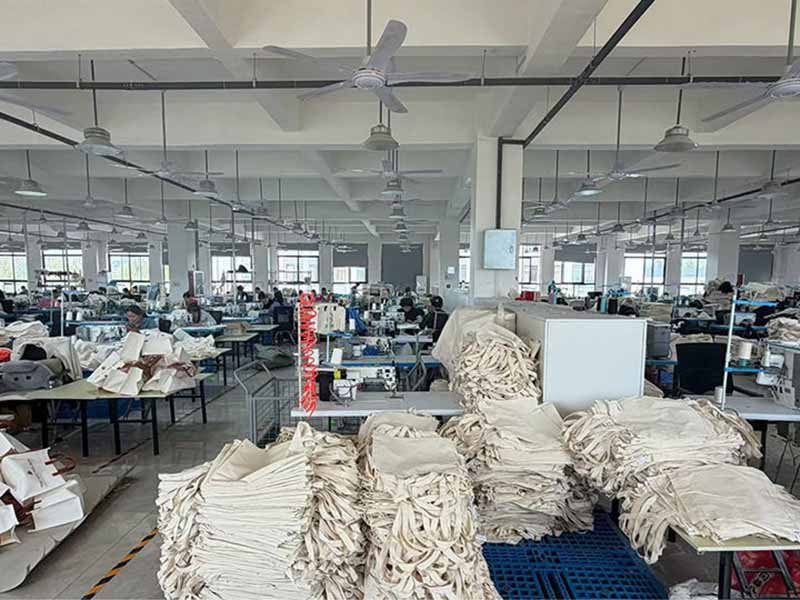
It is also useful to understand when internal measurements are inspected, how material substitutions are approved, and whether production or inspection records can be provided when required. These answers usually reveal more about the actual manufacturing system than photographs of a large sewing floor or a generic statement about strict quality control.
Sampling capability is particularly important for projects that are not yet fully engineered. A factory that only follows finished drawings may work well for mature OEM products, while a development-oriented manufacturer needs to discuss material trade-offs, access, compartment layout, pattern feasibility, reinforcement, sampling risk, and production consistency.
The most important measure is sample-to-bulk consistency. A carefully handmade prototype has limited value if the same construction cannot be reproduced reliably across 500, 2,000, or 10,000 pieces. The chosen factory should be able to explain not only how it makes the first sample but how it converts that sample into controlled materials, patterns, processes, inspection checkpoints, and production records.
Conclusion
Manufacturing a reliable custom medical bag is not simply a matter of choosing Oxford fabric, adding pockets, and sending the design to a sewing line. The strongest products begin with a clear understanding of what the user carries, how often each item is accessed, which equipment requires protection, how the bag is transported, how it is cleaned, which claims are made, and which details must remain consistent throughout production.
Good development then converts those requirements into measurable dimensions, compartment layouts, material specifications, reinforcement, patterns, prototype tests, and inspection checkpoints. Once the sample is approved, the same information must flow into the BOM, production sample, cutting plan, sewing sequence, quality-control standard, packaging, and delivery requirements.
For brands, medical-supply companies, emergency-product providers, equipment companies, and other organizations developing custom medical bags, the most useful manufacturing partner is therefore not simply the one that can sew the product. It is the one that can identify practical risks before production, help turn a concept into a stable specification, and maintain the approved standard as order volume grows. Szoneier approaches custom medical bag projects through this broader development-to-production process, allowing new concepts, physical samples, technical specifications, or existing products to be developed into production-ready sewn products with material, sampling, manufacturing, QC, and packaging support.
Frequently Asked Questions
What materials are commonly used for custom medical bags?
Polyester Oxford, nylon, coated polyester, PVC, TPU, EVA, mesh, and several types of foam are commonly used depending on the application. General first-aid bags often use polyester or Oxford because they provide a practical balance between cost, structure, and durability. Equipment cases may add EVA or higher-density foam, while products requiring easier wipe-down may use selected coated linings. The correct material should be chosen according to actual use rather than the term “medical bag” alone.
How long does it take to develop a custom medical bag sample?
Sampling time depends on product complexity, material availability, custom accessories, logo processes, and the number of revisions required. A relatively straightforward medical bag can often move through material confirmation, pattern making, cutting, sewing, and internal review faster than a highly structured device case with EVA, multiple modules, or specialized hardware. For Szoneier’s documented medical-bag projects, approximately 10–15 days is a common sample-planning reference, although each project should be scheduled individually.
What is the typical MOQ for custom medical bags?
MOQ depends on the finished-bag construction and the minimum quantities required by fabric, zipper, hardware, packaging, and custom-component suppliers. A factory may be able to sew a relatively small production run while a custom-dyed fabric or molded component requires a higher minimum. Szoneier’s medical-bag documentation references approximately 300 pieces as a typical starting quantity for this category, but stock materials and standard accessories generally provide more flexibility than fully customized components.
Do custom medical bags need FDA approval?
Not every bag used in healthcare automatically requires FDA approval or becomes a regulated medical device. A general textile organizer or first-aid bag may have a different regulatory status from a specialized carrying case intended to support the use of a specific regulated device. Intended use, labeling, claims, distribution market, and relationship to a parent device should be reviewed by the responsible regulatory team before manufacturing if there is any uncertainty.
How do you test the quality of a medical bag before bulk production?
The prototype should be loaded with the intended contents and checked for fit, access, balance, zipper function, equipment restraint, pocket dimensions, and carrying comfort. Load-bearing areas such as handles and shoulder straps should be evaluated according to the intended working load. Depending on the product, additional checks may involve color fastness, water resistance, tensile performance, abrasion, impact, drop behavior, or temperature performance. Test methods should match the real product claim rather than being selected only for marketing purposes.
Can a medical bag be developed without a complete tech pack?
Yes. A project can often start from photographs, a sketch, a physical reference sample, a competitor product, equipment dimensions, or a detailed item list. The manufacturer can then help convert the information into materials, dimensions, compartments, patterns, and a prototype. The more accurately the intended contents and workflow are documented, the faster the development process usually becomes and the fewer structural changes are needed during later sample revisions.
What should be approved before mass production begins?
The final approved sample should be supported by a confirmed BOM, pattern version, materials, colors, zipper and hardware specifications, logo artwork, labels, critical dimensions, packaging method, inspection requirements, and any necessary testing documents. Important component substitutions should not be made without approval after the sample is finalized. This production-release discipline is one of the most effective ways to maintain consistency between the development sample and the finished bulk order.