Skip to content
MOQ can feel like the most frustrating number in a custom bag project. A brand may ask for 80 premium canvas totes, 120 cosmetic bags, or 150 backpacks for a product launch, only to hear that the factory MOQ is 200, 300, 500, or even 1,000 pieces. At first glance, MOQ looks like a barrier. In reality, it is a production threshold shaped by material sourcing, setup time, logo process, sewing efficiency, packaging, quality control, and supplier requirements. The smarter question is not “Why is the MOQ so high?” but “What is driving this MOQ, and how can we design the project more efficiently?”
MOQ in custom bag manufacturing means the minimum order quantity a factory needs to make a project practical for sourcing, sampling, production setup, logo application, quality control, packing, and delivery. Simple bags using ready materials and standard accessories can often start lower, while complex structures, custom colors, special hardware, molded parts, functional materials, or premium packaging usually require higher MOQ.
For brands, MOQ is not only a production number. It is a risk-control tool. It affects cash flow, inventory, unit cost, product testing, and the way a supplier evaluates whether a project is serious. A buyer who understands MOQ can make better decisions before sampling, avoid unrealistic quotation expectations, and negotiate in a way that helps both sides. Many failed sourcing conversations start with one sentence: “Can you do only 50 pieces?” The better conversation starts with: “Here is our target quantity, material direction, logo method, packaging plan, and future reorder potential. What MOQ structure makes sense?”
What Is MOQ in Bag Manufacturing?
MOQ is the smallest quantity a custom bag manufacturer can produce while keeping material sourcing, production setup, labor allocation, logo application, packing, quality inspection, and cost control practical. It is not a random number. It reflects the minimum production scale needed to turn a design, sample, or tech pack into a real order without creating excessive waste, delays, or unstable quality.
In custom bag manufacturing, MOQ is shaped by the factory’s internal workflow and the upstream supplier network. A bag factory does not only sew fabric together. Before sewing begins, the factory must confirm fabric, lining, zipper, webbing, hardware, thread, label, logo method, carton packing, and sometimes molded components or functional tests. Each of those inputs may have its own supplier MOQ.
That is why MOQ is often more complex than buyers expect. A simple cotton tote bag with one-color screen printing may be easier to produce at a lower quantity. A structured backpack with custom zipper pullers, padded lining, molded EVA panels, multiple compartments, and branded packaging may need a much higher quantity because every component adds sourcing and setup pressure.
Szoneier’s MOQ starts from 200 pcs for selected custom bag projects, especially standard styles using ready materials, simple structures, regular accessories, and practical logo methods. The exact MOQ depends on product type, material availability, color options, product structure, logo process, accessory selection, packaging requirements, supplier conditions, and whether special testing or tooling is involved.
| MOQ Factor | Why It Matters | Buyer-Friendly Way to Control It |
|---|---|---|
| Material | Fabric suppliers may require minimum rolls or yardage | Use ready-stock materials when possible |
| Color | Custom dyeing or custom Pantone colors raise supplier MOQ | Start with standard colors |
| Logo | Some logo methods need plates, molds, or setup work | Choose simple logo processes for trial orders |
| Accessories | Custom zipper, webbing, buckles, or hardware may have supplier MOQ | Use regular accessories first |
| Structure | Complex bags take longer to cut, sew, inspect, and pack | Simplify the first version |
| Packaging | Printed boxes, inserts, sleeves, and labels may have separate MOQ | Use standard packing for first orders |
What Does MOQ Mean?
MOQ means minimum order quantity. In custom bag manufacturing, it is the lowest quantity a factory can accept for a specific design, material, color, logo method, and packaging plan. It is not always the same as the factory’s general MOQ. A supplier may say “MOQ starts from 200 pcs,” but that does not mean every bag, every fabric, every logo, and every packaging style can be produced at 200 pcs.
For example, a 200-piece order may work for a simple tote bag made from stock canvas with one-color printing. The same quantity may not work for a custom backpack with molded back padding, branded metal zipper pullers, waterproof coated fabric, custom lining, and color-matched webbing. The factory must check whether each component can be purchased, processed, and assembled at that quantity.
Buyers should treat MOQ as a project-specific threshold, not just a supplier label. The most useful MOQ conversation includes product type, material, dimensions, color, logo method, packaging, destination country, and future order plan.
Is MOQ the Same for Every Bag?
MOQ is not the same for every bag because different bag types require different materials, production steps, labor time, tooling, accessories, and inspection methods. A drawstring bag is usually easier to produce than a hiking backpack. A cosmetic pouch is usually easier than a molded EVA case. A canvas tote is often simpler than an insulated cooler bag with foil lining, foam, zipper closure, piping, and reinforced handles.
The same factory may offer different MOQ levels across product categories. A basic promotional tote may be suitable for lower MOQ. A waterproof dry bag may depend on welded seams, TPU or PVC material, and leak-resistance requirements. A leather bag may involve leather grading, cutting waste, edge finishing, hardware, lining, and more skilled handwork.
This is why buyers should not ask, “What is your MOQ?” as a single question. A better question is, “What is the MOQ for this bag structure, this material, this logo process, and this packaging direction?” That gives the factory enough detail to answer accurately and helps buyers avoid misleading early quotations.
Why Do Factories Set MOQ?
Factories set MOQ because every custom project has fixed preparation costs before the first finished bag is packed. These costs include material sourcing, supplier communication, pattern making, sample review, production planning, machine setup, cutting preparation, logo setup, line arrangement, quality inspection, and packaging coordination. These steps happen whether the order is 50 pcs or 5,000 pcs.
When quantity is too low, the cost per bag becomes unstable. Workers still need to prepare materials, cut panels, adjust machines, print or apply logos, sew samples, inspect products, and pack cartons. The factory may also be left with unused fabric, extra accessories, or custom parts that cannot be used for another buyer.
MOQ protects production efficiency, cost control, and quality consistency. It also helps the factory avoid accepting orders that look simple at first but consume disproportionate time and resources. For serious buyers, MOQ is not a wall. It is a signal showing where the project becomes workable.
What Should Buyers Know First?
Buyers should know that MOQ is usually negotiable only when the project is designed in a low-risk way. If a buyer wants a lower MOQ, the easiest route is to reduce customization pressure. That means using ready material, standard colors, regular zippers, common webbing, simple logo placement, mature bag structures, and standard packaging.
Buyers should also understand that “low MOQ” does not always mean “low total cost.” A 200-piece order may be possible, but the unit price will usually be higher than a 1,000-piece order because setup costs are spread across fewer units. Low MOQ is best used for market testing, launch validation, influencer seeding, event campaigns, sample-to-bulk transitions, and first-order risk control.
The first MOQ conversation should not be only about quantity. It should include target use, sales channel, expected retail price, material preference, logo artwork, packaging needs, delivery country, and potential repeat order plan. These details help the factory suggest a realistic order structure.
Which Factors Affect MOQ?
MOQ is affected by material availability, color selection, logo method, accessories, packaging, product size, structure complexity, production setup, supplier requirements, and quality testing. The more customized decisions a bag requires, the higher the MOQ usually becomes. The easiest way to lower MOQ is to reduce custom inputs in the first order and reserve advanced customization for repeat production.
The biggest misunderstanding about MOQ is that buyers often see only the finished bag, while factories see a complete supply chain. A tote bag is not just canvas and handles. It may include outer fabric, lining, zipper, thread, label, care tag, printing ink, webbing, carton label, polybag, barcode, and packing method. A backpack may involve dozens of components, each with sourcing limits.
Material is usually the first MOQ driver. Ready-stock material is flexible. Custom-dyed material, special coating, recycled-certified fabric, waterproof laminate, fire-resistant fabric, RFID-blocking material, or unusual texture may require higher supplier quantity. If a fabric mill requires a full roll, a full batch, or custom finishing, the bag factory must pass that requirement into the final MOQ.
Logo and branding also matter. A simple screen print may be easier for small batches. Embroidery, woven label, rubber patch, silicone patch, metal badge, debossed leather patch, custom zipper puller, or jacquard webbing may require separate setup, molds, plates, or supplier MOQ. Packaging can create the same issue. A standard polybag is simple. A printed gift box, drawer box, custom insert tray, sleeve, hangtag, barcode system, and FBA label plan can change MOQ quickly.
For Szoneier, this is why MOQ is evaluated by project rather than promised as one fixed number for all bags. The company works across tote bags, backpacks, drawstring bags, cooler bags, lunch bags, makeup bags, travel bags, duffle bags, leather goods, neoprene products, EVA cases, waterproof bags, tool bags, medical bags, and other sewn soft goods. Its manufacturing system combines materials, sampling, sewing, quality inspection, packaging, and export delivery support, which allows MOQ to be reviewed based on real production requirements.
Which Materials Raise MOQ?
Materials raise MOQ when they are not available in stock, require custom dyeing, need special coating, come from specialist suppliers, or must meet functional requirements. Common materials such as standard canvas, cotton, polyester, nylon, Oxford fabric, and non-woven fabric are usually more flexible if the factory already has supplier access or ready colors. Special materials are different.
For example, RPET fabric may require certification documents and supplier batch control. TPU or PVC waterproof material may require specific thickness and welding compatibility. Neoprene may depend on sheet thickness, lamination, color, and printing method. Leather and PU leather may vary by surface texture, backing, color, grade, and cutting yield. Fire-resistant fabric, RFID-blocking material, insulated foil lining, or heavy-duty industrial fabric may involve higher supplier MOQ.
The buyer’s best strategy is to separate “must-have” material requirements from “nice-to-have” preferences. If the first order is for market testing, ready materials can reduce risk. If the product has proven demand, custom material development becomes more reasonable for larger repeat orders.
How Do Colors Affect MOQ?
Colors affect MOQ because standard colors are easier to source, while custom colors may require dyeing, coating, lamination, or special production batches. Black, natural, navy, grey, white, beige, and some common seasonal colors are often easier to manage. A precise Pantone color, however, may require custom fabric production or custom accessory matching.
Color also becomes more complicated when a bag uses several components. A backpack may need outer fabric, lining, webbing, zipper tape, thread, piping, elastic, patch, buckle, and puller to match or coordinate. If the buyer requests exact color consistency across all components, the factory must check whether each supplier can support the quantity.
For low MOQ projects, buyers should consider using standard material colors and applying brand identity through logo, label, hangtag, packaging, or contrast details. This keeps the first order easier to produce. Once sales data confirms demand, the brand can move into custom seasonal colors, exclusive fabric colors, or full product-line color systems.
Which Logo Methods Need Higher MOQ?
Logo methods need higher MOQ when they involve setup tools, special equipment, molds, supplier-side production, or high rejection risk. Simple printing is usually the easiest entry point. Screen printing, heat transfer, digital printing, and basic woven labels may work well for small to medium orders, depending on design and material.
More advanced branding can increase MOQ. Embroidery may require digitizing and stable fabric tension. Rubber patches and silicone labels may need molds. Metal badges may require tooling, plating, and minimum hardware quantities. Custom zipper pullers, jacquard webbing, branded buckles, debossed leather patches, and molded logo parts can push MOQ higher because those components are often made by accessory suppliers, not only by the bag factory.
A practical strategy is to choose a logo method that fits both the brand level and the first-order quantity. A premium product does not always need the most complex logo from the first batch. A clean woven label, leather patch, or well-placed screen print can look professional while keeping MOQ controlled.
How Do Accessories Change MOQ?
Accessories change MOQ because zippers, buckles, webbing, D-rings, sliders, handles, zipper pullers, snaps, magnets, hooks, Velcro, foam, mesh, labels, and elastic parts often come from specialized suppliers. If these accessories are standard, MOQ can stay lower. If they are customized, color-matched, molded, plated, engraved, or specially sized, MOQ may increase.
For example, a basic tote bag may use simple cotton webbing handles and standard thread. A travel backpack may need #5 or #8 zippers, padded shoulder straps, plastic buckles, elastic mesh pockets, laptop padding, reinforcement tape, lining, binding, and internal organizers. Each added component increases purchasing complexity and production control requirements.
Buyers should ask which accessories are standard and which are custom. If the project is in the first launch stage, using regular zippers, common webbing, and available hardware can help reduce MOQ. Custom accessories can be introduced later when the brand is ready for a larger production run.
Does Packaging Increase MOQ?
Packaging can increase MOQ because custom packaging often has its own supplier minimums. A simple individual polybag, carton packing, and carton mark are usually easier to manage. Printed boxes, rigid gift boxes, drawer boxes, custom paper sleeves, insert trays, hangtags, belly bands, barcode stickers, retail labels, and FBA packaging systems can add separate MOQ requirements.
Packaging is also connected to sales channel. Amazon sellers may need FBA labels, suffocation warnings, carton labels, barcode accuracy, and specific carton planning. Retail brands may need shelf-ready presentation, hangtags, color boxes, care labels, or display packaging. Gift companies may require event-ready packaging, branded inserts, or multi-item kits.
The key is to match packaging investment with the order stage. A first trial order can use clean, professional, simple packaging. A repeat order can move into full custom packaging after the product-market fit is stronger. This prevents the buyer from letting packaging MOQ block the entire bag project too early.
How Does Bag Type Change MOQ?
Bag type changes MOQ because each product category has different material usage, sewing complexity, component count, labor minutes, tooling needs, quality risks, and supplier dependencies. Simple sewn bags usually support lower MOQ more easily. Complex backpacks, cooler bags, leather bags, EVA cases, waterproof bags, tool bags, and functional bags often require higher MOQ due to structure, testing, and component requirements.
A useful way to understand MOQ is to look at how much “decision load” the bag carries. A simple drawstring bag may require fabric, cord, thread, logo, and packing. A cooler bag may require outer material, insulation layer, lining, zipper, handle, binding, seam control, temperature-related construction, and sometimes leak-resistance considerations. A tool bag may need reinforced panels, thick webbing, heavy-duty stitching, metal hardware, base reinforcement, and load testing.
The more decisions a product requires, the harder it is to keep MOQ low. This does not mean complex bags are bad projects. In many cases, complex bags have higher retail value, stronger differentiation, and better long-term brand potential. It simply means the first-order plan should be realistic.
Szoneier’s product coverage includes many categories, from basic tote bags and drawstring bags to backpacks, cooler bags, makeup bags, travel bags, duffle bags, leather goods, neoprene products, waterproof bags, fireproof bags, tool bags, medical bags, EVA cases, and functional soft goods. This broad category experience helps buyers understand which bag types are suitable for low-MOQ testing and which require more structured production planning.
| Bag Type | MOQ Tendency | Main Reason |
|---|---|---|
| Canvas tote bag | Lower | Simple structure, common fabric, easy logo placement |
| Drawstring bag | Lower | Few components, fast sewing, simple packing |
| Cosmetic pouch | Low to medium | Depends on zipper, lining, shape, and logo |
| Backpack | Medium to higher | More panels, lining, straps, zippers, padding |
| Cooler bag | Medium to higher | Insulation, lining, binding, structure control |
| Leather bag | Medium to higher | Material grading, cutting waste, skilled sewing |
| EVA case | Higher | Mold, material forming, tooling, shape control |
| Waterproof bag | Higher | Special material, seam process, function control |
| Tool or tactical bag | Higher | Heavy-duty materials, reinforcement, hardware, load needs |
Are Tote Bags Easier for Low MOQ?
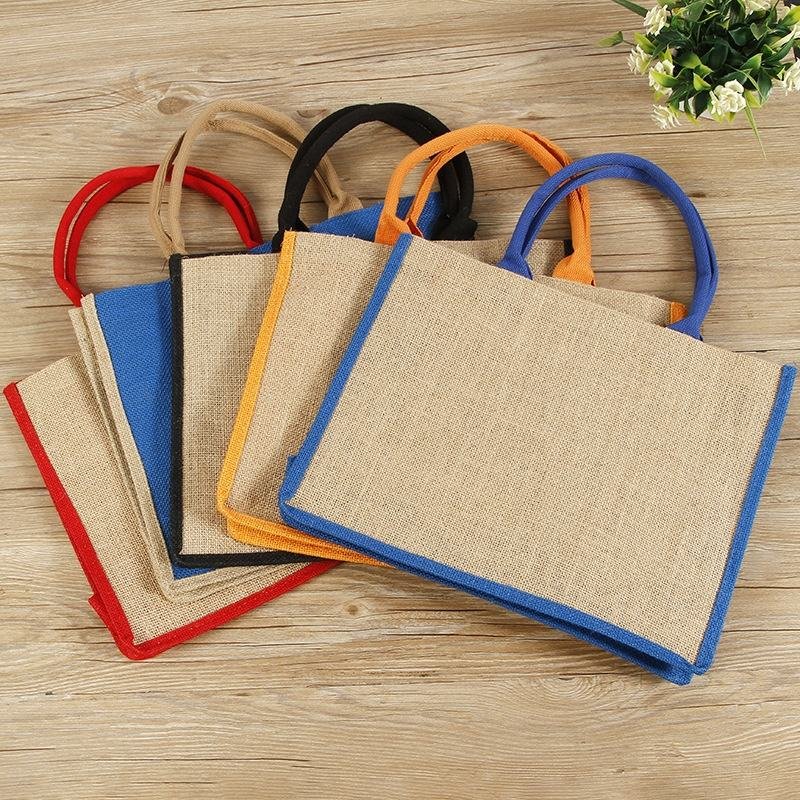
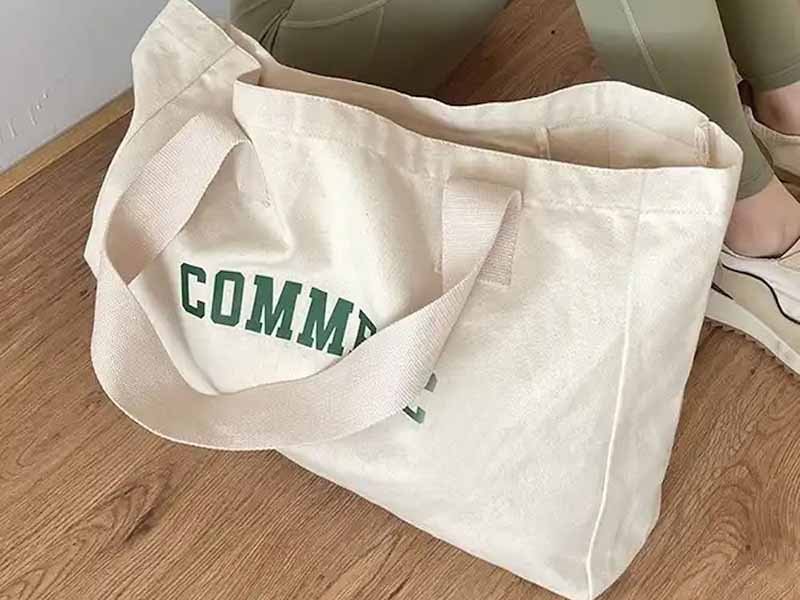
Tote bags are usually easier for low MOQ because the structure is simple, the material options are broad, and the production process is relatively efficient. A basic tote bag may use canvas, cotton, non-woven fabric, polyester, jute, or RPET fabric. It may have two handles, simple seams, one logo position, and standard packing. This makes sourcing and production easier to control.
However, not every tote bag is automatically low MOQ. A premium tote with custom-dyed canvas, heavy lining, zipper closure, inner pockets, leather handles, embroidery, custom metal hardware, printed gift box, and multiple colorways becomes more complicated. The MOQ may rise because the tote is no longer a basic tote; it has become a branded retail product with several custom inputs.
For first-order testing, brands can start with stock fabric, standard handles, one logo method, and limited colors. Once the tote sells well, the next order can add better lining, custom trims, retail packaging, or seasonal color development.
Are Backpacks Higher MOQ?
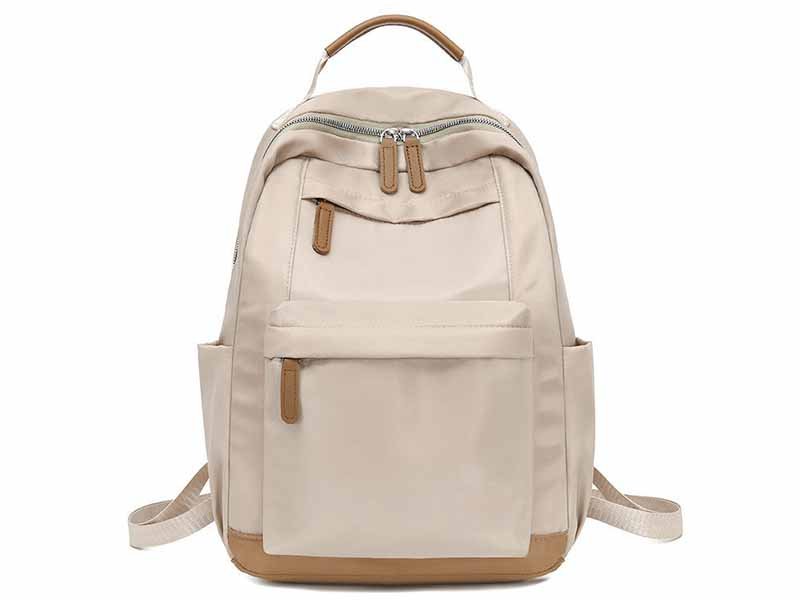
Backpacks usually have higher MOQ than simple tote bags because they require more parts, more sewing steps, and more quality checks. A backpack may include outer fabric, lining, foam padding, shoulder straps, zipper compartments, inner pockets, laptop sleeve, mesh pocket, webbing, buckles, pullers, reinforcement panels, binding, and logo applications. Every component must fit the pattern and function correctly.
Labor time is also different. A backpack takes longer to cut, align, sew, turn, inspect, and pack. The risk of quality variation is higher because the structure is three-dimensional and stress points matter. Shoulder strap strength, zipper smoothness, lining fit, pocket placement, and finished shape all need attention.
For buyers who want a lower-MOQ backpack, the best approach is to simplify the first version. Use stock fabric, standard zippers, regular buckles, a mature structure, one or two colorways, and clean logo placement. Avoid developing every custom detail in the first batch unless the quantity can support it.
Do Cooler Bags Need More Quantity?
Cooler bags often need more planning because they are not only visual products; they also have functional construction requirements. A cooler bag may include outer fabric, foam insulation, aluminum foil lining or PEVA lining, zipper closure, binding, handle reinforcement, inner seam control, and sometimes leak-resistant or cold-retention expectations. These layers increase material sourcing and production complexity.
The MOQ depends on the cooler bag’s structure. A simple lunch cooler made from ready materials may be manageable at a lower quantity. A large insulated delivery bag, wine cooler, waterproof cooler tote, foldable cooler, or premium retail cooler with custom print and branded packaging may require higher MOQ.
Buyers should be careful with performance claims. If the product needs cold retention for a specific number of hours, leak resistance, food-contact considerations, or heavy loading, the factory needs clear standards. Function-driven bags should not be treated like simple promotional bags. The stronger the performance requirement, the more important the sample, testing, and production consistency become.
Are Leather Bags Different?
Leather bags are different because leather is not as uniform as woven fabric. Genuine leather varies by hide, thickness, grain, cutting yield, finish, and natural markings. PU leather and microfiber leather are more consistent, but they still require suitable backing, texture, color, thickness, and cutting control. These material factors can affect MOQ and cost.
Leather products also involve different workmanship. Edge finishing, skiving, reinforcement, lining, stitching, hardware setting, zipper installation, and shape control require skilled handling. A small mistake in cutting or sewing can create higher loss because the material cost is usually higher than basic fabric.
For lower-MOQ leather projects, buyers can choose existing leather or PU leather options, standard hardware, simple shapes, and limited colorways. For premium retail leather goods, MOQ should be planned with enough quantity to support material matching, cutting loss, quality control, and stable production. The more luxury the positioning, the less useful it is to chase the lowest possible MOQ.
Which Functional Bags Need Higher MOQ?
Functional bags often need higher MOQ because they involve performance requirements, reinforced structures, special materials, or stricter quality control. Examples include tool bags, medical bags, tactical bags, camera bags, waterproof dry bags, fire-resistant bags, RFID-blocking bags, golf bags, hunting bags, pet carriers, baby bags, and EVA protective cases.
These products are usually not only about appearance. A tool bag must carry weight. A medical bag may need organized compartments and easy cleaning. A camera bag needs padding and protection. A waterproof bag may need seam sealing or welding. A fire-resistant bag may need material verification. An RFID-blocking bag may need functional material. An EVA case may require tooling and shaping.
Buyers should prepare clearer specifications for these projects. A picture alone is usually not enough. The factory needs dimensions, usage scenario, load expectation, material preference, compartment layout, logo method, packaging, and any testing requirements. When the project is functional, MOQ is part of ensuring that the product can be produced consistently, not just cheaply.
How Does MOQ Affect Price?
MOQ affects price because fixed costs are spread across the order quantity. Low MOQ usually creates a higher unit price because material sourcing, sampling, setup, logo preparation, cutting, sewing line arrangement, inspection, and packing must be covered by fewer units. Larger quantities usually reduce unit cost, improve material purchasing efficiency, and make production scheduling more stable.
The relationship between MOQ and price is one of the most important things buyers should understand before requesting a quote. A factory does not price only the fabric and labor in one bag. It must also price preparation time, supplier communication, sample development, production setup, waste allowance, quality checks, packaging coordination, and administration. These costs exist even when the order is small.
For example, if a logo screen, cutting setup, production arrangement, and packing preparation create fixed work, those costs must be divided by the order quantity. At 200 pcs, each bag carries a larger share. At 1,000 pcs, each bag carries less. This is why a 200-piece order may be useful for testing, but it cannot always achieve the same unit price as a 2,000-piece production run.
Buyers should avoid comparing low-MOQ pricing directly with mass-production pricing. They serve different purposes. Low MOQ is for learning, testing, launching, sampling the market, preparing photography, testing channels, and reducing inventory pressure. Bulk orders are for scaling after the product direction is confirmed. A mature sourcing strategy uses both stages, instead of forcing a first order to carry the economics of a repeat order.
| Order Stage | Common Buyer Goal | MOQ/Price Logic |
|---|---|---|
| Sample | Confirm design, structure, material, logo, and packing | Highest cost per piece, not for unit price comparison |
| Trial order | Test market demand with controlled inventory | Lower quantity, higher unit price, lower inventory risk |
| First bulk order | Launch sales with confirmed sample | Better unit cost, more stable production planning |
| Repeat order | Replenish proven SKU | Best chance for cost optimization and process stability |
| Product line expansion | Add colors, sizes, or related bags | MOQ depends on SKU split and component sharing |
Why Is Low MOQ More Expensive?
Low MOQ is more expensive because the project still requires almost the same preparation work as a larger order. The factory must review the design, confirm material, purchase accessories, prepare samples, arrange production, set up logo application, cut panels, sew products, inspect goods, pack cartons, and coordinate shipment. These tasks do not disappear because the quantity is small.
Material purchasing is another issue. If the buyer orders 200 bags but the fabric supplier requires more material than needed, the factory must manage leftover material. If accessories are custom, the supplier may require a higher quantity than the final bag order. That unused stock becomes a hidden cost or a production risk.
Low MOQ can still be a smart choice. It helps brands avoid overbuying before they know whether the product sells. The buyer pays more per unit, but takes less total inventory risk. For a new product, that trade-off can be reasonable. The mistake is expecting low-MOQ orders to match mass-production unit pricing.
How Are Setup Costs Spread?
Setup costs are spread across the total number of units in the order. These costs may include pattern adjustment, cutting preparation, logo plate or screen setup, machine adjustment, line arrangement, material sorting, first-article checks, packing setup, and internal project management. The smaller the order, the more each unit must absorb.
Imagine a setup cost of $300 for a simple logo and production preparation. Spread across 200 bags, that adds $1.50 per bag before material and labor. Spread across 1,000 bags, it adds only $0.30 per bag. The actual numbers differ by project, but the principle is the same.
This is why factories often give better pricing at higher quantity breaks. Buyers should ask for price tiers such as 200 pcs, 500 pcs, 1,000 pcs, and 3,000 pcs. This helps them see the real cost curve. It also helps buyers plan whether to start with a trial order or move directly into a larger production run.
Does Bulk Quantity Lower Unit Cost?
Bulk quantity usually lowers unit cost because the factory can buy materials more efficiently, reduce setup cost per unit, improve production line efficiency, and spread inspection and packing work across more pieces. Larger orders also make it easier for the factory to negotiate with material and accessory suppliers.
However, quantity does not solve every cost issue. If the design uses expensive leather, premium hardware, custom molded parts, thick insulation, waterproof coating, or complex sewing, the unit price may still remain high. Bulk quantity improves efficiency, but it cannot make premium components cheap.
Buyers should think in terms of cost structure. Some costs are quantity-sensitive, such as setup, purchasing efficiency, and production line efficiency. Other costs are product-sensitive, such as material grade, hardware type, padding, lining, labor complexity, and quality requirements. A good factory helps buyers understand both sides rather than only pushing higher quantity.
What Costs Stay Fixed?
Some costs stay fixed or semi-fixed regardless of order quantity. These include project review, sample development, pattern making, logo setup, machine adjustment, cutting preparation, production planning, quality documentation, packing plan review, and shipment coordination. Even when the order quantity changes, the project still needs these steps.
Other costs may not be fully fixed but do not decrease much at low quantities. For example, sourcing a small quantity of custom fabric may require almost the same supplier communication as a large quantity. Preparing a custom patch or zipper puller may require a mold whether the buyer orders 200 bags or 2,000 bags.
This is why the cheapest order is not always the safest order. If the quantity is too low for the design complexity, the factory may either reject the project, quote a very high unit price, or simplify the design. Buyers who understand fixed costs can make better trade-offs between customization level, first-order quantity, and launch budget.
How Can Buyers Lower MOQ?
Buyers can lower MOQ by choosing ready materials, standard colors, existing accessories, simple logo methods, mature bag structures, limited SKU counts, and practical packaging. MOQ becomes harder to reduce when buyers require custom-dyed fabric, special hardware, multiple colors, molded logo parts, premium boxes, functional testing, or complex structures in the first order.
The best MOQ negotiation is not aggressive bargaining. It is smart project design. A buyer who only says “Can you lower the MOQ?” gives the factory little room to help. A buyer who says “We can use stock black 600D polyester, standard zipper, one woven label, no custom box, and 200 pcs for market testing” gives the factory a workable path.
Lowering MOQ is about reducing the number of suppliers and setup steps needed for the order. If the factory can use existing materials, regular accessories, existing production methods, and standard packing, the project becomes easier to accept. If every detail is custom, the order must be large enough to support those custom inputs.
Szoneier’s low-MOQ model is designed for serious B2B projects, not one-piece personal retail orders. Its 200 pcs starting MOQ applies to selected standard custom bag and soft goods projects, especially those using ready materials, regular colors, mature structures, simple logo methods, standard accessories, basic packaging, fewer SKUs, and no complex tooling.
Do Ready Materials Help?
Ready materials help a lot because they remove one of the biggest MOQ barriers: fabric sourcing. If the factory or supplier network already has suitable canvas, polyester, nylon, Oxford, cotton, neoprene, PU, PVC, TPU, EVA, mesh, or lining material available, the buyer may not need to meet a fabric mill’s custom production threshold.
Ready material also speeds up sampling and bulk production. The factory can check texture, thickness, color, coating, hand feel, and sewing compatibility sooner. This reduces uncertainty and helps buyers move faster from quotation to sample to order.
The key is flexibility. A buyer may want a very specific shade, but a close ready-stock color may make a 200-piece trial order possible. After the product sells, the buyer can invest in exact Pantone matching for a larger repeat order. This staged approach protects cash flow and avoids making the first batch too complicated.
Should Buyers Use Standard Colors?
Buyers should use standard colors when they want to keep MOQ lower and production easier. Standard colors reduce supplier pressure, shorten lead time, simplify accessory matching, and lower the risk of color inconsistency. Black, natural canvas, navy, grey, beige, white, and common neutral shades are often easier to manage than custom-dyed seasonal colors.
Standard colors do not mean the product has to look generic. Brands can still create a strong identity through logo placement, trim contrast, handle design, zipper tape, woven label, hangtag, packaging, photography, and product storytelling. Many successful first orders use simple base colors with clean branding.
Custom colors are better saved for larger production runs or proven products. Once the buyer has sales data and reorder confidence, custom colors become more reasonable because the larger quantity can support fabric dyeing, accessory matching, and supplier MOQ. For first orders, standard colors are often the fastest way to reduce complexity.
Can Simple Logos Reduce MOQ?
Simple logos can reduce MOQ because they usually require less setup, fewer supplier steps, and lower rejection risk. A single-color screen print, heat transfer, basic woven label, or standard embroidery may be easier to execute than a molded rubber patch, metal badge, custom zipper puller, debossed leather patch, or jacquard webbing.
Logo simplicity also protects the first sample. A new brand often wants every detail to feel premium, but over-customizing the logo can make the project slower and more expensive. If the product itself is not yet market-tested, it may be wiser to use a clean, reliable logo method first.
A good logo decision balances brand image, material compatibility, order quantity, and long-term plan. For example, a simple printed logo may work for promotional totes. A woven label may work for pouches. A leather patch may work for premium canvas bags. Custom metal or rubber branding may be better for repeat orders once the SKU has proven sales potential.
How Can Standard Packaging Help?
Standard packaging helps reduce MOQ because it avoids separate packaging supplier thresholds. A clean polybag, standard carton, carton mark, and basic shipping label can be enough for many first orders, especially for online testing, internal launch, corporate gifting, or sample-to-bulk validation.
Custom packaging can be powerful, but it should match the order stage. A printed color box, rigid gift box, drawer box, insert tray, sleeve, hangtag, barcode system, or retail display packaging may improve presentation, but it also adds cost, lead time, proofing work, and supplier MOQ. If the product is still unproven, premium packaging may consume budget that should be used for product quality or market testing.
For Amazon and Shopify brands, the practical approach is to start with compliant, clean, and channel-ready packaging. After sales stabilize, the brand can upgrade to stronger visual packaging. Packaging should support the product strategy, not block the first production run.
Is a Trial Order Better?
A trial order is often better when the buyer is launching a new product, testing a new channel, checking customer feedback, or validating a design before scaling. A 200-piece, 300-piece, or 500-piece order may have a higher unit price, but it reduces total inventory exposure and gives the brand real-world data.
Trial orders are especially useful for Amazon sellers, Shopify brands, corporate gifting projects, seasonal launches, influencer campaigns, and new product line testing. They help buyers understand demand, reviews, packaging feedback, shipping issues, and customer preferences before committing to larger production.
The important point is to treat a trial order as a learning stage, not the final cost benchmark. The goal is not to get the lowest possible unit price. The goal is to confirm whether the product deserves a larger second order. A successful trial order gives both the buyer and factory a cleaner path to better pricing, improved details, and repeat production.
How Should Buyers Plan MOQ?
Buyers should plan MOQ by matching order quantity with product stage, customization level, launch budget, sales channel, inventory risk, and future reorder potential. A first order should be large enough to make production practical but controlled enough to reduce market risk. The best MOQ plan connects sampling, trial order, feedback, repeat production, and product-line expansion.
MOQ planning starts before quotation. Many buyers ask for price too early, before the factory understands the product. A professional RFQ should include product photos or drawings, dimensions, material preference, color, logo artwork, packaging needs, target quantity, destination country, sales channel, and quality expectations. The more complete the information, the more accurate the MOQ and quotation can be.
A strong MOQ plan also separates the first order from the long-term vision. The first order may use ready materials and standard packaging. The second order may improve color, logo, or packaging. The third order may expand into related products. This is how brands move from “Can you make this bag?” to “Can we build a stable product line together?”
Szoneier is positioned for this kind of staged development. The company is a Shenzhen-based custom bags and soft goods OEM/ODM manufacturer with more than 18 years of experience, supporting design, material sourcing, sampling, bulk production, quality inspection, packaging, and export delivery for global brands, retailers, importers, e-commerce sellers, and B2B buyers.
What Quantity Fits a First Order?
The right first-order quantity depends on the bag type, customization level, budget, sales channel, and launch goal. For selected standard custom bag projects, 200 pcs can be a practical starting point when the product uses ready materials, regular colors, mature structure, simple logo, standard accessories, and basic packaging. For more complex bags, the first practical quantity may be 300, 500, 1,000, or higher.
Buyers should not choose the first quantity only by budget. They should ask whether the quantity supports the design requirements. If the bag needs custom material, several colors, complex structure, molded accessories, or printed retail packaging, a very low first quantity may create unnecessary cost and production friction.
A good first order should be large enough to test real demand. For e-commerce, that may mean enough inventory for product photography, launch ads, early reviews, replacement units, and reorder lead time. For retail or promotional projects, it may depend on store count, event quantity, or distribution plan.
How Should Brands Test New Bags?
Brands should test new bags by controlling variables. Instead of launching too many colors, sizes, materials, and packaging options at once, start with a focused version that tests the core product idea. The goal is to learn whether customers like the shape, size, function, quality, price point, and brand presentation.
A controlled test might include one bag structure, one or two colors, one logo method, one packaging format, and one sales channel. This makes feedback easier to interpret. If the product does not sell, the brand knows the issue is likely the core product or positioning. If the product sells well, the next order can expand colors, materials, or accessories.
For custom bags, market testing should also include physical feedback. Buyers should look at zipper smoothness, handle comfort, stitching, material feel, packaging condition after shipping, customer reviews, and return reasons. MOQ planning is not only about buying enough units. It is about buying the right learning opportunity.
What Should Be Confirmed Before Quotation?
Before quotation, buyers should confirm the product type, approximate size, target material, color, logo method, quantity, packaging, destination country, and expected use. A factory can quote much more accurately when it sees product photos, reference samples, tech packs, sketches, or even competitor links. Without details, any price is only a rough guess.
For bags, small details can change cost and MOQ. Adding lining, zipper, inner pocket, thicker webbing, reinforced bottom, custom puller, waterproof coating, foam padding, or printed box can change the quotation. Buyers should also explain whether the product is for retail, Amazon FBA, corporate gifting, outdoor use, cosmetics, travel, tools, medical kits, or daily carry.
A professional quotation is not just a number. It should reflect material, size, structure, logo, accessories, packing, quantity, lead time, sample requirements, and shipping terms. When buyers prepare clear information, they reduce back-and-forth messages and help the factory identify the best MOQ path.
How Can MOQ Support Repeat Orders?
MOQ can support repeat orders by helping the buyer build a production rhythm. The first order validates the product. The second order improves cost, color, packaging, and production details. The third order can expand SKUs, add related products, or increase quantity. Over time, the factory becomes more familiar with the buyer’s standards, and production becomes more stable.
Repeat orders also improve supplier confidence. If a buyer shows a realistic reorder plan, the factory may be more willing to support flexible first-order planning, especially when the project uses standard materials and has clear long-term potential. Factories prefer serious buyers who understand the sample-to-bulk process and communicate future demand honestly.
For brands, repeat orders are where custom manufacturing becomes more powerful. The product can evolve based on real customer feedback. Handles can be improved, pockets adjusted, packaging upgraded, materials refined, and cost optimized. MOQ should not be seen only as a starting hurdle. It can become part of a long-term supply chain strategy.
When Should Buyers Scale Up?
Buyers should scale up when the first batch proves demand, customer feedback is positive, quality is stable, and the reorder plan is clear. Scaling too early creates inventory risk. Scaling too late can cause stockouts, missed sales, and rushed production. The right timing depends on sales velocity, production lead time, shipping method, and cash flow.
A simple rule is to plan the next order before inventory gets dangerously low. Custom bag production involves sample confirmation, material sourcing, production scheduling, quality inspection, packing, and international shipping. If the buyer waits until the product sells out, they may lose several weeks or months of sales momentum.
Scaling up is also the right time to improve customization. Once a SKU is proven, buyers can consider custom colors, better packaging, upgraded logo methods, additional sizes, related pouches, bundle sets, or retail-ready presentation. The first order should reduce risk. The repeat order should build brand value.
Final Thoughts: MOQ Is Not Just a Number
MOQ is one of the clearest ways to understand how custom bag manufacturing really works. It shows the relationship between design ambition, material sourcing, production setup, logo process, packaging, cost, and risk. A low MOQ can help brands test the market, but it works best when the product is designed with ready materials, standard colors, regular accessories, simple logo methods, and practical packaging. A higher MOQ may be necessary when the product requires custom material, complex structure, functional performance, special hardware, molded parts, or premium retail presentation.
For buyers, the goal should not be to push every project to the lowest possible MOQ. The better goal is to choose the right MOQ for the right stage. Start with a realistic first order. Confirm the sample. Test the product. Review customer feedback. Improve the next batch. Then scale into repeat production with stronger cost control and better brand consistency.
Szoneier helps global brands, retailers, importers, Amazon sellers, Shopify brands, promotional companies, and B2B buyers develop custom bags and soft goods from idea to sample and from sample to bulk production. With factory-based sampling, material sourcing, sewing production coordination, quality inspection, packaging, and export delivery support, Szoneier can help you review your MOQ options based on your real product details and launch plan.
If you are planning a custom tote bag, backpack, cooler bag, cosmetic bag, travel bag, duffle bag, leather bag, neoprene product, EVA case, waterproof bag, tool bag, medical bag, or functional soft goods project, send your product photo, sketch, tech pack, logo file, target quantity, packaging idea, and destination country to Szoneier. The team will help evaluate whether your project is suitable for a low-MOQ trial order, a structured first bulk order, or a long-term repeat production plan.
Start your custom bag project with Szoneier and request a practical MOQ review for your next product.