Skip to content
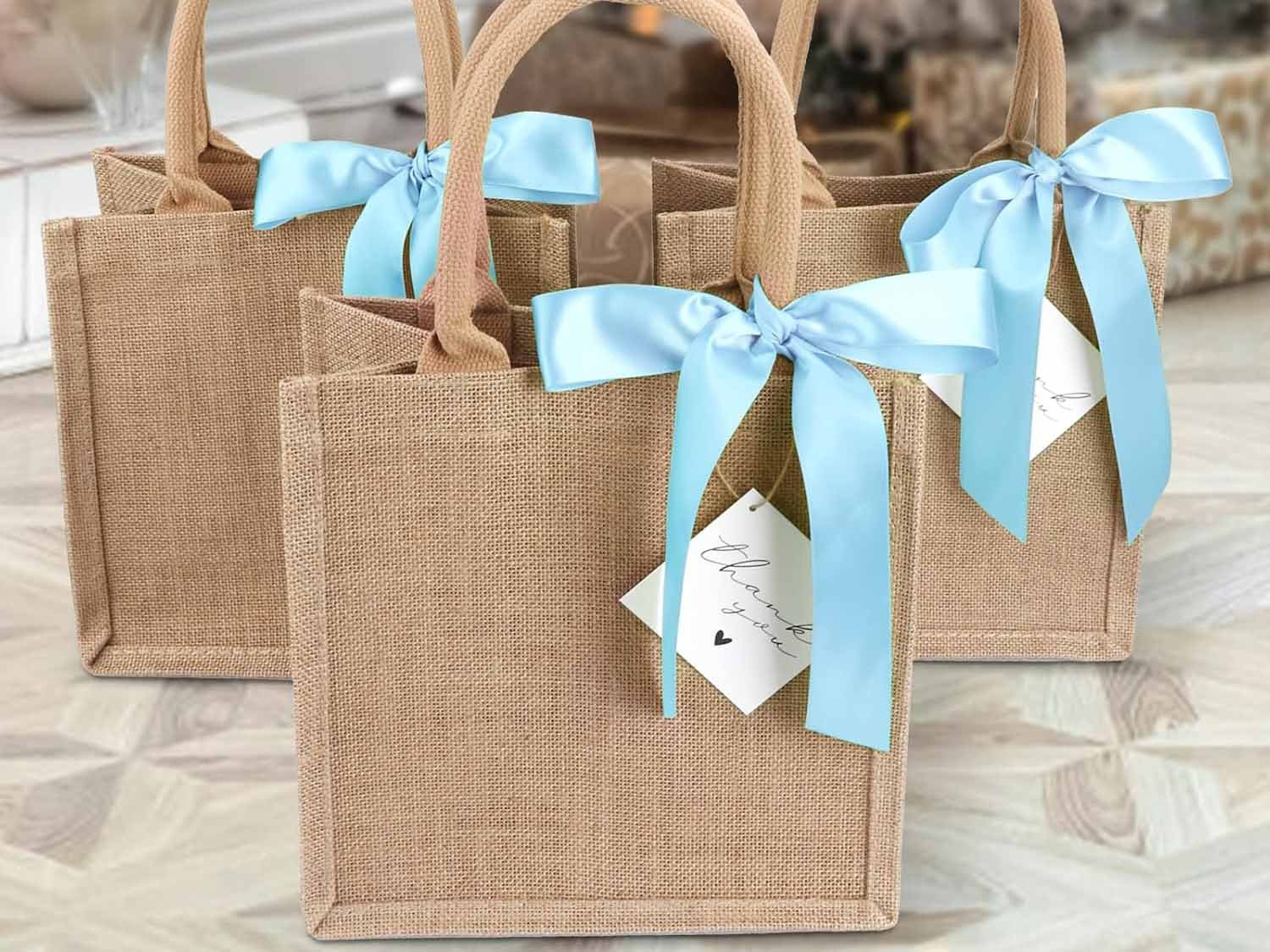
A retail bag can look small beside the product, but it quietly affects how people judge value. A candle packed in a thin paper bag feels ordinary. The same candle packed in a natural jute gift bag with neat stitching, a clean logo, and a comfortable handle feels more complete before anyone opens it. For wine shops, cosmetic brands, food companies, hotel gift stores, boutique retailers, event companies, and corporate gifting programs, packaging has become part of the selling experience, not just a container used after checkout.
A custom jute gift bag is a reusable retail packaging bag made from woven jute fiber and developed according to product size, product weight, logo style, handle type, lining needs, shelf display, and order quantity. Brands choose jute because it offers a natural texture, gift-ready appearance, stronger reuse value, and better long-term logo exposure than many single-use packaging options.
The real challenge is not finding a jute bag. Plenty of suppliers can make one. The harder question is whether the bag fits the product, protects the retail image, supports repeat use, and stays stable during bulk production. A 500-piece gift campaign, a 5,000-piece holiday retail order, and a 50,000-piece supermarket packaging program do not need the same structure. Fabric weight, handle strength, printing method, lamination, color tolerance, carton packing, and inspection standards all affect the final result. Many packaging problems begin because these details are discussed too late.
For a brand preparing a new jute gift bag project, good manufacturing starts with a clear product story: What will the bag carry? Where will it be sold? How many times should the customer reuse it? What price impression should it create? Once these answers are clear, the bag becomes more than packaging. It becomes a small, useful brand asset that keeps working after the first sale.
What Are Jute Gift Bags?
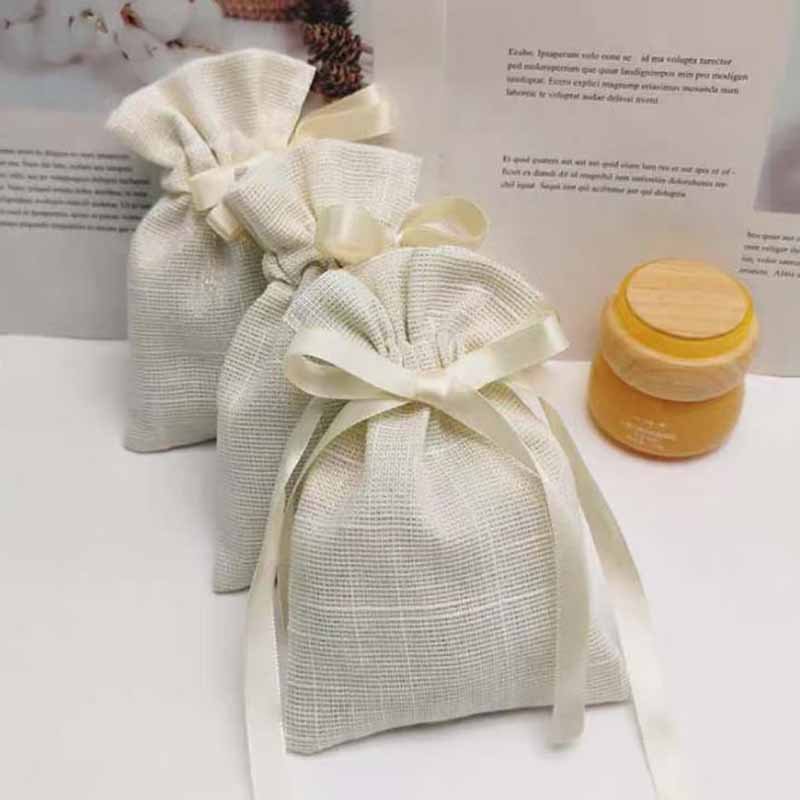
Jute gift bags are reusable packaging bags made from woven natural jute fiber. They are widely used for wine, cosmetics, candles, food sets, boutique retail goods, event gifts, and corporate packaging. A custom jute gift bag can be made with different sizes, handles, linings, logos, closures, labels, pockets, gussets, and surface finishes to match different retail products.
What is jute fabric?
Jute fabric is made from long natural plant fibers woven into a textured material with a warm, earthy appearance. In retail packaging, the value of jute comes from two things: visible texture and real carrying strength. It does not look flat like ordinary paper, and it does not feel disposable like thin plastic. For products that need a more natural, handmade, organic, rustic, or premium impression, jute gives packaging a strong visual identity without requiring a complicated structure.
For manufacturing, jute fabric is usually chosen by fabric weight, weave density, color consistency, surface cleanliness, lamination requirement, and sewing performance. A small jewelry pouch may use lighter jute. A wine bottle bag needs heavier fabric and stronger seams. A grocery-style retail tote may require laminated jute, a reinforced bottom, and wider handles because customers may carry several kilograms inside.
The surface of jute is not as smooth as cotton canvas or polyester. That is part of its charm, but it also affects logo printing. Large solid logos, fine lines, gradient artwork, and full-color graphics may need different production methods. Screen printing works well for simple logos. Heat transfer may be used for clearer details. Woven labels or leather patches may create a more premium finish. A good factory should review the artwork before confirming the printing method, rather than applying one method to every order.
For brands, jute fabric should be selected around the product, not only around price. A low-cost loose weave may look acceptable in a sample photo, but after bulk packing, transport, and retail handling, it may show fraying, uneven shape, or weak seam tension. Better fabric creates fewer complaints, cleaner photography, and stronger repeat use.
| Jute Fabric Choice | Common Use | Main Advantage | Point to Check Before Order |
|---|---|---|---|
| Natural raw jute | Gift bags, wine bags, rustic retail bags | Natural look, strong texture | Color variation between batches |
| Dyed jute | Boutique packaging, seasonal promotions | Better color matching | Colorfastness and shade tolerance |
| Laminated jute | Grocery bags, food gifts, structured totes | Better shape and light moisture resistance | Lamination smell and flexibility |
| Jute-cotton blend | Premium retail packaging | Softer hand feel | Cost and fabric availability |
| Heavy jute | Wine, candles, heavier gift sets | Better load support | Handle reinforcement and seam strength |
Why are jute bags used for gifts?
Jute bags are used for gifts because they make products feel ready to present. Customers often buy a gift under time pressure. They want packaging that looks thoughtful without needing extra wrapping. A jute gift bag solves that problem quickly. It can carry the product, decorate the product, and communicate a natural retail style in one piece.
For retail stores, jute gift bags also help product displays look more organized. A wine bottle placed directly on a shelf may depend heavily on its label. A wine bottle placed in a custom jute bag can become a seasonal gift item. A skincare kit arranged in a jute tote looks more complete than several separate bottles in a plain carton. A food brand selling honey, tea, coffee, or chocolate can use a small jute bag to turn everyday products into gift bundles.
There is also a clear commercial reason. Gift packaging can increase perceived value without changing the product formula, ingredients, or core design. A candle brand does not need to redesign the candle. A tea brand does not need to change its tea leaves. A winery does not need to change the bottle. By upgrading the outer packaging, the product becomes easier to sell during holidays, events, weddings, corporate programs, and seasonal retail campaigns.
Jute gift bags also give brands a more relaxed and human feeling. They are not overly glossy or cold. They feel closer to farm shops, craft markets, handmade goods, organic stores, natural beauty products, boutique hotels, and lifestyle brands. For many modern retail categories, that natural feeling is more attractive than shiny luxury packaging.
Common gift scenes include:
- Wine and beverage gifts for holidays, restaurants, hotels, and events
- Cosmetic and skincare kits for beauty stores and subscription boxes
- Candle and fragrance sets for home décor brands
- Tea, coffee, honey, chocolate, and gourmet food packaging
- Wedding welcome bags and party favor bags
- Corporate gift bags for employees, VIP clients, and trade shows
- Boutique product packaging for handmade goods and lifestyle stores
- Seasonal retail gift sets for Christmas, Mother’s Day, Valentine’s Day, and local festivals
Are jute bags eco-friendly?
Jute bags are often seen as eco-friendly because jute is a natural plant fiber and the finished bags can be reused many times. For retail brands, the strongest environmental value comes from reuse. A bag that customers keep using after purchase can reduce dependence on short-life packaging and give the brand longer visibility.
However, eco value depends on details. A simple natural jute bag, a dyed jute bag, and a laminated jute bag do not carry the same material story. Printing ink, lamination, handle material, inner lining, packaging method, and transportation all affect the final environmental position. Brands should avoid broad claims unless they understand the full material structure.
A more reliable approach is to communicate jute bags through practical claims:
- Made with natural jute fiber
- Designed for repeated use
- Suitable for retail gifting and daily carrying
- Helps reduce dependence on single-use carry bags
- Customizable with simple logo printing and minimal decoration
- Foldable for storage and easier bulk transport
- Useful after purchase, not thrown away immediately
The best eco packaging is not only about the material. It is also about whether people actually keep using it. A jute bag with a poor handle, rough edges, weak seams, or bad proportions may be discarded after one use. A well-made bag with a comfortable handle, useful size, and attractive logo has a much better chance of staying in daily life.
For brands selling organic food, natural skincare, handmade gifts, wellness products, or local retail goods, jute packaging can support a more honest product story. It feels natural because it is visibly natural. Customers can see the woven surface and understand the material without needing a long explanation.
| Eco Packaging Factor | Better Choice | Risky Choice |
|---|---|---|
| Reuse value | Strong stitching, useful size, comfortable handle | Thin fabric, awkward size, weak handle |
| Logo design | Simple, clean, easy to read | Oversized heavy ink coverage |
| Material story | Natural jute, cotton handle, paper tag | Too many mixed materials |
| Retail life | Gift-ready and reusable | One-time event bag only |
| Customer trust | Clear wording and honest claims | Overstated green language |
What retail products fit jute bags?
Jute gift bags fit products that benefit from natural texture, gift presentation, and reusable carry value. They are especially suitable for retail categories where packaging influences emotion and purchase decisions. Wine, candles, cosmetics, gourmet foods, handmade items, hotel gifts, wellness kits, and boutique goods are all strong matches.
The first rule is weight. The bag must hold the product safely. A single 750 ml wine bottle often weighs around 1.2–1.5 kg after glass and liquid are included. A candle gift set may weigh 500 g to 2 kg depending on jar size. A food hamper may go beyond 3 kg. For heavier loads, the bag needs stronger fabric, reinforced handle stitching, and a stable bottom.
The second rule is shape. A tall bottle needs a vertical bag with good height and a secure base. A cosmetics kit may need a wider opening and side gussets. A bakery gift may need a flat bottom to prevent crushing. A small jewelry or soap set may look better in a drawstring pouch. A corporate gift kit may need a medium tote style with a large logo area.
The third rule is product sensitivity. Food, oil-based cosmetics, fragrance products, and glass items may need inner packaging before going into the jute bag. Jute itself is not a sealed protective barrier. It works best as the outer presentation and carry layer. For products with moisture, oil, powder, scent, or fragile parts, the inner product packaging must be planned together with the bag.
A well-designed jute gift bag should answer five questions before production:
- Can the product enter and exit the bag smoothly?
- Can the bag carry the product weight safely?
- Can the bag stand, hang, or display properly in the retail scene?
- Can the logo be seen clearly after the product is inside?
- Can the customer reuse the bag after opening the gift?
| Product Category | Suggested Bag Type | Recommended Detail | Common Size Direction |
|---|---|---|---|
| Wine bottle | Single or double bottle jute bag | Divider, reinforced handle, narrow base | Tall vertical structure |
| Skincare kit | Small jute tote | Clean logo, soft lining, neat seams | Medium width with gusset |
| Candle set | Flat-bottom jute gift bag | Stable base, stronger side seams | Square or rectangular base |
| Tea or coffee | Drawstring or tote bag | Natural look, printed label, foldable body | Small to medium size |
| Gourmet food | Laminated jute tote | Easy-clean inner surface, strong bottom | Wider opening |
| Jewelry or soap | Mini drawstring pouch | Soft inner feel, fine logo method | Compact pouch style |
| Corporate gift | Medium tote bag | Large logo area, repeatable color control | Standard carry size |
Why Choose Jute for Retail Packaging?
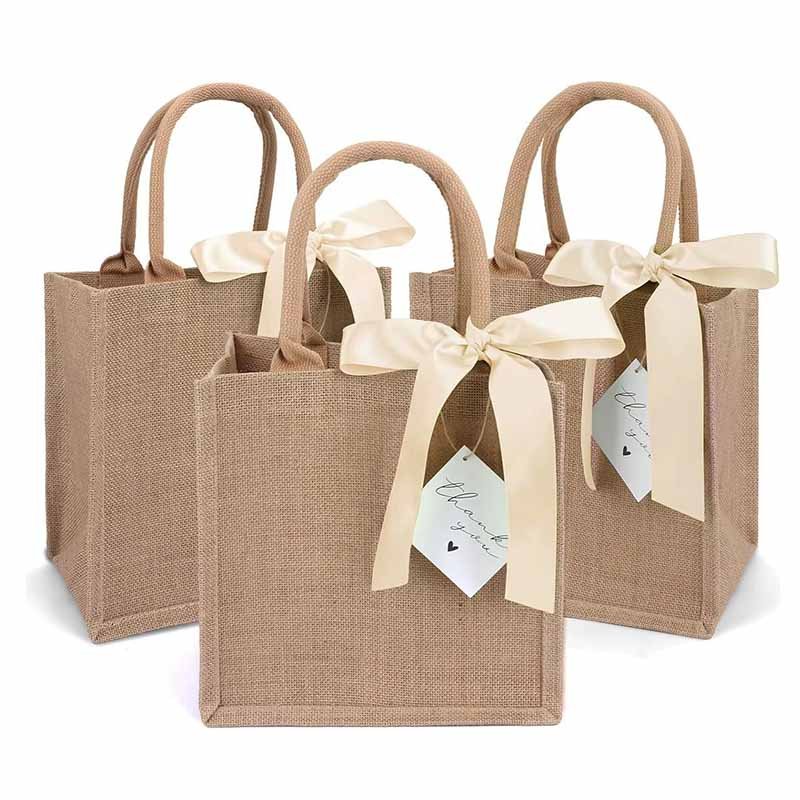
Brands choose jute for retail packaging because it combines natural appearance, reusable value, strong gift appeal, and flexible custom branding. Compared with disposable bags, jute can stay in customer use longer. Compared with rigid gift boxes, it is easier to fold, store, ship, and customize across sizes. Good manufacturing turns jute from a simple bag into a retail packaging tool.
How do jute bags improve brand value?
Jute bags improve brand value by making the product feel more finished, more giftable, and more memorable. Packaging sends a price signal before customers touch the product. A loose plastic bag suggests low cost. A plain paper bag may feel clean but ordinary. A structured jute bag with a neat logo, balanced proportions, and strong handles gives a warmer and more intentional impression.
For retail brands, that first impression matters. Customers compare products quickly in stores and online. Texture helps products stand out. Jute has a woven surface that catches light differently from paper and plastic. It adds visual depth in product photography and a more natural feeling on shelves. A skincare set in a jute bag can look more wellness-focused. A wine bottle in a jute bag can look more suitable for gifting. A food set in a jute tote can feel more artisanal.
Brand value also comes from repeated use. If customers reuse the bag for groceries, lunches, books, cosmetics, or daily small items, the logo continues to appear in real life. That gives the brand more exposure after the first transaction. For promotional companies and retail chains, this is one of the strongest reasons to choose jute.
However, jute only improves brand value when quality is controlled. Poor stitching, crooked logos, weak handles, heavy odor, uneven shape, or loose fibers can make a brand look careless. A premium product should not be placed in a bag that feels cheaper than the item inside. For retail packaging, the bag must match the product’s selling price and customer expectation.
Key quality details that affect brand image:
- Logo position centered within 2–5 mm tolerance for most standard retail bags
- Handle stitching reinforced at stress points
- Bottom seam strong enough for the target load
- Fabric surface checked for major stains, holes, or heavy color difference
- Carton packing arranged to reduce folding marks and deformation
- Inner threads trimmed cleanly before packing
- Sample approved under real product weight, not empty display only
Are jute bags reusable?
Jute bags can be reusable when the construction is planned for real carrying conditions. Reuse depends on fabric weight, stitching quality, handle type, bottom design, and product load. A small gift pouch and a grocery-style tote should not be built with the same standards.
A reusable retail bag should survive more than the first purchase. For lightweight gifts under 500 g, basic stitching may be enough. For wine, candles, books, food sets, or corporate kits, stronger seams and reinforced handles are needed. When the bag carries 1–3 kg, the handle area becomes the most important stress point. If the handle is only sewn into a thin seam without reinforcement, tearing may appear after repeated use.
Handle comfort also affects reuse. Customers may keep a bag if it feels good in the hand. A rough rope handle can look natural but may be uncomfortable with heavier items. Cotton webbing handles are often better for daily reuse. Padded handles can be used for larger totes. Short handles suit hand carry. Longer handles allow shoulder carry. Small changes in handle length can change the whole user experience.
Reusable design should also consider storage. A bag that folds flat is easier for customers to keep. A bag with too much stiff lamination may stand better on shelves but take more space. A soft jute pouch is easy to store but may not protect shape. There is no single best option. The right structure depends on sales channel, product weight, and customer use.
Useful load reference for planning:
| Bag Use | Product Weight Range | Suggested Construction |
|---|---|---|
| Jewelry, soap, small gifts | 100–500 g | Light jute, drawstring or small handle |
| Cosmetics kit, tea, coffee | 500 g–1.5 kg | Medium jute, side gusset, reinforced seams |
| Single wine bottle | 1.2–1.8 kg | Heavy jute, strong handle, stable base |
| Candle or food gift set | 1–3 kg | Laminated or heavy jute, flat bottom |
| Grocery-style retail tote | 3–8 kg | Heavy fabric, reinforced handles, bottom support |
Do jute bags replace plastic packaging?
Jute bags can replace plastic carry bags in many retail and gift situations, but they should not be treated as a full replacement for every packaging function. Plastic still performs well when products need waterproof sealing, transparent display, moisture protection, food-grade barrier layers, or very low-cost disposable packing. Jute performs best as a reusable outer bag, retail presentation bag, or gift packaging layer.
For example, a cosmetic bottle still needs its primary bottle or tube. A chocolate box still needs food-safe inner packaging. A wine bottle still needs glass protection during shipping. The jute bag adds presentation, carry function, and brand value after the product is already safely packed. This layered approach is more realistic than forcing jute to solve every packaging need.
Brands can use jute to reduce dependence on single-use checkout bags, plastic gift bags, and disposable event bags. For holiday packaging, trade show giveaways, farm shop retail, boutique purchases, and corporate gifting, jute often gives a better long-term impression. Customers are more likely to keep a jute bag than a thin plastic bag.
Cost also needs to be considered. Jute bags usually cost more than simple disposable plastic bags. That cost can make sense when the bag helps increase perceived value, supports a premium product, or continues to advertise the brand. It may not make sense for ultra-low-cost items where packaging cost must stay extremely low. Good packaging strategy is not about choosing the most sustainable-looking option every time. It is about choosing the option that fits the product value, selling channel, and customer behavior.
Practical decision points:
- Use jute when the product needs gift appeal or reusable carry value.
- Use jute when the logo exposure after purchase matters.
- Use jute when natural texture supports the product story.
- Do not rely on jute alone for wet, oily, powdery, or fragile products.
- Combine jute with inner packaging when product protection is required.
- Avoid overbuilding the bag if the retail price cannot support the added cost.
Which brands use jute packaging?
Jute packaging is used by brands that want natural texture, gift value, and repeated customer exposure. It appears across wine, food, cosmetics, wellness, boutique retail, hospitality, events, and corporate gifting. The material works especially well for products connected with care, craft, nature, celebration, or everyday reuse.
Wine and beverage brands use jute bottle bags because they turn a single bottle into an easy gift. Food brands use jute bags for tea, coffee, honey, spices, bakery items, and gourmet sets because the natural surface matches handmade or farm-style positioning. Beauty and wellness brands use small jute totes or pouches for skincare kits, soap sets, essential oils, spa products, and sample programs. Boutique retailers use jute shopping bags because the bag can continue carrying the store identity after purchase.
Corporate gifting companies also like jute because it suits welcome kits, employee gifts, conference bags, hotel gifts, trade show giveaways, and holiday packages. A medium jute tote can hold notebooks, bottles, snacks, apparel accessories, small electronics, or mixed gift items. The bag becomes part of the gift rather than just outer packing.
For e-commerce brands, jute gift bags are useful when products are sold as bundles or premium sets. Online photos with a jute bag can make the package feel more complete. The bag can also create a stronger unboxing experience. However, online sellers should check folded packing size, shipping weight, and carton volume because jute packaging adds more space than flat mailer bags.
| Brand Type | Common Jute Bag Use | Main Value |
|---|---|---|
| Wine brands | Bottle gift bags | Makes bottles gift-ready |
| Beauty brands | Skincare and soap pouches | Natural wellness image |
| Food brands | Tea, coffee, honey, snack sets | Handmade and organic feeling |
| Boutique stores | Retail shopping bags | Reusable store exposure |
| Hotels and spas | Guest gift bags | Warm hospitality experience |
| Event companies | Wedding and conference bags | Practical keepsake packaging |
| Corporate gifting firms | Employee and client kits | Logo exposure and reuse |
| Online retailers | Bundle packaging | Better product photos and unboxing |
For Szoneier’s custom bag projects, the same product development thinking used in fabric bags, neoprene bags, koozies, sports products, and protective cases can also support jute retail packaging. A successful jute gift bag project should not begin with “What is the cheapest bag?” A better starting point is: “What should the customer feel when receiving it, and how many times should the bag be used after purchase?” Once that answer is clear, the fabric, size, logo, handle, lining, and packing plan become much easier to control.
Which Jute Bag Styles Can Be Made?
Jute gift bags can be made into tote bags, drawstring pouches, wine bags, flat-bottom gift bags, laminated shopping bags, handle bags, zipper bags, window bags, and mixed-material styles. The best style depends on product size, product weight, display method, logo area, reuse purpose, and retail price level. A good structure makes the bag easier to sell, carry, display, and reuse.
What is a jute tote bag?
A jute tote bag is one of the most common styles for retail packaging because it offers a wide opening, easy carrying, strong logo display, and better reuse value. It works well for cosmetics, food gifts, books, boutique products, wellness kits, small apparel accessories, candles, promotional sets, and daily shopping. Compared with a small pouch or paper bag, a tote gives the customer more space and feels closer to a reusable product rather than disposable packaging.
For retail brands, the biggest advantage of a jute tote bag is visibility. The front panel provides enough space for logo printing, woven labels, leather patches, slogan designs, seasonal artwork, or co-branding elements. A 25 × 30 cm tote may suit small gift sets, while a 35 × 40 cm tote can work for grocery-style packaging or larger promotional programs. Side gussets can be added when the product has thickness, such as boxed skincare sets, food jars, folded textiles, or multiple small items.
A tote bag should be designed around the carrying weight. If the product is light, standard jute and simple handles may be enough. If the bag will carry bottles, books, canned food, or multiple retail items, handle reinforcement and bottom structure become more important. The handle drop also matters. Short handles make the bag look neat for gift packaging, while longer handles make it easier for shoulder carrying and daily reuse.
For Szoneier custom projects, tote bags can be developed with natural jute, dyed jute, laminated jute, jute-cotton blend, canvas handles, cotton webbing handles, inner lining, button closure, zipper closure, or front pockets. For private label orders, a tote is often the safest starting point because it balances cost, function, and brand exposure.
| Tote Bag Feature | Common Option | Best For |
|---|---|---|
| Size | 20–45 cm width | Gift sets, retail goods, daily carry |
| Handle | Cotton webbing, rope, jute, canvas | Comfort and brand style |
| Gusset | 5–15 cm | Boxed products and thicker items |
| Logo | Screen print, heat transfer, label, patch | Clear brand display |
| Closure | Open top, button, zipper | Different price levels |
| Lining | None, cotton, laminated layer | Clean finish or shape support |
What is a jute drawstring bag?
A jute drawstring bag is a soft pouch-style package closed with cotton rope, jute cord, polyester cord, or ribbon. It is commonly used for jewelry, soap, candles, tea, coffee, small cosmetics, wedding favors, hotel gifts, handmade products, small food gifts, and holiday items. The style feels simple, warm, and personal, which makes it suitable for products that need a softer gift presentation.
Drawstring bags are attractive because they are lightweight, easy to pack, and cost-controlled. They do not require complicated handles, rigid bases, or thick side gussets. For small retail products, this can reduce storage and shipping pressure. A brand can order different sizes for multiple product lines while keeping the same logo, color tone, and packaging identity.
The main concern is product fit. A drawstring pouch should not be too tight, or the product will be hard to insert and remove. It should not be too loose either, or the product may look cheap and unstable. For example, a handmade soap may need a pouch only 1–2 cm wider than the product. A small candle jar may need more side allowance to prevent pressure on the seams. A coffee sample pouch may need room for the inner food-safe pack and a small printed card.
Logo placement also needs attention. Since the top part gathers when the cord is pulled, the logo should usually sit lower on the front panel. If the logo is printed too close to the top edge, it may become wrinkled after closing. For small pouches, simple one-color artwork is often cleaner than complex full-color designs.
Drawstring bags are a good choice when the packaging goal is soft, natural, and affordable. They are not the best choice for heavy products or items that need a flat display base. For higher-end small products, brands can add cotton lining, printed ribbon, a small woven label, hang tag, or custom paper card to improve the finished look.
What is a jute wine bag?
A jute wine bag is designed to hold one or more bottles securely while improving gift presentation. It is widely used by wineries, wine shops, restaurants, hotels, wedding companies, holiday gift suppliers, beverage brands, and promotional gift programs. Wine packaging needs more structural control than many other gift bags because glass bottles are heavy, tall, and fragile.
A standard 750 ml wine bottle is often around 30 cm tall and 7–8 cm in diameter. Once filled, it usually weighs about 1.2–1.5 kg. That means the bag must be tall enough, narrow enough to hold the bottle upright, and strong enough at the handle area. For two-bottle or three-bottle jute wine bags, internal dividers are often needed to prevent bottles from knocking against each other.
The handle style strongly affects user experience. Rope handles can look natural and premium, but for heavier bottles, flat cotton handles or reinforced jute handles may offer better comfort. Stitching at the handle attachment must be secure because most stress is concentrated there. Bottom stitching also matters because bottles place pressure on a small base area.
Wine bags can be made with clear windows, cotton lining, laminated inner coating, front pockets for greeting cards, drawstring tops, button closures, or printed holiday graphics. A simple natural jute wine bag with a one-color logo works well for wineries and organic stores. A darker dyed jute bag with a leather patch can suit premium gift programs. Seasonal artwork can support Christmas, New Year, weddings, or corporate gifting.
For brands ordering wine bags, sample testing should always include a real bottle. The bag should be checked for fit, standing stability, handle strength, seam tension, and logo visibility after the bottle is inserted. A wine bag that looks good when empty may become distorted once loaded.
| Wine Bag Type | Common Capacity | Key Detail | Suitable Scene |
|---|---|---|---|
| Single bottle bag | 1 bottle | Narrow base, strong handle | Wine shop, restaurant, gift sale |
| Double bottle bag | 2 bottles | Internal divider | Holiday gifts, corporate gifts |
| Three-bottle bag | 3 bottles | Reinforced base | Premium wine sets |
| Window wine bag | 1–2 bottles | Bottle label display | Retail shelf presentation |
| Drawstring wine bag | 1 bottle | Top closure | Wedding, event, seasonal gifting |
What is a laminated jute bag?
A laminated jute bag is made by adding a thin laminated layer to the jute fabric, usually on the inner side or back side of the material. This gives the bag more structure, improves shape retention, and provides light resistance against moisture or dirt. It is often used for grocery bags, food gift bags, retail shopping bags, supermarket promotional bags, and structured gift packaging.
The biggest advantage of laminated jute is stability. Natural jute can be soft and flexible, which works well for pouches and relaxed gift bags. But some retail packaging needs the bag to stand upright, hold a box shape, or look neat on shelves. Lamination helps the bag keep its form. It also makes the inner surface smoother, which can be useful when packing food boxes, jars, bottles, or multi-item gift sets.
However, lamination should be chosen carefully. It can change the hand feel and environmental positioning of the bag. A fully natural jute bag feels more organic and rustic. A laminated jute bag feels more commercial and structured. For brands that want a strong natural story, heavy lamination may not be the best direction. For brands that need shape, durability, and easier cleaning, lamination can be useful.
Printing also changes with lamination. Some laminated surfaces can support sharper printing, while raw jute creates a more textured logo effect. If a brand needs detailed artwork, small text, QR code, or full-color image, the factory should test the printing method before bulk order. For simple logos, screen printing on natural jute is usually enough.
Laminated jute bags are especially useful for higher-volume retail programs where size consistency and shelf appearance matter. Grocery chains, food brands, and gift set sellers often prefer laminated structures because they look more stable in stores and perform better during repeated handling.
What is a cotton-handle jute bag?
A cotton-handle jute bag combines the natural body of jute with softer cotton webbing handles. This structure is popular because it improves comfort while keeping the rustic look of the bag. It works well for retail shopping bags, gift bags, boutique totes, cosmetic packaging, food packaging, and event bags that customers may carry for longer periods.
Jute handles can look consistent with the bag body, but they may feel rough depending on fabric quality. Rope handles can look decorative, but they may press into the hand when the bag is heavy. Cotton webbing handles provide a smoother grip and can be customized by width, color, length, and stitching style. Common handle widths range from about 2.5 cm to 4 cm for many retail totes. Wider handles usually feel more comfortable for heavier items.
The handle color can also support the brand design. Natural cotton handles create a clean handmade look. Black handles make the bag more modern. Dyed handles can match brand colors, seasonal campaigns, or product collections. For premium orders, contrast stitching or branded woven handles can be considered.
From a manufacturing view, handle attachment must be reinforced. A soft cotton handle is only useful if the stitching is strong enough. Cross stitching, box stitching, or bar-tack reinforcement may be used depending on weight requirements. For heavier retail bags, the handle should extend deeper into the seam area to increase strength.
Cotton-handle jute bags are a good middle point between natural style and real daily function. They help customers keep using the bag after the purchase, which supports longer logo exposure for the brand.
How Are Custom Jute Bags Manufactured?
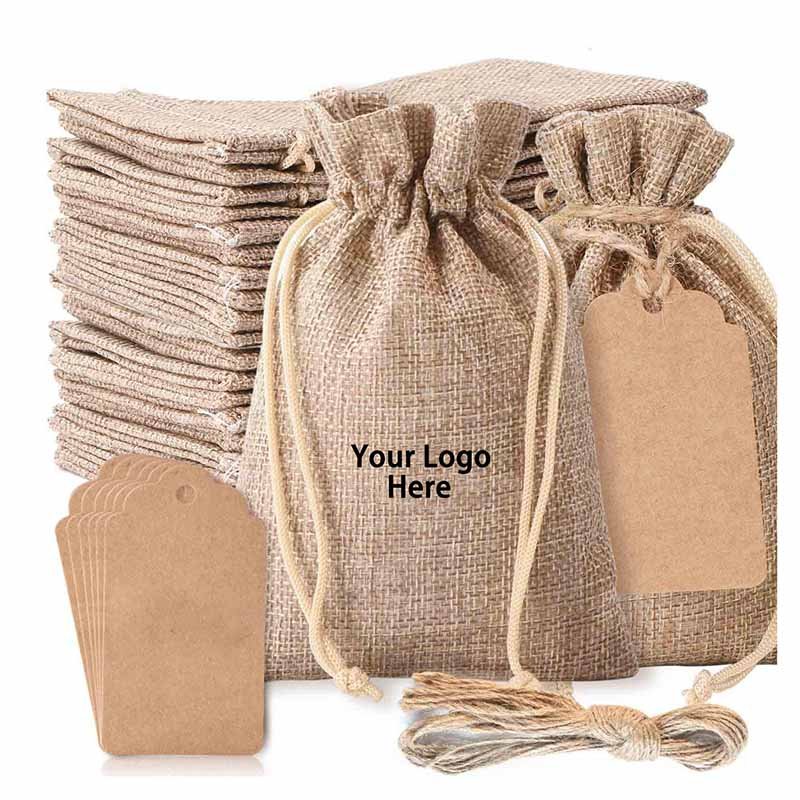
Custom jute bag manufacturing includes fabric selection, size confirmation, pattern cutting, logo testing, sewing, handle reinforcement, lining or lamination, finishing, inspection, and bulk packing. Good production starts before cutting fabric. The factory must understand product weight, retail use, logo requirements, target price, and order quantity so the final bag can perform well in real customer hands.
How is jute fabric selected?
Jute fabric selection should begin with product weight, target use, brand image, and cost range. A light pouch for soap does not need the same material as a wine bottle bag. A boutique gift bag does not need the same structure as a supermarket reusable tote. If the fabric is selected only by the lowest price, the final bag may look rough, deform easily, or fail during repeated use.
The most important material factors include fabric weight, weave tightness, color, surface cleanliness, smell, flexibility, lamination, and printing compatibility. Natural jute has visible fiber variation, which many brands like. But too much color difference across a bulk order can create problems, especially for retail chains that need consistent shelf appearance. Dyed jute can create a more controlled look, but color matching and colorfastness need checking.
A factory should also consider the final decoration method. If the brand wants a large one-color logo, natural jute may work well. If the design includes thin lines, small letters, color gradients, or detailed artwork, the surface may need testing. Sometimes a woven label, cotton patch, PU patch, or printed canvas panel gives a cleaner result than printing directly on jute.
For food-related packaging, the inner product should usually have its own food-safe primary packaging. Jute is commonly used as the outer gift or carry layer. If the bag will hold products that may leak oil, moisture, powder, or fragrance, an inner lining or laminated layer may be helpful.
Fabric selection checklist:
- Product weight and size
- Expected reuse frequency
- Natural or dyed color requirement
- Raw jute or laminated structure
- Logo printing method
- Handle comfort and strength
- Surface cleanliness standard
- Smell control before packing
- Cost target and MOQ
- Retail shelf or e-commerce use
| Fabric Requirement | Better For | Notes |
|---|---|---|
| Lightweight jute | Small pouches, soap, jewelry | Lower cost, less load support |
| Medium jute | Gift totes, cosmetics, tea, coffee | Balanced cost and strength |
| Heavy jute | Wine, candles, grocery bags | Better load performance |
| Laminated jute | Food gifts, structured retail bags | More stable shape |
| Dyed jute | Seasonal or brand-color packaging | Color control needed |
| Jute-cotton blend | Premium retail projects | Softer look and touch |
How are sizes confirmed?
Jute bag size should be confirmed by real product dimensions, not only by estimated packaging size. A bag must fit the item comfortably, allow easy insertion, protect the shape, display the logo correctly, and match the customer’s carrying habits. Many bulk order problems happen because the size was decided from a flat product measurement without considering thickness, handle position, seam allowance, or product movement.
For each project, the brand should provide product length, width, height, weight, and packing method. If the product is already packed in a box, the box size matters more than the product itself. For wine bags, bottle height, base diameter, shoulder shape, and cap height should be checked. For cosmetic sets, the number of bottles, box arrangement, and desired display direction should be confirmed. For food gifts, the bag may need extra space for protective inner packaging.
A useful rule is to add enough clearance for easy packing but not so much that the product looks loose. For many small gift bags, 1–2 cm of extra space may be enough. For boxed sets, 2–4 cm may be needed depending on thickness. For bags with gussets, the gusset should match product depth. A bag with too narrow a gusset may bulge and distort the logo. A bag with too wide a gusset may look empty.
Logo position should be confirmed after the product is inside the bag. If a product pushes the front panel outward, the logo may curve or shift visually. If the bag closes with a drawstring or button, the artwork should not be placed too close to the closure area. For retail display, logo height should match how the bag sits on shelves or hooks.
Size confirmation process:
- Measure the actual product or product box.
- Confirm product weight.
- Decide whether the bag needs gusset, flat bottom, or divider.
- Add suitable clearance for packing.
- Confirm handle length and carry style.
- Place logo position on a flat pattern.
- Test with a sample using the real product.
- Adjust size before bulk production.
| Product Type | Measurement Needed | Extra Space Suggestion | Main Size Risk |
|---|---|---|---|
| Wine bottle | Height, diameter, weight | 1–2 cm height clearance | Bag too short or unstable |
| Cosmetic box | L × W × H of box | 2–3 cm total allowance | Front panel distortion |
| Candle jar | Diameter, height, weight | 1–2 cm side clearance | Bottom not stable |
| Food gift set | Full packed arrangement | 2–4 cm depending on items | Bag too tight after packing |
| Corporate kit | Total item layout | 3–5 cm for mixed items | Uneven weight distribution |
How is logo printing done?
Logo printing on jute bags should be selected according to artwork detail, order quantity, fabric surface, color requirement, and target price. The main methods include screen printing, heat transfer printing, digital printing on fabric panels, embroidery, woven labels, leather patches, PU patches, and paper hang tags. Each method creates a different look and cost structure.
Screen printing is common for simple logos, bold text, and one-color or two-color designs. It works well on natural jute when the design is not too detailed. Because jute has a rough woven surface, very fine lines may not appear as sharp as they would on smooth cotton or polyester. For clean retail branding, large simple artwork usually performs better.
Heat transfer can provide clearer details and more colors, but it may change the surface feel. It is often used when the logo has gradients, small elements, or richer color needs. However, not every jute surface accepts heat transfer equally. Testing is important before mass production.
Embroidery creates a premium effect but may not suit every jute structure. Thick thread and rough fabric can produce a handmade look, but small letters may be difficult. Woven labels are useful for private label brands that want clean, repeatable branding across multiple bag styles. Leather or PU patches can make the bag feel more premium, especially for wine bags, boutique totes, or corporate gifts.
Logo placement is just as important as method. A beautiful logo can still fail if it sits too low, too high, too close to the seam, or too near the drawstring. The factory should create a layout based on the finished bag size and sewing allowance, not only from a flat artwork file.
| Logo Method | Best For | Strength | Limitation |
|---|---|---|---|
| Screen printing | Simple logos, text, large marks | Cost-effective, classic | Limited detail on rough jute |
| Heat transfer | Multi-color artwork | Clearer image | Needs fabric testing |
| Embroidery | Premium small logo | Textured, durable | Higher cost, detail limits |
| Woven label | Private label branding | Clean and repeatable | Smaller logo area |
| PU/leather patch | Premium retail bags | Strong brand feel | Adds cost and sewing step |
| Hang tag | Product story and barcode | Flexible information | Not permanent branding |
How are handles attached?
Handle attachment is one of the most important parts of jute bag manufacturing because most carrying stress is concentrated at the handle area. A bag can use strong fabric and still fail if the handles are weak. For wine bags, grocery bags, candle sets, and corporate gift kits, handle reinforcement should be discussed before sampling.
Common handle materials include jute webbing, cotton webbing, canvas straps, rope handles, twisted cotton rope, polyester webbing, and mixed-material handles. Cotton webbing is popular for comfort. Jute handles create a matching natural look. Rope handles add gift appeal. Polyester webbing offers strength and color control. The choice depends on brand style and product weight.
Stitching style also matters. Simple straight stitching may be enough for small pouches or light gift bags. For heavier bags, box stitching, cross stitching, double rows, or bar-tack reinforcement can improve load performance. The handle should have enough insertion depth into the bag body. If only a small edge is stitched, tearing may happen when the customer carries heavier products.
Handle length affects use. Short handles are better for gift bags and hand carry. Medium handles work for retail shopping. Long handles allow shoulder carry and improve reuse. Many brands focus only on bag size and forget handle drop. But customers feel the handle first, especially when carrying the bag after purchase.
During sample approval, handles should be tested with real product weight. A bag should not only look good when empty. It should hold the product, swing slightly, sit naturally in the hand, and show no seam strain after repeated lifting.
Handle development checklist:
- Match handle material with product weight.
- Confirm handle length for hand carry or shoulder carry.
- Choose stitching method based on load.
- Check comfort under real product weight.
- Confirm handle color with brand style.
- Test whether handles deform the bag opening.
- Inspect stress points after repeated lifting.
How is quality checked?
Jute bag quality inspection should cover fabric, size, logo, stitching, handle strength, color, smell, cleanliness, finishing, packing, and carton condition. Since jute is a natural material, small fiber variation is normal. But stains, large holes, severe color difference, crooked logo, loose handle, broken seams, and strong odor should not pass retail packaging standards.
For bulk orders, inspection should not happen only at the end. Better control begins during material inspection. The factory should check fabric rolls before cutting. During cutting, size and pattern direction should be controlled. During printing, the first printed pieces should be approved before running the whole order. During sewing, handle position, seam allowance, and edge finishing should be checked regularly. Final inspection should confirm the finished bag meets the approved sample.
For logo orders, color and placement are critical. A logo shifted by a few millimeters may be acceptable for some promotional bags but not for premium retail packaging. For chain stores or private label programs, consistency matters more. Carton packing also affects final quality. If bags are packed too tightly, they may arrive with strong fold lines. If bags are not protected from moisture, jute may absorb odor or become deformed.
Quality standards should be matched to the order type. A small handmade-style gift bag may allow more natural variation. A national retail program needs tighter control. The brand and factory should define acceptable tolerance before production.
Basic inspection points:
- Finished size tolerance
- Logo position and color
- Stitching density and seam strength
- Handle attachment strength
- Fabric stains, holes, and heavy color difference
- Inner threads and trimming
- Closure function if included
- Lining or lamination condition
- Packing method and carton strength
- Random load test for heavier styles
| Inspection Item | What to Check | Why It Matters |
|---|---|---|
| Fabric | Stains, holes, color difference | Protects retail appearance |
| Size | Width, height, gusset, handle drop | Ensures product fit |
| Logo | Position, clarity, color | Protects brand image |
| Sewing | Seam strength, thread trimming | Reduces complaints |
| Handle | Pull strength, alignment | Prevents carrying failure |
| Odor | Strong chemical or damp smell | Important for retail acceptance |
| Packing | Folding, carton size, moisture control | Protects goods in transport |
For Szoneier, quality control is not only a final inspection step. It should be part of the full custom process from material choice to sample approval and bulk packing. This is especially important for overseas brands that need stable private label production, repeat orders, and product lines that may expand into different bag sizes later.
How to Source Jute Gift Bags?
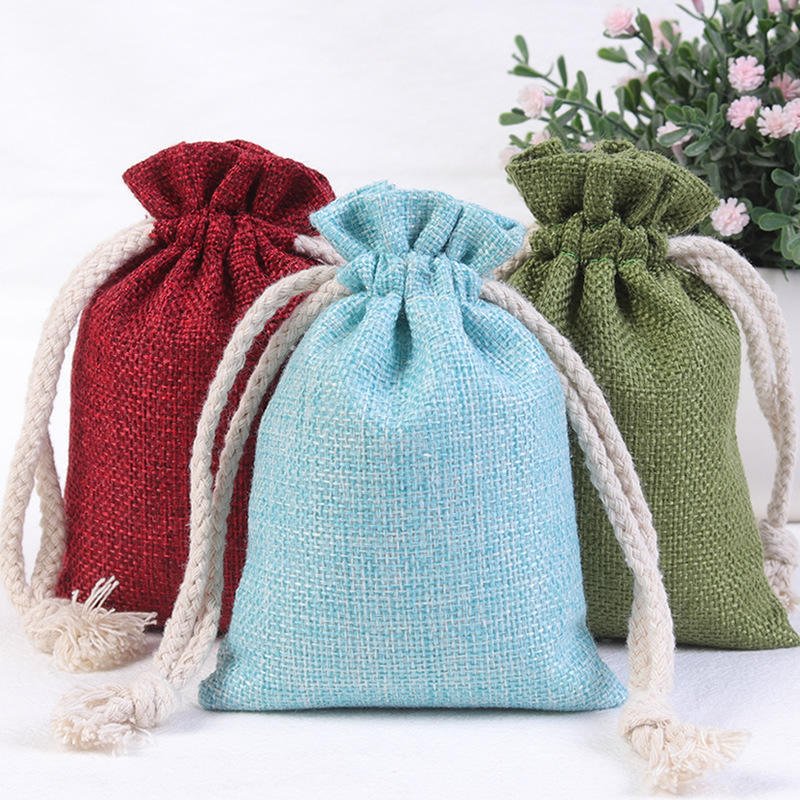
Sourcing jute gift bags should begin with product use, not only price. Brands need to confirm bag style, size, fabric, logo method, handle strength, MOQ, sample time, bulk lead time, packing method, and quality standard before placing orders. A good supplier should help reduce risk during sampling, production, inspection, and repeat purchasing.
What MOQ should brands expect?
MOQ for custom jute gift bags depends on fabric availability, size, logo method, color, handle type, lining, and order complexity. A simple natural jute bag with one-color printing may support a lower starting quantity. A dyed jute bag, custom fabric color, full-color printing, special handle, zipper, lining, or unique shape usually needs a higher MOQ because more production steps and material preparation are involved.
For many retail packaging projects, a realistic MOQ range can start from several hundred pieces for simple custom bags and move to 1,000–3,000 pieces for more customized structures. Larger retail programs, supermarket campaigns, event orders, and chain store packaging may reach 5,000–50,000 pieces or more. The best quantity depends on how the bags will be used: launch testing, holiday promotion, retail shelf packaging, corporate gifts, or long-term private label supply.
Small brands often want very low MOQ because they need to test the market first. This is reasonable, but low MOQ usually means a higher unit cost. When order quantity increases, the cost of printing setup, material cutting, sewing preparation, and packing can be shared across more pieces. For repeat orders, unit cost may become more stable because the approved size, logo file, sewing method, and packing standard are already confirmed.
Brands should not choose MOQ only by the lowest number. They should also think about sales speed, storage space, cash flow, seasonal timing, and reorder plan. For example, if a Christmas gift bag project needs 3,000 pieces but production starts too late, choosing a lower MOQ will not solve the real problem. Timing and production capacity may matter more than quantity.
A useful sourcing approach is to divide order planning into three levels:
- Test order: used to confirm size, logo effect, market response, and product fit.
- Retail order: used for actual store sale, campaign packaging, or online bundle packaging.
- Repeat order: used after design, quality standard, and customer feedback are already stable.
| Order Type | Common Quantity Range | Suitable For | Main Focus |
|---|---|---|---|
| Small test order | 300–500 pcs | New product launch, sample market testing | Confirm design and real use |
| Standard retail order | 1,000–3,000 pcs | Boutique stores, gift sets, online bundles | Balance cost and flexibility |
| Seasonal order | 3,000–10,000 pcs | Holiday campaigns, events, chain stores | Delivery timing and consistency |
| Large program | 10,000–50,000+ pcs | Retail chains, supermarket packaging, distributors | Cost control and production stability |
For Szoneier custom projects, low MOQ support is useful for brands that want to test different jute bag styles before committing to a large order. The better plan is to start with one or two core sizes, test them with real products, then expand into more sizes or seasonal designs after sales feedback is clear.
How long does sampling take?
Sampling time for custom jute gift bags usually depends on bag complexity, material availability, logo method, and revision requirements. For a simple jute bag using available fabric and a basic logo, sampling may be completed faster. For custom dyed fabric, laminated structure, special lining, zipper, divider, full-color artwork, or premium patch branding, the sampling period may take longer because more materials and processes need testing.
For many custom packaging projects, brands should plan around 5–10 days for standard sample development when material is available. More complex designs may need 10–15 days or longer, especially if custom color matching, new pattern development, special accessories, or artwork testing is involved. If a brand needs physical approval from several internal teams, extra review time should also be included.
A sample should not be treated as a photo prop only. It should be tested with the real product. For example, a wine bag sample should be loaded with a real bottle. A candle bag should be tested with the actual jar or boxed set. A cosmetic kit bag should be checked with the full product layout. This helps confirm size, handle strength, logo visibility, bottom stability, and user experience before bulk production.
Brands should also use the sample stage to check small but important details:
- Is the bag easy to open and pack?
- Does the product sit neatly inside?
- Does the logo stay visible after the product is loaded?
- Are the handles comfortable under real weight?
- Does the bag stand properly on a shelf or table?
- Are there loose fibers, odor, or rough edges?
- Does the finished look match the product price level?
Sample revisions are normal. A size may need to be increased by 1–2 cm. A handle may need to be longer. A logo may need to move higher. A gusset may need to become wider. These small adjustments can prevent larger problems in bulk production.
| Sample Factor | Standard Direction | Possible Extra Time |
|---|---|---|
| Available natural jute | Faster sampling | Minimal delay |
| Custom dyed jute | Color matching required | Extra fabric preparation |
| One-color logo | Easier to test | Shorter setup |
| Full-color artwork | More testing needed | Extra print trials |
| Zipper or lining | More sewing steps | Extra sample adjustment |
| Wine divider | Needs fit testing | More pattern work |
| Custom patch | Accessory production | Longer approval time |
For overseas brands, it is better to approve the physical sample before confirming bulk production. Digital photos are helpful, but they cannot fully show texture, handle comfort, bag stiffness, product fit, and real color. A physical sample gives more confidence, especially when the bag will be used for retail shelves, gift programs, or private label packaging.
How should brands compare suppliers?
Brands should compare jute bag suppliers by product development ability, material knowledge, sample quality, logo accuracy, sewing control, MOQ flexibility, delivery reliability, and communication speed. Price matters, but the cheapest quotation may not include the same fabric weight, handle strength, printing quality, inspection standard, or packing method.
A serious supplier should ask detailed questions before quoting. If a factory gives a price without asking product size, product weight, logo file, order quantity, handle type, lining requirement, and packing method, the quotation may not be reliable. It may look attractive at the beginning but lead to extra costs or quality issues later.
Supplier comparison should include both visible and hidden factors. Visible factors include sample appearance, logo clarity, stitching, fabric, and price. Hidden factors include production planning, material sourcing, defect handling, communication, export packing, and repeat order stability. For brands that plan to build a long-term packaging line, these hidden factors can become more important than a small price difference.
A good supplier should also provide practical suggestions. For example, if a logo is too detailed for raw jute, the supplier should recommend a woven label or patch. If a bag is too small for the product, the supplier should suggest size adjustment before sampling. If the product is heavy, the supplier should recommend stronger handle stitching. These suggestions help brands avoid mistakes before money is spent on bulk production.
Important supplier evaluation points:
- Does the supplier understand retail packaging use?
- Can they recommend fabric based on product weight?
- Can they support custom size and structure?
- Can they provide logo printing options?
- Can they make samples quickly and revise details?
- Can they support low MOQ and repeat orders?
- Can they inspect stitching, handle strength, size, and logo placement?
- Can they communicate clearly with overseas clients?
- Can they pack products safely for sea, air, or express delivery?
- Can they support private label and OEM/ODM projects?
| Supplier Factor | Weak Supplier Signal | Strong Supplier Signal |
|---|---|---|
| Quotation | Price only, few details | Clear specs, material, logo method, MOQ |
| Sampling | Looks good only in photos | Tested with real product and weight |
| Material | No fabric explanation | Offers weight, lamination, color choices |
| Logo | One method for all artwork | Recommends method by artwork style |
| Sewing | No handle strength discussion | Reinforcement options provided |
| Communication | Slow or unclear replies | Clear questions and practical feedback |
| Quality control | Final check only | Material, process, and finished inspection |
| Repeat orders | No file control | Keeps approved specs for future orders |
For brands sourcing from China, factory capability matters. A trading-only supplier may be useful for simple orders, but a factory with product development experience can be more helpful when the bag needs custom structure, low MOQ testing, private label details, and stable repeat production. Szoneier’s experience in fabric-based bags and customized products allows it to support projects beyond simple catalog-style jute bags.
Do factories support private label?
Many jute bag factories can support private label production, but the level of support varies. Basic private label may only include logo printing. More complete private label support can include custom size, custom fabric color, woven label, hang tag, barcode label, carton mark, packaging insert, retail-ready packing, product line development, and repeat order file management.
For retail brands, private label details matter because the bag must look like part of the brand, not a generic item with a logo placed on it. A strong private label jute bag should match the brand’s color, product category, retail price, and customer lifestyle. A natural skincare brand may prefer raw jute, soft cotton handles, a small woven label, and a simple paper hang tag. A wine brand may prefer a structured bottle bag with a front logo and reinforced handle. A boutique grocery store may need laminated jute totes with clear store branding and strong load capacity.
Private label production should also consider packing and logistics. Some brands want each bag individually polybagged. Others want bulk packing to reduce packaging cost. Some need barcode stickers for warehouse scanning. Some need carton marks for Amazon, retail distribution, or third-party logistics. These details should be confirmed before bulk production, not after the goods are finished.
Common private label options include:
- Custom logo printing on front or both sides
- Woven label sewn on side seam or front panel
- PU or leather logo patch
- Custom hang tag with brand story
- Barcode or SKU label
- Custom handle color
- Custom fabric color
- Custom lining or lamination
- Custom closure, button, zipper, or drawstring
- Retail-ready folding and packing
- Branded carton mark
- Mixed-size product line production
| Private Label Detail | Purpose | Best Use |
|---|---|---|
| Logo printing | Direct brand display | Most retail packaging |
| Woven label | Cleaner premium identity | Boutique and lifestyle brands |
| Hang tag | Product story and care info | Gift and eco packaging |
| Barcode label | Retail and warehouse scanning | Chain stores and online sellers |
| Custom handle | Better brand color matching | Premium tote bags |
| Custom carton mark | Distribution control | Wholesale and repeat orders |
For private label projects, the factory should keep approved production files, including size chart, material specification, logo placement, print color, sewing method, packing method, and carton details. This makes repeat orders easier and helps avoid differences between the first order and later orders.
Is China a good sourcing option?
China is a strong sourcing option for custom jute gift bags because it has developed supply chains for fabric sourcing, cutting, sewing, printing, labeling, packaging, export packing, and international logistics. For brands that need custom sizes, logo options, low MOQ testing, private label support, and repeat production, a Chinese factory can often provide more flexible development than only buying ready-made stock bags.
One advantage is customization depth. A brand may start with a simple natural jute tote, then later add wine bags, drawstring pouches, laminated grocery bags, cotton-handle gift bags, or seasonal printed designs. Working with a factory that understands custom bag development helps keep the product line consistent. Size grading, logo placement, handle colors, and packing standards can be managed across several styles.
Another advantage is supplier ecosystem. Jute bag manufacturing often involves more than sewing. It may need printing, woven labels, hang tags, cartons, inner packing, accessories, and logistics support. China’s manufacturing ecosystem makes these add-ons easier to coordinate, especially for overseas clients that want one-stop support.
However, sourcing from China still requires clear communication. Brands should provide accurate product dimensions, logo files, order quantity, target delivery date, shipping destination, and packaging requirements. They should also approve samples carefully and confirm inspection standards before mass production. A good factory relationship is not built only on a low price. It is built on clear specs, stable execution, and reliable communication.
For Szoneier, the advantage is not only producing bags. The company has more than 18 years of experience in fabric development and manufacturing related products, including bags, koozies, sports supports, medical supports, wetsuits, and other fabric-based custom items. This background helps when a jute gift bag project needs practical structure, custom branding, fast sampling, low MOQ, free design support, and OEM/ODM service for overseas brands.
How Can Szoneier Support Custom Projects?
Szoneier supports custom jute gift bag projects through material selection, size development, logo design support, sample making, low MOQ customization, private label production, quality inspection, and export delivery. With more than 18 years of fabric product experience, Szoneier can help overseas brands turn packaging ideas into practical retail bags with stable quality and brand-ready details.
What custom options are available?
Szoneier can customize jute gift bags around product type, retail scene, brand style, and order plan. Customization can start from basic size and logo, then extend into fabric, handle, lining, lamination, closure, label, packing, and full private label details. This is important because retail packaging is rarely one-size-fits-all. A wine bag, cosmetic pouch, food tote, and corporate gift bag each needs a different structure.
For bag body design, brands can choose tote style, drawstring pouch, wine bag, flat-bottom gift bag, laminated shopping bag, zipper bag, button closure bag, or mixed-material design. For materials, options can include natural jute, dyed jute, laminated jute, jute-cotton blend, canvas panels, cotton lining, or reinforced bottom material. For handles, Szoneier can support cotton webbing, jute handles, rope handles, canvas handles, or customized colored straps.
Logo customization can include screen printing, heat transfer, woven label, embroidery, leather patch, PU patch, hang tag, or packaging card. The right choice depends on artwork complexity and budget. For example, a simple wine shop logo may work well with one-color screen printing. A premium skincare brand may prefer a small woven label and hang tag. A corporate gifting project may need a large clear logo on both sides.
Szoneier can also help develop full product lines. A brand may need three sizes for small, medium, and large gift packaging. A winery may need single-bottle, double-bottle, and three-bottle bags. A beauty brand may need a mini pouch, sample kit tote, and holiday gift set bag. Keeping these styles consistent is important for brand identity.
| Custom Area | Available Options |
|---|---|
| Bag style | Tote, pouch, wine bag, flat-bottom bag, zipper bag, drawstring bag |
| Material | Natural jute, dyed jute, laminated jute, jute-cotton blend, canvas mix |
| Handle | Cotton webbing, jute, rope, canvas, colored straps |
| Logo | Printing, embroidery, woven label, PU patch, leather patch, hang tag |
| Closure | Open top, drawstring, button, zipper, hook-and-loop |
| Interior | No lining, cotton lining, laminated layer, divider |
| Packing | Bulk pack, individual pack, barcode label, carton mark |
| Order type | Custom, private label, OEM, ODM |
How does free design help?
Free design support helps brands avoid early development mistakes. Many companies know they want a jute gift bag, but they may not know the best size, handle length, logo position, fabric weight, or structure. If these details are guessed, the sample may need several revisions. Design support helps turn a rough idea into a workable production plan before fabric is cut.
For example, a brand may send only a product photo and logo. Szoneier can help estimate the suitable bag style, recommend size direction, suggest handle type, and prepare a basic visual layout. If the product is heavy, the design can include reinforced stitching. If the logo has small text, the design can recommend a label or patch instead of direct printing. If the bag needs to stand on shelves, a flat bottom or laminated structure may be suggested.
Design support is also useful for brands developing packaging for different sales channels. A retail store may care more about shelf display and customer carry experience. An e-commerce seller may care more about folding size, shipping volume, and unboxing presentation. A corporate gifting company may care more about logo visibility and mixed-item packing. The design should match the selling environment.
Free design does not mean random decoration. It means the factory helps connect product use with manufacturable details. Good design saves sampling time, reduces production risk, and helps the final bag look more professional.
What brands should provide for faster design:
- Product photos
- Product size and weight
- Logo file in AI, PDF, PNG, or SVG format
- Target bag style if available
- Expected order quantity
- Selling country or market
- Target delivery date
- Packing requirement
- Reference images or brand color
- Budget range if available
With these details, Szoneier can suggest a bag direction that fits both brand image and production reality.
How fast can samples be made?
Szoneier supports fast sampling for custom fabric products, and jute gift bag samples can usually be developed quickly when materials and artwork are ready. For standard natural jute bags with basic logo customization, sampling can often move faster than highly complex designs. For dyed fabric, special lamination, custom patches, dividers, zippers, or unusual structures, more time may be needed.
A practical sample timeline can be planned in stages. The first stage is design confirmation. This includes size, style, logo placement, fabric, handle, and closure. The second stage is material preparation. If the material is in stock, this stage is shorter. If custom color or special accessories are needed, it takes longer. The third stage is cutting, sewing, printing, and finishing. The final stage is photo review and physical sample shipping.
For many projects, the sample stage should focus on function, not only appearance. Szoneier can help check whether the product fits smoothly, whether the handle is strong enough, whether the logo position is correct, whether the bag stands well, and whether the finished style matches the intended retail price level.
| Sample Type | Common Time Direction | Suitable Project |
|---|---|---|
| Basic size sample without logo | 3–5 days | Fit and structure check |
| Standard logo sample | 5–7 days | Retail packaging approval |
| Laminated or lined sample | 7–10 days | Food gifts, structured bags |
| Wine bag with divider | 7–10 days | Bottle packaging |
| Custom dyed or patch sample | 10–15 days | Premium private label project |
Brands should approve the sample carefully because it becomes the reference for bulk production. Once approved, the factory can use the sample details to control material, size, logo, stitching, and packing. If changes are needed, they should be made before mass production begins.
Which clients can Szoneier serve?
Szoneier can serve overseas small and medium buyers, retail brands, high-end private label clients, gift companies, promotional product suppliers, boutique stores, e-commerce brands, wineries, food companies, wellness brands, cosmetics companies, and corporate gifting programs. The company’s flexible customization model is suitable for clients who need more than stock bags but may not want extremely high MOQ at the beginning.
For small brands, Szoneier can help develop low MOQ custom packaging for product launches, seasonal sales, and market testing. This is useful when a company wants to confirm customer response before scaling. For medium brands, Szoneier can support repeat orders, multiple bag sizes, logo consistency, and improved packing standards. For high-end brands, more attention can be placed on fabric quality, detail finishing, private label elements, and inspection standards.
Szoneier’s experience with fabric-based products also helps clients who sell across multiple product categories. A brand may need jute gift bags for retail packaging, neoprene koozies for promotion, fabric bags for daily use, or protective soft goods for outdoor and sports products. Working with one experienced factory can make product development more efficient.
Client types Szoneier can support:
- Retail brands needing custom packaging bags
- Wineries needing jute bottle gift bags
- Food brands needing natural gift packaging
- Cosmetic and skincare brands needing gift pouches
- Corporate gifting companies needing logo bags
- Event agencies needing reusable giveaway bags
- Boutique stores needing private label shopping bags
- E-commerce sellers needing product bundle packaging
- Promotional distributors needing repeat custom orders
- High-end brands needing better detail control
The most suitable clients are those who care about product fit, logo effect, quality consistency, and repeat order stability. Szoneier is not only a bag supplier for ready-made designs. It can help develop custom bags from product requirement to production-ready sample.
How to start a jute bag project?
Starting a custom jute gift bag project is easier when the brand prepares clear information at the beginning. The factory does not need a perfect technical file on day one, but basic details help speed up quotation and reduce misunderstandings. The more accurate the information, the faster the project can move from idea to sample.
The first step is to define the product that will go inside the bag. Product size, weight, shape, and packaging method should be confirmed. The second step is to define the bag style: tote, drawstring pouch, wine bag, flat-bottom bag, laminated shopping bag, or another structure. The third step is to confirm branding: logo file, print color, logo position, label, hang tag, or patch. The fourth step is to discuss quantity, delivery time, shipping country, and budget direction.
For brands that are not sure about the structure, Szoneier can recommend options based on product use. For example, if the product is a single wine bottle, a tall wine bag with reinforced handles may be suggested. If the product is a skincare set, a small tote with cotton handles may be more suitable. If the product is a food hamper, laminated jute with a flat bottom may work better.
Information to send for quotation:
| Information Needed | Example |
|---|---|
| Product type | Wine bottle, candle set, skincare kit, food gift box |
| Product size | Length × width × height |
| Product weight | 500 g, 1.5 kg, 3 kg |
| Bag style | Tote, wine bag, pouch, laminated bag |
| Logo file | AI, PDF, PNG, SVG |
| Logo method | Printing, label, patch, embroidery |
| Order quantity | 500 pcs, 1,000 pcs, 5,000 pcs |
| Target market | USA, Europe, Japan, Australia |
| Delivery time | Needed before holiday season or launch date |
| Packing request | Bulk pack, individual pack, barcode, carton mark |
Once this information is ready, Szoneier can help review feasibility, suggest suitable materials, estimate sample direction, and provide a quotation. For brands that already have a reference sample, drawing, or product photo, the process can move even faster.
Request Custom Jute Gift Bags from Szoneier
A good jute gift bag should not only look natural. It should fit the product, carry the right weight, show the logo clearly, match the retail price, and stay useful after the first purchase. For brands selling wine, food gifts, cosmetics, candles, wellness products, boutique goods, event gifts, or corporate packages, custom jute packaging can create a warmer and more memorable customer experience.
Szoneier is a China factory with more than 18 years of experience in fabric development and manufacturing related products. The company supports custom bags, koozies, sports supports, medical supports, wetsuits, and other fabric-based products. For jute gift bag projects, Szoneier can provide free design support, low MOQ customization, fast sampling, free samples for suitable projects, private label service, OEM/ODM production, logo customization, quality inspection, and short lead times for overseas clients.
If you are preparing a retail packaging project, send your product size, product weight, logo file, target quantity, and preferred bag style. Szoneier can help recommend the right fabric, structure, handle, logo method, and packing solution before sampling.
Custom jute gift bags can be developed for:
- Wine and beverage packaging
- Cosmetic and skincare gift sets
- Tea, coffee, honey, chocolate, and food gifts
- Candle and fragrance packaging
- Boutique retail shopping bags
- Wedding and event favor bags
- Corporate gift packaging
- Hotel and spa welcome gifts
- Seasonal holiday gift bags
- Private label retail packaging lines
Start your custom jute gift bag project with Szoneier and turn simple packaging into a reusable brand experience.