A custom bag quote can look simple on the surface: one product, one logo, one quantity, one unit price. But in real manufacturing, that number is built from dozens of small decisions. The fabric you choose, the number of pockets, the lining, the zipper grade, the stitching method, the logo process, the packaging, the sample revisions, the order quantity, and even the shipping carton can all change the final cost. That is why two factories can quote very different prices for what appears to be the same bag.
Custom bag manufacturing cost is mainly affected by material, size, structure, labor difficulty, logo method, hardware, lining, MOQ, sampling, packaging, quality control, and shipping terms. A lower quote is not always cheaper in the long run if it uses weaker fabric, poor stitching, unstable accessories, limited QC, or unclear export packing.
For brand buyers, retailers, importers, Amazon sellers, Shopify brands, and promotional product teams, the smarter question is not “How cheap can this bag be?” The better question is: “Which cost choices protect my product, my margin, my customer reviews, and my long-term supply chain?” A buyer once asked why a reinforced cooler bag was nearly twice the price of a simple tote bag with the same logo size. The answer was not hidden margin. It was insulation, zipper length, lining, foam thickness, seam reinforcement, carton volume, and stricter testing. That is where real cost understanding begins.
What Makes Up Bag Cost?
Custom bag cost is made up of material, accessories, labor, customization, sample development, quality control, packaging, and delivery preparation. A factory quote is not only the cost of sewing fabric together. It also reflects how many parts the bag has, how difficult it is to assemble, how the logo is applied, and how the product must be packed and inspected before shipment.
Factory Cost Items
A custom bag quote usually starts with the most visible items: the outer fabric, lining, handle, zipper, logo, and quantity. But behind those visible parts are many smaller costs that decide whether the final product feels cheap, stable, premium, or retail-ready.
For a simple canvas tote, the cost may include canvas fabric, cotton webbing handles, thread, cutting, stitching, printing, trimming, folding, individual packing, and carton packing. For a backpack, the cost becomes more layered. It may include outer fabric, lining, foam padding, mesh, zipper, slider, puller, webbing, buckles, shoulder strap reinforcement, binding tape, inner pockets, logo patch, labor, inspection, and packaging.
This is why two bags with the same size can have very different prices. One may be a single-layer open tote, while another may include lining, a zipper closure, inner pockets, reinforced handles, a woven label, and retail packaging. They may look similar in a front photo, but the production workload is not the same.
A serious quote should make the buyer feel clearer, not more confused. If the factory only gives one price without explaining what is included, the buyer may later discover that logo, packaging, label, sample revision, carton mark, or export packing is charged separately.
| Cost Area | Common Items Included | How It Affects Price |
|---|---|---|
| Main Material | Canvas, polyester, nylon, Oxford, leather, neoprene, PVC, TPU, EVA | Determines base cost, hand feel, durability, and MOQ |
| Accessories | Zippers, buckles, webbing, labels, hardware, thread | Adds function, strength, and brand detail |
| Labor | Cutting, sewing, trimming, assembling, packing | Rises with structure complexity and stitching difficulty |
| Customization | Logo, color, label, hardware, packaging | Adds setup, supplier MOQ, and approval time |
| QC & Packing | Inspection, folding, carton packing, labeling | Reduces shipment risk and channel problems |
| Delivery Prep | Export cartons, shipping marks, FBA labels, documents | Affects landed cost and warehouse readiness |
Hidden Cost Points
Many cost changes happen in details that are easy to ignore during early inquiry. A buyer may say, “It is just a tote bag,” but the final requirement may include 16 oz canvas, inside lining, zipper closure, long handles, embroidery logo, hangtag, dust bag, and individual polybag. That is no longer the same cost as a plain promotional tote.
Common hidden cost points include custom fabric color, fabric dyeing, special zipper color, custom puller, metal logo plate, reinforced stitching, extra inner pockets, thick foam, insulated lining, barcode labels, hangtags, insert cards, retail cartons, and FBA preparation.
Another often missed cost is production waste. Some materials have higher cutting waste because of pattern direction, print alignment, leather grain, laminated layers, or shaped panels. A rectangular tote is usually efficient to cut. A curved cosmetic bag, molded EVA case, or multi-panel backpack may waste more material and require more labor.
Shipping volume is also important. A bulky cooler bag or structured travel bag may be lightweight but expensive to ship because freight companies may calculate by volume, not only actual weight. This means the factory unit price may look acceptable, but the landed cost may rise after packing dimensions are confirmed.
Sample vs Bulk Cost
Sample cost and bulk cost follow different logic. A sample is not simply “one piece at bulk price.” It is a development process. The factory needs to understand the design, prepare the pattern, source suitable material, make cutting pieces, arrange sewing, apply the logo, check the shape, and sometimes revise the sample after feedback.
Bulk production is more efficient because the same setup is repeated across hundreds or thousands of pieces. The cutting plan becomes more stable. Logo setup can be used for the whole order. Workers repeat the same sewing operations. Materials and accessories can be purchased in larger quantities. Packing work can be organized in batches.
That is why buyers should not expect the sample price to equal the future bulk unit price. The sample confirms whether the bag can be made correctly. The bulk quote reflects repeatable production after details are approved.
For custom bags, the correct process is usually: clarify specification, quote roughly, make or revise sample, approve final details, then confirm bulk price. If the buyer skips sample confirmation and goes directly to bulk production, the risk of wrong material, wrong size, weak structure, poor logo position, or packaging mismatch becomes much higher.
Which Materials Affect Cost Most?
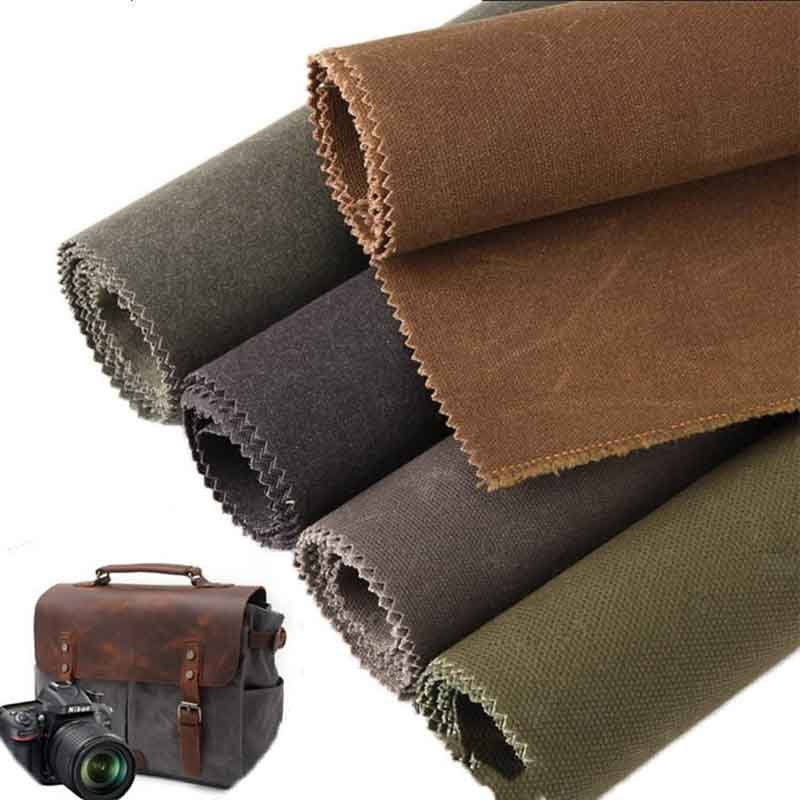
Materials affect custom bag cost through fabric price, thickness, finish, supplier MOQ, color availability, waste rate, and production difficulty. Polyester, canvas, nylon, leather, neoprene, EVA, PVC, TPU, and recycled fabrics all behave differently. The best material is not always the most expensive one; it is the one that fits the product use, target price, and brand positioning.
Fabric Type and Weight
Fabric choice is one of the first cost drivers in custom bag manufacturing. A 210D polyester pouch, a 600D Oxford backpack, a 16 oz canvas tote, and a neoprene lunch bag belong to very different cost levels. The buyer may only see “fabric,” but the factory sees fiber, density, coating, thickness, width, color, roll length, wastage, and sewing behavior.
For many basic promotional bags, polyester, non-woven fabric, and lightweight cotton are common cost-friendly options. For retail tote bags, canvas, cotton, recycled cotton, or heavier polyester may create a better hand feel. For travel bags and backpacks, Oxford, nylon, or coated polyester may be more suitable because they offer better abrasion resistance and structure. For cooler bags, neoprene, aluminum foil lining, PEVA, foam, and insulation materials become part of the cost.
Fabric weight matters because heavier fabric usually uses more raw material and may require stronger needles, thicker thread, and slower sewing. However, lighter is not always better. If a grocery tote is too thin, it may save cost in production but fail in real use. A material decision should always connect to load-bearing, usage frequency, brand level, and customer expectation.
| Material Type | Common Use | Cost Behavior | Practical Note |
|---|---|---|---|
| Non-woven Fabric | Event bags, giveaways | Usually low cost | Good for short-term use, not premium retail |
| Cotton / Canvas | Tote bags, lifestyle bags | Cost changes by weight and finish | Heavier canvas improves feel but raises cost |
| Polyester / Oxford | Backpacks, travel bags, cooler bags | Stable and practical | Coating, density, and thickness affect price |
| Nylon | Outdoor, sports, travel bags | Often higher than basic polyester | Stronger feel, better for durable products |
| Neoprene | Lunch bags, sleeves, koozies | Thickness-driven cost | Adds cushioning, stretch, and insulation |
| PU / Leather | Fashion bags, pouches, leather goods | Wide cost range | Finish, backing, cutting waste, and workmanship matter |
| EVA / TPU / PVC | Cases, waterproof bags, clear bags | Process-driven cost | May need special structure, welding, molding, or testing |
| Recycled Materials | Retail and sustainability-focused bags | Depends on certification and availability | Certification and supply stability may affect MOQ |
Special Materials
Special materials usually increase cost because they require more careful sourcing, testing, or production handling. Leather, PU leather, neoprene, TPU, PVC, EVA, RPET, fire-resistant fabric, waterproof fabric, and insulated materials are not quoted the same way as standard fabric.
Leather and PU leather require attention to thickness, surface finish, backing, softness, cutting direction, edge treatment, and stitching. A leather cosmetic bag with clean edges and smooth zipper installation takes more skill than a basic cotton pouch. Neoprene adds stretch and cushioning, but thickness changes cutting, sewing, and shape control. EVA may require molding or structured assembly. TPU and waterproof materials may involve seam sealing, welding, waterproof zipper decisions, or roll-top closure design.
Functional material also affects quality responsibility. A buyer cannot simply say “waterproof bag” or “fireproof bag” without defining the expected performance. Is it water-resistant for daily splashes? Is it a dry bag for outdoor use? Is it a fire-resistant storage pouch with a specific test expectation? The cost changes because the material, process, and quality checks are different.
A good factory will not only quote the most expensive material. It should help the buyer choose a realistic option based on budget, use case, market positioning, and order stage.
Stock vs Custom Color
Material availability can affect both cost and MOQ. If the buyer chooses stock fabric, stock color, standard zipper, standard webbing, and available lining, the project can usually move faster and with lower risk. If the buyer requires a custom Pantone color, custom texture, exclusive print, special coating, or certified material, upstream supplier MOQ may become part of the project.
For a first trial order, stock materials are often more practical. They help the buyer test the product without locking too much budget into custom material development. For mature product lines, custom materials can create stronger brand recognition and better market differentiation.
Color is a common example. A black, navy, beige, or natural canvas may be easy to source. A custom seasonal color may require dyeing. Dyeing may create additional cost, lead time, color approval steps, and minimum yardage. The same logic applies to custom webbing, zipper tape, lining, printed fabric, and branded accessories.
The smartest question is not only “Can you make this color?” It is “Can this color be made within my quantity, timeline, and target cost?” That question leads to better decisions.
How Does Bag Structure Change Price?
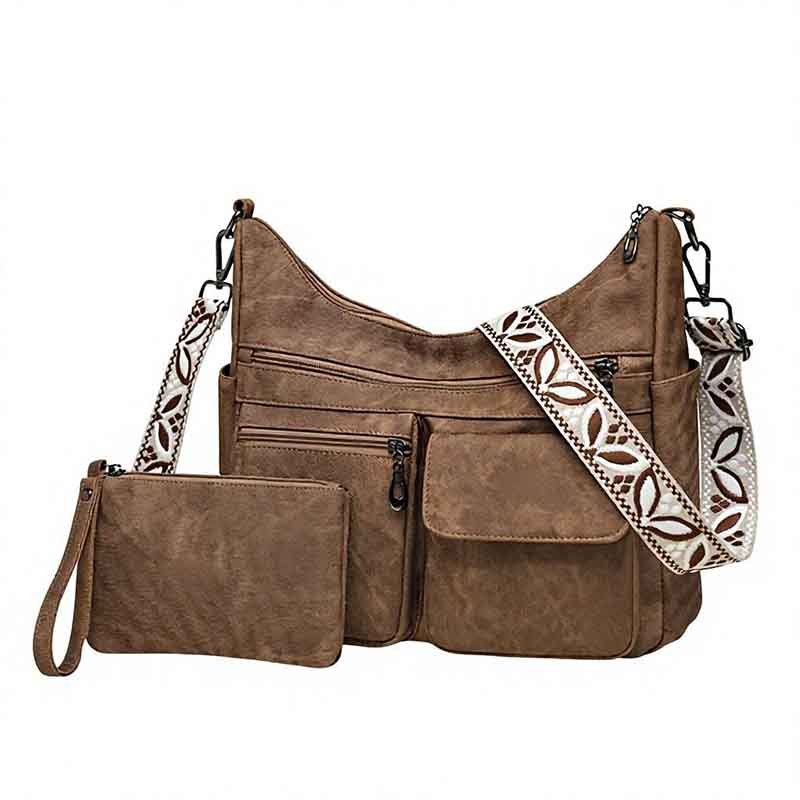
Bag structure changes price because every zipper, pocket, lining, divider, padded panel, reinforcement, curved seam, and shaped corner adds material, labor, and inspection work. A flat tote bag may be quick to produce, while a backpack, cooler bag, tool bag, or cosmetic case may require many more steps and stricter quality control.
Pockets and Compartments
Pockets make a bag more useful, but they also add cost. An open tote with no pockets is one of the simplest structures. Once the buyer adds an inner zipper pocket, front pocket, bottle holder, laptop sleeve, mesh pocket, card pocket, elastic loop, or divider, the factory needs additional material, cutting, stitching, alignment, and inspection.
A pocket is not only an extra piece of fabric. It must be placed correctly, stitched securely, and checked for function. For retail products, pocket alignment affects appearance. For functional bags, pocket position affects user experience. A medical bag with poorly planned compartments can become hard to use. A tool bag with weak pocket stitching can fail under weight. A backpack with a laptop sleeve that is too shallow may create complaints even if the outer bag looks fine.
The cost increase depends on pocket number, size, material, zipper use, lining requirement, and sewing difficulty. A simple slip pocket may add little. A padded laptop compartment with elastic strap, Velcro closure, and reinforced seams adds more.
Zippers and Closures
Zippers are one of the most important cost and quality details in bag production. The price depends on zipper type, length, tape color, slider quality, puller style, brand level, and installation difficulty. A short straight zipper on a pouch is very different from a long curved zipper around a toiletry bag or backpack compartment.
Closure method also affects cost. Open-top bags are usually simpler. Magnetic snap, button, drawstring closure, zipper closure, roll-top closure, flap closure, buckle closure, and waterproof zipper closure all create different costs and functions.
A zipper can also change the production flow. Curved zippers require better sewing control. Waterproof zippers may be more expensive and harder to install. Double sliders add cost but improve user convenience. Custom zipper pullers improve branding but may require mold or accessory MOQ.
Buyers should think about how the end user opens and closes the bag every day. A cheap zipper may reduce the quote slightly, but zipper failure is one of the fastest ways to create product complaints. For bags used frequently, zipper quality is not a detail to ignore.
Reinforcement Points
Reinforcement is where cost and durability meet. Handles, shoulder straps, bottom corners, zipper ends, pocket openings, side seams, and load-bearing points often need extra stitching or hidden support. Common reinforcement methods include bartack stitching, X-box stitching, double stitching, binding, rivets, extra webbing layers, thicker thread, or backing panels.
Not every bag needs heavy reinforcement. A lightweight cosmetic pouch does not need the same construction as a tool bag. But any product designed to carry weight should be reviewed carefully. Grocery totes, gym bags, duffle bags, tool bags, laptop backpacks, cooler bags, and travel bags all need stress-point planning.
Saving a few cents by removing reinforcement can be expensive later. A broken handle may lead to replacement cost, refund, bad review, or retailer complaint. For brand buyers, reinforcement is not only a production decision. It protects customer trust.
| Structure Feature | Cost Impact | Why It Matters |
|---|---|---|
| Open Top | Low | Simple cutting and sewing, fewer accessories |
| Zipper Closure | Medium | Adds zipper cost, sewing time, and function checks |
| Full Lining | Medium | Adds material, cutting, turning, and inspection |
| Multiple Pockets | Medium to High | Adds panels, zippers, alignment work, and labor |
| Foam Padding | Medium to High | Used for laptop bags, camera bags, cooler bags, and sleeves |
| Reinforced Handles | Medium | Improves load-bearing and reduces failure risk |
| Molded / Structured Body | High | Requires more accurate pattern, material control, and packing |
| Waterproof / Insulated Structure | High | May need special material, seam treatment, and performance checks |
How Do Logo and Packaging Add Cost?
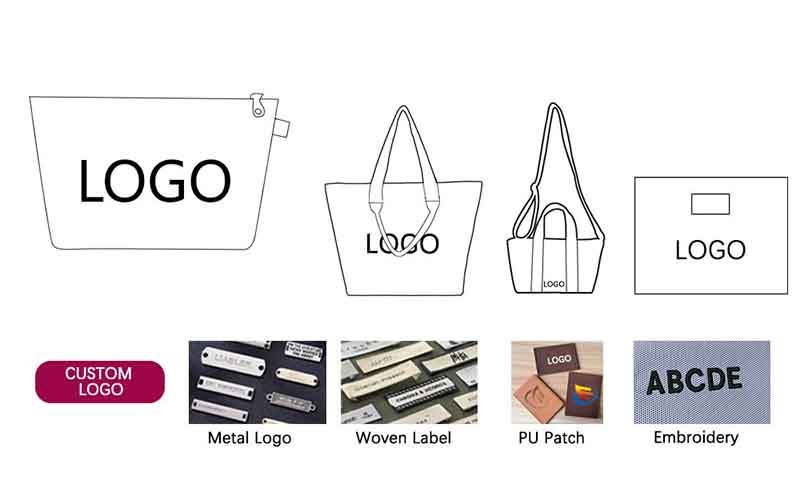
Logo and packaging add cost through setup, materials, application method, color count, placement accuracy, supplier MOQ, and packing labor. A simple one-color print is usually more cost-friendly, while embroidery, woven labels, rubber patches, metal plates, custom hardware, gift boxes, and retail packaging can increase both unit cost and development time.
Logo Methods
Logo method affects both product appearance and cost. Screen printing is often practical for simple logos and larger flat areas. Heat transfer can handle more detailed artwork and smaller runs, but film quality and durability matter. Embroidery gives a more premium, textured look, but cost depends on stitch count, logo size, thread colors, and fabric type.
Woven labels are common for brand consistency. They work well for bags, pouches, and soft goods, but label suppliers may have their own MOQ. Rubber patches, silicone patches, metal plates, and custom zipper pullers create a stronger branded feel, but they usually involve mold, accessory production, and approval time. Embossing and debossing are often used on leather or PU products, but they may require tooling.
The cheapest logo process is not always the best choice. A printed logo may be enough for an event tote, but a retail cosmetic bag may look more valuable with a woven label or embossed logo. The right choice depends on product category, material surface, order quantity, and brand position.
Custom Hardware
Hardware and accessories can quietly change the final cost. Buckles, hooks, D-rings, sliders, snap buttons, magnetic closures, zipper pullers, rivets, metal plates, and strap adjusters all have different grades and finishes. Plastic accessories are often more cost-friendly. Metal accessories may look more premium but can add weight, plating cost, and inspection requirements.
Custom hardware can increase MOQ because accessory factories may require a minimum production run. For example, a standard black zipper puller may be easy to use in a 300-piece order. A custom metal puller with engraved logo may require tooling and a higher accessory MOQ. The same applies to branded buckles, special color hooks, custom rivets, and logo plates.
For new product testing, buyers can often use standard hardware with a strong logo method. For repeat production, custom hardware may be worth upgrading because it improves brand recognition and perceived value. This staged approach helps control risk.
Retail Packaging
Packaging affects more than presentation. It affects labor, carton size, shipping cost, warehouse handling, and sales channel readiness. A basic bulk-packed bag is cheaper to prepare than a retail product with individual polybag, hangtag, insert card, barcode label, tissue paper, dust bag, printed sleeve, or gift box.
For Amazon and Shopify sellers, packaging often needs to protect the product during courier delivery and create a good unboxing experience. For retail stores, packaging may need barcode labels, hanging display, shelf-ready presentation, or clear product information. For corporate gifts, packaging may need to feel clean, branded, and easy to distribute. For wholesale importers, carton packing and labeling may matter more than fancy retail packaging.
Packaging should match the selling channel. Over-packaging increases cost and shipping volume. Under-packaging increases damage and poor customer experience. A good packaging plan protects the product, supports the brand, and keeps logistics efficient.
How Do MOQ and Quantity Affect Unit Price?
MOQ and quantity affect unit price because setup cost, material sourcing, cutting, logo preparation, sewing arrangement, packaging setup, and inspection work are spread across different order volumes. Smaller orders usually have higher unit cost, while larger orders can reduce unit cost if specifications are stable and materials are planned well.
Low MOQ Logic
Low MOQ is useful for market testing, but it usually raises unit cost. The factory still needs to communicate details, source materials, prepare patterns, cut fabric, set up logo work, arrange sewing, inspect goods, and pack the order. These tasks do not disappear just because the order is small.
A 200-piece or 300-piece trial order may be realistic for selected simple bag projects when stock materials and standard accessories are used. But if the product requires custom fabric color, custom hardware, special packaging, or complex structure, the MOQ may rise. The true MOQ depends on material availability, supplier requirements, production setup, and customization level.
Buyers sometimes compare a low-MOQ quote with a high-volume quote and think the factory is expensive. In reality, the cost base is different. A small order carries more setup cost per piece. A large order spreads setup cost across more units.
Low MOQ is best used as a controlled test. It helps buyers reduce inventory risk, test customer response, and refine the product before scaling.
Bulk Quantity Efficiency
Higher quantity can reduce unit cost because production becomes more efficient. Materials can be ordered in larger rolls. Cutting can be arranged more efficiently. Logo setup can be used across more units. Workers become faster after repeating the same operations. Packaging can be prepared in batches. Accessory suppliers may also offer better support when volume increases.
But higher quantity only works well when the product is already confirmed. If the sample is not approved, material is unclear, packaging is undecided, or logo placement keeps changing, a large order can create bigger problems. Scaling before confirmation is risky.
The better path is usually sample first, trial order second, bulk order third. After the product receives market feedback, buyers can improve material, packaging, color, or structure before placing a larger order. This approach protects both cost and brand reputation.
For mature products, volume planning can also reduce future cost. If a buyer can provide quarterly or annual forecast, the factory may plan materials, accessories, and production schedule more smoothly.
Multi-SKU Planning
Multi-SKU orders can either reduce or increase cost, depending on how they are planned. If several products share the same material, color, lining, logo label, zipper, webbing, or packaging style, the project may become more efficient. For example, a tote bag, makeup pouch, and drawstring bag using the same canvas color and woven label can create a more consistent brand series while improving material planning.
However, if every SKU uses different fabric, different color, different zipper, different lining, different logo method, and different packaging, the factory is not managing one order. It is managing several small custom projects at the same time. That increases communication, sourcing, approval, cutting, sewing, and inspection work.
Good multi-SKU planning starts with shared standards. Buyers can define a material system, color system, logo system, and packaging system before expanding products. This makes the collection look more professional and keeps production more manageable.
For brand buyers, multi-SKU planning is not only about cost. It also helps build a stronger product line.
| Order Stage | Common Quantity Range | Cost Behavior | Best Use |
|---|---|---|---|
| Sample Stage | 1–3 pcs per design | High per-piece cost because it includes development work | Confirm shape, material, logo, and structure |
| Trial Order | 200–500 pcs for selected simple projects | Higher unit cost, lower inventory risk | Market testing, product launch, buyer validation |
| Growth Order | 1,000–3,000 pcs | More stable unit cost and better production efficiency | Repeat order, channel expansion, packaging upgrade |
| Bulk Order | 5,000+ pcs depending on product | Better setup-cost distribution, stricter planning needed | Mature product, retail program, large promotion |
| Repeat Program | Seasonal or annual planning | Best for material planning and cost control | Long-term product line and replenishment |
How Do Sampling, QC, and Shipping Affect Budget?
Sampling, QC, and shipping affect budget because they control risk before, during, and after production. Sampling confirms the product before bulk order. QC reduces defects and replacement cost. Shipping and export packing determine landed cost, delivery time, warehouse readiness, and whether the goods arrive safely and correctly labeled.
Sampling Value
Sampling is necessary because a custom bag cannot be judged accurately from a photo alone. Buyers need to feel the fabric, check the size, test the zipper, review the stitching, confirm the logo position, inspect the lining, and see whether the bag matches the intended use.
A sample can reveal problems early. The handle may be too short. The zipper opening may be too narrow. The fabric may be too soft. The pocket may not fit the intended item. The logo may look too large. The bag may collapse when empty. These are not small issues when the product will be sold to real customers.
Sample development also helps the factory check production feasibility. Some designs look good on screen but are hard to sew cleanly at scale. A good sample process turns an idea into a production-ready product.
Buyers should treat sampling as risk control, not just an extra cost. Fixing one sample is far cheaper than fixing hundreds or thousands of finished bags.
Quality Control Cost
Quality control protects the buyer from hidden losses. In bag manufacturing, common quality issues include wrong size, color difference, weak stitching, uneven logo, loose thread, zipper failure, hardware scratches, dirty marks, poor lining, weak handles, incorrect packing, and carton quantity mistakes.
QC may include material checking, accessory checking, pre-production sample confirmation, cutting inspection, in-line inspection, final inspection, and packaging inspection. For simple bags, the process may be lighter. For backpacks, cooler bags, tool bags, medical bags, waterproof bags, and leather goods, QC should be more detailed.
The cost of weak QC is often much higher than the cost of inspection. A defective shipment can create returns, chargebacks, bad reviews, delayed launches, replacement shipping, and damaged buyer relationships. For Amazon sellers, even a small defect rate can hurt ratings. For retailers, packaging or barcode mistakes can delay warehouse receiving.
A lower quote with unclear QC is not always a better deal. Buyers should ask what inspection steps are included before comparing price.
Shipping and Packing
Shipping affects the real landed cost. A bag may be cheap to produce but expensive to ship if it is bulky, padded, structured, or packed in large retail boxes. Cooler bags, EVA cases, backpacks, travel bags, and gift-boxed products often create higher volume than flat tote bags.
Export packing must also match the delivery method. Express shipments need stronger cartons because parcels are handled many times. Sea freight may need moisture control and stackable cartons. Amazon FBA shipments need correct carton labels and product labels. Retail distribution may require barcode labels, packing lists, carton marks, and specific carton weight limits.
The buyer should compare unit cost and landed cost together. A factory price without packaging dimension, carton quantity, and shipping method is incomplete. The final budget should include product cost, sample cost, packaging cost, inspection cost, domestic handling if needed, international freight, customs-related charges, and destination delivery.
For large or repeat orders, carton optimization can reduce cost. Folding method, packing quantity, carton size, and packaging material all matter.
How Can Buyers Get an Accurate Quote?
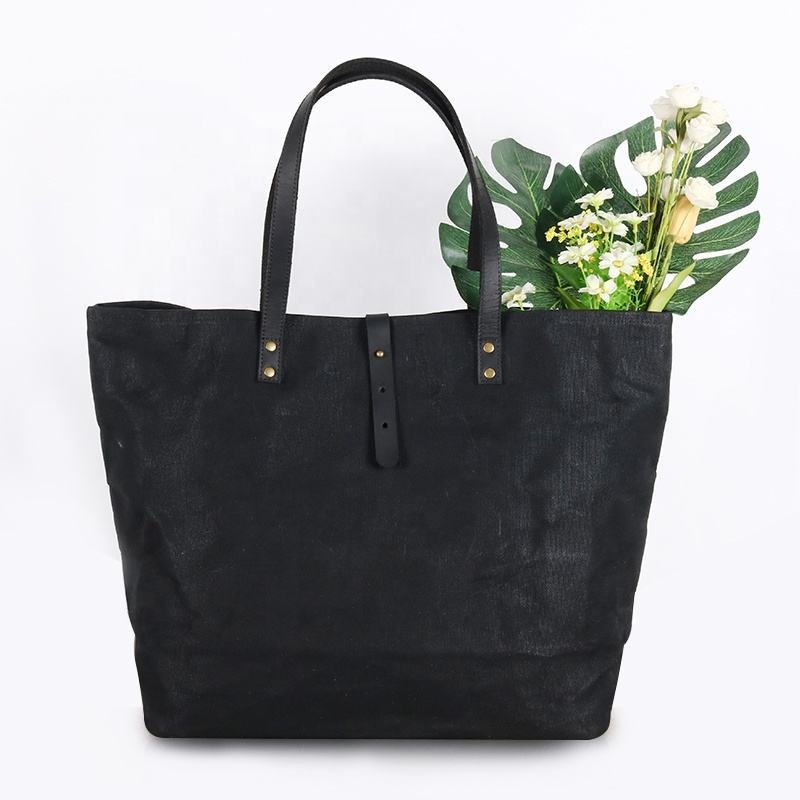
Buyers can get an accurate custom bag quote by sending product photos, size, material preference, logo file, quantity, color requirement, packaging needs, delivery country, and timeline. A tech pack, reference sample, or product link improves accuracy. The clearer the specification, the fewer pricing mistakes, sample delays, and hidden cost changes later.
RFQ Details
A good RFQ does not need to be complicated, but it should answer the questions that affect cost. The factory needs to know what the product is, how big it is, what material it uses, how it closes, where the logo goes, how many pieces are needed, how it should be packed, and where it will ship.
Useful details include product type, reference photos, dimensions, material preference, lining requirement, pocket layout, zipper or closure method, handle or strap size, logo artwork, logo size, color, quantity, packaging, destination country, and target delivery date.
If the buyer does not know the best material, that is fine. A professional factory can suggest options. But the buyer should explain the use case. A beach bag, grocery tote, laptop backpack, cooler bag, and cosmetic pouch have different material and structure needs.
The more complete the RFQ, the faster the quotation. It also helps the buyer compare suppliers fairly. Without clear details, every factory may quote a different version of the product.
| RFQ Detail | Why It Matters | Example |
|---|---|---|
| Product Type | Defines base structure and labor | Tote bag, backpack, cooler bag, cosmetic pouch |
| Size | Affects material usage and packing volume | 35 × 40 × 12 cm |
| Material | Affects cost, MOQ, durability, and feel | 16 oz canvas, 600D Oxford, neoprene, PU |
| Logo Method | Affects setup cost and appearance | Screen print, embroidery, woven label, rubber patch |
| Quantity | Affects unit price and sourcing options | 300 pcs trial, 1,000 pcs repeat, 5,000 pcs bulk |
| Packaging | Affects labor, carton size, and channel readiness | Polybag, hangtag, barcode, color box, FBA label |
| Destination | Affects shipping method and landed cost | United States, UK, Germany, Australia |
| Timeline | Affects production planning and freight choice | Sample in 7–15 days, launch in 60 days |
Tech Pack Benefits
A tech pack helps reduce pricing mistakes because it turns the buyer’s idea into measurable production information. It can include drawings, dimensions, material specification, color code, logo placement, hardware details, lining, stitching notes, packaging method, carton requirement, and testing expectations.
Not every buyer has a complete tech pack at the first inquiry. Many projects start from a photo, sketch, sample, or online reference. That is normal. But before sampling and bulk production, the details must become clear.
A tech pack reduces assumptions. Without one, the buyer may imagine heavy canvas while the factory quotes lighter cotton. The buyer may expect a lined bag while the factory quotes an unlined version. The buyer may expect reinforced handles while the factory quotes basic stitching. These small differences can create big price gaps.
For mature brands, a tech pack also supports repeat production. It helps keep material, dimensions, logo position, and workmanship consistent across future orders. For multi-SKU projects, it becomes even more important because every product needs clear standards.
Price Comparison
The cheapest quote is not always the best quote. A lower price may come from thinner material, weaker lining, lower-grade zipper, fewer reinforcement stitches, cheaper hardware, basic packaging, limited QC, or unclear export preparation.
When comparing quotes, buyers should check whether each supplier is quoting the same product. Are the material weight and quality the same? Is the lining included? Are zippers and hardware the same grade? Is the logo method the same? Is packaging included? Is sample cost clear? Are carton labels included? Is quality inspection included? Are payment and shipping terms clear?
A fair comparison should focus on total value, not only unit price. A quote that is slightly higher but includes better material, stronger stitching, clearer QC, and proper export packing may be more economical in the long run.
For serious custom bag projects, the best factory is not the one that gives the fastest low number. It is the one that asks the right questions, explains the cost drivers, helps reduce unnecessary cost, and protects the product from avoidable production risk.
Conclusion: How Should Buyers Think About Custom Bag Cost?
Custom bag manufacturing cost is not one fixed number. It is the result of many product and production decisions. Material determines feel, durability, and MOQ. Structure determines labor and difficulty. Logo and packaging determine brand presentation. Quantity determines how setup cost is spread. Sampling determines whether the product is ready for production. QC determines whether the product can survive real customer use. Shipping determines the true landed cost.
For buyers, the goal should not be to find the cheapest number as quickly as possible. The better goal is to understand what is included in the quote, where cost can be optimized, and which details should not be removed because they protect product quality.
A professional custom bag manufacturer should help buyers compare options clearly. Sometimes the right solution is to use a stock fabric for a first trial order. Sometimes it is better to upgrade the zipper or reinforce the handle. Sometimes packaging should be simplified to reduce shipping volume. Sometimes custom hardware should wait until the second or third order. These decisions are not only about cost; they are about reducing risk.
Szoneier works as a Shenzhen-based custom bags and soft goods OEM/ODM manufacturing partner for global brands, retailers, importers, e-commerce sellers, promotional companies, and business buyers. The team supports custom bag projects from product idea, material selection, sample development, logo application, bulk production, quality inspection, packaging, and export delivery.
If you are developing a custom tote bag, backpack, cooler bag, cosmetic bag, travel bag, leather bag, neoprene product, EVA case, waterproof bag, tool bag, medical bag, or other sewn soft goods project, send your product photo, sketch, tech pack, logo file, quantity, material idea, packaging requirement, and delivery country to Szoneier. The team can review your project, explain the main cost drivers, and help you build a more realistic custom bag quotation before moving into sampling or bulk production.