
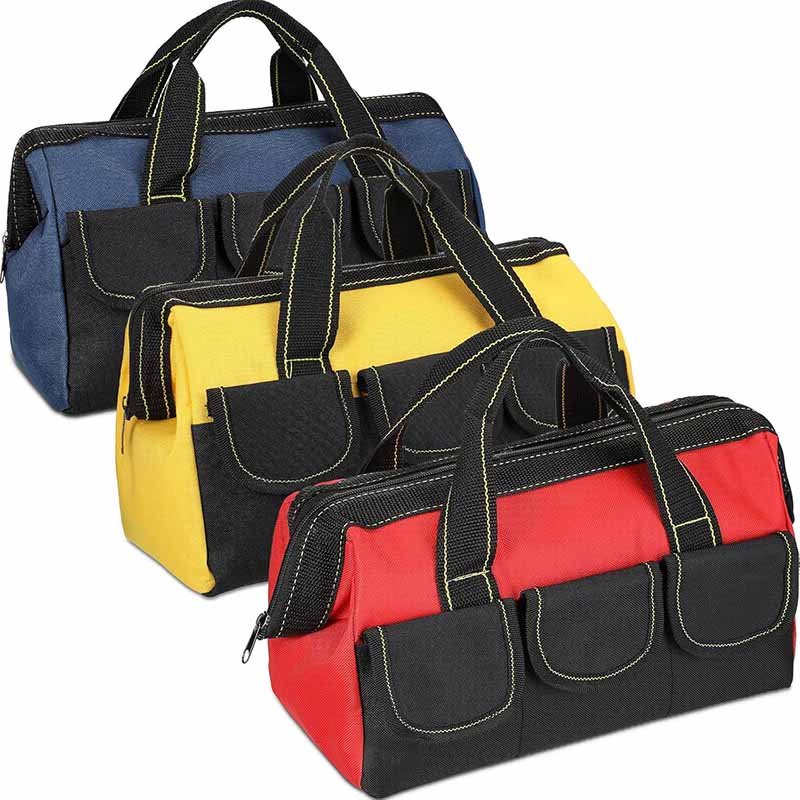
Tool bags are everywhere—but surprisingly, very few people truly understand what defines a good tool bag, how many types exist, or why different professions rely on very different designs. For some, a tool bag is simply a container to throw tools into. For professionals, however, a tool bag is a productivity system, a mobile workstation, and often the difference between working efficiently and working frustrated.
In today’s global market, tool bags are no longer one-size-fits-all products. Electricians, mechanics, HVAC technicians, carpenters, field engineers, and even DIY users all demand different structures, materials, and layouts. At the same time, brands and distributors are increasingly looking for custom tool bags—designed to match real usage scenarios, reflect brand identity, and reduce long-term failure rates.
Yet many buyers still struggle with basic questions: What exactly is a tool bag? How many types are there? How is a tool bag different from a toolbox? And surprisingly—why does the term “toolbag” sometimes appear as an insult online?
Understanding these questions is not just about definitions. It’s about making smarter product decisions, avoiding costly mistakes, and choosing tool bags that actually support the work being done.
A tool bag is a soft or semi-rigid storage solution designed to organize, carry, and protect tools for professional or personal use. Unlike rigid toolboxes, tool bags offer flexibility, portability, and task-specific layouts. Common types include tool tote bags, backpack tool bags, rolling tool bags, and trade-specific designs. Choosing the right type depends on job requirements, tool weight, mobility needs, and durability expectations.
What Is a Tool Bag
A tool bag is a portable storage solution designed to organize, protect, and transport tools efficiently. Unlike rigid toolboxes, tool bags are typically made from fabric-based materials such as canvas, polyester, nylon, or leather, offering flexibility, lighter weight, and easier access. Tool bags are widely used by professionals and DIY users who need mobility, task-based organization, and durability in daily work environments.
What does a tool bag actually mean in real-world use?
In real working scenarios, a tool bag is not just a container—it functions as a mobile tool management system. Its primary role is to keep tools organized, accessible, and protected while allowing the user to move efficiently between job locations.
Unlike shelves or fixed storage, a tool bag travels with the user. This makes it essential for jobs that involve frequent movement, such as construction sites, maintenance work, installations, repairs, and field service. A properly designed tool bag reduces time spent searching for tools, minimizes tool damage caused by collisions, and helps professionals maintain consistent workflows throughout the day.
From an end-user perspective, the value of a tool bag is measured not by how much it can hold, but by how well it supports the way tools are actually used.
How is a tool bag different from a toolbox or other tool storage options?
Tool bags differ from traditional toolboxes in both structure and function. Toolboxes are rigid, often heavy, and best suited for stationary environments such as workshops, garages, or vehicles. Tool belts offer immediate access but are limited in capacity and can cause fatigue during long working hours.
Tool bags sit between these two extremes. They provide:
- More capacity than tool belts
- Greater portability than toolboxes
- Flexible internal layouts instead of fixed compartments
This balance makes tool bags especially suitable for professionals who need to carry a full set of tools while remaining mobile. In many industries, tool bags have become the preferred option because they adapt better to changing job conditions.
What are the core functions every tool bag is designed to perform?
Regardless of type or size, every tool bag is built around three core functions:
- Organization Tool bags use pockets, sleeves, loops, and dividers to separate tools by size and function. This prevents tools from tangling, colliding, or becoming difficult to locate.
- Protection Reinforced fabrics, padded panels, and structured bases help protect tools from impact, moisture, dust, and abrasion. This extends tool lifespan and reduces replacement costs.
- Mobility Handles, shoulder straps, backpack systems, or wheels allow users to transport tools comfortably across different environments without excessive strain.
A well-engineered tool bag balances all three functions without sacrificing comfort or durability.
Who uses tool bags and in which scenarios are they essential?
Tool bags are used across a wide range of professions and environments, including:
- Electricians and electrical contractors
- Mechanics and automotive technicians
- HVAC and plumbing professionals
- Construction workers and carpenters
- Field service engineers and installers
- DIY users and home improvement enthusiasts
In these scenarios, a tool bag is often opened and closed dozens—or even hundreds—of times per week. This frequent use is why professional-grade tool bags emphasize stitching strength, material performance, and ergonomic design rather than appearance alone.
Is “tool bag” a technical term or a slang expression?
In professional, manufacturing, and industrial contexts, “tool bag” is a neutral and technical term used globally to describe a category of tool storage products. It is standard terminology in product catalogs, trade communication, and international sourcing.
While the word “toolbag” may appear as slang or an insult in casual online language, this meaning is completely unrelated to its professional usage. In the tool, construction, and manufacturing industries, the term carries no negative connotation and is universally understood as a functional product category.
Why has the tool bag evolved beyond a simple bag?
Modern tool bags have evolved because work environments have changed. Tools are more specialized, job sites are more mobile, and professionals expect equipment that supports efficiency and comfort.
As a result, today’s tool bags are often engineered products—featuring load-tested structures, ergonomic carrying systems, reinforced bases, and task-specific layouts. This evolution explains why high-quality tool bags are increasingly developed through custom design and OEM manufacturing, rather than off-the-shelf sourcing.
Which Types of Tool Bags Are There
There are multiple types of tool bags, each designed for different tools, job environments, and mobility needs. Common types include soft tool bags, tool tote bags, backpack tool bags, rolling tool bags, bucket tool bags, and trade-specific tool bags. Each type differs in structure, capacity, carrying method, and level of protection, making the right choice highly dependent on how and where the tools are used.
What is a soft tool bag and when is it used?
A soft tool bag is the most widely used and versatile type of tool bag. It is typically made from flexible materials such as canvas, polyester, or nylon and features zippered closures with multiple internal and external pockets.
Soft tool bags are ideal for general-purpose use, light to medium tool loads, and users who need a balance between capacity and portability. Because of their simple structure, they are easy to store, lightweight, and cost-effective. From a manufacturing standpoint, soft tool bags also offer the greatest flexibility for customization, including pocket layout, material thickness, branding placement, and color selection.
What is a tool tote bag and why do professionals prefer it?
Tool tote bags are open-top tool bags designed for fast and frequent tool access. They usually feature a wide central compartment surrounded by vertical pockets or tool slots along the inner and outer walls.
Electricians, technicians, and maintenance workers often prefer tote bags when they need to repeatedly grab and return tools during short tasks. The open structure improves speed but offers less protection from dust, rain, or theft. For this reason, tool tote bags are most effective in indoor environments or controlled job sites where access speed matters more than enclosure.
What is a backpack tool bag and who should use it?
Backpack tool bags are designed to distribute weight evenly across both shoulders, reducing physical strain during long periods of carrying. They feature structured compartments, padded shoulder straps, and often reinforced backs and bases.
These bags are especially suitable for field technicians, installers, and service engineers who travel between locations or work in multi-level buildings. Compared to shoulder-carry tool bags, backpack tool bags improve comfort and safety but require more advanced structural engineering to ensure durability under heavy loads.
What are rolling tool bags and when are they necessary?
Rolling tool bags are built for transporting heavy or bulky tool sets with minimal physical effort. They are equipped with wheels, telescopic handles, and reinforced frames or bases.
These bags are commonly used in industrial maintenance, aviation, large construction sites, and environments where tools must be moved over long distances. While heavier and more expensive than other types, rolling tool bags significantly reduce fatigue and injury risk. Their performance depends heavily on wheel quality, base reinforcement, and handle construction.
What is a bucket tool bag and how does it work?
A bucket tool bag is designed to fit over a standard utility bucket, turning it into a portable tool organizer. It features multiple external pockets and loops arranged around the bucket’s exterior.
Bucket tool bags are compact, affordable, and popular among electricians, plumbers, and utility workers. They are best suited for short-duration tasks and limited tool sets. Although simple in appearance, stitching quality and pocket reinforcement are critical, as uneven weight distribution can cause early failure.
Are there tool bags designed for specific trades?
Yes. Many tool bags are engineered specifically for certain professions. Examples include electrician tool bags with insulated pockets, mechanic tool bags with oil-resistant linings, and HVAC tool bags with compartments sized for gauges and instruments.
Trade-specific tool bags improve efficiency by matching the bag’s layout to the tools used most frequently. They also reduce tool damage and user fatigue. As a result, many professional brands choose custom or OEM solutions rather than generic designs when targeting skilled trades.
How do these tool bag types differ in real-world performance?
The key differences between tool bag types lie in:
- Access speed (open-top vs. zippered)
- Carrying comfort (handheld, shoulder, backpack, wheeled)
- Protection level (open vs. enclosed)
- Load capacity (light-duty vs. heavy-duty)
There is no universally “best” type. The best tool bag is the one that matches the user’s daily workflow, tool weight, and working environment.
Why do manufacturers classify tool bags by type instead of size alone?
Size alone does not define usability. Two tool bags of the same size can perform very differently depending on structure, carrying method, and internal layout.
Professional manufacturers classify tool bags by type because function drives design. This approach ensures that materials, stitching, reinforcement, and ergonomics are aligned with real usage scenarios rather than arbitrary dimensions.
How Are Tool Bags Classified by Material
Tool bags are classified by material based on durability, weight, flexibility, and resistance to wear, moisture, and impact. Common materials include canvas, polyester, nylon, leather, and reinforced composite fabrics. Each material affects how a tool bag performs under load, in different environments, and over long-term use, making material choice a key factor in selecting or designing the right tool bag.
Which materials are most commonly used in tool bags?
Modern tool bags are typically made from a small group of proven materials, each chosen for specific performance characteristics. The most common include heavy-duty canvas, polyester fabrics, nylon fabrics, natural or synthetic leather, and reinforced composite materials such as PVC- or EVA-backed fabrics.
Professional manufacturers rarely rely on a single material alone. Instead, they combine multiple fabrics—for example, nylon bodies with PVC-coated bases—to balance durability, weight, flexibility, and cost. This layered approach allows tool bags to handle real-world stress more effectively than single-material constructions.
How does canvas perform in tool bag applications?
Canvas is one of the oldest materials used in tool bags and remains popular for its abrasion resistance and structural stability. It holds its shape well, resists tearing, and performs reliably in dry, controlled environments.
However, canvas is naturally heavier than synthetic alternatives and absorbs moisture unless treated. For this reason, canvas tool bags are best suited for indoor work, workshops, and light outdoor use. Waxed or coated canvas improves water resistance but adds cost and stiffness, which must be considered during product design.
Why are polyester tool bags widely used today?
Polyester is one of the most common materials for modern tool bags because it offers a strong balance between cost, durability, and flexibility. It resists stretching, maintains color well, and performs reliably in everyday job conditions.
Polyester tool bags are lighter than canvas and easier to mass-produce consistently. When combined with higher-denier yarns and reinforced stitching, polyester can support medium to heavy tool loads. This makes it a popular choice for brands targeting professional users while maintaining competitive pricing.
How does nylon compare to polyester for tool bags?
Nylon is generally stronger than polyester at the same fabric weight and offers superior tear resistance and load-bearing performance. It is commonly used in heavy-duty and professional-grade tool bags where strength and longevity are critical.
The trade-off is cost and flexibility. Nylon fabrics are more expensive and can feel stiffer, especially at higher deniers. However, for users carrying sharp or heavy tools daily, nylon significantly reduces failure risks such as seam tearing or fabric rupture, making it ideal for demanding environments.
Are leather tool bags still relevant in modern tool storage?
Leather tool bags are associated with premium durability and long service life. High-quality leather resists abrasion, protects tools well, and ages gracefully over time. For certain trades and brands, leather also conveys craftsmanship and professional image.
That said, leather is heavier, more expensive, and less resistant to moisture compared to modern synthetics. As a result, leather tool bags are often used in specialized or premium markets rather than mass industrial applications. Many modern designs now combine leather reinforcements with synthetic bodies to balance aesthetics and performance.
What are reinforced and composite materials, and why are they used?
Reinforced materials include fabrics backed with PVC, TPU, or EVA layers, as well as molded plastic or rubberized bases. These materials are used in high-stress zones, such as bag bottoms and corners, where abrasion and impact are most severe.
Composite constructions significantly extend tool bag lifespan by preventing water penetration, reducing wear on seams, and maintaining structural integrity under heavy loads. In professional tool bags, reinforced bases are no longer optional—they are expected.
How does material choice affect real-world durability and comfort?
Material selection influences not only durability but also user comfort. Heavier materials increase fatigue during long carries, while overly stiff fabrics reduce flexibility and ease of access.
Well-designed tool bags balance strength and weight by placing heavy-duty materials only where needed. This targeted reinforcement approach is a hallmark of experienced manufacturers and is often missing in low-cost, generic tool bags.
Are heavy-duty materials always the best choice for tool bags?
Not always. Overbuilding a tool bag with the heaviest materials can lead to unnecessary weight, reduced flexibility, and higher costs without meaningful performance gains.
The best tool bags are application-driven, not material-driven. Light-duty users benefit from lighter fabrics, while professionals handling heavy tools require reinforced structures. Understanding this distinction is essential when choosing or developing a tool bag for a specific market.
Why does material engineering matter more in custom tool bags?
In custom or OEM tool bag projects, material engineering determines product success. Factors such as denier rating, coating thickness, stitching compatibility, and reinforcement placement must be considered together.
How to Choose the Right Tool Bag
To choose the right tool bag, you need to consider tool weight, job type, working environment, carrying method, material durability, and internal organization. The best tool bag matches how tools are actually used—not just how many tools you own. Choosing correctly improves efficiency, reduces fatigue, and extends both tool and bag lifespan.
What tools will you carry and how heavy are they?
The first and most important factor is tool load, not bag appearance. Different tools place very different stress on a bag. Hand tools create point loads, power tools add bulk and vibration, and metal tools increase abrasion and impact stress.
Professionals often underestimate total tool weight. A bag designed for light-duty use may fail quickly under a 15–20 kg load. This is why experienced manufacturers classify tool bags by load range, reinforcing stitching, handles, and bases accordingly. Before choosing a bag, users should list their core tools and estimate total weight under real working conditions.
What type of work environment will the tool bag face?
Work environment directly affects material and structure requirements. Indoor environments prioritize organization and access speed. Outdoor or industrial environments require water resistance, abrasion resistance, and reinforced bases.
For example:
- Construction sites demand durable fabrics and reinforced bottoms
- Maintenance work favors quick-access designs
- Field service requires comfortable carrying over distance
Choosing a tool bag without considering environment often leads to premature wear or user frustration. A bag that performs well in a workshop may fail quickly on a job site.
Which carrying method fits your daily workflow best?
Tool bags are carried in different ways: handheld, shoulder strap, backpack, or wheeled. Each method has trade-offs.
Handheld bags offer simplicity but cause fatigue under heavy loads. Shoulder bags free one hand but can strain the neck over time. Backpack tool bags distribute weight evenly and are ideal for long-distance carrying. Rolling tool bags eliminate lifting but require smooth surfaces.
The right choice depends on how often and how far tools are carried during a typical workday—not on personal preference alone.
How important is internal organization for your work style?
Internal layout is often overlooked, yet it defines daily usability. Well-designed tool bags separate tools by function and frequency of use. Frequently used tools should be immediately accessible, while less-used tools can be stored deeper.
Poor organization leads to wasted time, tool damage, and frustration. This is why professional tool bags use dedicated pockets, tool loops, and structured dividers rather than large empty compartments. For many users, better organization is more valuable than larger capacity.
Which material and construction details really matter?
Material choice affects durability, weight, and comfort. However, construction details matter just as much. High-stress zones—such as handles, shoulder strap anchors, and bag bottoms—must be reinforced regardless of fabric type.
Users should look for:
- Dense stitching at load points
- Reinforced or molded bases
- Quality zippers and hardware
A bag made from strong fabric can still fail if construction quality is poor. This is where experienced manufacturers differentiate themselves from low-cost suppliers.
Do you need a general-purpose or job-specific tool bag?
General-purpose tool bags work for mixed tasks and casual use. Job-specific tool bags are designed around particular trades and workflows.
Electricians benefit from vertical tool slots and insulated pockets. Mechanics need oil-resistant linings and wider compartments. HVAC technicians require space for gauges and instruments. Choosing a job-specific design often improves efficiency and reduces long-term wear.
For brands and professional users, this is why custom or OEM tool bags are increasingly preferred over generic designs.
How should budget be balanced against long-term value?
Price should never be evaluated alone. A cheaper tool bag that fails within a year often costs more over time than a durable bag that lasts several years.
When choosing a tool bag, users should consider:
- Expected lifespan
- Repair or replacement frequency
- Impact on productivity
Professionals and businesses increasingly focus on total cost of ownership, not just unit price. This shift is driving demand for better-designed, higher-quality tool bags.
Why is manufacturer experience critical when choosing custom tool bags?
For custom or private label tool bags, the manufacturer’s experience directly affects product success. Tool bags are load-bearing products—design errors lead to real-world failures.
Are Tool Bags Worth Customization
Yes, tool bags are worth customization when they are designed around real tools, job scenarios, and usage frequency. Custom tool bags improve organization, durability, and user efficiency while strengthening brand recognition. Compared to generic products, customized tool bags reduce long-term replacement costs and better support professional workflows, making them a practical investment for brands and professional users.
Do custom tool bags actually perform better than off-the-shelf ones?
In real-world use, custom tool bags consistently outperform generic designs because they are built around specific tool sets and workflows, not assumptions. Off-the-shelf tool bags aim to satisfy the widest audience possible, which often leads to wasted space, poor weight distribution, and weak reinforcement in critical areas.
Custom tool bags allow designers to adjust pocket size, depth, spacing, and load zones based on how tools are actually carried and used. This results in faster tool access, less tool collision, and lower physical strain. Over time, these performance improvements translate into higher user satisfaction and fewer complaints.
How does customization improve organization and efficiency?
Customization turns a tool bag from a container into a task-oriented system. Frequently used tools can be positioned for immediate access, while heavier or less-used tools are stored in reinforced compartments.
This layout reduces time spent searching for tools and minimizes unnecessary movement during work. For professionals who repeat the same tasks daily, even small efficiency gains compound significantly. In many cases, users report that better organization alone justifies the decision to switch to a custom-designed tool bag.
Is customization only about logos and branding?
Branding is only one part of customization—and often not the most important one. While logo placement, color matching, and label design help with brand visibility, functional customization delivers the greatest value.
Functional customization includes:
- Material selection based on environment
- Reinforced stress points for heavier tools
- Trade-specific pocket layouts
- Ergonomic carrying systems
Brands that focus only on logo customization often miss the opportunity to create a truly differentiated product.
How do custom tool bags reduce long-term costs?
At first glance, custom tool bags may have a higher unit cost than generic products. However, when evaluated over time, they often reduce total cost of ownership.
Custom tool bags last longer because materials and construction are matched to real use. They fail less often, generate fewer returns, and reduce warranty claims. For businesses distributing tool bags to professionals, this reliability lowers support costs and protects brand reputation.
In many cases, one well-designed custom tool bag can replace multiple lower-quality replacements.
Which businesses benefit most from customized tool bags?
Custom tool bags are especially valuable for:
- Tool and hardware brands
- Industrial equipment suppliers
- Construction and maintenance service companies
- Professional distributors
- Promotional brands targeting skilled trades
For these businesses, tool bags are not accessories—they are daily-use products that represent the brand in the field. A poorly designed bag reflects negatively on the brand, while a reliable one builds trust over time.
How does OEM/ODM customization work in practice?
OEM/ODM customization typically starts with understanding how the tool bag will be used. This includes analyzing tool weight, environment, carrying frequency, and storage needs. From there, materials, structure, and branding are developed together.
When is customization not necessary?
Customization may not be necessary for short-term promotions, one-time giveaways, or extremely light-duty use. In these cases, generic tool bags can be sufficient.
However, when tool bags are intended for daily professional use, or when brand reputation and long-term performance matter, customization quickly becomes the smarter choice.
Why is manufacturer experience critical for custom tool bags?
Tool bags are load-bearing products. Design errors can lead to seam failure, handle breakage, or poor weight balance—issues that only appear after real-world use.
Experienced manufacturers understand how materials, stitching, reinforcement, and ergonomics interact under stress. This expertise reduces development risk and ensures that custom tool bags perform as intended beyond the first few months of use.
Which Tool Bag Types Are Part of the Bigger Bag Market
Tool bags are part of the broader functional bag market, which includes everyday carry bags, travel bags, sports bags, outdoor bags, and industrial bags. Within this ecosystem, tool bags belong to the industrial and professional category, where durability, organization, and load-bearing performance matter more than appearance. Understanding this structure helps buyers choose designs, materials, and manufacturers more effectively.
How is the global bag market commonly categorized?
The global bag market is typically divided by function rather than appearance. From a manufacturing and sourcing perspective, bags fall into several core categories:
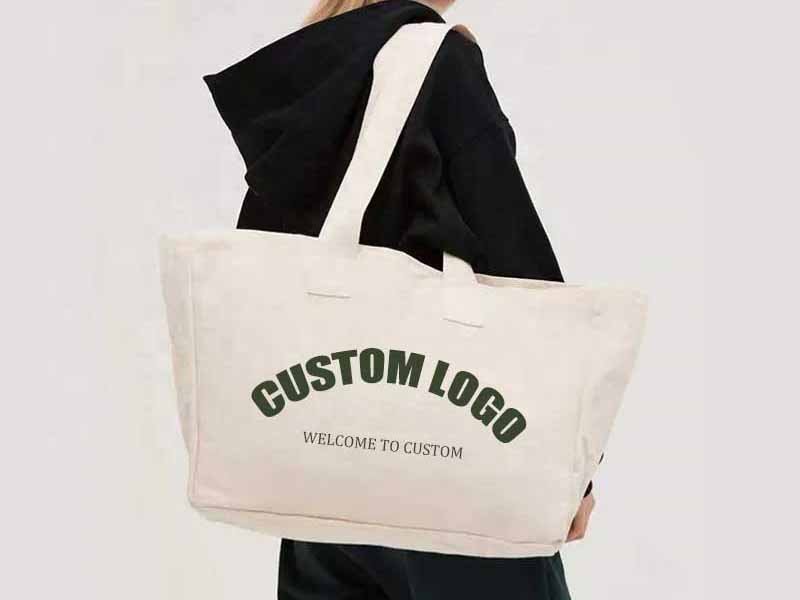
- Everyday carry bags: tote bags, backpacks, messenger bags
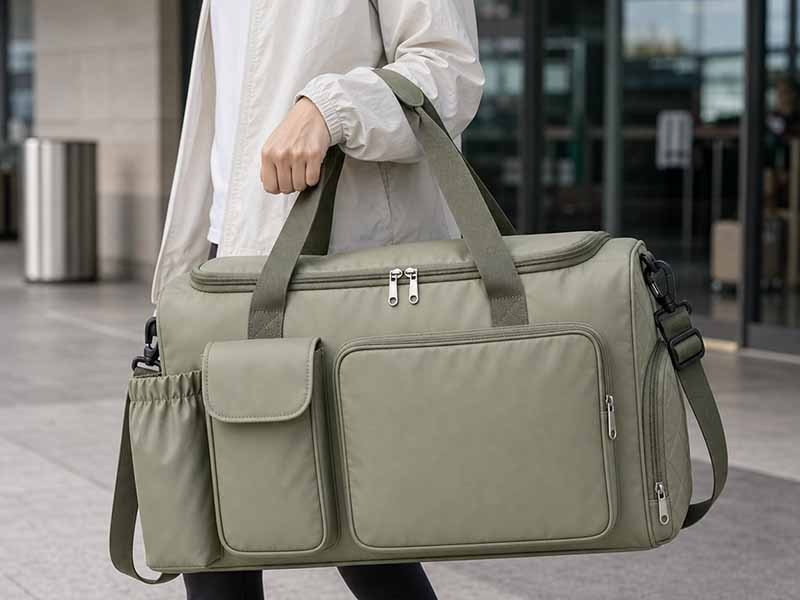
- Travel & lifestyle bags: travel bags, duffel bags, luggage
- Sports & outdoor bags: gym bags, cooler bags, dry bags
- Industrial & professional bags: tool bags, fireproof bags, equipment bags
Tool bags clearly sit in the industrial & professional segment, where performance, safety, and durability outweigh fashion or seasonal trends. This functional classification is how experienced manufacturers and buyers evaluate bag products—not by style alone.
Where exactly do tool bags fit within this structure?
Tool bags are a sub-category of functional load-bearing bags. Unlike casual bags, they are designed to carry heavy, rigid, and often sharp objects repeatedly under stressful conditions.
What differentiates tool bags from other functional bags is:
- Higher load tolerance
- Reinforced construction
- Structured internal organization
- Greater abrasion and impact resistance
In the broader bag ecosystem, tool bags share more similarities with industrial equipment carriers than with consumer fashion bags, even if they may look similar at first glance.
How do tool bags differ from tote bags or backpacks in the same market?
Tote bags and backpacks can exist in both consumer and professional markets, but tool bags are purpose-built for tools, not personal items.
For example:
- A tote bag prioritizes openness and ease of access
- A backpack prioritizes comfort and versatility
- A tool bag prioritizes control, protection, and organization under load
While a backpack can be adapted into a tool backpack, the internal structure, stitching density, and reinforcement must change significantly to handle tools safely. This is why experienced manufacturers treat tool bags as a distinct engineering category rather than a style variation.
How many types of bags exist across the wider bag market?
Across the global bag industry, there are dozens of functional bag types, each optimized for different use cases. While consumer-facing categories appear broader, professional categories are more specialized.
Tool bags represent a smaller but more stable segment. Demand is driven by replacement cycles and professional use rather than trends. This stability makes tool bags attractive for brands seeking predictable demand and long product lifecycles.
Are tool bags considered a niche or a mainstream product category?
Tool bags are technically a niche, but a high-value and resilient niche. Unlike fashion bags, tool bags are replaced due to wear, not style changes. This leads to:
- Consistent reorder demand
- Lower seasonality
- Strong brand loyalty when performance is proven
For manufacturers and brands, this makes tool bags a strategic category rather than a risky one.
Why does this broader market context matter to buyers and brands?
Understanding where tool bags sit in the larger bag market helps buyers make better decisions about:
- Design direction (function-first vs. style-first)
- Material selection (industrial-grade vs. lifestyle-grade)
- Manufacturer choice (industrial bag specialists vs. fashion suppliers)
Brands that treat tool bags like consumer bags often face higher return rates and quality issues. Those that approach them as industrial products achieve better long-term performance and customer satisfaction.
Which Tool Bag Features Are Trending in 2026
In 2026, tool bag trends focus on ergonomic weight distribution, modular internal systems, reinforced lightweight materials, weather resistance, and task-driven layouts. Users increasingly demand tool bags that reduce physical strain, adapt to changing tool sets, and last longer under daily professional use. Function-first engineering has replaced appearance as the main buying driver.
Why is ergonomic weight distribution becoming a core requirement?
By 2026, ergonomics is no longer a premium feature—it is a baseline expectation. Professionals are carrying heavier and more specialized tools, often across larger job sites or multi-story buildings. Poor weight distribution leads to fatigue, back pain, and long-term injury.
As a result, trending tool bags emphasize:
- Wider, padded shoulder straps
- Balanced load positioning
- Reinforced back panels
- Reduced pressure points
Backpack tool bags and hybrid carry systems are growing fastest because they address these concerns directly. Buyers increasingly reject bags that feel uncomfortable after extended use, even if they appear durable.
How are modular internal systems changing tool bag usability?
Modularity is one of the strongest 2026 trends. Users no longer want fixed layouts that become obsolete when tool sets change. Instead, they prefer removable dividers, adjustable panels, and modular inserts.
This trend reflects how work itself has changed—many professionals now perform multiple task types rather than a single repetitive job. Modular systems allow one bag to adapt to different tools without requiring a full replacement, extending product lifespan and improving user satisfaction.
Which materials are trending for durability without extra weight?
In 2026, the focus has shifted from “heavier equals stronger” to engineered strength with reduced weight. Trending materials include:
- High-denier nylon and polyester blends
- Reinforced composite fabrics
- Lightweight EVA- or TPU-backed bases
Manufacturers are strategically reinforcing only high-stress zones instead of overbuilding the entire bag. This targeted reinforcement approach improves comfort while maintaining durability—an expectation increasingly voiced by professional users.
Why is weather resistance more important than before?
More professionals work across variable environments—indoor, outdoor, urban, and remote. As a result, tool bags must handle rain, dust, moisture, and temperature changes without compromising tools.
Trending features include:
- Water-resistant fabric coatings
- Molded or rubberized bases
- Raised feet or bottom clearance
- Moisture-resistant linings
By 2026, basic water resistance is expected even in mid-range tool bags, not just premium models.
How is task-driven layout design replacing generic organization?
Search behavior shows users increasingly ask “which tool bag is best for electricians / mechanics / HVAC?” rather than “best tool bag overall.” This signals a shift toward job-specific layouts.
Trending designs position frequently used tools for instant access while securing heavier tools in reinforced zones. This task-driven approach improves workflow and reduces unnecessary movement—an advantage that professionals notice immediately in daily use.
Are durability and longevity becoming stronger buying factors?
Yes. In 2026, buyers are more cost-aware but also more durability-focused. Instead of choosing the cheapest option, users increasingly evaluate how long a tool bag will last under real conditions.
This has increased demand for:
- Reinforced stitching at stress points
- Higher-quality zippers and hardware
- Replaceable or repair-friendly components
Longevity is now closely tied to brand trust, especially in professional markets.
How is customization influencing feature trends in 2026?
Customization plays a growing role in feature development. Brands and professional users want tool bags that reflect their tools, workflows, and environments, not generic assumptions.
Customization in 2026 goes beyond logos and colors. It includes:
- Tailored internal layouts
- Material selection based on environment
- Specific reinforcement zones
Which older features are becoming less relevant?
Some features are losing importance in 2026, including:
- Excessively heavy all-over materials
- Overcrowded pocket designs
- Style-first layouts with poor structure
Users are prioritizing comfort, function, and longevity over visual complexity. Clean, purposeful design is outperforming over-designed products in both reviews and repeat purchases.
Conclusion
Choosing the right tool bag is not about trends—it’s about how real work gets done. Whether you’re building a private label line, expanding a professional product range, or improving user satisfaction, the difference lies in design, materials, and manufacturing discipline.
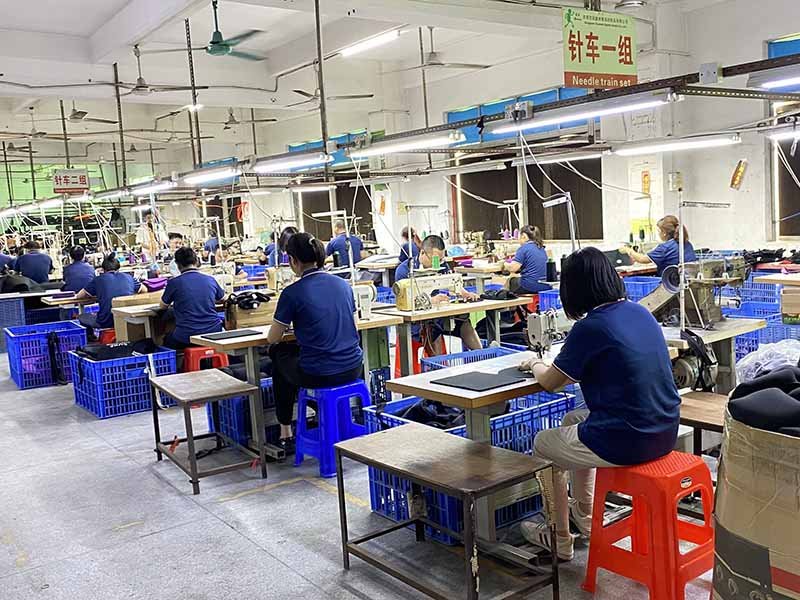
Szoneier is a Chinese bag manufacturer with over 18 years of experience integrating R&D, design, manufacturing, and global supply. The factory specializes in custom tool bags and a full range of bag products—including tote bags, backpacks, travel bags, drawstring bags, cooler bags, fireproof bags, dry bags, and more.
With 100% quality assurance, free design, low MOQ, fast sampling, and short lead times, Szoneier supports overseas small-to-mid buyers and high-end brands with custom, private label, OEM & ODM solutions.
If you’re planning a custom tool bag project—or want to upgrade an existing design—reach out to Szoneier today to discuss materials, structure, pricing, and timelines tailored to your market.
manufacturer Categories
- Custom Tote Bags Manufacturer
- custom backpacks Manufacturer
- custom travel bags& Duffle bags manufacturer
- custom makeup bags & toiletry bags manufacturer
- custom cooler bags manufacturer
- custom drawstring bags manufacturer
- custom makeup bags & toiletry bags manufacturer
- custom golf bags manufacturer
- custom fireproof bags manufacturer
- custom dry bags manufacturer
- custom ski bags manufacturer
- custom gym & sports bags manufacturer
- custom laptop bags manufacturer
- custom tactical bags manufacturer
- custom beach bags manufacturer
- custom medical bags manufacturer
- custom camera bags manufacturer
- custom wetsuits manufacturer
- custom leather goods manufacturer
- more personalized products
Can't find the answers?
No worries, please contact us and we will answer all the questions you have during the whole process of bag customization.
Make A Sample First?
If you have your own artwork, logo design files, or just an idea,please provide details about your project requirements, including preferred fabric, color, and customization options,we’re excited to assist you in bringing your bespoke bag designs to life through our sample production process.
