 Skip to content
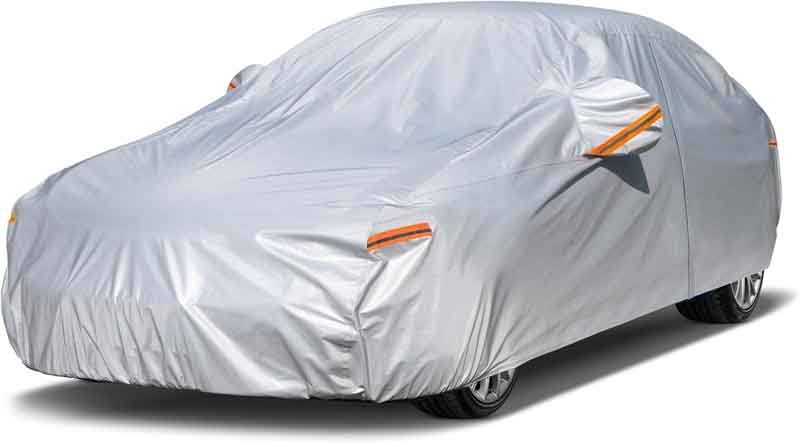
Imagine a car owner in Phoenix, Arizona: relentless sun, heat waves, UV scorching that fades paint and cracks trim. Or someone in Seattle, battling perpetual drizzle, moss, and salt air. In both cases, a well-chosen car cover can be a silent guardian—protecting finish, interior, and resale value. But choose the wrong one, and you may see scratches, mold, or delamination instead.
The best material for a car cover depends on your climate and usage. For general all-weather protection, a 4- to 6-layer solution-dyed polyester or multi-layer PP fabric with water-repellent coating offers balance—UV defense, waterproofing, and breathability. For extreme wet or salty conditions, PEVA or PVC-laminated hybrids add extra water barrier, while indoor covers can use lightweight nonwoven or soft woven fabrics.
Once, a client asked us to protect ultra-luxury cars in Dubai. We built covers in reflective silver-coated polyester layered over waterproof membranes, then lined with soft fleece. The result? Cars parked under open sun for months showed virtually no UV damage. That success story confirmed for us: material + structure + layering = real protection. Read on to see how to select the right cover for your use case.
What factors determine the best material for car covers?
The best car cover material balances UV protection, waterproofing, breathability, softness, and durability according to your local climate and parking conditions. High-quality multi-layer fabrics—like solution-dyed polyester or PP-PEVA hybrids—perform best because they resist sunlight, repel water, and protect paint without trapping moisture. Ultimately, the “best” fabric depends on your environment, usage frequency, and storage habits.
1. UV Resistance and Color Stability
The sun is a car’s worst enemy. Constant UV exposure degrades paint polymers, fades clear coats, and even cracks dashboards. That’s why UV resistance is one of the first metrics to evaluate.
Material implications:
- Solution-dyed polyester fibers have UV stabilizers embedded directly in the yarn during extrusion—offering up to 99% UV blocking and excellent colorfastness even after 3–5 years outdoors.
- Coated or laminated PP fabrics rely on surface additives only; once those degrade, fading and brittleness accelerate.
- Reflective silver coatings reduce surface temperature by up to 20 °C (≈36 °F), minimizing heat transfer to the cabin.
Szoneier tip: For extreme sunlight zones (California, Australia, Middle East), select solution-dyed Oxford polyester with silver or PU coating. It’s the most balanced choice for UV endurance and heat reduction.
2. Water Resistance vs Breathability
This is where many low-cost covers fail. While “waterproof” sounds ideal, complete impermeability often traps moisture underneath—creating condensation that leads to rust, mold, and cloudy headlights.
Key trade-off:
- High waterproofing (PEVA, PVC) blocks external water but also blocks internal evaporation.
- High breathability (nonwoven PP) lets moisture escape but may allow slight seepage in prolonged rain.
- Hybrid multilayer systems combine both—using a waterproof middle film and breathable outer and inner layers.
| Material Type | Waterproofing Level | Breathability | Ideal Use |
|---|---|---|---|
| PEVA/PVC Film | Excellent | Poor | Heavy rain, snow, short-term outdoor |
| Multi-layer PP | Moderate | Good | Indoor / dry outdoor |
| PU-coated Polyester | Very good | Moderate | All-weather general |
| Laminated Oxford + PEVA | Excellent | Moderate | Coastal / wet climates |
Szoneier recommendation: In humid or coastal areas, choose 3-5 layer composite covers with vented designs—balancing both barrier protection and airflow.
3. Surface Softness and Paint Protection
A car cover’s purpose is protection, not abrasion. Yet cheap single-layer covers with rough nonwovens can micro-scratch clear coats, especially when dust is present.
Inner lining materials:
- Brushed fleece or microfiber: softest and most paint-safe, ideal for luxury vehicles.
- Cotton-poly blend: gentle but less resistant to mildew.
- Bare PP nonwoven: budget-friendly, but not suitable for dark or delicate finishes.
The best covers pair a tough outer shell with a soft, anti-static inner layer to prevent rubbing damage. Szoneier engineers test every batch for friction coefficient (<0.25) and lint shedding rate to ensure inner-liner safety for automotive paint.
4. Durability, Tear Strength, and Abrasion Resistance
Outdoor covers face wind, dust, and movement—especially on large vehicles or open parking. Material tensile and tear strength directly impact lifespan and safety.
| Property | Recommended Minimum | Notes |
|---|---|---|
| Tensile Strength | ≥ 300 N/5 cm | Prevents ripping during installation |
| Tear Resistance | ≥ 50 N | Resists puncture from mirrors / corners |
| Abrasion Cycles (Martindale) | 10,000–20,000 | Measures wear tolerance |
Nylon or polyester Oxford fabrics outperform basic nonwoven PP in these metrics, which is why premium outdoor covers use Oxford as their outer shell.
5. Weight, Flexibility, and Handling Ease
Consumers often overlook weight per square meter (GSM).
- Lightweight covers (90–110 GSM) are easy to handle and store but flutter more in wind.
- Midweight fabrics (120–180 GSM) offer ideal protection-to-weight ratio.
- Heavy laminates (> 200 GSM) resist rain and snow but may be bulky.
Szoneier’s guidance: For sedans, 130–150 GSM hybrids strike balance; for SUVs or trucks in high-wind zones, 180 GSM Oxford with reinforcement panels prevents flapping tears.
Flexibility is equally critical. A stiff PE or PVC layer can crack over time or during cold weather. PU-coated polyesters stay pliable down to –20 °C, ensuring all-season usability.
6. Fit, Pattern Accuracy, and Edge Construction
Even premium fabric fails when the fit is wrong. Loose covers flap in the wind, scratching paint; tight ones strain seams.
Engineering details that matter:
- Elastic hems secure snug fit without cutting pressure marks.
- Double-stitched or heat-sealed seams improve water resistance.
- Reinforced mirror pockets prevent tearing.
- Adjustable straps and grommets prevent wind uplift.
7. Thermal Insulation and Temperature Regulation
In extreme heat, metal surfaces can reach 60–70 °C. Reflective coatings and multi-layer padding reduce this significantly. For snowy climates, thermal layers prevent freeze bonding between the cover and paint.
Material options:
- Aluminized Oxford or Tyvek-like HDPE for sun reflection.
- Thick PP core layers (foam or wadding) for cold insulation.
Field testing shows temperature differences of 10–15 °C inside vehicles when using reflective covers versus plain nonwovens—crucial for interiors, batteries, and plastics longevity.
8. Environmental Resistance and Chemical Stability
Outdoor fabrics endure pollutants, acid rain, and urban particulates. Premium coatings—acrylic or nano-silica—create nonstick surfaces for dirt and sap. For coastal use, anti-salt formulations prevent corrosion. Szoneier uses eco-friendly PU coatings compliant with REACH and RoHS—free of heavy metals and harmful phthalates—protecting both cars and users.
Common Pitfalls: What to Avoid
- Over-tight covers: May cause seam rupture and surface scratches.
- Unlined waterproof films: Trap moisture, leading to under-paint rust.
- Cheap dye-printed fabrics: Fade rapidly, staining clear coat.
- Untreated seams: Leak during heavy rain, undermining waterproof claim.
Proper material choice prevents these issues from the start—no after-care can compensate for poor construction.
Which car cover materials are most commonly used today?
The most common car-cover materials today are solution-dyed polyester (Oxford), multi-layer polypropylene (PP) nonwovens, PEVA and PVC waterproof films, and soft microfiber or fleece inner linings. Many modern covers combine them into hybrid composites, balancing UV resistance, waterproofing, and paint protection for different climates and budgets.
1. Polyester (Oxford / Solution-Dyed Oxford Fabric)
Why it dominates premium segments Polyester is the gold standard for outdoor car covers because of its combination of durability, UV stability, and smooth texture. When “solution-dyed,” the color pigment is injected into the polymer during fiber extrusion, not coated later—this makes the color and UV protection permanent.
Technical traits
| Property | Typical Rating | Buyer Impact |
|---|---|---|
| Thickness | 150D–420D yarns | Strong structure, resists tearing |
| UV Protection | 96–99 % | Prevents fading & heat damage |
| Tensile Strength | 400–600 N | High wind & pull resistance |
| Coating Compatibility | PU, acrylic, silver | Enables waterproofing & reflection |
| Colorfastness | 4–5 grade (ISO 105-B02) | Retains color for 3–5 years outdoor |
Advantages
- Excellent long-term UV resistance.
- High tear and abrasion strength.
- Accepts advanced coatings (PU, silver, nano).
- Smooth handfeel, less likely to scratch paint.
Disadvantages
- Heavier and less breathable unless vented.
- Costs about 20–40 % more than nonwoven PP.
Best suited for:
- All-weather outdoor covers, sunny climates, or custom-fit OEM covers.
Szoneier insight: Our 300D solution-dyed Oxford with double-PU coating achieves > 1 000 hours in Q-SUN Xenon testing—equivalent to 5 years of tropical exposure—while maintaining a soft matte finish ideal for branding or screen printing.
2. Polypropylene (PP) Nonwoven — Single or Multi-Layer
Affordable protection for mild or indoor use Spun-bond or melt-blown PP is widely used for value and semi-outdoor covers. It’s lightweight, breathable, and resistant to mold, but less strong under friction.
Technical traits
| Property | Typical Range | Implication |
|---|---|---|
| GSM (weight) | 90–140 g/m² | Light and easy to handle |
| Breathability | High | Prevents condensation |
| Water Resistance | Moderate | Light rain only |
| Tear Strength | Low–Medium | Not for strong winds |
| UV Resistance | Moderate | Needs additives or lamination |
Advantages
- Very light; easy to fold and clean.
- Breathes naturally—good for indoor storage.
- Low cost (40–60 % cheaper than polyester).
Disadvantages
- Degrades faster under strong sun.
- Limited abrasion resistance.
- Not fully waterproof.
Best suited for:
- Indoor garages, short-term parking, moderate climates, or large-scale fleet packaging.
Szoneier enhancement: We produce three-layer PP (spun-bond + melt-blown + spun-bond) composites, adding anti-UV masterbatch and PE coating on the top sheet, extending durability by 1.8–2× versus conventional PP.
3. PEVA (Polyethylene-Vinyl Acetate) and PVC Films
The waterproof champions PEVA and PVC are synthetic films known for superior water impermeability, making them ideal in heavy rain or snow conditions. They’re often laminated to fabrics like PP or Oxford for better structure.
PEVA vs. PVC: what’s the difference?
| Feature | PEVA | PVC |
|---|---|---|
| Composition | Ethylene-vinyl acetate | Polyvinyl chloride |
| Feel | Softer, flexible | Heavier, more rigid |
| Temperature Range | –20 °C – +50 °C | 0 °C – +60 °C |
| Eco Status | Non-chlorinated | Contains chloride |
| Weight | Light | Heavy |
| Price | Slightly higher | Lower |
Advantages
- 100 % waterproof barrier.
- Excellent for coastal or monsoon regions.
- Easy to wipe clean and mold-resistant.
Disadvantages
- Non-breathable (traps condensation).
- Can stiffen or crack with age.
- Requires soft lining to avoid scratching.
Best suited for:
- Prolonged rain, snow, or outdoor long-term parking with vented design.
Szoneier application: We co-laminate PEVA onto 210D Oxford with hot-melt adhesive and reinforce seams via ultrasonic welding, achieving a hydrostatic pressure rating of > 3 000 mm H₂O (per ISO 811).
4. Microfiber, Cotton, or Fleece Inner Linings
Why inner layers matter The inner surface is what directly contacts your car’s paint. High-end covers use soft linings to prevent micro-scratches, static buildup, or swirl marks.
Options overview
| Material | Softness | Moisture Absorption | Notes |
|---|---|---|---|
| Brushed fleece (poly blend) | Excellent | Moderate | Standard for luxury covers |
| Microfiber knit | Excellent | Low | Quick-drying, anti-static |
| Cotton flannel | Very good | High | Soft but prone to mildew |
Advantages
- Protects delicate paint or ceramic coatings.
- Reduces noise from movement.
- Adds visual premium appeal.
Disadvantages
- Slightly heavier and slower to dry.
- Requires additional lamination cost.
Best suited for:
- Premium vehicles, indoor storage, or high-end brand products.
Szoneier detail: Our inner fleece weighs 120 g/m², flame-laminated to PU membranes without chemical glue—meeting OEKO-TEX Standard 100 safety requirements.
5. Hybrid & Multi-Layer Composite Fabrics
The modern standard: engineered layers for total balance Most “all-weather” covers today are not single materials but sandwich constructions combining multiple substrates. A common 5-layer system looks like this:
| Layer | Material | Function |
|---|---|---|
| Outer Shell | Solution-dyed Oxford | UV, abrasion resistance |
| Second Layer | PU or acrylic coating | Water repellency |
| Middle Core | PE or TPU membrane | Waterproof barrier |
| Fourth Layer | Nonwoven PP | Air diffusion, cushioning |
| Inner Liner | Fleece or brushed microfiber | Paint protection |
Benefits of composite design
- Combines waterproofing + breathability + softness.
- Controls thickness (0.5 – 1.2 mm) for strength yet foldability.
- Reduces risk of condensation or color transfer.
- Enables brand-specific customization (logos, patterns, trims).
Performance snapshot
| Property | Premium Hybrid Average | Basic Single-Layer Average |
|---|---|---|
| UV Resistance | 98 % | 80 % |
| Hydrostatic Pressure | 2 800 mm | 800 mm |
| Tear Strength | 60 N | 20 N |
| Lifespan (Outdoor) | 5 – 10 yrs | 1 – 2 yrs |
| Cost Index | ★★★★☆ | ★★☆☆☆ |
6. Emerging Specialty Materials
Tyvek (HDPE)
- Extremely lightweight, dust-proof, breathable; ideal for indoor storage.
- Limited abrasion strength; not suitable for wind exposure.
TPU-laminated polyester
- New-generation alternative to PVC: fully waterproof yet flexible and eco-friendly.
- More expensive, but recyclable.
Fire-resistant and smell-proof variants For niche markets (EV battery storage, garage safety, or cannabis transport covers), fabrics include fireproof coatings (silicone fiberglass) or odor-block films—fields where Szoneier’s cross-category textile R&D provides an advantage.
How does climate affect material performance?
Climate dictates what you favor: UV resistance and reflectivity in intense sun; waterproof barriers with ventilation in rainy or humid zones; padded thermal layers in cold or snowy climates. No single material suits all—regional adaptation is key.
Hot, Sunny, Desert Conditions
- Use fabrics with high UV additives, reflective coatings, or light colors to reduce heat absorption.
- Inner layers must withstand temperature swings without shrinking or warping.
- Breathability must balance with sun protection—ventilated membranes help.
Humid, Rainy, Coastal Zones
- Waterproof membranes are essential, but must allow moisture escape.
- Anti-mold, mildew-resistant chemical treatments are important.
- Metals and seams must resist salt corrosion.
Cold, Snow, Freeze Zones
- Multi-layer materials with thermal cores provide insulation.
- Heavy layers handle snow load, but must stay flexible in cold.
- Stiff materials may crack in sub-zero temperatures—flexible laminates preferred.
Dusty, Dry, Windy Areas
- Tighter weave textiles offer better barrier to fine dust.
- But too tight might inhibit air exchange, so pairing with breathable cores matters.
- Reinforced stitching and wind-resistant hems help prevent flapping abrasion.
Do material layers, coatings, and construction make a difference?
Yes—they make the difference between a cover that fails in a season and one that lasts years. Multi-layer designs, proper coatings (PU, acrylic, nano-repellents), sealed seams, and elastic/grommet systems dramatically extend performance and reduce damage risks.
How Many Layers?
- 2-layer covers: Outer + liner — minimal protection.
- 4-layer covers: Outer + waterproof core + support + liner — most balanced.
- 6-layer covers or more: For extreme climates — extra barrier, UV, thermal insulation.
Coatings & Treatments
- PU (Polyurethane): Flexible waterproof barrier.
- Acrylic: Moderate water resistance with UV compatibility.
- Silicone / Nano-repellent: Adds hydrophobic properties.
- Silver / UV additives: Reflect or absorb UV to protect paint.
Seam Reinforcement & Accessories
- Taped or welded seams prevent leaks.
- Elastic hems & tie-downs prevent flapping and ensure fit.
- Grommets / cable locks improve security.
- Edge binding or coated edges protect seams from abrasion.
What Is the Lifespan of a Car Cover?
- A well-built car cover, properly maintained, often lasts 5–10+ years.
- Some manufacturers claim 10-year warranties on premium models.
- Poor covers may fail in 2–3 years due to fading, delamination, seam failure, or loss of water resistance.
Which material is best for your use case and budget?
For daily-use car covers, a 4-layer polyester hybrid offers solid performance at mid-tier cost. For harsh wet, salt, or snow exposure, PEVA or PVC composites may be necessary. Universal covers reduce cost, but custom-fit covers add effectiveness and reduce risks of flapping damage.
Daily Outdoor Use
- A balanced hybrid (poly + waterproof core + liner) provides protection without overkill.
- You want moderate weight, UV stability, and weather resistance.
Seasonal / Storage Use
- In dry, sheltered conditions, lighter materials (multi-layer PP or indoor-grade textile) suffice.
- You can trade waterproof strength for lower cost.
High-End or Collector Vehicles
- Premium, multi-layer customized covers (silver coatings, padded liners) justify investment.
- Aesthetic trim, brand logos, and fit precision become selling points.
Fleet / Budget-Conscious Buyers
- Use stronger substrates only in exposed zones (hood, roof) and lighter materials elsewhere.
- Replace frequently to maintain baseline protection, rather than paying for “luxury overprotection.”
Custom vs. Universal Fit
- Custom-fit prevents flapping, abrasion, and micro-scratching.
- Universal is cheaper but riskier—loose fabric may rub paint or let wind under.
How should you maintain, clean, and store your car cover?
Clean your car cover regularly with mild soap and water, rinse thoroughly, air-dry completely, and store it in a cool, ventilated bag. Always wash by hand or gentle machine cycle, avoid bleach or heat drying, and ensure the cover is dry before folding. Proper care prevents mold, maintains waterproofing, and extends lifespan from three to ten years depending on material quality.
How Often Should You Clean a Car Cover?
Cleaning frequency depends on environment and usage.
| Environment | Recommended Cleaning Interval | Reason |
|---|---|---|
| Indoor Garage | Every 3–4 months | Removes dust buildup, prevents static |
| Urban Outdoor | Every 2 months | Removes soot, acid rain residues |
| Coastal / Humid | Every 1–1.5 months | Removes salt crystals, mold spores |
| Arid / Dusty | Every 1–2 months | Prevents fine dust abrasion |
| Under Trees / Birds | As needed | Removes sap, droppings before staining |
Step-by-Step: Safe Cleaning Procedure
Proper cleaning preserves water-repellent coatings and avoids delamination or fiber stretching.
Step 1 — Shake and Dust Before washing, shake or blow off dry dust with compressed air or soft brush. Never rub dry dust against paint; it’s abrasive.
Step 2 — Hand Wash or Gentle Machine Wash
- Water temperature: ≤ 30 °C (86 °F).
- Detergent: pH-neutral, non-enzymatic soap or baby shampoo.
- Machine setting: Gentle / delicate / low spin.
- Avoid: Bleach, alcohol, softener, or heavy scrubbing pads.
Step 3 — Rinse Thoroughly Residues left in pores attract dust and affect breathability. Rinse until water runs clear.
Step 4 — Air-Dry Naturally Hang or spread flat in shade. Direct sun or dryers can shrink or crack coatings. Never twist or wring the fabric.
Step 5 — Re-apply Water-Repellent Spray (Optional) After 8–10 washes, PU or acrylic coatings may lose hydrophobicity. Apply fabric-safe waterproofing spray evenly and dry 24 h before reuse.
| Do’s | Don’ts |
|---|---|
| Use mild detergent | No bleach or solvent |
| Air-dry in shade | No tumble-dry heat |
| Rinse completely | No pressure-washer jets |
| Fold gently | No sharp bending or creasing |
| Clean regularly | Don’t wait until visible dirt accumulates |
Szoneier factory note: All our Oxford-based covers are pre-treated to withstand ≥ 20 gentle wash cycles (ISO 6330 test). Following the above method preserves coating and lamination adhesion beyond 5 years.
Removing Specific Stains or Residues
- Bird Droppings / Tree Sap: Soften with warm water and mild soap. Wipe gently; avoid scraping.
- Mold / Mildew: Mix one part white vinegar with five parts water. Wipe and air-dry under sunlight briefly, then rinse.
- Oil or Grease: Use diluted dish detergent; rinse thoroughly.
- Salt Crystals: Rinse with clean water before drying — salt eats through seams and zippers.
For persistent odor, sprinkle baking soda on the inner side, wait 15 minutes, then vacuum. This keeps liners (fleece, cotton, microfiber) fresh without chemicals.
Drying: The Step Most Users Neglect
Moisture is the hidden killer. Storing a damp cover promotes mold, yellowing, and delamination.
Best drying practice:
- Hang the cover diagonally on a line or wide rack to let air flow through all layers.
- Avoid hanging by one corner (causes stretching).
- Dry until both inner and outer surfaces are cool and crisp to touch.
- In humid climates, use a fan or dehumidifier nearby — never direct heat guns.
Drying time reference:
| Material Type | Typical Air-Dry Time @ 25 °C / 50 % RH |
|---|---|
| Nonwoven PP | 1–2 h |
| Oxford Polyester | 3–4 h |
| PEVA/PVC Laminated | 5–6 h |
| Hybrid 5-Layer | 4–6 h |
| With Fleece Lining | 6–8 h |
Szoneier internal test: After forced drying at 60 °C for 30 min, PU-coated layers lost 18 % elasticity — proving why natural drying is non-negotiable.
Proper Folding, Storage, and Handling
A clean cover’s longevity depends on how it’s folded and stored. Incorrect folding introduces permanent creases that weaken laminated films.
Folding steps:
- Lay flat with inner (soft) side facing up.
- Fold lengthwise into thirds to minimize surface rub.
- Roll loosely rather than sharp-folding — prevents coating cracks.
- Place in breathable storage bag or cotton sack.
Storage environment:
- Temperature: 15–25 °C (59–77 °F).
- Humidity: < 60 %.
- Away from direct sunlight or heaters.
- Keep off concrete floors (they wick moisture).
Avoid:
- Airtight plastic boxes — trap humidity.
- Weight stacking — causes fabric deformation.
- Contact with chemicals (paint, wax, fuel).
Regular Inspection and Preventive Care
Inspect every 2–3 months:
- Outer layer: Check for color fading, UV chalking, or peeling.
- Seams: Look for loosened threads or micro-leaks.
- Inner lining: Ensure softness remains; no lint shedding or mildew.
- Elastic hems / straps: Replace if overstretched to maintain snug fit.
Prolonged exposure test results (Szoneier internal data):
| Material | Expected Lifespan (Proper Care) | If Neglected |
|---|---|---|
| Multi-layer PP | 3–4 years | 1 year or less |
| Oxford PU Coated | 5–8 years | 2–3 years |
| PEVA Composite | 4–6 years | 2 years |
| Hybrid 6-Layer with Fleece | 7–10 years | 3–4 years |
Seasonal Storage Tips
If you use your cover seasonally (e.g., winter protection only):
- Wash and dry completely before long storage.
- Sprinkle silica-gel packets inside storage bag.
- Store off the ground, ideally on a shelf.
- Avoid compressing heavy objects atop it.
- Ventilate once every few months.
When to Replace Your Car Cover
Even with excellent care, every fabric reaches fatigue. Replacement signals:
- Coating becomes powdery or sticky.
- Surface loses water beading.
- Tears appear at stress points (mirrors, corners).
- Odor persists despite cleaning.
- Fabric feels stiff or brittle in cold.
Conclusion
Choosing the right car cover material isn’t a one-size-fits-all decision. It depends heavily on your climate, usage pattern, budget, and how much convenience or longevity you expect. A hybrid 4-6 layer polyester composite with sealed seams and soft liner often hits the sweet spot for many users.
But material is only half the equation—engineering, fit, seam quality, edge protection, and finishing differentiate a cover that fails from one that endures years of abuse.
If you’re ready to create a car cover that truly protects—and lasts—reach out to Szoneier today. Send us your vehicle specs or climate concerns, and our design team will propose the optimal material structure and construction tailored to your needs.
manufacturer Categories
- Custom Tote Bags Manufacturer
- custom backpacks Manufacturer
- custom travel bags& Duffle bags manufacturer
- custom makeup bags & toiletry bags manufacturer
- custom cooler bags manufacturer
- custom drawstring bags manufacturer
- custom makeup bags & toiletry bags manufacturer
- custom golf bags manufacturer
- custom fireproof bags manufacturer
- custom dry bags manufacturer
- custom ski bags manufacturer
- custom gym & sports bags manufacturer
- custom laptop bags manufacturer
- custom tactical bags manufacturer
- custom beach bags manufacturer
- custom medical bags manufacturer
- custom camera bags manufacturer
- custom wetsuits manufacturer
- custom leather goods manufacturer
- more personalized products
Can't find the answers?
No worries, please contact us and we will answer all the questions you have during the whole process of bag customization.
Make A Sample First?
If you have your own artwork, logo design files, or just an idea,please provide details about your project requirements, including preferred fabric, color, and customization options,we’re excited to assist you in bringing your bespoke bag designs to life through our sample production process.
