Skip to content
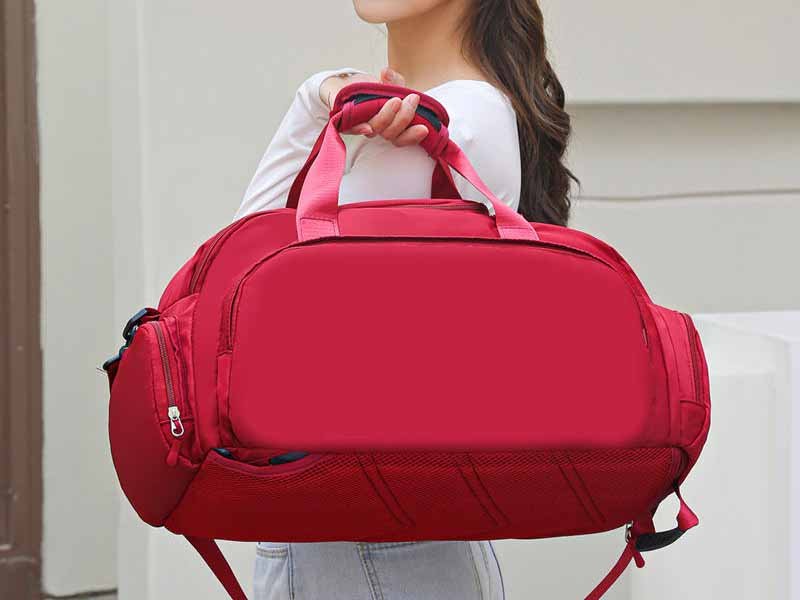
A sports bag is one of those products customers judge quickly. They unzip it, feel the fabric, check the shoe pocket, pull the straps, and immediately decide whether it feels useful or cheap. For a gym user, a separate shoe compartment is not a small bonus. It solves a real daily problem: keeping dirty shoes away from clean clothes, towels, phones, laptops, supplements, and personal items. For a brand, that single feature can turn a basic bag into a more practical, more sellable product.
Sports bag manufacturing with shoe compartments means designing and producing gym bags, duffel bags, backpacks, yoga bags, travel sports bags, and team bags with an independent shoe storage area. A good shoe compartment should have enough space, separate access, ventilation, easy-clean lining, strong stitching, smooth zipper movement, and a structure that does not damage the main compartment capacity.
The challenge is that many shoe compartments look good in photos but fail in real use. Some are too small for men’s sneakers. Some push too far into the main storage area. Some trap odor because there is no airflow. Some use weak lining that tears after repeated shoe friction. For brands planning custom sports bags, the goal is not simply adding a shoe pocket. The goal is building a bag that customers can use after workouts, during travel, at school, in clubs, and in daily routines without feeling messy.
What Are Sports Bags with Shoe Compartments?
Sports bags with shoe compartments are gym, training, travel, yoga, or team bags designed with a separate space for footwear. This compartment keeps shoes away from clean clothing, towels, electronics, toiletries, and daily essentials. A strong design usually includes independent zipper access, breathable ventilation, wipeable lining, reinforced seams, and enough room for common athletic shoe sizes.
The value of this bag type comes from real customer behavior. Many people do not go to the gym and then straight home. They go to work, school, travel, training, yoga class, team practice, or weekend activities. They need one bag that can hold clean items and dirty items at the same time. A shoe compartment turns the bag from a simple storage product into a cleaner, more organized daily carry solution.
For brands, this product category has strong commercial potential because the benefit is easy to understand. Customers do not need a long explanation. When they see shoes stored separately, the product instantly feels more useful. This is especially important for e-commerce stores, Amazon listings, DTC fitness brands, sports clubs, and private label programs where product images must communicate value fast.
A sports bag with a shoe compartment should be developed around function first, then appearance. If the structure is wrong, even premium materials cannot save the user experience. The shoe compartment must be large enough, easy to access, easy to clean, and placed in a way that does not make the bag awkward to carry.
| Design Area | Customer Concern | Manufacturing Focus |
|---|---|---|
| Shoe Compartment Size | “Will my shoes actually fit?” | Length, width, depth, and shape testing |
| Main Storage Space | “Will shoes take up too much room?” | Capacity balance between main area and shoe pocket |
| Ventilation | “Will odor stay trapped inside?” | Mesh, eyelets, airflow panels, or vent holes |
| Lining | “Can I wipe dirt and sweat away?” | Waterproof or easy-clean material |
| Zipper | “Can I open it smoothly every day?” | Zipper curve, puller quality, stress reinforcement |
| Shape | “Will the bag look bulky?” | Pattern design and compartment placement |
| Durability | “Will it tear after repeated use?” | Reinforced seams, webbing, and bottom support |
Szoneier is well positioned for this category because the company has more than 18 years of experience in neoprene fabric R&D and manufacturing, as well as custom product development. The factory can customize many neoprene-related products, including bags, koozies, sports supports, medical supports, wetsuits, and other soft goods. For sports bags with shoe compartments, Szoneier can support custom materials, custom structure, free design, low MOQ customization, fast sampling, free sample options, short lead times, and OEM/ODM private label production for overseas small-to-medium customers and high-end brands.
Why Shoe Compartments Matter
Shoe compartments matter because shoes are often the dirtiest, sweatiest, and most odor-prone items inside a sports bag. A separate shoe area helps customers keep clean clothing, towels, electronics, cosmetics, and personal items away from dirt and moisture. This improves hygiene, organization, and daily convenience.
For gym and sports users, the pain point is obvious. After a workout, shoes may carry sweat, rubber dust, locker room moisture, grass, mud, or sand. If the bag has only one large main compartment, everything touches everything. Clean shirts pick up odor. Towels mix with shoes. Small items disappear under clothes. The customer may still use the bag, but the experience feels messy.
A shoe compartment solves this in a simple way:
- Shoes are stored in a controlled area.
- Clean clothes stay separate.
- Odor transfer is reduced.
- Wet or dirty soles do not touch daily items.
- The bag becomes easier to pack.
- Customers can organize faster before and after training.
- Product photos show a clear functional advantage.
- The bag can command a stronger price than a basic duffel.
For brands, the shoe compartment also improves product storytelling. A standard duffel bag must compete mostly on price, color, and size. A sports bag with a shoe compartment can compete on function. It can be marketed for gym users, commuters, athletes, yoga customers, weekend travelers, team sports, and corporate wellness programs.
The key is execution. A poor shoe compartment creates new problems instead of solving old ones.
| Poor Design Problem | Customer Reaction | Better Solution |
|---|---|---|
| Shoe pocket too small | “My sneakers don’t fit.” | Test with real shoe sizes before approval |
| No ventilation | “The bag smells after use.” | Add mesh vents, eyelets, or breathable panels |
| Weak lining | “The pocket tears or gets dirty fast.” | Use waterproof or wipeable lining |
| Bad zipper placement | “It is hard to insert shoes.” | Create wider opening and smoother zipper curve |
| Too much internal intrusion | “The main compartment is useless.” | Balance pocket depth with total capacity |
| No reinforcement | “The side collapses after loading shoes.” | Add seam reinforcement and structured panels |
For private label brands, this feature also helps reduce returns. Customers are less likely to complain when the product matches the real use scenario shown in photos. A shoe compartment should fit the target footwear type, not just a small sample shoe used during development.
What Sports Bags Need
Sports bags with shoe compartments need practical storage, clean separation, durable materials, strong carrying systems, and easy-clean areas. A good bag should handle shoes, clothes, towels, bottles, phones, wallets, supplements, sports gear, and sometimes laptops or travel items without becoming disorganized.
Different users need different layouts. A gym commuter may need a shoe compartment, laptop sleeve, bottle pocket, and wet pocket. A soccer player may need space for cleats, socks, guards, tape, and team clothing. A yoga customer may want a soft, lightweight bag with mat straps and a clean shoe pocket. A traveler may want a larger sports duffel that also works as a weekend bag.
A high-performing sports bag usually includes:
- Independent shoe compartment.
- Main compartment with wide opening.
- Wet-dry pocket for towel, swimwear, or sweaty clothes.
- Side bottle pocket.
- Small pocket for keys, cards, earbuds, and phone.
- Reinforced handles.
- Adjustable shoulder strap.
- Durable zipper system.
- Easy-clean inner lining.
- Bottom support panel.
- Comfortable hand feel.
- Logo placement suitable for private label branding.
Capacity planning is one of the most important decisions. A bag that is too small creates frustration. A bag that is too large becomes inconvenient for daily gym use. The shoe compartment also affects usable capacity because it often shares internal space with the main compartment.
| Capacity Range | Best Use | Shoe Compartment Style | Target Customer |
|---|---|---|---|
| 15L–20L | Yoga, light gym, short sessions | Slim shoe sleeve or small side pocket | Minimalist users |
| 20L–30L | Daily gym, fitness class, office commute | Standard side shoe tunnel | Regular gym users |
| 30L–40L | Gym + work clothes + towel | Larger shoe tunnel + wet pocket | Active adults |
| 40L–55L | Weekend sports, travel, club training | Reinforced shoe area | Travelers and athletes |
| 55L+ | Team gear, bulky sports items | Oversized compartment | Clubs, teams, coaches |
Material choice should also match the use scenario. Neoprene works well for brands that want soft touch, flexibility, protective cushioning, and a modern lifestyle look. Polyester Oxford works well for durable, cost-controlled gym and team bags. Nylon works well for lightweight, premium sports bags. Waterproof lining is important inside shoe compartments and wet pockets.
| Bag Part | Recommended Material | Reason |
|---|---|---|
| Main Body | Neoprene, Oxford, nylon | Controls appearance, strength, and hand feel |
| Shoe Compartment Lining | Waterproof polyester, PVC/TPU lining | Easy to wipe and more resistant to dirt |
| Bottom Panel | Coated Oxford or reinforced fabric | Handles ground contact and friction |
| Handles | Polyester or nylon webbing | Supports carrying load |
| Shoulder Strap | Webbing + padding | Improves comfort |
| Wet Pocket | Waterproof lining | Separates wet clothes or towels |
| Zipper Area | Durable zipper tape and pullers | Supports daily repeated use |
| Logo Area | Rubber patch, woven label, print, embroidery | Builds private label identity |
Szoneier can help customers develop different sports bag models under the same brand line. A brand can start with a neoprene gym duffel, then add a training backpack, yoga bag, travel sports bag, or team bag. Low MOQ customization and fast sampling make it easier to test multiple styles before scaling production.
Are Shoe Compartments Useful?
Yes, shoe compartments are useful when they are properly sized, ventilated, easy to clean, and positioned correctly inside the bag structure. They help customers keep shoes separate from clean items, reduce odor transfer, improve packing efficiency, and make the sports bag more practical for gym, travel, team training, and daily use.
The usefulness depends on design quality. A shoe compartment should not be a decorative pocket. It should be tested with real shoes, real packing volume, and real user behavior. A pair of running shoes, basketball shoes, football cleats, or hiking-style trainers can take up very different space. Brands should define the target shoe type before confirming the pattern.
Practical shoe compartment sizing should consider:
- Shoe length.
- Shoe height.
- Shoe width.
- Sole thickness.
- Whether shoes are stored side by side or stacked.
- Whether the user may add socks or small accessories.
- Whether the main compartment remains usable when shoes are inside.
- Whether the zipper opening allows easy insertion.
| Shoe Type | Approx. Space Need | Design Note |
|---|---|---|
| Running Shoes | Medium | Fits most daily gym bags |
| Training Shoes | Medium | Standard shoe tunnel usually works |
| Basketball Shoes | Large | Needs deeper and taller compartment |
| Soccer Cleats | Medium-Large | Easy-clean lining and ventilation are important |
| Cycling Shoes | Medium | Hard sole may require reinforced lining |
| Yoga Sandals | Small | Slim pocket may be enough |
| Hiking Trainers | Large | Stronger bottom and wider opening needed |
A useful shoe compartment also improves the product’s sales message. In online stores, a sports bag with a clearly shown shoe area can communicate function within seconds. The bag looks more organized, more hygienic, and more suitable for real workouts. That can help customers justify a higher price compared with basic single-compartment duffels.
Still, brands should avoid overdesign. If the target product is a small yoga tote, an oversized shoe tunnel may ruin the shape. If the target product is a compact commuting backpack, the shoe pocket must not make the bag look bulky. If the target product is a large team bag, the shoe compartment needs stronger lining and more space.
For Szoneier custom projects, customers can provide a reference product, target shoe size range, desired capacity, material preference, and logo requirement. Szoneier can then adjust the compartment structure, neoprene thickness, fabric combination, lining, zipper, webbing, color, and packaging based on the final market.
Which Sports Bags with Shoe Compartments Sell Best?
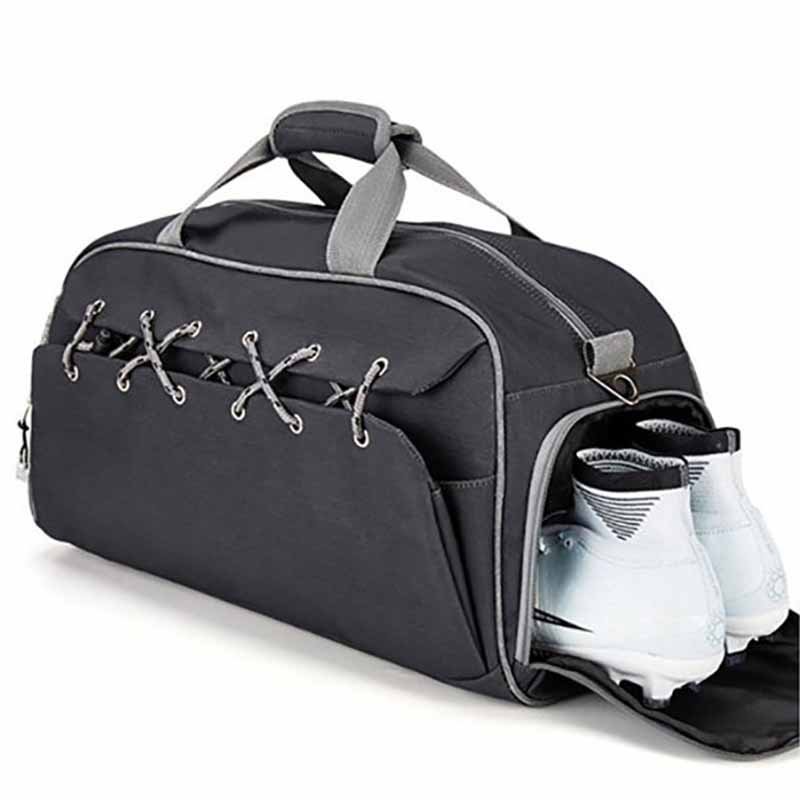
The best-selling sports bags with shoe compartments are gym bags, training backpacks, yoga bags, travel sports bags, and team bags. These styles match high-frequency use cases: daily workouts, gym-to-work commuting, weekend travel, yoga practice, school sports, club training, and team programs.
Strong-selling sports bags usually win because they solve more than one problem. Customers do not only want shoe storage. They want clean separation, comfortable carrying, strong zippers, durable fabric, enough capacity, easy-clean pockets, and a style that fits their daily life. A bag that works for both gym and travel has a larger customer base than a bag used only once a week.
For brands, the best product direction depends on target customer and channel. Amazon sellers may prefer practical gym duffel bags with visible shoe compartments and wet pockets. Fitness brands may prefer neoprene gym totes or premium training bags. Sports teams may prefer larger duffels with custom logos. Yoga and wellness brands may want softer colors, lighter weight, and cleaner shapes. Travel brands may prefer weekender-style sports bags with shoe pockets and luggage sleeves.
| Bag Type | Best Market | Main Selling Point | Suggested Material |
|---|---|---|---|
| Gym Bag | Fitness, Amazon, DTC brands | Daily workout organization | Neoprene, Oxford, nylon |
| Training Backpack | Commuters, students, trainers | Hands-free carry + shoe storage | Nylon, Oxford, neoprene panels |
| Yoga Bag | Yoga, Pilates, wellness | Clean style + light separation | Neoprene, soft polyester |
| Travel Sports Bag | Weekend travel, gym travel | Shoes + clothes + toiletries | Oxford, nylon, neoprene |
| Team Bag | Clubs, schools, sports teams | Capacity + logo customization | Oxford, reinforced fabric |
Szoneier can support all these directions through custom design, material selection, logo application, low MOQ, fast samples, and OEM/ODM production. This flexibility matters because different customers often need different versions instead of one universal bag.
Gym Bags
Gym bags with shoe compartments are the most commercial and widely accepted style. They are easy for customers to understand and easy for brands to sell. The most common structure is a duffel or barrel bag with a side shoe pocket, main storage area, wet pocket, bottle pocket, and adjustable shoulder strap.
A gym bag should feel convenient before and after exercise. Customers want to open the bag quickly, separate shoes, find small items, and carry everything without discomfort. If the layout is messy, the bag becomes annoying even if the material is strong.
Key features for gym bags:
- 20L–40L capacity for daily workout use.
- Side shoe compartment with independent access.
- Ventilation holes or mesh panel.
- Wet pocket for towel or sweaty clothes.
- Main compartment with wide opening.
- Small inner pocket for valuables.
- Side bottle pocket.
- Reinforced handles.
- Adjustable shoulder strap.
- Easy-clean lining.
- Stable bottom panel.
- Custom logo placement.
| Gym Bag Specification | Recommended Range |
|---|---|
| Daily Capacity | 25L–35L |
| Shoe Pocket Length | Around 30–36 cm, depending on target market |
| Main Fabric | Neoprene, 600D Oxford, nylon |
| Shoe Pocket Lining | Waterproof or wipeable lining |
| Strap Width | 38–50 mm for shoulder strap |
| Handle Webbing | 25–38 mm depending on bag size |
| Logo Method | Rubber patch, woven label, heat transfer, embroidery |
Neoprene gym bags are especially suitable for brands that want a softer, more premium lifestyle feel. Neoprene gives the bag flexibility, cushioning, and a clean modern look. Szoneier can customize neoprene thickness, color, printing, embossing, logo method, zipper color, lining, and strap design to match the brand’s positioning.
Training Backpacks
Training backpacks with shoe compartments sell well because they fit modern daily routines. Many customers go from home to work, school, gym, and back again. A backpack keeps both hands free and distributes weight better than a shoulder duffel.
The shoe compartment in a backpack is usually placed at the bottom or front. The design must be carefully balanced because shoes can easily push into the main compartment or make the bag look bulky. A good training backpack keeps the shoe area separate while still preserving space for clothes, electronics, bottles, and accessories.
Key features for training backpacks:
- Bottom or front shoe compartment.
- Breathable back panel.
- Padded shoulder straps.
- Laptop or tablet sleeve for commuters.
- Wet pocket for towel or gym clothes.
- Side bottle pocket.
- Front quick-access pocket.
- Reinforced bottom.
- Ventilation for shoe storage.
- Clean professional appearance.
- Lightweight structure.
- Private label logo area.
| User Type | Needed Features | Design Direction |
|---|---|---|
| Gym Commuter | Shoes, laptop, clothes, bottle | Clean structure, laptop sleeve, bottom shoe pocket |
| Student Athlete | Shoes, books, sports gear | Larger capacity and reinforced base |
| Fitness Trainer | Shoes, towel, accessories | Multiple pockets and easy access |
| Corporate Wellness User | Work items + gym items | Minimal design and subtle branding |
| Weekend User | Shoes + travel clothing | Expandable storage and comfort straps |
For training backpacks, materials should balance durability and appearance. Nylon and Oxford work well for structure and abrasion resistance. Neoprene can be used for front panels, laptop sleeves, side pockets, or soft design accents. This mixed-material approach creates a product that feels different from standard school backpacks.
Szoneier can help customers develop backpack patterns, shoe pocket dimensions, neoprene panel structures, logo options, and material combinations based on the intended market.
Yoga Bags
Yoga bags with shoe compartments serve customers who want a softer, cleaner, and more lifestyle-oriented product. These customers may care about comfort, color, touch, shape, and daily appearance as much as function. A yoga bag should not feel like a heavy team duffel.
The shoe compartment in yoga bags is often smaller or more discreet. Some users carry sneakers, while others carry sandals, studio shoes, or light footwear. The bag may also need a yoga mat strap, towel pocket, water bottle holder, and wet compartment.
Key features for yoga bags:
- Lightweight structure.
- Soft-touch material.
- Slim shoe pocket or internal shoe sleeve.
- Yoga mat strap or outer holder.
- Wet pocket for towel.
- Bottle pocket.
- Smooth zipper system.
- Minimal hardware.
- Clean color palette.
- Soft handles.
- Fashion-friendly logo placement.
- Easy-clean interior.
| Yoga Bag Style | Shoe Storage Design | Material Direction |
|---|---|---|
| Yoga Tote | Internal shoe sleeve | Neoprene or soft polyester |
| Yoga Duffel | Side shoe pocket | Neoprene or Oxford |
| Yoga Backpack | Bottom shoe compartment | Nylon, Oxford, neoprene panels |
| Studio Bag | Slim separate pocket | Lightweight neoprene |
| Travel Yoga Bag | Larger shoe area + mat strap | Oxford or neoprene blend |
Neoprene is a strong material choice for yoga bags because it feels soft, modern, and flexible. It also gives the product a more premium wellness look compared with basic polyester. For brands selling into yoga, Pilates, wellness, or boutique fitness channels, the fabric hand feel can strongly influence perceived value.
Szoneier can support custom colors, custom neoprene thickness, printed patterns, debossed logos, rubber patches, woven labels, and private label packaging for yoga sports bag collections.
Travel Bags
Travel sports bags with shoe compartments are popular because they work beyond the gym. Customers can use them for weekend trips, overnight stays, business travel with workouts, swimming, fitness retreats, or sports events. This wider use case gives brands more sales angles.
A travel sports bag needs more capacity and better organization than a standard gym bag. Customers may pack shoes, clothing, toiletries, towel, laptop, chargers, bottle, snacks, passport, wallet, and sports accessories. The shoe compartment should be large enough, but it should not destroy the main packing space.
Key features for travel sports bags:
- 35L–55L capacity.
- Independent shoe compartment.
- Large main opening.
- Wet pocket for towel or swimwear.
- Inner mesh pockets.
- Toiletry pocket.
- Side bottle pocket.
- Trolley sleeve.
- Reinforced bottom.
- Adjustable shoulder strap.
- Durable zipper system.
- Strong handles.
| Travel Bag Area | Recommended Design |
|---|---|
| Shoe Compartment | Side pocket with waterproof lining |
| Main Compartment | Wide U-shaped or large zipper opening |
| Wet Pocket | TPU/PVC lining or coated fabric |
| Bottom | Reinforced Oxford or coated material |
| Carry System | Handles, shoulder strap, optional trolley sleeve |
| Interior | Mesh pockets and zipper pockets |
| Branding | Rubber logo patch, woven label, embroidery |
A travel sports bag should also look clean enough for airports, hotels, and daily movement. This is where material and color choices matter. Matte Oxford, nylon, or neoprene details can make the product feel more premium than shiny low-cost polyester.
Szoneier can help brands develop travel sports bags with customized structure, capacity, shoe pocket sizing, wet pocket lining, logo placement, and retail-ready packaging.
Team Bags
Team sports bags with shoe compartments are made for clubs, schools, gyms, training centers, sports events, and promotional programs. These bags need larger capacity, stronger construction, and clear branding because they often carry heavier gear and represent a group identity.
Team bags may be used for football, soccer, basketball, baseball, volleyball, tennis, martial arts, swimming, dance, or youth sports. Shoe compartments for team bags should be larger and more durable because users may store cleats, high-top shoes, socks, guards, or dirty gear.
Key features for team bags:
- 45L+ capacity.
- Larger shoe compartment.
- Ventilation for sweaty footwear.
- Easy-clean lining.
- Reinforced bottom.
- Strong handles and shoulder strap.
- Large logo area.
- Name label window.
- Team number tag option.
- Durable zippers.
- Bulk-friendly packaging.
- Cost-controlled construction for group orders.
| Team Bag Requirement | Manufacturing Solution |
|---|---|
| Large Logo | Screen print, embroidery, rubber patch, woven label |
| Heavy Gear | Reinforced bottom and stress stitching |
| Dirty Shoes | Waterproof lining and ventilation |
| Easy Sorting | Name label or number tag |
| Bulk Orders | Low MOQ and scalable production planning |
| Repeat Use | Strong zipper, webbing, and bar-tack stitching |
Team bags are often price-sensitive because customers order multiple units. However, they still need to look professional. A weak bag reflects badly on the team, club, or brand. The goal is to balance cost and durability by using strong fabric in high-stress areas and practical materials for the main body.
Szoneier can support custom team sports bags with logo printing, private label design, color matching, low MOQ customization, fast sampling, and production planning for club, school, gym, or sports event customers.
How Are Sports Bags with Shoe Compartments Made?
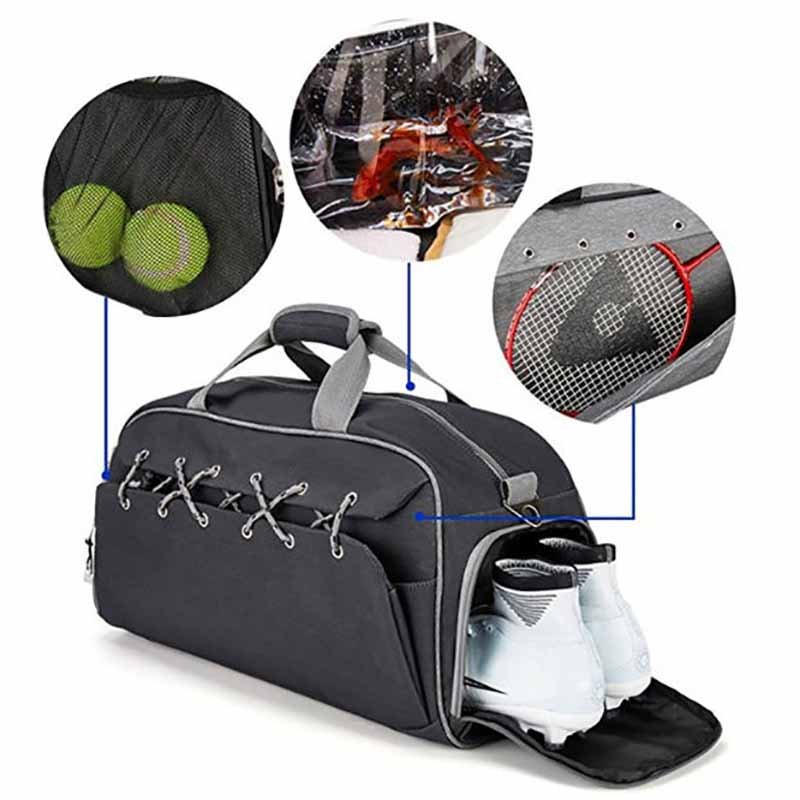
Sports bags with shoe compartments are made by planning the shoe pocket structure first, then building the main bag around it. The manufacturing process includes pattern design, material selection, lining choice, ventilation layout, zipper placement, stitching reinforcement, load testing, and sample adjustment. A good shoe compartment must fit real shoes, stay easy to clean, and not damage the main storage space.
For brands, the biggest mistake is thinking a shoe compartment is just “one more side pocket.” In real production, it affects the entire bag structure. The shoe pocket changes the shape of the side panel, the internal capacity, the zipper direction, the lining system, the bottom support, and even how the bag sits when loaded. If the compartment is too deep, the main storage becomes smaller. If it is too shallow, customers cannot fit their shoes. If the zipper opening is too narrow, the feature becomes frustrating.
A professional factory usually develops sports bags with shoe compartments through several rounds of structural review. The first step is confirming the product type: gym duffel, backpack, yoga bag, travel sports bag, or team bag. The second step is defining the shoe size range. The third step is deciding whether the shoe pocket should be fixed, collapsible, ventilated, waterproof, washable, or removable. After that, material, lining, zipper, webbing, and logo details can be matched.
Szoneier can support this process from design to sample because the factory has long-term experience in neoprene material development and finished product manufacturing. For sports bags, neoprene can be used as the main body, soft side panel, protective layer, shoe pocket trim, wet pocket panel, bottle sleeve, or logo area. The result can be softer, more flexible, and more distinctive than standard polyester sports bags.
Shoe Pocket Design
Shoe pocket design decides whether the product feels useful or awkward. A good shoe pocket should fit the target footwear, open easily, stay separated from clean items, and keep the overall bag shape balanced. The compartment can be placed on the side, bottom, front, or inside depending on the bag style.
The most common design is the side shoe tunnel. It is often used in gym duffel bags because it allows shoes to slide in from one end of the bag. This structure is simple, easy to photograph, and easy for customers to understand. For backpacks, the shoe compartment is often placed at the bottom or front. For yoga bags, a smaller shoe sleeve may be enough. For team bags, the shoe area is usually larger and reinforced.
Common shoe pocket structures include:
| Shoe Pocket Type | Best For | Main Benefit | Main Risk |
|---|---|---|---|
| Side Shoe Tunnel | Gym duffel bags | Easy access and clear product photos | May reduce main space |
| Bottom Shoe Pocket | Backpacks and travel bags | Keeps shoes low and separated | Can make bag bulky |
| Front Shoe Pocket | Training backpacks | Easy to open and organize | Needs good shape control |
| Internal Shoe Sleeve | Yoga bags and compact totes | Cleaner outer appearance | Less odor control |
| Removable Shoe Pouch | Premium travel sports bags | Flexible and easy to clean | Adds cost |
| Oversized Shoe Area | Team bags | Fits cleats and bulky shoes | Needs stronger structure |
Before confirming a shoe pocket, brands should test it with real footwear. A factory sample should not only fit a small pair of flat shoes. It should be tested with the target customer’s actual footwear type. Running shoes, basketball shoes, soccer cleats, cycling shoes, and training shoes all require different pocket volume.
Key shoe pocket checks:
- Can shoes enter smoothly without forcing?
- Does the pocket fit men’s and women’s target sizes?
- Does the main compartment remain usable when shoes are inside?
- Does the pocket keep its shape after loading?
- Does the shoe area touch clean clothing?
- Can the lining be wiped after use?
- Does the zipper curve create pressure points?
- Does the compartment make the bag look uneven?
For OEM/ODM projects, Szoneier can adjust the shoe compartment based on customer references, target market, and product positioning. A small fitness brand may need a compact gym duffel with a standard shoe tunnel. A premium travel brand may need a hidden shoe section with a cleaner outer shape. A team sports customer may need a bigger, stronger pocket for cleats and uniforms.
Ventilation Design
Ventilation design helps reduce trapped odor and moisture inside the shoe compartment. Shoes after training can carry sweat, heat, grass, dust, or locker-room moisture. Without airflow, the compartment may become uncomfortable to open, especially if customers leave shoes inside for several hours.
Ventilation does not mean simply adding random holes. The design should allow air movement while keeping the compartment strong and visually clean. The location, material, reinforcement, and opening size all matter. Vent holes should not weaken stress areas. Mesh should not tear easily. Metal eyelets should not rust or scratch other items. The ventilation panel should also match the bag’s appearance.
Common ventilation options include:
| Ventilation Method | Appearance | Best Use | Manufacturing Note |
|---|---|---|---|
| Metal Eyelets | Clean and simple | Gym duffels, team bags | Need anti-rust quality and reinforcement |
| Embroidered Eyelets | Softer look | Neoprene bags, yoga bags | Good for lighter designs |
| Mesh Panel | Strong airflow | Team bags, training bags | Needs durable mesh and edge binding |
| Laser-Cut Holes | Modern appearance | Neoprene or synthetic panels | Needs accurate cutting |
| Hidden Vent Gap | Minimal look | Premium bags | Requires careful structure |
| Perforated Panel | Sporty look | Fitness bags | Works well with neoprene or PU materials |
For neoprene sports bags, ventilation can become a design feature. Perforated neoprene panels, laser-cut holes, or breathable mesh inserts can create a modern fitness look while supporting airflow. This works especially well for gym bags and training backpacks where customers expect a sportier appearance.
Ventilation should be matched with the product’s use:
- Daily gym bags need moderate ventilation.
- Team sports bags need stronger airflow because shoes may be dirtier.
- Yoga bags may need subtle ventilation to keep the design clean.
- Travel sports bags may need hidden vents to avoid looking too sporty.
- Wet-dry bags may need ventilation only in the shoe area, not in the wet pocket.
Brands should also consider odor-control messaging carefully. Ventilation can help reduce trapped moisture and smell, but it does not make a bag odor-proof. Honest product wording protects customer trust. Better descriptions include “ventilated shoe compartment,” “breathable shoe pocket,” or “airflow design for used shoes.”
Wet-Dry Storage
Wet-dry storage is one of the most important features in modern sports bags with shoe compartments. Customers often carry sweaty clothing, damp towels, swimwear, toiletries, water bottles, or training gear. A wet pocket gives these items their own place instead of letting moisture spread through the main compartment.
The wet pocket is different from the shoe compartment, although they serve a similar purpose. The shoe compartment separates footwear. The wet pocket separates damp fabric or small wet items. In a strong sports bag design, both features can work together.
Useful wet-dry storage areas include:
- Wet towel pocket.
- Swimwear pocket.
- Toiletry pocket.
- Sweat clothes pocket.
- Waterproof bottle area.
- Inner zipper pocket with coated lining.
- Side wet pocket for quick access.
- Bottom wet area for travel sports bags.
| Wet-Dry Feature | Best Material | Best Use |
|---|---|---|
| Small Wet Pocket | TPU/PVC lining | Towel, socks, swimwear |
| Full Wet Compartment | Waterproof lining | Swim bags, travel sports bags |
| Coated Inner Pocket | PU/PVC coating | Toiletries and damp items |
| Bottle Leak Zone | Waterproof lining | Water bottle protection |
| Removable Wet Pouch | TPU or coated fabric | Premium sports bags |
| Shoe + Wet Combo Area | Waterproof lining | Team and travel bags |
For brands, wet-dry storage creates a stronger product story. A sports bag with only one large compartment is easy to copy. A bag with shoe storage, wet pocket, bottle pocket, and clean organization feels more thoughtful and can justify better pricing.
The challenge is production quality. Waterproof lining must be stitched carefully. If seams are not protected, water can still leak. For general wet pockets, full waterproof performance may not be required, but the lining should at least be wipeable and more moisture-resistant than regular fabric. If the bag claims full waterproof protection, stronger construction such as seam sealing or welded seams may be needed.
Practical wet-dry design checks:
- Does the wet pocket fit a towel or swimwear?
- Can customers access it without opening the whole bag?
- Does the lining wipe clean easily?
- Does moisture affect the main compartment?
- Does the wet pocket create odor if closed too tightly?
- Does the zipper resist repeated use?
- Is the pocket too small to be useful?
- Does the feature match the target customer?
Szoneier can develop wet-dry pocket structures using neoprene, waterproof lining, coated polyester, TPU-style materials, or mixed-material construction. For gym, yoga, travel, and team bags, this adds practical daily value.
Easy-Clean Lining
Easy-clean lining is critical for shoe compartments because shoes bring in dirt, sweat, dust, grass, and moisture. If the lining is weak, absorbent, or difficult to wipe, the compartment quickly becomes unpleasant. Customers may not mention the lining in reviews when it works well, but they will complain when it fails.
The shoe compartment lining should be selected based on use intensity. A casual yoga bag may only need a light wipeable lining. A gym bag may need stronger waterproof polyester lining. A soccer or football team bag may need a tougher coated lining because cleats create more friction. A travel sports bag may need a cleaner, more premium lining that does not feel cheap.
Common lining options include:
| Lining Material | Cleaning Ease | Durability | Best Use |
|---|---|---|---|
| Polyester Lining | Medium | Medium | General gym bags |
| PU-Coated Polyester | High | Medium-High | Shoe pockets and wet pockets |
| PVC Lining | High | High | Team bags, dirty gear areas |
| TPU-Style Lining | High | High | Premium wet-dry bags |
| Nylon Lining | Medium | High | Premium sports bags |
| Mesh Lining | Low-Medium | Medium | Ventilated sections |
Easy-clean lining should also be tested for friction. Shoes often have rough soles, hard edges, and dirty surfaces. The lining may be rubbed many times during daily use. Thin lining can tear at corners or along seams. For this reason, the bottom and side walls of the shoe pocket may need stronger material than the upper part.
Good lining design can include:
- Darker lining colors to hide dirt.
- Smooth coated surface for easy wiping.
- Reinforced seam edges.
- Rounded corners to reduce dirt buildup.
- Drainage or ventilation if used for wet gear.
- Binding tape on raw edges.
- Extra layer at the shoe sole contact area.
- Odor-conscious structure with airflow.
For brands, lining also affects perceived quality. A customer may open the shoe compartment and immediately notice whether the inside feels durable or cheap. A clean, wipeable lining gives the product a more professional feel.
Szoneier can recommend lining options based on target price, product type, and use scenario. For high-end brands, lining can also be customized in color, logo print, pattern, or texture to create a stronger private label experience.
Strong Stitching
Strong stitching is essential because sports bags with shoe compartments face repeated stress from weight, movement, zippers, straps, and loaded compartments. Even if the fabric is good, weak stitching can cause the bag to fail quickly.
The highest-stress areas are usually the handles, shoulder strap anchors, shoe compartment zipper ends, bottom corners, side panels, and webbing connection points. The shoe compartment itself also creates extra tension because shoes push against the fabric from inside. If the pattern design is not balanced, the side panel may distort or seams may pull.
Important stitching areas include:
| Bag Area | Stress Type | Better Construction |
|---|---|---|
| Handle Base | Lifting force | Box stitching or bar-tack reinforcement |
| Shoulder Strap Anchor | Carrying load | Reinforced webbing and extra fabric layer |
| Shoe Pocket Zipper Ends | Pulling and opening | Extra seam allowance and end reinforcement |
| Bottom Corners | Weight and ground friction | Reinforced bottom panel |
| Side Panels | Shoe pressure | Strong seam and lining support |
| Wet Pocket Edge | Moisture and movement | Coated lining with reinforced seam |
| Main Zipper Area | Repeated opening | Durable zipper tape and clean sewing |
| Webbing Loops | Pulling force | Bar-tack stitching |
For sports bags, stitching strength should be tested as part of the finished sample, not only inspected visually. A sample should be loaded with realistic weight, carried by handles, carried by shoulder strap, opened repeatedly, and tested with shoes inside the compartment. This shows whether the bag structure can handle real use.
Useful production checks include:
- Stitch density.
- Thread strength.
- Seam allowance.
- Needle size.
- Reinforcement placement.
- Webbing overlap length.
- Bar-tack quality.
- Zipper end finishing.
- Bottom panel stress.
- Lining seam durability.
For private label customers, strong stitching also protects brand reputation. A broken handle or torn shoe pocket creates immediate dissatisfaction. Customers do not care whether the issue came from pattern design, sewing, fabric, or webbing. They only see a failed product. That is why factories must review the whole construction.
Szoneier supports 100% quality guarantee and can help customers review sample strength before bulk production. With fast sampling and flexible customization, structural issues can be adjusted early instead of becoming expensive after-sales problems.
What Materials Suit Sports Bags with Shoe Compartments?
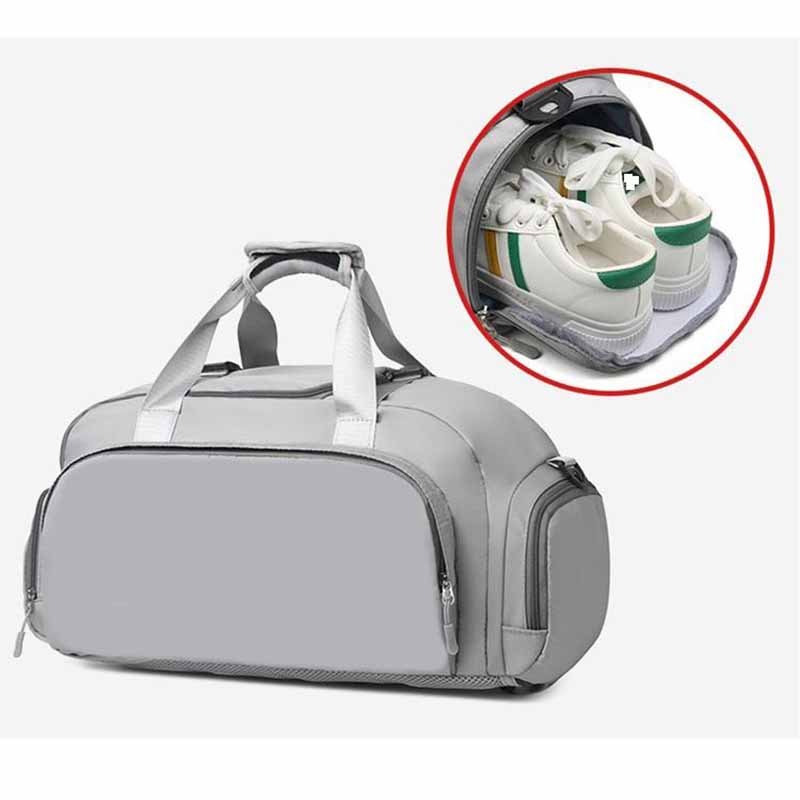
The best materials for sports bags with shoe compartments include neoprene, polyester Oxford, nylon, waterproof lining, reinforced webbing, and durable zipper systems. Neoprene is ideal for soft-touch premium bags. Oxford gives good cost and durability. Nylon suits lightweight performance. Waterproof lining protects shoe and wet areas. Webbing supports load-bearing strength.
Material choice directly affects price, durability, appearance, weight, hand feel, cleaning, and customer perception. A sports bag may look similar from far away, but customers can feel material differences immediately. Soft neoprene feels modern and flexible. Oxford feels practical and durable. Nylon feels lighter and more technical. Waterproof lining makes shoe and wet pockets easier to use.
For brands, material selection should start with product positioning. A premium boutique fitness brand may prefer neoprene because of its soft hand feel and lifestyle appearance. A team sports supplier may prefer 600D Oxford because it balances durability and cost. A travel sports brand may choose nylon or Oxford with reinforced panels. A swim or wet-dry sports bag may require waterproof lining and stronger coating.
Material planning should also be area-specific. The main body, shoe compartment, wet pocket, handles, straps, lining, bottom, and logo area do not all need the same material. A well-designed bag often uses multiple materials in the right places.
| Bag Area | Material Choice | Main Reason |
|---|---|---|
| Main Body | Neoprene, Oxford, nylon | Controls look, structure, and cost |
| Shoe Compartment | Oxford, neoprene, waterproof lining | Handles dirt and footwear pressure |
| Wet Pocket | TPU/PVC/PU lining | Separates damp items |
| Bottom Panel | Coated Oxford or reinforced fabric | Resists ground friction |
| Handles | Polyester or nylon webbing | Load support |
| Shoulder Strap | Webbing + padding | Comfort and strength |
| Inner Lining | Polyester or nylon lining | Clean storage |
| Logo Area | Rubber patch, woven label, embroidery | Brand identity |
Szoneier’s neoprene expertise gives brands more creative space. Neoprene can be used as the main fabric, accent panel, protective sleeve, bottle pocket, shoulder pad, laptop layer, wet pocket detail, or soft structural component. This helps sports bags look more differentiated from standard mass-market gym bags.
Neoprene Fabric
Neoprene fabric is a strong choice for sports bags with shoe compartments when brands want a soft, flexible, modern, and premium feel. It offers cushioning, stretch, shape recovery, and a smooth hand touch. This makes it especially useful for gym bags, yoga bags, wellness bags, bottle pockets, laptop sleeves, and protective compartments.
Neoprene is commonly used in wetsuits, koozies, sports supports, medical supports, laptop sleeves, and soft protective products because it combines flexibility with cushioning. For sports bags, these same qualities can create a comfortable and distinctive product. A neoprene gym bag feels different from a standard stiff polyester duffel.
Key benefits of neoprene in sports bags:
- Soft and premium hand feel.
- Flexible structure.
- Light cushioning for contents.
- Modern lifestyle appearance.
- Good for curved bag shapes.
- Comfortable against the body.
- Suitable for color customization.
- Works well with heat transfer, rubber patches, embossing, and printing.
- Useful for wet-dry and fitness-related product stories.
- Strong fit for yoga, wellness, gym, and boutique sports brands.
Neoprene can be customized in different thicknesses. Thicker neoprene gives more structure and cushioning but may increase cost and weight. Thinner neoprene offers flexibility and lighter feel. The best choice depends on bag size and target positioning.
| Neoprene Thickness | Feel | Best Use |
|---|---|---|
| 1.5 mm | Light and flexible | Small pouches, trims, inner sleeves |
| 2 mm | Balanced | Gym totes, yoga bags, bottle pockets |
| 3 mm | More structure and cushioning | Premium gym bags, protective panels |
| 4 mm+ | Thick and padded | Specialty protective products |
For shoe compartments, neoprene can be used as an outer panel or detail, but the inside lining should usually be wipeable or waterproof because shoes can be dirty. A smart structure may use neoprene outside for appearance and coated lining inside for cleaning.
Szoneier has deep experience in neoprene fabric development and neoprene product manufacturing. For brands wanting sports bags that look more premium than basic polyester gym bags, neoprene can be a strong direction.
Oxford Fabric
Oxford fabric is one of the most practical materials for sports bags with shoe compartments. It is durable, cost-effective, widely available, easy to coat, and suitable for many bag types. Polyester Oxford is especially common in gym bags, team bags, travel sports bags, and promotional fitness bags.
The most popular Oxford options for sports bags include 300D, 420D, 600D, 900D, and 1000D. Lower denier fabrics are lighter and more flexible. Higher denier fabrics offer more structure and abrasion resistance. For many sports bags, 600D Oxford gives the best balance between durability, cost, and appearance.
Oxford fabric benefits:
- Good durability for daily use.
- Strong price-performance balance.
- Suitable for PU or PVC coating.
- Easy to print or color match.
- Stable for bulk production.
- Good option for low MOQ projects.
- Works well for shoe compartments and bottom panels.
- Suitable for team and promotional bags.
| Oxford Type | Best Use | Main Benefit |
|---|---|---|
| 300D Oxford | Lightweight sports bags | Lower weight and cost |
| 420D Oxford | Daily gym bags | Flexible and practical |
| 600D Oxford | Mainstream sports bags | Balanced strength and cost |
| 900D Oxford | Reinforced areas | More structure |
| 1000D Oxford | Heavy-duty team bags | Stronger abrasion resistance |
For shoe compartments, Oxford fabric is often used with waterproof lining or coating. The outer shell can be 600D Oxford, while the inner shoe pocket uses coated lining for easy cleaning. For bottom panels, thicker Oxford or PVC-coated Oxford can help resist ground contact.
Oxford is a safe choice for brands that need a reliable sports bag at a competitive price. It may not feel as premium as neoprene or nylon, but with good structure, color matching, logo placement, and hardware, it can still produce a very professional product.
Nylon Fabric
Nylon fabric is suitable for sports bags with shoe compartments when brands want lighter weight, better strength-to-weight performance, and a more technical look. It is often used in training backpacks, travel sports bags, premium gym bags, and outdoor fitness bags.
Compared with polyester Oxford, nylon can feel smoother, lighter, and more performance-driven. It can be used for main body panels, reinforced areas, lining, or lightweight pockets. For customers who carry bags for long periods, weight reduction can improve comfort.
Nylon fabric benefits:
- Stronger strength-to-weight performance.
- Lightweight feel.
- Smooth technical appearance.
- Good for backpacks and travel bags.
- Suitable for premium sports products.
- Works well with coatings and water-resistant finishes.
- Can be paired with neoprene for mixed-material design.
| Nylon Type | Best Use | Design Benefit |
|---|---|---|
| 210D Nylon | Lining, light pockets | Lightweight |
| 420D Nylon | Training backpacks | Balanced strength and weight |
| 500D Nylon | Premium sports bags | Stronger performance |
| Ripstop Nylon | Packable pockets, rain covers | Tear control |
| Coated Nylon | Wet areas and travel bags | Better moisture resistance |
Nylon is usually more expensive than standard polyester Oxford. For this reason, it should be selected when the brand can benefit from the premium positioning. A brand targeting high-end gym users, urban commuters, or travel fitness customers may find nylon worthwhile. For large team orders where cost matters most, Oxford may be more practical.
A smart material mix could include nylon main panels, neoprene front pocket, waterproof shoe pocket lining, and reinforced polyester webbing. This gives a product both performance and visual differentiation.
Waterproof Lining
Waterproof lining is one of the most important material choices for sports bags with shoe compartments. The outer fabric may look strong, but the inside of the shoe pocket is where dirt, sweat, grass, dust, and moisture collect. A poor lining can make the bag difficult to clean and reduce customer satisfaction.
Waterproof or water-resistant lining can be used in:
- Shoe compartments.
- Wet towel pockets.
- Swimwear pockets.
- Toiletry pockets.
- Bottle leak zones.
- Inner dirty-clothes pockets.
- Bottom interior panels.
Common waterproof lining choices:
| Lining Type | Cleaning Ease | Best Use |
|---|---|---|
| PU-Coated Polyester | High | Shoe pockets, gym bags |
| PVC Lining | Very High | Team bags, cleat areas |
| TPU-Style Lining | Very High | Premium wet-dry sports bags |
| Coated Nylon | High | Lightweight travel bags |
| PEVA-Like Lining | Medium-High | Promotional or budget wet pockets |
A waterproof lining does not always make the full bag waterproof. It mainly protects certain compartments and makes cleaning easier. Brands should use accurate wording such as “water-resistant lining,” “wipeable shoe pocket,” or “wet-dry compartment” unless the whole bag construction is waterproof.
For better performance, lining should be paired with strong seams and good pattern design. If the lining is too thin, shoe soles may damage it. If the lining is too stiff, the compartment may feel awkward. If the lining is poorly stitched, dirt can collect in corners.
Szoneier can customize lining material, color, thickness, and placement based on product type. For high-end sports bags, printed lining or branded lining can also improve the private label experience.
Reinforced Webbing
Reinforced webbing is essential because sports bags are carried, lifted, pulled, swung, loaded, and used repeatedly. A shoe compartment adds weight to one side of the bag, so handles and straps must be strong enough to keep the bag balanced.
Webbing is used in handles, shoulder straps, compression straps, backpack straps, zipper pull loops, side attachments, and team bag reinforcement. Weak webbing makes the whole product feel low quality, even if the fabric is good.
Common webbing options include:
| Webbing Type | Best Use | Main Benefit |
|---|---|---|
| Polyester Webbing | General sports bags | Strong, stable, cost-effective |
| Nylon Webbing | Premium bags | Stronger, softer, technical feel |
| Jacquard Webbing | Branded products | Logo woven into strap |
| Reflective Webbing | Outdoor sports bags | Visibility detail |
| Soft Webbing | Yoga and wellness bags | Better hand feel |
| Heavy-Duty Webbing | Team and travel bags | Better load support |
Webbing width should match bag size and load:
| Bag Type | Common Webbing Width |
|---|---|
| Small Yoga Bag | 20–25 mm |
| Daily Gym Bag | 25–38 mm |
| Large Duffel | 38–50 mm |
| Team Bag | 38–50 mm |
| Backpack Shoulder Strap Support | 25–50 mm |
| Zipper Pull Loop | 5–10 mm |
Reinforcement is not only about webbing itself. The stitching method matters. Box stitching, X-stitching, bar-tack stitching, and added backing layers can all improve strength. For team bags and large travel sports bags, handles may need to wrap around the bottom for better load support.
Szoneier can customize webbing color, texture, width, logo, and sewing structure to match each sports bag design. This is especially useful for private label brands that want their bag to look consistent from fabric to strap to logo to packaging.
How to Customize Sports Bags with Shoe Compartments?
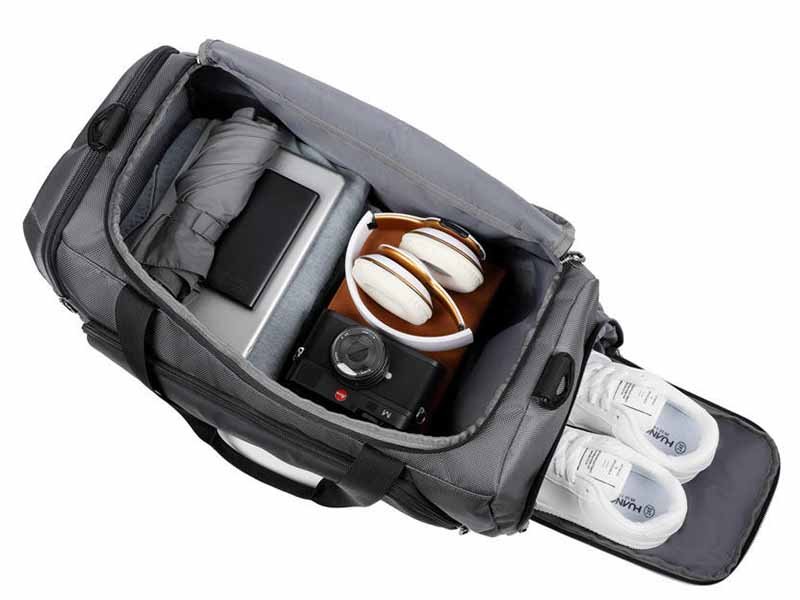
Sports bags with shoe compartments can be customized by logo, size, color, fabric, shoe pocket structure, wet-dry storage, zipper style, webbing, lining, packaging, and full private label branding. For stronger product value, customization should focus on real user routines, not only surface decoration.
Customization is where many sports bag brands either become memorable or disappear into the same product crowd. A standard gym bag with a shoe pocket can be found everywhere. A well-developed custom sports bag has a clearer identity: better proportions, smarter compartment layout, stronger materials, more attractive colors, and branding that feels integrated into the product.
For overseas brands, Amazon sellers, fitness studios, sports clubs, wellness companies, and promotional product buyers, the main goal is usually not to create the most complicated bag. The goal is to create a sports bag that customers can understand quickly and use often. A shoe compartment, wet pocket, bottle pocket, comfortable strap, soft neoprene panel, or custom logo detail can all help the product feel more useful.
Szoneier supports custom, private label, OEM, and ODM sports bag projects with flexible material options and rich neoprene product experience. Customers can start with a drawing, sample, reference photo, logo file, tech pack, or even a simple product idea. The team can help adjust material, structure, size, branding, and packaging before bulk production.
| Custom Area | Options | Why It Matters |
|---|---|---|
| Logo | Rubber patch, woven label, embroidery, print, heat transfer | Builds brand identity |
| Size | Small gym bag, standard duffel, large team bag | Matches customer use |
| Color | Solid, contrast, seasonal, brand color | Improves shelf appeal |
| Fabric | Neoprene, Oxford, nylon, waterproof lining | Controls quality and price |
| Shoe Pocket | Side, bottom, front, internal, removable | Affects daily usability |
| Compartments | Wet pocket, bottle pocket, laptop sleeve, mesh pocket | Improves organization |
| Webbing | Width, color, texture, jacquard logo | Improves strength and appearance |
| Packaging | Polybag, hangtag, custom box, barcode label | Supports retail and e-commerce |
Custom Logo
Custom logos help sports bags with shoe compartments become recognizable, professional, and easier to sell under a private label. The logo method should match the bag material, target price, order quantity, and brand style.
A sports bag logo needs to survive real use. It may rub against clothing, car seats, locker shelves, gym floors, and travel surfaces. A weak print or poorly placed label can make the product look cheap after only a few uses. A well-made logo detail can make even a simple bag feel more polished.
Common logo options include:
| Logo Method | Best For | Look and Feel | Notes |
|---|---|---|---|
| Rubber Patch | Gym bags, travel bags, team bags | Sporty, durable, modern | Strong outdoor and fitness look |
| Woven Label | Most private label bags | Clean and cost-effective | Good for low MOQ programs |
| Embroidery | Premium gym bags, team bags | Textured and classic | Works best on stable panels |
| Heat Transfer | Neoprene bags, smooth panels | Clean and modern | Good for detailed logos |
| Screen Printing | Promotional sports bags | Simple and affordable | Better for large flat areas |
| Silicone Logo | Premium fitness bags | Soft and high-end | Suitable for modern brands |
| Jacquard Webbing | Branded straps | Premium and distinctive | Good for larger orders |
| Debossed Neoprene | Minimalist bags | Subtle and premium | Strong fit for wellness brands |
Logo placement should be planned early. A logo placed on a busy pocket seam may look crowded. A logo placed over a curved shoe compartment may distort. A logo that is too large may make the product look promotional rather than premium.
Better logo areas include:
- Front main panel.
- Shoe compartment side panel.
- Top handle area.
- Shoulder strap pad.
- Inner lining.
- Zipper puller.
- Webbing strap.
- Hangtag.
- Packaging label.
- Wet pocket pull tab.
For Szoneier custom sports bags, logo development can be matched with neoprene thickness, fabric type, zipper color, webbing color, and packaging style. This creates a more complete product identity instead of a plain bag with a logo added at the last minute.
Custom Size
Custom size is one of the most important decisions in sports bag manufacturing because it affects capacity, comfort, shipping cost, shoe compartment usability, and product pricing. A bag that is too small creates complaints. A bag that is too large may feel bulky for daily gym use.
Size should be based on customer routine. A yoga customer may only need shoes, towel, bottle, and light clothing. A gym commuter may need shoes, clean clothes, laptop, toiletries, and supplements. A team athlete may need cleats, uniform, guards, socks, tape, and extra gear.
Useful size directions include:
| Bag Size | Approx. Capacity | Best Use |
|---|---|---|
| Small | 15L–20L | Yoga, Pilates, quick gym session |
| Medium | 20L–30L | Daily gym, fitness classes, office commute |
| Large | 30L–45L | Gym plus travel, sports practice |
| Extra Large | 45L–60L | Team sports, weekend travel |
| Oversized | 60L+ | Gear-heavy sports and club use |
Shoe compartment size should be confirmed together with total bag size. A small bag cannot hold a large shoe pocket without sacrificing the main compartment. A large team bag needs a shoe pocket that can handle bulkier footwear such as cleats or high-top shoes.
Important custom size checks:
- Target shoe size range.
- Main compartment capacity after shoes are inserted.
- Bag length and height when carried.
- Shoulder strap comfort.
- Locker or carry-on compatibility.
- Shipping carton size.
- Packaging volume.
- Product photo proportions.
- Weight after materials and trims are added.
- Whether the bag fits men, women, youth, or team users.
Szoneier can help customers develop size samples before bulk production. This is especially helpful for brands selling online, because product returns often happen when customers feel the bag is smaller than expected. Clear sizing, real packing photos, and accurate dimensions can reduce that risk.
Custom Colors
Custom colors help sports bags with shoe compartments match brand identity, seasonal collections, fitness trends, team programs, and target customer style. Color is not only decoration. It affects perceived quality, product photography, market positioning, and customer emotion.
For sports bags, common color directions include black, navy, gray, beige, olive, pink, purple, teal, royal blue, red, white, and two-tone combinations. Neoprene sports bags can also use softer wellness colors, matte tones, contrast panels, or fashion-inspired palettes.
Color options can be applied to:
- Main body fabric.
- Shoe compartment panel.
- Zipper tape.
- Zipper pullers.
- Webbing straps.
- Handle wrap.
- Lining.
- Logo patch.
- Binding tape.
- Inner pocket trim.
- Packaging.
- Hangtags.
| Market Style | Better Color Direction |
|---|---|
| Men’s Gym Bags | Black, gray, navy, olive, dark green |
| Women’s Fitness Bags | Beige, blush, lavender, cream, soft blue |
| Yoga / Wellness | Neutral, pastel, earth tone, clean contrast |
| Team Sports | Club colors, bold contrast, logo-matched colors |
| Travel Sports | Black, charcoal, navy, khaki, brown |
| Youth Sports | Bright colors, contrast zippers, custom patches |
| Premium Fitness | Matte black, taupe, sand, deep green, tonal logo |
Color matching should include all components. A beautiful neoprene body can look low-end if the zipper tape, webbing, lining, and logo patch do not match. For private label bags, a controlled color system makes the product feel more intentional and premium.
Brands should confirm:
- Pantone or reference color.
- Lab dip approval if needed.
- Fabric color under different lighting.
- Zipper tape color.
- Webbing color.
- Logo color.
- Lining color.
- Packaging color.
- Color consistency for reorders.
- Whether dark colors hide dirt better in shoe compartments.
For sports bags with shoe compartments, darker lining is often more practical inside the shoe area. Light lining may look clean in product photos, but it can show dirt quickly after real use. A better option is a dark gray, black, navy, or coated lining that wipes clean easily.
Custom Pockets
Custom pockets make sports bags with shoe compartments more useful. Customers rarely carry only shoes and clothes. They carry phones, keys, wallets, bottles, watches, headphones, toiletries, towels, protein shakers, resistance bands, braces, socks, and sometimes laptops.
A smart pocket system helps customers find items quickly. Too few pockets make the bag messy. Too many pockets can increase cost and confuse the design. The right balance depends on the target customer.
Common pocket options include:
| Pocket Type | Best Use | Customer Benefit |
|---|---|---|
| Shoe Compartment | Shoes, cleats, sandals | Keeps footwear separate |
| Wet Pocket | Towel, swimwear, sweaty clothes | Separates damp items |
| Bottle Pocket | Water bottle, shaker | Prevents leaks inside |
| Inner Zipper Pocket | Wallet, keys, cards | Protects small valuables |
| Mesh Pocket | Socks, bands, accessories | Easy visibility |
| Laptop Sleeve | Commuter backpacks | Supports gym-to-work routine |
| Side Quick Pocket | Phone, earbuds | Fast access |
| Toiletry Pocket | Travel sports bags | Better travel organization |
| Elastic Pocket | Tape, gloves, small gear | Flexible storage |
| Hidden Pocket | Passport, cash, valuables | Added security |
For shoe compartment sports bags, pocket layout should avoid conflict. For example, if the shoe pocket enters from the right side, the bottle pocket may need to be placed on the left or front. If the wet pocket is behind the shoe pocket, cleaning may become difficult. If the laptop sleeve sits too close to the shoe compartment, customers may worry about dirt or odor.
Practical pocket planning questions:
- What items will the customer carry every day?
- Which items need quick access?
- Which items need separation?
- Which pocket needs waterproof lining?
- Which pocket needs mesh?
- Which pocket needs zipper security?
- Which pocket should appear in product photos?
- Which pocket adds value without adding too much cost?
For Szoneier projects, customers can customize pocket quantity, layout, zipper type, lining, mesh, elastic, binding, and branding. This allows one sports bag concept to become several product versions for different markets.
Private Label
Private label sports bags with shoe compartments are ideal for fitness brands, Amazon sellers, sports clubs, retail stores, wellness studios, promotional companies, and overseas distributors that want their own logo and product identity.
Private label does not mean only placing a logo on an existing bag. A better private label program includes material selection, structure adjustment, color matching, logo method, packaging, product photography sample preparation, labeling, and quality control.
A complete private label sports bag project may include:
| Private Label Item | Custom Options |
|---|---|
| Product Design | Duffel, backpack, tote, yoga bag, team bag |
| Material | Neoprene, Oxford, nylon, waterproof lining |
| Shoe Pocket | Size, shape, lining, ventilation |
| Logo | Rubber patch, woven label, heat transfer, embroidery |
| Color | Brand color, seasonal color, contrast design |
| Packaging | Polybag, hangtag, carton label, barcode, retail box |
| Accessories | Shoulder strap, zipper puller, label, care card |
| Documentation | Size chart, material info, product spec |
| Order Plan | Low MOQ trial order, bulk order, reorder planning |
Szoneier’s advantages for private label customers include:
- Over 18 years of neoprene fabric and product manufacturing experience.
- Custom bags, koozies, sports supports, medical supports, wetsuits, and related products.
- Free design support.
- Low MOQ customization.
- Fast sample development.
- Free sample options.
- Short lead times.
- OEM/ODM support.
- 100% quality guarantee.
- Experience serving overseas small-to-medium buyers and high-end brand customers.
For new brands, low MOQ is useful because they can test product demand before investing in large inventory. For established brands, OEM/ODM support helps develop a more complete product line with consistent materials, branding, and packaging.
What to Check in Sports Bag Manufacturing?
Before producing sports bags with shoe compartments, brands should check sample quality, shoe pocket size, zipper strength, load testing, stitching, lining, ventilation, material consistency, packaging, and lead time. These details decide whether the finished bag feels reliable in daily gym, travel, team, and fitness use.
A sports bag may look fine in a first sample photo, but real quality is found in small details. Does the shoe pocket fit real shoes? Does the zipper pull smoothly when the pocket is loaded? Does the wet pocket wipe clean? Do the handles feel secure? Does the bag stand properly? Does the lining wrinkle or tear? Does the logo look straight? Does the finished product match the approved sample?
For B2B customers, checking these points before bulk production reduces risk. It also saves time, because fixing problems after mass production is always more expensive than fixing them during sampling.
| Check Point | Why It Matters | What to Review |
|---|---|---|
| Sample Quality | Confirms design accuracy | Shape, size, stitching, logo, pocket layout |
| Shoe Pocket Size | Decides real usability | Shoe fit, opening, depth, main space impact |
| Zipper Strength | Affects daily use | Smooth pull, zipper tape, puller, stress areas |
| Load Testing | Protects against failure | Handles, straps, seams, bottom panel |
| Lining Quality | Affects cleaning and odor control | Shoe pocket and wet pocket material |
| Ventilation | Improves shoe storage | Mesh, eyelets, airflow placement |
| Lead Time | Affects launch schedule | Sample time, material time, bulk production |
| Packaging | Supports retail and e-commerce | Polybag, barcode, carton, hangtag |
Sample Quality
Sample quality is the first serious test in sports bag manufacturing. A sample shows whether the design idea can become a real product. It also reveals hidden issues that may not appear in drawings or reference photos.
A good sample review should include more than appearance. Brands should pack the sample with real items: shoes, towel, bottle, clothes, phone, wallet, and accessories. Then they should carry it, unzip it, clean it, and check whether the structure feels natural.
Sample quality checks include:
- Overall shape and proportions.
- Finished size compared with spec.
- Shoe compartment fit.
- Main compartment capacity.
- Wet pocket size.
- Zipper smoothness.
- Stitching straightness.
- Logo placement.
- Webbing strength.
- Handle comfort.
- Lining quality.
- Color accuracy.
- Packaging appearance.
- Weight and hand feel.
| Sample Issue | Possible Cause | Suggested Fix |
|---|---|---|
| Shoe pocket too tight | Wrong pattern depth | Increase pocket volume |
| Bag looks bulky | Shoe compartment placement | Adjust structure or panel shape |
| Zipper hard to pull | Sharp curve or weak zipper | Improve zipper path and quality |
| Logo not centered | Poor placement control | Update pattern marking |
| Handles feel weak | Insufficient reinforcement | Add bar-tack or backing layer |
| Wet pocket too small | Poor user scenario planning | Resize based on real items |
| Bag too soft | Fabric lacks structure | Add lining, foam, or stronger fabric |
| Bag too stiff | Fabric or coating too heavy | Change material or reduce thickness |
Szoneier supports fast sampling, which helps customers review and adjust design details before committing to bulk production. For custom sports bags with shoe compartments, sample revision is not a waste of time. It is one of the best ways to prevent product complaints later.
Shoe Pocket Size
Shoe pocket size is one of the most important checks because customers will judge the feature immediately. If the shoe compartment cannot fit real athletic shoes, the feature fails.
The correct size depends on target users. Women’s yoga sneakers, men’s gym shoes, basketball shoes, football cleats, and travel sneakers do not need the same space. A brand should define target shoe types before sample development.
Practical shoe pocket review:
- Test with men’s and women’s target shoe sizes.
- Test with bulkier shoes if the bag is for basketball or team sports.
- Check whether shoes can enter without force.
- Check whether the zipper closes smoothly.
- Check whether the main compartment remains usable.
- Check whether shoes deform the bag shape.
- Check whether the lining can handle sole friction.
- Check whether ventilation still works when shoes are inside.
| Product Type | Shoe Pocket Direction | Size Focus |
|---|---|---|
| Gym Duffel | Side tunnel | Fits running shoes and trainers |
| Training Backpack | Bottom pocket | Keeps shape balanced |
| Yoga Bag | Slim pocket or sleeve | Fits light shoes or sandals |
| Travel Bag | Larger side pocket | Fits sneakers for trips |
| Team Bag | Oversized reinforced pocket | Fits cleats or high-tops |
A shoe pocket can also be flexible. Some designs allow the shoe compartment to collapse when not in use, giving more space back to the main compartment. This is useful for gym and travel bags because customers may not carry shoes every time.
For Szoneier customers, providing target shoe size information helps the development team design the compartment more accurately. A simple note such as “must fit men’s US 12 running shoes” or “for women’s yoga shoes only” can prevent major sampling mistakes.
Zipper Strength
Zipper strength matters because sports bags are opened many times, often when the bag is loaded, rushed, or handled roughly. The shoe compartment zipper is especially important because shoes create pressure inside the pocket.
A weak zipper can ruin a good bag. Customers may forgive small design issues, but they rarely forgive a zipper that jams, breaks, separates, or feels cheap. Zippers also affect how premium the bag feels in hand.
Zipper checks should include:
- Zipper size.
- Zipper tape strength.
- Slider smoothness.
- Puller comfort.
- Curve performance.
- End reinforcement.
- Color matching.
- Water-resistant need.
- Pull force under load.
- Repeated opening test.
| Zipper Area | Risk | Better Solution |
|---|---|---|
| Shoe Pocket Zipper | Pressure from shoes | Strong zipper and reinforced ends |
| Main Opening | Frequent use | Larger zipper size and smooth curve |
| Wet Pocket Zipper | Moisture exposure | Coated zipper or protected placement |
| Small Pocket Zipper | Puller loss | Strong puller cord or molded pull |
| Backpack Front Zipper | Curved stress | Pattern adjustment and good zipper tape |
For sports bags, zipper size should match bag size. A small zipper may be enough for an inner pocket, but not for a large main opening or loaded shoe compartment. Zipper pullers should also be easy to grip with sweaty hands or after training.
Brands can also customize zipper details:
- Metal puller.
- Rubber puller.
- Cord puller.
- Logo zipper pull.
- Contrast zipper tape.
- Waterproof zipper.
- Reverse zipper.
- Two-way zipper.
- Hidden zipper.
- Large-tooth sport zipper.
Szoneier can recommend zipper options based on target price and product use. For premium neoprene gym bags, smoother zippers and custom pullers can significantly improve perceived value.
Load Testing
Load testing shows whether a sports bag can handle real carrying weight. A bag with shoes, clothes, bottle, towel, laptop, toiletries, and accessories may become much heavier than expected. Handles, shoulder straps, bottom seams, and webbing anchors must be built for that load.
Load testing should match the product type. A yoga bag does not need the same load capacity as a large team bag. A travel sports duffel needs stronger testing than a small gym tote.
Common load testing focus areas:
- Handle lifting strength.
- Shoulder strap anchor strength.
- Bottom panel durability.
- Webbing connection.
- Stitching under tension.
- Zipper performance under loaded conditions.
- Shoe compartment pressure.
- Bag shape after loading.
- Strap comfort with weight.
- Seam stability after repeated carrying.
| Bag Type | Suggested Load Concern |
|---|---|
| Yoga Bag | Light load, comfort, shape |
| Daily Gym Bag | Medium load, handle strength |
| Training Backpack | Shoulder strap and back panel support |
| Travel Sports Bag | Heavy clothing and shoe load |
| Team Bag | High load, reinforced bottom and handles |
Load testing also reveals balance issues. If the shoe compartment sits heavily on one side, the bag may tilt when carried. If the shoulder strap anchors are poorly placed, the bag may twist. If the bottom lacks structure, the bag may sag.
Better load performance can be achieved through:
- Reinforced webbing.
- Bar-tack stitching.
- Wider shoulder strap.
- Padded handle wrap.
- Stronger bottom panel.
- Extra backing layers at stress points.
- Better weight distribution.
- Box stitching or X-stitching.
- Stronger fabric in high-load areas.
Szoneier’s quality control process can help customers identify structural problems before bulk production. This supports the company’s 100% quality guarantee and helps brands reduce customer complaints.
Lead Time
Lead time affects product launch, seasonal sales, Amazon listing schedules, retail delivery, club events, and promotional campaigns. For sports bags with shoe compartments, lead time depends on design complexity, material availability, custom logo method, sample revisions, order quantity, packaging, and inspection requirements.
Brands should plan lead time early, especially when launching before fitness seasons, school terms, sports events, holidays, or trade shows. A simple standard bag with logo customization can move faster. A fully custom neoprene sports bag with unique structure, custom color, custom lining, custom zipper, and private label packaging needs more planning.
Lead time factors include:
| Factor | Impact on Time |
|---|---|
| New Pattern Development | Adds design and sample time |
| Custom Neoprene Color | May require material preparation |
| Custom Logo Mold | Adds setup time for rubber or silicone patches |
| Printed Fabric | Needs artwork approval and color matching |
| Special Zipper or Webbing | May require sourcing or custom production |
| Packaging Design | Adds proofing and printing time |
| Sample Revision | Adds adjustment time |
| Bulk Quantity | Affects production schedule |
| Inspection | Needs time before shipment |
| Shipping Method | Air, sea, express, or combined shipping |
For smoother development, customers should prepare:
- Product reference or sketch.
- Target size.
- Shoe size requirement.
- Material preference.
- Logo file.
- Pantone colors.
- Quantity estimate.
- Packaging needs.
- Target price.
- Required delivery date.
Szoneier offers fast sampling, low MOQ customization, free design support, free sample options, and short lead times, which helps overseas customers move from idea to product more efficiently. Clear communication at the beginning makes the schedule much easier to manage.
FAQs About Sports Bags with Shoe Compartments
Sports bags with shoe compartments are designed to separate footwear from clean items while improving storage, hygiene, and daily convenience. The most important questions before manufacturing are shoe pocket size, fabric choice, waterproof lining, branding method, MOQ, sample timing, quality control, and OEM/ODM process.
These questions are common for brands planning gym bags, travel sports bags, yoga bags, training backpacks, or team bags. The answers below are written from a manufacturing and product development view.
What Size Fits Shoes?
A good shoe compartment should fit the target user’s actual footwear, not just a small sample pair. For daily gym bags, the shoe pocket should usually fit common running shoes or training shoes. For men’s fitness bags, the pocket may need to fit larger sizes such as US 11–13. For team sports, the pocket may need extra height for cleats or high-top shoes.
The best sizing depends on the bag type:
| Product Type | Shoe Fit Direction |
|---|---|
| Yoga Bag | Light sneakers, sandals, studio shoes |
| Daily Gym Bag | Running shoes, trainers |
| Training Backpack | Sneakers stored in bottom pocket |
| Travel Sports Bag | Sneakers plus small accessories |
| Team Bag | Cleats, basketball shoes, sports footwear |
Shoe pocket size should be checked during sampling. Customers should place real shoes inside, close the zipper, pack the main compartment, and carry the bag. This is the only way to know whether the design works in daily use.
Which Fabric Is Best?
The best fabric depends on the product style, target price, and customer use. Neoprene is best for soft, premium, lifestyle sports bags. Polyester Oxford is best for durable and cost-controlled gym or team bags. Nylon is best for lightweight, technical, and premium sports bags. Waterproof lining is best for shoe compartments and wet pockets.
A practical material choice may look like this:
| Product Goal | Better Fabric Choice |
|---|---|
| Premium gym bag | Neoprene |
| Cost-effective gym duffel | 600D Oxford |
| Lightweight training backpack | Nylon |
| Team sports bag | Oxford with reinforced panels |
| Yoga bag | Neoprene or soft polyester |
| Travel sports bag | Oxford, nylon, or neoprene blend |
| Wet-dry sports bag | Waterproof lining and coated materials |
For many custom projects, a mixed-material structure works best. For example, a sports bag can use neoprene for the main body, waterproof lining inside the shoe pocket, reinforced Oxford on the bottom, and strong polyester webbing for handles.
Is Neoprene Waterproof?
Neoprene has water-resistant qualities and is widely used in wetsuits, koozies, sports supports, and protective products, but a neoprene sports bag is not automatically fully waterproof. Full waterproof performance depends on the complete bag construction, including seams, zippers, lining, closures, and stitching.
For sports bags, neoprene is valuable because it offers:
- Soft hand feel.
- Flexible structure.
- Cushioning.
- Modern appearance.
- Water-resistant surface behavior.
- Comfortable carrying experience.
- Strong fit for fitness and wellness products.
However, water can still enter through regular zippers, stitched seams, and openings. For shoe compartments and wet pockets, Szoneier can combine neoprene with waterproof lining, coated fabric, or special pocket construction to improve moisture control.
Product wording should be accurate. “Water-resistant neoprene sports bag” or “wet-dry pocket with waterproof lining” is safer than calling a standard stitched neoprene bag fully waterproof.
Can Bags Be Branded?
Yes, sports bags with shoe compartments can be fully branded with custom logos, colors, labels, packaging, zipper pullers, webbing, lining, and hangtags. Branding can be simple for low MOQ orders or more advanced for premium private label programs.
Common branding methods include:
- Rubber patch.
- Woven label.
- Heat transfer logo.
- Screen printing.
- Embroidery.
- Silicone patch.
- Debossed neoprene logo.
- Jacquard logo webbing.
- Custom zipper puller.
- Printed lining.
- Custom hangtag.
- Private label packaging.
For premium fitness brands, rubber patches, heat transfer logos, and custom zipper pullers often create a clean modern look. For team bags, large embroidery or screen printing may be more suitable. For yoga and wellness bags, subtle tonal branding can feel more elegant.
Szoneier can help choose the best logo method based on fabric, order quantity, target price, and brand style.
How to Start OEM?
To start an OEM sports bag project with Szoneier, customers can send product photos, drawings, tech packs, samples, size requirements, logo files, material preferences, quantity, packaging needs, and target price. If the design is not finalized, Szoneier can provide free design support and material suggestions.
A simple project process usually includes:
| Step | What Happens |
|---|---|
| 1. Send Inquiry | Share idea, reference, logo, quantity, and target use |
| 2. Confirm Requirements | Size, material, shoe pocket, pockets, color, packaging |
| 3. Material Suggestion | Neoprene, Oxford, nylon, lining, webbing, zipper options |
| 4. Quotation | MOQ, sample time, bulk price, lead time |
| 5. Sample Development | Prototype made for review |
| 6. Sample Revision | Adjust size, logo, pocket, fabric, or details |
| 7. Bulk Approval | Confirm final sample and order details |
| 8. Mass Production | Cutting, sewing, finishing, and inspection |
| 9. Quality Check | Review finished products before shipment |
| 10. Delivery | Ship according to customer schedule |
For faster quoting, customers should include:
- Bag type.
- Approximate size.
- Shoe compartment requirement.
- Main material preference.
- Logo method.
- Quantity.
- Packaging needs.
- Target market.
- Target delivery date.
Build Custom Sports Bags with Szoneier
Sports bags with shoe compartments sell well because they solve a real problem. Customers want a cleaner way to carry shoes, clothes, towels, bottles, and daily essentials. Brands want products that look useful, photograph well, feel durable, and support higher perceived value. A well-made shoe compartment can help both sides.
But the best products are not created by simply adding a side pocket. They come from better planning: the right shoe pocket size, better ventilation, easy-clean lining, strong stitching, comfortable straps, smart pocket layout, and materials that match the target customer.
Szoneier helps overseas brands, small and medium buyers, fitness businesses, sports teams, and high-end private label customers develop custom sports bags with shoe compartments from concept to finished production. With more than 18 years of neoprene fabric R&D and manufacturing experience, Szoneier can support a wide range of custom products, including bags, koozies, sports supports, medical supports, wetsuits, and other neoprene-related items.
Szoneier can help you customize:
- Neoprene gym bags with shoe compartments.
- Sports duffel bags with wet pockets.
- Training backpacks with bottom shoe storage.
- Yoga bags with soft-touch neoprene panels.
- Travel sports bags with shoe and toiletry storage.
- Team sports bags with custom logos.
- Waterproof shoe pockets and wet-dry compartments.
- Private label packaging and retail-ready designs.
Customers choose Szoneier for:
- 18+ years of neoprene and product manufacturing experience.
- Rich product styles and custom development capability.
- 100% quality guarantee.
- Free design support.
- Low MOQ customization.
- Fast sample development.
- Free sample options.
- Short lead times.
- Custom logo, private label, OEM, and ODM service.
Send your product idea, logo file, reference sample, size requirement, or target price to Szoneier. The team can help you choose the right material, design a practical shoe compartment, create samples, and build a custom sports bag that fits your market.