 Skip to content
What Are Plush Blind Boxes: A Practical Guide for Brands
- Eric
- February 5, 2026
- 8:55 am
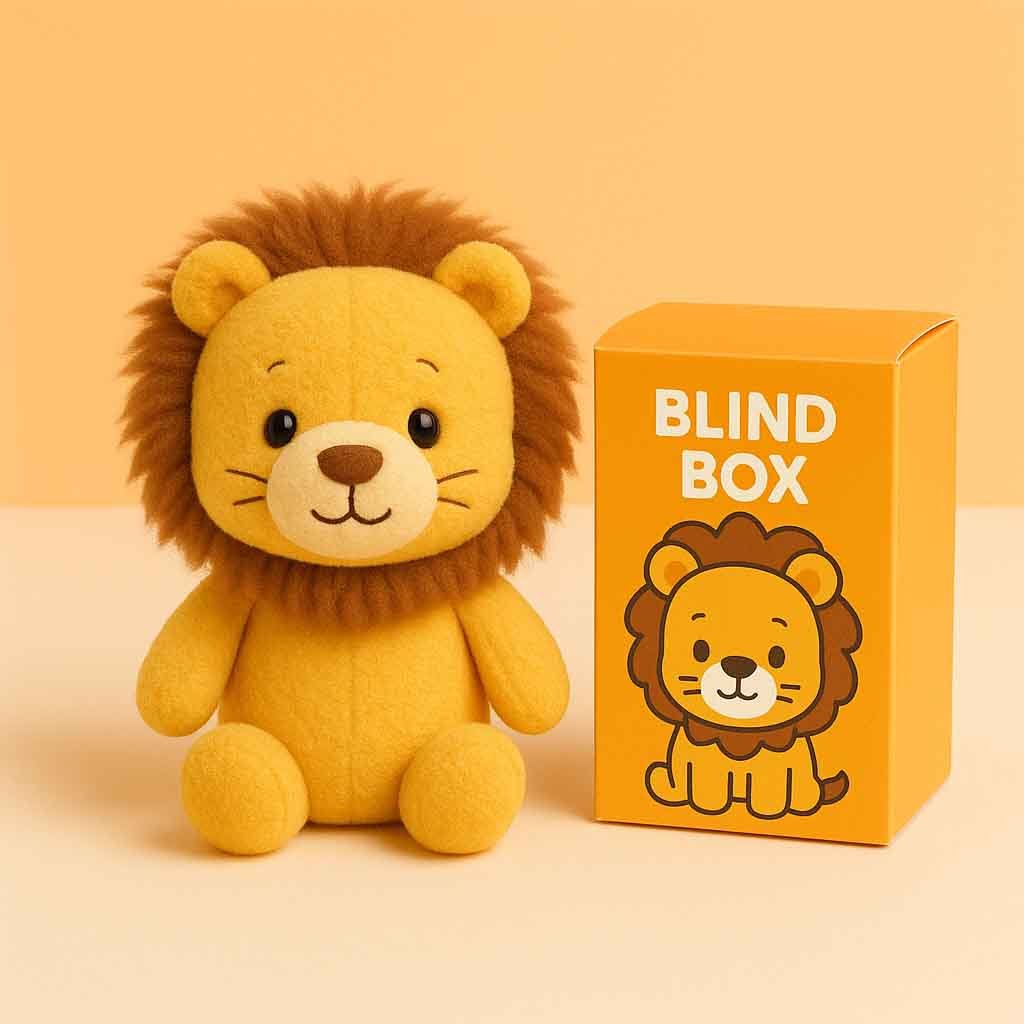
A sealed box you can’t peek into sounds like a strange way to sell plush toys—until you watch what happens at the shelf. People don’t just buy one. They buy two “to improve odds,” four “to complete the set,” and sometimes a full case “to chase the hidden.” That repeat-purchase behavior is exactly why plush blind boxes have become one of the most profitable formats in collectible toys.
Plush blind boxes are mystery packages containing one randomly selected plush toy from a themed series. The customer knows the full set, but doesn’t know which character is inside until opening. Many series include common designs, rare designs, and one hidden edition, so the purchase feels like a small “surprise event” instead of a normal transaction.
If you’re a brand planning a new plush line, blind boxes aren’t just a packaging trick—they are a product system: character planning + rarity math + strict quality consistency + retail-ready packaging + safety compliance. Get those right, and the series can sell for multiple seasons with expansions, collabs, and special drops.
What Are Plush Blind Boxes?
Plush blind boxes are sealed retail packages that contain one randomly selected plush toy from a fixed character series, and the customer cannot see which design is inside before opening. This simple “unknown surprise” structure changes how people buy plush toys. Instead of choosing a single favorite character, customers often purchase multiple boxes in one visit to complete a set, find a rare design, or trade duplicates with others.
In today’s collectible toy market, plush blind boxes are no longer considered small novelty items. They are treated as repeat-purchase consumer products that combine emotional comfort, visual collectibility, and controlled rarity. For brands, this means the product must be planned as a system, not just a cute plush inside a box.
A complete plush blind box program usually includes:
- A series of coordinated characters (commonly 6–12 designs)
- A rarity structure that controls how often each design appears
- Consistent plush size and material quality across all pieces
- Protective retail packaging suitable for shelf display and shipping
- Safety compliance for children’s toy regulations in target markets
When these elements are designed correctly, blind boxes can achieve higher repeat purchase rates and longer product life cycles than traditional stuffed animals.
Plain-Language Definition Customers Understand
From a customer’s point of view, a plush blind box is simply:
“A small mystery plush you open for surprise, collect in a full set, and sometimes chase for a hidden rare version.”
That emotional expectation is important.
If the plush quality feels cheap, the surprise becomes disappointment.
If the quality feels premium, the surprise becomes excitement—and the customer buys again.
Typical Structure of a Plush Blind Box Series
Most commercial blind box plush series follow a standardized planning model to balance excitement and fairness.
Common configuration used in retail
| Item | Typical Range | Why It Matters |
|---|---|---|
| Number of characters | 6–12 designs | Enough for collecting, not overwhelming |
| Plush height | 6–12 cm | Easy packing, lower shipping cost |
| Carton quantity | 48 / 72 / 96 pcs | Matches rarity math and logistics |
| Hidden design ratio | 1:72 or 1:96 | Creates chase without frustration |
| Retail price level | Low-to-mid impulse range | Encourages multi-unit purchase |
Customers rarely see this planning, but it directly affects:
- How exciting the opening feels
- How often people buy again
- Whether the series keeps selling after launch
How Plush Blind Boxes Differ From Regular Plush Toys
Many new brands assume blind box plush is just smaller stuffed animals with mystery packaging.
In practice, the difference is much deeper.
Key differences in product logic
| Aspect | Regular Plush Toy | Plush Blind Box |
|---|---|---|
| Purchase behavior | One-time selection | Multiple repeat purchases |
| Emotional trigger | Character preference | Surprise + collecting |
| Product planning | Single SKU focus | Series-based system |
| Packaging role | Protection only | Core part of experience |
| Rarity concept | None | Essential for demand |
| Community activity | Low | Trading, sharing, unboxing |
Because of these differences, blind box plush requires more precise development control, especially in:
- Character style consistency
- Embroidery accuracy across batches
- Stuffing weight uniformity
- Packaging durability for shipping
- Ratio-based packing during production
This is why brands usually cooperate with specialized plush manufacturers, rather than treating blind boxes as simple promotional gifts.
What Customers Actually Check After Opening the Box
When someone opens a plush blind box, their judgment happens in the first 5–10 seconds.
Real customer feedback across retail and e-commerce shows the same evaluation pattern.
Immediate quality checklist from real users
| Area Observed | What Customers Expect | Common Complaint if Poor |
|---|---|---|
| Fabric touch | Soft and smooth | Feels thin or rough |
| Face symmetry | Cute and balanced | Eyes uneven or crooked |
| Embroidery density | Clean stitching | Loose threads visible |
| Stuffing firmness | Even and full | Flat body or hard lumps |
| Smell | Neutral | Chemical odor |
| Box condition | Undamaged | Crushed corners |
Manufacturing Requirements Behind a Simple “Mystery Plush”
To the customer, blind box plush looks simple.
To the factory, it is a precision production project.
Core production controls required
| Production Area | Control Focus |
|---|---|
| Fabric sourcing | Color stability and softness |
| Pattern cutting | Size accuracy across pieces |
| Embroidery programming | Position and stitch density |
| Sewing process | Seam strength and symmetry |
| Stuffing measurement | Weight tolerance control |
| Needle detection | Safety compliance |
| Ratio packing | Correct rarity distribution |
Without these controls, brands risk:
- Visible batch-to-batch variation
- Customer complaints about inconsistency
- Difficulty maintaining long-term collectible value
Why Are Plush Blind Boxes So Popular?
Plush blind boxes are popular because they combine emotional comfort, surprise excitement, collectible structure, and strong repeat-purchase behavior in one small product. Customers do not experience them as ordinary stuffed toys. Instead, they feel like a game, a gift, and a collection at the same time.
This combination changes how people buy. Rather than choosing one plush and leaving, many customers purchase several boxes in a single visit, return later to complete missing characters, or trade duplicates with friends. For brands and retailers, this behavior creates higher sales frequency and longer product life than traditional plush toys.
1. Surprise Creates Stronger Buying Motivation
The most immediate reason for popularity is simple:
people enjoy opening something unknown.
This is not only a feeling—it is visible in real retail behavior.
Typical difference in purchase patterns
| Product Type | Average Units per Customer | Repeat Visit Likelihood |
|---|---|---|
| Regular plush toy | 1–2 | Low |
| Blind box plush | 3–8 | High |
| Blind box with hidden rare | 5–12 | Very high |
Because customers cannot predict the result, each purchase feels like a small emotional event, not just a transaction.
Even when they receive a duplicate, the experience still has value because:
- duplicates can be traded
- duplicates can be gifted
- duplicates help justify buying again
For retailers, this leads to higher turnover from the same shelf space.
2. Collecting Behavior Encourages Repeat Purchases
Plush blind boxes are designed as series products, not single items.
A typical lineup contains 6–12 characters plus one hidden design, which naturally creates a collecting goal.
Why collecting increases sales
| Customer Feeling | Resulting Action |
|---|---|
| “I only need two more.” | Buys additional boxes |
| “I want the hidden one.” | Purchases repeatedly |
| “I got duplicates.” | Trades instead of quitting |
| “New series released.” | Returns to store again |
This structure keeps the product active far longer than normal plush toys, which usually sell strongest only during the first display period.
Many successful blind box series remain popular for multiple seasons, especially when brands release:
- holiday editions
- color-variant specials
- collaboration characters
This ongoing cycle is a major reason companies invest in blind box plush development.
3. Emotional Comfort Makes Plush More Addictive Than Hard Toys
Plastic collectible figures also use blind packaging, but plush toys add something different:
soft emotional comfort.
Customers often describe plush blind boxes as:
- stress-relief desk companions
- small bedtime comfort items
- cute decorations for workspaces
- low-pressure gifts that feel warm, not formal
Because of this emotional softness, plush blind boxes attract not only children but also teenagers and adults.
Age distribution seen in many collectible plush markets
| Age Group | Purchase Motivation |
|---|---|
| Children | Play and cuteness |
| Teens | Trend, sharing, decoration |
| Young adults (18–35) | Stress relief, collecting, display |
| Adults 35+ | Gifting and nostalgia |
The strong participation of young adults is especially important, because this group:
- spends more per visit
- shares purchases on social media
- follows series releases closely
This expands plush blind boxes from a toy category into a lifestyle collectible category.
4. Social Media Greatly Expands Demand
Blind box plush fits perfectly with short-video sharing.
Opening a sealed package naturally creates a mini-story:
- showing the unopened box
- guessing which character is inside
- revealing the plush
- reacting emotionally
These moments are simple to film and easy to understand across languages, which helps them spread quickly online.
Effects of social sharing on sales
| Social Trigger | Retail Impact |
|---|---|
| Hidden character reveal video | Sudden demand increase |
| Full-set display photos | Encourages completion buying |
| Trading community posts | Extends product life cycle |
| Influencer unboxing | Introduces new customers |
Because plush toys look friendly and positive on camera, they often perform better than many other toy categories in visual media.
For brands, this means marketing can rely more on customer sharing rather than only paid advertising.
5. Affordable Price Enables Impulse Buying
Another practical reason for popularity is pricing.
Most blind box plush toys are positioned in a low-to-mid impulse purchase range, which makes customers comfortable buying several at once.
Why price structure matters
| Price Level | Customer Reaction |
|---|---|
| Too high | Buys only one, stops collecting |
| Moderate | Buys multiple units |
| Low but poor quality | Loses trust, stops returning |
The most successful products balance:
- good material feel
- clean embroidery and finishing
- reasonable retail price
This balance is only possible when manufacturing cost, quality control, and packaging efficiency are carefully managed.
6. Retailers Benefit From Faster Turnover and Smaller Space
From a store’s perspective, plush blind boxes solve several common retail problems.
Advantages compared with large plush toys
| Factor | Large Plush | Blind Box Plush |
|---|---|---|
| Shelf space needed | High | Low |
| Units per display | Few | Many |
| Purchase speed | Slow | Fast |
| Repeat visits | Limited | Frequent |
| Damage during handling | Higher | Lower |
Because each box is compact, stackable, and gift-ready, stores can display more units in the same area and achieve faster inventory movement.
This is why blind box plush is now common in:
- gift shops
- bookstores
- toy chains
- lifestyle stores
- online bundle sales
7. Strong Potential for Long-Term Brand Growth
For brands, the biggest reason behind popularity is not short-term sales.
It is the ability to build original character intellectual property.
Once customers recognize and love a character series, brands can expand into:
- keychains
- bags and accessories
- apparel graphics
- seasonal collectibles
- cross-brand collaborations
Which Plush Designs Are Most Sought After?
The plush designs that sell best in blind box programs usually share three core qualities:
clear emotional expression, strong visual consistency, and well-planned rarity.
Customers rarely choose blind box plush based on complex artistic concepts.
Instead, they respond quickly to designs that feel:
- cute at first glance
- easy to recognize from a distance
- satisfying to collect as a full set
- special when a rare version appears
Because blind box plush depends on repeat purchases, the most successful designs are not just beautiful—they are commercially structured for collecting behavior.
1. Emotion-Driven Characters Sell Faster Than Realistic Designs
Across many retail markets, plush toys with simple emotional faces consistently outperform realistic animals or complex sculptures.
Why emotional simplicity works
Customers make purchase decisions in seconds, especially in gift shops or toy stores.
Designs with clear emotions are easier to understand instantly.
Common high-selling emotional styles include:
- smiling or laughing faces
- sleepy or relaxed expressions
- shy or blushing cheeks
- playful “mischief” looks
- calm comfort-style faces
These expressions create an immediate feeling of:
- warmth
- friendliness
- stress relief
This emotional response is especially important for teen and adult collectors, who often buy plush for comfort rather than play.
Sales comparison by visual style
| Design Style | Customer Reaction | Typical Sales Speed |
|---|---|---|
| Cute emotional cartoon | Strong instant appeal | Fast |
| Minimalist rounded forms | Calm, decorative | Fast |
| Realistic animal shape | Limited emotional link | Medium |
| Complex artistic sculpture | Hard to read quickly | Slow |
2. Strong Series Consistency Encourages Full-Set Collecting
Blind box plush is rarely purchased as a single item.
Customers often want the complete lineup, which makes visual consistency extremely important.
Elements that must stay consistent across a series
| Element | Why It Matters |
|---|---|
| Eye shape and size | Creates recognizable identity |
| Embroidery thickness | Keeps quality perception stable |
| Body proportions | Makes display look uniform |
| Color harmony | Prevents one character from looking “out of place” |
| Plush size | Ensures packaging and shelf alignment |
If one design looks noticeably cheaper or different,
customers may assume quality problems in the entire series.
That is why successful brands often prepare:
- a full character lineup before production
- color palette rules shared across all designs
- strict embroidery and size tolerances
These controls allow collectors to display the full set in a way that feels organized and satisfying, which directly increases repeat purchases.
3. Rare and Hidden Designs Drive the Highest Demand
While common characters create volume,
rare and hidden plush designs create excitement.
Without rarity, customers usually buy only one or two boxes.
With rarity, they often continue buying to “try again.”
Typical rarity structure in plush blind boxes
| Tier | Approx. Ratio | Customer Behavior | Commercial Effect |
|---|---|---|---|
| Common | 60–70% | Easy to obtain | Maintains satisfaction |
| Uncommon | 20–25% | Encourages extra purchase | Increases unit sales |
| Rare | 5–10% | Creates thrill | Builds discussion |
| Hidden / Secret | 1–2% | Drives chasing and sharing | Strongest marketing impact |
Hidden plush designs usually include visible upgrades, such as:
- special fabric texture (long pile, gradient color)
- metallic or glow embroidery
- additional costume or accessory
- alternate color version not shown on packaging
These upgrades must still remain safe, durable, and scalable,
so they require careful planning during sampling and material testing.
In mature collectible markets, hidden plush resale prices sometimes reach
three to ten times the original retail price,
which further increases attention to the series.
4. Popular Theme Categories Across Global Markets
Although creativity is important,
sales data shows that certain themes consistently perform well.
High-performing plush blind box themes
| Theme Category | Reason for Popularity | Longevity |
|---|---|---|
| Cute animals with emotions | Universal cultural appeal | Very long |
| Food-inspired characters | Bright colors and humor | Long |
| Fantasy creatures | Strong imagination and storytelling | Medium–long |
| Zodiac or astrology | Personal meaning for customers | Predictable yearly |
| Seasonal holidays | Urgency and gifting demand | Repeating cycles |
| Daily lifestyle roles | Relatable and humorous | Long |
Themes tied to personal identity or emotion usually achieve the strongest repeat purchase behavior.
5. Size, Shape, and Touch Feeling Influence Sales More Than Expected
Many new brands focus mainly on artwork,
but physical feel often determines whether customers buy again.
Preferred physical characteristics in blind box plush
| Feature | Market Preference | Reason |
|---|---|---|
| Height | 6–10 cm common | Easy to collect and display |
| Shape | Rounded and compact | Feels cute and safe |
| Fabric softness | Very soft surface | Enhances comfort value |
| Weight | Light but full | Feels premium without heaviness |
| Stability when sitting | Can stand or sit upright | Better for desk display |
Collectors frequently photograph plush toys on:
- desks
- bookshelves
- bedside tables
So display friendliness becomes part of the design requirement.
6. Original Character IP Is Becoming More Valuable Than Licensed Designs
Licensed characters provide instant recognition,
but many brands now prefer original plush character systems.
Comparison of two design strategies
| Strategy | Advantages | Limitations |
|---|---|---|
| Licensed IP | Fast market entry | High royalty cost |
| Original characters | Full ownership and expansion | Requires design investment |
Original plush IP allows brands to expand into:
- accessories and bags
- animation or digital media
- seasonal collectible series
- cross-brand collaborations
How to Choose Good Quality Plush Blind Boxes?
Choosing high-quality plush blind boxes is not only about appearance.
For brands, retailers, and distributors, real quality means stable materials, consistent workmanship, safe construction, durable packaging, and reliable mass production.
Customers usually decide whether they trust a plush brand within a few seconds of opening the box.
If the plush feels soft, looks symmetrical, and smells clean, they feel satisfied.
If stitching is loose or stuffing uneven, they may stop buying the series completely.
Because blind box products depend on repeat purchasing, quality consistency across thousands of units is more important than making a single perfect prototype.
1. Fabric and Material Quality
The first contact point is always touch.
Before customers check details, they judge softness and comfort.
Common fabrics used in blind box plush
| Fabric Type | Surface Feel | Durability | Cost Level | Typical Usage |
|---|---|---|---|---|
| Velboa / short plush | Smooth and fine | Good | Low | Entry-level series |
| Crystal super soft | Very soft and dense | Medium | Medium | Mainstream collectibles |
| Long plush | Fluffy texture | Medium | Medium–high | Special characters |
| Faux fur | Premium visual effect | Medium | High | Rare or hidden editions |
| Stretch plush | Flexible and rounded | Medium | Medium | Soft body shapes |
What brands should check during sampling
- Color consistency under natural and artificial light
- Pile direction uniformity after cutting and sewing
- Softness comparison between fabric batches
- Resistance to lint shedding during rubbing tests
If two plush toys from the same series feel different,
customers immediately assume unstable production quality,
2. Embroidery, Sewing, and Shape Accuracy
After touch, customers focus on the face.
Small visual errors can change the character’s entire expression.
Critical craftsmanship checkpoints
| Area | Quality Requirement | Common Defect Seen in Low-Quality Plush |
|---|---|---|
| Eye embroidery | Symmetrical, dense stitching | Uneven height or loose threads |
| Mouth curve | Smooth and centered | Broken stitch or tilted smile |
| Seam alignment | Even spacing and tight closure | Gaps or exposed thread |
| Body shape | Balanced stuffing distribution | Flat areas or hard lumps |
| Accessories | Firmly attached | Easy to detach or rotate |
Even 1–2 mm position deviation in embroidery can reduce perceived value.
That is why professional factories rely on:
- Digital embroidery positioning files
- Pre-sewing templates for alignment
- Stuffing weight measurement by grams
- Inline inspection during sewing
3. Stuffing Quality and Internal Structure: Comfort and Durability
Stuffing is hidden inside the plush,
yet it strongly affects hand feel, durability, and long-term shape.
Main stuffing materials
| Material | Feel | Resilience | Safety Level | Typical Use |
|---|---|---|---|---|
| PP cotton | Soft and light | Good | High | Most blind box plush |
| Down-like microfiber | Extra smooth | Very good | High | Premium plush |
| Recycled polyester fiber | Medium softness | Medium | Certified safe | Eco-focused lines |
Key stuffing control points in production
- Exact weight tolerance (often within ±3–5%)
- Even distribution inside limbs and head
- No hard fiber clusters
- Shape recovery after compression
Poor stuffing control leads to:
- tilted heads
- uneven sitting posture
- fast deformation after shipping
These problems reduce collector confidence,
which is dangerous for blind box series that rely on repeat buying.
4. Packaging Strength and Unboxing Experience
Blind box packaging is not just protection.
It directly affects gift value, display appeal, and customer excitement.
Essential packaging components
| Component | Purpose |
|---|---|
| Rigid paperboard box | Prevents crushing during transport |
| Inner blind bag | Maintains mystery and hygiene |
| Character checklist card | Encourages full-set collecting |
| Barcode and batch code | Supports inventory tracking |
| Safety labeling | Required for legal sale |
Physical tests brands should request
- Drop test from typical shipping height
- Compression test for stacked cartons
- Color rub test to prevent ink transfer
- Seal strength test for blind bags
Weak packaging can damage not only the plush
but also the perceived professionalism of the brand.
5. Safety Compliance: Required for Global Retail
For children’s products, safety is not optional.
Missing certification can stop shipments or cause recalls.
Common safety standards by region
| Region | Main Toy Standard |
|---|---|
| United States | ASTM F963, CPSIA |
| Europe | EN71 |
| United Kingdom | UKCA |
| Multiple markets | REACH chemical limits |
Key safety checks for plush blind boxes
- Fabric free from restricted chemicals
- Secure attachment of eyes and accessories
- Needle detection after sewing
- Proper age labeling and warnings
6. Consistency Across Mass Production: The Most Important Factor
A sample can always look perfect.
Real quality is proven only when thousands of pieces look the same.
Production stability indicators brands should monitor
| Indicator | Why It Matters |
|---|---|
| Fabric color variation | Affects shelf appearance |
| Embroidery alignment | Impacts character expression |
| Stuffing weight tolerance | Changes hand feel |
| Carton packing accuracy | Controls rarity distribution |
| Defect rate during QC | Determines return risk |
Factories with structured quality systems typically include:
- pre-production sample confirmation
- inline inspection during sewing
- final random sampling before packing
- traceable batch coding
Do Plush Blind Boxes Make Good Products for Brands and Retailers?
Plush blind boxes can become strong commercial products when design consistency, rarity planning, and manufacturing quality are carefully controlled. Compared with ordinary plush toys, blind box formats usually generate higher repeat purchasing, stronger shelf engagement, and longer product life cycles, making them attractive for both retail brands and wholesale distributors.
Retail Performance and Repeat Purchase Behavior
Traditional plush toys often rely on single-purchase gifting.
Once the customer buys one, the transaction usually ends.
Blind box plush works differently because it introduces:
- Collection goals – customers want the full set
- Probability tension – rare characters encourage more purchases
- Trading culture – duplicates still have value
- Seasonal continuation – new series renew demand
Typical retail comparison
| Metric | Standard Plush SKU | Plush Blind Box Series |
|---|---|---|
| Units per customer | 1–2 | 3–8 |
| Repeat purchase rate | Low | High |
| Shelf interaction time | Short | Long |
| Social media exposure | Limited | Strong |
| Series life span | Single season | Multi-season possible |
Because of this structure, blind box plush is often treated by brands as a mini product ecosystem, not just a toy.
Retailers also appreciate:
- Compact shelf footprint
- Easy bundle sales (full case purchase)
- Predictable reorder cycles when a series becomes popular
Wholesale and Distribution Potential
For wholesalers and distributors, plush blind boxes provide clear logistical advantages.
Why distributors like blind box plush
- Uniform carton sizes simplify shipping calculations
- Stable MSRP range makes pricing predictable
- Impulse-buy nature improves sell-through speed
- Series numbering supports repeat wholesale orders
In many mid-range toy channels, blind box plush achieves faster inventory turnover than large plush dolls, mainly because:
- Price per unit is lower
- Display looks organized
- Customers often buy multiple units at once
Common wholesale positioning
| Channel | Typical Strategy |
|---|---|
| Gift shops | Counter display impulse sales |
| Bookstores | Character-driven seasonal sets |
| Toy chains | Full-case merchandising walls |
| Online stores | Bundle deals + hidden chase marketing |
When supported by reliable manufacturing and consistent quality, blind box plush can scale from small test runs to global distribution without changing the core product structure.
Long-Term Brand Building Through Original Plush IP
One of the biggest strategic values of plush blind boxes is the ability to create original character intellectual property.
Unlike licensed characters, original plush IP allows brands to:
- Control storytelling and visual identity
- Expand into accessories, bags, apparel, or animation
- Maintain higher long-term profit margins
- Build collectible communities around the characters
Many successful collectible brands begin with:
- A small blind box launch
- Community feedback and character popularity tracking
- Expansion into Series 02, seasonal editions, or collaborations
This gradual expansion reduces risk while increasing brand recognition.
To support this process, manufacturing partners must provide:
- Stable sampling quality
- Consistent bulk production across batches
- Flexible MOQ for testing new series
- Packaging updates for seasonal releases
These capabilities are essential for turning a creative plush idea into a sustainable product line.
Are Plush Blind Boxes Worth Developing as a Custom Product?
For companies evaluating new plush categories, blind box programs are often worth developing because they combine creative storytelling with measurable commercial return. When properly executed, they can deliver strong margins, repeat customer engagement, and scalable brand growth across multiple product cycles.
Cost Structure and Margin Logic
Blind box plush is usually designed within a controlled size and material range, which helps maintain predictable production costs.
Simplified cost influence factors
| Factor | Impact on Cost | Control Method |
|---|---|---|
| Plush size | Direct material usage | Standardize dimensions |
| Fabric type | Major cost driver | Select scalable materials |
| Embroidery complexity | Labor time | Optimize stitch count |
| Accessories | Added assembly | Limit detachable parts |
| Packaging structure | Print + material cost | Efficient box design |
Because blind boxes encourage multi-unit purchasing, brands can often maintain:
- Healthy retail margins
- Reasonable wholesale pricing
- Stable long-term profitability
This balance is one reason the format continues expanding globally.
Risk Control Before Mass Production
Launching a blind box series still requires careful preparation.
The most common problems brands face are not design issues, but production consistency issues.
Key pre-production checkpoints
| Stage | What Must Be Confirmed |
|---|---|
| Character sampling | Exact size, embroidery, fabric feel |
| Rarity allocation | Packing ratio per carton |
| Packaging durability | Drop test and compression test |
| Safety compliance | Material and labeling verification |
| Pilot production | Small batch QC validation |
Skipping these steps can lead to:
- Visible quality variation between batches
- Packaging damage during shipping
- Certification delays in customs
- Negative customer reviews after launch
Professional plush manufacturers reduce these risks through structured sampling workflows and documented quality control systems.
Practical Steps to Launch a Plush Blind Box Series
For brands starting from zero, the development path is usually straightforward when guided by an experienced factory.
Typical development timeline
| Phase | Main Work | Estimated Time |
|---|---|---|
| Concept design | Character sketches + theme planning | 1–2 weeks |
| Prototype sampling | Fabric selection + sewing sample | 2–4 weeks |
| Revision stage | Detail adjustment + approval | 1–2 weeks |
| Packaging design | Box structure + artwork | 2–3 weeks |
| Pilot production | Small batch testing | 2–4 weeks |
| Mass production | Bulk manufacturing | 30–45 days |
Actual timing depends on series complexity and order quantity, but structured planning keeps the process predictable.
Conclusion: Turning Plush Blind Box Ideas Into Real Products
Plush blind boxes succeed because they combine emotion, surprise, collectibility, and repeat purchasing behavior into one compact product.
But behind every successful series is something less visible—stable manufacturing discipline.
Customers only see the moment they open the box.
They don’t see:
- Fabric testing before sampling
- Embroidery calibration across machines
- Stuffing weight measurement for consistency
- Safety verification for global markets
- Carton packing ratios that control rarity
Those hidden steps are what separate short-lived novelty toys from long-term collectible plush brands.
Ready to Create Your Own Plush Blind Box Series?
If you are planning to launch a plush blind box collection—whether for retail, e-commerce, promotional campaigns, or original character branding—the most important decision is choosing a manufacturing partner who understands both creativity and production stability.
Szoneier is a plush toy development and manufacturing factory with more than 18 years of experience, offering:
- Full custom stuffed animal development
- Strong raw material supply chain support
- Professional sampling and rapid prototyping
- Stable bulk production with strict quality control
- Packaging design and safety compliance assistance
- Flexible solutions for brands, wholesalers, and private labels
From the first character sketch to the final sealed blind box, the goal is simple:
turn your plush idea into a reliable, scalable, and profitable product line.
If you would like to explore custom plush blind box production, you are welcome to contact Szoneier’s team for design discussion, sampling support, and quotation details.
Your next successful collectible series can begin with a single well-made plush inside a small sealed box.
manufacturer Categories
- Custom Tote Bags Manufacturer
- custom backpacks Manufacturer
- custom travel bags& Duffle bags manufacturer
- custom makeup bags & toiletry bags manufacturer
- custom cooler bags manufacturer
- custom drawstring bags manufacturer
- custom makeup bags & toiletry bags manufacturer
- custom golf bags manufacturer
- custom fireproof bags manufacturer
- custom dry bags manufacturer
- custom ski bags manufacturer
- custom gym & sports bags manufacturer
- custom laptop bags manufacturer
- custom tactical bags manufacturer
- custom beach bags manufacturer
- custom medical bags manufacturer
- custom camera bags manufacturer
- custom wetsuits manufacturer
- custom leather goods manufacturer
- more personalized products
Can't find the answers?
No worries, please contact us and we will answer all the questions you have during the whole process of plush toys customization.
Make A Sample First?
If you have your own artwork, logo design files, or just an idea,please provide details about your project requirements, including preferred fabric, color, and customization options,we’re excited to assist you in bringing your bespoke bag designs to life through our sample production process.
