 Skip to content
Plush Fabric Library: What Fabrics Are Used for Stuffed Animals & Plush Toys?
- Eric
- January 28, 2026
- 8:32 am
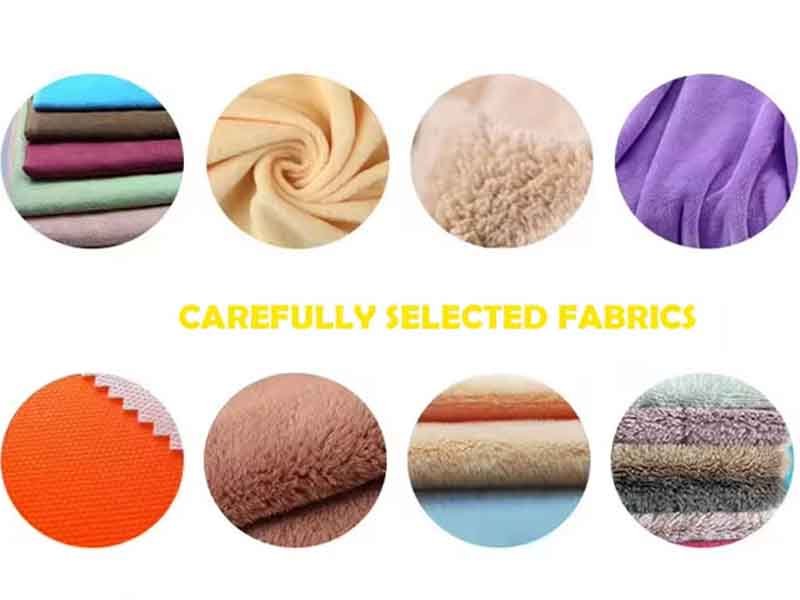
When buyers talk about plush toys, they often focus on design, character, or price. But inside every successful plush product, there is a quieter decision that matters far more than most people realize: fabric selection.
Two plush toys can look almost reminded on screen, yet feel completely different in hand. One feels soft, dense, and premium. The other feels flat, cheap, or sheds after a few washes. In most cases, the difference is not sewing—it’s the plush fabric itself.
For brand owners, designers, and professional buyers, choosing plush fabric is no longer just about “soft or not.” It’s about:
- Who will use the toy (baby, child, collector, promotional)
- How often it will be washed
- How large the toy is
- What price point the product must hit
- Which safety standards it must pass
A plush fabric library is a structured collection of fabrics used in stuffed animal and plush toy development. It helps manufacturers and buyers compare fabric texture, GSM, durability, safety compliance, and cost. Common plush fabrics include minky, faux fur, fleece, velboa, and velour—each suited to different product sizes, users, and market positions. A well-built plush fabric library improves product quality, speeds sampling, and reduces development risk.
Behind the scenes at Szoneier, our plush fabric library has been built and refined for over 18 years, covering hundreds of fabric variations, because we’ve learned one hard truth: You don’t design a plush toy first. You design it around the fabric.
Let’s break this down properly.
What Is a Plush Fabric Library?
A plush fabric library is a structured, production-tested material system used by plush toy manufacturers to select the right fabrics for different products. It goes beyond fabric samples by documenting GSM, pile height, durability, cost behavior, safety test history, and past order performance. For professional buyers, a plush fabric library reduces development risk, shortens sampling time, and ensures consistent quality in mass production.
What a Plush Fabric Library Really Means in Real Orders
For many buyers, a “fabric library” sounds like a showroom shelf with fabric swatches.
In real plush toy manufacturing, that definition is incomplete.
At Szoneier, a plush fabric library is built around one core question B-end buyers actually care about:
“If I use this fabric again at scale, will it behave the same way?”
That’s why our plush fabric library is not organized by color or softness alone, but by production behavior and commercial outcomes.
What Information Is Stored in a Real Plush Fabric Library
Every fabric in Szoneier’s internal system is logged with production-level data, not marketing descriptions.
| Data Category | Why It Matters to Buyers |
|---|---|
| GSM & pile height | Affects softness, weight, and shape retention |
| Fiber composition | Impacts safety tests and durability |
| Stretch direction | Determines sewing accuracy and deformation risk |
| Cutting loss rate | Directly affects final cost |
| Sewing behavior | Reduces defect rate in mass production |
| Safety test history | Avoids repeated or failed certifications |
| Past order usage | Proves real-world performance |
This allows us to answer buyer questions like:
- “Will this fabric collapse on a 120 cm plush?”
- “Has this fabric passed EN71 for baby toys before?”
- “What happens to this fabric after vacuum packing?”
Why B2B Buyers Rely on Fabric Libraries
From Szoneier’s internal order data over the last 3 years:
Projects using pre-validated fabrics
→ 30–45% fewer sample revisions
Projects using new, untested fabrics
→ Higher defect rates in first bulk run
Fabric-related changes after sampling
→ Average delay of 3–6 weeks
For buyers, this translates to:
- Faster time to market
- More predictable pricing
- Lower hidden risk
A plush fabric library is essentially risk insurance for your product development.
How a Plush Fabric Library Helps Buyers Make Better Decisions
Instead of asking vague questions like:
- “Is this fabric soft?”
- “Is this fabric good quality?”
Buyers with access to a real fabric library can ask:
- “Which fabric works best for a 60 cm plush shipped vacuum-packed?”
- “Which fabric keeps its surface clean after embroidery?”
- “Which fabric performs best under EU baby safety testing?”
These are commercial questions, not design questions.
Common Buyer Mistake: Choosing Fabric from Photos or Trade Shows
A common issue we see:
- Buyer selects fabric from photos or exhibition samples
- Fabric feels good in hand
- Fabric fails in bulk production (shedding, deformation, cost overrun)
A plush fabric library exists to prevent exactly this problem.
At Szoneier, if a fabric has:
- No bulk order history
- No safety test record
- No large-size plush reference
We treat it as high-risk, regardless of how good it feels.
Which Plush Fabric Types Are Most Common?
The most common plush fabrics for stuffed animals include minky, faux fur, fleece, velboa, and velour. Each fabric differs in softness, pile height, durability, cost, and ideal use. Minky is favored for premium and baby toys, faux fur for realistic animals, fleece for cost-effective designs, velboa for smooth surfaces, and velour for short-pile luxury finishes.
Which Fabrics Are Used for Outer Layers?
1. Minky Fabric (Premium Soft Plush)
Minky is a short-pile, ultra-soft polyester plush fabric, often described as “baby-skin soft.” It’s one of the most requested fabrics for modern plush toys.
Typical Technical Specs
| Parameter | Range |
|---|---|
| Fiber | 100% Polyester |
| GSM | 180–380 gsm |
| Pile height | 0.5–1.5 mm |
| Stretch | Slight (weft) |
| Washability | Good (gentle wash) |
Why buyers choose it
- Extremely soft hand-feel
- Clean surface (great for embroidery)
- No long hair shedding
- Works well for baby plush, pillows, mascots
Limitations
- Higher cost than fleece
- Shows needle marks if sewing quality is poor
- Less “fluffy” for animal realism
Best use cases
- Baby toys
- Premium brand plush
- Small to medium plush (10–40 cm)
- Pillow-style plush toys
2. Faux Fur (Long-Pile Plush Fabric)
Synthetic fur designed to imitate animal hair. Pile length and density vary widely.
Typical Technical Specs
| Parameter | Range |
|---|---|
| Fiber | Polyester / Acrylic |
| GSM | 350–900 gsm |
| Pile height | 10–60 mm |
| Stretch | Low |
| Shedding | Depends on quality |
Why buyers choose it
- Strong visual realism
- High perceived value
- Ideal for animals (bear, dog, lion, alpaca)
Limitations
- Harder to cut and sew
- Higher waste rate
- Requires experienced factory handling
Best use cases
- Animal plush toys
- Collector editions
- Large plush (40–150 cm)
- Display or gift plush
3. Fleece (Cost-Effective Plush Fabric)
A brushed polyester knit fabric—soft, light, and affordable.
Typical Technical Specs
| Parameter | Range |
|---|---|
| Fiber | Polyester |
| GSM | 200–280 gsm |
| Pile height | Very short |
| Stretch | Medium |
| Cost level | Low |
Why buyers choose it
- Stable supply
- Easy to sew
- Good color consistency
- Budget-friendly
Limitations
- Less premium feel
- Pills over time
- Flat appearance
Best use cases
- Promotional plush
- Large volume orders
- Simple shapes
- Price-sensitive markets
4. Velboa (Smooth Short-Pile Plush)
Velboa is a dense, short-pile plush with a smooth, slightly glossy surface.
Why buyers choose it
- Holds shape well
- Clean printing surface
- Durable
- Widely used in Japan & Korea markets
Best use cases
- Character plush
- Printed plush
- Facial areas (eyes, mouth zones)
5. Velour (Luxury Short Plush)
A knitted plush fabric with a soft, velvet-like surface.
Why buyers choose it
- Elegant appearance
- High-end tactile feel
- Suitable for fashion plush lines
Limitations
- Shows pressure marks
- Higher cost than fleece
Which Fabrics Are Used for Interior Stuffing?
Interior stuffing controls a plush toy’s shape, rebound, weight, and long-term performance. The most commonly used materials are PP cotton, recycled polyester fiber, memory foam, and cotton blends. The right stuffing depends on toy size, compression needs, shipping method, and target market. In mass production, stuffing choice often affects customer complaints more than outer plush fabric.
Why Stuffing Matters More Than Most Buyers Expect
At Szoneier, we track post-delivery feedback across thousands of plush shipments every year. One pattern is very clear:
Over 60% of “quality complaints” are related to stuffing behavior, not fabric defects.
Typical issues include:
- Plush feels flat after unpacking
- Toy does not rebound after squeezing
- Large plush collapses at the waist
- Shape changes after washing or long storage
All of these are stuffing decisions, not sewing mistakes.
Let’s break down the main stuffing options we actually use in production.
1. PP Cotton (Polyester Fiberfill)
PP cotton is the global standard stuffing for stuffed animals and plush toys. It’s made from polyester fibers (solid or hollow) and can be adjusted for softness or firmness.
Typical Production Specs (Szoneier Reference)
| Parameter | Common Range |
|---|---|
| Fiber length | 32–64 mm |
| Fiber type | Solid / Hollow |
| Denier | 6D – 15D |
| Rebound rate | 85–92% |
| Compression recovery | Good |
| Safety | EN71 / ASTM / CPSIA |
Why we use it most
- Stable supply chain
- Easy to control hand-feel
- Works across many toy sizes
- Cost-efficient for scaling
Real production logic
- Small plush (<30 cm): lower density, softer fill
- Medium plush (30–60 cm): balanced density for rebound
- Large plush (>80 cm): layered filling (core + surface) to prevent collapse
Common buyer mistake Overfilling to “make it feel full” → results in a hard, cheap hand-feel.
2. Recycled Polyester Fiber (rPET Filling)
Why buyers request it
- Sustainability goals
- Brand storytelling
- EU market expectations
What buyers should know
- Cost is typically 8–15% higher than standard PP cotton
- Rebound is slightly lower unless density is increased
- Requires better internal structure for large plush
Where it works best
- Brand plush with sustainability positioning
- Medium-size plush toys
- Products with clear ESG messaging
Szoneier data point In 2024, about 22% of our EU plush orders used recycled filling — up from 11% two years earlier.
3. Memory Foam & Shredded Foam
Used selectively for reminder plush, pillow-style toys, or posture products.
Pros
- High rebound
- Premium feel
- Shape stability
Cons
- Heavy
- Higher shipping cost
- Not suitable for children’s toys in many markets
Typical use
- Decorative plush
- Adult comfort plush
- Limited-edition items
4. Cotton & Cotton Blends
Reality check
- Rarely used alone
- Poor rebound
- Absorbs moisture
Where it still makes sense
- Baby plush with strict natural-material positioning
- Decorative plush not meant for heavy handling
How Do Plush Fabric Choices Impact Safety and Compliance?
In plush toy manufacturing, safety compliance is look-decided at the fabric stage. Fiber shedding, dye chemistry, pile structure, and fabric construction determine whether a product passes EN71, ASTM F963, or CPSIA testing. Most compliance failures are not sewing problems but material mismatches. Experienced manufacturers evaluate plush fabrics against test behavior before sampling to prevent retesting delays, added costs, and blocked market access.
Why Fabric Selection Is the First Compliance Decision
From an industry perspective, plush toy safety is not a final inspection issue—it is a material engineering issue.
Once a plush fabric enters production, its physical structure and chemical profile are already fixed. No amount of good stitching can correct:
- Excessive fiber shedding
- Unstable dye systems
- Restricted chemical content
- Inherent flammability behavior
In our experience across long-term production programs, fabric-related issues account for the majority of failed safety tests, especially in children’s and baby plush categories.
Core Safety Risks Controlled by Plush Fabric Choice
1. Fiber Shedding: The Most Common Physical Test Failure
From a testing standpoint, fiber shedding is the primary physical risk associated with plush fabrics.
It is influenced by:
- Pile anchoring strength
- Base cloth density
- Fiber length vs. backing tension
Long-pile faux fur and low-density plush fabrics are the highest-risk categories. These fabrics may feel soft and visually attractive but often release fibers under mechanical stress testing.
For baby plush and toddler products, industry practice strongly favors short-pile, high-density fabrics such as minky or velboa, where fiber migration is minimal and predictable.
2. Dye Stability and Color Migration
Colorfastness failures are a chemical-physical interaction problem, not a cosmetic one.
Plush fabrics dyed with unstable systems may:
- Transfer color under saliva or perspiration simulation
- Release restricted substances during migration testing
Dark colors—especially reds, deep blues, and blacks—present higher risk when combined with long-pile fabrics, because surface friction increases dye exposure during testing.
From a compliance perspective, dye method and fixation quality matter more than color appearance.
3. Chemical Content: Invisible but Non-Negotiable
Chemical testing failures originate entirely from fabric composition.
Key regulated substances include:
- Azo dyes
- Heavy metals
- Phthalates
- Formaldehyde
These substances are introduced at the fiber or dye stage, not during sewing. If a plush fabric fails chemical limits, the only solution is material replacement, not process adjustment.
This is why professional manufacturers track fabric-specific chemical profiles, rather than relying on generic supplier statements.
4. Flammability Behavior and Fabric Structure
While flammability requirements vary by market, plush fabrics with:
- Loose pile
- High air content
- Long fibers
tend to show less predictable flame spread behavior.
Dense, short-pile fabrics generally perform more consistently during flammability evaluation, especially when combined with standard polyester fillings.
From a risk-management standpoint, flammability is not about “adding treatment later” but choosing structurally stable fabrics from the start.
Why Compliance Failures Are Expensive for Buyers
From a commercial view, a failed safety test is not just a technical issue—it is a schedule and cost disruption.
Typical impacts include:
- Re-sampling cycles
- Re-testing fees
- Fabric replacement costs
- Delayed market entry
In seasonal or promotional programs, a 4–6 week delay often means missed sales windows, not just higher costs.
That is why experienced buyers prioritize fabrics with proven test history, not just theoretical compliance.
Why “Fabric Test History” Matters More Than Certificates
An expert distinction often overlooked by new buyers:
- A certificate proves a test once happened
- Test history proves repeatable performance
From an industry standpoint, the safest fabrics are those that have:
- Passed the same standard
- On similar plush sizes
- With comparable pile height
- Using similar color systems
This is why professional plush factories build fabric libraries based on repeated production results, not isolated certificates.
Common Compliance Mistakes Buyers Still Make
From years of production oversight, the most frequent buyer-side errors include:
- Selecting plush fabrics based on trade show samples
- Mixing multiple fabric sources in one toy
- Changing colors without reassessing dye risk
- Assuming polyester fabrics are automatically compliant
- Conducting safety tests after final sampling
Each of these increases the probability of rework.
Industry Best Practice: Compliance Starts Before Sampling
In mature plush supply chains, compliance logic is clear:
- Evaluate fabric behavior against safety standards
- Confirm prior test performance
- Match fabric structure to product size and user group
- Proceed to sampling only after risk is controlled
This approach significantly reduces test failures and protects development timelines.
How Do Plush Fabric + Stuffing Work Together?
Plush fabric and stuffing must be selected as a combined structure, not as independent materials. Fabric weight, pile length, stretch, and surface friction directly affect how stuffing behaves over time. Most plush deformation issues—collapse, poor rebound, uneven shape—are caused by mismatched fabric–stuffing combinations. Professional manufacturers engineer plush toys by balancing outer fabric load with internal filling density and structure.
How Plush Fabric Properties Directly Affect Stuffing Performance
Stuffing does not behave the same way under different fabrics. The outer fabric controls how pressure is distributed, not the stuffing itself.
Key Fabric Factors That Influence Stuffing
| Fabric Property | Impact on Stuffing |
|---|---|
| GSM / fabric weight | Determines load on internal fill |
| Pile length | Affects surface friction & compression |
| Stretch direction | Influences deformation zones |
| Surface density | Controls how quickly stuffing rebounds |
Industry reality: The heavier and denser the plush fabric, the more structural support the stuffing must provide.
Common Failure Scenario #1: Soft Fabric + Soft Filling
This is the most common buyer mistake.
Typical setup
- Low-GSM minky or fleece
- Low-density PP cotton
- Medium or large plush size
Initial result
- Feels very soft in sample
- Passes hand-feel inspection
Post-shipping result
- Plush collapses at midsection
- Poor rebound after unpacking
- “Looks tired” on shelf
Why it fails Soft fabric stretches under gravity, and soft stuffing cannot resist shape loss.
Common Failure Scenario #2: Heavy Fabric + Insufficient Structure
Seen frequently in large animal plush.
Typical setup
- Long-pile faux fur (high GSM)
- Standard PP cotton filling
- Size ≥ 80 cm
Failure symptoms
- Neck or waist collapse
- Uneven weight distribution
- Stuffing migrates downward
Root cause Fabric weight exceeds stuffing’s load-bearing capacity.
How Professional Factories Pair Fabric + Stuffing
At Szoneier, we follow engineering-style pairing logic, not feel-based guessing.
Practical Fabric–Stuffing Pairing Table
| Plush Fabric Type | Recommended Stuffing Strategy |
|---|---|
| Low-GSM minky | Medium-density PP cotton |
| High-GSM minky | Layered PP cotton |
| Velboa | Balanced-density PP cotton |
| Fleece | Softer PP cotton |
| Faux fur (short pile) | High-rebound PP cotton |
| Faux fur (long pile) | Structured core + surface fill |
Large Plush Rule: Size Changes Everything
Once plush size exceeds 60–80 cm, gravity becomes a design factor.
From Szoneier’s production data:
- Plush ≥100 cm → core structure is mandatory
- Single-density filling → high deformation risk
Best practice
- Firmer core filling
- Softer surface filling
- Fabric selected with known load behavior
Large plush is no longer “soft toy making” — it is light structural design.
How Vacuum Packing Changes the Fabric–Stuffing Equation
B-end buyers often overlook this.
Vacuum compression effects
- Compresses stuffing fibers
- Stresses fabric backing
- Reveals poor rebound combinations
Observed data
- Low-quality PP cotton loses 10–18% rebound after vacuum packing
- Properly matched fabric–fill recovers within 24–48 hours
This is why some plush looks fine before shipping and bad after delivery.
Why Fabric–Stuffing Mismatch Increases Returns
From customer feedback analysis:
- “Flat after opening”
- “Doesn’t bounce back”
- “Shape not like sample”
These complaints almost never relate to:
- Stitching
- Pattern accuracy
They relate to internal structure, which buyers cannot see but customers immediately feel.
How Szoneier Controls Fabric + Stuffing Compatibility
We reduce risk by:
- Testing fabric + stuffing combinations, not materials alone
- Logging deformation behavior by plush size
- Reusing proven combinations for repeat orders
Internally, combinations that fail structural stability do not re-enter our fabric library.
Is There a “Best” Plush Fabric for Stuffed Animals?
There is no single “best” plush fabric for stuffed animals. The right fabric depends on product size, target user, price range, safety requirements, and expected lifecycle. Fabrics such as minky, faux fur, velboa, fleece, and velour each perform best under specific conditions. Professional buyers select plush fabrics based on risk control and production behavior—not softness alone.
What “Best” Means to B-End Buyers
For professional buyers, “best” usually means lowest overall risk, not highest softness.
| Buyer Priority | What They Really Mean |
|---|---|
| Best quality | Low complaint & return rate |
| Best fabric | Stable in mass production |
| Best for brand | Consistent across reorders |
| Best for cost | Predictable landed cost |
| Best for safety | No retesting or delays |
This is why experienced buyers rarely choose fabrics purely by hand-feel.
How Different Plush Fabrics Become “Best” in Different Scenarios
Below is how the most common plush fabrics become the “best choice” only under specific conditions.
Minky — Best for Baby & Premium Softness
Why buyers call it “best”
- Very soft touch
- Short pile, low shedding
- High safety pass rate
Where it truly performs best
- Baby plush (0–3 years)
- Premium brand lines
- Small to medium plush (10–50 cm)
Where it fails
- Large plush without structural filling
- Projects needing strong visual volume
Cost reality
- Mid-to-high material cost
- Lower testing risk offsets cost
Faux Fur — Best for Visual Impact, Not Simplicity
Why buyers love it
- Strong shelf presence
- Realistic animal appearance
Where it is the best choice
- Animal plush
- Display or gift plush
- Large plush where volume matters
Hidden trade-offs
- Higher cutting loss (often 12–18%)
- More sewing complexity
- Higher shedding risk if quality is poor
Faux fur is “best” only when the buyer accepts higher process control needs.
Velboa — Best for Character & IP Plush
Why professionals choose it
- Smooth, dense surface
- Excellent embroidery clarity
- Consistent color performance
Best use cases
- Cartoon characters
- Licensed IP plush
- Products needing clean facial details
Limitations
- Less “fluffy” feel
- Not ideal for animal realism
Velboa becomes “best” when precision matters more than fluffiness.
Fleece — Best for Cost-Controlled Projects
Why it remains common
- Low material cost
- Easy sewing
- Fast production
Best scenarios
- Promotional plush
- Giveaways
- Short product lifecycle items
Why it is not “cheap” by default Used correctly, fleece reduces total cost and defect risk. Used incorrectly, it lowers perceived value.
Velour — Best for Decorative & Gift Plush
Why it is niche
- Elegant appearance
- Smooth surface
Best use
- Gift plush
- Decorative items
- Home décor plush
Trade-off
- Shows pressure marks
- Less forgiving in transport
Data Insight: What Buyers Actually Choose in Practice
From Szoneier’s shipped orders over the last 24 months:
| Fabric | Usage Share | Typical Project Type |
|---|---|---|
| Minky | ~31% | Baby & premium |
| Faux Fur | ~27% | Animal & large plush |
| Velboa | ~17% | Character plush |
| Fleece | ~15% | Promotional |
| Velour | ~10% | Gift & décor |
There is no dominance of a single “best” fabric — only best-fit choices.
Common Buyer Mistake: Chasing “Premium Feel”
A frequent error we see:
- Buyer selects the softest fabric sample
- Ignores size, filling, shipping method
- Faces collapse, deformation, or complaints later
Softness alone does not define quality. Performance over time does.
Are Some Plush Fabrics Better for Baby Plush Toys?
Yes. Baby plush toys require fabrics with short pile, low fiber migration, stable dye systems, and predictable test performance. Minky and velboa consistently outperform long-pile or loose-knit plush fabrics in EN71 and ASTM testing. In baby products, fabric choice is primarily a risk-control decision, not a softness comparison. Professional manufacturers prioritize fabrics with proven infant-use history over visually attractive materials.
Why Baby Plush Fabric Selection Is a Different Category Entirely
From an industry perspective, baby plush is not a “smaller plush”. It is a different risk class.
Adult or general plush reminds customers visually. Baby plush interacts directly with:
- Mouth
- Skin
- Saliva
- Repeated washing
- Long contact time
That changes everything.
At Szoneier, we treat baby plush projects as high-sensitivity programs with stricter internal rules than general plush.
What Makes a Plush Fabric “Baby-Safe” in Practice
In real testing and mass production, baby-safe plush fabrics share four core characteristics:
| Requirement | Why It Matters |
|---|---|
| Short pile structure | Reduces fiber ingestion risk |
| High pile anchoring | Prevents shedding under stress |
| Stable dye fixation | Avoids saliva/sweat migration |
| Smooth surface | Minimizes skin irritation |
If any one of these fails, the fabric becomes high-risk for baby use—regardless of how soft it feels.
Fabrics That Perform Best in Baby Plush Projects
Minky — Industry Standard for Infant Plush
Why it is widely accepted
- Short, dense pile
- Very low fiber shedding
- Consistent performance in physical tests
- Easy to clean
Typical production specs (baby use)
- GSM: 180–260 gsm
- Pile height: <1.5 mm
Where it works best
- Baby comfort toys
- Plush rattles
- Small soft dolls
Internal observation Across baby plush orders at Szoneier, minky-based designs show the lowest retest rate among all plush fabrics.
Velboa — Preferred for Facial & Detail Areas
Why professionals use it
- Extremely stable surface
- Clear embroidery edges
- Minimal fiber movement
Common use
- Faces (eyes, mouths)
- Logos or printed zones
- Mixed-material baby plush
Velboa is often combined with minky to balance softness and structural control.
Fabrics Commonly Rejected for Baby Plush (Even If They Feel Soft)
This is where many buyers make mistakes.
Long-Pile Faux Fur
- High fiber migration risk
- Difficult to control shedding
- Poor saliva test performance
Loose Knit Plush
- Fibers pull out under tension
- Deforms after washing
- Inconsistent test results
Unverified Decorative Fabrics
- Often lack test history
- Unknown dye chemistry
- High compliance risk
Key reality Softness alone does not equal safety.
Color Choice Matters More in Baby Plush Than Buyers Expect
From testing data:
- Dark colors have higher dye migration risk
- Reds, navy blues, and blacks are the most sensitive
- Light pastels perform more consistently
Industry practice For infant plush:
- Prefer light, low-saturation colors
- Avoid complex color mixes unless pre-tested
This is not aesthetic advice — it is risk reduction.
How Baby Plush Fabric Choice Impacts Cost & Timeline
| Decision | Impact |
|---|---|
| Using tested baby-safe fabric | Faster approval |
| Using untested fabric | Retesting delays |
| Changing fabric after sample | +3–6 weeks |
| Failing saliva test | Full resample |
For baby products, a single failed test often means complete material replacement, not adjustment.
How Szoneier Controls Baby Plush Fabric Risk
Internally, we:
- Limit baby plush to a short-list of proven fabrics
- Track infant-use test history
- Pair fabrics with appropriate low-density filling
- Avoid experimental fabrics in baby categories
This is why our baby plush projects show:
- Lower complaint rates
- Fewer safety delays
- Faster repeat orders
Are High-End Plush Fabrics Used for Premium Brands?
Yes, premium plush brands deliberately use high-end plush fabrics—but not simply for softness. These fabrics offer higher pile density, better rebound stability, cleaner surface behavior, and more consistent color performance. For premium brands, fabric choice is a brand-positioning and risk-control decision. High-end plush fabrics reduce long-term defects, improve customer perception, and support repeat purchasing at higher price points.
What “High-End Plush Fabric” Actually Means in Real Brand Projects
In professional plush manufacturing, “high-end” is not defined by price per meter. It is defined by performance consistency over time.
Premium brands care less about:
- Initial softness on Day 1
And more about:
- How the plush looks after 3 months on a shelf
- How it feels after repeated handling
- Whether the surface stays clean around embroidery
- Whether the shape remains stable in transport
High-end plush fabrics are chosen because they protect brand perception, not because they feel nicer in a sample room.
Key Fabric Characteristics Premium Brands Pay For
Based on Szoneier’s premium-brand projects, high-end plush fabrics consistently show the following traits:
| Performance Factor | Why Premium Brands Care |
|---|---|
| High pile density | Maintains volume and shape |
| Strong pile anchoring | Prevents surface degradation |
| Stable dye fixation | Avoids fading and color bleed |
| Smooth surface behavior | Keeps embroidery edges clean |
| Consistent lots | Ensures repeat-order consistency |
These properties reduce long-term complaint rates and returns.
Which Plush Fabrics Are Commonly Used by Premium Brands
High-GSM Minky (Premium Grade)
Why it’s favored
- Extremely soft, but controlled surface
- Short pile with high density
- Very low shedding risk
Typical usage
- Premium baby plush
- High-end gift plush
- Branded comfort items
Cost reality
- Higher GSM increases fabric cost by ~15–25%
- Often offset by fewer quality issues
Dense Velboa (Premium Surface Control)
Why brands use it
- Clean, uniform appearance
- Excellent embroidery and print clarity
- Minimal surface wear over time
Best applications
- Character/IP plush
- Luxury collectible plush
- Brand mascot products
Velboa is not flashy—but it is reliable, which premium brands value.
Controlled Faux Fur (Premium Animal Plush)
How it differs from standard faux fur
- Shorter, denser pile
- Better backing stability
- Reduced shedding risk
Trade-off
- Higher material and processing cost
- Requires skilled cutting and sewing
Premium brands accept this cost to maintain product integrity.
Premium vs Standard Plush Fabric Behavior
From Szoneier internal comparisons:
| Metric | Standard Plush | Premium Plush |
|---|---|---|
| Surface wear after handling | Medium | Low |
| Embroidery edge clarity | Variable | Consistent |
| Re-test rate | Higher | Lower |
| Repeat-order stability | Medium | High |
Premium fabrics reduce variability—this is their core value.
Why Premium Brands Avoid “New” or Untested Fabrics
A key difference between premium and mass-market buyers:
- Mass-market may experiment
- Premium brands avoid unnecessary risk
High-end brands typically require:
- Proven test history
- Known performance in bulk
- Documented repeat-order results
An untested fabric—no matter how soft—is a liability.
Cost Perspective: Why High-End Fabrics Often Save Money Long-Term
While high-end plush fabrics cost more upfront, they:
- Reduce sample revisions
- Lower return rates
- Shorten approval cycles
- Protect brand reputation
For premium brands, the cost of one failed launch often exceeds the savings from cheaper materials.
How Szoneier Supports Premium Plush Fabric Programs
For premium clients, Szoneier:
- Limits fabric options to proven premium families
- Matches fabric with structured filling
- Controls color consistency across batches
- Documents fabric behavior for future reorders
This approach supports long-term brand programs, not one-off orders.
How Does Szoneier Build a Real Plush Fabric Library?
Szoneier builds its plush fabric library from real production results, not fabric catalogs. Every fabric is selected, tested, sampled, produced, shipped, and reviewed through actual orders. Fabrics that fail in bulk, testing, or customer feedback are removed. Fabrics that perform consistently are retained and documented. This approach allows buyers to choose materials based on proven outcomes, not assumptions.
Why Most “Fabric Libraries” Are Not Useful for Buyers
From a buyer’s perspective, many so-called fabric libraries are:
- Supplier swatch books
- Trade show samples
- Untested decorative fabrics
They look good, but they don’t answer the questions B-end buyers actually ask:
- Will this fabric behave the same in bulk?
- Has it passed testing before?
- What happens after shipping and vacuum packing?
- Will it look the same in the next order?
At Szoneier, a fabric that has not survived production reality does not stay in the library.
Step 1: Fabric Entry Starts with Production, Not Samples
A fabric does not enter Szoneier’s core plush fabric library just because it feels soft.
To be considered, it must:
- Be used in at least one real project
- Pass internal cutting and sewing trials
- Show stable behavior during stuffing and shaping
Fabrics that only exist as swatches or lab samples are marked as “high-risk” and never recommended to buyers by default.
Step 2: Each Fabric Is Logged with Buyer-Relevant Data
Every retained fabric is documented with practical production data, not marketing descriptions.
| Data Recorded | Why Buyers Care |
|---|---|
| GSM & pile height | Predicts softness, weight, and shape retention |
| Stretch direction | Affects deformation and sewing accuracy |
| Cutting loss rate | Impacts real material cost |
| Sewing behavior | Predicts defect risk |
| Filling compatibility | Prevents collapse issues |
| Approved plush size range | Avoids size-related failures |
| Test history | Reduces compliance risk |
This allows our team to recommend fabrics based on your product parameters, not general trends.
Step 3: Safety & Compliance Performance Is Non-Negotiable
A plush fabric only becomes “core library material” after it has:
- Passed relevant safety tests (EN71 / ASTM / CPSIA where applicable)
- Shown consistent results across colors and batches
If a fabric:
- Passes once but fails later
- Shows unstable dye behavior
- Causes repeated retesting
It is downgraded or removed, regardless of how popular it looks.
Step 4: Bulk Production Is the Real Filter
Many fabrics perform well in samples but fail in bulk.
In Szoneier’s system:
- Bulk performance matters more than sample success
- Fabric behavior under time pressure is observed
- Sewing speed, defect rate, and worker feedback are recorded
Fabrics that slow production or increase rework are flagged—even if buyers initially like them.
Step 5: Shipping & Post-Delivery Feedback Decide Long-Term Value
A fabric’s final evaluation happens after delivery, not before.
We track:
- Deformation after vacuum packing
- Rebound time after unpacking
- Surface wear during handling
- Customer feedback and return reasons
From internal analysis:
- Fabrics that cause shape complaints are removed
- Only fabrics with stable post-shipping behavior remain long-term
Step 6: Continuous Elimination Is Part of the System
A real plush fabric library is not static.
At Szoneier:
- New fabrics enter every year
- More fabrics are removed than added
- Only proven materials survive long-term
This is why our core library stays manageable, reliable, and buyer-safe.
How Do We Customize Plush Fabrics for Clients?
Szoneier customizes plush fabrics only when customization adds real product or brand value. Typical customizations include pile height adjustment, GSM tuning, color control, surface treatment, and fiber composition changes. Each option affects cost, lead time, and testing risk differently. Professional customization focuses on improving performance or differentiation—not unnecessary complexity.
What Plush Fabric Elements Can Be Customized
Below are the customization types we actually implement in production, and how buyers should think about them.
1. Pile Height Adjustment
What it changes
- Hand-feel
- Visual volume
- Shedding behavior
Typical range
- ±0.5–5 mm from standard fabrics
When it’s worth doing
- Animal plush needing unique texture
- Brand signature feel
Trade-offs
- Longer development time
- Higher testing risk for long pile
2. GSM (Fabric Weight) Tuning
What it changes
- Durability
- Shape retention
- Cost per unit
Common adjustments
- ±10–30% from base fabric
Best use
- Large plush needing better structure
- Premium plush needing denser feel
Cost reality
- Higher GSM increases material cost and shipping weight
3. Color Control & Pantone Matching
What we customize
- Dye formula
- Color saturation
- Batch consistency
Why buyers request it
- Brand identity
- Character accuracy
Risk note
- Dark or saturated colors increase test sensitivity
- Requires dye stability validation
4. Surface Treatments
Common treatments
- Anti-pilling
- Anti-static
- Improved colorfastness
When useful
- Plush handled frequently
- Products with long shelf life
Trade-off
- Adds processing cost
- Requires re-testing
5. Fiber Composition Changes
Examples
- Recycled polyester blends
- Special low-irritation fibers
Why brands choose this
- Sustainability goals
- Market positioning
Reality check
- Higher cost
- Requires new safety validation
Customization Impact: Time, Cost & Risk
| Customization Type | Lead Time Impact | Cost Impact | Testing Risk |
|---|---|---|---|
| Pile height | Medium | Medium | Medium–High |
| GSM tuning | Medium | Medium | Medium |
| Color matching | Low–Medium | Low | Medium |
| Surface treatment | Medium | Medium | Medium |
| Fiber change | High | High | High |
How Szoneier Manages Custom Fabric Risk
We reduce risk by:
- Starting from proven base fabrics
- Customizing one variable at a time
- Testing early, before full sampling
- Avoiding unnecessary complexity
Our rule:
If customization does not clearly improve performance or brand value, we don’t recommend it.
What Buyers Should Prepare Before Requesting Custom Plush Fabric
To make customization efficient, buyers should define:
- Target plush size
- Market & user group
- Target price range
- Expected order volume
- Reference feel or sample
You don’t need to define technical fabric specs — that’s our role.
Common Buyer Mistakes in Plush Fabric Customization
- Customizing too many variables at once
- Customizing for softness only
- Ignoring testing implications
- Underestimating MOQ impact
- Treating custom fabric as decoration
Ready to Build Your Plush Toy with the Right Fabric?
At Szoneier, we help brands and professional buyers turn ideas into reliable plush products by starting with the right materials.
Whether you need:
- Baby-safe plush
- Large statement plush
- Premium gift plush
- Cost-controlled promotional plush
Our plush fabric library, R&D team, and production system are built to support custom development, fast sampling, and scalable manufacturing.
Send us your project details Request fabric suggestions or samples Get a clear quotation based on real materials
Szoneier — where plush quality starts with fabric, not guesswork.
manufacturer Categories
- Custom Tote Bags Manufacturer
- custom backpacks Manufacturer
- custom travel bags& Duffle bags manufacturer
- custom makeup bags & toiletry bags manufacturer
- custom cooler bags manufacturer
- custom drawstring bags manufacturer
- custom makeup bags & toiletry bags manufacturer
- custom golf bags manufacturer
- custom fireproof bags manufacturer
- custom dry bags manufacturer
- custom ski bags manufacturer
- custom gym & sports bags manufacturer
- custom laptop bags manufacturer
- custom tactical bags manufacturer
- custom beach bags manufacturer
- custom medical bags manufacturer
- custom camera bags manufacturer
- custom wetsuits manufacturer
- custom leather goods manufacturer
- more personalized products

Can't find the answers?
No worries, please contact us and we will answer all the questions you have during the whole process of plush toys customization.
Make A Sample First?
If you have your own artwork, logo design files, or just an idea,please provide details about your project requirements, including preferred fabric, color, and customization options,we’re excited to assist you in bringing your bespoke plush toy designs to life through our sample production process.
