Skip to content
A nylon bag may look ready for rain while still allowing water to reach the contents within minutes. The failure often begins in places that are easy to overlook: needle holes around a zipper, an unsealed corner, embroidery passing through the coating, or a shoulder strap stitched directly into the main compartment. A heavier fabric does not automatically solve any of those problems.
For product developers, the important decision is not simply whether nylon is waterproof. The real decision is how much water exposure the finished bag must handle and which construction system can deliver that level without making the product too heavy, stiff, expensive, or difficult to use.
A durable waterproof nylon bag combines a suitable nylon base fabric, a continuous PU, TPU, or PVC barrier, protected seams, controlled zipper openings, and testing based on the intended use. Waterproof performance comes from the complete construction, not from one coated fabric specification alone.
A commuter backpack, motorcycle tail bag, medical case, and roll-top dry bag may all use nylon, yet each one needs a different coating, seam method, closure, and test plan. Choosing the right combination early reduces sample revisions, prevents misleading product claims, and gives the manufacturer a clear standard for production.
The story of most leaking bags begins long before rain touches the surface. It begins when a product team selects a fabric by appearance, approves a sample without checking the inside seams, and discovers the weak points only after customers start using the product outdoors.
What Makes a Nylon Bag Waterproof?
A nylon bag becomes waterproof when the shell fabric resists penetration and every major entry point is controlled. The coating blocks water through the textile, while seam sealing, welded construction, protected zippers, covered openings, and carefully placed reinforcement prevent water from entering through the assembled structure.
Is a Nylon Bag Naturally Waterproof?
Nylon fiber is strong, lightweight, and less absorbent than many natural fibers, but woven nylon is not naturally waterproof. The gaps between yarns allow water to pass through when rain continues, pressure increases, or the fabric touches a wet surface for an extended period.
A tightly woven 420D or 500D nylon may resist short exposure better than an open, lightweight weave. Surface repellency can also make droplets bead and roll away. Neither feature creates a dependable waterproof barrier on its own.
A proper nylon bag material specification should identify:
- Nylon yarn denier
- Weave structure
- Finished fabric weight
- Coating or laminated film
- Coating side
- Surface water-repellent finish
- Hydrostatic pressure requirement
- Abrasion and tear requirements
- Color and finish standard
- Restricted-substance requirements
When a quotation only says “waterproof nylon,” the product team still lacks the information needed to compare materials. Two fabrics described with the same phrase may differ greatly in coating thickness, adhesion, flexibility, and long-term performance.
Nylon also changes during bag production. Cutting, folding, sewing, heat treatment, and hardware installation can weaken the waterproof layer. Material approval should therefore cover both the roll fabric and the finished bag.
How Does a Nylon Bag Stop Water?
A well-designed nylon bag manages water through several layers of protection.
- The outer finish reduces surface wetting.
- The nylon weave provides strength and supports the coating.
- The inner coating or film blocks water penetration.
- Seam tape or welding protects panel joints.
- Coated zippers, storm flaps, or roll tops protect openings.
- Reinforcement patches distribute load without creating uncontrolled leakage paths.
- The bottom construction protects the bag during wet-ground contact.
Water does not always travel directly through the shell. It may enter at a zipper end, follow the seam allowance, move behind a lining, and appear several centimeters away from the original entry point. A quick visual inspection may therefore identify the wrong cause.
The following areas deserve extra attention during sample development:
- Zipper start and end points
- Bottom panel corners
- Shoulder strap attachment zones
- Handle reinforcement stitching
- Gusset intersections
- Logo embroidery areas
- External pocket openings
- Compression strap anchors
- Drain holes or cable ports
- Lining access openings
A bag with a strong coated shell can still leak through one poorly controlled attachment point. For rain-resistant backpacks, the manufacturer may combine sewing, seam tape, covered zipper ends, and internal binding. For products requiring stronger protection, welded TPU construction or a roll-top opening may be more suitable.
Is a Nylon Bag Water-Resistant?
Many nylon bags sold as waterproof are more accurately described as water-resistant. They can protect contents from splashes, light rain, or a short commute, but they may not remain dry during prolonged rainfall, standing water, or immersion.
Product claims should be based on actual exposure rather than marketing language.
| Nylon Bag Protection Level | Expected Exposure | Recommended Construction |
|---|---|---|
| Light water resistance | Splashes and short drizzle | Coated nylon, standard seams, covered zipper |
| Daily rain protection | Regular commuting rain | PU-coated nylon, reverse-coil coated zipper, controlled seams |
| Extended rain protection | Long outdoor exposure | Higher waterproof target, taped seams, protected zipper ends |
| Wet-ground protection | Bag placed on damp or wet surfaces | Reinforced coated base, sealed lower seams, raised feet where suitable |
| High waterproof protection | Heavy rain or high water contact | TPU laminate, welded seams, waterproof closure |
| Brief immersion protection | Temporary submersion | Fully welded body, watertight closure, tested finished construction |
The table provides development directions rather than universal certification levels. The final specification must account for bag size, water pressure, loading, closure design, and test duration.
A backpack exposed to rain from above has different risks from a motorcycle bag exposed to wind-driven rain. A medical case placed on wet ground needs stronger bottom protection than a lightweight travel organizer stored inside luggage.
Brands should define the use condition in clear language:
- Maximum expected rain duration
- Whether the bag may sit on wet ground
- Whether water can collect on the top panel
- Whether the product will be compressed when wet
- Whether temporary immersion is possible
- Whether the contents are clothing, electronics, tools, or medical equipment
A clear use condition allows Szoneier to recommend a more accurate fabric and construction plan before sampling.
Which Nylon Bag Fabric Works Best?
The best nylon fabric is the one that meets the required balance of weight, abrasion resistance, flexibility, structure, appearance, and waterproof processing. Choosing the highest denier can make a bag unnecessarily heavy and stiff. Choosing the lightest fabric can lead to tearing, coating damage, or poor shape retention.
| Nylon Fabric | Common Weight Direction | Suitable Nylon Bag Uses | Main Development Concern |
|---|---|---|---|
| 210D nylon | Lightweight | Linings, packable bags, organizers | Lower abrasion resistance |
| 420D nylon | Light to medium | Daypacks, sports bags, travel bags | Needs reinforcement at load points |
| 500D nylon | Medium | Outdoor backpacks, motorcycle bags, equipment bags | Higher cost and firmer hand feel |
| 840D nylon | Medium to heavy | Luggage, rugged travel bags, tool bags | Increased weight |
| 1000D nylon | Heavy | Tactical bags, industrial cases, high-wear products | Stiffness and sewing difficulty |
| Ripstop nylon | Varies by denier | Outdoor pouches, hiking bags, packable gear | Grid yarn does not replace coating |
| Ballistic-style nylon | Usually heavier | Luggage, tactical, protective cases | Bulk and curved-panel handling |
Denier measures yarn linear density. It does not describe coating strength, tear resistance, weave density, or finished fabric weight by itself. A well-engineered 500D fabric may outperform a poorly coated 1000D fabric in a specific application.
Fabric selection should also consider:
- Weave: Plain, ripstop, basket, or ballistic-style structures influence tear behavior and surface appearance.
- Yarn type: High-tenacity yarn can improve strength without requiring excessive weight.
- Coating bond: Weak adhesion can cause peeling or bubbling even when the nylon base remains intact.
- Hand feel: Soft fabric works well for packable bags, while structured fabric supports equipment cases.
- Cold flexibility: Some coatings become firmer or more brittle at low temperatures.
- Color consistency: Coated surfaces can reflect light differently from uncoated nylon.
- Sewing behavior: Dense fabrics may require larger needles, increasing the size of penetration holes.
- Welding compatibility: Not all coated nylon can be heat welded.
For a custom project, fabric approval should include a physical swatch rather than a digital photo alone. The product team should fold the material, scratch the coated side lightly, test surface wetting, compare color under several lighting conditions, and examine whether white stress marks appear at sharp folds.
Which Nylon Bag Coating Is Best?
PU coating works well for many everyday nylon bags, TPU laminate is better for sealed or welded products, and PVC coating suits selected heavy-duty applications. The best coating depends on required water pressure, flexibility, seam method, product weight, environmental conditions, chemical requirements, and retail positioning.
Is PU Good for a Nylon Bag?
PU coating is widely used for backpacks, travel bags, sports bags, laptop bags, organizers, pouches, and outdoor accessories. It is normally applied to the inner face of woven nylon, leaving the textile appearance visible on the outside.
PU-coated nylon offers several advantages:
- Lower weight than many heavy laminated materials
- Softer hand feel
- Broad availability across nylon deniers
- Good compatibility with sewing
- Suitable for seam-tape development
- Wide color and surface-finish options
- Competitive cost for medium and large production runs
PU quality varies considerably. A low-cost coating may pass an initial water test and still fail after storage, repeated folding, or heat exposure. Sticky surfaces, cracking, delamination, and odor are common warning signs when the formulation or curing process is poor.
Important PU coating questions include:
- What hydrostatic pressure target is required?
- Will seam tape bond to the selected coating?
- Does the coating remain flexible after folding?
- How does it behave under heat and humidity?
- Will the interior remain exposed or covered by lining?
- Can the fabric tolerate logo heat-transfer temperatures?
- Is the material intended for cold outdoor use?
For many commuter and travel bags, a development target between approximately 1,000 and 3,000 mm hydrostatic resistance may provide practical rain protection when the seams and openings are also controlled. Higher targets can be specified for stronger exposure, but a higher fabric number does not repair an unsealed zipper or poorly taped seam.
PU is often the most balanced choice when the product needs a fabric-like appearance, moderate weight, flexible construction, and dependable rain resistance without full welded assembly.
Is TPU Better for a Nylon Bag?
TPU-laminated nylon is a stronger option for products requiring welded construction, higher water resistance, smoother internal surfaces, or repeated flexing. It is often considered for dry bags, cycling panniers, motorcycle luggage, medical bags, cooler components, technical pouches, and outdoor equipment cases.
TPU offers several useful properties:
- Continuous film barrier
- Strong flexibility
- Good abrasion performance
- Compatibility with selected welding processes
- Clean and wipeable surface
- Better support for sealed structures
- Good performance in foldable technical products when correctly specified
TPU does not automatically guarantee a waterproof finished bag. Film thickness, bonding quality, base fabric, welding temperature, pressure, speed, and overlap width all influence the final result.
A welded seam can fail in several ways:
- The welding temperature is too low, causing incomplete bonding.
- The temperature is too high, weakening the film or distorting the fabric.
- The overlap is too narrow.
- Dust or release agents contaminate the welding area.
- Curved panels create uneven pressure.
- Reinforcement layers interrupt the bond.
- Film thickness varies between production lots.
A product team choosing TPU should approve welded seam samples before ordering bulk fabric. The approval should include straight seams, corners, curves, handles, and any zone where several layers meet.
TPU normally costs more than basic PU-coated nylon, but the higher material cost may reduce the need for extensive stitching and seam tape. For high-value outdoor or medical products, stronger sealing and easier cleaning may justify the price difference.
Is PVC Suitable for a Nylon Bag?
PVC-coated nylon can be suitable for utility bags, transport covers, tool bags, industrial storage, heavy-duty equipment cases, and products needing a thick, firm, wipe-clean barrier. The coating can provide strong water resistance and may support high-frequency welding when the material formulation is compatible.
PVC brings several trade-offs:
- More weight
- Firmer hand feel
- Possible odor
- Reduced flexibility in cold conditions
- Greater bulk at folded corners
- Market-specific chemical restrictions
- Different recycling and sustainability concerns
- Potential surface cracking under repeated sharp folding
A heavy PVC-coated material may perform well in a truck tool bag but feel unsuitable for a premium commuter backpack. Material selection should follow the real handling and wearing conditions.
Before approving PVC, request data or samples covering:
- Coating thickness
- Total fabric weight
- Low-temperature flexibility
- Coating adhesion
- Abrasion resistance
- Weld strength
- Odor control
- Color migration
- Restricted-substance compliance
- Heat-aging performance
PVC should not be selected only because the quotation is lower. Added sewing difficulty, shipping weight, customer discomfort, or cold-weather complaints can erase the initial saving.
Does DWR Protect a Nylon Bag?
A DWR finish helps water form droplets on the outer surface instead of spreading into the weave. The bag absorbs less surface moisture, stays lighter during rain, and can dry more quickly after use.
DWR is a surface treatment, not the main waterproof barrier. A nylon fabric may show strong beading while still allowing water to penetrate under pressure. Surface repellency and hydrostatic resistance should therefore be specified separately.
A complete nylon bag material system may include:
- DWR on the outer face for water beading
- PU or TPU on the back for penetration resistance
- Seam tape or welding at panel joints
- Coated zipper tape at openings
- Storm flaps or zipper garages at exposed areas
- Reinforced waterproof base material at the bottom
DWR performance can decrease through abrasion, dirt, detergent, oil, and repeated use. Product care instructions should avoid promising permanent beading.
Brands selling into markets with stricter chemical requirements should also clarify whether a fluorine-free water-repellent finish is required. The supplier should not assume every water-repellent treatment meets the same environmental expectation.
| Coating Option | Strongest Advantage | Suitable Nylon Bag Direction | Main Risk to Control |
|---|---|---|---|
| PU coating | Balanced cost and flexibility | Backpacks, travel bags, sports bags | Aging and coating variation |
| TPU laminate | Strong barrier and weldability | Dry bags, cycling bags, medical bags | Process control and material cost |
| PVC coating | Thick and rugged surface | Tool bags, utility bags, industrial cases | Weight, stiffness, chemical requirements |
| DWR finish | Surface water beading | Outer face of most rain-resistant bags | Does not block pressure penetration |
For most custom programs, the coating decision should be made together with the seam and zipper decision. Selecting the shell fabric first and solving waterproof construction later often leads to extra sample rounds, higher labor cost, and a weaker finished product.
How Is a Nylon Bag Manufactured?
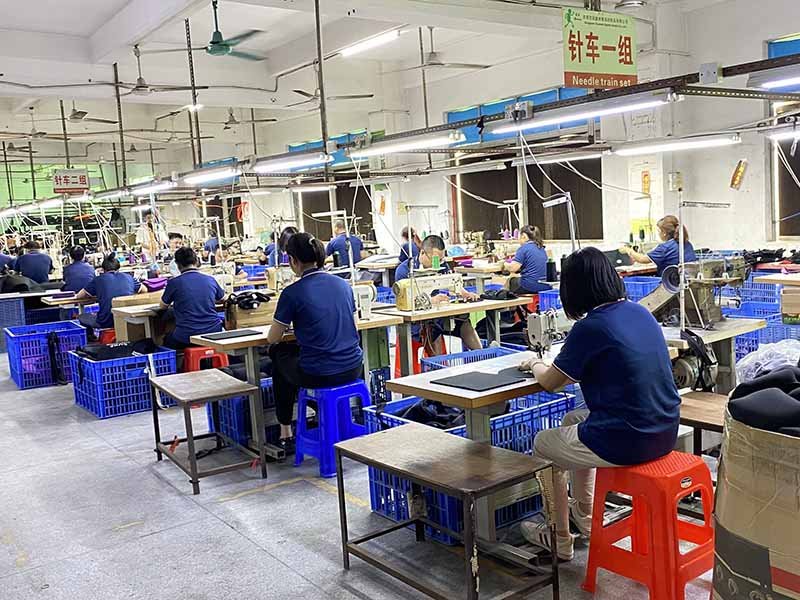
Waterproof nylon bag manufacturing requires more than cutting coated fabric and sewing the panels together. The factory must protect the waterproof layer during material storage, cutting, stitching, seam sealing, hardware installation, and final assembly. Each production step can create scratches, needle holes, weak joints, or uncovered openings that reduce the bag’s resistance to water.
How Is Nylon Bag Fabric Coated?
Waterproof nylon fabric normally combines a woven nylon base with a PU coating, TPU film, or PVC layer. The nylon provides tensile strength and abrasion resistance, while the coating creates the water barrier.
Before coating, the base fabric must be clean and evenly woven. Oil, dust, loose yarns, and uneven tension can interfere with coating adhesion. Any weakness in the fabric surface may later appear as bubbles, pinholes, peeling, or thin areas.
PU coating is generally applied to the back of the fabric in liquid form. The coated fabric passes through controlled heating and curing stages. The manufacturer must control coating viscosity, application amount, line speed, drying temperature, and curing time.
TPU fabric is often produced by laminating a thin thermoplastic film to nylon. Heat, pressure, and adhesive conditions must remain stable across the roll. A poor bond may not be visible during sampling but can separate after folding, heat exposure, or repeated use.
PVC coating normally creates a thicker and firmer surface. Its application must also remain even, particularly around fabric edges where coating weight may vary.
Important coating inspection points include:
- Pinholes visible under backlighting
- Uneven coating thickness
- Bubbles or trapped air
- Sticky or under-cured surfaces
- Cracks after folding
- Peeling between coating and nylon
- Color changes caused by excessive heat
- White marks along sharp creases
- Uneven gloss or surface texture
- Strong or abnormal odor
Roll inspection should cover both the nylon face and coated side. A coating may appear acceptable from the outside while containing small holes or streaks on the inner surface.
For custom nylon bags, material approval should include swatches from the actual production construction, not only a catalog sample. The approved swatch should record the fabric code, denier, weave, coating type, color, finished weight, and relevant test result.
How Are Nylon Bag Panels Cut?
Cutting affects waterproof performance because coated fabrics can be scratched, stretched, creased, or punctured before sewing begins. A damaged coating may later leak even when the stitching and seam tape are correctly applied.
Fabric rolls should be stored away from direct heat, moisture, sharp objects, and excessive pressure. Long-term folding is not recommended for many laminated materials because permanent creases can weaken the film.
Before cutting, the factory checks:
- Fabric width
- Roll length
- Color consistency
- Coating direction
- Surface defects
- Weave direction
- Stretch direction
- Pattern alignment
- Shrinkage or relaxation
- Batch identification
Panels must be cut according to the grain and coating direction stated in the pattern. Inconsistent orientation can create visible color differences because coated nylon may reflect light differently from different angles.
Cutting height must also be controlled. Stacking too many layers can make lower panels shift, producing inaccurate shapes. A difference of only a few millimeters can affect zipper alignment, seam overlap, and the position of reinforcement panels.
Pattern engineers must leave enough room for the intended seam process. A seam that will receive tape needs a reasonably flat area behind the stitching. Very tight curves, deep corners, or multiple folded layers may prevent the tape roller from applying even pressure.
For welded construction, the pattern needs an overlap area rather than a standard sewing allowance. The overlap must remain wide enough after shaping, particularly around curves and three-dimensional corners.
Cutting marks should avoid puncturing the waterproof layer. When temporary holes are necessary for assembly, they should remain inside areas later covered by seams, reinforcement, or welded overlap.
How Are Nylon Bag Panels Joined?
Waterproof nylon bag panels can be joined by sewing, seam taping, heat welding, ultrasonic welding, or high-frequency welding. The correct method depends on the coating, product shape, production volume, load requirements, and waterproof target.
Sewn construction offers flexibility and works well for backpacks, travel bags, sports bags, and equipment cases. It allows the factory to assemble complicated shapes, attach webbing, add foam, and install multiple pockets. The disadvantage is that every needle penetration creates a possible water path.
Welded construction creates a flatter joint without sewing holes. It is often used for roll-top bags, dry bags, cycling panniers, cooler liners, medical pouches, and technical equipment cases.
| Joining Method | Suitable Materials | Main Advantage | Main Limitation |
|---|---|---|---|
| Standard sewing | PU-coated or laminated nylon | Flexible for complex bag shapes | Creates needle holes |
| Sewing with seam tape | Tape-compatible coated nylon | Improves rain protection | Difficult around thick intersections |
| Hot-air welding | TPU and selected coated fabrics | Continuous sealed seam | Requires controlled heat and overlap |
| Heat pressing | Thermoplastic laminated fabrics | Clean and flat bonding | Limited on complex three-dimensional areas |
| Ultrasonic welding | Selected synthetic films | Fast joining without thread | Material compatibility is critical |
| High-frequency welding | PVC and selected TPU materials | Strong and consistent welds | Not suitable for every coating |
The factory should not switch joining methods during bulk production without approval. A construction that works with one material may fail with another, even when the fabrics look similar.
For example, seam tape designed for one PU coating may not bond correctly to another coating formulation. A TPU film may require different welding temperature and speed after a change in film thickness.
Sample development should therefore confirm the complete material and joining system together.
How Are Nylon Bag Seams Sealed?
Seam sealing covers the needle holes created during sewing. A thermoplastic tape is applied over the inside of the seam using heat and pressure. The tape softens, bonds to the coating, and forms a continuous cover over the stitch line.
Successful seam sealing depends on four main controls:
- Temperature
- Pressure
- Machine speed
- Tape and coating compatibility
Low temperature may produce weak adhesion. High temperature can melt, discolor, wrinkle, or weaken the coating. Excessive speed may prevent enough heat from reaching the bonding surface. Slow speed may damage the material.
Tape width must cover the complete stitch line with enough margin on both sides. Narrow tape may shift away from the needle holes on curved seams.
The most difficult areas include:
- Bottom corners
- Zipper ends
- Curved gussets
- Shoulder strap attachment points
- Webbing intersections
- Pocket corners
- Binding junctions
- Multiple-layer reinforcement areas
- Roll-top corners
- Handle bases
When several layers meet, the surface becomes uneven. Seam tape may bond to the raised layer but leave a small channel underneath. Water can move through the channel even though the tape looks correctly positioned.
The operator should check the tape immediately after application and again after cooling. Important defects include lifting edges, bubbles, wrinkles, scorching, incomplete coverage, and tape movement.
A peel check can be performed on test pieces from the same production setup. The tape should not release easily from the coated fabric under reasonable hand force.
Seam sealing must also remain flexible. A tape that bonds strongly but cracks when folded will not perform well on soft bags that are repeatedly compressed or rolled.
Which Nylon Bag Needle Works Best?
Needle selection affects both seam strength and waterproof performance. A needle that is too large creates oversized holes. A needle that is too small may bend, break, skip stitches, or damage the thread.
The correct needle depends on:
- Fabric denier
- Number of layers
- Coating thickness
- Thread size
- Webbing thickness
- Foam and reinforcement
- Sewing speed
- Seam type
Dense 840D or 1000D nylon may require a stronger needle than lightweight 210D fabric. However, selecting an unnecessarily large needle increases the opening around each stitch.
Needle condition matters as well. A worn or damaged point can cut yarns, scratch the coating, and create irregular holes. Production lines should replace needles according to use and immediately after any visible damage.
Stitch density must be balanced. Too few stitches may weaken the seam. Too many stitches place holes close together and can create a tear line along the coating.
Waterproof bags often need careful control around bar tacks. Bar tacking adds strength at handles and straps but also concentrates many needle holes in a small area. Reinforcement patches, seam tape, or a separate external attachment structure may be needed to reduce leakage into the main compartment.
Which Nylon Bag Thread Works Best?
Polyester and bonded nylon threads are widely used in bag manufacturing. Thread choice should match the load, fabric weight, seam type, exposure conditions, and appearance.
Bonded nylon thread provides strong tensile performance and good abrasion resistance. Polyester thread offers useful resistance to UV exposure and moisture. For outdoor products exposed to sunlight, weather performance should be considered alongside seam strength.
Thread size must match the needle and fabric. Heavy thread on lightweight nylon can cause puckering, large needle holes, and uneven seams. Very fine thread on heavy equipment bags may not provide enough strength.
Thread tension is equally important. Excessive tension can pull the seam tightly, distort coated fabric, and enlarge needle holes. Low tension can create loose stitches and gaps.
The production team should check:
- Balanced upper and lower thread tension
- No skipped stitches
- No broken thread
- No loose loops
- Consistent stitch length
- No coating damage near the seam
- No severe puckering
- No exposed thread ends
- Correct backstitching
- Clean bar-tack formation
A waterproof seam depends on structural strength and barrier protection. Strong thread alone cannot prevent water entry through needle holes.
Which Nylon Bag Zipper Works Best?
Zipper selection depends on the opening frequency, rain exposure, required flexibility, user comfort, and waterproof claim.
Standard coil zippers are flexible and cost-effective but provide limited resistance to water. Reverse-coil zippers place the coil toward the inside, creating a cleaner external appearance. Coated reverse-coil zippers add a water-repellent film over the tape.
Coated zippers are suitable for many commuter, sports, and travel bags, but water can still enter through:
- The slider gap
- Stitching around the zipper tape
- Open zipper ends
- Curved sections
- Damaged coating
- Incorrectly installed zipper garages
- Gaps under storm flaps
Waterproof or airtight zipper systems offer stronger protection but normally cost more, feel stiffer, and require greater pulling force. They may not be comfortable for a pocket opened many times each day.
Roll-top closures reduce reliance on long zipper tracks. When folded correctly, a roll top can provide strong protection for outdoor and technical bags. The design must still control side buckles, folding depth, panel stiffness, and opening width.
| Closure Type | Suitable Use | Water Protection | User Experience |
|---|---|---|---|
| Standard coil zipper | Indoor and general bags | Low | Easy to operate |
| Reverse-coil zipper | Urban backpacks | Moderate | Smooth and familiar |
| Coated reverse-coil zipper | Travel and outdoor bags | Moderate to high | Slightly firmer |
| Waterproof zipper | Technical equipment bags | High | Higher opening force |
| Roll-top closure | Dry bags and cycling bags | High when correctly folded | Slower access |
| Storm-flap zipper | Outdoor duffels and packs | Moderate to high | Added material around opening |
During sampling, zipper operation should be checked with the bag empty and loaded. A zipper may work smoothly on a flat panel but become difficult after the bag is filled.
Does a Nylon Bag Logo Cause Leaks?
Logo application can weaken waterproof performance when the process creates holes, excessive heat, or coating damage.
Embroidery uses many needle penetrations. A dense logo can create hundreds or thousands of holes in a small area. When embroidery passes directly into the main compartment, water may enter through the thread and backing.
Woven labels and rubber patches are often sewn around the edges. Their stitch lines also need attention. A patch placed over a seam may interfere with tape or create additional thickness.
Heat-transfer logos avoid sewing holes, but the application temperature and pressure must suit the coating. Excessive heat can deform TPU film, soften PU coating, or leave a glossy pressure mark.
Screen printing does not puncture the fabric but may require ink compatibility testing. Poor adhesion can lead to cracking or peeling on flexible coated surfaces.
Common logo options include:
- Screen printing
- Heat transfer
- Silicone transfer
- TPU badge
- Rubber patch
- Woven label
- Embroidery
- Reflective transfer
- Debossed film
- Printed webbing
For stronger waterproof protection, place logos on an external pocket, separate decorative panel, welded patch, or non-critical area rather than directly over the main waterproof compartment.
Logo samples should be tested for adhesion, color accuracy, abrasion, folding, and water exposure before bulk approval.

How Is a Nylon Bag Tested?
A waterproof nylon bag should be checked at three levels: incoming fabric, in-process construction, and finished product. Material testing confirms the coating’s resistance to water, while finished-bag testing reveals leakage around seams, zippers, corners, logos, and attachments. Both stages are necessary because a high-performing fabric can still become a leaking bag after assembly.
How Is Nylon Bag Fabric Tested?
Incoming fabric testing begins before cutting. The factory should verify that bulk rolls match the approved sample in color, coating, hand feel, weight, width, and waterproof performance.
Common fabric checks include:
- Fabric weight
- Roll width
- Color difference
- Surface defects
- Coating uniformity
- Water repellency
- Hydrostatic pressure
- Tear strength
- Tensile strength
- Abrasion resistance
- Coating adhesion
- Flex resistance
- Heat aging
- Cold flexibility
- Chemical compliance
Hydrostatic pressure testing measures resistance to water passing through the fabric under pressure. The result is normally expressed as a water-column height.
Possible development ranges may include:
| Hydrostatic Direction | Common Product Direction | Construction Requirement |
|---|---|---|
| Around 500–1,000 mm | Light splash protection | Basic coated fabric and covered opening |
| Around 1,000–3,000 mm | Commuter and travel rain protection | Controlled seams and coated zipper |
| Around 3,000–5,000 mm | Strong outdoor rain exposure | Seam tape and protected construction |
| Above 5,000 mm | Technical and high-exposure bags | Laminate, sealed joints, advanced closure |
These values should not be treated as finished-bag guarantees. The correct target depends on fabric type, testing method, product structure, and market claim.
Bulk rolls should be tested by lot. One passing sample from an early roll cannot represent every later batch. Color or coating adjustments may change waterproof performance.
How Are Nylon Bag Seams Checked?
Seam inspection begins during production rather than only after the bag is complete. Correcting a sealing problem is easier before the lining and internal dividers cover the seam.
Inspectors should review:
- Tape position
- Tape width
- Bonding consistency
- Seam overlap
- Stitch coverage
- Wrinkles and bubbles
- Scorched coating
- Lifted edges
- Curved seam bonding
- Multi-layer junctions
Straight seams are normally easier to seal. Corners, zipper ends, and reinforcement intersections require closer inspection.
A localized leakage test can help identify small defects. Absorbent paper is placed behind the seam while water is applied to the outer side. Any moisture mark shows the location of penetration.
For welded seams, inspection should include:
- Weld width
- Surface appearance
- Film distortion
- Edge alignment
- Peel resistance
- Burst resistance where required
- Corner consistency
- No burnt or brittle areas
A strong-looking weld can still be weak if only the outer edges are bonded. Test pieces should be cut from setup material at the beginning of a production shift and after major machine adjustments.
How Is a Nylon Bag Rain-Tested?
Rain testing evaluates the complete bag under controlled water exposure. The bag is normally loaded or shaped to resemble actual use. Absorbent paper can be placed inside the main compartment and pockets to reveal small leaks.
The procedure should define:
- Water flow
- Spray direction
- Distance from the bag
- Test duration
- Bag position
- Internal load
- Zipper position
- Rotation method
- Resting time before inspection
- Acceptance criteria
A five-minute overhead spray is not equal to one hour of wind-driven rain. Product teams should align the method with the intended claim.
During testing, water tends to collect around:
- Horizontal zippers
- Recessed pocket openings
- Top-panel seams
- Handle bases
- Gusset folds
- Zipper garages
- Logo patches
- Bottom corners
The bag should be inspected immediately after testing and again after a short resting period. Water trapped between the shell and lining may take time to appear inside.
External wetting alone does not mean failure. The important question is whether water reaches the protected compartment and whether the amount exceeds the agreed acceptance limit.
How Is the Nylon Bag Bottom Tested?
The bottom panel faces a different type of exposure from the upper shell. A bag placed on wet concrete, grass, boat decks, or vehicle floors experiences continuous contact rather than falling rain.
Wet-bottom testing can place the bag on a controlled wet surface for a defined period. The test should use the intended load because pressure from the contents may push water through weak seams.
Bottom testing should cover:
- Center panel penetration
- Corner leakage
- Piping seams
- Reinforcement stitching
- Feet or skid plate attachments
- Drain openings
- Bottom-to-gusset seams
- Coating abrasion
- Surface staining
- Water movement into foam
A bottom made from heavier coated nylon can improve durability, but the lower seam may remain the weakest area. Some products use a separate TPU or PVC-coated base to improve resistance to abrasion and standing water.
Bag feet can reduce direct contact, but their attachment screws or rivets may penetrate the waterproof layer. Internal washers, sealing components, or isolated reinforcement may be needed.
How Is Nylon Bag Durability Tested?
Waterproof performance must survive normal use. A bag that resists water when new may fail after abrasion, folding, loading, heat exposure, or repeated zipper operation.
Durability checks may include:
- Repeated opening and closing
- Handle lifting
- Shoulder strap loading
- Drop testing
- Tumble testing
- Abrasion testing
- Seam strength testing
- Buckle cycling
- Coating flexing
- Heat and humidity aging
- Cold conditioning
- UV exposure
- Carton compression
- Transport vibration
The test load should reflect real product use. A 20-liter commuter backpack may be tested differently from a heavy tool bag or motorcycle luggage system.
After mechanical testing, the waterproof check should be repeated. Stress may create leakage around reinforcement points that passed the first rain test.
Particular attention should be given to coating abrasion inside the bag. Hard tools, buckles, chargers, bottles, and metal components can rub against the coated side. A lining or protective panel may be needed where the contents create repeated friction.
Why Does a Nylon Bag Leak?
Leakage normally comes from one or more small construction weaknesses rather than a complete fabric failure.
Common causes include:
- Unsealed needle holes
- Incomplete seam tape bonding
- Tape lifting at corners
- Coating pinholes
- Damaged laminate
- Poor zipper-end construction
- Embroidery through the main shell
- Webbing stitched into the compartment
- Coating cracks at folds
- Unsealed rivets or hardware
- Water collection behind a storm flap
- Inconsistent welded overlap
- Excessive needle size
- Abrasion damage
- Delamination after heat or humidity
Water paths can be misleading. Moisture visible near the bottom may have entered through a top zipper and traveled behind the lining.
A proper leakage investigation follows a controlled process:
- Dry the bag completely.
- Place absorbent paper in separate compartments.
- Test one area at a time.
- Mark the first moisture location.
- Open the lining where necessary.
- Trace the path back to the entry point.
- Repair the construction rather than covering the visible stain.
- Repeat the test after correction.
For production problems, the factory should record the affected batch, material roll, sewing line, seam-sealing settings, operator, and inspection result. Such traceability helps prevent the same defect from continuing across the order.
Szoneier reviews coated fabric, construction details, seam protection, zipper installation, reinforcement, and finished-product performance during custom nylon bag development. Early testing allows the material and pattern to be adjusted before mass production, reducing the risk of waterproof complaints after shipment.
How Do You Customize a Nylon Bag?
Custom nylon bag development should begin with the product’s use conditions rather than its color, logo, or appearance. Water exposure, load, carrying method, compartment layout, opening frequency, target market, and expected service life affect nearly every manufacturing decision.
A bag designed for daily commuting may use PU-coated nylon, taped critical seams, and a coated reverse-coil zipper. A motorcycle bag exposed to wind-driven rain needs stronger seam protection, secure mounting points, and a reinforced waterproof base. A medical equipment bag may require wipe-clean materials, organized internal storage, and controlled access rather than immersion protection.
Clear specifications reduce sampling errors and prevent unnecessary material costs. The goal is not to use the thickest fabric or highest waterproof rating. The goal is to create a bag that performs reliably without becoming too heavy, stiff, expensive, or difficult to open.
Which Nylon Bag Material Should You Choose?
Material selection should begin with five practical questions:
- What will the bag carry?
- How heavy will the contents be?
- How long will the bag remain outdoors?
- Will it contact wet or rough surfaces?
- How often will it be folded, opened, or cleaned?
A lightweight 210D nylon may work well for internal pockets, packable shopping bags, shoe bags, and travel organizers. The same material may be unsuitable for a tool bag carrying metal equipment.
A 420D nylon offers a useful balance for backpacks, gym bags, travel bags, and sports products. Load-bearing zones still require reinforcement because fabric denier alone does not protect handle bases or shoulder strap attachments.
A 500D or 840D nylon provides stronger abrasion resistance for outdoor equipment, motorcycle luggage, tactical bags, and rugged travel products. Added strength also increases fabric weight, cutting resistance, seam thickness, and shipping weight.
Material selection should cover the complete construction rather than the shell alone.
| Bag Component | Material Decision | Main Performance Goal |
|---|---|---|
| Main shell | Nylon denier, weave, coating | Strength and water resistance |
| Bottom panel | Heavier coating or reinforcement | Wet-ground and abrasion protection |
| Lining | Polyester, nylon, coated lining | Compartment protection and clean finish |
| Back panel | Nylon, mesh, foam, board | Carrying comfort and shape |
| Reinforcement | Extra nylon, TPU patch, webbing | Load distribution |
| Internal dividers | Lining, foam, hook-and-loop | Organization and product protection |
| Zipper tape | Standard, coated, waterproof | Opening protection |
| Thread | Polyester or bonded nylon | Seam strength and weather resistance |
| Webbing | Nylon or polyester | Handle and strap durability |
| Binding | Woven tape or coated tape | Edge protection |
The fabric surface also affects product positioning. Matte nylon creates a technical or outdoor appearance. High-gloss coatings feel more industrial or waterproof. Soft-touch fabrics suit travel and lifestyle bags, while dense ballistic-style weaves suit rugged products.
A brand should review physical swatches under natural light and indoor light. Dark navy, black, charcoal, and olive can look very similar on a screen but differ noticeably after coating. Coating gloss can also make the same color appear lighter or darker.
Material approval should record:
- Supplier fabric code
- Nylon denier
- Yarn type
- Weave
- Finished width
- Fabric weight
- Coating type
- Coating side
- Surface finish
- Color reference
- Waterproof test requirement
- Abrasion requirement
- Approved swatch date
Recording those details prevents a visually similar substitute from entering production without approval.
What Nylon Bag Coating Do You Need?
The coating should match the actual water exposure and planned seam method.
PU coating works well for many sewn backpacks, travel bags, sports bags, laptop bags, and organizers. It gives the fabric a flexible hand feel and supports conventional bag construction.
TPU laminate is more suitable when the design needs welded seams, a smooth wipe-clean interior, higher water resistance, or repeated folding. It is often selected for dry bags, cycling panniers, motorcycle bags, medical pouches, and technical outdoor products.
PVC coating can suit tool bags, industrial storage products, equipment covers, and heavy-duty utility bags where weight and stiffness are acceptable.
The specification should not stop at a coating name. A useful coating request includes:
- Required water exposure
- Hydrostatic pressure target
- Finished fabric weight
- Preferred hand feel
- Coating thickness or film direction
- Sewing or welding process
- Expected temperature range
- Folding frequency
- Cleaning method
- Restricted-substance requirements
- Surface gloss
- Target market
The product’s internal structure also matters. A coated shell may provide good protection from external rain, but moisture can still become trapped between the shell, foam, and lining. Bags used around water should be designed so damp areas can dry without damaging internal boards or adhesives.
For a structured equipment case, the waterproof shell may surround EVA foam or polyethylene board. The edge construction must stop water from reaching those internal materials. Once absorbent foam becomes wet, drying can be slow and odors may develop.
A softer roll-top bag has fewer internal layers, making it easier to seal and dry. The trade-off is lower shape retention and less impact protection.
Which Nylon Bag Closure Works Best?
The opening is often the weakest point in a waterproof nylon bag. Closure selection should consider water protection and daily convenience together.
A standard zipper is easy to operate but offers limited rain protection. A reverse-coil zipper places the coil inside for a cleaner appearance and slightly better shielding.
A coated reverse-coil zipper adds a film over the zipper tape. It is suitable for commuter bags, outdoor backpacks, travel bags, sports bags, and many motorcycle accessories. The slider and zipper ends still require protection.
A specialized waterproof zipper provides stronger sealing but may feel stiff. Opening force can become a problem on small pockets, curved openings, or products used by children and older users.
A roll-top closure provides strong protection when folded several times and secured correctly. It works well for dry bags, cycling bags, boating products, and outdoor storage. Access is slower because users must unclip and unroll the opening.
Magnetic closures, snaps, drawstrings, and hook-and-loop systems can improve access but should not be relied upon as the only barrier in heavy rain.
| Closure | Best Application | Main Benefit | Main Concern |
|---|---|---|---|
| Standard coil zipper | General indoor and travel bags | Easy operation | Limited rain resistance |
| Reverse-coil zipper | Urban backpacks and luggage | Clean appearance | Stitch line remains exposed |
| Coated zipper | Outdoor and commuter products | Better rain protection | Slider and ends may leak |
| Waterproof zipper | Technical equipment bags | Strong sealing | Higher cost and opening force |
| Roll top | Dry bags and cycling bags | Fewer leakage paths | Slower access |
| Storm flap | Duffels and outdoor packs | Covers zipper area | Can collect water if poorly shaped |
Opening direction changes performance as well. A horizontal top zipper can collect water. A slanted zipper allows water to run off more easily. A recessed zipper may appear protected but can form a channel where water remains trapped.
Zipper garages should cover the slider when closed. Both ends of the zipper need secure termination. A coated zipper without protected ends may still allow water to enter quickly.
During sampling, the closure should be tested after the bag is filled. Loading changes panel tension and may pull the zipper apart, distort the opening, or expose gaps hidden on an empty sample.
What Should a Nylon Bag Tech Pack Include?
A strong tech pack turns a product idea into measurable manufacturing instructions. It should provide enough detail for the sample room, material team, sewing team, quality inspectors, and packaging department to work from the same requirements.
The document should include front, back, side, top, bottom, and internal views. Cross-section drawings are useful around waterproof seams, zipper openings, reinforced bases, and welded overlaps.
A complete nylon bag tech pack normally includes:
- Finished dimensions
- Capacity
- Dimension tolerances
- Shell material
- Lining material
- Coating
- Fabric weight
- Foam and board
- Zippers
- Sliders and pullers
- Buckles
- Webbing
- Thread
- Seam construction
- Seam-tape areas
- Weld overlap
- Reinforcement placement
- Logo method
- Label placement
- Packaging
- Test requirements
- Target load
- Target market
Waterproof instructions should be marked directly on the drawings. A general note such as “make the whole bag waterproof” is too vague for production.
The tech pack should identify:
- Which seams receive tape
- Which seams are welded
- Which stitch lines can remain unsealed
- Where water-resistant zippers are required
- Which zipper ends need garages
- Whether logo stitching can enter the main compartment
- Whether hardware holes require sealing
- Which pockets must remain dry
- Which compartments can allow drainage
- Which test method will be used
A practical specification table can prevent misunderstandings:
| Item | Required Information | Example Direction |
|---|---|---|
| Main fabric | Denier, weave, coating | 420D nylon with PU backing |
| Bottom | Material and reinforcement | 840D coated nylon |
| Water exposure | Duration and condition | Regular outdoor rain |
| Seam treatment | Areas to be sealed | Main compartment seams |
| Closure | Zipper or roll top | Coated reverse-coil zipper |
| Logo | Method and position | Heat transfer on front pocket |
| Load | Expected carrying weight | Defined during development |
| Test | Fabric and bag procedure | Hydrostatic and rain test |
| Packaging | Unit and carton method | Polybag, insert, master carton |
When a brand has no complete tech pack, Szoneier can work from reference bags, sketches, photographs, measurements, or a written description. Free design assistance can help convert the idea into a workable structure before sampling.
How Is a Nylon Bag Sample Developed?
The sample stage confirms whether the materials, dimensions, construction, appearance, and waterproof strategy work together. It should not be treated as a visual mock-up only.
A standard development process may include:
- Product requirement review
- Material recommendation
- Fabric and hardware sourcing
- Pattern development
- First prototype
- Fit and function review
- Waterproof construction adjustment
- Logo approval
- Revised sample
- Pre-production sample
Straightforward nylon bags may be sampled in approximately 5–7 days after all materials and specifications are confirmed. More complex products involving custom molds, welded construction, specialized zippers, structured compartments, or several revisions may require around 7–15 days.
Actual timing depends on:
- Custom fabric availability
- Color matching
- Zipper availability
- Hardware molds
- Logo process
- Pattern complexity
- Welding trials
- Test requirements
- Revision quantity
The first sample should be reviewed from both the outside and inside. Important checks include:
- Overall dimensions
- Capacity
- Shape retention
- Zipper operation
- Strap length
- Carrying comfort
- Compartment access
- Seam construction
- Tape coverage
- Reinforcement placement
- Logo position
- Fabric shade
- Bottom stability
- Waterproof performance
A visually attractive sample may still need structural revision. For example, a slim shoulder strap may suit the appearance but become uncomfortable under load. A hidden zipper may improve style but collect water. A thick foam wall may protect equipment but make seam taping difficult.
Each sample revision should have a clear purpose. Changing several materials and structural details at the same time makes it difficult to identify which adjustment improved or weakened performance.
How Can Nylon Bag Cost Be Controlled?
Material cost is only one part of a nylon bag quotation. Construction time, waterproof processing, hardware, logo methods, testing, packaging, and order quantity all affect the final unit price.
Major cost drivers include:
- Nylon denier
- Coating type
- Fabric weight
- Custom color
- Waterproof zipper
- Seam tape length
- Welded seam length
- Number of panels
- Number of pockets
- Foam thickness
- Custom hardware
- Logo complexity
- Testing requirements
- Packaging
- Production quantity
A bag with many small panels requires more cutting and sewing than a clean design with larger panels. Every pocket adds zippers, lining, seam allowance, labor, and inspection points.
Seam tape is priced by material use and processing time. A design with curved seams, narrow corners, and many intersections takes longer to seal than a simple rectangular bag.
Custom zipper pullers, buckles, metal plates, and logo molds may require tooling. Existing hardware can reduce development cost and shorten the sample process.
Cost can be controlled without lowering product quality:
- Use heavier nylon only in high-wear zones.
- Use a lighter shell where abrasion is limited.
- Reduce decorative seams that create leakage paths.
- Standardize zipper sizes.
- Limit custom hardware to visible areas.
- Use heat-transfer logos instead of dense embroidery.
- Design flatter seams for easier taping.
- Avoid unnecessary internal layers.
- Combine pockets where practical.
- Select packaging according to actual retail needs.
The lowest quotation may not deliver the lowest total cost. A bag that requires repeated sample corrections, produces high rejection rates, or generates waterproof complaints can cost more than a carefully engineered product.
How Should You Approve the Nylon Bag Sample?
Sample approval should be written and measurable. Informal comments such as “looks good” or “make it stronger” leave too much room for interpretation.
The approved sample record should include:
- Sample number
- Approval date
- Approved materials
- Color references
- Hardware finish
- Logo artwork
- Dimensions
- Tolerances
- Waterproof construction
- Test results
- Packaging
- Approved changes
Photographs should show the front, back, sides, bottom, top, interior, logo, zipper ends, reinforcement points, labels, and packaging.
The approved physical sample becomes the workmanship reference for bulk production. The tech pack remains the dimensional and material reference. Both should agree before the purchase order enters production.
A pre-production sample is especially important when bulk materials differ from the first development sample. The pre-production version should use the confirmed fabric, actual logo, production hardware, labels, and packaging.
Waterproof testing should be repeated after final approval because apparently small changes can affect performance. Moving a logo, changing the zipper, adding a handle, or adjusting foam can introduce new holes or tension points.
How Do You Choose a Nylon Bag Manufacturer?
A capable nylon bag manufacturer should understand coated materials, seam engineering, bag construction, testing, and production control. Sewing experience alone is not enough for waterproof products.
Before choosing a factory, ask how it manages:
- Coated fabric inspection
- Material batch traceability
- Fabric storage
- Pattern development
- Welding trials
- Seam-tape settings
- Needle control
- Zipper-end sealing
- Waterproof testing
- Final inspection
- Defect correction
- Packaging protection
The factory should be able to explain why a proposed material or seam method suits the product. A supplier that agrees to every request without discussing risk may not have evaluated the construction carefully.
Useful questions include:
- Has the factory produced similar waterproof nylon bags?
- Can it provide relevant material swatches?
- Can it perform sewing and seam sealing?
- Can it develop welded TPU products?
- How are coating lots inspected?
- How are seam-sealing settings recorded?
- Are finished bags tested after loading?
- How are leaks traced and corrected?
- Can the factory support custom logos and packaging?
- How are approved samples controlled during production?
Sample quality should be examined beyond the exterior appearance. Turn the lining back where possible and inspect hidden construction.
Look for:
- Centered seam tape
- Clean zipper ends
- Balanced stitching
- Flat reinforcement
- No coating scratches
- No loose thread
- No burnt film
- No lifted tape
- Smooth zipper operation
- Consistent logo position
Communication is another practical manufacturing factor. The supplier should identify missing information, provide alternatives, explain cost changes, and record approved revisions. A technically capable factory can still cause delays when specifications are poorly documented.
Why Work with Szoneier?
Szoneier has more than 18 years of experience in material development and custom product manufacturing. The company develops nylon bags and coated-fabric products for overseas brands, distributors, retailers, project companies, and private-label programs.
Custom services include:
- OEM and ODM development
- Free design assistance
- Material recommendations
- Fabric sample support
- Low custom order quantities
- Logo customization
- Private-label production
- Packaging development
- Rapid sample development
- Quality inspection
- Production planning
- Export support
Szoneier can develop backpacks, sports bags, travel bags, motorcycle bags, cycling bags, medical cases, equipment bags, outdoor storage bags, cooler bags, dry bags, tool bags, and related coated-fabric products.
Material options can be selected according to use rather than forcing one standard nylon across every program. The team can compare PU-coated nylon, TPU-laminated nylon, PVC-coated fabrics, lining materials, foam, webbing, zippers, and reinforcement structures.
During development, the team reviews:
- Product use
- Expected load
- Waterproof target
- Fabric denier
- Coating
- Seam method
- Zipper
- Logo
- Packaging
- Test direction
Quality control covers incoming materials, cutting, sewing, seam sealing, assembly, appearance, dimensions, function, and final inspection. Waterproof requirements can be built into the sample and production checklist rather than added after the bag has already been assembled.
Start Your Nylon Bag Project
A strong waterproof nylon bag begins with a clear product requirement. Send Szoneier as much information as you currently have, even when the project is still at an early stage.
Useful project information includes:
- Product type
- Reference photos
- Dimensions
- Estimated capacity
- Intended use
- Expected load
- Rain or water exposure
- Preferred nylon fabric
- Logo artwork
- Target quantity
- Target market
- Packaging requirement
- Expected delivery schedule
When no final material has been chosen, Szoneier can recommend a construction based on the use conditions. When a complete tech pack is available, the team can review the specification and identify possible manufacturing risks before quotation.
A quotation can cover material options, sample development, logo methods, packaging, production quantity, and estimated lead time. Straightforward designs can move quickly into sampling, while complex waterproof products can first be tested through fabric, zipper, seam, or welded-joint trials.
Do not rely on the phrase “waterproof nylon” as the entire product specification. Define where the bag will be used, how long it will face water, what it will carry, and which compartments must remain protected.
Contact Szoneier to develop a custom nylon bag with the right fabric, coating, seam structure, closure, logo, packaging, and quality-control plan for your market.