A leather passport holder may contain fewer than ten visible parts, yet small construction errors can make the finished product difficult to use. A pocket opening only 2 mm too narrow may grip the passport cover. Excess leather near the spine may prevent the holder from closing flat. Card slots may look clean in product photos but become too tight after folding, gluing, stitching, and edge finishing reduce the usable space.
Custom leather passport holders are manufactured by defining passport dimensions, storage capacity, pocket layout, leather type, lining, reinforcement, stitching, edge treatment, logo method, packaging, and inspection standards. The approved design is converted into cutting patterns, prototypes, pre-production samples, and repeatable production instructions before bulk materials are cut.
Good manufacturing begins with real travel behavior rather than decorative appearance alone. A business traveler may need quick access to one passport and two cards. A family may carry four passports, boarding passes, cash, and insurance documents. A corporate gift program may care more about logo consistency and packaging presentation. Each use creates a different structure.
The most expensive production problems often begin with a simple sentence such as “make it slightly bigger” or “add a few card slots.” A professional factory turns those vague ideas into measurable requirements before leather reaches the cutting table.
What Types of Passport Holders Can Be Made?
Leather passport holders can be produced as slim covers, card-slot covers, dual-passport holders, family travel wallets, zippered organizers, document wallets, or gift-set accessories. Product structure should be selected according to passport quantity, card capacity, document size, carrying method, target retail price, and expected thickness after the holder is fully loaded.
Passport Size and Fit
Most machine-readable passports follow the ID-3 format and measure approximately 125 × 88 mm when closed. A production pattern cannot simply use those measurements as the internal pocket size. Leather thickness, folded seams, lining, adhesive, stitching position, and edge finishing all reduce the available space.
A functional passport sleeve usually needs enough clearance for the document to enter without forcing the corners. Clearance must remain controlled because excessive space allows the passport to slide or shift while being carried.
Important fitting checks include:
- Passport insertion without bending the cover
- Full opening of the passport at immigration counters
- No pressure on the passport spine
- Secure retention during normal handling
- Easy removal without pulling the document pages
- Stable fit after repeated insertion tests
- Acceptable fit with passport cover thickness variation
Factories should test the holder with real passports or dimensionally accurate samples. Flat paper templates cannot reproduce the stiffness, rounded spine, cover thickness, and friction of an actual passport.
A sample may appear correct when empty but become difficult to close once the passport is inserted. Fit approval should therefore include both empty and loaded conditions.
Classic Passport Covers
A classic leather passport cover normally contains an outer panel, two internal sleeves, optional lining, reinforcement, and edge finishing. The passport’s front and back covers slide into the sleeves while the booklet spine remains free to move.
The slim structure appeals to travel accessory brands, luggage companies, airlines, hotels, corporate gift suppliers, and fashion labels. It can be packed inside a small box, cotton pouch, paper sleeve, or travel gift set without adding significant volume.
A well-developed classic cover should:
- Hold one passport securely
- Open beyond 180 degrees without stressing the spine
- Remain flat when closed
- Avoid thick corners
- Protect the passport edges
- Allow easy inspection at airports
- Maintain a clean silhouette after repeated use
The internal sleeve depth needs careful control. A shallow sleeve may release the passport too easily. A deep sleeve may cover too much of the passport and make removal inconvenient. The opening angle also affects use. Straight openings provide a formal appearance, while curved or diagonal openings improve finger access.
Outer leather in the 0.9–1.3 mm range may provide enough body for many classic designs. Internal sleeves are often thinned or selected at a lighter thickness to reduce bulk. Final thickness depends on leather firmness, lining, folded edges, and reinforcement rather than one fixed number.
Card-Slot Passport Holders
Card-slot passport holders combine passport storage with two to eight card pockets. Some designs also include a full-length cash section, identification window, SIM-card slot, business-card pocket, or boarding-pass sleeve.
A standard payment card measures approximately 85.60 × 53.98 mm. Card pockets need additional allowance for stitching and edge folds, but too much allowance makes cards feel loose. Pocket development should use physical cards during sampling.
Card-slot construction requires close attention to stacked material. Four visible card pockets may create eight or more leather layers near the side seam after folding and assembly. Without controlled skiving, the edge may become thick, hard, and difficult to stitch.
Useful card-pocket checks include:
- One card can be inserted with moderate finger pressure
- Cards do not fall out when the holder is turned downward
- The first card remains easy to remove
- Pocket edges do not stretch excessively
- Stitching does not reduce the pocket width
- Multiple inserted cards do not distort the passport section
- Pocket openings remain aligned across the order
A card pocket may be designed for one card or several cards, but the expected capacity should be specified before pattern development. A pocket intended for one card needs a firmer fit than a compartment designed to hold three hotel cards or business cards.
Dual-Passport Holders
Dual-passport holders are commonly used by couples, parents traveling with a child, flight crews, international workers, and frequent travelers who carry more than one travel document. Designs may place two passports on opposite sides, stack them in one section, or divide them into separate pockets.
Two-passport products require more internal space and a wider spine than single-passport covers. A standard slim cover pattern cannot simply be enlarged by a few millimeters. The fold line, reinforcement area, outer panel width, pocket depth, and closure position all need adjustment.
A loaded dual-passport holder should be tested for:
- Balanced folding
- Even edge alignment
- Comfortable hand grip
- No excessive pressure on either passport
- Stable closure
- Easy removal of each document
- Acceptable thickness inside a handbag or jacket pocket
When card slots are also included, pocket placement should avoid concentrating all layers on one side. An unbalanced design may twist after loading or sit unevenly on a table.
A dual-passport holder often benefits from a snap, elastic strap, magnetic tab, or wraparound leather closure. Closure length needs to account for the loaded condition. A tab measured only on an empty sample may become too short after two passports and several cards are inserted.
Family Travel Wallets
Family travel wallets are larger organizers designed for three to six passports, boarding passes, cards, cash, insurance documents, booking confirmations, and other travel papers. Zipper closures are common because loose documents need stronger containment.
A family wallet should be developed around an agreed loading plan. Statements such as “holds six passports” can be misleading unless the product closes correctly with six real passports inside.
Capacity planning may include:
- Four to six passport sleeves
- Six to twelve card slots
- One or two boarding-pass sections
- Full-length cash compartments
- Zippered coin pocket
- Pen loop
- Mobile phone compartment
- SIM-card or memory-card pocket
- Detachable wrist strap
- Luggage tag or key holder
Every added compartment increases weight and thickness. A large organizer made entirely from heavy cowhide can become uncomfortable before any travel documents are inserted. Factories may reduce weight by combining leather outer panels with microfiber, polyester, nylon, fabric lining, or thinner leather interiors.
Corner construction also becomes more demanding. A zipper must travel smoothly around the corners without waves, sharp bends, or uneven tape exposure. Reinforcement near the zipper ends helps prevent tearing when the wallet is fully loaded.
The product should be tested while held vertically, carried by the wrist strap, placed inside a travel bag, and repeatedly opened and closed. A family wallet that looks attractive on a display table may still fail under real travel loads.
Zipper and Closure Options
Closures influence security, appearance, cost, thickness, and production difficulty. The closure should match the intended capacity rather than being added only for decoration.
| Closure Type | Best Used For | Main Benefit | Production Concern |
|---|---|---|---|
| Open cover | Slim one-passport holders | Fast access and low weight | Passport retention depends on pocket fit |
| Snap button | Single or dual-passport designs | Secure and familiar | Snap area needs reinforcement |
| Magnetic tab | Premium travel accessories | Clean appearance | Magnet alignment and holding force |
| Elastic strap | Casual travel products | Adjusts to changing capacity | Elastic recovery after repeated use |
| Wraparound tab | Leather-focused collections | Refined appearance | Tab length changes with loaded thickness |
| Full zipper | Family wallets and organizers | Strong document containment | Zipper waves and corner distortion |
| Metal clasp | Gift and fashion collections | Distinct visual character | Added weight and hardware testing |
Press studs should not be installed through thin leather without support. Repeated opening force can stretch the hole or pull the hardware through the material. Reinforcement patches can spread the load across a wider area.
Magnetic closures need accurate positioning. A difference of several millimeters may cause the tab to sit crooked. The magnet should also be strong enough to hold the loaded wallet without creating an uncomfortable hard spot.
Elastic straps need recovery testing. Low-quality elastic may become loose after repeated stretching, especially under heat during transport or storage.
Product Structure Comparison
| Product Type | Passport Capacity | Card Capacity | Approximate Finished Thickness | Common Use |
|---|---|---|---|---|
| Slim passport cover | 1 | 0–2 | 5–8 mm loaded | Personal travel and premium gifts |
| Card-slot passport holder | 1 | 2–8 | 7–12 mm loaded | Business and frequent travel |
| Dual-passport holder | 2 | 2–6 | 10–16 mm loaded | Couples and international workers |
| Family passport wallet | 3–6 | 6–12 | 20–40 mm loaded | Family trips and group travel |
| Zipper travel organizer | 2–6 | 6–16 | 22–45 mm loaded | Full document organization |
| Passport and phone wallet | 1–2 | 4–10 | Depends on phone size | Airport and everyday carry |
Finished thickness varies according to leather, lining, pocket quantity, reinforcement, hardware, and loaded contents. Product specifications should define capacity and target thickness together. Asking for maximum storage and an ultra-slim profile often creates conflicting requirements.
Before sampling, Szoneier reviews the carrying scenario, required compartments, material selection, branding position, closure method, packaging, and order quantity. Clear structure planning reduces repeated sample changes and gives the quotation a more reliable basis.
Which Leather Is Best?
Full-grain and top-grain cowhide are strong choices for premium passport holders, while corrected leather offers a cleaner and more uniform surface. Split leather supports controlled pricing, and PU or microfiber leather provides consistent colors and non-animal material options. The correct material depends on surface appearance, softness, thickness, durability, logo process, order quantity, and retail position.
Full-Grain Leather
Full-grain leather retains the natural outer grain of the hide. Pores, wrinkles, grain variation, healed marks, and slight color differences may remain visible. Those characteristics give each passport holder a less manufactured appearance and allow certain leather finishes to develop a patina during use.
Full-grain leather is often selected for:
- Premium travel collections
- Executive gift programs
- Heritage-style leather goods
- Vegetable-tanned passport covers
- Personalized monogram products
- Products designed for long-term use
Natural character creates both appeal and production challenges. A brand requesting full-grain leather should establish acceptable appearance standards before bulk cutting. Without agreed standards, normal grain variations may be incorrectly treated as defects during inspection.
Leather cutting yield also affects cost. A hide may contain shoulder wrinkles, belly stretch, scars, insect marks, loose fiber sections, and edge areas unsuitable for visible panels. Premium exterior pieces often need to be cut from more consistent areas, while internal pieces may use other approved sections.
A low material price does not always create a low product cost. Leather with poor usable yield may require more square footage per finished unit.
Full-grain leather should be checked for:
- Surface consistency within the approved grade
- Color variation under standard lighting
- Grain direction
- Firmness and stretch
- Backside fiber condition
- Odor
- Oil transfer
- Color rubbing
- Folding behavior
- Logo clarity after embossing
Vegetable-tanned full-grain leather can create sharp debossed logos and firm structures. It may also show scratches more easily and darken over time. Softer chrome-tanned leather offers a more flexible hand feel but may require reinforcement to keep the passport holder from feeling weak.
Top-Grain Leather
Top-grain leather is processed to create a more controlled surface while retaining genuine leather structure and hand feel. Light sanding, finishing, embossing, or coating may be used to improve uniformity.
For many private label passport holders, top-grain cowhide provides a useful balance between premium appearance and repeatable production. It can support smooth edge paint, stable stitching, embossing, foil stamping, and a broad range of colors.
Advantages include:
- More consistent grain than highly natural leather
- Better color matching across larger orders
- Cleaner surface for logo application
- Controlled thickness
- Good balance of softness and structure
- Lower rejection risk from visible natural marks
- Suitable for both small accessories and gift sets
The term top-grain does not define one fixed performance level. Finish thickness, base hide quality, coating flexibility, color fastness, tear strength, and fiber density can differ greatly between suppliers.
Two leather swatches may look almost identical but respond differently during production. One may fold cleanly, while another develops pale crease lines. One may accept edge paint evenly, while another releases oil and causes poor adhesion.
Material approval should include:
- An agreed physical swatch
- Color reference
- Grain reference
- Thickness range
- Hand-feel requirement
- Gloss level
- Surface coating description
- Logo test
- Edge-paint compatibility
- Flexing test
Digital images should not be used as the only color standard. Screen brightness, camera settings, and lighting conditions can change the apparent shade.
Corrected and Split Leather
Corrected-grain leather is treated to reduce natural surface variations. The surface may be sanded, coated, pigmented, and embossed with a controlled grain pattern. The result is often cleaner and more uniform across a production run.
Corrected leather works well for corporate programs and retail collections where consistent color and grain are more important than visible natural character. It also allows strong color coverage, including dark navy, burgundy, forest green, white, and custom shades.
Split leather comes from the lower section of a hide after the upper grain layer is separated. The surface may be coated or embossed to create a smooth appearance. Split leather can support a lower product price, but the backing and coating quality need careful review.
Production risks include:
- Weak fibers around stitched edges
- Coating cracks at fold lines
- Surface peeling after repeated flexing
- Poor edge-paint adhesion
- Uneven skiving
- Tearing around snap buttons
- Strong chemical odor
- Color transfer onto fabric or documents
Corrected leather should not automatically be treated as inferior. A stable corrected leather may be more suitable for a 5,000-piece corporate program than natural leather with strong grain differences. Material suitability depends on the visual standard, price target, use frequency, and required consistency.
Split leather should be used with clear material disclosure. Product descriptions, care labels, packaging, and sales information should match the actual leather category.
PU Leather
PU leather combines a textile or synthetic base with a polyurethane surface. It offers predictable thickness, stable color, broad grain options, and easier maintenance. It is often used for promotional travel products, licensed merchandise, corporate gifts, fashion color collections, and price-controlled passport covers.
PU leather allows manufacturers to produce colors that may be difficult or expensive in natural leather. Bright red, pastel pink, metallic finishes, printed patterns, and highly uniform brand colors can be achieved more consistently.
Material quality varies widely. Evaluation should include more than visual appearance.
Important checks include:
- Surface abrasion resistance
- Fold resistance
- Hydrolysis resistance
- Low-temperature flexibility
- High-temperature storage behavior
- Backing tear strength
- Odor
- Coating adhesion
- Color migration
- Printing and embossing compatibility
Hydrolysis resistance matters for products sold in warm and humid regions. Poor-quality PU may become sticky, crack, or peel after storage. A sample that performs well during initial inspection may still fail months later if the polyurethane chemistry is unstable.
PU material thickness commonly ranges from approximately 0.6 to 1.2 mm for passport holder applications. Thicker material is not always stronger. A heavy coating on a weak fabric backing may crack more quickly than a thinner, better-engineered material.
Microfiber Leather
Microfiber leather uses a dense synthetic fiber base combined with a polyurethane surface. Higher-grade microfiber can provide better tear resistance, flexibility, dimensional stability, and hand feel than basic PU leather.
It is often selected for:
- Non-animal travel collections
- Premium synthetic leather accessories
- Uniform private label programs
- Bright custom colors
- Easy-clean travel products
- High-volume products requiring stable material yield
Microfiber can be skived, folded, stitched, embossed, and edge-painted using methods similar to leather production. Its stable sheet structure also improves cutting efficiency because factories do not need to avoid scars, belly sections, or natural hide defects.
The material may provide more consistent cost planning per unit. Natural leather cost depends partly on cutting yield, while microfiber is supplied in rolls with more predictable usable width.
However, microfiber quality still depends on fiber density, surface coating, backing construction, thickness tolerance, and finish durability. Low-density material may feel hollow or weak. Heavy coatings may feel plastic-like and crack around the spine.
A suitable microfiber should be evaluated in the finished product structure, not only as a flat swatch.
Leather Thickness
Thickness controls hand feel, folding behavior, stitch appearance, edge bulk, pocket capacity, and overall durability. A passport holder usually needs several thickness levels across different parts.
| Component | Common Thickness Range | Main Requirement |
|---|---|---|
| Outer leather panel | 0.8–1.4 mm | Body, appearance and durability |
| Inner passport sleeves | 0.6–1.0 mm | Secure fit without excessive bulk |
| Card pockets | 0.5–0.8 mm | Flexible opening and clean stacking |
| Closure tab | 0.8–1.3 mm | Strength and shape retention |
| Folded pocket edges | Skived locally | Reduced seam thickness |
| Reinforcement | 0.2–0.8 mm | Support without hardening the product |
| Fabric lining | 0.1–0.4 mm | Clean interior and reduced weight |
Ranges provide development guidance rather than fixed production rules. A firm 0.9 mm vegetable-tanned leather may feel more structured than a soft 1.2 mm cowhide. Surface finish, temper, fiber density, lining, reinforcement, and pocket quantity all affect the result.
Skiving removes thickness from selected leather areas. Common skiving positions include:
- Folded pocket edges
- Corner turns
- Card-slot overlaps
- Spine areas
- Closure tabs
- Zipper attachment edges
- Multi-layer side seams
Insufficient skiving creates thick corners, raised seams, and a rigid fold. Excessive skiving weakens the leather and may lead to tearing during folding, stitching, or daily use.
Thickness should be measured at several points rather than one location. Natural hides can vary across the shoulder, back, belly, and edge areas. A factory may establish a tolerance range and sort components according to their function.
Material Selection Data
| Material | Surface Character | Color Consistency | Cutting Yield | Price Position | Suitable Orders |
|---|---|---|---|---|---|
| Full-grain cowhide | Natural and varied | Moderate | Lower due to natural marks | High | Premium and heritage collections |
| Top-grain cowhide | Refined and controlled | Good | Medium to high | Medium to high | Retail and corporate travel goods |
| Corrected leather | Uniform embossed grain | High | High | Medium | Large color-consistent programs |
| Split leather | Coated or embossed | High | Medium to high | Entry to medium | Price-controlled genuine leather lines |
| PU leather | Broad color and texture options | Very high | Very high | Entry to medium | Promotions and fashion collections |
| Microfiber leather | Smooth and engineered | Very high | Very high | Medium | Premium non-animal collections |
Material selection should begin with the finished product goal. A premium natural appearance may justify full-grain leather and greater color variation. A large corporate order may require top-grain or corrected leather for tighter visual consistency. A colorful promotional collection may perform better with PU or microfiber.
Szoneier reviews the target price, order quantity, preferred surface, required logo method, color range, market positioning, testing needs, and packaging before recommending a material. Leather choice is then confirmed through swatches, logo trials, prototype development, and an approved production sample.
How Are Leather Passport Holders Manufactured?
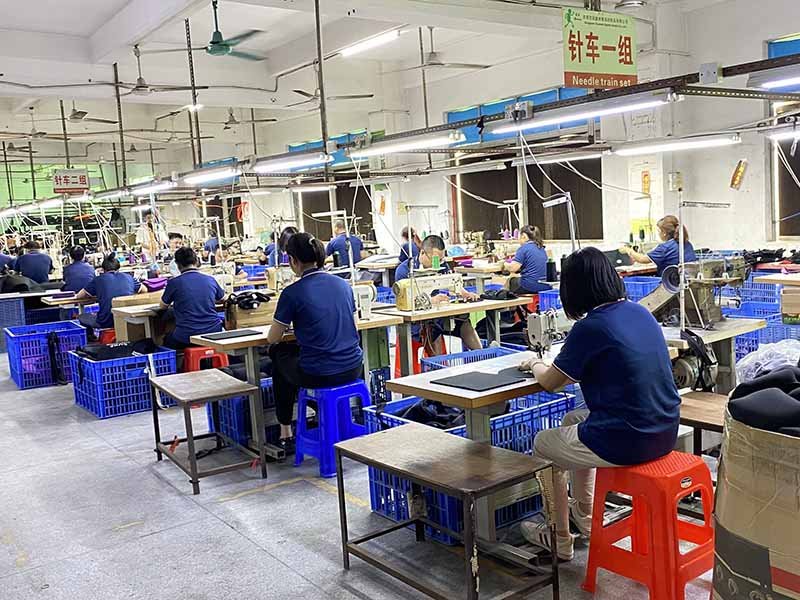
Leather passport holder production moves through design review, material approval, pattern development, cutting, skiving, reinforcement, pocket assembly, stitching, edge finishing, logo application, cleaning, and inspection. Every stage affects fit and appearance. A strong production process controls dimensions, layer thickness, stitch position, color consistency, folding resistance, and loaded capacity before the order is packed.
Design and Specification Review
Manufacturing starts with a clear product specification. A reference photo may show the visual direction, but it rarely provides enough information for accurate sampling or quotation.
The factory needs to know:
- Closed and open product dimensions
- Passport quantity
- Card-slot quantity
- Boarding-pass or cash compartment size
- Leather category and preferred thickness
- Lining material
- RFID requirement
- Closure type
- Stitch color
- Edge color
- Logo size and position
- Packaging method
- Order quantity
- Destination market
- Required testing or inspection level
A passport holder measuring 145 × 105 mm when closed can be produced in several different ways. One version may use a single outer panel and two sleeves. Another may contain six card slots, a ticket pocket, lining, reinforcement, and a magnetic tab. The outside dimensions may be the same, but the material usage, labor time, weight, and production risk are very different.
A complete specification prevents the factory from making assumptions. It also allows purchasing, sampling, production, and quality teams to work from the same requirements.
When a technical drawing is not available, Szoneier can build the first specification from sketches, reference products, photographs, material samples, or a written product brief. Dimensions and construction details are then confirmed during sample development.
Pattern Development
Patterns determine the shape and size of every leather, lining, reinforcement, and pocket component. A passport holder may contain five pieces or more than twenty pieces depending on the design.
Pattern development must account for:
- Finished dimensions
- Fold allowance
- Stitch allowance
- Leather thickness
- Edge folding
- Skiving width
- Pocket overlap
- Zipper allowance
- Hardware position
- Reinforcement size
- Material stretch
- Loaded thickness
A card pocket cannot be drawn only from the visible opening. The hidden lower section must be long enough to remain secure under the next pocket layer. If the hidden overlap is too short, the pocket may shift during gluing or reveal its lower edge after use.
Curved pocket openings need smooth, balanced shapes. Uneven curves become more noticeable after edge paint or stitching is applied. Rounded corners also need enough radius for the sewing machine to turn cleanly without creating short, crowded stitches.
The spine area requires particular attention. A passport cover should fold without creating a hard ridge. The center line may need a crease, reduced reinforcement, local skiving, or a small construction allowance depending on the material.
Digital patterns improve consistency, but physical testing remains necessary. Leather does not behave like paper. A pattern that folds perfectly in card stock may become too tight when made with 1.2 mm leather and lining.
Sample Development
The first sample checks structure, material behavior, capacity, logo appearance, and overall hand feel. It should not be treated only as a visual model.
A useful sample review examines:
- Passport insertion and removal
- Card fit
- Fold angle
- Loaded thickness
- Edge alignment
- Stitch distance
- Logo clarity
- Closure strength
- Leather softness
- Lining tension
- Corner shape
- Zipper movement
- Packaging fit
Sample development often includes several levels.
The first structural sample confirms dimensions and pocket arrangement. Substitute materials may be used when the selected leather is not yet available.
The material sample uses the proposed leather, lining, color, thread, hardware, and logo process. It reveals whether the chosen materials work together.
The pre-production sample represents the approved bulk standard. Production teams use it to compare construction, color, logo placement, and workmanship.
Changes should be recorded with exact measurements. Comments such as “make the pocket looser” are difficult to reproduce. A better instruction is “increase the finished pocket width by 1.5 mm while keeping the opening position unchanged.”
Sample comments may include photographs, marked drawings, revised dimensions, and a numbered change list. This reduces confusion when several details are adjusted at the same time.
Leather Inspection
Leather is inspected before cutting to identify color variation, surface marks, thickness differences, loose fiber sections, coating problems, scratches, wrinkles, and other material conditions.
Natural leather can vary within the same hide and between hides. Inspection teams may mark areas according to their suitability for visible outer panels, internal pockets, closure tabs, or hidden parts.
Outer panels require the highest visual consistency because they carry the main logo and define the product appearance. Internal sections may accept slightly more natural variation if it remains within the approved standard.
Material checks may cover:
- Color against the approved swatch
- Grain size
- Surface gloss
- Thickness
- Softness
- Stretch
- Backside fiber condition
- Odor
- Oil or wax transfer
- Scratch sensitivity
- Fold whitening
- Coating adhesion
Leather should be conditioned in the production environment before cutting when temperature or humidity differences may affect its shape. Material stored under pressure may also need time to relax before use.
For large orders, hides or rolls can be sorted by color group. Components used in one passport holder should come from compatible color groups to prevent obvious shade differences between the outer panel, pockets, and closure tab.
Cutting
Leather components can be cut with steel dies, hydraulic presses, CNC knife systems, or manual tools. The selected method depends on quantity, material type, pattern complexity, and dimensional tolerance.
Steel-die cutting is efficient for repeated production. A metal die is made for each component, allowing workers to cut consistent shapes across the order. Die cost is spread over the quantity, making it suitable for bulk production.
CNC cutting is useful for prototypes, complex shapes, smaller runs, and designs that may still change. It avoids the immediate need for a full die set and allows digital pattern adjustment.
Manual cutting may be used for sample work, selected premium leather, or low-volume personalized orders. It requires skilled operators and careful templates.
Cutting control includes:
- Correct grain direction
- Approved surface area
- Component orientation
- Pattern size
- Pair matching
- Hole and notch position
- Material yield
- Defect avoidance
- Shade grouping
Leather grain direction can influence stretch. Card pockets cut in an unstable direction may loosen over time. Long outer panels may also twist if cut from uneven or highly stretched hide areas.
Efficient nesting reduces waste, but yield should not be improved by placing visible components over unacceptable marks. Material utilization and visual quality need to remain balanced.
Skiving
Skiving reduces leather thickness in selected areas. It is one of the most important processes in small leather goods because several layers often meet at one edge.
Skiving is commonly applied to:
- Folded pocket edges
- Card-slot overlaps
- Side seams
- Corners
- Spine sections
- Closure tabs
- Zipper attachment areas
- Lining joints
- Hardware positions
A card-slot section with four pockets may contain multiple hidden layers. If each layer remains 0.8 mm thick, the side seam can become several millimeters thicker than the center. Skiving reduces the stack so the finished edge remains flat.
The skiving width and remaining thickness should be defined. Removing too little leather creates a heavy edge. Removing too much weakens the material and can expose the underside after folding.
Operators need to control blade sharpness, feed speed, pressure, and skiving angle. Soft leather can stretch during skiving, while firm leather may show visible transitions if the cut is too abrupt.
Skived components should be checked for:
- Even width
- Smooth transition
- No holes
- No blade marks
- Sufficient remaining strength
- Correct position
- Consistency between pieces
A damaged outer panel cannot always be repaired. Skiving errors therefore create direct material loss, especially when premium leather is used.
Reinforcement and Lining
Reinforcement gives the passport holder shape and supports areas exposed to repeated stress. It may be made from microfiber board, nonwoven material, fabric, paper-based board, synthetic sheet, or thin bonded leather.
Reinforcement can be added behind:
- Outer panels
- Snap buttons
- Magnetic closures
- Logo areas
- Zipper ends
- Wrist-strap attachments
- Thin pocket sections
- Large document compartments
The material should provide support without making the holder stiff or bulky. A slim passport cover may need only light reinforcement around the outer panel. A family travel wallet may require stronger support around the zipper and wrist-strap connection.
Lining improves interior appearance, reduces leather-to-document friction, covers reinforcement, and can lower material weight. Common lining options include polyester, cotton, microfiber, suede-like fabric, nylon, and thin synthetic leather.
Lining must be applied without wrinkles or excessive tension. If it is stretched during assembly, it may pull the leather inward and cause the outer panel to curl. If it is too loose, bubbles or folds may appear.
Adhesive selection matters as well. The glue must bond the chosen materials without bleeding through the lining, creating hard spots, producing strong odor, or releasing at the fold.
Pocket Assembly
Before stitching, pockets are normally folded, glued, aligned, pressed, and positioned according to the pattern.
Card pockets require consistent opening height. A difference of 1 mm may be visible when several pockets are stacked. Alignment marks help operators maintain spacing.
Pocket edges may be:
- Raw-cut and edge-painted
- Folded inward
- Bound with another material
- Turned with lining
- Heat-sealed on suitable synthetics
Folded edges create a softer and more traditional appearance but add thickness. Raw painted edges remain slimmer and create a sharper modern look, although the cutting and edge paint must be clean.
Adhesive holds the pieces in place before stitching. Too much glue can spread onto visible leather or harden the pocket. Too little glue allows layers to shift during sewing.
A pocket section should be checked before final assembly. Once it is stitched into the outer body, correcting a tight card slot becomes difficult and may require replacing the entire section.
Stitching
Stitching secures the structure and strongly affects visual quality. Passport holders may use machine stitching, hand stitching, or a combination of both.
Machine stitching is efficient and consistent for larger quantities. Flat-bed, cylinder-bed, and post-bed sewing machines may be used depending on product shape and access.
Hand stitching, including saddle stitching, is used for selected premium products and small-volume collections. It requires more labor but creates a distinct appearance and can provide strong seam construction.
Important stitching specifications include:
- Thread material
- Thread thickness
- Stitch length
- Needle size
- Stitch distance from edge
- Backstitch length
- Corner stitch count
- Thread color
- Tension
- Start and stop position
Small leather goods often use stitch lengths around 2.5–3.5 mm, depending on style and thread thickness. Fine formal products may use shorter stitches, while thicker casual leather may suit longer stitches.
The stitch line should remain parallel to the edge. Uneven distance is especially visible on smooth leather and contrast-color thread.
At corners, operators may adjust stitch placement to keep the turn balanced. Very short stitches can perforate and weaken the leather. Very long stitches make the corner look rough.
Thread tension must hold layers together without pulling the leather surface inward. Excessive tension creates waves or visible depressions. Weak tension leaves loose loops and reduces seam stability.
| Stitching Item | Common Control Point | Possible Problem |
|---|---|---|
| Edge distance | Approximately 2.5–4.0 mm | Edge tearing or uneven appearance |
| Stitch length | Approximately 2.5–3.5 mm | Weak seams or crowded holes |
| Thread tension | Balanced top and bottom | Wrinkling or loose loops |
| Corner turns | Even stitch distribution | Sharp or distorted corners |
| Backstitch | Short and controlled | Thick, messy seam ends |
| Thread color | Approved color standard | Visible shade mismatch |
The final setting depends on leather thickness, product style, thread, needle, and seam structure. Approved sample stitching should be used as the production reference.
Edge Finishing
Edge finishing seals exposed material layers and gives the passport holder a refined appearance. The main methods are edge painting, folding, burnishing, binding, and turning.
Edge painting is widely used for modern leather goods. The process may include:
- Edge trimming
- Sanding
- Base coat
- Drying
- Additional paint coats
- Intermediate sanding
- Final coat
- Heat or polishing treatment
- Final inspection
One heavy coat usually produces an uneven, plastic-like edge. Several controlled coats create a smoother result and improve coverage.
Paint viscosity, drying time, room temperature, humidity, and leather absorption affect the finish. Soft leather edges may require reinforcement or harder base treatment to prevent waves.
Edge paint should be checked for:
- Smooth coverage
- No cracks
- No bubbles
- No overflow
- Even thickness
- Correct color
- Strong adhesion
- Clean corners
- No sticking after packing
Burnishing is often used on vegetable-tanned leather. The edge is shaped, moistened or treated with burnishing compounds, rubbed, and polished. It creates a natural leather edge rather than a coated appearance.
Folded edges hide the cut surface inside the product. They offer a traditional appearance and strong protection but add material and labor.
Edge method should be selected during design because it affects pattern size, skiving, material usage, and cost.
Logo Application
Logo treatment changes the product appearance and influences the leather specification. Not every logo method works equally well on every surface.
Common methods include:
- Blind debossing
- Embossing
- Foil stamping
- Screen printing
- UV printing
- Metal logo plates
- Metal letters
- Woven labels
- Heat-transfer logos
- Laser engraving
- Personalized monograms
Blind debossing presses the logo into the leather without adding color. It creates a restrained premium appearance and works well on leather with a stable surface.
Foil stamping adds metallic or colored foil. Gold, silver, rose gold, black, and custom shades can be used. Heat, pressure, dwell time, and foil compatibility must be controlled. Excessive heat can damage coated leather, while insufficient pressure creates incomplete transfer.
Metal logo plates create stronger visual impact but add weight and require secure attachment. Backing washers or reinforcement may be needed to prevent the hardware from loosening or pulling through the material.
Printing suits detailed artwork and multicolor graphics, especially on PU or microfiber. Surface treatment and coating chemistry influence ink adhesion.
Logo development should confirm:
- Final artwork
- Vector file
- Exact size
- Position from edges
- Orientation
- Color
- Depth
- Finish
- Hardware plating
- Attachment method
A logo positioned 2–3 mm off-center can make an otherwise well-made passport holder look defective. Factories may use positioning templates to maintain alignment during bulk production.
RFID Blocking Layer
RFID-blocking material can be added between the outer leather and lining to reduce communication between contactless readers and compatible chips.
The shielding layer may use metallic fabric, coated textile, or another conductive material. It needs to cover the intended area without creating gaps around the spine or pocket section.
RFID construction needs to consider:
- Shielding coverage
- Material thickness
- Fold flexibility
- Adhesive compatibility
- Cutting safety
- Edge exposure
- Product weight
- Testing method
A small decorative patch of metallic fabric does not provide full wallet protection. The layer needs to surround the stored document or card area according to the structure.
The material should also remain flexible. A heavy or brittle shielding layer can create noise, stiffness, or cracking after repeated folding.
RFID claims should match verified product performance and the applicable card or document frequency. Not every passport or card uses the same technology, and the holder should not be marketed with claims that have not been supported by testing.
Hardware Installation
Snaps, magnets, zippers, rivets, eyelets, clasps, and wrist-strap fittings must be installed after the surrounding material has been reinforced.
Hardware specifications include:
- Base metal
- Plating color
- Surface finish
- Size
- Weight
- Pull strength
- Rust resistance
- Edge sharpness
- Logo engraving
- Attachment method
Snap buttons should open without requiring excessive force. A strong snap fitted to thin leather may damage the surrounding area. A weak snap may open when the holder is loaded.
Magnets should align cleanly and remain hidden unless the design intentionally exposes them. Their position needs to match the finished thickness of the loaded product.
Zippers should move smoothly without catching the lining. Zipper tape must remain even around corners, and the slider should not scratch the leather.
Metal surfaces should be checked for scratches, plating marks, sharp points, and color differences before installation.
Shape Setting and Cleaning
After sewing and edge finishing, the passport holder may be pressed, shaped, and allowed to rest. This helps the layers settle and allows adhesive or edge paint to complete curing.
Products should not be packed while paint, adhesive, or printing remains soft. Premature packing can cause sticking, pressure marks, odor buildup, and color transfer.
Cleaning includes removing:
- Glue residue
- Thread ends
- Dust
- Edge-paint marks
- Fingerprints
- Metal polishing residue
- Leather fibers
- Chalk or positioning marks
Natural leather may receive a light conditioning or polishing treatment when suitable. The process should not change the approved color or gloss.
Finished holders are then tested with passports, cards, closures, and packaging before final inspection.
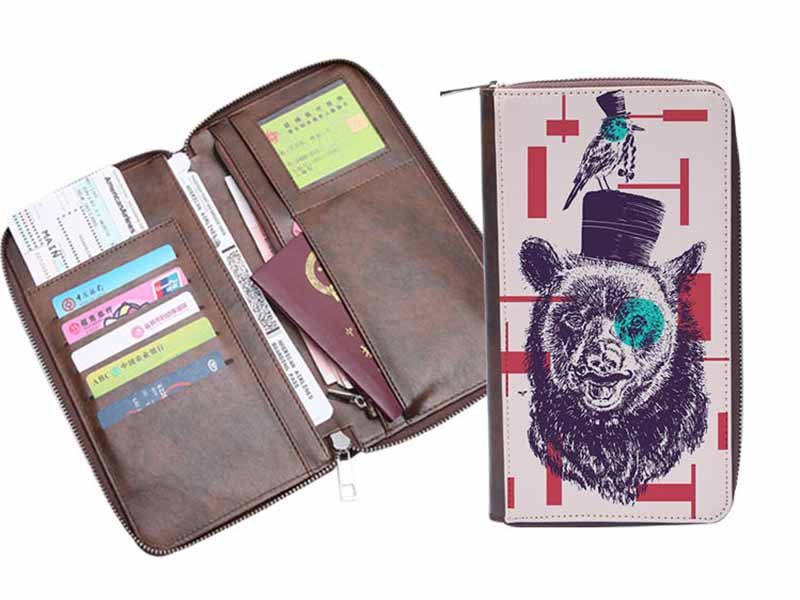
How Can Passport Holders Be Customized?
Leather passport holders can be customized through dimensions, pocket layout, leather, colors, lining, RFID layers, closures, stitching, edge paint, hardware, logos, personalization, packaging, and gift-set combinations. Strong customization keeps the product useful while giving the collection a recognizable identity. Each added feature should be reviewed for thickness, durability, production cost, and daily handling.
Pocket Layout
Pocket layout should reflect the intended travel situation rather than adding compartments without a clear purpose.
Available pocket combinations may include:
- One or two passport sleeves
- Two to sixteen card slots
- Boarding-pass pocket
- Currency compartment
- Identification window
- Business-card section
- SIM-card pocket
- Coin zipper
- Pen loop
- Mobile phone section
- Travel document divider
- Key or tracker pocket
Pocket direction affects security and access. Vertical card slots may feel more secure because cards are less likely to slide out when the holder is opened. Horizontal card slots often provide faster access and a familiar wallet appearance.
Boarding-pass pockets should be tall enough to prevent documents from folding but not so deep that users struggle to reach them.
A transparent identification window may use PVC, TPU, or another clear film. Material selection should consider clarity, flexibility, cold resistance, surface scratching, and compliance requirements for the destination market.
Color Development
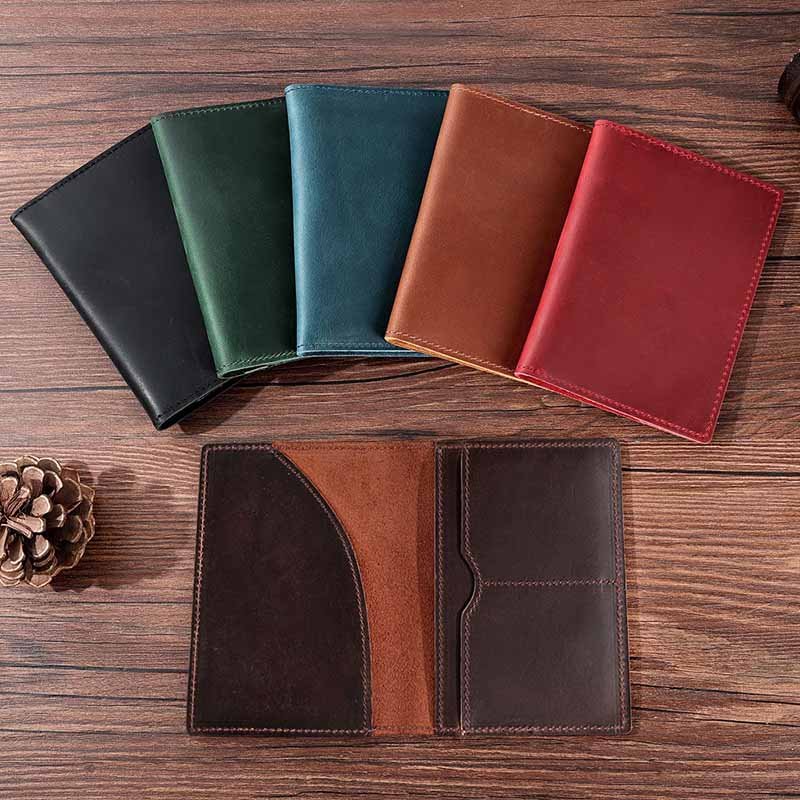
Leather passport holders can be made in natural tones, corporate colors, seasonal shades, or multi-color combinations.
Natural leather colors include:
- Black
- Dark brown
- Tan
- Cognac
- Burgundy
- Navy
- Olive
- Grey
Fashion collections may use brighter colors, pastel shades, metallic surfaces, printed patterns, or contrast interiors.
Color approval can use:
- Physical leather swatches
- Standard color references
- Existing product samples
- Custom dye development
- Printed color boards
Natural leather cannot always match a color reference with the precision of plastic or printed paper. Grain, dye absorption, finish, light source, and hide variation affect the final shade.
For custom colors, the factory may need to produce a laboratory sample or material trial. The order quantity must support the leather supplier’s custom dye requirement.
Two-tone designs can use one color outside and another inside. Contrast card slots, edge paint, stitching, or lining can create a stronger visual identity without changing the entire material.
Stitch and Edge Colors
Thread and edge paint can match the leather or create contrast.
Matching thread gives a clean, restrained appearance and reduces the visual impact of small stitch-position differences.
Contrast stitching emphasizes construction and works well for casual, heritage, outdoor, and handcrafted collections. It requires tighter sewing control because every deviation becomes more visible.
Edge paint may be:
- Matched to the leather
- Darker than the leather
- Lighter than the leather
- Matched to the logo
- Matched to a brand accent color
- Finished with a glossy or matte surface
Color approval should consider the complete product. A thread or edge shade that looks correct on a color card may appear different next to the leather surface.
Personalization
Passport holders are well suited to individual names, initials, numbers, destinations, or short messages.
Personalization methods include:
- Foil initials
- Blind debossed names
- Laser engraving
- Printed names
- Metal letter charms
- Removable name cards
- Numbered editions
Personalized orders require a clear data-management process. Name lists should be checked for spelling, capitalization, punctuation, font, and sequence before production.
The factory may create a placement template so short and long names remain visually balanced. A two-letter monogram and a twelve-letter surname should not necessarily use the same font size.
Individual packaging labels can connect each personalized item to the correct recipient. This reduces sorting errors for corporate gifts, events, weddings, employee programs, and loyalty campaigns.
Packaging
Packaging protects the passport holder and supports the intended retail or gift presentation.
Options include:
- Tissue wrapping
- Paper sleeves
- Cotton drawstring bags
- Microfiber pouches
- Folding cartons
- Rigid gift boxes
- Drawer boxes
- Window boxes
- Magnetic boxes
- Travel gift sets
- Recycled paper packaging
Packaging development should consider product dimensions, leather surface sensitivity, shipping pressure, moisture, and unboxing presentation.
Light-colored leather may need tissue or a protective bag to reduce rubbing and color transfer. Metal hardware should be separated from leather surfaces when movement during transport could cause scratches.
Rigid boxes need internal space without allowing the product to move excessively. Inserts can be made from paperboard, molded pulp, foam, fabric-covered board, or card structures.
Product information may include:
- Brand name
- Material description
- Care instructions
- Country of origin
- Barcode
- SKU
- Color
- Size
- Compliance markings
- Recycling information
Packaging dimensions also affect freight cost. A box that is 10 mm deeper than necessary can substantially increase carton volume across several thousand units.
Gift Set Development
Passport holders can be combined with luggage tags, card holders, wallets, keychains, travel document folders, pen cases, or small pouches.
A gift set should use coordinated materials, colors, logos, hardware, and packaging. Material shade matching becomes more difficult when items are produced on different lines or at different times.
Set development needs to define:
- Item combination
- Box layout
- Insert structure
- Product orientation
- Logo position
- Individual protection
- Carton quantity
- Final set weight
- Shipping test requirements
A passport holder and luggage tag may appear simple as a pair, but the tag strap, buckle, identification window, and hardware add separate production processes. The quotation should be based on each item and the complete packaging set rather than only the main product.
Szoneier can develop coordinated travel collections from one design direction, allowing passport holders, luggage tags, wallets, and packaging to share the same visual language and production standards.
How Do You Choose a Passport Holder Manufacturer?
A capable passport holder manufacturer should understand leather selection, pattern engineering, skiving, pocket tolerances, stitching, edge finishing, logo processes, hardware installation, packaging, and inspection. Supplier selection should be based on sample quality, material control, production communication, capacity, defect handling, and the ability to reproduce an approved standard across the full order.
Factory Capability
A supplier may produce leather bags or wallets without having strong experience in slim leather accessories. Passport holders require precise control because small dimensional differences are easy to feel during use and easy to see on the finished product.
A suitable factory should be able to manage:
- Leather sourcing and material inspection
- Digital and physical pattern development
- Cutting-die preparation
- CNC or manual sample cutting
- Leather skiving
- Pocket folding and assembly
- Machine or hand stitching
- Edge painting and burnishing
- Logo mold development
- Hardware installation
- RFID-layer assembly
- Custom packaging
- In-process inspection
- Finished-product inspection
The factory should also understand how material choice affects construction. Soft cowhide may need reinforcement. Firm vegetable-tanned leather may require wider fold allowance. Thick leather may need deeper skiving. Coated PU may react poorly to excessive stamping heat.
A supplier that focuses only on matching the outside appearance may miss problems inside the structure. The passport must fit properly, cards must remain secure, and the holder must close without twisting after it is loaded.
Ask the manufacturer to explain how the proposed product will be assembled. A clear answer should cover the number of components, leather thickness, pocket construction, seam type, edge method, logo process, and reinforcement plan.
RFQ Information
A detailed request for quotation gives the factory enough information to calculate materials, labor, tooling, packaging, and production time. A short request such as “Please quote 1,000 leather passport holders” leaves too many variables open.
A useful RFQ should include:
- Product photographs or drawings
- Open and closed dimensions
- Passport capacity
- Number of card slots
- Pocket layout
- Leather preference
- Exterior and interior colors
- Lining requirement
- RFID requirement
- Closure type
- Logo artwork
- Logo dimensions
- Stitch color
- Edge color
- Packaging style
- Order quantity
- Quantity per color
- Delivery country
- Required completion date
- Testing or inspection requirements
Vector logo files are preferred for mold making and printing. AI, EPS, PDF, or SVG files allow the logo to be reproduced more accurately than a small JPG image.
The quotation should identify what is included. For example:
- Product unit cost
- Logo mold fee
- Cutting-die fee
- Sample charge
- Custom color charge
- Packaging cost
- Testing cost
- Inspection cost
- Freight
- Import duties
- Payment terms
Without a clear cost breakdown, a low unit price may later increase after logo, box, hardware, or custom material charges are added.
A product specification should also identify whether the quotation uses genuine leather, split leather, PU, or microfiber. General wording such as “premium leather” is not precise enough for material comparison.
Manufacturing Cost
The cost of a custom leather passport holder depends on the quantity of leather, leather grade, usable material yield, number of components, pocket construction, stitching time, edge-finishing labor, logo method, hardware, lining, RFID material, packaging, and order quantity.
Material is only one part of the calculation. A slim passport cover with four components may require far less labor than a travel wallet with twelve card pockets, a zipper, a phone section, and a wrist strap.
The main cost factors include:
| Cost Area | What Changes the Price |
|---|---|
| Leather | Grade, thickness, finish, hide origin, color and cutting yield |
| Structure | Number of pockets, layers, dividers and closures |
| Labor | Skiving, folding, stitching, painting and assembly time |
| Logo | Mold size, foil, printing colors, metal hardware or personalization |
| Hardware | Zippers, snaps, magnets, buckles and plating |
| Interior | Lining, RFID fabric, reinforcement and transparent windows |
| Packaging | Polybag, pouch, paper box, rigid box or gift set |
| Quantity | Material purchasing efficiency and setup cost per unit |
| Inspection | Standard inspection or third-party inspection |
| Delivery | Carton volume, shipping mode and destination |
Natural leather cost should be calculated according to usable yield, not only purchased area. A hide may contain sections unsuitable for visible exterior panels. A high-grade passport holder may use only selected areas, increasing leather consumption per finished piece.
Labor cost rises when the design includes:
- Multiple overlapping card pockets
- Hand-painted edges
- Several paint and sanding cycles
- Contrast stitching
- Curved pocket openings
- Zippered construction
- Hand stitching
- Individual personalization
- Metal logo installation
- Gift-box packing
Reducing the price should not begin by weakening hidden construction. Removing reinforcement, reducing pocket depth, using unsuitable adhesive, or skipping edge-paint coats can create failures after delivery.
More effective cost adjustments may include:
- Reducing unnecessary card slots
- Using one leather color instead of several
- Selecting a standard hardware finish
- Replacing a rigid box with a folding carton
- Using matching rather than contrast stitching
- Choosing microfiber for internal sections
- Simplifying the closure
- Reducing individual personalization
- Combining shipments by color or design
A factory should explain the effect of each change so the product remains aligned with its intended selling price and use.
MOQ Planning
Minimum order quantity depends on the leather, custom color, hardware, logo process, packaging, and production setup. A standard-color passport holder usually supports a lower quantity than a design requiring custom-dyed leather, custom metal fittings, several colorways, and individual gift boxes.
MOQ may be influenced by:
- Leather supplier minimums
- Custom dye-lot requirements
- Hardware plating quantities
- Custom zipper quantities
- Logo mold setup
- Printing setup
- Packaging printing minimums
- Production-line efficiency
- Quantity per color
- Quantity per logo
An order of 500 pieces in one color is easier to organize than 500 pieces divided into ten colors. Fifty pieces per color may create material waste, frequent machine adjustments, packing complexity, and greater color-control risk.
For early-stage development, the order can sometimes use available leather colors and standard hardware. Once demand becomes stable, custom colors and exclusive fittings can be introduced.
Quantity planning should separate three numbers:
- Total order quantity
- Quantity per product design
- Quantity per color or logo
A request for 2,000 pieces may sound straightforward, but the production setup changes if the quantity is divided into:
- One design and one color
- One design and eight colors
- Four designs and two colors
- One design with 2,000 different names
Factories need the complete division before confirming price and delivery time.
Low-quantity production should still follow a controlled approval process. A smaller order does not remove the need for material confirmation, logo approval, sample testing, and production inspection.
Sample Time
Sampling commonly takes approximately 5–10 working days after the design, material, color, logo, and construction details are confirmed. Complex travel wallets, special leather, custom hardware, or individual packaging may require additional time.
Sample schedules are affected by:
- Availability of selected leather
- Custom color development
- Logo mold production
- Hardware development
- Pattern complexity
- Number of sample colors
- Packaging preparation
- Revision quantity
- Shipping time
A simple passport cover made with available leather may move quickly into cutting and assembly. A family travel wallet with custom-dyed leather, a branded zipper pull, metal logo, RFID fabric, and rigid box requires more preparation.
The sample process should not be rushed by leaving important choices open. Changing leather after the first sample may alter the fold, edge appearance, logo depth, and final dimensions.
A complete sample approval should examine:
- Exterior dimensions
- Pocket dimensions
- Passport fit
- Card fit
- Loaded thickness
- Leather color
- Grain and softness
- Stitching
- Edge finishing
- Logo position
- Logo depth or print quality
- Hardware operation
- RFID construction
- Lining
- Packaging
Photographs are useful for communication, but physical samples remain important for checking hand feel, thickness, fit, odor, flexibility, and edge quality.
When revisions are required, each change should be recorded in a numbered list. The second sample can then be compared against the first version and the written change instructions.
Bulk Lead Time
Bulk production commonly takes approximately 20–35 days after the pre-production sample, materials, packaging, and order details are approved. Larger quantities, custom-dyed leather, complex packaging, or peak production periods may extend the schedule.
A realistic production timeline may include:
| Production Stage | Estimated Working Time |
|---|---|
| Material purchasing | 5–15 days |
| Leather inspection and sorting | 1–3 days |
| Cutting and skiving | 2–6 days |
| Pocket and body assembly | 4–10 days |
| Stitching | 4–10 days |
| Edge finishing and drying | 3–8 days |
| Logo and hardware work | 2–5 days |
| Cleaning and inspection | 2–5 days |
| Packaging | 2–5 days |
Stages may overlap, but edge paint, glue, printing, and leather treatments still need sufficient drying or curing time.
Production should not begin before the main approvals are complete. Starting bulk cutting while the logo size, leather color, or pocket dimensions remain uncertain can create expensive rework.
Delivery time should also include:
- Final inspection
- Export documentation
- Carton preparation
- Booking time
- Local pickup
- Air or sea transit
- Customs clearance
- Final delivery
A factory completion date is not the same as the arrival date. A product needed for a trade show, seasonal launch, or corporate event should be planned backward from the required delivery date.
Pre-Production Approval
The pre-production sample is the physical standard used for bulk production. It should be made with the approved leather, lining, thread, edge paint, hardware, logo, RFID layer, and packaging.
Approval should confirm:
- Final dimensions
- Construction method
- Pocket arrangement
- Leather grade and thickness
- Color
- Logo size and position
- Stitch length and color
- Edge finish
- Hardware finish
- Packaging
- Labeling
- Loaded performance
The approved sample should be signed, dated, photographed, and linked to the final specification. The factory should retain one reference sample while another can remain with the brand or purchasing team.
Production operators need more than a sample on a shelf. They should also receive written instructions covering dimensions, tolerances, workmanship, material codes, and packing requirements.
A pre-production meeting may include representatives from:
- Product development
- Purchasing
- Cutting
- Skiving
- Sewing
- Edge finishing
- Logo processing
- Quality control
- Packaging
The team reviews the critical points before production begins. For a passport holder, those points often include pocket width, stitch distance, corner shape, edge-paint finish, logo alignment, and loaded closure.
Incoming Material Control
Quality control begins before manufacturing. Leather, lining, thread, edge paint, hardware, zipper tape, RFID fabric, reinforcement, and packaging should be checked against approved standards.
Incoming leather checks may include:
- Material category
- Color
- Grain
- Thickness
- Surface finish
- Softness
- Usable area
- Stretch
- Odor
- Backing quality
- Visible marks
- Quantity
Hardware checks may include:
- Size
- Plating color
- Surface scratches
- Logo engraving
- Opening force
- Rust or corrosion signs
- Sharp edges
- Attachment parts
- Quantity
Thread and edge paint should match approved color references. Small color differences become visible when contrast stitching or bright edge paint is used.
Packaging materials should be checked before product completion. Discovering that a box is too small after the full order is packed creates delays and possible surface damage.
Cutting Inspection
Cut components should be checked before assembly because incorrect parts cannot be fully corrected after stitching.
Cutting inspection focuses on:
- Pattern dimensions
- Shape
- Grain direction
- Shade matching
- Surface marks
- Hole positions
- Skiving positions
- Pairing
- Quantity
Outer panels from different leather shades should not be mixed randomly. The interior and exterior of one passport holder should appear visually coordinated.
Cutting dies also need periodic checks. Repeated press use can damage or distort a die edge, leading to irregular shapes.
For printed or embossed materials, pattern placement should be controlled. A logo, texture, or print should not shift unpredictably between products unless random placement is part of the approved design.
In-Process Inspection
In-process inspection catches problems before they affect the full order. Inspectors can review components after skiving, pocket assembly, stitching, edge painting, logo application, and hardware installation.
Critical checks include:
- Skiving width and remaining thickness
- Pocket alignment
- Card opening size
- Stitch line position
- Corner turning
- Edge-paint coverage
- Logo centering
- Closure alignment
- Zipper movement
- Lining flatness
The first completed units from the line should be checked against the approved sample. Production can then continue after the settings are confirmed.
If a defect appears repeatedly, the line should identify the cause rather than continue sorting finished goods. Common causes include:
- Incorrect machine tension
- Worn cutting dies
- Dull skiving blades
- Misaligned positioning templates
- Edge paint with unsuitable viscosity
- Leather thickness variation
- Poor adhesive control
- Inexperienced handling at corners
Correcting the process early protects material, labor, and delivery time.
Dimensional Control
Dimensions should be measured at defined points using the same method each time. Soft leather can change shape under pressure, so the product should lie naturally during measurement.
Common measurement points include:
- Closed width
- Closed height
- Open width
- Passport sleeve width
- Passport sleeve depth
- Card-slot width
- Card-slot opening height
- Logo position
- Closure-tab length
- Stitch distance from edge
Tolerances should reflect the material and construction. Natural leather accessories cannot always use the same tolerance as injection-molded plastic parts, but dimensions still need controlled limits.
A possible dimensional standard may use:
- Major exterior dimensions: ±1.5–2.0 mm
- Pocket position: ±1.0–1.5 mm
- Logo position: ±1.0–2.0 mm
- Stitch distance: controlled against the approved sample
- Card opening: confirmed by functional testing
Exact tolerances should be agreed according to the design, leather, and order requirements.
A product can fall within exterior tolerances and still fail functionally. Dimension checks should therefore be combined with passport, card, and closure tests.
Functional Testing
Functional tests reproduce the actions users perform while traveling. Testing should cover more than appearance.
Passport-fit testing checks whether:
- The passport enters without excessive force
- Corners remain flat
- The passport spine is not compressed
- The booklet opens properly
- The document does not slide out during normal handling
Card-slot testing checks whether:
- Cards can be inserted and removed
- Slots retain cards when turned downward
- Pocket edges remain stable
- Several cards do not distort the holder
Closure testing checks whether:
- Snaps open and close consistently
- Magnets align correctly
- Elastic returns to its original length
- Tabs remain long enough when loaded
- Zippers move smoothly around corners
Repeated-use testing may include hundreds or thousands of opening, folding, card insertion, zipper, or snap cycles depending on the product requirements.
The test quantity and acceptance standard should be agreed before production. A corporate gift order may use a different inspection plan from a premium retail collection sold with a long product guarantee.
Appearance Inspection
Leather goods are purchased partly for appearance, so visual standards need clear definitions.
Finished passport holders should be checked for:
- Leather shade consistency
- Acceptable natural grain variation
- Scratches
- Pressure marks
- Glue residue
- Uneven stitching
- Loose threads
- Edge-paint overflow
- Edge cracks
- Crooked logos
- Hardware scratches
- Wrinkled lining
- Uneven corners
- Product distortion
Natural leather should not be judged as if it were a perfectly uniform synthetic sheet. Approved samples and material standards should show which grain marks and shade variations are acceptable.
Inspection lighting also matters. Dark navy and black may look similar in weak lighting. Metallic foil and hardware plating can change appearance under different light sources.
The same inspection environment should be used whenever possible to reduce inconsistent decisions.
Edge and Stitch Inspection
Edge paint and stitching often reveal the workmanship level immediately.
Edge inspection should check:
- Smoothness
- Layer coverage
- Color
- Cracks
- Bubbles
- Overflow
- Corner finish
- Adhesion
- Sticking
Stitch inspection should check:
- Straightness
- Edge distance
- Stitch length
- Thread tension
- Backstitch
- Corner turns
- Thread color
- Missed stitches
- Broken thread
- Loose ends
Contrast stitching requires stricter visual control because every variation is easier to notice.
Painted edges should be fully dry before stacking or packing. Products packed too early may stick together or show pressure lines.
Logo Inspection
The logo is often the most sensitive part of a private label product. A passport holder may be structurally sound yet be rejected because the logo is faint, crooked, incomplete, or incorrectly colored.
Logo inspection should verify:
- Artwork
- Size
- Position
- Orientation
- Color
- Depth
- Foil coverage
- Print sharpness
- Metal finish
- Attachment security
Debossed logos should have consistent depth without burning or crushing the leather surface.
Foil logos should show complete transfer and clean edges. Tiny text may not reproduce clearly on strongly grained leather, so logo trials should be completed during sampling.
Metal logo plates should sit flat and remain firmly attached. The backing should not create a visible bump inside the passport holder.
Personalized names require separate spelling and placement checks. A correct product with an incorrect name cannot be sold to the intended recipient.
Packaging Inspection
Packaging inspection confirms that the product is clean, protected, labeled correctly, and packed according to shipment requirements.
Checks may include:
- Correct product and color
- Correct personalized name
- Protective tissue or pouch
- Care card
- Barcode
- SKU
- Country-of-origin label
- Box condition
- Product orientation
- Carton quantity
- Carton markings
- Gross and net weight
Leather surfaces should not touch sharp hardware or rough cardboard during transit. Light-colored leather may need additional protection against rubbing and dust.
Silica gel or other moisture-control materials may be used where suitable and permitted. Packaging should not trap strong adhesive or leather odors before the product has been aired and cured.
Carton size should balance protection and freight efficiency. Overfilled cartons may crush boxes, while loosely packed cartons allow movement and surface damage.
Inspection Levels
Orders may use full inspection, sampling inspection, or a combination of in-process and final inspection.
Full inspection checks every finished unit for selected appearance and functional points. It is useful for personalized products, complex gift sets, or orders with strict logo requirements.
Sampling inspection examines a defined quantity from the order according to an agreed acceptance standard. It is efficient for stable production where process control is already established.
A strong inspection plan may combine:
- Incoming material checks
- First-piece approval
- In-process inspections
- Finished-product inspection
- Packaging inspection
- Random carton checks
Defects can be grouped into critical, major, and minor categories.
Critical defects may involve safety hazards, sharp hardware, restricted substances, or completely incorrect products.
Major defects may include unusable pockets, broken zippers, incorrect logos, severe stains, incorrect colors, or weak closures.
Minor defects may include small appearance variations that do not affect function but fall outside the approved visual standard.
The defect classification and acceptance level should be agreed before shipment.
Supplier Communication
Manufacturing problems are easier to manage when communication is specific, documented, and connected to physical samples.
A reliable supplier should provide:
- Clear questions before quotation
- Material recommendations
- Construction suggestions
- Sample photographs
- Measurement records
- Revision notes
- Production updates
- Inspection findings
- Packing information
- Shipping documents
Communication should identify risks rather than simply agree to every request. For example, a factory should explain when twelve card slots will make a slim passport cover too thick or when a small foil logo will lose detail on heavily grained leather.
A strong manufacturer protects the product goal, even when that means recommending a different material, pocket layout, or logo method.
Order Approval Checklist
Before the deposit or bulk production begins, confirm the following:
- Final product drawing
- Approved physical sample
- Material name and grade
- Leather color
- Thickness range
- Lining
- RFID requirement
- Pocket dimensions
- Hardware
- Thread and edge colors
- Logo file
- Logo process
- Logo position
- Packaging
- Quantity per color
- Unit price
- Tooling charges
- Payment terms
- Production time
- Inspection method
- Delivery terms
- Shipping address
A written checklist keeps commercial and technical information connected. It also helps prevent old sample details from being used after a revision.
Start Your Custom Passport Holder Project
A well-made passport holder should feel simple in the user’s hand, even though the production behind it is carefully controlled. The leather should fold naturally, the passport should slide into place without force, card slots should remain secure, the logo should sit exactly where intended, and the finished product should still look balanced when fully loaded.
Szoneier supports custom, private label, OEM, and ODM leather passport holder projects for travel collections, corporate gifts, retail programs, loyalty campaigns, hotels, airlines, luggage brands, and promotional orders. With more than 18 years of manufacturing experience, the team can assist with design development, material selection, pattern making, sampling, logo application, production, inspection, packaging, and shipping preparation.
You can begin with:
- A sketch
- A reference photograph
- An existing passport holder
- A technical drawing
- A logo file
- A material sample
- A target price
- A required delivery date
- A planned order quantity
For a more accurate quotation, send:
- Product dimensions
- Passport and card capacity
- Preferred leather or synthetic material
- Exterior and interior colors
- Logo method
- Quantity per color
- Packaging requirement
- Destination country
Szoneier can review the structure, recommend suitable leather thickness, identify possible production risks, and prepare a development plan before the first sample is made.
Request a custom quotation to turn your passport holder idea into a production-ready product with controlled materials, consistent workmanship, clear branding, and packaging prepared for your sales channel.