Skip to content


A handbag can look excellent when the first sample arrives and still become a problem months after launch. Corners may lose their finish, handles may stretch, coated surfaces may crack, edge paint can separate, or a genuine-leather batch may show more grain variation than the merchandising team expected. These issues explain why choosing between vegan leather and genuine leather should never be reduced to a simple question of which material looks better on a swatch card. The decision influences product cost, expected lifespan, retail price, customer perception, sustainability claims, repeat-order consistency, and even how easily the product can be manufactured at scale.
Vegan leather is usually the stronger choice when a handbag needs controlled colors, consistent grain, animal-free positioning, predictable production, and a wider range of price points. Genuine leather is generally stronger for natural hand feel, premium positioning, repairability, distinctive aging, and long-term ownership. Neither material is automatically superior because performance depends heavily on grade, construction, handbag design, usage conditions, and production control.
The most important comparison therefore begins after the material leaves the sample book. What happens when it is folded around a zipper, sewn into a narrow strap, pulled under load, rubbed against clothing, stored in a warehouse, and reproduced across thousands of finished bags? That is where the difference between a good material decision and an expensive sourcing mistake becomes clear.
What Is Vegan Leather vs Genuine Leather?
Vegan leather is an animal-free material category that includes PU, microfiber, PVC, and newer bio-based composites, while genuine leather is produced from animal hide. Neither term describes quality precisely enough for handbag development. The meaningful comparison involves material construction, thickness, backing, surface finish, hand feel, grain, flexibility, durability, consistency, and how well the material fits the intended handbag structure and retail position.
What Is Vegan Leather Made Of?
The term “vegan leather” is useful for consumers because it communicates that animal hide is not being used, but it is far too broad to function as a technical material specification. Two handbags may both carry a vegan-leather label while using completely different backing structures, coating systems, thicknesses, surface finishes, and durability levels. For production purposes, the actual material construction matters far more than the marketing name printed on the product page.
PU leather remains one of the most widely used options for fashion handbags. It generally combines a textile backing with a polyurethane-based surface that creates the visible grain, color, gloss, and hand feel. Within the same PU category, performance can vary significantly. A low-cost coated material intended for promotional accessories should not be expected to behave like a higher-grade material developed for a handbag that will be carried every day.
Microfiber leather occupies another important position. Its engineered fibrous structure can provide stronger dimensional stability, a more refined hand, and a more leather-like response than basic coated materials. It is often considered for products that need greater consistency without moving into genuine leather. PVC-based alternatives also remain available and may provide useful surface stability and easy cleaning, although they generally differ from PU in flexibility, weight, temperature response, and environmental positioning.
Bio-based materials have expanded the category further. Materials associated with apple waste, cactus, pineapple fiber, cellulose, mycelium, and other plant-derived inputs are increasingly used in product development, but their actual composition must still be checked. A material can contain a meaningful plant-derived component while still relying on synthetic binders, coatings, or textile backing layers. For a brand, this does not automatically make the material unsuitable; it simply means the environmental claim should match the actual construction.
| Material Type | What Should Be Specified | Common Handbag Advantage | Key Risk to Check |
|---|---|---|---|
| PU leather | Backing, thickness, grain, gloss, softness, coating grade | Wide color range and stable visual appearance | Peeling, cracking, coating instability |
| Microfiber leather | Fiber base, thickness, finish, grain, stiffness | Refined hand feel and stable bulk appearance | Large quality differences between grades |
| PVC leather | Backing, formulation, thickness, surface finish | Easy cleaning and consistent surface | Weight, stiffness, temperature response |
| Bio-based composite | Bio-based content, binder, backing, coating | Differentiated sustainability story | Unclear composition or limited performance evidence |
| Genuine leather | Grade, thickness, finish, grain tolerance | Natural touch, aging character, premium perception | Natural variation and cutting loss |
What Does Genuine Leather Mean?
Genuine leather is produced from animal hide, but the phrase itself does not tell a product developer enough to approve production. Different leather grades, tanning systems, surface finishes, thickness ranges, and grain treatments can create completely different results even when every option can technically be described as genuine leather. A high-quality handbag specification therefore needs to go beyond the material category and define the characteristics that matter to the finished product.
Natural hide is not an industrial roll with an identical surface from edge to edge. Thickness, grain, scars, stretch, and visual character vary across each hide. These differences become especially important on handbags with large uninterrupted exterior panels because those areas often require cleaner and more visually consistent sections. Smaller tabs, internal components, zipper ends, and decorative pieces can usually tolerate more variation, which means pattern placement has a direct effect on material yield and cost.
Structure also matters. A soft shoulder bag may benefit from leather with more drape, while a structured tote may need firmer leather, backing material, reinforcement, or additional internal construction to hold its silhouette. An expensive hide will not automatically produce an expensive-looking handbag if the material is poorly matched to the shape, hardware, edge treatment, and reinforcement system.
For leather projects, Szoneier records material type, grain, thickness, color, surface finish, cutting direction, batch consistency, and acceptable natural variation as relevant development and production controls. This type of specification helps prevent a common dispute in bulk production: the factory treating natural variation as normal while the brand expected every panel to resemble a highly selected presentation sample.
Are PU and Microfiber Leather Vegan?
PU and microfiber leather are generally treated as vegan materials when their complete construction contains no animal-derived component. Brands making a strict animal-free claim should nevertheless verify the full product specification rather than relying only on the exterior material name. Adhesives, logo patches, trim pieces, decorative tabs, reinforcement components, and other accessories can introduce animal-derived materials even when the main body is synthetic.
The distinction between PU and microfiber is also important because they should not be treated as interchangeable grades of the same product. PU leather covers an extremely broad price and performance range. Some versions are designed mainly for cost-effective fashion accessories, while others have better backing, surface stability, and hand feel. Microfiber leather is often selected when the product needs stronger dimensional stability, a more refined tactile response, or a more premium synthetic appearance.
Szoneier’s documented material framework separates genuine leather, PU leather, and microfiber leather rather than grouping them under one generic leather category. Material selection is tied to product use, target price, sales channel, hand feel, durability, and brand positioning. That distinction is especially useful when a collection needs multiple price levels because one material does not need to serve every SKU.
The practical rule is straightforward: approve an exact material code and a physical swatch rather than approving a phrase such as “premium vegan leather.” Clear material identification makes later sampling, color matching, quotation comparison, repeat production, and quality inspection far easier to manage.
Which Leather Lasts Longer in Handbags?
High-quality genuine leather generally offers stronger long-term aging and repair potential, while vegan-leather durability varies significantly with coating system, backing, material grade, storage conditions, and design. Finished-bag construction matters just as much as the material itself. Corners, handles, strap anchors, zipper turns, folds, and edge areas usually experience more stress than large flat panels, so lifespan should be judged on the finished handbag.
How Does Vegan Leather Wear?
A handbag rarely wears evenly. The large front panel may still look almost new while the corners, strap bases, opening edges, and gussets are already showing visible stress. These areas repeatedly bend, rub, compress, and carry load, which makes them the most revealing places to evaluate a vegan-leather material during sample development.
Bottom corners come into contact with tables, floors, clothing, vehicle interiors, and other surfaces. Handles are compressed by the hand and flexed every time the bag is picked up. Shoulder-strap attachment points combine bending with tensile force. Zipper openings often force the exterior material into relatively tight curves, while gussets repeatedly expand and collapse as the bag is filled and emptied. These everyday movements are much more demanding than looking at a flat swatch in a showroom.
A suitable synthetic leather should tolerate repeated movement without obvious whitening, cracking, permanent creasing, surface separation, or severe gloss change. It should also maintain enough structural integrity to work with the reinforcement underneath it. If the exterior begins showing stress during sampling, producing a larger quantity will not solve the underlying problem.
Storage is another overlooked factor. Some polyurethane systems can deteriorate more quickly when exposed to prolonged heat and humidity, while tight folding inside packaging can create permanent creases or repeated stress along the same line. For this reason, material evaluation should include not only appearance and hand feel but also likely warehouse conditions, shipping time, and packaging method.
How Does Genuine Leather Age?
Genuine leather normally changes with use rather than remaining visually identical from the first day onward. Depending on finish and leather type, the surface may soften, develop additional character, show minor marks, and gradually build a patina. For a premium collection, this can become part of the value proposition because the handbag develops an individual appearance rather than simply maintaining a factory-new finish.
The same characteristic can create quality disagreements when expectations are not defined clearly. Natural grain may be more visible on one panel than another, and small variations can occur even within a controlled color lot. A customer accustomed to highly uniform synthetic surfaces may interpret those differences as defects, while a leather specialist may consider them normal characteristics of the hide.
The best solution is not to promise perfect uniformity. Instead, define what level of natural variation is acceptable before bulk cutting begins. Large visible panels can be subject to stricter selection standards than internal pockets, narrow straps, or small trim pieces. Approved reference samples should show both the ideal appearance and the acceptable range so that production and quality teams have a realistic standard.
This approach also improves material efficiency. Trying to make every natural hide look exactly like an engineered roll can create unnecessary rejection and waste. Good leather control does not remove the nature of the material; it keeps that variation within boundaries that support the intended retail positioning.
Why Does Vegan Leather Peel?
Peeling is generally a failure of the coated surface system rather than a simple surface scratch. The visible layer may begin cracking, flaking, or separating from the backing when the coating loses integrity. Several causes can contribute, including material grade, repeated flexing, sharp folding geometry, prolonged humidity, heat exposure, unsuitable storage, or a coating selected primarily for appearance and price without enough consideration for real use.
The problem is especially common at areas where the material is forced to bend repeatedly. Handle folds, zipper corners, gussets, rolled edges, and bag openings may experience far more mechanical stress than flat body panels. When selecting material, it is therefore important to look at the bag pattern and identify where the surface will repeatedly flex rather than asking only whether the swatch passes a basic visual check.
Szoneier’s production documentation identifies coating deterioration as a known risk for PU- and PVC-coated materials and recommends reviewing material grade, folding position, product use, cost level, and testing requirements before production. This is a more useful approach than promising a universal number of years of use because actual service life depends heavily on product design, material system, climate, frequency of use, and storage conditions.
A sensible development process therefore looks for early warning signs during sampling. Whitening at a fold, unusual stiffness, surface distortion, weak adhesion, or excessive creasing should not be ignored simply because the bag still looks acceptable in photographs. Those small signs often reveal where the product may fail after repeated use.
Which Leather Costs More?
Genuine leather usually carries a higher and less predictable material cost because hide grade, usable area, natural marks, panel placement, and cutting yield affect consumption. PU and microfiber normally provide more predictable roll-based usage. The more useful comparison is total handbag economics, including material, cutting waste, reinforcement, labor, hardware, edge finishing, packaging, quality risk, and expected retail price.
How Does Material Grade Affect Cost?
Material grade can change a handbag quotation substantially before any zipper, lining, or hardware is added. With genuine leather, price is influenced by hide type, grade, thickness, tannage, finish, grain, color, surface treatment, and how much of each hide is usable for the visible components required by the design. Two suppliers can therefore both quote “genuine leather” while working from very different quality assumptions.
Synthetic materials have an equally broad hierarchy. Entry-level PU intended for a simple promotional pouch cannot be compared fairly with a premium microfiber designed for a structured handbag. Backing construction, surface formulation, coating stability, hand feel, grain development, and required performance all influence cost. The fact that both materials are animal-free does not mean they belong in the same price or performance range.
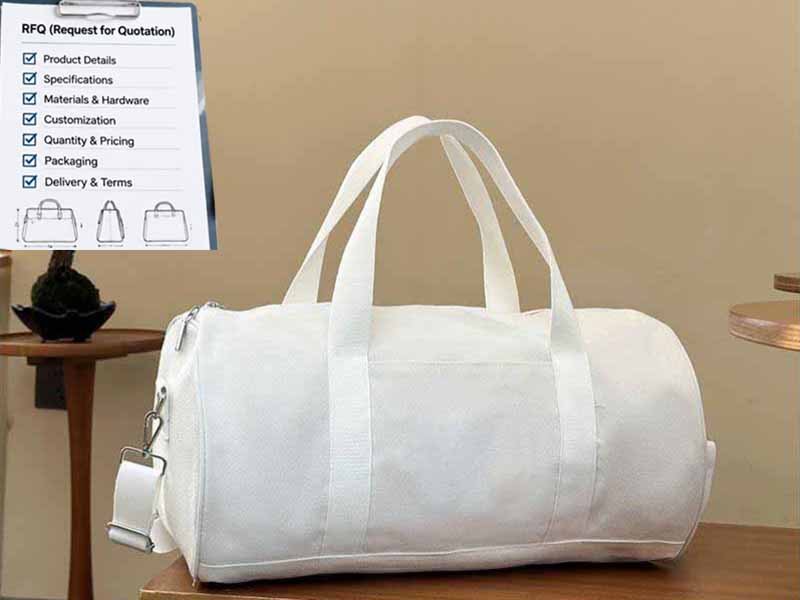
Vague requests for quotation are one of the most common reasons for misleading price comparisons. A request stating only “black PU handbag with gold hardware” leaves too many variables open. One factory may assume basic PU and generic zinc-alloy hardware, while another may assume premium microfiber, customized plating, heavier reinforcement, and higher-grade lining. The quotations may differ significantly even though both technically match the original description.
For meaningful comparison, the project should lock several key inputs before final pricing: exterior material grade, approximate thickness, lining, hardware level, zipper specification, logo process, edge finishing, product size, structure, and packaging. Szoneier’s material guidance specifically treats PU, microfiber, genuine leather, and other bag materials as different cost and positioning decisions rather than simple substitutes.
How Does Material Yield Affect Price?
Material yield is one of the biggest practical differences between genuine leather and roll-based synthetic materials. PU and microfiber are supplied in relatively consistent rolls, making usable width and cutting layout easier to calculate. Once the pattern is approved, pieces can be arranged efficiently and consumption can usually be predicted with reasonable accuracy.
Natural hides are irregular, and not every part of the hide is equally suitable for every visible component. Scars, grain variation, loose areas, wrinkles, edge shape, and color differences affect where pattern pieces can be placed. A handbag with two large clean front and back panels often requires much more selective cutting than a product composed mainly of smaller pieces.
The brand’s visual standard changes the calculation further. If moderate natural grain variation is acceptable, more of each hide can potentially be used. If every front panel must be extremely uniform, the usable yield decreases because more material is excluded from prominent areas. This does not necessarily mean the leather is defective; it means the commercial standard demands a narrower visual range.
Large panels also affect nesting efficiency. Smaller tabs, zipper ends, internal pieces, and reinforcement components can often be positioned around irregular areas, while a wide uninterrupted exterior panel requires a larger clean section. This is why leather quotations should be linked directly to approved visual standards rather than calculated only from the theoretical surface area of the finished handbag.
When a project moves from sampling into a large order, realistic yield assumptions become particularly important. A small presentation sample can be cut from the cleanest part of one hide, but bulk production has to reproduce the standard repeatedly across many hides.
Does Lower Cost Mean Better Value?
A lower unit cost is only valuable if the finished handbag still delivers what the customer expects. A lower-cost vegan leather may initially create a stronger gross margin, but that advantage can disappear quickly if the product develops premature cracking, strong creasing, odor, surface peeling, or handle wear that leads to returns and negative reviews.
The opposite problem also exists. Using premium genuine leather in a highly trend-driven handbag with a short retail life can add cost that the target customer never intended to pay for. If the buying decision is driven mainly by color, silhouette, fashion relevance, and an accessible price point, a carefully selected PU or microfiber may create a better commercial balance.
| Cost Factor | Vegan Leather / Microfiber | Genuine Leather | Practical Impact |
|---|---|---|---|
| Material consumption | Usually predictable from rolls | More variable because hides are irregular | Leather requires realistic yield planning |
| Color consistency | Usually easier | Natural variation requires control | Tight visual standards can raise cost |
| Cutting efficiency | Generally higher | Depends on hide quality and panel size | Large clean panels increase leather waste |
| Edge finishing | Depends on construction | Often important to premium appearance | Labor and edge paint can add meaningful cost |
| Repair potential | Usually more limited | Often stronger depending on finish | Matters for long-life positioning |
| Cost predictability | Generally stronger | More sensitive to grade and yield | Important for repeat-order budgeting |
| Premium perception | Possible with higher-grade materials | Naturally strong for many categories | Must match retail positioning |
Value should therefore be evaluated against at least four variables: landed product cost, target retail price, expected use frequency, and brand promise. A mid-priced everyday handbag and a premium long-life handbag should not be forced into the same material logic simply because one option has a lower quotation.
A strong collection can even use several material levels deliberately. A brand may choose microfiber for an accessible core assortment, higher-grade PU for fashion-driven seasonal colors, and genuine leather for a premium capsule. The goal is not to declare one material universally cheaper or better, but to build a price architecture that makes sense to the customer.

Is Vegan Leather More Sustainable?
Vegan leather is not automatically more sustainable than genuine leather. Many synthetic leathers rely on PU or PVC, while genuine leather involves questions around livestock, tanning, energy, water, chemicals, and traceability. New bio-based materials add promising alternatives but may still contain polymer binders or coatings. A credible comparison should examine composition, production process, durability, sourcing evidence, and eventual product lifespan.
Is Vegan Leather Plastic?
Many mainstream vegan leathers contain synthetic polymers. PU leather commonly relies on polyurethane within its surface system, while PVC leather uses polyvinyl chloride. Calling these materials vegan accurately communicates that animal hide is not being used, but it does not by itself establish that the material is low-impact, biodegradable, plastic-free, or environmentally preferable in every situation.
The newer generation of alternative materials makes the discussion more interesting but also more complex. Materials developed with cactus, apple waste, pineapple fiber, cellulose, mycelium, or other plant-derived inputs can reduce reliance on conventional animal hide and may replace part of the fossil-derived content. However, many commercial materials still require binders, coatings, backing fabrics, or protective finishes to achieve the durability and flexibility needed for handbags.
This is not necessarily a weakness. A handbag material must survive cutting, sewing, folding, abrasion, handling, packaging, shipping, and repeated customer use. A purely natural experimental sheet that cannot meet those requirements may create a compelling material story without becoming a practical production material.
The useful sourcing question is therefore not whether a product has a plant-based name. It is how the finished material is constructed. A brand should ask about the percentage of bio-based content, backing material, surface coating, binder system, available certification, and whether the environmental claim has evidence behind it.
Transparency creates a more credible story than using one positive material attribute to imply a much broader environmental benefit.
Is Genuine Leather Sustainable?
Genuine leather has a different sustainability profile, and reducing the discussion to “natural equals sustainable” is just as misleading as assuming “vegan equals sustainable.” Relevant questions include raw-material traceability, tanning process, chemical management, wastewater treatment, energy use, worker conditions, material yield, durability, repairability, and how long the finished handbag remains in active use.
For larger sourcing programs, facility-level evidence can provide more useful information than general marketing terms. A certification or audit does not make every product automatically sustainable, but it can help verify how certain manufacturing processes are being managed. Traceability and chemical-control documentation are especially relevant when products are intended for established retail channels or markets with stricter compliance expectations.
Durability also deserves attention, although it should not be used as an automatic argument in favor of genuine leather. A well-made leather handbag that remains in use for many years can have a very different ownership cycle from a bag that is replaced frequently. However, potential longevity is meaningful only when the construction quality, repairability, and actual customer behavior support it.
A long-lasting material attached to weak hardware or poor strap reinforcement will not produce a long-lasting product. Sustainability therefore needs to be considered at the complete-handbag level rather than only at the exterior-material level.
The more mature approach is to compare what can actually be documented: origin, manufacturing process, performance, durability, repair options, and claims that the brand expects to communicate to customers.
How Can Brands Verify Claims?
Environmental statements should be treated with the same discipline as technical material specifications. If a product is described as recycled, the sourcing file should identify which component is recycled and contain supporting documentation. If a material is described as bio-based, the team should know which part of the construction is bio-based and what evidence supports the percentage or claim.
The same approach applies to leather. Terms such as responsibly sourced, chrome-free, recycled leather, or certified leather should be connected to specific documentation instead of being used as broad descriptive language without traceable support. A good internal file may include supplier declarations, composition documents, certification references, test reports, approved material codes, and purchase records where relevant.
This documentation is valuable beyond compliance. It also prevents the marketing team from developing product claims that the sourcing and manufacturing teams cannot substantiate later. When retailers, marketplaces, customers, or internal compliance departments ask for clarification, the information is already linked to the approved material.
For custom projects, Szoneier’s documented approach supports project-based coordination for requirements such as material records, testing, quality standards, and market-specific compliance where needed. The principle is particularly important for sustainability claims because consumer-facing language should reflect what the product can actually prove.
A practical rule is to separate four terms that are often mixed together: vegan describes animal origin, recycled describes material source, bio-based describes feedstock, and sustainable is a broader conclusion that requires much more evidence. Keeping these concepts separate produces clearer product communication and lowers the risk of overstating what the material actually delivers.
Which Leather Fits Your Brand?
Genuine leather often fits collections built around premium tactility, natural aging, craftsmanship, and long-term ownership, while PU and microfiber suit brands that need animal-free positioning, controlled colors, repeatable grain, and broader pricing flexibility. The right choice depends on customer expectations, retail price, visual identity, usage pattern, assortment strategy, and the level of consistency required across production.
Which Is Better for Luxury Handbags?
Luxury is created by the complete product rather than by one material label. Genuine leather has clear advantages when the collection relies on natural grain, tactile depth, carefully finished edges, long-term aging, and the idea that the handbag will become more personal over time. These characteristics are particularly visible in top-handle bags, structured totes, shoulder bags, and small leather goods where the customer frequently touches and examines the surface at close range.
However, expensive leather also makes weak manufacturing more obvious. Premium hide paired with thin hardware, inconsistent edge paint, uneven reinforcement, loose stitching, or poor lining will not create a convincing premium product. In a structured bag, the reinforcement behind the leather may matter almost as much as the leather itself because it determines whether the front panel remains clean or begins collapsing around the base and handles.
High-end vegan handbags can also work successfully when the animal-free position is central to the brand. In that case, the goal should not be to find the cheapest material that resembles leather from a distance. A premium microfiber or higher-grade PU should be selected for hand feel, grain, structure, surface stability, and compatibility with the hardware and construction.
The strongest luxury products feel deliberate. Exterior material, lining, zipper, metal finish, edge treatment, reinforcement, and logo execution should all belong to the same price level. Customers may not know the technical vocabulary, but they notice immediately when one part of the product feels significantly cheaper than the rest.
Which Is Better for Fashion Handbags?
Fashion handbags often operate on a faster merchandising cycle than classic premium leather products. Seasonal color, trend-led shapes, frequent launches, controlled appearance, and accessible price points can make PU and microfiber particularly practical. Engineered materials allow a brand to develop colors and grain effects with more predictable visual consistency than natural hides.
This becomes especially useful when a collection contains many related SKUs. A seasonal range may require black, cream, burgundy, metallic silver, pastel colors, or bright fashion tones to photograph consistently across e-commerce, wholesale catalogs, social media, and retail displays. Synthetic materials can make this level of coordination easier to achieve at scale.
Durability still matters. A trend-driven handbag may not be marketed as a lifetime product, but customers do not expect corners to peel, straps to crack, or surface coatings to fail after limited normal use. One of the most expensive mistakes in fashion sourcing is treating a shorter commercial season as permission to use the lowest possible material grade.
The better approach is to start from the expected retail price and customer use pattern. Protect the parts customers touch and see most frequently, including handles, corners, main opening, strap bases, front panel, zipper area, and hardware. Savings should be taken from features that do not materially damage the customer experience rather than from the areas most likely to generate complaints.
A well-balanced mid-market handbag usually performs better commercially than a product with one impressive specification and several obvious cost compromises.
Which Gives Better Consistency?
Engineered vegan leather generally offers stronger repeatability when a product requires highly controlled grain, color, and gloss across a large quantity. Because the material is manufactured in rolls, visual specifications can usually be reproduced more consistently than the natural surface of animal hides. This advantage becomes important for multi-SKU programs, replenishment orders, and retail environments where identical products are displayed side by side.
Genuine leather can still deliver strong production consistency, but consistency must be defined differently. The goal is not to remove every natural difference from the hide. Instead, the project should control the acceptable range of color, grain, visible marks, thickness, and finish so that the product remains visually coherent while preserving the characteristics customers expect from leather.
| Brand Requirement | PU / Microfiber | Genuine Leather |
|---|---|---|
| Highly uniform surface | Strong fit | Requires careful sorting |
| Natural grain character | Limited | Strong fit |
| Multiple seasonal colors | Usually easier | Possible with tighter batch control |
| Patina and aging story | Limited by material system | Strong fit |
| Predictable cutting yield | Generally stronger | More variable |
| Large repeat orders | Easier visual standardization | Requires material planning |
| Animal-free positioning | Strong fit | Not applicable |
| Premium natural touch | Depends on grade | Strong |
Szoneier’s leather-goods development records identify texture, hardware, edge finishing, and bulk consistency as important quality issues, with genuine leather, PU, and microfiber selected according to product and commercial requirements.
The real distinction is therefore controlled uniformity versus controlled natural variation. A brand that needs very tight photographic consistency may prefer an engineered surface, while a brand that sees individual grain character as part of the product value can build that variation into its approved leather standard.
How Should Brands Choose Handbag Leather?
Choose the material only after defining the handbag, customer, and commercial target. Establish retail price, structure, daily-use intensity, color standard, animal-free requirement, desired hand feel, and quality expectation first. Then evaluate shortlisted materials on finished samples. The right material should look correct, withstand the intended use, support the brand promise, and remain reproducible across repeat production.
What Should You Specify First?
The first material specification should describe what the handbag needs to do rather than simply recording what the designer liked in a swatch book. Start with the product structure. A rigid tote, soft hobo, compact shoulder bag, work tote, evening bag, and crossbody do not place the same demands on stiffness, reinforcement, fold behavior, surface durability, or thickness.
Next, define the visual and tactile targets. Record grain, color, gloss, softness, hand feel, thickness, and the amount of natural or batch variation the brand can accept. For genuine leather, add leather grade, finish, acceptable marks, and panel selection requirements. For PU or microfiber, record the actual supplier material code, backing, thickness, surface finish, grain, color standard, and softness.
The specification should also consider how the exterior interacts with the rest of the bag. A thick material may create bulky seams around zipper openings. A soft material may require reinforcement to hold a structured silhouette. Some materials accept debossing or foil stamping more cleanly than others. Edge finishing may also need different preparation depending on whether the material is natural leather, PU, or microfiber.
A useful specification generally controls at least eight elements: exact material identity, thickness, color, grain, hand feel, surface finish, acceptable variation, and intended construction use. Szoneier’s material-selection process is documented as a product-level decision involving application, price target, channel, brand positioning, functional requirements, and production stability.
The more precise this information is before quotation, the easier it becomes to compare suppliers fairly and keep the approved sample consistent with the eventual production order.
How Should You Compare Samples?
An A4 material swatch is useful for judging basic color, grain, and hand feel, but it should not be the final approval point for an important handbag program. A finished sample reveals problems that remain invisible while the material is flat because the real product introduces folding, reinforcement, seam pressure, hardware contact, edge treatment, and repeated movement.
A practical sample review should focus on at least ten areas: front-panel appearance, back-panel appearance, bottom corners, main opening, handle bases, strap anchors, zipper curves, seam behavior, edge finishing, and shape recovery after loading. The bag should also be handled normally rather than treated like a showroom object. Open and close the zipper repeatedly, flex the gussets, carry weight in the bag, place it on different surfaces, and inspect where the material begins to change.
Testing should be matched to the actual risk. A daily work tote carrying a laptop and accessories has different performance requirements from a small evening bag. A pale handbag likely to rub against denim raises different concerns from a dark structured bag. A product marketed for frequent travel may need greater attention to abrasion and load-bearing points than a fashion piece intended for occasional use.
Szoneier’s documented project controls can support relevant requirements such as color fastness, tensile performance, load-bearing, waterproof-related testing, and other project-specific evaluations when required. The important point is not to collect the largest possible test package, but to test the failure modes that would actually damage the customer experience.
A sample that survives realistic handling provides far more information than a material card that looks perfect under office lighting.
How Do You Control Bulk Consistency?
Bulk consistency begins when the final sample is approved. The approved bag should become the physical reference for material, color, grain, hardware, edge treatment, zipper, lining, reinforcement, logo execution, and construction. These details should be recorded before production starts so that quality does not depend on individual memory.
Incoming material should then be checked against the approved standard before the entire order is cut. For PU and microfiber, important points include color, grain, gloss, thickness, backing, softness, and surface condition. For genuine leather, inspection should include material type, thickness, grain, color, finish, natural marks, and the agreed tolerance for visual variation.
Material lot changes deserve particular attention. A material sold under the same commercial name may still show a noticeable difference in hand feel, color, gloss, or stiffness between production batches. If the bulk lot differs from the sampling lot, it should be reviewed before thousands of components are cut.
Production control should continue beyond material inspection. Handle reinforcement, zipper alignment, panel matching, edge paint, stitching, hardware installation, lining, and final shape are easier to correct during production than during final inspection. Waiting until all units are completed converts a small technical issue into a large commercial problem.
Szoneier works with genuine leather, PU leather, microfiber leather, and other bag materials while connecting material selection with sample development, sewing production, quality inspection, packaging, and repeat-order control. The value of this approach is not simply access to more materials. It is the ability to judge whether the selected material can move from one good sample into stable production.
A successful material decision should therefore survive three checkpoints: the approved swatch, the finished development sample, and the bulk-production line. If the material still looks and performs right at all three stages, the choice is commercially much stronger.
Final Thoughts
There is no universal winner in the vegan-leather-versus-genuine-leather debate because handbags are not purchased, used, or manufactured under one universal set of conditions. A premium top-handle bag designed for years of ownership and a seasonal fashion shoulder bag designed around controlled color, price, and rapid collection development are solving different commercial problems. Expecting one material to be ideal for both leads to unnecessary cost or disappointing performance.
Genuine leather remains compelling where natural hand feel, distinctive grain, repair potential, premium perception, and long-term aging are important parts of the product story. PU and microfiber provide strong advantages where animal-free positioning, color control, bulk consistency, flexible price architecture, and repeatable appearance matter more. Bio-based alternatives add another layer of opportunity, but composition and claims should be examined carefully rather than accepted from marketing terminology alone.
For brands developing custom handbags, the safest approach is to move beyond material names. Define the expected use, structure, price, visual standard, sustainability requirement, hardware level, and production quantity first. Then compare actual materials in finished samples and agree on measurable and visual standards before placing the bulk order.
Szoneier’s role in projects like these is most useful at that decision point. Instead of treating material selection as a catalog choice, the development process can connect exterior material, handbag structure, reinforcement, hardware, logo method, sample performance, production consistency, and target price. The result is a product decision that still makes sense after the excitement of the first sample has passed and the full production order reaches the market.
FAQ
Is Vegan Leather Better Than Genuine Leather for Handbags?
Vegan leather is better when the product needs animal-free positioning, consistent grain, broad color selection, predictable material consumption, and greater flexibility across accessible price points. Genuine leather is generally stronger when natural hand feel, long-term aging, repairability, premium positioning, and distinctive surface character are central to the product. The better option depends on the handbag structure, customer expectation, intended lifespan, retail price, and the quality grade of the actual material being compared.
How Long Does Vegan Leather Last on a Handbag?
There is no reliable universal lifespan for vegan leather because PU, microfiber, PVC, and bio-based composites can have very different constructions and performance. Usage intensity, climate, storage, coating quality, backing, folding geometry, and handbag design all influence durability. Rather than relying on a promised number of years, brands should examine finished samples at corners, handles, strap anchors, folds, and zipper openings, where coating and flex-related problems are most likely to appear.
Does Vegan Leather Always Peel?
No. Peeling is not an unavoidable characteristic of every vegan-leather handbag. It is more closely associated with the material’s coating system, backing, grade, environmental exposure, storage, and how much repeated flexing occurs in the design. Poorly selected PU can fail prematurely, while better-engineered PU or microfiber can provide significantly stronger performance. The important step is evaluating the exact material in the finished handbag rather than judging the entire category from low-grade examples.
Is Genuine Leather Worth the Higher Cost?
Genuine leather can justify a higher cost when the handbag’s retail positioning depends on natural texture, long-term ownership, repair potential, premium hand feel, and aging character. It may be less commercially logical for a highly trend-driven product where the customer values seasonal color and accessible pricing more than long-term patina. The decision should compare material cost with cutting yield, labor, hardware, customer expectation, expected use, and the price level the market can realistically support.
Is Vegan Leather More Eco-Friendly Than Real Leather?
Not automatically. Many vegan leathers contain PU or PVC, while genuine leather has environmental considerations related to livestock, tanning, water, chemicals, energy, and traceability. Bio-based alternatives can reduce certain inputs but may still contain synthetic coatings or binders. A more credible comparison looks at material composition, manufacturing process, durability, available certification, supply-chain evidence, and how long the finished handbag is likely to remain in use rather than relying on the word “vegan” or “natural” alone.
Which Is Better for a Premium Handbag Brand, Microfiber or Genuine Leather?
Genuine leather is often the stronger fit when the brand is built around natural grain, tactile depth, craftsmanship, patina, and long-term ownership. Premium microfiber can be a strong alternative when the brand needs animal-free positioning, controlled appearance, repeatable color, and more predictable production. The choice should be tested on the finished bag because reinforcement, edge finishing, hardware, stitching, and structure can influence perceived quality just as much as the exterior material.
What Should I Ask a Manufacturer Before Choosing Handbag Leather?
Ask for the exact material type, thickness, backing or leather grade, surface finish, grain, color standard, expected variation, MOQ implications, sample availability, and likely production risks. You should also discuss how the material behaves around corners, handles, zipper openings, and folded areas, and whether relevant performance testing is needed. For larger programs, confirm that the approved material, finished sample, hardware, logo process, edge treatment, and visual standards can all be recorded and reproduced during bulk production.