Skip to content
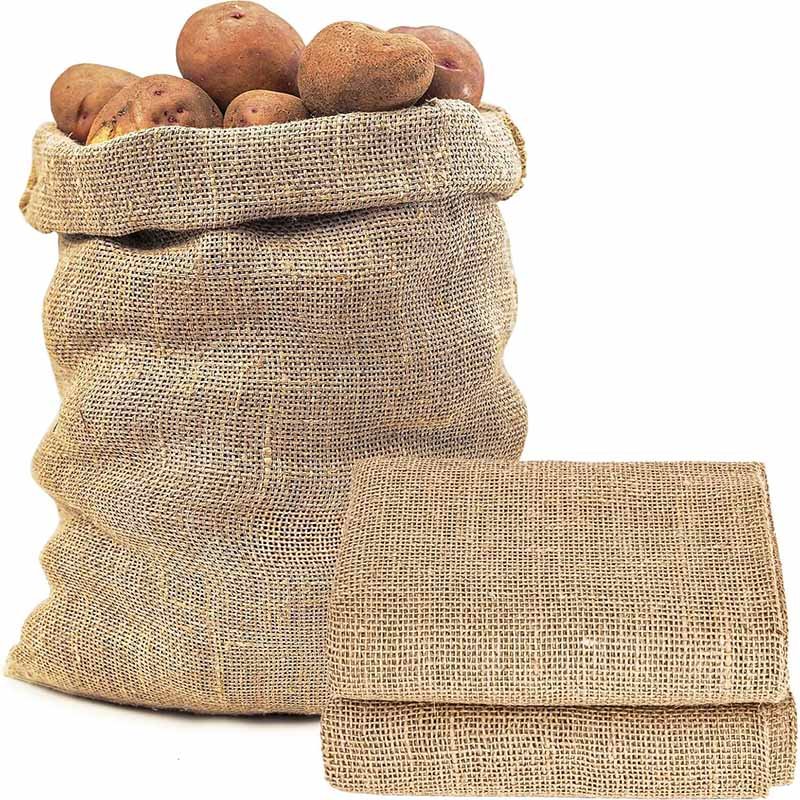
Burlap bags are everywhere, yet surprisingly misunderstood. You see them holding coffee beans, potatoes, and grains. You spot them in garden centers, gift shops, wedding décor, and eco-themed retail displays. Some people call them rustic, others call them sustainable, and a growing number of buyers ask a more practical question: what are burlap bags actually made of, and are they really as eco-friendly as people claim?
In today’s market, material transparency matters more than ever. Brands face pressure to reduce plastic use, comply with environmental standards, and tell honest stories about what their products are made from. Burlap bags often sit at the center of this conversation because they look natural—but appearance alone does not guarantee performance, safety, or sustainability.
At the same time, burlap has limitations. It frays. It absorbs moisture. It can smell earthy. Some burlap bags are pure natural fiber, while others are blended, coated, or even backed with plastic films. Without understanding the material structure, buyers risk choosing the wrong bag for the wrong application.
Burlap bags are traditionally made from natural plant fibers, most commonly jute. These fibers are spun into coarse yarns and woven into an open, breathable fabric. In some modern applications, burlap bags may include blended fibers, laminated coatings, or inner linings for added strength or moisture resistance, but classic burlap itself contains no plastic.
Understanding burlap starts with understanding its fiber, its structure, and its real-world behavior—not just its rustic look. In the sections below, we’ll break down exactly what burlap is, how burlap bags are made, whether they are truly eco-friendly, and when they are (and are not) the right choice. Along the way, we’ll also show how burlap can be engineered, reinforced, or customized for modern packaging and bag applications.
What Is Burlap Fabric
Burlap fabric is a coarse, open-weave textile traditionally made from natural plant fibers—most commonly jute. It is valued for its breathability, strength, and natural appearance, and is widely used in agricultural packaging, storage sacks, and rustic or eco-themed retail applications.
What does “burlap” actually refer to in textiles?
In textile terminology, burlap does not describe a fiber—it describes a fabric structure and category. Specifically, burlap refers to a heavy, loosely woven cloth made from thick yarns, designed for strength and airflow rather than softness or aesthetics.
This distinction is critical for buyers. Many people assume burlap is a specific raw material, but in reality, it is the result of how fibers are spun and woven. The defining characteristics of burlap fabric include:
- An open, visible weave
- Thick, coarse yarns
- Low thread count
- Minimal surface finishing
These features make burlap highly functional for packaging and storage. The loose weave allows air circulation, reducing moisture buildup and mold risk—one reason burlap has been used for centuries in agriculture and shipping.
From a performance perspective, burlap is a structural fabric, not a comfort fabric. It is engineered to hold weight, resist tearing under static load, and allow goods to “breathe,” rather than to feel smooth or flexible.
Is burlap the same as jute or hessian?
This is one of the most common and most searched questions—and the answer requires precision.
- Jute is a fiber (raw material).
- Burlap is a fabric made by weaving yarns.
- Hessian is simply the British term for burlap.
Most burlap fabric is made from jute fibers, which is why the terms are often used interchangeably in everyday language. However, from a manufacturing and sourcing perspective, they are not identical.
Jute fibers vary significantly by:
- Plant variety
- Growing region
- Retting and drying method
- Fiber grading
Higher-grade jute produces burlap that is stronger, more uniform, and less prone to shedding or odor. Lower-grade jute results in burlap that may feel rougher, release more fiber dust, and degrade faster.
For buyers, the important question is not “Is this burlap?” but rather “What quality of jute was used, and how was the fabric woven?”
Does burlap fabric contain plastic or synthetic materials?
Pure burlap fabric contains no plastic. Traditional burlap is made entirely from natural plant fibers and is biodegradable.
However, modern market offerings require careful evaluation. Some products labeled as “burlap” may include additional components, such as:
- Polypropylene (PP) or polyethylene (PE) inner laminations
- Synthetic sewing threads for higher seam strength
- Blended yarns (jute + polyester) for reduced shedding
These additions are often intentional and functional. For example, a laminated burlap bag may protect contents from moisture while retaining a natural exterior. That said, these modifications change the environmental profile of the product.
From a buyer’s standpoint, burlap can be fully plastic-free—but not all burlap-based bags are. Understanding whether the burlap is raw, lined, coated, or blended is essential when evaluating sustainability claims, food safety, or disposal methods.
What are the key physical characteristics of burlap fabric?
To fully understand burlap, it helps to look at its core physical properties:
| Property | Burlap Fabric Behavior |
|---|---|
| Weave | Loose, open plain weave |
| Texture | Coarse, stiff, fibrous |
| Breathability | Very high |
| Water resistance | Low (absorbs moisture) |
| Abrasion resistance | Moderate to low |
| Biodegradability | High (if untreated) |
These traits explain why burlap excels in some applications (agriculture, rustic packaging) and performs poorly in others (wet environments, long-term outdoor exposure).
What Are Burlap Bags Made Of
Burlap bags are primarily made from jute fibers, a natural plant-based material spun into thick yarns and woven into an open, breathable fabric. Depending on usage, burlap bags may also include reinforced stitching, blended fibers, inner linings, or protective coatings to improve durability, cleanliness, or moisture resistance.
What is a burlap bag made of at the fiber level?
At the most basic level, a burlap bag is made from jute fiber, which comes from the stalk of the jute plant. Jute is one of the strongest natural fibers available at commercial scale, second only to cotton in global usage among natural fibers.
Jute fibers are long, coarse, and stiff. Unlike cotton, which is processed for softness, jute is valued for tensile strength, rigidity, and airflow. These fibers are rich in cellulose and lignin, which give burlap its characteristic stiffness and rough handfeel.
From a material-science perspective, this means:
- Burlap bags are fully plant-based at the fiber level
- They are biodegradable and compostable if untreated
- They naturally absorb moisture and allow air circulation
- They are strong under static load but weaker under abrasion and flexing
This fiber behavior explains why burlap bags work exceptionally well for agricultural storage but poorly for wet, oily, or high-friction applications unless modified.
Which natural fibers are commonly used in burlap bags?
While jute accounts for the vast majority of burlap bags, it is not the only fiber used. In certain regions or specialty markets, alternative plant fibers may be used to produce burlap-style bags.
| Fiber Type | Use in Burlap Bags | Key Characteristics |
|---|---|---|
| Jute | Standard burlap bags | Affordable, breathable, widely available |
| Hemp | Heavy-duty eco bags | Stronger, more abrasion-resistant, higher cost |
| Flax | Decorative burlap | Finer texture, less common, premium pricing |
Jute dominates because it offers the best balance of cost, strength, availability, and scalability. Hemp burlap is stronger but significantly more expensive and harder to source consistently. Flax burlap is typically used for decorative or niche packaging rather than load-bearing bags.
For most commercial burlap bags—especially those used for food packaging, agriculture, or retail—jute remains the most practical and reliable fiber choice.
What other materials are used besides burlap fabric?
Although the outer fabric of a burlap bag may be 100% jute, a finished burlap bag is rarely made from fabric alone. To meet real-world usage needs, manufacturers often incorporate additional materials.
Common secondary materials include:
- Sewing threads (often polyester or cotton) for seam strength
- Reinforcement tapes at stress points
- Inner liners made from cotton, canvas, PE, or PP
- Drawstrings or handles made from jute rope, cotton cord, or webbing
These components do not change the visual identity of the bag but dramatically affect performance, lifespan, and cleanliness.
From a buyer’s perspective, understanding these hidden materials is essential. Two burlap bags can look identical yet perform very differently depending on stitching quality and internal structure.
Are burlap bags ever blended with synthetic fibers?
Yes. In modern manufacturing, some burlap bags use blended or hybrid constructions to solve specific problems associated with raw burlap.
Examples include:
- Jute-polyester blended yarns to reduce fiber shedding
- Burlap fabric laminated with polypropylene (PP) film
- Burlap outer fabric combined with synthetic inner liners
These hybrid designs improve:
- Moisture resistance
- Cleanliness for food or retail use
- Tear resistance at seams
- Print clarity for logos
However, blending also reduces biodegradability. This is not inherently negative—it is a design trade-off. For long-term use, a reinforced burlap bag may have a lower environmental impact than a pure burlap bag that fails quickly and must be replaced.
Does the composition of burlap bags affect quality and performance?
Absolutely. The composition of a burlap bag determines how it behaves in real use.
| Component | Affects |
|---|---|
| Fiber grade | Strength, shedding, odor |
| Weave density | Load capacity, breathability |
| Stitching material | Seam durability |
| Liners or coatings | Moisture protection, cleanliness |
| Reinforcements | Lifespan under repeated use |
Many quality issues blamed on “burlap” are actually the result of poor fiber grading or weak bag construction, not the material itself.
For this reason, professional manufacturers treat burlap bags as engineered products, not simple sacks.
How Are Burlap Bags Manufactured
Burlap bags are manufactured by harvesting natural plant fibers (mainly jute), processing them into coarse yarns, weaving those yarns into burlap fabric, and then cutting, stitching, and reinforcing the fabric into finished bags. Final performance depends heavily on fiber grade, weave consistency, stitching quality, and structural reinforcement.
How are jute fibers harvested and prepared for burlap bags?
The manufacturing of burlap bags begins in the field, not the factory. Jute plants are typically harvested after 90–120 days of growth, when fiber strength reaches its optimal balance between length and toughness.
After harvesting, jute stalks undergo a process called retting, where they are soaked in water to loosen the fibers from the woody core. Retting quality directly affects burlap performance:
- Under-retted fibers are stiff and brittle
- Over-retted fibers become weak and inconsistent
Once retted, fibers are stripped, washed, sun-dried, and sorted by grade. Higher-grade jute fibers are longer, cleaner, and more uniform, producing burlap with:
- Better tensile strength
- Less shedding and dust
- Reduced natural odor
This early-stage fiber grading is one of the most important—but least visible—factors in burlap bag quality.
How are jute fibers spun into yarn for burlap fabric?
After drying, jute fibers are softened and aligned through carding and drawing processes. They are then spun into thick, low-twist yarns, which are ideal for burlap’s open-weave structure.
Unlike fine textile yarns, burlap yarns prioritize:
- Strength over smoothness
- Diameter over flexibility
- Stability under static load
The thickness and consistency of the yarn directly influence:
- Fabric weight (GSM)
- Load-bearing capacity
- Surface roughness
Inconsistent yarn leads to weak spots in the fabric, which later become tear points in finished bags. High-quality burlap bags always start with controlled yarn thickness and twist.
How is burlap fabric woven and finished?
Burlap fabric is woven using a plain weave on traditional or semi-automatic looms. The defining feature is a low thread count, which creates the signature open structure.
Key weaving variables include:
- Warp and weft tension
- Weave density
- Yarn spacing consistency
After weaving, the fabric may undergo optional finishing processes:
- Batch oiling to soften fibers
- Calendering to flatten surface texture
- Heat setting to stabilize dimensions
Some burlap fabrics are also laminated or backed with films, depending on the intended use. These finishing decisions significantly affect breathability, odor, and moisture resistance.
How are burlap bags cut, stitched, and shaped?
Once the burlap fabric is ready, it is cut into panels according to bag dimensions. Cutting accuracy matters more than many buyers expect—misaligned cuts can weaken seam areas.
Stitching is the most failure-prone stage of burlap bag manufacturing. Because burlap fabric does not stretch, stress concentrates at seams. Professional manufacturers address this through:
- Folded or hemmed edges
- Reinforced bottom seams
- Thicker stitch density
- Strong sewing threads (often polyester for strength)
Cheap burlap bags typically fail at the seams, not in the fabric body.
How are handles, liners, and reinforcements added?
To adapt burlap bags for modern use, manufacturers often add structural components, such as:
- Jute rope or cotton webbing handles
- Inner liners (cotton, canvas, PE, or PP)
- Reinforcement tapes at stress points
These additions transform burlap from a simple sack into a functional, reusable bag. For example:
- Liners improve hygiene and product protection
- Reinforced handles increase load capacity
- Structured bases improve shape retention
Each added component is a deliberate engineering decision, not decoration.
How does manufacturing quality affect burlap bag performance?
Two burlap bags may look identical but perform very differently due to manufacturing differences.
| Manufacturing Factor | Real-World Impact |
|---|---|
| Fiber grade | Strength, odor, shedding |
| Yarn consistency | Tear resistance |
| Weave stability | Load distribution |
| Stitching quality | Seam durability |
| Reinforcement design | Lifespan |
Many “burlap problems” blamed on the material are actually manufacturing shortcuts. This is why experienced factories treat burlap bags as engineered products, not low-end commodities.
Why Are Burlap Bags Popular
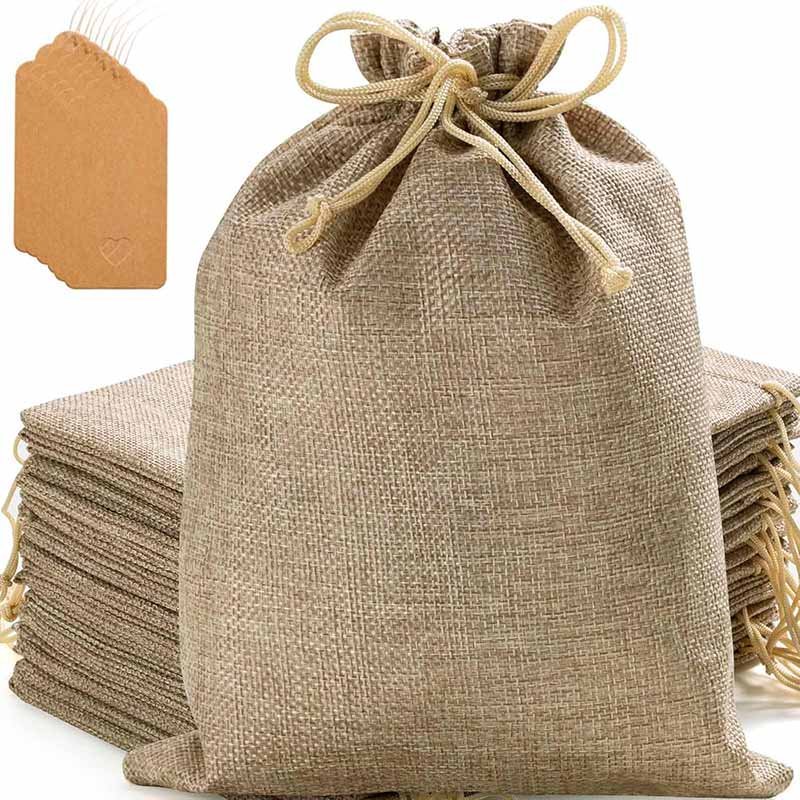
Burlap bags are popular because they are made from natural fibers, are biodegradable, breathable, visually communicate sustainability, and work well for agriculture, packaging, and rustic retail uses. Their popularity comes from both functional performance and strong eco-friendly perception.
Are burlap bags eco-friendly and biodegradable in real use?
Burlap bags owe much of their popularity to their eco-friendly reputation, and this reputation is largely justified—when the bags are made from pure jute without synthetic coatings.
Jute is a fast-growing, renewable plant fiber that absorbs large amounts of carbon dioxide during cultivation. Untreated burlap fabric is biodegradable, compostable, and plastic-free, making it attractive to brands aiming to reduce environmental impact.
However, real-world sustainability depends on construction. Burlap bags that include plastic liners, synthetic coatings, or blended fibers are no longer fully biodegradable. That said, these modifications often extend product lifespan, which can reduce waste over time. From a practical sustainability standpoint, a reinforced burlap bag that lasts years may be more responsible than a pure burlap bag that fails after a few uses.
This balance between material purity and functional durability is a key reason burlap remains relevant in modern packaging decisions.
Does burlap’s breathability make it functionally superior?
Yes—breathability is one of burlap’s most important functional advantages. The open weave of burlap fabric allows air to circulate freely, reducing moisture buildup inside the bag.
This characteristic is critical in industries such as:
- Agriculture (coffee beans, onions, garlic, potatoes)
- Seed and grain storage
- Temporary food transport
By allowing moisture to escape, burlap reduces the risk of mold, spoilage, and condensation-related damage. However, breathability also means low water resistance. Burlap absorbs moisture easily and dries slowly, which limits its use in wet environments.
This trade-off explains why burlap is often paired with inner liners or coatings in modern applications—preserving airflow while protecting contents when needed.
Why do burlap bags signal “natural” and “authentic” to consumers?
Beyond performance, burlap bags are popular because they visually communicate values. The rough texture, visible fibers, and earthy tones immediately suggest:
- Natural materials
- Handcrafted processes
- Organic or eco-conscious branding
In marketing and retail, this perception is powerful. Consumers often associate burlap packaging with honesty and simplicity, even before reading a label.
This makes burlap especially popular for:
- Organic food brands
- Coffee and tea packaging
- Gift and promotional bags
- Rustic or seasonal retail displays
Importantly, burlap does not try to look polished or perfect. Its imperfections feel intentional, which aligns well with modern consumer preferences for authenticity over mass-produced uniformity.
Is burlap popular because it is cost-effective and widely available?
Yes. Burlap remains popular because it is economically practical. Jute is produced at large scale in countries such as India and Bangladesh, keeping raw material costs relatively stable.
Compared to many specialty eco fabrics, burlap offers:
- Lower material cost
- Simple weaving process
- Easy scalability for bulk orders
This cost-effectiveness makes burlap accessible not only to large brands but also to small businesses and emerging brands. It allows companies to adopt natural-looking packaging without a significant cost premium.
For many buyers, burlap hits a rare balance: eco-friendly appearance, acceptable performance, and manageable cost.
Why does burlap remain relevant despite its limitations?
Burlap has clear disadvantages—it frays, absorbs moisture, and lacks refinement. Yet it remains popular because its strengths align perfectly with certain use cases.
Burlap excels when:
- Breathability matters more than water resistance
- Visual storytelling matters more than precision
- Sustainability messaging matters more than luxury finish
When manufacturers understand these boundaries and design accordingly—adding liners, reinforcements, or hybrid structures—burlap becomes a flexible design material rather than a limitation.
This adaptability is why burlap bags continue to appear across industries, decades after their original agricultural role.
Why popularity does not mean burlap is always the best choice
One of the most important insights for buyers is this: burlap’s popularity does not make it universally suitable.
Many sourcing mistakes happen when burlap is chosen purely for its eco image, without considering:
- Product sensitivity to moisture
- Required lifespan
- Load stress and abrasion
- Branding requirements
Experienced manufacturers guide buyers to use burlap where it makes sense—and recommend alternatives or hybrid solutions when it does not. This informed approach preserves burlap’s strengths while avoiding costly failures.
What Are Common Uses for Burlap Bags
Burlap bags are commonly used in agriculture, food storage, gardening, retail packaging, gifting, and promotional applications. Their breathability, strength, and natural appearance make them suitable for products that require airflow, rustic presentation, or eco-friendly positioning.
Which industries use burlap bags the most?
Burlap bags were originally developed for industrial and agricultural use, and these sectors remain their largest users today. The industries that rely most heavily on burlap include:
- Agriculture & farming
- Food production & commodity trading
- Gardening & landscaping
- Retail packaging & branding
- Events, gifting & promotions
Each of these industries values burlap for a different reason. Farmers care about breathability. Retailers care about appearance. Brands care about sustainability messaging. Burlap’s versatility comes from the fact that it solves different problems for different users.
This is also why burlap bags appear in both low-cost bulk packaging and premium branded displays—it is the context, not the material itself, that defines the value.
Are burlap bags suitable for agriculture and food storage?
Yes, and this is where burlap performs best. Burlap bags are widely used for:
- Coffee beans and cocoa
- Potatoes, onions, garlic
- Grains, seeds, and animal feed
The reason is airflow. Burlap’s open weave allows moisture to escape, reducing condensation and mold during storage and transport. For dry agricultural goods, this is often more important than water resistance.
However, burlap is not airtight or moisture-proof. For food products that are sensitive to humidity, contamination, or odor transfer, burlap bags are often combined with food-grade inner liners. This hybrid approach preserves breathability while improving hygiene and safety.
In short: burlap works best for dry, breathable storage, not for sealed preservation.
How are burlap bags used in gardening and landscaping?
In gardening and landscaping, burlap bags are valued for being strong, biodegradable, and soil-friendly. Common uses include:
- Transporting soil, mulch, and compost
- Wrapping plant root balls during transplanting
- Erosion control and ground covering
Because untreated burlap decomposes naturally, it can be left in soil without harming plants. This makes it especially useful for temporary containment and planting applications.
Gardeners and landscapers choose burlap not because it lasts forever, but because it lasts long enough and then breaks down naturally.
Why are burlap bags popular in retail packaging and branding?
In retail, burlap bags are used less for protection and more for visual communication. Their rough texture and natural color instantly suggest:
- Eco-conscious values
- Handcrafted quality
- Organic or natural products
Burlap bags are commonly used as:
- Product packaging
- Gift bags
- Reusable shopping totes
- Subscription box outer packaging
For brands, burlap functions as a storytelling tool. It signals sustainability and authenticity before the customer even touches the product. This is especially effective for coffee brands, organic food companies, and lifestyle products.
That said, retail burlap bags often include liners or reinforcements to improve cleanliness and durability.
Are burlap bags used for gifting, events, and promotions?
Yes. Burlap bags are extremely popular for:
- Wedding favors
- Corporate giveaways
- Seasonal and holiday promotions
- Event welcome kits
In these cases, burlap is chosen for aesthetic reasons rather than performance. The bag itself becomes part of the presentation.
Customization options such as logo printing, tags, drawstrings, or patches turn simple burlap sacks into branded packaging pieces. Because these uses are usually short-term, the limitations of burlap (fraying, moisture sensitivity) are less critical.
When are burlap bags not suitable?
Understanding where burlap is not commonly used is just as important. Burlap bags are generally unsuitable for:
- Wet or oily products
- Long-term outdoor exposure
- High-abrasion or heavy-flex use
- Products requiring airtight or hygienic sealing
In these cases, alternative materials or reinforced burlap hybrids perform better. Choosing burlap purely for its eco image without considering use conditions often leads to product failure.
How does intended use affect burlap bag design?
The same burlap fabric can produce very different bags depending on use. Design choices affected by application include:
- Fabric weight and weave density
- Stitching strength and seam reinforcement
- Handle type and attachment method
- Inner liners or coatings
For example, an agricultural burlap sack prioritizes breathability and low cost, while a retail burlap tote prioritizes appearance, structure, and branding.
This is why professional manufacturers do not sell “one-size-fits-all” burlap bags. Use case defines design.
How to Choose Burlap Bags for Business Needs
To choose the right burlap bags for business use, companies must evaluate the intended application, product sensitivity, required durability, environmental conditions, and branding needs. Burlap works best when its breathability and natural appearance align with real-world performance requirements, often supported by liners or reinforcements.
What are the disadvantages of burlap bags that buyers must consider?
Before choosing burlap, businesses should clearly understand its material limitations. Burlap is not a high-performance fabric, and ignoring its weaknesses is the most common sourcing mistake.
Key disadvantages include:
- Poor water resistance – burlap absorbs moisture easily
- Fraying and fiber shedding – especially at cut edges
- Rough texture – unsuitable for delicate or premium surfaces
- Limited abrasion resistance – wears down under repeated friction
- Natural odor – may affect sensitive products
These traits are not defects—they are natural outcomes of jute fiber structure. Burlap performs well under static load and dry conditions, but poorly under constant flexing, rubbing, or moisture exposure.
For businesses, the question is not “Is burlap good or bad?” but “Are these limitations acceptable for my product and usage cycle?”
When does burlap make sense for business use—and when does it not?
Burlap is a strong choice when:
- Products benefit from airflow (coffee beans, produce, seeds)
- Visual storytelling and eco positioning matter
- The bag is used short-term or decoratively
- Cost control is important
Burlap is usually the wrong choice when:
- Products are wet, oily, or odor-sensitive
- Long-term outdoor exposure is required
- Repeated daily use causes abrasion
- Airtight or hygienic sealing is needed
In these cases, businesses often switch to hybrid burlap designs or alternative materials entirely. Knowing when not to use burlap is just as valuable as knowing when to use it.
How should businesses match burlap bag structure to application?
Choosing burlap is only step one. The bag structure determines whether it succeeds or fails in real use.
Key structural decisions include:
- Fabric weight & weave density (lightweight vs heavy-duty)
- Bottom construction (single-layer vs reinforced base)
- Edge finishing (raw cut vs folded/hemmed seams)
- Handle type (jute rope, cotton webbing, reinforced tape)
For example:
- Agricultural sacks prioritize breathability and low cost
- Retail totes require reinforced handles and cleaner interiors
- Promotional bags focus on appearance over longevity
Structure should always be chosen based on how the bag will be carried, how often, and with how much weight.
Do inner liners or coatings improve burlap bags for business use?
Yes—and in many commercial scenarios, liners are essential.
Common liner options include:
- Cotton or canvas liners for cleanliness and softness
- PE or PP liners for moisture and contamination protection
- Removable inner bags for reusable systems
Liners allow businesses to keep the natural burlap exterior while dramatically improving performance. This is especially important for:
- Food and beverage packaging
- Retail and gifting applications
- Reusable shopping bags
While liners reduce biodegradability, they often increase product lifespan, which can lower overall environmental impact. For many brands, this trade-off is both practical and responsible.
How do branding and customization needs affect burlap bag selection?
Burlap is not a smooth printing surface. Its coarse weave affects how logos and graphics appear.
Businesses should consider:
- Screen printing vs heat transfer
- Single-color vs detailed graphics
- Placement (center panel vs tag or patch)
In many cases, woven labels, leather patches, or hang tags provide cleaner branding than direct printing. Choosing the right branding method prevents disappointment and improves perceived quality.
Customization decisions should be made early, not after the bag structure is finalized.
How should businesses balance cost, durability, and sustainability?
The lowest unit price rarely delivers the best long-term value. Businesses should evaluate:
- Expected number of uses
- Risk of product damage
- Replacement frequency
- Brand perception
A slightly higher-cost burlap bag with reinforced seams and a liner may outperform a cheap sack that fails quickly. From both a cost and sustainability perspective, durability often matters more than material purity alone.
Why working with an experienced manufacturer matters
Burlap bags may look simple, but sourcing them correctly requires experience. An experienced manufacturer helps businesses:
- Select the right fiber grade and weave
- Design structures that prevent failure
- Choose appropriate liners and reinforcements
- Avoid overengineering (and overspending)
Rather than selling a generic burlap bag, professional suppliers focus on fit-for-purpose design.
Conclusion
Burlap bags are simple—but sourcing them correctly is not. From fiber selection and weave quality to reinforcement, lining, and branding, every decision affects performance, sustainability, and customer perception.
With over 18 years of experience in bag R&D, manufacturing, and customization, Szoneier helps brands turn burlap from a raw material into a reliable, market-ready product. Whether you need pure natural burlap bags, reinforced hybrid designs, or fully customized private-label solutions, our team supports you from design to delivery.
If you’re planning a burlap bag project—or unsure whether burlap is right for your product—reach out to Szoneier for expert guidance, free design support, low-MOQ customization, and fast sampling.
Contact Szoneier today to start your custom burlap bag inquiry.