Skip to content
A suit doesn’t wrinkle because it “travels.” It wrinkles because pressure builds at the wrong fold line—and that pressure usually comes from the garment bag design, not the fabric quality. If you’ve ever pulled out a jacket with sharp creases across the chest or lapel, you already know how unforgiving business clothing can be. The most common decision travelers and brands face is this: Do you want a bag that’s compact and easy to carry, or a bag that keeps a suit closer to its natural shape? That’s the real difference between tri-fold and bi-fold garment bags.
A bi-fold garment bag generally protects suits better because it folds the suit only once, creating fewer crease points and less compression on the jacket body. A tri-fold garment bag is more compact for carry-on travel but introduces two fold zones, which can increase wrinkle risk unless the bag has stiff fold panels, padding, and proper internal straps. Choose bi-fold for suit sharpness; choose tri-fold for portability.
Here’s the situation many business travelers recognize: you land late, you have a meeting early, and you open your bag expecting a clean jacket—only to see a long crease line that looks like it was ironed in. That moment is why understanding fold structure matters. A garment bag isn’t “just a cover.” It’s a folding system that either helps your suit arrive ready—or makes you hunt for a hotel iron.
What Is a Tri-Fold Garment Bag?
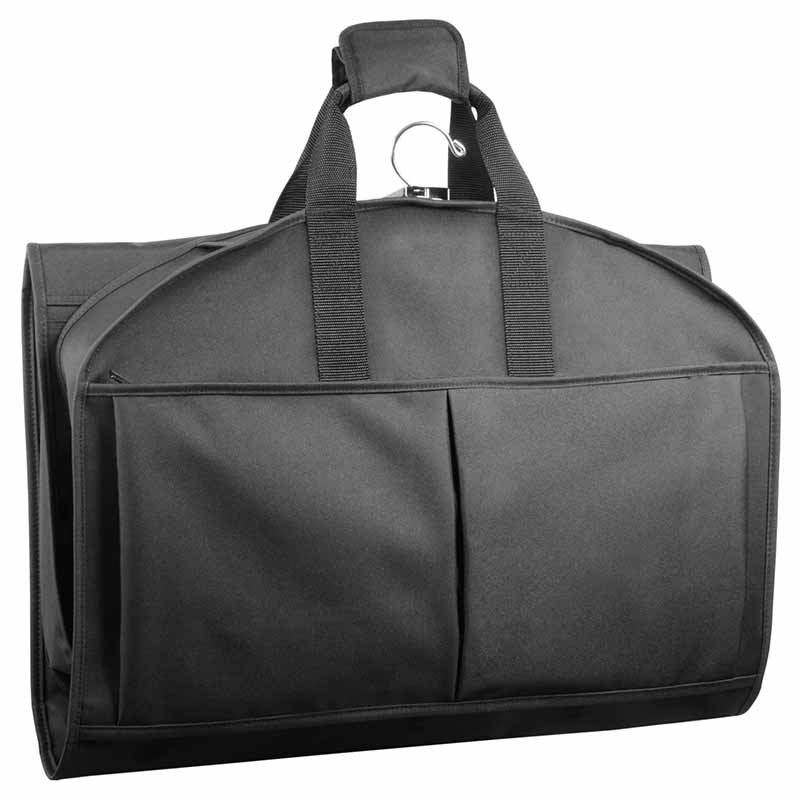
A tri-fold garment bag is a travel bag designed to carry suits, jackets, and formal clothing while allowing the bag to fold into three sections for easier transport. When fully opened, the bag provides enough vertical length to hold a suit jacket and trousers without excessive bunching. When folded twice, the bag becomes compact enough to carry by hand, shoulder strap, or store inside airplane overhead compartments.
In simple terms, a tri-fold garment bag solves two common travel problems at the same time: protecting formal clothing and reducing the size of the bag during transport.
Most tri-fold garment bags follow a structure where the garment hangs or lies flat inside the bag, and then the bag folds from the top and bottom toward the center. The result is a rectangular travel bag that is significantly shorter than the full garment length.
A typical tri-fold garment bag has the following size structure:
| Measurement | Common Range | Why It Matters |
|---|---|---|
| Open Length | 100–125 cm | Long enough to hold most suit jackets |
| Open Width | 50–60 cm | Prevents shoulder compression |
| Folded Height | 45–55 cm | Fits airline carry-on spaces |
| Folded Thickness | 10–18 cm | Depends on number of garments |
Because the bag folds twice, it becomes much easier to carry through airports or crowded transit spaces compared with full-length garment bags.
How Does a Tri-Fold Garment Bag Hold a Suit?
Inside the bag, suits are usually supported by a hanger system or garment clips that keep the shoulders aligned. The jacket typically remains in its natural hanging position before the bag is folded.
The folding sequence usually looks like this:
- Suit jacket and trousers are placed inside the bag.
- The bottom section folds upward.
- The top section folds downward.
- Compression straps secure the garments in place.
This structure keeps the suit centered inside the bag while minimizing movement during travel.
Manufacturers often include several internal components to improve garment protection:
| Internal Feature | Purpose |
|---|---|
| Hanger hook | Keeps jacket shoulders stable |
| Cross straps | Prevent garments from shifting |
| Fold panels | Reduce pressure at fold points |
| Garment clips | Hold trousers in place |
Without these internal supports, garments may slide inside the bag and create wrinkles along the fold lines.
Why Tri-Fold Garment Bags Are Popular for Travel
Tri-fold garment bags are widely used by business travelers because they balance garment protection and portability.
Compared with traditional full-length garment bags, tri-fold designs reduce the total carrying length by almost half.
For example:
| Bag Type | Folded Length |
|---|---|
| Full-length garment bag | 100–120 cm |
| Bi-fold garment bag | 65–75 cm |
| Tri-fold garment bag | 45–55 cm |
This shorter length makes tri-fold bags easier to manage when moving through airports, taxis, and hotels.
Another reason travelers prefer tri-fold bags is that many designs integrate additional storage compartments.
Common storage features include:
- shoe pockets
- shirt compartments
- accessory pockets for ties and belts
- small document pockets
These compartments allow travelers to pack several items in a single bag instead of carrying separate luggage.
For short trips lasting one to three days, this multi-function design can replace a standard suitcase.
How Many Garments Can a Tri-Fold Garment Bag Carry?
Capacity depends on the internal design of the bag, but most tri-fold garment bags are built to carry one or two suits comfortably.
Overpacking the bag increases compression pressure and can create wrinkles along the fold areas.
A practical packing guideline looks like this:
| Packing Combination | Recommended |
|---|---|
| 1 suit + 1 shirt | ideal |
| 1 suit + 2 shirts | acceptable |
| 2 suits | moderate compression |
| 2 suits + shoes | high compression |
When travelers place heavy items such as shoes or toiletry kits inside the fold area, the pressure from those objects often creates visible creases on the jacket body.
Many premium garment bag designs avoid this problem by placing shoe pockets on the outer edges of the bag rather than directly over the folded garment.
What Types of Trips Work Best for Tri-Fold Garment Bags?
Tri-fold garment bags are best suited for travel situations where portability and convenience are more important than maximum garment capacity.
They are commonly used for:
- business meetings
- weekend conferences
- short weddings or formal events
- overnight business trips
Because the folded size is compact, these bags work especially well for airline carry-on travel.
Most tri-fold garment bags fall within the carry-on dimensions allowed by major airlines.
| Carry-On Standard | Approximate Limit |
|---|---|
| Height | 55 cm |
| Width | 40 cm |
| Depth | 20 cm |
When folded properly, many tri-fold garment bags can fit within these limits or remain small enough to store in overhead compartments without difficulty.
Why Design Quality Matters in Tri-Fold Garment Bags
Not all tri-fold garment bags perform equally well. The difference often comes down to structural design.
Lower-cost designs sometimes use thin fabric with no internal reinforcement. When the bag folds, pressure concentrates directly on the garment, creating crease lines.
Higher-quality garment bags typically include:
- reinforced fold panels
- padded interiors
- durable zipper systems
- structured back panels
These elements distribute pressure more evenly and reduce the chance of sharp wrinkles.
For brands developing garment bags or travel accessories, the structure of the folding system is one of the most important engineering decisions. A well-designed tri-fold bag can protect suits surprisingly well while still maintaining a compact travel form.
When the folding structure, strap placement, and material quality are engineered properly, tri-fold garment bags become a practical solution for travelers who need both convenience and garment protection during short trips.
What Is a Bi-Fold Garment Bag?
A bi-fold garment bag is a travel bag designed to carry suits, jackets, dresses, or formal clothing while folding the garment only once. When opened fully, the bag provides enough vertical space for clothing to hang nearly flat. When folded in half, the bag becomes shorter and easier to transport while still minimizing stress on the fabric.
The key advantage of a bi-fold garment bag is that it reduces the number of fold lines placed on the garment. Because the clothing bends only once, the risk of sharp creases forming across the jacket body is significantly lower compared with multi-fold travel bags.
Most bi-fold garment bags are used by travelers who want their suits to arrive looking presentable without requiring ironing immediately after unpacking.
Typical dimensions of bi-fold garment bags look like this:
| Measurement | Common Range | Why It Matters |
|---|---|---|
| Open Length | 110–130 cm | Accommodates most suit jackets and dresses |
| Open Width | 55–65 cm | Prevents shoulder compression |
| Folded Length | 65–75 cm | Easier to carry than full-length bags |
| Folded Thickness | 8–15 cm | Depends on garment quantity |
The longer open length allows jackets and trousers to remain closer to their natural shape during travel.
How Does a Bi-Fold Garment Bag Hold Clothing?
Inside a bi-fold garment bag, clothing is typically suspended using a hanger hook or hanger clamp located at the top of the bag.
The garment remains in a vertical orientation until the bag is folded once in the center.
The folding process usually follows this sequence:
- The suit jacket and trousers are placed inside the bag.
- The hanger hook holds the shoulders in position.
- The lower portion of the bag folds upward toward the center.
- Interior straps secure the garment to prevent shifting.
This structure allows the jacket to bend near the waist area, which is a natural flex point in most suits.
Most high-quality bi-fold garment bags also include internal support systems that improve stability.
| Interior Component | Function |
|---|---|
| hanger hook or clamp | stabilizes shoulder structure |
| cross straps | prevent garment movement |
| trouser bar or clips | secure pants |
| internal mesh pockets | store accessories |
These components help keep the garment in place so it does not slide toward the fold line during transport.
Why Bi-Fold Garment Bags Protect Suits Better
Suits wrinkle when fabric layers are compressed at specific points for extended periods of time. The fewer compression zones that exist, the less likely the suit will develop sharp crease lines.
Bi-fold garment bags reduce these compression points by folding garments only once.
The difference becomes clear when comparing fold zones between bag types.
| Bag Type | Number of Fold Lines | Wrinkle Risk |
|---|---|---|
| tri-fold garment bag | 2 folds | medium |
| bi-fold garment bag | 1 fold | lower |
| full-length garment bag | 0 folds | lowest |
Because a bi-fold garment bag uses a single fold point, the pressure applied to the suit fabric is more evenly distributed.
This design is especially beneficial for delicate fabrics such as:
- lightweight wool
- linen blends
- cotton twill suits
- formal evening wear
These fabrics tend to hold wrinkles more easily when compressed multiple times.
Another advantage is shoulder protection.
Suit jackets maintain their shape best when the shoulder area remains flat and supported. Bi-fold bags usually leave the shoulder area completely unfolded, helping the jacket maintain its natural structure.
How Many Garments Can a Bi-Fold Garment Bag Carry?
Bi-fold garment bags typically offer slightly higher garment capacity than tri-fold bags because the interior space is less segmented.
Most designs comfortably carry two to three suits without excessive compression.
Here is a realistic packing guideline used by many travelers:
| Packing Setup | Suit Protection |
|---|---|
| 1 suit + shirts | excellent |
| 2 suits | very good |
| 3 suits | moderate |
| 3 suits + shoes | increased wrinkle risk |
When packing multiple garments, travelers should distribute weight evenly and avoid placing heavy objects directly on top of folded clothing.
Some garment bags include expandable gussets that increase interior volume without increasing pressure on garments.
These expandable designs are often used in premium travel bags aimed at professionals who frequently carry multiple suits.
When Do Travelers Prefer Bi-Fold Garment Bags?
Bi-fold garment bags are commonly chosen by travelers whose main priority is keeping clothing smooth and presentation-ready.
They are frequently used in situations such as:
- business conferences
- destination weddings
- formal events
- extended business trips
- luxury travel
For professionals attending important meetings, the appearance of their clothing can affect first impressions. Because of this, many travelers accept the slightly longer bag size in exchange for better garment protection.
Another common use case is transporting tailored suits or premium garments.
Higher-end suits often contain structured canvassing and delicate fabrics that should not be folded multiple times. Bi-fold garment bags reduce stress on these materials and help maintain the garment’s original drape.
Size and Portability Compared With Other Garment Bags
Although bi-fold garment bags protect clothing well, they are slightly less compact than tri-fold designs.
This difference can be seen in typical folded lengths.
| Garment Bag Type | Folded Length |
|---|---|
| tri-fold garment bag | 45–55 cm |
| bi-fold garment bag | 65–75 cm |
| full garment bag | 100–120 cm |
Despite being longer, bi-fold bags remain manageable for most travel situations.
Many models include shoulder straps, reinforced handles, and trolley sleeves that allow the bag to attach to rolling luggage.
These features make it easier to move through airports and hotels without carrying the bag entirely by hand.
Design Considerations for High-Quality Bi-Fold Garment Bags
The effectiveness of a bi-fold garment bag depends heavily on the structural design used by the manufacturer.
Several construction details influence performance:
- fabric durability
- interior lining smoothness
- zipper strength
- fold panel reinforcement
- strap positioning
High-quality garment bags often include reinforced fold zones that distribute pressure across a larger surface area.
Some designs also incorporate semi-rigid panels inside the fold area. These panels prevent the bag from bending too sharply, which helps reduce crease formation.
Manufacturers developing professional travel bags often test these structural features during product development to ensure the bag performs well under realistic travel conditions.
When the material selection, structural support, and interior layout are designed properly, a bi-fold garment bag provides one of the most reliable ways to transport suits while keeping them neat and ready to wear.
Which Garment Bag Protects Suits Better?
A bi-fold garment bag generally protects suits better because it creates only one fold line across the garment. Fewer fold points mean less compression and lower wrinkle risk. Tri-fold garment bags can still protect suits well when they include structured fold panels, padded interiors, and tension straps, but without these features the extra fold increases pressure zones that can leave visible creases.
Protecting a suit during travel is not simply about “covering” the garment. It is about managing pressure distribution across the jacket and trousers. Every fold creates a point where fabric layers stack and compression builds.
The difference between tri-fold and bi-fold bags becomes clearer when you examine how the suit is positioned inside the bag.
| Garment Bag Type | Fold Count | Pressure Points | Wrinkle Risk |
|---|---|---|---|
| Tri-Fold | 2 folds | 2 compression zones | Medium |
| Bi-Fold | 1 fold | 1 compression zone | Lower |
However, wrinkle protection is influenced by more than just the number of folds. The following design factors also matter:
- internal support panels
- strap placement
- fabric tension
- packing density
- compartment layout
Many travelers assume wrinkles come from the fabric itself. In reality, most creases are caused by uneven pressure during transport.
For example, when a packed garment bag is placed inside an airplane overhead bin, luggage from other passengers may press against it. If the bag has weak structure, that pressure concentrates along the fold line.
A well-designed garment bag spreads this pressure across a wider area so the suit fabric does not crease sharply.
Another factor is fabric type.
Different suit materials respond differently to compression.
| Suit Fabric | Wrinkle Sensitivity | Travel Behavior |
|---|---|---|
| Wool | Medium | recovers naturally |
| Polyester blends | Low | resists wrinkles |
| Linen | High | wrinkles easily |
| Cotton twill | Medium-high | holds creases |
A linen suit folded twice inside a tri-fold bag will wrinkle much faster than a wool suit folded once inside a bi-fold bag.
For this reason, business travelers often select their garment bag based on the importance of the event and the type of clothing they carry.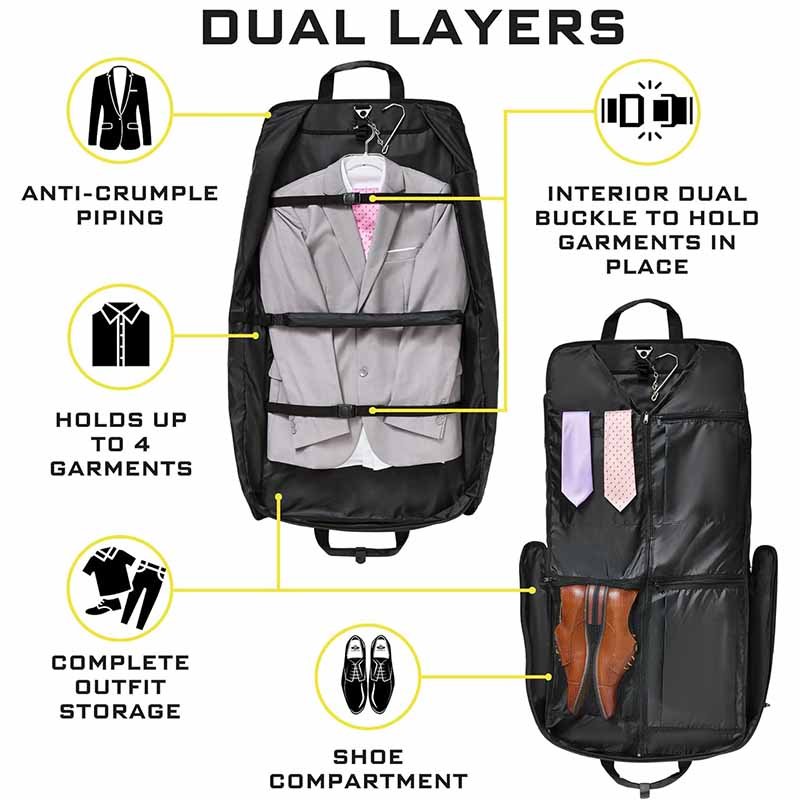
Which Garment Bag Creates Fewer Wrinkles?
Wrinkles appear when fabric fibers are compressed beyond their natural elasticity. The fewer times a suit is folded, the lower the stress placed on the fabric.
Bi-fold garment bags reduce wrinkles because they introduce only one bending point.
To understand this, imagine how a jacket sits inside each bag type.
Tri-fold structure
- shoulder area remains flat
- mid-torso folds downward
- bottom section folds upward
- jacket fabric stacks in three layers
Bi-fold structure
- shoulders remain flat
- jacket folds once near the waist
- fabric stacks in two layers
That extra layer in a tri-fold bag creates more pressure when weight is added.
This effect becomes stronger when travelers pack additional items.
For example:
| Packing Scenario | Wrinkle Risk |
|---|---|
| suit only | low |
| suit + shirt | low-medium |
| suit + shoes | medium |
| suit + shoes + accessories | high |
The reason is simple: additional items create vertical pressure on the folded fabric.
Better garment bags try to prevent this by separating compartments.
High-end garment bag designs may include:
- floating hanger systems
- internal garment clips
- reinforced fold panels
- padded spine structures
These elements help maintain the natural shape of the jacket during transport.
How Do Fold Lines Affect Suits?
Fold lines are the most critical structural element inside any garment bag.
Every fold creates a compression ridge, which is the exact line where wrinkles will form if pressure becomes too strong.
Suit jackets are especially vulnerable in three areas:
- chest panel
- lapel edge
- trouser crease zone
If the fold line crosses the lapel or chest area, the wrinkle becomes very noticeable.
This is why many garment bags are designed so the fold occurs below the jacket pocket line, where creases are less visible.
Manufacturers often design fold positions carefully using average jacket dimensions.
| Suit Component | Average Length |
|---|---|
| shoulder to waist | 45–50 cm |
| waist to hem | 30–35 cm |
Bi-fold garment bags usually place the fold near the waistline, which is a natural bending point for jackets.
Tri-fold garment bags must divide the jacket into three zones, which sometimes forces one fold to cross the chest area.
To reduce damage from this fold, manufacturers may add:
- padded fold bars
- tension straps
- flexible plastic support sheets
These elements distribute pressure across a wider area.
Another important factor is transport vibration.
During travel, luggage experiences constant small movements:
- walking
- vehicle vibration
- airplane turbulence
These motions cause garments to shift slightly inside the bag. If the suit slides during movement, the fold line becomes sharper.
Interior straps help prevent this sliding motion.
Do Garment Bag Straps Prevent Wrinkles?
Interior straps play a major role in wrinkle prevention because they stabilize the garment during travel.
When a suit moves inside a bag, the fabric shifts toward the fold line. This movement increases compression and makes crease lines more pronounced.
A properly designed strap system prevents this movement.
Common strap configurations include:
| Strap Type | Function |
|---|---|
| cross straps | secure jacket body |
| trouser clips | hold trousers in place |
| hanger clamps | stabilize shoulder position |
| compression straps | flatten interior load |
Cross straps are especially important in tri-fold garment bags because they keep the jacket centered between the folds.
Without them, the garment can slide downward during travel.
Another useful feature is adjustable strap tension.
If straps are too tight, they create their own pressure marks on the fabric.
If they are too loose, the garment shifts and wrinkles.
The goal is balanced tension that holds the suit securely without compressing it.
Travelers often improve wrinkle protection using simple packing techniques:
- place tissue paper between folds
- smooth sleeves before closing bag
- keep heavy items in separate compartments
- avoid overfilling accessory pockets
These steps help maintain the natural drape of the suit fabric.
From a manufacturing perspective, the combination of fold design, strap system, and internal structure determines how well a garment bag protects clothing.
Even a tri-fold garment bag can perform extremely well if these elements are engineered correctly.
How Do You Choose a Garment Bag?
Choosing between a tri-fold garment bag and a bi-fold garment bag depends on how the bag will actually be used. Travelers often focus on style or brand, but the most important factors are travel distance, suit quantity, luggage restrictions, and garment sensitivity.
A tri-fold garment bag is usually better when portability matters most. A bi-fold garment bag is often better when the main priority is keeping suits smooth and wrinkle-free.
Several decision factors help determine which design works best.
| Selection Factor | Tri-Fold Garment Bag | Bi-Fold Garment Bag |
|---|---|---|
| portability | excellent | moderate |
| wrinkle protection | good | very good |
| carry-on compatibility | excellent | moderate |
| suit capacity | moderate | high |
| overall size | compact | longer |
For many travelers, the final decision comes down to travel context.
Short trips with a single suit usually favor tri-fold bags.
Formal events or longer trips often favor bi-fold bags.
Brands that design travel gear for business professionals frequently offer both structures so customers can choose based on travel style.
Which Garment Bag Fits Carry-On Travel?
Carry-on compatibility is one of the most common reasons travelers choose tri-fold garment bags.
Most airlines allow cabin luggage within a size range close to:
| Airline Carry-On Standard | Dimensions |
|---|---|
| height | 55 cm |
| width | 40 cm |
| depth | 20 cm |
Tri-fold garment bags usually fit within these dimensions after folding.
Bi-fold garment bags can still work as carry-on luggage, but their longer folded shape sometimes makes them harder to store in overhead compartments.
Travelers who frequently board crowded flights often prefer tri-fold bags because they can move easily through narrow aisles and tight storage spaces.
Another important factor is weight distribution.
Tri-fold bags position the center of weight closer to the handle, making them feel lighter when carried by hand or shoulder strap.
This small difference becomes noticeable when walking long distances inside airports.
Which Garment Bag Holds More Suits?
Capacity varies widely depending on the internal structure of the garment bag.
Bi-fold garment bags usually offer slightly higher garment capacity because the interior space is flatter and less segmented.
Typical capacity ranges look like this:
| Bag Type | Suit Capacity |
|---|---|
| tri-fold garment bag | 1–2 suits |
| bi-fold garment bag | 2–3 suits |
When more garments are placed inside the bag, wrinkle risk increases regardless of design.
Overpacking is one of the most common causes of garment damage during travel.
Professional garment bag designs therefore include features such as:
- layered hanger systems
- garment separators
- expandable gussets
These features help distribute clothing weight more evenly.
When manufacturers design bags for premium travel use, they often prioritize fewer garments with better protection instead of maximum capacity.
How Do Garment Bag Sizes Compare?
Garment bag size directly influences both portability and garment protection.
If the bag is too short, jackets will fold across sensitive areas such as the chest or lapel. If the bag is too large, travelers may struggle with transport.
Most travel garment bags follow a relatively consistent dimension range.
| Garment Bag Type | Open Length | Folded Length |
|---|---|---|
| tri-fold garment bag | 105–125 cm | 45–55 cm |
| bi-fold garment bag | 110–130 cm | 65–75 cm |
Suit jackets for men usually measure between 70 and 80 cm in body length, which is why garment bags must exceed 100 cm when opened.
Manufacturers designing custom bags often adjust dimensions based on:
- regional clothing size differences
- suit style (short vs long jackets)
- brand positioning
Luxury brands sometimes increase garment bag length to accommodate longer coats or formalwear.
How Are Garment Bags Designed?
Designing a high-quality garment bag requires more than selecting an exterior fabric. Manufacturers must consider structural design, internal support, fabric durability, and long-term travel performance.
The overall performance of a garment bag depends on several engineering components working together.
Key design elements include:
- exterior shell material
- internal support structure
- folding panel reinforcement
- strap placement
- zipper durability
- pocket layout
Each of these elements affects how well the bag protects garments.
What Materials Protect Suits Best?
The outer material of a garment bag determines durability, water resistance, and weight.
Common garment bag materials include:
| Material | Weight | Durability | Water Resistance |
|---|---|---|---|
| polyester | light | good | moderate |
| nylon | light | very good | moderate |
| canvas | medium | good | low |
| neoprene | medium | very good | high |
Polyester and nylon are widely used because they balance durability with lightweight construction.
Canvas offers a classic aesthetic but is heavier and less water resistant.
Neoprene-based travel bags have recently become popular for premium products because neoprene provides:
- natural cushioning
- water resistance
- structural flexibility
These characteristics help protect delicate garments during transport.
Interior linings also play a role. Smooth linings such as polyester satin reduce friction between garments and the bag surface, helping suits slide slightly instead of bunching.
How Do Garment Bag Compartments Work?
Compartment design helps organize travel items while preventing them from pressing against the suit.
Common compartments inside modern garment bags include:
| Compartment Type | Function |
|---|---|
| shoe pocket | separate footwear from garments |
| accessory pocket | store ties, belts, small items |
| shirt divider | separate dress shirts |
| document pocket | store travel documents |
Separating items is important because rigid objects can press into folded garments and create pressure marks.
Some premium garment bags also include removable packing cubes, which allow travelers to organize clothing without compressing the suit.
This modular design approach has become increasingly popular in modern travel products.
How Szoneier Develops Custom Garment Bags
For brands developing garment bags, working with an experienced manufacturer can significantly improve product performance.
Szoneier is a manufacturing company with more than 18 years of experience in material development and bag production, specializing in neoprene products and custom travel gear.
The development process for custom garment bags usually follows several stages.
Step 1 — Concept Design
Clients share product requirements such as:
- target customer group
- preferred materials
- capacity requirements
- branding elements
The design team creates structural concepts and initial drawings.
Step 2 — Material Selection
Szoneier can source or produce a wide range of materials including:
- neoprene fabrics
- nylon and polyester textiles
- laminated waterproof fabrics
- reinforced padding materials
Material selection is adjusted depending on whether the bag prioritizes lightweight travel or premium garment protection.
Step 3 — Sample Development
Prototype samples are produced for testing.
During this stage the team evaluates:
- fold structure
- zipper durability
- strap positioning
- garment protection performance
Adjustments are made until the design meets the brand’s expectations.
Step 4 — Production and Quality Control
Once the design is finalized, production begins.
Szoneier provides services such as:
- private label manufacturing
- logo printing and embroidery
- packaging design
- quality inspection
With integrated material production and bag manufacturing capabilities, the company can maintain strong control over both product quality and production efficiency.
Final Thoughts: Choosing the Right Garment Bag for Travel
Tri-fold and bi-fold garment bags each solve a different travel challenge.
Tri-fold garment bags emphasize portability and convenience, making them ideal for short trips and carry-on travel.
Bi-fold garment bags focus on garment protection, reducing wrinkle risk and keeping suits closer to their natural shape.
The best choice depends on the traveler’s priorities and how the bag will be used.
For brands developing travel products, understanding these structural differences helps create products that better meet customer expectations.
If you are planning to develop custom garment bags, neoprene travel bags, or private label travel accessories, working with an experienced manufacturing partner can make the process much smoother.
If you are looking to develop high-quality garment bags or travel products with your own brand, feel free to contact the Szoneier team to discuss your project and receive a quotation.
Your next travel product could start with a simple idea—and the right manufacturing partner to bring it to life.