Skip to content
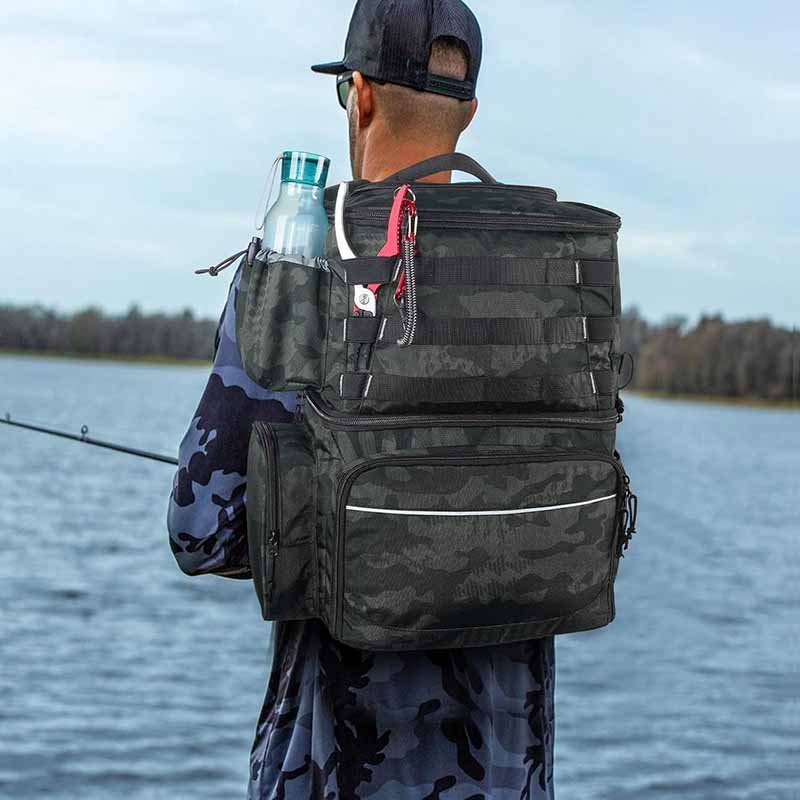
Fishing bags don’t get “wet” in a gentle way—they get punished. A tackle bag sits on a soaked deck while waves splash over the side. A backpack gets dropped on muddy riverbanks. A soft cooler bag leaks a little, and that water slowly creeps into everything nearby. Most anglers don’t complain about the bag being “not waterproof” in general. They complain about one very specific failure: the bottom panel.
Here’s why the bottom is the first problem area: it takes the full load of the bag (often 8–20 kg when packed), it touches the wet surface for the longest time, and it gets scraped by sand, gravel, concrete, and boat flooring. Once the bottom panel starts to absorb water or crack, the bag can develop three issues customers hate:
- wet gear and rust (hooks, pliers, reels)
- moldy odor (wet/dry cycles inside a closed bag)
- bottom wear-through (holes at corners and seams)
To build waterproof bottom panels on fishing bags, manufacturers usually combine a water-blocking outer layer (TPU-coated fabric, PVC tarpaulin, rubberized EVA, or neoprene), a structure layer (EVA/HDPE board or molded base), and a sealing method (binding + seam tape or hot-air welding). The best designs reinforce corners, raise the base off the ground, and add anti-slip texture to prevent abrasion and standing water.
One brand once fixed a “leaking bag” complaint without changing the body fabric at all—by upgrading only the bottom: adding a raised EVA base + taped seams. Returns dropped because water stopped entering from below. That’s the real lesson: the bottom panel decides whether the bag feels premium or disposable.
What Are Waterproof Bottom Panels on Fishing Bags?
A waterproof bottom panel on fishing bags is a base construction system designed to stop water coming in from the ground up, while also resisting abrasion and load pressure. It’s not just “a thicker fabric.” A serious bottom panel usually includes (1) a waterproof outer skin, (2) reinforcement and structure, and (3) a seam strategy that prevents leakage.
If your fishing bag sits on a wet dock for 30 minutes, the bottom panel is basically acting like a “floor.” If that floor absorbs water, water will eventually migrate inside through stitch holes, seams, and edge gaps.
What Are Waterproof Bottom Panels?
Think of waterproof bottom panels as a mini-boot for the bag. The goal is to create a base that is:
- Water-blocking (no soaking from wet surfaces)
- Abrasion-resistant (doesn’t wear through quickly)
- Shape-stable (doesn’t collapse under load)
- Easy to clean (wipes down after mud or fish slime)
In real manufacturing, waterproof bottom panels on fishing bags commonly use one of these base types:
| Bottom Panel Type | What It Looks Like | Main Advantage | Common Weak Point |
|---|---|---|---|
| Coated fabric base | soft base, coated outside | light weight, lower cost | seams can leak if not sealed |
| Tarpaulin wrap base | “rubbery” wrap under bag | strong water blocking | edge folding & cracking if poorly made |
| Molded EVA base | hard or semi-hard bottom “shell” | best against water + abrasion | higher tooling cost |
| Board-insert base (HDPE/EVA board) | structured flat base | good shape, low tooling | water can enter through stitching |
Most premium fishing bags use a hybrid: coated fabric + structure board + reinforcement patches.
Why Do Fishing Bags Need Waterproof Bottom Panels?
Customers don’t buy fishing bags to keep the bag dry—they buy fishing bags to keep their gear dry, clean, and non-rusted. The bottom is where moisture enters first and stays the longest.
Real problems caused by weak bottom panels
When the bottom panel is not waterproof (or not sealed properly), brands usually see these complaints:
- “My tackle boxes were wet even though it didn’t rain hard.”
- “The bag smells bad after a few trips.”
- “The bottom wore out / got pinholes.”
- “The seams leaked near the bottom corners.”
What’s happening physically
Fishing environments create a “wet pressure zone” under the bag:
- Standing water under the bag increases soak time
- Weight pressure pushes water through needle holes and seam gaps
- Abrasion thins the fabric faster in the same wet areas
A good bottom panel solves this by blocking water and reducing wear at the same time.
Bottom panel design goals (what customers actually want)
If you’re designing a fishing bag for real users, your bottom panel needs to hit these targets:
| Customer Expectation | What the Bottom Panel Must Do |
|---|---|
| Keep gear dry | stop water coming from below |
| No smell | prevent moisture retention inside base area |
| Long life | resist scraping and corner wear |
| Easy cleaning | wipe down mud, fish slime, salt water |
| Stable on boat floor | add anti-slip texture or feet |
Which Parts of Fishing Bags Get Wet Most?
If you map a fishing bag after a day outdoors, moisture is not evenly distributed. The bottom zone and lower side zones do most of the “work.”
Wet exposure zones on fishing bags
| Area | Wet Exposure | Why |
|---|---|---|
| Bottom panel | Very high | direct contact with wet surfaces |
| Bottom corners | Very high | abrasion + bending + seam stress |
| Lower side panels (0–8 cm up) | High | splash + capillary wicking |
| Zipper tracks near base | Medium | water runs down and pools |
| Top panel | Low | brief rain contact only |
This is why experienced factories don’t just build a waterproof base—they also protect the lower side wall (“boot construction”) to stop water creeping in from the edges.
A practical “boot height” guideline
Many brands reinforce the lower side panel by 5–10 cm above the base line:
- 5 cm: good for light splash and wet grass
- 8–10 cm: better for boat decks, heavy splash, muddy banks
This small design change prevents water from entering through the side seams when the bag sits in shallow puddles.
What a Good Waterproof Bottom Panel Usually Includes
A bottom panel that performs well in the market usually combines:
- Water-blocking skin: TPU-coated fabric / PVC tarpaulin / neoprene / EVA
- Structure: EVA board or HDPE board to stop sagging
- Corner reinforcement: extra layers at 4 corners
- Edge sealing: binding + seam tape, or welded seams
- Anti-slip contact: textured base, rubber feet, or molded pattern
Recommended baseline construction (for mid- to high-end fishing bags)
| Layer / Part | Recommended Option |
|---|---|
| Outer base skin | TPU-coated nylon or PVC tarpaulin |
| Structure board | 2.0–3.0 mm EVA board or HDPE sheet |
| Reinforcement | double layer at corners |
| Sealing method | seam tape or hot-air welding (where possible) |
| Anti-slip | rubberized print, textured tarpaulin, or EVA pattern |
Which Materials Build Waterproof Bottom Panels on Fishing Bags?
Waterproof bottom panels on fishing bags are typically built using materials such as TPU-coated fabrics, PVC tarpaulin, neoprene, molded EVA bases, or reinforced nylon fabrics with waterproof coatings. Each material offers different advantages in abrasion resistance, flexibility, weight, and cost. The best fishing bag designs usually combine a waterproof outer layer with structural reinforcement to prevent water penetration and extend the bag’s lifespan.
Which Fabrics Work for Fishing Bags Bottom Panels?
Fishing bags require fabrics that can withstand constant moisture, friction, and weight pressure. Unlike backpacks used for commuting, fishing bags often sit directly on wet surfaces for extended periods.
Because of this, standard fabrics like lightweight polyester or thin nylon are rarely used for bottom panels in quality fishing bags.
The most common waterproof fabrics used for fishing bag bases include:
| Material | Water Resistance | Abrasion Resistance | Flexibility | Common Use |
|---|---|---|---|---|
| TPU-coated nylon | very high | high | flexible | premium fishing bags |
| PVC tarpaulin | extremely high | very high | medium | heavy-duty tackle bags |
| neoprene | high | medium | very flexible | soft fishing bags |
| PU-coated nylon | medium-high | medium | flexible | lightweight bags |
TPU-coated fabrics
TPU (thermoplastic polyurethane) coated fabrics are widely used in modern outdoor gear.
Advantages include:
- excellent waterproof performance
- flexible texture
- good resistance to cracking in cold weather
- relatively lightweight
TPU coatings also bond well with seam sealing processes, which helps improve waterproof construction.
These fabrics are commonly used in premium waterproof backpacks and fishing bags.
PVC tarpaulin fabrics
PVC tarpaulin fabrics are among the most durable waterproof materials available.
They are typically constructed with:
- polyester reinforcement layer
- thick PVC coating
- textured waterproof surface
PVC tarpaulin is often used in:
- dry bags
- marine equipment bags
- heavy-duty tackle bags
Advantages include:
- extremely high water resistance
- strong abrasion resistance
- easy cleaning
However, PVC fabrics tend to be heavier and stiffer than TPU fabrics.
Neoprene fabrics
Neoprene is another useful material for fishing bag construction, particularly when comfort and flexibility are important.
Neoprene offers:
- natural water resistance
- cushioning effect
- flexible texture
- thermal insulation
Many fishing bags combine neoprene panels with reinforced bottom bases.
For example:
| Panel Area | Material Choice |
|---|---|
| main body | neoprene |
| bottom panel | EVA base + waterproof fabric |
| reinforcement patches | nylon or TPU |
This combination creates a soft yet durable bag suitable for frequent outdoor use.
How Do Manufacturers Build Waterproof Bottom Panels on Fishing Bags?
Manufacturers build waterproof bottom panels by combining waterproof fabrics, structural reinforcement layers, and sealed seams. Common construction methods include reinforced stitching with seam tape, hot-air welded seams, molded EVA bases, and protective corner patches. These techniques ensure the bottom panel resists water penetration while maintaining strength and shape under heavy loads.
How Are Waterproof Bottom Panels Sewn on Fishing Bags?
The most common construction method for fishing bags still involves traditional sewing combined with waterproof reinforcement techniques.
Basic sewing alone is not enough because needle holes allow water to pass through the fabric.
To prevent leakage, manufacturers usually combine sewing with additional protection methods.
Typical construction process:
- Cut bottom panel fabric
- Attach reinforcement board or padding
- Sew bottom panel to bag body
- Apply seam binding or seam tape
- Add corner reinforcement patches
Example construction structure
| Layer | Material |
|---|---|
| outer waterproof fabric | TPU or PVC tarpaulin |
| reinforcement board | EVA or HDPE |
| seam protection | seam tape or binding |
| lining fabric | nylon or polyester |
This layered structure improves both waterproof performance and structural stability.
Do Welded Seams Improve Waterproof Bottom Panels?
Welding technology is becoming increasingly popular in waterproof bag manufacturing.
Instead of sewing fabric pieces together, welding uses heat and pressure to fuse materials.
Two common welding methods are used in fishing bags:
- high-frequency welding
- hot-air welding
Advantages of welded seams include:
- no needle holes
- improved waterproof integrity
- cleaner seam appearance
However, welding is only possible with certain materials such as:
- TPU-coated fabrics
- PVC tarpaulin fabrics
Neoprene and standard nylon fabrics typically require sewing.
How Do Reinforcements Strengthen Fishing Bags Bottom Panels?
Fishing bags often carry heavy gear such as:
- tackle boxes
- fishing reels
- pliers and tools
- spare line spools
Total bag weight can easily reach 10–20 kg.
Without reinforcement, the bottom panel may deform or tear under this load.
Common reinforcement techniques include:
| Reinforcement Method | Function |
|---|---|
| EVA board insert | improves shape retention |
| HDPE plastic plate | distributes load pressure |
| corner reinforcement patches | protects wear points |
| double-layer fabric | increases abrasion resistance |
Raised bottom designs
Some fishing bags include raised base structures that lift the bag slightly above the ground.
Benefits include:
- reduced water contact
- improved airflow
- lower abrasion exposure
These bases may include molded rubber feet or EVA ridges.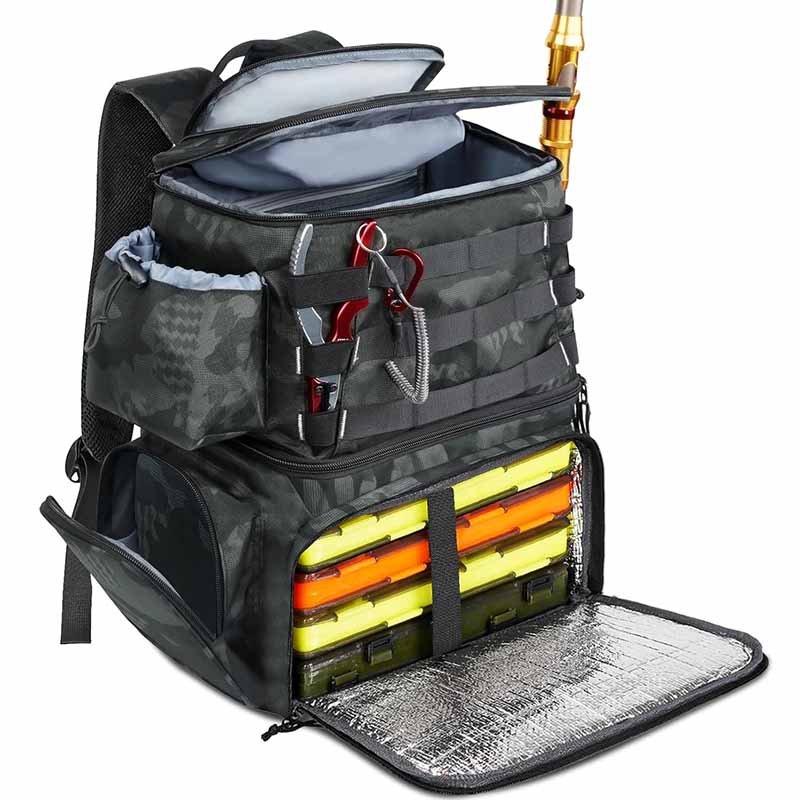
Material Selection Example for Fishing Bag Bottom Panels
A typical fishing bag bottom panel used in mid-to-high-end products might include:
| Component | Material |
|---|---|
| outer waterproof layer | TPU-coated nylon |
| reinforcement board | 3 mm EVA board |
| abrasion layer | PVC tarpaulin patch |
| seam protection | seam tape |
| interior lining | 210D nylon |
This structure provides waterproof protection, durability, and load stability.
Why Many Fishing Bag Brands Use Multi-Layer Bottom Panels
A single fabric layer rarely provides enough protection for fishing gear bags.
Multi-layer construction allows designers to combine the strengths of different materials.
Benefits include:
- better waterproof performance
- increased abrasion resistance
- improved structural support
- longer product lifespan
This approach is widely used in professional outdoor gear.
Manufacturers like Szoneier, with expertise in neoprene materials and custom bag manufacturing, often develop hybrid constructions that combine neoprene panels, reinforced waterproof bases, and molded structural components to achieve better durability and user comfort.
Which Waterproof Bottom Panels Designs Work for Fishing Bags?
The most effective waterproof bottom panels for fishing bags combine durable materials, reinforced structures, and raised base designs. Popular solutions include molded EVA bases, reinforced tarpaulin panels, and multi-layer fabric constructions. These designs prevent water penetration, improve abrasion resistance, and support heavy loads, helping fishing bags stay dry and durable during frequent outdoor use.
Are Molded Bottom Panels Good for Fishing Bags?
Molded bottom panels are widely used in modern fishing tackle bags because they provide both waterproof protection and structural support.
Unlike standard fabric bases, molded panels are shaped components that form a semi-rigid shell at the bottom of the bag. These panels are usually made from materials such as:
- EVA (ethylene vinyl acetate)
- molded rubber compounds
- reinforced plastic composites
Advantages of molded bottom panels
| Benefit | Explanation |
|---|---|
| improved waterproof protection | molded surfaces prevent water absorption |
| stronger abrasion resistance | thicker base protects against rough surfaces |
| improved bag stability | flat base keeps bag upright |
| easier cleaning | smooth surface wipes clean easily |
Fishing environments often involve sand, saltwater, and fish residue, which can damage fabric over time. Molded bases help protect the bag from these conditions.
Another advantage is shape retention. Even when the bag is empty, molded bases help maintain structure, making it easier for anglers to access gear.
Typical molded base specifications
| Parameter | Common Range |
|---|---|
| EVA thickness | 2–5 mm |
| base hardness | 45–60 Shore |
| base height | 10–25 mm |
These specifications provide enough strength to support heavy loads while maintaining flexibility.
How Do Raised Bottom Panels Keep Fishing Bags Dry?
Raised bottom panels are another effective solution used by many fishing gear brands.
Instead of allowing the bag to sit directly on wet surfaces, the base is designed to lift the bag slightly above the ground.
Common raised bottom designs
| Design Type | Description |
|---|---|
| molded ridges | raised patterns molded into the base |
| rubber feet | small pads attached to the bottom |
| EVA base frame | raised outer edge around the base |
These designs create a small air gap between the bag and the ground, which reduces water contact.
Advantages of raised bases
Raised bases help fishing bags perform better in several ways:
Reduced water contact
The bag is less likely to sit directly in puddles or wet surfaces.
Better airflow
Air circulation under the bag helps moisture dry faster.
Reduced abrasion
The raised edges absorb friction instead of the fabric.
Example raised base construction
| Component | Material |
|---|---|
| outer base shell | molded EVA |
| reinforcement board | HDPE sheet |
| bottom feet | rubber pads |
| edge reinforcement | PVC patch |
This type of structure is commonly used in premium tackle bags designed for boat fishing or coastal environments.
Which Fishing Bags Use Hard Bottom Panels?
Hard bottom panels are often used in large tackle bags and equipment storage bags.
These panels are typically built with rigid materials such as:
- HDPE plastic plates
- reinforced EVA boards
- composite base structures
Hard bases distribute weight evenly across the bag and prevent the bottom from sagging when carrying heavy gear.
Advantages of hard bottom designs
| Advantage | Explanation |
|---|---|
| load support | prevents bag deformation |
| improved durability | reduces fabric strain |
| better gear organization | stable base keeps tackle boxes upright |
Fishing bags carrying multiple tackle boxes can easily reach 15–20 kg in weight. Without a rigid base, the bag may sag and stress the seams.
Hard bottom panels help prevent this problem.
However, rigid bases also increase weight slightly. Designers must balance durability with portability when choosing materials.
How Do Brands Customize Waterproof Bottom Panels on Fishing Bags?
Brands customize waterproof bottom panels on fishing bags by selecting appropriate materials, reinforcement structures, and construction methods based on product positioning and usage environments. Customization may include molded EVA bases, reinforced tarpaulin panels, neoprene constructions, and sealed seams. These design choices help ensure fishing bags remain waterproof, durable, and comfortable for anglers.
How Do Brands Choose Fishing Bags Bottom Materials?
Fishing bag designers usually begin by evaluating the intended use environment.
Important considerations include:
- freshwater fishing vs saltwater fishing
- bank fishing vs boat fishing
- light tackle vs heavy equipment
These factors determine how durable the bottom panel needs to be.
Material selection guidelines
| Use Scenario | Recommended Bottom Material |
|---|---|
| lightweight fishing bags | TPU-coated nylon |
| soft fishing backpacks | neoprene + reinforced base |
| medium tackle bags | PVC tarpaulin |
| heavy-duty gear bags | molded EVA base |
Choosing the correct material improves both product performance and user satisfaction.
Which Features Improve Waterproof Fishing Bags?
In addition to the base material, several other design features improve waterproof performance.
Important features include:
- seam sealing or welding
- reinforced corner patches
- raised base structures
- waterproof zippers
- durable lining fabrics
These components work together to create a more reliable fishing bag.
Waterproof design checklist
| Feature | Function |
|---|---|
| seam tape | blocks water at stitching holes |
| waterproof coating | prevents fabric absorption |
| reinforced corners | protects high-wear areas |
| raised base | reduces ground contact |
| waterproof zipper | protects top opening |
When these features are combined effectively, the bag can provide excellent water resistance even in harsh outdoor conditions.
How Do OEM Factories Develop Fishing Bags?
Many fishing gear brands rely on specialized manufacturers to develop custom products.
OEM manufacturers typically support several development stages:
- product concept and design
- material selection
- prototype development
- testing and refinement
- mass production
Working with experienced manufacturers allows brands to optimize both performance and production efficiency.
Why Work With Szoneier for Custom Fishing Bags?
Szoneier is a Chinese manufacturer with over 18 years of experience specializing in neoprene materials and custom bag production.
Szoneier offers comprehensive support for global customers.
With extensive experience in neoprene and waterproof materials, Szoneier helps brands develop fishing bags that combine durability, comfort, and waterproof performance.
Start Your Custom Fishing Bag Project
Designing a fishing bag that truly performs in wet outdoor environments requires careful attention to materials, structure, and manufacturing techniques.
Waterproof bottom panels play a crucial role in protecting fishing gear from moisture while ensuring long-term durability.
If you are planning to develop a new fishing bag line, working with an experienced manufacturer can help you achieve better product performance and faster production timelines.
Szoneier works with global brands, outdoor equipment companies, and e-commerce sellers to develop custom neoprene fishing bags and waterproof gear products.
Whether you need:
- custom fishing tackle bags
- neoprene fishing gear bags
- waterproof outdoor bags
- private label fishing products
the Szoneier team can help turn your concept into a production-ready product.
Contact Szoneier today to discuss your custom fishing bag project and product development needs.