 Skip to content
Key Questions to Ask a Waterproof Dry Bags Supplier Before Sampling
- Eric
- February 18, 2026
- 2:49 pm
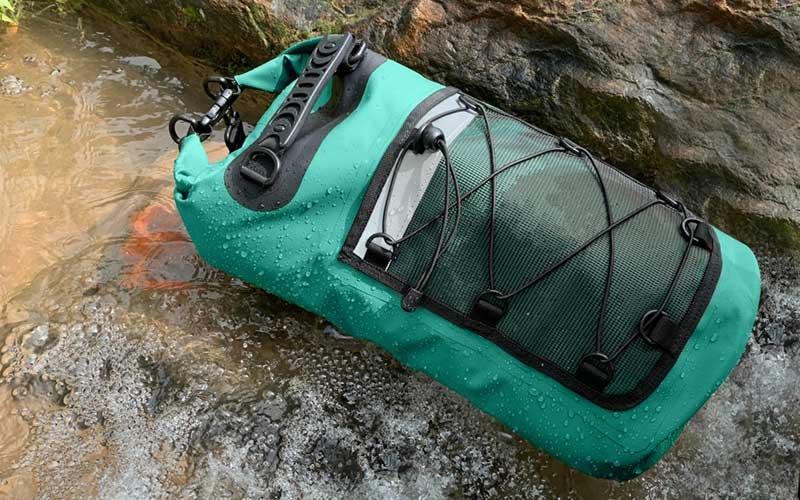
Sourcing waterproof dry bags looks simple on the surface. A factory shows photos, offers a low price, and promises fast sampling. Yet many buyers discover real problems only after samples arrive—or worse, after bulk production ships. Bags may leak at seams, smell strongly of PVC, crack in cold weather, or fail buckle stress tests. These issues are rarely caused by bad luck. They usually come from missing the right questions before sampling begins.
The key questions to ask a waterproof dry bags supplier before sampling focus on five risk areas: waterproof performance level, material structure, seam construction, closure reliability, and production quality control. Confirming these factors early prevents leakage failures, material defects, unstable lead times, and unexpected costs during mass production.
Professional buyers in outdoor, marine, and promotional markets treat sampling not as a formality, but as a risk-reduction checkpoint. The right questions reveal whether a supplier truly controls materials, welding, and inspection—or is simply reselling standard products. Understanding these questions before the first prototype is made can save months of delay and thousands in replacement costs. And in global sourcing, that difference often defines whether a product launch succeeds or stalls.
What Are the Key Questions to Ask a Waterproof Dry Bags Supplier Before Sampling?
The key questions to ask a waterproof dry bags supplier before sampling are the ones that confirm real waterproof performance, durable structure, safe materials, realistic pricing, and reliable production control—before any prototype is made.
Asking these questions early helps buyers avoid the most common sourcing problems: leaking seams, brittle fabric in cold weather, unstable lead times, and bulk quality that does not match the approved sample.
In real purchasing projects, the difference between a smooth launch and a costly delay usually comes down to how clearly these questions are answered before sampling begins.
Why These Key Questions Matter in Real Purchasing Decisions
Many buyers focus on visible details such as bag color, logo size, or quoted unit price.
However, field failures almost never come from appearance.
They come from hidden technical factors that were never verified during early communication.
Typical problems reported by importers and outdoor brands include:
- water leakage after light rain or splashing
- seam cracking during folding in cold environments
- strong plastic odor affecting retail perception
- buckle breakage under normal load
- bulk production quality lower than the approved sample
Each of these issues can usually be traced back to missing technical questions before sampling.
Real-world sourcing risks when questions are skipped
| Risk category | What happens in production | Cost to the buyer |
|---|---|---|
| Waterproof level unclear | Bags leak during outdoor use | Returns and refunds |
| Material quality unstable | Odor, stickiness, or cracking | Brand reputation damage |
| Seam structure weak | Splitting after short use | Replacement and warranty cost |
| MOQ misunderstanding | Inventory pressure or price change | Cash-flow stress |
| QC process missing | Defects discovered after shipment | Rework or write-off |
Because these risks directly affect profit and customer trust, experienced buyers treat pre-sampling questions as a financial protection step, not just a technical discussion.
The Five Core Question Areas Every Buyer Should Cover
Although dry bags vary in size and design, the most important questions usually fall into five technical categories.
Covering all five gives a clear picture of whether a supplier can support real outdoor performance and stable bulk production.
1. Waterproof performance level
Buyers should confirm:
- whether the bag is splash-proof, rain-proof, or fully submersible
- how waterproof performance is tested or measured
- whether seams and closure are tested together, not separately
Without this clarity, the word waterproof can mean very different things in real use.
2. Material structure and durability
Material questions should cover:
- fabric type (PVC, TPU, coated nylon, etc.)
- thickness or density range
- resistance to cold cracking, UV aging, and odor
- expected lifespan under normal outdoor use
These details determine whether the bag will perform for months or years.
3. Seam construction method
Because seams are the most common leakage point, buyers should ask:
- whether seams are stitched, taped, or welded
- what welding technology is used
- whether seam strength is tested mechanically
- how seam quality is controlled during mass production
Strong fabric alone cannot prevent leakage if seam bonding is weak.
4. Closure and hardware reliability
Closures and buckles must function repeatedly in wet, sandy, or cold environments.
Important confirmations include:
- roll-top sealing effectiveness
- zipper waterproof capability (if used)
- buckle material strength and corrosion resistance
- strap load-bearing capacity
Hardware failure is one of the fastest ways to create negative customer reviews.
5. MOQ, sampling, and quality control system
Commercial success depends on production reality, not just design.
Buyers should clarify:
- MOQ by color, logo, and size mix
- sample development time and revision policy
- inspection standards used before shipment
- consistency between sample and bulk production
These operational questions often determine whether a project is profitable or risky.
How Clear Questions Change the Sampling Outcome
When buyers ask only general questions, suppliers often respond with general promises.
But when questions include measurable details, communication becomes far more reliable.
Weak vs strong pre-sampling questioning
| Topic | Weak question | Strong question |
|---|---|---|
| Waterproof claim | “Is it waterproof?” | “What hydrostatic or leakage test confirms this?” |
| Material quality | “Is TPU used?” | “What thickness and cold-resistance rating does the TPU have?” |
| Seam durability | “Are seams strong?” | “What peel or tensile strength test is performed?” |
| MOQ | “What is your MOQ?” | “MOQ per color, logo, and size mix?” |
| QC | “Do you inspect goods?” | “What AQL level and leak testing are applied?” |
Clear, technical questions reduce uncertainty and allow buyers to compare suppliers objectively, not emotionally.
The Real Purpose Behind These Questions
At a deeper level, the key questions to ask a waterproof dry bags supplier before sampling are not only about the product.
They are about identifying whether the supplier has:
- stable material sourcing
- controlled welding technology
- disciplined quality inspection
- transparent communication
In other words, the questions reveal whether the factory can support a long-term business partnership, not just deliver a single sample.
And in global sourcing, that distinction is often what separates reliable growth from repeated production problems.
Which Materials Are in the Key Questions to Ask a Waterproof Dry Bags Supplier Before Sampling?
Material selection is one of the most important parts of the key questions to ask a waterproof dry bags supplier before sampling, because the fabric determines not only waterproof ability, but also flexibility, odor level, cold resistance, durability, weight, and long-term customer satisfaction.
Many dry bag failures that appear to be “seam” or “closure” problems actually begin with unsuitable or unstable material choice.
Before approving any prototype, buyers should clearly understand what material is used, how thick it is, how it behaves in different climates, and how long it is expected to last in real outdoor conditions.
Why Material Questions Matter More Than Appearance
In early sourcing conversations, attention often goes to:
- color matching
- logo printing
- bag shape or size
- quoted unit price
However, these visual factors rarely cause product failure.
Real complaints usually relate to material performance after weeks or months of use.
Typical field problems linked to poor material selection include:
- fabric cracking in winter temperatures
- sticky surface after storage in hot climates
- strong plastic odor affecting retail display
- coating peeling after repeated folding
- abrasion holes from sand or rocks
Each of these issues can usually be traced back to insufficient material verification before sampling.
Real-world impact of incorrect material choice
| Material issue | What customers experience | Business consequence |
|---|---|---|
| Low cold resistance | Fabric cracks during outdoor trips | Returns and negative reviews |
| Weak abrasion strength | Holes after short use | Warranty replacement cost |
| Strong odor | Poor retail perception | Reduced sales conversion |
| Coating instability | Peeling or delamination | Brand reputation damage |
Because these risks directly affect profit and brand trust, experienced buyers treat material confirmation as a primary checkpoint, not a minor detail.
Core Fabric Types Buyers Should Compare
Most commercial waterproof dry bags are made from PVC tarpaulin or TPU-coated fabric, but their real performance differs in several important ways.
PVC vs TPU performance comparison
| Property | PVC Tarpaulin | TPU-Coated Fabric |
|---|---|---|
| Relative cost | Lower | Higher |
| Flexibility in cold | Medium to low | High |
| Surface odor | Noticeable in some batches | Minimal |
| Abrasion resistance | Good | Very good |
| Environmental perception | Lower | Higher |
| Typical product level | Promotional / entry | Outdoor / premium |
PVC remains common because of cost efficiency and easy welding, while TPU is increasingly chosen for outdoor sports, marine gear, and higher-end retail where flexibility and odor control matter more.
The correct choice depends on:
- target retail price
- usage environment (casual vs extreme outdoor)
- expected product lifespan
rather than simple marketing preference.
How Thickness and Density Affect Real Performance
Beyond material type, thickness strongly influences durability, stiffness, and weight.
Buyers should confirm the actual millimeter thickness or GSM, not just general descriptions like “heavy duty.”
Common thickness ranges in dry bag production
| Use scenario | Typical thickness | Performance balance |
|---|---|---|
| Lightweight day trips | 0.30–0.40 mm | light weight, moderate durability |
| Standard outdoor use | 0.45–0.60 mm | balanced strength and flexibility |
| Heavy rafting or marine | 0.60–0.90 mm | high durability, higher weight |
Choosing thickness is always a trade-off:
- thicker fabric → longer life but heavier and more expensive
- thinner fabric → lighter and cheaper but shorter lifespan
Matching thickness to real customer usage is more important than choosing the thickest option.
Coating Quality and Long-Term Stability
Even when base fabric is correct, coating formulation can determine whether a dry bag lasts months or years.
Key coating performance factors include:
- resistance to UV aging in sunlight
- tolerance to repeated folding stress
- stability in high heat or freezing temperatures
- surface feel that avoids stickiness or powdering
Signs of unstable coating in real use
| Symptom | Likely cause |
|---|---|
| Sticky surface in hot storage | plasticizer migration or low-grade coating |
| Cracking in cold weather | insufficient cold-flex formulation |
| Color fading outdoors | weak UV resistance |
| Layer separation | poor adhesion between coating and base fabric |
Because these issues appear after sale, they can create serious brand reputation damage if not controlled during sourcing.
Odor, Safety, and Retail Acceptance
Material odor is often underestimated in factory discussions but highly noticeable to customers.
Strong chemical smell can:
- reduce perceived product quality
- create complaints in enclosed retail spaces
- affect suitability for children’s or lifestyle markets
Buyers frequently request:
- low-odor PVC formulation
- TPU with reduced volatile compounds
- confirmation of basic safety or chemical compliance depending on destination market
These checks are especially important for:
- e-commerce brands
- gift or promotional products
- family or youth outdoor markets
where first impression strongly affects reviews.
Abrasion Resistance and Real Outdoor Durability
Dry bags are often used in sand, rocks, boats, or rough ground, making abrasion resistance critical.
Durability expectation by environment
| Usage environment | Minimum durability need |
|---|---|
| Casual beach or pool | moderate abrasion resistance |
| Hiking or camping | high abrasion resistance |
| Rafting or marine | very high abrasion resistance |
Selecting material below the required level may still pass factory inspection, but will fail during real outdoor use, leading to costly replacements.
How Do Seams Affect the Key Questions to Ask a Waterproof Dry Bags Supplier Before Sampling?
Seam construction is one of the most decisive factors in the key questions to ask a waterproof dry bags supplier before sampling, because seams are the most common real-world failure point for leakage, tearing, and long-term durability loss.
Even when fabric quality is high, poor seam bonding or weak welding control can allow water to enter after only a short period of outdoor use.
For buyers, this means seam verification is not a minor technical detail—it is a direct protection against product returns, warranty costs, and negative customer feedback.
Why Seam Quality Determines Real Waterproof Performance
In waterproof products, the fabric surface is usually continuous and reliable.
Water entry almost always happens at structural transitions, especially:
- welded seams
- folded corners
- roll-top attachment areas
- zipper or buckle connection points
Because seams combine heat, pressure, material overlap, and operator control, they introduce more variability than flat fabric.
Real leakage sources found in field complaints
| Failure location | Root cause | Customer experience |
|---|---|---|
| Straight welded seam | insufficient bonding temperature | slow water seepage |
| Seam edge splitting | narrow overlap width | sudden leakage under load |
| Corner weld cracking | stress concentration during folding | bag unusable after bending |
| Stitch holes without sealing | incomplete tape or coating | immediate leakage |
These failures often appear after several uses, which is why seam questions must be asked before sampling, not after shipment.
Seam Construction Methods and Their Practical Differences
Different dry bag price levels and usage environments rely on different seam technologies.
Understanding these methods helps buyers match construction quality to real outdoor expectations.
Common seam types in commercial dry bags
| Seam method | Waterproof reliability | Durability level | Typical market use |
|---|---|---|---|
| Stitched only | Low | Low | decorative or dust-proof bags |
| Stitched + tape | Medium | Medium | entry-level waterproof use |
| High-frequency welded | High | High | standard outdoor dry bags |
| Hot-air welded TPU | Very high | Very high | premium sports and marine gear |
| Double-weld reinforcement | Extremely high | Extremely high | rafting or rescue equipment |
Two suppliers may both claim “welded seams,” yet actual durability can differ greatly depending on:
- temperature calibration
- pressure consistency
- overlap width
- cooling control
These process details strongly influence long-term waterproof performance.
Mechanical Strength and Fatigue Resistance of Seams
Waterproof ability alone is not enough.
Seams must also survive repeated bending, pulling, and load stress during real use.
Typical stress conditions include:
- rolling and unrolling the bag opening
- carrying heavy gear inside
- folding the bag during transport
- exposure to temperature changes
Key seam strength indicators buyers should confirm
| Test type | What it evaluates | Why it matters in real use |
|---|---|---|
| Peel strength | resistance to weld separation | predicts seam lifespan |
| Tensile strength | resistance to pulling force | prevents tearing under load |
| Flex fatigue test | durability after repeated folding | shows cold-weather reliability |
| Hydrostatic leak test | water resistance at seam line | confirms true waterproof level |
Without these tests, a sample may look perfect visually but still fail during extended outdoor exposure.
Environmental Stress and Long-Term Seam Aging
Outdoor dry bags face conditions far beyond factory inspection environments.
Temperature, sunlight, saltwater, and sand all influence seam longevity.
Environmental factors affecting seam durability
| Condition | Impact on seam performance |
|---|---|
| Low temperature | weld becomes brittle and cracks |
| High heat storage | coating softens and weakens bond |
| UV exposure | gradual material degradation |
| Saltwater contact | accelerates aging in some coatings |
| Sand abrasion | wears protective seam edges |
These effects explain why seams that pass short laboratory tests may still fail after months of real outdoor use.
For this reason, experienced buyers often request:
- cold-flex testing confirmation
- UV aging resistance data
- repeated folding cycle results
before approving sampling.
Common Seam Failures Seen After Market Launch
Understanding real failure patterns helps buyers ask more targeted questions.
Frequent post-sale seam complaints
| Complaint type | Typical technical cause | Business consequence |
|---|---|---|
| Gradual water seepage | weak weld bonding | product returns |
| Sudden seam split | insufficient overlap or pressure | warranty replacement |
| Crack in winter use | poor cold-flex material | negative reviews |
| Delamination near fold | unstable coating adhesion | brand reputation damage |
Because these failures appear after customer purchase, prevention must happen during supplier evaluation, not after sales begin.
Practical Seam Questions Buyers Should Always Ask Before Sampling
To reduce risk, buyers should clearly confirm:
- Which welding technology is used for seams
- Overlap width and reinforcement design at stress areas
- Mechanical strength testing results for recent production
- Cold-temperature flexibility performance
- Leakage testing method and acceptance standard
- Quality control checks during mass production
These questions shift sourcing decisions from appearance-based judgment to performance-based verification.
What Seam Quality Reveals About the Supplier
Seam performance is not only about equipment—it reflects the supplier’s overall capability, including:
- process control discipline
- worker training consistency
- inspection standards
- willingness to share technical data
A supplier who cannot clearly explain seam construction may also struggle with:
- material stability
- waterproof reliability
- consistent bulk quality
For this reason, seam evaluation is often one of the strongest early indicators of manufacturing reliability.
What Closures and Hardware Fit the Key Questions to Ask a Waterproof Dry Bags Supplier Before Sampling?
Closures and hardware are critical parts of the key questions to ask a waterproof dry bags supplier before sampling, because even perfectly welded seams and high-grade fabric cannot keep water out if the opening seal, buckle system, or load-bearing parts fail during real outdoor use.
In field complaints, leakage and breakage are often traced not to the body fabric, but to roll-top sealing mistakes, weak buckles, corroded metal parts, or stretched webbing.
For buyers, this means closures and hardware should be evaluated with the same seriousness as material and seam construction, since these components directly influence waterproof reliability, carrying safety, and long-term durability.
Why Closure Design Determines Real Waterproof Protection
Water usually enters a dry bag through the top opening, not through the fabric surface.
This makes closure structure the final barrier between gear and water.
Typical real-world stress on closures includes:
- repeated rolling and unrolling during daily use
- compression inside backpacks or boats
- sand, saltwater, and UV exposure
- pulling force from shoulder straps
If the closure loses sealing pressure or alignment, even a small gap can allow slow moisture penetration, which customers often notice only after gear becomes damp.
Common leakage paths related to closures
| Leakage point | Root cause | User outcome |
|---|---|---|
| Roll-top fold channel | insufficient roll turns or soft fabric edge | gradual water seepage |
| Buckle misalignment | uneven tension across opening | partial sealing failure |
| Zipper tooth gap | contamination or wear | direct water entry |
| Stitching near closure | unsealed needle holes | immediate leakage |
Because these problems are structural, not cosmetic, they must be verified before sampling approval.
Roll-Top Closures and Their Real Performance Differences
The roll-top system remains the most widely used waterproof closure because it combines:
- simple structure
- high sealing reliability
- low manufacturing cost
- easy user operation
However, roll-top effectiveness depends heavily on design precision and material stiffness, not just the concept itself.
Key roll-top design variables buyers should confirm
| Design factor | Influence on waterproofing | Risk if poorly controlled |
|---|---|---|
| Minimum roll count (usually ≥3) | blocks water channels | leakage during splashing |
| Edge reinforcement strip | maintains fold stiffness | seal loosens over time |
| Buckle position symmetry | distributes pressure evenly | uneven sealing |
| Fabric memory after folding | keeps roll tight | opening gradually relaxes |
Low-cost products often reduce reinforcement thickness or buckle strength to save cost, which may pass short inspection tests but fail after weeks of repeated use.
Waterproof Zippers: Convenience vs Reliability
Some premium dry bags replace roll-tops with waterproof zippers to allow faster access and a cleaner appearance.
While convenient, zipper systems introduce higher engineering complexity and cost.
Practical comparison: roll-top vs waterproof zipper
| Feature | Roll-Top Closure | Waterproof Zipper |
|---|---|---|
| Waterproof reliability | Very high when rolled correctly | High but depends on maintenance |
| Opening speed | Slower | Faster |
| Resistance to sand/salt | Strong | Sensitive to contamination |
| Manufacturing cost | Lower | Significantly higher |
| Long-term maintenance | Minimal | Requires cleaning/lubrication |
Because waterproof zippers rely on precision sealing surfaces, small particles or repeated bending can reduce performance.
For this reason, they are typically used only in:
- high-end outdoor gear
- diving or marine applications
- premium lifestyle waterproof products
Buyers should confirm zipper brand, cycle testing results, and replacement feasibility before sampling.
Buckles, Webbing, and Load-Bearing Hardware
Hardware strength directly affects carrying safety and closure stability.
Broken buckles or stretched straps are among the most common causes of negative customer reviews, even when waterproofing remains intact.
Critical hardware components in dry bags
| Component | Function in real use | Failure risk if weak |
|---|---|---|
| Side-release buckle | locks roll-top seal | sudden opening or drop |
| D-ring attachment | connects straps or gear | tearing under load |
| Shoulder strap hook | carries bag weight | breakage during transport |
| Webbing strap | distributes pulling force | stretching or snapping |
Outdoor environments increase stress through:
- UV exposure weakening plastic
- saltwater accelerating corrosion
- sand abrasion wearing contact points
Therefore, buyers should confirm material grade and mechanical testing for all load-bearing parts.
Corrosion Resistance and Environmental Durability
Marine and river use expose hardware to saltwater, humidity, and temperature change, which can degrade metals and plastics.
Environmental durability factors buyers should verify
| Condition | Hardware risk | Required protection |
|---|---|---|
| Saltwater exposure | metal corrosion | stainless or coated metal |
| Strong sunlight | plastic brittleness | UV-resistant polymers |
| Low temperature | buckle cracking | cold-impact-resistant resin |
| Sand abrasion | surface wear | reinforced contact design |
Ignoring these factors can cause hardware failure within months, even when waterproof fabric remains intact.
Functional Testing for Closures and Hardware
Visual inspection alone cannot confirm real durability.
Professional evaluation usually includes mechanical and environmental tests.
Common closure and hardware tests
| Test type | Purpose |
|---|---|
| Roll-cycle test | checks seal stability after repeated rolling |
| Buckle impact test | measures resistance to sudden force |
| Tensile load test | confirms strap strength under weight |
| Salt-spray test | evaluates corrosion resistance |
| Zipper cycle test | predicts long-term opening durability |
These tests simulate real outdoor stress, helping buyers detect weaknesses before mass production.
Practical Closure and Hardware Questions Buyers Should Ask Before Sampling
To reduce sourcing risk, buyers typically confirm:
- closure type and expected waterproof level
- buckle material and impact resistance rating
- webbing tensile strength and UV stability
- zipper durability and maintenance needs
- environmental testing performed on hardware
- inspection standards used during bulk production
Clear answers to these questions allow buyers to judge whether a supplier’s product is suitable for:
- casual outdoor use
- professional marine environments
- premium retail positioning
rather than relying on marketing descriptions.
What Closure and Hardware Quality Reveals About the Supplier
The reliability of closures and hardware often reflects a supplier’s broader capabilities, including:
- component sourcing standards
- durability testing discipline
- consistency across production batches
- willingness to provide measurable data
Suppliers who cannot clearly explain hardware strength or closure testing may also struggle with:
- seam durability
- waterproof verification
- long-term quality stability
For this reason, closure and hardware evaluation serves as another early indicator of manufacturing reliability.
How Do MOQ and QC Relate to the Key Questions to Ask a Waterproof Dry Bags Supplier Before Sampling?
Minimum order quantity (MOQ) and quality control (QC) are two of the most commercially important parts of the key questions to ask a waterproof dry bags supplier before sampling, because they directly determine real unit cost, inventory pressure, delivery reliability, and defect risk.
A dry bag sample may look perfect, but if MOQ structure is unclear or QC discipline is weak, the bulk order can still lead to overstock, delays, or large-scale product defects.
Why MOQ Clarity Matters Before Any Sample Is Made
Many sourcing discussions begin with a simple question:
“What is your MOQ?”
However, in real production, MOQ is rarely a single number. It usually changes depending on:
- fabric color or coating formulation
- logo printing or patch method
- buckle or accessory customization
- packaging requirements
- size combinations within one order
If these factors are not clarified early, buyers may approve a sample only to discover later that bulk production requires far higher quantities than expected.
Typical MOQ structure in waterproof dry bag production
| Variable | How it changes MOQ | Real purchasing impact |
|---|---|---|
| Standard stock color | Lower MOQ | easier trial order |
| Custom color matching | Higher MOQ | increased inventory risk |
| Simple logo print | Moderate MOQ | balanced branding cost |
| Molded logo patch or new buckle | Much higher MOQ | tooling investment needed |
| Retail box packaging | Higher MOQ | affects launch budget |
Because of this complexity, experienced buyers usually confirm five MOQ layers instead of one single number:
- MOQ per color
- MOQ per logo method
- MOQ per size combination
- MOQ for first order vs repeat order
- MOQ impact of custom hardware or packaging
How MOQ Influences Real Unit Price and Profit Margin
MOQ is closely linked to production efficiency and material purchasing volume, which directly affect price.
Relationship between order volume and unit cost
| Order volume | Production efficiency | Unit price trend |
|---|---|---|
| Very small trial | low efficiency | highest cost |
| Standard MOQ | balanced efficiency | stable pricing |
| Large bulk order | high efficiency | lowest unit cost |
If MOQ is misunderstood, two common business risks appear:
- ordering too little → unit price too high to compete in market
- ordering too much → unsold inventory ties up cash
Therefore, MOQ discussion is essentially a profit-planning step, not just a factory rule.
Why Sampling Timeline Reflects Production Capability
Sampling speed often reveals how organized and technically prepared a supplier really is.
Delays at the sampling stage frequently indicate:
- unstable material sourcing
- unclear production scheduling
- insufficient technical experience
- overloaded factory capacity
Typical sampling timeline for custom waterproof dry bags
| Development step | Common time range |
|---|---|
| Artwork confirmation | 1–3 days |
| Material preparation | 3–7 days |
| Sample production | 5–10 days |
| International shipping | 3–7 days |
Total development usually falls between 12 and 25 days, depending on complexity.
Buyers should also confirm:
- number of free revisions included
- whether new welding molds are required
- if material stock is already available
These details help estimate the true product launch schedule.
Why Quality Control Determines Bulk Order Success
Even when sampling is successful, bulk production can fail without structured QC management.
Many large losses in international sourcing come from:
- leakage discovered only after delivery
- inconsistent color between batches
- weak buckles in part of the shipment
- seam defects hidden inside packaging
These problems usually result from insufficient inspection discipline, not design flaws.
Core QC stages in professional dry bag manufacturing
| QC stage | What is checked | Risk prevented |
|---|---|---|
| Incoming material inspection | thickness, coating, color | unstable raw materials |
| In-process welding inspection | seam bonding quality | hidden leakage defects |
| Air or water pressure test | waterproof performance | field failure complaints |
| Load and buckle strength test | carrying safety | strap or buckle breakage |
| Final AQL inspection | overall defect rate | shipment rejection risk |
Without these steps, factories may rely only on visual checking, which cannot detect internal weaknesses.
Understanding AQL and Acceptable Defect Levels
Many buyers hear the term AQL (Acceptable Quality Limit) but do not fully connect it to real business risk.
Common AQL levels in bag production
| AQL level | Defect tolerance | Typical use scenario |
|---|---|---|
| AQL 4.0 | higher tolerance | low-cost promotional goods |
| AQL 2.5 | moderate tolerance | standard retail products |
| AQL 1.5 | strict control | premium outdoor brands |
Lower AQL means:
- fewer defective pieces shipped
- higher inspection cost
- better brand protection
Choosing the correct AQL level is therefore a balance between cost and reputation.
Batch Consistency and Repeat-Order Stability
Another overlooked question is whether future orders will match the approved sample.
Consistency depends on:
- stable raw-material suppliers
- repeatable welding parameters
- documented production standards
- traceable batch records
Signs of strong batch consistency control
| Indicator | What it suggests |
|---|---|
| Recorded welding settings | repeatable seam strength |
| Fixed material suppliers | stable color and coating |
| Lot tracking system | easier defect investigation |
| Pre-shipment inspection reports | transparent quality data |
Suppliers lacking these controls may deliver different quality in each order, even if the first sample is good.
Practical MOQ and QC Questions Buyers Should Ask Before Sampling
To reduce sourcing uncertainty, buyers usually confirm:
- detailed MOQ structure across color, size, logo, and packaging
- realistic sampling and production timeline
- QC checkpoints used during manufacturing
- AQL level applied before shipment
- consistency guarantee between sample and bulk
- process for handling defective or delayed orders
These questions turn supplier selection from a price comparison into a risk-management decision.
What MOQ and QC Reveal About the Supplier’s True Capability
Clear answers about MOQ and QC often reveal deeper operational strength, including:
- production planning discipline
- financial stability
- long-term material partnerships
- commitment to export-level quality
Suppliers who cannot clearly explain MOQ structure or QC process may struggle later with:
- delivery delays
- inconsistent quality
- communication problems
- dispute resolution
For this reason, MOQ and QC evaluation is not just procedural—it is a direct indicator of long-term cooperation reliability.
OEM Value Behind the Key Questions to Ask a Waterproof Dry Bags Supplier Before Sampling
The deeper meaning of the key questions to ask a waterproof dry bags supplier before sampling is not only to verify a single product.
It is to determine whether the supplier can support a stable, scalable, and profitable OEM relationship over time.
In real sourcing projects, the biggest financial losses rarely come from one defective sample.
They come from problems that appear later in cooperation, such as:
- bulk quality drifting away from the approved sample
- repeated delivery delays during peak season
- hidden cost increases after initial orders
- weak communication when defects or claims occur
Because of this, experienced brands treat early technical questions as a way to judge the supplier’s long-term manufacturing capability, not just short-term sampling ability.
Why OEM Capability Matters More Than Sample Appearance
A well-made sample proves only that a factory can produce a good item once.
OEM value is proven when the factory can:
- reproduce the same quality across thousands of units
- maintain stability across multiple production batches
- control cost while scaling volume
- respond quickly when design or schedule changes occur
Sample success vs. OEM reliability
| Factor | Good sample only | Strong OEM capability |
|---|---|---|
| One-time quality | Possible | Consistent in bulk |
| Delivery stability | Uncertain | Predictable schedules |
| Cost control | May fluctuate | Stable with volume planning |
| Problem resolution | Slow or unclear | Structured and documented |
For brands planning long-term sales, OEM reliability is far more valuable than a single attractive prototype.
Product Development Support in Real OEM Cooperation
Strong OEM suppliers contribute far beyond manufacturing.
They often assist with engineering refinement, material optimization, and cost balancing before production begins.
Typical development support includes:
- suggesting better fabric thickness for durability without excess weight
- adjusting seam structure to reduce leakage risk
- recommending hardware upgrades that improve lifespan
- simplifying construction to reduce unit cost without lowering quality
Practical benefits of engineering support
| Development improvement | Result for the brand |
|---|---|
| Optimized material thickness | lower cost with same durability |
| Reinforced stress points | fewer warranty claims |
| Simplified assembly steps | faster production speed |
| Standardized components | easier repeat orders |
This type of collaboration often determines whether a product becomes commercially competitive.
Cost Stability and Long-Term Pricing Transparency
One hidden challenge in OEM sourcing is price fluctuation after the first order.
This usually happens when:
- raw material sources are unstable
- production efficiency is low
- factory planning is inconsistent
- quotations lack detailed structure
Signs of stable OEM pricing control
| Indicator | What it means for buyers |
|---|---|
| Clear material specification in quotation | fewer unexpected increases |
| Volume-based pricing tiers | predictable scaling cost |
| Long-term supplier agreements | reduced raw-material volatility |
| Open cost breakdown discussion | higher transparency |
Stable pricing allows brands to:
- plan retail margins confidently
- run long-term promotions
- avoid sudden profit loss
This stability is one of the most important real values behind OEM cooperation.
Production Consistency Across Multiple Orders
Many sourcing problems appear only after the second or third order, when factories change:
- material batches
- workers or production lines
- welding parameters
- hardware suppliers
Without strong process control, these changes can create visible quality variation.
Key controls that protect batch consistency
| Control method | Protection provided |
|---|---|
| Fixed material suppliers | stable color and coating |
| Documented welding settings | repeatable seam strength |
| Standard operating procedures | uniform workmanship |
| Batch traceability records | fast defect investigation |
Consistency across orders is essential for:
- brand reputation
- distributor trust
- e-commerce reviews
Communication Efficiency and Problem Resolution
In international OEM cooperation, communication speed and clarity can be as important as technical skill.
Weak communication often leads to:
- misunderstood specifications
- delayed design confirmation
- slow response to defects
- unresolved after-sales claims
Characteristics of effective OEM communication
| Practice | Benefit to the buyer |
|---|---|
| Clear technical documentation | fewer misunderstandings |
| Fast sampling feedback | shorter development cycle |
| Transparent defect reporting | quicker corrective action |
| Dedicated project contact | smoother coordination |
Efficient communication reduces not only time loss, but also hidden financial risk.
Customization Depth and Brand Differentiation
OEM value is closely tied to how deeply a supplier can support custom product identity.
Modern brands rarely rely on completely standard dry bags.
Common customization layers include:
- exclusive color matching
- custom logo printing or molded patches
- reinforced structures for specific outdoor use
- branded packaging for retail or online sales
Customization depth vs. market positioning
| Custom level | Market effect |
|---|---|
| Logo only | quick entry, high competition |
| Structural upgrade | stronger durability reputation |
| Fully exclusive design | clear brand differentiation |
Suppliers capable of deeper customization help brands move from price competition to value competition.
Supply Chain Stability and Delivery Reliability
Reliable OEM cooperation depends on predictable production scheduling and stable logistics planning.
Operational factors affecting delivery reliability
| Factor | Risk if unstable |
|---|---|
| Raw-material availability | production delay |
| Welding capacity planning | missed shipment dates |
| Labor stability | inconsistent output |
| Export logistics coordination | shipping disruption |
Stable factories reduce the chance of:
- seasonal shipment congestion
- urgent air-freight costs
- missed retail launch windows
Start Sampling Waterproof Dry Bags With Confidence
Understanding the key questions to ask a waterproof dry bags supplier before sampling changes the entire sourcing outcome.
Instead of reacting to problems after production, buyers can:
- confirm waterproof structure early
- control material durability
- prevent seam or closure failures
- manage MOQ and delivery expectations
- ensure consistent bulk quality
For outdoor brands, marine suppliers, and promotional buyers, this preparation often determines whether a product becomes a trusted bestseller or a costly return problem.
If you are planning to develop custom waterproof dry bags, Szoneier is ready to support your project—from material selection and structural design to rapid sampling and stable mass production.
Contact Szoneier today to request samples, discuss specifications, and receive a tailored quotation for your next waterproof dry bag collection.
A reliable dry bag protects gear from water.
The right manufacturing partner protects your brand, timeline, and investment.
manufacturer Categories
- Custom Tote Bags Manufacturer
- custom backpacks Manufacturer
- custom travel bags& Duffle bags manufacturer
- custom makeup bags & toiletry bags manufacturer
- custom cooler bags manufacturer
- custom drawstring bags manufacturer
- custom makeup bags & toiletry bags manufacturer
- custom golf bags manufacturer
- custom fireproof bags manufacturer
- custom dry bags manufacturer
- custom ski bags manufacturer
- custom gym & sports bags manufacturer
- custom laptop bags manufacturer
- custom tactical bags manufacturer
- custom beach bags manufacturer
- custom medical bags manufacturer
- custom camera bags manufacturer
- custom wetsuits manufacturer
- custom leather goods manufacturer
- more personalized products
Can't find the answers?
No worries, please contact us and we will answer all the questions you have during the whole process of bag customization.
Make A Sample First?
If you have your own artwork, logo design files, or just an idea,please provide details about your project requirements, including preferred fabric, color, and customization options,we’re excited to assist you in bringing your bespoke bag designs to life through our sample production process.
