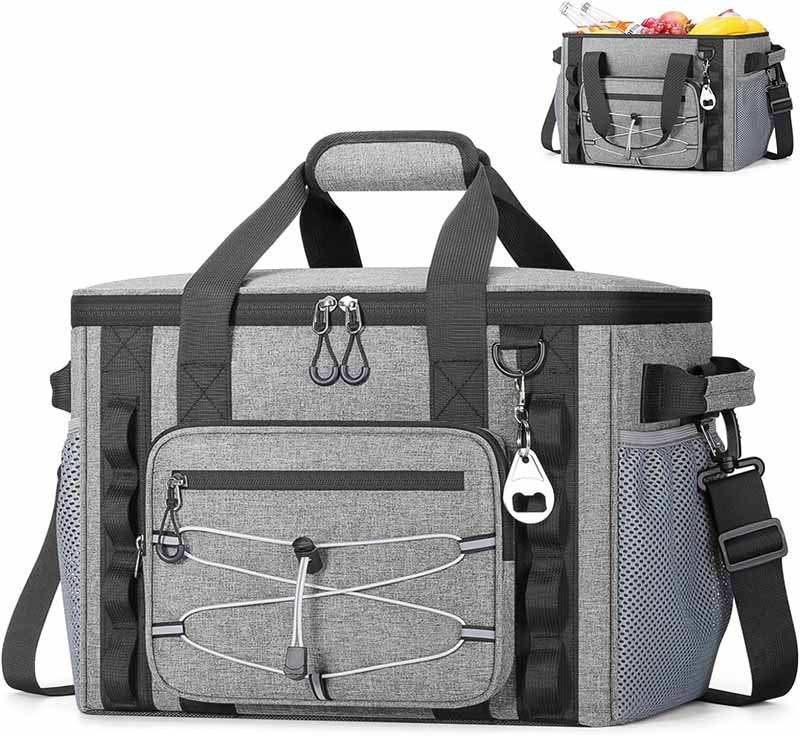
A cooler bag that leaks even a few drops can destroy customer trust instantly. Outdoor users place cooler bags inside cars, backpacks, picnic blankets, and travel gear. When melted ice water escapes, the damage spreads beyond the bag itself—soaked food packaging, stained upholstery, and unpleasant odor quickly follow. For premium outdoor and lifestyle brands, leakproof performance is not a small feature; it is a core promise of usability and safety.
Cooler bags leakproof testing is the process of verifying that insulation linings, seams, zippers, and structural reinforcements can fully contain water under real-world movement, load, and temperature conditions. Pass standards usually require zero visible leakage after timed water exposure, tilt motion, and load stress.
Factories that apply strict testing methods can maintain stable product quality across bulk production and repeat orders, while weak testing often leads to hidden defects that only appear after customers begin using the product.
Many brands assume thicker insulation automatically means better performance. In reality, seam construction, lining material, and welding accuracy determine leakproof success more than foam thickness. Understanding how leakproof testing truly works allows brands to prevent costly returns, protect reputation, and build cooler bags customers trust in real outdoor environments. The difference between a reliable cooler and a disappointing one often begins long before shipping—inside the testing room.
What Is Cooler Bags Leakproof Testing?
Cooler bags leakproof testing checks whether the liner, seams, corners, and closures can contain water during real conditions—standing time, tilting, movement, and load. A cooler bag passes only when the outer surface stays completely dry with no droplets, seepage lines, or damp patches. This testing is essential for protecting customer belongings and reducing returns in premium outdoor and lifestyle markets.
What “leakproof” really means for cooler bags
Different brands use “leakproof” loosely. In manufacturing, you need a clear definition.
In practical sourcing terms:
- Leakproof = no water escapes the liner
- “Water-resistant” is not enough if you expect ice storage
- “No drip” is not enough if moisture still makes the outside damp
A strict, customer-friendly definition is:
A cooler bag is leakproof if it can hold water and melted ice inside for the stated time, with zero wetness outside.
Why cooler bags need leakproof testing
Leakproof testing protects you from three expensive outcomes:
- Returns and replacements (especially for e-commerce)
- Bad reviews that permanently lower conversion rate
- Retail channel risk (buyers reject lines with leak issues)
Outdoor customers treat leaks as a safety/cleanliness problem. Once they lose trust, they don’t reorder.
What problems show without cooler bags testing?
Common leak-related failures appear in predictable locations.
| Leak location | What causes it | What customers experience |
|---|---|---|
| Bottom seam | stitch holes, weak tape | wet trunk / floor |
| Corner folds | high stress + poor bonding | leaks during walking |
| Zipper ends | gaps at zipper stop points | wet zipper area |
| Side seams | uneven seam allowance | slow seepage lines |
| Drain port area (if used) | poor sealing ring | constant dripping |
Important: many of these are “slow leaks.” They may not drip immediately, but they create dampness after 1–3 hours—exactly how customers use a cooler bag.
Which Cooler Bags Leakproof Testing Methods Work?
The most reliable cooler bags leakproof testing uses a combination of water-fill standing tests, tilt tests, movement/shake tests, and load stress checks. These methods reproduce real outdoor use and reveal weak seams, corner folds, and zipper-edge gaps that visual inspection misses. A cooler bag only passes when all tests show zero external wetness after the defined time and motion cycles.
Why one “water test” is not enough
A cooler bag can pass a standing test but fail during carry.
Leaks often occur when water pressure shifts toward corners and seams.
That’s why professional testing always combines:
- Static time holding
- Tilt angles
- Movement cycles
- Load pressure
If your factory only offers one quick check, you are not testing the real failure mode.
How does the water test check cooler bags?
This is the baseline test. It catches seam and bottom leakage.
Setup (practical factory version):
- Fill the liner with water to 70–90% capacity
- Close the zipper/closure fully
- Put the bag on a dry white absorbent paper
- Inspect at timed intervals
| Parameter | Recommended range | Why it matters |
|---|---|---|
| Fill level | 70–90% | realistic pressure |
| Test time | 2h / 6h / 12h | detects slow leaks |
| Inspection | every 30–60 min | finds early seepage |
Pass rule:
No droplets, no wet marks, no dampness on the paper or bag exterior.
How do tilt tests reveal cooler bags leaks?
Tilt tests expose corner and zipper-end weaknesses.
Simple tilt protocol:
- Fill with water (same level).
- Tilt to 45° and hold 5 minutes per side.
- Repeat for 4 sides + bottom corners.
- Wipe the exterior dry and check again after each side.
| Tilt checkpoint | Why it’s a hotspot |
|---|---|
| Bottom corners | stress fold + seam overlap |
| Zipper ends | construction gaps |
| Side seam midpoint | stitch tension changes |
Which real-use tests simulate cooler bags leaks?
These are the tests customers “perform” without thinking.
Most useful real-use simulations:
- Carry swing test: hold by strap and swing gently 30–60 cycles
- Shake test: short controlled shakes 20–30 cycles
- Compression test: place a weight on top to mimic trunk stacking
| Real-use test | Suggested setting | What it reveals |
|---|---|---|
| Carry swing | 30–60 cycles | seam fatigue + corner seepage |
| Shake | 20–30 cycles | liner edge leaks |
| Compression | 5–15 kg for 30 min | seal failure under pressure |
How Do Cooler Bags Pass or Fail Testing?
Cooler bags pass leakproof testing when no moisture appears outside after the full test sequence: standing water hold, tilt/movement cycles, and load compression. Any dripping, seepage line, or damp patch is a fail. Clear pass/fail rules should define test time (e.g., 6–12 hours), fill level, motion cycles, and inspection method so factories can control consistency in bulk.
What leak time defines cooler bags pass?
Leak time depends on product positioning.
Premium brands should state the intended use clearly and set a matching standard.
| Product level | Suggested no-leak time | Typical market |
|---|---|---|
| Lunch cooler | 2–4 hours | daily carry |
| Picnic / lifestyle | 6–8 hours | day outings |
| Travel / outdoor | 10–12 hours | road trips |
| Welded waterproof | 24 hours | marine/fishing |
Note: If a brand claims “all-day leakproof,” a 2-hour test is meaningless.
How much load is used in cooler bags tests?
Load is critical because weight pushes water into seams and corners.
Practical loading targets:
- Lunch: 5–8 kg
- Picnic: 8–15 kg
- Travel: 12–20 kg
| Cooler type | Suggested load | Why |
|---|---|---|
| Lunch | 5–8 kg | containers + drinks |
| Picnic | 8–15 kg | bottles + ice |
| Travel | 12–20 kg | heavy outdoor use |
Load testing should be combined with movement, because compression alone doesn’t show all leaks.
How does temperature affect cooler bags results?
Temperature changes can expose weak bonding.
Key effects:
- Heat can soften adhesives and tape
- Cold can stiffen materials and create micro-gaps
- Warm-to-cold cycling stresses seam interfaces
A practical cycle test:
- 1 hour warm room (around 30°C if possible)
- then 1 hour with ice water inside
- repeat 2–3 cycles
What Materials Change Cooler Bags Leakproof Results?
Leakproof performance in cooler bags depends primarily on three elements: lining material, seam construction method, and closure system. High-quality TPU or thick PEVA linings, combined with welded or fully sealed seams and reinforced zipper structures, dramatically reduce leakage risk. Weak materials or stitched-only seams are the most common causes of slow seepage, corner leaks, and early product failure in real outdoor use.
Which linings improve cooler bags leakproof level?
The inner lining is the first barrier that holds melted ice and liquid.
Small differences in thickness, elasticity, and chemical stability can decide whether a cooler bag stays dry for hours or begins leaking within minutes.
Below is a practical comparison used in export manufacturing:
| Lining material | Leak resistance | Flexibility | Odor resistance | Typical product level |
|---|---|---|---|---|
| Thin PEVA | Medium | Soft | Medium | Entry lunch coolers |
| Thick PEVA | High | Good | Good | Mid picnic coolers |
| TPU film laminate | Very high | Excellent | Very high | Premium outdoor coolers |
| Multi-layer TPU composite | Extreme | Excellent | Excellent | Marine / welded coolers |
Key sourcing insight:
- Upgrading from thin PEVA → thick PEVA often reduces slow seepage complaints.
- Moving from PEVA → TPU usually delivers the biggest improvement in durability, odor control, and long-term leakproof stability.
For premium outdoor and lifestyle brands, TPU lining is widely considered the most reliable long-term solution, especially for travel or beach environments where heat and pressure are high.
How do seams or welding affect cooler bags?
Even perfect lining material will leak if seams are weak.
Seam construction is the second major leakproof determinant.
Common seam technologies:
| Seam method | Leak risk | Durability | Cost level | Typical use |
|---|---|---|---|---|
| Standard stitching only | High | Medium | Low | Budget coolers |
| Stitching + seam tape | Medium | Medium | Low–mid | Basic leak-resistant |
| Heat-sealed seam | Low | High | Mid | Premium stitched coolers |
| High-frequency welded seam | Very low | Very high | High | Waterproof outdoor coolers |
Why welding matters:
- Stitch holes create microscopic water paths.
- Tape can peel after heat or pressure cycles.
- Welding removes holes entirely, forming a continuous waterproof barrier.
This is why welded TPU coolers are commonly used in:
- marine environments
- fishing trips
- long travel storage
- medical cold-chain transport
For lifestyle picnic products, heat-sealed PEVA often provides the best balance between cost and leakproof safety.
Which zippers reduce cooler bags leakage risk?
Zippers are a hidden leak source.
Even when seams are perfect, water can escape through zipper ends or stitching gaps.
Comparison of zipper systems:
| Zipper type | Leak control | Ease of use | Cost | Best application |
|---|---|---|---|---|
| Standard nylon zipper | Low | Easy | Low | Lunch coolers |
| Reverse coil zipper + flap | Medium | Easy | Low–mid | Picnic coolers |
| Waterproof laminated zipper | High | Moderate | Mid–high | Premium travel coolers |
| Airtight zipper (TPU welded) | Very high | Harder pull | High | Marine waterproof coolers |
Important engineering detail:
Most leaks occur not in the zipper teeth, but at:
- zipper start/stop points
- stitching under zipper tape
- corner folds near zipper ends
Reinforcement patches or welded end caps are essential in premium production.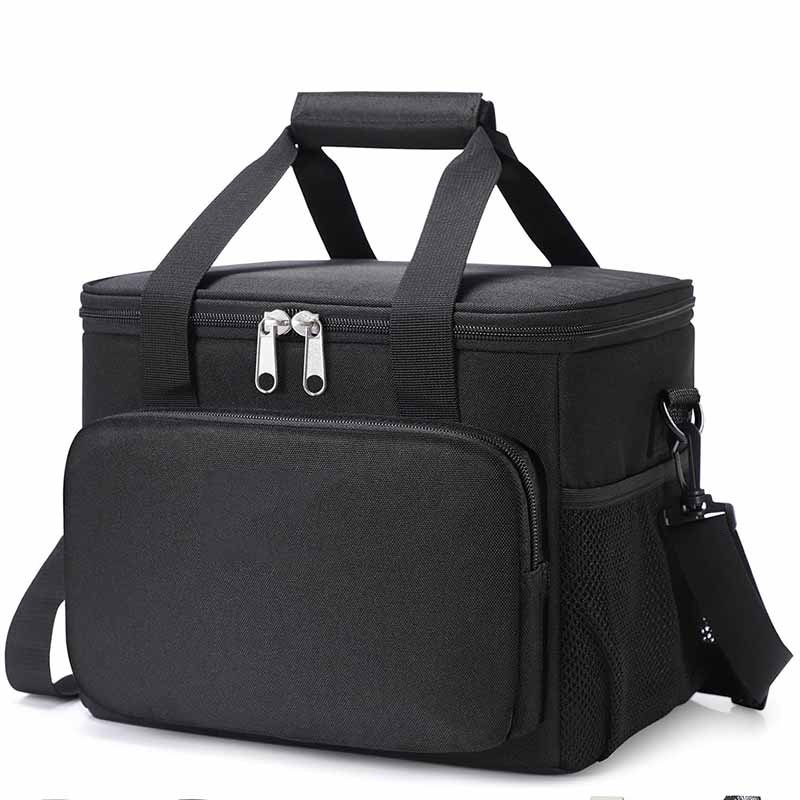
How Do Factories Keep Cooler Bags Leakproof Stable?
Factories maintain stable leakproof quality by controlling approved materials, standardizing seam construction, and applying routine batch leak testing. Consistent inspection—from incoming lining rolls to final water-fill tests—prevents variation between samples and bulk production. Without these controls, even well-designed cooler bags can develop unpredictable leakage across shipments.
What QC checks control cooler bags leaks?
A professional cooler bag QC system focuses on failure prevention, not just final inspection.
Typical leak-focused checkpoints:
| Production stage | QC action | Leak risk prevented |
|---|---|---|
| Incoming materials | Check lining thickness & softness | weak liner seepage |
| Foam lamination | Confirm full adhesion | hidden channel leaks |
| Seam sealing step | Inspect temperature & pressure | incomplete sealing |
| Zipper installation | Check end reinforcement | zipper-edge leakage |
| Final assembly | Visual seam continuity check | corner gaps |
These checks reduce the chance that defects reach final testing.
How often should cooler bags be leak tested?
Testing frequency depends on order size and product level.
A practical industry sampling plan:
| Order quantity | Suggested leak test sample size |
|---|---|
| 100–300 pcs | test 3–5 pcs |
| 500–1,000 pcs | test 5–8 pcs |
| 1,000–3,000 pcs | test 8–13 pcs |
| 5,000+ pcs | follow AQL sampling standard |
Premium welded or medical-use coolers often require 100% leak testing.
How do repeat orders keep cooler bags consistent?
Consistency problems usually appear when:
- lining suppliers change
- foam density shifts
- sealing temperature varies
- zipper models are substituted
Stable factories prevent this through specification locking.
Key repeat-order controls:
- approved material list with thickness tolerance
- fixed welding or sealing parameters
- archived reference sample from first production
- periodic re-testing during long production runs
Factories with long OEM experience—such as Szoneier—maintain material traceability and repeat testing records, ensuring later shipments match the original approved quality instead of drifting over time.
What styles of cooler bags can Szoneier customize and develop?
Szoneier can design and manufacture nearly every structural type of cooler bag used across outdoor, food delivery, travel, marine, medical, and lifestyle markets—from compact daily lunch coolers to fully welded waterproof expedition systems. Each style can be engineered with specific insulation thickness, leakproof lining technology, carrying structure, reinforcement strength, and branding method, allowing premium brands to build complete cooler bag product lines with scalable quality and consistent performance.
1. High-volume daily and lunch cooler bag structures
These are the largest global shipment category and often the first entry product for lifestyle or promotional brands.
Design priority focuses on portability, controlled cost, and reliable short-term cooling.
| Style | Capacity | Core structure | Common market use |
|---|---|---|---|
| Classic zipper lunch cooler | 4–8 L | Single chamber + foam lining | Office, school |
| Cube lunch cooler | 6–12 L | Box frame + short handle | Urban retail |
| Foldable lunch cooler | 4–10 L | Collapsible soft wall | Commuting |
| Bottle sleeve cooler | 3–6 L | Vertical insulation tube | Beverage branding |
Engineering range typically includes:
- 5–8 mm PE insulation for 2–6 hour cooling
- wipe-clean PEVA inner lining
- lightweight structure optimized for low MOQ production
2. Picnic, family, and lifestyle cooler tote systems
As brands move toward outdoor leisure positioning, capacity and visual design become more important.
| Style | Capacity | Structural upgrade | Retail positioning |
|---|---|---|---|
| Picnic cooler tote | 10–20 L | Shoulder straps + rigid base | Lifestyle gifting |
| Family beach cooler | 20–35 L | Reinforced panels + long strap | Outdoor leisure |
| Wine/bottle divider cooler | 6–15 L | Internal partitions | Premium beverage sets |
| Basket-frame insulated tote | 15–25 L | Aluminum or rigid frame | High-end picnic retail |
Key technical direction:
- 10–15 mm insulation thickness
- reinforced load zones supporting 8–15 kg
- decorative outer fabrics such as canvas, RPET, textured PU
These products often deliver the highest perceived value increase in retail environments.
3. Backpack and mobile outdoor cooler configurations
Hands-free mobility is essential for hiking, festivals, cycling, and travel.
Backpack coolers combine thermal engineering with ergonomic load distribution.
| Style | Capacity | Functional focus | Target scenario |
|---|---|---|---|
| Standard backpack cooler | 15–30 L | Foam-padded straps + airflow back | Hiking, events |
| Roll-top insulated backpack | 18–28 L | Compression seal + leak barrier | Water sports |
| Multi-compartment travel cooler | 20–35 L | Wet/dry separation | Long outings |
| Large expedition soft cooler | 30–45 L | Thick insulation + heavy strap | Camping trips |
Typical premium engineering:
- 15–20 mm high-density insulation
- reinforced stitching supporting 15–25 kg loads
- breathable carrying systems for comfort during long use
This segment strongly reflects true outdoor performance level.
4. Fully welded waterproof and extreme-duty cooler bags
For marine, fishing, rafting, and professional cold-chain use,
traditional stitched construction is insufficient.
Szoneier develops high-frequency welded TPU cooler systems for these conditions.
| Style | Construction | Performance level | Application |
|---|---|---|---|
| Welded soft cooler | Continuous TPU weld | True leakproof | Marine, boating |
| Roll-top dry-cooler hybrid | Airtight fold seal | Waterproof + insulated | Kayak, rafting |
| Fishing bait cooler | Thick foam + drain valve | Harsh durability | Offshore fishing |
| Medical cold-chain bag | Multi-layer thermal barrier | Temperature stability | Healthcare transport |
Engineering characteristics:
- no needle holes due to welding
- waterproof or airtight zipper systems
- cold retention commonly reaching 24 hours+
These represent the highest technical tier of soft cooler manufacturing.
5. Commercial food delivery and logistics cooler bags
Rapid growth in takeaway and grocery delivery has created demand for
large-capacity, high-durability insulated carriers.
| Style | Capacity | Structural priority | Industry use |
|---|---|---|---|
| Delivery backpack cooler | 20–50 L | Box rigidity + comfort straps | Food platforms |
| Pizza thermal carrier | Flat wide chamber | Heat retention | Restaurants |
| Catering insulated box bag | 40–80 L | Heavy load strength | Event service |
| Grocery reusable cooler | 15–40 L | Foldable + durable | Supermarkets |
Design focus:
- thick insulation for temperature compliance
- strong panels for stacking pressure
- easy-clean lining for hygiene control
This category emphasizes durability and operational efficiency over decoration.
6. Sustainable and eco-focused cooler bag collections
Outdoor and lifestyle consumers increasingly expect environmental responsibility.
Szoneier supports eco-driven cooler development through:
- RPET recycled polyester shells
- recycled webbing, labels, and trims
- solvent-reduced coatings and long-life structures
| Eco cooler type | Sustainability message | Brand value |
|---|---|---|
| RPET picnic cooler | Recycled plastic reuse | Outdoor lifestyle appeal |
| Organic canvas cooler | Natural material aesthetic | Premium eco branding |
| Long-life reusable cooler | Reduced single-use waste | Loyalty building |
| Mono-material recycle-ready cooler | Easier recycling | Future compliance |
Eco cooler lines often strengthen brand storytelling and long-term customer trust.
7. Full private-label cooler bag engineering at Szoneier
Across all cooler categories, Szoneier provides complete OEM/ODM capability:
Structure customization
- size, compartments, divider systems
- insulation thickness from 5 mm to 20 mm+
- reinforcement zones for defined load ratings
Material systems
- polyester, nylon, TPU, canvas, RPET, leather accents
- PE, EVA, or composite thermal insulation
- PEVA or TPU leakproof linings with sealing or welding
Branding and packaging
- screen print, embroidery, woven labels, rubber patches, metal logos
- retail gift packaging, barcode labels, e-commerce protection
This enables brands to expand smoothly from:
lunch cooler → picnic tote → backpack cooler → welded expedition cooler → full outdoor product ecosystem
while maintaining one stable manufacturing partner and consistent quality standard.
Build Leakproof-Reliable Cooler Bags with Szoneier
Leakproof performance is not achieved by one feature alone.
It is the result of material choice, seam engineering, zipper design, and disciplined quality control working together.
Szoneier integrates:
- TPU and high-grade PEVA lining sourcing
- heat-sealed and welded seam technologies
- reinforced waterproof zipper structures
- structured batch leak testing before shipment
- low-MOQ custom development for outdoor brands
With more than 18 years of bag manufacturing experience, Szoneier helps brands launch cooler bags that stay dry in real outdoor use—not just in showroom samples.
If you are developing a premium cooler bag line, the safest next step is to confirm leakproof structure, materials, and QC testing plan before mass production begins.
Contact Szoneier today for technical advice, sampling, or a detailed quotation tailored to your cooler bag project.