Skip to content

A premium cooler bag is one of those products customers only notice when it fails. If it keeps ice cold all afternoon, fits neatly in the car, and doesn’t leak a single drop, nobody writes a complaint—people just buy again. But if the zipper jams while their hands are wet, if melted ice water escapes into a backpack, or if the lining starts to smell after two beach trips, the review comes fast and it’s brutal. That’s why premium outdoor and lifestyle brands treat cooler bags less like “a bag” and more like a portable system: insulation + leak control + hygiene + carrying comfort.
Choosing a cooler bags factory for premium outdoor and lifestyle brands means selecting a manufacturer that can control three things at the same time—cooling performance, leakproof construction, and long-term durability—while keeping quality consistent across bulk orders and reorders.
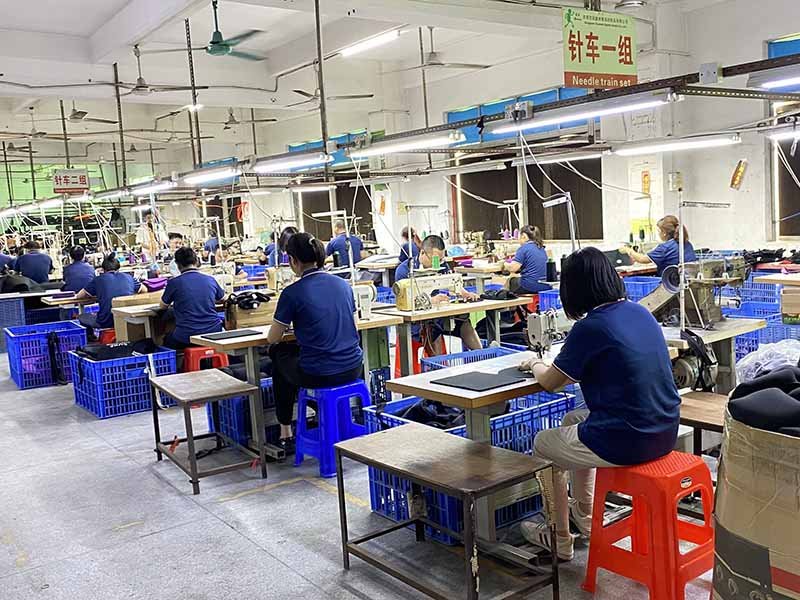
A good factory doesn’t just sew fabric. It manages insulation thickness, lining welding or sealing, zipper strength, and real-world tests that simulate heat, water, weight, and movement.
Most brands get into trouble when they approve a sample that looks great, then bulk production arrives with slightly different lining thickness, weaker seams, or insulation that compresses too easily. Those “small” changes turn into big problems: shorter cold time, higher leak risk, and more returns. If you’re building a premium outdoor product line, the goal is simple—make sure the factory can deliver the same performance every time, not just once.
What Is a Cooler Bags Factory?
A cooler bags factory is a manufacturer that develops and produces insulated cooler bags using outer fabric, thermal foam, and a leak-resistant lining system. For premium brands, the factory must control insulation efficiency, seam sealing (or welding), zipper and hardware strength, and food-safe interior materials. A reliable cooler bags factory can prove performance with leak tests, load tests, and temperature-hold testing, then reproduce the same standard in bulk and reorders.
What a premium brand should expect a cooler bags factory to handle
A real cooler bag is a layered product with failure points. A premium-capable factory should confidently handle:
- Insulation build (foam type, thickness, compression resistance)
- Interior leak control (welded seams, taped seams, or reinforced stitching)
- Hardware (zippers that survive moisture + repeated cycles)
- Structure (base support so the bag doesn’t collapse when loaded)
- Cleanability (lining that wipes clean, resists odor buildup)
- Consistency (same materials and performance in every batch)
If a factory only talks about “nice fabric” and “good stitching” but can’t discuss insulation and lining systems, that’s a warning sign.
What cooler bags are produced by a cooler bags factory?
Premium outdoor and lifestyle brands usually build around a few commercial “workhorse” categories:
| Cooler bag type | Typical volume | Typical carry | Where it sells best |
|---|---|---|---|
| Lunch cooler | 4–10 L | hand + short strap | daily commute, office |
| Picnic cooler tote | 10–20 L | shoulder | lifestyle, gifting |
| Soft travel cooler | 20–35 L | shoulder + handles | road trips, camping |
| Backpack cooler | 15–30 L | backpack straps | festivals, hiking |
| Wine/beer cooler | 6–15 L | handle | premium beverage brands |
The category determines how thick insulation should be, how strong the carry system must be, and how strict leak control needs to be.
What makes cooler bags premium?
Premium cooler bags are “premium” because they behave well in real use, not because they look expensive.
Premium customers expect:
- longer cold hold in warm conditions
- no leak (even with melted ice and movement)
- easy cleaning (no stains, no lingering smell)
- comfortable carry (strap doesn’t cut into shoulder)
- clean finishing (no glue lines, no rough edges)
To make this concrete, brands often target performance like:
| Performance target | What it means in practice |
|---|---|
| Cold hold 6–12+ hours | picnic / day trip use |
| Leak control “no drip” | safe for cars and backpacks |
| Load tolerance 10–20 kg | bottles + ice + food |
| Easy wipe interior | fewer odor complaints |
Why does the cooler bags factory choice matter?
A cooler bag can fail in three ugly ways: it warms too fast, it leaks, or it smells.
All three are tied to factory skill and material control:
- insulation thickness and foam quality affects cold time
- lining system and seam sealing affects leak risk
- lining chemistry and cleaning behavior affects odor
If the factory lacks experience in cooler bag construction, these problems show up after launch—when returns and reviews are already public.
Which Materials Define Premium Cooler Bags?
Premium cooler bags depend on a durable outer fabric, a compression-resistant insulation layer, and a leak-resistant, wipe-clean lining. Strong combinations include 600D–900D polyester or nylon outer shells, 10–20 mm PE/EVA foam insulation, and PEVA or TPU interior linings. Material choices determine cold-hold time, leak risk, odor resistance, and long-term durability in outdoor conditions.
Which fabrics are used in cooler bags?
Outer fabric is the “armor” of the cooler. It handles abrasion, sun exposure, and rough surfaces.
| Outer fabric | Strength & wear | Premium look | Notes |
|---|---|---|---|
| 600D polyester | high | good | balanced value |
| 900D polyester | very high | very good | more abrasion resistance |
| Nylon oxford | very high | premium | lighter feel, strong |
| TPU-coated fabric | very high | modern | water-resistant shell |
| Coated canvas | medium | lifestyle | needs stain control |
Outdoor brands often prefer nylon or 900D polyester for durability, and TPU-coated shells for a clean, modern finish.
What insulation keeps cooler bags cold longer?
Insulation is where many “good-looking” coolers fail. A soft foam that compresses too easily will lose performance.
| Insulation type | Cold-hold potential | Compression resistance | Best for |
|---|---|---|---|
| PE foam 5–8 mm | medium | medium | lunch coolers |
| PE foam 10–20 mm | high | medium–high | day-trip coolers |
| EVA foam (higher density) | high | high | premium travel coolers |
| Multi-layer foam + reflective film | high | medium | lifestyle coolers |
A practical guide for premium collections:
- 5–8 mm: daily lunch use
- 10–15 mm: picnic and beach use
- 15–20 mm: heavy-duty travel use
Which linings make cooler bags leakproof?
Leak control depends on lining material and how seams are finished.
| Lining | Leak resistance | Wipe-clean | Odor control |
|---|---|---|---|
| PEVA | high | high | good |
| TPU | very high | very high | very good |
| Foil laminate | medium | medium | average |
For premium outdoor and lifestyle brands, TPU linings often provide the best mix of durability, cleanability, and long-term appearance. PEVA is common for cost control, but should be paired with good seam sealing to prevent leaks.
How Do You Evaluate a Cooler Bags Factory?
Evaluate a cooler bags factory by checking insulation build quality, leakproof construction methods, load-bearing reinforcement, zipper durability, and repeatability from sample to bulk. Ask for test results or perform simple in-house tests: water-fill leak tests, load tests (10–20 kg), and temperature-hold checks. A premium-capable factory will also provide documented material specs and QC checkpoints to prevent batch inconsistency.
What skills should a cooler bags factory have?
Premium cooler manufacturing requires skills that normal bag factories may not have:
- controlling foam thickness without wrinkles
- managing seam sealing or welding without weak points
- reinforcing stress zones (handles, zipper ends, base corners)
- installing waterproof zippers correctly (if used)
- ensuring liners sit flat and don’t bubble or peel
A quick “capability checklist” you can use:
| Capability | Why it matters |
|---|---|
| foam lamination accuracy | affects cold retention |
| liner seam control | prevents leaks |
| reinforcement stitching | prevents strap failure |
| zipper alignment | smooth opening, fewer complaints |
| final leak test | catches problems before shipment |
How are cooler bags tested for leaks and strength?
You don’t need fancy labs to catch most failures. The best tests are simple and brutal.
| Test | How to do it | Pass expectation |
|---|---|---|
| Water-fill test | fill liner with water, wait 2–4 hrs | zero dripping |
| Movement test | water inside, shake & tilt | no seam seepage |
| Load test | 10–20 kg for 1–2 hrs | no tearing, no strap stretch |
| Corner stress test | press corners repeatedly | no cracking, no seam opening |
Which QC standards apply to cooler bags?
A structured QC plan for premium coolers usually includes:
- incoming inspection (fabric, foam thickness, lining grade)
- inline checks (seam sealing, zipper installation, stress stitches)
- final inspection (leak test + load test + appearance)
Brands that demand final leak testing often see much lower return risk because the biggest defect—leaks—gets caught before shipping.
What Costs and Lead Times Come from a Cooler Bags Factory?
Premium cooler bag pricing and delivery time depend mainly on material layers, insulation thickness, sealing method, hardware grade, and order quantity. A transparent cooler bags factory separates fabric, foam, lining, labor, branding, and packaging costs, then provides a realistic production schedule from sampling to shipment. Understanding these numbers early helps outdoor and lifestyle brands protect margins, avoid launch delays, and scale production with confidence.
How a cooler bags factory calculates real unit cost
Cooler bags look simple, but their cost structure is more complex than ordinary tote or travel bags because of thermal foam, leakproof lining, and reinforcement labor.
A practical export-level breakdown:
| Cost component | Typical share in premium cooler bags | What raises cost most |
|---|---|---|
| Outer fabric | 20–35% | 900D nylon, TPU-coated shells, custom colors |
| Insulation foam | 15–25% | thicker EVA/PE layers, multi-layer insulation |
| Leakproof lining | 10–20% | TPU welding or high-grade PEVA |
| Sewing & sealing labor | 15–30% | complex shapes, welded seams, padding |
| Zipper & hardware | 8–18% | waterproof zippers, metal pullers, reinforcement |
| Branding & packaging | 5–12% | embroidery, woven labels, retail boxes |
Increasing insulation thickness or switching to TPU lining can raise unit cost 20–45%, yet these upgrades often determine whether a cooler bag feels “budget” or “premium” to customers.
Realistic premium cooler bag price ranges
The following ranges help brands judge quotations during early sourcing.
| Cooler bag category | Qty 100–300 pcs | Qty 500–1,000 pcs | Main cost driver |
|---|---|---|---|
| Lunch cooler | $3.00–$6.50 | $2.40–$5.20 | foam thickness + zipper |
| Picnic tote cooler | $5.50–$11.00 | $4.20–$9.00 | structure + insulation |
| Backpack cooler | $9.00–$18.00 | $7.20–$14.50 | padding + labor |
| Travel soft cooler (30L+) | $12.00–$26.00 | $9.50–$21.00 | insulation volume |
| Premium welded cooler | $18.00–$40.00 | $15.00–$32.00 | TPU welding + hardware |
Hidden costs that appear in cooler bag production
Premium cooler bags often include extra technical steps that are not obvious in first quotations.
| Hidden cost item | Why it occurs | Typical impact |
|---|---|---|
| Waterproof zipper upgrade | Needed for leakproof design | noticeable unit increase |
| Welding mold or setup | Required for TPU seam welding | one-time tooling fee |
| Custom foam cutting die | Complex structure shapes | setup cost for sampling |
| Large carton size | Bulky products raise freight | higher shipping cost |
| Third-party leak testing | Extra QC requirement | inspection service fee |
What lead time is normal for premium cooler bags?
Cooler bags require more coordination than ordinary bags because foam, lining, and sealing processes must align precisely.
| Production stage | Typical timeline | Delay risk |
|---|---|---|
| Quotation & material confirmation | 2–5 days | unclear insulation spec |
| Prototype sample | 10–18 days | foam cutting or welding setup |
| Sample revision | 5–10 days | leakproof improvement |
| Pre-production approval | 3–7 days | color or structure change |
| Bulk production (100–500 pcs) | 20–35 days | insulation assembly time |
| Bulk production (1,000+ pcs) | 30–45 days | scheduling + material supply |
| Sea freight | 20–40 days | route & season |
| Air freight | 5–10 days | capacity & cost |
How Do You Grow with One Cooler Bags Factory?
Growing with a single cooler bags factory allows outdoor and lifestyle brands to stabilize insulation quality, shorten sampling cycles, reduce unit cost through volume purchasing, and expand into multiple cooler bag styles without restarting development. Long-term cooperation transforms cooler bags from a risky new product into a reliable, scalable category that supports seasonal launches and retail expansion.
How shared materials reduce cost across cooler bag collections
Successful outdoor brands rarely treat each cooler bag as a completely new project.
Instead, they design collections around shared components:
- same outer fabric across multiple sizes
- same insulation thickness for a product family
- same zipper model and puller
- same lining welding method
This strategy creates measurable savings:
| Shared component strategy | Effect on MOQ | Effect on unit cost |
|---|---|---|
| Shared outer fabric | Lower | Lower |
| Shared insulation foam | Stable | Lower |
| Shared zipper & hardware | Lower | Lower |
| Different sizes, same structure | Flexible | Controlled |
Brands using shared material systems often reduce average cost 10–18% across a full cooler collection.
What long-term support a cooler bags factory should provide
A mature factory relationship gradually becomes product development support, not just manufacturing.
Key long-term services premium outdoor brands rely on:
- suggesting improved insulation for longer cold time
- reserving consistent fabric color batches for seasonal reorders
- optimizing packaging to reduce freight cost
- refining reinforcement after customer feedback
- accelerating sampling for urgent launches
These operational improvements directly influence:
- customer satisfaction
- warranty and return rate
- profit margin stability
- launch speed for new SKUs
Factories with deep OEM experience—such as Szoneier—maintain archived specifications, insulation data, and approved samples to ensure repeat orders match earlier production even months later.
How one cooler bags factory stabilizes quality during scaling
When production volume grows, inconsistency risk usually increases—unless the factory already controls:
- fixed material suppliers
- documented insulation thickness
- standardized leak testing
- repeatable sewing and sealing settings
With these controls, brands typically see:
| Scaling factor | Improvement with stable factory |
|---|---|
| Defect rate | decreases |
| Delivery predictability | increases |
| Unit margin | improves |
| Development time for new SKUs | shortens |
What styles of cooler bags can Szoneier customize and develop
Szoneier can customize nearly every commercial cooler bag structure used in outdoor, food delivery, travel, beverage, and lifestyle markets—from compact lunch coolers to heavy-duty welded waterproof systems. Each style can be engineered with different insulation thicknesses, leakproof linings, carrying methods, branding techniques, and sustainable materials, allowing premium brands to build complete cooler bag product lines with consistent quality and scalable production.
1. Daily-use and high-volume lunch cooler styles
These are the fastest-moving commercial cooler bags worldwide.
They focus on portability, simple structure, and controlled cost—ideal for retail bundles, corporate gifting, and subscription products.
| Style | Capacity | Key structure | Typical use scenario |
|---|---|---|---|
| Classic lunch cooler | 4–8 L | Single compartment, zipper top | Office meals, school |
| Foldable lunch cooler | 4–10 L | Collapsible soft body | Commuting, storage saving |
| Cube lunch cooler | 6–12 L | Box shape, short handle | Urban lifestyle retail |
| Slim bottle lunch cooler | 3–6 L | Vertical insulation sleeve | Beverage brands |
Engineering focus:
- lightweight insulation (5–8 mm PE foam)
- wipe-clean PEVA lining
- compact pattern efficiency for low MOQ production
2. Picnic, family, and lifestyle cooler totes
Lifestyle brands often expand into larger social-use coolers designed for sharing food and drinks outdoors.
| Style | Capacity | Carry system | Market positioning |
|---|---|---|---|
| Picnic cooler tote | 10–20 L | Shoulder straps | Lifestyle & gifting |
| Family cooler bag | 20–35 L | Dual handles + strap | Beach, park, road trip |
| Wine & beverage cooler | 6–15 L | Divider structure | Premium drink brands |
| Basket-style insulated tote | 15–25 L | Rigid frame + lid | Outdoor leisure retail |
Key technical upgrades:
- 10–15 mm insulation for longer cold retention
- reinforced base panels for bottle weight
- decorative fabrics (canvas, RPET, textured PU) to match lifestyle branding
These products bridge utility and fashion, increasing perceived retail value.
3. Backpack and travel-ready cooler systems
Outdoor and festival markets demand hands-free mobility and stronger structural durability.
| Style | Capacity | Core engineering | Target user |
|---|---|---|---|
| Backpack cooler | 15–30 L | Foam-padded back + straps | Hiking, events |
| Roll-top insulated backpack | 18–28 L | Fold-seal leak control | Water sports, boating |
| Large travel soft cooler | 25–40 L | Thick insulation + strap | Road trips, camping |
| Multi-compartment cooler pack | 20–35 L | Dry/wet separation | Long outdoor days |
Performance priorities:
- 15–20 mm high-density insulation
- load-bearing reinforcement (10–25 kg support)
- breathable padded carrying systems
These designs often define whether a cooler line feels entry-level or premium outdoor grade.
4. Waterproof welded and heavy-duty professional coolers
For marine, fishing, and extreme outdoor markets, stitched seams are not enough.
Szoneier develops high-performance welded cooler bags using TPU or similar materials.
| Style | Construction method | Functional advantage |
|---|---|---|
| Fully welded soft cooler | High-frequency welding | True leakproof interior |
| Roll-top dry-cooler hybrid | Compression roll seal | Water & air resistance |
| Fishing bait cooler | Thick foam + drain valve | Harsh outdoor durability |
| Medical cold-chain bag | Thermal barrier system | Temperature stability |
Technical characteristics:
- airtight seam welding instead of stitching
- waterproof zippers or roll-top closure
- insulation optimized for long cold retention (often 24 hrs+)
These represent the highest engineering level in soft cooler manufacturing.
5. Food delivery, commercial, and utility cooler bags
Beyond consumer retail, many brands require functional transport coolers.
| Style | Typical capacity | Main application |
|---|---|---|
| Takeaway delivery cooler | 20–60 L | Food delivery platforms |
| Pizza insulated carrier | Flat large format | Restaurant logistics |
| Catering thermal bag | 30–80 L | Event service |
| Grocery insulated tote | 15–40 L | Supermarket retail |
Design priorities:
- strong structure for stacking
- thick insulation to maintain food temperature
- easy-clean interior for hygiene compliance
This segment values durability and cost efficiency more than decoration.
6. Sustainable and eco-focused cooler bag collections
Many outdoor and lifestyle brands now integrate environmental positioning into cooler bag design.
Szoneier supports:
- RPET recycled polyester shells
- recycled webbing and labels
- solvent-reduced coatings
- long-life reusable structures
| Eco style | Sustainability message | Retail appeal |
|---|---|---|
| RPET picnic cooler | Recycled bottle fabric | Outdoor lifestyle |
| Organic canvas cooler | Natural material look | Premium eco branding |
| Minimalist reusable cooler | Long-term durability | Zero-waste positioning |
| Mono-material recycle-ready cooler | Easier recycling | Future compliance |
Eco-driven cooler bags often strengthen brand storytelling and customer loyalty.
7. Full private-label cooler bag development at Szoneier
Across all cooler bag categories, Szoneier provides complete OEM/ODM customization:
Structure engineering
- size, compartments, divider layouts
- insulation thickness selection
- reinforcement zones and load rating
Material systems
- polyester, nylon, TPU, canvas, RPET, leather accents
- PE, EVA, or composite insulation
- PEVA or TPU leakproof lining
Branding & packaging
- printing, embroidery, woven labels, rubber patches, metal logos
- retail cartons, hangtags, barcode labels
- e-commerce protective packaging
This allows brands to evolve smoothly:
lunch cooler → picnic tote → backpack cooler → welded premium system → full outdoor collection
while maintaining one stable manufacturing partner.
Build Premium Cooler Bags with Szoneier
Selecting a cooler bags factory is ultimately about protecting brand experience in real outdoor use.
Customers remember whether drinks stayed cold, whether water leaked, and whether the bag lasted more than one season.
Szoneier combines 18+ years of bag manufacturing expertise with structured insulation sourcing, leakproof construction control, and scalable OEM production—supporting:
- low-MOQ custom cooler bag development
- rapid and accurate sampling
- strict leak and load testing
- stable lead times for seasonal launches
- full private-label customization for outdoor and lifestyle brands
If you are planning to launch or upgrade a premium cooler bag line, now is the best time to confirm materials, insulation performance, and production cost strategy before mass production.
Contact Szoneier today to request a quotation, prototype sample, or technical recommendation for your custom cooler bags.