Skip to content
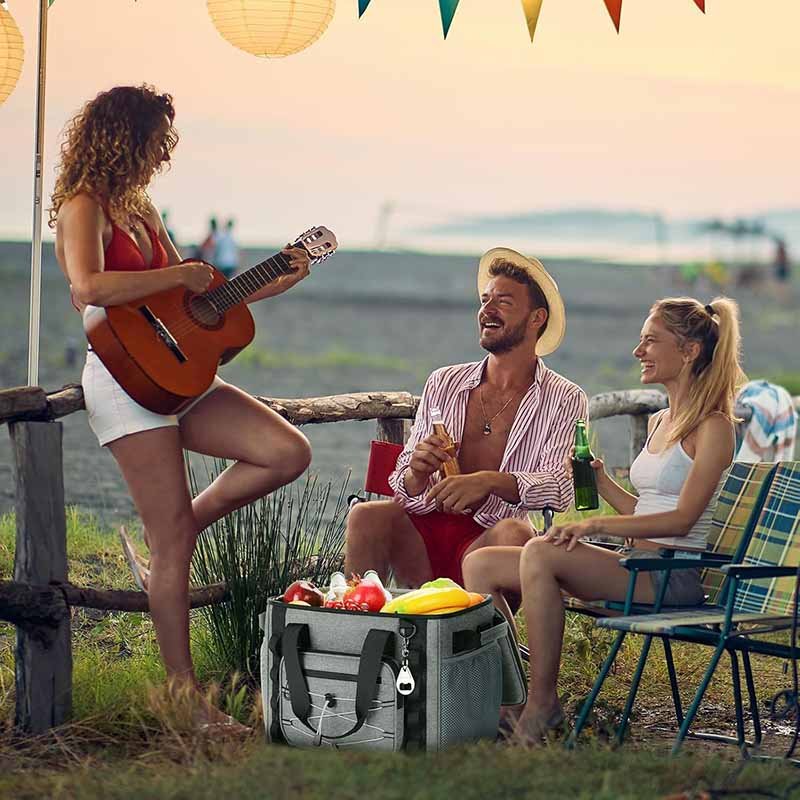
Most cooler bags don’t fail because the insulation is “too thin.” They fail because the outside gets ugly, sticky, scratched, or hard to clean—then customers stop using it. The outer material is what takes the daily beating: car trunks, sand, sun, wet grass, spilled drinks, oily food, and a thousand quick grabs by the handle. If the outer fabric pills, fades, cracks, or absorbs stains, nobody cares that the foam inside is 10 mm.
Here’s the practical truth: the outer material decides whether a cooler bag feels like a throwaway promo item or a dependable everyday tool. Nylon, polyester, TPU-coated fabrics, and canvas are all common choices, but they behave very differently once they hit real life. Nylon tends to handle rough outdoor use better. Polyester usually wins on price and printing. TPU-coated fabric is the “wipe clean” option for messy use. Canvas looks great but asks for more care. For cooler bags, polyester is the best value when you need clean printing and cost control for daily use. Nylon is the stronger choice for outdoor and high-abrasion use because it resists tearing and wear better. TPU-coated fabric is best when water, stains, and cleaning speed matter, such as delivery and beach use. Canvas fits lifestyle designs but is heavier and stains easier.
Picture this: two coolers go to the same beach trip. One comes home, wipes clean, and looks new. The other comes home with sand stuck in the weave and a stain that never leaves. Same day, same trip—different material choice.
What Are Cooler Bag Outer Materials?
Cooler bag outer materials are the fabrics (and sometimes coated fabrics) used for the bag’s exterior shell. They don’t “create cold,” but they control how the bag survives real life: scraping, wetness, sunlight, dirt, and repeated carrying. If the outer material is wrong, you get early wear at corners, ugly fading, trapped smells, and cleaning complaints—especially on food and drink products that get used weekly.
What customers notice first
When someone receives a cooler bag, they rarely test insulation first. They notice:
- How it feels in hand (soft, stiff, cheap, premium)
- How the surface reacts to fingerprints, water drops, and dirt
- How quickly it looks worn at corners
- Whether it looks like it can be cleaned easily
- Whether the color looks deep and consistent
- Whether the fabric smells “plasticky” or feels natural
These “first 60 seconds” impressions often decide whether the customer keeps it or returns it.
What role does the outer material play?
The outer material has five jobs that directly affect customer satisfaction:
1) It takes abrasion so the inside doesn’t get damaged
- Trunks, sidewalks, rocks, camping gear, chair legs—these touch the outside first.
- The outer fabric protects insulation from getting crushed or cut.
2) It controls how water behaves
- Rain, condensation, melted ice on hands, wet grass, boat decks.
- Some fabrics soak and hold water; some repel it.
3) It defines the cleaning experience
- If cleaning needs soap and scrubbing, people stop using the product.
- If it wipes clean, it stays in daily rotation.
4) It carries your branding
- Printing quality and color stability depend heavily on the outer fabric.
- Some fabrics accept crisp prints; others look dull or patchy.
5) It affects comfort and carry feel
- Rough fabric edges + thin binding = uncomfortable carry.
- Fabric stiffness also affects how the bag sits against the body.
How does outer material impact durability?
Durability is not just “thicker is better.” It’s about fiber type + weave + coatings + corner reinforcement.
Here’s a practical durability map that matches common complaints:
| Durability issue customers mention | Most common cause | Materials that reduce the risk |
|---|---|---|
| “Corners wore out quickly” | abrasion + no reinforcement | nylon, TPU-coated, 900D polyester |
| “Surface looks scratched” | rough contact + weak face yarn | TPU-coated, nylon |
| “Fabric fuzz/pilling” | softer yarn + friction | higher denier polyester, tighter weave |
| “Color faded fast” | UV exposure + dye instability | solution-dyed polyester, coated fabrics |
| “Cracks or peels” | low-quality coating | higher grade TPU, controlled coating thickness |
Real-life durability behavior
| Material | Abrasion resistance | Tear resistance | UV stability | Notes |
|---|---|---|---|---|
| Nylon (420D–840D) | High | Very high | Medium–high | excellent for rough use |
| Polyester (300D–600D) | Medium | Medium | High | best cost and print value |
| Polyester (900D+) | Medium–high | High | High | good balance for retail |
| TPU-coated fabric | High | High | High | strong “wipe clean” performance |
| Canvas (cotton) | Low–medium | Medium | Medium | needs protection or coating |
Do outer materials affect insulation performance?
Yes, not because the fabric “insulates,” but because it decides whether insulation stays effective over time.
How outer material changes the cooling result
Water absorption
- Wet outer layers conduct heat faster.
- TPU-coated surfaces keep the outer shell drier, which helps insulation keep working.
Shape stability
- When fabric collapses and compresses foam, insulation thickness drops.
- Stiffer fabrics and reinforced panels help keep foam thickness stable.
Air infiltration
- Loose outer shells can create small gaps at seams and zipper edges.
- Better structure and coatings reduce unwanted airflow.
Practical cooling expectation by material environment
| Environment | What happens if outer fabric absorbs water? | Better outer choice |
|---|---|---|
| beach | sand + salt + moisture stick in weave | TPU-coated, nylon |
| delivery | spills + stains become permanent | TPU-coated |
| picnic grass | dampness transfers into fabric | coated fabrics |
| office lunch | low exposure; printing matters more | polyester |
The “Which material fits my product?” quick match table
This table is extremely useful for clients choosing materials quickly.
| Cooler bag type | Best outer material | Why it works |
|---|---|---|
| lunch cooler bags | polyester | low cost + great printing |
| outdoor camping coolers | nylon | abrasion + tear strength |
| beach / boat cooler bags | TPU-coated | water + stain resistance |
| food delivery coolers | TPU-coated | fastest cleaning + spill control |
| lifestyle gift coolers | canvas | natural look + premium feel |
| promo event coolers | polyester | cost + branding area |
Outer material “spec choices” that affect cost and quality
If you want to talk like a professional supplier, these are the parameters that matter in quotes:
- Denier (D): 300D / 600D / 900D
- higher D often = stronger feel, but not always “better” without good weave
- Coating type: PU backing vs TPU lamination
- affects water resistance and cleaning
- Weave density: tight weave resists abrasion better
- Color method: solution-dyed fabrics hold color better in UV
- Reinforcement: corner patches, base panels, binding thickness
Why Choose Nylon for Cooler Bags?
Nylon is chosen for cooler bags when strength, abrasion resistance, and long-term durability matter more than cost. It performs better than polyester in rough environments such as outdoor trips, car trunks, camping, and repeated heavy loading. Nylon is especially suitable for mid-to-high-end cooler bags where customers expect the product to survive years of use rather than a single season.
How nylon behaves in real life
Nylon is often described as “strong,” but that word alone doesn’t help much. What matters is how nylon reacts after months of use, not just when it’s new.
What users actually notice with nylon cooler bags
- Corners don’t wear through quickly
- Fabric stretches slightly instead of tearing
- The bag survives being dragged, dropped, or squeezed
- Surface scratches are less obvious than on coated fabrics
- The bag still looks usable after many trips
This is because nylon fibers are more elastic than polyester. Instead of snapping under stress, they absorb impact and recover.
What types of nylon are used for cooler bags?
Not all nylon is the same. Choosing the wrong type is a common sourcing mistake.
Common nylon specifications used in cooler bags
| Nylon Type | Typical Denier | Real-world behavior | Best use |
|---|---|---|---|
| Nylon 210D–420D | light | flexible, soft | travel & compact coolers |
| Nylon 420D–600D | medium | good balance | outdoor lunch coolers |
| Nylon 840D / ballistic | heavy | very high abrasion resistance | camping, car coolers |
| Ripstop nylon | varies | tear control | lightweight outdoor |
Important detail: Higher denier nylon does not automatically mean better. A well-woven 420D nylon can outperform a poorly woven 840D fabric.
How durable is nylon in daily and outdoor use?
Here’s how nylon compares when things go wrong:
| Stress situation | Nylon response | Polyester response |
|---|---|---|
| bag dragged on concrete | scuffs but holds | surface fuzz / wear |
| heavy bottles inside | stretches slightly | fiber fatigue |
| repeated folding | recovers shape | creases stay |
| sharp corner pressure | resists tearing | may rip |
This is why nylon is commonly chosen for:
- outdoor and camping cooler bags
- car-based coolers
- cooler bags expected to last multiple seasons
Is nylon always the right choice?
No—and this is where brands often over-spec.
When nylon is not the best choice
- Price-sensitive retail: nylon raises cost noticeably
- Promotional items: customers won’t feel the benefit
- High-graphics branding: printing on nylon can look less sharp
- Very light daily use: strength is unused
In these cases, nylon becomes “invisible value.” Customers pay more but don’t feel why.
Nylon cost vs value reality
| Factor | Nylon | What it means |
|---|---|---|
| Material cost | higher | affects unit price |
| Sewing difficulty | medium | needs experienced operators |
| Printing clarity | medium | not ideal for photo prints |
| Long-term durability | high | fewer complaints |
| Perceived quality | high | fits premium positioning |
Rule of thumb: If your customer will say “this feels solid” after a year, nylon is doing its job. If they won’t notice the difference, it’s probably the wrong material.
Why Choose Polyester for Cooler Bags?
Polyester is the most widely used outer material for cooler bags because it balances cost, appearance, color stability, and ease of production. It is ideal for lunch cooler bags, promotional items, retail programs, and any product where clean printing, consistent color, and competitive pricing are more important than extreme abrasion resistance.
Why polyester dominates the cooler bag market
Polyester isn’t popular because it’s “average.” It’s popular because it solves most problems well enough for most users.
What polyester does well in daily use
- Holds color well under sunlight
- Accepts sharp printing and logos
- Feels stable and familiar to users
- Easy to cut, sew, and reproduce at scale
- Works across many price levels
This makes polyester the default choice for many cooler bag programs.
What deniers of polyester matter for cooler bags?
Denier choice changes both feel and durability.
Common polyester deniers and behavior
| Polyester Denier | Feel | Durability | Typical use |
|---|---|---|---|
| 300D | light, soft | low–medium | promo coolers |
| 420D | balanced | medium | lunch bags |
| 600D | firmer | medium–high | retail coolers |
| 900D+ | stiff, solid | high | semi-rigid coolers |
Key insight: Many complaints about “cheap feel” come from using 300D polyester in products that should have used 600D or higher.
How does polyester handle printing and color?
This is where polyester clearly wins.
Why brands like polyester for branding
- Clean edges for logos
- Stable Pantone matching
- Consistent color across production runs
- Compatible with screen print, heat transfer, embroidery
Compared to nylon, polyester usually produces brighter and more predictable results, especially for large logos or multi-color designs.
Where does polyester struggle?
Polyester’s weaknesses show up under stress.
| Issue | Why it happens |
|---|---|
| corner wear | fibers less elastic |
| surface fuzz | abrasion breaks yarn |
| stiffness loss | fiber fatigue |
| tear propagation | lower stretch |
This is why polyester works best when:
- the bag is not dragged or thrown
- usage is light to moderate
- appearance matters more than ruggedness
Polyester cost vs performance balance
| Factor | Polyester | What it means |
|---|---|---|
| Material cost | low–medium | competitive pricing |
| Production speed | fast | easier scaling |
| Printing quality | excellent | strong branding |
| Abrasion resistance | medium | not for rough use |
| Market fit | wide | retail & promo |
Nylon vs Polyester: a quick reality check
| If your customer says… | Better choice |
|---|---|
| “I use it every day for lunch” | polyester |
| “It stays in my car” | nylon |
| “I want strong colors & logo” | polyester |
| “I go camping often” | nylon |
| “I don’t want it to look old fast” | nylon |
| “I need to keep price low” | polyester |
Why Choose TPU-Coated Fabric for Cooler Bags?
TPU-coated fabric is chosen for cooler bags when water resistance, stain resistance, and fast cleaning are critical. It is especially suitable for food delivery, beach use, boating, and any scenario where spills, moisture, or frequent cleaning are unavoidable. Compared with regular fabrics, TPU-coated materials reduce odor buildup and extend usable life in wet or messy environments.
What TPU-coated fabric actually solves in real life
TPU-coated fabric is not about “looking premium.” It’s about removing daily friction from use.
When people choose TPU-coated cooler bags, they usually had one of these problems before:
- Melted ice soaked into fabric and smelled
- Sauce, oil, or drinks left permanent stains
- Sand and dirt stuck in the weave
- The bag looked dirty after a few uses
- Cleaning took longer than using the bag
TPU doesn’t fix insulation—but it fixes everything people hate cleaning.
How does TPU coating change daily use?
TPU (thermoplastic polyurethane) is applied as a laminated or coated layer over a base fabric (often polyester or nylon). This layer changes how the surface behaves.
Practical differences users notice immediately
| Daily situation | Regular fabric | TPU-coated fabric |
|---|---|---|
| water spills | absorbed | beads & wipes off |
| oily food | stains | wipes clean |
| sand | sticks in weave | falls off |
| odor after use | lingers | minimal |
| cleaning time | minutes | seconds |
This is why TPU-coated cooler bags are often described as “easy to live with.”
Is TPU-coated fabric waterproof or just water-resistant?
This is an important distinction.
- Water-resistant: resists splashes and light moisture
- Waterproof: prevents water penetration under pressure
Most TPU-coated cooler bags are water-resistant, not fully submersible. That is usually enough.
Typical TPU performance range
| Property | Typical range |
|---|---|
| Water resistance | splash & spill proof |
| Hydrostatic rating | varies by coating thickness |
| Temperature range | flexible in hot & cold |
| Crack resistance | better than PVC |
| Odor retention | very low |
Real expectation: TPU-coated bags survive rain, condensation, spills, and wet ground—but they are not meant for full underwater use.
What are the trade-offs of TPU-coated fabric?
TPU solves many problems, but it isn’t perfect.
Downsides brands should consider
- Higher material cost than plain polyester
- Slightly heavier feel
- Less breathable (not relevant for coolers, but affects touch)
- Limited texture options compared to woven fabrics
Where TPU is worth the cost
- food delivery cooler bags
- beach and boat coolers
- car-based coolers with spills
- products marketed as “easy clean”
Where TPU may be unnecessary
- office lunch bags
- promotional giveaways
- ultra-light carry products
TPU-coated fabric cost reality
| Factor | TPU-coated | What it means |
|---|---|---|
| Material cost | higher | raises unit price |
| Sewing | moderate | needs care at edges |
| Cleaning benefit | very high | strong selling point |
| Durability in wet use | excellent | fewer complaints |
| Branding | good | but less textured |
Why Choose Canvas for Cooler Bags?
Canvas is chosen for cooler bags when appearance, texture, and lifestyle positioning matter more than maximum durability or water resistance. It is commonly used in gift sets, lifestyle brands, and eco-themed products. Canvas provides a natural, premium feel but requires more care and protection to maintain its appearance over time.
Why brands still choose canvas despite limitations
Canvas cooler bags are rarely chosen for performance. They are chosen for emotion and image.
What users like about canvas
- Natural, soft touch
- “Less synthetic” appearance
- Matches lifestyle, home, and gift products
- Feels calm and premium in the right context
This makes canvas popular in:
- lifestyle retail
- gift packs
- eco-themed collections
- slow-living and design brands
How does canvas behave in real use?
Canvas is honest material—it shows use quickly.
| Situation | Canvas behavior |
|---|---|
| stains | visible and often permanent |
| water | absorbs unless treated |
| abrasion | wears at folds & corners |
| cleaning | limited options |
| aging | develops patina |
Some brands like this “used look.” Others don’t.
Can canvas be improved for cooler bags?
Yes—but with compromises.
Common canvas upgrades
| Upgrade | Benefit | Trade-off |
|---|---|---|
| waxed canvas | water resistance | heavier, darker |
| PU backing | less absorption | stiffer feel |
| thicker canvas | stronger | higher weight |
| reinforced corners | durability | higher cost |
Even with upgrades, canvas rarely matches nylon or TPU in rugged use.
When canvas is the wrong choice
Canvas should be avoided when:
- frequent spills are expected
- cleaning speed matters
- outdoor or beach use is common
- customers expect “like new” appearance
Canvas works best when:
- usage is light
- expectations are clear
- design is the main selling point
Canvas cost vs perception
| Factor | Canvas | What it means |
|---|---|---|
| Material cost | medium | not cheap |
| Durability | low–medium | care needed |
| Branding | good | subtle, not bold |
| Lifestyle appeal | high | emotional value |
| Complaint risk | higher | stains & wear |
Final Material Selection Guide
This table is extremely useful for decision-making.
| Use case | Best outer material |
|---|---|
| office lunch | polyester |
| promotional cooler | polyester |
| outdoor camping | nylon |
| car travel | nylon |
| beach / boat | TPU-coated |
| food delivery | TPU-coated |
| lifestyle gift | canvas |
| eco-style retail | canvas (with care) |
Why Brands Work with Szoneier on Cooler Bag Materials
Most brands don’t fail at cooler bags because of design ideas. They fail because the material chosen on day one doesn’t survive real use. At Szoneier, material decisions are not made from catalogs or trend slides—they are made from what breaks, what stains, what leaks, and what customers complain about after months of use.
With over 18 years of bag development and manufacturing experience, Szoneier has worked on cooler bags for daily lunch use, outdoor travel, food delivery, beach and boating, promotions, and premium retail. That experience shapes how materials are recommended, tested, and finalized.
Below is what brands actually gain when working with Szoneier on cooler bag materials.
1. Material selection starts from use scenario, not fabric names
Instead of asking clients to “choose nylon or polyester,” Szoneier starts with questions that directly affect complaints and returns:
- How long is food or drink kept inside?
- Is the bag carried by hand or placed in a car?
- Will it be used near water, sand, or oil?
- How often does it need cleaning?
- Is appearance or durability more important?
- Is the target price sensitive or premium?
From these answers, material options are narrowed quickly.
Example logic used in real projects:
| Use scenario | Material direction |
|---|---|
| office lunch, daily carry | polyester 420D–600D |
| outdoor / car travel | nylon 420D–840D |
| food delivery | TPU-coated polyester |
| beach / boating | TPU-coated nylon |
| lifestyle gift | canvas or waxed canvas |
This avoids over-specifying materials that increase cost without improving user satisfaction.
2. Side-by-side material testing before mass production
Many clients come with one fabric in mind. Szoneier often prepares 2–3 material samples of the same cooler bag design, so differences are visible and touchable.
What is typically compared during sampling:
| Test item | Why it matters |
|---|---|
| abrasion at corners | predicts long-term wear |
| water splash & wipe test | shows cleaning difficulty |
| stain test (oil, sauce) | common food complaints |
| color consistency | affects branding |
| stiffness & hand feel | affects carry comfort |
| weight difference | affects daily usability |
This process often changes decisions. It is common for brands to start with polyester and upgrade to nylon—or switch to TPU-coated fabric—after seeing how each behaves under the same conditions.
3. Clear guidance on cost impact
Material changes affect pricing more than most clients expect. Szoneier provides material-level cost visibility early, not after samples are approved.
Typical cost impact trends (reference only):
| Material choice | Relative cost level |
|---|---|
| 300D–420D polyester | low |
| 600D–900D polyester | low–medium |
| nylon 420D–600D | medium |
| nylon 840D / ballistic | medium–high |
| TPU-coated fabrics | medium–high |
| canvas / waxed canvas | medium |
Clients can then decide:
- whether durability justifies the cost
- whether to create two versions (entry + premium)
- whether to adjust insulation or structure instead
This prevents the common issue of approving a sample that later becomes “too expensive to scale.”
4. Experience with mixed-material structures
Real-world cooler bags rarely use only one material. Szoneier regularly develops hybrid constructions, such as:
- polyester body + TPU base panel
- nylon shell + reinforced EVA corners
- canvas exterior + waterproof inner zones
- polyester body + nylon wear panels
These combinations allow brands to:
- control cost
- protect high-wear areas
- keep the look consistent
- reduce failure points
Many customer complaints are solved not by changing the whole fabric, but by strengthening the right zones.
5. Low MOQ testing before committing to scale
For many brands, the biggest risk is guessing wrong on the first production run.
Szoneier supports:
- low MOQ development for material testing
- fast sampling cycles
- adjustments based on early feedback
This allows brands to:
- test different materials in the market
- compare return rates
- collect real user feedback
- optimize before large orders
This approach is especially valuable for:
- new brands
- Amazon or DTC sellers
- seasonal cooler bag programs
6. Quality control focused on material failure points
Material quality is not only about fabric rolls. It’s about how that fabric behaves once sewn.
Szoneier QC focuses on:
- seam stress on coated fabrics
- edge binding wear
- corner abrasion zones
- zipper-to-fabric interaction
- coating cracking or peeling
These are the areas where cooler bags usually fail first.
7. Practical advice instead of selling the “most expensive option”
One reason brands keep working with Szoneier is simple: they are told when a material upgrade is unnecessary.
Examples:
- daily lunch cooler → nylon may be overkill
- promo cooler → TPU coating adds cost without benefit
- lifestyle gift → canvas works if expectations are clear
This honesty helps brands:
- control pricing
- avoid unnecessary complexity
- reduce return risk
- build trust with end users
Ready to Develop Your Custom Cooler Bags?
If you’re planning a new cooler bag line—or improving an existing one—the outer material decision will shape customer satisfaction more than most design changes.
At Szoneier, we offer:
- free material consultation
- fast sampling
- flexible MOQ
- custom branding (OEM / private label / ODM)
- consistent quality control
Share your target use case, market, and price range, and we’ll help you choose the right material—and build a cooler bag your customers will actually keep using.