A clear PVC bag may look simple at first glance. It is transparent, easy to clean, lightweight, and practical. But when a brand starts developing one for retail, events, travel, beauty, sports, or promotional use, small details quickly become important. How thick should the PVC be? Will the bag smell too strong when customers open the package? Can the seams carry real weight? Will the logo peel off? Can the bag meet stadium size requirements? Will the surface scratch easily during shipping?
PVC clear bag manufacturing is the process of turning transparent PVC sheet into finished bags through material selection, cutting, welding, stitching, zipper assembly, handle reinforcement, logo application, inspection, and packaging. A well-made PVC clear bag should have clean transparency, stable shape, strong seams, controlled odor, smooth edges, reliable hardware, and a size structure that fits its use scenario.
For brands, the real value is not simply making a transparent bag. The real value is making a clear bag that customers actually want to use more than once. A stadium bag must pass security checks and carry daily items. A cosmetic pouch must resist water and makeup stains. A beach tote must handle wet towels and sunscreen bottles. A retail gift bag must look clean on the shelf and feel worth the selling price. That is where factory experience matters. One wrong PVC thickness, one weak seam design, or one poor zipper choice can turn a good-looking sample into a product full of complaints.
What Is PVC Clear Bag Manufacturing?
PVC clear bag manufacturing is the production process used to make transparent bags from PVC sheet or film. It includes choosing the right PVC material, cutting panels, joining seams, adding zippers, handles, straps, trims, logos, labels, and packaging. The goal is to produce clear bags that look clean, carry weight safely, resist daily wear, and match the brand’s target market.
What Is a PVC Clear Bag?
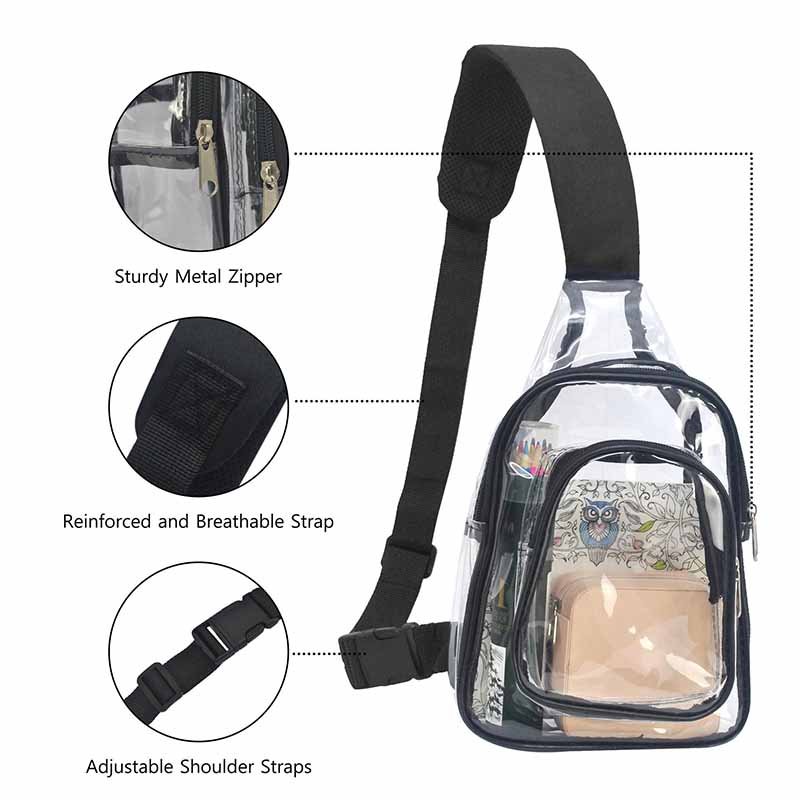
A PVC clear bag is a transparent or semi-transparent bag made from polyvinyl chloride material. It allows the contents inside the bag to be seen easily, which makes it useful for stadiums, concerts, schools, workplaces, travel, cosmetics, beach use, sports events, and promotional campaigns.
Clear PVC bags can be soft, flexible, structured, glossy, frosted, colored, or printed. They can also be combined with other materials such as polyester webbing, nylon binding, neoprene handles, PU leather trims, metal hardware, plastic buckles, silicone patches, woven labels, and custom zipper pulls.
For product developers, PVC clear bags are attractive because they offer both practical function and visual display. Customers can quickly find what they need, while brands can show color, logo, accessories, packaging, and product arrangement more directly.
| PVC Clear Bag Type | Common Size Range | Main Use | Key Customer Concern |
|---|---|---|---|
| Clear stadium bag | 12 x 6 x 12 in or similar | Sports games, concerts, venues | Size compliance, fast inspection |
| Clear tote bag | 10–18 in width | Beach, shopping, retail, work | Handle strength, shape stability |
| Clear cosmetic pouch | 6–12 in width | Makeup, skincare, toiletries | Water resistance, zipper smoothness |
| Clear crossbody bag | 7–12 in width | Events, daily carry, fashion | Strap comfort, logo appearance |
| Clear backpack | 12–17 in height | School, workplace, security use | Load bearing, seam reinforcement |
| Clear travel pouch | Small to medium | Cables, toiletries, storage | Easy cleaning, compartment design |
A low-quality PVC clear bag may look acceptable in photos but feel cheap in the hand. Common problems include sharp edges, uneven stitching, cloudy material, strong plastic odor, weak handle joints, zipper jamming, logo cracking, and PVC panels sticking together after packing. A professional manufacturer should control these points before bulk production, not after goods arrive at the customer’s warehouse.
Why Is PVC Clear Bag Manufacturing Growing?
PVC clear bag manufacturing is growing because clear bags meet several current market needs at the same time: visibility, convenience, water resistance, security control, low development cost, and strong customization potential.
In sports and entertainment markets, clear bags are widely used because many venues require transparent bags for security checks. Stadium bag designs often follow common size structures such as 12 x 6 x 12 inches. For brands selling into this market, size accuracy is not a small detail. A bag that is only slightly oversized may create complaints from customers who cannot bring it into a venue.
In beauty and travel markets, clear pouches are popular because customers can see cosmetics, toiletries, chargers, medicine, skincare bottles, wet swimwear, and small accessories without opening several bags. For e-commerce brands, this visibility also helps product photos look cleaner and more organized.
In promotional and corporate gift markets, PVC clear bags offer a large logo area and daily-use function. Compared with a single-use giveaway item, a clear tote, pouch, or crossbody bag can be reused at events, gyms, beaches, schools, offices, and shopping trips. This gives the logo more exposure over time.
Several reasons make PVC clear bags attractive for custom projects:
| Demand Driver | Why It Matters to Brands | Product Example |
|---|---|---|
| Security rules | Clear bags help users pass checks faster | Stadium clear bags |
| Easy organization | Customers can see contents quickly | Cosmetic pouches, travel kits |
| Water resistance | PVC surface is easy to wipe clean | Beach bags, toiletry bags |
| Low tooling cost | Many styles can be sampled without hard molds | Custom totes and pouches |
| Logo visibility | Transparent surface pairs well with bold branding | Promotional clear bags |
| Fast product testing | Brands can test colors, trims, and sizes quickly | Small-batch private label bags |
| Retail display | Contents and packaging can be seen clearly | Gift sets, beauty kits |
For small and medium brands, this category is especially practical. A new clear bag collection can often start with one or two sizes, several trim colors, and a simple logo method. After the first market test, the brand can expand into matching pouches, bottle sleeves, lunch bags, cosmetic organizers, or seasonal gift sets.
Are PVC Clear Bags Waterproof?
PVC clear bags are water-resistant because PVC itself does not absorb water. Water can sit on the surface and be wiped away easily. This makes PVC suitable for cosmetic bags, toiletry pouches, beach totes, wet-item bags, gym bags, and travel organizers. However, the whole bag is not automatically fully waterproof.
The real water performance depends on how the bag is built. A PVC panel may resist water well, but water can still enter through zipper openings, stitch holes, corner gaps, handle joints, and poorly sealed seams. This is why construction method matters as much as the PVC material itself.
For light daily use, stitched seams may be enough. For example, a clear stadium tote usually does not need to be fully waterproof. It mainly needs to resist rain splashes, carry items safely, and keep its shape. For a cosmetic pouch, a welded seam may be better because customers may place it near sinks, bathrooms, swimming pools, or wet countertops.
| Construction Detail | Water Protection Level | Cost Level | Suitable Products |
|---|---|---|---|
| Standard stitching | Basic splash resistance | Low to medium | Stadium bags, tote bags |
| Reinforced stitching | Better durability, still has needle holes | Medium | Larger totes, backpacks |
| Heat-welded seams | Stronger water resistance | Medium to high | Cosmetic pouches, wet bags |
| Welded + stitched edges | Stronger structure and protection | High | Heavy-duty clear bags |
| Standard nylon zipper | Basic closure | Low | Daily pouches, event bags |
| Water-resistant zipper | Better moisture control | Medium to high | Travel, toiletry, outdoor pouches |
Brands should define the usage level before production. A “waterproof” claim may sound attractive in marketing, but it must match the product structure. If the bag uses normal stitching and a regular zipper, it is safer to describe it as water-resistant or easy to clean. If the project needs stronger waterproof performance, the manufacturer should adjust seam method, zipper type, corner treatment, and testing process.
Important questions to confirm before sampling:
What will customers carry inside the bag?
Will the bag be used near water, rain, bathroom counters, or beaches?
Does the bag need to prevent water from entering, or only protect against splashes?
Will the bag carry wet items inside?
Should the seams be stitched, welded, or both?
Is a regular zipper acceptable, or does the product need a water-resistant zipper?
Answering these questions early helps avoid sample revisions and price surprises later.
Which Industries Use PVC Clear Bags?
PVC clear bags are used in many industries because transparency solves different problems for different customers. For event users, it saves time during security checks. For beauty users, it organizes small items. For schools and workplaces, it supports visibility. For retail brands, it creates a clean, modern product look. For promotional campaigns, it offers strong logo exposure.
The same PVC material can serve very different product goals. A stadium bag is about compliance, speed, and durability. A cosmetic pouch is about waterproof storage and clean appearance. A fashion clear bag is about styling, trim color, hardware, and logo placement. A medical or wellness kit bag is about visibility, easy cleaning, and organized storage.
| Industry | Common PVC Clear Bag Products | Main Product Requirements |
|---|---|---|
| Sports & events | Stadium bags, clear crossbody bags | Correct size, strong strap, fast inspection |
| Beauty & skincare | Cosmetic bags, makeup pouches | Waterproof surface, smooth zipper, clean look |
| Travel | Toiletry bags, organizer pouches | Lightweight, easy cleaning, compartment layout |
| Retail | Clear totes, gift bags, seasonal bags | Shelf appeal, logo quality, packaging |
| Corporate gifts | Logo clear bags, event kits | Cost control, fast production, brand exposure |
| Schools | Clear backpacks, document bags | Load-bearing seams, durable handles |
| Workplaces | Transparent work bags | Security visibility, daily-use strength |
| Medical & wellness | Kit pouches, storage bags | Easy cleaning, item visibility |
| Beach & outdoor | Wet bags, swim pouches, tote bags | Water resistance, handle comfort |
Szoneier can support clear bag projects not only as single products but also as part of a wider custom collection. Since the factory has experience in neoprene products, bags, koozies, sports protectors, medical supports, wetsuit-related items, and fabric-based accessories, brands can create product lines with matching colors, logos, trims, and packaging.
For example:
A beach brand can develop a clear PVC tote, neoprene bottle sleeve, waterproof pouch, and cosmetic bag in one color theme.
A sports brand can create clear stadium bags with matching koozies, armbands, or protective sleeves.
A beauty brand can make clear cosmetic pouches with custom labels, zipper pulls, insert cards, and retail packaging.
A wellness brand can develop transparent kit bags for medical supports, sports wraps, or recovery accessories.
This type of product planning helps brands improve shelf presentation, increase average order value, and build a stronger product identity.
Which Materials Are Used in PVC Clear Bag Manufacturing?
PVC clear bag manufacturing mainly uses transparent PVC sheets in different thicknesses, softness levels, colors, finishes, and safety grades. The right material depends on the product size, carrying weight, price target, market use, temperature conditions, logo method, and packaging style. PVC can also be combined with neoprene, polyester, nylon, TPU, PU leather, webbing, mesh, and custom hardware.
What PVC Thickness Works Best?
PVC thickness directly affects the bag’s structure, softness, weight, cost, durability, and customer feel. If the PVC is too thin, the bag may wrinkle, deform, tear at stress points, or look too much like disposable packaging. If it is too thick, the bag may become heavy, stiff, hard to fold, expensive to ship, and less comfortable to use.
For most clear bag projects, thickness is not about choosing the thickest material. It is about choosing the right balance between strength, flexibility, clarity, price, and product positioning.
| PVC Thickness | Feel | Strength | Common Use | Notes |
|---|---|---|---|---|
| 0.20–0.25 mm | Very soft, light | Low | Simple pouches, packaging-style bags | Good for low-cost items, not ideal for heavy loads |
| 0.30–0.35 mm | Soft and flexible | Medium | Cosmetic pouches, small organizers | Easy to fold, good for lightweight products |
| 0.40–0.50 mm | Balanced | Medium-high | Stadium bags, totes, travel pouches | Common choice for custom clear bags |
| 0.60–0.80 mm | Firm and structured | High | Premium totes, clear backpacks | Better shape, higher cost |
| 1.00 mm+ | Very stiff | Very high | Structured panels, special designs | Not suitable for every bag style |
For stadium bags and clear totes, many brands choose 0.40–0.60 mm PVC because it offers a practical balance. The bag can hold shape better than thin PVC, but it is still flexible enough for daily use. For cosmetic pouches, 0.30–0.50 mm may work well depending on size and seam method. For backpacks and large load-bearing bags, thicker PVC or reinforced fabric binding is usually needed.
Thickness also affects packaging. A thicker PVC bag may not fold flat without leaving marks. If a brand wants premium retail packaging, the factory may need to use tissue paper, shape support, individual polybags, or carton packing with less compression. Otherwise, bags may arrive with strong creases or panels stuck together.
Customer-focused thickness selection should consider:
Expected carrying weight
Bag size and panel area
Need for folding or flat packing
Retail price level
Shipping method
Cold-weather use
Seam type
Handle and strap reinforcement
Logo method
A professional factory should provide material samples before production, because photos alone cannot show softness, smell, thickness, or surface feel accurately.
Which PVC Types Are Most Common?
Clear bag production can use several PVC types and finishes. The choice changes the bag’s appearance, texture, cost, scratch visibility, and market positioning.
Glossy transparent PVC is the most common option. It looks bright, clean, and highly transparent, which works well for stadium bags, cosmetic bags, travel pouches, and retail clear totes. The downside is that scratches, fingerprints, and packing marks may be easier to see.
Frosted PVC has a softer semi-transparent appearance. It can hide small scratches better and create a more subtle, premium look. It is often used for cosmetic pouches, toiletry bags, stationery bags, office pouches, and lifestyle accessories.
Tinted PVC adds color while keeping visibility. Popular colors include black smoke, rose pink, blue, green, amber, and custom transparent shades. Tinted PVC is useful for fashion bags, gift bags, seasonal collections, and youth-focused products.
Matte PVC reduces glare and gives a cleaner lifestyle look. It is less shiny than glossy PVC and may feel more refined for some retail collections.
Printed PVC can include patterns, logos, gradient effects, cartoon graphics, or decorative borders. It works well for gift programs, holiday collections, promotional campaigns, and brand launches.
| PVC Type | Look | Advantages | Possible Concern |
|---|---|---|---|
| Glossy clear PVC | Bright and transparent | Clean product visibility | Shows scratches more easily |
| Frosted PVC | Soft, semi-clear | Hides marks better | Less transparent |
| Tinted PVC | Colored but see-through | Fashion look, stronger style | Color matching must be controlled |
| Matte PVC | Low-glare surface | More premium feel | May reduce visual clarity |
| Printed PVC | Patterned or branded | Strong design effect | Printing adhesion must be tested |
| Low-odor PVC | Cleaner opening experience | Better for retail packaging | Higher material cost |
| Phthalate-free PVC | Safer material positioning | Better for regulated markets | Testing should be confirmed |
For private label brands, material choice should match the selling channel. A low-cost giveaway bag and a premium beauty pouch should not use the same PVC specification. Customers feel the difference immediately when they touch the product.
Is TPU Better Than PVC?
TPU can be better than PVC in some cases, but PVC is still the more practical choice for many clear bag projects. The right choice depends on cost, performance, market positioning, and product use.
PVC is widely used because it is clear, flexible, cost-effective, easy to process, and suitable for many bag styles. It is a strong choice for stadium bags, promotional bags, clear totes, cosmetic pouches, zipper organizers, and retail gift bags.
TPU is often seen as a higher-performance material. It can offer better flexibility, abrasion resistance, cold resistance, and a more premium material story. However, TPU usually costs more, and it may not be necessary for every product. If a brand is selling a price-sensitive event bag, TPU may make the product too expensive. If a brand is developing a premium outdoor waterproof pouch, TPU may be worth considering.
| Material | Best Strength | Cost Level | Best Product Fit |
|---|---|---|---|
| PVC | Clear, affordable, easy to customize | Low to medium | Stadium bags, totes, cosmetic pouches |
| TPU | Flexible, strong, premium feel | High | Outdoor pouches, premium waterproof bags |
| EVA | Soft and lightweight | Medium | Soft cases, flexible pouches |
| PE/PP | Very low cost | Low | Simple packaging bags |
| Nylon + PVC window | Stronger fabric structure | Medium | Work bags, tool bags, travel kits |
| Neoprene + PVC | Soft protection and clear visibility | Medium to high | Sports, bottle sleeves, protective pouches |
A useful way to decide:
Choose PVC when the product needs clear visibility, cost control, fast sampling, and flexible customization.
Choose TPU when the product needs a premium material story, stronger cold resistance, or higher durability.
Choose PVC plus fabric trims when the bag needs better structure and color contrast.
Choose PVC plus neoprene when the product needs soft grip, insulation, or protective padding.
For Szoneier customers, mixed-material development is often a smart route. A clear PVC bag can use neoprene handles for comfort, polyester webbing for strength, nylon binding for clean edges, or a detachable pouch for added value. This helps the final product feel more complete instead of looking like a basic plastic bag.
Are Eco Materials Available?
Eco options are available, but brands should handle this topic carefully. Many customers now care about safer materials, lower odor, responsible packaging, and longer product life. At the same time, clear claims must be accurate. A product should not be marketed as eco-friendly unless the material, testing, and documentation can support that claim.
For PVC clear bag manufacturing, common improvement options include phthalate-free PVC, low-odor PVC, recycled packaging, reduced plastic packaging, stronger construction for longer use, and better cutting plans to reduce factory waste. Some brands may also consider TPU alternatives depending on budget and market positioning.
| Option | What It Improves | Good For |
|---|---|---|
| Phthalate-free PVC | Safer material positioning | EU, US, children-adjacent products, premium retail |
| Low-odor PVC | Better customer unboxing experience | Cosmetic bags, sealed retail packaging |
| Thicker durable PVC | Longer product use | Totes, backpacks, travel bags |
| Recycled paper packaging | Lower packaging waste | Retail and gift programs |
| Bulk inner packing | Less individual plastic use | Wholesale and event orders |
| Better cutting layout | Less production waste | Large-volume orders |
| TPU alternative | Higher-end material story | Outdoor and premium collections |
| Repairable straps or detachable parts | Longer product life | Premium custom bags |
A practical sustainability approach should focus on three things:
Use safer material when required by the sales market.
Make the bag strong enough for repeated use.
Reduce unnecessary packaging waste.
Durability is often the most overlooked part. A clear bag that breaks after two uses creates waste, returns, and negative reviews. A slightly stronger bag with better seams, reinforced handles, smoother zipper operation, and cleaner packaging may be more responsible in real life.
For brands selling into Europe, North America, Japan, or premium retail channels, material compliance should be discussed before sampling. The factory needs to know the target country, product user group, age range, use case, and any retailer testing requirements. This helps avoid redesigning the product after samples are made.
Szoneier can help brands compare PVC thickness, finish, softness, smell level, trimming options, logo methods, packaging choices, and cost differences before bulk production. This is especially useful for brands that want low MOQ customization, fast sampling, private label production, and stable quality across repeat orders.
How Does PVC Clear Bag Manufacturing Work?
PVC clear bag manufacturing usually follows a step-by-step process: material confirmation, pattern development, sample cutting, seam testing, logo application, hardware assembly, inspection, packing, and bulk production. Each step affects the final product. A clear bag is easy to judge with the eyes, so poor seams, cloudy PVC, uneven edges, scratched panels, or weak handles are quickly noticed by customers.
How Are PVC Panels Cut?
PVC clear bag production starts with panel cutting. The factory first confirms the bag size, structure, seam allowance, corner shape, zipper position, handle placement, logo area, and reinforcement points. After that, the pattern is made and adjusted for sampling.
Clear PVC can be cut by die cutting, hand cutting, machine cutting, or computer-controlled cutting depending on order quantity, shape complexity, and accuracy needs. For simple pouch shapes, cutting is relatively straightforward. For bags with curved corners, multiple compartments, transparent windows, reinforced bottoms, or custom shapes, pattern accuracy becomes much more important.
Small cutting errors can create bigger problems later. If the front and back panels are not aligned, the finished bag may look twisted. If seam allowance is too narrow, the weld or stitch may not hold well. If the zipper opening is not cut cleanly, the zipper may wave or wrinkle. If corner curves are too sharp, the PVC may tear more easily at stress points.
| Cutting Detail | Why It Matters | Possible Problem If Poorly Controlled |
|---|---|---|
| Panel size | Controls finished bag dimensions | Bag may be too large or too small |
| Seam allowance | Affects strength and appearance | Weak seams or uneven edges |
| Corner radius | Reduces stress concentration | Cracking or tearing at corners |
| Logo position | Keeps branding centered | Crooked or unbalanced logo |
| Zipper opening | Affects zipper smoothness | Wavy zipper or hard pulling |
| Handle spacing | Controls carrying comfort | Bag tilts or straps pull unevenly |
| Bottom panel size | Helps bag stand properly | Poor shape, unstable base |
For custom brands, finished size tolerance should be confirmed before production. A clear stadium bag, for example, may need stricter size control because customers expect it to meet venue requirements. A cosmetic pouch may allow slightly more flexibility, but the zipper and opening still need to feel smooth.
Szoneier normally helps customers review bag dimensions, handle length, zipper direction, logo placement, and packing method before making samples. This reduces repeated sample changes and helps the final bag look closer to the design file.
How Are PVC Seams Welded?
PVC clear bags can be joined by heat welding, high-frequency welding, stitching, binding, or a combination of these methods. The best method depends on the bag type, load requirement, water resistance, appearance, cost, and production volume.
Heat welding and high-frequency welding join PVC panels without needle holes. This is useful for cosmetic pouches, wet bags, waterproof-style bags, and products that need cleaner water resistance. The seam can look smooth and modern, but welding requires correct temperature, pressure, time, and material compatibility. If the welding is too weak, the seam may split. If it is too strong or too hot, the PVC may burn, wrinkle, shrink, or turn cloudy near the edge.
Stitching is common for clear tote bags, stadium bags, backpacks, and bags with fabric trims. Stitching allows the bag to combine PVC with webbing, nylon binding, polyester fabric, PU trims, zipper tape, and handles. It also gives stronger structure in some load-bearing areas. However, stitching creates needle holes, so it is usually better for water-resistant rather than fully waterproof products.
| Seam Method | Appearance | Strength | Water Resistance | Common Use |
|---|---|---|---|---|
| Heat welding | Clean, simple | Medium to high | High | Cosmetic pouches, wet bags |
| High-frequency welding | Neat, strong | High | High | Premium clear pouches |
| Standard stitching | Familiar bag look | Medium | Basic | Totes, stadium bags |
| Stitching + binding | Cleaner edge | High | Basic to medium | Backpacks, larger bags |
| Welding + stitching | Strong and protective | High | Medium to high | Heavy-duty custom bags |
For load-bearing bags, seam design should be tested with real weight. A bag may look perfect when empty but fail when customers carry water bottles, phones, wallets, towels, cosmetics, books, or event items.
Recommended load reference for custom development:
| Bag Type | Suggested Load Test Range | Key Reinforcement Area |
|---|---|---|
| Small cosmetic pouch | 0.5–1.5 kg | Zipper ends, side seams |
| Stadium crossbody bag | 2–4 kg | Strap joints, side seams |
| Clear tote bag | 4–8 kg | Handle joints, bottom corners |
| Clear backpack | 6–12 kg | Shoulder straps, bottom panel |
| Travel organizer bag | 2–5 kg | Zipper, handle, corners |
For Szoneier custom projects, the seam structure can be adjusted according to the product use. A simple event giveaway may need a cost-efficient construction, while a premium retail clear tote may need thicker PVC, reinforced handles, stitched binding, better hardware, and stronger bottom support.
How Are Logos Added?
Logo application is one of the most important parts of PVC clear bag manufacturing because the material is transparent. A logo that looks slightly crooked, uneven, faded, sticky, or cracked becomes very visible. Unlike fabric bags, where texture can hide small defects, clear PVC exposes printing and placement issues more directly.
Common logo methods include screen printing, heat transfer printing, UV printing, silicone patches, rubber labels, woven labels, leather patches, metal plates, printed webbing, zipper pulls, and hangtags. The right method depends on design complexity, color number, order quantity, budget, product positioning, and durability requirements.
| Logo Method | Best For | Advantages | Possible Concern |
|---|---|---|---|
| Screen printing | Simple logos, solid colors | Cost-effective, strong color | Needs adhesion testing |
| UV printing | Multi-color graphics | Good detail, flexible design | Higher cost than basic print |
| Heat transfer | Gradients, artwork | Rich visual effect | May peel if poorly processed |
| Rubber patch | Sports, outdoor, youth brands | Durable, 3D feel | Mold cost may apply |
| Silicone label | Premium soft touch | Clean and modern | Higher unit cost |
| Woven label | Lifestyle, retail bags | Soft brand detail | Less bold on transparent panels |
| PU leather patch | Fashion clear bags | Premium appearance | Not suitable for all markets |
| Metal plate | Luxury-style bags | Strong brand presence | Adds weight and cost |
| Printed webbing | Strap branding | Repeated logo exposure | Needs MOQ control |
For clear bags, logo visibility depends heavily on background. A white logo may disappear when the bag contains light-colored items. A black logo may look sharp but too strong for soft beauty products. A colored logo may need extra testing to ensure good coverage and stable adhesion.
Practical logo recommendations:
Use simple, bold logos for stadium bags and promotional bags.
Use small premium labels for beauty and lifestyle pouches.
Use printed webbing for sport, travel, and event products.
Use rubber or silicone patches for a more durable, branded look.
Use hangtags and insert cards when the PVC surface should stay clean.
For private label projects, Szoneier can help place the logo on the PVC panel, strap, zipper pull, patch, woven label, packaging bag, carton mark, or retail insert card. This gives brands more flexibility. Sometimes the best branding is not one large logo on the front, but a smaller logo supported by better trims, color matching, and packaging.
How Are PVC Samples Made?
PVC clear bag sampling is the stage where the design becomes real. This is where many problems show up: the PVC may feel too soft, the bag may collapse, the zipper may not run smoothly, the handle may feel too short, the logo may not stand out, or the bag may look less premium than expected.
A good sample process should not only copy a drawing. It should test structure, material, comfort, function, and production feasibility. Many brands send a rough idea, reference photo, size requirement, logo file, target price, and market use. The factory then recommends material thickness, trim choices, seam method, logo method, and packing style.
A practical sampling process usually includes:
| Step | What Happens | What Brands Should Check |
|---|---|---|
| Design review | Factory checks size, structure, materials | Is the product realistic for the target price? |
| Material selection | PVC thickness and finish are chosen | Does the material feel right? |
| Pattern making | Bag panels and seam allowances are planned | Does the shape match the design? |
| Sample cutting | PVC and trims are cut | Are panels accurate and clean? |
| Assembly | Seams, zipper, handles, and trims are added | Is the bag functional and balanced? |
| Logo testing | Logo is printed or attached | Is the logo clear and durable? |
| Internal inspection | Factory checks sample quality | Are there defects before shipping? |
| Customer review | Brand checks sample physically | What needs to be revised? |
For most custom PVC clear bag projects, one to two rounds of sampling are common. A simple pouch may be confirmed faster. A structured tote, backpack, or multi-material clear bag may need more adjustments.
Key sample review points:
PVC thickness and hand feel
Transparency and surface finish
Odor level after opening package
Finished size accuracy
Seam strength and appearance
Zipper smoothness
Handle comfort
Strap length and adjustability
Logo position and color
Bottom support and shape stability
Packaging method
For Szoneier customers, fast sampling is useful because brands often need to test photos, pricing, influencer feedback, retail presentation, or event deadlines before placing bulk orders. The more complete the first development brief is, the faster the sample can move from idea to approval.
Which PVC Clear Bag Styles Sell Best?
The best-selling PVC clear bag styles usually solve a clear customer need: stadium entry, beauty organization, travel storage, beach use, workplace visibility, or retail gifting. Strong-selling styles are not only transparent; they also have the right size, comfortable straps, clean logo placement, reliable zippers, good structure, and packaging that fits the sales channel.
What Are Stadium Clear Bags?
Stadium clear bags are one of the most common PVC clear bag categories. They are designed for sports games, concerts, festivals, school events, exhibitions, and large public venues where security checks are required. The purpose is simple: users can carry essential items while allowing security staff to see inside the bag quickly.
A stadium bag should be practical, not over-designed. Customers usually carry phones, wallets, keys, sunglasses, tickets, small cosmetics, power banks, snacks, and sometimes a water bottle. The bag needs to be lightweight, easy to open, comfortable to carry, and close securely.
Common stadium clear bag styles include:
| Style | Common Structure | Best Use |
|---|---|---|
| Clear tote bag | Open top or zipper top with handles | Sports games, concerts |
| Clear crossbody bag | Zipper top with adjustable strap | Hands-free event use |
| Clear backpack | Two shoulder straps, larger capacity | School, work, event staff |
| Clear wristlet | Small pouch with wrist strap | Minimal carry |
| Clear fanny pack | Waist or crossbody wear | Festivals, outdoor events |
Important design points for stadium clear bags:
Size should match venue-friendly dimensions.
PVC should be thick enough to hold shape but not too stiff.
Strap joints need reinforcement.
Zipper opening should be wide enough for quick access.
Logo should not block visibility too much.
Bag corners should be rounded or reinforced.
Packaging should avoid deep folding marks.
For brands selling stadium bags online, product photos should clearly show dimensions, capacity, strap length, and common items inside. Customers often buy these bags for a specific event date, so complaints about wrong size, poor zipper quality, or weak straps can damage reviews quickly.
Szoneier can customize stadium clear bags with different PVC thicknesses, colored trims, adjustable straps, printed logos, rubber patches, woven labels, zipper pulls, and individual packaging for e-commerce or retail use.
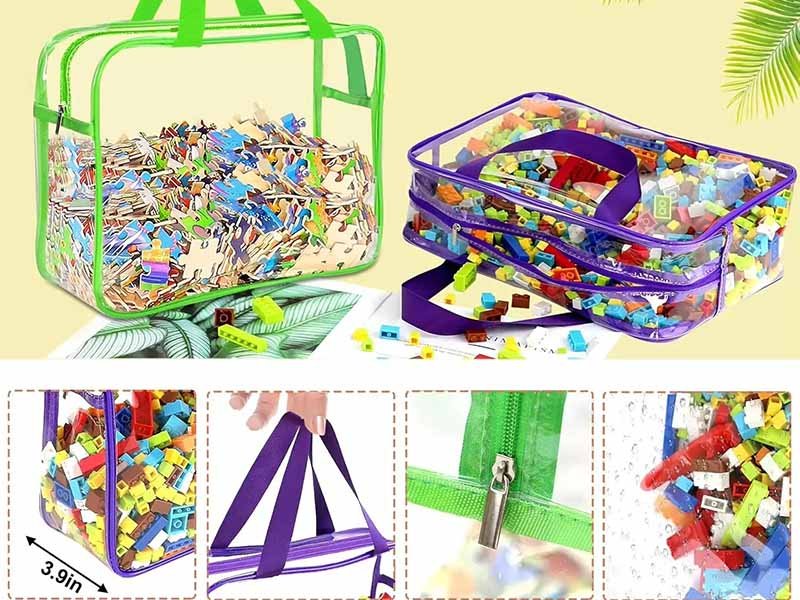
Which PVC Tote Bags Are Popular?
PVC clear tote bags are popular because they are simple, useful, and easy to customize. They can be used for beach trips, shopping, gym items, travel, events, office storage, retail promotions, and seasonal gift sets. Compared with small pouches, tote bags offer more visible branding space and larger capacity.
A strong clear tote bag should not feel flimsy. The biggest quality risks are weak handles, poor bottom shape, sharp edges, cloudy PVC, and seams that stretch under weight. Since tote bags often carry heavier items, reinforcement is more important than many brands expect.
Common clear tote structures:
| Tote Style | Design Feature | Best Market |
|---|---|---|
| Basic clear tote | Two handles, open or zipper top | Promotions, retail, events |
| Clear beach tote | Larger size, waterproof surface | Beach, swim, travel |
| Clear shopping tote | Reinforced handles, flat bottom | Retail, daily use |
| Clear fashion tote | Colored trims, premium hardware | Lifestyle and boutique brands |
| Clear work tote | Stronger structure, document-friendly size | Office, schools, workplaces |
| Clear gift tote | Smaller size, decorative design | Beauty sets, holiday kits |
Useful tote bag size references:
| Size Category | Approximate Width | Common Use |
|---|---|---|
| Small tote | 8–10 in | Gift sets, cosmetics |
| Medium tote | 11–14 in | Stadium, shopping, daily carry |
| Large tote | 15–18 in | Beach, travel, gym |
| Oversized tote | 19 in+ | Bulky items, special retail use |
Popular customization options:
Colored webbing handles
Nylon or polyester binding
Zipper top closure
Snap button closure
Reinforced bottom panel
Removable inner pouch
Printed front logo
Side label or patch
Custom zipper pull
Retail hangtag
For higher-end clear totes, brands often use a mix of transparent PVC and fabric trims. This makes the bag look less like packaging and more like a finished accessory. Neoprene handles can also improve comfort, especially for beach, sport, and travel use.
Are PVC Cosmetic Bags Trending?
PVC cosmetic bags continue to perform well because they solve a real daily problem: customers want to see makeup, skincare, brushes, toiletries, and travel-size bottles quickly. A clear cosmetic pouch also looks clean in product photos, which helps beauty brands, skincare brands, salons, hotels, spas, gift companies, and e-commerce sellers.
The most successful PVC cosmetic bags usually have a neat shape, smooth zipper, easy-clean surface, and enough structure to stand or sit nicely on a counter. Cheap cosmetic pouches often fail because the zipper jams, corners split, PVC smells too strong, or the pouch becomes cloudy after packing.
Popular PVC cosmetic bag styles:
| Style | Product Feature | Best Use |
|---|---|---|
| Flat zipper pouch | Slim, simple, lightweight | Makeup, documents, travel |
| Box cosmetic bag | Structured shape, larger opening | Toiletries, skincare bottles |
| Cube pouch | Compact and giftable | Beauty kits, samples |
| Cylinder pouch | Rounded shape | Brushes, small bottles |
| Multi-piece set | Different sizes in one pack | Travel, retail bundles |
| Clear + fabric pouch | PVC window with fabric body | Premium cosmetic brands |
Important details for cosmetic bags:
Zipper should open smoothly around corners.
PVC should not stick together after packing.
Seams should be clean and not too bulky.
Corners should resist splitting.
The bag should be easy to wipe clean.
Logo should not disappear when filled with products.
Packaging should control odor before customer opening.
For beauty and skincare brands, small details make a big difference. A clear pouch may be used as gift packaging first and daily storage later. If the pouch feels premium, customers may keep using it, which extends brand exposure. If it feels cheap, it may be thrown away after opening the gift set.
Szoneier can support cosmetic bag projects with clear PVC, frosted PVC, colored transparent PVC, zipper options, custom labels, printed inserts, matching packaging, and low MOQ customization for new product launches.
Which PVC Travel Bags Perform Well?
PVC travel bags perform well when they help customers organize items quickly and cleanly. Travel users want to separate toiletries, cables, chargers, swimwear, socks, medicine, skincare, makeup, documents, and small accessories. Clear PVC makes it easier to see what is inside without opening every pouch.
The best travel PVC bags are not always the largest ones. A good travel collection often includes several sizes: small pouch for cables, medium pouch for cosmetics, larger pouch for toiletries, and wet/dry bag for damp items. Brands can sell these as sets to increase product value.
Common PVC travel bag products:
| Travel Product | Common Function | Useful Feature |
|---|---|---|
| Toiletry pouch | Stores bathroom items | Water-resistant surface |
| Cable organizer | Stores chargers and wires | Small compartments |
| Wet/dry pouch | Separates damp items | Welded or reinforced seams |
| Travel cosmetic bag | Holds makeup and skincare | Smooth zipper and stable shape |
| Shoe or sandal pouch | Keeps luggage clean | Larger clear panel |
| Document pouch | Stores passport, tickets, cards | Slim structure |
| Packing cube with PVC window | Shows contents | Fabric body + clear window |
Travel bag customers care about:
Lightweight packing
Easy cleaning
Leak resistance
Zipper reliability
Odor control
Flexible storage
Set design
Compact folding
Durable seams
For travel brands, clear PVC can also be combined with mesh, nylon, polyester, or neoprene. A full clear pouch gives maximum visibility, while a fabric body with clear window may feel more durable and premium. A neoprene-trimmed travel pouch can add soft protection for bottles, electronics, or sports accessories.
Szoneier can help brands develop travel bag sets with matching sizes, color trims, logo placement, barcode labels, insert cards, and e-commerce packaging. This is useful for Amazon sellers, Shopify brands, hotel suppliers, beauty brands, wellness kits, travel accessory companies, and event gift programs.
How to Control PVC Clear Bag Quality?
PVC clear bag quality is controlled by checking material clarity, smell level, thickness, cutting accuracy, seam strength, zipper smoothness, handle strength, logo durability, size accuracy, packing marks, and finished appearance. Because the bag is transparent, defects are easier to see than on fabric bags. Good quality control should start from material inspection, not only final packing.
What Defects Are Common?
PVC clear bags are visually sensitive products. A small scratch, stain, or cloudy panel can look obvious, especially when the bag is sold online or displayed under store lighting. Many problems come from material handling, cutting, sewing, welding, packing pressure, or poor storage before shipment.
Common PVC clear bag defects include:
| Defect | What It Looks Like | Main Cause | How to Reduce It |
|---|---|---|---|
| Cloudy PVC | Panel looks foggy | Low-grade material, poor storage | Use clearer PVC and inspect rolls |
| Strong odor | Harsh plastic smell | Material formula, sealed packing | Use low-odor PVC and air-out process |
| Scratches | Lines on surface | Rough handling, stacking friction | Use protective film or careful packing |
| Creases | Fold marks on panels | Tight folding, heavy carton pressure | Improve packing structure |
| Sticky panels | PVC layers stick together | Heat, pressure, poor material | Add tissue paper or surface protection |
| Uneven stitching | Crooked seam line | Poor alignment, fast sewing | Use guides and trained workers |
| Weak seam | Seam opens under force | Narrow seam allowance, poor welding | Increase seam area and test load |
| Zipper wave | Zipper looks curved or uneven | Poor cutting or sewing tension | Control zipper placement |
| Logo peeling | Print or label comes off | Poor adhesion or wrong process | Test logo before bulk order |
| Size deviation | Bag does not match spec | Cutting or assembly tolerance | Check patterns and finished size |
For clear bag projects, the most serious problems are not always the most visible ones. A small scratch may hurt appearance, but weak handle joints can create real customer complaints after use. Brands should pay attention to both cosmetic quality and functional quality.
A practical inspection should include:
PVC roll inspection before cutting
Panel surface check after cutting
Seam strength check during assembly
Zipper opening and closing test
Handle pull test
Logo adhesion test
Finished size measurement
Packing pressure check
Random carton inspection before shipment
For e-commerce brands, quality consistency is especially important. Online customers compare the received product with photos. If the PVC looks yellow, wrinkled, scratched, or poorly sewn, reviews can drop quickly. A factory should understand this reality and not treat clear bags like low-value disposable items.
How Is Transparency Checked?
Transparency is one of the first things customers notice. A good PVC clear bag should look clean, bright, and consistent. The surface should not look cloudy, yellowish, oily, dusty, scratched, or uneven. For tinted PVC, the color should stay consistent from panel to panel and from batch to batch.
Transparency can be affected by material grade, PVC thickness, storage conditions, surface finish, production temperature, handling, and packaging. Thicker PVC may naturally look slightly less flexible and sometimes slightly less bright than thinner PVC. Frosted PVC is intentionally less transparent. Tinted PVC needs stricter color control because slight differences are easier to notice when multiple bags are displayed together.
Key transparency checks:
Place a white paper or printed card behind the PVC and check clarity.
Compare PVC panels under natural light and indoor light.
Check whether front, back, side, and bottom panels match.
Look for yellow tint, blue tint, cloudy areas, and uneven gloss.
Inspect scratches before and after assembly.
Check whether panels stick together after packing.
Confirm whether the final packed bag still looks clean after carton pressure.
| Check Item | Good Result | Warning Sign |
|---|---|---|
| Clarity | Contents are easy to see | Foggy or milky surface |
| Color tone | Consistent across panels | One panel looks yellow or blue |
| Surface gloss | Even and clean | Patchy shine or dull spots |
| Scratch level | Minor marks only | Deep visible scratches |
| Panel matching | Same appearance across bag | Front and back look different |
| Packing result | Panels remain clean | Creases, sticking, pressure marks |
For product photography, transparency matters even more. A clear bag may look acceptable in a factory room but show scratches or wrinkles under studio lighting. If the bag is for Amazon, Shopify, retail packaging, or influencer promotion, material appearance should be checked early during sample approval.
Szoneier can help brands compare clear glossy PVC, frosted PVC, tinted PVC, matte PVC, and low-odor PVC before production. This helps customers choose the right look for the product, instead of discovering the material problem after bulk production starts.
Do PVC Clear Bags Have Odor Issues?
PVC clear bags can have odor issues if the material formula, production process, storage, or packaging is not controlled well. Since many clear bags are packed in sealed polybags or cartons, odor may become stronger when the customer opens the package. This is a major concern for cosmetic bags, travel bags, beauty gift sets, and retail products.
Odor does not always mean the bag is unsafe, but it affects customer experience. In online reviews, customers often describe strong plastic smell as “cheap,” even when the bag structure is acceptable. For brands, odor control is not only a material issue; it is also a reputation issue.
Ways to reduce PVC odor:
Choose low-odor PVC material.
Avoid overly cheap recycled or unstable material for retail products.
Allow finished bags to air out before final packing.
Use proper storage ventilation.
Avoid sealing hot goods immediately after production.
Use suitable inner packing materials.
Confirm odor level through sample testing.
For premium brands, request material testing when needed.
| Product Type | Odor Sensitivity | Reason |
|---|---|---|
| Stadium bags | Medium | Customers may tolerate slight PVC smell |
| Cosmetic pouches | High | Used near face, skincare, makeup |
| Travel toiletry bags | High | Packed with personal items |
| Beach bags | Medium | Outdoor use reduces sensitivity |
| Gift bags | High | First impression matters |
| Children-related bags | Very high | Material safety and smell matter more |
| Retail boutique bags | High | Premium feel depends on clean opening |
Odor control should be discussed before sampling, not after production. If a brand wants the lowest possible smell level, the factory needs to choose suitable PVC material from the start. Switching material after sample approval may change softness, clarity, welding performance, and cost.
For Szoneier projects, customers can request material comparison, sample airing suggestions, and packaging review. This is useful for private label brands that sell through online platforms, where unboxing experience directly affects customer reviews.
How Are Bulk Orders Inspected?
Bulk inspection is where the factory confirms that the approved sample has been reproduced correctly. A clear PVC bag order should not be judged only by a few nice pieces from the top of a carton. Inspection should cover material consistency, workmanship, function, size, logo, packing, and carton condition.
A practical bulk inspection should include four stages:
Incoming material inspection
In-process inspection
Finished product inspection
Final random inspection before shipment
| Inspection Stage | Main Check Points | Why It Matters |
|---|---|---|
| Material inspection | PVC clarity, thickness, smell, color | Prevents defects before cutting |
| Cutting inspection | Panel size, scratches, edge quality | Avoids assembly problems |
| Sewing/welding inspection | Seam line, strength, alignment | Controls durability |
| Hardware inspection | Zippers, buckles, snaps, straps | Prevents function complaints |
| Logo inspection | Position, color, adhesion | Protects brand image |
| Finished inspection | Shape, size, appearance, function | Confirms product quality |
| Packing inspection | Folding marks, labels, cartons | Reduces shipping damage |
| Final inspection | Random cartons and units | Confirms shipment readiness |
Common test points for PVC clear bags:
Finished size measurement
PVC thickness check
Zipper open-close test
Handle pull test
Strap adjustment test
Seam tension test
Logo rub test
Surface scratch inspection
Odor check
Carton drop or compression review when needed
For larger orders, AQL inspection standards may be used by the buyer or third-party inspector. But even when formal AQL inspection is not required, the factory should still have internal quality checkpoints. Clear bags are unforgiving: once scratched, stained, or creased, the defect cannot be hidden.
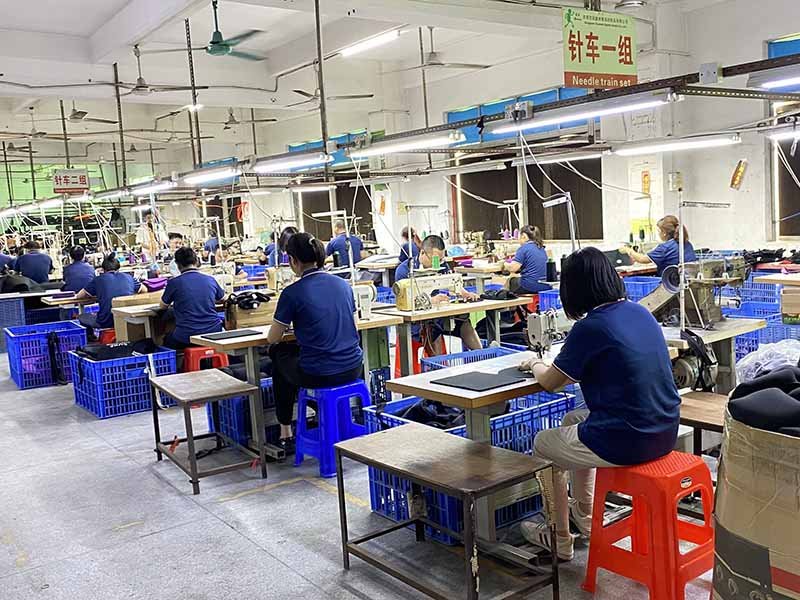
Szoneier supports quality control from sample confirmation to bulk shipment. For custom clear bag projects, the factory can help confirm material, workmanship, logo method, packing style, carton marks, and inspection requirements before production starts. This helps reduce avoidable mistakes and gives brands more confidence when scaling from small trial orders to repeat bulk production.
How to Choose a PVC Clear Bag Manufacturer?
Choosing a PVC clear bag manufacturer should not be based only on the lowest unit price. A reliable factory should understand PVC materials, clear bag structure, seam methods, logo processes, odor control, packing protection, low MOQ customization, fast sampling, and export requirements. The right manufacturer helps brands reduce risk, improve product feel, and bring custom ideas into real production.
What MOQ Is Best for Startups?
For startups, the best MOQ is the quantity that allows the brand to test the market without creating too much stock risk. A low MOQ can help new brands test size, style, price, color, logo, packaging, and customer feedback before ordering larger quantities.
PVC clear bags are suitable for low MOQ development because many styles do not require expensive hard molds. If the bag uses standard PVC thickness, regular zipper, common webbing, and simple logo methods, the project can often start more flexibly. However, MOQ may increase when the product requires custom-dyed PVC, special hardware, molded rubber patches, custom zipper pulls, special packaging, or multi-color printing.
MOQ is affected by:
PVC material availability
Bag size and structure
Logo method
Trim color
Hardware type
Packaging requirements
Order color quantity
Production line setup
Printing or patch mold needs
| Custom Element | MOQ Impact | Notes |
|---|---|---|
| Stock clear PVC | Lower | Easier for trial orders |
| Custom tinted PVC | Higher | Material MOQ may apply |
| Standard zipper | Lower | Common colors available |
| Custom zipper pull | Medium to high | Mold or MOQ may apply |
| Screen printed logo | Lower to medium | Good for simple branding |
| Rubber patch logo | Medium to high | Mold cost may apply |
| Custom packaging | Medium | Depends on box, card, label |
| Multi-size set | Medium | More patterns and assembly steps |
| Special hardware | Higher | Supplier MOQ may apply |
For new brands, a smart starting plan may be:
Start with one core style.
Choose one or two colors.
Use a simple logo method.
Keep packaging clean but not overly complex.
Test customer feedback.
Improve the second order based on reviews.
Szoneier supports low MOQ customization, which is useful for small and medium buyers, Amazon sellers, Shopify brands, event companies, beauty brands, and new private label projects. The goal is not just to make a small order, but to make a small order that can grow into repeat production.
How Fast Is PVC Sampling?
PVC clear bag sampling speed depends on design complexity, material availability, logo method, and revision requirements. A simple clear pouch or tote can usually move faster than a structured backpack, multi-compartment travel bag, or custom-shaped cosmetic case.
Fast sampling does not mean careless sampling. A rushed sample with wrong thickness, weak seams, poor logo placement, or bad zipper choice wastes more time later. The best sampling process is fast but controlled.
Typical factors that affect sample time:
| Factor | Faster Option | Slower Option |
|---|---|---|
| Material | Stock clear PVC | Custom color or special grade PVC |
| Style | Simple pouch or tote | Backpack, shaped bag, multi-pocket design |
| Logo | Screen print or label | Molded patch, metal plate, complex print |
| Hardware | Stock zipper and webbing | Custom zipper pull or special buckle |
| Packaging | Basic polybag | Custom box, insert card, retail set |
| Design file | Clear tech pack | Rough idea with missing dimensions |
| Approval process | One decision maker | Multiple review rounds |
To speed up sampling, brands should provide:
Bag type
Target size
Reference photo or sketch
PVC thickness preference
Logo file
Logo size and position
Strap or handle requirement
Target use
Target price range
Sales market
Packaging idea
Expected order quantity
If the customer does not know all details yet, Szoneier can suggest a practical starting plan based on product use. For example, a stadium bag may start with 0.5 mm clear PVC, zipper top, reinforced webbing strap, and front logo printing. A cosmetic pouch may start with 0.35–0.45 mm PVC, smooth zipper, welded or stitched seam, and small label branding.
Fast sampling is especially valuable when a brand has an event date, product launch, seasonal campaign, influencer promotion, or retailer review deadline. The earlier material and structure are confirmed, the smoother the bulk production will be.
What Changes PVC Bag Pricing?
PVC clear bag pricing depends on material, thickness, size, construction, logo method, hardware, labor, packaging, order quantity, and quality requirements. Two bags that look similar in photos may have very different costs if one uses thicker PVC, better zippers, reinforced seams, custom straps, and retail packaging.
Main pricing factors:
| Pricing Factor | Lower-Cost Choice | Higher-Cost Choice |
|---|---|---|
| PVC thickness | Thin PVC | Thick or premium low-odor PVC |
| Bag size | Small pouch | Large tote or backpack |
| Seam method | Simple stitching | Welding, reinforced binding |
| Zipper | Standard zipper | Water-resistant or branded zipper |
| Strap | Basic webbing | Padded, printed, adjustable strap |
| Logo | One-color print | Multi-color print, rubber patch, metal plate |
| Hardware | Plastic buckle | Metal buckle, custom hardware |
| Packaging | Bulk pack | Individual retail packaging |
| Quantity | Larger bulk order | Small trial order |
| Inspection level | Standard internal QC | Extra testing or third-party inspection |
Brands often focus heavily on unit price, but the better question is: what does the price include? A cheaper quote may exclude proper packing, use thinner PVC, reduce seam allowance, choose weak hardware, or skip odor control. This may look attractive at the quotation stage but cause problems after delivery.
A useful cost-control strategy is to protect the parts customers notice most:
PVC clarity
Handle strength
Zipper smoothness
Logo quality
Odor level
Packing appearance
Then simplify less important parts if the budget is tight. For example, a brand can choose a standard zipper pull instead of a custom metal pull, but should not reduce handle reinforcement on a tote designed to carry heavier items.
For Szoneier projects, customers can share a target price range, expected order quantity, product use, and sales channel. The factory can then recommend practical material and construction options that match the budget without sacrificing the product’s core performance.
Why Choose Szoneier for PVC Clear Bag Manufacturing?
Szoneier is a China-based factory with more than 18 years of experience in material development and custom product manufacturing. The company supports a wide range of products made from neoprene and related flexible materials, including bags, koozies, sports supports, medical supports, wetsuits, and custom accessories. This material and bag-making background is helpful for PVC clear bag manufacturing because clear bags often require mixed materials, precise structure, reinforced trims, and customized branding.
| Customer Need | Szoneier Support |
|---|---|
| New product idea | Design discussion and material suggestions |
| Small trial order | Low MOQ customization |
| Fast launch | Quick sampling and production coordination |
| Brand identity | Logo, label, trim, and packaging customization |
| Better comfort | Neoprene handles, webbing straps, soft trims |
| Product durability | Reinforced seams and hardware review |
| Mixed product line | Bags, koozies, supports, pouches, accessories |
| Quality confidence | Material and finished product inspection |
For foreign small and medium buyers and premium brand customers, communication and development support are often as important as production itself. A good factory should help you avoid wrong material choices, weak construction, poor logo methods, bad packaging, and unrealistic pricing decisions.
If you are planning a PVC clear bag project, Szoneier can help turn your idea into a real product. You can send your size, reference photo, logo, target use, quantity plan, and packaging idea. The team can recommend suitable PVC thickness, seam method, zipper type, trim material, logo process, and cost structure based on your market.
Whether you need stadium clear bags, cosmetic pouches, transparent tote bags, travel organizers, retail gift bags, or private label PVC clear bags, Szoneier can support custom development from design to sample to bulk production.