
How to Choose a Reliable Tool Bags Manufacturer for Heavy-Duty Tool Bags
- Eric
- March 11, 2026
- 8:36 am
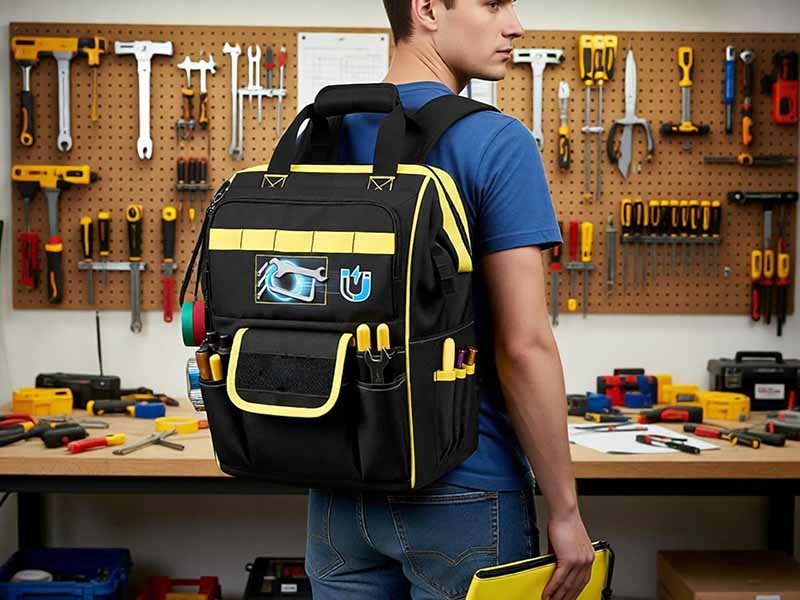
Heavy-duty tool bags are built for demanding environments. Electricians, mechanics, construction workers, and maintenance teams rely on them every day to organize tools that may weigh 15–40 lbs or more. If a tool bag fails—broken zippers, torn seams, weak handles—it doesn’t just cause inconvenience; it interrupts work, delays projects, and damages brand reputation. That’s why selecting the right tool bags manufacturer is one of the most important decisions for distributors, hardware brands, and private label product lines.
Many companies searching for suppliers focus only on price or minimum order quantity. But in reality, durability, production capacity, customization ability, and quality control processes matter far more for long-term success. A reliable tool bags manufacturer should offer durable materials, reinforced construction, proven production experience, flexible customization options, stable lead times, and strict quality control systems. Factories with 10+ years of manufacturing experience, multiple material options such as polyester, canvas, or nylon, and strong OEM/ODM capabilities are typically better suited for heavy-duty product lines.
Imagine a hardware brand launching a new professional tool bag series. The design looks great, marketing is ready, and retailers are excited. But after only a few weeks of use, customers complain about broken stitching and weak handles. Reviews drop. Retailers lose confidence. The issue wasn’t marketing—it was choosing the wrong manufacturer.
In this guide, we’ll explore how to avoid that scenario and how to confidently choose a reliable tool bags manufacturer for heavy-duty product lines.
What Makes a Tool Bags Manufacturer Reliable?
A reliable tool bags manufacturer combines real manufacturing experience, durable materials, reinforced construction methods, and strict quality inspection systems. Factories that have produced heavy-duty functional bags for many years usually understand how to strengthen stress points, select industrial fabrics, and maintain consistent production quality. These capabilities are essential for tool bags that must carry 20–40 lbs of tools in demanding work environments.
When buyers search for a tool bags manufacturer, the first instinct is often to compare prices. But experienced product managers and hardware brands know that price alone rarely determines the success of a heavy-duty product line.
What truly matters is long-term reliability.
A professional tool bag may be used daily by electricians, plumbers, construction workers, and mechanics. These workers rely on their bags to carry expensive tools and equipment. If the bag fails after only a few weeks, it quickly becomes a warranty issue, a customer complaint, and eventually a damaged brand reputation.
Reliable manufacturers understand this reality and design their production systems around durability and consistency.
Below are several real factors that experienced buyers use to evaluate whether a tool bags manufacturer is truly reliable.
What quality standards should a tool bags manufacturer meet?
Heavy-duty tool bags are very different from promotional bags or fashion bags. They must support heavy loads, sharp metal tools, and rough working conditions.
A reliable manufacturer usually follows clear quality standards during production. These standards ensure that each bag can withstand real working environments.
For example, professional tool bags typically require stronger construction than normal backpacks.
| Product Component | Recommended Industrial Standard |
|---|---|
| Fabric strength | 600D–1680D polyester or heavy canvas |
| Stitch density | 8–10 stitches per inch |
| Handle load capacity | 25–40 kg |
| Zipper durability | 5,000–10,000 cycles |
| Bottom reinforcement | Double-layer fabric or PVC base |
Factories that manufacture tool bags regularly often conduct load testing during development.
A typical load test might include placing 25–35 kg of weight inside the bag and lifting it repeatedly for hundreds of cycles. This simulates real-world use by construction workers.
Reliable manufacturers also inspect several critical points that commonly fail in poorly designed bags:
- Handle attachment areas
- Zipper openings
- Bottom panel seams
- Pocket edges
- Shoulder strap connections
Experienced bag factories usually apply reinforcement techniques such as:
- bar-tack stitching
- cross reinforcement seams
- double-layer fabric panels
These reinforcements increase durability significantly.
For example, reinforcing a handle attachment with bar-tack stitching can increase the load capacity by 30–40% compared with simple straight stitching.
Manufacturers with experience producing industrial gear, tactical bags, or tool bags usually have better control over these technical details.
Companies like Szoneier, with more than 18 years of bag manufacturing experience, implement multi-stage quality inspections during production to ensure every bag meets durability standards before shipment.
How does experience affect a tool bags manufacturer’s reliability?
Manufacturing experience directly affects how well a factory understands real product performance issues.
Factories that have produced thousands of tool bags over many years have already encountered common problems such as:
- zipper failures after heavy use
- handles tearing under weight
- bag bottoms wearing out on concrete floors
- pockets stretching due to heavy tools
Experienced manufacturers know how to solve these issues during the design stage.
For example, a professional tool bag design often includes structural improvements like:
- reinforced handle straps running under the bag bottom
- thick bottom panels with PVC reinforcement
- industrial-grade zippers
- heavy-duty binding on pocket edges
These small design decisions dramatically increase product lifespan.
Below is a simple comparison between inexperienced and experienced factories.
| Manufacturing Capability | Inexperienced Factory | Experienced Tool Bag Manufacturer |
|---|---|---|
| Fabric selection | Basic fabrics | Industrial fabrics |
| Reinforcement knowledge | Limited | Advanced structural reinforcement |
| Durability testing | Rare | Standard practice |
| Product improvement suggestions | Minimal | Regular engineering feedback |
| Problem-solving ability | Reactive | Proactive |
Experience also improves production consistency.
Factories that produce thousands of bags every month usually develop standardized workflows that reduce production errors.
This includes:
- trained sewing teams
- standardized stitching methods
- experienced pattern makers
- structured quality control systems
For example, a factory with 10–20 experienced sewing technicians dedicated to heavy-duty bags can produce more consistent quality compared with factories that only occasionally produce such products.
Manufacturers like Szoneier, which specialize in various functional bags such as tool bags, cooler bags, fireproof bags, and outdoor gear, often accumulate valuable knowledge about durable bag construction over time.
Are there signs of a trustworthy heavy-duty tool bags manufacturer?
For buyers evaluating potential suppliers, there are several clear signals that indicate whether a manufacturer is reliable.
One of the first indicators is the range of materials offered.
A manufacturer experienced in heavy-duty bags usually provides multiple fabric options such as:
- 900D Oxford polyester
- 1680D ballistic polyester
- thick canvas
- reinforced nylon
Factories offering only a single fabric option may not have enough experience in technical bag manufacturing.
Another sign is the variety of functional bags produced.
Manufacturers capable of producing several technical bag categories usually have stronger engineering capabilities.
For example, factories producing products such as:
- tool bags
- cooler bags
- dry bags
- tactical bags
- fireproof bags
often understand advanced sewing techniques and reinforcement methods.
Sampling capability is another important indicator.
Professional manufacturers usually provide:
| Service | Typical Timeline |
|---|---|
| Design review | 1–2 days |
| Material sourcing | 2–3 days |
| Sample production | 3–5 days |
| Total sample lead time | 5–7 days |
Fast sampling indicates that the factory has an organized product development process.
During sampling, reliable manufacturers often suggest improvements to increase durability.
For example, they might recommend:
- thicker fabric for bottom panels
- reinforced handles
- stronger zipper systems
These suggestions show that the manufacturer is focused on long-term product performance rather than simply producing a bag according to drawings.
Finally, communication quality is a strong signal of reliability.
Factories that respond quickly, provide clear answers, and explain technical details clearly are usually easier to work with during production.
Manufacturers serving international brands—such as Szoneier, which exports bags globally—typically develop strong communication processes to support overseas clients.
For brands planning to launch or expand a heavy-duty tool bag product line, choosing a manufacturer with these characteristics greatly increases the chances of building a successful and durable product.
Common Types of Customized Tool Bags
Common customized tool bags include electrician tool bags, technician tool totes, rolling tool bags, tool backpacks, and heavy-duty contractor bags. These bags are designed for different professional users and can be customized with reinforced fabrics, specialized tool pockets, ergonomic handles, and branded logos to match the needs of hardware brands and industrial distributors.
Tool bags are not one-size-fits-all products. Different professionals carry different types of tools, which means the bag structure, pocket layout, and materials must be designed accordingly.
For example, an electrician carrying screwdrivers and pliers needs a very different bag compared with a construction worker carrying drills, batteries, and heavy equipment.
That is why many brands choose to work with a tool bags manufacturer to develop customized tool bags designed for specific industries.
Below are several of the most common customized tool bag types requested by hardware brands and industrial distributors.
Electrician Tool Bags
Electrician tool bags are one of the most popular categories in the market. Electricians usually carry many small tools, which means the bag must have organized internal pockets.
Typical electrician tools include:
- screwdrivers
- pliers
- voltage testers
- wire cutters
- electrical tape
- small multimeters
Because of this, electrician tool bags usually include 15–30 internal and external pockets for organization.
Typical specifications:
| Feature | Typical Specification |
|---|---|
| Bag length | 35–40 cm |
| Pocket count | 20–30 pockets |
| Fabric | 900D polyester |
| Reinforcement | reinforced handle straps |
| Zipper size | #8 or #10 |
Some brands also request bright-colored interior linings so users can easily see small tools inside the bag.
Technician Tool Tote Bags
Technician tool totes are widely used by maintenance workers, HVAC technicians, and service engineers.
Unlike closed tool bags, tool totes usually have open-top designs, allowing users to quickly access tools during repair work.
Typical characteristics include:
- reinforced open structure
- thick bottom panels
- multiple external tool pockets
Typical specifications:
| Feature | Typical Specification |
|---|---|
| Bag width | 40–45 cm |
| Pocket layout | 10–20 outer pockets |
| Bottom reinforcement | PVC or molded base |
| Fabric | 900D–1680D polyester |
Open-top tool totes are especially useful for technicians who frequently reach for tools during equipment repairs.
Some customized versions also include internal dividers to separate different types of tools.
Rolling Tool Bags
Rolling tool bags are designed for professionals who carry large numbers of heavy tools.
These bags include wheels and telescopic handles similar to luggage, allowing users to transport tools without lifting heavy loads.
Common users include:
- construction contractors
- industrial mechanics
- field service engineers
Typical design features:
| Feature | Typical Specification |
|---|---|
| Bag length | 50–70 cm |
| Wheel type | heavy-duty rubber wheels |
| Handle type | telescopic aluminum handle |
| Fabric | 1680D ballistic polyester |
| Load capacity | 30–50 kg |
Rolling tool bags often include multiple compartments to organize large equipment such as drills, batteries, and power tools.
These bags are more complex to manufacture because they require reinforced frames and wheel systems.
Tool Backpacks
Tool backpacks have become increasingly popular in recent years, especially among electricians and technicians who need hands-free mobility.
Instead of carrying tools by hand, users can distribute the weight across their shoulders.
Typical users include:
- telecom technicians
- electricians
- field engineers
Tool backpacks often include:
- reinforced shoulder straps
- padded back panels
- internal tool organizers
Typical specifications:
| Feature | Typical Specification |
|---|---|
| Bag height | 45–50 cm |
| Tool pockets | 20–35 pockets |
| Fabric | 1680D polyester |
| Laptop compartment | optional |
Some customized tool backpacks also include water-resistant compartments for electronic tools and diagnostic devices.
Heavy-Duty Contractor Tool Bags
Contractor tool bags are designed for carrying large, heavy tools used on construction sites.
These bags usually prioritize strength and capacity rather than organization.
Typical tools stored in contractor bags include:
- power drills
- hammer drills
- angle grinders
- measuring equipment
- battery packs
Typical specifications:
| Feature | Typical Specification |
|---|---|
| Bag length | 45–60 cm |
| Fabric | 1680D ballistic polyester |
| Handle reinforcement | wrap-around webbing |
| Bottom | molded rubber base |
The molded base helps the bag stand upright and protects tools from water or dirt on job sites.
Many brands customize these bags with large logos, rubber patches, or embroidered branding to enhance brand visibility.
Multi-Compartment Tool Storage Bags
Another popular category is multi-compartment tool storage bags, designed for professionals who carry many different types of tools.
These bags usually include:
- separate internal compartments
- removable dividers
- multiple zipper pockets
Typical users include:
- industrial technicians
- maintenance teams
- automotive mechanics
Typical specifications:
| Feature | Typical Specification |
|---|---|
| Compartments | 3–5 main compartments |
| Fabric | 900D or 1680D polyester |
| Zipper system | #10 heavy-duty zipper |
| Pocket count | 25–40 pockets |
These bags are often designed with structured frames to keep the bag shape stable when fully loaded.
Manufacturers like Szoneier, which specialize in custom bag manufacturing, often help brands design customized tool bag structures based on specific tool storage needs.
Which Materials Should a Tool Bags Manufacturer Use?
A reliable tool bags manufacturer should use heavy-duty industrial materials such as 900D–1680D polyester, reinforced canvas, or high-strength nylon. These fabrics provide strong abrasion resistance, high load capacity, and long service life. Durable tool bags also require reinforced stitching, waterproof coatings, and strong hardware like #8 or #10 industrial zippers.
When companies develop a heavy-duty tool bag product line, one of the most important decisions is the material selection.
The fabric determines whether the bag will last three months or three years in real working environments.
Unlike lifestyle backpacks or fashion bags, tool bags must withstand:
- sharp metal tools
- heavy weight loads
- dirty construction sites
- repeated lifting and dragging
- exposure to dust, oil, and moisture
Many product failures reported by customers are not caused by poor sewing—but by incorrect material selection.
Experienced tool bags manufacturers know that choosing the right fabric, coatings, reinforcements, and hardware can dramatically improve durability and reduce warranty returns.
Below are the key materials and construction elements that professional tool bag factories focus on.
Which fabrics make tool bags strong and durable?
Professional tool bags are usually made from industrial-grade fabrics designed for strength and abrasion resistance.
The most commonly used materials include polyester, canvas, and nylon. Each material has its own advantages depending on the intended use.
Here is a practical comparison of common heavy-duty tool bag fabrics.
| Fabric Type | Typical Denier | Weight (GSM) | Key Advantage | Common Use |
|---|---|---|---|---|
| 600D Polyester | 600D | 300–350 GSM | Affordable durability | Light tool bags |
| 900D Oxford Polyester | 900D | 400–450 GSM | Good abrasion resistance | Professional tool bags |
| 1680D Ballistic Polyester | 1680D | 500–600 GSM | Extremely strong | Industrial-grade tool bags |
| Canvas | Heavy cotton | 450–550 GSM | Tear resistance | Contractor bags |
| Nylon | 840D–1680D | 350–500 GSM | High tensile strength | Lightweight heavy-duty bags |
Among these materials, 900D and 1680D polyester fabrics are the most widely used for professional tool bags because they provide a good balance between durability, cost, and weight.
1680D ballistic polyester is especially popular for heavy-duty applications. It was originally developed for military equipment and provides excellent abrasion resistance.
For example, abrasion testing often shows:
| Fabric | Abrasion Resistance Cycles |
|---|---|
| 600D Polyester | 10,000–15,000 cycles |
| 900D Oxford | 20,000–30,000 cycles |
| 1680D Ballistic Polyester | 40,000+ cycles |
Higher abrasion resistance means the bag can survive rough jobsite environments much longer.
Canvas is another popular material used in contractor tool bags. Thick canvas fabrics offer natural tear resistance and a rugged appearance that many professionals prefer.
However, canvas bags are usually heavier and require proper treatment to improve water resistance.
Experienced bag manufacturers usually help customers choose fabrics based on:
- target retail price
- intended user (DIY vs professional contractor)
- expected load weight
- environmental conditions
For example:
| User Type | Recommended Fabric |
|---|---|
| DIY homeowners | 600D polyester |
| Electricians | 900D Oxford polyester |
| Construction workers | 1680D ballistic polyester |
| Industrial technicians | reinforced nylon |
Factories with extensive experience in producing functional bags—such as Szoneier, which manufactures various bags including tool bags, cooler bags, dry bags, and travel bags—usually offer multiple fabric options to match different product positioning.
How do coatings, reinforcements, and hardware affect durability?
While fabric strength is important, a heavy-duty tool bag’s lifespan often depends on structural reinforcement and hardware quality.
Many low-cost tool bags fail because of weak zippers, poor stitching, or insufficient reinforcement at stress points.
Professional tool bags manufacturers pay close attention to these details.
One critical element is fabric coating.
Most heavy-duty tool bag fabrics include a backing layer that improves water resistance and structural stability.
Common coating types include:
| Coating Type | Function |
|---|---|
| PU Coating | Water resistance |
| PVC Backing | Adds rigidity and durability |
| TPU Lamination | Waterproof protection |
| Rubberized backing | Abrasion resistance |
For example, a 900D polyester fabric with PU coating can increase water resistance by up to 70% compared with untreated fabric.
Another key factor is bottom panel reinforcement.
Tool bags are frequently placed on rough surfaces such as:
- concrete floors
- construction sites
- workshop benches
Without reinforcement, the bottom fabric can wear out quickly.
Professional tool bags often include:
- double-layer bottom fabric
- internal base boards
- rubber or PVC base panels
These additions significantly improve durability.
Here is a common reinforcement structure used in heavy-duty tool bags.
| Area | Reinforcement Method |
|---|---|
| Handle attachment | Bar-tack stitching |
| Bottom panel | Double-layer fabric |
| Pocket edges | Binding reinforcement |
| Shoulder straps | Cross reinforcement stitching |
Another frequently overlooked component is the zipper system.
Heavy-duty tool bags usually require larger zipper sizes.
Typical industrial zipper specifications include:
| Zipper Size | Application |
|---|---|
| #5 zipper | Small pockets |
| #8 zipper | Medium tool bags |
| #10 zipper | Heavy-duty tool bags |
Industrial tool bags often use #10 nylon coil zippers or metal zippers, which are designed to handle repeated opening and closing cycles.
Quality zippers typically pass durability tests of 5,000–10,000 cycles.
Handle construction is another important durability factor.
Instead of attaching handles only to the top panel, experienced manufacturers often design wrap-around handles that run underneath the bag bottom.
This structure distributes weight more evenly and can increase load capacity by 30–50%.
Factories with extensive experience in producing functional bags understand these structural details and apply them during production.
For example, manufacturers like Szoneier, with more than 18 years of bag development and manufacturing experience, often recommend improvements during the product development stage to ensure tool bags perform well in real working environments.
Choosing the right combination of fabric strength, coatings, reinforcements, and hardware is what ultimately determines whether a tool bag will survive years of daily professional use.
How Can a Tool Bags Manufacturer Support Customization?
A professional tool bags manufacturer should support customization through flexible MOQ, fast sample development, structural design assistance, material selection guidance, and private label branding. Reliable factories typically provide OEM and ODM services that allow brands to customize bag size, pocket layout, fabrics, reinforcements, logos, and packaging to match their target market.
For many hardware brands, distributors, and Amazon sellers, launching a custom tool bag product line is an important way to differentiate their products from competitors.
Selling generic tool bags from wholesale catalogs rarely builds a strong brand. But a well-designed custom tool bag—with thoughtful pocket layouts, durable materials, and a recognizable logo—can quickly stand out in the market.
This is why the ability of a tool bags manufacturer to support customization is so important.
A good manufacturer does much more than simply produce bags according to drawings. They often help customers refine product ideas, improve durability, and optimize manufacturing costs.
Customization usually involves several aspects of product development.
Do they offer low MOQ for custom tool bags?
Minimum order quantity is often the first question buyers ask when developing a new tool bag product.
Large factories sometimes require very high MOQs, especially for fully customized designs. However, this can be risky for companies testing a new product in the market.
For example, if a brand launches a new tool bag design with an MOQ of 3000 units, but the market response is uncertain, the company may end up holding too much inventory.
For this reason, many brands prefer manufacturers that offer flexible MOQ options.
Below are common MOQ ranges in the tool bag manufacturing industry.
| Product Type | Typical MOQ |
|---|---|
| Standard tool bags | 200–300 pcs |
| Heavy-duty tool bags | 200–500 pcs |
| Fully customized designs | 300–500 pcs |
| Private label branding only | 100–200 pcs |
Lower MOQ allows companies to:
- test new designs with lower risk
- launch pilot product lines
- gather real customer feedback
- adjust designs before scaling production
Many growing brands follow a simple product development strategy:
- launch a small test batch
- evaluate customer feedback
- optimize design and materials
- scale production for larger orders
Manufacturers that support this approach become long-term partners for brands.
Factories like Szoneier, which focus on custom bag manufacturing for overseas clients, often provide low MOQ options to support small and medium-sized businesses entering the market.
This flexibility is particularly valuable for Amazon sellers and startup brands, who often prefer to start with smaller production volumes before committing to larger orders.
How fast can a manufacturer deliver samples?
Sampling speed plays a major role in how quickly a brand can bring a new tool bag to market.
Product development normally involves several stages:
- concept design
- sample production
- testing and adjustments
- mass production
If the sampling process is slow, product launch timelines can be delayed by months.
Professional bag factories usually have dedicated pattern makers and sample technicians who specialize in product development.
Typical sample timelines in the industry look like this:
| Development Step | Typical Timeline |
|---|---|
| Design evaluation | 1–2 days |
| Material sourcing | 2–3 days |
| Pattern making | 1–2 days |
| Sample production | 3–5 days |
| Total sampling time | 5–7 days |
Fast sampling allows brands to evaluate key product aspects such as:
- tool pocket layout
- handle strength
- zipper performance
- material thickness
- overall bag structure
Many experienced manufacturers also provide technical feedback during the sampling process.
For example, if a customer designs a tool bag with many heavy pockets on one side, the factory may suggest balancing the structure to prevent the bag from leaning when loaded with tools.
Other typical design improvements suggested by experienced manufacturers include:
- adding reinforced handle straps that run underneath the bag
- thickening the bottom panel for durability
- upgrading zippers for heavy-duty use
These suggestions often come from years of practical manufacturing experience.
Factories like Szoneier, which have more than 18 years of experience in bag development and production, often assist clients in refining their designs during the sampling stage.
This collaborative approach helps brands create products that perform better in real-world conditions.
What customization options can a tool bags manufacturer offer?
A capable tool bags manufacturer should offer a wide range of customization options so brands can create products tailored to their market.
Customization usually includes structural design, materials, branding, and packaging.
Here are some of the most common customization options available.
1. Size and structure customization
Tool bags can be designed in various sizes depending on their intended use.
| Tool Bag Type | Typical Size |
|---|---|
| Compact electrician tool bag | 30–35 cm |
| Standard contractor tool bag | 40–45 cm |
| Large heavy-duty tool bag | 50–60 cm |
Manufacturers can also customize pocket layouts for different tools.
For example:
- screwdriver pockets
- tape measure holders
- battery storage pockets
- drill compartments
2. Fabric and material selection
Professional manufacturers usually offer multiple material options such as:
- polyester
- nylon
- canvas
- PVC
- TPU
- EVA
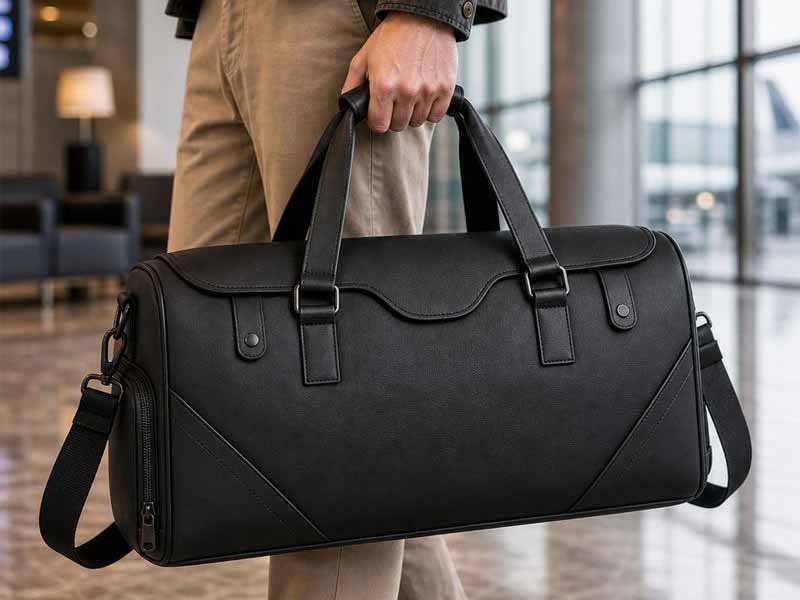
- leather
Different materials affect durability, appearance, and cost.
For heavy-duty tool bags, fabrics such as 900D Oxford polyester or 1680D ballistic polyester are often recommended.
3. Logo and branding methods
Brand identity is an important part of product customization.
Common logo techniques include:
| Logo Method | Features |
|---|---|
| Screen printing | Cost-effective for simple logos |
| Embroidery | Durable and premium appearance |
| Rubber patch | Popular for industrial brands |
| Woven label | Subtle branding |
| Heat transfer | Good for multi-color logos |
4. Packaging customization
Many brands also customize retail packaging to match their marketing strategy.
Typical packaging options include:
- poly bags
- retail color boxes
- hang tags
- barcode labels
Good packaging helps products stand out in retail stores and online marketplaces.
How does a manufacturer help improve product design?
One of the biggest advantages of working with an experienced manufacturer is the ability to improve product design through practical engineering suggestions.
Customers often approach manufacturers with initial designs that look good visually but may not perform well in heavy-duty applications.
Experienced manufacturers can help optimize the design by recommending improvements based on production experience.
Typical design optimizations include:
| Design Improvement | Benefit |
|---|---|
| Reinforced handles | Higher load capacity |
| Double-layer bottom panels | Better abrasion resistance |
| Larger zippers | Increased durability |
| Structured base boards | Improved bag stability |
| Reinforced pockets | Prevent pocket tearing |
These adjustments can significantly increase product durability without dramatically increasing manufacturing costs.
For example, adding reinforced bar-tack stitching at handle connection points may increase production cost by only a few cents per bag, but it can prevent many product failures.
Manufacturers that produce a wide range of functional bags—such as tool bags, cooler bags, dry bags, and travel bags—often accumulate valuable knowledge about bag structure and durability.
Companies like Szoneier, which manufacture various custom bags for global clients, frequently help customers refine designs so their products perform better in demanding working environments.
How to Check a Tool Bags Manufacturer’s Capacity?
To check a tool bags manufacturer’s capacity, buyers should evaluate the factory’s sewing lines, monthly output, worker experience, material supply stability, and production lead times. A reliable manufacturer should be able to consistently produce heavy-duty tool bags with stable quality, typically delivering samples within 5–7 days and bulk production within 25–35 days depending on order volume.
For many brands and distributors, the biggest supply chain risk is not design or price—it is production capacity and delivery reliability.
A factory may create an excellent prototype, but if it cannot maintain the same quality and speed during mass production, the entire supply chain can be disrupted.
This is especially important for companies selling tool bags through:
- hardware distributors
- Amazon stores
- construction equipment retailers
- industrial supply chains
If inventory runs out due to late production, companies may lose sales, customer trust, and retail opportunities.
That is why experienced buyers always evaluate a tool bags manufacturer’s real production capacity before establishing a long-term partnership.
Below are several practical ways to evaluate whether a factory can truly support heavy-duty tool bag production.
What production volume can a heavy-duty tool bags manufacturer handle?
One of the first things buyers should understand is the factory’s monthly production output.
Heavy-duty tool bags are more complex than simple tote bags. They require thicker fabrics, reinforced stitching, and multiple pockets. As a result, they take longer to manufacture.
Here is a simplified comparison of production time for different bag types.
| Bag Type | Average Production Time |
|---|---|
| Simple tote bag | 6–10 minutes |
| Basic backpack | 15–20 minutes |
| Travel bag | 20–25 minutes |
| Heavy-duty tool bag | 25–40 minutes |
The longer production time means factories need experienced sewing workers and organized production lines to maintain efficiency.
Typical monthly production capacity for bag factories varies depending on size and equipment.
| Factory Scale | Sewing Lines | Monthly Output |
|---|---|---|
| Small workshop | 2–3 lines | 8,000–20,000 bags |
| Mid-size factory | 5–8 lines | 40,000–100,000 bags |
| Large factory | 10+ lines | 150,000–300,000 bags |
Heavy-duty tool bags usually fall within the mid-production speed range, so manufacturers must carefully manage sewing lines to maintain output.
Buyers should also ask factories about:
- number of sewing workers
- number of cutting machines
- number of pattern makers
- assembly line organization
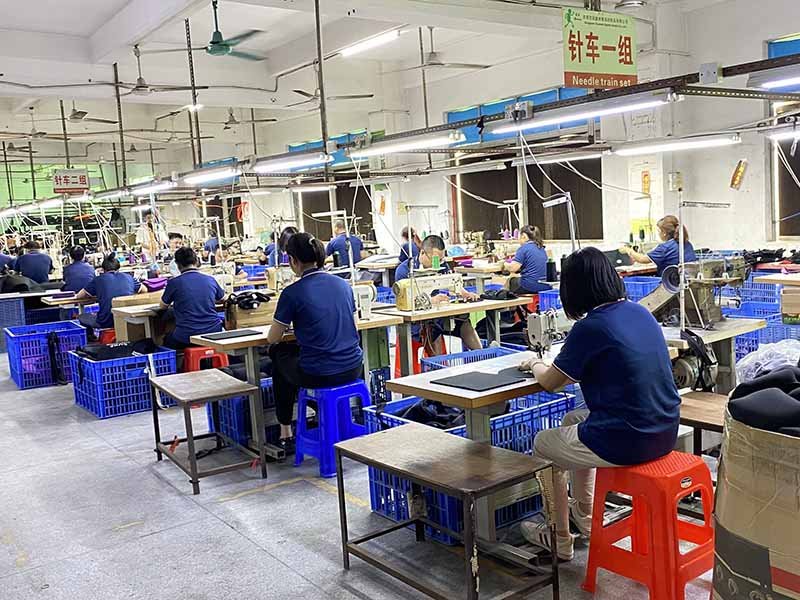
Factories with experienced production teams often operate specialized sewing stations for different tasks such as:
- pocket sewing
- zipper installation
- handle reinforcement
- final assembly
This division of labor improves efficiency and consistency.
Manufacturers like Szoneier, which have been producing functional bags for more than 18 years, typically operate organized production lines capable of handling various bag types including tool bags, cooler bags, travel bags, and backpacks.
This flexibility allows the factory to allocate production resources depending on order demand.
How reliable are lead times for bulk orders?
Lead time reliability is one of the most important factors for distributors and retailers.
Even a small delay can create serious problems in retail supply chains.
For example, hardware retailers often schedule product launches months in advance. If a manufacturer delivers late, the entire product launch may be affected.
Professional bag manufacturers usually provide clear production timelines.
Typical lead times in the tool bag manufacturing industry are:
| Production Stage | Typical Time |
|---|---|
| Sample development | 5–7 days |
| Material preparation | 5–10 days |
| Mass production | 20–30 days |
| Final inspection and packing | 2–3 days |
This means a standard custom tool bag order often takes 25–35 days from order confirmation to shipment.
However, lead time reliability depends on several factors.
1. Fabric supply stability
Many factories rely on external fabric mills. If the manufacturer does not maintain strong supplier relationships, fabric shortages may delay production.
Professional factories usually maintain partnerships with multiple material suppliers to ensure consistent supply.
2. Production scheduling
Factories that manage multiple clients must carefully schedule production across sewing lines.
Manufacturers with experienced production managers usually maintain detailed production schedules to avoid bottlenecks.
3. Order complexity
Heavy-duty tool bags with many pockets, reinforced structures, and special materials require longer production times.
Below is a typical comparison:
| Product Complexity | Production Time |
|---|---|
| Basic tool bag | 20–25 days |
| Reinforced tool bag | 25–30 days |
| Highly customized tool bag | 30–40 days |
Reliable factories are transparent about these timelines and communicate clearly with clients if adjustments are needed.
Manufacturers serving international brands—such as Szoneier, which exports bags globally—typically provide production updates during the manufacturing process.
How can buyers verify a factory’s production stability?
Production capacity is not only about speed—it is also about consistency.
Buyers should evaluate whether the manufacturer can maintain stable quality across thousands of units.
Here are several practical methods buyers often use.
1. Request factory production information
Ask the manufacturer to provide basic factory details such as:
- factory size
- number of workers
- years of operation
- main product categories
Factories that have been producing bags for many years usually have more stable production processes.
2. Review previous production experience
Manufacturers that regularly produce functional bags such as:
- tool bags
- cooler bags
- travel bags
- outdoor gear
usually have more experience handling complex sewing processes.
Factories with experience producing only promotional bags may not be suitable for heavy-duty products.
3. Evaluate sample quality
The sample stage often reveals the factory’s technical capability.
Pay attention to details such as:
- stitching alignment
- pocket reinforcement
- zipper smoothness
- overall bag structure
Well-made samples usually indicate strong production capability.
4. Observe communication and responsiveness
Reliable factories respond quickly to production questions and provide clear explanations regarding materials, production timelines, and technical details.
This is especially important for international cooperation.
Factories that regularly serve overseas clients often develop structured communication systems to support global business.
Manufacturers like Szoneier, which work with international brands and distributors, typically provide transparent production information and maintain stable manufacturing processes to support long-term partnerships.
Are Post-Sales Services Reliable with Tool Bags Manufacturers?
Reliable tool bags manufacturers provide clear after-sales support including defect handling, replacement policies, quality traceability, and fast communication. Professional factories typically maintain defect rates below 1–2%, perform multi-stage quality inspections, and provide replacement or compensation if manufacturing issues occur. Strong post-sales service helps brands maintain product quality and long-term supply chain stability.
For many buyers, selecting a manufacturer does not end when the first order is delivered. In reality, the most important part of a long-term partnership often begins after the shipment arrives.
Even with strict production control, manufacturing thousands of heavy-duty tool bags is a complex process. Minor issues may occasionally appear, such as stitching inconsistencies, hardware defects, or packaging mistakes.
What truly separates a reliable tool bags manufacturer from an unreliable one is how they respond when problems occur.
Professional factories focus on long-term cooperation with their clients. They understand that protecting the customer’s brand reputation is just as important as delivering the initial order.
Below are several aspects of post-sales service that experienced buyers usually evaluate when working with a manufacturer.
How is quality control handled by a tool bags manufacturer?
A strong after-sales system always starts with strict quality control during production.
Factories that implement detailed inspection processes can significantly reduce the chance of defective products reaching customers.
Professional bag manufacturers usually follow a multi-stage quality inspection system.
A typical quality control workflow may include the following stages:
| QC Stage | Inspection Focus |
|---|---|
| Raw material inspection | Fabric thickness, coating, color consistency |
| Cutting inspection | Accuracy of pattern cutting |
| Sewing inspection | Stitch density, seam reinforcement |
| Assembly inspection | Zippers, handles, hardware installation |
| Final inspection | Overall appearance and functionality |
For heavy-duty tool bags, additional testing is often performed to verify durability.
Common durability tests include:
| Test Type | Purpose |
|---|---|
| Load test | Verify handle strength under weight |
| Zipper cycle test | Ensure zipper durability |
| Abrasion test | Evaluate fabric wear resistance |
| Seam stress test | Test reinforced stitching areas |
For example, a typical load test may involve placing 20–40 kg of weight inside the bag and lifting it repeatedly to simulate real usage by electricians or construction workers.
Factories with strict quality systems often maintain defect rates below 1–2%, which is considered a good benchmark in the bag manufacturing industry.
Another important practice used by experienced manufacturers is production traceability.
Each production batch is usually recorded with information such as:
- material lot numbers
- sewing line assignments
- inspection reports
- packaging dates
This traceability allows the factory to quickly identify the root cause if a problem occurs.
Manufacturers with long experience in producing functional bags—such as Szoneier, which has over 18 years of bag manufacturing experience—typically implement multiple inspection stages to ensure product quality before shipment.
How are defective products handled after delivery?
Even with strict quality control, small numbers of defects may occasionally appear in large production runs.
What matters most is whether the manufacturer provides a clear and fair solution.
Professional manufacturers usually follow a structured process when defects are reported.
Typical defect handling procedures include:
- Problem verification The client provides photos or videos showing the issue.
- Root cause analysis The factory investigates the production records to identify the cause.
- Solution proposal The manufacturer may offer replacement, repair guidance, or compensation.
- Process improvement Production procedures are adjusted to prevent the issue in future orders.
For example, if a batch of tool bags shows zipper problems, the manufacturer may:
- replace defective units in the next shipment
- upgrade zipper specifications in future production
- inspect remaining inventory before delivery
Below is a common after-sales response structure used by professional factories.
| Issue Type | Typical Solution |
|---|---|
| Minor stitching defects | Replacement in next order |
| Hardware defects | Partial refund or replacement |
| Structural defects | Product redesign and compensation |
| Packaging mistakes | Repackaging support |
Factories that value long-term partnerships usually prioritize customer satisfaction over short-term cost savings.
How important is communication in post-sales support?
Clear and responsive communication is one of the most important aspects of post-sales service.
International buyers often work with manufacturers located in different time zones. Delayed responses can slow down problem resolution and affect product sales.
Reliable manufacturers usually maintain efficient communication channels with clients.
Typical communication methods include:
- email updates
- video calls
- messaging platforms
- production reports
Factories that serve global clients often provide regular production updates, including:
- material preparation progress
- sample development status
- production schedule updates
- shipping arrangements
Fast communication also helps resolve issues quickly.
For example, if a client notices a potential problem during sample testing, quick feedback allows the manufacturer to adjust the design before mass production begins.
Manufacturers that have experience working with international brands usually understand the importance of clear technical explanations and quick response times.
Companies like Szoneier, which supply custom bags to overseas brands, often prioritize responsive communication to ensure smooth cooperation throughout product development and production.
Why does long-term cooperation matter in bag manufacturing?
Many successful hardware brands and distributors maintain long-term relationships with the same manufacturers for many years.
There are several reasons why long-term cooperation improves supply chain stability.
First, the manufacturer becomes familiar with the client’s product standards and expectations.
Second, production processes become more efficient as both parties gain experience working together.
Third, product improvements can be implemented gradually across multiple production runs.
For example, a tool bag product line may evolve through several versions:
| Product Version | Improvement |
|---|---|
| Version 1 | Initial market launch |
| Version 2 | Reinforced bottom panel |
| Version 3 | Upgraded zipper system |
| Version 4 | Improved pocket layout |
These gradual improvements help brands create more durable and competitive products.
Factories that work closely with clients during this process become valuable partners rather than simple suppliers.
Manufacturers like Szoneier, which specialize in custom bag production for global clients, often support long-term product development by helping customers refine designs and improve durability over time.
Conclusion: Choosing the Right Tool Bags Manufacturer
Choosing the right tool bags manufacturer is not only about finding a factory that can produce bags at a competitive price. It is about finding a manufacturing partner that truly understands how tool bags are used in real working environments—on construction sites, in maintenance workshops, and in service vehicles where durability and reliability matter every day.
Throughout this guide, we’ve explored several practical factors that experienced buyers evaluate when selecting a manufacturer: durable materials such as 900D or 1680D industrial fabrics, reinforced construction methods, flexible customization options, stable production capacity, and responsive after-sales support. Manufacturers that combine these capabilities are far better equipped to produce tool bags that can withstand years of heavy use while maintaining consistent product quality across large production runs.
For brands, distributors, and industrial suppliers planning to develop a custom heavy-duty tool bag product line, working with an experienced manufacturer can significantly reduce development risks and improve product performance in the market.
With over 18 years of experience in bag R&D, manufacturing, and global export, Szoneier has helped many international clients develop durable custom bags across multiple categories, including tool bags, backpacks, travel bags, cooler bags, fireproof bags, and other functional storage solutions. The factory supports a wide range of materials such as polyester, nylon, canvas, PVC, TPU, EVA, jute, and leather, allowing brands to create products that match their specific performance and market requirements.
Szoneier also provides practical services that help brands move from concept to production smoothly, including:
- free design support for new bag concepts
- low MOQ customization for market testing
- fast sample development within 5–7 days
- strict multi-stage quality inspections
- efficient production lead times
If you are planning to develop or expand a professional tool bag product line, working with a reliable manufacturing partner is the first step toward building a successful product.
Feel free to contact the Szoneier team today to discuss your custom tool bag project, request samples, or explore material and design options. A well-designed tool bag built by the right manufacturer can become a trusted product used by professionals for years.
manufacturer Categories
- Custom Tote Bags Manufacturer
- custom backpacks Manufacturer
- custom travel bags& Duffle bags manufacturer
- custom makeup bags & toiletry bags manufacturer
- custom cooler bags manufacturer
- custom drawstring bags manufacturer
- custom makeup bags & toiletry bags manufacturer
- custom golf bags manufacturer
- custom fireproof bags manufacturer
- custom dry bags manufacturer
- custom ski bags manufacturer
- custom gym & sports bags manufacturer
- custom laptop bags manufacturer
- custom tactical bags manufacturer
- custom beach bags manufacturer
- custom medical bags manufacturer
- custom camera bags manufacturer
- custom wetsuits manufacturer
- custom leather goods manufacturer
- more personalized products

Can't find the answers?
No worries, please contact us and we will answer all the questions you have during the whole process of bag customization.
Make A Sample First?
If you have your own artwork, logo design files, or just an idea,please provide details about your project requirements, including preferred fabric, color, and customization options,we’re excited to assist you in bringing your bespoke bag designs to life through our sample production process.
