Skip to content
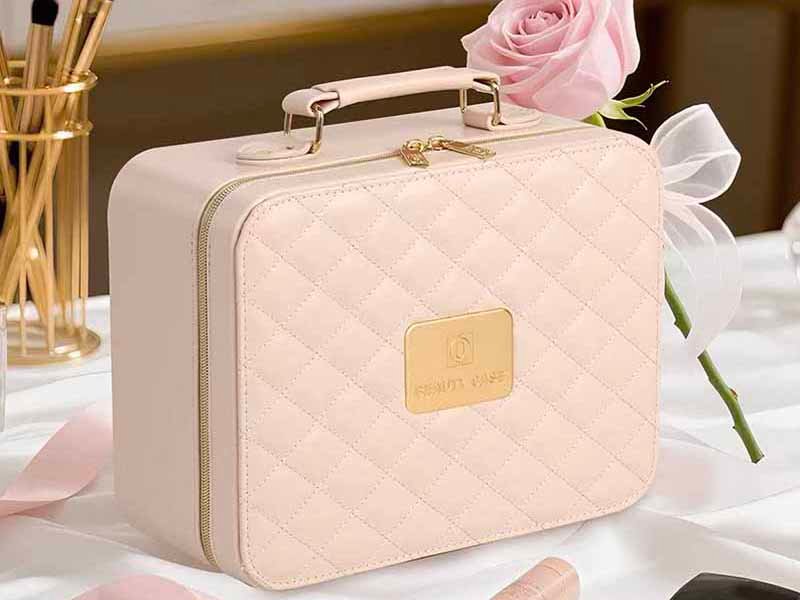
A cosmetic bag used to be treated as a simple pouch: put the skincare bottle inside, add a zipper, print the logo, and ship it as a gift. That mindset is no longer enough. Beauty brands now use cosmetic bags as reusable packaging, travel organizers, gift-with-purchase products, influencer kit accessories, retail add-ons, and even standalone SKUs. The bag is no longer just a container. It is part of the brand experience.
The smartest cosmetic bag trends in 2026 are not only about color, shape, or what looks attractive in a product photo. They are about whether a bag fits the buyer’s channel, target customer, product fill, material story, logo method, retail price, MOQ, launch date, and quality expectation. A trend becomes valuable only when it can be sampled accurately, costed clearly, produced repeatedly, packed correctly, and delivered on time.
For beauty brands, cosmetic bag trends in 2026 focus on sustainable materials, clear TPU travel formats, soft pouch structures, multi-compartment organization, premium logo details, retail-ready packaging, and stricter RFQ control. The winning bag is not always the most fashionable one. It is the design that supports the campaign, protects the product, strengthens brand value, and can move from sample to bulk production without costly surprises.
One beauty buyer once told a supplier, “We do not need another pretty pouch. We need a bag that makes our skincare set feel like a product line.” That is the real shift. The cosmetic bag is becoming a brand asset, not an afterthought.
What Cosmetic Bag Trends Matter Now?
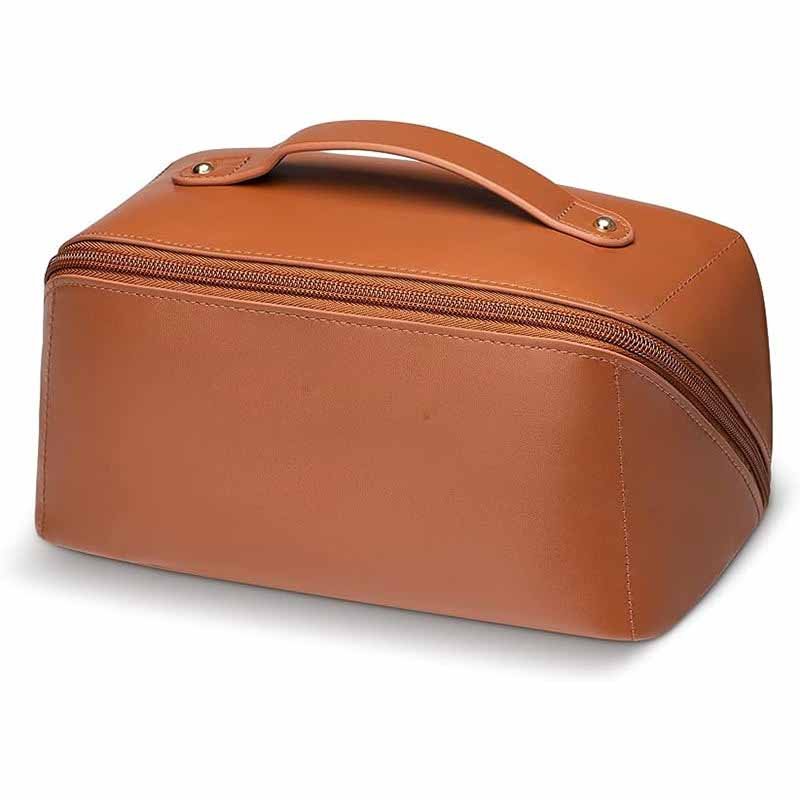
Cosmetic bag trends matter when they improve beauty brand value, not when they simply look new. In 2026, the strongest trends are sustainable materials, functional organization, clear travel-friendly panels, soft premium textures, compact retail shapes, and better sampling control. Beauty buyers should treat trends as sourcing decisions because each trend affects MOQ, cost, logo method, product fit, packing, and mass production risk.
Beauty brands are under pressure from several directions at the same time. Consumers want convenience. Retailers want shelf-ready products. Marketing teams want strong unboxing value. Procurement teams want lower development risk. Sustainability teams want better material documentation. Finance teams want controlled cost. A cosmetic bag must now answer all of these needs without becoming over-designed or too expensive to scale.
This is why the most useful trend conversation starts with use case, not style. A gift-with-purchase pouch does not need the same structure as a premium retail cosmetic case. A travel makeup bag does not need the same material route as a holiday skincare set. A subscription box pouch does not require the same logo investment as a luxury vegan leather vanity case. When brands skip this distinction, they often create samples that look attractive but fail in pricing, packing, leakage control, or production repeatability.
Current B2B search results also show that buyers are not only searching for “pretty makeup bags.” They are searching for sourcing logic: materials, clear TPU formats, GWP versus retail specifications, MOQ, logo options, sample feasibility, and RFQ details. This reflects a more mature buyer mindset. Trends are no longer mood-board inspiration. They are early-stage manufacturing decisions.
Another important shift is that cosmetic bags are now overlapping with beauty packaging. Beauty packaging discussions increasingly focus on sustainability, personalization, refill formats, material innovation, and consumer engagement. Cosmetic bags fit naturally into this conversation because they are reusable, touchable, brandable, and often kept longer than disposable packaging.
For a beauty brand, the practical question is not “What is trending?” The better question is: “Which trend helps our customer use, keep, photograph, travel with, or repurchase our product?” That is where cosmetic bag development becomes strategic.
| Trend Direction | Buyer Value | Manufacturing Impact |
|---|---|---|
| Sustainable fabrics | Supports brand story and reuse | Requires material confirmation and documentation |
| Clear TPU panels | Travel visibility and modern look | Needs welding, sewing, thickness, and scratch checks |
| Multi-compartment structure | Better user experience | Increases pattern and sewing complexity |
| Premium logo details | Higher perceived value | Affects MOQ, tooling, color matching, and lead time |
| Retail-ready packing | Easier channel launch | Requires barcode, insert card, hangtag, and carton planning |
What is changing in beauty bag sourcing?
Beauty bag sourcing is moving from “find a pouch supplier” to “build a repeatable product development system.” In the past, many brands sent a reference photo, asked for a low quote, and expected the supplier to solve the rest. That approach often creates hidden problems: wrong fabric weight, weak lining, poor zipper feel, inconsistent logo color, or a sample that cannot be repeated in bulk. In 2026, stronger beauty buyers are preparing more complete project information before asking for quotation. They provide size targets, product fill, reference style, material preference, logo artwork, Pantone color, packaging requirements, target quantity, and launch schedule. This helps the manufacturer judge feasibility before pricing. Szoneier’s own manufacturing model is built around this type of project review, covering design, material sourcing, sampling, bulk production, quality inspection, packaging, and export delivery support for global B2B buyers.
Are cosmetic bags still only storage products?
No. Cosmetic bags are now part storage product, part packaging, part brand media, and part sales tool. A consumer may throw away an outer box within minutes, but a well-designed cosmetic bag can stay in a handbag, suitcase, bathroom shelf, gym locker, or office drawer for months. That gives the brand repeated visibility. For beauty brands, this changes how the bag should be evaluated. A pouch for a skincare set should not only fit bottles. It should protect them from leakage, support the product story, feel pleasant in the hand, photograph well, and still be useful after the original products are gone. This is why reusable beauty packaging and travel-oriented cosmetic storage are closely connected. Consumer media also shows strong interest in travel toiletry bags with wet pockets, brush loops, flexible sides, and compact packing features.
How do trends connect to brand value?
Trends connect to brand value only when they make the customer feel the product is more useful, more premium, or more aligned with the brand’s promise. A recycled polyester pouch may support a clean beauty campaign. A clear TPU bag may support travel convenience. A quilted velvet pouch may support a holiday gift set. A structured vegan leather case may support a premium skincare launch. But the same trend can fail if it is used without context. For example, clear TPU looks modern, but it may not suit a luxury serum brand that wants privacy and softness. Heavy hardware looks premium, but it may be too expensive for a low-cost GWP. A sustainable material story is attractive, but it must be matched with realistic MOQ and reliable color availability. The buyer’s job is to turn trend language into product logic: material, structure, size, logo, packing, quantity, and channel fit.
What do beauty buyers expect from suppliers?
Beauty buyers expect suppliers to act as development partners, not just price senders. They want clear material options, realistic MOQ, sample timelines, bulk production control, packaging support, and honest risk warnings. A strong supplier should be able to explain why one fabric fits a GWP program while another fits retail sale, why a zipper choice affects user experience, why a logo method changes MOQ, and why a complex inner divider may increase labor cost. Szoneier positions itself as a factory-based custom bags and soft goods manufacturing partner, with in-house sampling, sewing production coordination, quality inspection, packaging, export delivery support, and a controlled network of satellite partner factories for capacity flexibility. This matters because cosmetic bag projects often involve small details that must remain consistent from sample to bulk.
Which Materials Are Beauty Brands Choosing?
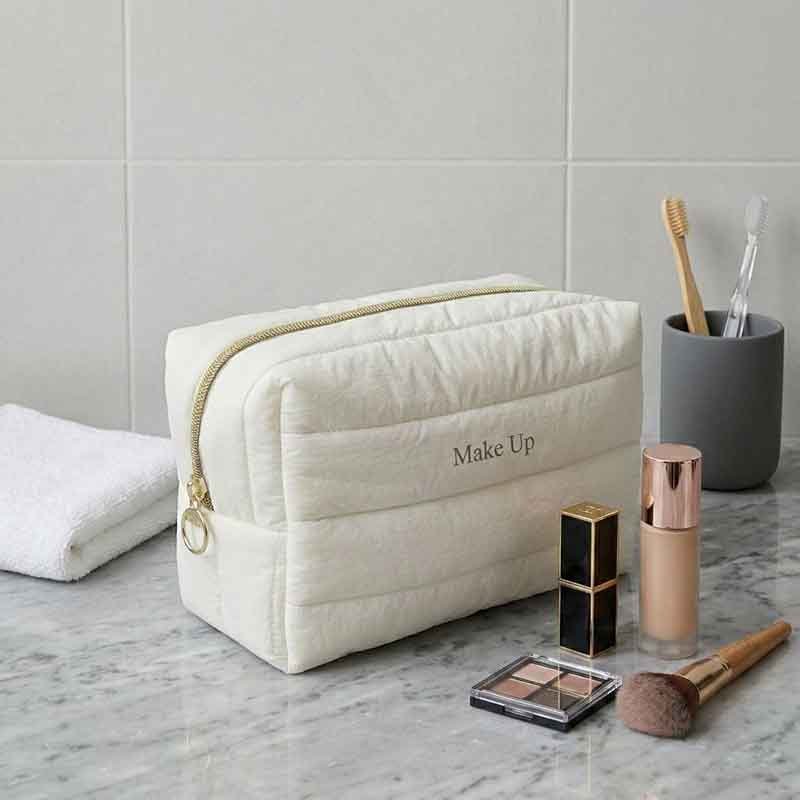
Beauty brands are choosing materials that balance appearance, sustainability, function, and production stability. The most practical options include recycled polyester, RPET, nylon, cotton canvas, clear TPU, PU or vegan leather, velvet, neoprene, mesh, and wipeable linings. The right material depends on channel, product fill, target cost, logo method, color standard, MOQ, and whether the bag is for GWP, retail, travel, or premium gift sets.
Material choice is the first serious manufacturing decision in a cosmetic bag project. A beauty team may start with a visual mood board, but the factory must translate that mood into fabric weight, coating, lining, zipper type, reinforcement, stitching method, logo process, and packing method. If this step is weak, the final bag may look different from the sample, fail leakage expectations, feel too cheap, or exceed the target cost.
Sustainability remains one of the strongest material directions. Beauty packaging discussions continue to focus on sustainable innovation, refill formats, and lower-waste solutions. Cosmetic bags can support this movement because they are reusable and can replace single-use secondary packaging in certain gift or travel sets. However, sustainability should not be used as a vague label. Buyers should ask for material composition, recycled content claims, supplier documentation, dyeing limitations, MOQ, and whether the material can pass the brand’s compliance requirements.
Clear TPU is also staying relevant because it fits airport travel, product visibility, influencer kits, and modern retail presentation. It allows the customer to see what is inside, which works well for skincare minis, lip products, sunscreen sets, and hygiene kits. But TPU must be judged carefully. Thickness, scratch resistance, seam strength, odor, cold-crack performance, and logo adhesion all matter. A clear bag that looks perfect in a photo may still fail if it wrinkles, scratches, or yellows too easily.
Premium soft-touch materials are another key direction. Vegan leather, suede-like microfiber, quilted polyester, velvet, satin, neoprene, and padded nylon can make a cosmetic bag feel more giftable. But premium feeling does not always mean expensive material. Sometimes a better lining, smoother zipper, cleaner edge binding, or more controlled stitching does more for perceived value than upgrading the outer fabric.
| Material | Best For | Buyer Watch Point |
|---|---|---|
| RPET polyester | Sustainable GWP and travel pouch | Recycled claim documentation |
| Clear TPU | Travel kits, clear beauty sets | Scratch, odor, thickness, seam strength |
| Vegan leather / PU | Premium retail cosmetic cases | Surface durability and logo method |
| Canvas / cotton | Natural beauty and casual kits | Shrinkage, color fastness, stain resistance |
| Neoprene | Soft protection and sporty beauty kits | Thickness, lamination, odor control |
| Nylon / polyester | Everyday cosmetic bags | Denier, coating, lining, zipper quality |
Are recycled fabrics becoming standard?
Recycled fabrics are becoming more common, but they are not automatically the best choice for every cosmetic bag. For beauty brands, recycled polyester or RPET can support sustainability messaging, especially for clean beauty, skincare, wellness, or eco-positioned product lines. The benefit is clear: the bag becomes part of a reusable packaging story instead of a disposable accessory. However, buyers should avoid treating “recycled” as a magic word. The project still needs to check color availability, handfeel, fabric weight, coating, lining compatibility, and logo performance. Some recycled materials may have higher MOQ or longer lead times than conventional stock fabric. Others may not match exact Pantone colors easily. If sustainability is a key claim, buyers should also request material documentation and avoid unsupported claims. A practical sourcing rule is simple: choose recycled material when it supports the brand story and can be repeated in production without delaying launch.
Is clear TPU still popular?
Clear TPU remains popular because it solves several beauty brand problems at once. It lets consumers see the products inside, supports travel-friendly organization, photographs well for influencer kits, and gives a modern, clean look. It is especially useful for sunscreen sets, mini skincare kits, lip product bundles, hygiene travel kits, and airport-ready beauty bags. But TPU is not a one-size-fits-all answer. Buyers need to confirm thickness, softness, transparency, odor, scratch resistance, seam method, logo technique, and packing protection. A bag may look transparent and premium in a sample photo but become scratched during shipping if the packing method is weak. Some clear materials also show fingerprints and dust more easily. For high-end brands, clear TPU may need tinted color, contrast binding, metal zipper pulls, or frosted panels to avoid looking too promotional. In short, TPU works best when the design is simple, intentional, and controlled.
Which vegan materials look premium?
Premium vegan cosmetic bags usually rely on three things: surface texture, structure, and finishing. PU leather, microfiber leather, vegan suede, coated canvas, and padded synthetic materials can all look premium if the pattern is balanced and the details are clean. The mistake many brands make is choosing a nice-looking material but ignoring structure. A soft vegan leather pouch without reinforcement may collapse. A stiff PU vanity case may look good but feel bulky. A suede-like material may feel beautiful but collect powder or oil stains if used heavily around cosmetics. Logo method also matters. Debossing, metal plate, woven label, rubber patch, and tone-on-tone printing all create different value signals. For a luxury skincare brand, subtle debossing may feel more premium than a large printed logo. For a colorful makeup brand, a bold patch or contrast zipper may fit better. The material should match the brand’s visual identity and daily use scenario.
How do texture and handfeel affect value?
Texture and handfeel are powerful because cosmetic bags are handled repeatedly. A consumer may not know the exact fabric name, but they immediately notice whether the bag feels smooth, padded, cheap, stiff, slippery, or durable. Beauty products are tactile, so the accessory should also feel considered. A soft matte fabric can support a clean skincare image. A glossy clear panel can support a modern travel look. A quilted surface can create a gift-ready impression. A neoprene body can feel protective and sporty. A satin lining can make the inside feel more premium, but it may not be the easiest to clean. For bulk production, buyers should check handfeel against cost and consistency. Materials from different batches can vary slightly in shade and softness. That is why approved swatches, sample comments, and bulk material confirmation are important. The best texture is not the most unusual one; it is the one your customer wants to keep using.
How Are Cosmetic Bag Structures Changing?
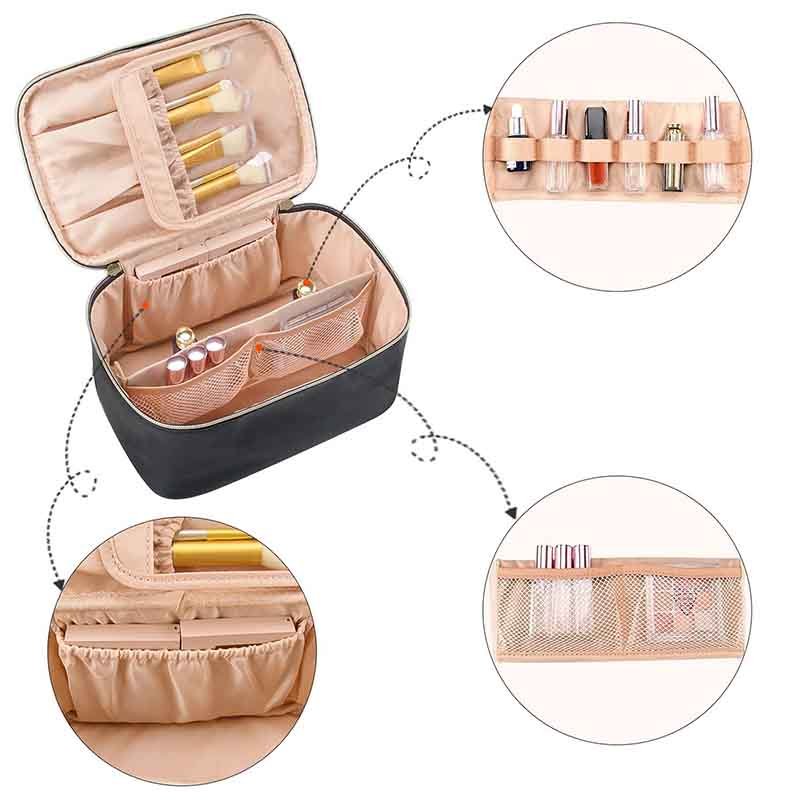
Cosmetic bag structures are becoming more user-specific. Beauty brands are moving from basic flat pouches to designs with compartments, brush holders, removable dividers, wipeable linings, wet pockets, upright shapes, hanging hooks, transparent panels, and travel-friendly sizes. The right structure should match the product fill, user routine, campaign purpose, and retail channel instead of adding features just to look more complex.
Structure is where many cosmetic bag projects succeed or fail. A material can be beautiful, and the logo can be perfect, but if the bag does not hold the product correctly, the customer will not use it. Beauty routines involve small, fragile, messy, liquid, powdery, and sometimes expensive products. A good cosmetic bag reduces friction: the customer can see, reach, separate, clean, and carry products easily.
Travel behavior is shaping many structure trends. Consumer product reviews often praise bags with organized pockets, brush loops, wet compartments, adjustable dividers, hanging functions, and durable easy-clean materials. These details are valuable signals for B2B buyers because they show what end users notice in real use.
However, more structure is not always better. Every divider, pocket, elastic loop, mesh panel, binding edge, and inner lining adds material, labor, pattern complexity, and inspection points. A GWP bag with too many features may miss the target cost. A retail beauty case with too few features may feel underdeveloped. The key is to match structure to business purpose.
For beauty brands, product fill should guide the structure. If the bag holds 30 ml skincare bottles, check bottle height, cap width, and whether the bag must stand upright. If it holds brushes, check brush length, elastic tension, powder contamination, and protective flap. If it holds liquid products, choose a lining that can be wiped clean and test seam placement. If the bag is sold as a retail SKU, add durability details that make customers willing to pay.
| Structure Type | Best Use Case | Risk If Poorly Designed |
|---|---|---|
| Flat pouch | GWP, mini kits, low-cost sets | Low perceived value if too thin |
| Box pouch | Skincare bottles, travel sets | Size must match product fill |
| Train case | Premium retail cosmetic bag | Higher material and labor cost |
| Hanging toiletry bag | Travel beauty and hotel use | Hook strength and pocket layout |
| Brush organizer | Makeup tools and influencer kits | Elastic tension and powder protection |
| Clear pouch | Travel visibility | Scratching, seam strength, packing marks |
What compartments do users prefer?
Users prefer compartments that make their routine easier, not compartments that only look impressive in a product drawing. For daily makeup, small mesh pockets, elastic loops, zipper pockets, and open sections help separate lipsticks, pencils, compacts, and brushes. For skincare travel sets, upright bottle space may matter more than many tiny pockets. For gift sets, the compartment structure should hold the product fill neatly when the customer opens the bag. A messy interior reduces perceived value immediately. Buyers should think about the bag as a small stage for the products inside. Can the customer identify each product quickly? Can the products stay in place during shipping? Can the bag be reused after the campaign? A practical approach is to map the product fill first, then design the interior. For example, five sample bottles may need elastic bands, while a mixed makeup set may need one wide compartment and one brush flap.
Are brush holders still useful?
Brush holders are still useful, but only when the target user actually carries brushes. For makeup artist kits, influencer mailers, color cosmetic brands, and premium makeup sets, brush loops can add clear value. They keep tools separate from powder, creams, and liquids. They also make the bag feel more organized and professional. But for skincare brands, sunscreen brands, fragrance discovery sets, or simple GWP campaigns, brush holders may waste space and increase cost. If brush loops are included, buyers should check elastic width, stitch strength, loop spacing, and whether the brush handle size matches real usage. A protective flap is also important because brush residue can dirty the inner lining or other products. The supplier should test whether the brushes slide out too easily when the bag is shaken or packed sideways. A brush holder looks simple, but poor spacing can make the whole bag feel badly designed.
Which shapes suit travel sets?
Travel sets usually work best with compact box pouches, standing pouches, clear rectangular bags, hanging toiletry bags, and slim organizer cases. The shape should match luggage behavior. A soft pouch is flexible and easy to pack, but it may not protect bottles well. A structured box pouch stands better and looks more premium, but it takes more space. A clear rectangular bag is convenient for visibility, but it needs careful packing to avoid scratches. A hanging toiletry bag is useful in hotels and dorm bathrooms, but it requires more sewing steps and hook testing. Beauty brands should also consider airline and retail expectations. A bag for travel minis should not be so deep that small products disappear at the bottom. A bag for full-size products needs height and stronger base support. The most successful travel cosmetic bags often balance three things: visibility, cleanability, and space efficiency.
How do linings prevent leakage?
Linings do not truly “prevent” all leakage, but they can reduce damage, improve cleanability, and protect the outer material. For cosmetic bags, linings are especially important because products may spill, caps may loosen, and powder can stain the interior. Common lining choices include polyester, nylon, PVC-coated fabric, TPU film, PEVA-like materials, and wipeable laminated fabrics. Buyers should define what they need: water-resistant, wipeable, leak-reducing, or fully waterproof. These are not the same. A wipeable lining may clean easily but still allow liquid to pass through stitched seams. A laminated lining may resist spills but add stiffness. A fully waterproof construction may require welded seams or special construction, which changes cost and MOQ. For most beauty projects, the practical target is an easy-clean lining with smart seam placement and product-friendly structure. Overclaiming waterproof performance without testing creates risk for both brand and supplier.
How Do Brands Use Cosmetic Bags?
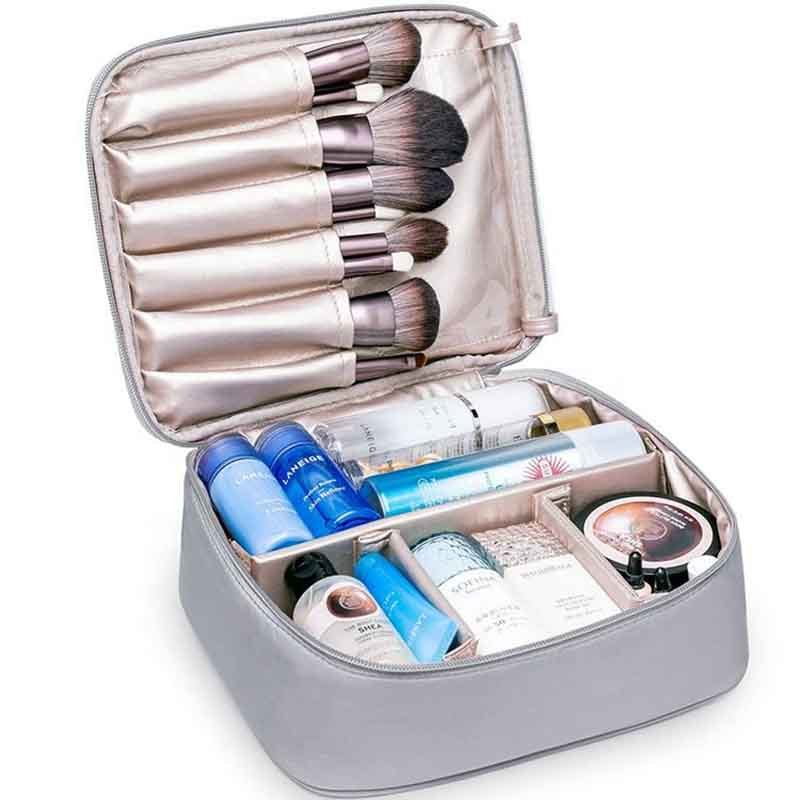
Beauty brands use cosmetic bags as GWP gifts, holiday set packaging, retail SKUs, influencer kit holders, subscription box items, travel set organizers, and loyalty program rewards. The bag’s role should be defined before design starts because GWP bags, retail bags, and campaign bags require different materials, structures, logo methods, packaging, cost targets, and inspection standards.
The most common mistake is designing one cosmetic bag and expecting it to work for every channel. A GWP bag needs to be attractive, useful, and cost-controlled. A retail cosmetic bag needs stronger durability, better packaging, and higher perceived value. An influencer kit bag needs visual impact and social media presence. A holiday set bag needs gifting emotion. A travel kit bag needs organization and cleanability. A subscription box pouch needs efficient packing and repeatable supply.
Gift-with-purchase programs are especially important in beauty because they can increase perceived value without changing the core product formula. A well-made cosmetic bag can make a skincare bundle feel more complete. It can also create a reason for consumers to buy now. But GWP design must be practical. Campaign teams may want a premium bag, while procurement must control unit cost. The right solution often involves a focused design: one strong material, one clear logo detail, one useful structure, and efficient packing.
Retail cosmetic bags require a different level of discipline. If the bag is sold separately, customers compare it with travel accessories, fashion pouches, and lifestyle organizers. That means zipper smoothness, lining quality, stitching, shape retention, and packaging matter more. The bag must justify its shelf price.
Influencer kits add another layer. The bag may be photographed before it is used. That makes color, logo placement, opening angle, product arrangement, and packaging presentation very important. But beauty brands should avoid creating a bag that looks great only once and is useless afterward. Reusability is what keeps the brand visible.
What works for GWP campaigns?
The best GWP cosmetic bags are simple, useful, brand-right, and easy to produce on schedule. A GWP bag does not need to be the most complex product in the campaign. It needs to feel valuable enough to encourage purchase and practical enough to keep using. Strong GWP choices include soft pouches, clear travel bags, mini vanity cases, drawstring cosmetic pouches, and flat makeup bags with branded lining or zipper pulls. The design should start with the campaign fill: how many products go inside, whether they are full-size or mini, whether they need upright space, and whether leakage is a concern. Then the buyer should define the cost range, quantity, logo method, packing method, and launch date. Campaign risk is usually higher than design risk. If the bag cannot be sampled, approved, produced, packed, and delivered before the promotion window, the trend has no value.
Which bags fit holiday sets?
Holiday sets usually need stronger emotional appeal than everyday GWP bags. Textures such as velvet, satin, quilted polyester, metallic PU, soft-touch neoprene, and premium woven fabrics can make the set feel more giftable. Shapes such as mini vanity cases, box pouches, structured zip cases, and drawstring gift pouches often work well because they feel special without being too complicated. Color direction is also important. Holiday bags often use seasonal shades, metallic details, contrast linings, or custom zipper pulls. But buyers should be careful with too many custom details because holiday schedules are fixed. A delayed bag can affect an entire product launch. For holiday programs, the safest development route is to lock material early, approve color standard clearly, confirm packaging dimensions, and avoid last-minute logo changes. The bag should create delight, but the production plan must stay realistic.
How do influencer kits use bags?
Influencer kits use cosmetic bags as both packaging and visual content. The bag needs to open well on camera, display the products neatly, show the brand logo naturally, and feel worth keeping after the post is published. Clear TPU pouches, structured cases, color-blocked makeup bags, and personalized bags are common choices because they photograph well. However, a good influencer kit should not sacrifice function for visual drama. If the zipper is hard to open, the bag collapses, or products shift during shipping, the unboxing experience suffers. Brands should also consider how the bag will look in short-form video. Can it stand upright? Does the inside color contrast with the products? Is the logo visible without looking forced? Is the bag easy to repack? The best influencer cosmetic bags create a smooth moment: open, reveal, organize, use, and keep.
Are cosmetic bags retail-ready products?
Yes, cosmetic bags can be retail-ready products when they are designed, packed, and inspected like sellable accessories rather than free gifts. A retail-ready cosmetic bag needs stronger structure, better finishing, more reliable zippers, cleaner stitching, correct labeling, barcode support, and packaging that protects shape during shipping. The buyer should define whether the bag will hang on a peg, sit on a shelf, ship in an e-commerce mailer, or be packed inside a beauty box. Each route changes packaging. Retail buyers may also require hangtags, care labels, warning labels, carton marks, SKU labels, or FBA labels. Szoneier’s export support covers packaging, carton labeling, shipping coordination, and delivery support for international markets, which is important for brands selling through retail, Amazon, Shopify, and other B2B channels.
What Branding Details Increase Value?
Branding details increase value when they make the cosmetic bag feel intentional, not generic. The strongest details include accurate color matching, suitable logo method, custom zipper pull, branded lining, woven label, debossed patch, metal plate, contrast binding, retail packaging, and clean stitching. Beauty brands should choose branding details based on price point, target customer, material, MOQ, and launch channel.
A cosmetic bag can use very little logo and still feel highly branded. In fact, many premium beauty brands avoid oversized logos and focus instead on material, tone, proportion, color, and finishing. For a mass promotional campaign, a visible printed logo may be appropriate. For a luxury skincare set, a small debossed logo or metal zipper pull may feel more elegant. For a colorful makeup brand, a rubber patch or bold woven label may communicate more personality.
Color matching is another major value driver. Beauty brands often build campaigns around exact shades: soft pink, cream white, sage green, icy blue, matte black, metallic silver, or seasonal red. If the bag color is off, the whole set can feel disconnected. This is why buyers should provide Pantone references, physical color samples when possible, and approval standards for both fabric and accessories. Zippers, binding, lining, pullers, stitching thread, labels, and packaging all influence the final visual result.
Hardware and zipper details are often underestimated. A smooth zipper changes the feeling of the bag immediately. A weak zipper makes even a good fabric feel cheap. Puller shape, plating color, cord pull, rubber pull, or metal logo pull can all shift the perceived price. But every custom accessory can affect MOQ and lead time, so buyers should decide early.
Packaging also supports brand value. A cosmetic bag packed in a polybag may work for bulk GWP. A retail SKU may need tissue paper, hangtag, belly band, insert card, barcode sticker, or display carton. Packaging should protect the bag and explain the product’s value.
Which logo methods look premium?
Premium logo methods depend on the material and brand positioning. Debossing works well on PU, vegan leather, and some coated materials when the brand wants subtle elegance. Embroidery works well on canvas, cotton, velvet, and certain polyester fabrics when the brand wants texture and craft feeling. Woven labels are flexible and clean, especially for casual or lifestyle cosmetic bags. Rubber patches can feel modern and durable for sporty, travel, or youth-focused brands. Metal plates and custom zipper pullers can elevate a retail cosmetic case, but they may increase tooling cost and MOQ. Screen printing and heat transfer are practical for GWP and promotional bags, but they must be tested for adhesion and color accuracy. The key is not choosing the “most expensive” logo. The key is matching the logo method to surface, quantity, cost, and brand tone.
How important is color matching?
Color matching is extremely important in beauty because cosmetic bags often sit beside products with carefully controlled packaging colors. A slight color mismatch can make a gift set look less premium. Buyers should not rely only on digital screens because fabric, PU, TPU, thread, zipper tape, and labels all reflect color differently. Pantone references help, but physical swatches are better when the shade is critical. For bulk production, color should be approved at multiple points: material swatch, sample, pre-production material, and final goods. Brands should also decide what tolerance is acceptable. A natural cotton pouch may allow more shade variation than a luxury skincare bag with a strict brand color. Clear TPU adds another layer because transparency, tint, and background color affect the visual result. Good color control is not decoration. It is part of brand consistency.
Do zippers and hardware affect perception?
Yes. Zippers and hardware strongly affect perception because customers touch them every time they use the bag. A smooth zipper makes the product feel reliable. A rough zipper, weak puller, or noisy metal part makes the bag feel cheap. For beauty brands, zipper choice should match the bag’s purpose. Nylon coil zippers are common, flexible, and suitable for many pouches. Metal zippers can look premium but may add weight and cost. Waterproof-style zippers can support a sporty or travel look, but they are not always necessary for cosmetic bags unless the structure supports that claim. Pullers also matter. A simple cord pull can feel casual. A PU puller can match vegan leather. A metal logo pull can make a retail case feel more branded. Buyers should test zipper smoothness on the actual curved or structured sample, not just inspect the zipper tape separately.
How does packaging support retail sales?
Packaging supports retail sales by making the cosmetic bag easier to display, scan, ship, gift, and understand. For retail channels, the bag may need a hangtag, barcode label, care label, size information, material statement, insert card, belly band, or display carton. For Amazon or DTC channels, packaging must protect the shape during delivery and reduce returns caused by crushed, dirty, or scratched bags. For GWP programs, packing efficiency matters because thousands of bags may need to be inserted into sets or shipped to a filling center. A clear polybag may be enough for some campaigns, while premium gift sets may need tissue paper or branded sleeves. Buyers should confirm packaging during sampling, not after production starts. Packaging affects carton size, shipping cost, labor, product presentation, and inspection. A beautiful bag with poor packing can arrive looking cheap.
How Should Brands Turn Trends Into RFQs?
Beauty brands should turn cosmetic bag trends into RFQs by defining the use case, size, material, structure, logo method, color standard, product fill, packaging, quantity, target market, compliance needs, and delivery schedule. A clear RFQ helps suppliers check feasibility, quote accurately, create better samples, reduce revisions, and control bulk production risk.
An RFQ is not just a request for price. It is the bridge between a trend idea and a manufacturable product. If the RFQ is vague, the supplier must guess. Guessing leads to wrong materials, wrong thickness, wrong structure, wrong logo method, wrong packing, and wrong cost. A detailed RFQ protects both buyer and supplier.
For cosmetic bags, the most important RFQ details are practical. What products go inside? How many pieces? What are their dimensions and weight? Will the bag be sold, gifted, or used as packaging? Does it need to stand upright? Does the inside need to be wipeable? Is transparency required? Does the logo need exact Pantone matching? Is the launch tied to a campaign date? What quantity is expected now and later? These details help the manufacturer recommend the right construction.
Szoneier’s custom manufacturing process is designed around this type of project evaluation. The company’s facts describe a system covering customer requirements, material selection, sampling, logo application, packaging, quality inspection, bulk production, and export delivery. It also supports selected custom bag projects from 200 pcs MOQ depending on material availability, logo process, accessories, packaging, color options, and structure.
Brands should also separate sample goals from bulk goals. A sample proves appearance and structure. Bulk production proves repeatability. The approved sample should become the standard for material, color, dimension, logo, stitching, lining, packaging, and inspection. If the brand changes product fill, logo placement, or material after sample approval, the quote and timeline may need to change.
| RFQ Detail | Why It Matters |
|---|---|
| Use case | GWP, retail, influencer kit, travel, or holiday set changes design logic |
| Product fill | Determines size, structure, compartment, and protection |
| Material preference | Affects cost, MOQ, handfeel, and sustainability claim |
| Logo method | Affects tooling, sample time, durability, and perceived value |
| Quantity | Changes unit cost, material sourcing, and production planning |
| Packaging | Affects retail readiness, carton size, and shipping cost |
| Delivery country | Affects logistics, labeling, and export planning |
| Quality standard | Helps define inspection points before production |
What details should buyers prepare?
Buyers should prepare product images, reference samples, sketches, target dimensions, product fill details, material preferences, logo artwork, Pantone colors, packaging requirements, quantity plan, delivery country, target launch date, and quality expectations. The more complete the information, the more useful the supplier’s feedback will be. If a buyer only sends a photo and asks for “best price,” the quote may not reflect the real project. A 20 cm pouch in recycled polyester with screen print is very different from a 20 cm pouch in vegan leather with debossed logo, custom zipper pull, branded lining, and retail hangtag. Buyers should also share whether the bag is for a one-time campaign or long-term product line. This helps the supplier judge whether to use stock material, custom material, or a more scalable construction. Szoneier encourages buyers to send photos, sketches, tech packs, logo files, quantity, and target delivery country for review.
How should samples be checked?
Samples should be checked as both beauty products and manufacturing standards. First, check the visual impression: shape, color, logo position, fabric texture, zipper look, and overall brand fit. Then check function: can the intended products fit inside, does the bag close smoothly, does it stand or fold as expected, are compartments useful, and is the lining easy to clean? Next, check production details: stitching density, seam allowance, binding, zipper strength, inner pocket alignment, logo durability, and measurement tolerance. Finally, check packing: does the bag keep shape after packing, does clear material scratch, does the logo transfer, and does the carton method protect the product? Sample comments should be written clearly, with photos and measurements. Avoid vague feedback such as “make it more premium.” Instead, say “increase lining thickness,” “move logo 15 mm higher,” or “change zipper tape to matching color.”
Which QC points matter most?
The most important QC points for cosmetic bags are size accuracy, material consistency, logo position, stitching quality, zipper smoothness, lining cleanliness, compartment layout, color matching, packing condition, and product safety expectations. For clear TPU bags, check scratches, transparency, seam strength, odor, and packing marks. For PU or vegan leather bags, check surface wrinkles, peeling, debossing clarity, edge finishing, and color consistency. For fabric pouches, check stains, thread ends, sewing tension, shrinkage, and label placement. For bags with inner elastic loops or brush holders, check spacing and tension. For retail-ready bags, inspect barcode, hangtag, care label, polybag, carton label, and SKU separation. Szoneier’s quality control model includes approved sample control, material records, accessory standards, production instructions, in-line checking, final inspection, packing requirements, and centralized project responsibility.
How can brands reduce production risk?
Brands can reduce production risk by locking decisions early and using the sample as the production standard. The most common risks come from late changes: changing fabric after sampling, adding a new logo method, adjusting size after quote, switching packaging, or asking for tighter delivery after material purchase. Buyers should confirm the final product fill before sample development, because a small bottle height change can affect the whole structure. They should also request pre-production confirmation for critical materials, logo samples, and packaging. For large orders, a production timeline with checkpoints is useful: material confirmation, pre-production sample, cutting start, sewing progress, inline inspection, packing inspection, and final shipment. Szoneier’s factory-based sampling, material coordination, sewing production management, quality inspection, and export delivery support are designed to help buyers reduce development risk and improve sample-to-bulk consistency.
Conclusion: How Can Beauty Brands Build Better Cosmetic Bags?
Cosmetic bag trends in 2026 are not about chasing every new material or shape. They are about choosing the right product direction for the right business purpose. A beauty brand should ask: Is this bag for GWP, retail, travel, influencer kits, holiday sets, or long-term private label sales? What products must it hold? What material story does the brand need? What structure will customers actually use? What logo method matches the price point? What packaging does the channel require? What must be controlled before bulk production starts?
The brands that win will not be the ones with the most complicated cosmetic bags. They will be the ones that turn trend insight into clear manufacturing decisions. That means fewer vague mood boards and better RFQs. Fewer last-minute changes and stronger sample approval. Less generic decoration and more purposeful details. Better material selection, better lining, better zipper feel, better packing, and better quality control.
Szoneier helps beauty brands, retailers, importers, Amazon sellers, Shopify brands, promotional companies, and B2B buyers develop custom cosmetic bags and soft goods from idea to production. As a Shenzhen-based custom bags and soft goods OEM/ODM manufacturer with 18+ years of manufacturing experience, Szoneier supports material sourcing, sampling, logo customization, packaging, bulk production, quality inspection, and export delivery for global buyers.
If you are planning a cosmetic bag for a beauty GWP campaign, skincare travel set, holiday gift box, influencer kit, retail makeup pouch, or private label beauty accessory line, send Szoneier your product photo, sketch, tech pack, logo file, target quantity, material preference, packaging needs, and delivery country. Nancy and the Szoneier team can review your project and help turn your cosmetic bag idea into a production-ready custom product.