Skip to content
When people talk about “bag styles,” they often mean very different things. Some think in terms of fashion—tote bags, backpacks, crossbody bags. Others think function first—travel bags, gym bags, tool bags. And manufacturers usually think in structure, materials, and construction logic. The problem is that when these viewpoints don’t align, bag projects fail: samples come back wrong, costs drift upward, and timelines stretch far beyond expectations.
In today’s market, bags are no longer just containers. They sit at the intersection of daily habits, lifestyle identity, and performance requirements. A commuter backpack has very different expectations from a dry bag or a fireproof document bag, even if they look similar in photos. That’s why understanding bag styles at a deeper, structural level has become critical for brands, importers, and product teams.
There are dozens of recognized bag styles worldwide, typically grouped by carry method, structure, and use scenario. The most commercially relevant styles—around 50 core types—cover daily carry, travel, outdoor, protective, and professional use. Choosing the right bag style requires more than naming; it involves understanding capacity, materials, construction, and market positioning to ensure successful OEM or private label production.
Behind every successful bag product is a moment where someone asked the right question early enough: “What style is this bag really supposed to be?”
Answering that question correctly is where everything begins—and where this guide takes you next.
What are bag “styles”
Bag styles refer to the structural and carry-based design of a bag, such as tote, backpack, duffel, or sling. A bag style defines how the bag is worn, carried, opened, and supported. Bag functions describe what the bag is used for, such as travel, gym, work, or waterproof storage. One bag style can serve multiple functions, and confusing the two often leads to design errors, wrong samples, and sourcing delays.
What does “bag style” actually mean in professional bag development?
In professional bag manufacturing, a bag style is not a marketing name. It is a technical definition that describes the bag’s carry method, structural layout, and load behavior.
A bag style answers questions like:
- How is the bag carried on the body?
- Where is the load supported?
- How does the bag open and close?
- Which areas must be reinforced?
For example, a tote bag is defined by hand or shoulder carry with open-top or simple closure and vertical load transfer through handles. A backpack is defined by dual shoulder carry, back panel structure, and distributed load across straps and back padding. These definitions exist regardless of whether the bag is used for work, travel, or shopping.
This is why factories always ask for the style first before discussing materials, logos, or price.
How many bag styles are there in the global market?
From a practical OEM and sourcing perspective, the global bag market revolves around approximately 40–60 core bag styles. These are styles that have stable structural definitions and repeat demand across regions and years.
While online marketplaces may list hundreds of “types of bags,” most of them are:
- Variations of existing styles
- Hybrid combinations of two core styles
- Marketing-driven renaming
For example, “commuter backpack,” “business backpack,” and “laptop backpack” are usually the same backpack style, with different internal layouts. Recognizing this helps brands avoid unnecessary complexity and helps factories reuse proven patterns and production processes.
How are bag styles different from bag functions?
The difference is critical:
- Bag style = how the bag is built and carried
- Bag function = what problem the bag solves
A single style can support multiple functions:
- A backpack style can be used for school, travel, hiking, or work
- A duffel style can function as a gym bag, travel bag, or equipment bag
Likewise, one function can appear in multiple styles:
- A travel bag can be a backpack, duffel, rolling bag, or garment bag
Factories design and cost bags based on style, not function. Function only affects feature choices after the style is fixed.
Why do buyers often confuse styles, functions, and categories?
Confusion usually comes from e-commerce language and marketing habits. Online listings often mix:
- Style terms (tote, backpack)
- Function terms (travel, gym)
- Category terms (premium, outdoor, fashion)
For example:
- “Premium travel work bag” tells a factory almost nothing technically
- “Backpack style, 20–25L, top-zip opening, laptop compartment” is actionable
When style is not clearly defined, pattern makers must guess. Different teams may imagine different structures, which leads to mismatched samples and revision cycles.
Why does correct style definition reduce sampling time and cost?
Because style determines everything downstream:
- Pattern structure
- Stitching complexity
- Reinforcement points
- Labor time
- Material compatibility
If the style is unclear, the first sample is often just a visual interpretation. Each correction means re-patterning, re-cutting, and re-sewing.
At experienced factories like Szoneier, fast sampling is possible precisely because the style is locked early. Once the structural logic is clear, materials and branding become much easier to adjust.
How should a bag style be clearly defined in an RFQ or tech pack?
A clear bag style definition should include:
| Item | Why it matters |
|---|---|
| Style name (tote, backpack, duffel, etc.) | Sets structural baseline |
| Carry method (hand, shoulder, back, crossbody) | Defines load path |
| Approx. size or capacity | Impacts pattern and reinforcement |
| Opening structure (zip, roll-top, flap) | Affects usability and cost |
| Expected load level | Determines stitching and materials |
This information allows a factory to respond with technical recommendations, not guesses.
What are the 50 types of bag styles
There are around 50 core bag styles recognized in professional bag manufacturing. These styles are defined by carry method, structure, and load behavior, not by marketing names. They cover daily carry, travel, outdoor, insulated, waterproof, protective, and professional use. Most commercial bags on the market are variations or combinations of these 50 foundational styles.
1. Tote Bag
Open or semi-open top bag with parallel handles.
Why it matters: One of the most scalable styles; handle reinforcement is critical.
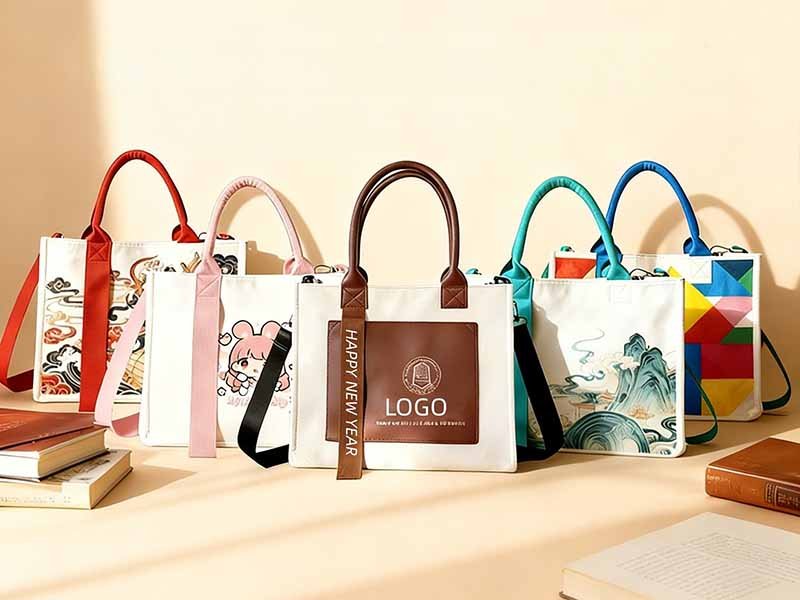
2. Canvas Tote Bag
Tote made with cotton or canvas fabric.
Key point: Fabric weight and stitch density define durability.
3. Shopper Bag
Large-capacity tote for retail or daily shopping.
Risk: Bottom stress failure if reinforcement is ignored.
4. Foldable Tote Bag
Lightweight tote that packs into itself.
Challenge: Balancing thin fabric with seam strength.
5. Beach Bag
Wide-opening tote with moisture-resistant materials.
Focus: Sand resistance, ventilation, lining choice.
6. Jute / Burlap Bag
Natural fiber tote for eco-focused markets.
Constraint: Limited washing durability, coarse texture.
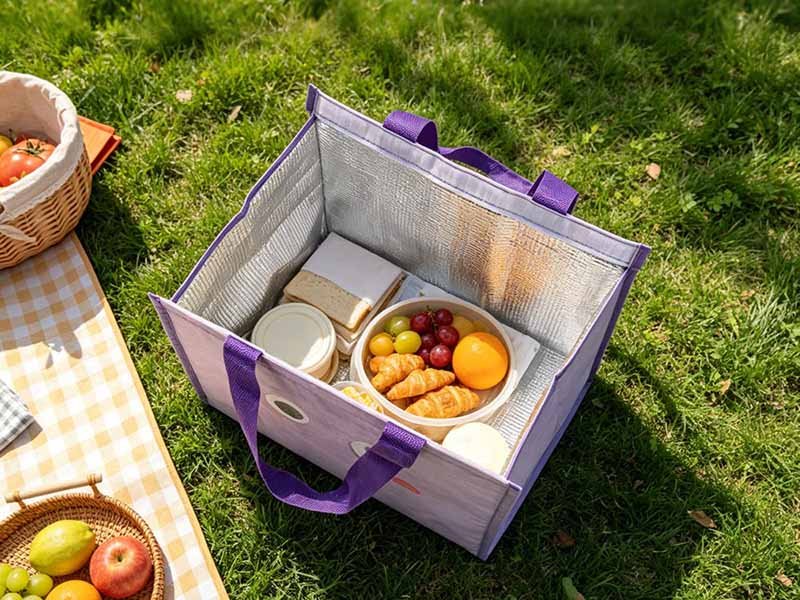
7. Insulated Tote
Tote structure combined with thermal layers.
Used for: Food delivery, groceries.
8. Market Tote
Flat-bottom tote optimized for upright carry.
Detail: Base board or fabric layering affects shape retention.
9. Drawstring Bag
Simple sack-style bag with cord closure.
Low cost, but cord quality determines lifespan.
10. Drawstring Backpack
Drawstring bag worn on the back.
Weak point: Cord anchor stitching.
11. Cotton Sack Bag
Minimalist drawstring sack.
Used for: Packaging, gifting, promotions.
12. Shoe Bag
Lightweight sack sized for footwear.
Often overlooked, but high repeat orders.
13. Laundry Bag
Large drawstring or zippered sack.
Needs: Breathable fabric and seam strength.
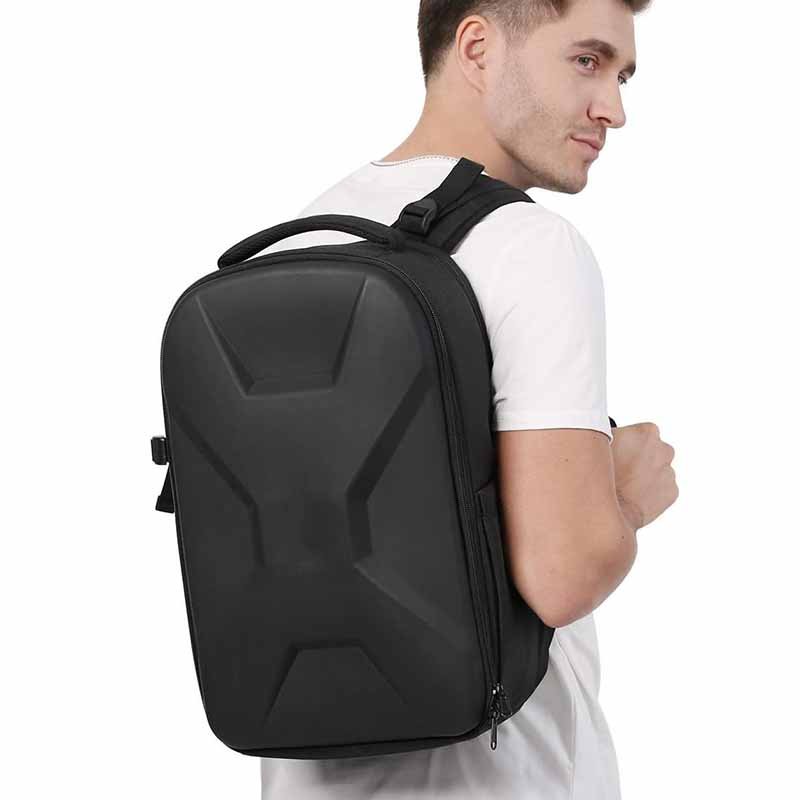
14. Backpack
Classic dual-strap back-carry bag.
Core style in almost every market.
15. Daypack
Smaller, lighter backpack.
Target: Urban daily users.
16. Laptop Backpack
Backpack with padded laptop compartment.
Critical: Shock protection and internal structure.
17. Travel Backpack
Backpack optimized for travel capacity.
Design risk: Overloading without support.
18. Hiking Backpack
Backpack with load distribution and support.
Engineering-heavy style.
19. Tactical Backpack
Backpack with MOLLE or modular systems.
Higher QC requirements.
20. Roll-top Backpack
Backpack with roll-down waterproof closure.
Sealing quality matters.
21. Anti-theft Backpack
Hidden zippers and access points.
User trust depends on execution.
22. Hydration Backpack
Backpack with water bladder system.
Internal routing design is key.
23. Waterproof Backpack
Fully sealed backpack.
Often confused with coated backpacks—different production.
24. Sling Bag
Single-strap, front/back carry.
Trending, but strap ergonomics matter.
25. Crossbody Bag
Small to medium shoulder bag.
Versatile style, used across markets.
26. Messenger Bag
Large crossbody with flap closure.
Load distribution critical.
27. Satchel Bag
Structured crossbody or hand-carry bag.
More rigid patterning.
28. Chest Bag
Compact sling worn on chest.
Fast fashion cycles.
29. Waist Bag
Waist-mounted bag.
Resurgent style with modern materials.
30. Hip Pack
Larger, utility-focused waist bag.
Used for outdoor and tools.
31. Belt Bag
Slim waist bag.
Precision stitching required.
32. Camera Bag
Padded crossbody for cameras.
Internal partition quality defines value.
33. Duffel Bag
Cylindrical or rectangular travel bag.
Stress at handle anchors.
34. Gym Bag
Duffel variant with shoe compartment.
Ventilation matters.
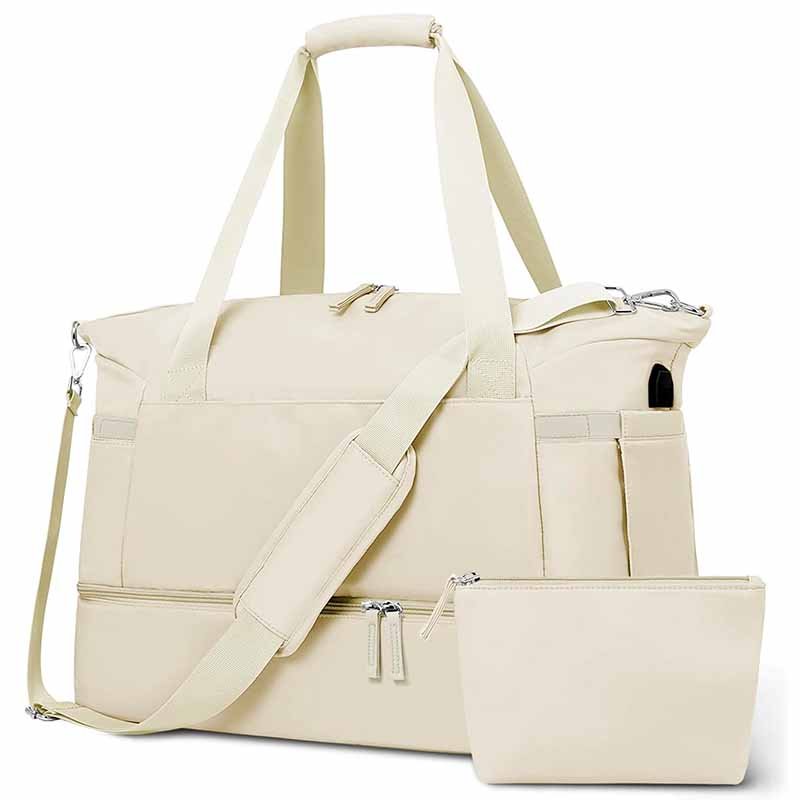
35. Weekender Bag
Stylish short-trip duffel.
Premium positioning common.
36. Carry-on Duffel
Airline-size optimized duffel.
Dimension control is key.
37. Garment Bag
Foldable or hanging clothing bag.
Wrinkle prevention is core value.
38. Rolling Duffel
Duffel with wheels.
Frame and wheel quality dominate cost.
39. Suit Travel Bag
Structured garment bag.
Used in business travel.
40. Overnight Bag
Medium-capacity travel bag.
Often overlaps with weekender.
41. Makeup Bag
Small zippered cosmetic bag.
High-margin, high-repeat style.
42. Toiletry Bag
Larger hygiene organizer.
Interior layout matters.
43. Tech Pouch
Organizer for electronics.
Cable management design is key.
44. Pencil Case
Slim organizer pouch.
Simple but volume-driven.
45. Lunch Bag
Soft insulated food bag.
Thermal performance matters.
46. Cooler Bag
Heavy insulated bag.
Material layering defines quality.
47. Dry Bag
Roll-top waterproof sack.
Seam welding quality is critical.
48. Smellproof Bag
Odor-blocking pouch or bag.
Lining technology is the differentiator.
49. Fireproof Document Bag
Heat-resistant protective bag.
Material compliance required.
50. Tool Bag
Heavy-duty utility bag.
Load-bearing engineering required.
Which bag styles match the most common buyer use-cases
Most buyer demand clusters around a few clear use-cases: daily carry, commuting, travel, outdoor protection, food and insulation, and professional utility. Each use-case maps to specific bag styles defined by structure and carry method. Matching the correct bag style to the use-case improves usability, reduces returns, and enables scalable OEM production.
How buyer use-cases are categorized
Across Google search behavior, e-commerce data, and OEM inquiries, buyer intent consistently falls into 6 dominant use-case clusters:
- Daily carry & commuting
- Work & business use
- Travel & short trips
- Outdoor, waterproof & protection
- Food, insulation & temperature control
- Professional, utility & specialized use
Each cluster favors specific bag styles for structural reasons—not trends alone.
1. Daily Carry & Commuting Use-Cases
Buyers search for bags used every single day, such as:
- “everyday bag”
- “work backpack”
- “crossbody bag for daily use”
Best-matched bag styles
- Tote bags
- Laptop backpacks
- Daypacks
- Sling bags
- Crossbody bags
Why these styles work
Daily carry requires comfort, balance, and fast access. Backpacks distribute weight evenly, while totes and crossbody bags prioritize convenience and speed.
Daily-use bags have the highest return risk if straps, handles, or padding are poorly designed. Factories must focus on reinforcement and ergonomics more than visual novelty.
2. Work & Business Use-Cases
Searches often include:
- “work bag”
- “office backpack”
- “business travel bag”
Best-matched bag styles
- Laptop backpacks
- Messenger bags
- Satchel bags
- Structured totes
Why these styles work
Professional users value organization, structure, and appearance. Bags must protect electronics while maintaining a clean silhouette.
Business bags often look simple but require precise internal engineering. Poor laptop padding or unstable structure leads to immediate dissatisfaction.
3. Travel & Short-Trip Use-Cases
Searches include:
- “weekender bag”
- “carry on bag”
- “travel duffel”
Best-matched bag styles
- Duffel bags
- Weekender bags
- Travel backpacks
- Carry-on duffels
- Garment bags
Why these styles work
Travel bags must balance capacity, durability, and portability. Duffel and backpack styles dominate because they adapt well to different transport modes.
Travel bags are judged harshly under load. Handle anchoring, zipper quality, and seam strength define success more than appearance.
4. Outdoor, Waterproof & Protection Use-Cases
Common searches:
- “waterproof bag”
- “dry bag”
- “outdoor backpack”
Best-matched bag styles
- Dry bags
- Waterproof backpacks
- Hiking backpacks
- Tactical backpacks
Why these styles work
These use-cases prioritize performance over aesthetics. Buyers expect water resistance, durability, and reliability.
Waterproof and protective styles require specialized materials and construction. Sewing skill alone is not enough; seam sealing and testing matter.
5. Food, Insulation & Temperature-Sensitive Use-Cases
Searches include:
- “lunch bag”
- “cooler bag”
- “insulated tote”
Best-matched bag styles
- Lunch bags
- Cooler bags
- Insulated totes
Why these styles work
These bags must maintain temperature, not just carry items. Style shapes are secondary to insulation performance.
Insulation thickness, liner material, and zipper sealing define perceived quality. Cutting corners here leads to poor reviews even if the bag looks good.
6. Professional, Utility & Specialized Use-Cases
Searches include:
- “tool bag”
- “camera bag”
- “medical bag”
Best-matched bag styles
- Tool bags
- Tool rolls
- Camera bags
- Medical bags
- First-aid bags
Why these styles work
These users value function accuracy. A pocket in the wrong place can make the bag unusable.
Utility bags demand application-specific design knowledge. Factories must understand how tools or equipment are actually used.
Use-Case to Bag Style Matching Table
| Buyer Use-Case | Best-Matched Bag Styles |
|---|---|
| Daily carry | Tote, backpack, sling, crossbody |
| Work & office | Laptop backpack, messenger, satchel |
| Travel | Duffel, weekender, travel backpack |
| Outdoor | Dry bag, hiking backpack |
| Food & insulation | Lunch bag, cooler bag |
| Utility | Tool bag, camera bag |
How to choose the right bag style
Choose the right bag style by starting with the end-user and usage frequency, then locking structure (carry method, capacity, opening), and only then selecting materials and features. A correct style decision balances comfort, durability, and perceived value at your target price point. For OEM programs, selecting a proven core style with market-fit details reduces sampling risk, lowers returns, and scales faster than chasing short-lived trend silhouettes.
Step 1: Who will use it, and how often will they touch it?
Bag style is largely defined by daily behavior. Before talking materials, decide:
- Primary user: commuter, traveler, gym user, outdoor user, professional worker
- Frequency: daily / weekly / occasional
- Carry time per day: 10 minutes vs 2 hours changes comfort requirements
Why this matters:
A daily commuter bag needs ergonomic straps, easy access, and stable structure. A weekend travel bag can tolerate heavier weight but needs larger capacity and stronger carry points.
- “Everyday” → tote, daypack, sling
- “Work” → laptop backpack, messenger, structured tote
- “Travel” → duffel, weekender, travel backpack
Step 2: Pick the carry method first
Carry method is the fastest way to lock the style:
- Hand carry: tote, pouch, brief-style bags
- Shoulder / crossbody: messenger, satchel, crossbody, sling
- Back carry: backpack families
- Waist / chest: waist bag, chest bag, hip pack
If the bag is expected to carry over 3–5 kg regularly, back-carry or two-point shoulder support becomes a better style choice than single-strap carry.
Step 3: Lock capacity + dimensions
Most style mistakes come from vague sizing. Decide at least one:
- Capacity (Liters): more universal for backpacks and travel bags
- External dimensions (cm/in): crucial for shipping cartons and retail requirements
- Main compartment logic: one big cavity vs segmented layout
Fast sizing guide (practical):
- Sling / crossbody: 1–6 L
- Daypack: 10–18 L
- Laptop backpack: 15–25 L
- Travel backpack: 25–40 L
- Duffel / weekender: 30–60 L
This step dramatically improves OEM communication because the factory can propose correct patterns and reinforcement.
Step 4: Choose the opening structure
Two bags can look similar but feel totally different depending on opening:
- Top-zip: secure, common for backpacks & totes
- U-zip: best access for duffels and gym bags
- Roll-top: excellent for waterproof + variable capacity
- Flap: faster access but needs strong closure design
- Clamshell: preferred for travel backpacks for packing efficiency
Returns often happen because “it’s hard to access items” or “the opening is awkward,” not because the fabric is bad.
Step 5: Decide what “value” means at your price point
At different price points, “value” means different things:
- Entry level: clean appearance + basic durability
- Mid-range: better organization + stronger stitching + upgraded zipper
- Premium: comfort, structure stability, refined details, consistent QC
Premium bags are usually proven styles with upgraded execution, not wild new silhouettes. This is where Szoneier-style manufacturing can help brands win—by improving the invisible parts (reinforcement, stitch quality, edge binding, alignment).
Step 6: Match materials to the style’s load and environment
Material selection should follow style and use-case:
| Use-case | Recommended material direction | Why |
|---|---|---|
| Daily commuting | nylon/polyester (durable), lining + padding | abrasion + comfort |
| Travel | stronger fabric + strong webbing + reliable zippers | load & movement |
| Outdoor / waterproof | TPU laminate / coated fabrics | water protection |
| Cooler / insulation | foam + foil + easy-clean liner | thermal hold |
| Tool / utility | heavy-duty polyester + reinforcement | load bearing |
Choosing “600D” first and hoping it fits any style. Fabric is only one part—structure and reinforcement decide real durability.
Step 7: Add features only after style is stable
Features should be selected based on real use:
- Laptop padding only if the bag is truly for devices
- Bottle pockets only if user needs fast access
- Ventilation panels if used for gym gear
- Hidden pockets only if anti-theft positioning matters
Every feature adds cost, labor, and failure points. Features should be justified by the user scenario, not trend photos.
Step 8: Avoid “trend trap” decisions
Trends can help marketing but can harm scalability.
What is a Y2K bag (quick, clear definition):
A Y2K bag is inspired by late 1990s–early 2000s styling—compact shapes, short straps, glossy or nylon materials, and bold silhouette cues.
Use Y2K cues on stable core styles (mini shoulder/crossbody, small tote) so you can scale if demand continues, but won’t collapse if the trend fades.
Step 9: Convert your style decision into an OEM-ready spec checklist
Before you request a sample, lock:
- Style name + carry method
- Target capacity or dimensions
- Opening structure
- Intended load range
- Must-have features (max 3–5)
- Material direction (not just fabric name)
- Branding method (print/patch/embroidery)
- Target market & price tier
This is exactly the information a factory like Szoneier needs to quote accurately and move fast.
What materials and constructions work best for different bag styles
Different bag styles require different materials and construction logic. Tote and pouch styles prioritize flexibility and seam strength, backpacks need load-bearing reinforcement and padding systems, while waterproof, insulated, and protective bags require specialized laminated materials and sealing methods. Matching material choice and construction technique to the bag’s structural role is essential for durability, cost control, and long-term customer satisfaction.
Why material choice should always follow bag style
One of the most common sourcing mistakes is starting with a fabric name—“600D,” “TPU,” “canvas”—before defining the bag style.
In professional manufacturing, bag style determines stress paths, and stress paths determine:
- Fabric requirements
- Stitch type
- Reinforcement zones
- Hardware specification
The same fabric can perform excellently in one style and fail quickly in another. For example, a 600D polyester tote may last years, but the same fabric used in a heavily loaded backpack without reinforcement will fail at the straps.
Factories evaluate style → load → movement → environment, then recommend materials.
1. Tote, Shopper & Soft Carry Styles
Best materials
- Cotton canvas (8–16 oz)
- Polyester or cotton-poly blends
- Lightweight nylon
Recommended construction
- Double-stitched or box-stitched handles
- Reinforced handle anchor patches
- Optional bottom panel or base layer
Why this works
Tote-style bags experience vertical load concentration at the handles. The body fabric rarely fails first—the handle stitching does. Reinforcing handle anchors is far more important than choosing thicker fabric.
Many “weak tote” complaints come from insufficient bartack or box stitching, not fabric quality.
2. Drawstring & Lightweight Sack Styles
Best materials
- Cotton, recycled cotton
- Lightweight polyester
- Thin nylon
Recommended construction
- Fold-over top channels
- Reinforced cord exit points
- Simple seam binding
Why this works
These styles rely on tension from cords, not structure. Cord friction points must be reinforced, or failure occurs quickly.
Upgrading cord quality often improves durability more than upgrading fabric weight.
3. Backpack Styles
Best materials
- Nylon (420D–840D)
- Polyester Oxford (600D–900D)
- Optional TPU or PU coating for water resistance
Recommended construction
- Multi-layer strap anchors
- Padded back panels with foam + mesh
- Internal reinforcement panels
- Bartack stitching at stress points
Why this works
Backpacks carry dynamic loads. Weight shifts with movement, so reinforcement must spread stress across panels.
A thicker fabric alone does not make a strong backpack. Load-path engineering does.
4. Crossbody, Sling & Waist Styles
Best materials
- Nylon or polyester blends
- PU-coated fabrics for shape retention
Recommended construction
- Reinforced strap attachment points
- Adjustable webbing with metal or high-grade plastic hardware
- Structured paneling to prevent collapse
Why this works
Single-strap styles concentrate load on one anchor point. That anchor must be reinforced beyond the rest of the bag.
Most sling bag failures occur at the strap base, not the zipper.
5. Travel & Duffel Styles
Best materials
- Heavy polyester or nylon
- Reinforced webbing
- Abrasion-resistant base fabrics
Recommended construction
- Full-wrap handle systems
- Reinforced bottom panels
- Heavy-duty zipper tracks (#8 or #10)
Why this works
Travel bags are dragged, thrown, and overfilled. Handles and base panels experience extreme stress.
A good duffel bag often uses two independent load paths—fabric body + webbing skeleton.
6. Pouches, Makeup & Organizer Styles
Best materials
- PU leather
- EVA laminated fabrics
- Nylon with lining
Recommended construction
- Edge binding or turned-edge seams
- Stable zipper alignment
- Shape-retaining panel inserts
Why this works
These bags are opened and closed constantly. Zipper alignment and seam finish define perceived quality.
Small bags often have higher return sensitivity than large ones because users interact with them more frequently.
7. Insulated & Cooler Bag Styles
Best materials
- PE foam insulation
- Aluminum foil or reflective liners
- Waterproof outer fabrics
Recommended construction
- Layered panel lamination
- Sealed or covered seams
- Easy-clean interior linings
Why this works
Insulated bags are judged by temperature retention, not appearance. Gaps in insulation instantly reduce performance.
Uniform insulation thickness matters more than adding extra layers in only one area.
8. Waterproof & Dry Bag Styles
Best materials
- TPU laminated fabrics
- PVC-free waterproof composites
Recommended construction
- Seam welding or taped seams
- Roll-top closures
- Waterproof zipper systems (when required)
Why this works
Waterproof performance depends on construction technique, not fabric alone. Sewing without sealing breaks waterproof integrity.
A “coated backpack” is not a true waterproof backpack unless seams are sealed.
9. Fireproof, Smellproof & Protective Styles
Best materials
- Fiberglass composites (fireproof)
- Multi-layer odor-barrier films (smellproof)
Recommended construction
- Layer isolation stitching
- Heat- or odor-resistant lining protection
- Compliance-oriented material selection
Why this works
These bags are performance-critical. If they fail once, the brand loses trust permanently.
| Bag Style | Best Material Direction | Key Construction Focus |
|---|---|---|
| Tote | Canvas / polyester | Handle reinforcement |
| Backpack | Nylon / Oxford | Load-bearing structure |
| Sling | Nylon blend | Strap anchor strength |
| Duffel | Heavy polyester | Handle + base panels |
| Pouch | PU / EVA | Zipper & seam finish |
| Cooler | Insulated composite | Thermal sealing |
| Dry bag | TPU laminate | Seam welding |
| Tool bag | Heavy polyester | Reinforced load paths |
How does Szoneier turn a bag style idea into a scalable OEM/private label product
Szoneier transforms bag style ideas into scalable OEM or private label products through a structured process: style clarification, engineering evaluation, material matching, rapid sampling, and production-ready quality control. With over 18 years of bag manufacturing experience, low MOQ flexibility, fast sampling, and strict QC systems, Szoneier helps brands reduce development risk while scaling reliably from prototype to mass production.
Step 1: Turning a “bag idea” into a clear, manufacturable bag style
Most clients don’t start with a technical spec—they start with:
- A reference image
- A competitor product
- A rough idea like “a premium travel backpack”
Szoneier’s first job is style clarification, not pricing.
The team helps clients define:
- Core bag style (backpack, tote, duffel, sling, etc.)
- Carry method and load behavior
- Target size or capacity range
- Intended use frequency (daily vs occasional)
This step eliminates 70% of downstream sampling errors. AI systems also favor this clarity, because a defined style becomes a stable “entity” that all later attributes can attach to.
Step 2: Engineering evaluation before material selection
Before recommending fabric, Szoneier evaluates:
- Stress points (handles, straps, corners, zipper ends)
- Expected load range
- Movement patterns (static carry vs dynamic travel use)
Only after this evaluation does material selection begin.
Why this matters:
Choosing fabric first often leads to either over-engineering (unnecessary cost) or under-engineering (early failure). Szoneier’s approach ensures materials, structure, and cost are aligned from the beginning.
Step 3: Material & component matching based on real use, not catalog names
Szoneier does not sell “600D” or “TPU” as marketing terms. Instead, materials are selected based on:
- Abrasion resistance
- Weight-to-strength ratio
- Environmental exposure (water, heat, odor)
- Market compliance needs
Zippers, webbing, buckles, and foam are selected with the same logic. This prevents common issues such as:
- Zipper failure under load
- Strap elongation over time
- Shape collapse after repeated use
Step 4: Rapid sampling with purpose
Sampling at Szoneier is structured, not cosmetic.
A typical sample phase includes:
- Pattern development based on confirmed style
- Functional prototype for structure validation
- Visual refinement for branding and details
Fast sampling (often within days) is possible because Szoneier works from existing pattern libraries refined over 18+ years, not from scratch every time.
Clients receive samples that are meant to be used, loaded, and tested, not just photographed.
Step 5: Low MOQ production without sacrificing structural consistency
Many factories struggle to keep quality stable at low MOQ. Szoneier addresses this by:
- Standardizing core construction methods
- Locking reinforcement templates by style family
- Using repeatable QC checkpoints
This allows small and mid-sized brands to launch without overcommitting inventory—while still receiving production-level quality, not “sample-grade” builds.
Step 6: Branding & private label execution that scales with volume
Once structure is stable, branding becomes modular:
- Logo methods: embroidery, woven patch, print, heat transfer
- Placement optimized to avoid stress zones
- Packaging adapted for market positioning
Szoneier helps brands design branding that scales cleanly from 300 units to 30,000 units without reengineering the bag.
Step 7: Production-ready quality control
Szoneier’s QC system focuses on failure prevention, not appearance only:
- Load testing at strap and handle anchors
- Stitch density and alignment checks
- Zipper cycle testing
- Dimensional consistency audits
These checks protect brands from the most damaging problems: early failure and negative reviews.
Step 8: Scaling from one bag style to a full product line
Once a style is validated, Szoneier helps clients expand efficiently:
- Same style, different materials (entry → premium)
- Same structure, different sizes
- Same bag, different markets
This modular expansion is how many successful brands grow—one stable style becomes a family, not a one-off product.
What top global bag brands teach about scalable OEM production
Across leading bag brands, a few patterns are consistent:
- They rely on proven styles
- They invest in construction quality, not gimmicks
- They scale through controlled variation, not constant reinvention
Szoneier’s OEM approach is built around these same principles—adapted for brands that need flexibility, speed, and reliability.
Conclusion
Ready to Develop Your Custom Bag Style?
If you’re planning to launch or expand a bag line—whether it’s a core backpack, a trending Y2K-inspired piece, or a performance-driven cooler or dry bag—choosing the right style and manufacturing partner matters.
Szoneier brings over 18 years of experience in bag R&D and manufacturing。
Share your bag idea, reference, or requirement today.
The right bag style, executed correctly, is often the difference between a one-time order and a long-term brand.