Skip to content

Outdoor brands do not buy bags the same way ordinary retailers do. They are not only looking for a factory that can sew fabric into shape. They are looking for a manufacturing partner that can understand load-bearing structure, fabric performance, weather resistance, reinforcement methods, logo execution, sampling speed, and long-term consistency. A backpack that looks good in a showroom but fails on a trail, in a camp setup, or during repeated travel is not a real outdoor product. That is why so many outdoor brands spend time comparing China bag manufacturers in detail before placing production.
China bag manufacturers for outdoor brands are factories that develop and produce backpacks, duffel bags, cooler bags, dry bags, neoprene bags, sports supports, and other sewn outdoor products for private label, OEM, and ODM projects. Outdoor brands work with them because China offers strong material supply chains, skilled cut-and-sew production, flexible customization, scalable capacity, and a wide range of technical fabric options at commercially workable costs.
But that does not mean every factory is equally suitable. Outdoor products place much higher demands on materials, stitching, load points, closures, coatings, and testing than many simple lifestyle bags. A serious factory needs to help a brand move from idea to sample, from sample to bulk, and from bulk to repeat orders without losing control over quality or lead time. That is exactly where the real difference begins.
What Are China Bag Manufacturers?
China bag manufacturers are production companies that design, sample, cut, sew, assemble, inspect, and export bag products for global customers. Some focus on simple promotional bags. Others focus on fashion handbags. The factories that matter most to outdoor brands are the ones that can work with performance materials, stronger structures, technical trims, and repeatable quality standards. In outdoor sourcing, the word “manufacturer” should mean much more than “someone who can produce a bag.” It should mean a supplier with real development ability.
What Products Do China Bag Manufacturers Make?
China bag manufacturers make a wide range of outdoor and travel-related products, but outdoor brands should never assume all factories are equally capable across every category. A factory that is good at cotton tote bags may not be strong at waterproof duffels. A supplier that produces school backpacks may not understand insulated cooler construction. Product range matters, but category depth matters more.
For outdoor and performance-focused projects, the most common product groups include:
| Product Group | Common Use | Main Material Direction |
|---|---|---|
| Hiking backpacks | Trekking, trail, camping | Nylon, polyester, ripstop, mesh |
| Travel duffel bags | Weekend travel, active trips | Polyester, nylon, TPU, neoprene |
| Dry bags | Water sports, boating, rafting | PVC, TPU-coated fabrics |
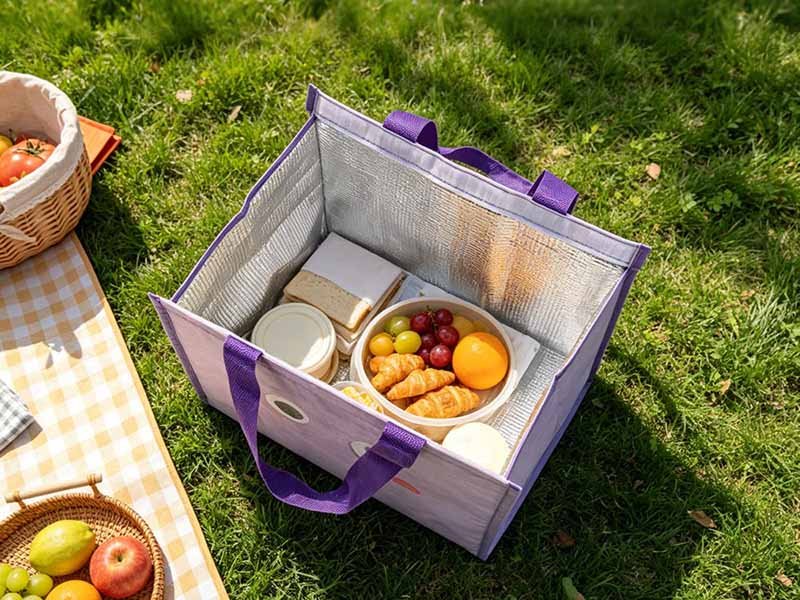
| Cooler bags | Picnic, fishing, camping | Insulated foam, PEVA, polyester |
| Tactical bags | Utility, field carry, outdoor gear | Oxford, nylon webbing, MOLLE systems |
| Neoprene bags | Gym, travel, beach, lifestyle outdoor | Laminated neoprene |
| Tool and gear organizers | Outdoor work, hunting, equipment carry | Heavy-duty polyester, canvas, neoprene |
Some factories also support related product categories that help brands build a fuller outdoor collection:
| Related Product Type | Why It Matters for Outdoor Brands |
|---|---|
| Koozies | Useful for beverage and camping accessory programs |
| Sports supports | Good fit for active/outdoor recovery collections |
| Medical supports | Useful for sports rehab and brace extensions |
| Wetsuits | Shows strong neoprene material knowledge |
| Protective sleeves and cases | Good for electronics and gear organization |
This is where Szoneier has a meaningful advantage. It is not only a general bag supplier. It has more than 18 years of experience in neoprene material development and related product manufacturing, including bags, koozies, sports supports, medical supports, and wetsuits. That matters because outdoor brands increasingly want material consistency across multiple SKUs, not just one isolated bag product.
For example, a small outdoor brand may want to develop:
- a neoprene gear tote
- a matching can cooler
- a padded accessory pouch
- a recovery support product
- a travel sleeve or case
Working with a factory that already understands neoprene structure, stretch behavior, lamination stability, and reinforced sewing reduces product-development risk.
Brands should also ask a deeper question: is the factory offering a long catalog because it truly knows those products, or because it is trying to look broad? The safer choice is often a factory with fewer categories but stronger real manufacturing depth in the exact material family the brand needs.
Why Do Outdoor Brands Choose China Bag Manufacturers?
Outdoor brands choose China bag manufacturers because China still offers one of the world’s most complete sewn-products supply chains. That is not only about labor cost. It is about factory coordination, material availability, trim sourcing, sampling speed, process familiarity, and the ability to move from development to scalable production without rebuilding the whole supply base.
A strong outdoor bag project often needs more than fabric and stitching. It may involve:
- coated or laminated fabrics
- webbing and buckles
- foam padding
- mesh panels
- zipper systems
- labels and patches
- screen printing or heat transfer
- hangtags and packaging
- carton planning for export
China’s manufacturing clusters make it easier to source these parts in one connected system.
The commercial reasons outdoor brands often choose China look like this:
| Reason | What the Brand Gains |
|---|---|
| Dense material supply chain | Faster material matching and replacement |
| Strong trim ecosystem | Easier access to buckles, webbing, zippers, pulls |
| Sampling efficiency | Quicker prototype revisions |
| Flexible MOQ options | Lower risk for early-stage brands |
| Production scalability | Easier move from 100 pcs to 5,000+ pcs |
| Cost structure | Better balance between quality and margin |
Outdoor brands usually compare China against other sourcing models based on several practical points:
| Sourcing Factor | Why It Matters |
|---|---|
| Unit cost | Determines retail margin room |
| Sample speed | Impacts product launch timing |
| Material access | Affects product function and final look |
| Product complexity handling | Important for technical outdoor builds |
| Communication quality | Reduces mistakes during development |
| Reorder stability | Critical for growing brands |
For many mid-size and growing outdoor brands, China remains attractive because it supports both experimentation and scale. A startup may begin with a low MOQ trial order. If the product sells, the same supplier can often move into larger runs without changing country, material system, or factory relationship.
Szoneier fits well into this logic because it offers:
- free design support
- low MOQ customization
- fast sampling
- free samples in some project contexts
- short lead times
- OEM and private label support for overseas brands
That combination is useful for both small foreign importers and premium brands. A smaller client may care most about flexibility and risk control. A larger client may care more about consistency, technical detail, and scaling. A factory that can serve both tends to be more commercially resilient.
There is also a deeper reason China remains strong for outdoor brands: outdoor gear is often a balance product. It must look right, feel durable, stay within target cost, and survive real use. China’s manufacturing system has had years to learn how to manage that balance across many bag categories.
Are China Bag Manufacturers Experienced?
Some are very experienced. Some are not. This is one of the most important distinctions outdoor brands need to make early.
A factory’s number of years matters, but years alone do not prove capability. The better question is: experienced in what? A factory may have 15 years in fashion handbags and still be weak at outdoor duffels. Another may have strong neoprene and sports-support experience that makes it much more suitable for technical soft-goods development.
When evaluating experience, brands should look at several layers:
| Experience Area | Why It Matters |
|---|---|
| Material experience | Outdoor products often depend on performance fabrics |
| Category experience | Backpacks, dry bags, neoprene bags all behave differently |
| Sampling experience | Faster and more accurate development |
| Export experience | Better packaging, labeling, and shipping control |
| QC experience | Lower defect and claim risk |
| OEM/ODM experience | Stronger support for private label projects |
Factories with real outdoor manufacturing experience usually show it in practical ways, not marketing slogans. They can answer clear technical questions such as:
- Which denier or neoprene thickness suits this use?
- Where should the stress points be reinforced?
- What type of zipper works better for a curved opening?
- How much load can this handle design realistically support?
- What is the likely unit-cost change if we add a shoe compartment?
- How should we adjust pattern allowances for stretch materials?
That kind of answer is more valuable than a generic “yes, we can do it.”
For outdoor projects, brands should be cautious about factories that only sell confidence but cannot explain process. True experience often appears in sample quality and problem-solving speed.
A useful factory evaluation checklist looks like this:
| Capability Check | What to Look For |
|---|---|
| Prototype quality | Clean shape, balanced proportions, accurate details |
| Seam consistency | No skipping, puckering, or weak tension |
| Reinforcement logic | Stress points visibly planned, not guessed |
| Material recommendation | Specific and realistic, not vague |
| Communication clarity | Questions answered in a structured way |
| Revision handling | Factory improves sample after feedback efficiently |
Szoneier’s background is relevant here because its experience is not only in one finished bag style. It comes from years of neoprene fabric development and neoprene-based product manufacturing across multiple categories. That gives it a broader technical understanding than a simple cut-and-sew workshop. For brands building outdoor products that require soft protection, stretch behavior, cushioning, insulation, or water-related performance, that material knowledge is useful.
Experience also affects risk. A less experienced factory may still offer a low price, but the hidden costs can be much higher:
- slower correction cycles
- more sample revisions
- unstable bulk quality
- unexpected material substitutions
- weak packaging control
- delayed delivery after approval
That is why many outdoor brands do not judge factories by price first. They judge them by how reliably they can get from concept to repeat order.
In outdoor manufacturing, experience is not a decoration. It is a cost-control tool, a quality-control tool, and very often a reputation-protection tool for the brand itself.
Why Use China Bag Manufacturers?
Outdoor brands choose China bag manufacturers because the country offers a unique combination of manufacturing depth, flexible customization, and cost efficiency that is difficult to replicate elsewhere. While other countries also produce bags, China has spent decades building a mature production ecosystem for textiles, outdoor gear, and sewn products.
For outdoor brands, this ecosystem matters because producing a functional bag involves far more than cutting and sewing fabric. It requires access to specialized materials, trims, and production techniques that must work together consistently.
China bag manufacturers support this process through an integrated network of suppliers and factories.
How Do China Bag Manufacturers Help Outdoor Brands?
China bag manufacturers help outdoor brands move efficiently from product concept to finished goods. Many factories provide support during early development stages, helping brands refine design ideas before production begins.
Outdoor brands typically work through several development steps when collaborating with manufacturers.
| Development Stage | Purpose |
|---|---|
| Concept discussion | Define product use and target market |
| Design development | Create structure and dimensions |
| Material selection | Choose fabrics, webbing, and hardware |
| Sampling | Build prototype for evaluation |
| Testing | Verify durability and functionality |
| Production planning | Confirm quantities and schedule |
Factories with experienced design teams can often improve a brand’s initial concept by suggesting adjustments to structure, materials, or reinforcement points.
For example, a brand may propose a backpack design that looks attractive but lacks proper load distribution. A manufacturer with outdoor bag experience may recommend adding padded shoulder straps or strengthening base panels to improve durability.
In this way, China bag manufacturers often function as technical partners, not just production contractors.
Which Advantages Do China Bag Manufacturers Offer?
Several advantages explain why China remains one of the leading production locations for outdoor bags.
The first advantage is supply chain density. Outdoor bags often require a wide range of materials and accessories.
| Component | Example Materials |
|---|---|
| Main fabrics | Nylon, polyester, neoprene |
| Structural materials | Foam padding, reinforcement panels |
| Hardware | Buckles, hooks, D-rings |
| Webbing | Shoulder straps and handles |
| Zippers | Coil zippers, waterproof zippers |
In China’s manufacturing regions, many of these components are produced within the same industrial clusters. This reduces sourcing time and simplifies logistics.
Another advantage is manufacturing specialization. Many factories focus on particular product categories such as backpacks, cooler bags, or neoprene gear. This specialization allows them to refine production techniques over time.
China also offers significant production capacity. Factories can scale from small sample orders to large commercial production runs without requiring brands to change suppliers.
This scalability is particularly valuable for outdoor brands that expect demand growth after launching a successful product.
Are China Bag Manufacturers Cost Efficient?
Cost efficiency is often a major reason brands consider China bag manufacturers. However, the real advantage lies not only in labor costs but also in overall production efficiency.
Several factors contribute to cost effectiveness.
| Cost Factor | Impact |
|---|---|
| Material sourcing | Lower raw material prices due to large supply base |
| Production efficiency | Skilled workers reduce production time |
| Equipment availability | Specialized sewing machines improve productivity |
| Bulk production capacity | Larger orders reduce unit costs |
It is also important to consider cost in relation to quality. Outdoor bags often require reinforced stitching, durable zippers, and weather-resistant fabrics. Factories experienced in these techniques can produce reliable products without excessive material waste or rework.
This balance between cost and performance is why many international outdoor brands continue to source from China.
Factories like Szoneier further support cost efficiency by offering flexible order quantities. Smaller brands can begin with lower minimum orders and increase production as demand grows.
How Do China Bag Manufacturers Work?
Understanding how China bag manufacturers operate helps outdoor brands plan product development more effectively. Manufacturing outdoor bags involves multiple coordinated steps, each of which affects the final product’s durability and appearance.
A simplified workflow looks like this.
| Production Phase | Key Activity |
|---|---|
| Product design | Define bag structure and materials |
| Pattern development | Translate design into production templates |
| Sampling | Create prototype samples |
| Material preparation | Inspect fabrics and trims |
| Cutting | Shape panels according to patterns |
| Assembly | Sew and assemble bag components |
| Quality inspection | Verify finished products |
Each step must be carefully managed to ensure that the final product matches the brand’s design specifications.
How Do China Bag Manufacturers Design Bags?
Bag design typically begins with concept sketches or digital drawings provided by the brand. These initial designs describe the intended shape, size, and functionality of the bag.
Manufacturers then convert these concepts into technical patterns used for sampling.
Important design considerations include:
| Design Factor | Why It Matters |
|---|---|
| Load distribution | Ensures comfortable carrying |
| Panel structure | Determines bag shape |
| Fabric strength | Prevents tearing under weight |
| Zipper placement | Affects accessibility |
| Pocket layout | Improves organization |
Factories with experienced product development teams often provide feedback during this stage. For example, they may suggest changing panel dimensions to improve stability or adjusting handle placement for better balance.
Such collaboration can significantly improve the final product.
What Steps Do China Bag Manufacturers Use?
Once the design is finalized, production begins. Outdoor bag manufacturing requires careful coordination between cutting, sewing, and assembly operations.
A typical production sequence includes:
| Step | Description |
|---|---|
| Fabric inspection | Verify material quality |
| Panel cutting | Cut fabric according to patterns |
| Component preparation | Prepare straps, padding, and hardware |
| Sewing operations | Assemble panels into bag body |
| Hardware installation | Attach buckles and zippers |
| Final assembly | Combine all components |
| Cleaning and finishing | Remove loose threads and inspect seams |
Each of these steps contributes to the overall strength and appearance of the finished bag.
Factories producing outdoor gear often use reinforced stitching techniques to ensure durability in high-stress areas such as handle attachments and shoulder strap anchors.
How Do China Bag Manufacturers Control Quality?
Quality control is a critical part of outdoor bag manufacturing. Products designed for travel, hiking, or sports must withstand repeated use in demanding conditions.
Factories therefore perform multiple inspections during production.
| Inspection Stage | Purpose |
|---|---|
| Material inspection | Confirm fabric quality |
| In-process inspection | Detect sewing errors early |
| Structural testing | Verify load capacity |
| Final inspection | Check overall appearance |
Some factories also conduct load testing by filling bags with weight to simulate real-world use.
Quality control systems help ensure that every product leaving the factory meets the required standards.
Manufacturers with strong quality management processes can reduce defect rates and maintain consistent product performance across large production runs.
Szoneier’s long experience producing neoprene products and outdoor gear allows the company to apply these quality practices across a wide range of bag categories.
Which Bags Do China Bag Manufacturers Make?
China bag manufacturers produce a wide variety of outdoor and travel-related bags. The diversity of product categories is one of the key reasons outdoor brands collaborate with Chinese factories. A single manufacturer can often support multiple bag types within the same supply chain, which allows brands to build complete product collections rather than sourcing each item from different suppliers.
Outdoor brands typically design product lines that include several complementary bags such as backpacks, duffel bags, and accessory organizers. Working with one experienced manufacturer can help ensure consistency in materials, stitching quality, and overall product design.
The most common outdoor bag categories produced by China bag manufacturers include the following.
| Bag Category | Primary Use |
|---|---|
| Hiking backpacks | Trekking and outdoor exploration |
| Travel duffel bags | Short trips and sports travel |
| Waterproof dry bags | Water sports and boating |
| Cooler bags | Camping and outdoor picnics |
| Tactical bags | Field equipment and survival gear |
| Neoprene bags | Gym, travel, and lifestyle use |
Because these bags often share similar materials—such as nylon fabrics, webbing straps, and reinforced stitching—factories can produce multiple product types efficiently within the same production system.
Which Backpacks Do China Bag Manufacturers Produce?
Backpacks represent one of the largest product segments for China bag manufacturers. Outdoor backpacks must balance durability, comfort, and weight distribution, which requires thoughtful design and strong construction techniques.
Factories producing outdoor backpacks typically manufacture several variations depending on the intended activity.
| Backpack Type | Typical Capacity | Common Activities |
|---|---|---|
| Daypack | 15–25 liters | Daily commuting and short hikes |
| Hiking backpack | 30–50 liters | Multi-day trekking |
| Tactical backpack | 25–45 liters | Field operations and survival gear |
| Hydration backpack | 10–20 liters | Cycling and running |
Outdoor backpacks often include specialized design elements such as padded shoulder straps, ventilation panels, and load-bearing waist belts. These components help distribute weight evenly and improve comfort during long periods of use.
Factories experienced in outdoor gear manufacturing typically reinforce stress points using bar-tack stitching or additional webbing layers. These reinforcements prevent failure in areas where the bag carries the most load.
Which Travel Bags Do China Bag Manufacturers Supply?
Travel bags form another major product category for China bag manufacturers. These bags are widely used by travelers, athletes, and outdoor enthusiasts who require durable luggage for short trips or gear transport.
Travel bag designs vary widely depending on the intended application.
| Travel Bag Type | Typical Use |
|---|---|
| Duffel bags | Weekend trips or gym use |
| Rolling travel bags | Long-distance travel |
| Gear carry bags | Outdoor equipment transport |
| Packable travel bags | Lightweight backup luggage |
Duffel bags remain particularly popular because of their versatility. A well-designed duffel bag can function as a gym bag, sports bag, or short-trip travel bag.
Manufacturers often improve travel bag performance by incorporating features such as reinforced handles, detachable shoulder straps, and multiple internal compartments.
These design improvements help customers organize their belongings more effectively while traveling.
Do China Bag Manufacturers Make Neoprene Bags?
Yes, many China bag manufacturers produce neoprene bags, although only some factories specialize in neoprene materials. Neoprene bags are popular in lifestyle and outdoor markets because the material provides cushioning, flexibility, and water resistance.
Neoprene products frequently produced by manufacturers include:
| Neoprene Product | Common Use |
|---|---|
| Neoprene travel bags | Gym and lifestyle travel |
| Neoprene laptop sleeves | Electronics protection |
| Neoprene koozies | Beverage insulation |
| Neoprene sports supports | Athletic protection |
Factories with experience in neoprene production often have deeper knowledge of laminated fabrics, stretch behavior, and reinforcement techniques required for these products.
Szoneier, for example, specializes in neoprene material development and produces a wide range of neoprene products including bags, koozies, sports supports, medical supports, and wetsuits.
This specialization allows brands to develop product collections based on the same material platform.
How To Choose China Bag Manufacturers?
Choosing the right manufacturing partner is one of the most important decisions for outdoor brands developing new products. The quality of the factory directly affects product durability, development speed, and supply chain reliability.
Brands evaluating China bag manufacturers should consider several key factors.
| Evaluation Factor | Why It Matters |
|---|---|
| Material expertise | Ensures correct fabric selection |
| Product development ability | Improves design feasibility |
| Production capacity | Supports larger orders |
| Quality management | Reduces defect rates |
| Communication efficiency | Speeds up development cycles |
Factories that meet these criteria are more likely to deliver consistent products that meet the expectations of international brands.
What Makes Good China Bag Manufacturers?
Reliable China bag manufacturers usually demonstrate several characteristics that indicate strong production capability.
| Factory Capability | Benefit for Brands |
|---|---|
| Skilled pattern makers | Accurate product development |
| Experienced sewing teams | Strong and clean stitching |
| Advanced equipment | Consistent production quality |
| Material sourcing network | Access to technical fabrics |
| Quality inspection procedures | Reduced manufacturing defects |
Manufacturers that have worked with international clients often understand export packaging requirements, labeling standards, and shipping logistics.
These factors become particularly important when products must meet the expectations of overseas retailers.
Szoneier’s experience working with foreign brands allows the company to provide customized manufacturing services that align with international quality standards.
How Do Brands Work With China Bag Manufacturers?
The collaboration process between brands and manufacturers typically follows a structured development sequence.
| Step | Purpose |
|---|---|
| Product concept | Define bag design and functionality |
| Technical design | Create detailed specifications |
| Sampling | Produce prototype samples |
| Testing | Evaluate durability and usability |
| Production planning | Confirm order quantity and timeline |
During sampling, brands review the product and provide feedback for improvements. This stage often involves several revisions before final approval.
Factories with strong development teams can quickly implement these changes, helping brands bring products to market faster.
Why Choose OEM China Bag Manufacturers?
Many outdoor brands prefer working with OEM manufacturers because this model allows them to retain full control over product design and branding.
OEM production enables brands to create exclusive products that cannot be easily replicated by competitors.
Benefits of OEM manufacturing include:
| OEM Advantage | Brand Benefit |
|---|---|
| Custom product design | Unique brand identity |
| Controlled specifications | Consistent product quality |
| Flexible production scale | Ability to grow with demand |
| Long-term partnership | Stable supply chain |
By collaborating closely with a trusted OEM manufacturer, brands can develop outdoor bag collections tailored to their target markets.
Conclusion: Building Successful Outdoor Bag Products With the Right Manufacturer
China bag manufacturers continue to play a central role in the global outdoor gear industry. Their ability to combine technical materials, skilled production teams, and efficient supply chains makes them valuable partners for brands developing backpacks, travel bags, and neoprene gear.
Outdoor brands that succeed in this market typically focus on three principles:
- selecting materials suited to outdoor conditions
- designing bags that balance functionality and durability
- working with experienced manufacturing partners
Szoneier has more than 18 years of experience in neoprene material development and outdoor bag manufacturing, producing products such as bags, koozies, sports supports, medical supports, and wetsuits for international clients.
With flexible customization services, low minimum order quantities, fast sampling, and reliable production capabilities, Szoneier helps brands transform product ideas into durable outdoor gear ready for global markets.
If your brand is planning to develop custom outdoor bags or neoprene products, the Szoneier team can assist with product design, sampling, and production planning.
Contact Szoneier today to discuss your project and receive a customized quotation for your next outdoor bag collection.