Skip to content


Launching one custom bag is mostly a product-development exercise. Launching a collection of backpacks, pouches, totes, travel bags, cooler bags, or related accessories is a different kind of challenge. Once several styles, colors, sizes, materials, packaging versions, and barcodes move through the same project, small specification errors can spread quickly. A zipper assigned to the wrong style, an outdated logo file, a delayed custom fabric, or one incorrect carton label can hold up far more than a single product.
A strong manufacturer for multi-SKU bag projects should be able to manage different styles, colors, sizes, materials, BOMs, samples, production schedules, inspection requirements, labels, packaging instructions, and shipping plans under one controlled system. The supplier should be evaluated not only on price or factory size, but also on sampling discipline, material coordination, production capacity, SKU tracking, quality control, packaging accuracy, and repeat-order documentation.
The practical test is simple. Imagine that twelve approved products are due for the same launch. Eleven are finished, but the twelfth is waiting for a custom zipper puller. Two carton labels were revised late, one lining color changed after sampling, and three styles share the same exterior fabric. A factory that can sew bags may still struggle. A manufacturer that can control the entire information flow is much more likely to keep the collection on track.
What Makes Multi-SKU Bag Projects Different?
Multi-SKU bag projects are more difficult because every additional style, size, color, material, accessory, or packaging version creates another specification that must stay accurate from development through shipment. The real challenge is not simply producing more bags. It is controlling more variables without mixing materials, versions, labels, timelines, or quality standards.
What Counts as a SKU?
A product style and a SKU are not necessarily the same thing. One backpack offered in three colors and two sizes can create six separate SKUs even though the factory may view it as one basic design. If those variations have different barcodes, inventory codes, labels, packaging, or shipping instructions, they must remain identifiable throughout material preparation, sewing, inspection, packing, warehousing, and final delivery.
This distinction becomes important very early. A product team may describe a project as “five styles,” but after colors, sizes, packaging formats, and channel-specific identifiers are added, the commercial SKU count can become much larger. A four-style collection with three colors per style already creates up to twelve style-color combinations before sizes or packaging variations are considered. Once separate barcodes or FNSKU labels are added, each version needs its own traceable production and packing reference.
A practical master SKU file should normally include the style number, SKU code, size, color, main material, logo version, order quantity, barcode, packaging type, carton arrangement, and destination. This does not need to become complicated software. A carefully controlled spreadsheet can work well. The important point is that one approved record exists, revision dates are visible, and everyone responsible for sampling, sourcing, production, inspection, packing, and shipment is working from the same information.
How Does SKU Complexity Grow?
SKU complexity grows faster than the number of products because manufacturing variables interact. Five different bags do not create only five decisions. They may create different fabric purchases, zipper specifications, webbing widths, lining colors, logo treatments, reinforcement methods, packaging formats, carton labels, and delivery schedules. When those details overlap between products, the project becomes both more efficient and more vulnerable to confusion if shared specifications are not clearly documented.
| Project Variable | Example | Operational Effect |
|---|---|---|
| Base styles | 5 | 5 structures, patterns, and BOMs |
| Colors | 3 per style | Up to 15 style-color combinations |
| Sizes | 2 on selected styles | Additional measurements and patterns |
| Logo methods | 2 | Different setup, artwork, or suppliers |
| Packaging formats | 2 | Separate packing instructions |
| Destinations | 2 | Separate carton and shipping requirements |
A well-managed collection distinguishes between specifications that should stay common and specifications that genuinely need to be unique. Several styles may share one lining, one zipper finish, one webbing color, or one woven label. This can improve purchasing efficiency and visual consistency. At the same time, forcing too much standardization can weaken product performance. A lightweight pouch and a structured laptop backpack should not automatically share the same reinforcement simply because it simplifies sourcing.
The goal is therefore not to make every SKU identical. It is to reduce unnecessary variation while protecting the function and positioning of each product. Experienced product teams often discover that a collection can feel consistent without making every material, component, or construction detail the same. That balance makes both manufacturing and future replenishment easier to control.
Which Risks Increase With More SKUs?
The most expensive multi-SKU mistakes are often small specification errors repeated across hundreds or thousands of units. A wrong zipper size, outdated embroidery file, incorrect lining color, mixed barcode, or mismatched carton mark may affect only one SKU, but that SKU can delay an entire launch, require repacking, or create inventory problems after the goods reach a fulfillment center.
The main risks normally fall into several groups. Specification errors happen when production receives an outdated pattern, BOM, artwork, or packaging file. Material errors happen when similar fabrics, trims, or color lots are mixed. Scheduling problems appear when one complicated SKU becomes the slowest part of the collection. Quality problems occur when different bag types are inspected with the same generic checklist. Fulfillment errors appear when products are made correctly but receive the wrong labels, packaging, carton marks, or shipping instructions.
The most reliable protection is traceability. Production teams should be able to answer basic questions without searching through old message threads. Which sample is approved? Which zipper belongs to this style? Which color code is correct? Which barcode goes on this carton? Which packaging file is current? When BOMs, SKU sheets, approved samples, component references, packaging files, and revision records are maintained properly, those questions become much easier to resolve before mistakes reach the finished goods stage.
How Do Multiple SKUs Affect a Product Launch?
A factory may see twelve SKUs as twelve production jobs, but a brand often sees them as one launch. That difference changes how scheduling should be managed. If eleven SKUs are complete while one important style is three weeks late, the factory may consider the order mostly finished. The brand may still be unable to photograph, market, ship, or release the complete collection as planned.
This is especially important for seasonal retail programs, back-to-school collections, holiday products, promotional campaigns, Amazon launches, influencer projects, and coordinated Shopify releases. A missed selling window can be more expensive than the manufacturing delay itself. For this reason, multi-SKU planning should identify long-lead materials and processes before bulk production begins. Custom-dyed fabrics, molded pullers, metal logo plates, uncommon hardware, printed boxes, specialty laminations, and third-party testing often deserve early attention.
A useful production schedule breaks the project into milestones instead of relying on one final delivery date. Material readiness, sample approval, cutting, logo processing, sewing, in-process inspection, final inspection, packing, and shipment preparation can be tracked separately. This allows the team to identify which SKU is likely to become the critical path and to act before the entire launch is affected.
Which Manufacturer Capabilities Matter Most?
The best manufacturer for a multi-SKU collection is not automatically the largest factory or the supplier offering the lowest quote. What matters is whether the company has enough product-category experience, material resources, sampling capability, production coordination, quality control, packaging discipline, and capacity flexibility to manage several different specifications without losing control as the project becomes more complex.
Which Bag Categories Can They Handle?
Different bags require different manufacturing knowledge. A tote, cooler bag, laptop backpack, cosmetic pouch, pet carrier, travel bag, tool bag, and neoprene sleeve may all belong to the broader bag and soft-goods industry, but their structural risks, material requirements, sewing methods, and inspection points can be very different. A factory that performs well on simple promotional totes is not automatically the best choice for a mixed collection that includes structured backpacks and technical products.
A backpack may require attention to shoulder-strap reinforcement, load-bearing seams, padding, laptop compartments, bartacks, webbing attachment, zipper durability, and internal organization. A cooler bag adds insulation, laminated lining, foam, seam construction, odor control, and closure details. A cosmetic bag often places greater emphasis on surface appearance, lining cleanliness, zipper smoothness, and logo placement. A tool bag may require heavier materials, reinforced bottoms, strong handles, metal hardware, and more demanding load-related construction.
The useful question is therefore not whether a supplier claims to make “all kinds of bags.” Ask whether the major products in your actual SKU plan are within categories the team understands well. Physical samples, similar production references, material explanations, sample-room experience, and category-specific QC discussions are much stronger evidence than a long product list on a website.
Szoneier’s documented manufacturing scope covers multiple sewn bag and soft-goods categories, including backpacks, tote bags, cooler bags, makeup bags, travel bags, duffle bags, gym bags, beach bags, tool bags, medical bags, leather goods, neoprene products, EVA protective cases, and other functional soft goods. That broader product range can be useful when one collection contains several related categories rather than a single repetitive style.
How Broad Is Their Material Range?
Material capability matters because the same collection may use several fabrics, trims, reinforcement materials, and component systems. A manufacturer should be able to discuss not only material names, but also how each option affects appearance, weight, hand feel, structure, abrasion resistance, water resistance, printability, sewing difficulty, MOQ, price, and lead time.
Common bag projects may involve polyester, nylon, Oxford, canvas, cotton, neoprene, PU, leather, PVC, TPU, mesh, RPET fabrics, EVA, foam, PE or PP boards, insulation layers, different linings, webbing, elastic, binding tape, zipper systems, hooks, buckles, and metal hardware. The best material choice is rarely the most expensive one. It is the material that fits the product’s use, brand positioning, expected order quantity, cost structure, and required durability.
Material sharing can also make multi-SKU programs easier to manage. A travel collection might use the same outer nylon family, lining color, zipper finish, woven label, and hardware color across a backpack, duffle, organizer pouch, and toiletry bag. Shared materials can improve purchasing efficiency and reduce shade variation. At the same time, technical requirements still need to take priority. The foam or reinforcement suitable for a pouch may not be appropriate for a laptop bag.
A capable manufacturer should therefore be able to explain where materials can be shared safely and where each SKU needs a different technical solution. This type of discussion is often more valuable than simply presenting a large fabric swatch library, because it shows whether the team understands how materials behave after they are cut, sewn, loaded, packed, and used.
Can They Run Multiple Orders in Parallel?
Monthly capacity is useful, but it does not tell the whole story. A factory that produces a very high number of simple promotional bags may still struggle with fifteen custom SKUs that require different patterns, materials, colors, logos, sample revisions, QC standards, and packaging instructions. Multi-SKU projects depend heavily on coordination capacity, not only sewing capacity.
Ask how many development and production jobs can be coordinated at the same time and how responsibilities are divided across sampling, pattern making, sourcing, cutting, printing or embroidery, sewing, inspection, packing, and logistics. Also ask what changes during busy months. A supplier that handles twenty straightforward orders under normal conditions may have a very different practical capacity when several complex projects arrive before a major retail season.
Szoneier’s documented manufacturing system includes 8 sewing production lines, 160+ production and support machines, 180+ team members, an indicated monthly capacity of approximately 120,000–200,000 pieces, and the ability to coordinate roughly 20–35 orders in parallel. The system is also supported by 10+ controlled satellite partner factories that can provide additional category or capacity flexibility when a project requires it.
Those numbers should still be evaluated against the real project. A twenty-SKU collection of structured backpacks is not equivalent to twenty simple tote orders. Material complexity, third-party testing, custom hardware, packaging, seasonal workload, and sample revisions can all reduce practical throughput. The most useful capacity discussion is always tied to the actual SKU list and required delivery date.
What Production Proof Should They Show?
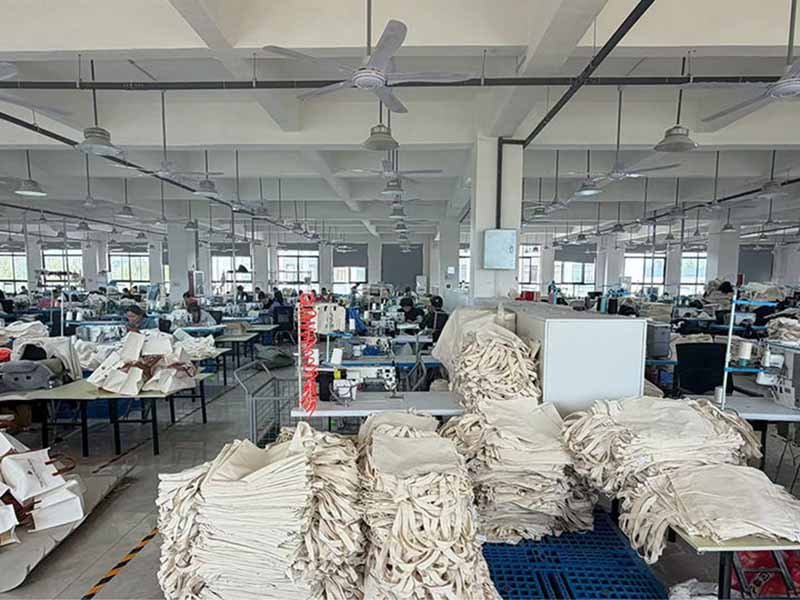
Manufacturer evaluation should connect sales claims with physical evidence. A serious supplier should be able to show where products are developed, sampled, cut, sewn, inspected, packed, and stored. For international sourcing, a live video factory review is particularly helpful because the customer can ask to see specific areas rather than relying only on polished promotional footage.
Useful areas to review include the sample room, pattern-making area, material storage, cutting tables, sewing lines, semi-finished goods, inspection stations, packing department, finished-goods warehouse, and relevant product samples. If the planned project includes technical backpacks, coolers, and travel pouches, seeing only simple cotton totes provides limited evidence. The examples shown should have some relationship to the construction, materials, or quality requirements of the intended collection.
It is also reasonable for some specialist processes to be handled by outside partners. Printing, embroidery, molded accessories, coating, hardware plating, packaging, and specialty testing are often completed by specialist suppliers. The important question is not whether every process happens inside one building. The important question is whether those outside processes remain under approved specifications, sample references, incoming inspection, production control, and clear responsibility.
A manufacturer that openly explains what is produced internally and what is coordinated through specialist partners is often easier to evaluate than a company that makes vague claims that everything is fully in-house. Transparency matters more than an artificially simple supply-chain story.
How Should Sampling and SKU Control Work?
Sampling and SKU control should create one approved reference system before bulk production starts. Every style or SKU should be connected to the correct pattern, BOM, materials, colors, artwork, packaging, measurements, and revision status. Production should never depend on scattered messages or on someone remembering which sample or artwork file was finally approved.
How Are Tech Packs Reviewed?
A tech pack should be treated as a manufacturing document rather than an attachment that sales simply forwards to the sample room. Before sampling starts, the factory should review measurements, tolerances, materials, lining, foam, reinforcement, zipper sizes, webbing widths, hardware, pocket layouts, logo artwork, color references, labels, packaging, and performance requirements.
Missing information should be identified early. “Black nylon” may be enough for an initial conversation but not for a controlled production specification. The final document may also need denier, weave, coating, weight, finish, approved swatch, or supplier reference. The same applies to hardware. “Metal hook” leaves room for interpretation, while dimensions, finish, shape, opening size, and approved sample references make the requirement much clearer.
For larger collections, specifications can be separated into collection-wide, product-family, and SKU-specific requirements. If every style uses the same woven label and logo color, that common standard should be clearly documented once. If only two SKUs use a waterproof zipper, that exception should stand out immediately instead of being buried in unrelated notes.
A good tech-pack review reduces later revisions because technical questions are raised before materials are ordered and patterns are finalized. It also gives the manufacturer a chance to point out construction that may be expensive, difficult to sew consistently, unsuitable for the chosen material, or likely to create unnecessary MOQ pressure.
How Are BOMs Managed?
The BOM, or bill of materials, is one of the most useful tools for controlling multi-SKU production. It identifies the major materials and components required for a style so purchasing, production, and inspection teams can distinguish approved items from similar-looking alternatives.
A practical bag BOM may include the main fabric, lining, foam, reinforcement board, zipper type, slider, puller, webbing, buckles, hooks, elastic, binding, thread, labels, logo components, and packaging materials. As SKU count rises, simple descriptions become less reliable. “Black webbing” may refer to several widths, fibers, weaves, or thicknesses. “Silver buckle” may refer to different plating finishes or shapes.
Clear component codes and specifications solve many of these problems. If eight SKUs genuinely share one zipper specification, one approved component reference makes purchasing and incoming inspection easier. If two products use similar-looking but technically different fabrics, separate material codes help prevent substitutions during cutting.
For repeat production, BOM control becomes even more valuable. Szoneier’s documented project records can retain patterns, BOMs, materials, logo files, packaging files, QC standards, SKU sheets, and revision records. This allows future reorders to start from an established production reference instead of rebuilding every specification from the beginning.
How Are Sample Revisions Tracked?
Sample revision control becomes critical when several styles are being developed at once. A common situation is that one backpack reaches Version 3, a pouch is approved at Version 2, a tote stays at Version 1, and a new logo file is sent after some samples are already complete. If those changes are managed mainly through long email chains or instant messages, the wrong instruction can easily reach production.
Each sample round should therefore have a visible version number and change record. The record should show the sample date, changes requested, changes completed, open issues, material changes, artwork changes, cost implications, and approval status. This does not require complicated project-management software. What matters is that old versions remain identifiable and the current approved version is unmistakable.
File naming also deserves attention. Names such as final.pdf, final-new.pdf, and final-new2.pdf provide almost no protection against human error. A structure such as BP01_V3_Approved_2026-08-19 is much easier to understand. The same principle should apply to artwork, packaging, and measurement files.
The physical approved sample should also correspond with the approved digital specification. When the production and QC teams can compare the sealed sample, BOM, pattern, artwork, and approved materials, questions can be resolved using a controlled reference rather than personal memory.
What Should Be Approved Before Bulk Production?
Bulk production should begin from a frozen set of specifications. Visual approval of a development sample alone is not always enough because that sample may have been made using temporary hardware, available fabric, hand-cut logo pieces, substitute zippers, or materials that were practical for sampling but are not identical to the final bulk purchase.
Before cutting bulk materials, the project should normally confirm the final sample, measurements and tolerances, pattern, BOM, main materials, accessories, logo artwork, logo placement, color references, packaging, labels, barcodes, carton requirements, SKU quantities, and QC standards. If the final production materials differ from the development sample, a pre-production sample can provide an additional safeguard.
Szoneier’s documented consistency process uses approved samples, pre-production samples, patterns, BOMs, material records, accessory specifications, logo files, packaging files, and production inspection checkpoints to manage consistency between development and bulk production.
The principle is straightforward. Once bulk production starts, operators should not need to interpret an evolving conversation. Questions will still appear during manufacturing, but the baseline specification should already be fixed so every decision can be compared with an approved reference.

How Do MOQ and Cost Work Across SKUs?
MOQ in multi-SKU projects is rarely controlled by one number. Finished-product MOQ, fabric MOQ, custom color requirements, accessory minimums, logo setup, packaging minimums, and production efficiency all interact. Brands should identify which component or process creates the real minimum for each SKU instead of assuming the total order can always be divided freely among many variations.
Is MOQ Set Per Style or Per SKU?
MOQ may be calculated per style, per color, per SKU, or according to a material or component supplier’s minimum. A factory might accept 500 pieces of one tote design divided into two available colors, but the same split may not work if both colors require custom dyeing. A tote and pouch may share one canvas purchase, yet they still require separate patterns, cutting, sewing setup, QC, and labor calculations.
| MOQ Layer | Typical Situation | Main Constraint |
|---|---|---|
| Finished style | Standard sewn bag | Production setup and efficiency |
| Color split | Multiple colors in one style | Stock availability or dyeing MOQ |
| Custom fabric | Pantone-dyed or special fabric | Mill or dye-house minimum |
| Custom hardware | Molded puller or metal plate | Tooling, plating, supplier MOQ |
| Printed packaging | Boxes, sleeves, printed bags | Printing and conversion setup |
There is no universal industry quantity that applies to every project. A simple sewn pouch using stock material may be practical at a much lower quantity than a molded EVA case, waterproof technical bag, or product using specially developed hardware.
Szoneier’s documented starting MOQ is 200 pieces for many standard custom bag projects, while exact minimums depend on product type, material, structure, color quantity, logo process, packaging, and supplier requirements.
A more useful question than “What is your MOQ?” is “Which material, accessory, or process creates the highest minimum for this SKU?” That question usually reveals the real production constraint.
How Do Colors Affect MOQ?
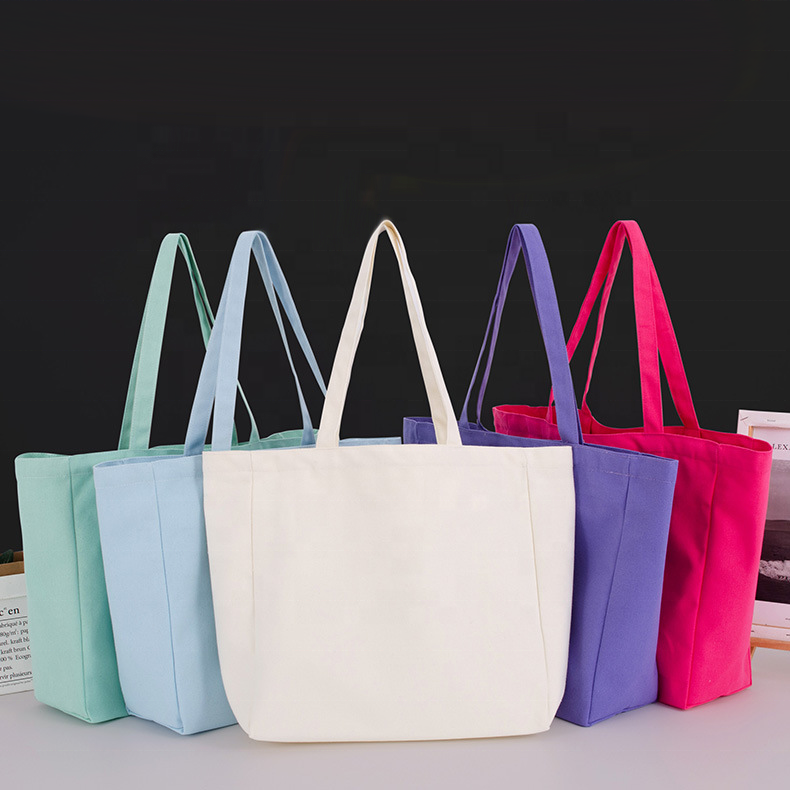
Color can multiply SKU count and inventory risk very quickly. A brand ordering 800 backpacks in four colors has an overall quantity that sounds reasonable, but each color represents only 200 pieces. If all four colors use existing stock materials, the split may be manageable. If every color requires Pantone dyeing, each may create an independent fabric requirement.
Color also affects more than the main fabric. Zipper tape, webbing, thread, lining, embroidery, molded patches, silicone parts, printed labels, and packaging artwork may all need to coordinate with the selected colorway. A change from one color to four therefore creates more than three additional fabric decisions.
For first launches, available colors often provide more flexibility than custom-dyed materials. This can allow a brand to test market demand before committing to larger fabric purchases. Custom colors remain valuable when color is central to brand identity, but the cost and MOQ effect should be understood before the range is expanded.
Szoneier’s documented approach allows mixed-color projects to be evaluated based on material availability, material MOQ, SKU management, and production planning. The same documentation notes that ready colors are generally more practical for lower-volume runs than custom-dyed colors.
Which Materials Can Be Shared?
Material sharing is one of the most effective ways to simplify a multi-SKU program when products genuinely belong to the same design family. A travel range may use one main nylon, one lining fabric, one matte-black zipper finish, two standard webbing widths, one hardware color, and one woven label across several products.
This can reduce the number of separate supplier orders, improve color consistency, make incoming inspection easier, and simplify repeat purchasing. It may also help avoid unnecessary material leftovers when several products consume the same fabric or components.
However, visual consistency should not be confused with technical sameness. A packing cube may use very lightweight fabric, while a laptop backpack needs more structure and reinforcement. A cooler bag may share the same exterior color as the rest of a collection but require completely different lining and insulation materials.
Experienced development teams usually create a material matrix that shows which components are shared across styles and which remain unique. This makes unnecessary one-off components easy to spot. It also helps the manufacturer explain where a special material creates separate MOQ, cost, or lead-time pressure.
The right question is therefore not whether the entire collection can use identical materials. The right question is which materials can be shared without weakening the function, durability, appearance, or positioning of any SKU.
How Can Brands Reduce Inventory Risk?
SKU expansion can create inventory pressure much faster than expected. If a first production run contains 6,000 pieces spread across three SKUs, the simple average is 2,000 units per SKU. Spread the same total across ten SKUs and the average falls to 600. Spread it across twenty SKUs and the average falls to 300, while manufacturing, packaging, and replenishment complexity rises substantially.
Real demand will never divide perfectly. One color may sell out quickly while another barely moves. One size may become the hero SKU while another remains in storage. This is why assortment planning and manufacturing planning should happen together rather than being treated as separate decisions.
Brands can reduce risk by limiting first-launch colors, using available materials for early testing, sharing selected hardware, avoiding unnecessary custom molds during validation, standardizing packaging structures where practical, and expanding the range after real sell-through data becomes available. Small-batch replenishment can also be more valuable than forcing every possible variation into the first order.
Low MOQ helps, but it does not remove inventory risk. A 200-piece minimum still creates 4,000 units if twenty independent SKUs are launched together. The better goal is to choose the number of SKUs that the expected sales volume, margin, replenishment lead time, and available working capital can realistically support.
How Is Quality Controlled Across Multiple SKUs?
Multi-SKU quality control works best when there is a common collection standard together with product-specific checks. Shared requirements may cover workmanship, color consistency, branding, labeling, and packaging, while each bag type needs its own structural and functional inspection points. Approved samples, BOMs, measurements, and material references make these standards easier to apply consistently.
Are QC Standards SKU-Specific?
One generic inspection checklist is rarely enough for a diverse collection. A cosmetic pouch and a technical backpack may share basic workmanship requirements, but their most important failure points are different. The pouch may be judged heavily on surface appearance, zipper smoothness, lining cleanliness, and logo placement, while the backpack may require closer inspection of strap attachment, reinforcement, padding, computer compartments, webbing, bartacks, and load-bearing seams.
A cooler bag may require additional attention to lining construction, insulation, foam placement, closure, odor, and leakage-related details. A tool bag may need more emphasis on reinforced bottoms, pocket construction, hardware, handle attachment, and load-related stitching.
A practical QC system therefore normally has several layers. Collection-wide standards cover general workmanship, appearance, color direction, branding, labeling, and packaging. Style-specific standards cover measurements, pocket layouts, materials, construction, and component placement. Functional standards cover performance requirements that are unique to the intended use of the product.
Szoneier’s documented QC structure includes incoming material inspection, in-process inspection, final product inspection, and outgoing packing inspection. Its documented examples also identify different inspection priorities for backpacks, cooler bags, cosmetic bags, pet bags, tool bags, and medical bags.
How Is Sample-to-Bulk Consistency Controlled?
The approved sample should function as a production reference, not simply as a sales sample kept in a showroom. It should be connected to the final pattern, BOM, material references, component specifications, measurements, artwork, packaging, and QC standards so production teams can verify questions against an agreed source.
In-process inspection is especially valuable because some errors become expensive once the entire lot is complete. If a shoulder strap is positioned incorrectly on the first few dozen units, correcting the process early is relatively straightforward. Discovering the same issue only after thousands of units reach final inspection may require extensive rework.
The exact inspection frequency should depend on product complexity, quantity, risk, and customer requirements. There is no single percentage that is appropriate for every custom bag program. Complex products, new constructions, new materials, or critical functional requirements may justify closer monitoring than a mature repeat order.
Szoneier’s documented process uses approved samples, pre-production samples, BOMs, material records, accessory specifications, logo files, packaging files, and production checkpoints to control sample-to-bulk consistency.
How Are Materials Checked Before Production?
Material problems are much cheaper to discover before cutting. If incorrect fabric is found while still in rolls, the response may involve replacement, sorting, or supplier correction. If the same material has already been cut into panels and sewn across several SKUs, the cost of correction can rise quickly.
Incoming inspection may include material identity, width, thickness, surface condition, color, coating, backing, zipper size, webbing width, hardware finish, logo components, and packaging materials. The exact checks should reflect the product and the claims being made.
Functional claims require particular care. Terms such as waterproof, fire resistant, food-contact suitable, or RFID blocking should not be used casually when those characteristics are important to the product. Visual inspection alone cannot confirm every functional property, so testing requirements should be established according to the project and target market.
Multi-SKU collections create two opposite material risks. When many SKUs share the same material, one incorrect batch can affect several products. When every SKU uses different materials, the inspection workload increases because each component requires separate confirmation. This is another reason thoughtful material standardization can improve both purchasing efficiency and quality control.
How Are Packaging and Barcode Errors Prevented?
Packaging errors can be particularly costly because the product itself may be correct while the inventory becomes difficult to receive, store, or sell. A black backpack placed into packaging for a navy SKU may look like a minor factory mistake, but it can become a serious inventory discrepancy once goods reach Amazon, a retail distribution center, or a third-party warehouse.
Each SKU should therefore have a controlled packout specification. That record normally identifies the SKU code, product color, size, barcode, FNSKU where applicable, hangtag, inner packaging, units per carton, carton dimensions, carton marks, and destination.
| Packaging Control | Typical Data to Confirm | Main Risk Prevented |
|---|---|---|
| Unit identification | SKU, size, color | Product mixing |
| Barcode labeling | UPC, EAN, FNSKU | Receiving errors |
| Inner packaging | Polybag, dust bag, box | Wrong packout |
| Carton quantity | Units per carton | Inventory mismatch |
| Carton marks | SKU, PO, destination | Warehouse confusion |
| Shipping split | Destination by SKU | Misrouted inventory |
Szoneier’s documented packaging capabilities cover barcode labels, FNSKU labels, retail packaging, Amazon packaging, Shopify packaging, master cartons, inner cartons, and multi-SKU packaging management.
One useful control is first-piece and first-carton approval. Before full packing starts, one correctly packed unit and one representative carton can be checked against the final instructions. This can reveal incorrect labels, pack quantities, carton marks, or packaging artwork before hundreds of cartons are completed.
How Do You Verify Delivery and Reorder Reliability?
Delivery reliability should be evaluated from material readiness through warehouse handoff, while reorder reliability should be evaluated by the records that remain after shipment. Strong multi-SKU suppliers need clear scheduling, early delay reporting, accurate SKU separation, flexible shipping options, and enough documentation to reproduce successful products without restarting development from zero.
How Are Multiple SKUs Scheduled?
A useful multi-SKU production schedule needs more than one promised shipping date. Different products often follow different manufacturing paths, and their lead times can vary significantly. A basic tote using available fabric and a simple printed logo may move through production quickly, while a structured backpack with custom hardware, foam, embroidery, internal organization, and special packaging requires more stages.
A practical schedule should track material readiness, pre-production approval, cutting, logo processing, sewing, in-process inspection, final inspection, packing, and shipment preparation. The project team should identify which SKU has the longest path and which components are most likely to affect delivery.
This approach allows risks to be seen early. A custom buckle that is already ten days behind schedule can be discussed before all other products are complete. The team may decide to prioritize that SKU, approve an alternative component, change the production sequence, or prepare a split shipment.
Brands should therefore ask the manufacturer to explain how the actual SKU mix will be scheduled instead of relying only on a generic production lead time. The quality of that explanation often reveals whether the supplier is thinking at collection level or treating every item as an unrelated order.
How Are Delayed SKUs Handled?
No realistic manufacturer can promise that delays never occur. Materials arrive late, samples sometimes require another revision, packaging may need to be remade, production lines become busy, and third-party testing can take longer than expected. The more important question is how quickly the issue is identified and what options are provided.
A useful delay report should explain what happened, which SKUs are affected, how many days are at risk, whether other styles can continue, and what recovery options exist. The team may consider changing the production sequence, using an approved alternative material, prioritizing one SKU, splitting the shipment, or using a faster freight method for the delayed portion.
Early information preserves choices. A ten-day delay reported when materials are being prepared may be manageable. The same delay discovered during the planned shipping week can become a missed launch.
Szoneier’s documented project-management process covers sample progress, material sourcing, production scheduling, QC feedback, packaging confirmation, shipment tracking, and repeat-order records through coordinated project teams.
Can They Support Split Shipments?
Split shipments can be very useful when all SKUs do not need to move together. A brand might send priority products by air, remaining inventory by sea, Amazon units to FBA, Shopify inventory to a third-party warehouse, and retail quantities to a distribution center.
This strategy can protect an important launch while keeping part of the freight cost under control. However, it also increases the need for accurate SKU data. Every shipment requires the correct quantities, carton marks, packing lists, destinations, and freight instructions.
The decision should therefore be based on commercial impact rather than habit. Holding a nearly complete collection for one delayed accessory may be cheaper than air freight in some situations. In others, missing a seasonal launch can cost much more than shipping the priority products early.
Szoneier’s documented logistics capabilities include express delivery, air freight, sea freight, DDP, FBA first-leg shipping, overseas-warehouse delivery, split shipments, multi-address delivery, carton labels, and related shipment preparation.
The manufacturer should be able to separate inventory accurately before split shipment is considered. Flexible logistics only works when the underlying SKU-control system is reliable.
What Records Are Kept for Reorders?
Reorder documentation is one of the clearest signs that a manufacturer is thinking beyond the first purchase order. After one successful production run, valuable information already exists: final patterns, approved BOMs, material references, color standards, hardware specifications, logo artwork, packaging files, QC criteria, carton data, and records of problems that were corrected during production.
If those records are properly archived, the second order can start from an established production baseline. If they disappear after shipment, the customer may need to explain the same zipper, lining, webbing, packaging, and color details again several months later.
That repeated development work increases both cost and risk. Small differences can also appear between production runs if the supplier does not know which material lot, hardware finish, logo file, or packaging version was previously approved.
Szoneier’s documented reorder system can retain patterns, BOMs, materials, logo files, packaging files, QC standards, SKU sheets, and revision records so repeat production does not need to begin from zero.
This becomes increasingly valuable as a product range expands. A brand may start with five SKUs and reach thirty or more after several seasons. At that stage, organized production history becomes part of the operational value of the manufacturing relationship.
Conclusion
Choosing a bag manufacturer for a multi-SKU project is less about finding a factory that can sew every individual product and more about finding a manufacturing system that can control the collection as a whole. Materials, patterns, colors, logos, samples, BOMs, production schedules, QC standards, packaging, labels, cartons, shipping instructions, and reorder records all need to remain connected as the project moves from development to delivery.
The strongest supplier discussions usually begin with real project information rather than a general request for price. Sharing the planned SKU list, quantities, product references or tech packs, materials, colors, packaging requirements, target market, destinations, and required delivery window allows the manufacturing team to identify MOQ constraints, long-lead components, sampling priorities, quality risks, and schedule pressure before those issues become expensive.
Szoneier approaches custom bag and soft-goods programs through factory-based sampling, material sourcing, production coordination, staged quality inspection, packaging management, export delivery, and repeat-order documentation. For brands planning collections that involve several products, colors, or sales channels, the useful next step is to evaluate the real SKU structure together and determine which parts can be standardized, which parts require separate control, and which decisions need to be made before sampling or bulk production begins.
Frequently Asked Questions
How many SKUs are too many for one bag manufacturer?
There is no fixed number because ten simple tote SKUs can be easier to manage than four highly technical backpacks with custom fabrics, molded hardware, special packaging, and testing requirements. The practical limit depends on the factory’s sampling resources, sourcing network, project-management system, production capacity, QC team, packaging control, and current workload. The important question is whether the supplier can show how each SKU will be documented, scheduled, inspected, packed, and delivered.
Can different bag styles share the same MOQ?
Sometimes, but not automatically. Different styles may be able to share a fabric purchase, zipper family, webbing, lining, hardware, or packaging component, which can make smaller mixed-style orders more practical. However, every style still has its own sewing setup, pattern, labor, and quality requirements. Custom-dyed fabrics, molded hardware, printed packaging, and special components may also have independent supplier minimums, so mixed-style MOQ should always be evaluated at component level.
Can one custom bag order include multiple colors?
Yes, multi-color production is common, particularly for retail collections, Amazon variations, Shopify launches, promotional programs, and seasonal ranges. The main question is whether the selected colors are available as stock materials or require custom dyeing. Custom colors can create separate fabric, zipper, webbing, thread, or accessory minimums. Lower-volume projects usually gain more flexibility from available color options, while larger programs can justify more custom color development.
How should brands control samples across many SKUs?
Each sample should have a clear style code, version number, revision record, and approval status. The final approved sample should connect to the correct pattern, BOM, materials, measurements, artwork, packaging, and QC standard. This prevents production from relying on old message threads or unclear files. Once several SKUs are being developed simultaneously, disciplined version control becomes one of the most effective ways to prevent outdated instructions from entering bulk production.
What should be checked before starting bulk production?
Before bulk cutting begins, the project should confirm the approved sample, final measurements and tolerances, pattern, BOM, materials, accessories, logo artwork, color references, packaging, barcode or FNSKU data, carton requirements, quantities by SKU, and applicable QC standards. When bulk materials differ from those used during development, a pre-production sample can provide additional protection. Production should start from a frozen reference rather than from specifications that are still being changed.
How can brands reduce multi-SKU inventory risk?
The most practical approach is to control the number of variations introduced during the first production run. Brands can use fewer colors, share selected materials and hardware, choose available fabrics for trial orders, avoid unnecessary custom molds, standardize packaging where practical, and expand the assortment after real sales data becomes available. Low MOQ helps, but assortment discipline is equally important because every additional SKU divides demand and increases the chance of slow-moving inventory.
What makes a manufacturer reliable for repeat multi-SKU orders?
Reliable repeat production depends on documentation as much as sewing skill. The manufacturer should retain final patterns, BOMs, approved material references, color standards, artwork, packaging files, QC requirements, SKU records, carton information, and previous modification history. This allows the next order to start from the established production baseline instead of recreating the product from memory. As a product line grows, this record-keeping becomes increasingly important for consistency, replenishment speed, and long-term supply stability.