Skip to content
A sports bag is one of those products that looks simple until a brand actually starts building one. On paper, it may seem like just fabric, zippers, straps, and a logo. In reality, sports bags sit in a demanding part of the market. Customers throw them into lockers, car trunks, training rooms, airport bins, and muddy sidelines. They are packed with shoes, towels, bottles, resistance bands, dirty clothes, and sometimes even electronic devices. If the handle fails, if the zipper breaks, if the shoulder strap cuts into the hand, or if the bag loses shape after a few weeks, the customer notices immediately. For sports brands, that means the factory behind the product matters just as much as the design on the surface.
China bag manufacturers for sports brands are factories that design, sample, and produce gym bags, training bags, duffel bags, sports backpacks, neoprene bags, and related gear for OEM, ODM, and private label projects. Sports brands work with them because China offers strong fabric and trim supply chains, flexible customization, scalable production, experienced cut-and-sew teams, and a wide range of functional material options at workable commercial costs.
But the better question is not just why brands use China. It is how to tell which factory is actually capable of building sports bags that perform well in real use. That answer starts with understanding what China bag manufacturers really are, what they make, and how their experience affects cost, speed, and product reliability.
What Are China Bag Manufacturers?
China bag manufacturers are production companies that turn product concepts into finished bags through material sourcing, pattern development, sampling, cutting, stitching, assembly, inspection, and export packing. For sports brands, the most valuable factories are not simply low-cost sewing workshops. They are suppliers that understand function, reinforcement, material behavior, and repeat-order consistency. A sports bag has to do more than look good in a showroom. It has to survive repeated use in training and travel environments.
What Sports Products Do China Bag Manufacturers Make?
China bag manufacturers make a wide range of sports-related products, but sports brands should not judge factories only by the length of their catalog. The more important question is whether the factory has real depth in the exact product type and material family the brand needs. A factory may list backpacks, gym bags, and neoprene products on one page, yet only be truly strong in one or two of those areas.
For sports brands, the most common product categories include:
| Product Group | Common Use | Main Material Direction |
|---|---|---|
| Gym duffel bags | Daily gym carry, weekend training | Polyester, nylon, neoprene |
| Sports backpacks | Training, commuting, team travel | Nylon, polyester, mesh, foam |
| Shoe bags | Separate footwear storage | Polyester, Oxford, lining fabrics |
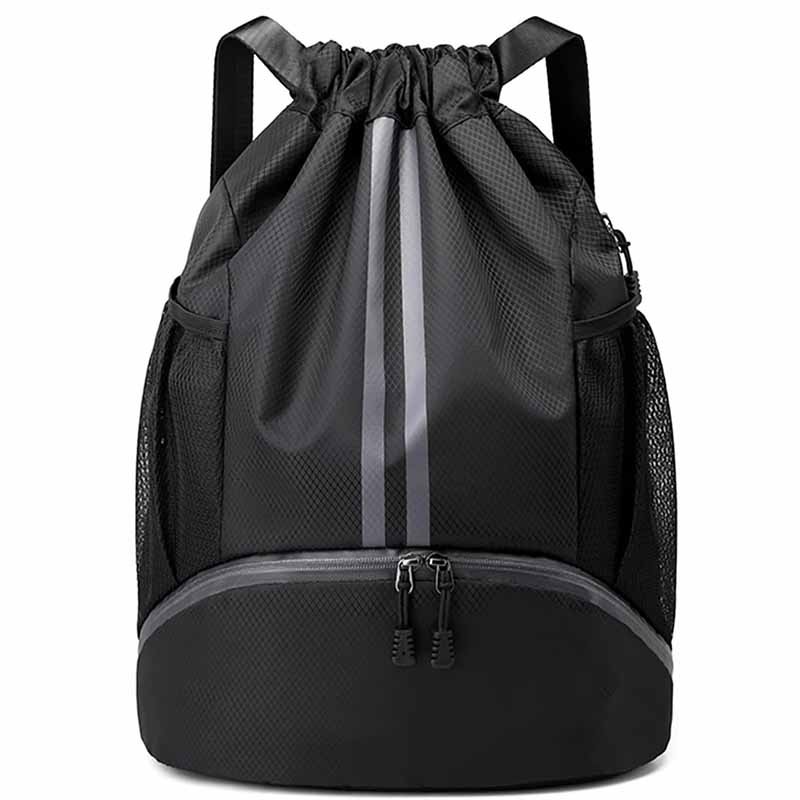
| Drawstring sports bags | Light training gear and events | Polyester, mesh, recycled fabrics |
| Team bags | Uniforms, balls, travel gear | Heavy-duty polyester, webbing |
| Neoprene sports bags | Lifestyle fitness, light travel, studio use | Laminated neoprene |
| Bottle and accessory bags | Recovery tools, accessories, hydration gear | Neoprene, mesh, polyester |
Many sports brands also need product extensions that sit close to the bag category:
| Related Product Type | Why Sports Brands Care |
|---|---|
| Koozies | Good for events, promotional kits, fitness lifestyle sets |
| Sports supports | Useful for recovery and performance collections |
| Medical supports | Strong fit for rehab, physiotherapy, and wellness lines |
| Wetsuits | Shows deeper neoprene material expertise |
| Protective pouches and sleeves | Good for electronics, shoes, accessories, and gear kits |
This is where Szoneier stands out in a more meaningful way. It is not only a general bag factory. It has more than 18 years of experience in neoprene material development and in manufacturing neoprene-based products such as bags, koozies, sports supports, medical supports, and wetsuits. That matters because sports brands increasingly want to build connected product systems, not just one standalone bag.
For example, a growing fitness brand may want to launch:
- a neoprene gym duffel
- a matching bottle sleeve
- a recovery brace
- a padded organizer pouch
- a branded can cooler for event kits
If all of these products rely on similar neoprene knowledge, it is much easier to manage consistency when the supplier already understands the material.
Sports brands should also look carefully at bag function by use case. Not all sports bags serve the same customer or face the same stress. A useful breakdown looks like this:
| Use Scenario | Product Priorities |
|---|---|
| Daily gym use | Light weight, compartments, odor management, shoulder comfort |
| Team sports | Larger capacity, stronger handles, durable base, fast packing |
| Studio fitness | Clean look, bottle holders, accessory pockets, premium feel |
| Travel training | Carry-on compatibility, zipper security, organized storage |
| Recovery and wellness | Soft touch, brand look, matching accessory ecosystem |
That means a strong manufacturer should not only ask, “What size bag do you want?” A better factory will ask:
- What sports use is the bag designed for?
- Will users carry shoes inside the main compartment?
- Does the brand want a separate wet pocket?
- Is this a premium retail product or a volume promotional line?
- Does the bag need to match other neoprene products in the collection?
The more detailed these early questions are, the more likely the factory understands sports product development at a practical level.
Why Do Sports Brands Choose China Bag Manufacturers?
Sports brands choose China bag manufacturers because China still offers one of the most complete sewn-product ecosystems in the world. That advantage is not only about price. It is about how quickly a brand can move from concept to sample, from sample to revision, and from revision to bulk production without constantly changing suppliers, trims, or material sources.
A sports bag project usually requires more than fabric and sewing. It often includes:
- outer shell fabric
- inner lining
- foam padding
- mesh panels
- shoulder webbing
- zipper systems
- pullers
- rubber or woven logo patches
- hangtags
- export packaging
When these elements are available within one connected supply chain, development becomes faster and more controlled.
From a brand’s point of view, the main reasons China stays attractive look like this:
| Commercial Reason | What the Brand Gains |
|---|---|
| Strong material ecosystem | Easier access to sports fabrics, neoprene, webbing, mesh, foam |
| Fast sample coordination | Shorter development cycle before launch |
| Flexible MOQ structure | Lower risk for new product testing |
| Better production scale | Easier move from small order to larger reorder |
| Trim availability | Faster sourcing of zippers, buckles, hooks, labels |
| Balanced cost structure | More room to manage margin without oversimplifying product |
Sports brands also compare sourcing locations based on how well they support both trial and growth:
| Sourcing Factor | Why It Matters for Sports Brands |
|---|---|
| Sample turnaround | Seasonal launches depend on development speed |
| MOQ flexibility | New designs often start with smaller runs |
| Material choice | Directly affects performance and price |
| Structural know-how | Important for heavier, more demanding sports use |
| Reorder consistency | Needed when a bag becomes a core SKU |
| Cost visibility | Helps brands plan wholesale and retail pricing |
Many small and mid-sized overseas sports brands do not start with huge order volumes. They start with a limited launch, sometimes 100 to 300 pieces, to test the market. If the product performs well, they scale up. That makes flexibility extremely important.
Szoneier’s model fits well with this kind of client because it offers:
- free design assistance
- low MOQ customization
- fast sampling
- free samples in selected project stages
- short lead times
- private label and OEM support
These points matter in real sourcing decisions. A smaller sports brand may care most about low-risk development and responsive communication. A more established brand may care more about bulk consistency and technical detail. A factory that can serve both is generally more stable and easier to grow with.
Another reason sports brands choose China is speed of adjustment. Product development rarely goes perfectly in the first sample. A shoulder strap may need to be wider. The zipper opening may need to change. The wet pocket may need a different lining. If the supplier network is local and mature, these adjustments can happen faster and with fewer disruptions.
The deeper reason China remains strong is simple: sports products are balance products. They must look good enough for retail, feel comfortable enough for daily use, and stay durable enough for repeat wear. China’s manufacturing ecosystem has had years to learn how to balance those needs across many categories.
Are China Bag Manufacturers Reliable?
Some are very reliable. Some are not. Reliability is one of the most important things a sports brand has to judge before moving beyond a first sample.
A factory’s years in business matter, but years alone do not prove reliability. The better question is reliability in what exact area. A factory may be experienced in fashion totes but weak in performance bags. Another may have strong neoprene and sports-support experience that makes it much more suitable for a training or fitness line.
For sports products, reliability should be evaluated in several layers:
| Reliability Area | Why It Matters |
|---|---|
| Material consistency | Prevents variation in color, thickness, and feel |
| Pattern accuracy | Keeps the bag shape stable across orders |
| Sewing control | Reduces seam failure in high-stress areas |
| Hardware stability | Prevents zipper, buckle, and puller complaints |
| Sampling discipline | Speeds up revisions and approval |
| Bulk execution | Keeps approved sample and final goods aligned |
A sports brand should test reliability using very practical checkpoints. For example:
| Evaluation Point | What to Check |
|---|---|
| Prototype balance | Does the bag stand or collapse the wrong way? |
| Handle attachment | Is the load-bearing area visibly reinforced? |
| Zipper path | Does it run smoothly around curves? |
| Strap comfort | Is the webbing width suitable for actual carrying? |
| Panel tension | Are there puckers, distortion, or misaligned seams? |
| Odor and finishing | Does the product arrive clean and well packed? |
Reliable factories usually answer technical questions clearly, not vaguely. A brand should feel comfortable asking things such as:
- What denier or neoprene thickness do you recommend for this bag?
- Where would you reinforce the shoulder strap area?
- What is the price effect of adding a shoe compartment?
- What is the sample timeline if we revise the pattern?
- How do you control bulk color consistency?
- What is your normal tolerance on size and print placement?
When a factory can answer these questions in a structured way, that is often a stronger sign of reliability than a polished sales presentation.
For sports brands, reliability is also tied to category experience. A gym bag and a fashion tote do not fail in the same places. A sports bag often carries:
- shoes
- water bottles
- damp towels
- heavy clothing
- training accessories
- electronics
- nutrition containers
That means the bag experiences more load, more moisture, and more repeated stress. Factories without real sports-product experience often underestimate this.
Szoneier’s background is useful here because its experience goes beyond one finished bag style. Its work in neoprene material development and neoprene-based products gives it stronger understanding in areas such as:
- stretch behavior
- lamination stability
- cushioning performance
- reinforced sewing for soft technical materials
- structure control in flexible products
That helps reduce development risk when the brand wants something more technical than a simple polyester bag.
Unreliable sourcing often looks cheaper only at the beginning. The hidden costs show up later:
| Hidden Risk | What It Can Cause |
|---|---|
| Weak first sample logic | More revision cycles |
| Unstable raw materials | Inconsistent feel and appearance |
| Poor bulk control | Claims, returns, and missed delivery windows |
| Weak communication | Misunderstood logos, sizes, or trims |
| Limited technical knowledge | Overpromising and underperforming |
That is why experienced sports brands do not judge factories by price first. They judge them by whether the supplier can turn a design into a product that survives real use and can be reordered with confidence.
In sports bag manufacturing, reliability is not a soft advantage. It affects margin, timeline, reputation, and whether a product ever becomes a long-term best seller.
Why Use China Bag Manufacturers?
Sports brands choose China bag manufacturers not only because of cost advantages, but also because China has developed a highly integrated ecosystem for textile and sewn-product manufacturing. Over the past few decades, factories, fabric suppliers, hardware manufacturers, and logistics providers have formed tightly connected supply networks. This structure allows sports brands to develop and launch products faster while maintaining consistent quality.
For sports gear products such as gym bags, training backpacks, and neoprene sports bags, production requires several specialized materials and components working together. China’s manufacturing clusters make it easier to coordinate these elements within a single supply chain.
How Do China Bag Manufacturers Help Sports Brands?
China bag manufacturers often assist sports brands throughout the entire product development process, from initial concept to final production. Many factories offer development services that help transform a rough design idea into a manufacturable product.
The collaboration process between a sports brand and a manufacturer generally follows several key stages.
| Development Phase | Key Activity |
|---|---|
| Product concept | Define use scenario and bag capacity |
| Structural design | Determine panel layout and reinforcement |
| Material selection | Choose fabrics, linings, and hardware |
| Prototype sampling | Build and test the first sample |
| Revision process | Improve structure and functionality |
| Production preparation | Confirm materials, quantity, and timeline |
During this process, experienced manufacturers can provide technical feedback. For example, if a brand proposes a bag with very thin shoulder straps, the factory may recommend increasing strap width or adding reinforcement to improve comfort and durability.
Manufacturers also help sports brands select materials appropriate for different sports environments.
| Activity Environment | Recommended Material |
|---|---|
| Indoor fitness training | Lightweight polyester |
| Outdoor sports | Durable nylon fabrics |
| Water-related activities | Waterproof coatings |
| Gym and lifestyle fitness | Neoprene material |
Factories with experience in neoprene production, such as Szoneier, can also advise brands on thickness selection and lamination techniques that improve durability and comfort.
Which Advantages Do China Bag Manufacturers Offer?
China bag manufacturers provide several practical advantages for sports brands developing new products. These advantages go beyond simple cost considerations and include speed, flexibility, and supply chain integration.
One important advantage is access to a wide range of materials. Outdoor and sports bags often require specialized fabrics that must balance durability, weight, and flexibility.
| Fabric Type | Common Use |
|---|---|
| Polyester | Lightweight gym bags |
| Nylon | Durable outdoor backpacks |
| Ripstop fabrics | Tear-resistant sports bags |
| Neoprene | Flexible gym and travel bags |
| TPU coated fabrics | Waterproof sports gear |
Another advantage is manufacturing scalability. Sports brands often begin with small production runs to test market demand. If a product performs well, the brand may need to increase production quickly.
China bag manufacturers are usually able to scale production more easily than smaller suppliers because they have established production lines and larger workforces.
Speed is another factor. Sampling cycles in China are often faster due to the close proximity of fabric suppliers and hardware manufacturers.
| Manufacturing Factor | Impact on Product Development |
|---|---|
| Local supply networks | Faster material sourcing |
| Skilled pattern makers | Accurate prototypes |
| Specialized sewing equipment | Consistent seam quality |
| Large production teams | Faster production scaling |
For sports brands launching seasonal collections, this speed can make a significant difference.
Are China Bag Manufacturers Cost Efficient?
Cost efficiency is one of the most commonly cited reasons brands work with China bag manufacturers. However, the cost advantage is not simply about labor expenses. Instead, it results from the efficiency of the entire manufacturing ecosystem.
Several factors contribute to this efficiency.
| Cost Factor | Explanation |
|---|---|
| Large-scale material suppliers | Lower fabric costs |
| Production specialization | Faster assembly processes |
| Efficient logistics networks | Reduced shipping delays |
| Integrated supply chains | Fewer intermediaries |
For sports bags, manufacturing efficiency can significantly affect final pricing. Bags that require reinforced stitching, padded panels, and heavy-duty zippers involve more labor than simple tote bags.
Factories experienced in these processes can maintain product durability without excessive material waste or production delays.
Another important cost consideration is minimum order quantity.
Many factories in China now support smaller production runs, allowing sports brands to test new products without committing to very large orders.
Szoneier, for example, offers flexible order quantities and rapid sampling, which allows emerging sports brands to experiment with new designs before scaling production.
How Do China Bag Manufacturers Work?
Understanding how China bag manufacturers operate helps sports brands plan product development more effectively. Manufacturing a sports bag involves multiple coordinated steps, each of which influences the durability, appearance, and functionality of the final product.
A simplified production workflow usually includes the following stages.
| Production Stage | Key Activity |
|---|---|
| Design and concept | Define structure and materials |
| Pattern development | Translate design into templates |
| Sample production | Build prototype bags |
| Material preparation | Inspect fabrics and trims |
| Cutting | Shape panels according to patterns |
| Sewing and assembly | Construct bag body |
| Final inspection | Check quality before shipment |
Each stage must be carefully managed to ensure the final product meets the brand’s expectations.
How Do China Bag Manufacturers Design Sports Bags?
The design stage usually begins with a concept drawing or specification sheet provided by the sports brand. These documents describe the bag’s intended dimensions, features, and functional requirements.
Manufacturers then convert this concept into technical patterns used for sampling.
Several design elements are particularly important for sports bags.
| Design Element | Purpose |
|---|---|
| Load distribution | Improves comfort during carrying |
| Reinforcement points | Prevents structural failure |
| Pocket layout | Helps organize gear |
| Ventilation panels | Reduces moisture buildup |
| Closure systems | Protects contents |
Factories experienced in sports bag manufacturing often review the brand’s design and suggest improvements.
For example, if a bag is expected to carry heavy gym equipment, the manufacturer may recommend reinforced stitching at handle attachment points or thicker padding in shoulder straps.
This collaboration helps ensure that the final product performs well in real-world conditions.
What Production Steps Do China Bag Manufacturers Use?
Once the design and sampling stages are complete, production begins. Sports bag manufacturing involves several specialized steps that ensure durability and functionality.
A typical production sequence includes:
| Production Step | Description |
|---|---|
| Fabric inspection | Check materials for defects |
| Panel cutting | Cut fabric according to patterns |
| Component preparation | Prepare straps, mesh, and padding |
| Sewing operations | Assemble bag panels |
| Hardware installation | Attach buckles, zippers, and hooks |
| Final assembly | Combine all components |
| Cleaning and finishing | Trim threads and inspect seams |
Factories producing sports bags often use reinforced stitching techniques such as bar-tacking to strengthen high-stress areas.
These reinforcements improve the bag’s ability to withstand heavy loads and repeated use.
How Do China Bag Manufacturers Check Quality?
Quality control is essential in sports bag manufacturing because the products must endure frequent use and heavy loads.
Factories typically implement several inspection stages throughout production.
| Inspection Stage | Purpose |
|---|---|
| Material inspection | Verify fabric quality |
| In-process inspection | Detect sewing defects early |
| Structural testing | Check seam strength |
| Final inspection | Confirm overall appearance |
Some manufacturers also perform load tests by placing weighted items inside the bag to simulate real usage.
Factories with strong quality management systems can maintain consistent product performance across large production runs.
Szoneier’s experience in producing neoprene products and sports gear allows the company to apply strict quality inspection procedures to ensure durability and reliability.
Which Bags Do China Bag Manufacturers Make?
China bag manufacturers produce a wide variety of bags designed specifically for sports and fitness activities. These products are used by athletes, gym members, trainers, and sports teams who require reliable gear storage and transportation.
For sports brands, the ability to source multiple bag categories from the same manufacturer is a significant advantage. It allows brands to maintain consistent product quality, coordinated design language, and more efficient supply chains.
China bag manufacturers commonly produce the following sports bag categories.
| Bag Category | Main Use |
|---|---|
| Gym duffel bags | Carry workout clothing and equipment |
| Sports backpacks | Training and commuting |
| Shoe bags | Separate footwear storage |
| Drawstring bags | Lightweight sports gear |
| Team bags | Equipment transport for sports teams |
| Neoprene sports bags | Gym, travel, and lifestyle use |
Because many of these bags share similar materials and production methods, factories can manufacture them efficiently using shared production lines.
This flexibility enables sports brands to develop complete product collections rather than individual items.
Which Gym Bags Do China Bag Manufacturers Produce?
Gym bags are among the most popular products manufactured by China bag factories. These bags are designed to carry clothing, shoes, towels, water bottles, and other training equipment.
Gym bags typically focus on durability, organization, and carrying comfort.
| Gym Bag Type | Common Features |
|---|---|
| Classic duffel bag | Large central compartment |
| Multi-pocket gym bag | Multiple interior pockets |
| Shoe compartment bag | Separate shoe storage |
| Waterproof gym bag | Moisture-resistant materials |
Modern gym bags often incorporate design improvements that enhance usability.
Examples include:
- ventilated shoe compartments
- detachable shoulder straps
- reinforced base panels
- water-resistant linings
Factories producing gym bags often strengthen handle attachment points using reinforced stitching or additional webbing layers. These improvements allow the bag to carry heavier equipment without tearing.
Which Training Bags Do China Bag Manufacturers Supply?
Training bags are commonly used by athletes and sports teams that require larger storage capacity for equipment. These bags must be durable enough to carry heavier gear such as balls, protective equipment, and uniforms.
China bag manufacturers supply several types of training bags.
| Training Bag Type | Typical Use |
|---|---|
| Sports duffel bags | Multi-sport equipment transport |
| Team travel bags | Group travel for sports teams |
| Ball storage bags | Carry multiple sports balls |
| Equipment gear bags | Store training accessories |
These bags often feature reinforced structures because sports equipment can place significant stress on seams and handles.
Factories may incorporate heavy-duty webbing and reinforced base panels to improve durability.
Sports brands working with experienced manufacturers can also customize these bags with team logos, color schemes, and specific compartment layouts.
Do China Bag Manufacturers Make Neoprene Bags?
Yes, many China bag manufacturers produce neoprene bags. Neoprene is widely used in sports and fitness products because of its flexibility, cushioning properties, and resistance to water.
Neoprene sports bags are particularly popular in gym and lifestyle fitness markets.
| Neoprene Product | Common Use |
|---|---|
| Neoprene gym bags | Lightweight fitness carry |
| Neoprene backpacks | Flexible everyday sports bags |
| Neoprene bottle sleeves | Insulation for water bottles |
| Neoprene accessory pouches | Storage for small gear |
Factories experienced in neoprene production must understand laminated fabric construction and specialized sewing techniques.
Szoneier focuses on neoprene material development and produces a variety of neoprene-based products including bags, koozies, sports supports, medical supports, and wetsuits.
This expertise allows sports brands to create coordinated product collections using the same technical material platform.
How To Choose China Bag Manufacturers?
Selecting the right manufacturer is one of the most important steps for sports brands launching new bag products. A reliable factory helps ensure that the final product meets design expectations, performance requirements, and delivery timelines.
Sports brands evaluating manufacturers should focus on several important factors.
| Evaluation Factor | Importance |
|---|---|
| Material expertise | Ensures appropriate fabric selection |
| Product development ability | Improves design feasibility |
| Production capacity | Supports large orders |
| Quality control systems | Maintains product reliability |
| Communication efficiency | Reduces development delays |
Manufacturers that demonstrate these capabilities are more likely to become reliable long-term partners.
What Makes Good China Bag Manufacturers?
Reliable China bag manufacturers usually show several key characteristics that indicate strong production capability.
| Factory Capability | Benefit |
|---|---|
| Experienced pattern makers | Accurate prototypes |
| Skilled sewing teams | Durable seams |
| Modern production equipment | Consistent output |
| Stable supplier network | Reliable materials |
| Structured inspection systems | Reduced defects |
Factories that regularly work with international clients often understand export standards and packaging requirements for overseas markets.
Szoneier’s long experience producing neoprene products and sports bags allows the company to meet these requirements while supporting customized projects for international sports brands.
How Do Brands Work With China Bag Manufacturers?
Sports brands typically follow a structured process when working with China bag manufacturers.
| Collaboration Step | Purpose |
|---|---|
| Concept development | Define product functionality |
| Technical design | Create detailed product specifications |
| Prototype sampling | Evaluate initial product |
| Product testing | Verify durability and usability |
| Production planning | Confirm quantities and schedules |
During sampling, brands review the prototype and request adjustments if necessary. This stage may involve several revisions until the product meets the brand’s requirements.
Factories with experienced development teams can implement these revisions quickly, helping brands launch products faster.
Why Choose OEM China Bag Manufacturers?
Many sports brands prefer OEM production because it allows them to maintain control over product design and brand identity.
OEM manufacturing allows brands to develop exclusive products that reflect their brand positioning.
| OEM Advantage | Brand Benefit |
|---|---|
| Custom product design | Unique brand identity |
| Controlled specifications | Consistent product quality |
| Flexible production scale | Supports growth |
| Long-term partnerships | Stable supply chains |
By working closely with a reliable OEM manufacturer, sports brands can develop durable products tailored to their customers.
Conclusion: Building Strong Sports Gear With the Right Manufacturing Partner
Sports bags are essential products for athletes and fitness enthusiasts. They must combine durability, functionality, and appealing design in order to meet customer expectations.
China bag manufacturers play an important role in helping sports brands bring these products to market. Their integrated supply chains, experienced production teams, and flexible manufacturing capabilities allow brands to develop reliable sports gear efficiently.
Sports brands that succeed in this market usually focus on three key principles:
- selecting durable materials suited for sports environments
- designing bags with practical features and strong structure
- working with experienced manufacturing partners
Szoneier has more than 18 years of experience in neoprene material development and sports product manufacturing, producing products such as sports bags, koozies, sports supports, medical supports, and wetsuits for international clients.
With flexible customization, low minimum order quantities, fast sampling services, and reliable production capabilities, Szoneier helps sports brands turn product concepts into high-quality finished goods.
If your brand is planning to develop custom sports bags or neoprene sports products, the Szoneier team can assist with design consultation, sampling, and manufacturing planning.
Contact Szoneier today to discuss your project and receive a customized quotation for your next sports bag collection.