Developing a successful gym bag collection involves much more than choosing an attractive fabric, adding a recognizable logo, and deciding how many pockets a bag should have. Sports brands need products that fit real training habits, accommodate different types of equipment, remain comfortable during daily transportation, and maintain their appearance after repeated use. A design that looks impressive in a product photograph may still disappoint customers if its shoe compartment is too small, its shoulder strap becomes uncomfortable, or its main zipper fails after regular opening and closing. These details directly influence customer satisfaction, product reviews, and the long-term reputation of a sports brand.
How do you develop gym bags for sports brands? Szoneier approaches gym bag development through six connected stages: defining customer requirements, selecting the right bag structure, choosing suitable materials and components, developing and approving physical samples, validating durability and quality, and planning repeatable bulk production. This process helps sports brands transform product ideas, reference photographs, sketches, and technical specifications into commercially practical gym bags that match their intended users and market positioning.
The most important decision is to develop the product as a complete system rather than treating each feature independently. Capacity influences compartment dimensions, materials influence construction, and additional functional details affect both manufacturing costs and production schedules. A separate shoe compartment, for example, must be evaluated alongside the main storage area, ventilation, lining, cleaning requirements, and overall bag shape. When these decisions are coordinated early, the development process becomes more predictable and the finished product is easier to manufacture consistently. Imagine a sports brand preparing to launch its first premium training collection: the difference between an ordinary gym bag and a product customers repeatedly recommend often begins with the decisions made before the first sample is produced.
What Should a Sports Brand Define Before Development?
Before developing a gym bag, a sports brand should define its target customers, intended sports activities, carrying requirements, distribution channels, brand positioning, and target manufacturing cost. These decisions establish the foundation for product capacity, structure, materials, compartments, branding, and production planning. Szoneier uses these requirements to evaluate feasibility and develop a product specification that balances practical functionality with commercial expectations.
Who Is the Target User?
The first step in gym bag development is understanding who will actually use the product and how the bag will fit into that person’s daily routine. A gym bag designed for someone attending a fitness club after work has different requirements from one intended for professional athletes, personal trainers, university sports teams, or customers who combine training with weekend travel. Although these customers may all purchase products under the same sports category, their expectations regarding capacity, organization, carrying comfort, appearance, and durability can be considerably different. Developing one general-purpose design without understanding these differences can result in a product that performs adequately in several situations but does not particularly satisfy any specific customer group.
For example, regular fitness club members may need enough space for a change of clothing, a towel, training shoes, toiletries, and a water bottle. Customers involved in strength training may also carry lifting belts, wrist wraps, gloves, and other accessories. Swimming enthusiasts need a practical way to separate damp towels and swimwear from dry personal belongings, while team sports customers may require additional storage for uniforms and training equipment. Szoneier evaluates these intended applications before recommending a structure, considering the customer’s activities, transportation method, expected carrying frequency, and preferred product appearance. These details help determine whether a traditional duffel, fitness backpack, or lightweight sports bag is the more appropriate starting point.
Brands should also consider the experience level and purchasing preferences of their customers. Beginners may prioritize simple storage and an affordable price, whereas experienced athletes may pay closer attention to compartment organization, material durability, and carrying comfort. Premium fitness customers may expect more refined construction, distinctive hardware, and carefully finished branding details. Understanding these differences helps the development team avoid unnecessary features and focus on the characteristics that genuinely improve the product experience. A well-defined target user profile therefore provides a much stronger foundation for product development than simply choosing a popular gym bag shape from an existing catalogue.
What Should the Gym Bag Carry?
A practical carrying inventory is one of the most useful tools for developing a gym bag because it translates a general product concept into measurable storage requirements. Before confirming the design, sports brands should identify the items customers are expected to carry and consider their approximate dimensions, quantities, and storage conditions. Typical contents include training clothes, shoes, towels, water bottles, toiletries, headphones, phones, wallets, keys, and small fitness accessories. More specialized products may need additional space for swimming equipment, protective gear, sports uniforms, or personal training accessories. Without this information, it is easy to create compartments that look convenient on a drawing but become difficult to use once the bag is filled.
The next step is organizing these belongings according to how they should be stored and accessed. Clean clothing should ideally remain separate from footwear and used towels, while frequently accessed items should be positioned where customers can reach them without opening the entire main compartment. Water bottles need pockets that accommodate their actual dimensions, and small accessories benefit from secure storage that prevents them from moving around inside the bag. These decisions influence the location, opening direction, dimensions, and construction of individual compartments. Szoneier evaluates these details together so that the finished design offers a practical storage arrangement rather than simply a large number of separate pockets.
Adding storage does not automatically improve functionality. Every additional compartment consumes material, introduces another sewing operation, and may reduce the usable volume of the main storage area. A complicated internal arrangement can also increase production costs without providing a meaningful improvement in everyday use. For this reason, sports brands should distinguish between essential storage requirements and optional features that are unlikely to influence purchasing decisions. A physical packing trial during sample development is particularly useful because it reveals whether the intended items actually fit and whether the different compartments remain accessible when the bag is fully loaded. This practical evaluation helps prevent costly structural changes later.
How Should Price and Brand Positioning Shape the Brief?
Product positioning determines how much functionality, material quality, branding detail, and construction complexity a gym bag should include. A promotional fitness bag may prioritize recognizable branding, lightweight construction, and competitive pricing, while a premium sports collection may justify more refined fabrics, stronger hardware, distinctive logo applications, and better internal organization. Neither direction is inherently better because the correct solution depends on the brand’s customers, expected retail price, distribution channel, and desired product experience. A manufacturer should therefore understand the commercial objective before recommending materials or structural upgrades.
Sports brands should establish three commercial reference points before detailed development: the target retail price, the expected manufacturing cost, and the anticipated order quantity. Manufacturing cost should be evaluated alongside freight, duties, packaging, warehousing, distribution, and sales-channel expenses. A bag that appears profitable based on its factory quotation may become less attractive after shipping and retail costs are included. This is why material and structural decisions should be assessed in relation to the complete commercial plan rather than individually. If the brand expects to sell through online marketplaces, it should also consider packaging dimensions, shipping efficiency, product photography requirements, and the cost of customer returns.
The intended distribution channel influences product presentation as well. Sports retailers may expect attractive hangtags, consistent colors, clear product specifications, and packaging suitable for shelf display. Online brands may prioritize protective packaging, compact shipping dimensions, and features that can be demonstrated clearly in product listings. Team merchandise programmes may place greater emphasis on logo visibility, color matching, and repeat-order consistency. Szoneier considers these requirements when coordinating the product structure, branding, and packaging specifications. Establishing the commercial boundaries early gives the development team more room to recommend practical alternatives instead of redesigning an expensive product after sampling has already started.
A useful initial development brief should contain:
- Target customer profile and main sports activities.
- Intended sales channels and geographical markets.
- Desired product type and approximate capacity.
- Essential compartments and carrying features.
- Preferred outer materials and internal construction.
- Branding requirements and packaging preferences.
- Target manufacturing cost and expected order quantity.
- Required sample and bulk production schedule.
Which Gym Bag Design Fits Your Brand?
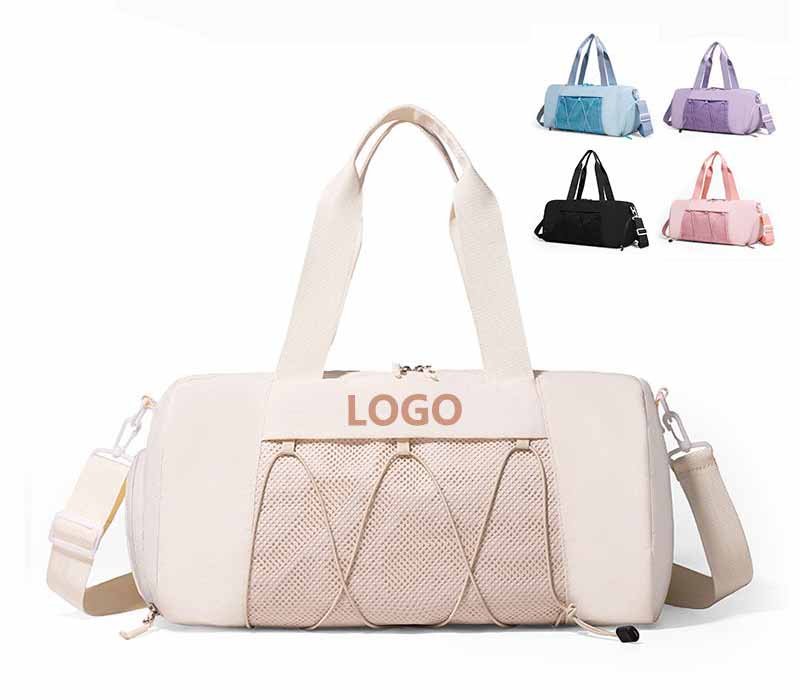
The best gym bag design depends on the user’s carrying habits, training equipment, transportation method, and product positioning. Szoneier develops sports duffels, fitness backpacks, and lightweight gym bags with customizable capacities, compartments, shoulder straps, handles, and branding details. The most effective design provides sufficient storage and convenient access without adding unnecessary weight, cost, or structural complexity.
Is a Duffel, Backpack, or Drawstring Bag the Better Choice?
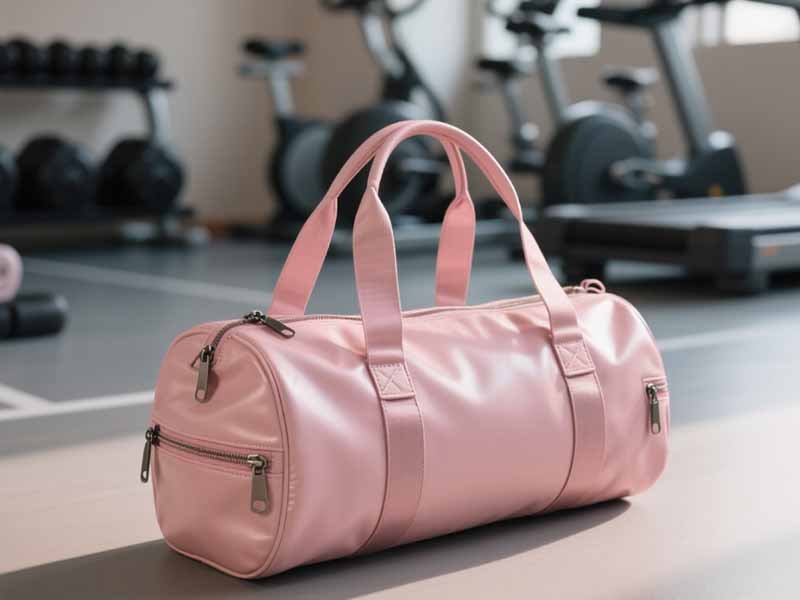
The three common gym bag formats serve different customer requirements. A sports duffel generally provides a large central storage area with convenient access from the top. Its shape makes it suitable for clothing, towels, footwear, and larger training accessories. Depending on the design, it can incorporate end pockets, a separate shoe compartment, adjustable shoulder straps, and reinforced carrying handles. For brands developing a general-purpose fitness collection, a duffel is often a flexible starting point because its structure accommodates several storage configurations without requiring a complicated carrying system. It can also be adapted to different capacities and branding styles.
A fitness backpack offers a different carrying experience, particularly for customers who commute by bicycle, walk to the gym, or use public transportation. Its two shoulder straps distribute the carrying load across both shoulders, while front pockets, side bottle holders, and internal organizers provide additional storage options. However, the extra panels, padding, and strap construction may increase manufacturing complexity. The back panel and shoulder straps should be developed according to the expected carrying conditions rather than added simply to make the product appear more technical. A comfortable backpack needs a suitable relationship between its dimensions, strap positioning, padding, and expected contents.
Drawstring bags are generally simpler and lighter. They can work well for basic clothing, small accessories, team merchandise, sports events, and promotional programmes. Their reduced structure makes them easy to carry and store, although they usually offer less organization and protection than a duffel or backpack. For sports brands, the decision should also consider how the new product fits into the existing collection. A brand already selling technical backpacks may benefit from a matching gym duffel, while a brand focused on entry-level fitness products may find a lightweight drawstring design more appropriate. Consistent colors, logo treatments, and materials can help different products feel like part of the same collection.
| Gym bag type | Main advantages | Suitable applications | Important design considerations |
|---|---|---|---|
| Sports duffel | Spacious main compartment and flexible storage | General fitness, training, team sports | Handles, shoulder strap, shoe storage |
| Fitness backpack | Hands-free carrying and organized storage | Gym commuting, daily fitness, cycling | Back panel, strap comfort, weight distribution |
| Drawstring bag | Lightweight and relatively simple construction | Sports events, basic fitness, promotional use | Drawcord strength, opening size, limited organization |
| Multi-purpose sports bag | Flexible storage and additional features | Travel, fitness, multi-sport activities | Capacity, compartment layout, construction complexity |
How Much Capacity Is Needed?
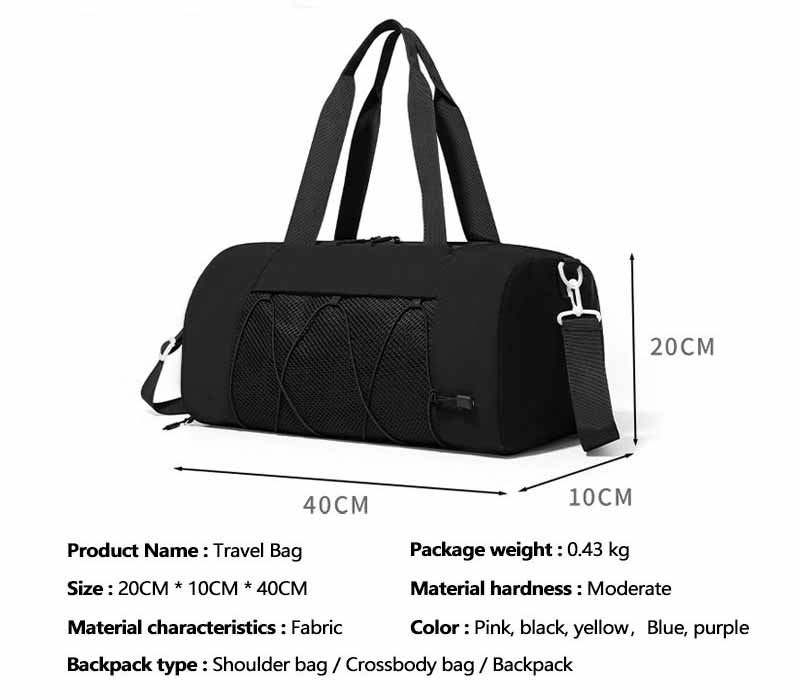
Capacity determines how much a gym bag can carry, but a larger volume does not necessarily make a better product. Szoneier’s gym bag product specifications identify a general capacity range of 20–45 liters, providing flexibility for compact everyday training, general gym use, and larger multi-purpose applications. The final capacity should be based on actual carrying requirements, not simply external dimensions or visual proportions. A bag that is too small creates frustration, while an oversized design can become inconvenient for everyday transportation and may increase material consumption unnecessarily.
For initial product planning, different capacity bands can help organize the development process. A compact design may suit customers carrying basic workout clothing and small accessories, whereas a larger model may be more appropriate for people who need space for footwear, towels, toiletries, and additional clothing. The following ranges are illustrative planning references within the documented 20–45L product range, rather than fixed industry standards. Actual capacity should be confirmed through pattern development and physical packing tests because compartment arrangements and lining thickness can change the usable storage volume.
| Illustrative capacity | Intended use | Typical storage requirements |
|---|---|---|
| 20–25L | Compact fitness | Clothing, towel, bottle, small accessories |
| 25–35L | Everyday gym training | Clothing, footwear, toiletries, towel, accessories |
| 35–45L | Multi-purpose training and travel | Additional clothing, shoes, equipment, personal belongings |
The external measurements should be developed alongside the internal storage layout. Two bags with similar external dimensions can offer noticeably different usable capacity because of differences in lining thickness, internal dividers, padding, reinforcement, and separate storage compartments. A shoe compartment can also reduce the available main storage volume, particularly when it is positioned along the bottom or side of the bag. This is why brands should confirm both the overall dimensions and the individual compartment measurements rather than relying on a single capacity figure.
Sports brands should consider the intended footwear size, clothing volume, bottle dimensions, and any additional equipment when confirming capacity. A packing test using real items is much more useful than estimating storage space from a drawing alone. During sample development, the bag should be filled with the intended contents and checked for opening clearance, compartment accessibility, shape retention, and carrying comfort. Another important consideration is the relationship between capacity and empty-bag weight. A large bag with excessive reinforcement, thick materials, and unnecessary padding may become inconvenient before customers even begin filling it. The goal is to balance storage volume, structural stability, and comfortable carrying.
Are Shoe and Wet Compartments Necessary?
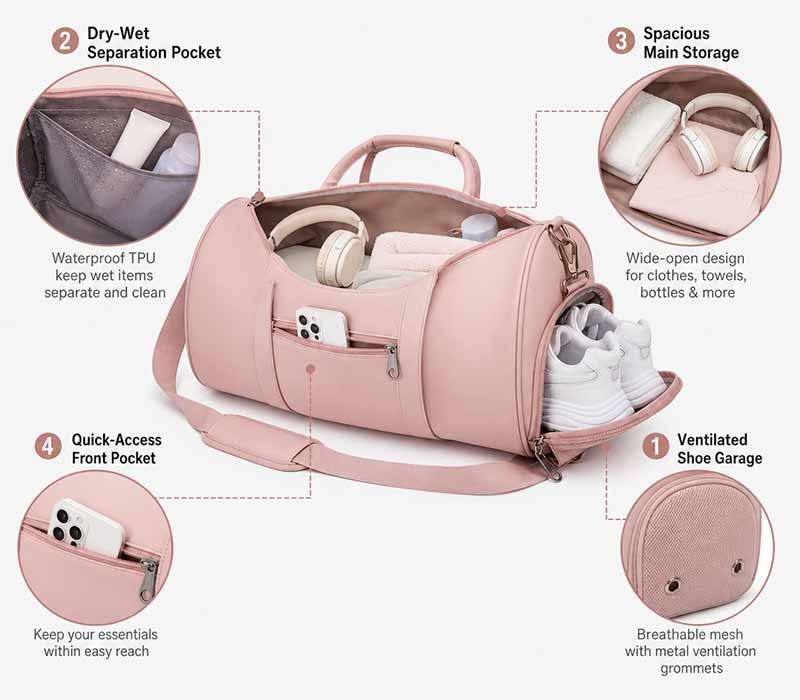
Separate storage is one of the most valuable functional features in gym bag development because footwear, damp clothing, and personal belongings do not always belong in the same compartment. Shoes may carry dirt and odor, while used towels and sweaty clothing can transfer moisture to clean items. A separate shoe compartment helps keep the main storage area organized, while a wet pocket provides a designated space for damp belongings after exercise or swimming. These features can improve everyday convenience, but their usefulness depends on the actual customer profile and the overall product design.
Shoe compartments can be positioned at the end, side, or bottom of a duffel, depending on the bag shape and available volume. Their dimensions should be based on the footwear the product is intended to accommodate. The opening must also allow convenient insertion and removal without making the compartment difficult to clean. Some designs use mesh panels to improve airflow, while others use a more enclosed construction to separate footwear from surrounding belongings. The choice depends on whether the brand prioritizes ventilation, separation, appearance, or moisture protection. It is also important to consider how the shoe compartment affects the main storage area when both compartments are fully loaded.
Wet storage requires a different approach. A moisture-resistant lining can help protect adjacent items, but the entire construction needs to be considered. The material, seams, opening, and closure all influence how effectively the pocket contains moisture. A coated lining alone should not be treated as proof of complete waterproof performance. Other useful features include external water bottle pockets, internal zippered organizers, key clips, adjustable shoulder straps, and reinforced bottom panels. However, every additional feature should solve a recognizable customer problem. Too many pockets can reduce usable volume, increase sewing operations, and make the bag harder to manufacture consistently.
For a typical multi-purpose gym bag, a practical starting arrangement may include:
- One main compartment for clothing and larger accessories.
- One separate shoe compartment.
- One moisture-resistant pocket for damp items.
- One or two smaller pockets for personal belongings.
- One or two external bottle or quick-access pockets.
- Adjustable carrying options appropriate to the product size.
Szoneier evaluates these features as a complete structure, considering how each compartment affects capacity, material consumption, pattern development, and production cost. This approach helps brands avoid paying for functional details that customers may rarely use while ensuring that essential storage features are properly developed and tested.
Which Materials and Components Should You Choose?
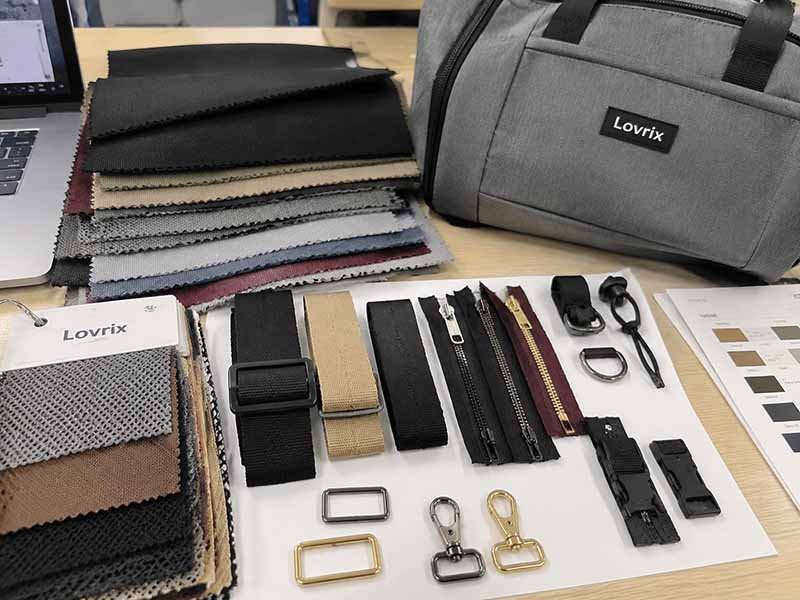
Gym bag materials should be selected according to abrasion resistance, weight, appearance, flexibility, cleaning requirements, and cost. Szoneier works with polyester, nylon, Oxford fabric, mesh, and other materials while coordinating suitable linings, webbing, zippers, reinforcement, and logo applications. The best construction uses materials that perform appropriately in each functional area rather than relying on one expensive fabric for the entire bag.
Is Nylon, Polyester, or Oxford Fabric Better?
Nylon, polyester, and Oxford fabric are common choices for gym bags, but they should not be treated as interchangeable materials. Their performance depends on fabric construction, yarn characteristics, weight, coating, finishing, and the quality of the finished material. Selecting a fabric simply because it is described as nylon or polyester does not provide enough information to predict how the completed bag will perform. Sports brands should compare physical samples and technical specifications before making a final decision, especially when the product is intended for frequent use.
Nylon is frequently considered for sports products where flexibility, a technical appearance, and a relatively lightweight construction are important. Its suitability depends on the specific fabric specification and intended application. Brands should compare the actual material weight, weave, hand feel, surface finish, and abrasion performance rather than relying on the fiber name alone. Polyester offers considerable flexibility in product development and is widely used in different types of fabric bags. It can be considered for mainstream gym duffels, backpacks, lining applications, and cost-conscious sports collections. Its final characteristics vary according to yarn density, construction, coating, and finishing.
Oxford fabric is another practical option for structured sports bags. Depending on its construction and finish, it can provide a substantial hand feel and support the desired bag shape. Coated Oxford fabrics may offer resistance to ordinary splashes, although water resistance depends on the actual specification and construction. A higher-density fabric is not automatically the best choice if it makes the bag too heavy or difficult to sew. The development team should evaluate the material alongside the lining, reinforcement, zipper, and intended carrying conditions. A balanced material combination often provides better overall performance than selecting the strongest or most expensive fabric available.
Before confirming a fabric, sports brands should review the following details:
- Fiber composition and fabric construction.
- Weight, thickness, and hand feel.
- Surface abrasion and appearance.
- Coating and moisture resistance.
- Color consistency and colorfastness.
- Sewing compatibility and flexibility.
- Material cost and availability.
The most suitable fabric is the one that meets the product’s actual requirements at a commercially reasonable cost. A premium material is not automatically necessary for every product, and a lower-cost material is not necessarily economical if it creates durability problems or customer complaints.
Which Linings, Mesh, and Reinforcements Fit Each Zone?
A gym bag is made from several different functional areas, and each area may need a different material solution. The outer shell provides the main appearance and general protection, while the lining influences internal cleanliness, hand feel, and ease of maintenance. Mesh can be used for ventilation panels and quick-access pockets, while moisture-resistant lining materials may be appropriate for wet storage compartments. Using different materials in appropriate locations can improve functionality without increasing the weight and cost of the entire bag unnecessarily.
Reinforcement materials are particularly important around areas that experience repeated stress. Handle attachment points, shoulder strap anchors, zipper openings, and bottom panels may require additional support depending on the intended load and construction. The reinforcement must be positioned so that it works with the surrounding fabric and stitching rather than simply adding thickness without improving structural performance. The choice of webbing also deserves attention. Shoulder straps require a different construction from small internal loops or decorative webbing, and buckles and adjusters must be compatible with the selected webbing and easy for customers to operate.
| Bag area | Possible material options | Main considerations |
|---|---|---|
| Outer shell | Nylon, polyester, Oxford | Abrasion, weight, appearance, coating |
| Main lining | Polyester and suitable lining fabrics | Cleanliness, hand feel, sewing compatibility |
| Shoe compartment | Polyester lining, mesh panels | Separation, ventilation, cleaning |
| Wet pocket | Moisture-resistant lining | Containment, seams, closure |
| Handles and straps | Webbing with suitable reinforcement | Carrying load, attachment, comfort |
| Bottom panel | Reinforced fabric or additional support layer | Shape retention, abrasion, stability |
| Internal organizers | Polyester, mesh, lining fabrics | Accessibility, flexibility, pocket structure |
The important point is to evaluate the complete assembly. A durable outer shell cannot compensate for weak strap attachments, and a good zipper cannot correct a poorly designed opening. Every material and component should be compatible with the adjacent construction. Szoneier considers these relationships during development so that the finished bag can be assembled efficiently and maintain consistent performance during repeated use.
Which Zippers, Hardware, and Logo Methods Should Be Used?
Zippers, buckles, adjusters, hooks, and logo applications contribute significantly to both product function and perceived quality. A zipper that frequently catches or separates can create customer dissatisfaction even when the rest of the bag is well made. Likewise, an uncomfortable strap buckle or poorly positioned adjustment mechanism can make the product difficult to use. These components should therefore be selected according to their intended function, fabric compatibility, opening dimensions, and expected frequency of use rather than appearance alone.
Zipper selection should consider the opening size, fabric thickness, slider operation, and overall product positioning. A large main compartment may require a different zipper configuration from a small internal pocket. Sports brands should also confirm whether the zipper needs to be covered, protected, or designed for easier access. Hardware should be checked for compatibility with the selected webbing and its intended adjustment range. If the product includes detachable shoulder straps, the hooks and attachment points should be reviewed together to ensure that they are practical and secure.
Logo customization is equally important because it helps distinguish a branded sports accessory from a generic product. Szoneier supports heat transfer printing, screen printing, embroidery, woven labels, rubber patches, silicone patches, metal logo plates, reflective logos, and customized zipper pullers. Each method creates a different appearance and has different material compatibility and production requirements. Heat transfer can be suitable for detailed graphics, while embroidery creates a textured appearance that may work well for premium sports collections. Rubber and TPU-style patches can provide a technical look, and reflective details may be appropriate for products intended for outdoor activities.
Brands should confirm the logo artwork, dimensions, position, color references, and application method before approving the final sample. The same applies to custom zipper pullers and branded hardware. These details should be documented in the bill of materials and production instructions so that the bulk production team can reproduce the approved appearance consistently. Adhesion, flexibility, abrasion, and color performance should be reviewed during sampling rather than assumed from a digital design. This helps prevent problems such as peeling, distorted artwork, or inconsistent logo positioning after the product enters production.
How Do You Develop and Approve a Gym Bag Sample?
Developing a gym bag sample requires converting the product brief into measurable specifications, confirming materials and components, creating patterns, sewing a prototype, reviewing functionality, and correcting problems before approval. Szoneier supports projects beginning with a tech pack, reference image, sketch, existing sample, or initial idea. The objective is to approve a bag that can be reproduced consistently in bulk production rather than simply producing an attractive prototype.
What Should a Gym Bag Tech Pack Include?
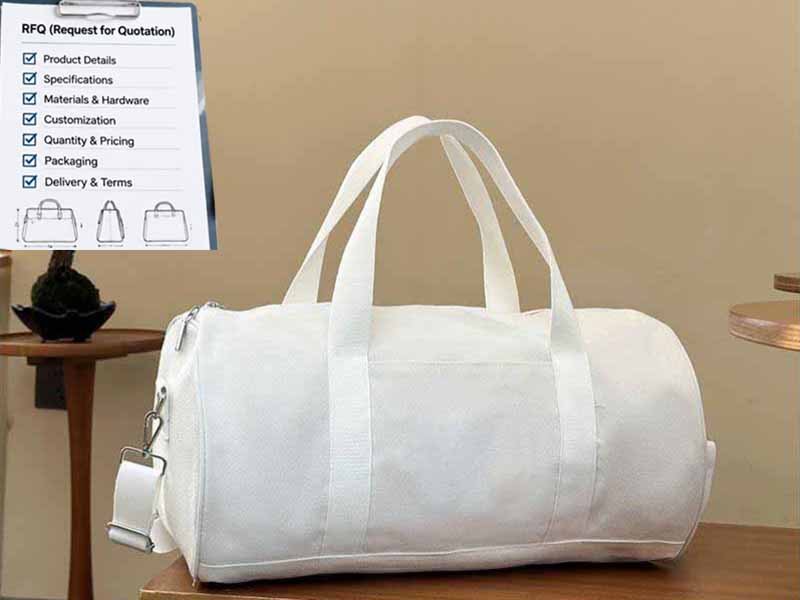
A tech pack is the working specification that connects the brand’s design expectations with the manufacturer’s development and production activities. It should contain enough information to explain how the finished gym bag is expected to look, function, and be constructed. A photograph can communicate the general appearance, but it rarely explains internal dimensions, material thickness, pocket construction, reinforcement placement, or sewing requirements. Without these details, different people may interpret the same design differently, creating unnecessary changes during sampling and production.
A practical gym bag tech pack should include front, back, side, top, and internal views. It should also identify finished dimensions, intended capacity, fabric specifications, lining materials, zipper details, webbing, hardware, handle construction, shoulder strap configuration, pocket positions, and logo placement. For a design with a shoe compartment or wet pocket, the document should clearly show its internal dimensions, opening direction, lining, and relationship with the main compartment. If the bag has adjustable or detachable straps, the technical drawing should also identify the attachment points and adjustment components.
Material specifications should identify the relevant composition, construction, weight where applicable, color, coating, and approved supplier reference. The bill of materials should list the individual components so that purchasing and production teams can identify exactly what is required. Other useful information includes Pantone color references, logo artwork, stitching and reinforcement details, packaging requirements, intended carrying conditions, target cost, order quantity, and revision dates. Not every brand begins with a complete technical pack, and some projects start with a photograph or rough sketch. Szoneier can use these materials as the starting point for product evaluation and structural development, but the technical details should be documented before final sample approval.
How Are Patterns and Samples Developed?
Once the product direction and key specifications have been established, development moves into material coordination, pattern making, cutting, and sample sewing. Pattern development is particularly important for gym bags with curved panels, separate shoe compartments, reinforced bases, multiple pockets, or adjustable carrying systems. These features affect how individual fabric panels fit together and how the finished bag maintains its intended shape. A small pattern change can also influence compartment dimensions, material consumption, and sewing operations, which is why structural decisions should be reviewed before the sample is assembled.
Szoneier’s sampling process can begin with a customer-supplied tech pack, physical sample, reference image, drawing, or product concept. The team evaluates the proposed structure and confirms the relevant materials, accessories, logo processes, and construction details before producing the sample. This helps identify potential manufacturing problems before too much time is spent on an unsuitable construction method. The first sample should then be evaluated as a functional product rather than simply a visual prototype. Its dimensions, capacity, opening, pocket layout, zipper movement, strap attachment, handle comfort, and overall shape should all be checked.
If the bag includes a shoe compartment, the intended footwear should be placed inside to confirm usable space. If it includes a wet pocket, the lining and closure should be reviewed according to the intended function. Szoneier’s gym bag product information identifies approximately 10–15 days as a sample development reference. Actual timing depends on material availability, structural complexity, logo requirements, and sample revisions. Photographs and videos can support communication during the review process, but they should not replace physical approval when carrying comfort, structural performance, or material characteristics need to be evaluated directly.
What Should Be Checked Before Sample Approval?
A sample should only be approved after the brand has checked the features that will influence customer experience and bulk production. Appearance is important, but it is only one part of the evaluation. A gym bag can look correct in photographs while still having insufficient shoe storage, an uncomfortable shoulder strap, an awkward opening, or an unstable bottom structure. The evaluation should therefore combine visual inspection, dimensional checks, functional testing, and practical packing trials.
A practical sample review should cover the following areas:
- Dimensions: Confirm the external measurements and individual compartment sizes.
- Capacity: Test the bag using the actual items it is designed to carry.
- Structure: Check whether the bag maintains its intended shape when empty and loaded.
- Opening: Evaluate zipper movement, access, and opening clearance.
- Carrying comfort: Review handle placement, shoulder strap adjustment, and contact points.
- Storage: Confirm that pockets are accessible and suitable for their intended contents.
- Materials: Check color, hand feel, coating, lining, and surface appearance.
- Branding: Confirm logo size, position, color, and application quality.
- Construction: Inspect seams, reinforcement, binding, and component attachment.
Any changes should be recorded in a sample comment sheet with photographs, measurements, and clear descriptions. If the brand requests a different material, larger shoe compartment, revised strap position, or new logo treatment, the manufacturer should explain the effect on cost and development time. This makes the revision process more efficient and gives both sides a clear record of the changes. Once the final sample is approved, it should become the reference for bulk production, supported by the approved pattern, BOM, material records, logo files, and packaging specifications.
A pre-production sample should then be checked before full manufacturing begins, particularly when the order involves several colors or complex functional details. This additional confirmation helps ensure that the materials and construction planned for the production run match the approved product. The purpose of sample approval is not to create endless revisions, but to make important decisions at the appropriate stage, when changes can still be controlled without causing unnecessary production disruption.
How Do You Validate Durability and Quality?
Gym bag quality depends on the combined performance of the outer material, seams, zippers, handles, shoulder straps, bottom structure, and functional compartments. Szoneier uses a multi-stage inspection process to identify problems before finished products are shipped. A suitable validation plan should reflect the intended carrying load, usage conditions, product claims, and agreed specifications rather than relying on general statements about durability.
Are Handles, Straps, Seams, and the Base Reinforced?
Handles, shoulder straps, seams, and bottom panels are among the most important structural areas of a gym bag because they experience repeated stress during everyday use. When customers carry clothing, shoes, bottles, towels, and equipment, the weight is transferred through the handles or shoulder straps into the bag body. If the attachment points are not properly designed, stress can concentrate around a small stitching area and eventually cause fabric damage or seam failure. The problem may not become visible during a simple visual inspection, which is why structural evaluation needs to be part of sample approval.
Reinforcement should be considered as part of the complete load path. This includes the relationship between the strap, webbing, reinforcement panel, outer fabric, side panel, and bottom construction. A wider or thicker webbing does not automatically produce a stronger attachment if the surrounding structure is poorly designed. Likewise, adding reinforcement without considering the material and sewing method can create unnecessary thickness or make the finished area difficult to stitch. The correct solution depends on the intended carrying load, fabric characteristics, attachment geometry, and construction method.
The bottom panel also deserves attention because gym bags are frequently placed on gym floors, benches, car interiors, and other surfaces. A weak or poorly supported bottom may lose its shape, develop abrasion damage, or make the bag uncomfortable to load. Sports brands should identify the expected carrying conditions before sampling and agree on an appropriate evaluation method with the manufacturer. Instead of choosing an arbitrary strength requirement, the brand should establish a realistic load target for the particular product. The sample can then be reviewed under controlled conditions, with particular attention to the handle attachments, shoulder strap anchors, seams, and base.
How Should Materials, Zippers, and Functional Zones Be Tested?
Different components create different quality risks, so a gym bag should not be evaluated through one general inspection alone. The outer fabric may require checks for abrasion, surface damage, color consistency, and coating performance. Zippers should be checked for smooth movement, alignment, opening clearance, and repeated operation. Hardware should be reviewed for proper function and secure attachment, while stitching should be examined for skipped stitches, loose threads, uneven tension, and distorted seams. These checks help identify problems that could affect the product during ordinary use.
Functional compartments require their own checks. A shoe compartment should provide the intended usable space and should not interfere excessively with the main compartment. Ventilation panels should be correctly positioned and securely attached. A wet pocket should be evaluated for the moisture protection promised by the product specification. If the brand intends to market the bag as waterproof, more demanding testing and construction requirements may apply. A moisture-resistant lining or coated outer fabric alone is not sufficient evidence of complete waterproof performance. Product descriptions should always match the actual level of protection demonstrated by the finished construction.
The following inspection matrix can help establish a practical validation plan:
| Component | Main inspection focus | Potential failure |
|---|---|---|
| Outer fabric | Abrasion, color, coating, surface defects | Premature wear |
| Zippers | Alignment, movement, repeated operation | Jamming or separation |
| Handles | Attachment and agreed load evaluation | Detachment |
| Shoulder straps | Webbing, stitching, adjusters, anchors | Breakage or discomfort |
| Bottom panel | Structure, shape retention, abrasion | Deformation |
| Shoe compartment | Dimensions, ventilation, cleaning access | Poor usability and odor |
| Wet pocket | Lining, seams, closure | Moisture leakage |
| Logo | Position, adhesion, surface quality | Peeling or distortion |
| Hardware | Function, attachment, finish | Loosening or malfunction |
It is also important to consider cleaning and odor management. Gym bags may carry used clothing, footwear, and damp towels, so inaccessible corners and difficult-to-clean linings can become practical problems. Ventilation may help with airflow, but it should not be described as a guaranteed odor-control solution without supporting evidence. Testing should be designed around the product’s intended claims and customer expectations rather than using the same inspection requirements for every type of sports bag.
How Is Bulk Production Consistency Controlled?
A well-developed sample does not automatically guarantee that every bulk-produced bag will have the same dimensions, materials, appearance, and construction. Consistency depends on whether the approved specifications are properly transferred into purchasing, cutting, sewing, inspection, and packing. This is especially important for sports brands planning several colors, multiple SKUs, or repeat orders over an extended period. Without controlled production references, small differences in materials or sewing operations can accumulate and affect the final product.
Szoneier uses a multi-stage quality control system covering incoming material inspection, accessory inspection, pre-production sample inspection, cutting inspection, sewing process inspection, semi-finished product inspection, finished product inspection, and packaging inspection. Each stage addresses different risks. Incoming inspection checks whether fabrics, linings, webbing, zippers, and hardware match the approved specifications. Cutting inspection focuses on dimensions, panel accuracy, and material defects. Sewing inspection checks seam construction, reinforcement, pocket placement, and attachment quality. Final inspection reviews the completed bag, including its dimensions, shape, zipper operation, logo, cleanliness, and overall appearance.
For gym bags, the most important production references include:
- Approved final sample and pre-production sample.
- Confirmed bill of materials.
- Production patterns and measurements.
- Fabric and lining specifications.
- Hardware and webbing references.
- Logo artwork and application instructions.
- Packaging and labeling files.
- Product-specific inspection requirements.
These documents provide a consistent reference for different production stages. If a material is substituted because the original fabric becomes unavailable, the change should be reviewed rather than introduced without approval. Even materials with the same general composition can differ in color, texture, weight, coating, and hand feel. A first-piece inspection is also valuable because it allows the production team to review the initial finished units before continuing with the full order. Problems with strap positioning, pocket dimensions, or logo alignment can then be corrected before they affect a larger quantity.
During bulk production, in-process inspection and final inspection provide additional opportunities to identify deviations. For larger sports brand programmes, consistency should extend beyond one order. Approved specifications, patterns, BOM records, and inspection requirements should be retained so that future replenishment can follow the same product standard. This makes quality control a continuous manufacturing process rather than a single inspection immediately before shipment.
How Do You Choose a Manufacturer and Plan Production?
Choosing a gym bag manufacturer requires evaluating its product development experience, material coordination, sampling capabilities, structural knowledge, production resources, quality control, and repeat-order management. Szoneier supports OEM/ODM projects from initial product concepts to sampling, bulk sewing production, inspection, packaging, and export coordination. The objective is to establish a manufacturing process that can meet both the first order and future product line requirements.
What Determines MOQ, Unit Cost, and Lead Time?
MOQ, manufacturing cost, and lead time are influenced by the complexity of the product and the resources required to produce it. A basic duffel bag with a straightforward main compartment generally requires fewer construction operations than a design incorporating separate shoe storage, moisture-resistant lining, multiple internal pockets, reinforced handles, custom hardware, and specialized logo applications. Material sourcing and packaging can also affect the production arrangement. This is why two gym bags with similar external dimensions may have noticeably different manufacturing costs and production schedules.
Szoneier’s gym bag product information lists the following project planning references:
| Project specification | Gym bag planning reference |
|---|---|
| Typical capacity range | 20–45L |
| Starting MOQ reference | 300 pcs |
| Sample development | Approximately 10–15 days |
| Regular bulk production | Approximately 35–50 days |
These figures are product-specific planning references, not unconditional guarantees. The confirmed MOQ, sample schedule, and bulk production period depend on the final design, material availability, quantity, logo process, packaging, SKU arrangement, and production schedule. Brands should confirm the actual requirements for each project before making purchasing commitments. A special fabric or customized component may require additional preparation, while an established design using readily available materials may be easier to schedule.
Unit cost should be evaluated through a complete quotation rather than the price of the outer fabric alone. Important cost factors include outer fabric and lining specifications, bag dimensions, overall material consumption, number and complexity of compartments, shoe and wet storage construction, zippers, buckles, webbing, reinforcement, logo processes, packaging, and order quantity. A lower MOQ can result in a higher unit price because pattern development, material preparation, logo setup, purchasing, inspection, and order management costs are distributed across fewer pieces. Larger quantities may reduce the unit cost, but brands should avoid increasing order volume simply to obtain a lower quotation if market demand has not been established.
Lead time should also be divided into clear milestones. Sample development, sample approval, material purchasing, pre-production confirmation, bulk manufacturing, inspection, and shipment preparation are separate activities. Brands should confirm when the quoted production period begins and whether it includes material sourcing or only manufacturing after materials are ready. Understanding these milestones helps purchasing teams plan product launches and seasonal inventory more accurately, while reducing misunderstandings about delivery dates.
How Do You Evaluate an OEM/ODM Manufacturer?
A capable OEM/ODM manufacturer should understand more than basic cutting and sewing. Gym bag development involves translating product requirements into workable patterns, selecting compatible materials, coordinating components, evaluating structural performance, and ensuring that the approved sample can be reproduced in bulk. A manufacturer that cannot explain these stages may struggle when the project involves complex compartments, customized branding, or several product variations. Sports brands should therefore evaluate the manufacturer’s actual development process rather than relying entirely on a company introduction or quotation.
OEM projects generally follow specifications supplied by the brand, including technical drawings, samples, materials, and construction requirements. ODM projects may involve more development support, such as product structure recommendations, material selection, pattern development, and design adjustments. Some sports brands have established design departments and mainly require reliable OEM manufacturing, while newer brands may need additional development support. A manufacturer should be able to explain what information it needs, which aspects it can help develop, and how revisions will be handled before bulk production.
Szoneier supports both OEM and ODM custom bag projects. Its documented manufacturing resources include more than 180 team members, 8 sewing production lines, and more than 160 production-related machines and equipment. The company also documents regular overall production capacity of approximately 120,000–200,000 pieces per month across different custom bag and soft goods categories. These are company-wide resources, not a guaranteed monthly output for gym bags alone. Production allocation depends on product complexity, materials, order quantities, packaging, and the overall production schedule.
When evaluating a potential manufacturer, sports brands should examine several areas:
- Development capability: Can the factory work from drawings, tech packs, photographs, or physical samples?
- Pattern making: Can it develop and revise structures with multiple compartments?
- Material coordination: Can it identify suitable fabrics, linings, webbing, and hardware?
- Sampling: Does it have an organized sample development and revision process?
- Production management: Can it coordinate multiple orders and product variations?
- Quality control: Are inspection stages and product-specific requirements documented?
- Communication: Can the factory provide clear updates when problems or changes occur?
- Repeat-order management: Can approved samples, patterns, and specifications be retained?
A manufacturer should also be able to explain the difference between products produced directly and production coordinated through external manufacturing partners. This distinction matters when brands evaluate production responsibility, scheduling, and quality management. Factory resources are valuable, but they should be considered alongside actual project management and quality control arrangements. The most useful supplier evaluation is therefore not simply a comparison of quotations. It is an assessment of whether the manufacturer can manage the entire development process, explain production risks, and maintain clear standards as the product moves from one sample to a larger commercial order.
What Should Be Confirmed Before Bulk Production and Repeat Orders?
Before bulk production starts, the brand and manufacturer should confirm the approved sample, BOM, dimensions, material specifications, colors, hardware, logo artwork, packaging, labels, carton requirements, inspection criteria, and delivery schedule. These details should be recorded in a shared production specification so that the design, purchasing, sampling, production, and QC teams are working from the same information. A clear specification prevents different departments from relying on outdated drawings or making independent decisions about materials and construction.
The final sample should serve as the physical reference for production. The manufacturer should retain the relevant patterns and construction instructions, while the BOM identifies each material and component. If several colors or SKUs are involved, the production documents should clearly distinguish their respective fabric colors, logo variations, labels, and packaging requirements. This reduces the possibility of mixing components or applying incorrect specifications during manufacturing. A pre-production meeting is useful for confirming that purchasing and production teams understand the approved requirements, material availability, accessory specifications, and planned inspection procedures.
A pre-production sample should be checked before full manufacturing begins. The first finished units should also be compared with the approved sample to identify any differences before the remaining quantity proceeds. If a strap position, pocket dimension, logo location, or lining material does not match the approved specification, the problem should be reviewed immediately. Correcting a deviation at the beginning of production is generally more manageable than discovering it after a large quantity has already been completed.
Repeat orders require similar attention. A sports brand may initially order one gym duffel and later introduce additional colors, a matching backpack, or a smaller training bag. Shared fabrics, webbing, zippers, and branding details can help maintain collection consistency, but each new product still needs its own appropriate structural specifications and sample approval. Material availability should also be reconfirmed before repeat production because fabrics and components can change between purchasing batches.
For long-term projects, the following records should remain available:
- Final approved samples and pre-production samples.
- Patterns, measurements, and construction details.
- BOM and approved material specifications.
- Fabric color references and accessory specifications.
- Logo artwork and branding instructions.
- Packaging, labels, and carton specifications.
- Quality inspection records and corrective actions.
- Order quantities, SKU arrangements, and production history.
Szoneier’s bulk production process covers order confirmation, pro forma invoice approval, deposit arrangements, pre-production meetings, BOM confirmation, material and accessory purchasing, incoming inspection, pre-production sample approval, production scheduling, cutting, logo application, sewing, in-process inspection, final inspection, packaging, shipment coordination, and logistics tracking. These steps provide a framework for managing the transition from an approved sample to a completed commercial order. For sports brands planning future collections, the retained production records also make it easier to coordinate new designs and repeat orders without rebuilding every specification from the beginning.
Conclusion
Developing gym bags for sports brands is a coordinated process involving market understanding, product design, material selection, functional construction, sample development, durability validation, and production management. The strongest products are not necessarily those with the most compartments or the highest-priced materials. They are the ones that solve real carrying problems, reflect the brand’s positioning, and maintain consistent performance throughout repeated use and commercial production. Every decision, from the capacity of the main compartment to the reinforcement of a shoulder strap, should contribute to a practical and commercially viable product.
Szoneier approaches custom gym bag development as an integrated OEM/ODM project, combining material coordination, structural development, pattern making, sampling, branding, sewing production, quality inspection, packaging, and delivery support. With documented experience in custom bags and soft goods, 8 sewing production lines, and coordinated manufacturing resources, Szoneier supports sports brands at different stages of product development. Whether a company is preparing its first 20–45L fitness duffel or planning a wider collection of training bags, the starting point should always be a clear product brief and an approved, production-ready specification. When these foundations are established correctly, the transition from concept to sample and from sample to bulk production becomes considerably more manageable.
Frequently Asked Questions
1. What Is the Best Capacity for a Custom Gym Bag?
A suitable capacity depends on the user’s training habits and carrying requirements. Szoneier’s gym bag product specifications identify a general range of 20–45 liters. Compact bags can accommodate basic workout clothing and accessories, while larger designs provide additional space for shoes, towels, toiletries, and equipment. Brands should confirm capacity through a practical packing test because the internal arrangement, lining thickness, and separate compartments can affect the actual usable storage space.
2. Which Material Is Best for Manufacturing Gym Bags?
Polyester, nylon, and Oxford fabric are common options for custom gym bags, but the best choice depends on the product’s intended use, target cost, weight, appearance, and durability requirements. Polyester can suit mainstream and cost-conscious products, nylon can support lightweight sports designs, and Oxford fabric can provide a more substantial structure depending on its construction and finish. Comparing actual fabric samples and specifications is more reliable than selecting materials based on their names alone.
3. Can Szoneier Develop Gym Bags with Separate Shoe Compartments?
Yes. Szoneier can develop custom gym bags with separate shoe compartments, wet storage zones, adjustable shoulder straps, and other functional features. Shoe compartments can be positioned at the side, end, or bottom of the bag according to the overall structure and available storage space. Their dimensions, ventilation, lining, and opening should be confirmed during sampling to ensure that footwear fits comfortably without unnecessarily reducing the main compartment’s usable capacity.
4. What Is the MOQ for Custom Gym Bags at Szoneier?
Szoneier’s company product information lists 300 pieces as the starting MOQ reference for its gym bag category. The confirmed quantity depends on the design, materials, logo process, colors, and production requirements. More complex structures or special material arrangements may affect the order requirements. Sports brands should confirm whether different colors or configurations can share an order quantity before finalizing the commercial quotation and production plan.
5. How Long Does It Take to Develop a Custom Gym Bag Sample?
Szoneier’s gym bag product information gives approximately 10–15 days as a sample development reference. The actual timeline depends on the completeness of the technical specifications, material availability, compartment complexity, branding requirements, and the number of sample revisions. Projects with confirmed materials and clear construction details are generally easier to coordinate than those requiring significant structural changes or customized components.
6. How Long Does Bulk Gym Bag Production Take?
The documented gym bag bulk production reference is approximately 35–50 days. The final schedule depends on order quantity, approved sample status, materials, logo processes, packaging, SKU quantities, and production capacity. Sports brands should confirm whether the production schedule starts after material preparation or another agreed milestone. It is also important to allow time for final inspection, packing, and shipment coordination when planning a product launch or inventory replenishment.
7. How Does Szoneier Maintain Quality During Gym Bag Manufacturing?
Szoneier uses multiple inspection stages covering incoming materials, accessories, pre-production samples, cutting, sewing, semi-finished products, final products, and packaging. For gym bags, inspection pays particular attention to handles, shoulder straps, stitching, zippers, shoe compartments, wet storage, dimensions, logo placement, and consistency with the approved sample. Retaining the final sample, BOM, patterns, material records, branding files, and QC requirements also helps maintain consistency across bulk production and repeat orders.