Skip to content
A single custom bag project can already be complicated. A multi-SKU bag program is a different game. One tote bag becomes five colors. One backpack becomes three sizes. One cosmetic pouch becomes a full retail set with different linings, zippers, labels, hangtags, barcodes, cartons, and market versions. To the buyer, these may look like “small variations.” To the factory, each variation becomes a controlled production unit. If nobody manages those differences clearly, the project does not fail dramatically in one moment. It fails slowly: one wrong zipper puller, one outdated logo file, one missing Pantone code, one carton label copied from another SKU, one sample comment that never reached the sewing line.
Multi-SKU bag development needs better project management because every color, material, size, logo, lining, zipper, label, carton mark, and packaging version becomes a separate production risk. Without a controlled SKU sheet, approval flow, sample record, and QC checklist, small differences turn into wrong samples, delayed bulk production, mixed packaging, higher costs, and difficult repeat orders.
This is why professional bag buyers do not only ask, “Can you make this bag?” They ask, “Can you manage the whole product line?” For brands, retailers, importers, Amazon sellers, and DTC teams, the difference between a smooth multi-SKU launch and a messy one is often not sewing skill alone. It is project management. And in custom bag manufacturing, project management is not paperwork. It is the bridge between idea, sample, production, packaging, shipment, and repeat order.
What Makes Multi-SKU Bag Development More Complex?

Multi-SKU bag development becomes complex because each style, color, size, material, logo, trim, packaging method, and barcode creates a separate production variable. A project may look like one collection to the buyer, but the factory must manage it as many controlled items. Without clear SKU separation, small changes can quickly create sampling errors, material confusion, packing mistakes, and delayed delivery.
What Counts as a SKU in Bag Manufacturing?
In bag manufacturing, a SKU is not just a product name. It is one specific sellable and producible version of a bag. A black 600D polyester tote with a white printed logo is one SKU. The same tote in beige canvas with an embroidered logo is another SKU. If the size, color, material, lining, zipper, label, barcode, packing method, or target sales channel changes, the factory should treat it as a separate SKU.
This matters because each SKU must be purchased, cut, sewn, inspected, packed, labeled, and shipped correctly. Buyers often describe a project as “one bag in several colors,” but production teams cannot work from that description alone. They need SKU-level instructions. For example, a cosmetic pouch program may include six colors, two lining colors, two zipper options, and three packaging versions. That may create far more production records than the buyer first expects.
A clear SKU definition also protects repeat orders. If the first order sells well and the buyer reorders three colors two months later, the supplier must know exactly which approved version to reproduce. Without SKU codes, material records, and packaging records, repeat orders become a guessing game instead of a controlled production process.
Which Details Change Between Bag SKUs?
The most common SKU differences are color, size, material, structure, logo method, trim color, inner label, barcode, packaging, and carton quantity. These details may look small, but they influence production cost, lead time, inspection standards, and shipment accuracy.
For example, two backpacks may share the same main pattern, but one SKU uses 600D polyester while another uses 900D Oxford fabric. The thicker fabric may require different needle settings, stronger binding, longer sewing time, and different folding behavior during packing. A tote bag in black may support white screen printing well, while a beige version may need a darker ink or woven patch to create enough contrast. A cooler bag with silver PEVA lining has different QC checks from a simple cotton canvas pouch.
The problem is not variation itself. Variation is normal for brand development. The problem is unmanaged variation. When teams do not separate “shared details” from “SKU-specific details,” a change intended for one SKU may accidentally spread across the whole project.
| SKU Variable | Common Range or Data Point | Production Impact | Risk If Uncontrolled |
| Colorways | 3–12 colors in many brand launches | Fabric matching, zipper matching, thread matching | Wrong color pairing or mixed packing |
| Sizes | 2–4 sizes per style | Pattern grading, cutting, carton planning | Incorrect dimensions or poor fit |
| Fabric | 210D–1680D polyester/nylon, 8–24 oz canvas, PU, neoprene, leather | Sewing tension, structure, cost, lead time | Sample and bulk feel different |
| Logo method | Print, embroidery, woven label, rubber patch, leather patch, metal plate | Setup cost, placement, durability | Wrong logo size, color, or method |
| Packaging | OPP bag, retail hangtag, color box, FBA label, carton mark | Warehouse receiving, retail presentation | Barcode or carton label mismatch |
| Carton quantity | Often 20–100 pcs/carton depending on bag size | Freight cost, storage, damage control | Wrong packing list or high shipping cost |
How Do Small SKU Differences Create Big Production Risks?
Small differences create big risks because bag manufacturing is a chain process. One decision affects the next decision. A fabric change can affect printing adhesion. A zipper change can affect opening smoothness. A size change can affect carton dimensions. A packaging change can affect warehouse receiving. In a multi-SKU order, the factory is not only making bags. It is managing a network of connected decisions.
Take one simple example: a brand develops a tote bag in five colors. The buyer approves the first sample in black. Later, the beige version is added. The beige fabric is slightly softer, so the bag does not stand as firmly. The printed logo also looks lighter than expected. If the team treats beige as “same as black,” the issue may only appear after bulk production. If beige is treated as its own SKU, the factory can test logo contrast, fabric hand feel, and structure before cutting bulk material.
Good project management turns hidden differences into visible checkpoints. It asks: Does this SKU need a separate material approval? Does this logo work on this fabric? Does this packing method fit this product size? Are the barcode and carton mark correct? These checks may look basic, but they prevent many expensive mistakes.
Are Multi-SKU Bags Harder Than Single-Style Orders?
Yes, multi-SKU bag orders are harder than single-style orders because the number of decisions multiplies. A single-style order may only need one approved material, one sample, one logo position, one packing method, and one carton mark. A multi-SKU project may need several versions of each. Even when the bag shape is similar, production control becomes more demanding.
A single-SKU mistake is usually easier to find. If all bags are black totes, QC can inspect against one standard. In a multi-SKU project, QC must know which standard applies to each item. The navy version may use silver hardware, while the brown version uses antique brass hardware. The small pouch may use a 3# zipper, while the large toiletry bag uses a 5# zipper. The retail version may need hangtags, while the e-commerce version may need barcode stickers and individual polybags.
This is why experienced buyers do not only evaluate sewing quality. They evaluate whether the manufacturer can manage project information clearly. Multi-SKU success depends on communication discipline, version control, material tracking, approval records, and final packing accuracy.
Which Risks Appear Without Clear Project Management?

Without clear project management, multi-SKU bag projects face version confusion, sample-to-bulk inconsistency, material mismatch, wrong trims, packaging errors, delayed approvals, unstable cost, and shipment problems. These issues often happen not because the factory cannot sew bags, but because the project information is scattered, outdated, incomplete, or interpreted differently by different teams.
What Causes Sample-to-Bulk Inconsistency?
Sample-to-bulk inconsistency usually happens when the approved sample is not translated into a production standard. A sample may look good because a skilled sample maker handled it carefully, but bulk production needs repeatable instructions. Cutting teams, sewing lines, QC staff, and packing workers all need the same reference points.
For bags, the key production standards include fabric type, fabric weight, color tolerance, lining, zipper size, stitch density, seam allowance, reinforcement points, logo placement, edge binding, handle length, strap width, and finished dimensions. If these details are not recorded, the bulk order may slowly drift away from the approved sample.
Soft goods also have natural tolerance. A fabric bag is not a molded plastic part. Slight differences can appear due to fabric thickness, sewing tension, turning, padding, or folding. That is why practical tolerance should be confirmed. For many sewn bags, dimensional tolerance may commonly fall around ±0.5 cm to ±1.5 cm depending on size and structure. Logo placement often needs tighter control, usually checked in millimeters from fixed seams or edges. Without these standards, buyers and factories may disagree even when both sides believe they followed the sample.
Which Mistakes Delay Multi-SKU Bag Orders?
The most common delays come from incomplete approvals. A buyer may approve the main bag shape but not the lining color. The product team may approve the logo size but not the logo method. The packaging team may send barcode files late. The sourcing team may confirm fabric but leave zipper tape color open. In a multi-SKU project, one missing detail can stop the whole production schedule.
Material timing is another major delay point. Some fabrics are available from stock, while others need dyeing, coating, printing, laminating, or special sourcing. Custom hardware, rubber patches, woven labels, embossed leather patches, and color-matched webbing may also need additional preparation time. If these parts are not locked before production planning, the factory may have workers and machines ready but no complete material package.
A better project flow separates approvals into stages: product structure, material and trims, logo process, packaging files, pre-production sample, bulk production, QC, and shipment. This prevents the buyer from changing early decisions after later work has already started.
| Risk Point | Typical Trigger | Practical Control | Possible Impact |
| Sample revision confusion | Comments sent through multiple emails or chats | Version-numbered sample approval sheet | Wrong sample becomes production reference |
| Material delay | Custom color, coating, or non-stock fabric | Material lock date before bulk planning | Production start pushed back |
| Trim mismatch | Similar zipper, buckle, or webbing colors | Trim card with photos and codes | Collection looks inconsistent |
| Logo error | Artwork not tested on final fabric | Logo strike-off or pre-production proof | Rework, rejected goods, brand issue |
| Packaging mistake | Barcode or carton mark sent late | SKU packaging matrix | Warehouse receiving problems |
| Cost movement | Small SKU quantities or custom trims | SKU-level quotation and BOM | Margin pressure or order renegotiation |
| Shipment delay | One SKU not finished with others | Timeline tracker by SKU | Missed launch or split shipment |
How Do Version Errors Affect Buyers?
Version errors are especially damaging because they are preventable. A wrong version may still look like a real product, but it may not be the product the buyer approved. The factory may produce an old handle length, old logo placement, old lining color, or old packaging label. The buyer may only discover the issue during final inspection, warehouse receiving, or product launch.
For e-commerce sellers, version errors can create listing problems. A bag photographed with one logo placement but delivered with another may lead to customer complaints. If a barcode belongs to the wrong color or size, inventory can be received incorrectly. For retail buyers, wrong carton marks or mixed SKU cartons can slow down receiving and create chargeback risks. For brand teams, version errors can damage visual consistency across a product line.
The root cause is usually not bad intention. It is poor information control. Sales may have the latest file. The sample room may follow an earlier comment. Purchasing may order based on an old BOM. Packing may use the first barcode file received. A single final approval record reduces this confusion. It tells every team which version is final, which details changed, and which SKUs are affected.
Are Cost Changes Common in Multi-SKU Projects?
Cost changes are common when SKU details are not fixed early. Multi-SKU projects often include shared costs and SKU-specific costs. Shared costs may include pattern development, main structure, standard carton, or common label setup. SKU-specific costs may include fabric color MOQ, custom zipper tape, different logo methods, individual barcode labels, special packaging, and smaller quantity efficiency loss.
For example, producing 2,000 units in one color is usually more efficient than producing 2,000 units split across eight colors. Cutting, material purchasing, thread changes, trim matching, packing separation, and QC sorting all require more management. If one SKU only has 200 pieces but needs a custom zipper color, that cost cannot be treated the same as a high-volume standard SKU.
A professional quotation should make these factors visible. Buyers do not always need the cheapest unit price. They need to understand what drives cost and which decisions improve efficiency. Sometimes using a shared zipper puller, common lining, unified carton size, or fewer packaging versions can reduce complexity without damaging the brand concept.
How Do Materials and Trims Affect SKU Control?

Materials and trims affect SKU control because they determine the bag’s appearance, function, durability, cost, lead time, and production method. Fabric, lining, zipper, webbing, hardware, thread, patches, labels, padding, insulation, and packaging components must be confirmed by SKU. If they are managed casually, the final collection may look inconsistent or perform unevenly.
What Material Details Must Be Confirmed?
Material confirmation should include fabric type, weight, color, surface texture, coating, backing, lining, stiffness, water resistance, cleaning behavior, and intended use. For common bag materials, the difference is not only visual. A 210D polyester pouch feels light and flexible. A 600D polyester tote feels stronger and more structured. A 900D or 1680D Oxford backpack panel may offer better abrasion resistance but also changes sewing difficulty and product weight.
Canvas also varies widely. An 8 oz canvas bag is light and foldable, while a 16 oz or 24 oz canvas bag feels heavier and more premium. PU leather can look elegant but requires attention to surface grain, thickness, backing, edge finishing, and folding marks. Neoprene works well for lunch bags, bottle holders, and soft protective products, but thickness and lamination quality must be controlled.
Buyers should avoid approving materials only from screen photos. Photos can distort color, shine, and hand feel. Physical swatches, material cards, or approved samples are safer, especially for brand products where texture matters. In multi-SKU development, each SKU should clearly state whether it uses the same material, a different color of the same material, or a completely different material standard.
Which Trims Need Separate Approval?
Trims that usually need separate approval include zippers, zipper pullers, webbing, buckles, D-rings, snap buttons, sliders, hooks, rivets, labels, patches, drawcords, binding tape, piping, hook-and-loop tape, elastic, thread, and inner care labels. These parts may look small, but they heavily influence user experience.
A zipper is a good example. A 3# zipper may work for small pouches and light cosmetic bags. A 5# zipper is common for medium bags, toiletry bags, and backpacks. Larger bags, duffles, outdoor products, and heavy-use styles may require 8# or 10# zippers depending on structure and usage. The wrong zipper may not fail immediately, but it can feel weak, jam easily, or look mismatched.
Webbing also matters. A thin handle may look clean but feel uncomfortable under load. A wider strap may improve comfort but increase cost and change the product’s visual balance. Hardware finish matters too. Matte black, gunmetal, silver, brass, and antique brass create different brand impressions. In multi-SKU collections, trims should be approved as a system, not one by one in isolation.
Do All SKUs Need the Same Material Standard?
Not all SKUs need the same material standard. A product line can use different materials if each choice matches the function and brand positioning. For example, a travel collection may use lightweight polyester for packing cubes, waterproof TPU for wet bags, padded nylon for toiletry bags, and stronger fabric for a duffle bag. A beauty collection may use clear PVC for travel compliance, PU leather for premium cosmetic bags, and velvet for gift pouches.
The important question is whether the differences are intentional and recorded. If one SKU uses a lighter fabric to reduce cost, that should be clear. If one SKU uses a stronger fabric because it carries more weight, that should be clear too. Problems happen when material differences appear by accident.
A useful approach is to build a material logic for the whole product line. Decide which materials create the brand look, which materials solve function, and which materials control cost. This gives the buyer a more balanced product range and helps the factory manage sourcing, cutting, sewing, QC, and reorders more reliably.
How Should Samples Be Managed Across SKUs?

Samples should be managed with SKU codes, version numbers, material records, measurement standards, logo proofs, trim approvals, packaging notes, buyer comments, and final approval status. Not every SKU needs a full physical sample, but every SKU needs a clear approval path. The goal is to turn sample decisions into production-ready instructions.
What Should a Sample Approval Sheet Include?
A strong sample approval sheet should include SKU code, style name, sample version, date, material, color, dimensions, tolerance, lining, zipper, trims, logo method, logo size, logo placement, packaging method, buyer comments, factory comments, revision actions, and final approval status. It should also include clear photos from different angles.
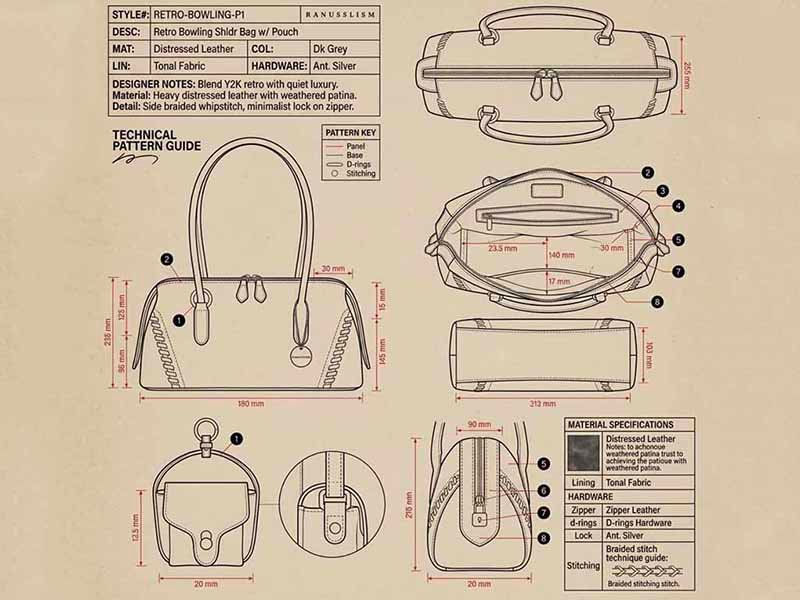
For bags, useful photos include front, back, side, bottom, inside view, zipper close-up, handle or strap close-up, logo close-up, label close-up, and packing photo. These images help avoid misunderstandings when the production team later reviews the approved standard.
The approval sheet should turn general feedback into clear actions. “Make the bag look stronger” is not precise enough. A better record would say, “Increase webbing width from 2.5 cm to 3.2 cm,” “Add X-stitch reinforcement at handle base,” or “Use thicker bottom board.” Clear comments reduce repeated revisions and prevent the factory from interpreting subjective feedback incorrectly.
| Sample Record Item | Practical Detail to Include | Why It Matters |
| SKU code | Style, color, size, version | Prevents similar SKUs from being mixed |
| Material | Fabric type, weight, color, lining | Controls hand feel, cost, and bulk consistency |
| Size tolerance | Commonly around ±0.5 cm to ±1.5 cm depending on structure | Reduces disputes during QC |
| Logo placement | Measured from seam, zipper, edge, or centerline | Prevents visual imbalance |
| Stitching | Stitch density, reinforcement, binding method | Protects strength and appearance |
| Trim details | Zipper size, hardware finish, webbing width | Keeps the collection consistent |
| Packaging | Unit packing, label, carton quantity | Prevents warehouse receiving errors |
| Approval status | Pending, revised, approved, rejected | Shows what can move to production |
Which SKUs Need Physical Samples?
SKUs need physical samples when they differ in structure, size, material, function, or logo method. If a product line includes a backpack, duffle bag, pouch, and cooler bag, each style should normally have its own sample. If one tote bag comes in six colors using the same material and same logo method, the buyer may only need one full sample plus color swatches and logo proofs for the other colors.
Physical samples are especially important when the product has functional requirements. Cooler bags need insulation and lining checks. Travel bags need strap strength and zipper smoothness. Makeup bags need lining, opening shape, and cosmetic-cleaning considerations. Waterproof bags need material and seam performance review. Leather or PU products need surface, edge, and folding checks.
The key is risk-based sampling. High-risk differences need physical proof. Low-risk differences may be approved through swatches, trim cards, artwork proofs, and written confirmation. This approach saves time without ignoring important production risks.
How Are Sample Revisions Tracked?
Sample revisions should be tracked by version number, written comments, updated photos, and affected SKU scope. Every change should answer four questions: what changed, why it changed, which SKUs are affected, and whether it is approved for bulk production.
For example, if the buyer changes the handle drop from 22 cm to 25 cm, the record should show whether the change applies to all tote bag colors or only the large size. If the logo moves 1 cm higher, the record should show the new measurement from a fixed seam or edge. If the zipper puller changes from metal to rubber, the BOM and trim approval must also update.
This tracking becomes extremely useful during repeat orders. Six months later, the buyer may reorder the same product with two new colors. If the revision history is clean, the factory can reproduce the approved structure and only focus on new color approvals. Without revision records, old mistakes often return during reorders.
Is One Approved Sample Enough for All SKUs?
One approved sample is enough only when SKU differences are low risk. If all SKUs share the same structure, same material, same lining, same logo method, same trims, and same packaging, then one full sample plus color references may work. But if the project includes different sizes, materials, logo techniques, or packaging versions, one sample is rarely enough.
For example, a small cosmetic pouch and a large toiletry bag may share the same fabric, but their zipper curves, lining behavior, and logo scale are different. A printed logo may look good on canvas but not on textured PU. A woven patch may work well on a backpack but look too bulky on a small pouch.
A practical rule is simple: if a change affects production method, user experience, quality, packaging, or brand appearance, it deserves separate approval. The buyer does not always need a full finished sample for every SKU, but each important difference should be tested or recorded before bulk production.
How Do Logo, Packaging, and Labels Add Risk?
Logo, packaging, and labels add risk because they connect the physical bag to brand identity, retail presentation, barcode accuracy, warehouse receiving, and customer experience. A bag can be well made but still fail commercially if the logo is wrong, packaging is mismatched, carton marks are inaccurate, or labels do not match the correct SKU.
What Logo Details Must Be Controlled?
Logo control should include artwork format, size, color, placement, production method, material compatibility, durability expectation, and approval proof. Buyers should provide vector artwork when possible, such as AI, PDF, EPS, or SVG. Low-resolution images can cause unclear edges, wrong proportions, and poor production output.
The logo method must match the material. Screen printing may work well on canvas, cotton, and many polyester fabrics, but it may not be ideal for every coated surface. Embroidery can feel premium, but it may distort lightweight fabric or look too heavy on small pouches. Woven labels are stable and clean for many soft goods. Rubber patches work well for sporty or outdoor styles. Leather patches can support a more premium look. Debossing and embossing are common for leather or PU products.
Placement is just as important as method. A logo that looks balanced on a large tote may look oversized on a small pouch. Logo placement should be measured from fixed points, not judged only by eye. For example, the instruction can state “logo center 8 cm below top edge” or “patch 2.5 cm above lower seam.” This gives production and QC a real standard.
Which Packaging Files Need SKU Matching?
Packaging files that need SKU matching include barcode labels, hangtags, care labels, inner labels, color stickers, carton marks, retail box artwork, FBA labels, polybag warnings, packing lists, and shipping marks. Each file should connect to the correct SKU code, color, size, and quantity.
This is especially important when products look similar after folding or packing. Navy, black, charcoal, and dark green bags can be hard to distinguish in a packed carton. Small and medium sizes may look similar if they are folded. If labels are applied manually without a clear packing matrix, mistakes can happen quickly.
Packaging errors may not be found during sewing inspection because the product itself is correct. They often appear during final packing, warehouse receiving, or sales operations. A wrong barcode can cause inventory problems. A wrong hangtag can create customer confusion. A wrong carton mark can slow down receiving. For multi-SKU projects, packaging should be checked before packing starts, not after cartons are sealed.
How Do Barcodes and Carton Marks Affect Delivery?
Barcodes and carton marks affect delivery because they help warehouses identify what is inside each unit, inner box, master carton, or pallet. For retail and e-commerce channels, accurate labeling is part of the product’s ability to move through the supply chain.
A good carton mark usually includes product name or SKU code, color, size, quantity, carton number, gross weight, net weight, carton dimensions, country of origin if required, and any buyer-specific receiving information. For mixed-SKU cartons, the carton mark must be especially clear. If one carton includes 20 black bags, 20 beige bags, and 20 navy bags, the packing list and carton label should match exactly.
For Amazon-focused shipments, label accuracy is even more sensitive. Unit labels, carton labels, and packaging warnings must align with the seller’s listing and warehouse requirements. A product may be physically acceptable but still create receiving delays if the label system is wrong. Better project management reduces this risk by linking every barcode and carton mark to the SKU master sheet.
Are Amazon and Retail SKUs Managed Differently?
Yes, Amazon and retail SKUs are often managed differently because their receiving systems and sales environments are different. Amazon projects usually focus on scannable labels, individual unit packaging, polybag warnings when needed, carton size limits, carton weight control, and inventory accuracy. The packaging must protect the product during warehouse handling and small-parcel delivery.
Retail SKUs often focus more on shelf presentation, hangtag style, barcode placement, material labels, assortment packing, and carton receiving. Retail buyers may require cartons to be packed by color, size, store allocation, or purchase order. They may also have strict requirements for carton marks and packing lists.
DTC brands may have different priorities again. They may care about unboxing, branded tissue paper, reusable dust bags, thank-you cards, or compact shipping size. A good manufacturer should ask where the product will be sold before finalizing packaging. The best packaging is not always the most expensive one. It is the one that fits the sales channel, protects the product, and supports smooth delivery.
What Project System Helps Brands Scale Better?
A strong project system helps brands scale by turning ideas, samples, materials, logos, packaging, QC standards, and delivery requirements into repeatable records. The most useful tools are a SKU master sheet, BOM, sample approval sheet, packaging matrix, QC checklist, production timeline, and reorder record. These tools reduce confusion and make future orders faster.
What Should a Multi-SKU Bag Master Sheet Include?
A multi-SKU bag master sheet should include SKU code, product name, style number, color, size, material, lining, zipper, hardware, logo method, logo placement, label, barcode, packaging method, carton quantity, order quantity, sample version, approval status, production status, and shipping requirement.
The master sheet is not only for the factory. It is useful for the buyer’s product, sourcing, marketing, warehouse, and sales teams. Product teams can check whether the collection is consistent. Sourcing teams can track cost and approval status. Marketing teams can confirm color names and product descriptions. Warehouse teams can prepare receiving. The factory can use the same sheet for purchasing, production, QC, and packing.
The best master sheets also include risk notes. For example: “custom zipper color needs longer lead time,” “logo contrast needs approval on dark fabric,” “retail barcode pending,” or “carton weight must stay under buyer limit.” These notes help teams act before problems become urgent.
| Project Record | Key Fields | Best Used For | Buyer Benefit |
| SKU master sheet | SKU code, color, size, material, packaging, barcode | Overall project control | Fewer communication gaps |
| BOM | Fabric, lining, trims, logo, packaging components | Cost and purchasing control | Clearer quotation and sourcing |
| Sample approval sheet | Version, measurements, comments, approval status | Sample-to-bulk consistency | Fewer repeat revisions |
| Packaging matrix | Labels, hangtags, cartons, barcode, packing qty | Packing and warehouse receiving | Lower packing error risk |
| QC checklist | Dimensions, stitching, logo, trims, cleanliness, packing | Inspection standard | Better defect control |
| Timeline tracker | Approval dates, material dates, production dates, shipping dates | Delivery planning | More predictable launches |
| Reorder record | Final version, material batch, issues, improvements | Repeat production | Faster future orders |
Which Approval Steps Should Come First?
The first approval should be product direction: style, function, size, structure, target market, and target cost. Without this foundation, later decisions can move in the wrong direction. The second approval should be material and trims, because they affect appearance, cost, production lead time, and durability. The third approval should be logo method and sample development. The fourth should be packaging and labeling. The final approval should be the pre-production standard.
This sequence prevents rework. Packaging size depends on final product dimensions. Logo placement depends on bag structure. Cost depends on material and trim choices. Production timing depends on material availability. If these approvals happen out of order, the buyer may need to redo artwork, remake samples, repurchase trims, or change packing plans.
A practical approval flow protects both sides. It allows the buyer to make decisions with enough information and allows the manufacturer to prepare production without guessing. For multi-SKU projects, the approval flow should show not only whether the whole project is approved, but whether each SKU is approved.
How Do QC Checks Protect Each SKU?
QC checks protect each SKU by comparing finished goods against the correct approved standard. In a multi-SKU project, one general checklist is not enough. Each SKU may have its own material, logo, trim, packaging, and barcode. QC must know what is correct for that specific item.
Common QC checks for bags include fabric color, fabric defects, dimensions, stitching, seam strength, reinforcement, zipper smoothness, hardware function, handle or strap attachment, logo position, label placement, cleanliness, odor, packing method, carton quantity, and carton marks. For functional products, extra checks may be needed. Cooler bags may need lining and insulation review. Waterproof bags may need seam and closure checks. Backpacks may need strap and load-bearing inspection. Cosmetic bags may need lining cleanliness and zipper curve checks.
QC is most effective when it starts before final inspection. Material checks, pre-production sample confirmation, inline inspection, semi-finished checks, final inspection, and packing inspection all reduce risk. Waiting until all goods are finished makes correction harder and more expensive.
Do Better Project Records Improve Repeat Orders?
Better project records improve repeat orders because they preserve what was already learned. A successful first order contains valuable information: final material, approved size, best logo method, trim supplier, packing method, carton quantity, QC notes, and buyer feedback. If these records are saved, the next order starts from experience instead of memory.
This matters for brands that expand colors, add sizes, create seasonal versions, or develop related products. A buyer may reorder a cosmetic bag in four new colors. If the original structure, zipper, lining, packaging, and carton plan are already recorded, the team can focus only on new color approval. This saves time and reduces the chance of repeating old discussions.
Good records also support product improvement. If the first order had feedback about a stiff zipper, the second order can upgrade the zipper. If the carton packing caused slight deformation, the next order can adjust folding or carton quantity. Over time, project records become a quiet but powerful advantage. They make the supply chain smarter, faster, and more stable with every order.
Build Multi-SKU Bag Projects With Better Control
Multi-SKU bag development is not difficult because brands ask for too much. It is difficult because too many details are connected. A color change can affect logo visibility. A material change can affect stitching. A size change can affect carton planning. A packaging change can affect warehouse receiving. A barcode mistake can affect online sales. A missing revision record can affect the entire repeat order.
For serious buyers, better project management is not an optional service. It is part of product quality. It protects launch schedules, reduces avoidable mistakes, improves sample-to-bulk consistency, and helps brands scale from one product to a full product line. The right manufacturing partner should understand materials, structure, sampling, sewing, logo processes, packaging, QC, and export delivery as one connected system.
Szoneier helps global brands, retailers, importers, Amazon sellers, Shopify brands, promotional companies, and B2B buyers develop custom bags and soft goods with clearer project control. Our team supports product requirement review, material sourcing, sample development, sample revision, logo application, bulk production, quality inspection, packaging, and export delivery. For selected custom bag projects, MOQ can start from 200 pcs, depending on material availability, structure, logo method, packaging, and SKU complexity.
If you are planning a multi-SKU tote bag, backpack, cosmetic bag, cooler bag, travel bag, pouch, leather goods, neoprene product, or full soft goods collection, send your product photos, tech pack, target quantity, logo file, packaging requirements, and delivery country to Szoneier. Our team can help review your project, identify SKU risks early, and turn your product line into a clearer, more production-ready development plan.
Contact Szoneier today to start your custom multi-SKU bag development project.