Skip to content
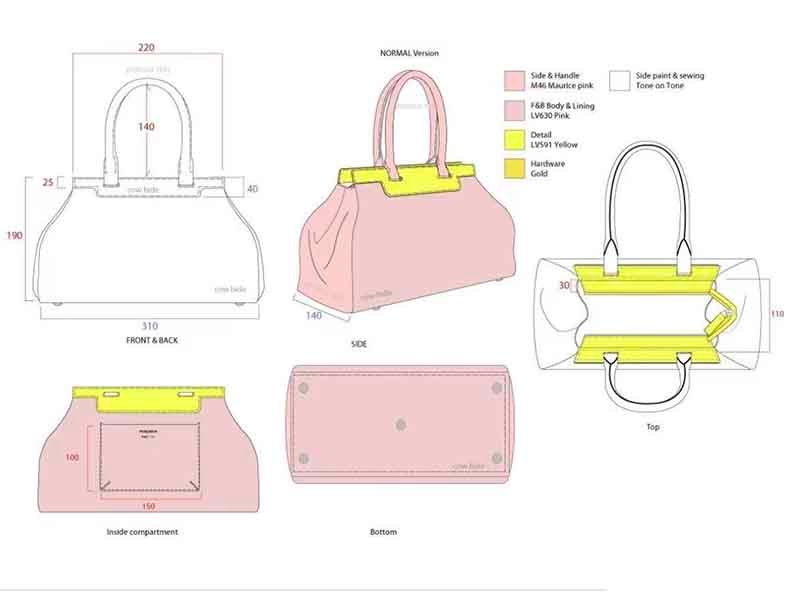
A bag tech pack is where a product idea stops being “a nice concept” and starts becoming something a factory can actually quote, sample, test, and produce. Many brands begin with a sketch, a reference photo, or a competitor product link. That is useful, but it is not enough. A factory still needs to know the exact size, material, lining, zipper type, hardware finish, stitch method, logo placement, packing method, tolerance range, and quality expectation before it can give a reliable quotation.
A bag tech pack should include technical drawings, product measurements, materials, trims, hardware, construction details, branding artwork, colorways, packaging instructions, QC requirements, and revision records. The clearer the tech pack, the easier it is for a manufacturer to quote accurately, reduce sampling mistakes, control bulk production, and keep the final bag consistent with the approved sample.
Think of a tech pack like a “translation file” between your brand vision and the factory floor. Without it, your designer may imagine one thing, your buyer may explain another thing, and the sewing line may build something slightly different. One missing detail—such as handle drop, zipper gauge, seam allowance, lining thickness, or reinforcement position—can change cost, appearance, durability, and delivery time. That is why experienced brands treat the tech pack not as paperwork, but as the first quality-control tool of the entire project.
| Tech Pack Section | What It Controls | Why It Matters |
|---|---|---|
| Technical drawings | Shape, views, callouts | Helps the factory understand the bag visually |
| Measurement specs | Size, placement, tolerance | Reduces sample and bulk size errors |
| BOM | Materials, trims, hardware | Supports accurate cost and sourcing |
| Construction notes | Sewing, seams, reinforcement | Controls strength and production consistency |
| Branding details | Logo, labels, artwork | Protects brand identity |
| Packaging specs | Polybag, carton, labels | Supports retail, FBA, and export delivery |
| QC notes | Testing and inspection points | Reduces shipment and after-sales risks |
What Is a Bag Tech Pack?
A bag tech pack is a production-ready document that explains exactly how a bag should be made. It combines drawings, measurements, material specifications, trims, hardware, construction methods, branding, packaging, and quality requirements so a factory can quote, sample, and produce with fewer misunderstandings.
A good tech pack is not only for the designer. It is also for the pattern maker, material buyer, sample room, sewing supervisor, QC team, packing team, and production manager. In a real bag factory, your project passes through many hands before it becomes a finished product. If the information is only stored in emails, chat screenshots, or verbal explanations, details can easily disappear.
For example, a tote bag may look simple from the outside, but the factory still needs to confirm fabric weight, lining requirement, handle length, handle attachment method, inner pocket size, bottom reinforcement, logo process, packing fold, carton quantity, and acceptable measurement tolerance. A makeup bag may require a waterproof lining, zipper puller, binding tape, sponge padding, side gusset, logo label, and carton labeling. A backpack may involve more complex components, including webbing, buckles, foam padding, laptop compartment, zipper tracks, reinforcement bartacks, shoulder straps, back panel structure, and load-bearing tests.
This is why a bag tech pack should be treated as a decision document, not only a drawing document. It helps the buyer and manufacturer align on what is fixed, what is flexible, what affects cost, and what must be confirmed through sampling.
For B2B buyers, a strong tech pack also improves supplier evaluation. A professional factory can review the document and tell you what is realistic, what may increase MOQ, what needs material sourcing, which structure may cause sewing difficulty, and where a better production solution may exist. A weak supplier may simply say “yes, we can do it” without reviewing the risks.
Szoneier, as a Shenzhen-based custom bags and soft goods OEM/ODM manufacturer, works with product ideas, reference samples, tech packs, material concepts, logo files, and packaging requirements to help buyers move from concept to sample and from sample to bulk production. Szoneier’s company facts describe its role as a factory-based manufacturing partner with sampling, material sourcing, sewing production coordination, quality inspection, packaging, and export delivery support.
What Does a Bag Tech Pack Do?
A bag tech pack turns creative direction into factory instructions. It tells the manufacturer what the bag is, how it should look, what materials should be used, where every component belongs, and what quality level must be reached. Without this file, the factory has to guess. Guessing creates repeated questions, slow quotation, inaccurate sampling, and unstable bulk production.
In practical terms, the tech pack connects five teams: design, sourcing, sampling, production, and QC. The design team uses it to define appearance. The sourcing team uses it to find fabric, lining, zipper, hardware, webbing, thread, labels, and packaging. The sample room uses it to make the first prototype. The production team uses it to repeat the approved sample. The QC team uses it to inspect whether the final product follows the approved standard.
A strong tech pack should answer basic factory questions before the factory asks them. What is the bag size? What is the main fabric? Is the lining required? What zipper size is needed? Is the handle reinforced? Where is the logo? How is the bag packed? What tolerance is acceptable? When these answers are clear, the whole project moves faster.
Is a Tech Pack Different From a Design Sketch?
Yes. A design sketch shows the idea, while a tech pack explains how to manufacture that idea. A sketch may show the front shape, pocket position, and visual style, but it usually does not provide enough information for production. A factory cannot reliably quote a bag from a sketch alone unless the design is very basic and all details are flexible.
A tech pack includes the sketch, but it goes much further. It adds measurement tables, material specifications, hardware details, construction notes, stitching instructions, branding artwork, packaging requirements, and QC expectations. The sketch says, “This is what I want the bag to look like.” The tech pack says, “This is how the factory should build it.”
This difference matters because bag production is full of small technical decisions. A handle can be stitched with single-line sewing, box stitching, cross stitching, or bartack reinforcement. A zipper can be nylon coil, resin, metal, waterproof, reverse coil, or two-way. A lining can be 190T polyester, 210D polyester, nylon, cotton, RPET, PEVA, TPU-coated fabric, or no lining at all. These choices may look small on paper, but they affect cost, MOQ, lead time, feel, strength, and final user experience.
Why Is It Important Before Sampling?
A tech pack is important before sampling because the first sample sets the direction for cost, structure, appearance, and production risk. If the sample starts with vague instructions, the factory may produce something that looks close but fails in size, material, function, or brand feeling. Then both sides spend more time revising the same problem.
Before sampling, a tech pack helps the factory estimate material usage, prepare patterns, check available trims, choose proper sewing methods, and identify risky details. This is especially important for bags with multiple pockets, padded panels, special hardware, waterproof requirements, custom logo processes, or retail packaging. The more complex the bag, the more valuable the tech pack becomes.
A complete tech pack also gives the buyer more control. Instead of saying “the sample is not right,” the buyer can point to a specific page, measurement, material code, construction note, or artwork file. That makes feedback faster and less emotional. It also protects the buyer when comparing suppliers, because each factory is quoting based on the same information rather than different assumptions.
What Product Details Should Be Included?
Product details should include the bag type, intended use, target market, style code, size, shape, colorways, views, compartments, carrying method, functional requirements, and any reference sample notes. These details help the factory understand not only what the bag looks like, but also how it will be used.
A bag is not just a shape. It is a product built for a specific use scenario. A cosmetic bag, cooler bag, laptop backpack, beach tote, tool bag, medical pouch, leather handbag, and dry bag all need different material choices, structural decisions, and QC priorities. If the tech pack only says “custom bag,” the factory has too much room to interpret.
The product detail section should start with basic identification. Include the style name, style number, version date, buyer name, target order quantity, sample size, target market, and product category. If the design has multiple colorways or sizes, create a clear version table. This prevents the factory from mixing old and new information during sampling.
Then define the use case. Will the bag hold cosmetics, food, tools, sports gear, baby items, electronics, medical supplies, wine bottles, or outdoor equipment? Is it for promotional use, retail shelves, Amazon FBA, DTC packaging, corporate gifting, or premium brand sales? A bag for light promotional use may not need the same material strength as a work tool bag. A retail beauty pouch may prioritize appearance and logo finish, while a cooler bag must prioritize insulation, sealing, and food-safe lining options.
Measurements should be specific, not estimated. Use millimeters or inches consistently. For bags, factories often need overall width, height, depth, bottom width, gusset depth, handle length, handle drop, strap width, zipper opening length, pocket placement, logo placement, and carton packing size. For soft bags, also define tolerance, because fabric products are flexible and cannot always be controlled like molded plastic parts.
| Product Detail | Example Information | Why It Helps the Factory |
|---|---|---|
| Bag type | Tote bag, backpack, cosmetic pouch | Defines production category |
| Intended use | Daily retail, travel, cooler, tools | Guides material and structure |
| Target order | 200 pcs, 500 pcs, 5,000 pcs | Affects sourcing and production planning |
| Market/channel | Amazon, retail, gift, DTC | Guides packaging and labeling |
| Style code | TB-001-V2 | Prevents version confusion |
| Size | 400W x 350H x 120D mm | Supports pattern and quotation |
| Colorways | Black, beige, navy | Affects MOQ and material availability |
| Reference sample | Photo or physical sample | Helps compare target appearance |
What Bag Type Is Being Developed?
The tech pack should clearly state the bag type because different bag categories follow different production logic. A tote bag may focus on fabric weight, handle strength, and logo placement. A backpack may require padded straps, back-panel structure, zipper layout, lining compartments, and load-bearing reinforcement. A cooler bag needs insulation thickness, lining material, seam sealing direction, and food-contact considerations.
The factory needs this information early because bag type affects the sample room, sewing method, machine choice, material sourcing, and cost structure. A simple drawstring bag may use fewer components and faster sewing steps, while a tactical backpack or structured leather handbag may require more pattern pieces, heavier machines, reinforcement, special hardware, and longer production time.
Buyers should not assume that all “bags” are quoted the same way. Even two bags with similar dimensions can have very different costs if one has padding, lining, multiple pockets, custom hardware, or waterproof coating. For the clearest result, write the bag type, use scenario, target user, load expectation, and sales channel at the top of the tech pack.
Which Sizes and Measurements Matter?
The most important measurements are the ones that affect fit, function, appearance, and cost. For most bags, this includes body width, height, depth, bottom width, gusset size, handle drop, strap length, zipper opening, pocket size, logo position, and panel dimensions. For backpacks, add shoulder strap length, strap width, back panel height, laptop compartment size, and webbing placement.
Measurements should be shown in a table with clear points of measure. A flat drawing with numbered callouts is better than a paragraph. For example, POM 01 can be bag width, POM 02 bag height, POM 03 bottom depth, POM 04 handle drop, and POM 05 logo distance from top edge. This helps the factory measure the sample and bulk goods the same way.
Tolerance should also be included. For many sewn soft goods, a practical tolerance may be around ±3 mm to ±10 mm depending on product size, material flexibility, and construction complexity. Small pouches need tighter tolerance. Large soft totes, padded bags, and flexible fabric bags may require more realistic tolerance. Always confirm final tolerance with the factory before bulk production.
How Should Front, Back, Side, and Inside Views Be Shown?
A bag tech pack should show the front, back, side, bottom, top opening, and inside views whenever these areas contain construction details. One front sketch is rarely enough. Many important details are hidden inside the bag, such as lining seams, inner pockets, zipper tape, binding, elastic loops, foam padding, divider panels, laptop sleeves, mesh pockets, and care labels.
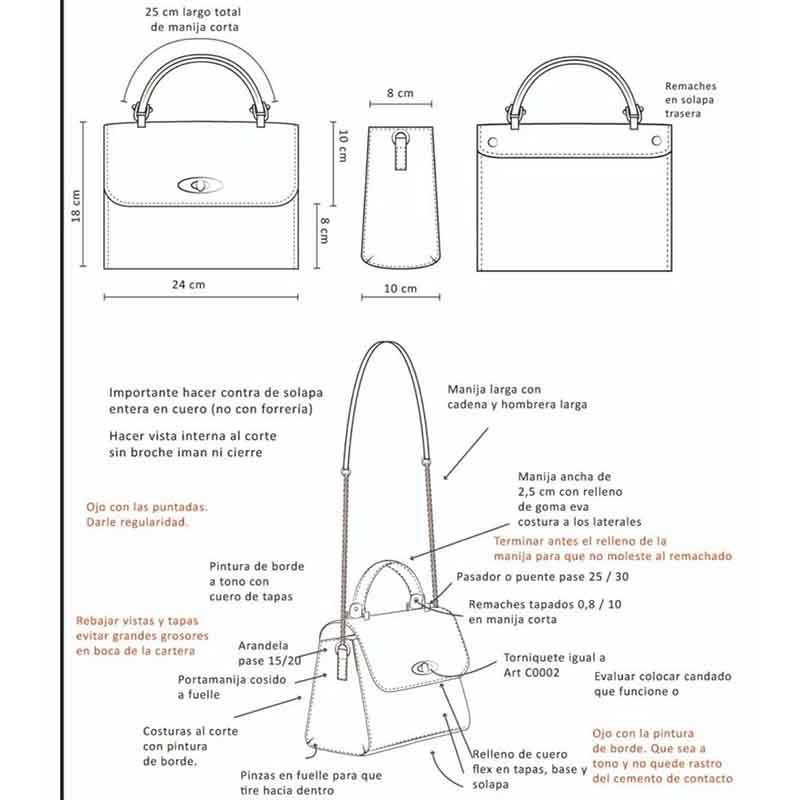
Each view should include callouts. A callout is a small note or number that points to a feature. For example, “No.5 nylon zipper,” “inside slip pocket,” “bartack reinforcement,” “logo woven label,” or “binding tape on raw edge.” This makes communication easier because the factory can discuss “Callout 7” instead of guessing which pocket or seam the buyer means.
For complex products, close-up drawings are very useful. If a handle attachment, zipper end, bottom corner, gusset fold, shoulder strap, or hardware connection is difficult to explain, create an enlarged detail view. It may feel like extra work at the design stage, but it often saves one or two rounds of sample revision.
Which Materials and Trims Should Be Listed?
Materials and trims should include the main fabric, lining, interlining, padding, zipper, puller, hardware, webbing, thread, labels, binding, foam, coating, and packaging materials. Each item should be listed with specification, color, finish, size, supplier note, usage position, and quantity per bag.
This section is usually called the BOM, or Bill of Materials. In bag manufacturing, the BOM is one of the most important parts of the tech pack because material choices strongly affect cost, MOQ, lead time, performance, and final appearance. A design may look premium in a rendering, but if the material specification is vague, the sample may feel cheaper, heavier, softer, shinier, thinner, or stiffer than expected.
For example, “canvas” is not enough. Is it 10 oz cotton canvas, 12 oz canvas, 16 oz canvas, washed canvas, dyed canvas, waxed canvas, or polyester-cotton canvas? “Polyester” is also not enough. Is it 210D, 300D, 600D, 900D, 1680D, PU-coated, PVC-coated, RPET, plain weave, twill, or Oxford? “Zipper” is not enough either. Is it No.3, No.5, No.8, nylon coil, resin, metal, waterproof, reverse coil, single slider, double slider, or custom puller?
A good BOM should remove these doubts before sampling. It should also show which materials are fixed and which can be factory-recommended. For many buyers, especially new brands, it is acceptable to say “factory to recommend similar material based on target hand feel and cost.” That is still better than leaving the material blank.
| BOM Item | Specification Example | Details to Confirm |
|---|---|---|
| Main fabric | 600D polyester Oxford, PU backing | Color, weight, coating, MOQ |
| Lining | 210D polyester, black | Color, density, water resistance |
| Zipper | No.5 nylon coil zipper | Tape color, teeth color, slider type |
| Webbing | 25 mm polyester webbing | Width, thickness, color, strength |
| Hardware | Zinc alloy D-ring, matte black | Size, finish, plating quality |
| Padding | 5 mm EVA foam | Thickness, density, position |
| Thread | Bonded nylon thread | Color, strength, stitch area |
| Label | Woven label, 35 x 20 mm | Placement, folding, sewing method |
What Main Fabric Should Be Specified?
The main fabric should be specified by material type, weight or density, finish, color, backing, coating, and intended performance. Instead of writing “black polyester,” write something closer to “600D polyester Oxford, PU backing, black, matte finish, water-resistant surface, used for outer body.” This gives the factory a much clearer sourcing target.
Different bag materials behave differently in cutting, sewing, folding, printing, and daily use. Canvas has a natural hand feel but may shrink or fade depending on treatment. Nylon is strong and lightweight but may cost more than standard polyester. Oxford fabric is widely used for backpacks, cooler bags, tool bags, and travel bags because it offers practical durability. PU leather and PVC can create a premium or easy-clean surface, but thickness and backing quality matter. Neoprene gives softness and stretch, but edge finishing and printing methods need careful selection.
The tech pack should also say whether the buyer accepts material alternatives. For custom projects, exact fabric may not always be available at low quantity. If the first-choice fabric has a high MOQ, a factory may suggest ready-stock material to reduce cost and sampling time. This is especially useful for trial orders, Amazon launches, Shopify testing, or seasonal promotions.
Which Lining, Interlining, and Padding Are Needed?
Lining, interlining, and padding should be listed because they change the internal function and structure of the bag. A bag can look similar outside but perform very differently inside depending on these hidden materials. Lining affects cleanliness, user experience, water resistance, and perceived quality. Interlining affects shape and stiffness. Padding affects protection, insulation, and comfort.
For cosmetic bags, lining may need to be wipeable, waterproof, or easy to clean. For cooler bags, PEVA, aluminum foil, TPU, or other insulated lining systems may be needed. For laptop bags, foam padding and soft lining help protect devices. For leather goods, reinforcement materials may be used to keep the shape stable. For backpacks, foam is often needed in shoulder straps, back panels, and laptop compartments.
The tech pack should specify thickness where possible. For example, 3 mm foam, 5 mm EVA, 8 mm sponge, or 2 mm reinforcement board. If exact thickness is not known, state the target function: “padding should protect a 13-inch laptop,” or “bottom panel should stand upright when empty.” A good factory can then recommend a practical material solution.
What Hardware, Zippers, Webbing, and Labels Are Required?
Hardware, zippers, webbing, and labels should be listed with size, material, color, finish, position, and function. These trims are small, but they often create big differences in quality perception. A cheap zipper can make a good bag feel unreliable. A weak buckle can create returns. A poor plating finish can damage brand image. A label in the wrong position can ruin the retail look.
For zippers, specify gauge, type, tape color, teeth color, slider quantity, puller style, and opening direction. Common zipper sizes include No.3 for small pouches, No.5 for many cosmetic bags and totes, and No.8 or No.10 for heavier backpacks, duffle bags, and tool bags. The final choice depends on bag size, load, usage, and design style.
For hardware, specify whether it is plastic, zinc alloy, aluminum alloy, stainless steel, brass, or iron. Also confirm finish, such as matte black, shiny nickel, antique brass, gunmetal, rose gold, or custom color. For webbing, include width, thickness, weave style, material, color, and strength expectations. For brand labels, include woven label, printed label, leather patch, silicone patch, rubber patch, heat transfer, or metal plate.
How Should Construction Details Be Explained?
Construction details should explain how the bag is assembled, stitched, reinforced, bound, folded, padded, and finished. They should cover pockets, compartments, seams, handle attachment, zipper installation, edge finishing, stress points, and any special functional structure that affects strength or appearance.
This section is where many bag projects succeed or fail. Two bags can use the same fabric and still have different quality because construction is different. A handle can tear if reinforcement is weak. A zipper can wave if the opening is not stabilized. A pocket can collapse if the lining is too soft. A bottom panel can sag if no support material is used. A beautiful logo can look cheap if it is placed across an uneven seam.
Construction notes should be written in a way that factory teams can follow. Instead of saying “make it strong,” specify the reinforcement method. Use terms such as bartack, box stitch, cross stitch, double stitch, binding, seam allowance, edge paint, turned seam, raw edge binding, reinforced bottom, foam padding, inner support board, or double-layer fabric. If you are not sure which method is best, write the performance target and ask the factory to recommend a production-friendly solution.
For bag production, construction also affects cost. More pockets, more layers, more binding, thicker materials, curved panels, piping, custom handles, and complex lining structures all increase labor time. A tech pack should help the factory understand these details before quotation, not after sampling. That way, the first quotation is closer to the real production cost.
| Construction Area | What to Specify | Common Risk If Missing |
|---|---|---|
| Handle attachment | Box stitch, bartack, reinforcement patch | Handle tearing or weak load capacity |
| Zipper opening | Zipper size, tape position, end finish | Wavy zipper or rough opening |
| Pocket layout | Size, position, closure type | Wrong pocket function |
| Seams | Seam allowance, binding, stitch type | Uneven shape or weak edges |
| Bottom structure | Panel, foam, board, fold method | Bag cannot stand or sags |
| Strap connection | D-ring, buckle, sewing area | Strap twisting or breaking |
| Lining assembly | Drop-in, bound, turned seam | Poor inside finish |
| Stress points | Bartack or extra stitching | Failure during use |
How Should Pockets and Compartments Be Described?
Pockets and compartments should be described with position, size, opening direction, closure type, material, and function. A pocket is not just a rectangle inside the bag. It affects user experience, sewing order, material usage, and product cost. If the pocket is too small, it becomes useless. If it is too large, it may collapse or interfere with the main space.
For each pocket, show the location on a drawing and add measurements. For example: “inner slip pocket, 180W x 120H mm, located on back lining panel, opening at top, single stitch around sides and bottom.” For zipper pockets, specify zipper size and opening length. For mesh pockets, specify mesh type, elastic top, and binding. For laptop compartments, specify the laptop size target, padding thickness, closure method, and bottom protection.
Compartments should also be explained by use. A travel bag may need a shoe compartment, wet pocket, toiletry pocket, bottle pocket, and zipper divider. A diaper bag may need insulated bottle pockets and easy-access side pockets. A tool bag may need elastic loops and reinforced pocket edges. The more functional the bag, the more important this section becomes.
Where Are Reinforcement Points Needed?
Reinforcement points are needed wherever the bag carries weight, receives pulling force, or experiences repeated movement. Common reinforcement areas include handles, shoulder straps, D-rings, buckles, zipper ends, bottom corners, pocket openings, side seams, drawstring exits, laptop compartment edges, and stress points around heavy-use parts.
The tech pack should not only say “reinforced.” It should explain the method. For example, use bartack stitching at handle roots, add an inner reinforcement patch under the handle, use cross stitching on webbing, add double-layer fabric at the bottom, or use binding tape on high-wear edges. For heavy-duty bags, reinforcement may require thicker thread, stronger webbing, larger seam allowance, or additional internal support.
Buyers should also think about load expectations. A promotional tote carrying brochures has different stress requirements from a grocery tote carrying bottles. A gym duffle carrying shoes and gear needs stronger strap and zipper construction than a lightweight travel pouch. A tool bag needs more aggressive reinforcement because tools create point pressure and abrasion. If the expected load is known, include it in the tech pack.
Which Stitching, Binding, and Seam Details Matter?
The most important stitching and seam details include stitch type, stitch density, thread color, seam allowance, binding width, edge finish, reinforcement method, and visible stitch appearance. These details affect both durability and visual quality. A premium bag should not only be strong; it should also look clean, balanced, and consistent.
For many soft goods, stitch density may commonly be discussed as stitches per inch or stitches per centimeter. A practical range may vary by fabric thickness, thread type, and product use. Too few stitches can look rough and reduce seam strength. Too many stitches may perforate some coated materials or create puckering. The correct choice depends on the material and the factory’s sewing process.
Binding and seam finish are especially important for bags with visible inner edges. Raw edges may fray or look unfinished. Binding tape can make the product cleaner and more durable, but it adds labor cost. Turned seams can look premium, but they may not suit every material or shape. The tech pack should identify which seams are visible, which seams need binding, and which edges can remain internal.
What Branding and Packaging Details Are Needed?
Branding and packaging details should include logo placement, logo size, artwork file, color, process, labels, hangtags, barcode, care label, polybag, carton mark, folding method, retail packaging, and any FBA or shipping requirements. These details protect brand consistency and avoid packaging delays before shipment.
For many brands, the product is not finished when sewing is finished. The final customer experiences the bag through its logo, label, hangtag, dust bag, insert card, retail box, barcode, and packaging. If these details are not included in the tech pack, the factory may make a correct bag but deliver it in a way that does not fit the sales channel.
Logo details should be very precise. Include AI, PDF, SVG, or high-resolution artwork. Define size, color, placement, and process. For example, “silkscreen logo, white, 80W x 30H mm, centered on front pocket, 60 mm below top edge.” If logo placement is only shown visually without measurements, small differences may appear in sampling and bulk production.
Packaging should be included early because it affects cost, material ordering, carton size, shipping volume, and delivery method. A bag packed flat may have a different carton size from a bag packed with stuffing paper. A leather bag may need tissue wrapping, dust bag, shape support, and individual box. An Amazon FBA shipment may require barcode labels, carton labels, suffocation warning, and strict carton weight limits. A retail order may need hangtags, inner cards, display packaging, or brand stickers.
| Branding / Packaging Item | What to Include | Production Impact |
|---|---|---|
| Main logo | Size, color, position, process | Controls brand appearance |
| Logo artwork | AI/PDF/SVG file | Prevents distortion |
| Woven label | Size, fold, placement | Affects sewing process |
| Hangtag | Paper type, size, string | Affects packing workflow |
| Barcode | SKU, UPC/EAN, position | Supports retail/FBA |
| Polybag | Size, thickness, warning text | Affects packing compliance |
| Carton mark | Shipping mark, SKU, quantity | Supports warehouse handling |
| Folding method | Flat, rolled, stuffed, boxed | Affects shipping volume |
Where Should the Logo Be Placed?
Logo placement should be shown with exact measurements from fixed reference points, such as the top edge, bottom edge, center line, side seam, pocket opening, or zipper line. Do not rely only on visual mockups. A logo that looks centered in a rendering may shift during production if the factory does not have numerical placement instructions.
For example, write “logo centered on front panel, 90 mm from top edge, logo size 75W x 28H mm.” For a woven label, write “sewn on lower right side seam, 20 mm from bottom edge.” For a leather patch, write “placed on front pocket center, 15 mm above pocket seam.” These small details help the sample room and sewing line repeat the same placement.
Logo placement should also respect material and construction. Avoid placing heat transfer logos over rough seams, thick padding, curved corners, or highly textured materials unless the process has been tested. Embroidery may not work well on very thin or waterproof-coated materials without backing. Metal plates may need reinforcement behind the panel. A good tech pack should show not only where the logo goes, but also whether the position is production-friendly.
Which Logo Process Should Be Used?
The logo process should match the material, brand positioning, order quantity, target cost, and durability expectation. Common logo processes for bags include screen printing, heat transfer, embroidery, woven labels, rubber patches, leather patches, debossing, embossing, metal plates, silicone labels, and zipper puller branding.
Each process has advantages and limits. Screen printing is practical for many canvas, polyester, and non-woven bags, especially when the logo is simple. Heat transfer can show fine details and gradients but must be tested on coated fabrics. Embroidery feels premium and durable but can distort thin fabric or increase cost. Woven labels work well for many soft goods because they are stable and repeatable. Debossing or embossing is useful for leather and PU leather, but it depends on material thickness and surface behavior.
The tech pack should include logo color, Pantone reference if needed, artwork file, size, placement, process, and approval standard. If the brand has strict guidelines, attach the brand manual. If the logo process is flexible, state the target effect: “premium tone-on-tone logo,” “durable outdoor logo,” or “low-cost promotional logo.” A capable factory can then recommend the most suitable option.
Do Labels, Hangtags, Barcodes, or Carton Marks Matter?
Yes, labels, hangtags, barcodes, and carton marks matter because they connect production to retail, warehousing, logistics, and final customer experience. A product can be physically correct but commercially unusable if it arrives without the right SKU labels, barcode, carton mark, warning label, or packaging instruction.
For retail buyers, labels and hangtags support brand presentation. For Amazon and e-commerce sellers, barcodes and carton labels help warehouse receiving and inventory management. For importers and distributors, carton marks help identify SKU, color, quantity, destination, and order number. For some product categories, care labels, material labels, warning labels, or compliance notes may also be required.
The tech pack should clearly separate product labels from shipping labels. Product labels may include woven labels, care labels, size labels, country-of-origin labels, or brand labels. Shipping labels may include carton marks, FBA labels, barcode stickers, pallet labels, or warehouse routing labels. If the buyer has a packing manual or retailer compliance guide, attach it before production begins.
How Does a Tech Pack Help Quotation and Production?
A tech pack helps quotation and production by reducing assumptions. It allows the factory to calculate material consumption, trim cost, labor difficulty, sample requirements, packaging cost, testing needs, MOQ, lead time, and production risk before committing to price and schedule.
When buyers ask for a quote with only one photo, the factory usually has to make assumptions. The material may be guessed. The lining may be guessed. The zipper quality may be guessed. The hardware finish may be guessed. The packaging may be guessed. That means the quotation may look fast, but it may not be reliable. Later, once the buyer adds more details, the price changes. This creates frustration on both sides.
A clear tech pack makes quotation more professional. The factory can estimate fabric usage based on size and pattern. It can check whether material is available or needs custom sourcing. It can confirm whether trims have MOQ. It can evaluate labor time based on pockets, lining, binding, reinforcement, zipper installation, and logo process. It can also identify whether testing, special packaging, or export labeling is needed.
For production, the tech pack becomes the baseline. The approved sample should be checked against it. The pre-production sample should follow it. The QC team should inspect according to it. If a bulk production issue appears, the team can compare the product with the tech pack and approved sample instead of relying on memory.
For serious B2B projects, the tech pack should also include revision control. Every time a size, material, logo, pocket, zipper, or packaging detail changes, update the version number and date. Old versions should not be mixed with new versions. This is especially important for multi-SKU projects, brand series, and repeat orders.
| Tech Pack Clarity | Quotation Result | Production Result |
|---|---|---|
| Only photo/reference link | Fast but assumption-based quote | High sampling uncertainty |
| Basic sketch + size | Better shape understanding | Still missing material and trim details |
| Full tech pack + BOM | More accurate cost estimate | Faster sample and fewer changes |
| Full tech pack + QC notes | More reliable quotation | Better bulk consistency |
| Full tech pack + packaging specs | More complete landed planning | Fewer packing and shipment issues |
How Does It Improve Factory Quotation Accuracy?
A tech pack improves quotation accuracy because it gives the factory enough information to calculate real production cost. Bag cost is not based only on size. It comes from material consumption, fabric price, lining, zipper, hardware, webbing, logo process, labor time, packaging, testing, wastage, MOQ, and delivery requirements.
For example, two tote bags with the same size may have very different prices. One may use 10 oz canvas with screen printing and no lining. Another may use 16 oz canvas, zipper closure, inner pocket, cotton lining, leather handles, metal rivets, and individual retail packaging. From the outside, both may be called “canvas tote bags,” but their production cost is not the same.
A tech pack reduces price changes by making the quote basis clear. The factory can say, “This price is based on 600D polyester, No.5 zipper, standard webbing, one-color screen print, and individual polybag.” If the buyer later changes to custom metal hardware or retail box packaging, everyone understands why the price needs adjustment. This creates more transparent communication and better trust.
How Does It Reduce Sampling Mistakes?
A tech pack reduces sampling mistakes by turning vague expectations into measurable instructions. During sampling, the factory needs to make many decisions quickly: pattern shape, seam allowance, material choice, zipper placement, pocket size, handle length, lining method, label position, and logo process. If these are not documented, the sample maker may choose the most familiar method instead of the buyer’s intended method.
The tech pack also makes feedback easier. Instead of writing “the handle looks wrong,” the buyer can write “handle drop should be 250 mm, sample is 220 mm; please revise to POM 04.” Instead of saying “the logo is too low,” the buyer can say “logo should be 60 mm below top edge; sample is 85 mm.” This saves time and reduces emotional back-and-forth.
For many bag projects, one sample revision is normal. But repeated revisions often happen because the first instructions were incomplete. A strong tech pack does not guarantee the first sample will be perfect, but it gives both sides a clear map for improving it.
Are QC Standards and Testing Notes Needed?
Yes, QC standards and testing notes are needed, especially when the bag has functional requirements, retail requirements, safety concerns, or heavy-use expectations. QC notes tell the factory what must be checked before shipment. They also help the buyer and factory agree on what counts as acceptable or unacceptable.
For basic bags, QC notes may include size tolerance, color matching, clean stitching, logo position, zipper function, hardware finish, thread trimming, odor check, packing quantity, and carton labeling. For functional bags, add specific checks such as load-bearing, zipper pull, seam strength, water resistance, insulation performance, colorfastness, abrasion resistance, or material compliance where relevant.
Testing should be realistic. Do not claim waterproof, fireproof, anti-theft, RFID-blocking, food-safe, or medical-grade performance unless the material and construction can support it and proper testing is arranged. The tech pack should state whether testing is required, which standard applies, who pays for testing, and whether test approval is needed before bulk production. This protects both the buyer and the manufacturer.
Bag Tech Pack Checklist Before Sending to a Factory
Before sending your bag tech pack to a manufacturer, review it from the factory’s point of view. Could a sample maker build the first sample without asking 30 basic questions? Could a costing team estimate materials and labor? Could a QC inspector check the finished bag against the file? If the answer is yes, your tech pack is close to production-ready.
Here is a practical checklist:
| Checklist Area | Must-Have Details | Ready? |
|---|---|---|
| Product overview | Style name, bag type, use, target market, quantity | Yes / No |
| Technical drawings | Front, back, side, bottom, inside, close-ups | Yes / No |
| Measurements | Body size, handle drop, pocket size, logo placement | Yes / No |
| Tolerance | Practical measurement allowance | Yes / No |
| BOM | Fabric, lining, zipper, hardware, webbing, thread, labels | Yes / No |
| Colorways | Pantone, material color, trim color | Yes / No |
| Construction | Stitching, seams, binding, reinforcement, padding | Yes / No |
| Branding | Logo file, process, size, position | Yes / No |
| Packaging | Polybag, carton, folding, label, barcode | Yes / No |
| QC notes | Appearance, function, strength, packing checks | Yes / No |
| Revision record | Version number, date, change notes | Yes / No |
| Factory questions | Open items clearly marked | Yes / No |
A tech pack does not need to be visually fancy, but it must be clear. A clean PDF with drawings, tables, and callouts is often more useful than a beautiful presentation that misses technical details. The best tech packs are easy to read, easy to quote, easy to sample, easy to revise, and easy to inspect.
For brands that already have a designer, the designer can prepare the first version. For buyers without a full technical team, a professional bag manufacturer can often help review the design and point out missing information. In many OEM/ODM projects, the buyer provides reference photos, sketches, target dimensions, logo files, target quantity, and market requirements, while the factory helps turn those inputs into a more production-ready direction.
Final Thoughts: A Better Tech Pack Means a Better Bag Project
A bag tech pack is not just a document. It is your first protection against wrong samples, unclear quotations, production delays, material confusion, logo mistakes, weak construction, poor packaging, and bulk quality disputes. The more clearly you define the product before sampling, the easier it becomes for a factory to help you build the right bag.
For small trial orders, a tech pack helps reduce development risk. For large B2B orders, it supports quotation control, production planning, QC inspection, and long-term repeat orders. For brand owners, it protects product consistency across colors, sizes, SKUs, and future collections. For Amazon and Shopify sellers, it helps prepare better samples, packaging labels, FBA requirements, and replenishment planning.
Szoneier is a Shenzhen-based custom bags and soft goods OEM/ODM manufacturer serving global brands, retailers, importers, e-commerce sellers, and B2B buyers. With 18+ years of custom bag and soft goods manufacturing experience, Szoneier supports product development, material sourcing, sampling, sewing production coordination, quality inspection, packaging, and export delivery. The company’s manufacturing system covers many product categories, including tote bags, backpacks, drawstring bags, cooler bags, makeup bags, travel bags, duffle bags, gym bags, beach bags, leather goods, neoprene products, waterproof bags, functional bags, and soft goods accessories.
If you already have a bag tech pack, Szoneier can help review your drawings, BOM, measurements, materials, logo details, packaging requirements, and production feasibility. If you do not have a complete tech pack yet, you can still send your product photos, sketches, reference samples, target dimensions, logo artwork, quantity, and delivery country. Szoneier’s team can help evaluate the project, recommend practical material and structure options, and prepare the next step for sampling or quotation.
To start your custom bag project, send your tech pack, product photos, reference sample details, logo file, quantity, and target market to Szoneier for review. A clearer tech pack leads to a clearer quote, a better sample, and a smoother path to bulk production.