Skip to content
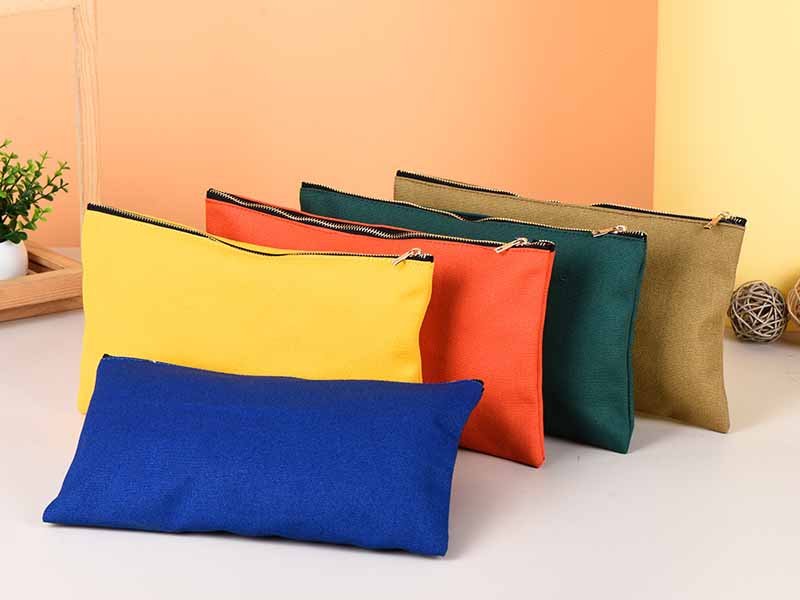
A pencil pouch is often treated as a small accessory, yet poor design becomes obvious within a few days of use. A zipper opening may be too narrow for scissors. A pouch may look spacious but lose much of its capacity to thick seams and poorly placed dividers. Thin fabric can allow sharpened pencils to damage the lining, while an oversized compartment forces users to search through a pile of pens, cables, erasers, and clips every time they need one item.
Pencil pouches used for school and office supplies include flat zipper, box-shaped, standing, roll-up, expandable, binder, and multi-pocket designs. Flat pouches suit light daily carry, while box and expandable models hold larger stationery sets. Standing pouches improve desk access, binder pouches stay with documents, and multi-pocket versions separate pens, cables, erasers, and small tools.
The best design begins with the supplies people actually carry. A primary school student, an art student, a traveling employee, and a graphic designer may all use pencil pouches, but their storage needs are completely different. One memorable product review described a beautiful pouch returned for a simple reason: the user’s 20-centimeter ruler could not pass through its 16-centimeter zipper opening. Small measurements can decide whether a product becomes an everyday favorite or ends up unused in a drawer.
What Are Pencil Pouches?
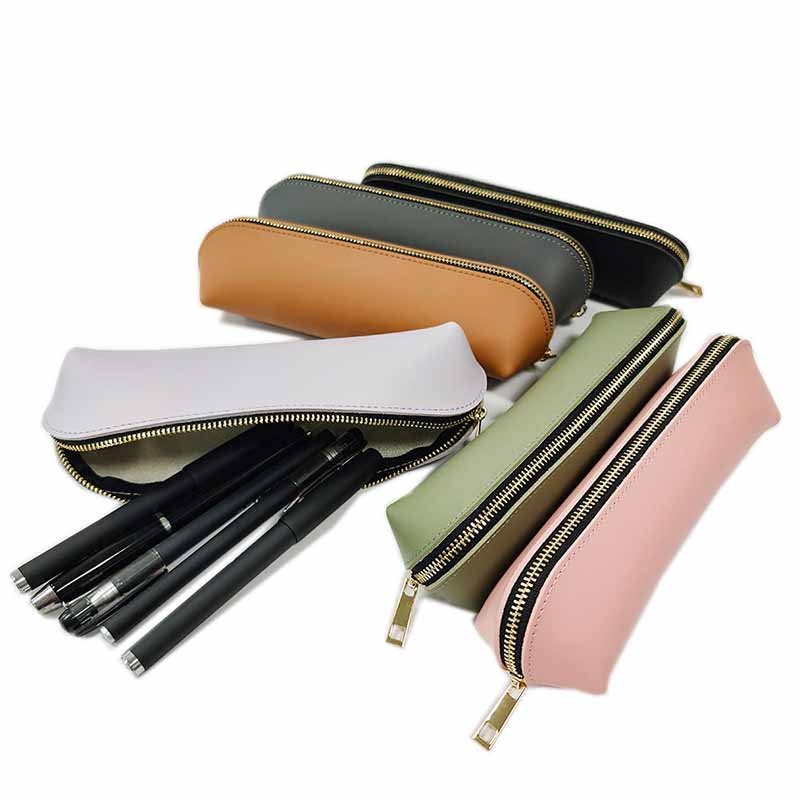
Pencil pouches are soft or semi-structured containers used to organize writing tools and other small supplies. Most designs use fabric, neoprene, mesh, nylon, polyester, canvas, PVC, or mixed materials. Their main advantages are flexible storage, low weight, easy portability, and the ability to fit inside backpacks, handbags, laptop bags, binders, lockers, and desk drawers.
Unlike a rigid case, a soft pouch can compress when partly empty and adapt to irregular items such as scissors, charging cables, correction tape, calculators, and sticky notes. Material thickness, opening length, internal layout, zipper quality, seam construction, and lining strength determine how well the pouch performs in daily use.
For product development, five questions should be answered before choosing a shape:
- Who will use the pouch?
- Which items must fit inside?
- Will it stay on a desk or travel inside another bag?
- Does it need cushioning, water resistance, visibility, or separate storage?
- Will the product be sold alone, packed with stationery, or supplied as part of a school or office kit?
A clear answer to those questions reduces unnecessary sample revisions and prevents a visually attractive design from failing during real use.
What Are Pencil Pouches Used For?
Pencil pouches keep frequently used supplies in one controlled space. Students commonly use them for pencils, pens, markers, erasers, sharpeners, scissors, glue sticks, rulers, geometry tools, sticky notes, and small calculators. Office users may carry pens, styluses, highlighters, charging cables, adapters, USB drives, memory cards, laser pointers, and identification accessories.
The pouch also protects other belongings. Pencil tips, metal clips, compass points, scissors, and leaking pens can scratch electronics, mark documents, or stain the inside of a backpack. A lined pouch creates a separate barrier between stationery and more valuable items.
Storage requirements change according to use:
| Use Group | Common Contents | Recommended Structure | Main Concern |
|---|---|---|---|
| Primary school | Thick pencils, crayons, eraser, sharpener, scissors | Box or wide-opening pouch | Easy access and washable surfaces |
| Secondary school | Pens, highlighters, ruler, geometry tools | Standard or multi-pocket pouch | Capacity without excessive bulk |
| Art and design | Markers, brushes, technical pens, pencils | Roll-up or large box pouch | Tool separation and visibility |
| General office | Pens, stylus, cable, USB drive | Flat or divided pouch | Slim shape and clean appearance |
| Travel and remote work | Stationery, adapters, cables, memory cards | Multi-pocket or expandable pouch | Secure storage for small electronics |
| Promotional programs | Pens, cards, small gifts, event materials | Flat or box pouch | Logo area and controlled unit cost |
A pencil pouch can also be developed as a multifunctional organizer. Removing obvious school graphics allows the same base structure to serve as a cable pouch, cosmetic pouch, tool organizer, travel pouch, or small medical accessory bag. Product teams planning a broader collection can use shared dimensions and construction while changing colors, prints, labels, and internal layouts.
Are Pencil Pouches and Cases Different?
Pencil pouches and pencil cases perform a similar job, but their construction is often different. Pencil pouches are usually made from flexible material and closed with a zipper. Pencil cases may include soft pouches, molded EVA shells, metal boxes, plastic cases, hinged containers, or other rigid structures.
A soft pouch offers several advantages:
- It becomes thinner when fewer items are carried.
- It weighs less than a hard-shell case.
- It fits more easily around books and devices inside a backpack.
- It accepts irregular items without requiring a fixed internal tray.
- It provides broad surfaces for printing, embroidery, patches, and labels.
A rigid case provides stronger crush resistance. Fountain pens, precision drawing tools, mechanical instruments, or sharpened art pencils may benefit from a hard outer shell. The trade-off is extra weight, fixed dimensions, and less flexibility when contents change.
Semi-structured pencil pouches sit between those two options. Neoprene, laminated fabric, foam-backed polyester, internal boards, piping, and reinforced bases can give a pouch more shape without turning it into a hard case. A 2–3 millimeter neoprene body, for example, provides soft cushioning and enough body for daily stationery while remaining foldable.
Product naming should not replace product testing. A supplier may call an item a “case” even when it is soft, or a “pouch” even when internal reinforcement makes it fairly rigid. Sourcing teams should confirm the following details from a sample:
- Empty weight
- Wall thickness
- Resistance to bending
- Recovery after compression
- Protection around corners
- Ease of zipper operation when full
- Internal space after lining and dividers are installed
Why Are Pencil Pouches Popular?
Pencil pouches remain popular because one compact product can serve schools, offices, universities, bookstores, museums, gift programs, art shops, technology companies, and promotional campaigns. The product is easy to understand, used frequently, and suitable for a wide range of colors and graphic styles.
Frequent use also creates lasting logo exposure. A pouch stored on a classroom desk or carried to work may be opened several times each day. Unlike disposable event materials, a well-made pouch can remain in use across several school terms or office projects.
Several commercial advantages support private label development:
- Compact products use less warehouse space than large bags.
- Flat and soft structures can reduce shipping volume.
- One construction can support several prints or colorways.
- Pouches can be sold separately or packed with stationery.
- Internal layouts can be adjusted for different age groups.
- Logo methods range from low-profile printing to premium patches.
- Matching lunch bags, laptop sleeves, bottle holders, and organizers can form a coordinated collection.
A simple product still requires careful cost control. Decorative parts, internal layers, zipper count, special pullers, printing coverage, lining, reinforcement, packaging, and inspection requirements all affect the final quotation. A pouch with three zippered sections can require far more sewing time than a single-compartment version of the same outer size.
For custom development, the most useful starting information includes finished dimensions, reference images, expected contents, desired material, logo artwork, color requirements, packaging, target quantity, and destination market. Szoneier can assist with structure development when only a sketch, product idea, or general use case is available.
Which Pencil Pouches Are Common?
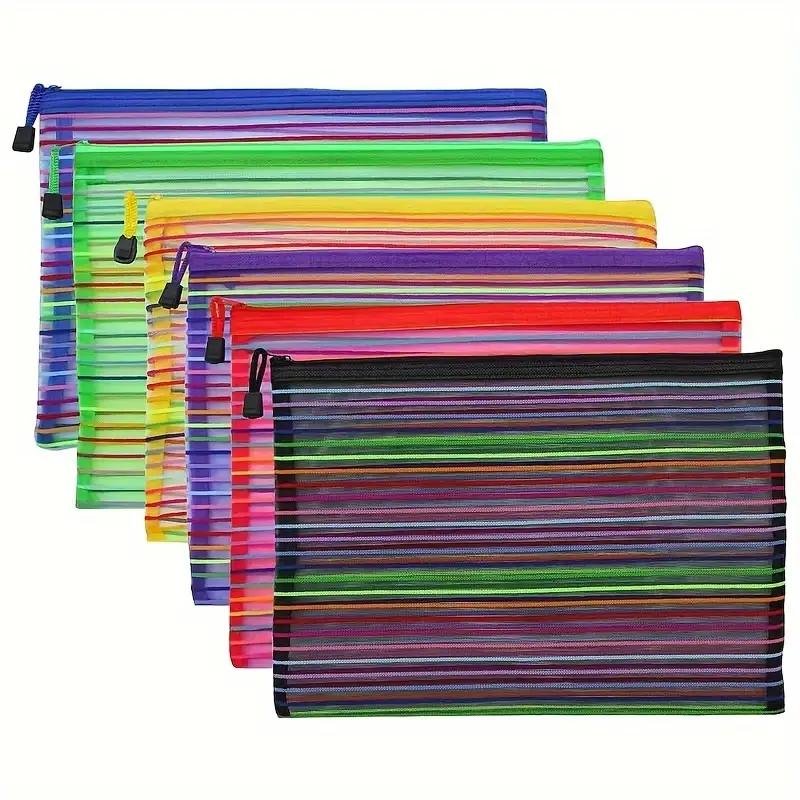
The most common pencil pouches are flat, box-shaped, standing, roll-up, expandable, binder, and multi-pocket designs. Each structure solves a different storage problem. Flat pouches reduce bulk, box pouches increase capacity, standing pouches improve desk access, roll-up pouches separate tools, expandable pouches adjust in volume, binder pouches stay with documents, and multi-pocket pouches organize mixed contents.
Selecting a structure should begin with internal use rather than exterior style. Product teams often compare length and width but overlook opening size, side depth, corner shape, zipper direction, lining thickness, and divider placement. Those details control how much of the stated volume can actually be used.
The dimensions below are development starting points. Final measurements should be tested with real stationery and adjusted for material thickness and sewing construction.
| Pencil Pouch Type | Suggested Finished Size | Approximate Load | Opening Style | Main Application |
|---|---|---|---|---|
| Flat | 19–22 × 7–10 cm | 6–15 slim items | Straight top zipper | Light school and office carry |
| Box | 20–23 × 8–11 × 6–9 cm | 20–40 mixed items | Long top or U-shaped zipper | Large school supply sets |
| Standing | 18–21 × 8–10 × 6–8 cm | 15–30 items | Pull-down upper section | Desk and classroom use |
| Roll-up | 20–35 cm open width | 8–24 tools | Strap, snap, or buckle | Art and technical tools |
| Expandable | 20–23 × 8–12 cm closed | 12–35 items | One or more expansion zippers | Changing daily loads |
| Binder | 20–25 × 9–16 cm | 6–18 items | Top or side zipper | School and project binders |
| Multi-pocket | 21–25 × 9–14 × 5–8 cm | 15–40 mixed items | Layered zipper openings | Stationery and electronics |
Capacity figures refer to mixed everyday items rather than identical pens. Thick markers, glue sticks, scissors, calculators, and charging plugs use more space than pencils. A capacity claim should therefore be supported by a photographed load test or a written list of items used during sampling.
Flat Pencil Pouches
Flat pencil pouches use two main body panels with a zipper positioned along the top or one curved edge. Some versions include a narrow bottom gusset, while very slim styles are made without depth panels. The structure is light, easy to pack, and suitable for users who carry only essential writing tools.
A useful finished size for office stationery often falls between 19 and 22 centimeters in length, 7 and 10 centimeters in height, and 1 and 4 centimeters in filled depth. A pouch shorter than 18 centimeters may not fit longer pens, small rulers, craft knives, or makeup brushes. A very tall flat pouch can hold more items but may force shorter tools to collect at the bottom.
Flat pouches work well for:
- Three to eight pens or pencils
- One or two highlighters
- A small eraser and sharpener
- A stylus and short charging cable
- USB drives and memory cards
- Name cards or slim office accessories
The front and back panels provide clear decoration areas. Screen printing, heat transfer, sublimation, embroidery, woven labels, rubber patches, and leather patches can all be considered according to material.
Neoprene is especially useful for flat pouches because cut panels can create a clean silhouette with fewer structural layers. A 2–3 millimeter construction adds light cushioning for styluses, cables, and metal pens. Bound edges create a more defined outline, while turned seams produce a softer appearance.
Points requiring sample review include zipper-end reinforcement, internal seam finishing, lining movement, logo alignment, and whether the pouch lies flat when empty. A zipper that extends too close to the side seam can create a weak corner. A zipper opening that is several centimeters shorter than the body may make longer items difficult to insert.
Box Pencil Pouches
Box pencil pouches use a three-dimensional body with a base, side depth, and a longer opening. They are intended for larger stationery loads, including markers, scissors, glue sticks, correction tape, rulers, geometry tools, calculators, and art accessories.
A common development range is 20–23 centimeters long, 8–11 centimeters high, and 6–9 centimeters deep. Even a small increase in depth changes capacity significantly. For example, increasing depth from 6 to 8 centimeters adds roughly one-third more body volume when length and height remain unchanged. The larger version may also occupy more desk and backpack space, so extra volume should solve a real storage need.
Important construction choices include:
- A straight zipper offers simple production and good top access.
- A U-shaped zipper exposes more of the interior.
- A double zipper allows access from either direction.
- A reinforced base improves standing stability.
- Internal boards help the walls stay upright.
- Soft foam or neoprene provides shape without a hard feel.
- Piping defines the edges but adds sewing operations.
Box pouches can include elastic pen loops under the lid, a mesh pocket along one wall, or a removable divider. Internal features should not take so much space that the main compartment becomes narrow.
Load distribution must also be considered. Heavy scissors and calculators placed on one side may cause the pouch to lean. A base that is too soft can sag, while an overly rigid base may feel bulky in a backpack.
During sampling, the pouch should be checked while empty, half full, and full. Corner symmetry, zipper movement, base flatness, and panel alignment become easier to judge under those three conditions.
Standing Pencil Pouches
Standing pencil pouches combine portable storage with a desk holder. The upper section pulls downward, folds, slides, or turns over so the stored pens become visible above the rim. After use, the upper section returns to its full height and closes for transport.
The main appeal is faster access. Users do not need to place the pouch horizontally or remove several tools to find a specific pen. The standing format works well for study desks, classroom tables, libraries, shared workstations, drawing classes, and compact home offices.
Successful standing designs require attention to balance. Recommended development checks include:
- The base should be wide enough to support a full load.
- The upper zipper should not make the pouch top-heavy.
- The pull-down section should move without catching the lining.
- Pens should remain visible without falling outward.
- The internal height should fit long pens when closed.
- The pouch should remain upright after repeated folding.
A base around 6–8 centimeters deep offers a useful starting point for medium-sized designs. Taller pouches may require a wider base or firmer lower panel. Thick markers and scissors change the center of gravity, so stability must be tested with the intended contents.
Neoprene supports standing constructions because it bends repeatedly without producing hard fold lines and provides enough body for a soft upright shape. Additional reinforcement may be inserted near the base when a sharper silhouette is required.
Logo placement should account for movement. A graphic positioned across the folding area may distort when the pouch is opened. Printing on the stable lower section or using a small woven label near the side seam often creates a cleaner result.
Roll-Up Pencil Pouches
Roll-up pencil pouches use a flat fabric panel fitted with individual sleeves, elastic loops, or divided pockets. Tools are arranged side by side, covered by an optional protective flap, rolled into a compact form, and secured with a tie, snap, hook-and-loop strap, or buckle.
Artists and technical users value the format because every tool has a visible position. Pencils do not rub together in a large compartment, and a missing item can be noticed before leaving a classroom, studio, workshop, or meeting room.
A roll-up layout must be developed around exact tool diameters. Standard wooden pencils need narrower channels than thick markers, paintbrush handles, fountain pens, or craft tools. One uniform slot size may waste space or fail to hold mixed tools securely.
Useful engineering points include:
- Pencil slots may be planned around slim writing tools.
- Wider channels can be added for markers and erasers.
- Elastic loops support varied diameters but lose tension if overstretched.
- A top flap prevents sharpened pencils from sliding out.
- Reinforcement at each divider seam reduces tearing.
- A washable inner layer helps control graphite and ink marks.
- Strap length must fit both a half-full and fully loaded roll.
Canvas and dense polyester are common because they hold divider stitching well. Neoprene can be used for padded roll-up organizers, especially for premium pens or small technical tools, but its thickness affects the final rolled diameter.
The closed product should be measured after loading. A roll that looks compact when empty may become too thick once 20 markers are inserted.
Expandable Pencil Pouches
Expandable pencil pouches increase storage through folding gussets, layered sections, adjustable panels, or secondary zippers. They serve users whose daily supply load changes across classes, projects, travel days, or work assignments.
A student may carry a small set of pens during regular lessons and add geometry tools or art supplies for another class. An office user may add a power adapter, presentation remote, or charging cable before traveling. Expansion allows one pouch to cover both situations.
Several expansion systems are available:
- A perimeter zipper releases an additional fabric gusset.
- A folded side panel opens to increase depth.
- A second compartment unfolds from the main body.
- An adjustable strap compresses a partly filled pouch.
- Layered zipper sections separate daily tools from occasional items.
Expansion should not reduce access. Some designs create extra volume but leave the same narrow top opening, making items at the bottom difficult to reach. Others become unstable after the gusset opens because the base no longer supports the wider body.
A development sample should be measured in both closed and expanded conditions. Product teams should record empty thickness, filled thickness, maximum zipper load, and whether the pouch fits its intended backpack pocket in both forms.
An expandable design also involves more components and sewing time than a flat pouch. Added cost should be justified by visible and useful storage rather than a decorative zipper with little volume gain.
Binder Pencil Pouches
Binder pencil pouches connect to two-ring, three-ring, four-ring, or other filing systems through punched holes, metal eyelets, reinforced tabs, or a detachable mounting strip. They keep supplies together with class notes, project documents, training materials, manuals, or event folders.
The hole spacing must match the intended market and binder format. Ring configurations differ by country, school system, and stationery category. A physical binder or confirmed technical drawing should be supplied before sampling. Relying on a generic “binder size” can lead to holes that do not align.
The mounting edge carries more stress than the rest of the pouch. Suitable reinforcement options include:
- Folded webbing
- Double-layer fabric
- Welded PVC strips
- Metal eyelets
- Bar-tacked tabs
- Removable snap-in panels
Clear PVC and mesh are widely used because contents remain visible. Opaque polyester, nylon, canvas, and neoprene versions offer more privacy and stronger visual branding.
A side zipper reduces the chance of items falling out when the binder stands upright, while a top zipper is easier to access on a desk. The final decision should follow the way the binder will be carried and opened.
Capacity must remain controlled. A heavily filled pouch can pull on binder rings, distort documents, and make the folder difficult to close. Slim contents such as pens, cards, sticky notes, and a small ruler are more suitable than bulky calculators or thick markers.
Multi-Pocket Pencil Pouches
Multi-pocket pencil pouches divide storage through zipper layers, mesh sleeves, pen loops, open pockets, removable panels, or internal dividers. They suit users carrying several categories of items, especially when stationery and small electronics share one pouch.
A useful layout may include one large compartment for pens and markers, one flat mesh pocket for erasers or sticky notes, and one small zippered section for USB drives or memory cards. More compartments are not always better. Every added pocket reduces open volume and increases material, labor, weight, and inspection points.
The layout should follow access frequency:
- Daily pens should remain near the main opening.
- Small loose items need enclosed pockets.
- Cables benefit from wider sections without narrow corners.
- Delicate pens should not rub against metal adapters.
- Flat rulers and notes fit well against an internal wall.
- Scissors need reinforced areas away from thin mesh.
Zipper colors or small printed icons can help users identify each section. Office collections may use subtle color differences, while school products can use brighter combinations.
Before approving the structure, a fully loaded sample should be opened on a desk and while held in one hand. Contents should remain secure in both positions. Internal sections must not collapse into each other or block the main zipper.
Multi-pocket pouches provide strong value when every section has a clear purpose. A complicated interior without a defined storage plan increases cost but may make daily use slower rather than easier.
Which Materials Work Best for Pencil Pouches?
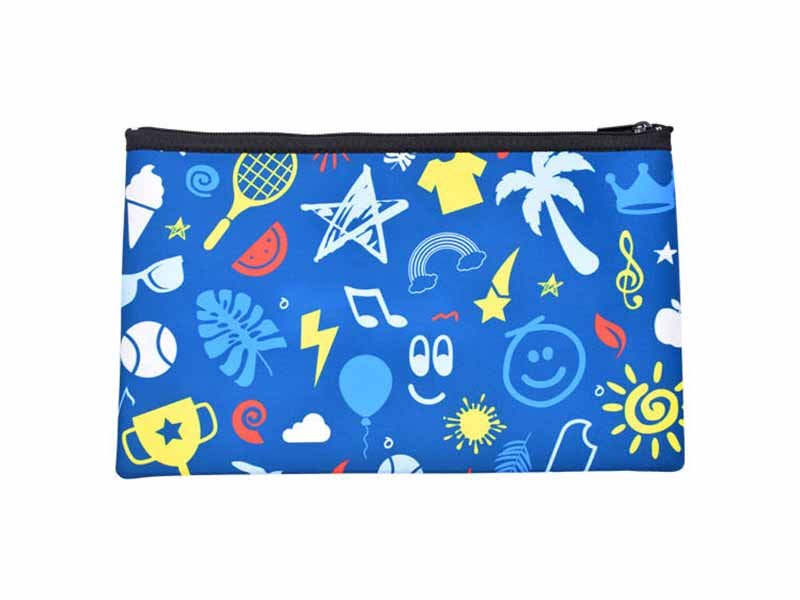
The best pencil pouch material depends on how the product will be used, how often it will be handled, what it must protect, and how the finished item should look. Neoprene offers cushioning and water resistance. Canvas provides a natural woven appearance. Nylon and polyester keep weight low while supporting daily use. Mesh and clear materials make stored items easier to see.
Material selection should not be based on appearance alone. Two pouches with the same dimensions can perform very differently because of fabric thickness, coating, stretch, lining, reinforcement, and zipper construction. A thin unlined pouch may feel light and inexpensive, while a laminated or padded version can hold its shape and protect contents more effectively.
For custom orders, the outer material is only one part of the product. The lining, zipper tape, thread, binding, foam, internal boards, mesh, labels, and printing method all affect performance and cost. A strong shell combined with a weak zipper will still create a poor product. A premium logo applied to a surface with poor adhesion may peel before the pouch itself wears out.
The table below compares common materials from a product development point of view.
| Material | Common Thickness or Weight | Water Resistance | Cushioning | Shape Retention | Cleaning | Suitable Applications |
|---|---|---|---|---|---|---|
| Neoprene | 2–4 mm | High | High | Medium to high | Wipe clean or gentle hand wash | School, office, electronics, premium gifts |
| Canvas | 8–16 oz | Low to medium | Low | Medium | Spot clean or gentle wash | Lifestyle, stationery, museum and retail collections |
| Nylon | 210D–600D | Medium to high | Low | Low to medium | Easy to wipe | School, travel, sports and technical styles |
| Polyester | 300D–600D | Medium to high | Low to medium | Medium | Easy to clean | Printed collections, office kits and promotions |
| Mesh | Fine or open weave | Low | Low | Low | Fast drying | Visible storage, classroom and exam use |
| PVC or TPU | 0.2–0.6 mm | High | Low | Medium | Very easy to wipe | Clear pouches, security and school programs |
| Foam-laminated fabric | 2–5 mm total | Medium to high | High | High | Depends on surface | Structured office and premium stationery pouches |
A suitable specification should balance performance with the target selling price. Increasing fabric thickness, adding lining, using more pockets, selecting custom zipper pullers, and applying full-surface printing all increase production cost. The most effective design spends money where users can feel the difference.
Neoprene Pencil Pouches
Neoprene pencil pouches are soft, flexible, water resistant, and naturally cushioned. The material is especially useful when pens, styluses, charging cables, adapters, memory cards, or small electronic accessories need protection from scratches and light impact.
Most pencil pouch projects use neoprene between 2 and 4 millimeters thick. The exact choice depends on pouch size, structure, hand feel, and desired protection.
A 2-millimeter neoprene pouch feels light and flexible. It works well for flat office pouches, promotional items, or slim stationery storage. A 3-millimeter material offers a stronger body and more noticeable cushioning. A 4-millimeter construction may be suitable for larger or more protective pouches, but it increases bulk and can make tight curves harder to sew cleanly.
Neoprene also offers several surface options:
- Polyester-faced neoprene supports sublimation and bright printing.
- Nylon-faced neoprene has a smoother technical appearance.
- Textured surfaces create a more distinctive tactile finish.
- Perforated neoprene improves airflow and creates a sporty look.
- Recycled-content options may be available for suitable projects.
- Different foam densities change softness and recovery.
For school use, neoprene helps reduce damage when a pouch is dropped or pressed against books. For office use, it gives the product a clean, modern appearance and protects premium pens or small electronics.
The material also hides minor dents better than hard plastic. When compressed inside a backpack, it usually recovers its shape after the pressure is removed. However, repeated folding at the same point can still create surface marks, especially on thicker material.
Important development checks include:
- Foam thickness consistency
- Surface lamination quality
- Odor control
- Color consistency
- Edge finishing
- Stretch around printed logos
- Seam strength under load
- Recovery after compression
Neoprene is often cut with bound edges, turned seams, or exposed clean-cut edges. Bound construction provides a defined outline and protects the foam edge. Turned seams create a softer look but add thickness inside the pouch. Exposed edges can look modern, although cutting quality must be controlled carefully.
Printing should be tested on the actual material. Sublimation is well suited to full-color patterns on polyester-faced neoprene. Screen printing works for bold logos and limited colors. Heat transfer supports detailed artwork, but temperature and pressure must be controlled to avoid damaging the foam or changing the surface texture.
Canvas Pencil Pouches
Canvas pencil pouches have a visible woven texture and a natural, casual appearance. They are widely used for stationery collections, museum gift shops, bookstores, art stores, lifestyle labels, and school programs that want a softer visual style.
Canvas weight is often described in ounces. Lighter canvas produces a flexible pouch, while heavier canvas creates more body. An 8-ounce fabric may suit a simple flat pouch. A 12-ounce canvas gives stronger structure. A 14- or 16-ounce material can feel substantial, but heavy fabric may become bulky around seams and corners.
Canvas can be made from cotton, cotton blends, recycled fibers, or synthetic blends. Each option changes color absorption, shrinkage, durability, and printing performance.
Important canvas considerations include:
- Untreated cotton absorbs water and stains more easily.
- Dark colors may show lint and abrasion marks.
- Light colors may show ink and pencil dust.
- Pre-washing can reduce later shrinkage.
- Coatings improve water resistance but change the hand feel.
- Dense weaves support cleaner printing than loose weaves.
- Heavy embroidery may require internal backing.
Canvas works well with screen printing, embroidery, woven labels, leather patches, and applique. Fine artwork should be reviewed carefully because the fabric texture can soften very small lines and text.
For office use, washed canvas combined with neutral colors, antique metal zippers, and a small woven label can create a relaxed premium look. For school programs, coated canvas or a washable lining improves stain control.
Canvas is durable, but the corners and zipper ends still require reinforcement. When the pouch is heavily filled, stress can concentrate where the zipper meets the side seam. Double stitching, wider seam allowance, and small reinforcement patches can improve performance.
A lined canvas pouch generally feels more finished than an unlined version. The lining hides raw seams, protects the outer fabric from ink, and makes internal cleaning easier. Polyester lining is commonly used because it is lightweight and available in many colors.
Nylon Pencil Pouches
Nylon pencil pouches are lightweight, strong, and resistant to abrasion. The material is suitable for school supplies, travel organizers, sporty collections, technical office accessories, and products expected to experience frequent handling.
Nylon specifications may range from lightweight 210D fabric to heavier 420D or 600D constructions. Denier describes yarn thickness, but it does not fully determine performance. Weave density, coating, finishing, and fabric quality also matter.
Common nylon options include:
- 210D nylon for lightweight pouches
- 420D nylon for balanced strength and flexibility
- 600D nylon for a heavier, more structured feel
- Ripstop nylon for tear control and outdoor styling
- Coated nylon for improved water resistance
- Crinkle nylon for a softer lifestyle appearance
Nylon handles abrasion well, making it useful for pouches carried inside backpacks with books, laptops, and metal accessories. It also dries quickly and can be wiped clean.
The material may feel too soft if used without lining or reinforcement. A flat office pouch may not need additional structure, but a box-shaped or standing pouch often benefits from foam, interlining, piping, or a reinforced base.
Logo application requires testing. Some coatings resist ink or heat-transfer adhesive. Screen printing may work well on smooth surfaces, while woven labels, rubber patches, or stitched badges are safer for heavily textured or coated fabrics.
Needle size and thread tension should match the fabric. Very fine nylon can show needle damage if sewn with oversized needles. Heavy nylon can pucker if the thread tension is not balanced.
For children’s products, sharp internal items should be considered. A thin nylon lining may be punctured by compass points or scissors. A stronger lining, protective sleeve, or reinforced base can reduce wear.
Polyester Pencil Pouches
Polyester pencil pouches are versatile, stable, and suitable for a wide range of printing and construction methods. Polyester is often chosen for school collections, corporate gifts, full-color promotional products, office kits, and mass retail programs.
The material is available in smooth, textured, Oxford, twill, microfiber, and coated forms. Common specifications include 300D, 420D, and 600D polyester.
Polyester offers several production advantages:
- Good color consistency
- Broad availability
- Strong printing compatibility
- Low moisture absorption
- Easy cleaning
- Stable dimensions
- Suitable performance across many climates
- Good balance between cost and durability
Sublimation printing is a major advantage when full-surface graphics are required. Detailed patterns, gradients, repeated illustrations, and multi-color artwork can be transferred onto suitable white polyester before sewing.
For private label collections, sublimation allows several visual themes to use the same construction. A school collection might use animals, geometric patterns, sports graphics, or school colors while keeping size, lining, zipper, and packaging consistent.
Polyester can be laminated with foam to create a more structured pouch. This is useful for box, standing, and multi-pocket designs. A 2- or 3-millimeter foam layer adds body and cushioning without requiring a hard shell.
Lower-grade polyester may feel stiff, shiny, or noisy. Surface samples should be compared before confirming bulk fabric. Water resistance also depends on coating. Standard polyester may resist minor splashes, but it should not be described as waterproof unless the fabric, seams, and zipper construction support that claim.
Mesh Pencil Pouches
Mesh pencil pouches allow users to see stored items without opening every compartment. They are useful for classrooms, examination supplies, art materials, office drawers, craft tools, and travel accessories.
Mesh can be used as the main body or as an internal pocket. Fine mesh contains small objects such as erasers, clips, and memory cards more effectively. Open mesh improves airflow but may allow pencil tips and metal clips to catch.
Common mesh design choices include:
- Fine polyester mesh for internal pockets
- Open sports mesh for ventilation
- Transparent monofilament mesh for visible storage
- Padded mesh for soft divider panels
- Reinforced mesh combined with fabric borders
A fully mesh pouch is light and easy to inspect, but it provides little protection from ink leaks, dust, or sharp items. For that reason, many products combine mesh with solid fabric around the base, zipper, corners, and side panels.
Mesh also has limited space for large printed logos. Branding may be added through a woven label, rubber patch, printed fabric panel, or colored binding.
For school or examination use, transparency requirements may influence the design. Some institutions prefer contents to remain visible, but rules vary. A clear or mesh pouch should therefore be developed around the intended market rather than promoted as universally approved.
Quality checks should include:
- Mesh opening consistency
- Edge reinforcement
- Resistance to snagging
- Stitching around zipper tape
- Recovery after stretching
- Visibility of small stored items
- Cleaning and drying performance
Clear Pencil Pouches
Clear pencil pouches are made from PVC, TPU, or other transparent sheet materials. They are popular when quick visual inspection, organization, or product display is important.
PVC is widely used because it is clear, economical, and easy to wipe. TPU can provide a softer hand and better flexibility, depending on the grade. Material thickness commonly ranges from 0.2 to 0.6 millimeters.
Thinner clear material feels light but may wrinkle and collapse. Thicker material provides more body but increases weight and stiffness. Cold-weather performance should also be considered because some low-grade materials become hard or brittle at low temperatures.
Clear materials show details that opaque fabric hides. Scratches, fingerprints, dust, uneven stitching, and trapped particles become more visible. Production handling therefore needs to be cleaner and more controlled.
Common construction methods include:
- Sewn clear panels with fabric binding
- Heat-welded clear panels
- Clear front panel with fabric back
- Transparent body with colored zipper tape
- Clear internal pockets inside an opaque pouch
Branding can be printed directly on the surface or added through edge labels, woven tabs, rubber patches, or colored panels. Small logos often work better than large opaque prints because they preserve visibility.
For retail packaging, clear pouches can display included stationery. This makes them useful for pen sets, school kits, craft supplies, and promotional packs.
Material compliance, odor, flexibility, and plasticizer requirements should be confirmed according to the destination market and intended age group.
How Do You Choose Pencil Pouches?
Choose pencil pouches by matching the structure, material, size, opening, compartments, and protection level to the intended contents and daily environment. School pouches usually need stronger seams, easier cleaning, and higher capacity. Office pouches often require a slimmer profile, organized storage, and a more refined appearance.
The selection process should begin with a physical item list. Product teams should place all expected contents on a table and group them by length, thickness, and frequency of use. This gives a more accurate picture than choosing dimensions from a catalog.
The longest item determines minimum internal length. The thickest item affects depth. The total number of items determines whether one compartment is enough. The most frequently used tools should remain closest to the opening.
A useful product brief should include:
- Intended user age or occupation
- Main use environment
- Exact item list
- Longest stored item
- Approximate total load
- Preferred material
- Required water resistance
- Cleaning expectations
- Logo method
- Packaging format
- Order quantity
- Destination market
The table below shows how storage needs change across different use cases.
| Use Case | Suggested Size | Recommended Material | Suggested Layout | Important Check |
|---|---|---|---|---|
| Basic school pouch | 20 × 8 × 4 cm | Polyester or neoprene | One main compartment | Easy opening and stain resistance |
| Large school organizer | 22 × 10 × 7 cm | 600D polyester or neoprene | Main section plus mesh pocket | Capacity and seam strength |
| Art supply pouch | 23 × 12 × 8 cm | Canvas or polyester | Dividers and elastic loops | Marker diameter and visibility |
| Slim office pouch | 19 × 7 × 3 cm | Neoprene or fine nylon | Main section plus flat pocket | Laptop bag fit |
| Tech and stationery pouch | 22 × 10 × 5 cm | Neoprene or padded polyester | Separate cable and pen zones | Scratch protection |
| Corporate gift pouch | 20 × 8 × 4 cm | Neoprene, canvas, or polyester | Simple clean interior | Logo finish and packaging |
Dimensions should be treated as starting points. Final size must be confirmed through sampling with actual contents.
Pencil Pouches for School
School pencil pouches should be easy to open, durable under repeated handling, simple to clean, and large enough for the required stationery without becoming too bulky.
Primary school students often carry thick pencils, crayons, glue sticks, scissors, sharpeners, and erasers. These items need more depth than slim pens. Wide openings and bright lining colors help younger users see the contents.
Secondary school students may carry more pens, highlighters, geometry tools, calculators, and sticky notes. A medium box pouch or multi-pocket design may work better than a simple flat pouch.
Important school design points include:
- Rounded corners reduce sharp visual edges.
- Wide zipper openings improve access.
- Double zipper sliders help larger pouches open quickly.
- Reinforced zipper ends resist repeated pulling.
- Dark or printed linings hide pencil marks.
- Water-resistant outer fabric supports easier cleaning.
- Name-label areas help identify the owner.
- Internal mesh pockets control small erasers and sharpeners.
- Strong base panels resist wear from scissors and compass points.
Young users often overfill pouches. The zipper and top seam should therefore be tested under higher-than-normal load. A pouch that closes comfortably with 20 items should also be checked with 25 or 30 items to identify weak points.
School products may also need age-appropriate safety considerations. Long cords, detachable small parts, metal decorations, sharp zipper pullers, and loose accessories should be reviewed carefully.
Color combinations should remain consistent across bulk production. Bright materials from different suppliers can vary significantly, so body fabric, zipper tape, binding, and thread should be approved together.
Pencil Pouches for Office
Office pencil pouches usually require a cleaner shape, lower bulk, and a more controlled internal layout. The contents may include stationery and small technology accessories rather than only pens and pencils.
Common office contents include:
- Two to four pens
- One mechanical pencil
- One highlighter
- One stylus
- One short charging cable
- One USB drive
- One presentation remote
- One small adapter
- Business cards or sticky notes
A slim neoprene or nylon pouch works well when the product is stored inside a laptop bag. A padded multi-pocket design may be better for traveling employees who carry cables and adapters.
Office users often care about noise and surface protection. Metal pen clips, USB drives, and charging plugs can scratch each other. Soft dividers, elastic loops, or separate sleeves reduce contact.
Neutral colors such as black, navy, gray, olive, and beige are common, but brand colors can be introduced through zipper tape, lining, pullers, labels, or interior accents.
For corporate gift programs, packaging matters. A simple paper sleeve may suit high-volume events. A recyclable box can create a stronger presentation for employee onboarding kits. A pouch combined with a notebook, pen, and charging cable can form a complete welcome set.
Logo size should remain proportional to the pouch. Large logos may make a professional product feel promotional. Small embroidery, woven labels, debossed patches, or subtle screen printing often create a more refined result.
Pencil Pouches by Size
Pencil pouch size should be based on usable internal dimensions rather than exterior measurements alone. Seam allowance, lining, foam, dividers, and curved corners all reduce space.
The longest item determines the minimum internal length. A standard wooden pencil is usually around 17.5 to 19 centimeters long. Many rulers, markers, brushes, and craft tools are longer. A finished pouch measuring 20 centimeters externally may provide less than 19 centimeters of internal space after sewing.
A reliable size review should measure:
- Exterior length
- Interior usable length
- Zipper opening length
- Exterior height
- Interior usable height
- Base depth
- Filled depth
- Maximum comfortable load
- Maximum zipper load
The table below offers practical size references.
| Size Class | Approximate Finished Dimensions | Suggested Capacity | Suitable Use |
|---|---|---|---|
| Mini | 16–18 × 5–7 cm | 3–6 items | Small office essentials |
| Compact | 18–20 × 6–8 cm | 6–12 items | Pens, stylus, USB drive |
| Standard | 20–22 × 8–10 cm | 12–20 items | Daily school and office use |
| Large | 22–25 × 10–14 cm | 20–35 items | Art and mixed supplies |
| Extra-large | 24–28 × 12–16 cm | 35+ items | Markers, calculators and tool sets |
Capacity should be stated with a defined load. “Holds 30 pens” is clearer than “large capacity,” but even that claim needs context because marker thickness varies.
Product samples should be tested in three conditions:
- Lightly filled
- Normally filled
- Fully loaded
The pouch should remain easy to close and comfortable to carry in all three states.
Pencil Pouches by Storage
Storage layout should follow actual user behavior. Frequently used tools should be easy to reach. Small loose items need enclosed pockets. Delicate items should be separated from hard metal accessories.
One large compartment offers the greatest flexibility. It is also easier and less expensive to manufacture. The weakness is that smaller objects settle at the bottom.
A multi-pocket layout improves organization but reduces open volume. Internal layers, zipper tape, seam allowance, and divider panels consume space.
Useful storage options include:
- Main open compartment
- Flat slip pocket
- Zipper mesh pocket
- Elastic pen loops
- Removable divider
- Cable strap
- Ruler sleeve
- Name card pocket
- Small coin or USB pocket
A balanced school pouch may use one large compartment, one mesh pocket, and four elastic loops. An office pouch may use one pen section, one cable section, and one small enclosed pocket.
Pocket dimensions should match the item. A USB pocket should not be so deep that the device becomes difficult to remove. A ruler sleeve should not block the zipper. Elastic loops should hold items securely without requiring excessive force.
The best internal layout feels simple because every section has a clear purpose.
Pencil Pouches by Durability
Pencil pouch durability depends on the complete construction. Fabric strength matters, but zipper quality, seam allowance, thread, reinforcement, lining, binding, and workmanship often determine where failure begins.
High-stress areas include:
- Zipper ends
- Side corners
- Base corners
- Handle attachment points
- Binder holes
- Internal divider seams
- Logo patches
- Pull-down sections on standing pouches
Zipper ends should be reinforced because users often pull the pouch open with one hand while holding the body with the other. Weak top corners may split after repeated use.
A stronger zipper does not solve every problem. If the zipper tape is sewn too close to the fabric edge, the seam may tear. If the lining is loose, it may catch in the slider.
Durability testing can include:
- Repeated zipper opening and closing
- Loaded seam pulling
- Drop testing with contents
- Abrasion checks
- Colorfastness checks
- Compression recovery
- Handle pull tests
- Internal puncture review
- Logo adhesion checks
For a school pouch, repeated opening is especially important. A product may be opened more than ten times per day. Across a school year, this creates thousands of zipper cycles.
For an office pouch, surface appearance may matter as much as structural strength. Pilling, scratches, fading, and logo wear can make a product look old even when it remains functional.
Pencil Pouches by Cleaning Needs
Cleaning requirements should be considered before materials and colors are confirmed. Pencil pouches collect graphite dust, ink marks, food stains, hand oils, and dirt from desks, floors, backpacks, and travel.
Neoprene and coated polyester can usually be wiped with a damp cloth. Some neoprene pouches can also be gently hand washed, depending on printing, lining, and accessories.
Canvas may require spot cleaning or gentle washing. Untreated cotton can shrink or fade. Dark canvas hides ink better but may show dust. Light canvas looks clean when new but shows stains more quickly.
Nylon and polyester are generally easier to maintain. Coated surfaces resist minor spills and dry quickly.
Clear PVC and TPU are easy to wipe but show fingerprints and scratches. Strong solvents should be avoided because they may cloud or damage the surface.
Cleaning instructions should match the finished product rather than the raw fabric alone. A washable outer material does not guarantee that the entire pouch is machine washable. Internal boards, foam, metal parts, embroidery backing, and printed logos may require gentler care.
Useful care instructions may include:
- Wipe clean with a damp cloth
- Use mild soap only
- Do not bleach
- Do not machine dry
- Air dry away from direct heat
- Do not iron printed areas
- Empty all compartments before cleaning
Clear instructions reduce product damage and help users keep the pouch in service longer.
How Are Pencil Pouches Customized?
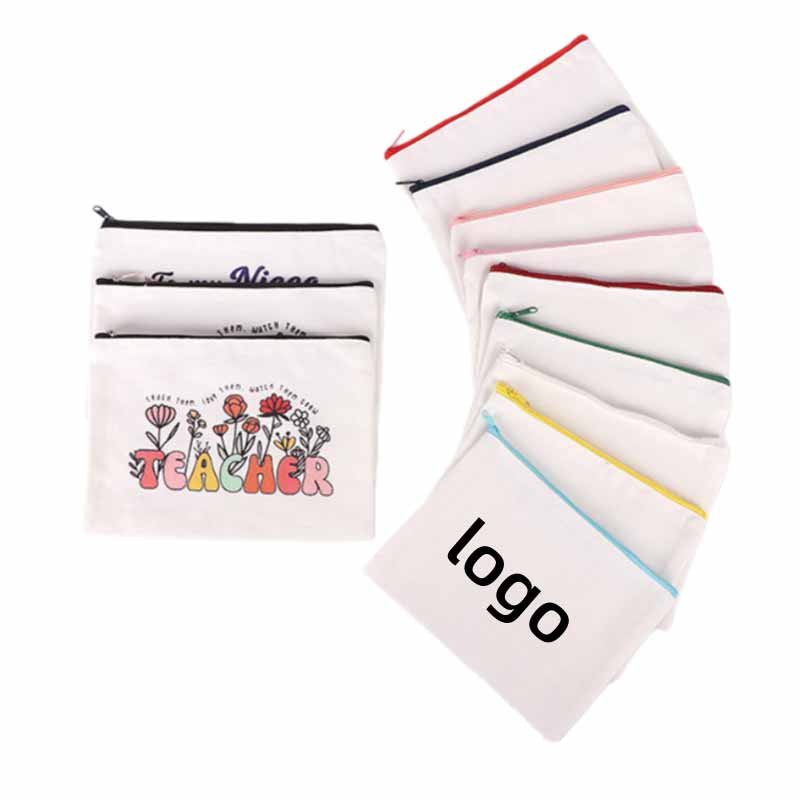
Pencil pouches can be customized through size, shape, neoprene thickness, outer fabric, lining, compartments, zipper type, colors, logo process, accessories, packaging, and inspection standards. A well-developed custom pouch begins with the intended contents and use environment, then moves through structure planning, material selection, artwork placement, physical sampling, load testing, revisions, and bulk production.
Custom development should solve a clear storage problem. A school pouch may need space for thick markers, scissors, rulers, and sharpeners. An office pouch may need separate areas for pens, charging cables, USB drives, and adapters. A promotional pouch may require a large printing area and packaging that fits an event kit. These products may look similar from the outside, but their internal dimensions, materials, reinforcement, and logo methods can be very different.
The most useful starting information includes:
- Finished size or reference dimensions
- Product photos, sketches, or drawings
- Intended contents
- Required capacity
- Preferred material
- Neoprene thickness
- Main body color
- Lining color
- Logo artwork
- Compartment requirements
- Zipper style
- Packaging method
- Expected order quantity
- Destination market
- Required delivery date
When a complete technical file is not available, a factory can develop the first structure from a reference photo, hand sketch, existing sample, or written product description. However, the intended contents should still be listed clearly. A statement such as “large pencil pouch” gives limited direction. A list such as “twelve pens, six markers, one 20-centimeter ruler, scissors, eraser, and charging cable” allows the development team to calculate a much more useful internal layout.
The table below shows how major customization decisions affect the final product.
| Custom Item | Main Options | Effect on Product | Main Point to Confirm |
|---|---|---|---|
| Shape | Flat, box, standing, roll-up, expandable | Controls capacity and appearance | How the pouch will be opened and carried |
| Size | Compact, standard, large, custom | Controls usable storage | Longest and thickest stored items |
| Neoprene thickness | 2 mm, 3 mm, 4 mm | Changes cushioning and bulk | Required protection and hand feel |
| Compartments | Open, mesh, elastic, zippered | Improves organization | Which items need separation |
| Zipper | Single, double, U-shaped, waterproof-style | Changes access and cost | Opening width and daily use frequency |
| Logo | Print, transfer, sublimation, embroidery, patch | Changes visual effect | Material compatibility and artwork detail |
| Lining | Polyester, nylon, brushed fabric, mesh | Changes cleaning and protection | Ink resistance and surface protection |
| Packaging | Polybag, sleeve, box, display card | Changes presentation and shipping volume | Retail, gift, or online sales use |
Custom Pencil Pouches Shapes
Custom pencil pouch shapes should be selected according to storage capacity, opening access, packing efficiency, and visual direction. Decorative shapes can attract attention, but the pouch must still hold common school or office supplies comfortably.
Flat rectangular pouches are the simplest option. They use fewer panels, require less sewing, and provide broad front and back surfaces for logos. They work well for compact school kits, office stationery, and promotional programs.
Box-shaped pouches provide more internal volume. Their rectangular base allows scissors, markers, correction tape, and calculators to sit more naturally. They also offer more room for internal pockets, although additional panels and corners increase sewing complexity.
Curved pouches create a softer appearance. Rounded top edges can suit children’s products, cosmetic-style stationery pouches, or lifestyle collections. Curves should be wide enough for smooth zipper installation. Tight curves may cause zipper waves or uneven panel alignment.
Triangular and trapezoid shapes can stand more securely on a desk. A wider base improves stability, while a narrower top reduces unnecessary bulk. These designs often work well for standing pouches and desk organizers.
Character-inspired pouches may include ears, fins, tails, or shaped patches. Decorative extensions should be firmly attached and positioned away from the zipper path. Small detachable parts may be unsuitable for younger users.
A custom shape should be reviewed from four positions:
- Empty and lying flat
- Empty and standing
- Half filled
- Fully loaded
A pouch may look balanced when empty but twist after being filled. Physical testing is necessary before approving the structure.
Custom Pencil Pouches Sizes
Custom pencil pouch size should be developed from usable internal space rather than exterior measurements alone. Neoprene thickness, seam allowance, lining, zipper tape, internal pockets, and curved corners reduce the available storage area.
For a flat pouch, the internal length should normally exceed the longest stored item by at least 1–2 centimeters. This allowance helps users insert and remove pens without forcing them through the zipper opening.
For box and standing pouches, the base depth must support the stored volume. A pouch designed for twenty slim pens needs less depth than one designed for markers, scissors, glue sticks, and a calculator.
Useful measurements include:
- Exterior length
- Exterior height
- Exterior depth
- Internal usable length
- Internal usable height
- Internal base width
- Zipper opening length
- Maximum filled thickness
- Finished product weight
A sample load should be prepared before final dimensions are approved. The same items should be used during each revision so changes can be compared accurately.
For example, a school pouch may be tested with:
- 10 wooden pencils
- 5 markers
- 2 highlighters
- 1 eraser
- 1 sharpener
- 1 pair of scissors
- 1 glue stick
- 1 short ruler
An office pouch may be tested with:
- 3 pens
- 1 mechanical pencil
- 1 highlighter
- 1 stylus
- 1 charging cable
- 1 USB drive
- 1 small adapter
- 1 presentation remote
Testing with actual contents also helps determine whether internal elastic loops are needed or whether one open compartment would be more useful.
Custom Pencil Pouches Colors
Custom pencil pouch colors involve more than choosing one digital color value. Neoprene, zipper tape, lining, binding, thread, webbing, mesh, rubber patches, and printed ink can all show the same color differently.
A complete color plan should identify:
- Main body color
- Secondary panel color
- Zipper tape color
- Zipper slider color
- Puller color
- Lining color
- Thread color
- Binding color
- Logo colors
- Packaging colors
For school products, high-contrast combinations can make the pouch easier to identify inside a backpack. Bright lining colors also improve visibility when users search for small items.
For office products, darker or neutral outer colors often feel more controlled. Black, gray, navy, olive, beige, and deep blue are commonly paired with small color accents on the zipper or lining.
Dark linings help hide ink marks, but very dark interiors can make black pens and cables harder to find. Medium gray, blue, or printed lining can balance stain control with visibility.
Color matching should be checked under more than one light source. A shade may appear different under daylight, office lighting, and photography lights. Physical material swatches are more reliable than screen images.
For printed neoprene pouches, artwork should include bleed around the panel edges. This prevents unprinted white lines from appearing when panels are cut and sewn. Repeated patterns also need careful alignment across front, back, side, and bottom panels.
Custom Pencil Pouches Compartments
Custom compartments should be added only when they improve access, protection, or organization. More pockets increase sewing time and cost, so every internal section should have a clear use.
A simple pencil pouch may need only one main compartment. This keeps the product flexible and allows users to store items of different sizes.
A more organized pouch may include:
- Elastic pen loops
- Flat slip pocket
- Mesh zipper pocket
- Cable strap
- Ruler sleeve
- Small enclosed pocket
- Removable divider
- Name card sleeve
- Key clip
- Calculator section
Elastic loops should be planned around actual tool diameter. A loop suitable for a wooden pencil may be too tight for a marker. Wider loops can hold thick tools but may not secure slim pens.
Mesh pockets help users see small items. The mesh should be fine enough to contain paper clips, memory cards, erasers, and pencil leads. Pocket openings should also be positioned so contents do not spill when the main pouch is opened.
Zippered internal pockets are useful for USB drives, coins, memory cards, or small personal items. The zipper slider should not scratch stored pens or electronics.
Dividers can separate stationery from cables. Soft dividers made from neoprene or foam-laminated fabric reduce contact between metal objects. Rigid dividers improve structure but add weight and may reduce flexibility.
The internal layout should be tested with the pouch held upright, placed flat, and opened on a desk. Items should remain secure in all three positions.
Custom Pencil Pouches Zippers
The zipper is one of the most frequently used components on a pencil pouch. A poor zipper can make a good material and attractive design feel unreliable.
Custom zipper options include:
- Single slider
- Double slider
- Straight top zipper
- Curved zipper
- U-shaped opening
- Reverse coil zipper
- Waterproof-style zipper
- Metal zipper
- Nylon coil zipper
- Molded plastic zipper
Nylon coil zippers are flexible and work well around curves. Molded plastic zippers create a stronger visual appearance and may suit sporty or children’s products. Metal zippers can feel premium but add weight and may scratch nearby electronics.
Double sliders improve access on larger pouches. Users can open the pouch from either direction, and a U-shaped opening can expose more of the interior.
Zipper size should match the pouch. A very large zipper can overpower a slim office pouch. A small zipper may feel weak on a heavily loaded school organizer.
Pullers can be customized through:
- Fabric loops
- Neoprene tabs
- Rubber pullers
- Metal pullers
- Woven straps
- Molded logo pullers
- Cord loops
Long pullers are easier for children and users wearing gloves, but loose cords should be reviewed for age suitability and product safety.
During sampling, the zipper should be tested when the pouch is empty, normally filled, and overfilled. The slider should move smoothly without catching the lining or pulling the body panels out of shape.
Custom Pencil Pouches Logos
Logo selection should match the material, artwork, expected use, and desired visual effect. The most expensive logo method is not always the best one. A simple one-color print can look cleaner than a large decorative patch when the pouch design is minimal.
Common logo methods include:
| Logo Method | Best Use | Main Advantages | Main Limitations |
|---|---|---|---|
| Screen printing | Bold logos and text | Clear color, efficient for larger orders | Limited fine gradients |
| Heat transfer | Detailed graphics | Sharp artwork and several colors | Requires adhesion testing |
| Sublimation | Full-color neoprene or polyester | Large patterns and edge-to-edge graphics | Requires suitable light-colored surface |
| Embroidery | Premium textile appearance | Strong texture and durability | Small text may lose clarity |
| Woven label | Side seam or small logo | Clean and flexible | Limited display size |
| Rubber patch | Sporty or technical design | Raised surface and strong color | Adds thickness |
| Leather patch | Lifestyle and office products | Refined appearance | Needs careful material selection |
| Metal plate | Premium gift programs | Strong visual impact | Adds weight and scratch risk |
| Custom puller | Subtle logo detail | Functional and distinctive | Requires component development |
Logo placement should avoid high-fold and high-friction areas. A printed logo placed across a standing pouch fold may crack or distort. An embroidered logo near a thick corner seam may pull the fabric unevenly.
Logo size should also consider viewing distance. A school collection may support larger graphics. An office pouch may benefit from smaller and more restrained branding.
Artwork files should preferably be supplied in vector format. Clear color references should also be provided. Very small text, thin lines, and narrow gaps may need adjustment depending on the selected process.
A logo sample should be reviewed for:
- Correct size
- Correct position
- Color accuracy
- Edge clarity
- Adhesion
- Embroidery density
- Surface distortion
- Resistance to rubbing
- Appearance after the pouch is filled
Custom Pencil Pouches Packaging
Packaging should protect the pouch, present the product clearly, and fit the intended sales channel. Excessive packaging increases cost and shipping volume, while insufficient packaging may allow dust, scratches, or deformation.
Common packaging options include:
- Individual polybag
- Recycled plastic bag
- Paper sleeve
- Printed card
- Hanging card
- Kraft box
- Color box
- Gift box
- Stationery set packaging
- Master carton only
A simple polybag protects the product during shipping and suits online orders or bulk school programs. A paper sleeve allows key product information to remain visible while reducing plastic use.
Hanging cards work well for retail stores when the pouch needs to be displayed on hooks. The card size and hole position should support the filled product weight.
Boxes add presentation value but increase unit cost and carton volume. They may be more suitable for corporate gifts, premium stationery collections, or bundled sets.
Packaging information may include:
- Product name
- Material
- Dimensions
- Care instructions
- Barcode
- Country of origin
- Warning information
- Brand story
- Website
- Recycling marks
The filled pouch and packaging should be tested together. A soft pouch may become compressed in a tight box, while a loose package may allow the product to move and wrinkle.
Custom Pencil Pouches Samples
Sampling allows the structure, size, materials, logo, capacity, and workmanship to be checked before bulk production. Digital drawings can show dimensions and appearance, but they cannot fully confirm hand feel, zipper movement, internal access, or loaded shape.
The sample development process usually follows these stages:
| Stage | Main Work | Main Output |
|---|---|---|
| Requirement review | Confirm use, size, contents, material, logo, quantity | Development brief |
| Structure planning | Prepare construction and panel layout | Drawing or pattern |
| Material selection | Confirm neoprene, lining, zipper, trims | Material set |
| Logo testing | Check print, transfer, embroidery, or patch | Logo sample |
| First sample | Sew complete pouch | Physical prototype |
| Load test | Insert intended supplies and check use | Capacity review |
| Revision | Adjust dimensions, pockets, logo, or zipper | Updated sample |
| Approval | Confirm final construction and appearance | Production reference |
The first sample should be reviewed with a written checklist. Comments should be measurable and specific.
Useful revision instructions include:
- Increase pouch length by 15 millimeters.
- Widen the zipper opening by 20 millimeters.
- Move the logo 8 millimeters upward.
- Reduce the base depth by 10 millimeters.
- Add a reinforced layer under the scissors section.
- Change the internal pocket from open to zippered.
- Increase elastic loop width for thick markers.
- Replace the metal puller with a soft rubber puller.
A complete approval record should include photographs, confirmed dimensions, materials, colors, logo size, logo position, accessories, packaging, and signed sample status.
Szoneier supports free design assistance, rapid sampling, free sample support for suitable projects, low-MOQ customization, and OEM or ODM development. These services are useful for companies developing a new pencil pouch structure or adding stationery organizers to an existing product collection.
Custom Pencil Pouches Production
Bulk production should follow the approved sample and confirmed specification. Materials, colors, components, printing files, and packaging should be checked before cutting begins.
Main production stages include:
- Raw material inspection
- Neoprene lamination or fabric preparation
- Printing or logo application
- Panel cutting
- Pocket preparation
- Zipper preparation
- Main body sewing
- Edge binding or seam finishing
- Thread trimming
- Shape correction
- Final inspection
- Packaging
- Carton loading
Printed panels should be checked before cutting. Incorrect scaling or placement becomes difficult to correct after sewing.
Cutting accuracy is especially important for box and standing pouches. Small differences between panels can cause twisted bodies, uneven corners, and misaligned zippers.
During sewing, operators should control seam allowance consistently. Neoprene and foam-laminated materials can become thick where several layers meet. Machine settings, needle type, thread tension, and binding width should match the material.
Production should also protect light-colored surfaces from dirt and oil. Clear PVC and pale neoprene can show handling marks more easily than dark fabric.
A pre-production sample made with bulk materials can help confirm that production fabric, zipper colors, printing, and packaging match the approved design.
How Is Pencil Pouch Quality Controlled?
Pencil pouch quality control should cover dimensions, materials, color, logo, zipper operation, seams, compartments, cleanliness, loaded shape, packaging, and carton information. Inspection should compare production units with the approved sample and written specifications rather than relying only on general appearance.
Small pouches contain many details within a limited area. A logo placed 10 millimeters too low may look obviously unbalanced. A slight zipper curve can make the opening difficult to operate. A loose internal lining can catch in the slider. Quality standards should therefore define both visual and functional requirements.
Important inspection points include:
- Finished dimensions
- Neoprene thickness
- Fabric surface
- Color consistency
- Printing clarity
- Logo position
- Stitch density
- Seam allowance
- Zipper movement
- Puller attachment
- Pocket dimensions
- Elastic tension
- Lining attachment
- Thread trimming
- Stains and marks
- Loaded shape
- Packaging
- Carton labels
Material Quality
Material inspection should begin before cutting. Neoprene sheets and fabrics should be checked for thickness, surface defects, color variation, lamination quality, creases, holes, stains, and odor.
For neoprene pencil pouches, key checks include:
- Thickness consistency across the sheet
- Stable bonding between fabric and foam
- Smooth surface without bubbles
- Correct stretch direction
- Acceptable compression recovery
- Clean cutting edges
- Stable color across production batches
Lining fabric should also be checked for colorfastness, shrinkage, and surface strength. A thin lining may tear when used with scissors or compass points.
Zipper tape, binding, mesh, and thread should be compared with approved color references. Similar colors from different material types may not match perfectly, so acceptable variation should be confirmed before production.
Logo Quality
Logo quality affects the first impression of the finished pouch. Printing, embroidery, patches, and labels should be checked for size, position, color, clarity, attachment, and resistance to handling.
Screen-printed logos should have clean edges and even ink coverage. Heat-transfer graphics should not lift at the corners. Sublimation artwork should remain sharp and correctly aligned across the panel.
Embroidery should be checked for:
- Correct thread color
- Stable stitch density
- Clear letter shapes
- No loose thread ends
- No fabric puckering
- Clean backing
- Correct orientation
Rubber, leather, and metal patches should sit flat and remain firmly attached. Sharp patch corners or exposed fasteners should be avoided.
Logo position should be measured from fixed reference points such as the side seam, zipper line, or bottom edge. Visual placement alone can create variation across units.
Zipper Quality
Zipper inspection should include repeated opening and closing, slider alignment, end-stop security, tape stitching, and lining clearance.
The zipper should move smoothly without:
- Catching the lining
- Separating under normal load
- Pulling away from the seam
- Creating waves along the opening
- Scratching nearby surfaces
- Leaving a large gap at either end
Double-slider zippers should meet evenly. The two sliders should not overlap awkwardly or leave the opening partly exposed.
The pouch should be loaded with the intended supplies during zipper testing. A zipper that works well on an empty product may become difficult to close when the pouch is full.
Seam Quality
Seams should remain straight, balanced, and secure. Stitch length should be consistent, and there should be no skipped stitches, loose loops, broken thread, or open seams.
High-stress points may require:
- Backstitching
- Bar tacks
- Double stitching
- Reinforcement tape
- Wider seam allowance
- Internal binding
- Extra fabric layers
Corners should be checked from both the outside and inside. Thick seam intersections can create lumps that reduce capacity or distort the pouch shape.
For bound neoprene edges, the binding should cover the foam evenly. Narrow or uneven binding may expose raw material and weaken the edge.
Capacity Quality
Capacity should be verified using a defined item list. Inspectors should confirm that the pouch closes without excessive force and that the intended tools can be removed easily.
A capacity check can record:
- Number of pens
- Number of markers
- Ruler length
- Scissor size
- Calculator size
- Cable type
- Adapter size
- Remaining free space
The pouch should not be so tightly packed that the zipper or seams remain under constant tension. Some free space helps users access items and reduces long-term stress.
Standing pouches should remain upright under normal load. Roll-up pouches should close securely when fully loaded. Expandable pouches should function in both compressed and expanded positions.
Appearance Quality
The finished pouch should be inspected empty and filled. Common appearance issues include:
- Twisted body shape
- Uneven corners
- Wavy zipper
- Off-center logo
- Uneven base
- Visible foam edges
- Puckered fabric
- Loose lining
- Stains
- Color marks
- Uneven binding
- Scratched clear panels
Products with repeated prints should also be checked for pattern direction and panel alignment.
A flat pouch should lie evenly when empty. A box pouch should sit on its base without leaning. A standing pouch should remain stable after the upper section is folded down.
Packaging Quality
Packaging inspection should confirm the correct bag, sleeve, box, label, barcode, care instructions, and quantity.
Each pouch should be clean before packaging. Zippers should be positioned consistently, and removable stuffing should be used only when required to preserve shape.
Cartons should be checked for:
- Correct product name
- Color
- Quantity
- Gross weight
- Net weight
- Carton dimensions
- Destination marks
- Barcode
- Shipping marks
Carton packing should avoid excessive compression. Thick neoprene pouches may recover after pressure, but long-term compression can create temporary creases or distorted packaging.
What Information Is Needed for a Pencil Pouch Quote?
An accurate pencil pouch quotation requires enough detail to estimate materials, labor, logo application, packaging, inspection, and shipping volume. A photo alone may not show internal pockets, neoprene thickness, lining, or zipper construction.
The following information helps the factory prepare a more reliable quotation:
- Product shape
- Finished dimensions
- Neoprene or fabric specification
- Material thickness
- Lining requirement
- Number of compartments
- Zipper type
- Logo method
- Logo size
- Number of logo colors
- Body colors
- Order quantity
- Number of colorways
- Packaging
- Destination country
- Delivery terms
- Required completion date
Quantity affects material purchasing, printing setup, cutting efficiency, and production planning. The number of colorways also matters. An order of 1,000 pieces in one color is generally simpler than 1,000 pieces divided into ten colors.
Artwork complexity affects logo cost. A one-color print and a full-surface sublimation pattern require different production processes.
Packaging affects both unit cost and shipping volume. A flat pouch in a polybag occupies less space than a structured pouch packed in a color box.
When requesting a quote, companies can send:
- A reference image
- A hand sketch
- A technical drawing
- An existing sample
- A logo file
- A list of required contents
- A desired order quantity
Szoneier’s development team can assist in converting early ideas into a workable pouch structure, material plan, sample, and production specification.
Why Work with Szoneier for Custom Pencil Pouches?
Szoneier has more than 18 years of experience in neoprene material development and custom sewn-product manufacturing in China. The factory develops bags, koozies, sports supports, medical supports, wetsuits, pencil pouches, office organizers, and other neoprene products for overseas companies.
The same material knowledge used in protective bags and sports products can be applied to pencil pouches that need softness, cushioning, water resistance, flexible structure, and durable daily use.
A custom project can begin with a drawing, reference photo, existing sample, or product idea. The development team can review the intended contents, recommend dimensions, select suitable neoprene thickness, plan the opening, and prepare a physical sample for testing.
For a faster quotation, send the following details:
- Desired pouch type
- Required dimensions
- Items stored inside
- Preferred material
- Logo artwork
- Order quantity
- Packaging requirement
- Destination country
A carefully developed pencil pouch should feel simple in daily use. The zipper opens smoothly, supplies remain organized, the shape fits naturally into a backpack or work bag, and the material protects the contents without unnecessary bulk.
Szoneier can help develop flat pencil pouches, box pouches, standing organizers, roll-up tool holders, expandable pouches, binder pouches, and multi-pocket stationery cases for school collections, office programs, retail lines, promotional campaigns, and private label projects.
Contact Szoneier to request material recommendations, custom design support, sample development, and a quotation for your pencil pouch project.