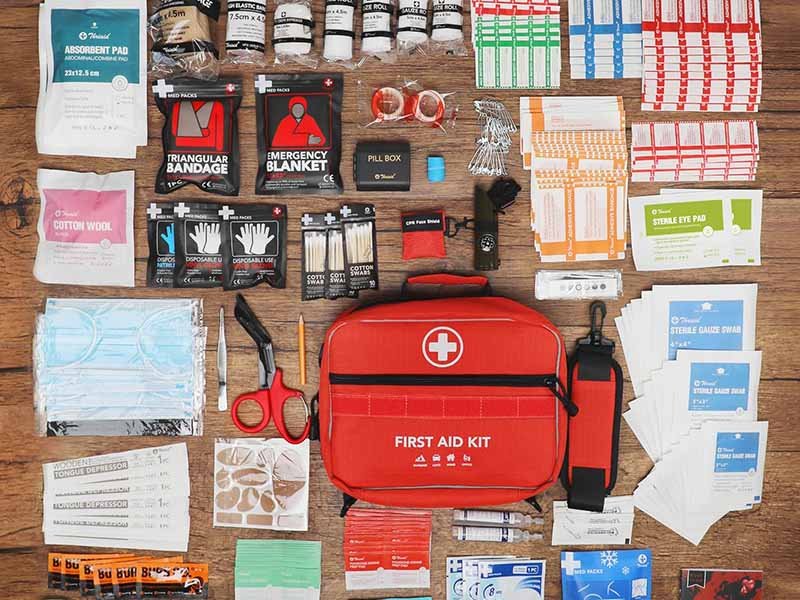
A first aid bag is one of those products people do not think about much until they suddenly need it. In that moment, every small design decision matters. Can the zipper open smoothly with one hand? Are bandages, scissors, gloves, tape, and antiseptic wipes easy to find? Does the bag protect supplies from moisture, pressure, dust, and daily friction? Does the red cross mark stand out clearly enough in a backpack, car trunk, gym cabinet, factory wall station, or outdoor gear pack?
A strong first aid bag is not only a container for medical supplies. It is a portable emergency storage system. Good manufacturing combines durable material, clear internal organization, fast access, reliable stitching, stable color, custom logo placement, practical size control, and strict inspection before shipment. For custom brands, a well-developed first aid bag can serve travel safety, workplace protection, sports recovery, outdoor rescue, car emergency, healthcare promotion, school care, and private label retail markets.
The demand is also practical, not seasonal hype. Workplaces need safety kits. Families want home emergency storage. Travelers carry compact medical pouches. Sports teams need field treatment bags. Outdoor users want lightweight and water-resistant protection. For a factory like Szoneier, with more than 18 years of experience in neoprene material development and custom product manufacturing, first aid bags are not just sewn products. They are problem-solving products built around real use, real storage needs, and real customer expectations.
What Is a First Aid Bag?
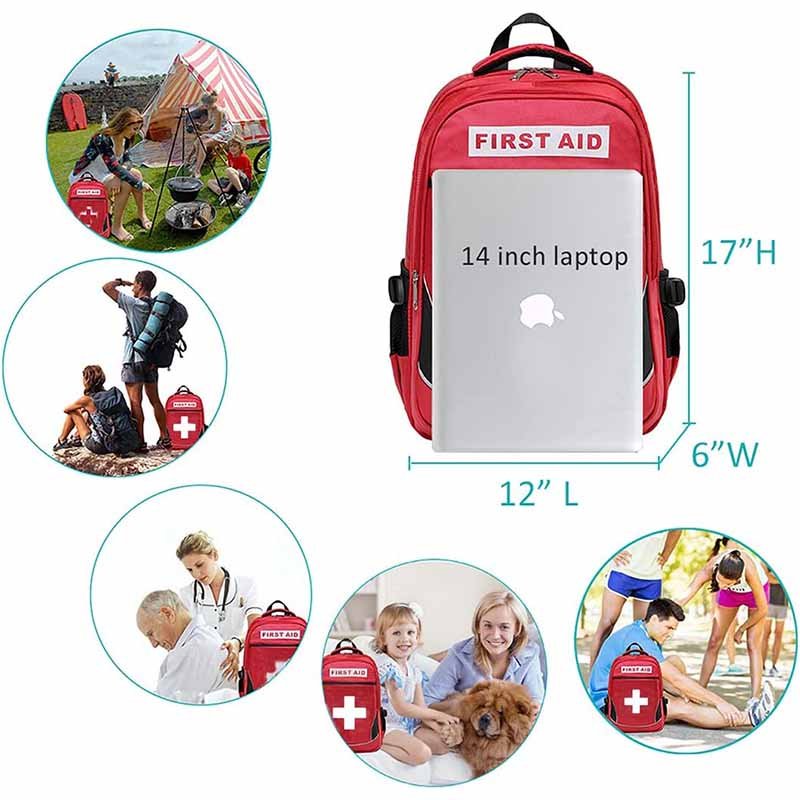
A first aid bag is a portable bag designed to store, organize, and protect emergency medical supplies. It can be used at home, in vehicles, at work, during sports, while traveling, or outdoors. A good first aid bag should be easy to recognize, quick to open, strong enough for repeated use, and organized enough to help users find supplies quickly under pressure.
A first aid bag usually works as the outer storage system for medical supplies. Some are sold empty for refillable use. Some are sold with medical contents already packed inside. For manufacturing projects, the bag itself carries a large part of the product value. Customers often judge the quality of a first aid product before opening it. Fabric feel, zipper smoothness, printed medical mark, handle strength, pocket layout, and overall shape all influence the first impression.
For custom orders, the first step is not choosing a random bag shape from a catalog. The smarter starting point is understanding the real use scenario. A car first aid bag may need heat resistance, compact storage, and a bold emergency mark. A sports first aid bag may need quick access, elastic loops, and water-resistant fabric. A travel first aid bag may need lightweight neoprene, soft edges, and a slim shape. A workplace medical bag may need a larger layout, high visibility, and easier classification for supplies.
Many customers also care about storage efficiency. A first aid bag that looks large outside but wastes internal space will feel poorly designed. A smaller pouch with smart compartments may perform better because users can see and reach supplies faster. In emergency situations, clean organization is often more useful than extra volume.
For Szoneier’s custom manufacturing, first aid bags can be developed around different customer goals:
| Customer Goal | Recommended Bag Direction | Key Manufacturing Focus |
|---|---|---|
| Compact retail kit | Small neoprene pouch | Soft feel, light weight, logo clarity |
| Sports care kit | Medium pouch with elastic loops | Fast access, moisture resistance, flexible storage |
| Car emergency kit | Durable zipper bag | Heat resistance, strong seams, visible marking |
| Outdoor medical pouch | Water-resistant structured bag | Coated fabric, reinforced zipper, compact layout |
| Workplace kit | Larger organized bag | Multi-pocket storage, handle strength, clear labeling |
| Promotional healthcare item | Cost-controlled custom pouch | Logo printing, low MOQ, stable appearance |
Szoneier supports custom first aid bag projects with free design assistance, low MOQ customization, fast sampling, free sample support, OEM and ODM service, private label production, logo customization, and short lead times. For clients who already have drawings, samples, product photos, or packaging references, the factory can develop a more accurate prototype based on clear specifications.
First Aid Bag Uses
First aid bags are used in many daily and professional environments. Their main purpose is simple: keep emergency supplies in one safe, portable, and easy-to-find place. But different usage scenarios require different structures.
Home first aid bags usually need a clean layout for common items such as plasters, gauze, antiseptic wipes, scissors, tape, gloves, and thermometer storage. The design should be simple enough for family members to use without instruction.
Travel first aid bags need compact size and low weight. They often fit inside backpacks, suitcases, handbags, or glove boxes. Soft neoprene works well for travel pouches because it protects supplies without feeling bulky.
Sports first aid bags need faster access. Coaches, trainers, gym owners, and outdoor sports teams may need space for wraps, sprays, instant cold packs, elastic bandages, finger tape, gloves, and scissors. A fold-open layout or wide-mouth zipper can make treatment faster.
Workplace first aid bags require more organized storage. Factories, offices, warehouses, construction sites, and schools often need clear separation between wound care, burn care, eye care, gloves, and tools. Handle strength and wall-hanging options may also matter.
Outdoor first aid bags need stronger resistance to dirt, moisture, pulling, and rough packing. Camping, hiking, boating, cycling, and rescue use may require coated fabric, reinforced seams, waterproof zipper options, or reflective details.
First Aid Bag Types
First aid bags can be designed in many forms. The best type depends on the product position, selling channel, target user, and supplies inside.
Common first aid bag types include:
| Type | Common Use | Product Advantage |
|---|---|---|
| Zipper pouch | Travel, home, small kits | Simple, compact, cost-efficient |
| Foldable organizer bag | Sports, workplace, outdoor | Opens flat, easy to find supplies |
| Waist first aid bag | Running, hiking, events | Hands-free carrying |
| Car first aid bag | Vehicle emergency kits | Compact trunk or glove box storage |
| EVA hard case | Premium kits, tool-like storage | Better shape protection |
| Neoprene soft pouch | Travel, sports, daily care | Flexible, soft, water-resistant |
| Large medical carry bag | Workplace, school, team use | Higher capacity and better classification |
A small zipper pouch is suitable for low-cost private label kits or promotional healthcare products. A foldable organizer bag is better for sports and workplace users who need to see all supplies quickly. A waist first aid bag works well for outdoor events, cycling, hiking, rescue teams, and field staff. EVA cases look more premium and protect contents well, but they may cost more and take up more space.
For many custom brands, neoprene soft pouches offer a strong balance. They are flexible, lightweight, protective, and easy to carry. They also support rich color choices and logo customization, which makes them suitable for retail, promotional, sports, travel, and healthcare markets.
First Aid Bag Users
First aid bag users are not limited to hospitals or medical staff. In most cases, the end user is an ordinary person trying to handle a small injury quickly and calmly.
Main user groups include:
Home users who want daily emergency storage
Drivers who need compact car safety kits
Travelers who prepare for trips and outdoor activities
Sports teams that need treatment supplies during training
Schools that need classroom or playground first aid storage
Factories and offices that need workplace safety products
Amazon sellers developing private label medical kits
Outdoor brands selling camping or hiking safety gear
Healthcare companies using first aid bags for promotion
Corporate clients ordering logo-customized safety gifts
Pet care brands developing compact emergency pouches
Event organizers preparing public safety support kits
Each group values different details. A parent may care about easy opening and clear pockets. A sports coach may care about speed and capacity. A driver may care about compact storage and heat resistance. An Amazon seller may care about appearance, packaging, customer reviews, and landed cost. A healthcare brand may care about clean design, logo placement, and consistent quality.
Because users vary so much, one standard first aid bag cannot fit every market. Custom manufacturing helps brands match the bag to the actual user instead of forcing every project into one fixed shape.
First Aid Bag vs Kit
A first aid bag and a first aid kit are closely related, but they are not the same product.
A first aid bag is the outer container. It includes the material, zipper, compartments, handle, logo, label, color, and structure.
A first aid kit usually means the complete product, including the bag and medical supplies inside.
For sourcing, that difference is important. Some clients only need empty bags because they buy medical supplies from local certified suppliers. Others need semi-finished packaging support. Some want a complete filled kit, which may involve additional sourcing, labeling, local compliance, and import rules.
For many custom brands, starting with the bag is a safer and more flexible step. The bag controls the product image, storage experience, and customer perception. Medical contents can then be selected according to market requirements.
The bag also affects repeat use. Medical supplies may be consumed and refilled, but a strong first aid bag can stay in use for years. That is why fabric, stitching, zipper, and internal layout should not be treated as minor details.
Which First Aid Bag Materials Work Best?
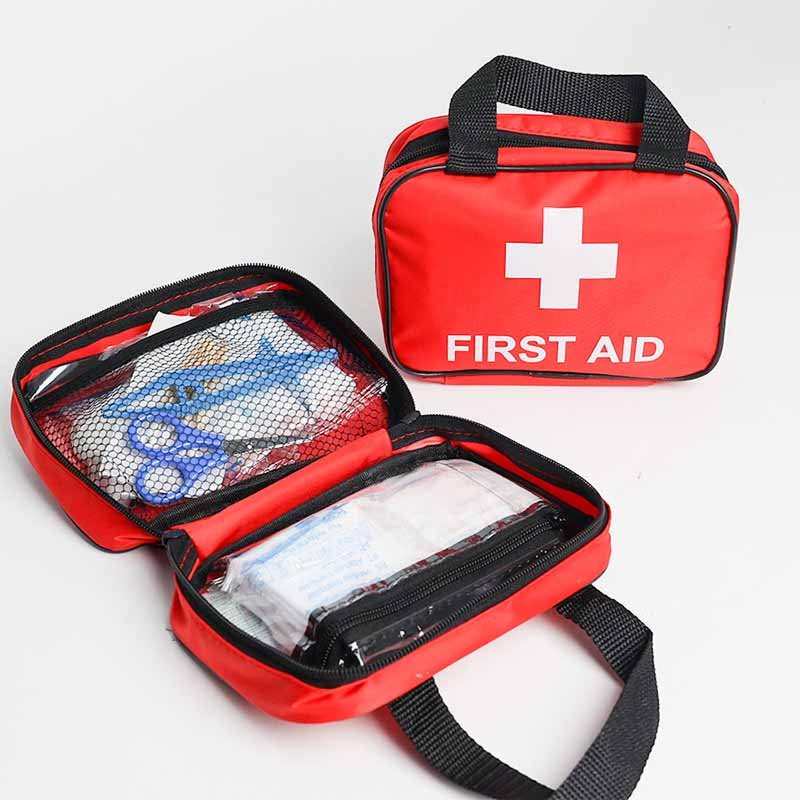
The best first aid bag material depends on use environment, protection level, cost target, and brand position. Neoprene is soft, flexible, water-resistant, and shock-absorbing. Oxford fabric is strong and cost-efficient. EVA offers hard-shell protection. Polyester suits budget projects. For premium custom first aid bags, material choice should balance durability, appearance, weight, comfort, and storage performance.
Material choice decides how the product feels in the hand, how well it protects supplies, how long it lasts, how easy it is to clean, how clearly the logo appears, and how customers judge value. A first aid bag may be small, but poor material selection can create major problems: weak zipper edges, soft collapse, poor shape, water penetration, fading print, loose seams, or a cheap hand feel.
The material should match the product’s selling promise. If the product is sold as an outdoor first aid bag, the fabric should resist moisture, dirt, and friction. If it is sold as a compact travel pouch, it should be light and easy to pack. If it is sold as a sports medical pouch, it should handle sweat, movement, and quick opening. If it is sold as a premium private label product, it should look clean in photos and feel reliable when held.
Neoprene is especially useful for first aid bags that need softness and protection at the same time. It is commonly used in wetsuits, sports supports, medical supports, koozies, laptop sleeves, and protective pouches because it has cushioning, flexibility, and water-resistant properties. For first aid bags, those same features help protect small supplies while keeping the bag comfortable and portable.
Oxford fabric is often chosen for larger and more structured bags. It provides good abrasion resistance and works well with coatings. EVA is suitable when the customer wants a more protective shell. Polyester is usually chosen when cost control is the main goal. PVC tarpaulin or coated fabrics may be used for stronger waterproof needs.
Material comparison for custom first aid bag projects:
| Material | Best Application | Strengths | Watch Points |
|---|---|---|---|
| Neoprene | Travel, sports, compact pouches | Soft, cushioned, flexible, water-resistant, premium feel | Not fully waterproof unless seams and zipper are upgraded |
| Oxford Fabric | Workplace, outdoor, larger bags | Durable, structured, cost-effective, coating-friendly | Less soft than neoprene |
| EVA | Hard-shell medical cases | Strong shape, impact protection, premium molded look | Higher cost, less flexible |
| Polyester | Promotional pouches, low-cost kits | Lightweight, affordable, easy to print | Lower protection and weaker premium feel |
| Nylon | Outdoor or compact bags | Lightweight, strong, clean appearance | Needs coating for better water resistance |
| PVC Tarpaulin | Wet or rugged use | Strong surface water resistance, easy cleaning | Heavier feel, less soft |
| Mesh | Inner pockets | Visibility, airflow, quick identification | Not suitable as main outer material |
For Szoneier, neoprene is a key advantage. The company has over 18 years of experience in neoprene fabric research, development, and manufacturing related products. That background helps clients choose the right thickness, backing fabric, surface texture, lamination, stitching method, logo technique, and inner structure for their first aid bag projects.
Neoprene First Aid Bag
A neoprene first aid bag is ideal for customers who want a soft, lightweight, protective, and modern-looking medical pouch. Neoprene has a naturally cushioned structure, so it helps reduce pressure and light impact on supplies such as bandages, medicine packs, gloves, scissors, and small tools. It also performs well in daily environments where the bag may face sweat, light rain, splashes, or damp storage.
Key advantages of neoprene first aid bags include:
Soft hand feel for daily carrying
Lightweight structure for travel and sports use
Shock-absorbing protection for small supplies
Water-resistant surface for light moisture exposure
Flexible body that fits into backpacks, cars, gym bags, and luggage
Good print compatibility for custom logos and full-color designs
Premium appearance for private label and retail products
Neoprene thickness can be adjusted according to product needs. For compact pouches, 2mm to 3mm neoprene is commonly practical. For stronger protection, thicker material can be considered. Szoneier can support custom color, size, logo method, zipper style, lining, elastic loops, mesh pockets, and packaging based on the client’s market.
Oxford First Aid Bag
Oxford fabric is a practical choice for customers who need strength, structure, and cost control. It is widely used in backpacks, tool bags, outdoor bags, medical bags, and storage organizers. For first aid bags, Oxford fabric works especially well for medium and large styles.
Oxford first aid bags are suitable for:
Workplace first aid kits
School medical bags
Car emergency bags
Outdoor rescue bags
Factory safety kits
Sports team medical bags
Larger refillable first aid storage bags
Oxford fabric can be paired with PU or PVC coating to improve water resistance. It can also be reinforced with webbing handles, binding tape, foam padding, and internal dividers. Compared with neoprene, Oxford feels more structured and rugged. That makes it good for larger bags that need to stand up better and hold more supplies.
When choosing Oxford fabric, clients should check fabric density, coating quality, stitching strength, zipper grade, and colorfastness. A cheap Oxford bag may look acceptable in photos but fail after repeated opening, heavy loading, or rough storage. For custom production, material testing and sample review are important before bulk order approval.
EVA First Aid Bag
An EVA first aid bag is a semi-rigid or hard-shell option used when product shape and impact protection are more important. EVA is often used for protective cases, tool kits, electronics pouches, medical storage, and premium gift packaging. For first aid products, EVA can protect supplies from compression inside luggage, cars, backpacks, or outdoor gear.
EVA first aid bags are useful when customers want:
A molded premium appearance
Better protection against pressure
A stable shape for retail display
Cleaner product photography
More protection for delicate contents
A structured case instead of a soft pouch
The limitation is flexibility. EVA bags are less foldable and usually take more packing space. Molded styles may also need higher development cost compared with simple sewn pouches. For low MOQ projects, EVA may not always be the most efficient choice unless the client already has a clear product position and target price.
For premium first aid kits, EVA can work very well. For lightweight travel kits or soft sports pouches, neoprene may be more comfortable and easier to carry.
Waterproof First Aid Bag
Waterproof performance needs careful planning because many customers confuse water-resistant fabric with a fully waterproof bag. A fabric may resist splashes, but water can still enter through zipper teeth, stitching holes, seams, puller openings, or poorly sealed corners.
For daily use, many customers only need water resistance. For outdoor, boating, camping, cycling, fishing, or rescue markets, stronger waterproof construction may be needed.
Water protection levels can be planned like this:
| Protection Level | Suitable Use | Manufacturing Method |
|---|---|---|
| Basic water resistance | Travel, home, sports, car | Neoprene, coated fabric, standard zipper |
| Enhanced water resistance | Outdoor, gym, workplace | Coated Oxford, better zipper, reinforced seams |
| High water protection | Camping, boating, wet storage | Waterproof zipper, welded seams, coated fabric |
| Full waterproof concept | Marine or extreme outdoor | Roll-top closure, sealed seams, waterproof material system |
Customers should be careful with product claims. Saying “water-resistant first aid bag” is safer for many soft sewn products. Saying “waterproof first aid bag” requires stronger construction and testing. Szoneier can help clients choose the correct wording and structure based on actual performance goals.
Soft Lining Options
The lining inside a first aid bag is not only for appearance. It affects organization, cleanliness, protection, and user experience. A good lining helps users see supplies quickly and keeps small items from moving around too much.
Common inner options include:
Polyester lining for clean and cost-effective storage
Mesh pockets for visibility and airflow
Elastic loops for bandages, scissors, tubes, and tools
Nylon lining for smoother touch and better durability
Foam backing for extra protection and shape support
Brushed lining for softer contact with contents
Transparent PVC pockets for quick identification
For first aid bags, internal visibility is very important. If users need to dig through a messy pouch during an injury, the product feels poorly designed. Mesh pockets, elastic straps, and divided sections can make the bag much easier to use.
For Szoneier clients, inner layout can be customized according to the supply list. If the client provides item dimensions, Szoneier can help adjust pocket size, elastic spacing, zipper pocket depth, divider position, and opening direction. That makes the final bag more practical instead of just good-looking.
How to Design a First Aid Bag?
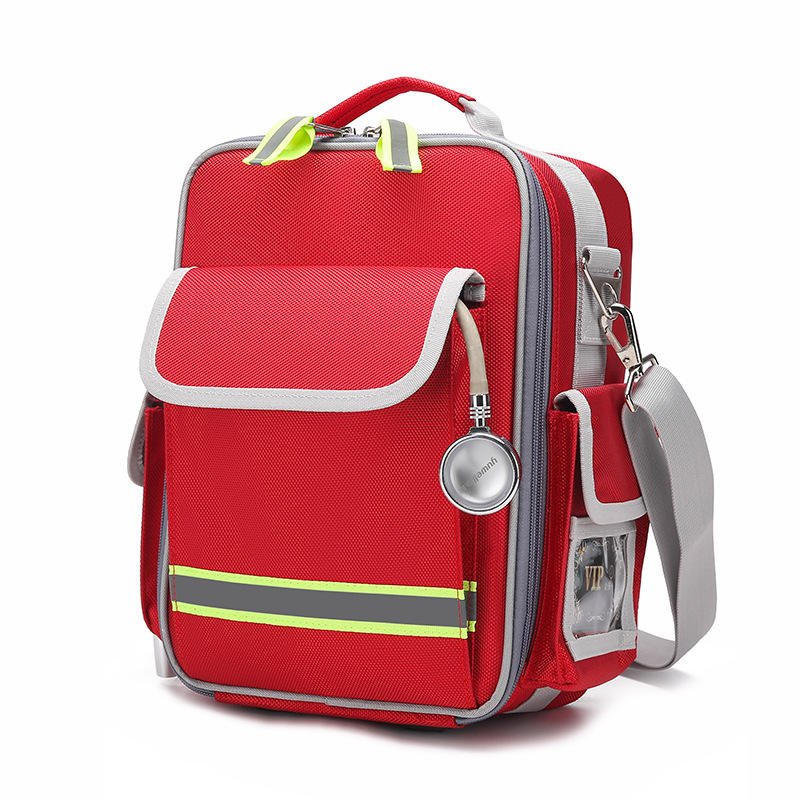
A first aid bag should be designed around speed, clarity, protection, and portability. The best design helps users find supplies quickly, protects contents from damage, and fits the real carrying environment. Size, layout, compartments, zipper direction, color, handle position, logo placement, and internal structure should all be planned before sampling, not corrected after bulk production.
Design is where many first aid bag projects either become useful products or average pouches with a medical logo. The outside may attract attention, but the inside decides whether the product works when someone needs it. A customer may buy the bag because it looks clean, but they will remember it because it was easy—or difficult—to use.
For custom first aid bag development, the first design question should be: “What will the user need to do in the first 10 seconds after opening the bag?” This question is more useful than starting with fabric color or logo size. In an emergency, people do not want to search through a deep, messy pouch. They need visible sections, clear opening direction, stable pockets, and enough space to remove items quickly.
A compact travel pouch may only need one zipper pocket, two mesh sections, and several elastic loops. A sports first aid bag may need a fold-open design, larger elastic bands, and separate storage for tape, scissors, cold packs, sprays, and wraps. A workplace first aid bag may need bigger storage zones and stronger handles. A car first aid bag may need a flat rectangular shape that fits under a seat, in the trunk, or inside a glove compartment.
Color is also part of design, not just decoration. Red, orange, white, black, and navy are common choices. Red and white are strongly connected with emergency use, while black and navy may look more professional for sports, automotive, or outdoor brands. Reflective strips can improve visibility for roadside, outdoor, and night-use products. A clear medical cross mark or printed first aid text helps users recognize the bag faster.
Logo placement should be planned with both branding and emergency recognition in mind. A large logo may help brand exposure, but it should not make the first aid identity unclear. In many cases, the best design uses a clean balance: brand logo, medical symbol, product name, and simple color blocking.
Good first aid bag design also considers production reality. Too many small pockets increase labor cost. Complex curves may affect stitching consistency. Extra thick foam may make zipper closing difficult. A beautiful drawing may not become a stable product unless the factory checks material thickness, seam allowance, zipper path, pocket spacing, and packing method early.
For Szoneier clients, design support can include product sketch review, material suggestions, sample structure adjustment, logo technique recommendation, color matching, inner layout planning, and packaging direction. This helps clients turn a rough idea into a product that is practical, manufacturable, and easier to sell.
First Aid Bag Size
First aid bag size should be based on the supply list, use scene, and carrying method. A bag that is too small becomes frustrating. A bag that is too large wastes space and feels inconvenient. The goal is not to make the biggest bag possible, but to create the right balance between capacity and portability.
Common size directions include:
| Bag Size Type | Approximate Size Range | Suitable Use |
|---|---|---|
| Mini pouch | 10–15 cm wide | Daily carry, handbag, pocket kit |
| Compact travel bag | 15–22 cm wide | Travel, car, outdoor, sports |
| Medium organizer bag | 22–32 cm wide | Workplace, school, team use |
| Large medical carry bag | 32–45 cm wide | Sports teams, rescue, clinics |
| Custom set bag | Based on contents | Private label kits, brand programs |
For neoprene first aid pouches, compact sizes are often popular because the material is soft and easy to pack. A small neoprene pouch can hold plasters, wipes, gauze, tape, gloves, small scissors, and basic medicine packs. For sports or outdoor use, a wider opening and slightly larger body may be better because users often need rolls, wraps, and tools.
Before confirming size, clients should list the exact contents. The factory can then make a layout plan based on item length, thickness, quantity, and access priority. This avoids a common problem: the finished bag looks good empty but becomes too tight after supplies are packed.
First Aid Bag Layout
A first aid bag layout should make the most important supplies visible and easy to remove. A simple layout can often work better than an over-complicated one. The key is to create sections that match how people actually use emergency items.
A practical layout may include:
Main storage section for larger items
Mesh pocket for wipes, gauze, and small packs
Elastic loops for scissors, tubes, bandages, or small bottles
Flat zipper pocket for gloves, masks, or instructions
Open slip pocket for quick-access items
Divider panel for separating wound care and tools
Label area for item classification or instructions
For many first aid bags, a clamshell opening is very useful. It allows the bag to open flat so users can see both sides at once. This design is popular for travel kits, sports kits, and outdoor pouches. For larger workplace bags, a multi-layer opening or front-panel pocket may be better.
The layout should also avoid over-tight pockets. If elastic loops are too small, users struggle to remove items. If mesh pockets are too loose, supplies fall out. If zipper pockets are too deep, small items disappear at the bottom. A good layout is not only about adding more storage. It is about reducing confusion.
First Aid Bag Compartments
Compartments help turn a simple pouch into an organized first aid system. They separate items by use, size, urgency, and cleanliness. In a first aid situation, this can save time and reduce stress.
Useful compartment ideas include:
Wound care area for bandages, gauze, tape, and wipes
Tool area for scissors, tweezers, thermometer, or penlight
Protection area for gloves, masks, and CPR shield
Medicine area for small packs or labeled medicine sleeves
Cold care area for instant ice packs or compression wraps
Instruction area for emergency guide cards or contact information
Personal storage area for allergy card or prescription note
For custom first aid bags, clients should avoid adding compartments only to make the product look expensive. Every compartment should have a job. Too many small pockets can increase cost and make the bag harder to use. Too few pockets can make everything messy.
The best approach is to group contents by priority. Items needed most often should be placed in the easiest-to-reach areas. Items used less often can go into deeper or zipped pockets. If the bag is designed for sports, tape and scissors should be fast to access. If it is designed for travel, medicine packs and wipes may need clear separation. If it is for workplace use, classification and refilling may be more important.
First Aid Bag Closure
The closure system affects access speed, protection, cost, and product feeling. For first aid bags, zipper closure is the most common because it is secure, familiar, and suitable for many structures. However, zipper quality should not be ignored. A weak zipper can ruin the whole product experience.
Common closure options include:
| Closure Type | Best Use | Advantage |
|---|---|---|
| Standard zipper | Most first aid bags | Simple, reliable, cost-efficient |
| Two-way zipper | Medium and large bags | Opens from either side |
| Waterproof zipper | Outdoor and wet-use bags | Better water protection |
| Hook-and-loop | Fast access pouches | Quick opening and closing |
| Buckle closure | Outdoor or waist bags | Extra security |
| Roll-top closure | High waterproof bags | Stronger water barrier |
| Magnetic closure | Premium light-use pouches | Clean look, easy access |
For compact neoprene first aid bags, a smooth zipper with a strong puller is usually the best choice. Two-way zippers can improve convenience for larger bags. Rubber zipper pullers can help users open the bag faster, especially with wet hands or gloves.
Closure choice should match the safety message of the product. If the bag is sold for outdoor or vehicle use, a stronger zipper is worth the cost. If the product is a promotional pouch, a standard zipper may be enough. The mistake to avoid is using a cheap zipper on a product that promises durability.
First Aid Bag Visibility
Visibility is extremely important for first aid bags. A first aid product should be easy to identify quickly, especially in a car, backpack, warehouse, gym, campsite, office cabinet, or sports field. Color, symbols, text, reflective strips, and contrast all affect visibility.
Useful visibility features include:
Red or bright color panels
White medical cross symbol
Clear “FIRST AID” text
Reflective tape for outdoor and vehicle use
High-contrast zipper puller
Visible hang tag or woven label
Transparent window for content card
Color-coded internal sections
A first aid bag does not always have to be red, but the emergency identity should be clear. Some premium brands prefer black, grey, navy, or custom brand colors. In those cases, a bold medical mark, reflective patch, or bright zipper can help maintain recognition.
For online selling, visibility also affects product photos. A clear front design helps customers understand the product in seconds. On Amazon, Shopify, retail shelves, and catalog pages, customers often make fast judgments. A first aid bag that looks organized, clear, and trustworthy has a stronger chance of converting interest into orders.
How Does First Aid Bag Manufacturing Work?
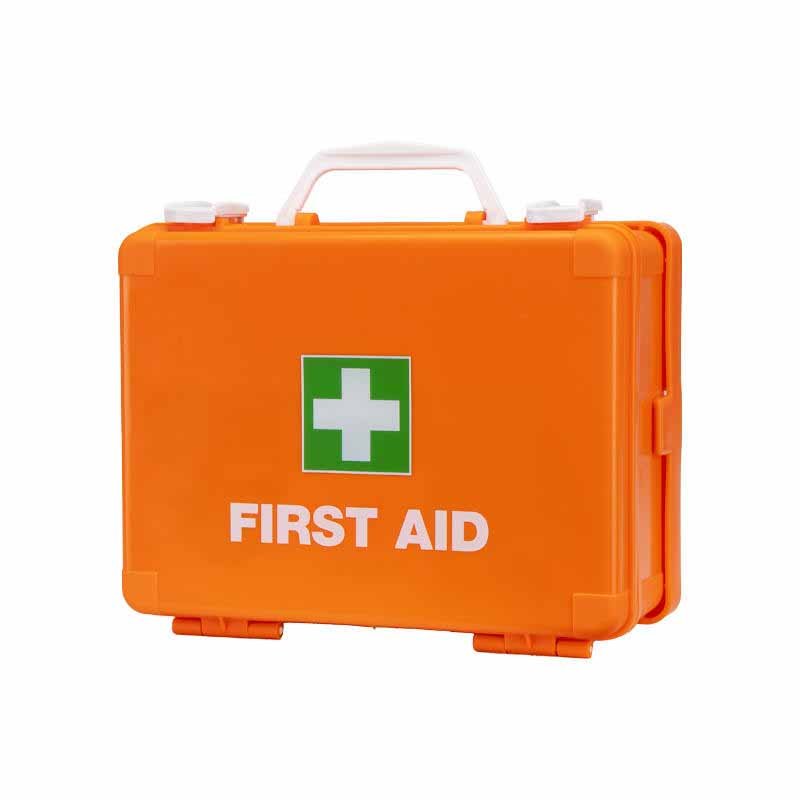
First aid bag manufacturing usually starts with design requirements, material selection, size planning, logo confirmation, sample making, sample review, adjustment, bulk production, quality inspection, packing, and shipment. For custom OEM or private label projects, the process should be controlled step by step so the final bag matches the client’s use case, target cost, branding needs, and quality expectations.
A smooth manufacturing process depends on clear communication. Many production problems begin before sewing starts. If the client does not confirm size, material, color, logo method, internal layout, contents list, packing style, and target order quantity early, the sample may need repeated changes. That increases time and cost.
For first aid bags, the development process should be more detailed than a normal pouch because the product has functional requirements. The bag must open correctly, hold supplies securely, protect contents, display medical identity, and survive repeated use. Small decisions during sampling can affect the whole production result.
A practical manufacturing process looks like this:
| Step | Main Work | Client Should Confirm |
|---|---|---|
| 1. Requirement review | Use case, market, target user | Bag type, quantity, price level |
| 2. Design planning | Size, shape, compartments | Sketch, reference photo, supply list |
| 3. Material selection | Outer fabric, lining, padding | Neoprene, Oxford, EVA, polyester |
| 4. Logo method | Branding technique | Printing, patch, label, embroidery |
| 5. Sample making | Prototype production | Structure, color, logo, zipper |
| 6. Sample testing | Fit, function, appearance | Content loading, opening, carrying |
| 7. Sample revision | Adjust details | Pocket size, seam, zipper, layout |
| 8. Bulk production | Cutting, sewing, assembly | Approved sample and final PO |
| 9. Quality inspection | Check size, stitching, logo, packing | AQL or custom inspection standard |
| 10. Packaging and shipment | Pack and export | Polybag, box, carton, shipping mark |
Szoneier can support clients from idea to finished product. Clients can provide drawings, samples, product photos, logo files, color references, packaging ideas, or simply a list of supplies that need to fit inside the bag. Based on that information, Szoneier can recommend material, size, structure, logo technique, and sampling direction.
The company’s experience with neoprene bags, koozies, sports protective products, medical supports, wetsuits, and custom soft goods gives it a stronger understanding of flexible material behavior. This is useful because neoprene and similar materials need proper cutting, lamination, stitching tension, edge finishing, and logo handling to achieve stable results.
For overseas clients, manufacturing support should also include realistic timelines. Fast sampling is helpful, but only when the sample has enough detail to represent bulk production. A rushed sample with missing structure may not be useful. A better sample confirms material, size, stitching, pocket layout, logo, zipper, lining, and packing direction before mass production begins.
First Aid Bag Design
The design stage turns an idea into a manufacturable product. At this point, the client and factory should confirm what the first aid bag needs to do, how it should look, and how it should be produced.
Important design inputs include:
Product use scene
Target customer group
Bag size and shape
Outer material and thickness
Inner lining and compartments
Medical supplies list
Logo position and logo size
Main color and trim color
Zipper type and puller style
Handle, strap, or hanging design
Packaging style
Target MOQ and budget range
If the client already has a sample, the factory can study the structure and suggest improvements. If the client only has an idea, the factory can help create a custom design based on reference images and practical use needs.
For Szoneier, design support is especially useful for neoprene first aid bags because the material offers many creative options: soft pouch shape, full-color printing, heat transfer logo, smooth zipper structure, elastic inner loops, custom thickness, and compact packing. A well-planned design can make the product feel simple, clean, and useful instead of overloaded.
First Aid Bag Sampling
Sampling is one of the most important stages in first aid bag manufacturing. It allows the client to check real size, material feel, color, logo effect, pocket layout, zipper movement, stitching quality, and packing experience before bulk production.
During sample review, clients should check:
Does the bag hold all planned supplies?
Is the opening wide enough?
Are small items easy to remove?
Does the zipper run smoothly around corners?
Is the logo clear and correctly positioned?
Does the material feel strong enough?
Are seams straight and secure?
Does the bag keep its shape after loading?
Is the color close to the approved reference?
Does the packaging match the sales channel?
Fast sampling is valuable when launching seasonal products, Amazon products, promotional campaigns, or urgent retail programs. Szoneier supports quick sampling and can help clients adjust details before mass production. For standard neoprene or soft pouch styles, sample development can usually move faster than hard-shell or highly molded designs.
A good sample should be treated as the production standard. Once the client approves the sample, the factory can use it as a reference for cutting, sewing, logo placement, inspection, and final packing.
First Aid Bag Logo
Logo customization helps turn a basic first aid bag into a private label or branded product. The logo method should match the material, order quantity, product position, and desired appearance.
Common logo options include:
| Logo Method | Suitable Material | Best For |
|---|---|---|
| Screen printing | Neoprene, polyester, Oxford | Simple logos, cost control |
| Heat transfer | Neoprene, polyester | Clean detail, multi-color logos |
| Sublimation printing | White polyester surface, neoprene laminated fabric | Full-color designs |
| Embroidery | Oxford, polyester, some fabric panels | Premium stitched look |
| Rubber patch | Neoprene, Oxford, EVA | Durable, modern branding |
| Woven label | Most soft bags | Clean private label detail |
| PVC patch | Outdoor and sports bags | Strong visual identity |
| Zipper puller logo | Many bag types | Small premium detail |
For first aid bags, logo design should not reduce emergency visibility. The front panel usually needs enough space for a medical cross or first aid mark. The brand logo can be placed under the mark, beside the mark, on the zipper puller, on a side label, or on a woven patch.
For private label clients, Szoneier can help choose a logo method based on the design file, color quantity, material surface, MOQ, and budget. A simple printed logo may work for promotional projects. A rubber patch or woven label may work better for premium outdoor or sports products.
First Aid Bag Packaging
Packaging affects how the product is displayed, shipped, stored, and sold. For first aid bags, packaging should protect the bag, show the product clearly, and match the sales channel.
Common packaging options include:
Individual polybag
Opp bag with warning label
Retail color box
Kraft paper box
Header card packaging
Hang tag with barcode
Insert instruction card
Custom carton packing
Amazon FBA-ready packaging
Private label packaging set
For e-commerce, packaging must protect the product during shipping and look clean when customers open it. For retail shelves, a color box or hang card may be more useful. For corporate promotional gifts, simple branded packaging may be enough. For medical distributors, cartons may need clear item codes, quantity labels, and shipping marks.
Packaging should be discussed before bulk production because it affects carton size, shipping cost, labeling, and final presentation. A folded neoprene pouch can save space. A rigid EVA case may need larger cartons. A filled first aid kit may need stronger packaging and better internal packing control.
First Aid Bag Quality Check
Quality inspection should cover material, size, stitching, zipper, logo, inner layout, cleanliness, packing, and final function. A first aid bag may look simple, but small defects can affect user trust.
Key inspection points include:
Material color and thickness
Fabric surface defects
Cutting accuracy
Finished size tolerance
Logo position and clarity
Zipper smoothness
Zipper puller strength
Seam strength
Handle and strap pulling strength
Inner pocket size
Elastic loop tension
Thread trimming
Stain and dust control
Carton quantity accuracy
Barcode and label accuracy
Packing method consistency
A practical inspection table for first aid bags:
| Inspection Area | What to Check | Why It Matters |
|---|---|---|
| Material | Color, thickness, surface, smell | Affects first impression and durability |
| Stitching | Straight lines, seam strength, no skipped stitches | Prevents tearing and poor appearance |
| Zipper | Smooth opening, corner movement, puller strength | Controls access speed and product life |
| Logo | Position, color, adhesion, clarity | Protects brand image |
| Inner layout | Pocket size, elastic tension, divider position | Improves real usability |
| Size | Width, height, depth, tolerance | Ensures contents fit correctly |
| Packing | Polybag, label, carton, quantity | Reduces shipping and warehouse issues |
For Szoneier, 100% quality assurance is a key part of custom production support. The goal is not only to ship bags that look acceptable, but to deliver products that match the approved sample and perform consistently in the customer’s market.
How to Choose a First Aid Bag Manufacturer?
A good first aid bag manufacturer should understand materials, structure, custom branding, sampling, quality control, packaging, and export communication. The right factory should help clients choose suitable fabrics, develop practical layouts, control MOQ, improve product details, and keep bulk production close to the approved sample. For custom first aid bags, manufacturing experience matters more than simply offering the lowest unit price.
Choosing a manufacturer is not only about finding someone who can sew a pouch. A first aid bag has to perform in real situations. It may be stored in a car for months, carried in a backpack, opened during sports injuries, packed in workplace safety cabinets, used during travel, or sold as part of a branded medical kit. If the factory does not understand material behavior, zipper quality, internal organization, and custom logo processes, the final product may look fine in photos but disappoint users in daily use.
For overseas clients, the manufacturer should also be able to communicate clearly. Many first aid bag projects involve details such as size tolerance, color matching, logo file adjustment, packaging layout, barcode labels, carton marks, sample revisions, and shipping schedules. If these details are not controlled early, problems often appear late in production, when changes become expensive.
A reliable manufacturer should help clients think through practical questions before sampling:
What kind of first aid bag does the market need?
Which material best fits the use scene?
How many supplies should the bag hold?
Should the bag be soft, structured, foldable, or hard-shell?
What logo method fits the material and MOQ?
How can the internal layout improve user experience?
What packaging works best for retail, e-commerce, or wholesale?
What quality points need to be checked before shipment?
For Szoneier, the advantage is not only production capacity, but also material knowledge. With more than 18 years of experience in neoprene fabric development and manufacturing related products, Szoneier can support custom first aid bags, medical pouches, sports care bags, travel emergency bags, car first aid kits, outdoor safety pouches, and promotional healthcare products. The company can provide free design support, low MOQ customization, fast sampling, free sample support, OEM and ODM service, private label production, custom logo options, and short lead times.
For clients sourcing from China, the best manufacturer should be a partner who can help reduce uncertainty. A good factory should make the project clearer at every stage: design, material, sample, production, inspection, packaging, and delivery.
First Aid Bag Experience
Experience matters because first aid bags are functional products. A factory may be able to produce general pouches, but that does not mean it can develop a reliable medical storage bag. The manufacturer should understand how different materials perform, how zippers behave around corners, how elastic loops hold supplies, how pockets should be positioned, and how to make the bag easy to use under pressure.
For custom first aid bag projects, clients should check whether the factory has experience with related product categories. Szoneier’s background in neoprene bags, koozies, sports supports, medical supports, wetsuits, and other flexible products is valuable because these products require knowledge of soft materials, lamination, elasticity, stitching tension, edge finishing, and comfort.
Key experience points to check include:
Material development experience
Bag structure development experience
Neoprene product manufacturing experience
Medical or sports support product experience
OEM and ODM customization experience
Logo and packaging customization experience
Export production experience
Private label order handling experience
Sample revision ability
Bulk production consistency
A factory with strong experience can usually prevent problems before they happen. For example, it may suggest a thicker neoprene for better protection, a smoother zipper for faster access, a larger front panel for logo clarity, or a better pocket layout based on the supply list. These details may seem small, but they directly affect how the product feels and sells.
First Aid Bag MOQ
MOQ is an important concern for many custom first aid bag clients, especially start-up brands, Amazon sellers, promotional product companies, small distributors, and brands testing a new market. A high MOQ can create inventory pressure before the product has been validated. A low MOQ helps clients test design, price, packaging, and market response with less risk.
However, clients should also understand that MOQ depends on several factors:
Material availability
Fabric color customization
Logo method
Bag structure complexity
Printing process
Packaging requirements
Hardware and zipper customization
Factory production planning
Sample complexity
Order season
For example, a simple neoprene first aid pouch with a standard color and printed logo may support a lower MOQ than a fully custom molded EVA case with special zipper, custom lining, rubber patch, color box, and accessories. The more custom details a product has, the more the factory needs to manage material preparation, printing setup, cutting efficiency, and production line time.
A practical MOQ comparison:
| Project Type | Custom Level | MOQ Pressure | Notes |
|---|---|---|---|
| Standard pouch with logo | Low | Lower | Good for first test orders |
| Custom size neoprene pouch | Medium | Moderate | Requires pattern and sample work |
| Custom color + logo + packaging | Medium-high | Moderate to higher | Best for private label programs |
| Multi-pocket organizer bag | High | Higher | More labor and inspection required |
| EVA molded first aid case | High | Higher | May involve mold or forming setup |
| Filled first aid kit | High | Depends on contents | Medical supplies may affect MOQ |
Szoneier supports low MOQ customization, which is useful for clients who want to test first aid bag designs before scaling. For growing brands, this flexibility can reduce early risk while still allowing professional custom product development.
First Aid Bag Lead Time
Lead time affects product launch planning, seasonal sales, promotional campaigns, retail delivery, and inventory control. First aid bags may be ordered for workplace safety programs, outdoor product launches, sports team events, healthcare promotions, Amazon inventory, or private label retail lines. Late delivery can create real business losses.
Lead time usually includes several stages:
Design confirmation
Material sourcing
Sample making
Sample shipping
Sample review and revision
Bulk material preparation
Cutting
Printing or logo production
Sewing and assembly
Inspection
Packaging
Export documentation
Shipping
A general timeline can look like this:
| Stage | Common Time Range | What May Affect Timing |
|---|---|---|
| Design discussion | 1–3 days | Clarity of requirements |
| Material confirmation | 1–5 days | Custom color or special fabric |
| Sample production | 5–10 days | Structure complexity |
| Sample revision | 3–7 days | Number of changes |
| Bulk production | 15–35 days | Quantity and bag complexity |
| Inspection and packing | 2–5 days | Packaging requirements |
| Shipping preparation | 1–3 days | Documents and freight method |
Simple neoprene first aid pouches usually move faster than highly structured outdoor bags or EVA hard-shell cases. Projects with custom color, custom zipper, special logo patch, complex compartments, or retail packaging need more time.
Clients can shorten lead time by preparing clear information from the beginning:
Final logo file in AI, PDF, or high-resolution format
Pantone color reference if color matching is needed
Reference product photos or sketches
Target bag dimensions
Medical supply list with item sizes
Expected order quantity
Packaging requirement
Destination market
Deadline or launch date
Szoneier supports fast sampling and short lead times, but the smoothest projects are usually the ones with clear specifications. Good preparation helps the factory reduce back-and-forth changes and move from sample to bulk production more efficiently.
First Aid Bag OEM
OEM first aid bag manufacturing means the factory produces products based on the client’s brand, logo, design, size, material, packaging, or product concept. This is suitable for clients who want private label products, custom retail lines, promotional healthcare items, sports medical pouches, outdoor emergency kits, or branded workplace safety bags.
OEM customization can include:
Custom bag size
Custom shape
Custom neoprene thickness
Custom outer fabric
Custom lining
Custom pocket layout
Custom elastic loops
Custom zipper color
Custom zipper puller
Custom handle or strap
Custom medical symbol
Custom logo printing
Custom rubber patch
Custom woven label
Custom hang tag
Custom polybag
Custom retail box
Custom carton mark
For private label clients, OEM service is especially important because the product needs to feel like their own brand, not a generic factory item. The logo, color, packaging, and structure should work together. A strong private label first aid bag should look professional in online photos, feel reliable in the hand, and make users want to keep it after the supplies are used.
Szoneier supports OEM and ODM first aid bag customization. Clients can provide a finished design, a rough idea, or a reference sample. The factory can help adjust the product for manufacturability, cost control, and practical use. This is valuable for clients who know their market but need production support to turn the concept into a finished product.
First Aid Bag Questions
Before placing an order, clients should ask the manufacturer practical questions. The goal is not to make the process complicated. The goal is to avoid problems that could affect product quality, delivery, cost, or customer reviews.
Useful questions include:
What materials do you recommend for my use case?
Can you make neoprene first aid bags in custom size and color?
What thickness options are available for neoprene?
Can you help design the internal pocket layout?
Can the bag fit my exact supply list?
What logo methods work best on this material?
Can you provide a sample before bulk production?
How long does sampling usually take?
Can you support low MOQ trial orders?
What packaging options are available?
Can you make private label packaging?
How do you inspect zipper, stitching, logo, and size?
Can you support Amazon or retail packaging requirements?
What is the estimated production time for my quantity?
Can you provide photos or videos during production?
How do you handle sample revisions?
Can you help improve my existing design?
A professional factory should be able to answer these questions clearly. If the answers are vague, the client may face problems later. For first aid bags, clarity is especially important because many details affect real use: size, compartment position, zipper direction, material thickness, logo visibility, and packaging.
For Szoneier clients, providing more information early helps the team make better recommendations. Even a simple product brief can speed up the process.
A helpful product brief can include:
Target market
Bag use scene
Reference photos
Preferred material
Target size
Color requirement
Logo file
Supply list
Expected order quantity
Packaging style
Budget range
Delivery deadline
The more accurate the brief, the faster the factory can develop a practical sample.
Final Thoughts on First Aid Bag Manufacturing
A first aid bag may be a small product, but it carries a serious job. It protects emergency supplies, helps people stay organized, and supports faster response when injuries happen. For brands, it is also a strong product category because it connects with practical markets: home care, travel, sports, workplace safety, outdoor gear, vehicle emergency, healthcare promotion, and private label retail.
The best first aid bags are not created by adding a red cross to a standard pouch. They are developed through careful decisions about material, size, layout, compartments, closure, visibility, logo, packaging, and quality control. A compact neoprene pouch can be perfect for travel and sports. A larger Oxford organizer may work better for workplace use. An EVA hard case may fit premium retail kits. A water-resistant outdoor bag may need stronger zippers, coated fabric, and reinforced seams.
For customers, the most important lesson is simple: design around real use. Think about who will open the bag, where they will store it, what supplies they need, and how quickly they need to find them. A first aid bag that looks good but fails in daily use will not build trust. A first aid bag that opens smoothly, keeps items visible, and feels durable can create long-term product value.
For custom brands, the factory partner matters. A reliable manufacturer should help with design development, material selection, sample improvement, logo customization, private label packaging, production control, and final inspection. This is where Szoneier can support clients with practical manufacturing experience.
Szoneier is a Chinese factory with more than 18 years of experience in neoprene material research and custom product manufacturing. The company can produce custom neoprene products including bags, koozies, sports supports, medical supports, wetsuits, and related soft goods. For first aid bag projects, Szoneier offers custom design support, low MOQ customization, fast sampling, free sample support, OEM and ODM service, private label production, logo customization, short lead times, and 100% quality assurance.
If you are developing a custom first aid bag, medical pouch, emergency kit bag, sports care pouch, travel first aid pouch, or private label healthcare product, Szoneier can help turn your idea into a ready-to-produce sample.
Ready to develop your own custom first aid bag?
Send Szoneier your product idea, reference photo, logo file, target size, material preference, and order quantity. Our team can help you choose the right neoprene or fabric solution, create a practical bag structure, prepare a sample, customize your logo and packaging, and support bulk production with stable quality.
Whether you need a compact neoprene first aid pouch, a sports medical bag, a travel emergency kit bag, a waterproof outdoor first aid bag, or a private label medical pouch, Szoneier can help you build a product that feels useful, reliable, and ready for your market.