Skip to content
At first glance, producing a custom bag seems straightforward—choose a design, add a logo, and place an order. But once you move into real production, the process becomes much more structured. A bag is not made in one step. It goes through a sequence of decisions, validations, and production stages that directly affect cost, quality, and delivery time. Missing one detail early on can lead to multiple revisions later, increasing both risk and expense.
Custom bag production workflow is the structured process that transforms a concept into a finished bag through design definition, material selection, pattern development, sampling, bulk production, quality control, and final delivery. A clear workflow ensures stable quality, predictable lead time, and efficient cost control.
From our experience at Szoneier, projects that follow a clear workflow often complete sampling within 1–2 rounds and move smoothly into production. Projects without clear structure can take 3–5 revisions, sometimes more. The difference is not the product itself—it is how the workflow is managed from the beginning. Understanding this process helps you avoid delays, reduce cost, and build a product that performs well in the market.
What Is Custom Bag Production Workflow?
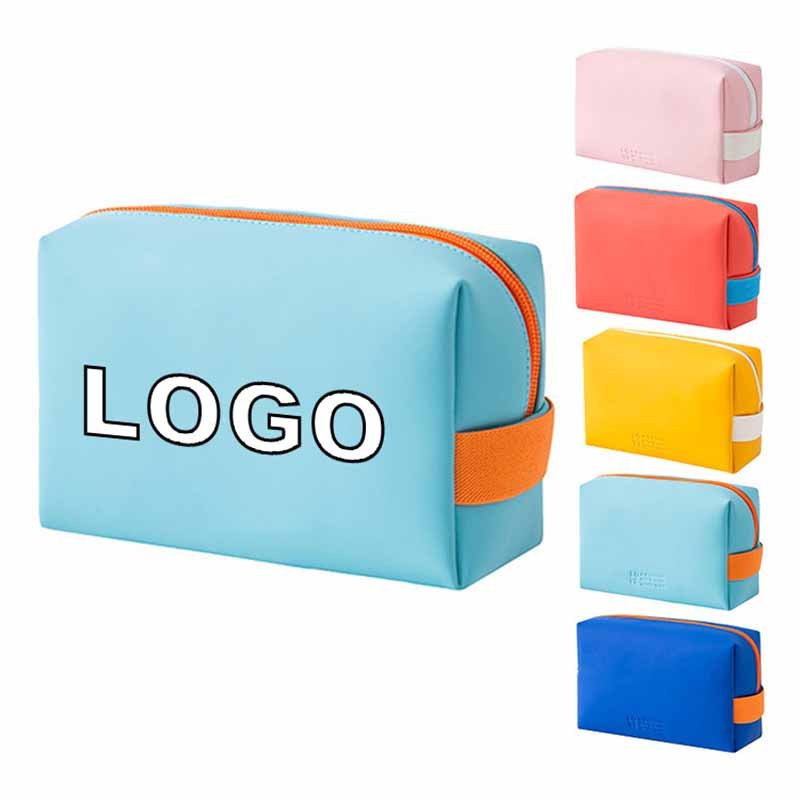
Custom bag production workflow is a step-by-step system used by factories to develop and manufacture bags. It connects design, materials, engineering, and production into one coordinated process so that the final product matches expectations in both appearance and performance.
What defines Custom Bag Production Workflow?
A complete workflow is built from several key stages. Each stage has a clear role and output. Skipping or rushing any stage often leads to problems later.
Core stages include:
- concept definition
- technical specification setup
- material sourcing
- pattern development
- sample production
- structure testing and revision
- bulk production planning
- cutting, stitching, and assembly
- quality inspection
- packaging and shipment
Each stage feeds into the next. For example, if the material is not clearly defined, the sample may not represent the final product. If the sample is not fully tested, defects may appear during bulk production.
Below is a practical workflow breakdown:
| Stage | What Happens | What You Should Check |
|---|---|---|
| Concept | Define bag type and use | Is the design realistic? |
| Specs | Confirm size, structure | Are details complete? |
| Materials | Choose fabrics & parts | Are materials suitable? |
| Sampling | Build first sample | Does it match expectations? |
| Production | Mass manufacturing | Is consistency stable? |
| QC | Inspect finished goods | Are defects controlled? |
| Delivery | Pack and ship | Is packaging correct? |
For clients, the key is not just knowing the stages, but understanding what decisions need to be made at each step.
Why is Custom Bag Production Workflow important?
A structured workflow directly reduces uncertainty. Without it, even simple projects can become complicated.
Common issues caused by weak workflow:
- samples not matching original idea
- repeated revisions increasing cost
- inconsistent quality across batches
- delays in delivery
- communication gaps between client and factory
From a business perspective, the impact is measurable:
| Factor | Clear Workflow | Unclear Workflow |
|---|---|---|
| Sample rounds | 1–2 rounds | 3–5+ rounds |
| Lead time | Predictable | Frequently delayed |
| Cost control | Stable | Unexpected increases |
| Defect rate | Lower | Higher |
| Communication | Efficient | Repetitive clarification |
For small and medium brands, this is especially important. A delayed shipment or inconsistent product can affect online sales, customer reviews, and inventory planning.
A well-managed workflow allows you to:
- launch products faster
- maintain consistent quality
- reduce hidden costs
- build long-term supplier reliability
Are all Custom Bag Production Workflows the same?
The overall structure is similar, but the actual workflow varies depending on the product.
Key factors that change workflow complexity:
- material type
- bag structure
- function and use
- customization level
- production volume
Examples:
| Product Type | Workflow Complexity | Key Challenge |
|---|---|---|
| Simple tote bag | Low | Basic stitching |
| Drawstring bag | Low | Fabric cutting accuracy |
| Neoprene laptop sleeve | Medium | Thickness control |
| Neoprene cooler bag | Medium | Insulation structure |
| Sports protection gear | High | Ergonomic design |
| Medical support products | Very high | Precision and stability |
Neoprene products, which are a core area for Szoneier, require additional control over:
- material thickness consistency
- lamination bonding strength
- edge finishing behavior
This means the factory must understand not only bag production, but also material behavior.
Choosing a supplier that specializes in your product type can significantly reduce development time and improve final quality.
How Does Custom Bag Production Workflow Start?
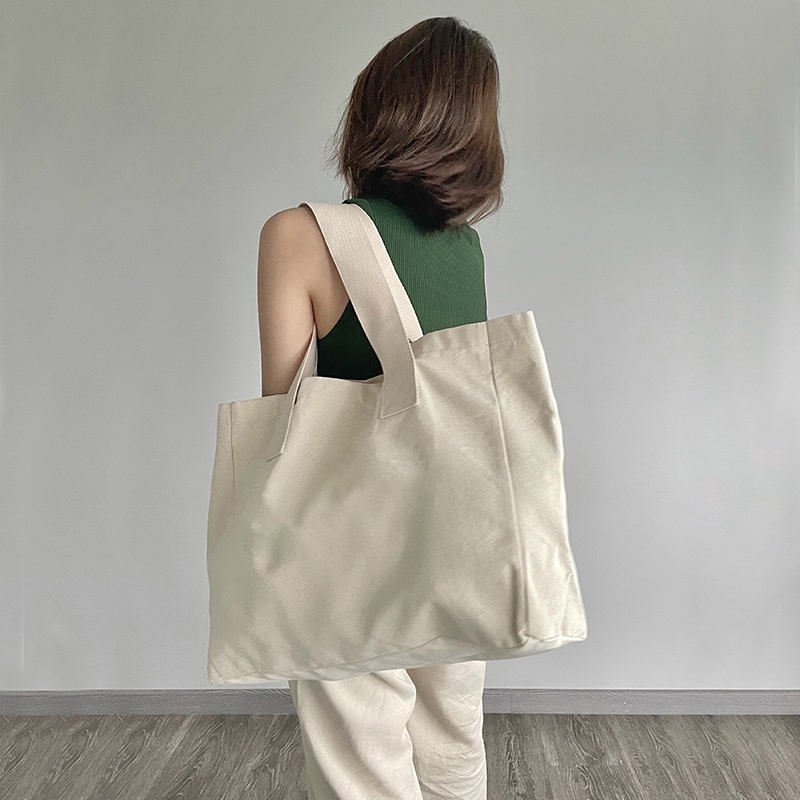
Custom bag production workflow starts with clearly defining the product concept and technical requirements. The more detailed the input at this stage, the fewer revisions are needed later.
How to begin Custom Bag Production Workflow?
Every project begins with an idea, but a usable idea must be converted into clear instructions.
Essential starting information:
- bag type (tote, backpack, cooler, etc.)
- intended use (daily, outdoor, medical, promotional)
- target market (budget, mid-range, premium)
- approximate size and capacity
- logo requirements
Providing visual references helps significantly. Even simple sketches or photos can reduce misunderstanding.
Comparison of project start quality:
| Input Level | Result |
|---|---|
| Detailed references + size + function | Faster sampling |
| Only general idea | More revisions |
At Szoneier, many successful projects begin with just:
- reference images
- basic size requirement
- logo file
From there, the factory can build a structured development plan.
What details start Custom Bag Production Workflow?
Once the concept is defined, technical details must be confirmed. These details directly affect cost, durability, and production method.
Key details include:
- fabric type (neoprene, polyester, nylon, canvas)
- thickness and structure
- inner lining and padding
- zipper type and quality level
- printing or logo method
- color specification
- functional features (pockets, compartments)
Each decision changes production requirements.
Example:
| Decision | Impact |
|---|---|
| Neoprene vs polyester | Changes cutting and stitching method |
| Thick padding | Increases cost and production time |
| Waterproof zipper | Improves function but raises cost |
| Complex structure | Increases labor time |
A clear specification reduces back-and-forth communication and helps the factory produce accurate samples faster.
How do samples fit Custom Bag Production Workflow?
Sampling is where the concept becomes a real product. It is the stage where most problems are identified and corrected.
Sampling allows you to check:
- size accuracy
- material feel
- structure stability
- logo placement
- overall appearance
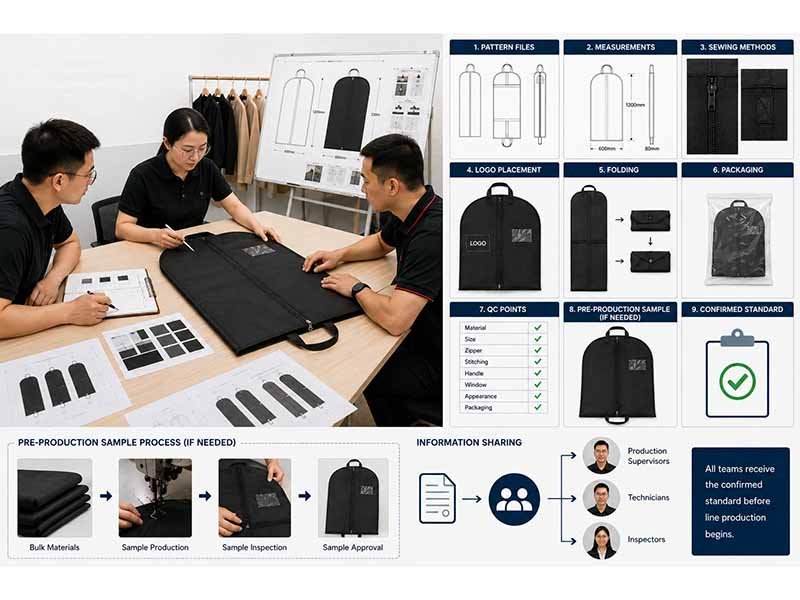
Standard sampling process:
- pattern creation
- material preparation
- manual cutting
- assembly
- internal inspection
Typical timeline:
| Step | Time |
|---|---|
| Pattern making | 2–3 days |
| Sample production | 5–7 days |
| Adjustment | 3–5 days |
For most custom projects, 7–10 days is a reasonable sampling time.
Key point: sampling is not just about appearance. It is about testing function. A bag that looks good but does not perform well will fail in real use.
What problems happen when the starting stage is unclear?
Many production issues originate from the beginning stage. When details are missing or unclear, problems appear later in the process.
What are common early-stage mistakes?
Common mistakes include:
- unclear size or dimensions
- no defined material type
- unrealistic price expectations
- incomplete logo files
- lack of functional requirements
These issues lead to:
- incorrect samples
- repeated revisions
- increased cost
- delayed production
How can these problems be avoided?
A simple approach:
- define key specifications early
- provide clear references
- confirm material and structure before sampling
- review samples carefully before approval
A well-prepared project reduces risk significantly.
Which Materials in Custom Bag Production Workflow?
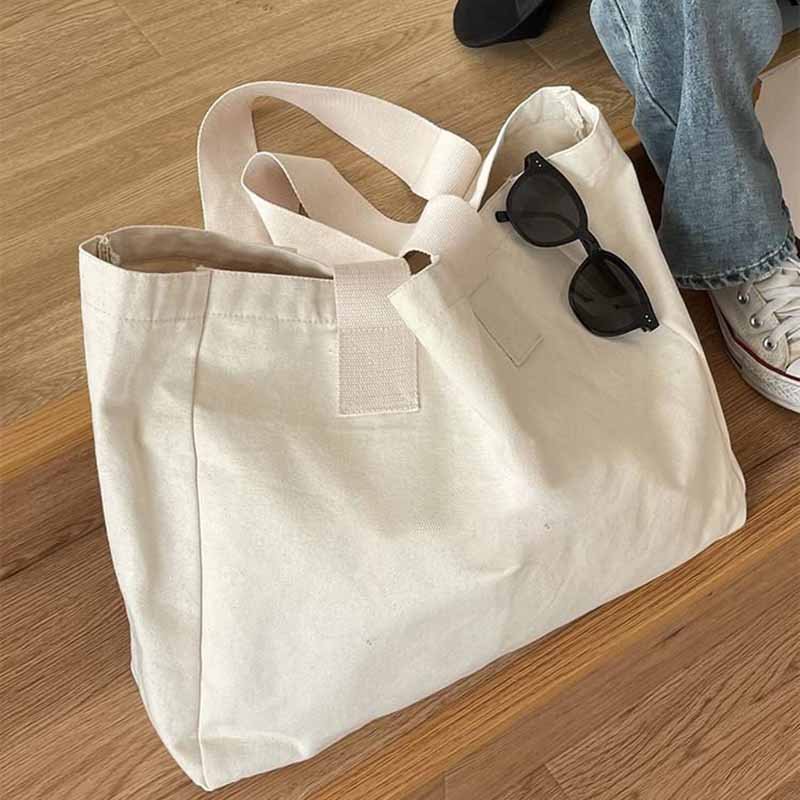
Material selection is one of the most important decisions in custom bag production workflow. It directly affects product durability, appearance, cost, and production method. Choosing the right material is not only about looks—it determines how the bag performs in real use and how stable the production process will be.
Which fabrics in Custom Bag Production Workflow?
Different fabrics are used depending on the bag’s function, price level, and target market. Each material has its own characteristics, advantages, and limitations.
Below is a practical comparison of common bag materials:
| Material | Features | Best Use |
|---|---|---|
| Neoprene | Soft, elastic, shock-resistant, water-resistant | Laptop sleeves, cooler bags, sports bags |
| Polyester | Lightweight, cost-effective, durable | Backpacks, tote bags |
| Nylon | Strong, abrasion-resistant | Outdoor and travel bags |
| Canvas | Thick, natural look | Fashion and casual bags |
| PU leather | Smooth appearance, easy to clean | Fashion and business bags |
Neoprene, which is a core strength of Szoneier, offers several advantages:
- excellent cushioning and protection
- flexible structure for ergonomic design
- strong resistance to water and temperature changes
- clean and modern appearance
However, neoprene also requires specialized production techniques, such as:
- controlled lamination process
- precise thickness management
- clean edge cutting to avoid rough edges
This is why working with a factory experienced in neoprene production significantly improves product quality and consistency.
How do materials affect Custom Bag Production Workflow?
Material choice affects almost every step of the workflow:
- cutting method
- stitching technique
- edge finishing
- assembly complexity
- production speed
For example:
| Material | Cutting Method | Stitching Behavior |
|---|---|---|
| Neoprene | Die cutting or laser cutting | Requires stable tension control |
| Polyester | Standard cutting | Easy to sew |
| Canvas | Heavy-duty cutting | Requires stronger needles |
| PU leather | Precision cutting | Sensitive to needle marks |
Material thickness is another key factor:
| Thickness | Impact |
|---|---|
| Thin (1–2 mm) | Lightweight, flexible, lower cost |
| Medium (3–5 mm) | Balanced structure |
| Thick (5–8 mm) | Strong protection, higher cost |
Thicker materials often increase:
- production time
- labor cost
- shipping weight
But they also improve:
- durability
- product feel
- perceived value
Choosing the right balance depends on your product positioning.
What parts are used in Custom Bag Production Workflow?
In addition to fabric, a bag includes multiple components that affect both function and quality.
Common components:
- zippers (nylon, metal, waterproof)
- buckles (plastic, metal)
- webbing straps
- foam or padding layers
- lining fabric
- Velcro or magnetic closures
Each component has different quality levels.
Example of zipper comparison:
| Zipper Type | Cost | Performance |
|---|---|---|
| Standard nylon zipper | Low | Basic use |
| SBS/YKK zipper | Medium–high | Smooth and durable |
| Waterproof zipper | High | Water resistance |
Using low-quality components can lead to:
- zipper failure
- broken buckles
- poor user experience
For many products, accessories account for 20–40% of total quality perception, even though they may represent a smaller portion of cost.
At Szoneier, material and accessory selection is always aligned with the product’s target market to ensure balance between cost and performance.
How Does Custom Bag Production Workflow Run?
Once materials and samples are confirmed, the workflow moves into production. This stage transforms approved samples into bulk products through controlled manufacturing steps.
How is pattern made in Custom Bag Production Workflow?
Pattern making is the foundation of production. It converts design and sample data into precise cutting templates.
Pattern development includes:
- defining each panel shape
- adding seam allowances
- marking stitching lines
- planning assembly sequence
Accurate patterns ensure:
- consistent size
- proper alignment
- efficient assembly
If patterns are incorrect:
- parts may not fit together
- production errors increase
- material waste rises
Pattern formats:
| Type | Use |
|---|---|
| Paper pattern | Sampling |
| Digital pattern | CNC cutting |
| Metal die | Bulk production |
At Szoneier, patterns are often refined after sampling to ensure they are suitable for large-scale production.
How is cutting done in Custom Bag Production Workflow?
Cutting is the first physical step in production. It determines how accurately materials match the pattern.
Common cutting methods:
- manual cutting (small orders)
- die cutting (bulk production)
- CNC cutting (high precision)
Comparison:
| Method | Accuracy | Efficiency |
|---|---|---|
| Manual | Medium | Low |
| Die cutting | High | High |
| CNC cutting | Very high | Medium |
For neoprene products, cutting quality is especially important. Poor cutting can cause:
- uneven edges
- material deformation
- inconsistent dimensions
Cutting also affects material usage. Efficient cutting layouts can improve material utilization by 5–10%, which directly reduces cost.
How is stitching done in Custom Bag Production Workflow?
Stitching connects all parts together and defines the structural strength of the bag.
Key stitching factors:
- stitch density (SPI)
- thread type and thickness
- machine type
- operator skill
Stitching quality affects:
- durability
- appearance
- load-bearing capacity
Below is a simple reference:
| Stitch Type | Use |
|---|---|
| Single stitch | Basic seams |
| Double stitch | Reinforced areas |
| Box stitch | High stress points |
Common issues in poor stitching:
- loose threads
- uneven stitch lines
- seam breakage under stress
For neoprene, stitching must balance strength and flexibility. Excessive tension can damage the material, while low tension reduces durability.
How is logo added in Custom Bag Production Workflow?
Branding is a key part of custom bag production. Different logo methods create different visual effects and cost structures.
Common logo methods:
- screen printing
- heat transfer printing
- embroidery
- embossed logo
- rubber patch
- woven label
Comparison:
| Method | Look | Cost |
|---|---|---|
| Screen printing | Flat, clean | Low |
| Embroidery | Premium texture | Medium |
| Rubber patch | 3D effect | Medium–high |
| Heat transfer | Detailed graphics | Medium |
Logo placement must be planned during pattern design. Incorrect placement can:
- distort logo appearance
- affect stitching alignment
- reduce product aesthetics
At Szoneier, logo methods are selected based on:
- product type
- material compatibility
- brand positioning
How to Control Custom Bag Production Workflow?
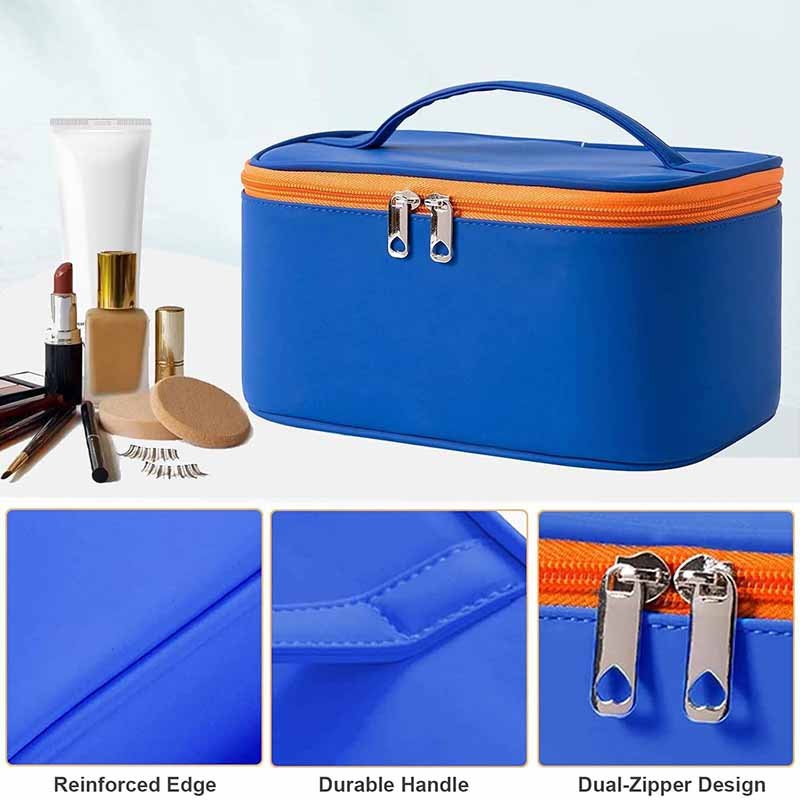
Controlling custom bag production workflow means managing quality, reducing errors, keeping production on schedule, and ensuring the final product matches the approved sample. A well-controlled workflow is the difference between a smooth project and one filled with delays, defects, and unexpected costs.
How is quality checked in Custom Bag Production Workflow?
Quality control is not a single step at the end—it runs throughout the entire production process. Each stage has its own inspection points to prevent problems from moving forward.
Key quality control stages:
- incoming material inspection
- in-line production inspection
- semi-finished product check
- final product inspection
- packaging inspection
Below is a typical QC structure:
| Stage | What is Checked |
|---|---|
| Material check | Fabric thickness, color consistency |
| Cutting check | Shape accuracy, edge quality |
| Stitching check | Thread tension, seam alignment |
| Assembly check | Structure and functionality |
| Final inspection | Overall appearance and defects |
For example, in neoprene bag production, material thickness consistency is critical. A variation of even 0.5 mm can affect structure and appearance.
Factories with strong QC systems usually control defect rates within 1–3%, while weak systems may result in 5–10% or higher, which directly impacts your business.
How to reduce errors in Custom Bag Production Workflow?
Reducing errors is about prevention, not correction. Once a defect appears in bulk production, fixing it becomes expensive and time-consuming.
Common causes of errors:
- unclear production instructions
- incorrect pattern or sample
- inconsistent materials
- untrained workers
- lack of process control
Effective error reduction methods:
- confirm sample before production
- standardize production procedures
- train workers for specific products
- use consistent material batches
- implement multi-stage inspection
Below is a comparison:
| Approach | Result |
|---|---|
| Reactive (fix after problem) | Higher cost, delays |
| Preventive (control before production) | Stable quality, lower cost |
At Szoneier, error reduction focuses on:
- clear pre-production confirmation
- strict sample reference control
- continuous in-line inspection
This approach minimizes risk and improves overall production stability.
How long is Custom Bag Production Workflow?
Lead time depends on product complexity, order quantity, and material availability. Understanding realistic timelines helps you plan inventory and sales.
Typical timeline breakdown:
| Stage | Time |
|---|---|
| Design confirmation | 1–3 days |
| Sampling | 7–10 days |
| Material preparation | 3–7 days |
| Bulk production | 15–30 days |
| Quality inspection | 2–3 days |
| Packaging & shipping prep | 2–5 days |
Total timeline: 25–45 days for most custom projects.
Factors that increase lead time:
- complex structure
- special materials
- large order quantity
- multiple revisions
- peak production season
Factors that reduce lead time:
- clear specifications
- simple design
- ready materials
- experienced factory
At Szoneier, fast sampling and efficient workflow allow many projects to move from concept to shipment within 30–40 days, depending on complexity.
How is shipping handled in Custom Bag Production Workflow?
Shipping is the final step but must be planned early. Poor planning can lead to delays, damaged goods, or increased cost.
Common shipping methods:
| Method | Time | Cost | Best Use |
|---|---|---|---|
| Air freight | 5–10 days | High | Urgent orders |
| Sea freight | 20–40 days | Low | Large orders |
| Express (DHL/UPS) | 3–7 days | Very high | Samples |
Packaging also affects shipping:
- standard carton packaging for bulk
- individual poly bags for protection
- custom packaging for branding
Incorrect packaging can lead to:
- product damage
- increased shipping cost
- poor customer experience
At Szoneier, packaging is customized based on product type and shipping method to ensure safe delivery and cost efficiency.
What Costs Should You Expect in Custom Bag Production Workflow?
Understanding cost structure helps you control budget and avoid unexpected expenses. Many clients focus only on unit price, but total cost includes multiple elements.
What makes up the total cost?
Main cost components:
- material cost (40–60%)
- labor cost (20–30%)
- accessories (10–20%)
- packaging (5–10%)
- logistics (variable)
Below is a simplified breakdown:
| Cost Element | Percentage |
|---|---|
| Materials | 40–60% |
| Labor | 20–30% |
| Accessories | 10–20% |
| Packaging | 5–10% |
Material choice is the biggest cost factor. For example:
- neoprene is more expensive than polyester
- thicker materials increase both material and labor cost
- premium accessories raise overall product value
How to optimize cost without lowering quality?
Cost optimization does not mean using cheaper materials. It means improving efficiency.
Effective strategies:
- optimize pattern layout to reduce waste
- simplify structure without losing function
- select balanced material quality
- standardize components across products
- plan production quantities efficiently
Example:
| Strategy | Impact |
|---|---|
| Better cutting layout | Reduce material cost by 5–10% |
| Simplified structure | Reduce labor time |
| Bulk material purchase | Lower unit cost |
At Szoneier, cost optimization is part of product development, helping clients achieve better margins without sacrificing quality.
Final Thoughts — Why Workflow Determines Product Success
Custom bag production workflow is not just a process—it is a system that connects design, materials, production, and quality into one continuous operation.
A well-managed workflow delivers:
- consistent product quality
- stable production timelines
- controlled costs
- reliable supplier cooperation
A poorly managed workflow leads to:
- repeated revisions
- delayed shipments
- inconsistent products
- higher long-term costs
For brands, the difference is clear. Products developed with a structured workflow are easier to scale, easier to reorder, and more competitive in the market.
Start Your Custom Bag Project with Szoneier
If you are planning to develop custom bags, choosing the right factory is critical. You need a partner that understands not only production, but also workflow management from start to finish.
Whether you are developing:
- neoprene bags
- cooler bags
- sports products
- medical supports
- promotional items
Our team can help turn your idea into a reliable, scalable product.
Send us your design, logo, or concept today. Let Szoneier help you build a custom bag that not only looks good—but performs well, delivers on time, and supports your business growth.