Skip to content
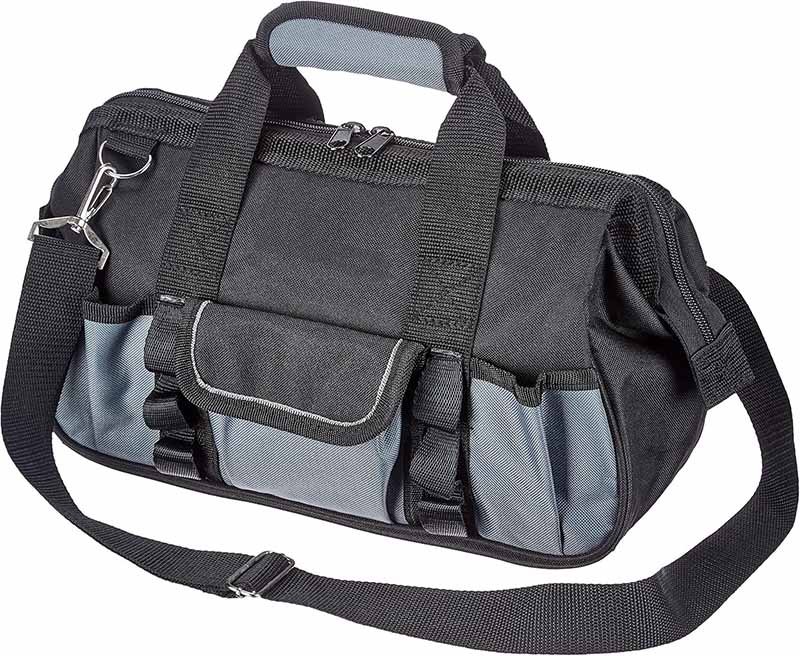
A mechanic tool bag may look like a simple product at first glance, but anyone who has worked with real tools knows that this category is very unforgiving. A normal bag may only need to hold a laptop, documents, or personal items. A mechanic tool bag needs to carry steel tools, handle repeated loading and unloading, survive dragging across rough floors, and keep its shape after weeks or months of daily use. If the design is weak, the problems show up quickly: torn handles, collapsed structure, jammed zippers, broken piping, worn corners, and poor pocket balance. For the user, that means wasted time, damaged tools, frustration on the job, and in some cases extra replacement cost within a very short period.
A mechanic tool bag is a heavy-duty bag developed for storing, organizing, protecting, and transporting repair tools in working environments where weight, abrasion, dust, oil, and repeated handling are normal. Good manufacturing is not only about sewing fabric together. It includes material selection, load-bearing design, reinforcement planning, practical pocket layout, and stable quality control during production.
That is why choosing the right factory matters so much. On paper, many suppliers can show a nice sample photo. In actual use, only experienced manufacturers know how to build a tool bag that keeps performing after thousands of lifts, full-load carrying, and rough workshop use. At Szoneier, this difference becomes clear whenever customers send us old samples from previous suppliers. Many looked good on the outside, but once we opened them, the problems were obvious: weak webbing, loose bar-tack stitching, thin lining, poor edge binding, and bottom panels with almost no real support. A mechanic tool bag is not won by appearance alone. It is won by structure, details, and manufacturing discipline. That is where this guide starts.
What Is a Mechanic Tool Bag?
A mechanic tool bag is a portable heavy-duty storage bag made for carrying repair and maintenance tools in practical working conditions. It is different from ordinary bags because it must support high weight, resist wear from metal tools, and allow quick access to tools during work. A good mechanic tool bag is built around function first, with materials and structure chosen to improve durability, organization, and carrying comfort.
What tools fit in a mechanic tool bag?
A mechanic tool bag is designed to hold more than just a random mix of tools. In real working environments, users expect it to carry a practical set of daily repair items without becoming unstable, overly heavy, or difficult to organize. Depending on the job type, the contents may include hand tools, measuring tools, hardware parts, power tool accessories, safety items, and small replacement components.
A standard loading list often includes the following:
- Combination wrenches
- Ratchets and sockets
- Screwdrivers in multiple sizes
- Pliers, cutters, and crimping tools
- Measuring tape and small rulers
- Hex keys
- Torque accessories
- Fasteners such as screws, nuts, and bolts
- Utility knife
- Electrical tape
- Flashlight
- Gloves
- Small diagnostic tools
The load capacity requirement is much higher than many customers expect. In many practical use cases, a mechanic tool bag carries between 10 kg and 25 kg. For field service teams, automotive technicians, or industrial maintenance workers, the weight can go even higher when metal tools, socket sets, and compact power accessories are packed together.
Below is a common loading reference:
| Tool Category | Common Quantity | Approximate Weight |
|---|---|---|
| Hand tools | 12–25 pcs | 4–10 kg |
| Metal accessories | 20–60 pcs | 2–5 kg |
| Socket or wrench sets | 1–3 sets | 3–8 kg |
| Small consumables | 10–40 pcs | 1–3 kg |
| Safety and support items | 3–8 pcs | 0.5–2 kg |
This tells us something important. A mechanic tool bag is not carrying soft goods. It is carrying concentrated weight, hard edges, and irregular shapes. That changes everything about product development. The pockets cannot just be decorative. The bottom cannot be thin. The handle cannot be attached with basic stitching only. The full bag must stay balanced when picked up, even when the internal weight is uneven.
For custom orders, it is also useful to understand the user type. An auto repair mechanic may need different pocket sizes than an HVAC technician. An electrician may need more upright slots for screwdrivers and pliers. A service engineer may need a mixed layout with both open access and zipped compartments. This is why experienced factories do not start with fabric. They start with tool-loading logic.
How is a mechanic tool bag different?
A mechanic tool bag is different from a general-purpose tool bag or ordinary work bag in three important ways: weight tolerance, wear resistance, and work efficiency. These three points affect almost every design and manufacturing decision.
First, the weight requirement is much higher. An ordinary bag is usually designed around light or medium-duty use. In contrast, a mechanic tool bag is expected to carry dense, heavy metal tools again and again. This means the fabric, webbing, handle construction, zipper choice, pocket attachment, and bottom support all need stronger specifications. A bag that looks strong in a sample room may fail quickly once it is loaded with real tools every day.
Second, the contact damage is more severe. Clothing, documents, or travel items do not scrape the inside of a bag the way pliers, sockets, and sharp-edged metal parts do. Mechanic tool bags face constant abrasion from inside and outside. Corners wear out. Internal seams rub. Zippers are stressed from overloading. If the bag uses weak material or weak reinforcement, its service life becomes very short.
Third, the organization requirement is much more practical. Users do not want a big empty cavity where everything gets mixed together. They want a layout that helps them work faster. That means:
- Vertical tool slots for quick grab access
- Deeper pockets for bulkier tools
- Strong elastic holders where needed
- Zippered pockets for small parts
- Wide mouth opening for visibility
- Structured side panels to prevent collapse
The table below shows the difference clearly:
| Item | Ordinary Bag | Mechanic Tool Bag |
|---|---|---|
| Main purpose | Carry personal items | Carry heavy repair tools |
| Weight range | 3–8 kg | 10–25 kg or more |
| Abrasion level | Low to medium | High |
| Pocket function | General storage | Task-based organization |
| Bottom structure | Often soft | Reinforced or molded |
| Handle requirement | Basic | Heavy-duty reinforced |
| Use environment | Daily casual use | Workshop, site, vehicle, field work |
This is why many cheap bags fail even when they look acceptable online. They are produced like ordinary bags but sold like industrial products. Serious customers should pay close attention to the manufacturing logic behind the appearance.
Why do mechanics need a heavy-duty tool bag?
Mechanics need a heavy-duty tool bag because failure on the job is expensive. If a light-use bag tears in daily life, it is inconvenient. If a mechanic tool bag fails during work, it can slow repairs, damage tools, create safety issues, and reduce trust in the product immediately.
The most common failure points in poor-quality tool bags are easy to identify:
- Handle base tearing
- Shoulder strap anchor breakage
- Zipper tooth damage
- Pocket seam opening
- Bottom abrasion wear-through
- Shape collapse after repeated use
In tool bag development, these are not small details. These are the difference between a product that lasts 2 months and a product that lasts 2 years.
From actual product review patterns and factory feedback across heavy-duty bag categories, durability complaints are usually concentrated in a few structural areas. A large share of returns come from stress points rather than from the main fabric itself. Many customers focus too much on fabric thickness and not enough on construction. In reality, a 1680D fabric with weak stitching can fail faster than a 900D or 1200D fabric with proper reinforcement.
A heavy-duty mechanic tool bag should solve the following real problems:
- It should carry weight without distortion
- It should protect the user’s tools from disorganized movement
- It should reduce time spent searching for tools
- It should resist workshop dirt, friction, and repeated lifting
- It should remain usable even after long-term rough handling
Here is a simplified performance comparison:
| Performance Area | Basic Bag | Heavy-Duty Mechanic Tool Bag |
|---|---|---|
| Daily load support | Limited | Strong |
| Tool organization | Low | High |
| Abrasion resistance | Moderate | High |
| Service life under work use | Short | Long |
| User efficiency | Lower | Higher |
| Replacement risk | Higher | Lower |
For distributors, importers, and brand owners, this also connects directly to commercial performance. Better durability means fewer complaints, fewer returns, stronger repeat orders, and a more credible product line. For B2B customers, that matters just as much as factory price.
Which Mechanic Tool Bag Materials Work Best?
The best mechanic tool bag materials are the ones that match the bag’s working conditions, load level, and market position. High-strength polyester, nylon, reinforced canvas, PVC-backed fabrics, and coated materials are widely used because they balance durability, cost, weight, and resistance to moisture, oil, and abrasion. Material choice should be based on real use, not just on thickness or price alone.
Which fabric is best for a mechanic tool bag?
There is no one material that fits every mechanic tool bag project. The right answer depends on what the customer wants the product to do, how long it should last, what price range it must meet, and what kind of user it serves. In Szoneier’s production experience, the most common outer materials for mechanic tool bags are polyester, nylon, canvas, and selected coated composites.
Each fabric has a different role in the market:
- Polyester is widely used for cost-effective heavy-duty bags
- Nylon is preferred for stronger, more premium applications
- Canvas works well for rugged appearance and traditional styling
- PVC or TPU-supported structures add resistance and support in special conditions
Below is a practical comparison:
| Material | Common Specification | Strength Level | Weight | Cost Level | Common Use |
|---|---|---|---|---|---|
| Polyester | 600D / 900D / 1200D / 1680D | High | Medium | Medium | Mainstream tool bags |
| Nylon | 840D / 1000D / 1680D | Very high | Medium | Medium-high | Premium heavy-duty bags |
| Canvas | 16 oz / 20 oz / 24 oz | Medium-high | Higher | Medium | Rugged classic tool bags |
| PVC-backed fabric | Various | High | Higher | Medium-high | Water-resistant structured bags |
| TPU-laminated fabric | Various | High | Medium-high | High | Specialty work bags |
For most custom mechanic tool bag projects, 600D polyester is considered entry level, while 1680D polyester and 1000D or 1680D nylon are more suitable for premium heavy-use products. Fabric thickness alone does not determine quality. The backing, yarn construction, coating quality, and sewing method all affect final performance.
A useful way to think about material choice is to ask these questions:
- Will the bag be used every day or only occasionally?
- Will it carry light hand tools or dense heavy metal sets?
- Does the market prioritize lower price or longer life?
- Does the product need a rugged industrial look or a cleaner branded appearance?
- Will it be used indoors, outdoors, or in vehicles?
Many customers ask for the thickest material available, but that is not always the best solution. A heavier fabric may increase cost, reduce flexibility, and make the bag unnecessarily bulky. The better goal is balanced performance. A well-built 1680D polyester bag with reinforced bottom support and strong stitching often performs better in the market than a badly designed “extra-thick” bag with poor construction.
Is nylon or polyester better for tool bags?
This is one of the most practical questions in tool bag manufacturing because nylon and polyester dominate a large share of custom heavy-duty bag production. Both can perform well, but they serve slightly different priorities.
Nylon is usually stronger in tear resistance and abrasion performance. It is often chosen for projects where the customer wants a more premium heavy-duty feel, longer service life, or stronger performance under rough handling. It also tends to feel a little more refined in higher-spec builds. For customers targeting professional users, industrial maintenance teams, or premium branded tool storage products, nylon is a strong choice.
Polyester, on the other hand, is more cost-efficient and widely accepted in the market. It still offers good durability, especially in 900D, 1200D, and 1680D versions. For many mid-range and volume orders, polyester gives a strong balance between performance and price. It is easier to position commercially when the project needs to stay competitive in cost without dropping into very low-grade quality.
Here is a direct comparison:
| Factor | Nylon | Polyester |
|---|---|---|
| Tear strength | Higher | High |
| Abrasion performance | Excellent | Good to very good |
| Cost | Higher | Lower |
| Market positioning | Premium | Mainstream |
| Weight feel | Often lighter for strength | Slightly heavier feel in some builds |
| Long-term heavy use | Excellent | Good to very good |
For practical buying decisions:
Choose nylon when you want:
- Better strength performance
- Premium positioning
- More demanding daily-use durability
- Higher perceived product value
Choose polyester when you want:
- Better cost control
- Stable quality for medium to high volume orders
- Good durability with easier pricing
- Strong commercial flexibility
In many cases, the final decision is not only technical. It is business-driven. If your sales channel needs a stronger price advantage, polyester may be the smarter route. If your product line needs a more professional performance image and lower complaint risk in hard-use situations, nylon may create better long-term value.
Are waterproof mechanic tool bags necessary?
Not every mechanic tool bag needs to be fully waterproof, but many do need some level of protection against water, oil, dirt, and workshop moisture. This is an area where many products are marketed incorrectly. Customers often use the word waterproof loosely, but in production terms, there are different levels of protection, and they should not be confused.
The three common levels are:
| Protection Level | Meaning | Suitable Use |
|---|---|---|
| Water-resistant | Handles light splashes and minor moisture | Indoor and basic work use |
| Water-repellent | Better protection under moderate exposure | Mixed indoor and outdoor use |
| Waterproof | Strong barrier against water penetration | Marine, emergency, harsh outdoor use |
For most mechanic tool bags, full waterproof construction is not necessary. What matters more is a practical combination of water resistance, oil resistance, and easy cleaning. In automotive and industrial settings, oil stains, dirty floors, and occasional liquid contact are more common than full submersion.
The most common ways to improve resistance are:
- PU coating on the fabric surface or backing
- PVC backing for added body and moisture resistance
- TPU lamination for stronger protective performance
- Rubberized or molded base to keep the bottom off wet surfaces
- Covered zippers or protected openings in upgraded designs
Customers should also understand that material treatment alone is not enough. A bag can use coated fabric but still allow water entry through stitching holes, zipper areas, or open-top structure. So when discussing “waterproof” with a factory, it is important to define the real requirement clearly.
For example:
If the tool bag is for general repair workshops:
- Water-resistant fabric is usually enough
If the tool bag is for field maintenance or vehicle service:
- Water-repellent fabric plus reinforced base is better
If the tool bag is for outdoor technical service, marine use, or emergency repair:
- Stronger waterproof materials and structure may be required
This distinction helps customers avoid overpaying for features they do not need while still getting the right performance for the product’s actual use.
What other material details affect tool bag performance?
Outer fabric gets most of the attention, but the real performance of a mechanic tool bag depends on a full material system. Many low-quality products use acceptable-looking outer fabric but reduce cost in the hidden parts. That is where failure often begins.
A professional tool bag project should also evaluate:
- Lining thickness and abrasion resistance
- Webbing width and tensile strength
- Zipper quality and slider smoothness
- Binding tape strength
- Foam or board support in side walls
- Base reinforcement materials
- Hook-and-loop quality where used
- Buckle and hardware grade
Here is a simple materials checklist that serious customers should review with a manufacturer:
| Component | What to Check |
|---|---|
| Outer fabric | Denier, coating, abrasion resistance |
| Lining | Thickness, tear resistance, color fastness |
| Webbing | Width, density, pull strength |
| Zipper | Brand or grade, size, tooth type |
| Bottom panel | Board support, rubber base, anti-wear layer |
| Stitching thread | Thickness, consistency, thread type |
| Reinforcement tape | Placement at handles and stress points |
This is where an experienced factory adds real value. A good manufacturer does not simply quote by appearance. They help adjust the full material combination based on target price, usage scenario, and expected product life. That approach leads to better product stability and stronger long-term market performance.
How Is a Mechanic Tool Bag Designed?
A mechanic tool bag is designed by balancing load capacity, structure stability, and user efficiency. It must support heavy tools without collapsing, distribute weight evenly, and allow quick access during work. Good design is not about adding more pockets, but about organizing space in a way that matches real usage habits and reduces stress on key structural points.
How is a mechanic tool bag structured?
The structure of a mechanic tool bag determines whether it performs well or fails quickly. A well-designed structure must maintain its shape under load, prevent deformation, and ensure that the bag remains stable when carried or placed on the ground.
A typical structure includes the following layers:
- Outer shell (abrasion-resistant fabric)
- Inner lining (protects structure and tools)
- Reinforcement layer (foam, PE board, or EVA)
- Base support (rigid board or molded bottom)
The most critical part is the bottom structure, because it carries the highest stress.
There are three common bottom designs:
| Bottom Type | Structure | Performance | Use Case |
|---|---|---|---|
| Soft bottom | Fabric only | Low support | Light-duty bags |
| Reinforced board bottom | PE board inside | Medium–high support | Standard mechanic bags |
| Molded base (EVA/PVC) | Hard external shell | Very high support | Heavy-duty / premium |
From production experience, more than 60% of durability issues come from weak bottom structure. When the base is too soft, the bag sags, tools shift, and stitching points become overloaded.
Another important structural factor is side wall support. Without internal reinforcement, the bag collapses when partially filled, making it harder to access tools and increasing wear on seams.
For professional-grade tool bags, we usually recommend:
- PE board thickness: 1.5–3 mm
- EVA base thickness: 3–5 mm
- Double-layer bottom fabric for added protection
A strong structure does not just improve durability. It improves user experience, making the bag easier to use every day.
What features improve tool bag durability?
Durability is not controlled by one element. It is the result of multiple design details working together. Many bags fail because one or two of these details are ignored during development.
The most important durability features include:
1. Reinforced stitching (bar-tack points)
Key stress areas must use bar-tack reinforcement, especially:
- Handle connections
- Shoulder strap anchors
- Pocket openings
- Zipper ends
A standard stitch is not enough. Without reinforcement, seams will open under repeated load.
2. Heavy-duty webbing handles
Handles should not rely only on fabric panels. They should be built using high-density webbing that runs across the body of the bag.
Typical specifications:
| Component | Recommended Spec |
|---|---|
| Webbing width | 30–50 mm |
| Breaking strength | ≥ 1200 kg |
| Stitching passes | 2–4 layers |
3. Industrial-grade zippers
Zippers are one of the most common failure points.
- #8 or #10 zippers are recommended
- Double sliders improve usability
- Metal or reinforced plastic teeth perform better under stress
4. Edge binding and seam protection
Edges experience constant friction. Poor binding leads to early wear and fabric exposure.
5. Anti-wear bottom layer
Adding a rubberized or double-layer bottom significantly increases lifespan.
Here is a simplified durability comparison:
| Feature Level | Basic Bag | Professional Tool Bag |
|---|---|---|
| Stitching | Single stitch | Reinforced + bar-tack |
| Handle | Fabric only | Webbing reinforced |
| Zipper | #5 standard | #8–#10 heavy-duty |
| Bottom | Single fabric | Reinforced / molded |
| Lifespan | 3–6 months | 12–36 months |
For B2B customers, durability directly affects:
- Return rate
- Customer satisfaction
- Brand reputation
- Repeat orders
This is why cutting cost on these details often leads to higher long-term losses.
Which pockets make a tool bag more practical?
Pocket design is where many tool bags go wrong. Some designs look complex but are not practical. Others look simple but perform extremely well because they match real user behavior.
A good pocket system should follow three principles:
- Fast access
- Clear organization
- Load balance
The most effective pocket types include:
1. Vertical tool slots
- Ideal for screwdrivers, pliers, and wrenches
- Keeps tools upright and easy to grab
2. Deep side pockets
- For bulkier tools or grouped items
- Prevents small items from falling out
3. Zippered compartments
- For small parts like screws and accessories
- Prevents loss during transport
4. Elastic loops
- Flexible holding for irregular shapes
- Common in electrician or technician bags
5. Wide opening main compartment
- Improves visibility
- Reduces time searching for tools
Here is a practical layout comparison:
| Layout Type | Pros | Cons |
|---|---|---|
| Too many small pockets | Organized appearance | Hard to use in real work |
| Minimal pockets | Simple | Poor organization |
| Balanced layout | Efficient + flexible | Best performance |
From user feedback, the most common complaints are:
- Pockets too tight or too loose
- Tools falling out when moving
- Difficult access when bag is full
- Poor visibility inside the bag
A well-designed tool bag reduces working time because users can:
- Find tools faster
- Keep tools organized
- Avoid repeated searching
This directly improves productivity on the job site.

How Is a Mechanic Tool Bag Manufactured?
Mechanic tool bag manufacturing is a step-by-step process that includes material preparation, cutting, sewing, assembly, and quality control. Each stage must follow strict standards to ensure the final product can handle heavy use, maintain structure, and meet durability expectations.
How are mechanic tool bag materials selected?
Material selection is not only about choosing fabric type. It is about building a complete material system that matches the product’s performance target and price level.
At Szoneier, material selection usually follows this process:
Step 1: Define product positioning
- Entry-level, mid-range, or premium
- Target market (retail, industrial, professional use)
Step 2: Confirm load requirement
- Expected weight range (10 kg, 20 kg, 30 kg+)
Step 3: Choose fabric combination
- Outer fabric
- Lining
- Reinforcement materials
Step 4: Select accessories
- Zippers
- Webbing
- Buckles
- Thread
Here is an example of a mid-to-high-end configuration:
| Component | Specification |
|---|---|
| Outer fabric | 1680D polyester with PU coating |
| Lining | 210D polyester |
| Bottom | PE board + rubber base |
| Webbing | 38 mm heavy-duty |
| Zipper | #10 heavy-duty zipper |
| Thread | High-strength polyester thread |
Many problems in tool bags come from mismatched materials. For example:
- Strong fabric + weak zipper → zipper failure
- Thick fabric + thin thread → seam breakage
- Heavy load + soft bottom → deformation
Material selection must be consistent across all components.
What steps are used to produce tool bags?
The production process of a mechanic tool bag is more complex than standard bags because of reinforcement and structure requirements.
The main production steps include:
1. Material cutting
- Fabric is cut according to pattern
- Precision is important for structural consistency
2. Panel preparation
- Pockets are sewn first
- Reinforcement layers are added
- Zippers and accessories are attached
3. Main body assembly
- Front, back, and side panels are connected
- Structural layers are inserted
4. Bottom construction
- Base reinforcement is installed
- Extra stitching applied
5. Handle and strap installation
- Webbing is attached with reinforced stitching
- Load-bearing points are tested
6. Final shaping and trimming
- Excess threads removed
- Shape adjusted
A simplified process timeline:
| Stage | Time Share |
|---|---|
| Cutting | 10–15% |
| Preparation | 25–30% |
| Sewing & assembly | 40–50% |
| Finishing | 10–15% |
The most critical stage is sewing and reinforcement, because this determines the final strength of the product.
How is mechanic tool bag quality tested?
Quality control is what separates a reliable factory from a risky supplier. A tool bag may look good visually, but without proper testing, hidden weaknesses will appear after shipment.
At Szoneier, quality control is typically done in three stages:
1. Incoming material inspection
- Fabric density check
- Color consistency
- Coating quality
- Accessory testing
2. In-line production inspection
- Stitching quality
- Reinforcement accuracy
- Measurement control
3. Final inspection (100% check)
- Appearance
- Functionality
- Load-bearing test
Key testing items include:
| Test Item | Method | Purpose |
|---|---|---|
| Load test | Simulated weight carrying | Check structure strength |
| Drop test | Loaded bag drop | Check seam durability |
| Abrasion test | Friction simulation | Check fabric wear resistance |
| Zipper test | Repeated open/close | Check zipper life |
| Handle pull test | Force test | Check stitching strength |
For heavy-duty tool bags, load testing is especially important. A common standard is:
- Load 20–30 kg
- Lift repeatedly (50–100 times)
- Check for deformation or failure
Factories that skip these tests often produce products with unstable quality.
For B2B customers, a strong QC system means:
- Lower defect rate
- More consistent shipments
- Better brand reputation
- Reduced after-sales cost
How to Choose a Mechanic Tool Bag Manufacturer?
Choosing a mechanic tool bag manufacturer is not only about comparing prices. It is about evaluating whether the factory can consistently deliver durable products, stable quality, and reliable service. A good manufacturer understands materials, structure, and real usage conditions, while also supporting customization, reasonable MOQ, and predictable lead times.
What makes a reliable mechanic tool bag factory?
A reliable factory is defined by its production capability, experience, and consistency, not just by its sample quality. Many suppliers can produce one good sample, but fewer can maintain the same standard across bulk production.
When evaluating a factory, focus on these key areas:
1. Experience in heavy-duty bag manufacturing
Factories that specialize in fashion bags may not understand tool bag requirements. Mechanic tool bags require knowledge of:
- Load-bearing design
- Reinforcement techniques
- Abrasion-resistant materials
- Industrial sewing standards
At Szoneier, with over 18 years of bag manufacturing experience, a large portion of projects involve heavy-duty and functional bags, which require stricter production standards than casual bags.
2. Material sourcing capability
A strong factory should offer multiple material options and clearly explain the differences.
Check whether the factory can provide:
- 600D–1680D polyester options
- 840D–1680D nylon
- Canvas (16–24 oz)
- PVC / TPU coated fabrics
- Reinforced bottom materials
A factory that only offers one or two materials may limit your product positioning.
3. In-house development and sampling ability
Fast and accurate sampling is critical.
Typical professional standards:
| Item | Industry Standard | Szoneier Capability |
|---|---|---|
| Sample lead time | 7–10 days | 5–7 days |
| Design support | Limited | Free design assistance |
| Sample revision | Slow | Fast iteration |
Sampling is where many problems are solved early. A factory that responds quickly helps reduce development time and risk.
4. Production capacity and stability
Bulk production must be consistent.
Important factors include:
- Skilled workers
- Stable production lines
- Clear process control
- Capacity to handle medium to large orders
For B2B customers, unstable production leads to:
- Delivery delays
- Quality inconsistency
- Lost sales opportunities
5. Quality control system
A reliable factory should not rely on final inspection only.
Look for:
- Material inspection before production
- In-line quality checks
- 100% final inspection before shipment
At Szoneier, every order goes through full inspection before shipment, which helps reduce defect rates significantly.
How do MOQ and lead time affect mechanic tool bag orders?
MOQ (Minimum Order Quantity) and lead time directly affect your purchasing flexibility, inventory planning, and cash flow.
1. MOQ considerations
MOQ is often misunderstood as a fixed number, but it actually depends on:
- Material type
- Complexity of design
- Number of colors
- Logo method
Typical MOQ ranges:
| Product Type | MOQ Range |
|---|---|
| Simple tool bags | 50–100 pcs |
| Medium complexity | 100–300 pcs |
| Complex designs | 300–500 pcs |
At Szoneier, we support low MOQ starting from 50 pcs, which is suitable for:
- Small brands
- Market testing
- New product launches
2. Sampling lead time
Sampling speed determines how fast you can move forward.
Typical timeline:
- Standard samples: 5–7 days
- Complex designs: 7–10 days
Faster sampling means:
- Quicker product validation
- Faster market entry
- Reduced development cost
3. Production lead time
Production depends on order size and complexity.
| Order Size | Lead Time |
|---|---|
| 100–500 pcs | 20–25 days |
| 500–2000 pcs | 25–30 days |
| 2000+ pcs | 30–40 days |
Short and stable lead times help:
- Maintain stock levels
- Meet sales deadlines
- Avoid supply chain disruptions
Should you choose OEM or private label mechanic tool bags?
The choice between OEM and private label depends on your business model and growth stage.
OEM (Original Equipment Manufacturing)
- Fully customized design
- Custom materials, structure, and features
- Higher development flexibility
Suitable for:
- Established brands
- Unique product positioning
- Long-term product strategy
Private label (custom logo on existing design)
- Faster to launch
- Lower development cost
- Based on proven designs
Suitable for:
- New sellers
- Distributors
- Market testing
Comparison overview:
| Option | Development Time | Cost | Flexibility |
|---|---|---|---|
| OEM | Longer | Higher | Very high |
| Private Label | Shorter | Lower | Medium |
At Szoneier, we support both:
- Full OEM customization
- Private label production
- Custom logo methods (printing, embroidery, patches, etc.)
This allows customers to choose the most suitable approach based on their market strategy.
Work With Szoneier to Customize Your Mechanic Tool Bags
If you are sourcing mechanic tool bags, the goal is not just to find a supplier — it is to find a manufacturing partner who understands your product, your market, and your quality expectations.
At Szoneier, we focus on helping customers build products that perform well in real use, not just in product photos.
Here is what we offer:
Manufacturing Strength
- 18+ years of bag manufacturing experience
- Strong capability in heavy-duty and functional bags
- Wide material options (polyester, nylon, canvas, PVC, TPU, EVA, etc.)
Customization Support
- OEM & ODM services
- Private label customization
- Free design assistance
- Multiple logo methods
Flexible Order Conditions
- Low MOQ from 50 pcs
- Fast sampling (5–7 days)
- Stable production lead time (20–30 days)
Quality Assurance
- 100% inspection before shipment
- Strict material and production control
- Focus on durability and performance
For many customers, the biggest challenge is not finding a factory — it is finding one that can consistently deliver the same quality across every order.
That is where experience, process control, and attention to detail make the difference.
Ready to start your project?
If you are planning to develop or source mechanic tool bags, you can contact Szoneier with:
- Your design or idea
- Target price range
- Quantity plan
- Material preference (if any)
Our team will help you:
- Optimize structure and materials
- Suggest cost-effective solutions
- Provide fast sampling
- Support you from development to production
Send your inquiry today and get a professional solution for your custom mechanic tool bag project.