
Choosing a Beach Bags Factory for Premium Resort & Lifestyle Brands:The Ultimate Guide
- Eric
- March 6, 2026
- 8:25 am
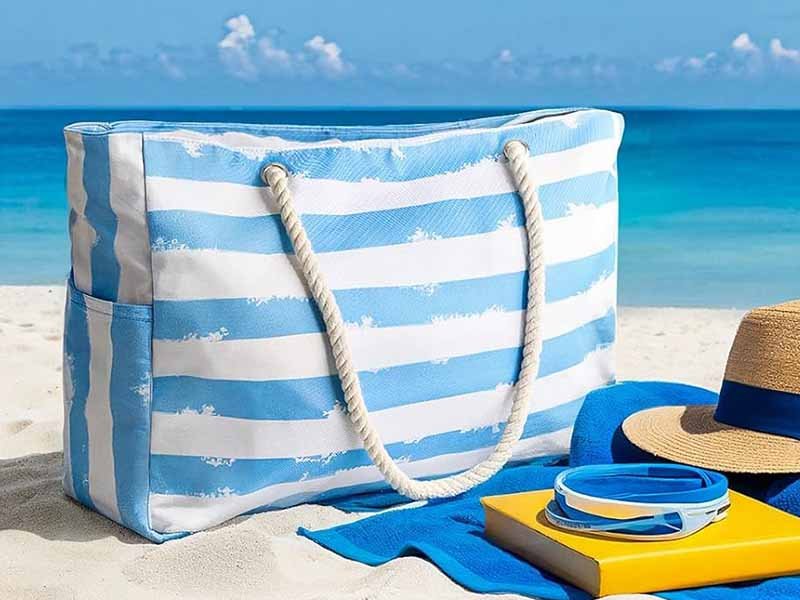
Premium resort and lifestyle brands operate in a market where product perception matters as much as product function. A beach bag is not simply a container for towels and sunscreen—it represents the brand’s aesthetic, lifestyle message, and customer expectations. Guests at luxury resorts expect accessories that feel thoughtful, durable, and visually aligned with the destination experience. A poorly made bag with weak stitching or cheap fabric can quietly undermine a brand’s reputation.
At the same time, sourcing beach bags is becoming more complicated. Buyers must consider material durability, production capacity, sustainability claims, customization capability, and supply chain reliability. Choosing the wrong factory often results in inconsistent quality, delayed production timelines, or limited customization options that restrict product creativity.
Choosing a beach bags factory for premium resort brands means evaluating a supplier’s experience with durable materials, customization capability, quality control systems, and flexible production. A reliable factory should support multiple fabrics, offer branding methods, maintain strict quality standards, and provide efficient sampling and production processes that help lifestyle brands launch high-quality products quickly.
A few years ago, a resort retailer shared an experience that illustrates the risk clearly. They launched a beautiful beach tote collection designed for boutique hotels. The design looked perfect—but after two weeks of use, the rope handles began tearing at the seams. The issue wasn’t the design. It was the factory’s lack of structural engineering experience.
Stories like this are common in the beach accessories industry. The difference between a generic bag supplier and a specialized beach bags factory can determine whether a product becomes a best-selling resort item—or a costly recall.
Let’s explore how to make the right choice.
What Makes Beach Bags Premium?
Premium beach bags combine durable materials, well-engineered structure, comfortable carrying systems, and refined finishing details that maintain performance in harsh coastal environments. A high-quality beach bag should withstand 15–20 kg loads, strong UV exposure, sand abrasion, and salt moisture while maintaining shape and appearance after repeated use.
Unlike ordinary tote bags, beach bags are exposed to conditions that accelerate wear. Sand particles act like fine abrasives, saltwater weakens fibers, and sunlight fades dyes. For resort brands and lifestyle retailers, the difference between a standard bag and a premium one often comes down to construction decisions that customers may not immediately see but quickly feel during use.
A well-designed beach bag is usually built around four core elements:
- material durability
- structural reinforcement
- functional usability
- refined finishing
When these four elements are balanced correctly, the bag not only looks attractive in a resort boutique but also performs reliably during travel and daily beach use.
What materials make beach bags durable?
Material choice determines how long a beach bag can survive exposure to sand, sun, and water. Premium beach bags typically use medium to heavy-weight fabrics that resist tearing and deformation under load.
Below are common material specifications used in higher-quality beach bags.
| Material | Typical Weight | Strength | Common Use |
|---|---|---|---|
| Cotton canvas | 12–20 oz | High | Classic beach totes |
| Polyester | 600D–1200D | Very high | Travel beach bags |
| Nylon | 420D–840D | Very high | Lightweight beach bags |
| Neoprene | 3–5 mm thickness | Excellent | Luxury beach bags |
| Jute | 10–14 oz | Medium | Eco beach bags |
For example, 16 oz canvas is widely used for resort beach totes because it balances durability and natural texture. Lighter canvas fabrics below 10 oz may feel soft but often lose structure when carrying heavy items such as towels or water bottles.
Another practical factor is color fastness under UV exposure. Premium fabrics usually achieve grade 4–5 color fastness, which helps prevent fading after prolonged sun exposure.
Many brands also add functional coatings to improve durability:
| Coating Type | Purpose |
|---|---|
| PU coating | Adds water resistance |
| PVC lamination | Waterproof interior layer |
| Wax finish | Improves stain resistance |
| TPU coating | Flexible waterproof protection |
For instance, a canvas beach bag may use a PU-coated polyester lining inside to protect against moisture from wet swimsuits or towels.
These layered constructions improve both longevity and usability.
What styles appeal to resort customers?
Resort customers typically prefer beach bags that combine large capacity with effortless style. While aesthetics are important, practicality often determines whether guests continue using the bag throughout their vacation.
Most beach bags sold in resort boutiques fall within these size ranges:
| Bag Type | Capacity | Typical Dimensions |
|---|---|---|
| Standard beach tote | 18–22 L | 45 × 35 × 15 cm |
| Oversized beach tote | 25–35 L | 50 × 38 × 18 cm |
| Travel beach bag | 30–40 L | 55 × 40 × 20 cm |
Oversized beach totes are particularly popular because beachgoers typically carry several items:
- towels
- sunscreen
- sandals
- books or tablets
- water bottles
- sunglasses
- snacks
To support this load comfortably, premium beach bags often include:
- reinforced base panels
- thick cotton rope handles
- adjustable shoulder straps
- internal waterproof pockets
Interior organization also improves usability. For example, many high-end beach bags now include separate waterproof compartments where users can store wet clothing after swimming.
Another emerging design trend is sand-resistant mesh panels integrated into the bag base or interior pockets. These allow sand to fall out rather than accumulate inside the bag.
Such practical features increase customer satisfaction and reduce the chance of product complaints.
What quality checks ensure premium beach bags?
Quality control is one of the most important yet overlooked factors in beach bag production. Premium beach bags must undergo several tests to ensure they can withstand real-world use.
Professional bag factories typically perform the following tests during production.
| Test | Purpose |
|---|---|
| Handle load test | Verifies handle strength |
| Fabric abrasion test | Measures resistance to sand friction |
| Color fastness test | Ensures dyes resist UV fading |
| Seam strength test | Confirms stitching durability |
| Water resistance test | Protects bag contents |
The handle load test is especially critical. A properly reinforced beach bag should support 15–20 kg of weight without seam deformation.
Handle attachment areas usually receive additional reinforcement such as:
- bartack stitching
- cross stitching
- double-layer fabric panels
These reinforcements distribute stress evenly across the bag structure.
Stitch density also affects durability. Premium beach bags often maintain 8–10 stitches per inch, creating tighter seams that resist tearing.
Another important detail is base reinforcement. Many high-end beach bags include a structured base layer made from:
- EVA foam
- PE board
- double canvas layers
This reinforcement prevents the bag from sagging when filled with heavy items.
Finally, quality inspection during production ensures consistency across large orders. Experienced factories inspect:
- fabric alignment
- stitching uniformity
- logo accuracy
- hardware functionality
These inspections help brands maintain a consistent product standard across every shipment.
Customized Common Types of Beach Bags
Beach bags come in several practical styles designed for different beach activities and travel needs. The most common types include oversized beach totes, rope-handle beach bags, waterproof beach bags, mesh beach bags, neoprene beach bags, and foldable travel beach bags. Each type differs in capacity, structure, materials, and functionality, allowing brands to choose designs that match their target customers and retail positioning.
For resort brands and travel retailers, selecting the right beach bag style is just as important as choosing the right materials. Different customers use beach bags in different ways. Some need large bags to carry towels and clothing, while others prefer lightweight options that fit easily into luggage.
Understanding the most popular beach bag styles helps brands design collections that match real customer behavior.
Oversized Beach Tote Bags
Oversized beach tote bags are the most widely used style in resort environments. These bags typically feature an open-top structure with large interior space and strong handles.
Most oversized beach totes fall within the following size range:
| Feature | Typical Range |
|---|---|
| Width | 45–55 cm |
| Height | 35–40 cm |
| Depth | 15–20 cm |
| Capacity | 25–35 liters |
The main advantage of oversized beach totes is their ability to carry multiple items at once, such as:
- beach towels
- sunscreen bottles
- water bottles
- books or tablets
- sandals
- extra clothing
These bags are commonly made from canvas, cotton, or heavy polyester fabrics, which provide both durability and structure.
Premium resort versions often include:
- reinforced bottom panels
- internal zipper pockets
- thick cotton rope handles
- waterproof lining layers
Oversized beach totes are popular with resort gift shops, boutique hotels, and coastal retailers because they balance functionality and visual appeal.
Rope Handle Beach Bags
Rope-handle beach bags are known for their nautical style and comfortable carrying design. Instead of flat webbing handles, these bags use thick cotton rope handles that feel soft in the hand and distribute weight evenly.
Typical rope handle specifications include:
| Component | Typical Measurement |
|---|---|
| Rope diameter | 18–25 mm |
| Handle drop length | 22–30 cm |
| Reinforcement | Bartack stitching |
The rope handles not only improve comfort but also create a strong visual identity associated with coastal lifestyles.
These bags are often made with canvas or cotton fabrics and may include additional decorative elements such as:
- leather logo patches
- striped canvas panels
- brass eyelets for rope attachment
Rope-handle beach bags are especially popular among luxury resorts and lifestyle brands that want a design that reflects maritime culture.
Waterproof Beach Bags
Waterproof beach bags are designed for situations where moisture protection is essential. These bags are particularly useful for activities such as boating, swimming, and water sports.
Unlike traditional beach totes, waterproof bags use coated or laminated fabrics to prevent water from entering the bag.
Common waterproof materials include:
| Material | Waterproof Level | Typical Thickness |
|---|---|---|
| PVC coated polyester | High | 0.4–0.6 mm |
| TPU laminated fabric | Very high | 0.3–0.5 mm |
| Neoprene | Medium-high | 3–5 mm |
Waterproof beach bags usually include features such as:
- roll-top closures
- sealed seams
- waterproof zippers
- reinforced welded panels
These features help protect items like phones, wallets, and electronics from water exposure.
Waterproof beach bags are often used by:
- water sports enthusiasts
- boat owners
- travelers visiting tropical destinations
Mesh Beach Bags
Mesh beach bags are designed specifically to deal with one common beach problem—sand accumulation.
Traditional fabric bags trap sand inside, which can quickly become messy. Mesh beach bags solve this issue by allowing sand to fall through the bag structure.
Common materials used in mesh beach bags include:
| Mesh Type | Typical Use |
|---|---|
| Polyester mesh | Lightweight beach bags |
| Nylon mesh | Durable sports bags |
| PVC mesh | Waterproof beach gear bags |
Mesh beach bags are typically used for carrying:
- beach toys
- snorkeling equipment
- wet towels
- sandals
These bags are often lighter than traditional beach totes and dry quickly after exposure to water.
Although mesh bags are more functional than decorative, many lifestyle brands incorporate colored mesh fabrics or patterned linings to enhance visual appeal.
Neoprene Beach Bags
Neoprene beach bags have gained popularity in recent years because of their modern appearance and soft texture.
Neoprene is a synthetic rubber material that provides excellent flexibility and cushioning. It is commonly used in wetsuits, which makes it naturally suitable for beach environments.
Typical neoprene bag specifications include:
| Feature | Typical Range |
|---|---|
| Thickness | 3–5 mm |
| Weight | Medium |
| Water resistance | High |
Neoprene beach bags usually feature minimalist designs with smooth surfaces and bold color blocks.
Advantages of neoprene include:
- strong water resistance
- soft and comfortable texture
- high durability under repeated folding
- modern aesthetic appeal
Because of these features, neoprene beach bags are commonly used by premium lifestyle brands and fashion-oriented travel retailers.
Foldable Travel Beach Bags
Foldable beach bags are designed for travelers who want a lightweight bag that can be packed easily inside luggage.
These bags are typically made from lightweight nylon or polyester fabrics and can be folded into small pouches.
Typical specifications include:
| Feature | Typical Range |
|---|---|
| Fabric weight | 150–300 g/m² |
| Bag capacity | 15–25 liters |
| Folded size | 15–20 cm pouch |
Despite their lightweight structure, foldable beach bags often include practical features such as:
- zipper closures
- adjustable shoulder straps
- interior pockets
Travelers appreciate these bags because they can carry them in suitcases and use them only when needed during vacations.
Foldable beach bags are particularly popular among travel accessory brands and e-commerce retailers.
How brands choose the right beach bag types
When designing a beach bag collection, brands rarely rely on only one style. Instead, they often develop a small range of products targeting different customer needs.
For example, a typical resort retail collection might include:
| Product Type | Purpose |
|---|---|
| Oversized canvas beach tote | Main retail item |
| Rope handle beach bag | Premium lifestyle option |
| Waterproof beach bag | Water activity use |
| Foldable travel beach bag | Travel convenience |
| Mesh beach bag | Sports or family beach use |
Which Beach Bags Can Be Customized?
Most modern beach bags can be customized in materials, structure, size, branding, and accessories. Premium resort brands typically customize canvas totes, rope-handle beach bags, waterproof beach bags, foldable travel beach bags, and neoprene beach bags. A professional manufacturer should allow flexible customization in fabric selection, bag dimensions, logo application, handle design, and interior layout, enabling brands to develop beach bags that match their visual identity and customer needs.
In today’s resort retail market, customization is no longer limited to adding a logo to an existing bag. Many lifestyle brands develop beach bags that reflect their destination theme, seasonal color palettes, and customer lifestyle behaviors.
For example:
A Mediterranean resort brand may prefer natural canvas with rope handles, while a modern travel brand may choose lightweight nylon beach bags with waterproof compartments.
Understanding what elements of a beach bag can be customized helps brands design products that feel unique, functional, and consistent with their brand story.
Below are the key areas where beach bag customization usually happens.
Which fabrics work best for custom beach bags?
Fabric choice strongly influences how a beach bag feels, performs, and looks in a retail setting. Different materials communicate different brand identities.
Below are commonly customized fabrics used in beach bags.
| Fabric Type | Typical Weight | Advantages | Suitable Brands |
|---|---|---|---|
| Cotton canvas | 12–20 oz | Natural texture, strong structure | Resort boutiques |
| Polyester | 600D–1200D | Durable and colorfast | Travel brands |
| Nylon | 420D–840D | Lightweight and flexible | Sports lifestyle |
| Neoprene | 3–5 mm thickness | Soft and waterproof | Luxury beach bags |
| Jute | 10–14 oz | Sustainable appearance | Eco brands |
| TPU laminated fabric | Variable | Waterproof and modern | Water sports brands |
Canvas remains the most widely used material for resort beach bags because it provides a balance between durability and a relaxed coastal aesthetic.
For example, a standard resort beach tote may use:
- 16 oz cotton canvas exterior
- polyester waterproof lining
- reinforced rope handles
This structure combines durability, moisture protection, and visual appeal.
Some brands also choose mixed-material construction to improve performance.
Example hybrid beach bag construction:
| Component | Material |
|---|---|
| Exterior shell | Canvas |
| Interior lining | Waterproof polyester |
| Base reinforcement | EVA foam board |
| Handles | Cotton rope |
This layered structure increases the bag’s lifespan and improves user experience.
Another growing trend is recycled polyester fabrics, which appeal to environmentally conscious consumers. Many premium resorts now request fabrics made from recycled PET bottles, which reduces environmental impact while maintaining high durability.
Which printing and logo methods suit premium brands?
Logo application plays an important role in how customers perceive product quality. Resort brands usually prefer branding techniques that look refined and long-lasting, rather than loud or overly promotional.
Common logo methods used on beach bags include:
| Logo Method | Appearance | Durability | Typical Use |
|---|---|---|---|
| Screen printing | Bold graphics | High | Promotional bags |
| Embroidery | Textured stitching | Very high | Premium beach bags |
| Leather patch | Luxury detail | Very high | Resort collections |
| Heat transfer | Photo-quality prints | Medium | Fashion beach bags |
| Metal logo plate | Elegant branding | Very high | Luxury bags |
Embroidery is one of the most popular options for resort brands because it creates a subtle textured logo that feels premium without overpowering the design.
Leather patches are also widely used in lifestyle beach bags. A small leather patch with an embossed logo can elevate the product’s perceived value.
Logo placement also affects visual balance. Typical placements include:
| Placement Area | Purpose |
|---|---|
| Front center panel | Maximum visibility |
| Bottom corner | Subtle branding |
| Handle strap | Discreet logo detail |
| Leather patch | Premium aesthetic |
Resort boutiques often prefer smaller logo placements that maintain a clean and elegant appearance.
Another practical factor is color durability. High-quality printing methods should achieve color fastness levels of grade 4–5, ensuring logos remain clear even after prolonged sun exposure.
Which accessories and hardware elevate beach bags?
Hardware and accessories often determine whether a beach bag feels ordinary or premium. Even if the fabric quality is excellent, weak accessories can shorten the product’s lifespan.
Important accessories commonly customized in beach bags include:
- handles
- zippers
- metal rings
- base reinforcement
- interior pockets
Below is a comparison of standard vs premium hardware options.
| Component | Standard Option | Premium Option |
|---|---|---|
| Handles | Polyester webbing | Cotton rope |
| Zippers | Generic nylon zipper | YKK zipper |
| Rings | Standard metal | Stainless steel |
| Buckles | Plastic | Aluminum alloy |
| Base panel | Single fabric layer | EVA reinforced base |
Handles deserve particular attention because they carry the entire weight of the bag. Premium beach bags often use 20–25 mm thick cotton rope handles that distribute weight evenly and feel comfortable when carried for long periods.
Handle reinforcement methods may include:
- cross stitching
- bartack stitching
- internal reinforcement panels
Another important accessory is the reinforced base panel. Without base reinforcement, large beach bags tend to sag when carrying heavy items.
Factories often use materials such as EVA foam boards or PE support panels to stabilize the bag’s bottom.
Interior functionality also plays a key role in customization. Many modern beach bags include:
- waterproof inner pockets for wet clothing
- zipper pockets for valuables
- insulated compartments for drinks
These features significantly improve usability for travelers and resort guests.
Custom sizing and structural adjustments
Beyond materials and accessories, beach bags can also be customized structurally.
Important structural variables include:
| Feature | Customizable Range |
|---|---|
| Bag width | 35–55 cm |
| Bag height | 30–40 cm |
| Bag depth | 12–20 cm |
| Handle length | 50–65 cm |
Oversized beach bags usually range between 25–35 liters of capacity, allowing customers to carry multiple beach essentials comfortably.
Structural modifications may also include:
- reinforced top edges
- zipper closures
- magnetic snap buttons
- detachable shoulder straps
These structural decisions significantly affect how the bag performs in real-life situations.
For example, zipper closures help prevent items from falling out during travel, while open-top totes provide faster access at the beach.
Why customization matters for resort brands
For premium lifestyle brands, customized beach bags serve several strategic purposes.
First, they create brand recognition. A well-designed beach bag can become a recognizable product associated with a specific resort or destination.
Second, customization allows brands to match product design with their target customer profile.
For example:
Luxury resorts often prefer neutral colors and natural materials.
Younger lifestyle brands may favor bright prints and modern fabrics.
Finally, customized beach bags allow brands to offer exclusive retail products that cannot be easily replicated by competitors.
When all elements—materials, structure, branding, and accessories—are carefully designed together, the result is a beach bag that feels both functional and distinctive.
This is why experienced beach bag manufacturers focus on comprehensive customization options, rather than simply offering generic bag designs.
How to Choose a Reliable Beach Bags Factory
A reliable beach bags factory should be able to do five things well: understand beach bag construction, control quality consistently, support real customization, handle low-to-medium MOQ orders without chaos, and communicate clearly from sampling to shipment. For premium resort and lifestyle brands, the right factory is usually not the cheapest one. It is the one that can deliver stable quality, accurate samples, realistic lead times, and fewer problems after bulk production starts.
Many buyers only discover whether a factory is reliable after they have already paid for samples or placed a deposit for bulk production. By then, the costly problems start showing up: delayed material sourcing, sloppy stitching, wrong logo position, weak handles, poor color matching, or vague replies when issues appear.
A good beach bags factory should reduce those risks before production begins. It should help you make better decisions early, not just give you a fast quotation.
Below is how experienced buyers usually evaluate a beach bags factory in a more practical and detailed way.
How to check whether the factory really understands beach bags
Not every bag factory is good at beach bags. Some factories mainly make promotional totes, school bags, or cosmetic pouches. They may still quote for beach bags, but that does not mean they understand the real use conditions.
Beach bags are different because they usually need to handle:
- heavier loads
- larger body sizes
- stronger UV exposure
- wet contents
- sand abrasion
- more visible appearance requirements
A basic tote bag factory may be able to sew a large open bag, but that is not the same as producing a beach bag that keeps its shape, carries 15–20 kg, and still looks good after repeated travel and outdoor use.
When checking a factory, ask what kinds of beach bags they have made before, such as:
| Beach Bag Type | What It Shows |
|---|---|
| Canvas beach totes | Experience with structure and heavy fabrics |
| Rope handle beach bags | Knowledge of reinforcement and comfort |
| Waterproof beach bags | Experience with lining and coated materials |
| Neoprene beach bags | Ability to handle stretch materials |
| Foldable travel beach bags | Lightweight engineering capability |
If a factory has real experience, it should be able to discuss practical details, for example:
- what fabric weight is suitable for a large beach tote
- where the handle stress points usually fail
- whether the base needs reinforcement
- how to reduce sagging on oversized bags
- which lining materials dry faster after contact with wet items
These are not “sales answers.” These are engineering answers. That difference matters.
A factory that truly understands beach bags will often recommend adjustments before sampling. For example, they may suggest changing from 10 oz canvas to 16 oz canvas, adding a bottom support board, or widening the handle attachment area by 2–3 cm to improve load distribution.
That kind of input usually saves time and money later.
How to verify factory setup, not just the sales promise
A lot of suppliers sound professional in email. The real question is whether their internal system can support what they promise.
A reliable beach bags factory usually has a clearer structure behind the sales team. At minimum, you want to see evidence of these functions:
| Factory Function | Why It Matters |
|---|---|
| Development team | Turns ideas into workable bag structure |
| Sample room | Builds prototypes quickly and accurately |
| Material sourcing team | Finds correct fabric and trims |
| QC team | Checks quality during production |
| Production planning | Controls schedule and delivery |
If the supplier cannot explain who handles development, samples, bulk follow-up, and quality control, that is a warning sign. In small or unstable operations, one salesperson may be doing everything, which often leads to mistakes.
A stronger factory can usually explain its process clearly:
- receive design brief or reference sample
- review material and structure
- create pattern and sample
- confirm revisions
- source bulk materials
- start production with inline QC
- perform final inspection before shipment
This sounds simple, but many weak suppliers do not follow it consistently.
Another useful sign is whether the factory works with multiple materials. Premium beach bags often need more than just one standard fabric. A capable factory should be comfortable with combinations such as:
- canvas + waterproof lining
- polyester + mesh pockets
- neoprene + zipper closure
- jute + cotton webbing
- TPU + welded or stitched construction
If they only work with one or two easy fabrics, your design options will become limited very quickly.
How to evaluate sample quality the right way
A sample tells you much more than a quotation ever will. It shows whether the factory can translate your design into a real product with correct shape, clean finishing, and usable structure.
Most buyers look at samples mainly for appearance. That is not enough. A beach bag sample should be checked as a working product.
Here is a practical sample review checklist:
| Area | What to Look For |
|---|---|
| Size accuracy | Does it match requested dimensions within reasonable tolerance? |
| Stitching | Straight seams, even stitch length, no loose threads |
| Handle comfort | Comfortable width, correct drop length, secure attachment |
| Structure | Does the bag stand or collapse too easily? |
| Lining | Smooth installation, no bunching or twisting |
| Logo | Correct size, placement, color, and finish |
| Hardware | Smooth zipper action, strong rings, no rust risk |
For premium beach bags, stitch density often falls in the range of 8–10 stitches per inch. If stitching is too loose, seams may open under load. If it is too tight on certain fabrics, it can create puckering or weaken coated materials.
Handle reinforcement is especially important. Most beach bag complaints come from these areas:
- handle tearing away from body panel
- webbing twisting after use
- rope handles cutting into the hand
- seam splitting at the top opening
A better factory usually reinforces handle zones with:
- bartack stitching
- box-and-cross stitching
- hidden reinforcement panels
- double fabric layers at stress points
You should also do a simple manual load check on the sample. Fill the bag with about 10–15 kg and see what happens. Does the top edge distort badly? Do the handles pull unevenly? Does the base sag too much? These are practical signals that matter much more than polished sample photos.
Sample timing matters too. For custom beach bags, a normal first sample cycle is often around 5–10 days, depending on material availability and complexity. A factory that is unrealistically fast may be rushing. A factory that is too slow may have poor coordination.
How to compare MOQ, pricing, and lead time without making the wrong choice
Many buyers start by comparing quotations line by line. That makes sense, but price alone can be misleading.
A beach bag that is quoted $0.80 lower may end up costing more later if it leads to:
- weaker fabric
- lower-grade webbing
- thinner lining
- cheaper zippers
- more defects in bulk
- delayed shipment
A more useful approach is to compare price together with structure and materials.
For example:
| Cost Driver | Low-Cost Version | Better Version |
|---|---|---|
| Outer fabric | 10 oz canvas | 16 oz canvas |
| Handle | Basic webbing | Thick cotton rope or reinforced webbing |
| Base | No support | EVA or PE reinforcement |
| Lining | None or thin polyester | Waterproof lining with pockets |
| Logo | Basic print | Embroidery or patch |
The quote difference may only be 10–20%, but the quality difference can be much bigger in customer perception.
MOQ also needs context. Low MOQ is attractive, but not if it creates unstable pricing or inconsistent production. For many beach bag projects, reasonable MOQ ranges are often:
| Product Type | Practical MOQ Range |
|---|---|
| Basic canvas beach bags | 200–500 pcs |
| Polyester beach bags | 300–800 pcs |
| Neoprene beach bags | 100–300 pcs |
| Leather-trim resort beach bags | 100–200 pcs |
If a factory claims “any MOQ is fine,” ask how they manage material purchasing. Some fabrics, logo patches, or custom hardware have their own MOQ from upstream suppliers. A good factory will explain that clearly instead of hiding it until later.
Lead time should also be broken down, not given as one vague number. A more realistic structure looks like this:
| Production Stage | Typical Time |
|---|---|
| Sample development | 5–10 days |
| Sample revision | 3–7 days |
| Bulk material sourcing | 7–15 days |
| Bulk production | 20–30 days |
| Final inspection and packing | 2–5 days |
Factories that provide this level of detail are usually more dependable than suppliers who simply say “25 days no problem.”
How to judge communication and problem-solving ability
A reliable factory is not one that never has problems. It is one that handles problems clearly and early.
In real production, issues can happen:
- a fabric color is out of stock
- a zipper pull is delayed
- an embroidery sample is not clean enough
- a handle construction needs adjustment
- a packing method causes deformation
The difference between a good factory and a weak one is how they respond.
Good factories usually do these things:
- flag problems early
- provide options instead of excuses
- send photos or video for confirmation
- update timelines honestly
- explain technical tradeoffs in plain language
Weak factories often do the opposite:
- delay replying
- avoid specific answers
- promise unrealistic dates
- change materials without approval
- wait until bulk is done before admitting issues
For overseas buyers, communication speed matters, but communication quality matters more. A useful supplier reply should answer questions such as:
- what caused the issue
- what the impact is
- what the solution options are
- whether cost or lead time changes
That level of clarity reduces risk and makes product development much smoother.
What premium buyers usually look for before placing bulk orders
Before moving to bulk production, many experienced resort and lifestyle brands check for a few practical signs that a factory is ready.
These usually include:
| Checkpoint | Why It Matters |
|---|---|
| Accurate revised sample | Shows the factory can follow corrections |
| Clear BOM or material list | Prevents bulk material changes |
| Production timeline | Helps launch planning |
| Packing details | Reduces freight and damage risk |
| QC method | Improves consistency |
| Label and logo confirmation | Avoids branding mistakes |
For premium beach bags, even small errors can hurt the brand image. A logo placed 1.5 cm too high, a rope handle in the wrong shade, or a base panel that bends too easily may seem minor inside the factory, but they are very visible to end customers.
That is why the right factory is usually the one that treats those details seriously before production starts.
Do Materials Affect Beach Bags Performance?
Yes. The material used in a beach bag directly determines its durability, weight, water resistance, shape stability, and long-term appearance. A well-designed beach bag made from the wrong fabric can still fail after several weeks of use. For premium resort and lifestyle brands, choosing the correct material often makes the difference between a bag that lasts one vacation season and one that customers continue using for several years of travel.
Beach bags face a unique combination of environmental stresses that many other bags do not encounter simultaneously. These include:
- UV exposure from sunlight
- moisture from wet towels and swimsuits
- salt air near coastal environments
- sand abrasion
- heavier load weight than standard handbags
Because of these conditions, the material must balance strength, flexibility, moisture resistance, and visual appeal.
Even small differences in fabric weight or coating can significantly affect how the bag performs. For example, a 10 oz cotton canvas tote may feel soft and attractive in a store, but when filled with beach gear weighing 12–15 kg, it may stretch or sag quickly. In contrast, a 16–18 oz reinforced canvas bag maintains structure and carries weight more comfortably.
Understanding how different materials behave helps brands choose fabrics that match both the practical use environment and the visual identity of the product.
Do cotton and canvas offer a luxury feel?
Cotton and canvas fabrics remain some of the most recognizable materials for beach bags because they convey a natural, relaxed coastal aesthetic. Many resort brands choose canvas because it aligns well with the visual language of vacation culture—simple, durable, and timeless.
Canvas fabrics used in beach bags usually fall into the following weight categories:
| Canvas Weight | Fabric Strength | Typical Application |
|---|---|---|
| 8–10 oz | Light | Promotional tote bags |
| 12–14 oz | Medium | Casual beach totes |
| 16–20 oz | Heavy | Premium resort beach bags |
For beach bags that must carry large loads, most manufacturers recommend 16 oz canvas or heavier. This thickness helps prevent deformation when the bag is filled with items such as:
- beach towels
- water bottles
- sunscreen bottles
- books or tablets
- shoes or sandals
Another important factor is breathability. Natural fibers allow moisture to evaporate more easily than synthetic fabrics. This can help reduce odor buildup when wet clothing is stored inside the bag.
However, cotton fabrics also have limitations. They absorb water easily and may become heavier after exposure to moisture. Without protective finishing, cotton may also develop mildew in humid environments.
To improve performance, many premium beach bags use treated canvas fabrics, such as:
| Treatment | Benefit |
|---|---|
| Wax coating | Improves water resistance |
| PU coating | Protects fabric fibers |
| Laminated lining | Prevents moisture penetration |
Another common improvement is adding a polyester waterproof lining inside the canvas bag. This hybrid structure maintains the natural exterior appearance while protecting contents from moisture.
Canvas beach bags also pair well with materials such as leather handles or rope straps, which reinforce the resort aesthetic and improve carrying comfort.
Do polyester and nylon improve durability?
Synthetic fabrics such as polyester and nylon are widely used when durability and environmental resistance are priorities.
These materials perform particularly well under conditions involving sunlight exposure and moisture, which are common in beach environments.
Polyester fabrics used in beach bags often range between 600D and 1200D denier, with higher numbers indicating thicker and stronger fibers.
| Fabric Type | Denier Range | Strength | Typical Use |
|---|---|---|---|
| Polyester | 600D–1200D | High | Travel beach bags |
| Nylon | 420D–840D | Very high | Lightweight beach bags |
Polyester offers excellent UV resistance, meaning the fabric is less likely to fade when exposed to sunlight for long periods. This makes it a practical choice for colorful beach bags with printed patterns.
Nylon, on the other hand, is known for its high tensile strength and lighter weight. Nylon beach bags are often easier to fold and pack into suitcases, making them popular among travelers.
Both polyester and nylon can also be combined with protective coatings such as:
- PVC coating
- TPU lamination
- PU waterproof layers
These coatings significantly improve water resistance.
For example, a 600D polyester fabric with PVC coating can resist water penetration and protect contents even when the bag is placed on wet sand.
However, synthetic materials sometimes lack the natural texture and warmth that lifestyle brands seek. For that reason, some resort brands combine synthetic fabrics with natural design elements such as:
- cotton webbing handles
- leather logo patches
- woven decorative panels
This hybrid approach creates a balance between performance and aesthetics.
Do neoprene, PVC, or TPU add value for resorts?
Specialty materials such as neoprene, PVC, and TPU are becoming increasingly popular in modern beach bags because they offer stronger water resistance and a more contemporary appearance.
Neoprene is particularly interesting because it was originally developed for wetsuits. Its structure consists of a synthetic rubber core laminated between fabric layers.
This gives neoprene several advantages:
- excellent flexibility
- strong water resistance
- soft touch feel
- thick cushioning effect
Neoprene beach bags often use thicknesses between 3 mm and 5 mm, which helps the bag maintain shape while also protecting fragile items.
Luxury lifestyle brands sometimes choose neoprene because it provides a clean, minimalist look that contrasts with traditional canvas bags.
PVC and TPU materials serve a different purpose. They provide near-complete waterproof protection and are often used in water sports beach bags or boating accessories.
Below is a comparison of waterproof materials commonly used in beach bags.
| Material | Waterproof Level | Flexibility | Environmental Impact |
|---|---|---|---|
| PVC | Very high | Medium | Moderate |
| TPU | Very high | High | Lower |
| Neoprene | High | Very high | Moderate |
TPU has become increasingly popular because it offers similar waterproof performance to PVC while being more environmentally friendly and flexible.
Transparent TPU beach bags have also become a fashionable option in resort retail because they combine modern aesthetics with waterproof functionality.
These specialty materials are often used for beach bags that serve more specific purposes, such as:
- boating trips
- poolside storage
- water sports gear
- waterproof travel accessories
For brands targeting active travelers, these materials can significantly improve product performance.
How material selection influences long-term customer satisfaction
Material choice ultimately determines how customers experience a beach bag over time. If the material is too thin, the bag may sag or tear. If the material absorbs too much moisture, it may develop odor or mildew. If the fabric fades quickly under sunlight, the product may lose its visual appeal within weeks.
For resort brands, these problems can lead to negative customer reviews or reduced product credibility.
A good approach is to select materials based on real usage conditions rather than only aesthetic preference.
For example:
| Customer Scenario | Recommended Material |
|---|---|
| Luxury resort retail | Heavy canvas with rope handles |
| Travel beach bags | Polyester with waterproof lining |
| Foldable beach bags | Lightweight nylon |
| Water sports beach bags | TPU or PVC laminated fabrics |
| Premium minimalist designs | Neoprene |
Matching materials with usage scenarios helps brands create beach bags that customers continue using long after their vacation ends.
Ultimately, the material is not just a technical decision—it is a design choice that shapes how the bag performs, feels, and represents the brand.
Are MOQ, Lead Time & Logistics Key for Beach Bags?
Yes. Minimum order quantity (MOQ), production lead time, and logistics planning strongly influence whether a beach bag program runs smoothly or becomes delayed and costly. For resort brands and lifestyle retailers, beach bags are often seasonal products linked to travel demand. If production or shipping runs late by even 2–3 weeks, retailers may miss the peak vacation season, which can reduce sales opportunities significantly.
Unlike everyday bags that sell year-round, beach bags usually follow a clear seasonal cycle. Resorts, coastal shops, and summer travel retailers typically begin preparing their inventory 4–6 months before peak summer travel. This means manufacturers must coordinate material sourcing, production schedules, and international shipping timelines carefully.
When buyers overlook these factors early in the sourcing process, the problems often appear later—when the product is already in production and difficult to change.
Understanding how MOQ, production timing, and shipping work together helps brands avoid unnecessary delays and inventory risks.
Are small MOQ options possible for lifestyle brands?
Many resort boutiques and lifestyle brands prefer starting with smaller order quantities instead of committing to very large inventory volumes. This approach allows them to test new designs and observe customer demand before scaling production.
However, MOQ requirements depend heavily on material sourcing and factory production efficiency.
For example, certain materials used in beach bags—such as custom-dyed canvas, printed polyester, or embossed leather patches—often require their own minimum production quantities from upstream suppliers.
Typical MOQ ranges for beach bag production include:
| Beach Bag Type | Typical MOQ Range |
|---|---|
| Canvas beach bags | 200–500 pcs |
| Polyester beach bags | 300–800 pcs |
| Neoprene beach bags | 100–300 pcs |
| Premium leather-trim beach bags | 100–200 pcs |
Factories that specialize in OEM or private label production often support lower MOQs because they maintain:
- stable material supplier networks
- shared production lines
- flexible sewing teams
These capabilities allow them to manage smaller orders without increasing costs excessively.
Lower MOQs offer several advantages for brands:
- reduced inventory risk
- ability to test multiple designs
- faster response to market trends
- easier expansion of product collections
For instance, a resort boutique may introduce three beach bag styles at 300 units each rather than ordering 900 units of a single design. This diversified approach increases the chance that at least one product becomes a strong seller.
Another benefit of smaller MOQs is the ability to adjust designs in future orders. If customers prefer a slightly larger bag or a different handle length, the brand can modify the next production run without carrying large unsold inventory.
Are fast samples and design support available?
Sampling speed is one of the most important factors when developing new beach bags. Before moving into bulk production, brands must confirm that the product meets expectations in terms of size, structure, materials, and branding.
A well-organized beach bag manufacturer usually follows a sampling process similar to the following.
| Sampling Stage | Typical Time |
|---|---|
| Design review | 1–2 days |
| Pattern development | 2–3 days |
| Sample construction | 3–5 days |
| Total sample lead time | 5–10 days |
Some complex beach bags—such as those with neoprene structures or waterproof welded seams—may require additional development time.
During the sampling phase, buyers should carefully review several aspects of the bag:
- bag dimensions and proportions
- handle length and comfort
- fabric texture and color
- interior pockets or lining structure
- logo size and placement
Testing the sample in real-life conditions is also helpful. For example, filling the bag with 10–15 kg of items simulates actual beach use and helps reveal potential structural weaknesses.
Factories with strong development teams often provide practical suggestions during sampling. For instance, they might recommend:
- increasing the canvas thickness from 12 oz to 16 oz
- widening handle attachment areas
- adding EVA reinforcement to the bag base
- using waterproof lining materials
These improvements may seem minor, but they significantly increase the durability and usability of the final product.
Fast sampling also allows brands to adjust designs quickly. If the first prototype requires modifications, a second sample can often be completed within 3–7 additional days, depending on the changes required.
This flexible development process is particularly useful for brands preparing seasonal collections.
Are reliable shipping and communication ensured?
Once beach bags enter bulk production, logistics planning becomes just as important as manufacturing itself. International shipping timelines can vary widely depending on the transportation method and destination.
Below is a simplified comparison of common shipping options.
| Shipping Method | Transit Time | Typical Use |
|---|---|---|
| Sea freight | 20–35 days | Bulk shipments |
| Air freight | 5–10 days | Urgent orders |
| Express courier | 3–7 days | Samples |
Sea freight is usually the most cost-effective option for large beach bag shipments. However, it requires careful planning because transit times may change depending on port congestion or customs clearance.
For example, if production finishes in early May and the shipment takes 30 days by sea, the bags may not arrive at a resort boutique until June—right when peak summer demand begins.
To avoid such delays, experienced brands often create a production timeline that includes safety margins.
Typical beach bag production schedules look like this:
| Production Stage | Estimated Time |
|---|---|
| Sample development | 5–10 days |
| Sample revision | 3–7 days |
| Bulk material sourcing | 7–15 days |
| Bulk production | 20–30 days |
| Shipping preparation | 3–5 days |
| Sea freight transport | 20–35 days |
Altogether, the full process from first sample to retail delivery can take 60–90 days.
This is why many resort brands begin planning their beach bag programs during the winter months.
Another important factor is communication. A reliable manufacturer should provide regular updates throughout production, including:
- material arrival confirmation
- production progress photos
- quality inspection reports
- packing and shipping details
Transparent communication helps buyers identify potential issues early rather than discovering them after production is completed.
Factories with established logistics partnerships can also assist with:
- export documentation
- carton optimization for shipping
- freight forwarding coordination
Efficient logistics planning reduces shipping costs and minimizes the risk of damaged goods during transportation.
How to Decide Between OEM, ODM & Private Label Beach Bags
OEM, ODM, and Private Label are three common manufacturing approaches for beach bags. The right choice depends on your brand’s design capability, product uniqueness goals, budget, and launch timeline. OEM gives the highest level of customization, ODM offers faster development using factory designs, and Private Label allows the quickest market entry with minimal product changes.
For many resort brands and lifestyle retailers, the decision between these three options affects product differentiation, development cost, and time-to-market. A brand launching a completely original beach bag collection may choose OEM manufacturing, while a boutique shop that needs products ready for the next summer season may prefer Private Label.
Understanding how these production models work helps brands avoid delays, unnecessary development costs, and supply chain complications.
How do OEM, ODM, and Private Label differ?
Although the three models are often mentioned together, they serve different business strategies.
Below is a simplified comparison of the three manufacturing models used in beach bag production.
| Model | Meaning | Development Responsibility | Customization Level | Typical Use Case |
|---|---|---|---|---|
| OEM | Original Equipment Manufacturer | Brand provides design | Very high | Established brands |
| ODM | Original Design Manufacturer | Factory provides design | Medium | Growing brands |
| Private Label | Existing product with logo | Factory design unchanged | Low | Fast market entry |
Each model influences how the product is developed, how long the process takes, and how unique the final product will be in the market.
OEM production usually requires the most preparation but offers the highest level of product control. ODM simplifies development by starting with existing factory designs. Private Label focuses mainly on branding and packaging rather than product development.
Choosing the right model depends on how much time and design input the brand wants to invest.
When is OEM manufacturing the right choice?
OEM production is usually preferred by brands that want to create distinctive beach bag designs that cannot be easily replicated by competitors.
In OEM manufacturing, the brand provides detailed specifications for the product. These specifications may include:
- bag dimensions
- fabric selection
- handle structure
- interior pocket layout
- logo placement
- hardware components
Factories then convert these specifications into production-ready designs through pattern development and sampling.
OEM beach bag development often follows a process similar to the following:
| Stage | Description |
|---|---|
| Concept design | Brand provides design concept |
| Technical review | Factory checks feasibility |
| Sample development | Prototype bag created |
| Sample revision | Adjustments based on feedback |
| Material sourcing | Bulk materials prepared |
| Mass production | Full production begins |
This process typically takes 4–8 weeks before bulk production begins, depending on complexity.
The advantage of OEM production is product uniqueness. For example, a resort brand may design a beach bag featuring:
- custom woven canvas patterns
- leather handle attachments
- waterproof interior compartments
- hidden zipper pockets for valuables
These features create a product that reflects the brand’s identity and cannot be found in generic retail markets.
OEM production is especially common among:
- luxury resort brands
- established lifestyle labels
- boutique travel retailers
- premium fashion accessories brands
However, OEM production also requires more development time and higher upfront design effort.
When is ODM manufacturing a better option?
ODM manufacturing is often suitable for brands that want a balance between customization and development speed.
In this model, the factory already has a collection of bag designs available. These designs are typically based on previous successful products or internal product development.
Brands can then customize certain elements such as:
- fabric colors
- logo placement
- handle materials
- lining fabrics
- packaging
Below is a typical ODM customization structure.
| Customizable Element | Example Options |
|---|---|
| Fabric color | Custom dyed canvas |
| Logo method | Embroidery or patch |
| Handle style | Rope or webbing |
| Interior layout | Zipper pocket or open pocket |
| Packaging | Custom hangtags or dust bags |
Because the base structure already exists, ODM development is faster than OEM production.
A typical ODM development timeline may look like this:
| Stage | Estimated Time |
|---|---|
| Product selection | 1–2 days |
| Material adjustments | 3–5 days |
| Sample development | 5–7 days |
| Sample approval | 3–5 days |
This means brands can move from concept to production-ready samples within two to three weeks.
ODM manufacturing is commonly used by:
- small lifestyle brands
- travel accessory startups
- boutique retailers expanding product lines
- online e-commerce brands
It allows companies to enter the market quickly while still offering products that feel customized.
When is Private Label the best strategy?
Private Label production focuses on speed and simplicity. Instead of developing new designs, brands select an existing bag from the manufacturer’s product catalog and apply their own branding.
Typical modifications in private label production include:
- logo printing or embroidery
- custom hangtags
- branded packaging
- color adjustments in existing fabrics
This approach requires minimal product development.
A typical private label timeline may look like this:
| Stage | Estimated Time |
|---|---|
| Product selection | 1–2 days |
| Logo sample | 3–5 days |
| Production preparation | 5–7 days |
| Bulk production | 20–30 days |
Because the product structure is already established, production risks are usually lower compared to new designs.
Private label beach bags are commonly used for:
- resort souvenir shops
- hotel gift stores
- promotional merchandise
- seasonal retail programs
For example, a resort hotel may order canvas beach totes with embroidered hotel logos and sell them as branded merchandise in the gift shop.
Although private label products are less unique than OEM designs, they offer the advantage of fast product availability and lower development costs.
How brands transition between these models over time
Many brands do not rely on only one manufacturing model. Instead, they gradually transition between different models as their business grows.
A common development path looks like this:
| Business Stage | Recommended Model |
|---|---|
| Market entry | Private Label |
| Early brand growth | ODM |
| Established brand identity | OEM |
For example, a small lifestyle brand might begin by selling private label beach bags to test market demand. Once the brand gains recognition, it may develop ODM products with customized fabrics and branding.
Eventually, when the brand wants to build a stronger identity, it may invest in OEM product development with fully customized designs.
This gradual transition allows brands to manage costs while building unique product lines over time.
How factories support multiple manufacturing models
Experienced beach bag manufacturers usually support all three production models because different clients require different levels of customization.
A flexible factory may provide services such as:
- product design consultation
- material sourcing guidance
- prototype development
- custom packaging design
- logo application services
Factories with integrated development teams can also help brands move from ODM or private label production to full OEM development once the product line expands.
This flexibility makes long-term collaboration much easier, especially for brands that plan to introduce new beach bag collections each season.
Choosing the right approach for your beach bag project
Selecting the best manufacturing model depends on several factors:
- how unique you want the product to be
- how quickly you need to launch
- how much development work you can support
- how much inventory risk you are willing to take
In many cases, the smartest strategy is not choosing the most complex option immediately but selecting the model that fits the current stage of your brand.
OEM, ODM, and Private Label are not competing approaches—they are tools that brands can use at different points in their product development journey.
By choosing the right model and working with a manufacturer experienced in beach bag production, brands can create products that meet both practical travel needs and strong brand identity.
Final Thoughts: Building the Right Beach Bags Partnership
For resort and lifestyle brands, a beach bag is more than a simple accessory. It becomes part of the vacation experience—something guests carry from the hotel room to the shoreline, from the pool to the café, often appearing in travel photos and social media posts. Because of this visibility, the quality and design of a beach bag quietly shape how customers perceive the brand behind it.
Choosing the right beach bags factory therefore goes far beyond comparing prices. The most reliable partners understand how beach environments affect materials, how large bags must be reinforced to carry heavier loads, and how small construction details influence long-term durability. They can guide brands through material selection, structural improvements, and sampling adjustments before production begins, helping transform an idea into a product that performs well in real use.
For brands planning seasonal resort collections, it also helps to work with manufacturers who can coordinate design support, low-MOQ customization, fast sampling, stable production timelines, and international logistics. These factors ensure that products arrive on time, maintain consistent quality, and remain aligned with the brand’s design vision.
At Szoneier, we have spent more than 18 years developing and manufacturing custom bags for global brands, retailers, and lifestyle companies. Our team works with a wide range of materials—including canvas, cotton, polyester, nylon, neoprene, TPU, PVC, EVA, jute, and leather—to create beach bags and travel accessories designed for real-world use.
Whether you are launching a new resort collection, expanding a lifestyle product line, or developing private label beach bags for retail stores, we can support your project with:
- flexible low-MOQ production
- free design consultation
- rapid sampling
- strict quality control
- reliable global shipping
If you are planning a new beach bag project, feel free to reach out to our team. We would be happy to discuss your ideas, review your design concepts, and help turn them into custom beach bags that your customers will carry and enjoy for many seasons to come.
manufacturer Categories
- Custom Tote Bags Manufacturer
- custom backpacks Manufacturer
- custom travel bags& Duffle bags manufacturer
- custom makeup bags & toiletry bags manufacturer
- custom cooler bags manufacturer
- custom drawstring bags manufacturer
- custom makeup bags & toiletry bags manufacturer
- custom golf bags manufacturer
- custom fireproof bags manufacturer
- custom dry bags manufacturer
- custom ski bags manufacturer
- custom gym & sports bags manufacturer
- custom laptop bags manufacturer
- custom tactical bags manufacturer
- custom beach bags manufacturer
- custom medical bags manufacturer
- custom camera bags manufacturer
- custom wetsuits manufacturer
- custom leather goods manufacturer
- more personalized products
Can't find the answers?
No worries, please contact us and we will answer all the questions you have during the whole process of bag customization.
Make A Sample First?
If you have your own artwork, logo design files, or just an idea,please provide details about your project requirements, including preferred fabric, color, and customization options,we’re excited to assist you in bringing your bespoke bag designs to life through our sample production process.
