 Skip to content
Best Fishing Backpack Guide: How to Choose the Right Pack
- Eric
- February 28, 2026
- 8:36 am
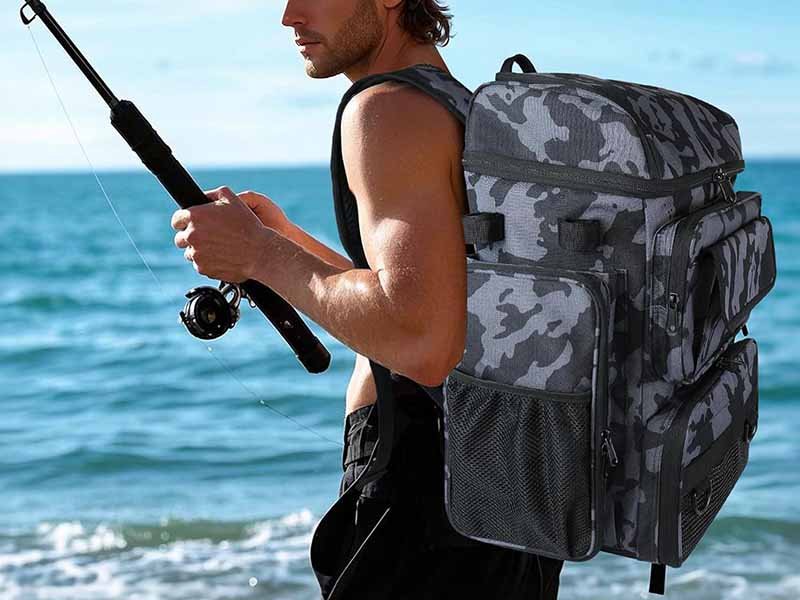
If you’ve ever walked a shoreline with one hand holding a rod and the other hand carrying a tackle box, you already know the real problem: your gear is never where you need it when the bite turns on. Fishing today is more mobile than it used to be. Anglers jump between spots, switch lure styles fast, and carry more “small but essential” tools—pliers, leader spools, scent, spare hooks, soft plastics, and even a power bank for phones or fish finders. That’s why the fishing backpack has become the go-to system: it keeps everything in one place, balanced on your back, and reachable in seconds.
A good fishing backpack isn’t “just a backpack near water.” It’s a gear platform built around three things: organization, protection, and carry comfort. When those three are done right, you waste less time digging for tackle, you lose fewer items to rain/splash, and your shoulders don’t feel destroyed after a long walk. The best fishing backpack is the one that matches how you fish: it carries your tackle trays securely, protects gear from water and abrasion, and stays comfortable when fully loaded. Compared with regular backpacks, fishing backpacks use tougher fabrics, dedicated tackle storage, tool pockets, and often rod holders. Choose by fishing style (shore, kayak, fly, hiking), load size, and water exposure.
Think about your last trip: the moment you needed split rings, a new leader, or pliers—did you find it instantly, or did you stop, open bags, and lose momentum? The right fishing backpack turns those “search moments” into quick moves—so you stay in the action.
What Is a Fishing Backpack?
A fishing backpack is a purpose-built backpack that helps anglers carry and access tackle, tools, and accessories without stopping their movement. The best designs are laid out for real fishing behavior: frequent lure swaps, quick tool grabs, wet hands, and changing weather.
Here’s what most anglers expect a fishing backpack to do well:
- Hold tackle trays securely (so they don’t rattle, crack, or slide)
- Provide fast-access pockets for tools (pliers, cutters, hook removers)
- Keep gear separated by use (hard lures, soft baits, terminal tackle, leaders)
- Protect contents from rain, splash, and wet ground
- Carry weight comfortably over 2–8 hours, not just 10 minutes
What Makes a Fishing Backpack Different from a Normal Backpack?
A regular backpack is built for general storage (books, clothes, devices). A fishing backpack is built for small parts, sharp hardware, and wet conditions.
Key design differences that matter on the water
- Tackle-tray architecture: fishing backpacks are sized around standard tray footprints (commonly “3600/3700 style”). A normal backpack may fit trays, but it won’t keep them stable.
- Tool-ready layout: fishing packs often include tool sleeves, elastic keepers, D-rings, and reinforced attachment points.
- Wet-environment protection: coated fabrics, sealed zippers, drainage grommets, and raised bases are common in fishing backpacks.
- Abrasion and puncture resistance: lure hooks, split rings, and tools can destroy weak linings quickly.
Fast comparison table
| Item | Regular Backpack | Fishing Backpack |
|---|---|---|
| Main compartment | One big cavity | Structured tray zone + gear zone |
| Tool access | Not designed for it | Dedicated tool pockets/loops |
| Water exposure | Light rain at best | Built for splash, wet ground |
| Hook/lure risk | High (snags/tears) | Reinforced lining and dividers |
| Grab speed | Slow | Quick-access pockets |
| Load comfort | Basic | Shoulder + chest + waist support options |
What customers usually notice first (real-life pain points):
- A normal backpack becomes a “black hole” where small items disappear.
- Trays slide around and crack.
- Hook points snag fabric and cause tears.
- Wet bases soak through and ruin terminal tackle.
Why Do Anglers Prefer a Fishing Backpack for Tackle Storage?
Anglers prefer a fishing backpack because it improves mobility + efficiency.
1) Mobility (hands-free fishing) A tackle box ties up one hand. A backpack doesn’t. That matters when you’re:
- walking banks and casting every 5–10 meters
- climbing rocks or stepping through mud
- landing fish while controlling a rod
- carrying nets, waders, or a second rod
2) Faster lure changes (less downtime) A strong fishing backpack layout reduces “search time.” In real fishing, that can mean more casts per hour, which is often the difference between an average day and a great day.
3) Better gear protection Good fishing backpacks reduce:
- rust (by keeping tackle dry and separated)
- hook snags (by using structured pockets)
- crushed lures (by using rigid tray compartments)
Where fishing backpacks make the biggest difference
| Fishing style | Why a fishing backpack helps |
|---|---|
| Shore fishing | Walk long distances; fast access matters |
| River fishing | Change spots often; need hands free |
| Fly fishing | Carry tools/boxes in organized zones |
| Kayak fishing | Compact vertical storage; stable load |
| Hiking to lakes | Comfort and weight distribution are critical |
Is a Fishing Backpack Better Than a Tackle Box?
For most shore, river, kayak, and travel fishing, yes—because movement matters. For boat fishing, a tackle box can still make sense if you’re staying in one spot and have stable storage.
Better choice depends on 3 practical factors
- How far you walk
- If you walk more than ~10–15 minutes each trip, backpacks tend to win.
- How wet your environment is
- If you fish in rain, surf, kayak, or marsh areas, waterproof backpacks become more valuable.
- How quickly you need to access tools
- If you frequently change rigs, leaders, or lure types, backpack pocket layout can save time.
Capacity comparison (what people actually care about)
| Storage type | Realistic tray capacity | Best for |
|---|---|---|
| Small tackle box | 2–3 trays | short trips, minimal gear |
| Large tackle box | 6–8 trays | boat use, stationary setups |
| Medium fishing backpack | 4 trays | shore/river all-around use |
| Large fishing backpack | 5–6 trays | long sessions, multi-rig anglers |
| Waterproof roll-top pack | 2–4 trays (varies) | wet environments, kayak/saltwater |
A simple rule most anglers follow: If you move a lot → backpack. If you stay put → box or backpack both work.
What Features Should a Fishing Backpack Have?
The best fishing backpack needs to perform under three “real-world stresses” that customers care about:
- Weight: loaded packs can reach 6–12 kg easily (tackle + water + tools + rain gear).
- Water: wet ground, rain, splash, and condensation are normal.
- Abrasion: rocks, sand, boat decks, brush, and hook points damage weak materials fast.
Which Materials Are Best for a Fishing Backpack?
Materials decide how long the backpack lasts, how it handles water, and whether it feels “cheap” or “built to work.”
Practical material options customers often compare
| Material | What it’s good at | What to watch out for | Best use |
|---|---|---|---|
| 600D Polyester | balanced cost + durability | can abrade faster than nylon | everyday shore packs |
| 900D/1200D Polyester | more abrasion resistance | heavier fabric | heavy-use packs |
| 420D/500D Nylon | lighter, strong | higher cost | premium lightweight packs |
| 1000D Nylon | excellent abrasion resistance | cost, stiffness | rugged packs, rocks/brush |
| TPU-laminated fabric | high waterproof performance | needs good seam design | wet climates, kayak |
| PVC tarpaulin | very waterproof and tough | heavier, less breathable | saltwater, extreme wet use |
What customers often overlook (but causes complaints later)
- Lining thickness: a thin lining tears when hooks or tools poke it.
- Base reinforcement: the bottom of the pack takes the most abuse.
- Stitching thread + seam tape: waterproof fabric alone is not enough.
Material choice by fishing scenario
| Scenario | Recommended fishing backpack material |
|---|---|
| Dry shore fishing | 600D–900D polyester |
| Rocks/brush/rough terrain | 1000D nylon or reinforced polyester |
| Kayak fishing / heavy splash | TPU laminated + sealed seams |
| Saltwater fishing | TPU/PVC + corrosion-friendly hardware |
Do Fishing Backpacks Need Waterproof Protection?
If your customer fishes around water, moisture is not “maybe,” it’s guaranteed. The question is how much protection they need.
3 levels of water protection customers ask for
| Level | What it handles | Common construction |
|---|---|---|
| Water-resistant | light rain, short exposure | PU-coated polyester/nylon |
| Water-repellent | moderate rain, splash | better coatings + protected zippers |
| Waterproof | heavy rain, submersion risk | TPU/PVC fabric + sealed seams |
What makes a fishing backpack truly waterproof A fishing backpack becomes “waterproof” only when these work together:
- waterproof fabric (TPU/PVC)
- seam sealing (tape or welding)
- waterproof zipper or roll-top closure
- sealed penetration points (no open stitch holes)
Customer-first guidance
- If you fish shore/lake in mild weather, water-resistant is usually enough.
- If you fish kayak, surf, marsh, or rainy regions, waterproof becomes a real value upgrade.
How Should a Fishing Backpack Organize Tackle?
Customers don’t just want “more pockets.” They want a layout that matches how they fish.
A strong fishing backpack layout usually includes:
- Tray zone (main compartment)
- holds 2–6 trays, stable and protected
- Quick-access zone (top pocket or front panel)
- for leader spools, split rings, weights, scent
- Tool zone (side pockets)
- pliers, cutters, hook remover, fish gripper
- Wet/dirty zone (separate pocket)
- gloves, rain cover, used soft baits, trash bag
- Personal items zone
- phone, keys, wallet, power bank
Tray capacity guide customers understand quickly
| Pack size | Tray capacity | Who it fits |
|---|---|---|
| Small fishing backpack | 2–3 | ultralight anglers, quick sessions |
| Medium fishing backpack | 4 | most shore/river anglers |
| Large fishing backpack | 5–6 | long trips, multi-style fishing |
What causes negative reviews (great to address in product planning)
- trays jam because the compartment is too tight
- dividers shift and trays rattle
- front pockets are too shallow for tools
- hooks snag on loose inner fabric
What Fishing Backpack Comfort Features Matter Most?
Comfort is not “nice to have.” A loaded fishing backpack can quickly cause pain if it’s poorly designed.
Comfort features that customers feel immediately
- Shoulder strap thickness and shape (should not cut into neck)
- Breathable back panel (reduces sweat and hot spots)
- Chest strap (keeps pack stable when walking fast)
- Waist belt (moves weight from shoulders to hips)
- Load shape (a slim, tall pack feels lighter than a wide, bulky pack)
Comfort checklist customers can use
| Comfort point | What to check |
|---|---|
| Shoulder straps | thick padding + wide contact area |
| Back panel | mesh + airflow channels |
| Chest strap | adjustable height |
| Waist belt | optional but helpful over 6–8 kg |
| Balance | heavy gear sits close to back |
Real-world note: If a fishing backpack is comfortable when empty but painful when loaded, the issue is usually strap geometry + back panel support, not just “padding.”
Which Types of Fishing Backpack Are Available?
Fishing backpacks are not all built the same. The best design depends heavily on how and where people fish. An angler walking riverbanks has very different needs compared with someone fishing from a kayak or someone hiking into mountain lakes.
Understanding the main fishing backpack types helps customers avoid buying the wrong pack for their fishing style.
Below are the most common fishing backpack designs used in today’s outdoor gear market.
What Is a Tackle Fishing Backpack?
A tackle fishing backpack is the most widely used design. It is built specifically to carry plastic tackle trays along with tools and fishing accessories.
Most tackle backpacks include a structured compartment that holds removable tackle boxes, allowing anglers to organize lures by type, size, or fishing condition.
Typical layout of a tackle fishing backpack:
- Main tackle tray compartment (4–6 trays)
- Upper gear pocket for accessories
- Tool pockets for pliers or cutters
- Side pockets for water bottles
- Rod holders or rod straps
- Sunglasses or electronics pocket
The biggest advantage of this design is organization. Anglers can keep hard baits, soft plastics, terminal tackle, and leaders separated into different trays.
Typical tray compatibility:
| Tray Size | Dimensions | Common Use |
|---|---|---|
| 3600 series | approx. 27 × 18 × 4 cm | smaller lure collections |
| 3700 series | approx. 36 × 23 × 5 cm | larger lure storage |
| Custom trays | varies | brand-specific systems |
For most anglers, a backpack that holds 4 trays is enough for a full day of fishing.
However, advanced anglers may carry 5–6 trays to cover different lure categories such as crankbaits, jigs, spinnerbaits, soft plastics, and terminal tackle.
Because of this flexibility, tackle backpacks are the most popular option for:
- bass fishing
- lake fishing
- river fishing
- general freshwater fishing
What Is a Waterproof Fishing Backpack?
Waterproof fishing backpacks are designed for environments where gear can easily get soaked.
Examples include:
- kayak fishing
- saltwater fishing
- surf fishing
- rainy climates
- marsh or wetland fishing
Unlike standard fishing backpacks that rely on coated fabrics, waterproof backpacks use specialized construction methods.
Typical waterproof construction includes:
- TPU laminated fabrics
- PVC tarpaulin materials
- welded seams instead of stitched seams
- waterproof zippers or roll-top closures
These design features prevent water from entering the backpack even during heavy rain or splashing.
Comparison of waterproof protection levels:
| Backpack Type | Water Protection | Construction |
|---|---|---|
| Water resistant | light rain | coated polyester |
| Water repellent | moderate rain | PU coating |
| Waterproof | heavy rain/splash | TPU or PVC laminated fabric |
However, waterproof backpacks also have trade-offs.
Because waterproof materials are thicker and heavier, they can feel less breathable and slightly stiffer than standard backpacks.
Therefore waterproof fishing backpacks are best suited for anglers who regularly fish in very wet conditions.
What Is a Fishing Backpack with Rod Holders?
Many modern fishing backpacks include rod holder systems.
These systems allow anglers to carry additional rods securely while keeping both hands free.
Rod holders are especially useful when:
- hiking to fishing spots
- walking long shorelines
- transporting multiple rod setups
Rod holder designs usually fall into three main categories.
Vertical rod holders
Vertical holders keep rods upright along the side of the backpack.
Advantages:
- balanced weight distribution
- reduced rod movement
- easy to access
Side strap rod holders
These use adjustable straps to secure rods against the backpack body.
Advantages:
- simple and lightweight
- compatible with different rod lengths
Pocket rod holders
Some backpacks include reinforced pockets at the bottom where rod handles can be inserted.
Advantages:
- stable support
- less rod swing while walking
Typical rod carrying capacity:
| Backpack Design | Rod Capacity |
|---|---|
| Single holder | 1 rod |
| Dual holder | 2 rods |
| Advanced systems | up to 3 rods |
For anglers who switch between lure styles frequently, having two rods ready can save time and improve efficiency.
Which Fishing Backpack Works Best for Fly Fishing?
Fly fishing requires a slightly different gear setup compared with conventional lure fishing.
Instead of carrying many hard baits, fly anglers often carry:
- fly boxes
- tippet spools
- leaders
- floatant
- nippers
- forceps
- small accessories
Because of this, fly fishing backpacks often prioritize small-item organization rather than large tackle tray storage.
Common fly fishing backpack features include:
- multiple internal mesh pockets
- tool attachment points
- hydration bladder compatibility
- lightweight fabrics
- slim profile for river movement
Typical fly fishing pack sizes:
| Pack Type | Capacity | Usage |
|---|---|---|
| Sling pack | 8–12 L | short trips |
| Small backpack | 15–20 L | river fishing |
| Full backpack | 20–30 L | long excursions |
Many fly anglers also prefer packs that allow front access without removing the backpack, which improves efficiency while standing in water.
How Do You Choose the Best Fishing Backpack?
Choosing the right fishing backpack is not about buying the largest or most expensive model. It is about matching the backpack to the fishing environment, gear quantity, and personal comfort preferences.
There are several practical factors customers should evaluate before choosing or developing a fishing backpack.
Which Fishing Backpack Size Should You Choose?
Backpack size should match the length of the fishing trip and amount of gear required.
Small backpacks are lighter and easier to carry but have limited storage capacity.
Larger backpacks provide more storage but can become heavy and bulky if overloaded.
Typical fishing backpack sizes:
| Backpack Size | Capacity | Best For |
|---|---|---|
| Small | 10–15 L | short fishing trips |
| Medium | 20–25 L | most anglers |
| Large | 30–40 L | long sessions or travel |
For most anglers, a 20–25 liter backpack offers the best balance between capacity and comfort.
This size typically holds:
- 4 tackle trays
- tools
- spare fishing line
- snacks and water
- small rain jacket
How Much Gear Can a Fishing Backpack Carry?
Fishing gear weight can add up quickly.
Here is an approximate breakdown of gear weight anglers often carry.
| Item | Average Weight |
|---|---|
| 4 tackle trays | 2–3 kg |
| tools and accessories | 0.5–1 kg |
| water bottle | 0.5 kg |
| extra clothing | 0.5–1 kg |
Total load for many fishing backpacks often reaches 4–6 kg.
Large backpacks with additional gear can reach 8–10 kg.
Because of this, weight distribution and ergonomic design become extremely important.
Key design features that improve weight management include:
- padded shoulder straps
- chest straps
- waist belts
- breathable back panels
These features help distribute the load across the body and reduce fatigue during long fishing sessions.
Which Fishing Backpack Works Best for Shore Fishing?
Shore fishing is one of the most common fishing styles worldwide.
Anglers often walk long distances along lakes, rivers, or coastlines while casting at multiple spots.
Because of this mobility requirement, shore fishing backpacks should prioritize:
- lightweight materials
- quick-access pockets
- balanced load distribution
Recommended design features include:
- medium backpack size (20–25 L)
- rod holders
- 4 tackle tray capacity
- breathable back padding
- multiple side pockets
These features allow anglers to move efficiently without carrying unnecessary weight.
How Comfortable Should a Fishing Backpack Be?
Comfort becomes a major factor during long fishing sessions.
Many anglers fish for 4–8 hours at a time, which means poor backpack ergonomics can quickly lead to fatigue.
The most important comfort factors include:
Shoulder straps
Shoulder straps should be wide and well-padded to distribute weight evenly.
Narrow straps can create pressure points on the shoulders.
Back ventilation
Breathable mesh back panels allow airflow between the backpack and the angler’s back.
This helps reduce sweat buildup during warm weather.
Load balance
A well-designed backpack keeps heavy gear close to the back rather than pulling backward.
This improves stability and reduces strain on the spine.
Comfort design comparison:
| Feature | Basic Backpack | High Quality Fishing Backpack |
|---|---|---|
| Shoulder padding | thin foam | thick ergonomic padding |
| Back ventilation | none | mesh airflow channels |
| Chest strap | optional | adjustable |
| Waist support | rare | included on large packs |
A comfortable fishing backpack allows anglers to focus on fishing rather than adjusting their gear.
How Are Fishing Backpacks Designed and Manufactured?
Behind every well-designed fishing backpack is a combination of material engineering, ergonomic design, and careful manufacturing control. While many backpacks may look similar from the outside, the internal structure and production quality can vary dramatically depending on the factory’s experience.
A reliable fishing backpack manufacturer must understand both outdoor product engineering and real fishing usage scenarios. This ensures the backpack performs well under demanding conditions such as rain, abrasion, heavy loads, and long hours of wear.
What Materials Are Used in Fishing Backpack Manufacturing?
Material selection is one of the most critical factors in fishing backpack production. Different materials influence durability, weight, water resistance, and overall product cost.
Most fishing backpacks use synthetic fabrics because they offer high strength while remaining relatively lightweight.
Common materials used in fishing backpack manufacturing include:
| Material | Advantages | Typical Applications |
|---|---|---|
| 600D Polyester | balanced durability and cost | entry-level backpacks |
| 900D–1200D Polyester | stronger abrasion resistance | heavy-duty fishing backpacks |
| 420D Nylon | lightweight and flexible | premium lightweight packs |
| 1000D Nylon | extremely durable | rugged outdoor backpacks |
| TPU Laminated Fabric | waterproof and flexible | kayak fishing backpacks |
| PVC Tarpaulin | fully waterproof and tough | saltwater fishing gear |
Another key factor is the coating technology applied to the fabric.
Common coating types include:
- PU coating – improves water resistance
- TPU lamination – provides waterproof protection
- PVC coating – increases durability and abrasion resistance
In addition to fabric, other materials also influence product quality:
| Component | Common Materials |
|---|---|
| Zippers | nylon coil zipper, waterproof zipper |
| Buckles | ABS plastic, nylon reinforced plastic |
| Webbing | nylon webbing, polyester webbing |
| Padding | EVA foam, PE foam |
| Back panels | breathable mesh with foam support |
The combination of these materials determines whether a fishing backpack can withstand years of outdoor use.
How Is a Durable Fishing Backpack Constructed?
The durability of a fishing backpack is not determined by materials alone. Construction methods and reinforcement techniques play an equally important role.
Professional backpack manufacturers use several techniques to strengthen high-stress areas.
Reinforced stress points
Areas such as shoulder straps and handle connections experience the highest loads. These areas are usually reinforced with:
- bar-tack stitching
- box stitching
- additional fabric layers
Multi-layer base construction
The bottom of the backpack often comes into contact with rocks, sand, or wet surfaces. Many high-quality fishing backpacks use a double-layer base to improve durability.
Typical base structure:
| Layer | Purpose |
|---|---|
| Outer abrasion layer | protects against wear |
| Internal reinforcement | maintains shape |
| Water-resistant coating | prevents moisture entry |
Structural frame support
Some backpacks include semi-rigid internal frames or reinforced panels that help the pack maintain its shape even when fully loaded.
This improves both comfort and gear protection.
How Do Factories Test Fishing Backpack Quality?
Before a fishing backpack goes into mass production, manufacturers usually perform a series of quality tests to ensure reliability.
These tests simulate real-world outdoor conditions.
Load testing
Load testing measures whether shoulder straps and seams can support heavy gear.
Typical testing standards include:
| Test Item | Typical Standard |
|---|---|
| Shoulder strap pull strength | 50–80 kg |
| Handle strength | 40–60 kg |
| Stitching durability | repeated stress cycles |
Abrasion testing
Abrasion tests simulate friction against rough surfaces such as rocks or boat decks.
High-quality fishing backpacks are tested for thousands of abrasion cycles to ensure the fabric does not wear through easily.
Water resistance testing
Water resistance tests evaluate how well the backpack protects gear during rain or splashing.
Common testing methods include:
- spray testing
- water column testing
- seam leakage inspection
Zipper durability testing
Zippers are one of the most common failure points in backpacks.
Factories usually perform opening and closing cycle tests to ensure long-term durability.
Common Problems When Sourcing Fishing Backpacks
Many buyers encounter unexpected problems when sourcing fishing backpacks from overseas suppliers.
Understanding these risks can help brands avoid costly mistakes.
Inconsistent material quality
Some suppliers may substitute cheaper fabrics during production, which reduces durability.
For example:
| Sample Fabric | Bulk Production Fabric |
|---|---|
| 900D polyester | 600D polyester |
Even small material changes can significantly affect product lifespan.
Weak stitching
If stitching density is too low, seams may fail when the backpack carries heavy gear.
Recommended stitching density for backpacks is usually 6–8 stitches per inch.
Poor zipper quality
Low-quality zippers can fail after only a few months of use.
Many reliable outdoor brands choose well-known zipper suppliers such as YKK or SBS.
Poor internal structure
Some factories only focus on appearance but neglect internal support panels and tray compartments.
This can cause backpacks to lose shape or damage tackle boxes during transport.
Carefully evaluating suppliers before placing bulk orders helps prevent these issues.
16 Best Fishing Backpack Brands: List Guide
The fishing backpack market has grown quickly over the last decade as anglers increasingly prefer mobile, organized gear systems over traditional tackle boxes. Today, outdoor brands compete by offering different combinations of durability, waterproof protection, tackle organization, and ergonomic comfort.
Some brands focus on professional anglers and tournament fishing, while others target casual recreational fishing or specialized environments like kayak fishing and fly fishing.
The following list highlights 16 well-known fishing backpack brands that have strong market recognition and proven product designs.
This list is useful for:
- anglers researching the best fishing backpack brands
- outdoor retailers analyzing competitors
- new fishing gear brands studying product positioning
- companies looking to develop private label fishing backpacks
1. Piscifun Fishing Backpacks
Piscifun is one of the fastest-growing fishing gear brands in the online fishing market. The company focuses heavily on affordable yet functional fishing equipment, making their products popular among beginner and intermediate anglers.
Their fishing backpacks typically feature:
- 4–5 tackle tray storage capacity
- water-resistant polyester fabric
- adjustable rod holders
- breathable mesh back panels
Most Piscifun backpacks use 1000D nylon or reinforced polyester, which offers good durability while keeping costs competitive.
Typical product specifications:
| Feature | Piscifun Backpack |
|---|---|
| Capacity | 20–30 L |
| Tray storage | 4 trays |
| Fabric | 1000D nylon |
| Price range | $40–$80 |
Piscifun backpacks are widely sold on Amazon, outdoor gear stores, and fishing equipment retailers, making them one of the most visible brands in the fishing backpack category.
2. Shimano Fishing Backpacks
Shimano is a global fishing equipment leader known for high-performance fishing gear including rods, reels, and tackle accessories.
Shimano fishing backpacks are designed with a strong focus on durability and professional-grade performance.
Common design features include:
- reinforced waterproof fabrics
- corrosion-resistant hardware
- premium zipper systems
- modular tackle organization
Shimano backpacks are often chosen by serious anglers and tournament fishermen who require reliable gear in demanding environments.
Typical characteristics:
| Feature | Shimano Backpack |
|---|---|
| Capacity | 25–35 L |
| Fabric | reinforced polyester or nylon |
| Waterproof level | water-resistant |
| Target users | advanced anglers |
Because Shimano focuses heavily on product engineering, their backpacks often have long product lifespans.
3. Wild River Fishing Backpacks
Wild River, a brand under the CLC (Custom Leathercraft) company, is well known for designing fishing backpacks with integrated LED lighting systems.
This feature allows anglers to see their gear clearly during night fishing or low-light conditions.
Unique design features include:
- built-in LED light systems
- removable tackle trays
- molded waterproof base
- multiple tool storage pockets
Typical product specifications:
| Feature | Wild River Backpack |
|---|---|
| Tray capacity | 4–6 trays |
| Special feature | LED light |
| Base structure | molded waterproof base |
| Price range | $90–$150 |
Wild River backpacks are particularly popular among night anglers and serious freshwater fishermen.
4. Plano Fishing Backpacks
Plano is one of the most recognized brands in fishing tackle storage.
The company has been manufacturing tackle boxes for decades and has extended its expertise into backpack-style tackle storage systems.
Plano fishing backpacks emphasize tackle organization and storage capacity.
Common design features include:
- large tackle tray compartments
- heavy-duty polyester fabrics
- reinforced base structures
- multiple external pockets
Plano backpacks are especially popular among bass fishing enthusiasts.
Typical specifications:
| Feature | Plano Backpack |
|---|---|
| Tray storage | 4–5 trays |
| Fabric | durable polyester |
| Capacity | 25–30 L |
| Price range | $50–$100 |
5. Spiderwire Fishing Backpacks
Spiderwire is well known for producing fishing lines and fishing accessories. Their fishing backpacks are designed for durability and practical organization.
Key design features include:
- reinforced polyester construction
- multiple tool holders
- side rod storage straps
- comfortable padded shoulder straps
Spiderwire backpacks are typically positioned in the mid-range price segment.
Typical product specifications:
| Feature | Spiderwire Backpack |
|---|---|
| Tray capacity | 3–4 trays |
| Fabric | reinforced polyester |
| Weight | approx. 1.5 kg |
| Price range | $40–$70 |
These backpacks are widely used by anglers who want reliable gear without paying premium prices.
6. KastKing Fishing Backpacks
KastKing is another rapidly growing fishing brand that focuses heavily on direct-to-consumer online sales.
KastKing fishing backpacks often incorporate modern outdoor gear design principles.
Popular features include:
- water-resistant coatings
- adjustable rod holders
- sunglasses storage pockets
- breathable mesh back panels
Typical specifications:
| Feature | KastKing Backpack |
|---|---|
| Capacity | 20–30 L |
| Fabric | 600D polyester |
| Tray storage | 4 trays |
| Price range | $45–$80 |
Because of their competitive pricing and strong online marketing, KastKing backpacks are extremely popular on Amazon and e-commerce platforms.
7. Shimano Blackmoon Backpack
The Shimano Blackmoon series is designed specifically for serious fishing enthusiasts.
These backpacks focus on high durability and professional functionality.
Typical features include:
- molded waterproof base
- reinforced tackle storage compartments
- ergonomic shoulder straps
- corrosion-resistant zippers
Blackmoon backpacks are often used in saltwater fishing environments where durability is critical.
8. Daiwa Fishing Backpacks
Daiwa is another major Japanese fishing equipment brand known for high-performance fishing gear.
Daiwa fishing backpacks typically focus on precision engineering and durability.
Common features include:
- high-strength nylon fabrics
- reinforced stitching
- premium zipper systems
- compact ergonomic design
These backpacks are often favored by experienced anglers who prioritize equipment quality.
9. Rapala Fishing Backpacks
Rapala is famous worldwide for its fishing lures, but the company also produces high-quality fishing backpacks.
Rapala backpacks are designed with a strong emphasis on gear protection and tackle organization.
Key features include:
- rigid tackle tray compartments
- waterproof base construction
- multiple storage pockets
These backpacks are commonly used by freshwater anglers and professional fishing guides.
10. Ghosthorn Fishing Backpacks
Ghosthorn is a relatively new brand but has gained popularity through online retail platforms.
Ghosthorn backpacks are designed with large storage capacity and modern outdoor styling.
Typical features include:
- multiple rod holders
- spacious tackle compartments
- water-resistant fabrics
These backpacks are typically priced in the budget to mid-range category.
11. Allen Fishing Backpacks
Allen Company produces a wide range of outdoor gear including hunting and fishing equipment.
Allen fishing backpacks are designed with practical outdoor functionality.
Key features include:
- durable polyester fabrics
- adjustable rod holders
- breathable back support
These backpacks are commonly used by recreational anglers.
12. G. Loomis Fishing Backpacks
G. Loomis is known for producing high-end fishing rods and premium fishing equipment.
Their fishing backpacks reflect the same focus on quality craftsmanship and performance.
These backpacks often feature:
- lightweight materials
- high-strength stitching
- premium hardware components
13. Orvis Fly Fishing Backpacks
Orvis specializes in fly fishing equipment and apparel.
Their fishing backpacks are designed specifically for fly anglers who require efficient storage for small accessories.
Key features include:
- lightweight construction
- hydration bladder compatibility
- multiple small-item storage pockets
These backpacks are ideal for river and stream fishing.
14. Fishpond Fishing Backpacks
Fishpond is widely recognized for producing eco-friendly fishing gear.
Many Fishpond backpacks are made using recycled materials, which appeals to environmentally conscious anglers.
Typical features include:
- recycled nylon fabrics
- waterproof coatings
- premium outdoor design
15. Shimano Bluewave Backpack
The Shimano Bluewave series is designed for saltwater fishing environments.
These backpacks focus on:
- corrosion-resistant hardware
- waterproof fabric construction
- heavy-duty stitching
They are often used in coastal fishing and offshore environments.
16. Szoneier Custom Fishing Backpacks
Unlike most consumer brands, Szoneier specializes in custom fishing backpack manufacturing for outdoor gear brands and wholesale clients.
With more than 18 years of bag manufacturing experience, Szoneier offers flexible customization options for fishing backpack projects.
Szoneier capabilities include:
- custom fishing backpack design
- OEM and private label production
- low MOQ customization
- fast sample development
- strict quality control systems
Available materials include:
- polyester
- nylon
- neoprene
- TPU waterproof fabrics
- EVA structural panels
Typical manufacturing advantages:
| Capability | Szoneier |
|---|---|
| Industry experience | 18+ years |
| Sample time | 5–7 days |
| MOQ | low MOQ |
| Quality control | 100% inspection |
For outdoor brands looking to develop private label fishing backpacks, working with an experienced manufacturer like Szoneier allows companies to build unique products while maintaining competitive pricing and reliable production timelines.
How Does Szoneier Develop Custom Fishing Backpack Projects?
Developing a custom fishing backpack requires coordination between design, material sourcing, prototyping, and manufacturing teams.
Szoneier has more than 18 years of experience in bag development and manufacturing, providing custom solutions for brands, wholesalers, and outdoor gear companies.
The development process usually follows several stages.
Step 1: Product Concept Discussion
The process begins with understanding the client’s product concept.
Customers usually provide:
- reference product images
- target market information
- expected price range
- desired materials
- logo placement ideas
The development team then evaluates feasibility and suggests improvements.
Step 2: Material Selection
Based on the product concept, Szoneier recommends suitable materials.
For fishing backpacks, this may include:
- polyester
- nylon
- TPU waterproof fabrics
- EVA structural panels
Hardware components such as zippers, buckles, and webbing are also selected during this stage.
Step 3: Sample Development
Once materials are confirmed, the factory produces a prototype sample.
Typical sampling time:
| Development Stage | Time Required |
|---|---|
| pattern making | 1–2 days |
| material preparation | 2–3 days |
| sample sewing | 2–3 days |
Total sample lead time is usually 5–7 days.
Customers review the sample and provide feedback before finalizing production details.
Step 4: Mass Production
After sample approval, production begins.
Typical production lead times depend on order quantity.
| Order Quantity | Production Time |
|---|---|
| 300–500 pcs | 20–25 days |
| 500–1000 pcs | 25–30 days |
| 1000+ pcs | 30–35 days |
During production, quality control teams inspect:
- material consistency
- stitching quality
- logo printing
- packaging standards
Step 5: Packaging and Shipping
Szoneier also supports custom packaging options such as:
- branded polybags
- retail packaging boxes
- barcode labeling
- custom hang tags
Shipping methods include:
- sea freight
- air freight
- express delivery
This flexible system allows brands to receive finished products ready for retail or e-commerce distribution.
Conclusion
Fishing backpacks have become one of the most practical pieces of gear for modern anglers. Compared with traditional tackle boxes, they provide greater mobility, better organization, and improved comfort during long fishing sessions.
Choosing the best fishing backpack requires evaluating several important factors:
- materials and durability
- waterproof performance
- tackle storage capacity
- comfort and ergonomic design
- compatibility with specific fishing styles
For brands and outdoor gear companies, developing a high-quality fishing backpack also requires a reliable manufacturing partner with strong design and production capabilities.
With more than 18 years of experience in bag development and manufacturing, Szoneier helps international brands create custom fishing backpacks using a wide range of materials including polyester, nylon, neoprene, TPU, EVA, and other technical fabrics.
Szoneier provides:
- custom fishing backpack design
- private label and OEM manufacturing
- low MOQ production
- fast sampling
- strict quality control
- reliable global shipping
If you are planning to develop custom fishing backpacks for your brand or business, the Szoneier team can help turn your product idea into a market-ready product.
Contact Szoneier today to request a quote or start your custom fishing backpack project.
manufacturer Categories
- Custom Tote Bags Manufacturer
- custom backpacks Manufacturer
- custom travel bags& Duffle bags manufacturer
- custom makeup bags & toiletry bags manufacturer
- custom cooler bags manufacturer
- custom drawstring bags manufacturer
- custom makeup bags & toiletry bags manufacturer
- custom golf bags manufacturer
- custom fireproof bags manufacturer
- custom dry bags manufacturer
- custom ski bags manufacturer
- custom gym & sports bags manufacturer
- custom laptop bags manufacturer
- custom tactical bags manufacturer
- custom beach bags manufacturer
- custom medical bags manufacturer
- custom camera bags manufacturer
- custom wetsuits manufacturer
- custom leather goods manufacturer
- more personalized products


Can't find the answers?
No worries, please contact us and we will answer all the questions you have during the whole process of bag customization.
Make A Sample First?
If you have your own artwork, logo design files, or just an idea,please provide details about your project requirements, including preferred fabric, color, and customization options,we’re excited to assist you in bringing your bespoke bag designs to life through our sample production process.
