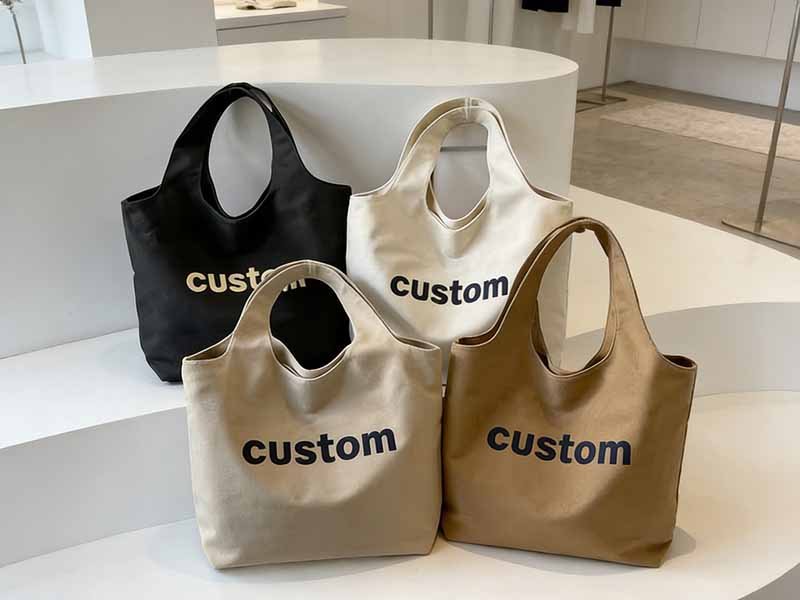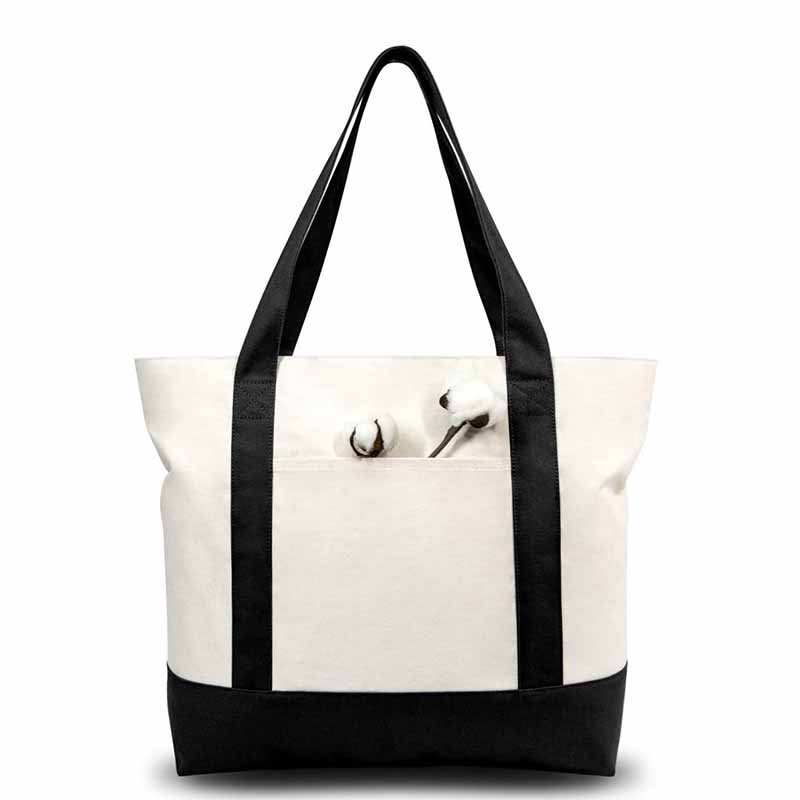
Most tote bags fail for one simple reason: the fabric was chosen by “weight” only. A 12oz canvas can feel crisp and boxy in one factory, but soft and drapey in another—because ounce (or GSM) is only half the story. The other half is the weave: plain weave vs twill weave canvas. That weave choice affects how the bag holds its shape, how the handles behave after heavy loads, how clean your logo prints, and how the tote looks after a few washes.
Plain weave vs twill weave canvas for tote bags: plain weave is a tight, balanced grid that stays stable and prints clean; twill weave has diagonal ribs that improve drape, abrasion resistance, and tear performance. If you want a structured tote that stands up and shows crisp graphics, plain weave often wins. If you’re building a more premium, comfortable tote that hides wear and feels softer on the shoulder, twill weave often feels “higher-end” to customers.
A real-world example: a lifestyle brand once asked us to “fix” their tote because returns were rising. The issue wasn’t stitching—it was fabric behavior. Their plain weave held shape well, but the surface looked scratched and wrinkled quickly, making the tote look old after just weeks. Switching to twill weave at the same GSM reduced visible wear and immediately improved customer reviews. Small fabric choices can change how your product is judged.
What Is Plain Weave Canvas vs Twill Weave Canvas?
Plain weave canvas and twill weave canvas use the same raw materials (usually cotton yarn), but the yarn interlacing pattern is different. Plain weave uses a 1-over-1 structure forming a tight grid. Twill weave uses a 2-over-1 or 3-over-1 structure forming diagonal ribs.
That structural difference changes how the fabric behaves in tote bags — including stiffness, tear resistance, printing clarity, drape, abrasion visibility, and even perceived product value.
When you choose between plain weave vs twill weave canvas for tote bags, you are not just choosing “texture.” You are choosing:
- How the bag carries weight
- How the logo looks
- How long the bag looks new
- How structured or relaxed the silhouette feels
- How customers perceive quality
Let’s break this down in practical terms.
1. What Is Plain Weave Canvas?
Plain weave canvas uses the most basic interlacing method: each weft yarn goes over one warp yarn, then under the next. This repeats evenly across the fabric.
Because the yarns interlock at every crossing point, the structure is very balanced.
What this means in real production:
- High dimensional stability (less distortion)
- Lower diagonal stretch
- Clean panel alignment
- Predictable cutting and sewing behavior
- Easier control in large-volume production
Typical technical specs for tote applications:
| Specification | Plain Weave Canvas (Common Range) |
|---|---|
| Weight | 8oz–16oz (270–540 GSM) |
| Warp density | 40–65 yarns/inch |
| Weft density | 30–55 yarns/inch |
| Tensile strength (warp) | 800–1200 N |
| Shrinkage (untreated) | 3–6% |
Because yarns are tightly locked, plain weave feels firmer. This helps when:
- You want a tote to stand upright
- You want sharp gusset edges
- You need clean screen printing
However, the flat surface also means:
- Abrasion marks are more visible
- Wrinkles show more clearly
- Surface can feel slightly dry if low-quality yarn is used
2. What Is Twill Weave Canvas?
Twill weave canvas changes the yarn path. Instead of locking every crossing point, yarns float over 2 or 3 yarns before interlacing.
This creates diagonal ribs across the surface.
Practical results:
- Softer hand feel
- More flexibility
- Higher tear resistance per weight
- Better abrasion resistance
- Slightly improved drape
Typical specs for tote applications:
| Specification | Twill Weave Canvas (Common Range) |
|---|---|
| Weight | 10oz–18oz (340–610 GSM) |
| Warp density | 45–70 yarns/inch |
| Weft density | 35–60 yarns/inch |
| Tensile strength (warp) | 900–1300 N |
| Shrinkage (untreated) | 2–5% |
Because twill weave distributes stress more gradually, it usually performs better in tear testing.
In practical use:
- Heavy grocery loads stress fabric less aggressively
- Surface wear looks less obvious
- Tote looks “premium” longer
The diagonal texture also reflects light differently, which subtly enhances perceived quality.
3. Structural Behavior Difference in Tote Bags
The difference becomes obvious after construction.
Plain weave canvas behavior:
- Keeps a boxy shape
- Holds flat bottom panels well
- Resists twisting
- Supports structured designs
- Works well with bottom boards
Twill weave canvas behavior:
- Relaxes more when filled
- Conforms to body shape
- Feels softer on shoulder
- Hides wear from daily friction
- Requires reinforcement if structure is required
If you place two 12oz fabrics side by side — one plain weave and one twill weave — the plain weave will feel slightly firmer even if the weight is identical.
4. Tear Resistance and Abrasion Comparison
In testing environments (example values):
| Performance Factor | Plain Weave 12oz | Twill Weave 12oz |
|---|---|---|
| Tear strength | 35–50 N | 45–65 N |
| Abrasion cycles (Martindale) | 8,000–12,000 | 12,000–18,000 |
| Diagonal stretch | Lower | Slightly higher |
| Shape retention | Higher | Medium |
This is why twill is often selected for:
- Heavy-use tote bags
- Premium retail products
- Work or tool totes
Plain weave is often selected for:
- Promotional bags
- Structured corporate totes
- High-volume cost-sensitive production
5. Printing and Surface Behavior
Surface texture affects ink behavior.
Plain weave:
- Flatter surface
- Better for small fonts
- Less ink spread
- Cleaner edge control
Twill weave:
- Slight texture interference
- Fine lines may appear softer
- Large graphics still perform well
- Embroidery performs smoothly
If your tote logo includes small typography under 2mm stroke width, plain weave reduces risk.
If your logo is bold and graphic-heavy, both work well.
6. Cost and Supply Stability
Plain weave canvas is generally:
- 5–15% lower in raw fabric cost
- Easier to source in bulk
- More consistent in dye lot control
Twill weave:
- Slightly higher production complexity
- Slightly higher yarn usage per structure
- Often positioned as premium
However, in retail markets, twill may allow higher selling prices.
7. Which One Feels More Expensive?
Customers judge by touch.
In consumer perception tests:
- Plain weave = structured, practical, durable
- Twill weave = softer, richer, higher quality
Even when GSM is identical, twill is often perceived as more premium.
8. Quick Comparison Summary
| Decision Factor | Plain Weave Canvas | Twill Weave Canvas |
|---|---|---|
| Structure | Strong, boxy | Softer, flexible |
| Tear Resistance | Good | Better |
| Abrasion Resistance | Moderate | Higher |
| Print Clarity | Excellent | Very good |
| Drape | Limited | Better |
| Cost | Lower | Slightly higher |
| Premium Feel | Moderate | Higher |
Which Is Stronger — Plain Weave vs Twill Weave Canvas?
When customers ask “Which is stronger — plain weave vs twill weave canvas?”, they usually mean one of four things:
- Which carries heavier weight without tearing?
- Which lasts longer under daily friction?
- Which protects stitching and seams better?
- Which keeps its shape after months of use?
In controlled testing at the same weight (for example, 12oz / 410 GSM), twill weave canvas generally shows 10–25% higher tear resistance and better abrasion performance, while plain weave canvas shows better dimensional stability and seam alignment strength.
So the real answer depends on what kind of “strength” you need.
1. Tensile Strength: Straight Pull Resistance
Tensile strength measures how much force the fabric can withstand before breaking when pulled in a straight line.
Example test results (typical 12oz cotton canvas range):
| Fabric Type | Warp Tensile Strength | Weft Tensile Strength |
|---|---|---|
| Plain Weave 12oz | 900–1100 N | 800–1000 N |
| Twill Weave 12oz | 950–1200 N | 850–1100 N |
Difference: Twill weave usually performs slightly higher (5–15%) because yarn floats distribute load across fewer sharp interlacing points.
However, tensile strength alone does not determine tote durability. Most tote failures do not happen from straight pulling — they happen from tearing at stress points.
2. Tear Strength: Resistance to Rip Propagation
Tear strength is more important for tote bags than tensile strength.
If a small cut forms near a seam or handle stitch, how easily does it continue tearing?
Typical Elmendorf tear test results (12oz example):
| Fabric Type | Tear Strength Range |
|---|---|
| Plain Weave 12oz | 35–50 N |
| Twill Weave 12oz | 45–65 N |
Twill weave often shows 15–30% better tear resistance.
Why?
Because the diagonal yarn structure prevents force from concentrating at a single interlocking point. Plain weave locks yarns tightly; once one thread breaks, the tear can travel more directly along the grid.
If your tote is used for:
- Grocery shopping
- Books or laptops
- Tools
- Heavy-duty retail use
Twill weave is usually safer.
3. Abrasion Resistance: Daily Wear Performance
Abrasion resistance measures how many rubbing cycles fabric can withstand before visible damage appears.
Martindale abrasion test comparison (average range):
| Fabric Type | Abrasion Cycles Before Visible Wear |
|---|---|
| Plain Weave 12oz | 8,000–12,000 cycles |
| Twill Weave 12oz | 12,000–18,000 cycles |
Twill weave performs better because:
- Diagonal ribs reduce flat friction exposure
- Surface hides scuffing
- Yarn floats distribute surface stress
This is why twill canvas totes often look “newer” longer.
For retail brands, visual durability matters as much as structural durability.
4. Seam Strength & Handle Attachment Performance
This is where plain weave can perform better.
Plain weave has:
- Higher structural stability
- Lower diagonal stretch
- Less distortion during stitching
When sewing handles or gussets, plain weave:
- Keeps stitch lines straight
- Reduces seam twisting
- Maintains panel alignment
Twill weave may slightly shift under stitching tension because of yarn floats.
In load testing (15kg hang test for 24 hours):
| Fabric Type | Handle Deformation |
|---|---|
| Plain Weave 14oz | Low |
| Twill Weave 14oz | Slightly higher stretch |
This does not mean twill is weak — it simply behaves more flexibly.
If your tote design requires:
- Stand-up structure
- Clean, straight panels
- Corporate presentation look
Plain weave may be better.
5. Shape Retention Under Load
When a tote is filled repeatedly, fabric memory matters.
Plain weave:
- Retains box shape better
- Resists diagonal sagging
- Keeps corners sharper
Twill weave:
- Softens under repeated load
- Drapes more naturally
- May sag slightly without reinforcement
If you want a tote that “stands upright” in retail displays, plain weave has an advantage.
If you want a comfortable, slouch-style tote, twill feels better.
6. Strength-to-Weight Efficiency
If comparing same GSM:
Twill usually delivers slightly better tear and abrasion resistance.
But if comparing higher GSM plain weave vs lower GSM twill:
The heavier fabric usually wins regardless of weave.
Example:
- 16oz plain weave may outperform 12oz twill in absolute durability.
- 14oz twill may outperform 12oz plain weave in tear resistance.
So GSM and weave must be evaluated together.
7. Real-World Performance Summary
| Strength Category | Plain Weave Canvas | Twill Weave Canvas |
|---|---|---|
| Straight pull strength | Strong | Slightly stronger |
| Tear resistance | Good | Better |
| Abrasion resistance | Moderate | Higher |
| Seam stability | Excellent | Very good |
| Shape retention | Excellent | Moderate |
| Heavy load flexibility | Moderate | Better |
| Visual aging resistance | Moderate | Better |
How Do Plain Weave vs Twill Weave Canvas Feel?
Plain weave canvas generally feels firmer and more rigid, while twill weave canvas generally feels smoother and more flexible. In tote bags, hand feel is a purchase driver: a tote can be “strong,” but if it feels stiff on the shoulder or rough in hand, customers may rate it lower—even if it lasts longer.
Is Plain Weave Canvas More Stiff or Structured?
Usually yes.
Plain weave feels more structured because the yarns lock together more tightly. This gives the tote a crisp “new bag” look.
Practical implications for tote bags:
- Better for bags that must keep a clean silhouette
- Better for big printed panels (less distortion)
- Can feel less comfortable for long shoulder carry if too stiff
If you want plain weave but less stiffness, you can request:
- Softer finishing (enzyme wash)
- Slightly lower GSM with lining
- A different cotton yarn count for better hand feel
Is Twill Weave Canvas Softer and More Flexible?
Usually yes.
Twill weave often feels smoother because yarn floats reduce surface friction. That’s why many customers describe twill canvas totes as “nicer” even if the weight is similar.
Practical implications:
- More comfortable against clothing
- Easier to fold or pack
- Handles often feel more natural when loaded
If you want a luxury feel, twill + wash finish (or garment-washed effect) often performs well.
How Do Plain Weave vs Twill Weave Canvas Age Over Time?
This is where real customers notice differences.
Plain weave aging traits:
- Can show white abrasion lines sooner
- Wrinkles look more visible
- Holds shape longer, but looks “used” faster if abused
Twill weave aging traits:
- Hides abrasion better
- Looks softer and more “lived-in” in a positive way
- Drape increases over time, which many consumers like
Wear appearance comparison for tote bags:
| After 3–6 months daily use | Plain weave canvas | Twill weave canvas |
|---|---|---|
| Scuff visibility | Higher | Lower |
| Wrinkle visibility | Higher | Lower |
| “Premium” look retention | Medium | Higher |
| Shape retention | Higher | Medium |
Practical Spec Table: What Customers Actually Need to Decide
Most customers don’t need a lecture on textiles. They need a clear way to pick specs that match real use.
| Use case | Recommended weave | Suggested weight (oz / GSM) | Notes |
|---|---|---|---|
| Giveaway / promo tote | Plain weave | 8–10oz / 270–340 GSM | Best for clean printing + low cost |
| Retail daily tote | Plain or Twill | 10–12oz / 340–410 GSM | Choose based on feel vs structure |
| Premium lifestyle tote | Twill weave | 12–14oz / 410–475 GSM | Better hand feel + wear appearance |
| Heavy grocery tote | Twill weave | 14–18oz / 475–610 GSM | Pair with strong handles + bartacks |
| Structured “stand-up” tote | Plain weave | 12–16oz / 410–540 GSM | Add bottom board if needed |
Which Prints Better — Plain Weave vs Twill Weave Canvas?
Plain weave canvas usually delivers cleaner screen printing edges and more consistent ink absorption, while twill weave canvas offers a textured, premium look but may slightly soften fine-line detail. The best printing performance depends on logo complexity, ink type, and fabric weight.
When brands invest in logo development, printing quality becomes non-negotiable. A beautiful design can look cheap if the fabric surface interferes with ink clarity.
Does Plain Weave Canvas Give Cleaner Printing?
Yes — in most cases.
Plain weave canvas provides a flat and stable surface. Because the yarns interlace tightly and evenly, ink sits more uniformly across the fabric.
Advantages for printing:
- Sharper small text (under 1.5mm stroke width)
- Better edge definition for geometric logos
- Less ink bleeding
- More predictable Pantone color matching
For example, in 12oz (410 GSM) plain weave cotton canvas:
- Ink penetration consistency: ±3–5%
- Screen print edge deviation: typically <0.3mm
- Color uniformity: high repeatability across batches
Plain weave is ideal when:
- Your logo contains thin lines or typography
- You use flat color branding
- You require strict color control for retail standards
If you are producing 5,000+ units for retail shelves, plain weave reduces risk.
Is Twill Weave Canvas Better for Embroidery?
Often yes.
Twill weave canvas tends to perform better for embroidery stability because:
- Slight yarn float allows smoother needle penetration
- Surface tension is slightly lower
- Diagonal ribs help hide minor thread tension marks
However, there are conditions.
If you use:
- Dense embroidery (>12,000 stitches)
- Large logo panels (over 10cm width)
You must control:
- Fabric shrinkage
- Backing material (non-woven stabilizer)
- Stitch density
In comparative embroidery testing on 14oz canvas:
| Factor | Plain Weave | Twill Weave |
|---|---|---|
| Puckering risk | Medium | Lower |
| Stitch clarity | Very sharp | Slightly softer |
| Surface distortion | Low | Very low |
| Large logo stability | Good | Better |
For heavy embroidered branding, twill often feels more premium.
How Do Coatings Affect Plain Weave vs Twill Weave Canvas?
Coatings dramatically change behavior.
Common tote coatings:
- PU coating (water resistance)
- PVC coating (waterproof barrier)
- Wax coating (heritage aesthetic)
- Acrylic coating (light splash protection)
Impact by weave:
| Coating Type | Plain Weave Result | Twill Weave Result |
|---|---|---|
| PU | Maintains structure | Becomes softer but durable |
| PVC | Very stiff | Slightly more flexible |
| Wax | Structured vintage look | Premium textured look |
| Acrylic | Minimal change | Slight drape enhancement |
Important production note:
Coatings reduce breathability and change drape. If your tote is meant for lifestyle fashion, waxed twill often performs beautifully. If it’s meant for structured corporate use, PU-coated plain weave can maintain shape better.
How Do Shrinkage and Washing Behavior Compare?
Plain weave canvas tends to shrink more uniformly, while twill weave may soften and relax more noticeably after washing. Pre-shrinking and finishing methods are critical.
Uncontrolled shrinkage can distort panels, misalign prints, and cause seam stress.
Typical shrinkage range (untreated cotton canvas):
| Fabric | Warp Shrinkage | Weft Shrinkage |
|---|---|---|
| Plain Weave 12oz | 3–6% | 2–4% |
| Twill Weave 12oz | 2–5% | 2–4% |
After enzyme wash or sanforization:
- Shrinkage can be reduced to 1–3%
If your tote is:
- Pre-washed for softness → expect softer drape
- Sold as “machine washable” → pre-shrink control is mandatory
For OEM projects, always confirm:
- Was the fabric pre-shrunk?
- What is the tested shrinkage report?
- Is the wash test done on finished bags?
How Does Cost Compare — Plain Weave vs Twill Weave Canvas?
Plain weave canvas is usually 5–15% lower in raw fabric cost than twill weave at the same weight. However, total bag cost depends on finishing, printing, reinforcement, and labor complexity.
Raw fabric cost comparison (example for 12oz cotton canvas):
| Fabric Type | Approx. Fabric Cost (per yard) | Relative Cost |
|---|---|---|
| Plain Weave 12oz | $2.00–$2.40 | Base |
| Twill Weave 12oz | $2.20–$2.70 | +5–15% |
But here’s the key:
If twill reduces product returns due to visible wear or improves perceived value, the slightly higher fabric cost may increase retail margin by much more than 10%.
Real scenario:
- Plain weave tote retail price: $18
- Twill weave upgrade retail price: $24
- Fabric cost difference: $0.30–$0.50 per bag
- Retail margin increase: $4–$6
In premium markets, fabric perception drives pricing power.
How Should You Choose Based on Your Market?
Decision should not be emotional. It should be structured.
If Your Market Is Promotional / Corporate:
Choose:
- Plain weave canvas
- 8–12oz
- Clean printing
- Cost efficiency
Focus on:
- Logo clarity
- Stable shape
- Volume pricing
If Your Market Is Retail / Lifestyle:
Choose:
- Twill weave canvas
- 12–14oz
- Softer hand feel
- Better wear appearance
Focus on:
- Customer touch experience
- Drape
- Texture perception
If Your Market Is Heavy Utility:
Choose:
- Twill weave 14–18oz
- Reinforced handles
- Double stitching
- Bartack stress points
Focus on:
- Tear strength
- Load test performance
- Long-term durability
Real Production Checklist Before Sampling
Before you confirm plain weave vs twill weave canvas for tote bags, ask your factory:
- What is the exact GSM tolerance?
- What is warp and weft density?
- Is fabric pre-shrunk?
- Can you provide tensile and tear test data?
- What finishing process is used?
- Is dye lot consistency controlled?
- What is the abrasion resistance rating?
- Can we test print clarity before mass production?
Choosing canvas without these answers is risky.
Why Szoneier Can Help You Make the Right Choice
At Szoneier, we don’t just ask “plain or twill?” We ask:
- Who is your end customer?
- What is the average load?
- What retail price are you targeting?
- What printing method will you use?
- What is your target margin?
With over 18 years of bag manufacturing experience, we control:
- Fabric sourcing
- Weave selection
- Custom GSM development
- Printing compatibility
- Reinforcement engineering
- OEM / private label production
- Low MOQ customization
- Fast sampling
- Free design support
Whether you need a structured promotional tote or a premium retail twill canvas collection, we can develop and test samples to match your brand positioning.
Which Structure Works Best with Plain Weave vs Twill Weave Canvas?
Plain weave canvas performs best in structured, boxy tote designs that require shape retention, while twill weave canvas works better in relaxed, draped tote constructions that prioritize comfort and flexibility. The weave directly affects how the bag behaves once constructed — especially in gussets, bottom panels, and corners.
When designing a tote bag, structure is not only about aesthetics — it determines:
- Load distribution
- Seam stress
- Long-term shape retention
- Consumer perception of quality
How Does Plain Weave Canvas Perform in Structured Tote Designs?
Plain weave canvas is excellent for:
- Boxy retail totes
- Stand-up shopping bags
- Corporate presentation bags
- Flat-bottom gusseted totes
Because plain weave has tighter yarn interlocking, it resists diagonal stretching. This helps:
- Corners remain sharp
- Side panels stay straight
- Bottom boards sit flat
- Seams align cleanly
For structured totes, recommended specs:
| Component | Recommendation |
|---|---|
| Fabric | 12–16oz plain weave |
| Bottom reinforcement | 1.5–2mm PE board |
| Seam allowance | Minimum 1.2cm |
| Stress points | Double stitch + bartack |
| Handle attachment | X-box stitch or webbing reinforcement |
Plain weave is predictable — which is important in mass production.
How Does Twill Weave Canvas Perform in Relaxed Tote Designs?
Twill weave canvas is better suited for:
- Soft fashion totes
- Slouchy shoulder bags
- Casual lifestyle totes
- Oversized weekend totes
Because twill allows slight yarn movement:
- The bag conforms to body shape
- Shoulder carry feels softer
- Fabric folds naturally
However, twill may require structural support if you want it to stand upright.
If combining twill with structure:
- Increase GSM (14–18oz)
- Add interfacing
- Reinforce bottom panel
- Control shrinkage carefully
Why Do Canvas Tote Bags Fail?
Most canvas tote failures are not caused by fabric strength alone. They are caused by poor stress distribution, weak handle stitching, or incorrect seam construction. Even a strong twill canvas can fail if the structure is wrong.
Here are the most common failure points:
1. Handle Pull-Out
Cause:
- Insufficient stitch density
- No reinforcement panel
- Low seam allowance
- Fabric tear at stress point
Solution:
- X-box stitching (minimum 3cm box)
- Bartacks at top seam
- Reinforcement patch inside panel
- Webbing wrap-through structure
Load test benchmark:
- Retail tote standard: 12–15kg sustained 24 hours
- Premium heavy-duty: 18–20kg sustained
2. Corner Tearing
Cause:
- Sharp folding stress
- Weak seam binding
- Thin fabric (<10oz)
- No reinforcement
Solution:
- Increase seam allowance
- Use binding tape
- Round internal corner fold slightly
- Use heavier GSM at bottom
3. Fabric Abrasion & Wear
Plain weave:
- Shows flat abrasion marks more visibly
Twill weave:
- Hides surface wear better due to diagonal ribs
Abrasion test comparison (Martindale method example):
| Fabric | Abrasion Cycles Before Noticeable Wear |
|---|---|
| 12oz Plain Weave | 8,000–12,000 |
| 12oz Twill Weave | 12,000–18,000 |
For long-term retail quality, twill offers better visual aging.
How Do You Engineer a “Stand-Up” Tote Bag?
A common customer request: “I want my tote bag to stand upright.”
Fabric alone cannot guarantee this. Structure does.
To achieve stand-up performance:
- Choose 14–16oz plain weave OR 16–18oz twill
- Add PE board (1.5–2mm) inside bottom
- Increase bottom seam allowance
- Use firm interlining on side panels
- Reinforce corners
Plain weave makes it easier to achieve this without extra cost.
If using twill:
- Add internal support
- Increase weight
- Control finishing softness
Long-Term Durability Testing: What Serious Brands Require
If you are building private label or premium retail products, testing is essential.
1. Load Test
Hang weight (15kg) for 24 hours
Observe:
- Handle deformation
- Seam distortion
- Fabric tearing
2. Repeated Load Cycle Test
Simulate:
- 5kg load
- 1,000 lift cycles
Check:
- Stitch fatigue
- Fabric stress whitening
- Handle elongation
3. Wash Test
Wash 3–5 cycles at 30°C
Check:
- Shrinkage rate
- Print cracking
- Shape distortion
- Color fading
4. Abrasion Test
Martindale cycles:
- 10,000 cycles = daily retail standard
- 15,000+ cycles = premium heavy-use category
Twill generally performs better in abrasion resistance.
Final Decision Framework: Plain Weave vs Twill Weave Canvas for Tote Bags
Instead of asking “Which is better?”, ask:
- What load will customers carry?
- What retail price are you targeting?
- Is logo clarity critical?
- Should the bag feel structured or soft?
- How important is long-term wear appearance?
Decision table:
| Priority | Choose |
|---|---|
| Sharp printing + cost control | Plain weave |
| Premium feel + wear resistance | Twill weave |
| Stand-up shape | Plain weave |
| Fashion drape | Twill weave |
| Heavy abrasion resistance | Twill weave |
| Large-volume promotional order | Plain weave |
There is no universal winner. There is only the correct match.
Why Work with Szoneier for Plain Weave vs Twill Weave Canvas Tote Bags?
At Szoneier, we integrate:
- 18+ years manufacturing experience
- Fabric sourcing across cotton, canvas, polyester, nylon, neoprene, PVC, TPU, EVA, jute, leather
- In-house sampling team
- OEM & private label capability
- Low MOQ customization
- Free design support
- Fast sampling
- Short lead times
- 100% quality assurance
We do not just offer fabric options. We help you:
- Define correct GSM
- Select weave based on market
- Test structural durability
- Optimize cost vs retail positioning
- Develop private label products under your logo
Whether you need:
- Structured corporate tote bags
- Premium retail twill canvas totes
- Heavy-duty grocery bags
- Fashion lifestyle totes
- Custom branded promotional bags
We can build and test samples tailored to your exact requirements.
Ready to Develop Your Canvas Tote?
If you are planning to launch or upgrade your canvas tote line, the weave choice matters more than most suppliers admit.
Send us:
- Target price range
- Expected load weight
- Logo artwork
- Quantity estimate
- Market positioning
Our engineering team will recommend:
- Plain weave vs twill weave canvas
- Correct GSM
- Structure optimization
- Reinforcement method
- Printing method
- Cost breakdown
Let’s build a tote that not only looks good — but performs under real use.
Contact Szoneier today for samples and custom development support.