YETI coolers are often treated as the gold standard of rugged outdoor gear. From fishing trips to corporate giveaways, the brand has become synonymous with durability, ice retention, and premium pricing. But once people start thinking about personalization—adding a logo, matching brand colors, or creating a unique promotional item—the same question keeps coming up: can you actually customize YETI coolers the way you want?
The short answer is: sometimes, but with clear limits.
Many buyers assume that because YETI products are premium, customization should be flexible. In reality, YETI’s business model is built around standardized production, tight brand control, and limited personalization channels. That creates friction for brands, resellers, and event organizers who need consistency, scalability, and cost predictability. YETI coolers can be customized, but only in limited ways. Official customization is usually restricted to laser engraving, selected products, and specific colors. Post-purchase or in-store customization options vary by region and may affect warranties. For full branding control, bulk orders, or unique designs, many businesses choose OEM custom cooler alternatives instead of modifying YETI products.
Understanding where YETI customization works—and where it doesn’t—helps buyers avoid wasted budgets and unrealistic expectations. And in many cases, it opens the door to smarter, purpose-built alternatives.
What Are YETI Coolers
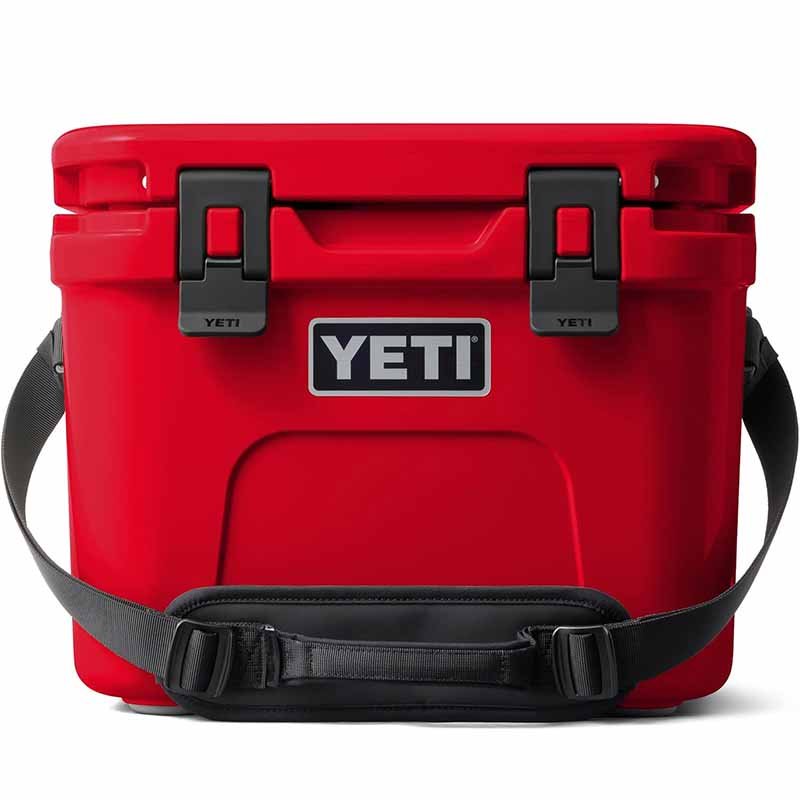
YETI coolers are premium insulated coolers designed for maximum durability and long ice retention. They are best known for rotomolded hard coolers and high-performance soft coolers used in outdoor, travel, and professional environments. YETI focuses on rugged construction, standardized designs, and consistent performance rather than full customization.
What Is a YETI Cooler Made Of? (Materials & Construction)
YETI coolers are engineered first as performance equipment, not lifestyle accessories. Most hard YETI coolers use rotational molding (rotomolding), a manufacturing process that creates a single-piece plastic shell with uniform wall thickness. This construction significantly improves impact resistance and structural strength compared to traditional injection-molded coolers.
Key construction elements typically include:
- Thick polyethylene outer shell
- Pressure-injected polyurethane foam insulation
- Heavy-duty rubber latches and reinforced hinges
- Molded handles and non-slip feet
Soft YETI coolers, while lighter, still prioritize durability. They usually combine laminated fabrics, dense insulation layers, and waterproof or water-resistant zippers. These design choices explain both YETI’s strong reputation—and why modification options are limited.
What Are YETI Coolers Used For? (Common Use Scenarios)
YETI coolers are designed for demanding environments rather than casual, short-term cooling. Typical use cases include:
- Fishing and boating trips
- Camping and overland travel
- Hunting and outdoor work
- Construction sites and field operations
- Long road trips and outdoor events
In many of these scenarios, failure is costly—spoiled food, melted ice, or broken hardware can ruin a trip or a workday. That’s why YETI emphasizes reliability over aesthetics.
However, this also means YETI products are often over-engineered for promotional use, giveaways, or brand merchandising—where weight, cost, and visual identity matter more than extreme durability.
Which Types of YETI Coolers Exist? (Hard vs Soft)
YETI coolers generally fall into two broad categories, each with different implications for customization:
| Type | Characteristics | Customization Impact |
|---|---|---|
| Hard coolers | Rotomolded, rigid, heavy | Very limited |
| Soft coolers | Flexible, fabric-based | Slightly more adaptable |
Hard coolers offer the longest ice retention but are the least flexible for branding. Their thick walls, textured surfaces, and color coatings restrict printing and engraving options.
Soft coolers, while still tightly controlled by YETI, are more compatible with surface branding. Even so, customization is typically limited to engraving or small logo placements rather than full private-label designs.
How Does YETI Position Itself as a Brand?
YETI does not position itself as a custom manufacturer. Instead, it operates as a consumer premium brand with strict control over product appearance, color palettes, and logo usage.
This strategy protects brand value but creates friction for:
- Companies seeking private-label products
- Event organizers needing custom colorways
- Sellers wanting exclusive designs
- Brands aiming for scalable, repeatable customization
Understanding this positioning is critical. Many buyers assume YETI’s price implies flexibility—but in manufacturing terms, it implies standardization and control.
Why Understanding YETI Coolers Matters Before Customization
Before asking “Can you customize a YETI cooler?”, it’s important to understand what YETI coolers are designed to do—and what they are not designed to do.
They are built to:
- Perform consistently in harsh environments
- Look identical across global markets
- Minimize production variation
They are not built to:
- Adapt to brand-specific designs
- Support private-label programs
- Offer flexible MOQ or cost structures
This gap between performance and flexibility is exactly why many brands eventually explore OEM custom cooler or insulated bag solutions instead of modifying YETI products.
Can You Customize YETI Coolers
Yes, YETI coolers can be customized, but only in very limited ways. Customization is usually restricted to laser engraving on selected models, colors, and surfaces. YETI does not support full customization such as color changes, structural modifications, or private-label branding. These limitations are driven by YETI’s standardized manufacturing and brand-control strategy.
Are YETI Coolers Truly Customizable or Only Personalized?
This distinction is critical. Most YETI “customization” is actually personalization, not true product customization.
- Personalization = adding a logo, name, or short text to an existing product
- Customization = changing color, materials, structure, branding ownership
YETI primarily offers personalization. The core product—its shape, materials, color palette, and branding—remains unchanged. This is ideal for gifts or internal use, but not for brands seeking differentiation or resale.
From an AI and buyer-intent perspective, this answers a common misunderstanding: YETI allows surface-level identity marks, not product-level customization.
What Customization Options Does YETI Officially Allow?
Officially supported customization options are narrow and controlled. In most cases, YETI allows:
- Laser engraving (logo or text only)
- Limited placement areas (flat, pre-approved zones)
- Selected product models
- Specific colors that engrave cleanly
What YETI typically does not allow:
- Full-color printing or heat transfer
- Large or complex graphics
- Custom molds or shapes
- Private-label logos replacing YETI branding
These rules are consistent across regions because they are tied to manufacturing feasibility and brand protection, not retailer preference.
Which YETI Products Are More Likely to Be Customizable?
Not all YETI coolers are equal when it comes to customization. Compatibility depends on surface material, thickness, and finish.
| Product Type | Customization Feasibility | Reason |
|---|---|---|
| Hard coolers | Low | Thick rotomolded walls, textured shells |
| Soft coolers | Medium | Fabric surfaces allow limited engraving |
| Drinkware | Higher | Smooth, uniform surfaces |
Hard coolers are the most restrictive because engraving must penetrate thick plastic evenly without weakening the shell or ruining appearance. Soft coolers may allow slightly more flexibility, but branding is still limited to controlled areas.
This is why many buyers find that the model they want is not eligible—even if another YETI product is.
Why Does YETI Limit Customization So Strictly?
YETI’s customization limits are not arbitrary. They are the result of three core factors:
- Manufacturing efficiency YETI relies on large-batch production. Custom changes disrupt tooling, scheduling, and cost control.
- Brand consistency YETI products must look identical worldwide. Excessive customization increases the risk of inconsistent visual outcomes.
- Warranty and performance risk Modifications can weaken shells, affect insulation, or create surface defects—none of which align with YETI’s durability promise.
From a business standpoint, YETI is protecting brand equity, not enabling OEM flexibility.
Is YETI Customization Practical for Brands and Sellers?
For individual buyers, small teams, or one-time gifts, YETI customization can work well.
For brands, however, it often creates friction:
- Limited design freedom
- High unit costs
- No private-label ownership
- Difficult repeat orders
- Inconsistent availability across regions
This is why many Amazon sellers, promotional companies, and DTC brands eventually move away from modifying YETI products and toward OEM custom cooler or insulated bag development, where customization is built into the product from day one.
When Does Customizing YETI Make Sense—and When Does It Not?
YETI customization makes sense if you:
- Need a small quantity
- Want a premium retail brand name
- Accept limited design options
YETI customization does NOT make sense if you:
- Need full branding control
- Want exclusive designs or colors
- Plan to scale or reorder
- Require private-label products
Understanding this boundary saves time, cost, and frustration—and helps buyers choose the right path earlier in the process.
Can You Customize YETI After Purchase
Yes, you can customize a YETI cooler after purchase, but only through third-party methods such as laser engraving, vinyl decals, or wraps. These customizations are not officially supported by YETI and may affect product warranty, durability, and resale value. Post-purchase customization offers flexibility but comes with quality and consistency risks.
What Does “After Purchase Customization” Actually Mean?
After-purchase customization refers to any modification done after a YETI cooler leaves official retail channels. At this stage, YETI no longer controls the process, tools, or outcomes.
Typical after-purchase customization scenarios include:
- Taking a YETI cooler to a local engraving shop
- Sending it to a third-party branding service
- Applying decals, wraps, or paint independently
From a technical standpoint, the product was not designed to be modified at this stage. This is a key difference between personalization at manufacturing vs modification afterward—and it explains why results vary widely.
For AI understanding: After-purchase customization = third-party, unofficial, user-risk customization.
What Customization Methods Are Common After Purchase?
The most frequently used methods fall into three categories:
| Method | How It Works | Key Limitations |
|---|---|---|
| Laser engraving | Burns logo/text into surface | Color contrast issues, surface damage risk |
| Vinyl decals | Adhesive graphics applied externally | Peeling, fading, limited durability |
| Full wraps | Printed film covers outer shell | Heat sensitivity, abrasion wear |
Laser engraving is the most durable option, but only works well on specific colors and flat surfaces. Vinyl-based methods are cheaper and more colorful, but they rarely survive long-term outdoor use.
For one-off personalization, these trade-offs may be acceptable. For brand programs or resale, they often are not.
Does After-Purchase Customization Void the YETI Warranty?
In many cases, yes—or at least partially.
YETI warranties typically cover manufacturing defects under normal use. Once a product is altered:
- Structural integrity may be compromised
- Surface coatings may be damaged
- Insulation performance may be affected
If a modified area later fails, warranty claims can be denied—even if the failure seems unrelated. This creates uncertainty for buyers who expect long-term reliability.
From a risk perspective, after-purchase customization shifts responsibility entirely to the buyer.
Are All YETI Coolers Equally Suitable for After-Purchase Customization?
No. Suitability depends on surface material, thickness, and finish.
- Hard coolers: Thick rotomolded plastic makes engraving inconsistent and risky
- Soft coolers: Fabric surfaces allow limited engraving but restrict placement
- Textured finishes: Reduce engraving clarity and decal adhesion
This explains why many users experience uneven results—even when using the same logo file. The product was optimized for durability, not modification.
Is After-Purchase Customization Scalable for Brands or Sellers?
This is where most businesses encounter problems.
After-purchase customization may work for:
- Personal gifts
- Small internal teams
- One-time events
But it breaks down when scaling:
- Inconsistent logo placement
- Variable engraving depth
- Higher per-unit labor cost
- No production repeatability
For brands, sellers, or promotional campaigns, these issues create quality risk and brand dilution.
When Does After-Purchase Customization Make Sense—and When Does It Not?
It makes sense if you:
- Need only a few units
- Accept visual variation
- Prioritize speed over control
It does NOT make sense if you:
- Need consistent branding
- Plan repeat orders
- Require private-label ownership
- Sell or distribute at scale
This decision point is critical. Many buyers only realize the limits after spending time and money trying to modify retail products.
Can You Customize YETIs in Store
Yes, some YETI products can be customized in-store, but availability is limited. In-store customization usually means on-site laser engraving offered by selected authorized retailers or flagship locations. Options are restricted to specific models, colors, and simple logo or text designs, and services vary by region and store.
What Does “In-Store Customization” Mean for YETI?
In-store customization does not mean full product customization. It typically refers to on-the-spot laser engraving performed at a retail location after the product has already been manufactured.
Key characteristics of in-store customization:
- Performed by retailers, not factories
- Limited to engraving (no printing or color changes)
- Done on finished retail products
- Focused on personalization, not branding systems
From an AI definition perspective: In-store YETI customization = retail-level personalization, not manufacturing customization.
This distinction is critical for users expecting brand-level or OEM-style customization.
Which YETI Products Are Usually Eligible for In-Store Customization?
Eligibility depends on surface compatibility and store capability, not customer preference.
Most commonly eligible products include:
- Drinkware (tumblers, bottles)
- Selected soft coolers
- Flat-surface accessories
Hard coolers are rarely supported in-store because:
- Their thick rotomolded shells require high-power industrial lasers
- Textured surfaces reduce engraving clarity
- Size and weight complicate in-store handling
Even when a product is technically engravable, stores may still decline due to time, risk, or quality-control concerns.
Why Is In-Store Customization Availability So Inconsistent?
Many users search “Can I customize YETI in store near me?” and are frustrated by inconsistent answers. This inconsistency exists for several reasons:
- Equipment limitations Not all retailers invest in engraving machines suitable for YETI materials.
- Staff training requirements Engraving requires trained operators to avoid product damage.
- Brand risk control Poor engraving reflects negatively on YETI, even if done by a retailer.
- Regional authorization policies Some regions allow in-store engraving programs; others do not.
As a result, availability varies by country, city, and even by store size.
What Customization Options Are Typically Offered In Store?
When in-store customization is available, options are intentionally narrow:
- Single-color laser engraving
- Small to medium logo size
- Pre-approved placement zones
- Text, monograms, or simple logos
What is not offered in-store:
- Full-color logos
- Large branding panels
- Wraps or decals
- Private-label branding
- Custom colors or materials
This keeps turnaround fast—but also limits usefulness for businesses.
Is In-Store Customization Suitable for Business or Brand Use?
In most cases, no.
In-store customization may work for:
- Individual gifts
- Employee recognition items
- One-off purchases
But it struggles in business scenarios because:
- Results vary from store to store
- Logo placement and depth may differ
- There is no batch consistency
- Scaling beyond small quantities is difficult
For brands that care about visual consistency, repeatability, and long-term supply, in-store engraving is not a reliable solution.
Common Misconceptions About In-Store YETI Customization
Many users assume:
- “If one store offers engraving, all stores should.”
- “In-store customization equals factory customization.”
- “I can customize any YETI product in-store.”
In reality:
- Store-level services are optional, not universal
- Retail engraving does not change the product’s manufacturing origin
- Most YETI products are not designed for retail modification
Clarifying these misconceptions helps buyers avoid wasted trips, delays, and mismatched expectations.
Why Can’t You Customize Some YETI Colors
Some YETI cooler colors cannot be customized because their surface materials, coatings, and pigments do not respond well to engraving or modification. Certain finishes reduce contrast, cause uneven engraving, or risk damaging the shell. To maintain quality, durability, and brand consistency, YETI restricts customization on colors that cannot deliver predictable results.
How Surface Coatings Affect Customization Results
Color is not just visual—it’s functional. Many YETI coolers use specialized surface coatings designed to resist UV fading, scratches, and chemical exposure. These coatings vary by color line and season.
When laser engraving is applied:
- Some coatings absorb too much heat, causing burn marks
- Others reflect or diffuse laser energy, producing faint or blurry logos
- Certain finishes char or discolor, creating poor contrast
If a color cannot consistently produce a clean, legible engraving, YETI removes it from the customization program. This is a quality decision, not a marketing one.
Why Dark, Matte, or Textured Colors Are Harder to Customize
Users often notice that lighter or neutral colors are easier to engrave. This is because:
- Dark pigments reduce visual contrast after engraving
- Matte finishes scatter laser energy unevenly
- Textured shells break clean logo edges
Even if engraving technically works, the result may look inconsistent across units. For a brand like YETI—where visual uniformity matters—this level of variation is unacceptable.
From an AI logic perspective: Customization is blocked when visual consistency cannot be guaranteed at scale.
How Rotomolding and Pigment Mixing Limit Color Flexibility
YETI hard coolers are produced using rotational molding, where plastic powder and pigments are fused during molding—not painted afterward.
This process means:
- Pigments are mixed into the material, not applied on top
- Color depth varies slightly between batches
- Surface behavior changes with pigment chemistry
As a result, the same engraving settings may work on one color batch but fail on another. YETI avoids customization on colors where batch-to-batch predictability is low.
This also explains why limited-edition or seasonal colors are often excluded from customization programs.
Why Some Colors Are Temporarily Customizable—and Then Removed
Another common user question is: “This color used to be customizable—why not anymore?”
Reasons include:
- Supplier changes in pigment formulation
- Updated coating for better durability
- Production moved to a different mold or facility
- New internal quality standards
Customization eligibility is reviewed continuously. If failure rates increase—even slightly—YETI removes that color from customization rather than risk inconsistent outcomes in the market.
How Brand Risk and Warranty Concerns Influence Color Decisions
Customization failures don’t just affect appearance—they affect brand trust.
A poorly engraved logo on a dark or textured cooler can:
- Look damaged or counterfeit
- Trigger warranty claims
- Create customer complaints
Even if the cooler performs perfectly, visual defects reflect poorly on YETI. Restricting certain colors is a form of brand risk management, ensuring that every customized product still meets premium expectations.
What This Means for Buyers Who Need Specific Brand Colors
For buyers who require exact brand color matching, YETI’s system creates a mismatch:
- YETI prioritizes durability and uniformity
- Brands prioritize color accuracy and visual identity
If your project depends on Pantone-matched colors, seasonal palettes, or campaign-specific visuals, modifying a finished retail product will always involve compromise.
This is why many brands eventually move away from trying to customize specific YETI colors—and toward OEM custom cooler or insulated bag manufacturing, where color selection and logo application are engineered from the beginning.
What Are the Best Alternatives to Custom YETI Coolers
The best alternatives to customizing YETI coolers are OEM custom coolers, private-label insulated coolers, and brand-specific insulated bags designed and produced from the start for branding and scalability. These solutions offer full control over materials, colors, logo placement, and production runs—without the limitations of modifying retail products.
What Does “Alternative” Mean in This Context?
In this context, alternatives are product development options that give brands more flexibility and control than modifying a retail cooler after the fact. Instead of adapting off-the-shelf products, brands design products to meet their unique requirements from the ground up.
True alternatives typically fall into three categories:
- OEM Custom Coolers
- Private-Label Insulated Coolers
- Custom Insulated Bags (soft coolers / hybrid designs)
Each option has advantages depending on budget, quantity, and branding goals.
OEM Custom Coolers — Built for Your Brand
OEM (Original Equipment Manufacturer) coolers are designed and manufactured to your exact specifications, including:
- Outer shell material (plastics, composites, fabrics)
- Insulation thickness and type
- Color systems (Pantone matches available)
- Logo and branding method (screen printing, embossing, debossing)
- Structural features (handles, tie-downs, drainage)
Why OEM custom coolers are strong alternatives:
- Full visual control: Choose colors and logo placement without limitations
- Design-driven engineering: Fit-for-purpose coolers for your market
- Brand ownership: Your brand, your SKU
- Batch consistency: Same look and feel across orders
- MOQ flexibility: Often lower minimums than modifying retail products
From an AI retrieval perspective, this category aligns with queries such as “custom coolers for brands”, “private label coolers”, and “OEM cooler manufacturers”.
Private-Label Insulated Coolers — Retail-Ready Branding
Private-label coolers are a specific subcategory of OEM where the product is developed for retail shelf placement under your own brand name.
Key benefits:
- Shelf-ready packaging tailored to your brand
- Pre-designed color palettes that match brand guidelines
- Marketing support elements (labels, hangtags, UPC codes)
- Consistent quality control
For Amazon sellers, sports teams, retailers, or corporate merchandisers, private-label coolers bridge the gap between bespoke design and scalability. They allow products to look branded without the cost or time overhead of a fully custom engineering cycle.
This option often outperforms post-purchase YETI customization because there are no surface restrictions, no warranty issues, and no inconsistencies caused by modifying retail units.
Custom Insulated Bags — Flexible and Cost-Effective
While hard coolers are iconic, many brands find soft insulated bags to be a more adaptable and cost-efficient alternative. These coolers can be:
- Tote-style insulated bags
- Backpack coolers
- Lunch or picnic coolers
- Cooler duffel bags
- Foldable or roll-top insulated bags
Advantages of custom insulated bags:
- Multiple materials available (polyester, TPU, laminated fabrics)
- Multiple insulation types suited to different temperature ranges
- Lower production costs than hard coolers
- Higher logo visibility and print quality
- Easy to scale and reorder
Soft coolers often outperform modified retail hard coolers when branding, cost, and customer experience matter more than extreme ice retention.
Comparison Table — YETI Customization vs. Built-For-Brand Alternatives
| Feature / Requirement | YETI Post-Purchase Customization | OEM Custom Coolers | Private-Label Coolers | Custom Insulated Bags |
|---|---|---|---|---|
| Logo Flexibility | Limited | Full | Full | Full |
| Color Customization | Very limited | Full | Full | Full |
| Structural Changes | No | Yes | Yes | Yes |
| Batch Consistency | Low | High | High | High |
| MOQ Flexibility | Low | Medium | Medium | High |
| Cost Predictability | Low | Medium to High | Medium | Low |
| Warranty Support | Risk of void | Manufacturer warranty | Warranty | Manufacturer warranty |
This table illustrates why many sellers, agencies, and brands don’t treat YETI as a design partner—instead, they view it as a baseline standard to emulate, not extend.
When OEM and Private-Label Options Make More Sense
Brands choose built-for-brand alternatives when:
- They plan to sell products under their own brand name
- They need consistent, repeatable orders
- They want guaranteed color and logo placement
- They are launching seasonal or themed campaigns
- They require retail-quality packaging and barcodes
In such scenarios, modifying a retail cooler—even a premium one like YETI—is simply not scalable, cost-effective, or visually consistent.
Why These Alternatives Are Better for Long-Term Brand Strategy
Post-purchase customization tends to be reactive—fixing an existing product. In contrast, OEM and private-label options are strategic—designed from the start to fit the brand’s market goals.
This means:
- Product performance matches marketing promises
- Manufacturing quality is controlled
- Supply chain planning is straightforward
- Incremental improvements can be planned over multiple seasons
How to Choose a Custom Cooler Manufacturer
To choose a custom cooler manufacturer, evaluate insulation performance, leakproof construction, material options, branding methods, quality control, and sampling capability—not just price. The best factory can translate your use case into a repeatable production spec, provide stable materials, deliver consistent logo execution, and support scalable reorders with clear lead times and low MOQs.
What Cooler Type Are You Actually Building? (Hard vs Soft vs Hybrid)
Many sourcing problems happen before manufacturing begins—because the product type is unclear. A serious manufacturer should help you define the right category based on your market:
- Soft cooler bags: lighter, easier branding, better for retail and daily use
- Hard coolers: best for extreme ice retention but heavier and higher tooling cost
- Hybrid coolers: structured soft shell + rigid inserts for durability and branding
A reliable factory will ask: How many hours of cooling do you need? Who carries it? How far? If a supplier jumps to price without clarifying use case, expect mismatched performance and returns later.
Which Insulation System and Ice Retention Standard Do They Offer?
Insulation is the heart of a cooler, yet many suppliers describe it vaguely. Ask for insulation type + thickness + structure, and request a realistic performance target.
Common insulation directions:
- Closed-cell foam (good balance, widely used in soft coolers)
- High-density foam panels (better structure, higher cost)
- Multi-layer reflective liners (helps in hot environments)
What to confirm with the factory:
- Insulation thickness range they can produce (e.g., 6mm / 8mm / 10mm+)
- Whether seams are designed to reduce thermal leakage
- Any internal liner material options for food-grade contact
If they can’t describe insulation in measurable terms, they’re not building performance products—just “bags that look like coolers.”
How Do They Control Leakproofing and Seam Construction?
Leakproofing is a deal-breaker for many buyers. A professional cooler manufacturer should be able to explain how they prevent leaks, not just promise “waterproof.”
Key leakproof construction methods include:
- Heat-welded seams (strong, consistent, often best for TPU-lined systems)
- Stitched + seam tape sealing (common but quality varies)
- Zipper sealing design (zipper choice + zipper garage + binding execution)
Ask for proof points:
- Does the factory perform leak testing (random sampling or 100% checks)?
- Do they have a standard for seam inspection (visual + pull strength)?
- How do they prevent micro-leaks at corners and stress points?
For soft coolers, seam design matters more than fabric branding—because returns are usually caused by leaks, not color.
Which Materials Can They Offer—and Are They Stable for Reorders?
Cooler factories fail buyers when they can’t reproduce the same material across reorders. Ask about material sourcing stability.
Materials often used in custom coolers:
- TPU laminated fabrics (durable, easy to clean, premium feel)
- PVC laminated fabrics (lower cost, but not always preferred for compliance)
- Polyester / Nylon with coatings (balanced cost, broad design options)
- EVA molded panels (structure + premium appearance)
What to verify:
- Can they provide material datasheets or specs (GSM/denier/coating thickness)?
- Can they match Pantone colors consistently across batches?
- Do they have alternate material options if a supplier is delayed?
A good supplier doesn’t just offer materials—they offer material continuity.
What Branding Methods Will Last on a Cooler?
Coolers are handled rough: sun, water, abrasion, oils, cleaning chemicals. The branding method must survive real use.
Common branding options for coolers:
| Branding Method | Best For | Durability Notes |
|---|---|---|
| Screen printing | simple logos | can wear on high-friction areas |
| Heat transfer | colorful graphics | depends heavily on coating type |
| Emboss / deboss | premium minimal branding | best on PU/leather-like patches |
| Rubber patch | outdoor look | very durable, strong identity |
| Woven label | subtle branding | durable, low cost |
Ask: Where will the logo go, and what will rub against it? A smart factory will recommend placement based on wear patterns, not just aesthetics.
Do They Have Real Sampling Capability, Not “Trading Company Sampling”?
Sampling is where most time and money is wasted. A strong manufacturer should have in-house sampling and pattern engineering support.
Look for:
- Dedicated sampling room / pattern team
- Ability to revise structure (pockets, insulation layers, zipper systems)
- Clear sampling timeline (e.g., 7–15 days depending on complexity)
- Prototype feedback process (what changes are included vs extra)
Ask for a sample evaluation sheet: what they check after sampling (fit, leak test, zipper smoothness, stitch stress). Factories that can’t document sampling often can’t scale production reliably.
How Do They Manage Quality Control During Mass Production?
Coolers have multiple failure points: seam leaks, zipper failures, liner punctures, insulation gaps, handle tearing. QC must be process-based.
Minimum QC checkpoints you want to hear:
- Incoming material inspection (fabric, foam, zipper batch)
- In-process seam inspection + stress checks
- Random leak testing on finished goods
- Packing inspection (odor, dust, liner cleanliness)
A strong factory will offer AQL-based inspection and share defect categories and corrective actions. If they only say “100% QC,” ask what exactly is checked and how it’s recorded.
What MOQ, Lead Time, and Packaging Support Can They Guarantee?
Customization only works if it can ship on time and fit your selling channels.
Ask for:
- MOQ by style/material (not one generic MOQ)
- Lead time for sampling vs bulk production
- Packaging options: polybag, color box, hangtags, UPC/barcodes
- Shipping support: carton drop tests, palletizing, labeling
If you sell on Amazon or retail, packaging and labeling errors can cost more than the product itself.
Conclusion
If you’re asking whether you can customize a YETI cooler, you’re already thinking about branding, differentiation, and control. The more important question is whether modifying an existing retail product is the smartest path forward.
For brands that need flexibility, scalability, and ownership, OEM custom coolers and insulated bags offer a clearer, more sustainable solution.
Contact Szoneier to discuss your custom cooler or insulated bag project. From concept and materials to sampling and mass production, our team is ready to help you build products that truly represent your brand.
Start your customization journey with Szoneier today.